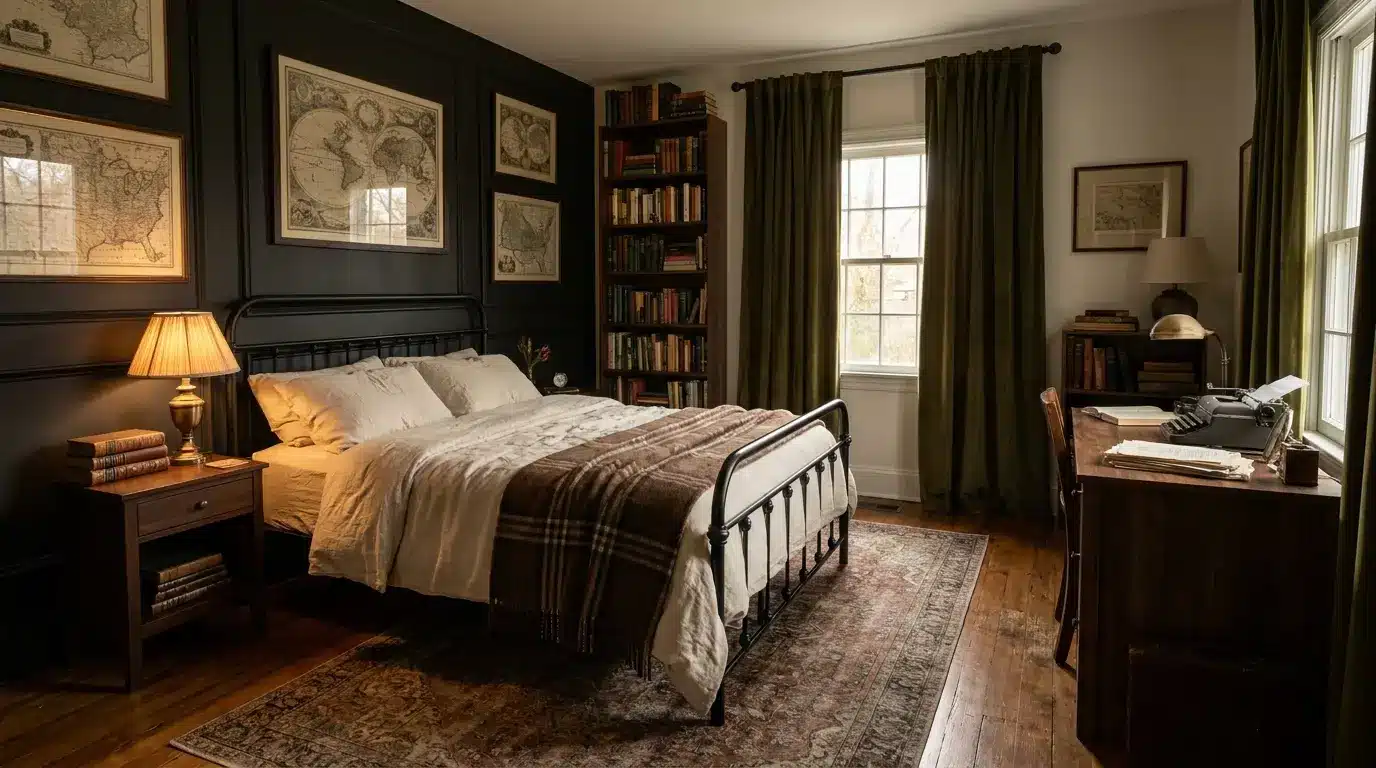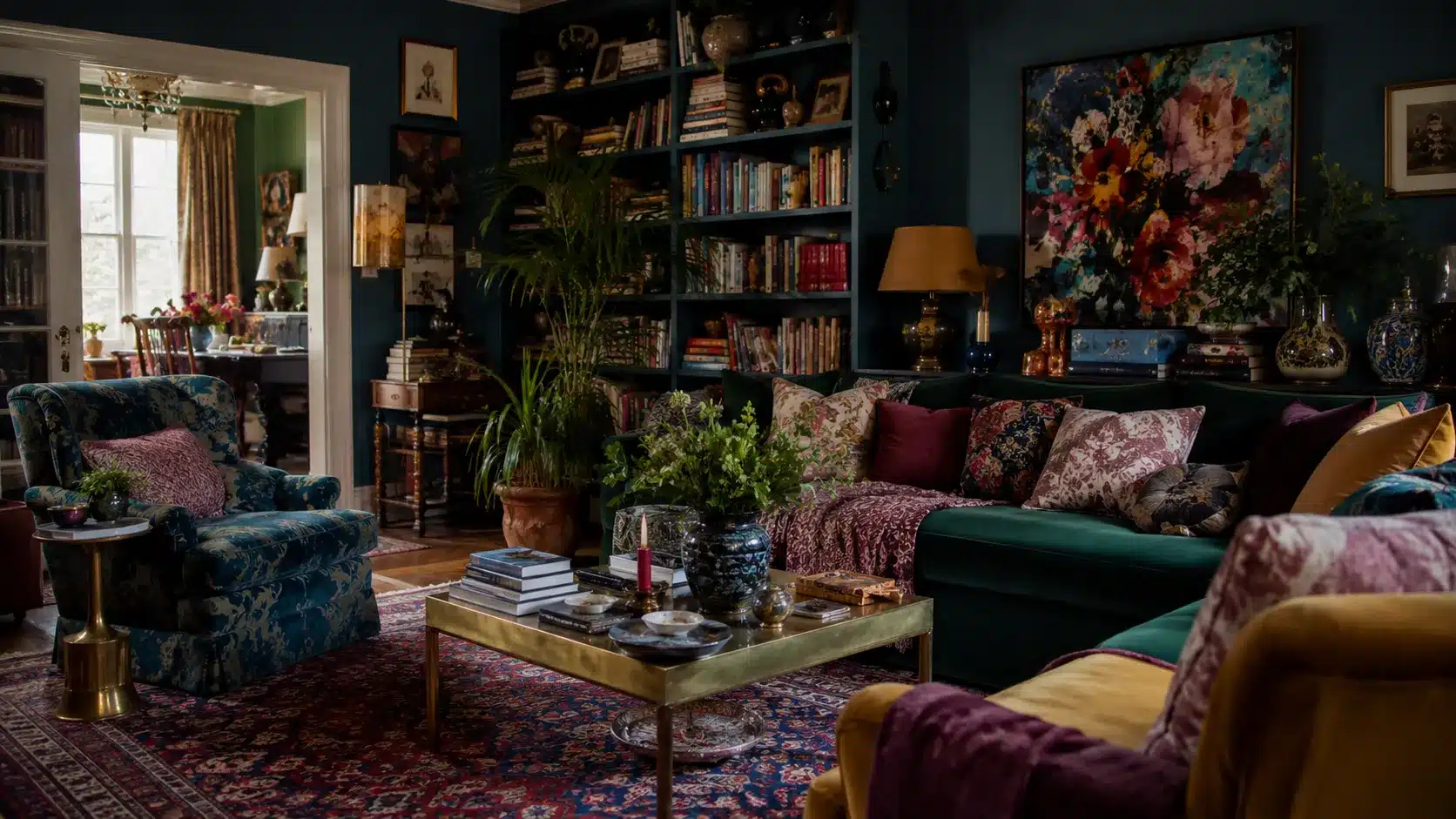
I have always been drawn to rooms that feel lived in. Walls covered in art, shelves full of books and ceramics, mismatched chairs that somehow work together, colors that should clash but do not. There is something about a room with that kind of layered personality that feels genuinely warm rather than staged.
But here is the problem most people run into. You see a maximalist space online, and it looks rich and personal. You try to recreate it at home, and it ends up looking cluttered. The difference is not the amount of stuff. It is the plan behind it.
In this blog, you will find what maximalist interior design actually means, its history, the core elements that hold it together, 25 decor ideas you can use room by room, practical tips, and the mistakes worth avoiding before you start buying.
What Maximalist Interior Design Actually Means
Maximalist style is a layered approach to decorating built around color, pattern, texture, art, books, collections, and personal objects. The philosophy is “more is more,” but that does not mean filling every surface without thought. Every piece should belong there and support the overall feeling of the room.
Maximalism is not the same as clutter. The difference is intention. A cluttered room is full of things without a plan. A maximalist room is full of things that share at least one visual thread: a repeated color, a consistent material, a unifying era, or theme. That thread is what makes a busy room feel rich rather than overwhelming.
Maximalism also has older roots. Victorian rooms often used wallpaper, textiles, framed art, books, and collected objects. Later, postmodern design introduced playful shapes and bold colors. The Memphis Group, active in the 1980s, is often linked with bold geometry and postmodern design language.
- Main idea: more color, pattern, art, and objects with a clear plan
- Not the same as clutter: every item should support the room
- Best rooms for it: living rooms, bedrooms, dining rooms, entryways, offices, and powder rooms
- Main rule: repeat at least one color, shape, finish, or theme so the room feels connected
Once the meaning is clear, the next step is knowing what makes the maximalist look work. The core elements below keep the room rich without making it feel random.
The Building Blocks That Make a Maximalist Room Work
Maximalist style works best when the big design choices support each other. Color, pattern, texture, art, lighting, and collections should feel layered with purpose, not placed without a reason.
Here is how each element shows up and the basic rule behind it:
| Element | How It Shows Up | Practical Rule |
| Color | Deep walls, bright furniture, painted trim | Pick 3 to 5 main colors and repeat them |
| Pattern | Florals, stripes, animal print, checks | Repeat one color across all patterns |
| Texture | Velvet, rattan, wool, glass, metal | Mix soft, smooth, rough, and shiny surfaces |
| Art | Gallery walls, large frames, small prints | Use varied sizes with planned spacing |
| Collections | Books, ceramics, plates, objects | Group by color, type, or shape |
| Furniture | Vintage, modern, carved, bold pieces | Use one main anchor piece per room |
| Lighting | Lamps, sconces, pendants, candles | Layer lighting at different heights |
| Common thread | Color, era, shape, or material | Keep one element repeated throughout |
The table above is not a checklist to complete in one go. Think of it as a framework. Start with color and one anchor piece, then build outward.
Maximalist Interior Design Ideas to Try Room by Room
These maximalist interior design ideas are written so each one can work as a visual starting point. Each idea is described clearly enough to support an image, making them easy to use for mood boards, Pinterest saves, or room planning. Adjust color, scale, and pattern to fit your own space.
These ideas give you strong visual direction for any room. The next step is turning them into a practical plan that keeps the space feeling full and personal without becoming hard to live in.
1. Build One Fully Committed Heritage Corner
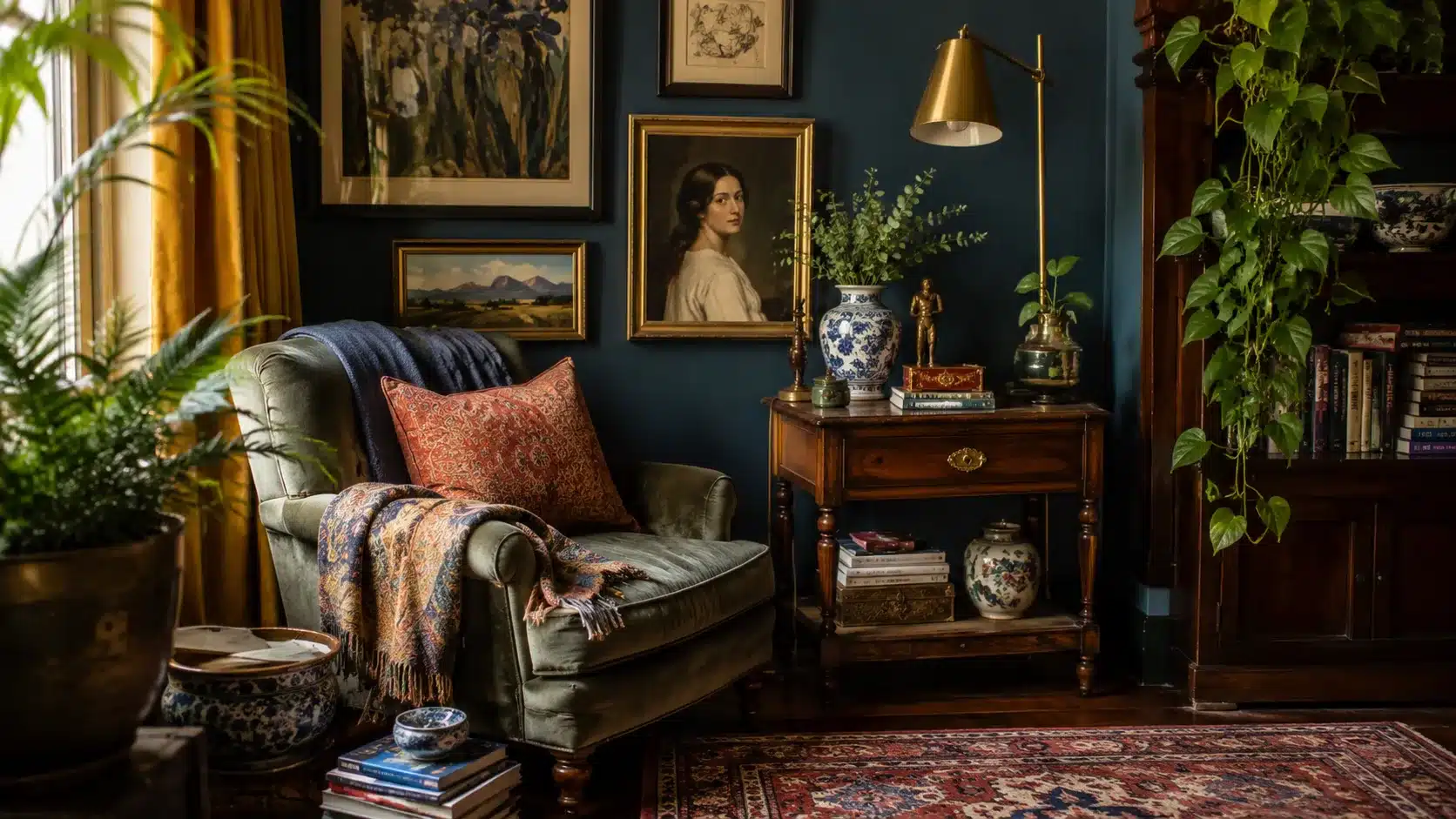
Pick one corner and layer a vintage side table, a modern floor lamp, framed art at two heights, and one patterned cushion or throw. This creates a collected focal point without touching every wall. Living rooms, bedrooms, and hallways all benefit from one strong, intentional zone.
2. Hang a Large Printed Fabric Panel Behind the Bed
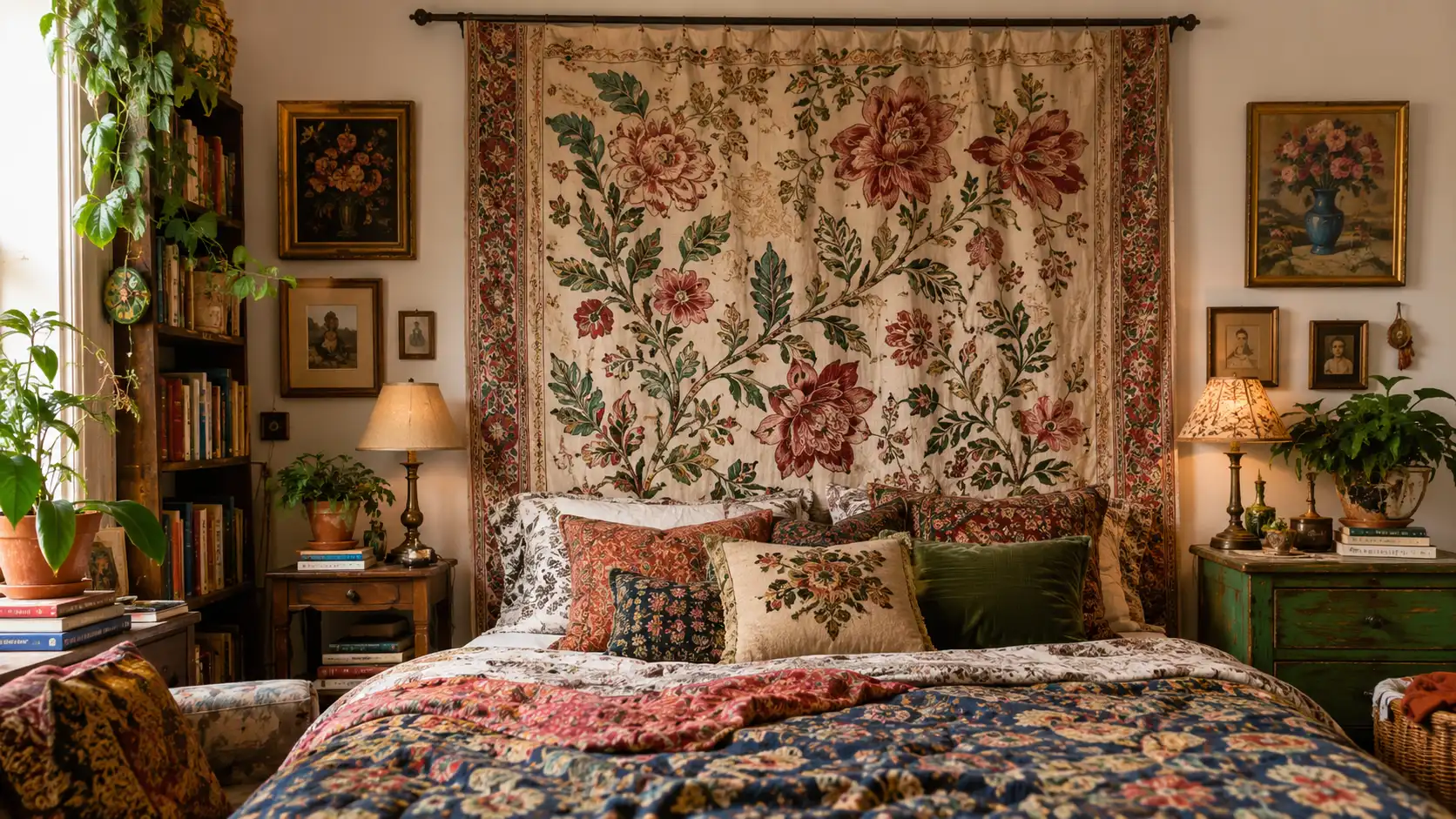
Mount a single oversized block print, vintage-style textile, or bold botanical fabric behind the bed using a curtain rod. It delivers pattern, warmth, and a strong focal point without the need for permanent wallpaper. Renter-friendly, easily swapped, and far more interesting than a plain painted accent wall.
3. Paint the Inside of Open Cabinets a Strong Color
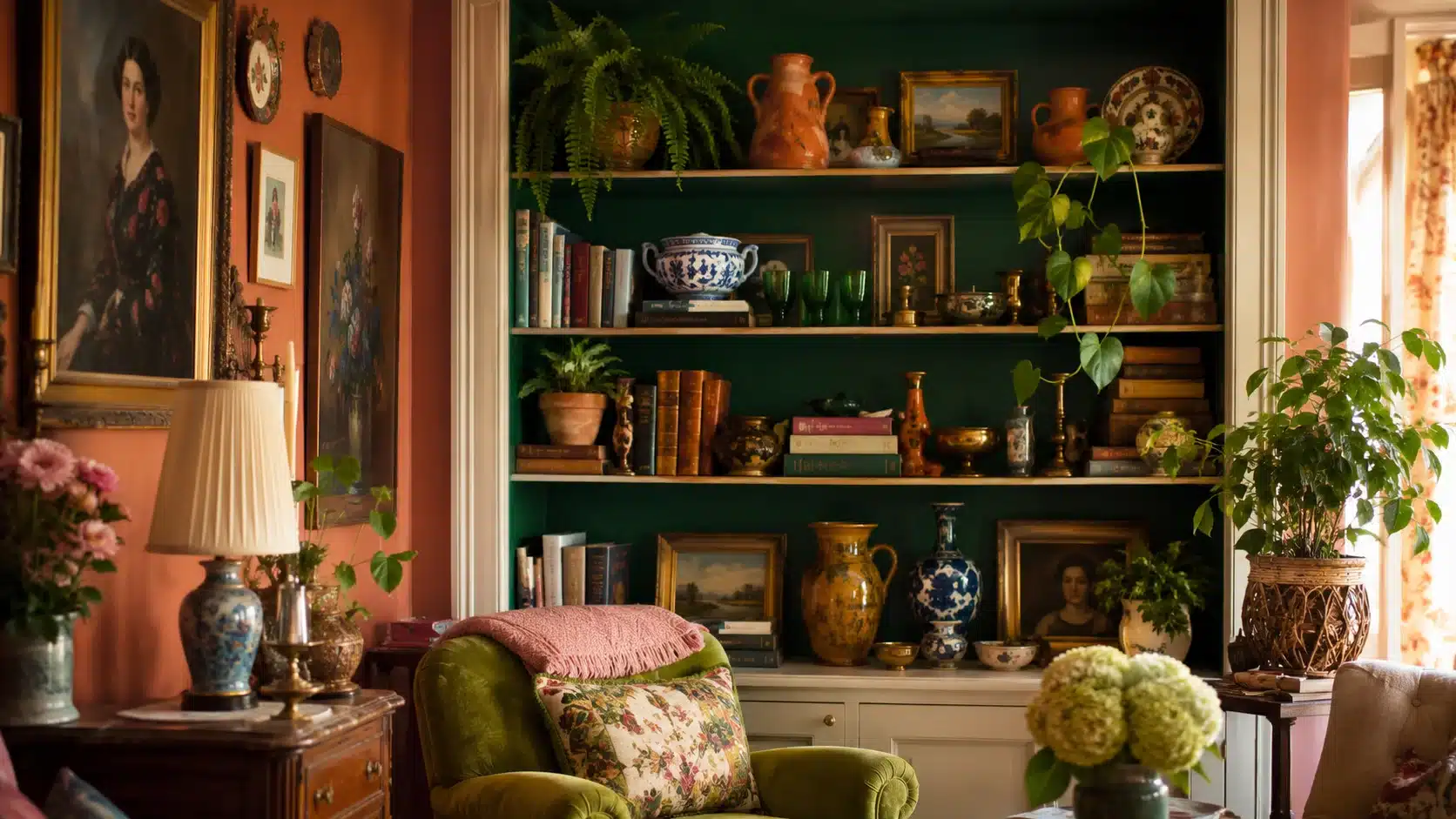
Paint only the back panel of a bookcase, hutch, or built-in shelf in deep green, terracotta, cobalt, or mustard. Objects placed in front immediately read with more clarity and purpose. This gives a maximalist result in one afternoon without touching a single wall.
I have recommended this move to clients in Houston who rent their spaces and cannot touch the walls. Without fail, it is one of the most impactful changes for the least amount of effort and money. A can of paint in the right color transforms the whole visual weight of a shelving unit.
4. Use One Color Family Across the Whole Room in Varied Tones
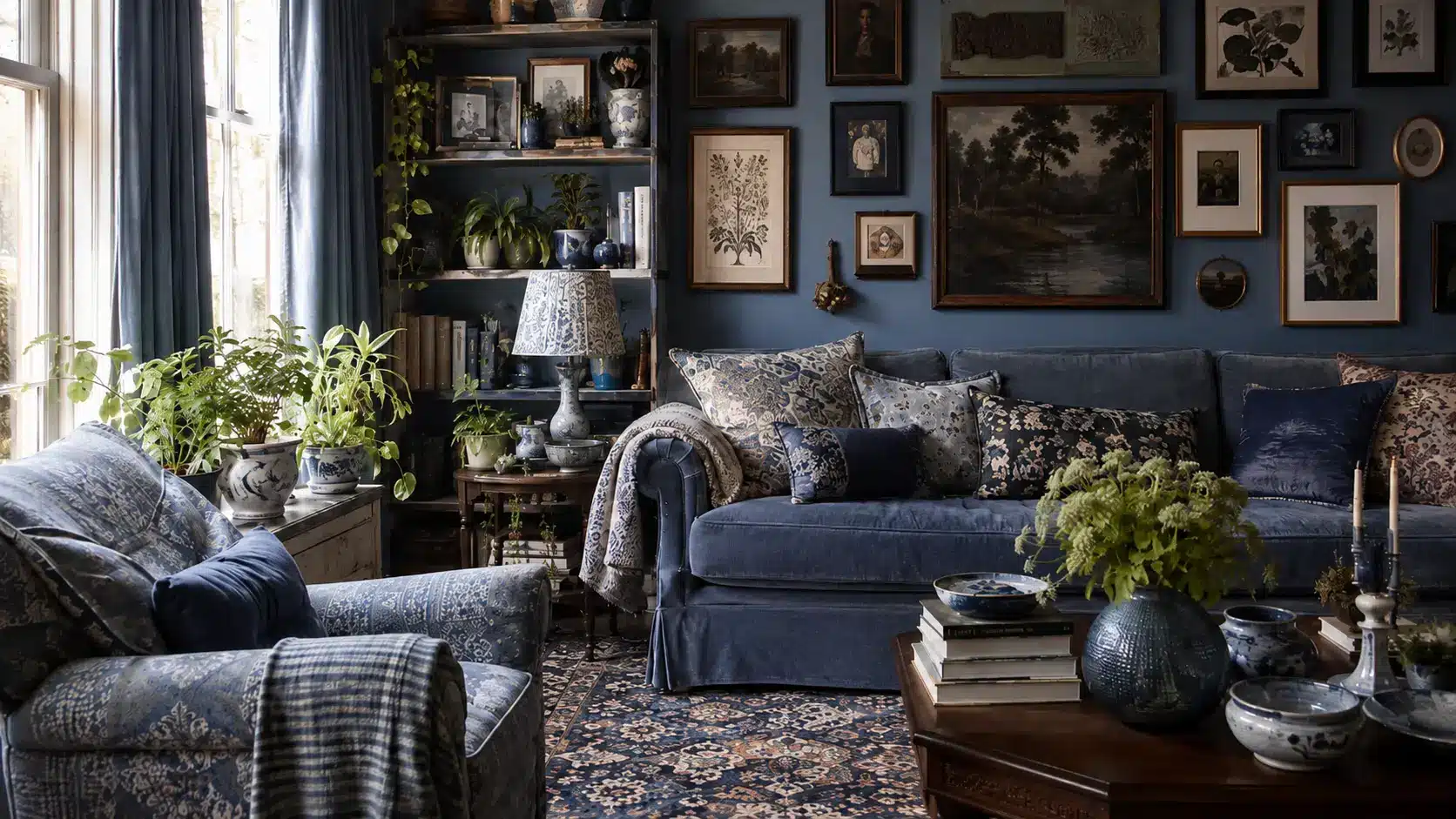
Choose green, blue, amber, or rust and use three to four tones of that family across walls, textiles, art, and objects. The room builds depth through tonal variation rather than contrast. It feels planned and intentional, which is exactly what separates maximalist style from random collecting.
5. Replace Plain Lampshades With Patterned Ones on Both Lamps
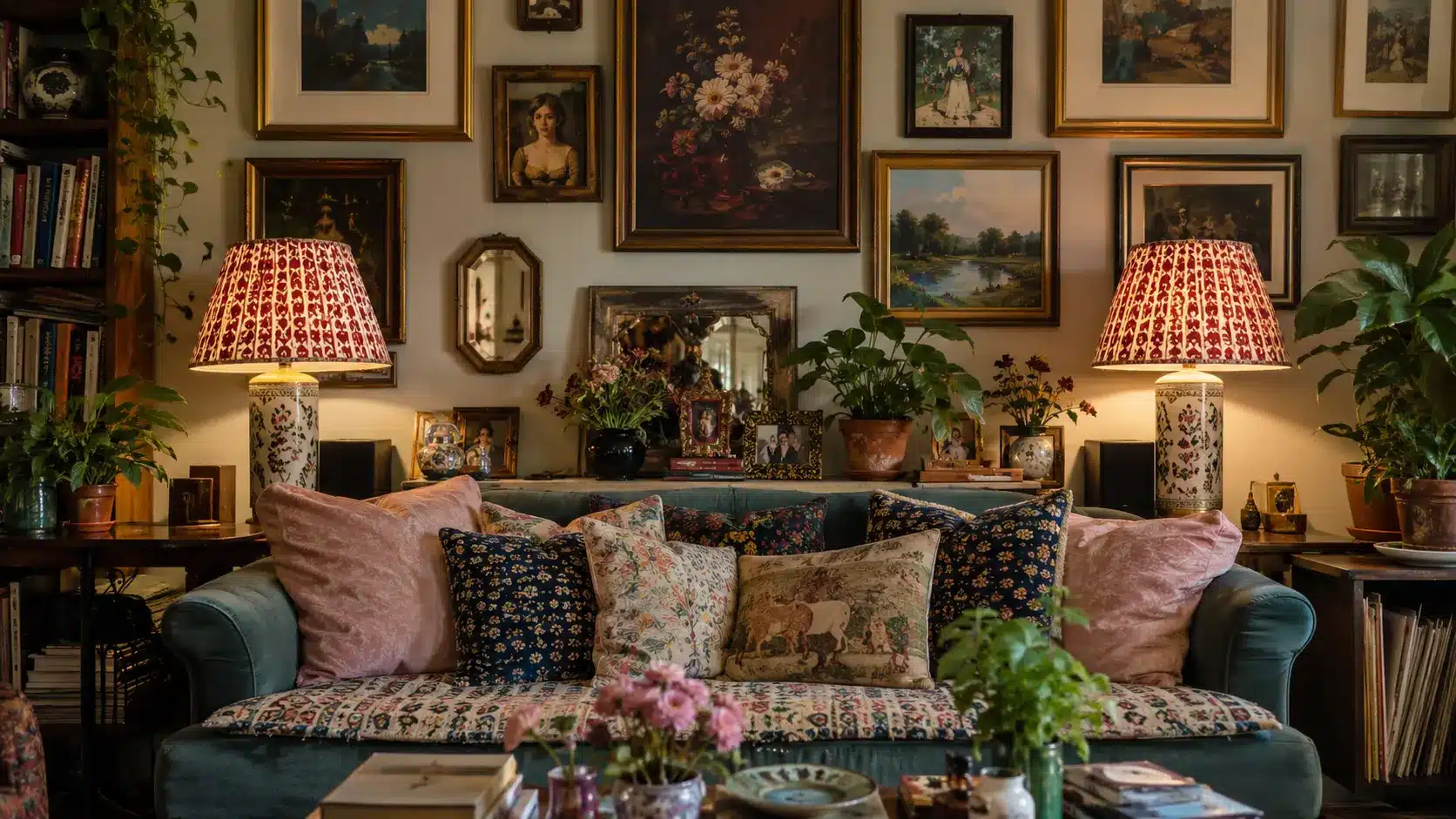
Swap identical lampshades on a pair of table lamps for printed versions in block print, small floral, or bold stripe. Using the same pattern on both keeps the room feeling deliberate. This adds color and personality at eye level without moving a single piece of furniture.
6. Style a Permanently Layered Coffee Table Scene
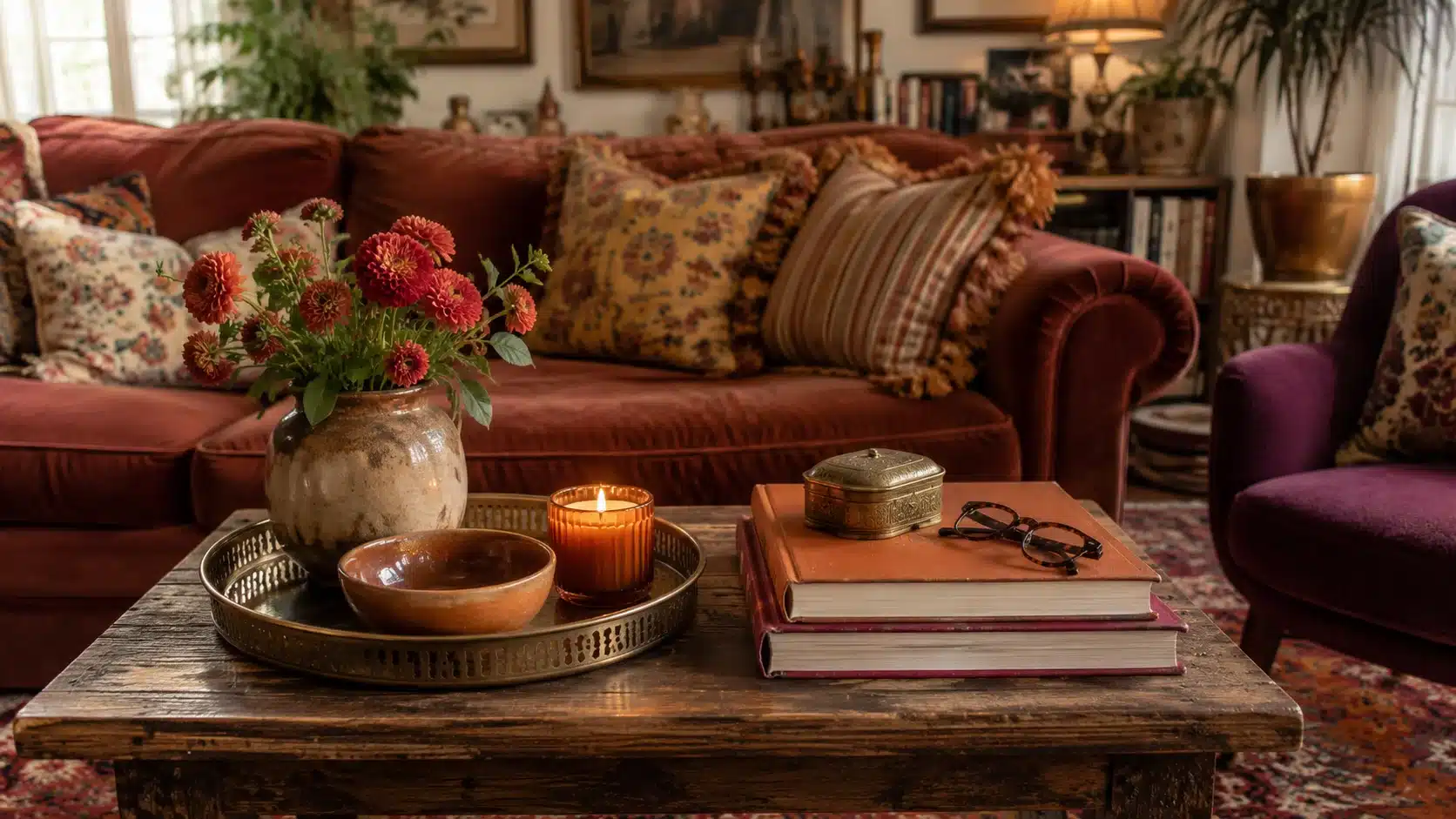
Place one tray, two stacked books, a small ceramic bowl, a short candle, and one personal object on the coffee table. Keep everything low enough that the table stays usable. The same layering instinct applies to any surface in a well-decorated living space, the goal is always density with breathing room.
7. Use Stair Risers as a Pattern Moment
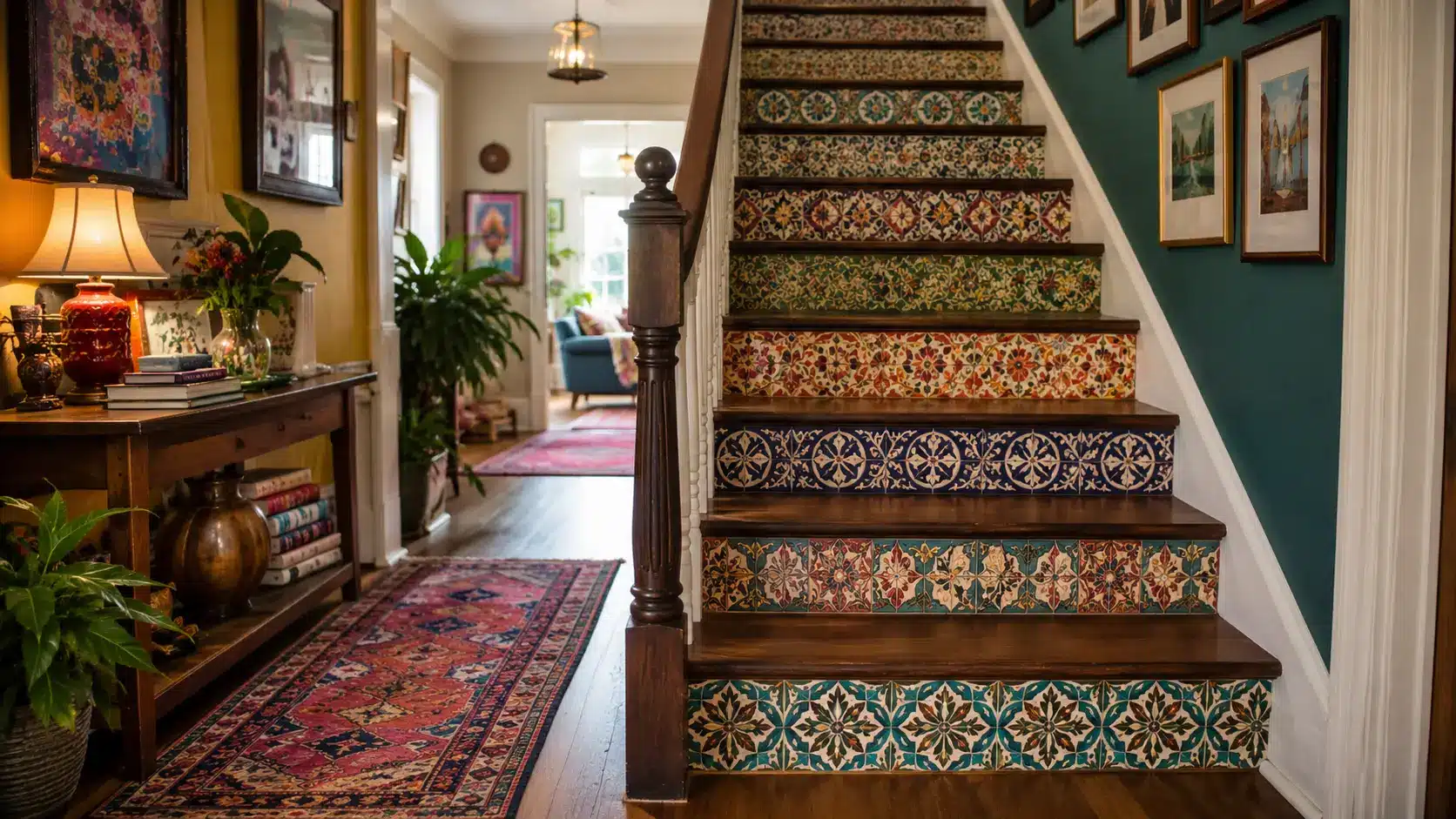
Apply paint, removable decal, or patterned tile to stair risers while keeping the treads plain and safe underfoot. Each step becomes a small graphic detail that adds maximalist character to a space that most homes treat purely as functional. This works especially well in entryways with simple surrounding walls.
8. Pair Two Completely Different Nightstands
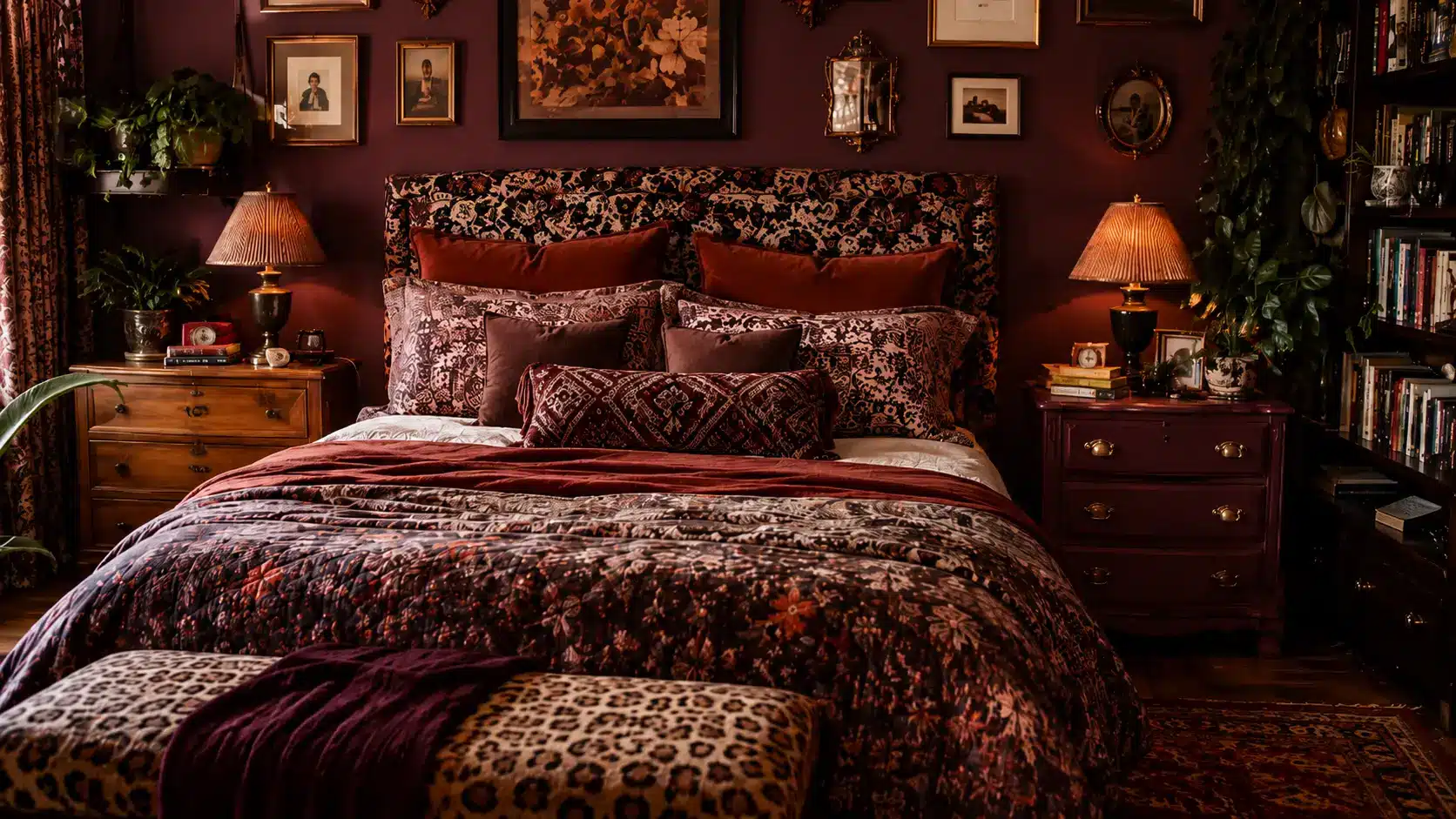
Use two mismatched nightstands in the bedroom and connect them visually with matching lamps, a shared color, or similar hardware. The result feels collected and personal rather than catalog-coordinated. It also lets you use pieces you already own rather than buying a matched set.
9. Install a Plate Rail and Style It Rotationally
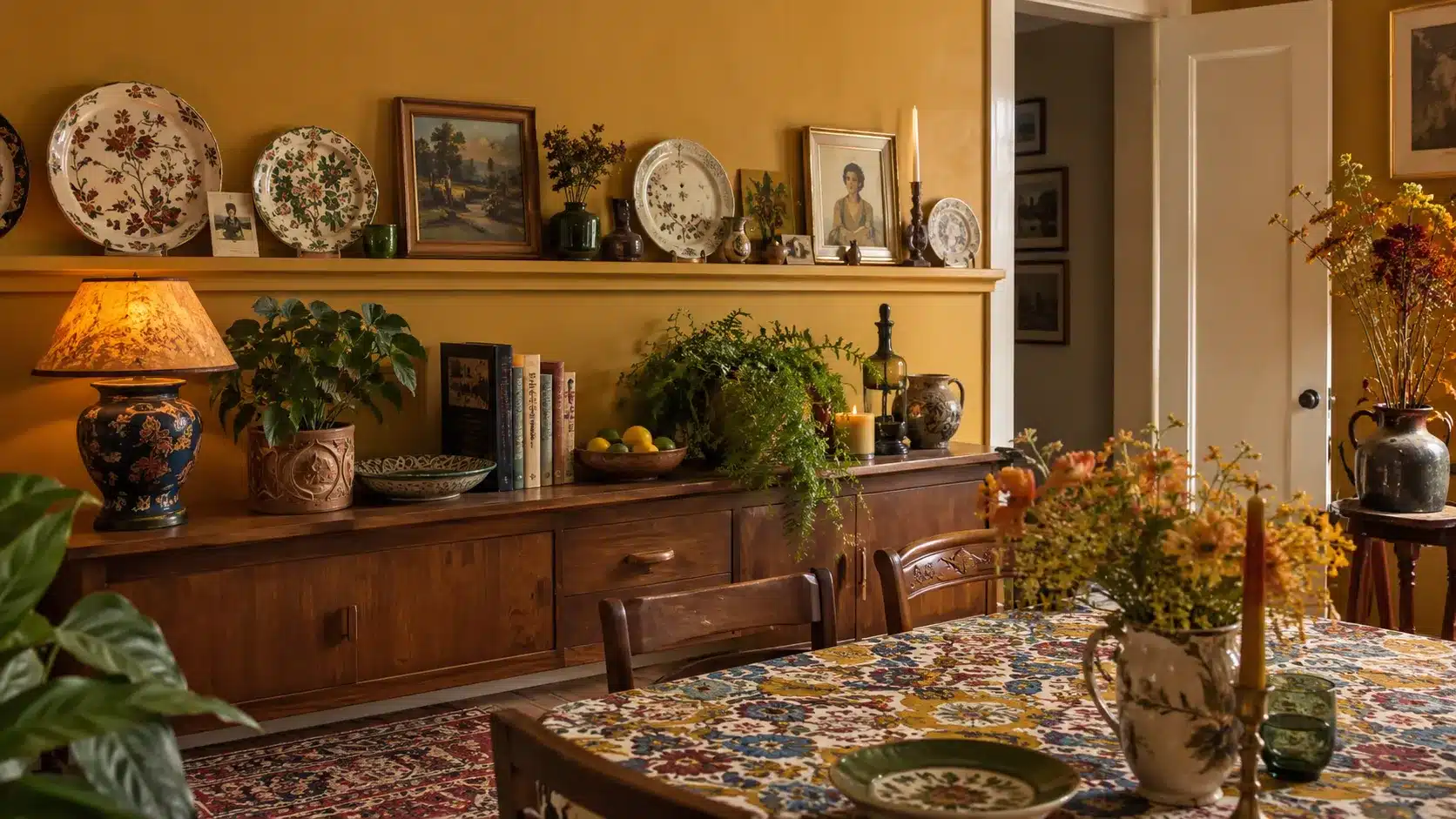
Fit a narrow ledge in a kitchen, dining room, or hallway and use it for plates, small frames, ceramics, and postcards. Objects can lean rather than hang, making rotation easy. This builds a layered wall display without committing to fixed hooks and works beautifully in period-style homes.
10. Mix Three Different Seating Styles Around One Dining Table
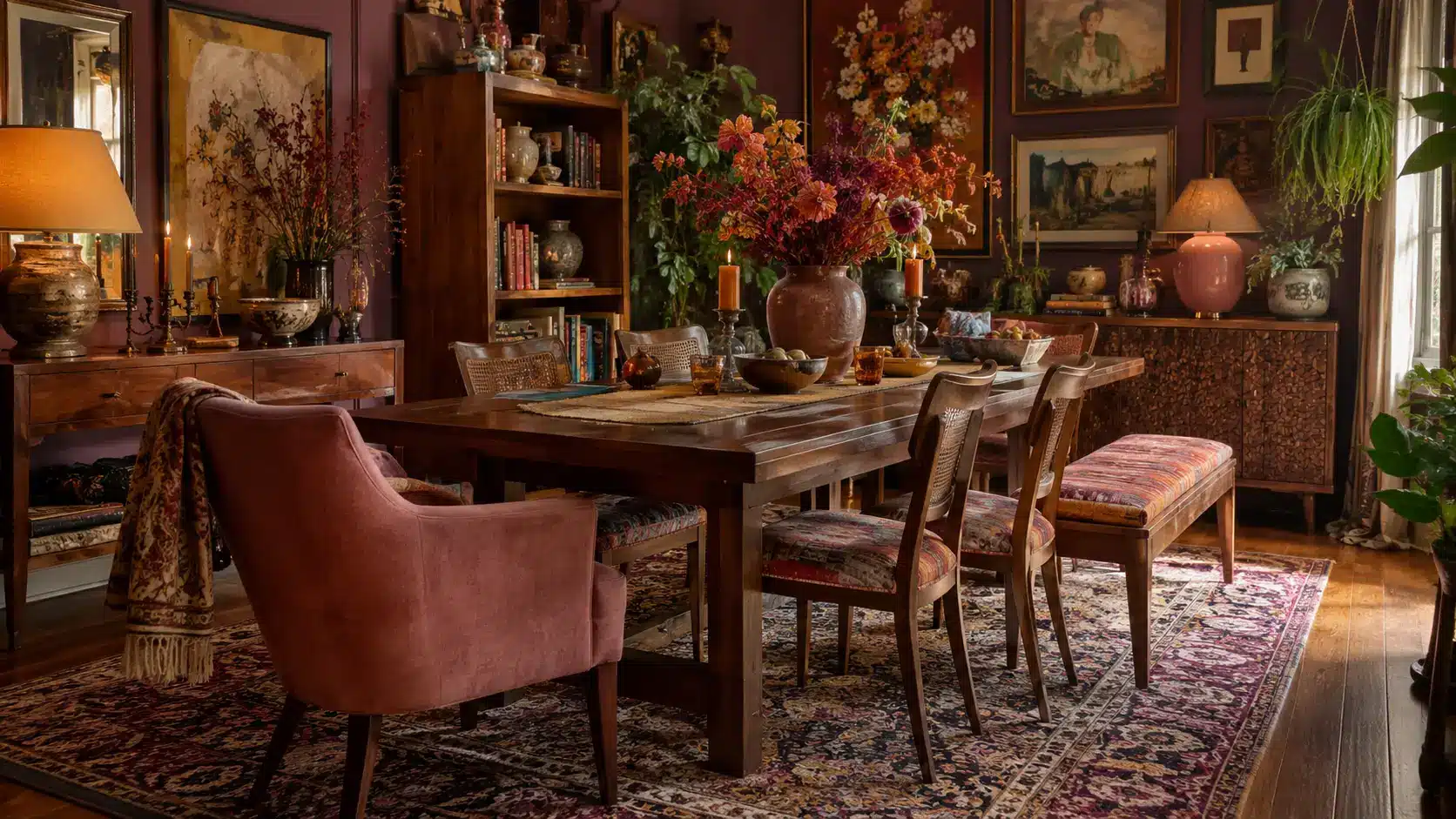
Combine dining chairs, a bench on one side, and one upholstered carver at the head. Connect them through one shared detail such as wood tone, seat height, or a repeated color in the fabric. The table area feels genuinely collected rather than purchased as a matching set.
11. Create a Strong Pattern Backdrop for a Home Office
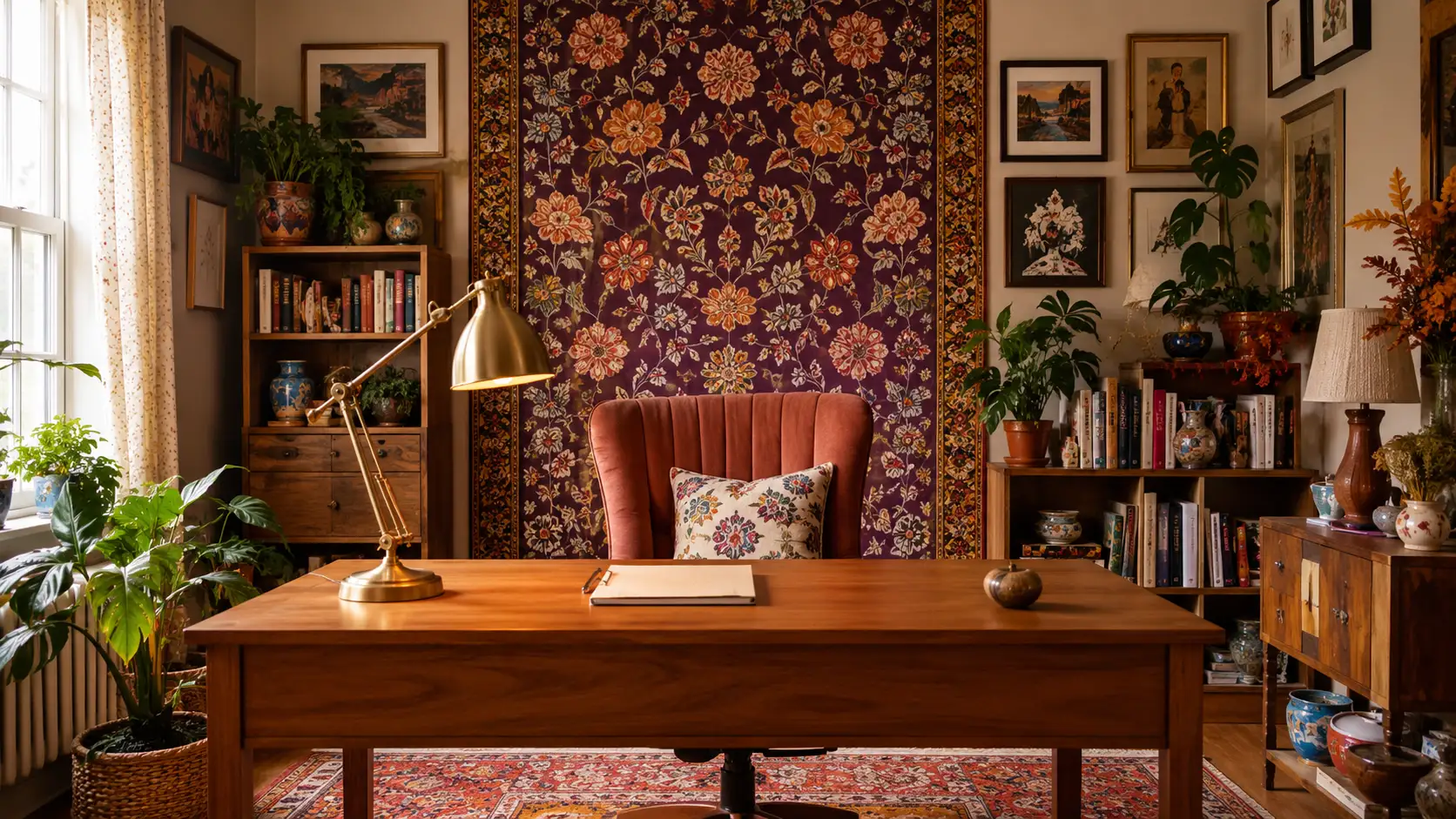
Use removable wallpaper, a fabric panel, or a dense gallery arrangement behind the desk chair. Keep the desk surface itself clear and functional. The backdrop gives the workspace a personal visual identity and reads well on video calls. The same thinking behind transforming a single wall applies to fresh interior design ideas across the rest of the home.
12. Use a Folding Screen Covered in Printed Fabric
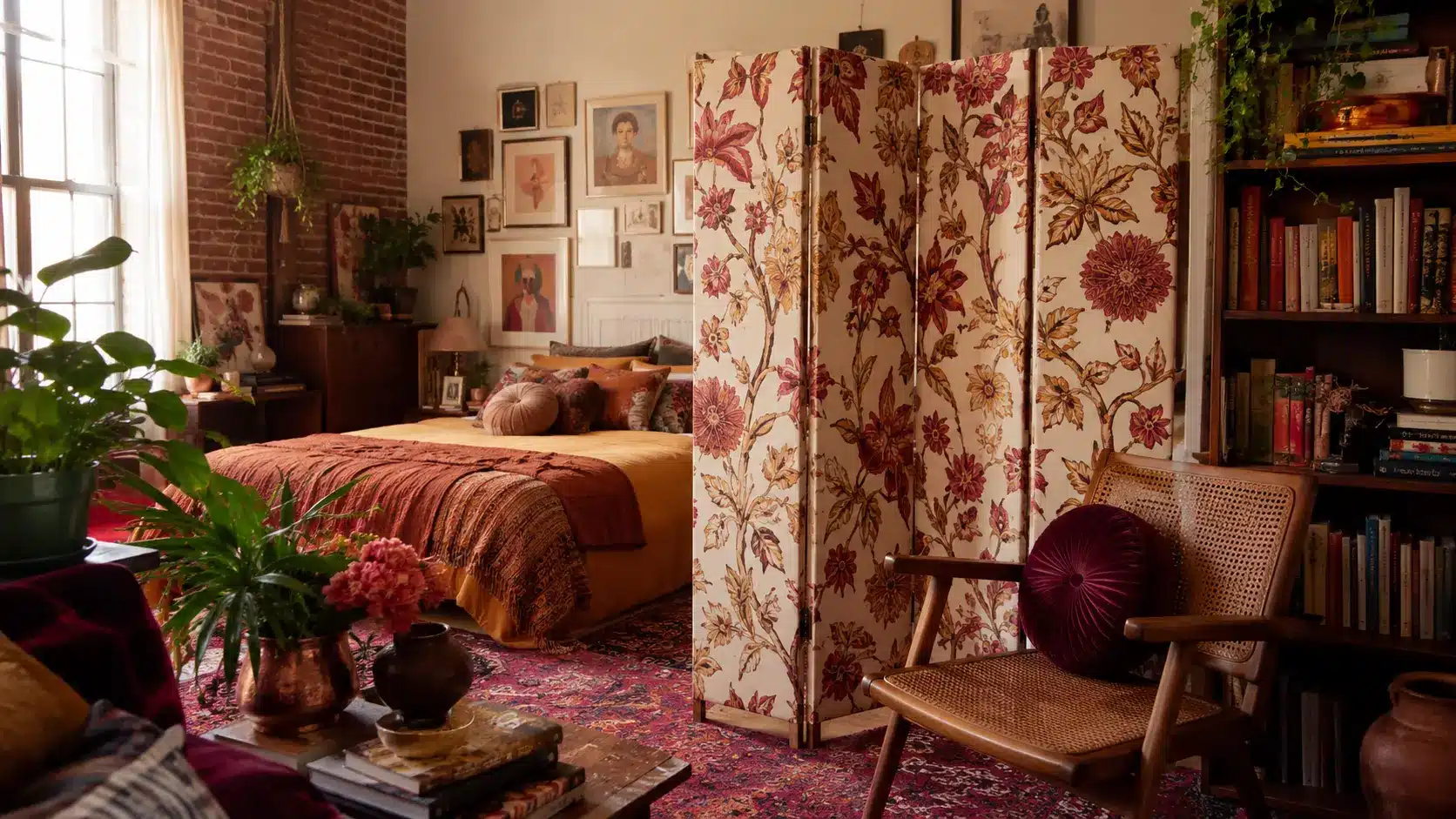
Place a fabric-wrapped folding screen to divide a room, frame a bed, or create a visual backdrop behind a chair. Choose a print that repeats one color already present in the space. Screens move easily, require no installation, and work particularly well in rentals and studio apartments.
13. Hang a Vintage Quilt or Textile as the Main Wall Piece
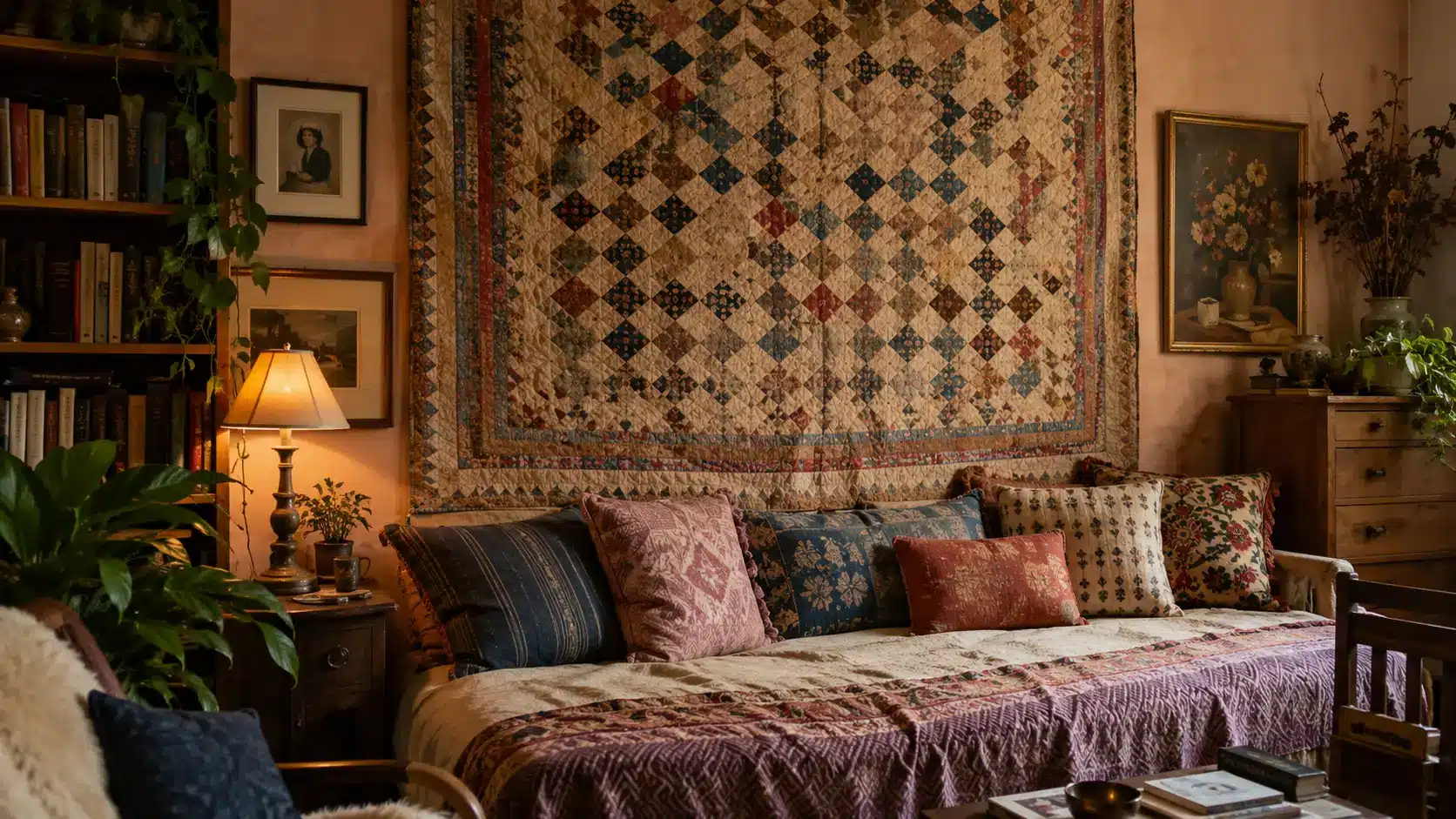
Mount a large quilt, antique rug fragment, or tapestry-style textile above a sofa or bed instead of framed art. The scale and texture read as strongly as any painting. Keep nearby objects quieter so the textile holds its authority as the dominant piece in that area of the room.
14. Build a Maximalist Bar Cart That Earns Its Space
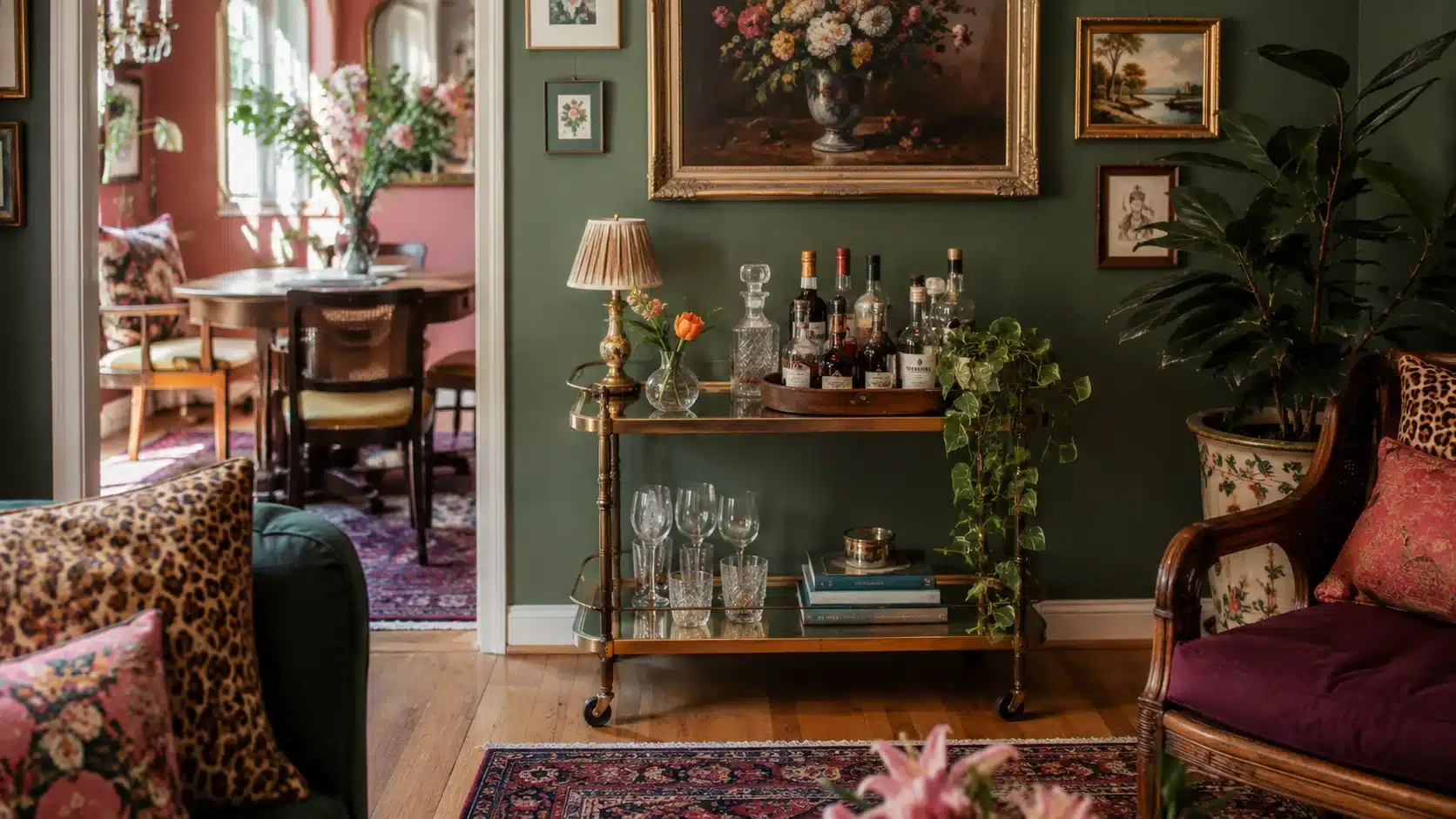
Style a bar cart with glassware, two stacked books, a small lamp or bud vase, a tray of bottles, and one trailing plant. Trailing hoya varieties work particularly well here; they stay compact, drape naturally over the shelf edge, and need almost no maintenance. Leave enough clear space to actually use the cart.
15. Use Limewash Walls as a Textured Base for Art and Objects
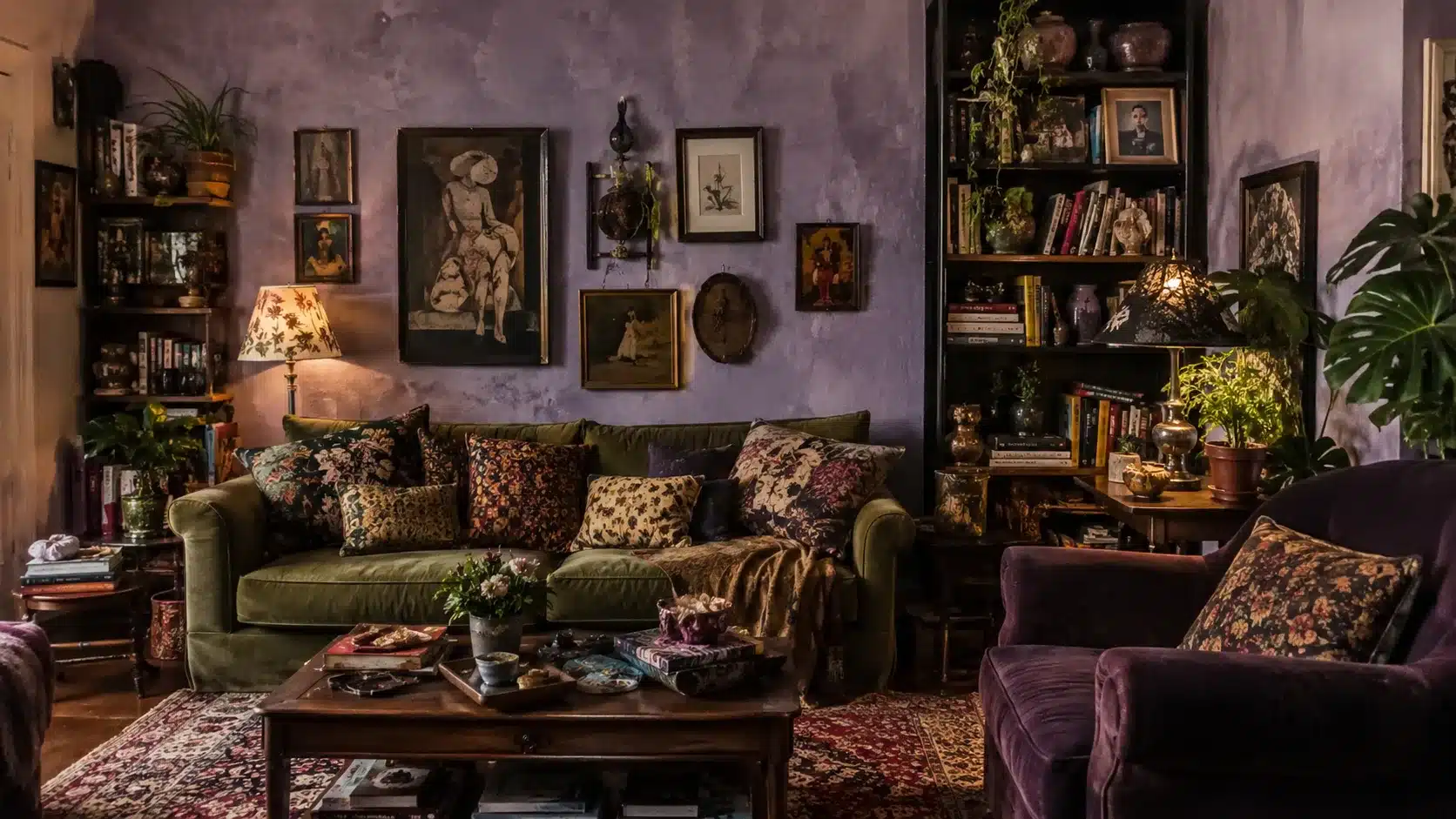
Apply limewash paint in deep ochre, aged rose, or dusty green to create a textured, matte backdrop. The slightly uneven surface adds depth without competing with what sits in front of it. Art, shelving, and collected objects read more clearly against a limewash finish than against a flat-painted wall.
16. Style a Window Ledge as a Miniature Installation
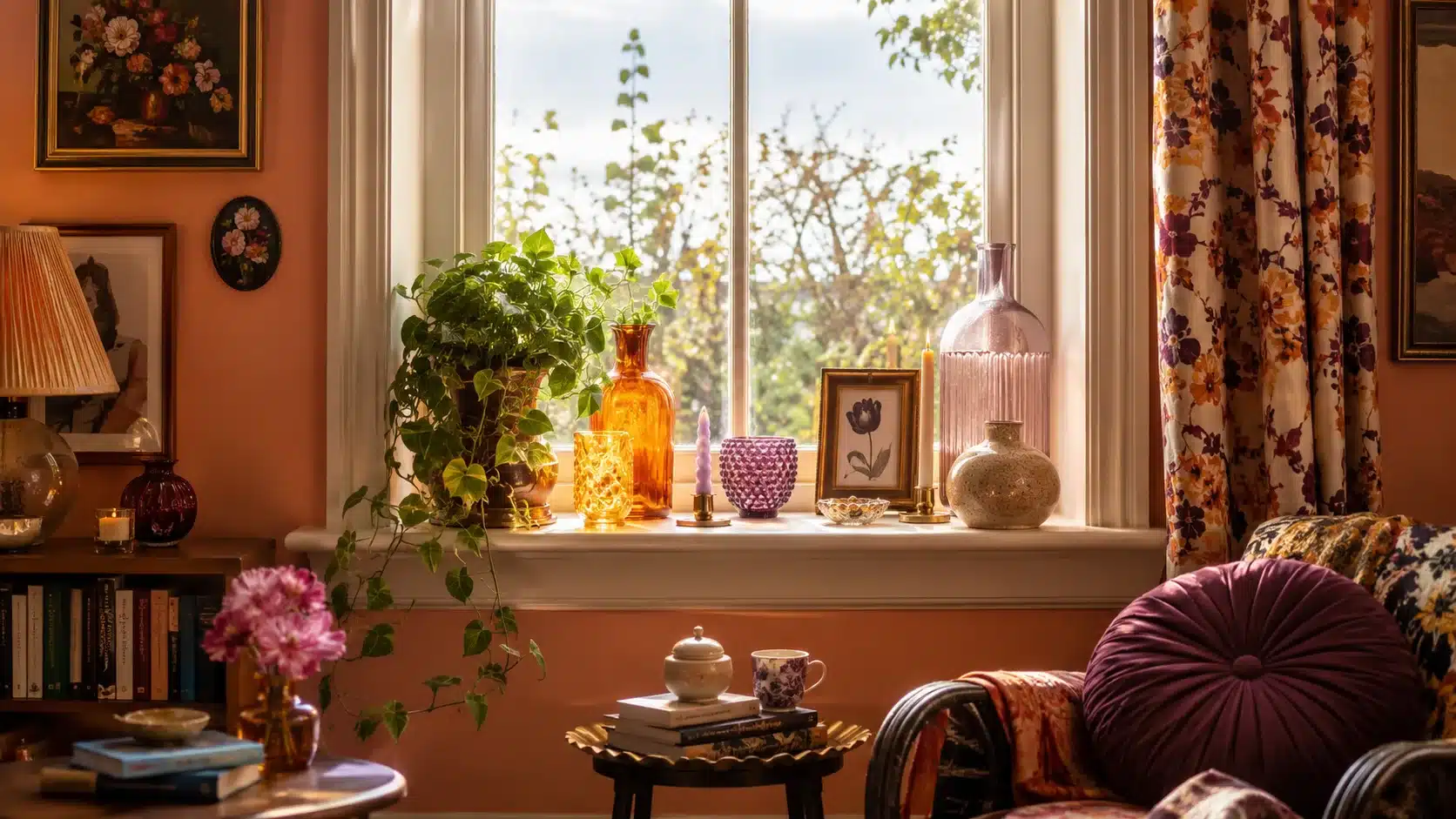
Use a window ledge for small colored glass vessels, ceramics, a trailing plant, and one framed mini print varying in height. The objects catch natural light and add color to the room without occupying floor or wall space. This works particularly well in kitchens, bathrooms, and east-facing bedrooms.
17. Oversized Botanical Wallpaper to One Chimney Breast or Alcove
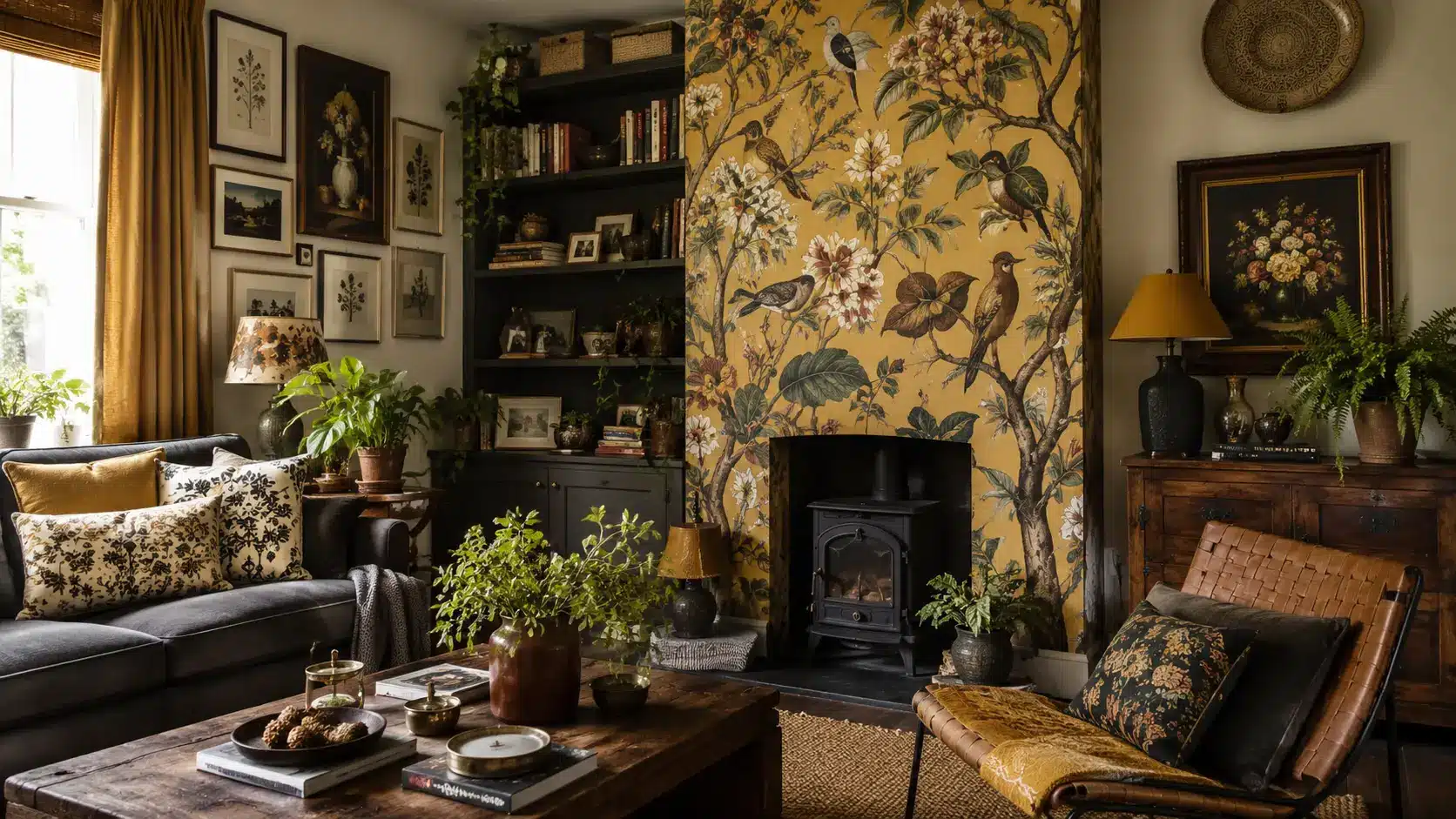
Rather than papering a full room, use a bold bird, botanical, or mural-style wallpaper on a chimney breast or within one alcove only. The contained placement gives the pattern maximum impact without overwhelming the rest of the room. Pull two colors from the print into nearby cushions or lampshades.
18. Swap Cabinet Hardware for Colored Ceramic or Glass Knobs
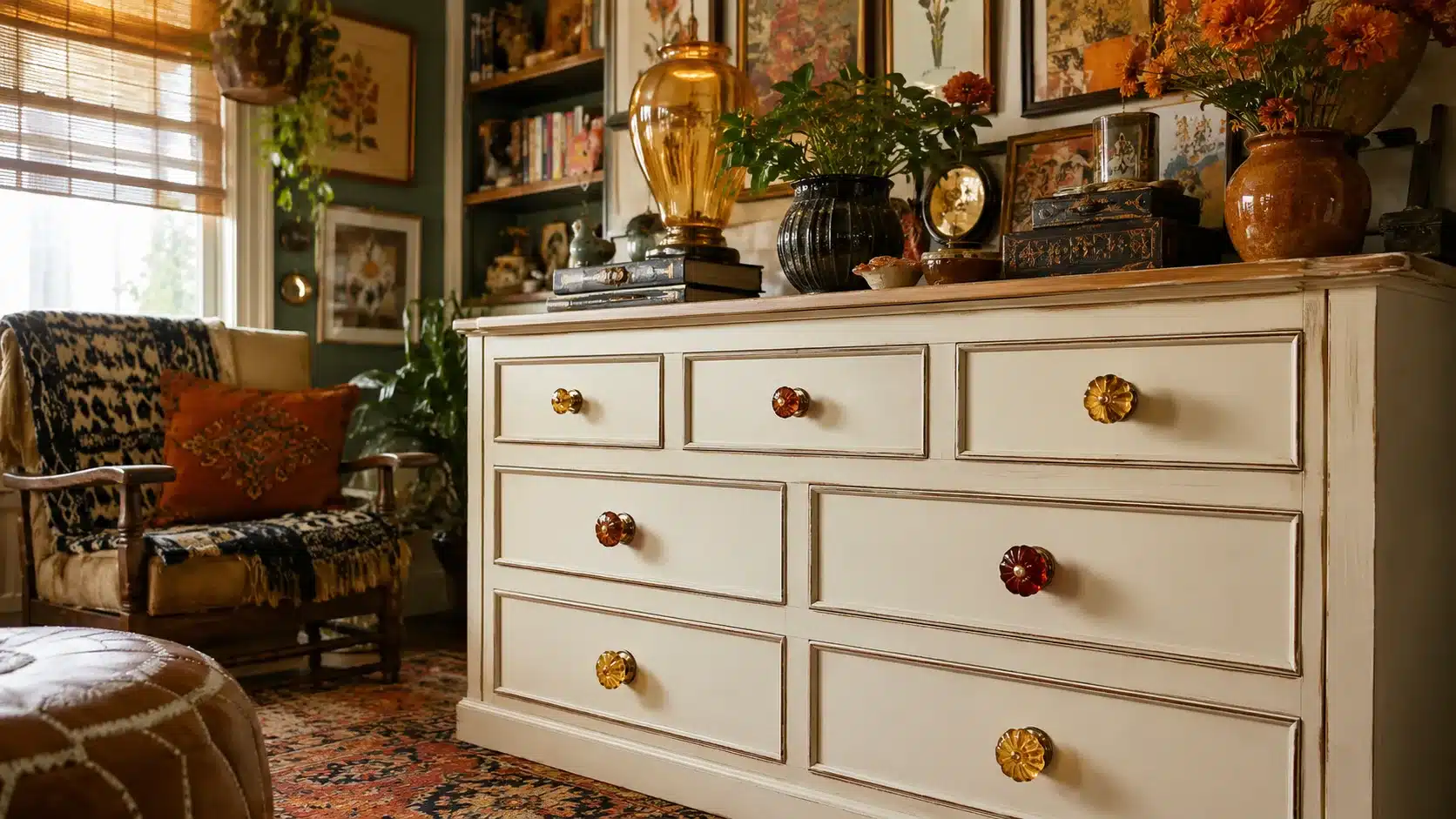
Replace plain metal hardware on dressers, kitchen cabinets, bathroom vanities, or built-ins with hand-painted ceramic, colored glass, or vintage brass knobs. This small change delivers maximalist detail across every drawer without buying new furniture. Connect the knob colors to something already present in the room.
19. Use a Patterned Tablecloth as a Daily Design Layer
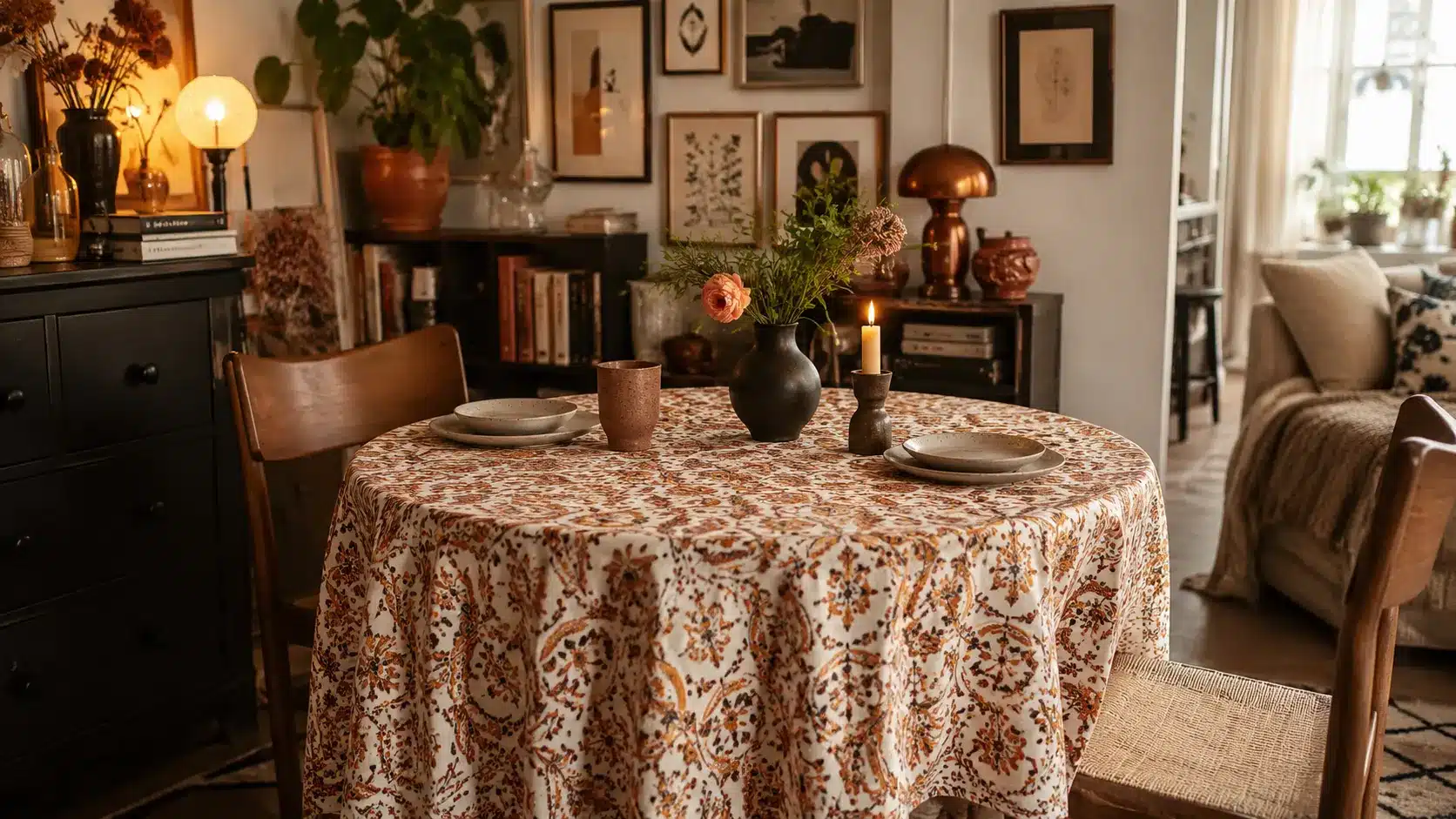
Keep a bold printed tablecloth on the dining table or a small round side table as a permanent design layer rather than occasional use. Choose a washable fabric in a pattern that repeats a color from the room. It changes the feeling of a space faster than almost anything else.
20. Create a Rotating Display Shelf That Refreshes With the Season
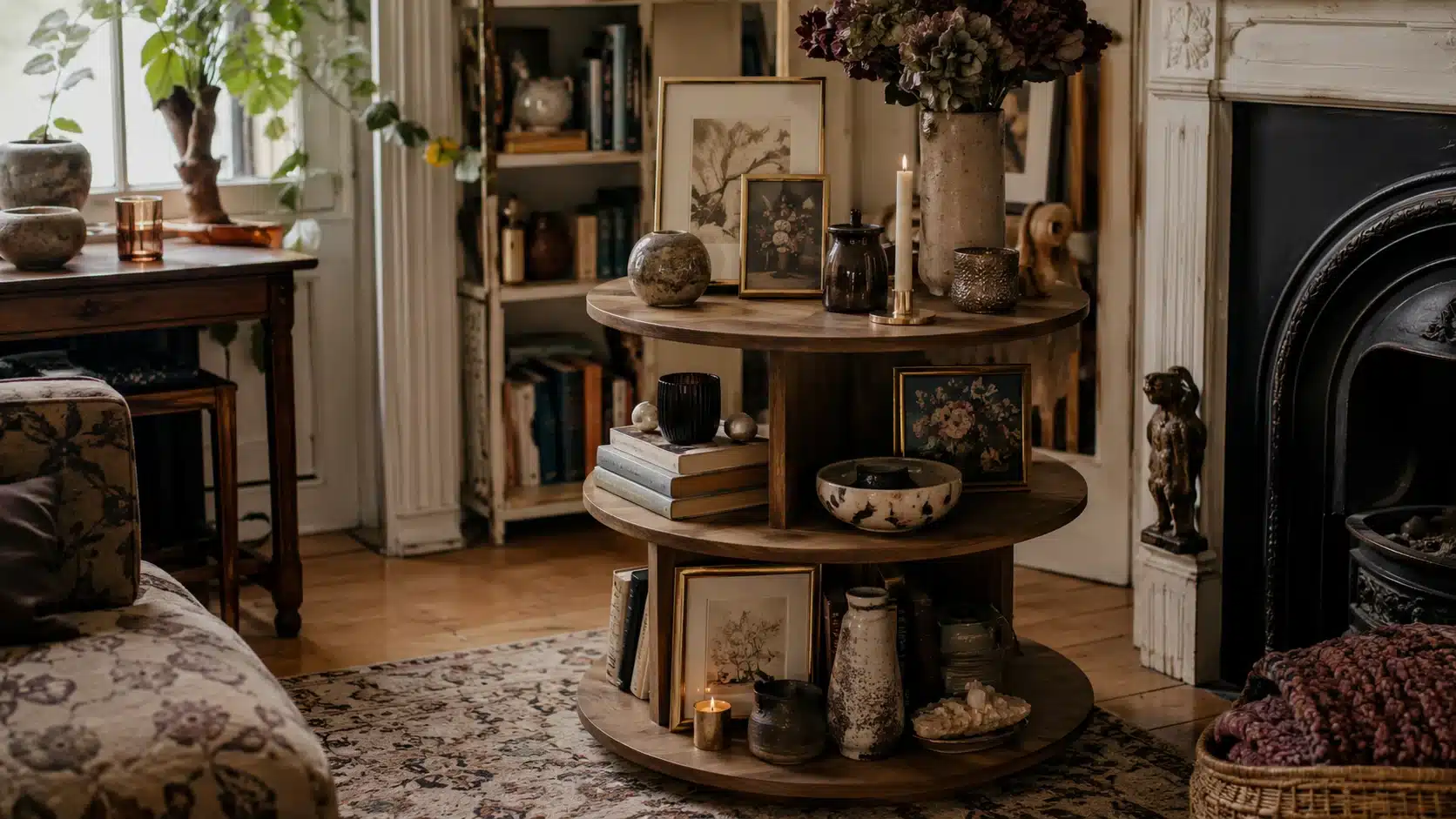
Dedicate one shelf entirely to objects that rotate by season, mood, or color rather than staying fixed year-round. Swap ceramics, small framed pieces, books, and candles every few months. When plants are part of your rotation, a dedicated plant corner nearby keeps the greenery organized and easy to cycle in or out without disrupting the rest of the shelf arrangement.
21. Keep Walls Quiet and Let the Furniture Be Loud
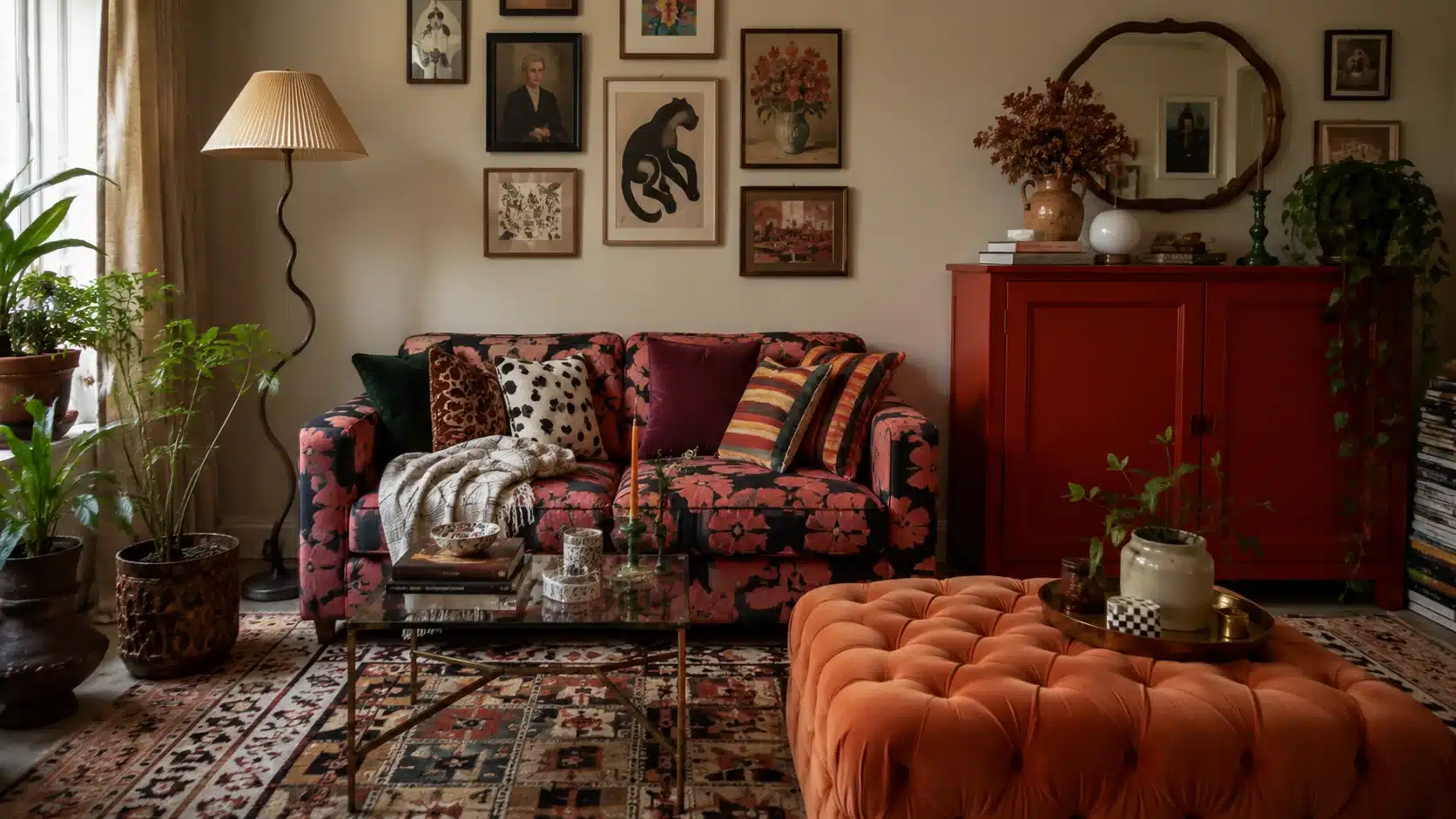
Choose a soft neutral wall color and invest the visual energy in a patterned sofa, painted cabinet, colorful chairs, or a bold ottoman. For renters or anyone unable to paint, this approach delivers full maximalist impact through movable pieces while keeping the room easy to refresh later.
22. Add Color Directly to Door Frames and Window Trim
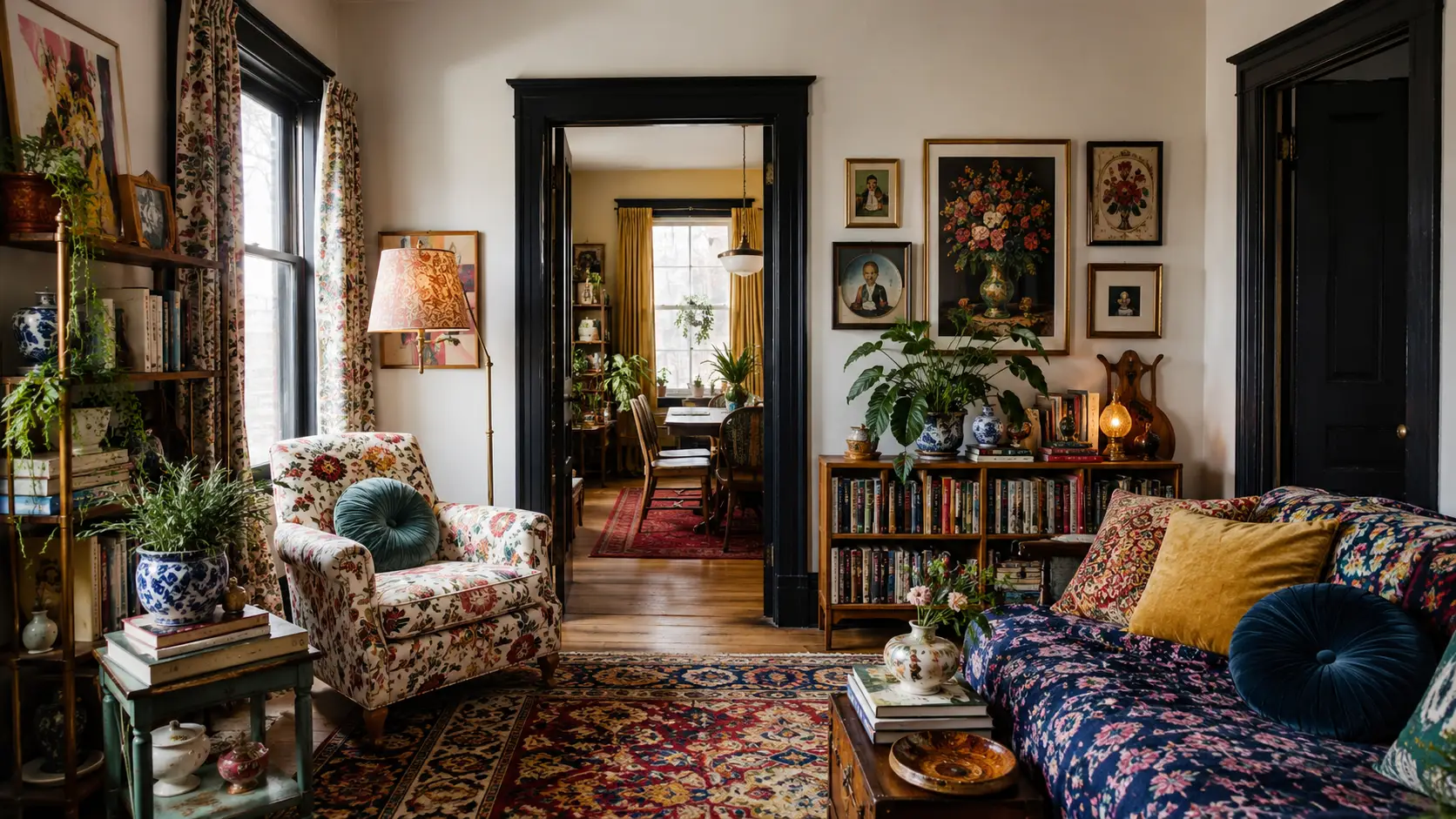
Paint only the door frames, window molding, or closet trim in a contrasting strong color rather than committing to a full wall. Deep green trim on a cream wall, burgundy on warm white, or black on sage all give the room a graphic, finished quality with minimal effort and paint.
23. Restyle What You Own Before Buying Anything New
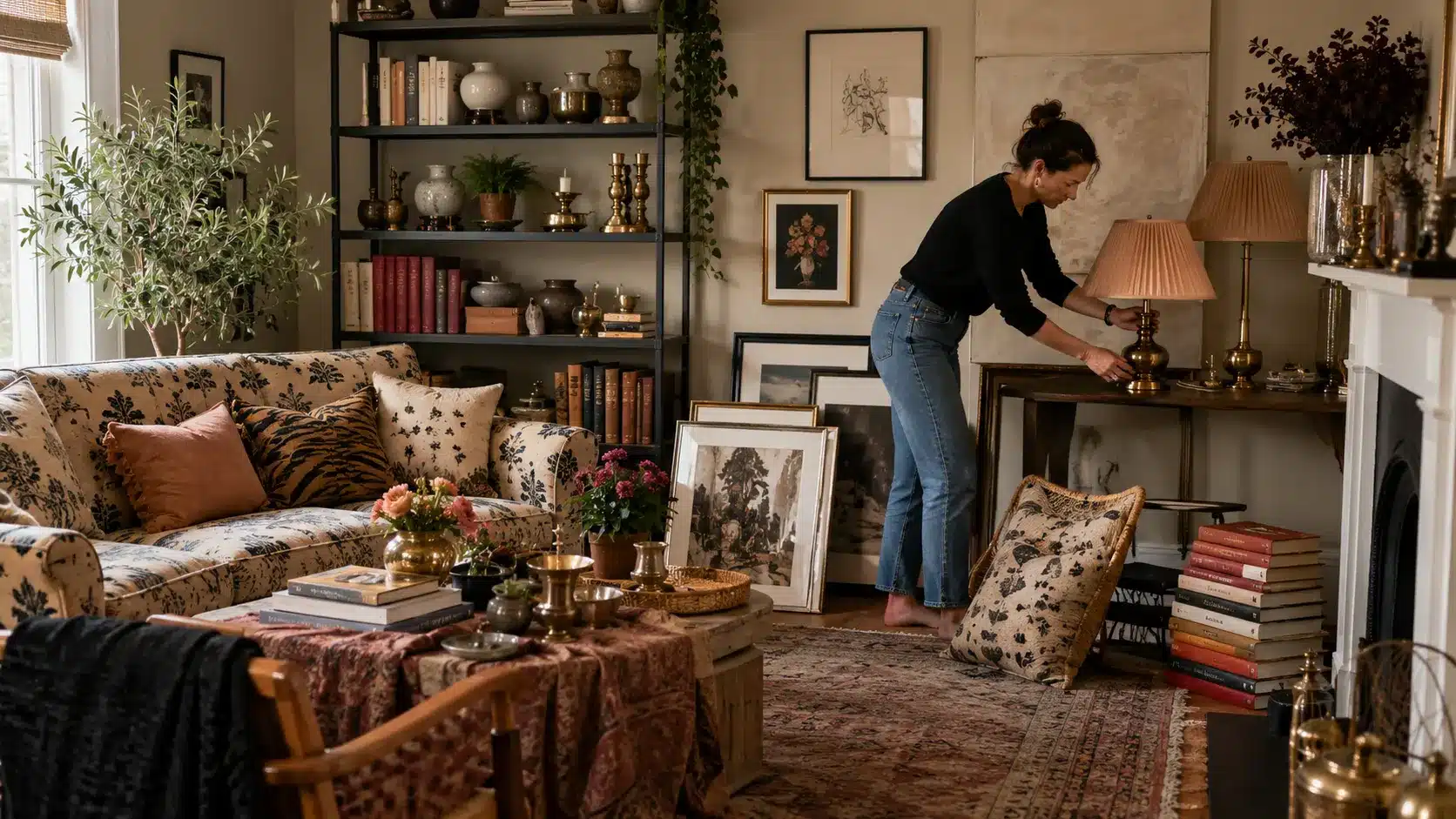
Move art to a different wall, swap lamps between rooms, stack books by spine color, group objects by material, and layer fabric over a plain table. A room can feel entirely different after a single afternoon of rearranging. Maximalist interior design is about intention as much as accumulation.
These ideas give you strong visual direction for any room. The next step is turning them into a practical plan that keeps the space feeling full and personal without becoming hard to live in.
How to Start Decorating in a Maximalist Style: A Room-by-Room Order
One of the most common questions I get from clients is where to begin. Jumping into every room at once leads to decision fatigue and rooms that feel disconnected from each other. Here is a starting order that works well for most homes:
- Start with the living room. It is the room you spend the most time in and the one that sets the tone for the rest of the house. Get the color palette and anchor pieces right here first.
- Move to the bedroom next. This room benefits from maximalism but also needs to feel restful. Keep the same color thread from the living room but dial the intensity slightly down.
- Treat the entryway as a preview. Even a small entryway can hold a bold mirror, a layered console, and one strong piece of art. It sets expectations before anyone enters the main rooms.
- Let the dining room and kitchen follow. These rooms benefit from maximalism in their details: hardware, tablecloths, open shelving, and collected dishware.
- Use bathrooms and powder rooms for the boldest experiments. Small rooms are low-risk testing grounds for wallpaper, strong color, or a statement mirror you might hesitate to use elsewhere
How to Apply Maximalism Without the Room Feeling Crowded
Maximalist style needs structure behind it. A room can hold many colors, objects, and patterns, but each choice should support the whole space rather than compete with it. These tips keep the look rich without making the room feel difficult to use or hard to move through.
| Tip | What to Do | Why It Works |
| Choose an anchor color | Repeat it in art, textiles, and decor | Connects different pieces across the room |
| Pick one main pattern | Let smaller patterns support it | Stops the room from feeling loud everywhere |
| Vary the scale | Use large, medium, and small pieces | Gives the eye places to rest |
| Keep walkways clear | Leave space around doors and seating | The room stays comfortable to move through |
| Group collections | Keep similar items together | Looks planned rather than random |
| Add lighting layers | Use lamps, sconces, and overhead light | Keeps darker rooms from feeling heavy |
| Edit each surface | Remove items that do not support the room | Keeps the design sharp and readable |
| Repeat materials | Use wood, brass, glass, or ceramic more than once | Creates a common thread without matching everything |
A few smaller moves also help:
- Start with one room before changing the whole home
- Use photos to check if a corner feels too busy
- Keep daily-use surfaces partly clear
- Use trays to control small objects
- Add slowly instead of buying everything at once
Even the most layered rooms have limits. Once you know how to build the look, it helps to know which choices tend to make maximalism feel messy or hard to live with over time.
The Mistakes That Turn a Rich Room Into a Cluttered One
Maximalist interior design goes wrong when every piece competes at the same volume. The goal is not to lose personality. It is a better placement, more control, and a clear reason for each layer in the room.
- Buying random decor without a plan: The room starts to feel disconnected when every item comes from a different idea. Set a color palette first, then buy pieces that support it
- Filling every surface completely: A full table, shelf, or console can quickly feel messy. Leave a few open spots so the room has space to breathe
- Using the same-size patterns throughout: Prints can compete when they are all similar in scale. Mix one large pattern, one medium pattern, and one smaller print
- No main color running through the room: Without a repeated color, the space can feel scattered. Repeat three to five key colors across art, textiles, furniture, and objects
- Too many small items are spread everywhere: Small pieces lose impact when scattered across the room. Group them on trays, shelves, or tabletops so they feel more intentional
- Relying only on harsh overhead light: One ceiling light can make a full room feel flat and heavy. Add table lamps, floor lamps, sconces, or picture lights
When these mistakes are avoided, the maximalist style becomes easier to live with every day. The room can feel full, expressive, and genuinely personal while still staying comfortable and useful.
Where to Find Inspiration for Your Maximalist Rooms
Start with places that already feel full of life. Flea markets, vintage shops, art fairs, fabric stores, and old family photos can give you color pairings, pattern ideas, and personal pieces to build around. The garden is an often-overlooked source of texture and color — the same earthy tones that inform outdoor garden decoration translate naturally into warm indoor palettes built around terracotta, sage, and stone.
A maximalist room works best when it feels collected, not copied. Look at boutique hotels, restaurant interiors, fashion editorials, and museum rooms for bold styling ideas, then adapt one or two details at home.
Social media can help, too, but use it for direction rather than a full-room template.
Save rooms that make you pause, then ask what stands out: the wallpaper, layered rugs, oversized art, mixed furniture, or unexpected color. Those small clues can shape a room that feels expressive and personal. Where plants are part of the layering, a creative indoor plant wall adds living texture to a bare surface without requiring any framed art at all.
Some of the best maximalist rooms I have ever seen in Houston homes had nothing to do with trends. They reflected the actual life of the person living there: travel souvenirs grouped with intention, family ceramics displayed on open shelving, books arranged by color on a painted back panel. The inspiration for those rooms came from within the house, not from a social media scroll. Start there before you look anywhere else.
Build It Slowly, Make It Yours
Maximalism works best when your room feels full for a reason, not packed for effect. I’d start with one space, one color thread, and one anchor piece you truly like. Then you can add art, pattern, lighting, books, plants, and collected objects slowly.
The key is repetition, clear spacing, and pieces that share something in common. Maximalist interior design gives you room to show personality while still keeping the space useful and comfortable.
When you avoid random buying and edit each surface, the room feels rich instead of cluttered. Try one idea this week, then share which room you plan to work on next at home.