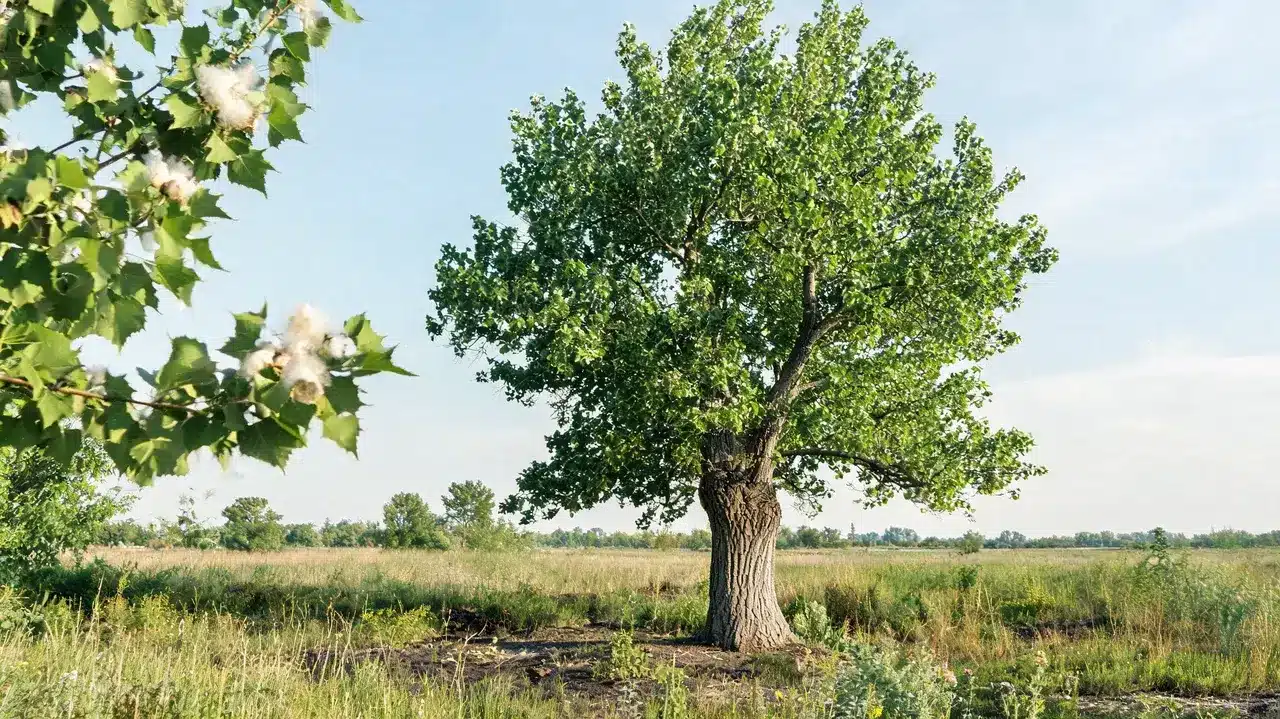
There is a decent chance you have stood under a cottonwood tree without ever learning its name. A cottonwood tree is a fast-growing deciduous tree in the Populus genus and Salicaceae family.
Maybe it was the one shading a parking lot, or the one along a riverside trail that always seems to be moving even on a still day.
Once you learn to spot one, you start noticing them everywhere, tucked along creek beds, lining old farm roads, standing alone in open fields. Once that happens, you will want to know more about the tree behind it.
What Is a Cottonwood Tree?
A cottonwood tree is a fast-growing deciduous poplar in the genus Populus and the willow family, Salicaceae, best known for its wind-fluttering leaves and the cotton-like seed fluff produced by female trees. The best-known species is Eastern cottonwood (Populus deltoides).
- Genus and family: Cottonwoods belong to the genus Populus in the willow family, Salicaceae.
- Growth habit: Forms a broad, spreading crown with a wide canopy at maturity.
- Preferred ground: You’ll usually find them on sunny ground near moving or seasonal water.
Cottonwoods are dioecious, meaning male and female flowers grow on separate trees, and only female trees produce the fluffy white seeds that give the cottonwood its name; these are released when seed capsules split open and scatter seeds wrapped in cotton-like hairs.
Here’s a quick snapshot of the key facts before moving further:
| Fact | Cottonwood Information |
|---|---|
| Genus | Populus |
| Family | Salicaceae |
| Typical height | About 65-100 feet for Eastern cottonwood |
| Leaf shape | Broadly triangular with toothed edges |
| Bark | Smooth when young; thick and furrowed with age |
| Common habitat | Riverbanks, floodplains, sandbars, and washes |
Cottonwood Tree Identification Features
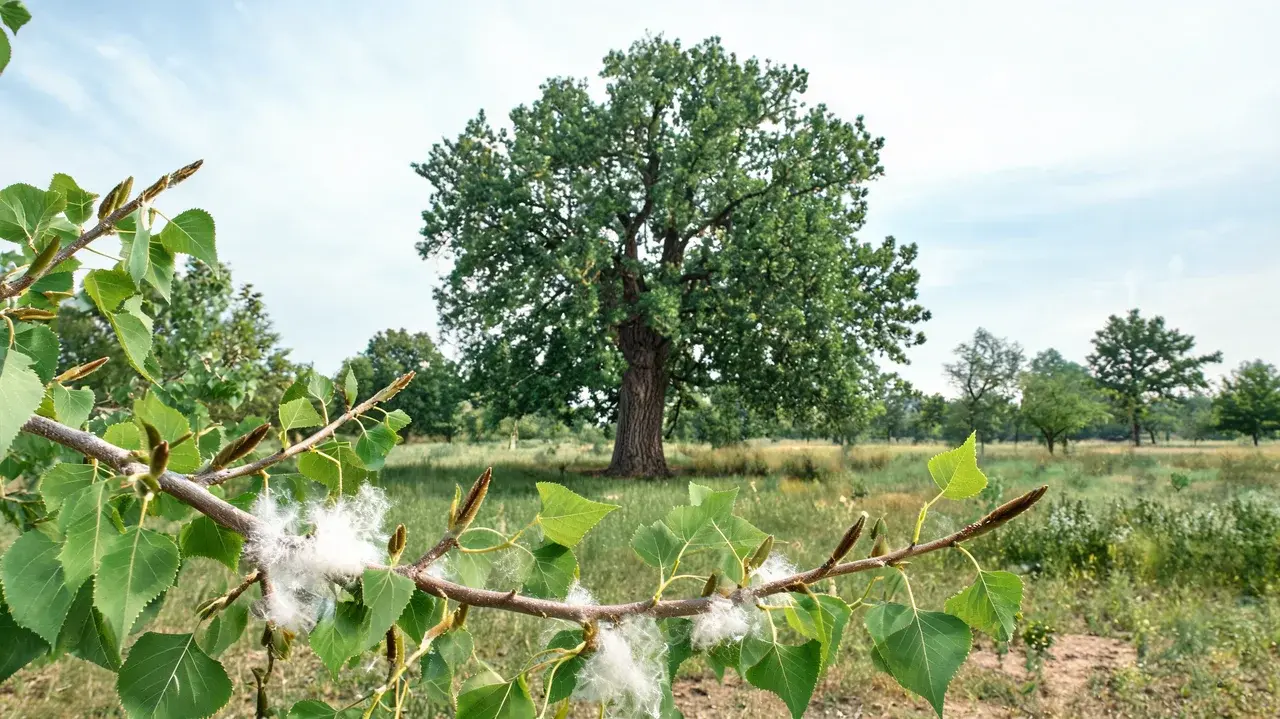
Cottonwood trees can look different from one region to the next, but a few features stay consistent everywhere.
1. Broad and Triangular Leaves
Cottonwood leaves are simple, alternate, and usually triangular with coarse teeth along the edges.
Eastern cottonwood leaves have a shiny green surface and a lighter underside. This shaking motion is one of the easiest ways to recognize the tree.
2. Bark That Changes With Age
Young cottonwoods have smooth, thin bark that may appear yellow-green or silvery. As they mature, the bark becomes gray or brown and develops deep furrows with raised ridges.
Older trunks have a rough texture that helps distinguish large cottonwoods from many other riverside trees.
3. Stout Twigs and Sticky Buds
Cottonwood twigs are thick, while winter buds are long, pointed, and covered with a sticky resin coating.
Black cottonwood buds are especially noticeable because they release a balsam-like scent when they open in spring, making them easier to identify.
4. Catkins and Cotton-Like Seeds
Cottonwood flowers appear as hanging catkins, with male and female flowers growing on separate trees.
Female trees produce seed capsules that open in late spring or early summer, releasing tiny seeds covered with white hairs that drift through the air and give the tree its name.
Main Types of Cottonwood Trees
Not every “cottonwood” name refers to a separate species. Some are subspecies of Populus deltoides spread across different regions, while black cottonwood stands alone.
1. Eastern Cottonwood
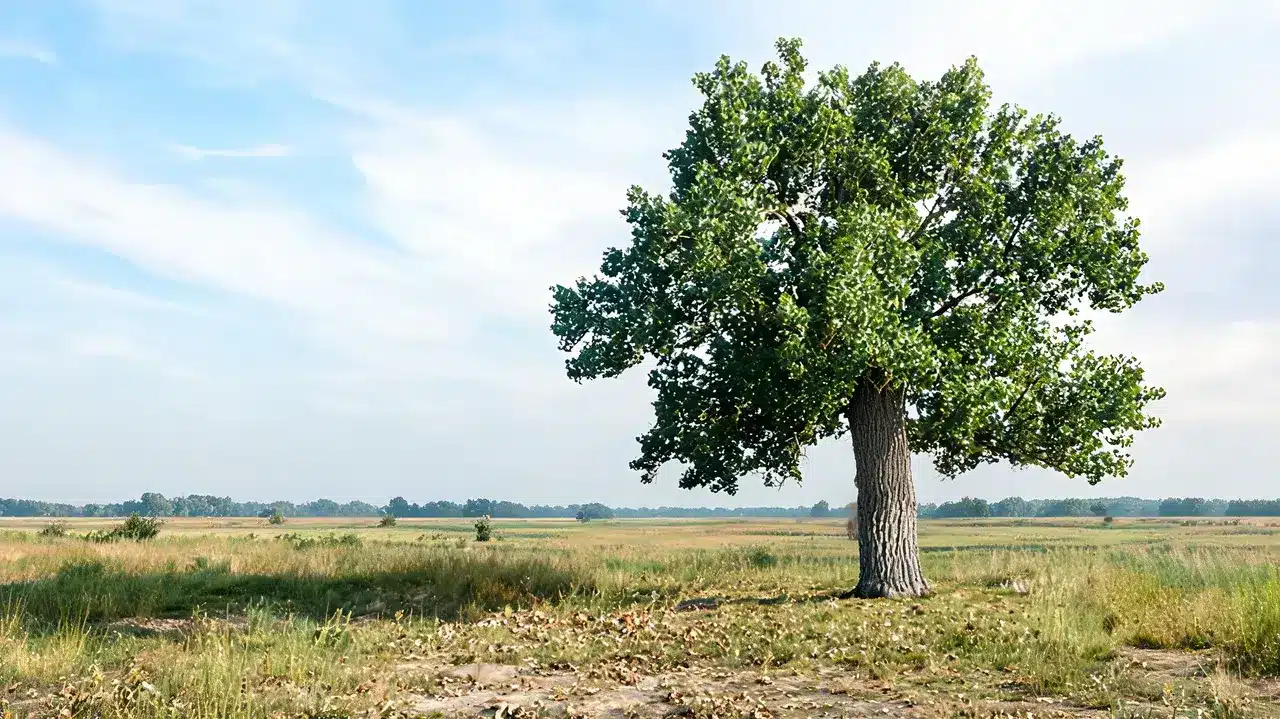
Found across eastern and central North America, this is the type most people picture first, known for broad, triangular, coarsely toothed leaves.
- Scientific name: Populus deltoides subsp. deltoides
- Habitat: River bottoms and floodplains
2. Plains Cottonwood
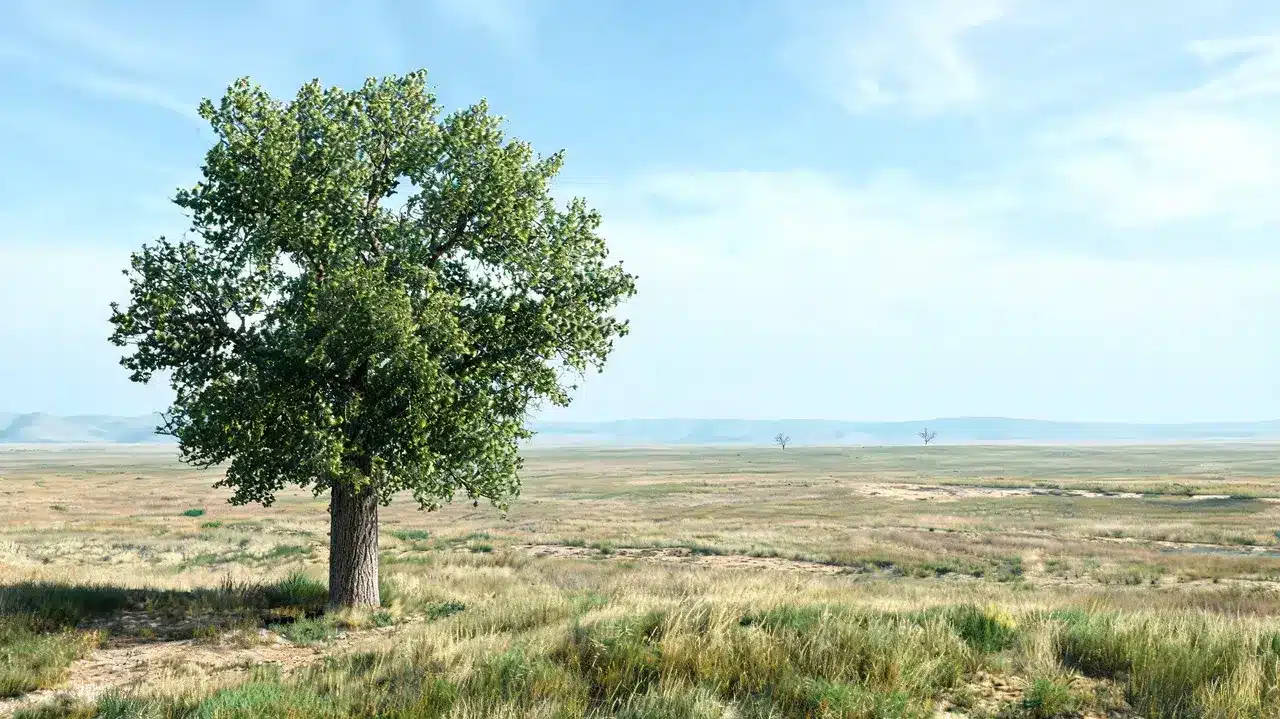
This type grows across the central United States and into southern Canada, closely tied to prairie rivers and streams. It is Wyoming’s state tree.
- Scientific name: Populus deltoides subsp. monilifera
- Habitat: Great Plains waterways
3. Rio Grande Cottonwood
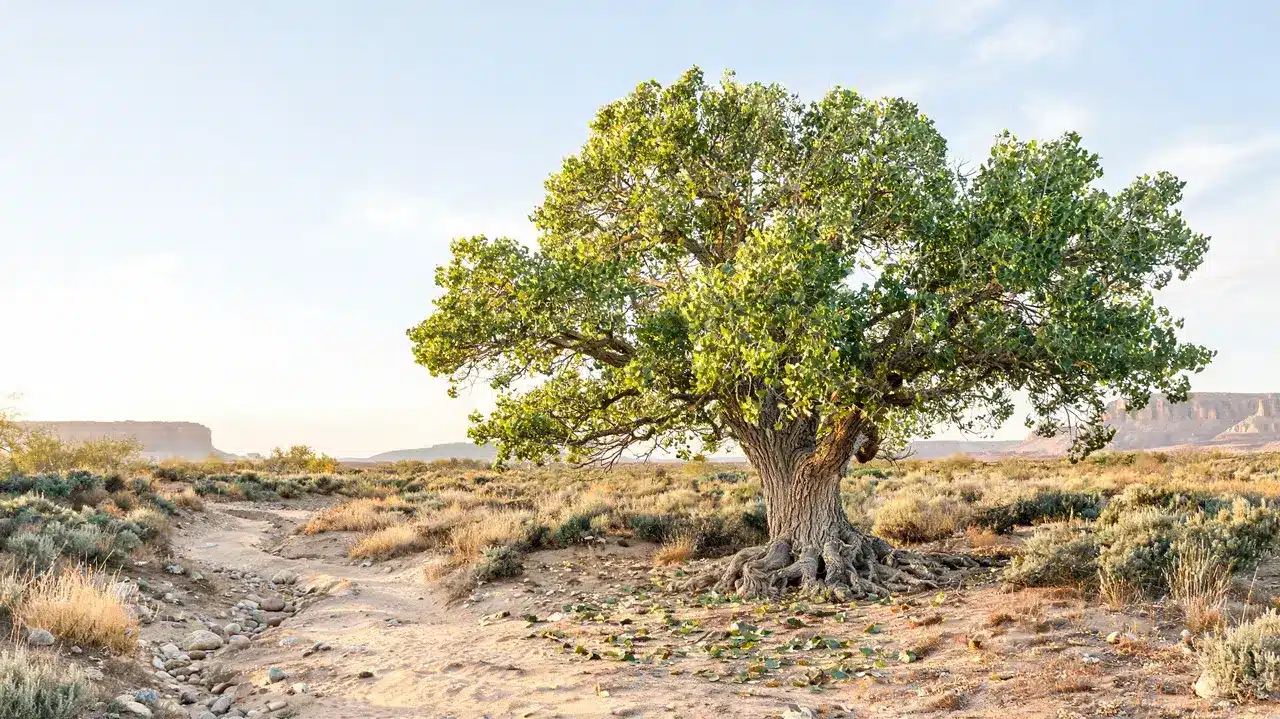
Found from southern Colorado through New Mexico, Texas, Arizona, and into northeastern Mexico, this type favors washes and canyon bottoms in drier landscapes.
- Scientific name: Populus deltoides subsp. wislizeni, also called Fremont’s cottonwood or meseta cottonwood
- Habitat: Desert washes and canyon bottoms
4. Black or Western Cottonwood
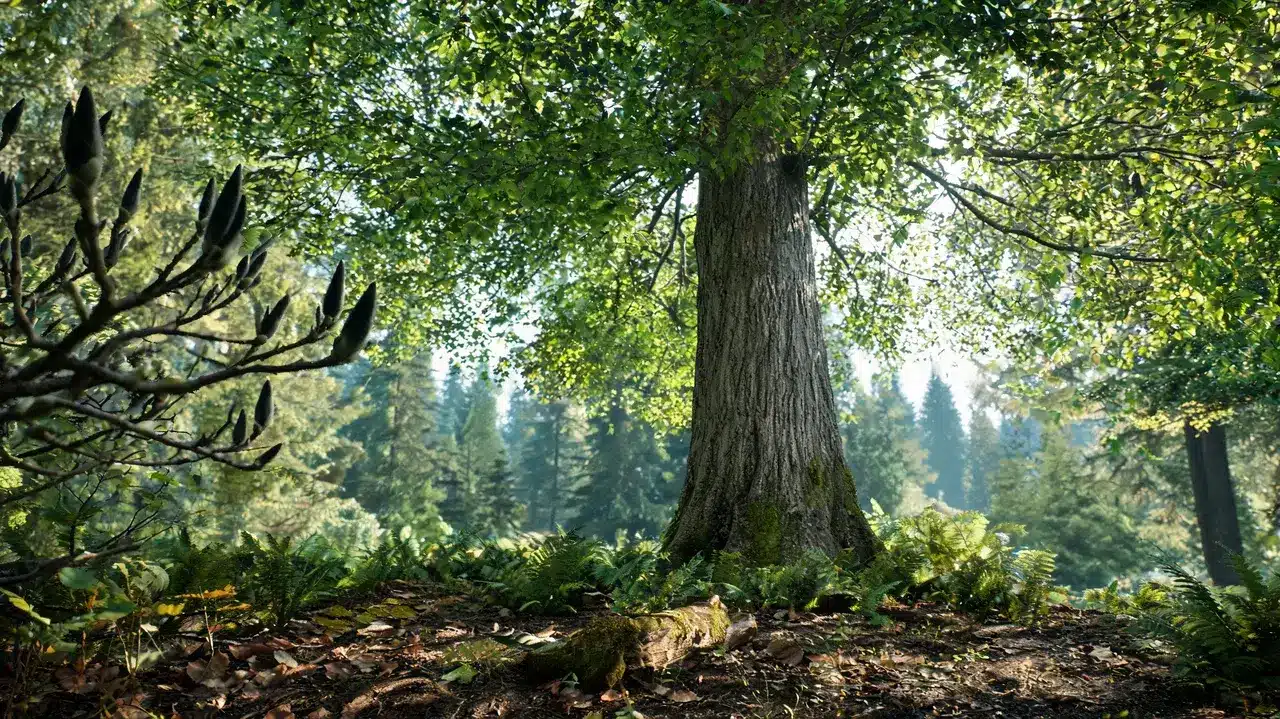
Native to western North America, this type has long, sticky, balsam-scented buds and is the largest cottonwood species. It can exceed 150 feet in height, with exceptional trees growing taller.
- Scientific name: Populus trichocarpa
- Habitat: Moist bottomlands, streams, rivers, and humid coastal forests
Where Cottonwood Trees Grow
Cottonwoods grow across much of North America, usually near areas with reliable moisture rather than standing water. They thrive along rivers, streams, floodplains, and washes where sunlight and suitable soil help young trees establish.
| Growing Factor | Details |
|---|---|
| Natural range | Eastern, central, and western North America, depending on species |
| Habitat | Riverbanks, floodplains, stream bottoms, and canyon washes |
| Sunlight | Full sun for healthy growth |
| Soil | Moist, open sand, silt, or gravel with limited plant competition |
Most cottonwoods share one key need: access to moisture throughout their growing environment.
Cottonwood Growth and Reproduction
Cottonwood growth and reproduction explain how these trees reach impressive sizes and continue spreading across their natural habitats.
Cottonwood Growth Rate and Lifespan
Cottonwoods are among the fastest-growing trees in North America, often gaining several feet in height each year when conditions are suitable.
They develop broad crowns and large trunks as they mature, with size and lifespan depending on species, water availability, soil quality, and climate.
How Cottonwood Trees Reproduce
Cottonwoods reproduce through seeds and vegetative growth. Male trees produce pollen catkins, while female trees produce seed capsules that release millions of tiny seeds carried by wind and water.
These seeds need moist, open soil to grow. Cottonwoods can also spread through roots, stumps, and buried branches, especially near waterways. The U.S. Forest Service notes that sprouting success can vary after natural disturbances.
Are Cottonwood Trees Good for Yards?
Cottonwoods bring real benefits in the wild, but that same fast growth and large size can cause problems closer to home. Here are a few practical downsides worth knowing before planting one nearby.
- Branch breakage: Mature limbs may become hollow and break during storms.
- Fast growth: Weak wood can develop as the tree gains size quickly.
- Root spread: Large roots need considerable space to grow without causing damage.
- Seed release: Female trees may produce heavy amounts of white seed material.
- Moisture needs: Long droughts can cause branch loss, leaf drop, or death.
- Large mature size: The tree may not suit small yards or sites close to buildings.
These issues matter most near homes and small yards. If large surface roots are already a challenge, there are still safe ways to landscape around tree roots without harming the tree. In a natural river habitat, the same traits (hollow limbs, fast growth, heavy seed drop) are exactly what make the cottonwood valuable to nearby wildlife. Cottonwoods are excellent choices for large open properties, wildlife areas, and natural landscapes where they have enough space.
Why Cottonwood Trees Matter to People and Wildlife
Cottonwoods have value in both human history and natural ecosystems. Their light, soft wood is used for plywood and furniture parts, while their presence across the Great Plains often helped travelers identify areas where water was nearby.
Cottonwood is also the state tree of Kansas, Nebraska, and Wyoming. In nature, cottonwoods provide important wildlife habitat throughout their lives.
Leaves and twigs support insects and browsing animals, buds provide food for birds, branches create nesting sites, and old hollow trunks offer shelter for birds, mammals, bats, and bees.
The National Park Service notes that cottonwoods along major rivers provide some of the most valuable wildlife habitat in these areas.
As older trees decay, they often become even more useful by creating nesting spaces and shelter. While weak wood can be a concern near homes, natural decay makes mature cottonwoods an important part of river ecosystems.
Frequently Asked Questions
Is a Cottonwood a Poplar?
Yes. Cottonwood trees are poplars because they belong to the genus Populus, the same plant group that includes many trees commonly called poplars and aspens.
Do cottonwoods actually produce cotton?
Not the kind used for fabric. The fluff comes from seed capsules on female trees, and each strand carries a tiny seed meant to drift on wind and water, not the cotton plant fiber used in textiles.
Can cottonwood trees survive flooding?
Cottonwoods can tolerate brief flooding, but prolonged standing water can stress or kill them over time. Young trees face the most risk, since rising water can scour soil away or bury seedlings before their roots take hold.
Why do some cottonwoods lose their leaves early?
Drought stress and leaf rust disease can both cause early leaf drop in cottonwoods. Trees growing in dry sites often lose their leaves before they ever get the chance to develop strong yellow fall color.
Final Thoughts
Cottonwoods are large, fast-growing Populus trees recognized by their triangular leaves, furrowed bark, and cotton-like seeds.
Their connection to waterways makes them important trees for wildlife and natural landscapes across North America.
It is easy to walk past it without a second thought, but once you know what to look for, it tends to stick with you. That little bit of drifting white fluff in early summer will never look quite the same again.
Drop a comment below and tell me what you think of this pretty tree.