Picking a tree for the yard often turns into a bigger decision than people expect. Some homeowners want a fast payoff, others are happy to wait years for something that will still be standing decades from now.
It helps to slow down and think about the yard as it actually is, not as a photo from someone else’s landscape.
The trees below are grouped by what people usually care about most, so browsing feels more like planning than homework.
Quick Picks: Best Arizona Trees by Goal
Every yard has a different priority, whether that means blocking afternoon sun, screening a neighbor’s window, or getting fruit off a low-maintenance tree. This table matches common goals with the trees covered further down the page.
| Goal | Trees to Consider |
|---|---|
| Fast shade | Palo verde, mesquite, Arizona ash |
| Lowest water use | Desert ironwood and willow acacia |
| Flowering color | Desert willow, Texas mountain laurel, chaste tree |
| Privacy screening | Arizona rosewood, green hopseed bush |
| Home fruit production | Citrus, fig, pomegranate |
| Small yards | Texas mountain laurel, pomegranate, Arizona rosewood |
| Year-round greenery | Texas ebony, Arizona rosewood, green hopseed |
Before planting, check mature height and canopy width. A tree that looks small at the nursery may eventually need dozens of feet of space.
How Arizona’s Climate Shapes Tree Selection
Arizona’s growing conditions change dramatically across the state, from the low desert around Phoenix and Tucson to the cooler elevations near Flagstaff and the White Mountains.
Low desert areas deal with intense summer heat, alkaline soil, and long stretches without rain, while higher elevations face frost, snow, and a shorter growing season.
A tree that thrives in one region can struggle in another, so matching a species to local conditions matters more than picking whatever looks appealing at the nursery.
Native and desert-adapted trees tend to need fewer long-term adjustments because they already match the soil and rainfall patterns of the region.
Best Arizona Trees for Phoenix and Tucson
Phoenix and Tucson share low desert conditions, but Tucson gets a bit more summer monsoon rain and slightly milder extremes. University of Arizona Cooperative Extension breaks down which landscape trees perform best across central and southern Arizona.
| Region | Considerations | Trees That Fit Well |
|---|---|---|
| Phoenix and low desert | Extreme heat, alkaline soil, minimal rainfall | Palo verde, mesquite, desert ironwood, desert willow |
| Tucson and Sonoran Desert | Slightly more monsoon rain, similar heat | Palo verde, mesquite, willow acacia, Texas ebony |
| Higher elevations (Flagstaff, White Mountains) | Frost, snow, shorter growing season | Most desert natives need extra winter protection here |
Trees chosen for the low desert usually need little adjustment once established, while gardeners at higher elevations should prioritize cold tolerance over drought tolerance when making a final choice.
Best Shade Trees for Arizona Yards
Shade cuts down on both heat and glare, which matters in a state where summer temperatures regularly climb past 100 degrees.
1. Palo Verde
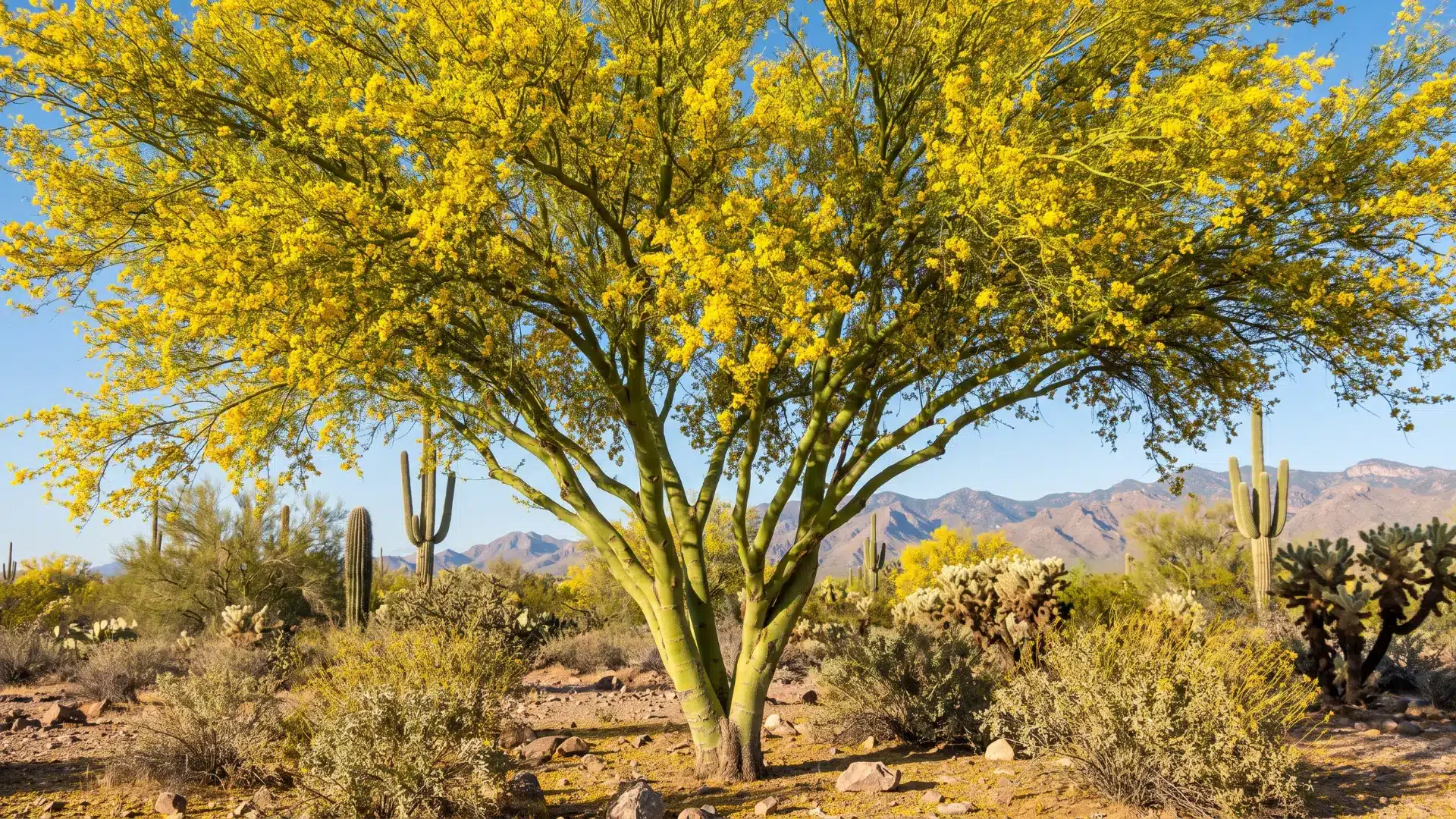
Palo verde is one of Arizona’s most recognizable native trees, known for its green bark and a canopy of yellow spring flowers.
- Botanical name: Parkinsonia species
- Size: 20–40 feet depending on species and conditions
- Water: Low once established
- Bloom: Bright yellow flowers in spring
- Watch for: Brittle branches in high winds
2. Mesquite
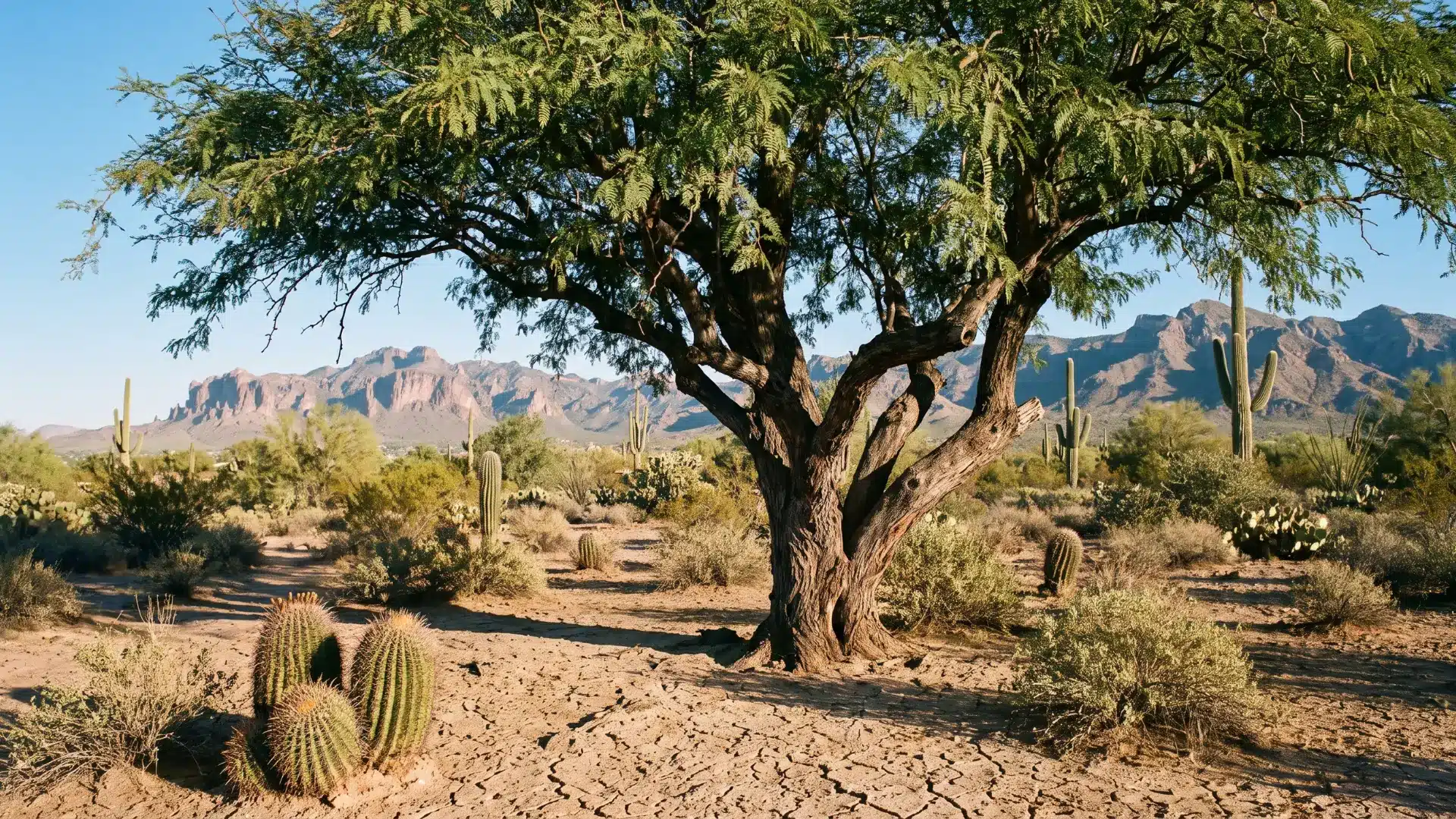
Mesquite spreads a wide, airy canopy and has long been valued across the Southwest for dense natural shade.
- Botanical name: Prosopis species
- Size: 20 to 30 feet tall, wide spreading canopy
- Water: Low once established
- Bloom: Small yellow-green flowers in spring
- Watch for: Thorns on some varieties
3. Texas Ebony
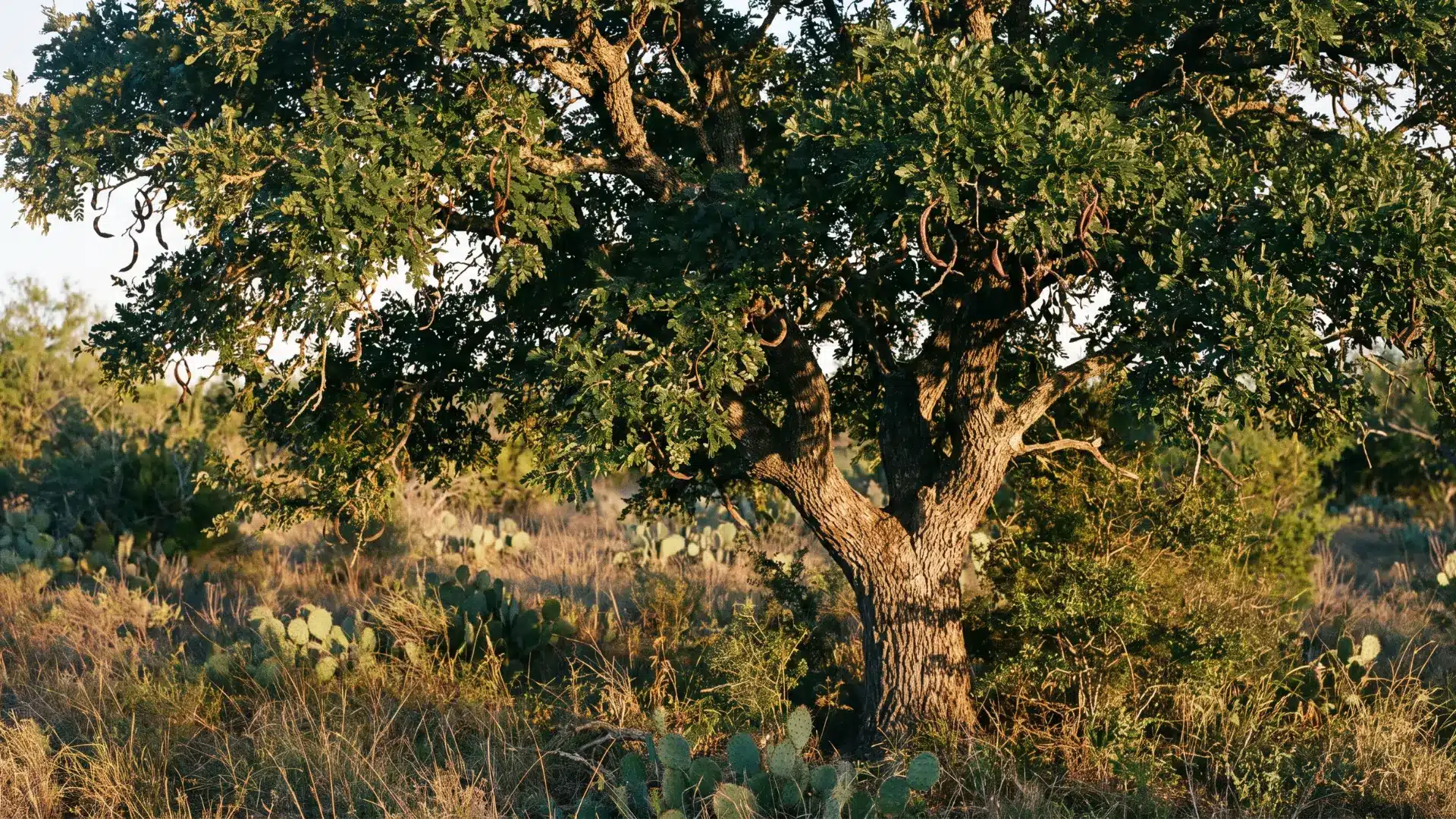
Texas ebony grows slowly but rewards patience with a dense, long-lasting canopy and fragrant cream flowers.
- Botanical name: Ebenopsis ebano
- Size: 15 to 30 feet tall, multiple trunks common
- Water: Low to moderate once established
- Bloom: Cream-colored, fragrant flowers
- Watch for: Slow early growth
4. Arizona Ash
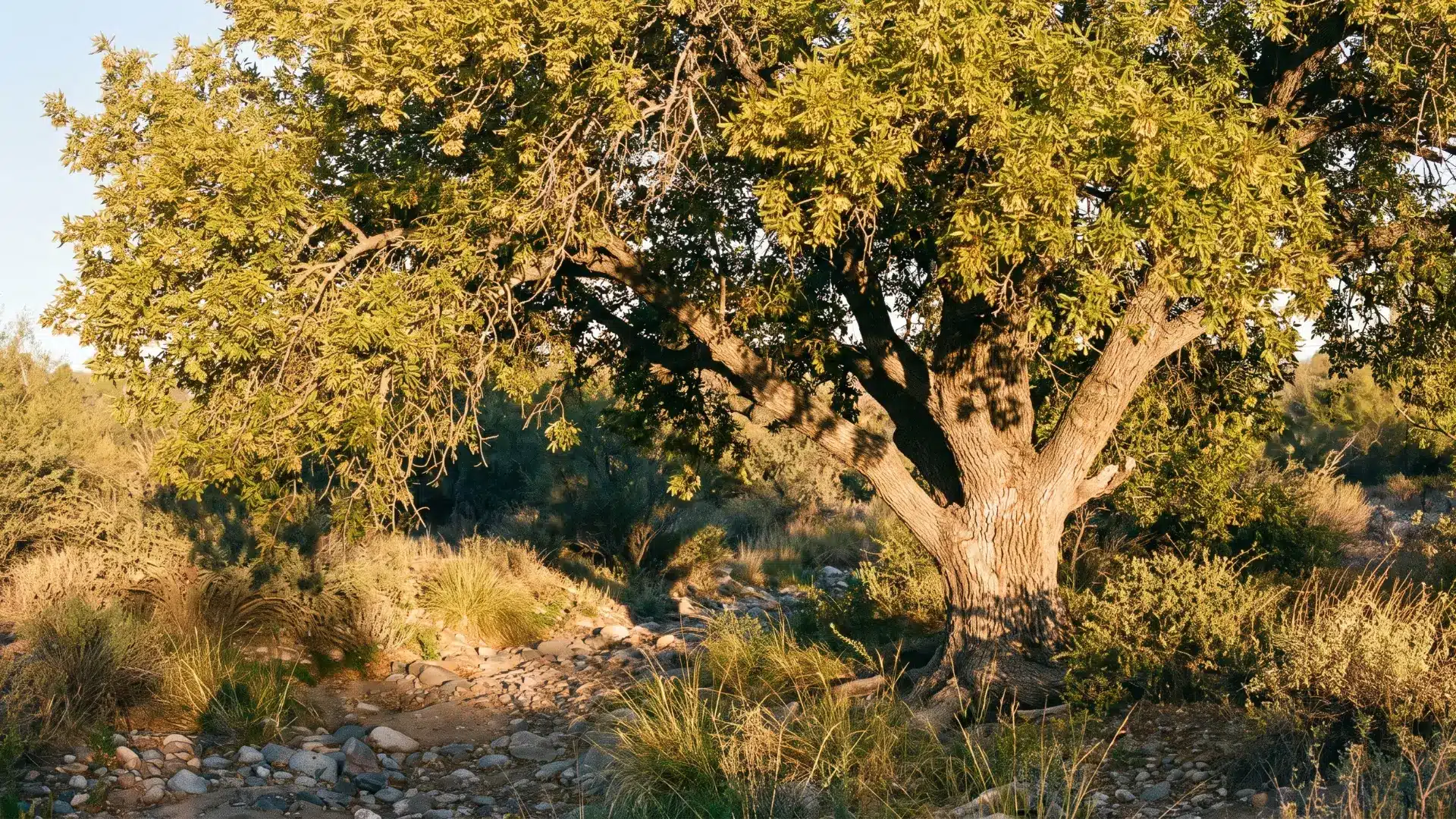
Arizona ash grows quickly and casts broad shade, though it asks for more upkeep than most native desert trees.
- Botanical name: Fraxinus velutina
- Size: 30 to 45 feet tall, broad canopy
- Water: Moderate, more than desert natives
- Watch for: Shorter lifespan, pest and branch weakness issues
Best Flowering Trees for Arizona
Arizona flowering trees need to handle intense sun and dry conditions while still producing seasonal color. These three hold up well in Arizona heat while still delivering a strong seasonal show.
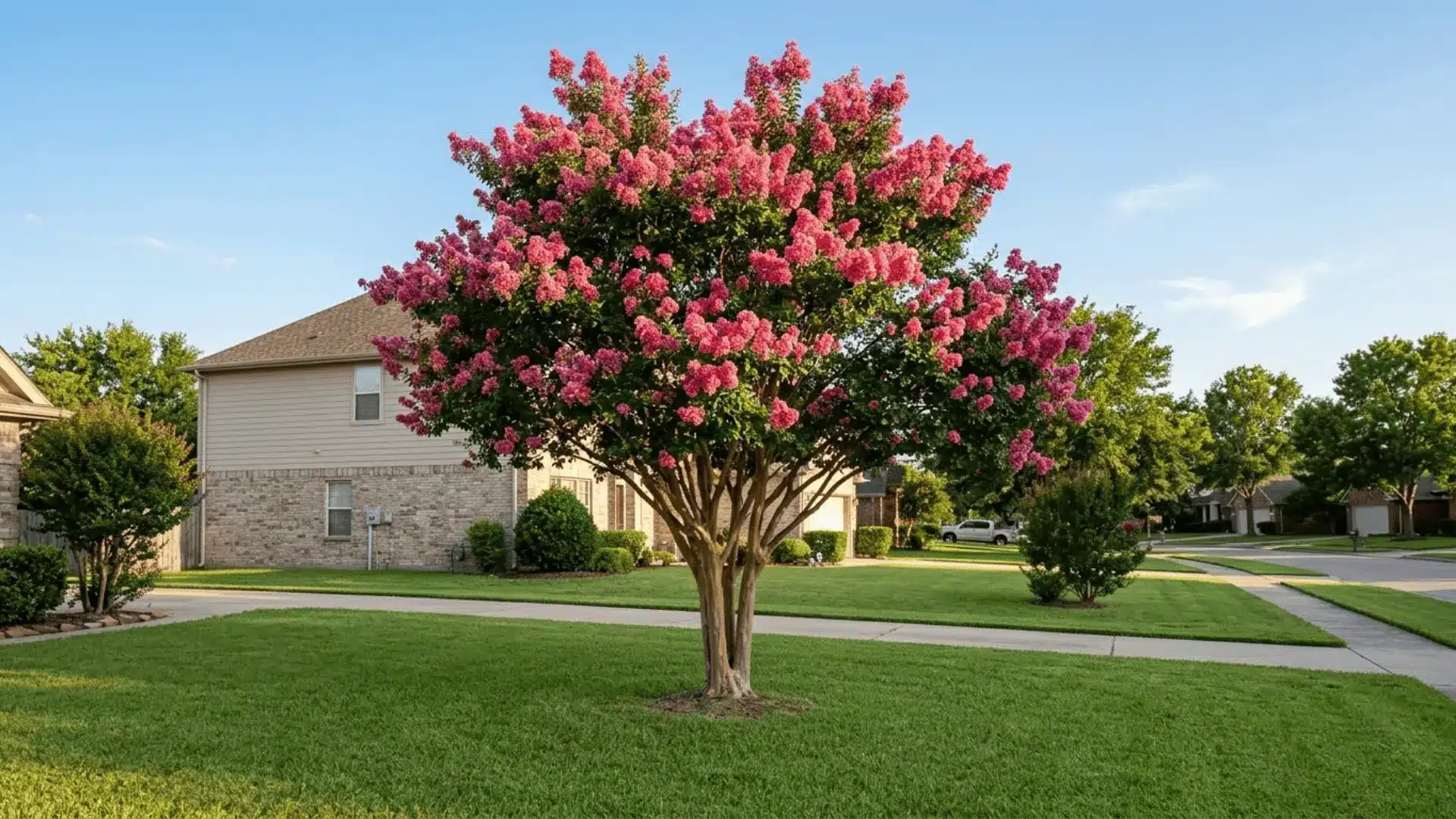
5. Desert Willow
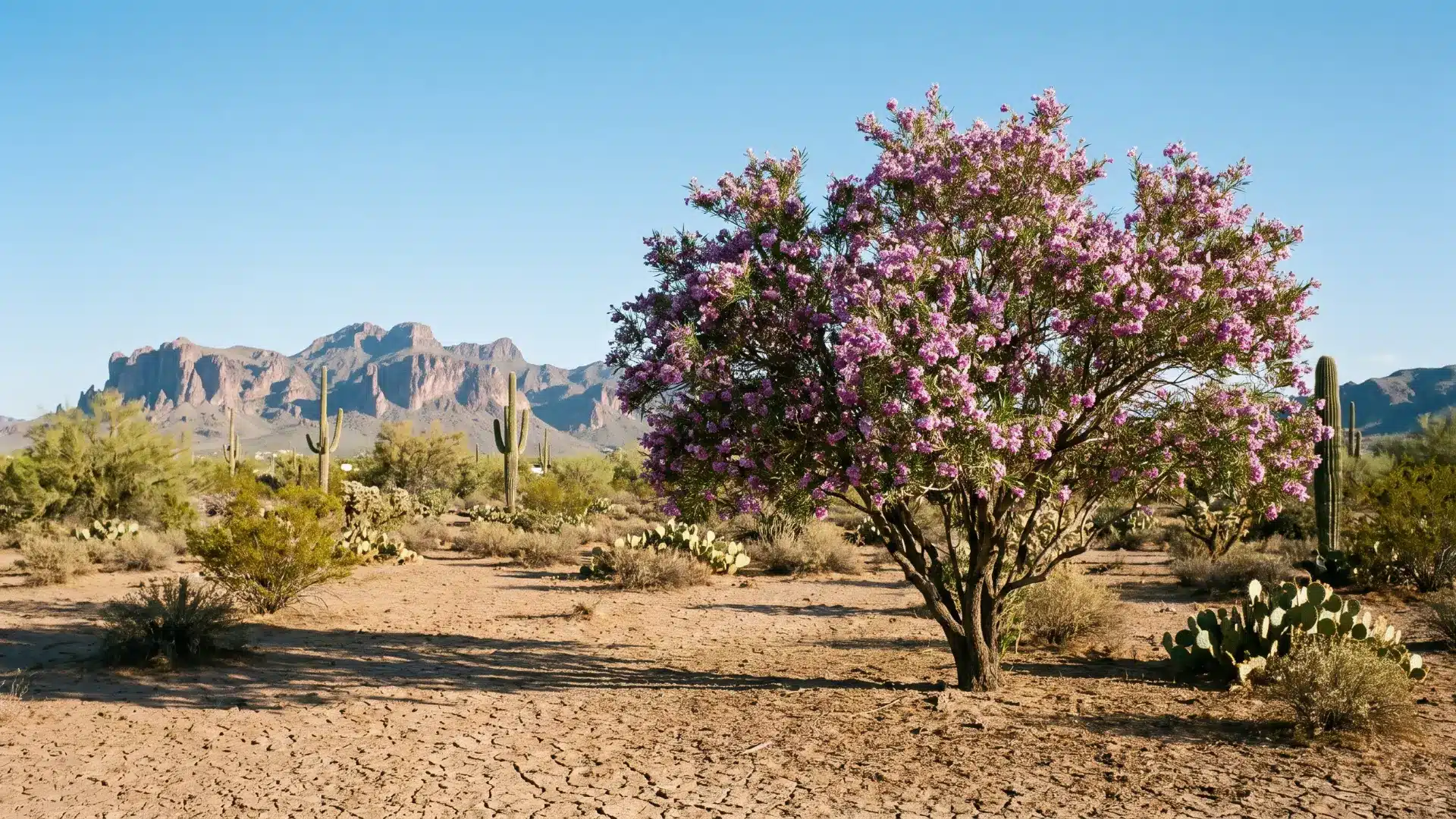
Desert willow produces trumpet-shaped pink or lavender blooms through the warmer months, drawing in hummingbirds and bees.
- Botanical name: Chilopsis linearis
- Size: 15 to 25 feet tall, open form
- Water: Low, with occasional summer watering for fuller bloom
- Bloom: Pink, white, or lavender through summer
- Watch for: Open, sometimes sparse branching
6. Chaste Tree
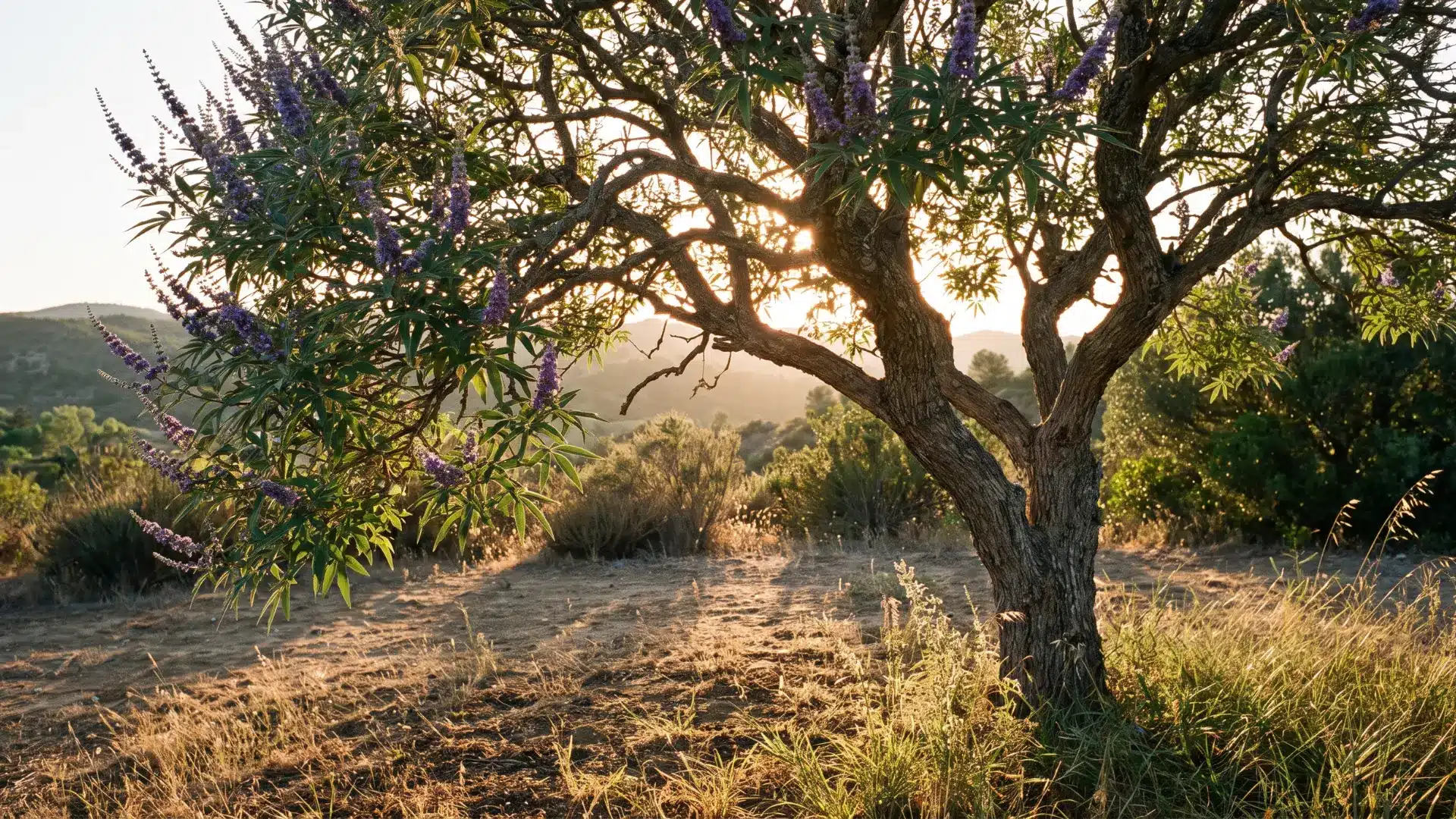
Chaste tree sends up tall violet-blue flower spikes in early summer and can be trained as a small tree or a large shrub.
- Botanical name: Vitex agnus-castus
- Size: 10 to 20 feet tall, upright form
- Water: Moderate, deep watering spring through fall
- Bloom: Violet-blue spikes in early summer
- Watch for: Needs dormant-season pruning to hold shape
7. Texas Mountain Laurel
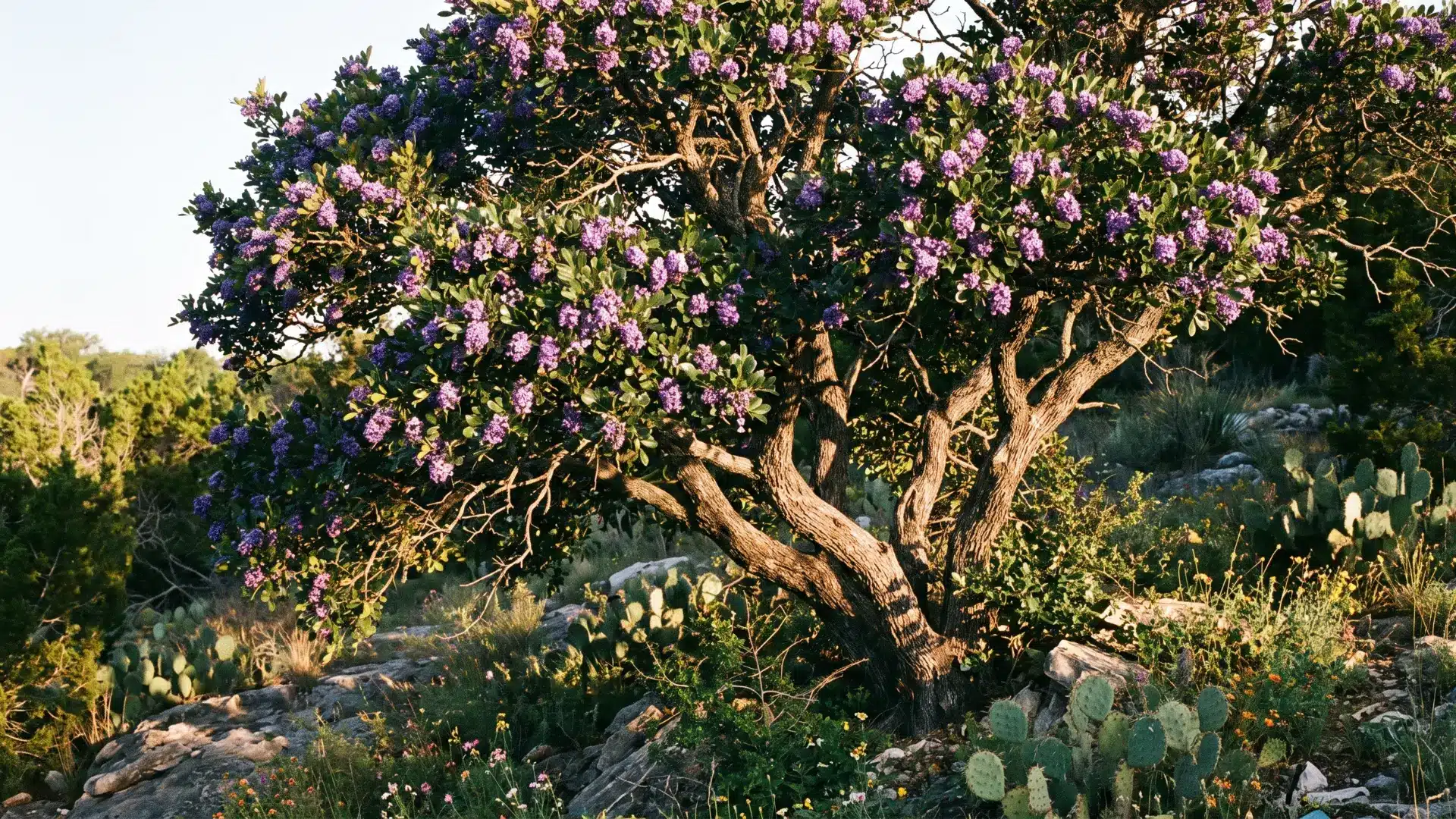
Texas mountain laurel stays compact and evergreen, with fragrant purple flower clusters that open in early spring.
- Botanical name: Sophora secundiflora
- Size: 10 to 15 feet tall, slow growing
- Water: Low once established
- Bloom: Fragrant purple flowers in spring
- Watch for: Slow growth rate
Best Privacy Trees for Arizona Yards
Dense, evergreen trees and large shrubs can screen a patio or property line without demanding constant care. These two hold their shape well in Arizona’s dry heat.
8. Arizona Rosewood
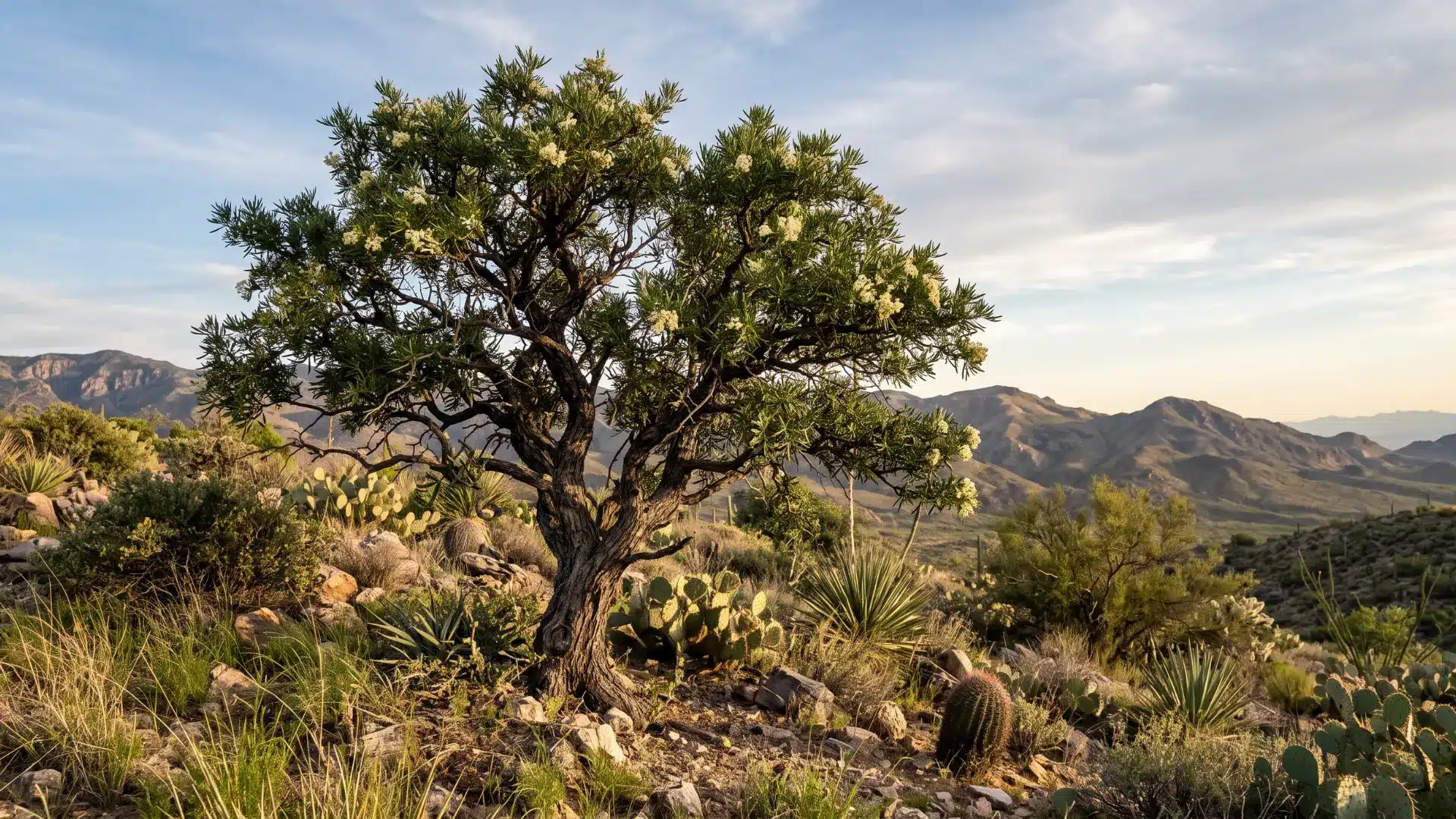
Arizona rosewood forms a dense evergreen screen with dark foliage and small white spring flowers.
- Botanical name: Vauquelinia californica
- Size: 10 to 20 feet tall, can be kept smaller
- Water: Low once established
- Watch for: Slow to moderate growth rate
9. Green Hopseed Bush
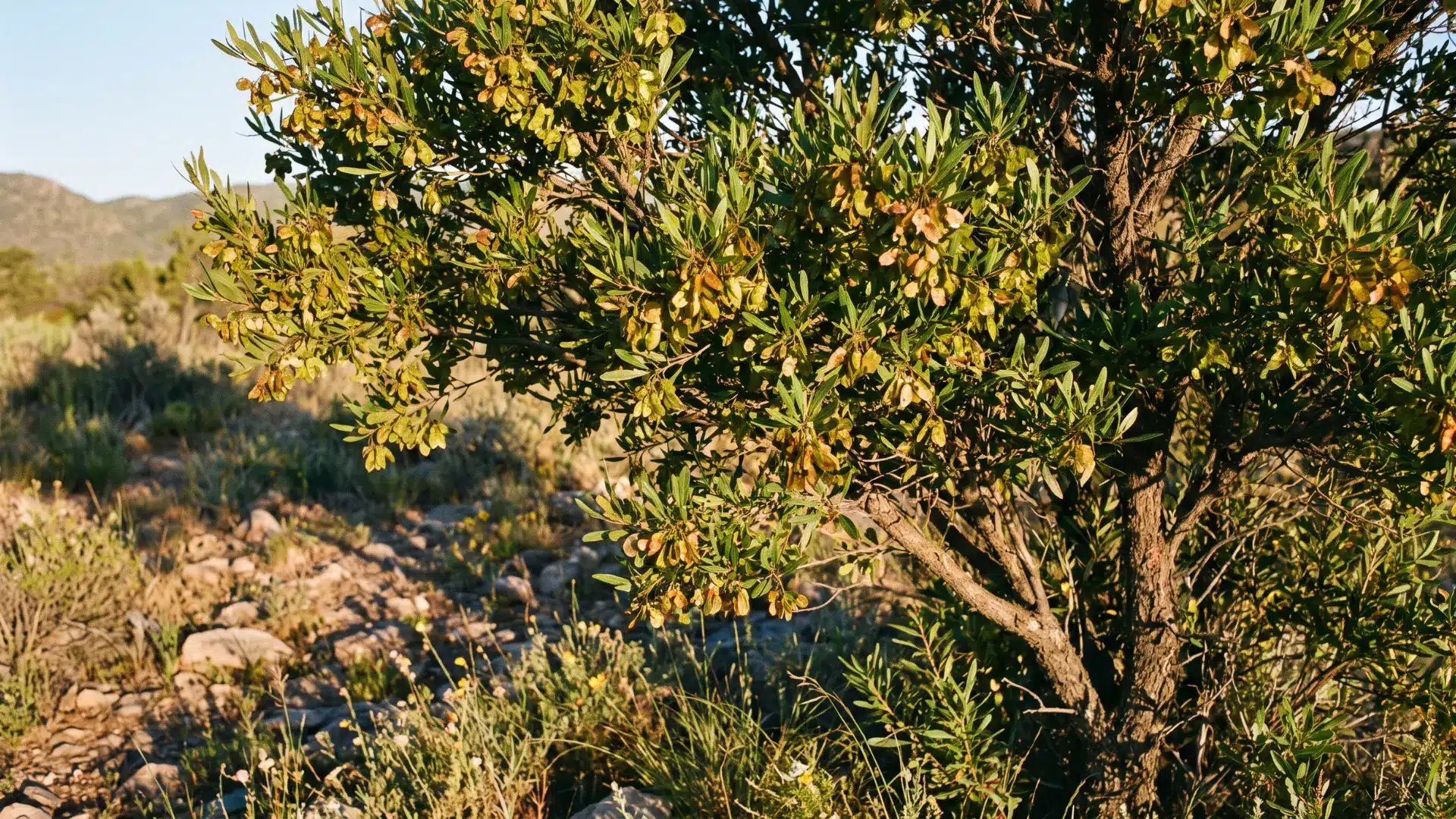
Green hopseed bush forms a full evergreen screen and can be shaped as a hedge or a small multi-trunk tree.
- Botanical name: Dodonaea viscosa
- Size: 12 to 15 feet as a tree form
- Water: Low for hedge use, more for tree form
- Watch for: Needs occasional shaping to hold density
Best Low-Water Desert Trees for Arizona
These two handle extended dry stretches with little supplemental water once their roots are established. University of Arizona Cooperative Extension’s guide to desert-adapted plants covers the transplanting and early care details that help them settle in quickly.
10. Desert Ironwood
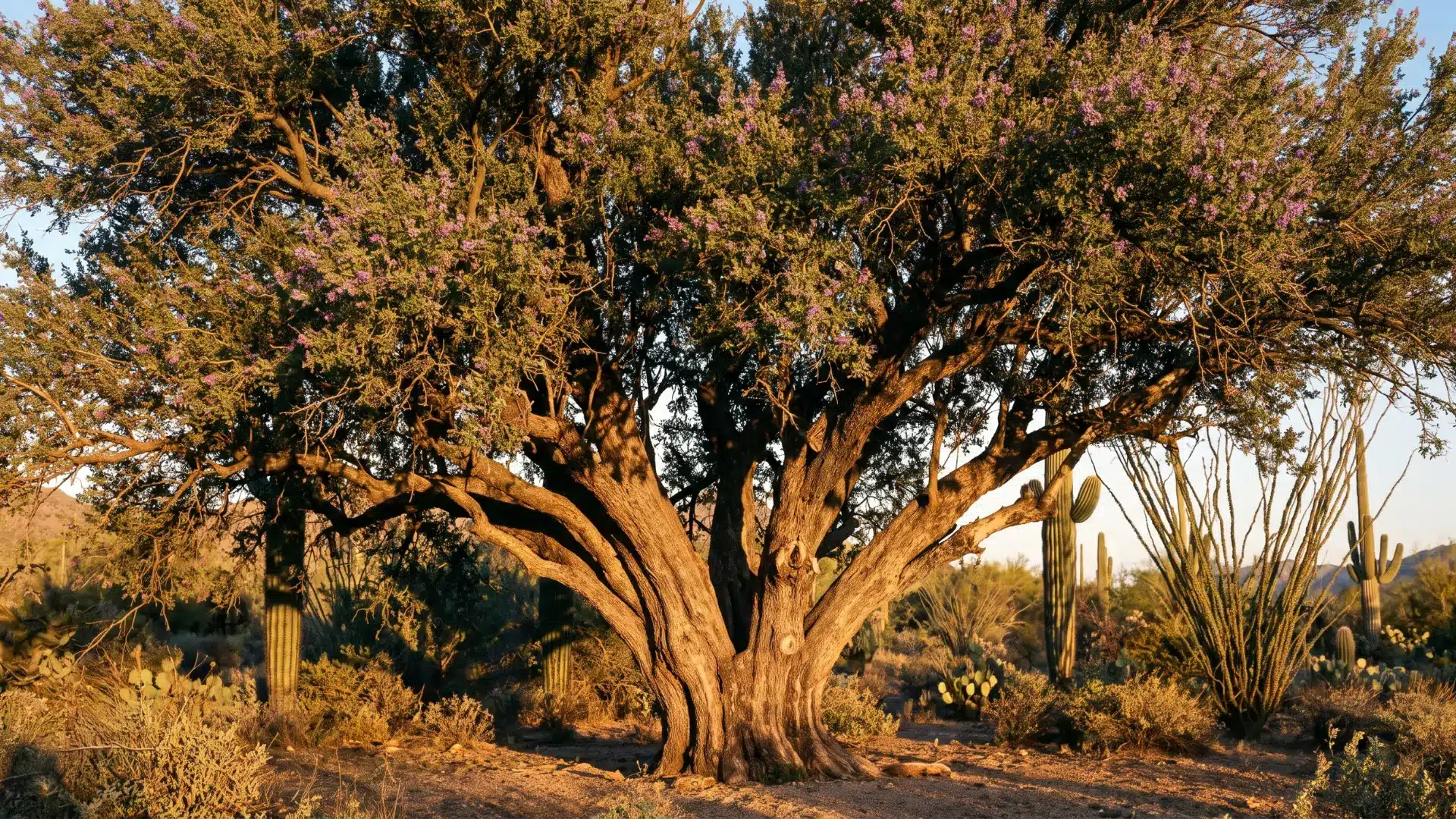
Desert ironwood grows slowly into a rugged, long-lived tree with soft lavender blooms and valuable wildlife habitat.
- Botanical name: Olneya tesota
- Size: 15 to 30 feet tall, dense rounded form
- Water: Very low once established
- Bloom: Lavender flowers in late spring
- Watch for: Slow growth in the early years
11. Willow Acacia
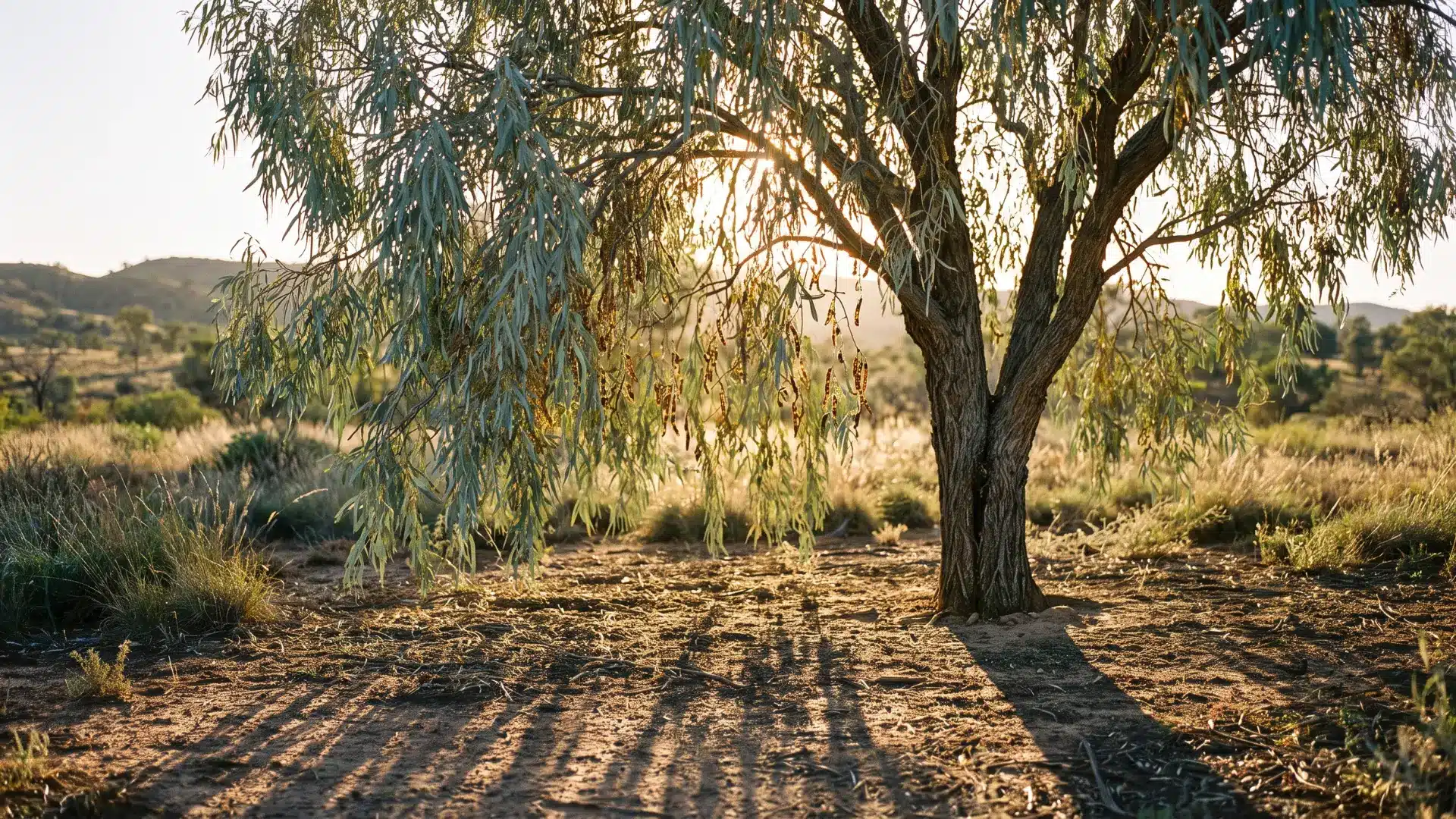
Willow acacia grows quickly into a graceful, weeping form and can provide faster screening or shade than many slower desert trees.
- Botanical name: Acacia salicina
- Size: 25 to 35 feet tall, weeping canopy
- Water: Low to moderate, deep summer watering helps
- Watch for: Structural pruning needed while young
Best Fruit Trees for Arizona
Fruit trees need more consistent water than desert natives, but they add homegrown produce alongside their greenery.
12. Pomegranate
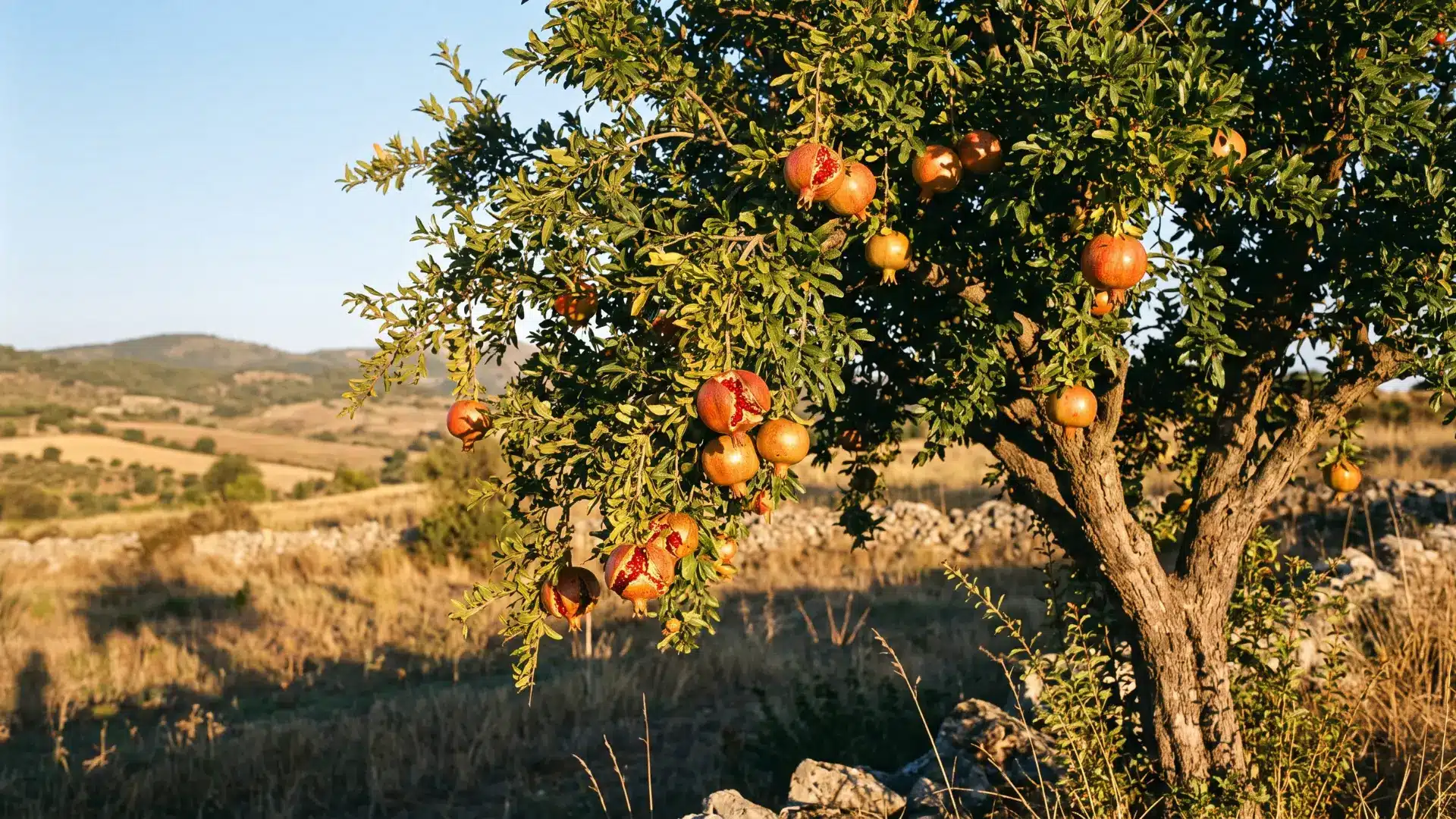
Pomegranate stays compact enough for smaller yards while still producing a heavy crop of fruit in the right conditions.
- Botanical name: Punica granatum
- Size: 12 to 20 feet tall, often multi-stemmed
- Water: Moderate, occasional deep watering
- Bloom: Red-orange flowers before fruit sets
- Watch for: Fruit splitting after inconsistent watering
13. Fig
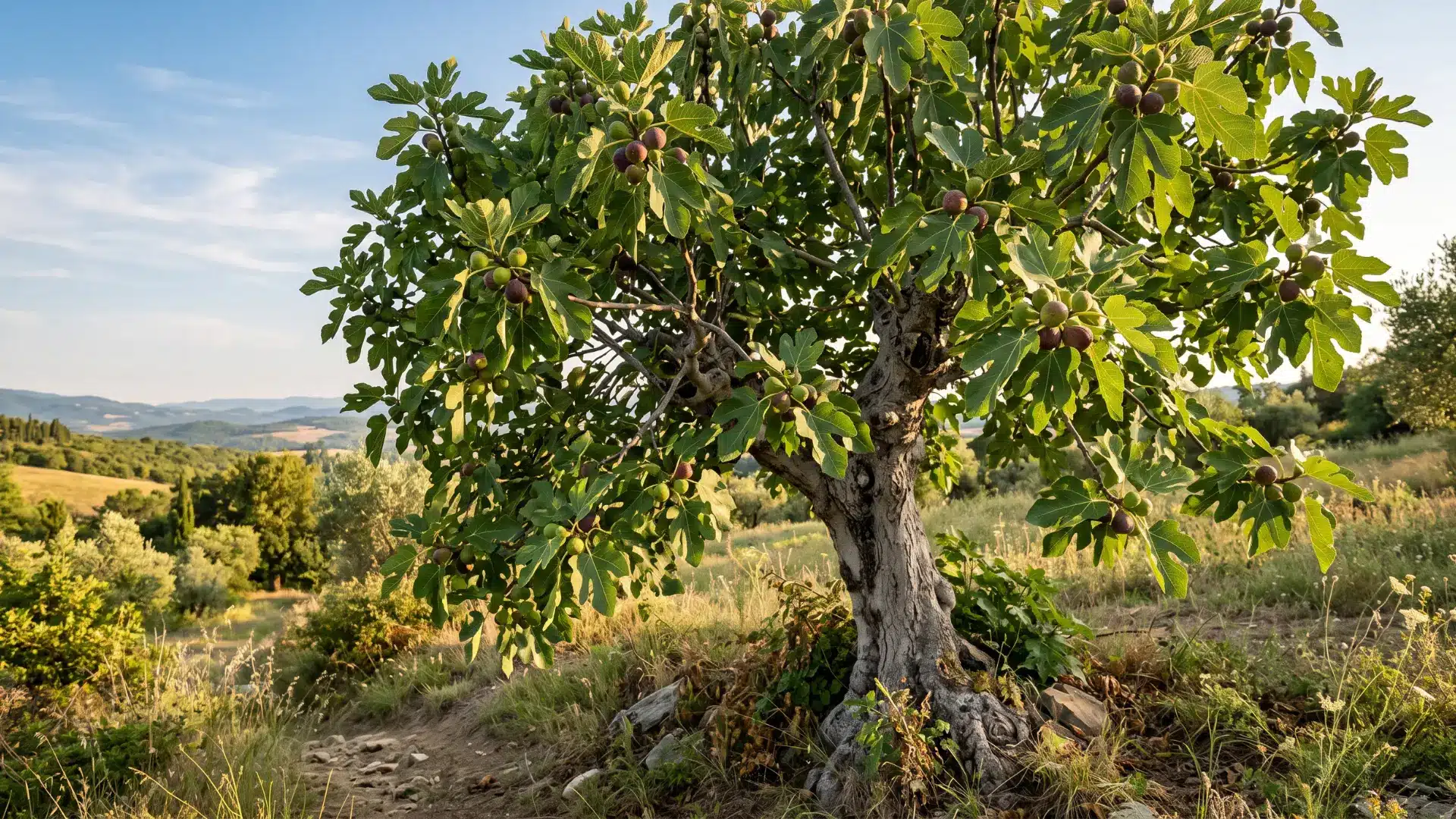
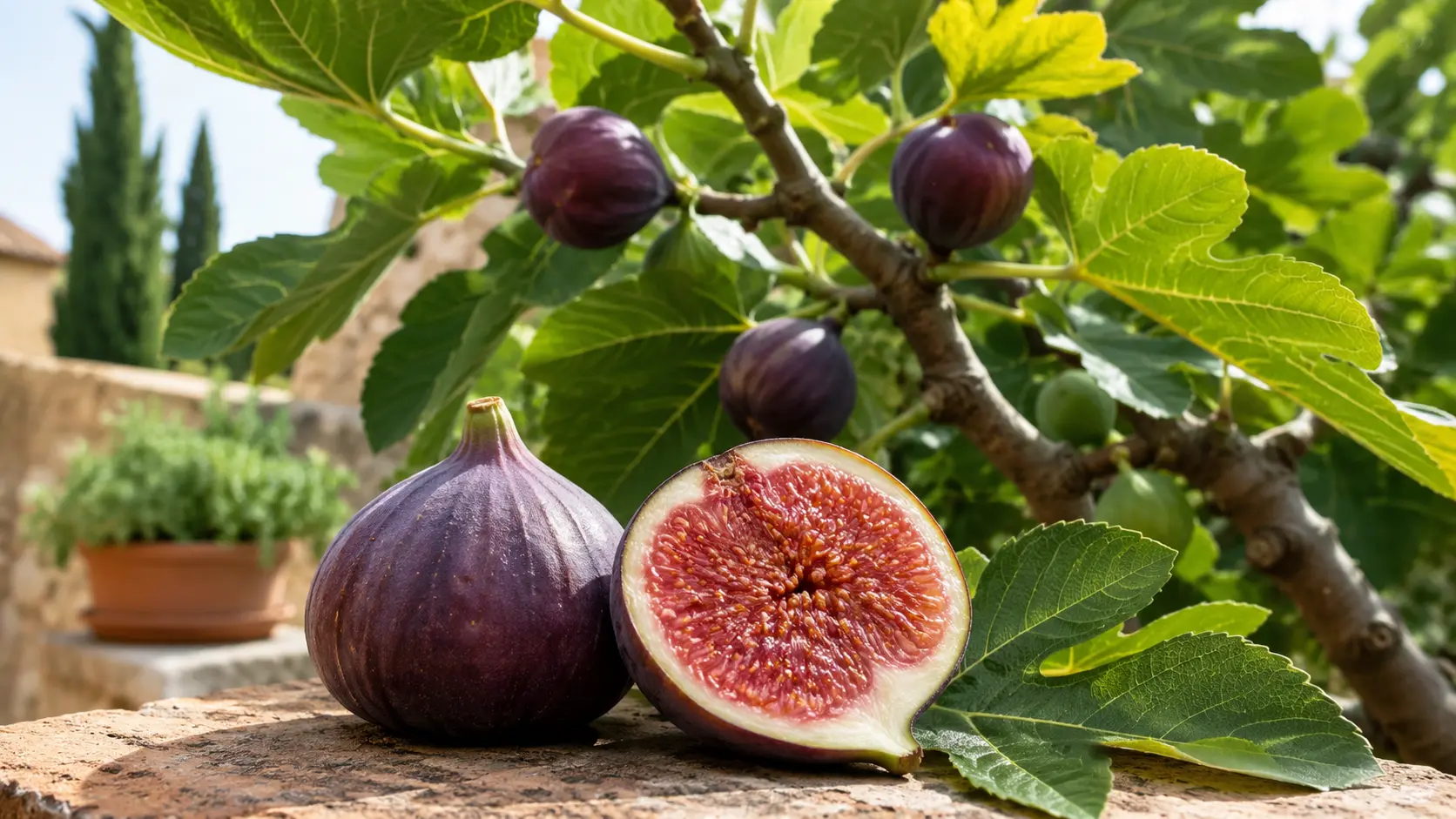
Fig trees grow quickly into a broad, leafy shape and tolerate Arizona summer heat better than many fruiting species. Fig varieties range from cold-hardy types to those bred for hot, dry climates, so matching the variety to the yard matters as much as the species itself.
- Botanical name: Ficus carica
- Size: 15 to 30 feet tall, spreading canopy
- Water: Regular watering, especially during fruiting
- Watch for: Root spread near foundations and pipes
14. Citrus
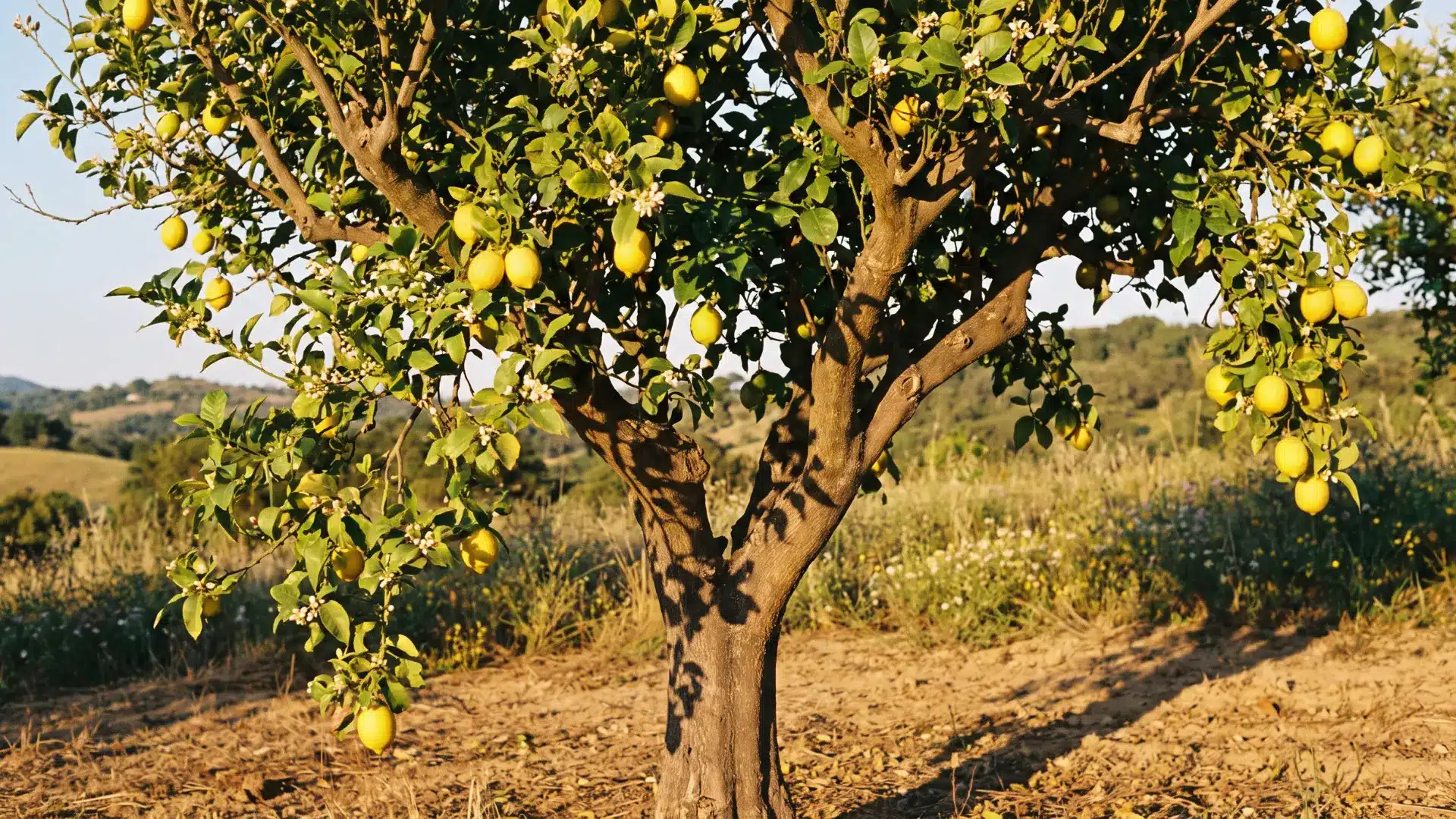
Citrus trees stay evergreen year-round and reward steady care with fragrant flowers and a reliable fruit harvest.
- Botanical name: Citrus species
- Size: 8 to 20 feet tall, depending on variety
- Water: Regular watering, more during summer heat
- Watch for: Frost damage during winter cold snaps
Which Arizona Tree Is Best for Your Yard?
Instead of ranking trees by a single trait, it helps to start with the yard itself. Available space, how fast results are needed, and how much upkeep feels reasonable all point toward a shortlist worth comparing.
| If Your Yard Is… | Trees to Consider | Why They May Fit |
|---|---|---|
| Small or limited in space | Pomegranate, Texas mountain laurel, Arizona rosewood | Compact mature size that fits tighter lots |
| Large and open | Mesquite, Texas ebony, Arizona ash | Room to develop a full, wide canopy |
| Hot and very dry | Desert ironwood, palo verde, willow acacia | Strong performance with minimal irrigation |
| Focused on quicker results | Willow acacia, palo verde, Arizona ash | Establish and fill in faster than slower natives |
| Meant to stay green year-round | Texas ebony, green hopseed bush, Arizona rosewood | Evergreen or semi-evergreen foliage in most winters |
| Planned around edible landscaping | Pomegranate, fig, citrus | Combine greenery with homegrown fruit |
Arizona Trees to Consider Carefully
Not every fast-growing tree is a good long-term fit for an Arizona yard.
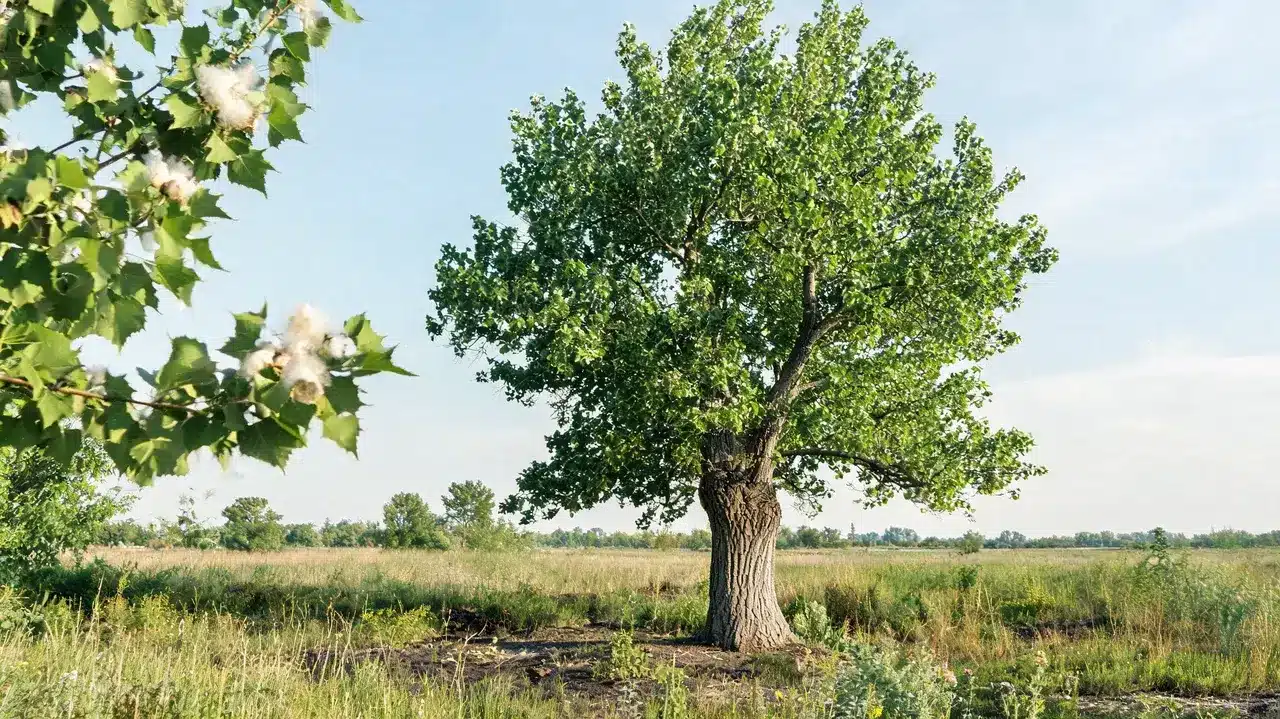
Species like cottonwood, non-native mulberry, and saltcedar establish quickly and provide shade in a hurry, but they tend to be short-lived and weak-wooded, and some spread aggressive surface roots that can lift sidewalks or interfere with irrigation lines.
Saltcedar in particular is considered invasive across much of the Southwest and can crowd out native vegetation along waterways.
Choosing a slower, more durable native or desert-adapted tree up front usually means less replacement work and lower water bills over time.
How to Plant Arizona Trees for Long-Term Success
Getting a tree in the ground correctly does more for its long-term health than the species choice itself.
- Plant in fall or early spring, ahead of summer heat
- Dig the hole two to three times wider than the root ball
- Water deeply and infrequently to encourage deep root growth
- Apply two to four inches of mulch, kept away from the trunk
- Stake only temporarily in windy spots, then remove once established
Common Mistakes to Avoid
Even well-suited trees can struggle when planting or care goes wrong. University of Arizona Cooperative Extension’s guide to watering trees and shrubs outlines the drip-line watering method that helps prevent most of the issues below.
- Overwatering desert-adapted species that prefer to stay dry
- Planting the root ball too deep in the hole
- Ignoring a tree’s mature height and width before planting
- Placing trees too close to walls, sidewalks, or foundations
- Pruning heavily instead of removing only damaged or crossing limbs
Frequently Asked Questions
Which tree grows fastest in Arizona?
Willow acacia and palo verde both establish quickly under full sun. Arizona ash also grows fast and provides broad shade within a few years, though it trades that speed for a shorter lifespan and higher upkeep than most desert natives.
Are native trees better for Arizona yards?
Native trees generally need fewer long-term adjustments because they already match local soil, heat, and rainfall patterns. They also tend to support birds, pollinators, and other wildlife more reliably than many non-native ornamental species planted purely for appearance.
Which trees have aggressive or invasive roots in Arizona?
Cottonwood, non-native mulberry, and saltcedar are known for aggressive surface roots and high water demands. These species can damage sidewalks, foundations, or irrigation lines, and saltcedar is considered invasive across much of the Southwest’s waterways and open desert.
When is the best time to plant trees in Arizona?
Fall and early spring are usually the best times to plant trees in Arizona. Cooler temperatures allow roots to grow before intense summer heat arrives. Planting during these seasons helps young trees adjust with less stress.
How often should I water a newly planted tree in Arizona?
Newly planted trees need regular watering while roots are becoming established. Water deeply rather than lightly, then gradually reduce frequency as roots spread. The exact schedule depends on the tree type, soil, season, and local climate.
Final Thoughts
Choosing a tree ends up being less about finding the single best option and more about finding the right match for a specific yard.
Some people fall for a tree the moment they see it in bloom, while others care more about how it holds up in the middle of August.
Either approach works, as long as the space, water, and time commitment line up with reality. The right choice usually becomes obvious once those pieces are settled.
Drop a comment below and tell me which tree do you see a lot in phoenix.