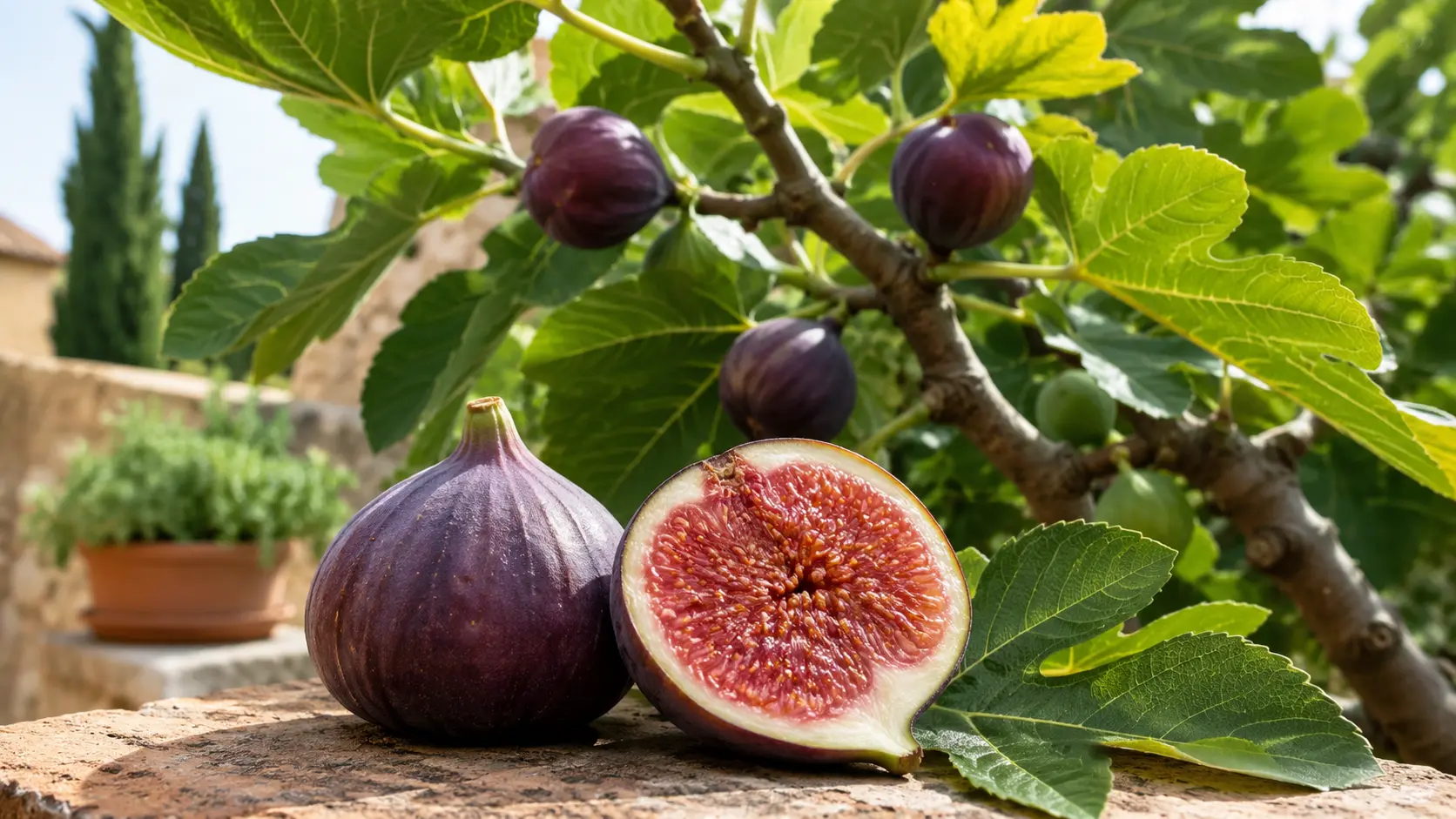
Standing in the fig aisle of a nursery, or scrolling through an online catalog, can feel oddly overwhelming.
Every label promises something different: sweeter fruit, a hardier tree, glossy leaves for a living room corner. It is easy to grab whatever looks familiar and hope for the best.
Sorting through the types of fig trees does not have to feel like a guessing game, though.
Once you know what actually separates one Fig from another- fruiting habit, flavor, climate needs, or growth form- the choice gets a lot simpler. Grab a cup of coffee, and take a look at what sets these trees apart.
What Are the Main Types of Fig Trees?
The phrase can mean three things: a Ficus species, like common Fig or fiddle leaf fig; a cultivar such as Kadota or Brown Turkey; or one of four fruiting types, deciding if a tree needs a second tree to fruit.
| Fruiting Type | Pollination Needed | Example Cultivars |
|---|---|---|
| Common | None | Brown Turkey, Celeste, Kadota |
| San Pedro | Only for the main crop; the breba crop sets without it | Desert King |
| Smyrna | Yes, for every crop | Calimyrna |
| Caprifig | Produces pollen only; fruit is inedible | Grown to pollinate Smyrna types |
Home gardeners almost always grow common types, since they need no pollinator at all. According tothe University of Florida IFAS Extension, a breba crop is the early fruit that forms on wood grown the previous year, ripening before the main summer crop develops on new growth.
Do Fig Trees Need Pollination?
For most home gardeners, no. Common-type figs, the kind sold at most nurseries, set fruit without any pollination, so one tree is often all you need.
Smyrna types are the exception, since they require pollen delivered by a specialized fig wasp that most home landscapes do not have.
San Pedro types split the difference: the early breba crop needs no pollination, but the later main crop does in many climates. If a tree blooms but never sets fruit, pollination is only one possible cause.
A closer look at why a tree isn’t bearing fruit covers other common culprits, from nutrient gaps to weather stress.
Edible Fig Varieties to Grow
These are the cultivars most commonly recommended for home orchards. Each profile below covers what makes it distinct, paired with a quick-reference table.
1. Desert King
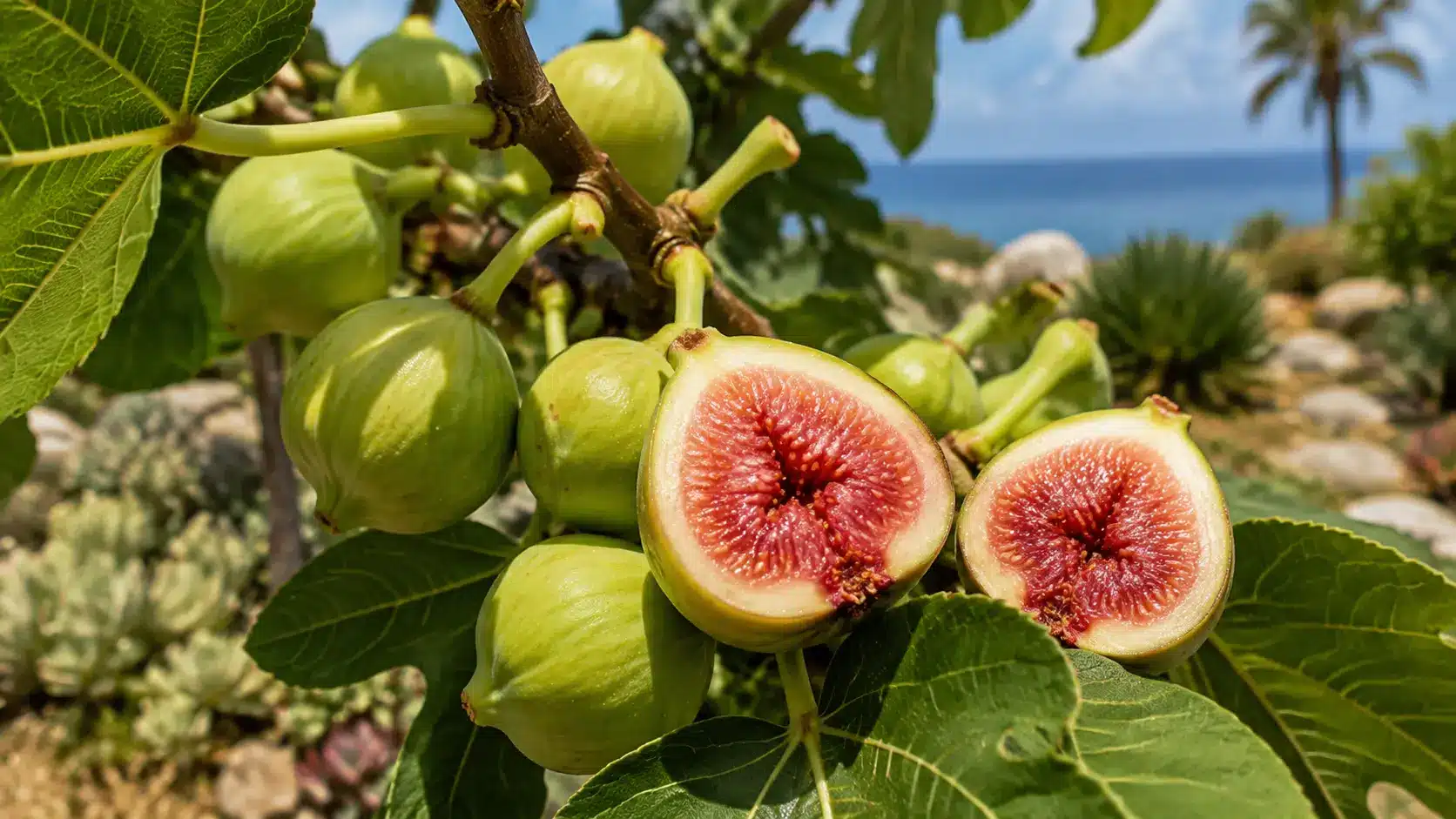
Desert King earns its reputation from a dependable early crop that ripens even where summers run short or mild. That breba harvest is the main draw, since the tree’s later main crop needs pollination that most home landscapes cannot provide, according to UC Master Gardeners.
| Feature | Details |
|---|---|
| Botanical name | Ficus carica Desert King’ |
| Fruiting type | San Pedro |
| Best for | Mild or short-summer climates |
| Key trait | Reliable early breba crop |
2. Kadota
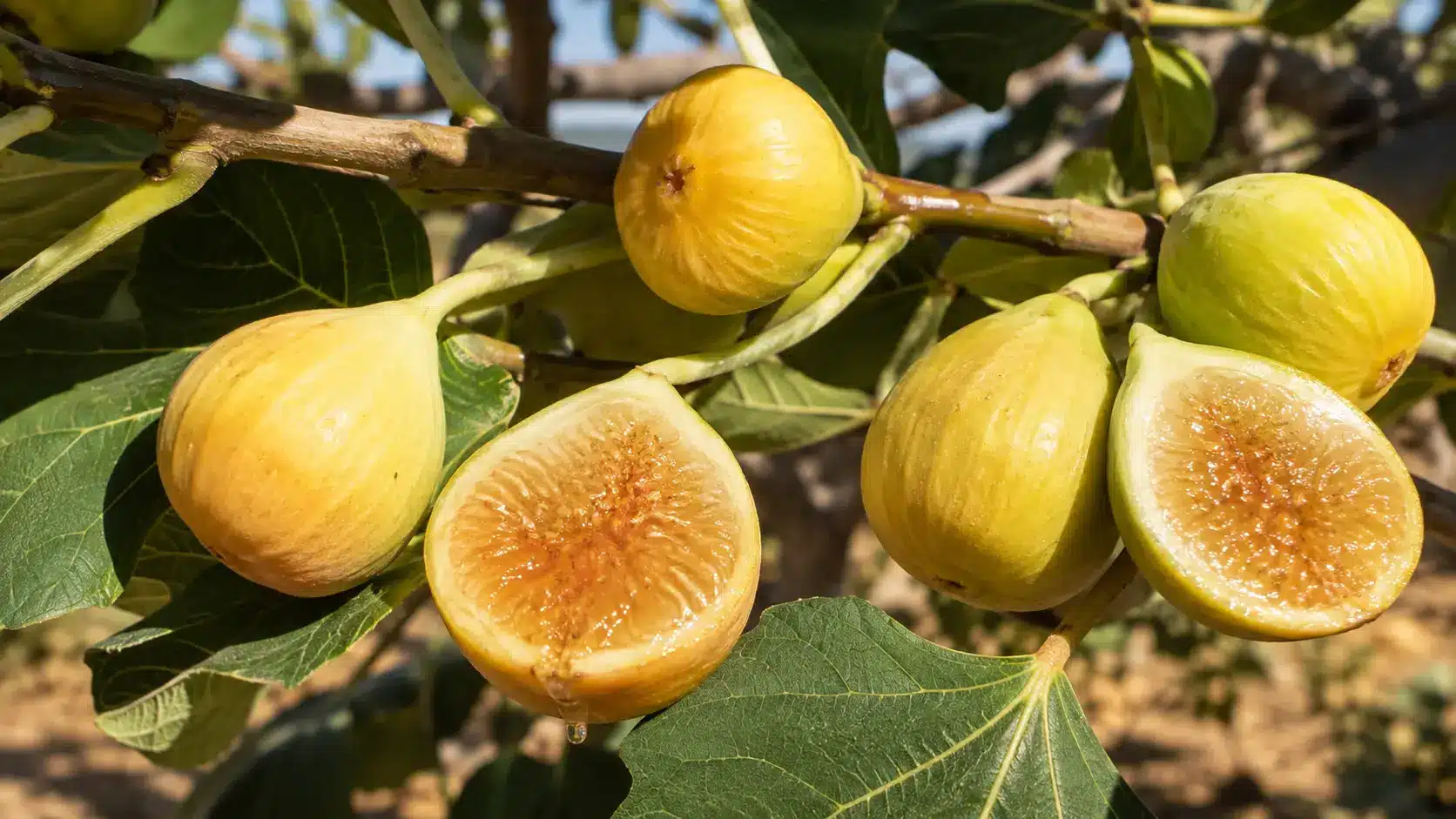
Kadota built its reputation on drying rather than fresh eating, and its thick skin holds up well through that process. The nectar-rich, honey-style flesh performs best in hot, dry summers.
| Feature | Details |
|---|---|
| Botanical name | Ficus carica ‘Kadota’ |
| Fruiting type | Common |
| Best for | Hot, dry climates |
| Key trait | Thick skin, strong drying qualities |
3. Brown Turkey
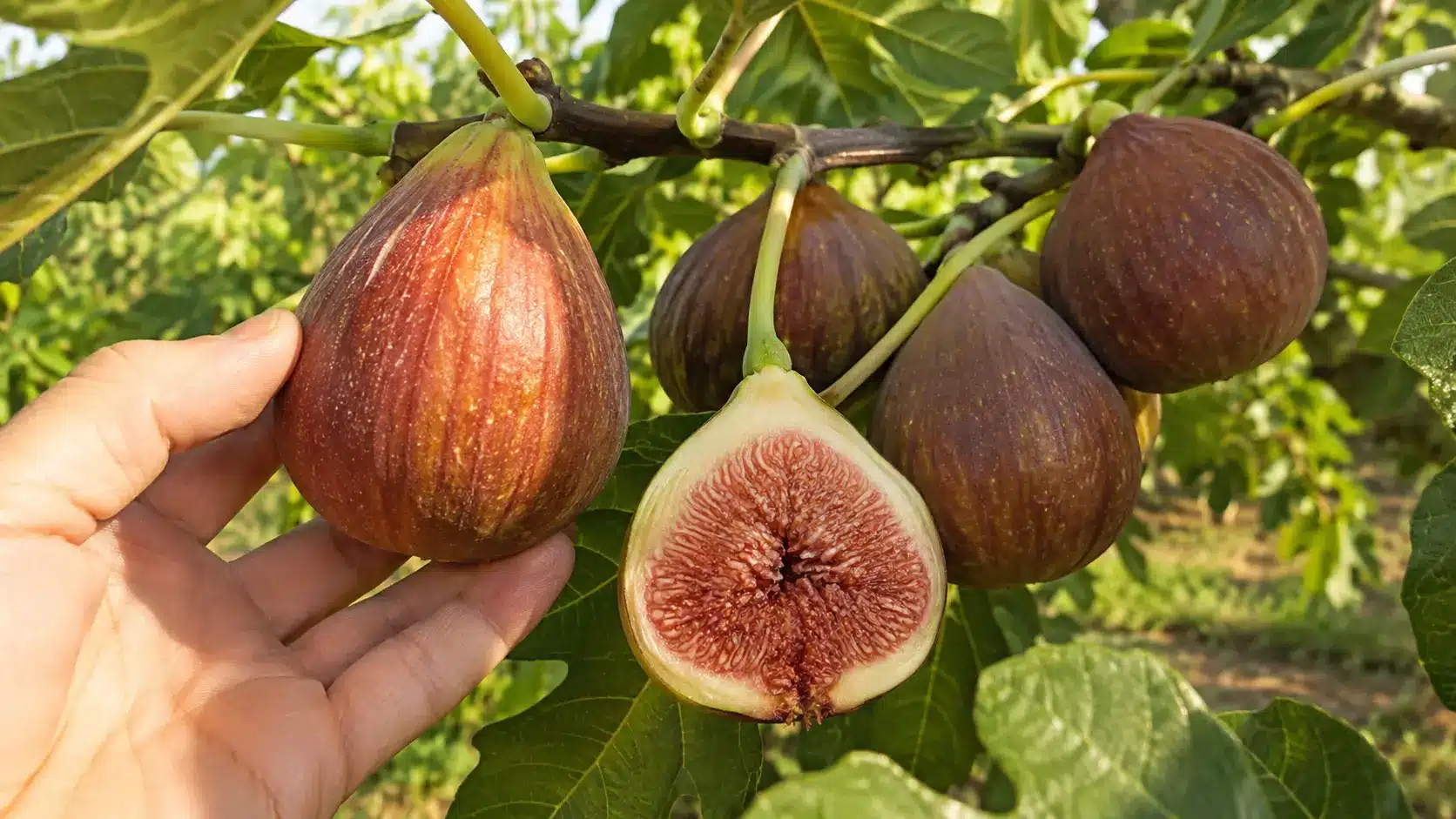
Brown Turkey is one of the more widely planted common figs, valued for a medium-large harvest and dependable cropping. Its open eye lets in more moisture than closed-eye types, so fruit is more prone to souring during humid, rainy stretches.
| Feature | Details |
|---|---|
| Botanical name | Ficus carica’ Brown Turkey’ |
| Fruiting type | Common |
| Best for | Cold-hardy home orchards |
| Key trait | Medium-large fruit, open eye |
Black Mission, Celeste, and Chicago Hardy round out the most commonly grown common-type figs, and their key traits are in the table above. Gardeners looking for something less common often try Violette de Bordeaux or LSU Purple, both prized for deep-colored, richly flavored fruit.
Ornamental Ficus Species to Grow
One quick note before comparing species: Ficus sap can irritate skin, and several species are listed as toxic to cats and dogs if chewed, so keep these out of reach of curious pets. Each profile below covers a species’ growth habit and best setting.
4. Red Leaf Fig
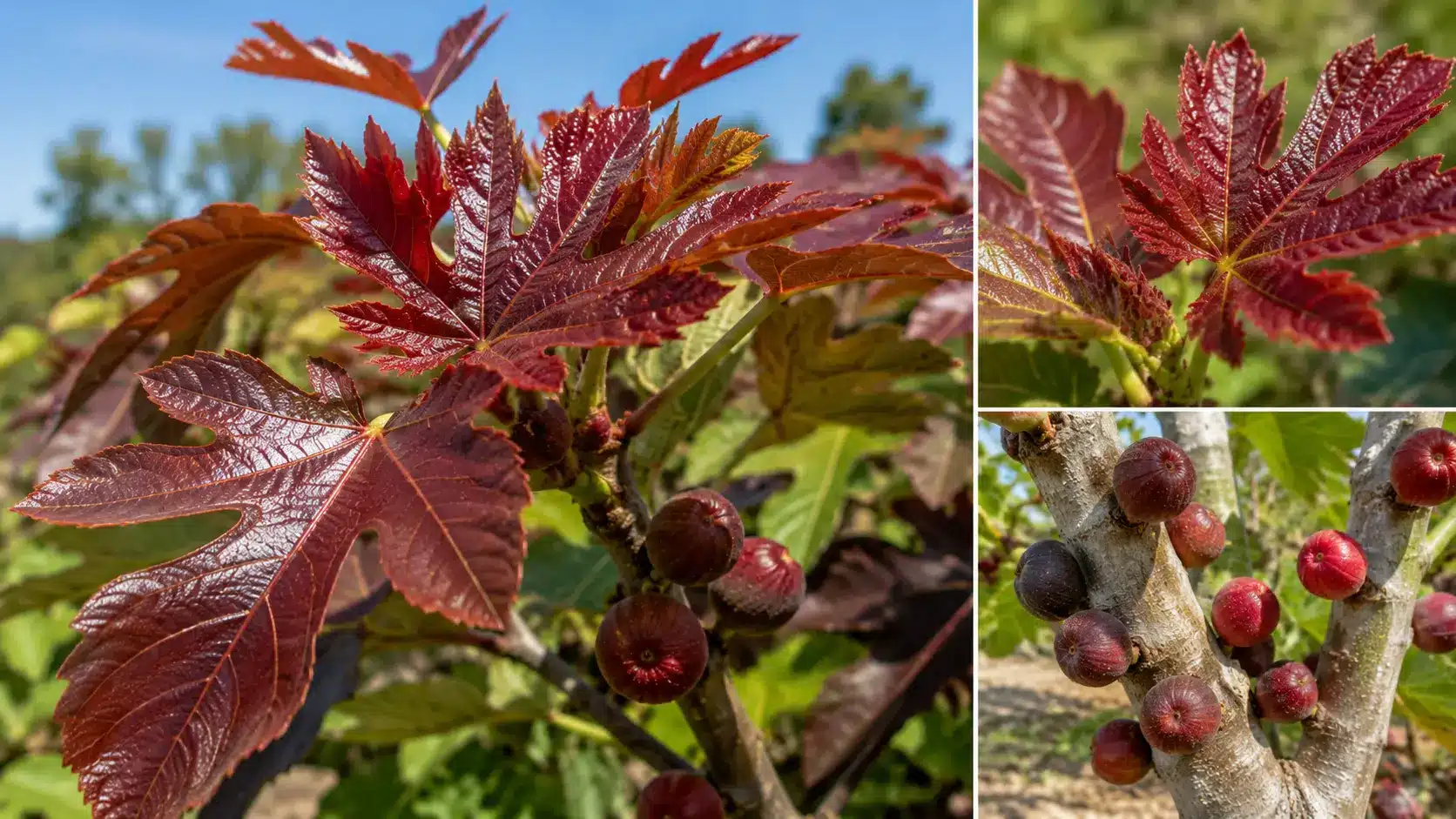
Red leaf fig is grown more for its foliage than its fruit, with new leaves emerging in a glossy burgundy shade before fading to green. Its fruit clusters directly along the trunk rather than at the branch tips.
| Feature | Details |
|---|---|
| Botanical name | Ficus congesta |
| Growth form | Small tropical tree |
| Best for | Tropical, ornamental planting |
| Key trait | Trunk-clustered fruit, burgundy new growth |
5. Creeping Fig
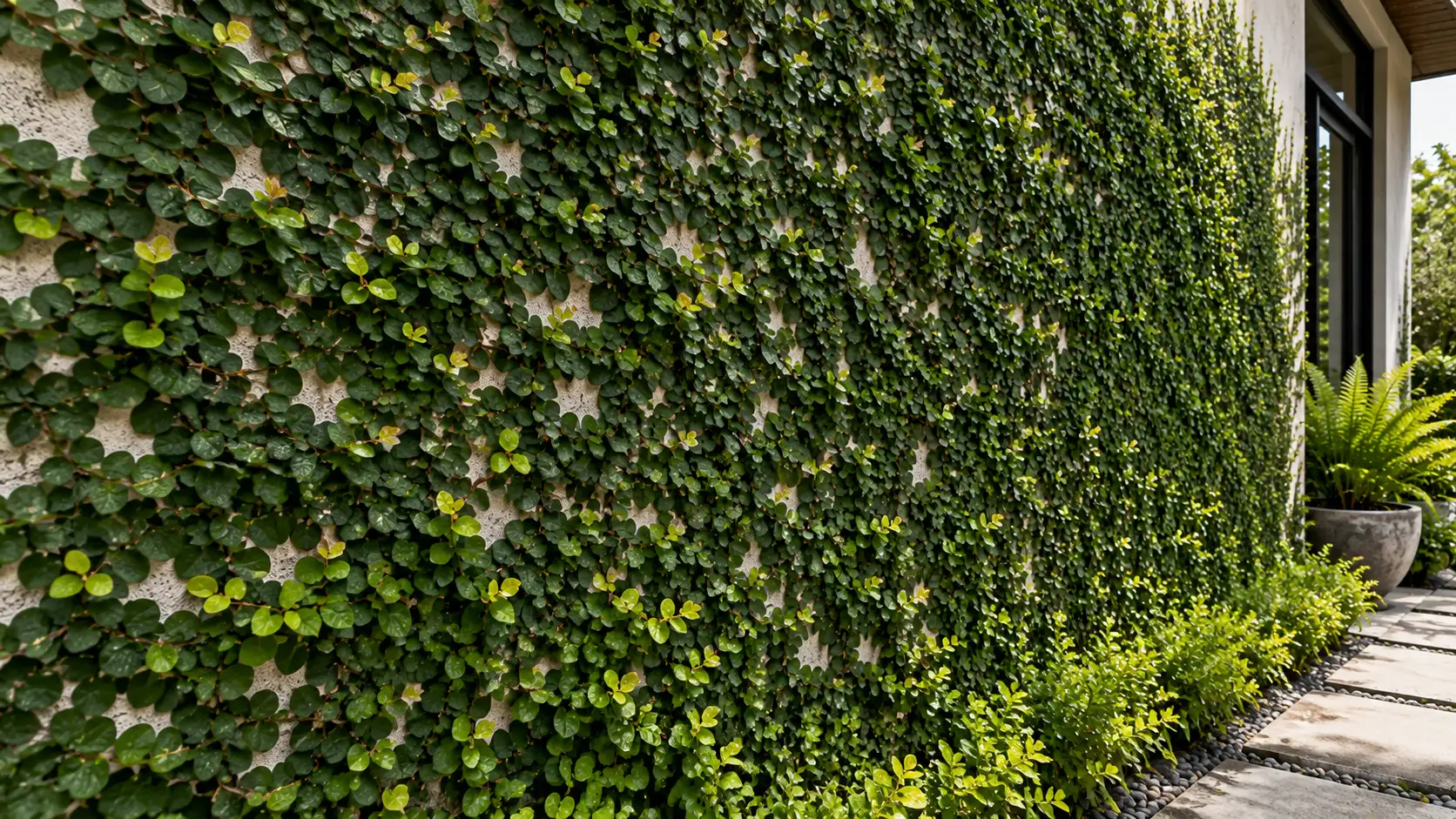
Creeping fig clings tightly to walls, fences, and topiary forms, spreading fast once established. The University of Florida rates it a high invasion risk in parts of the state, and its grip can damage wood or stucco, so check local guidance first.
| Feature | Details |
|---|---|
| Botanical name | Ficus pumila |
| Growth form | Climbing evergreen vine |
| Best for | Topiary, indoor growing |
| Key trait | Dense coverage; invasive risk in some regions |
6. Fiddle Leaf Fig
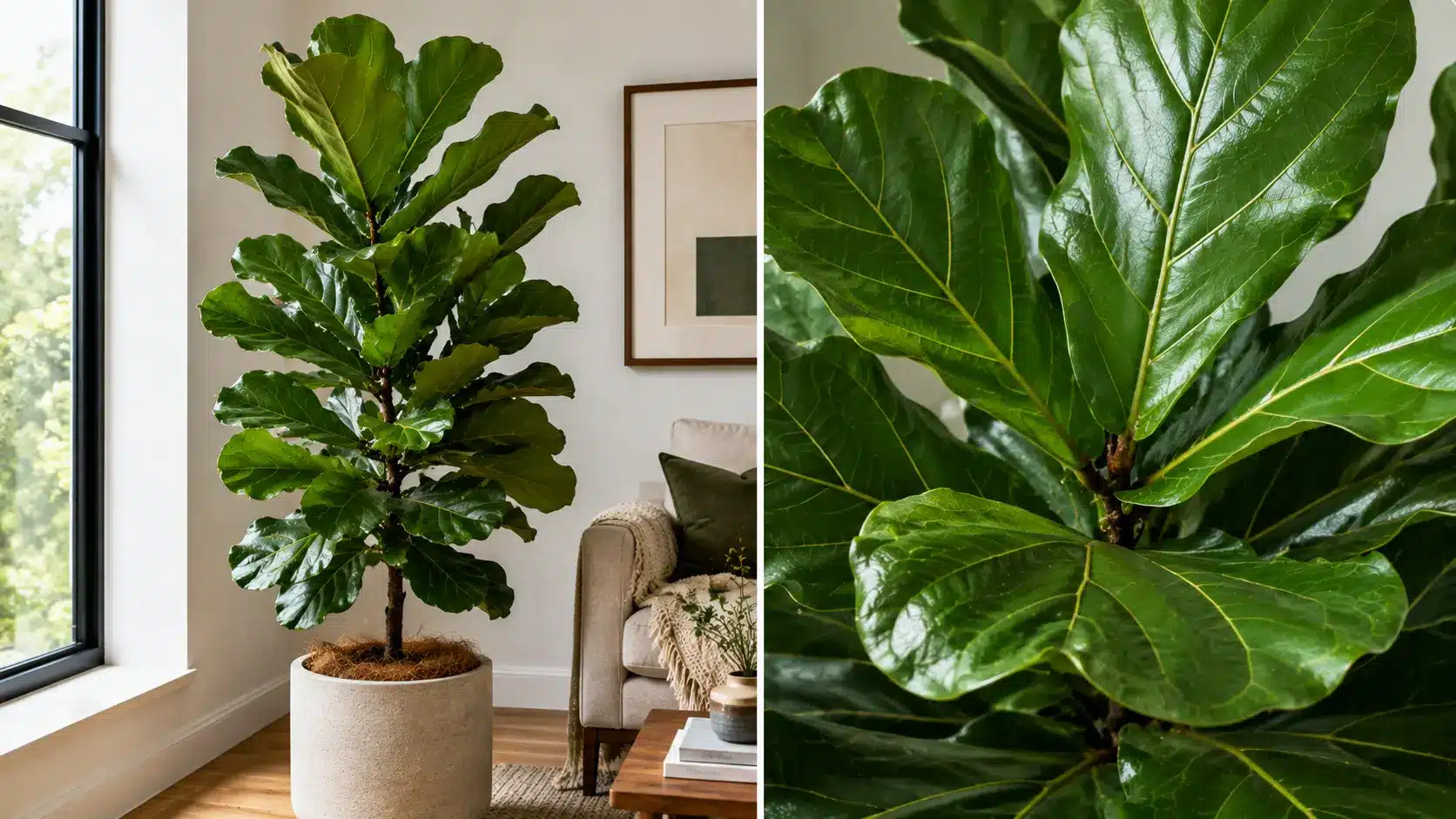
Fiddle leaf fig owes its popularity to large, leathery leaves shaped like a fiddle, paired with an upright form that suits bright corners and living rooms. It needs warm conditions and filtered light to stay healthy indoors.
| Feature | Details |
|---|---|
| Botanical name | Ficus lyrata |
| Growth form | Upright tropical tree |
| Best for | Indoor container growing |
| Key trait | Large fiddle-shaped leaves |
7. Rubber Tree
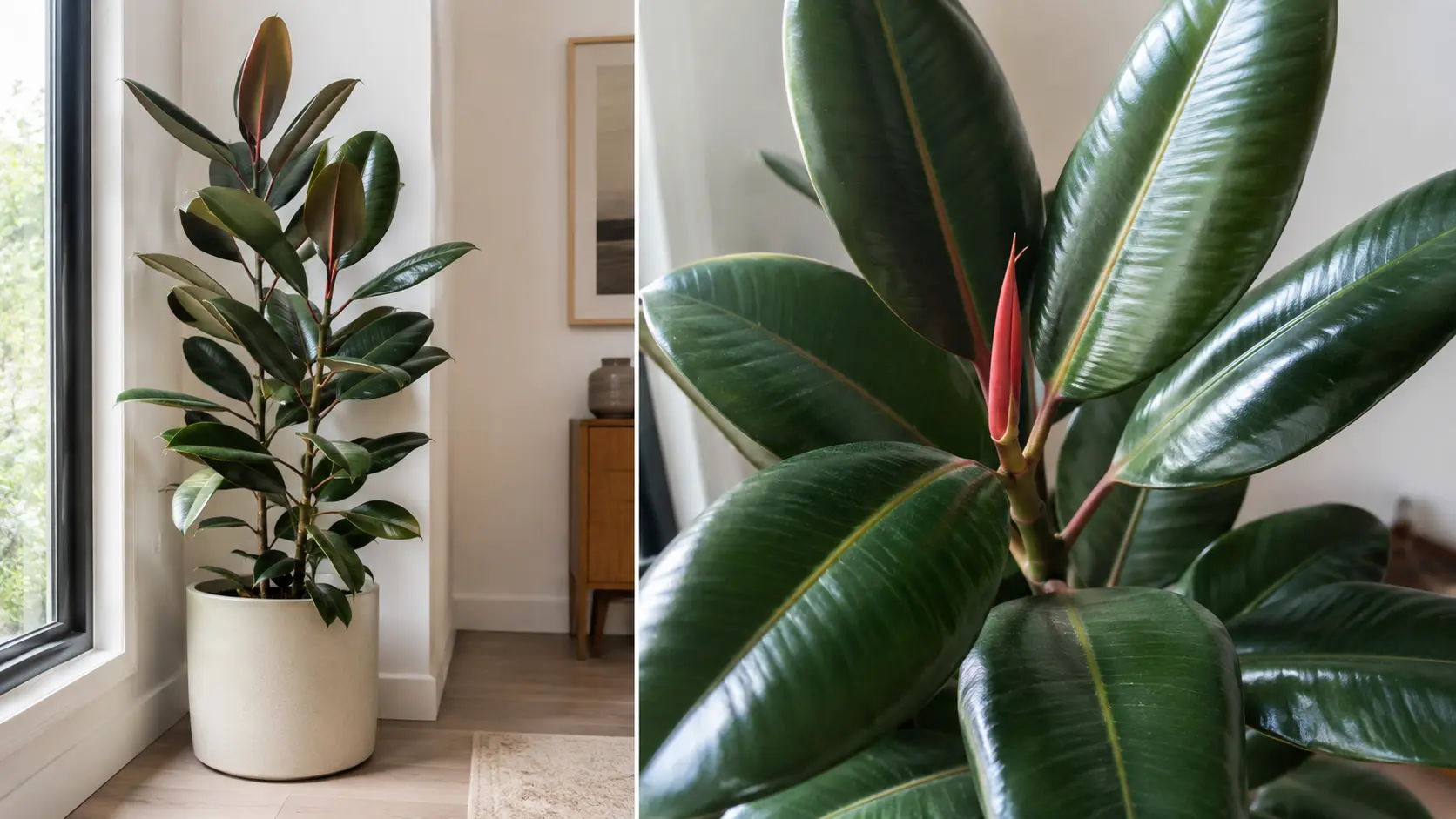
Rubber tree brings a bolder look than most houseplants, with broad, glossy leaves on a sturdy upright stem. Outdoors in frost-free climates, it can grow into a large tree and develop visible aerial roots.
| Feature | Details |
|---|---|
| Botanical name | Ficus elastica |
| Growth form | Upright tropical tree |
| Best for | Indoor or tropical landscape |
| Key trait | Broad glossy leaves, aerial roots outdoors |
8. Weeping Fig
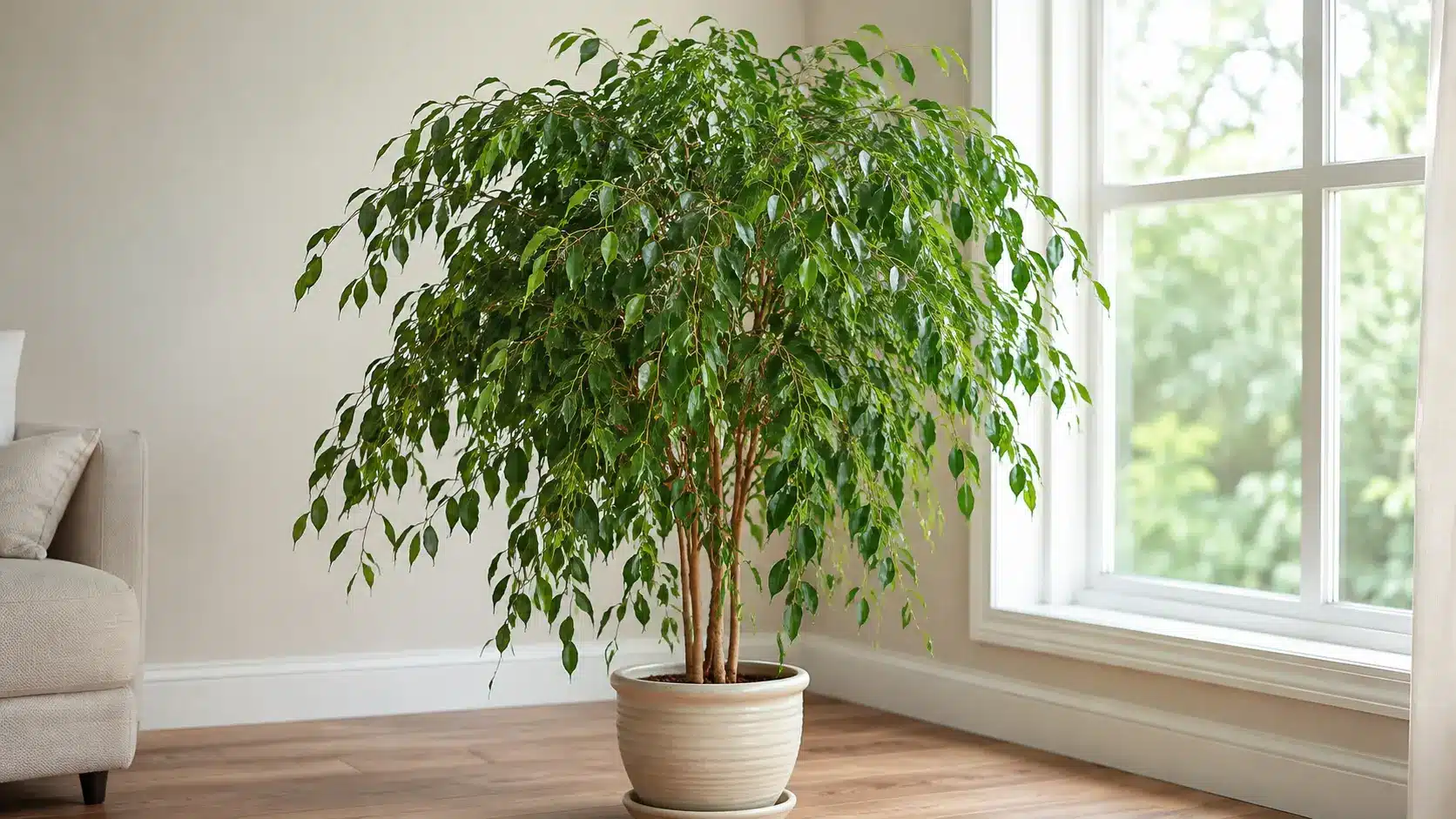
Weeping Fig is the classic Ficus houseplant, known for glossy leaves on gracefully arching branches. It can drop leaves after a move or a change in light, so it rewards a stable spot more than most Ficus species.
| Feature | Details |
|---|---|
| Botanical name | Ficus benjamina |
| Growth form | Arching upright tree |
| Best for | Indoor or tropical landscape |
| Key trait | Graceful form, sheds leaves under stress |
9. Indian Banyan
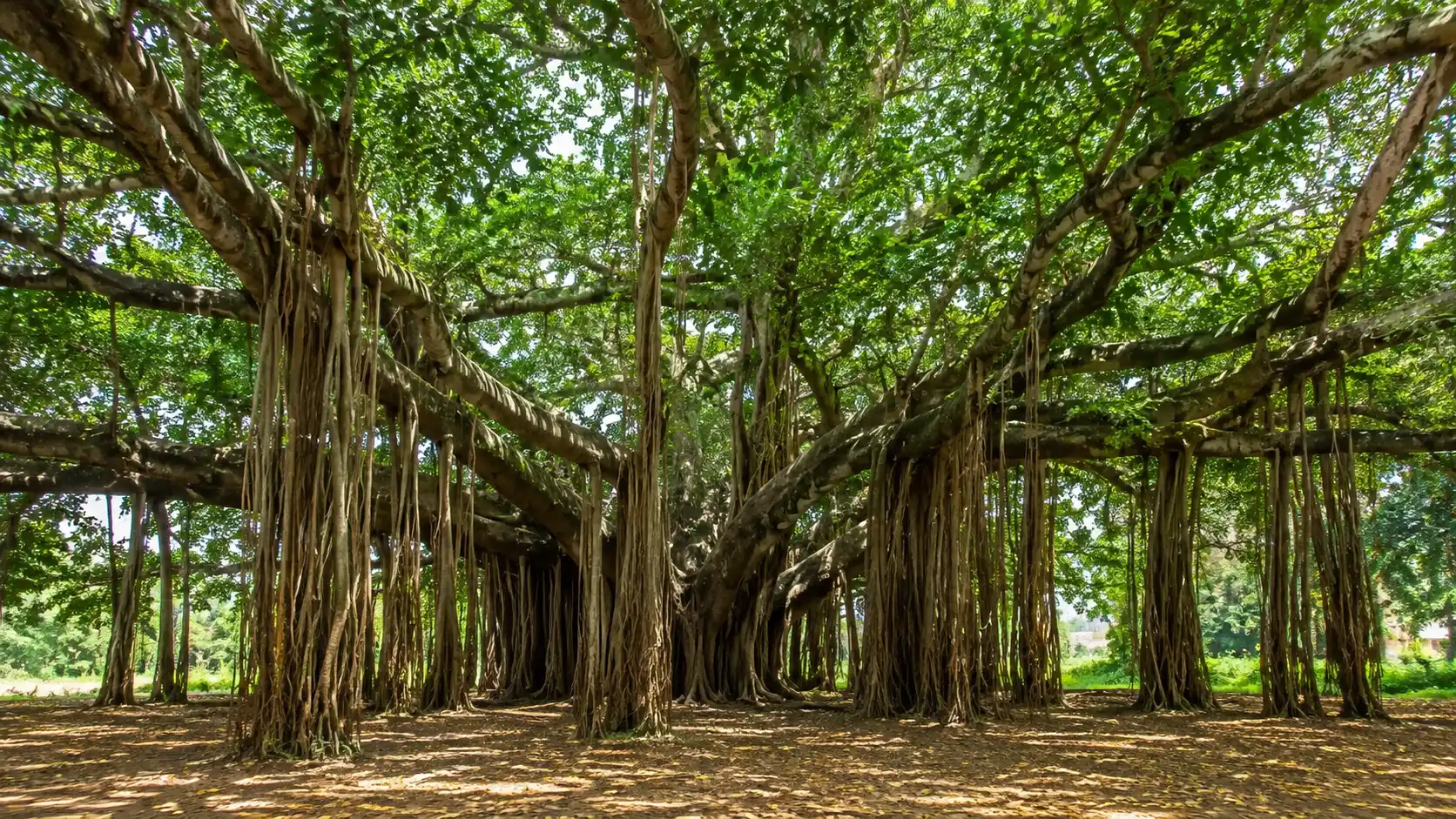
Indian banyan spreads wider than almost any other fig, sending aerial roots down from its branches until they thicken into extra trunks. Given enough time, one tree can shade an entire field.
| Feature | Details |
|---|---|
| Botanical name | Ficus benghalensis |
| Growth form | Massive spreading tree |
| Best for | Large tropical landscapes |
| Key trait | Aerial roots forming extra trunks |
10. Chinese Banyan
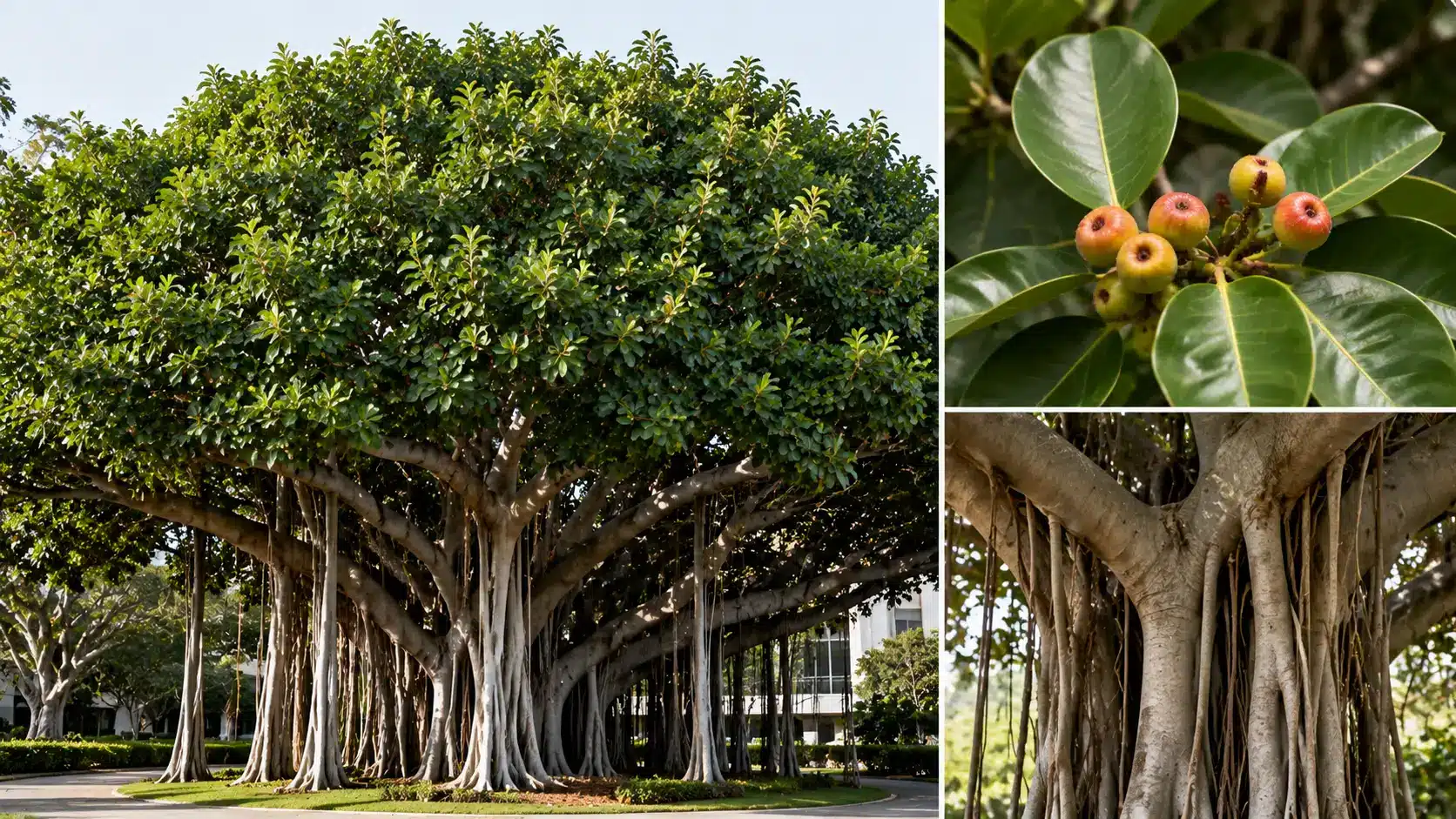
Chinese banyan takes well to training, which is why it shows up as often in bonsai pots as it does lining city streets. It is also flagged as invasive in parts of Florida, so check local guidance before planting it outdoors there.
| Feature | Details |
|---|---|
| Botanical name | Ficus microcarpa |
| Growth form | Spreading tree |
| Best for | Bonsai, street tree |
| Key trait | Trains well; invasive risk in some regions |
11. Moreton Bay Fig
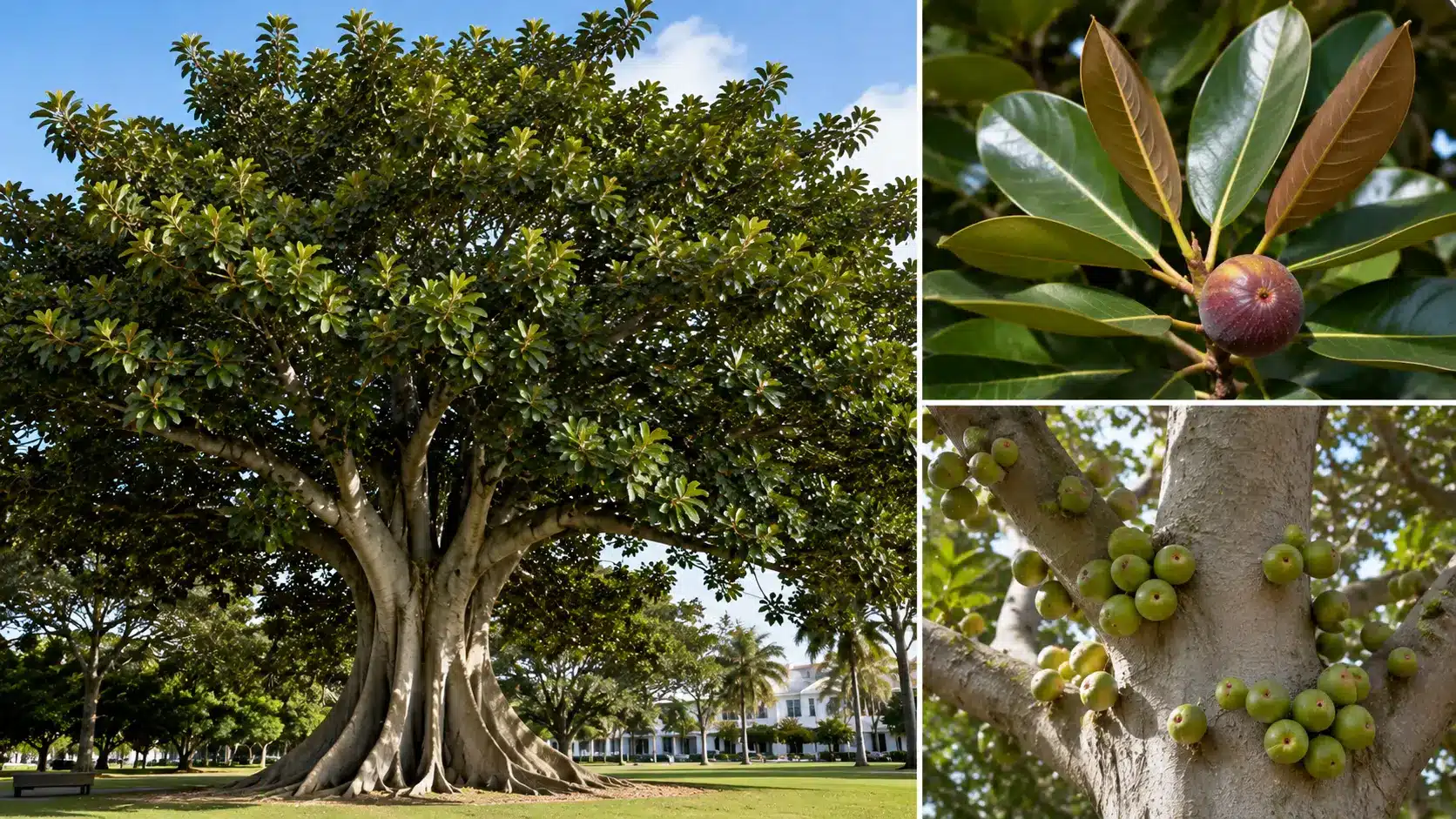
Moreton Bay fig grows on a scale few home gardens can accommodate, with surface roots that can buckle pavement and a trunk that widens into dramatic buttresses. It belongs in parks and large estates rather than typical yards.
| Feature | Details |
|---|---|
| Botanical name | Ficus macrophylla |
| Growth form | Massive spreading tree |
| Best for | Large parks, subtropical landscapes |
| Key trait | Buttressed trunk, huge surface roots |
Which Fig Tree Should You Choose?
The right choice depends on your climate, space, and purpose. For rich, layered flavor, consider Desert King or Black Mission.
For reliable cold hardiness or humid, rainy summers, Chicago Hardy and Celeste hold up best. Hot, dry climates favor Kadota or Black Mission.
For indoor foliage, try Fiddle Leaf Fig, Rubber Tree, or Weeping Fig. Creeping Fig suits wall or fence coverage where locally appropriate, and Chinese Banyan is the top pick for bonsai training.
For a large tropical landscape specimen, Indian Banyan or Moreton Bay Fig fits best. Gulf Coast gardeners can find Texas-tested picks in this rundown of fig varieties suited to the Gulf Coast.
Cold tolerance here reflects mature-plant behavior; young trees handle cold less well and need extra winter protection in their first seasons, regardless of variety.
Frequently Asked Questions
Do you need two fig trees to produce fruit?
Usually not. Most common-type figs, the kind sold at typical nurseries, set fruit on their own. Smyrna types need a specialized wasp for pollination, and San Pedro types need it only for their later main crop in many climates.
Which fig tree is easiest for beginners to grow?
A common-type fig that matches your winter lows and ripens before your first fall frost is usually the easiest starting point. Celeste and Brown Turkey are widely available and forgiving of average care in most home gardens.
Are larger figs always the better choice?
No. Bigger fruit can look appealing, but size does not guarantee better flavor, texture, or reliability. Smaller-fruited varieties like Celeste often ripen earlier and hold up better through uneven weather than large-fruited types.
Which fig varieties handle humid or rainy summers best?
Closed-eye varieties tend to do better, since a tighter opening blocks rain and insects that cause souring on the tree. Celeste and Chicago Hardy are commonly recommended for humid, rain-prone regions for exactly this reason.
Can ornamental Ficus like fiddle leaf fig or rubber tree grow outdoors?
Yes, in consistently warm, frost-free climates. Both can grow into large trees outdoors over time, though most home gardeners in cooler regions keep them as indoor container plants instead, where their size stays far more manageable.
Final Thoughts
That’s really the heart of it: matching the tree to your space rather than chasing whichever name sounds most impressive.
Some of the best garden decisions come down to just picking one and learning as you go.
Figs are forgiving plants, and even a so-so first attempt often turns into a decent tree with time.
If you have grown one of these varieties, or you are still torn between two, drop a comment below and share what worked for you.