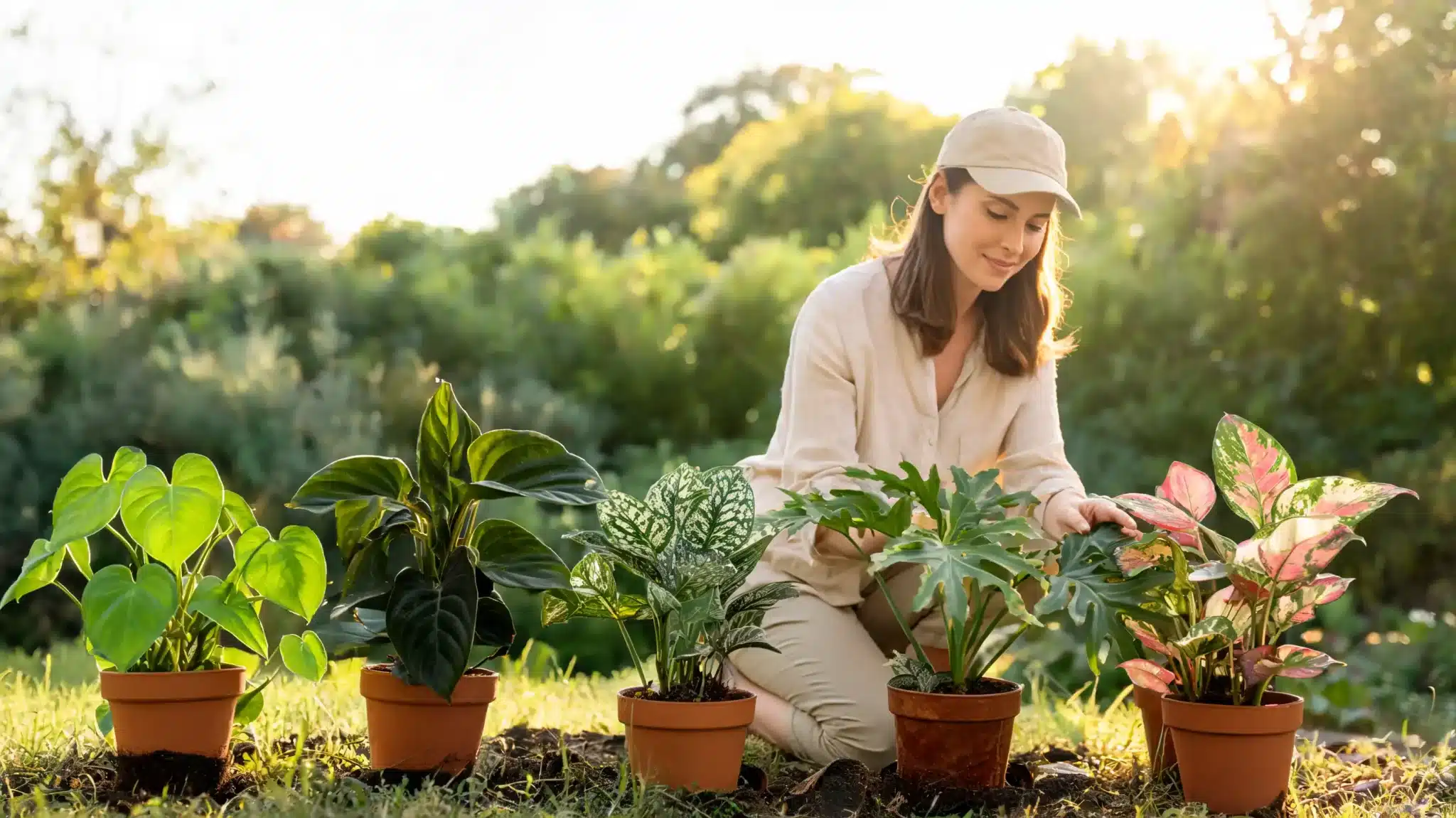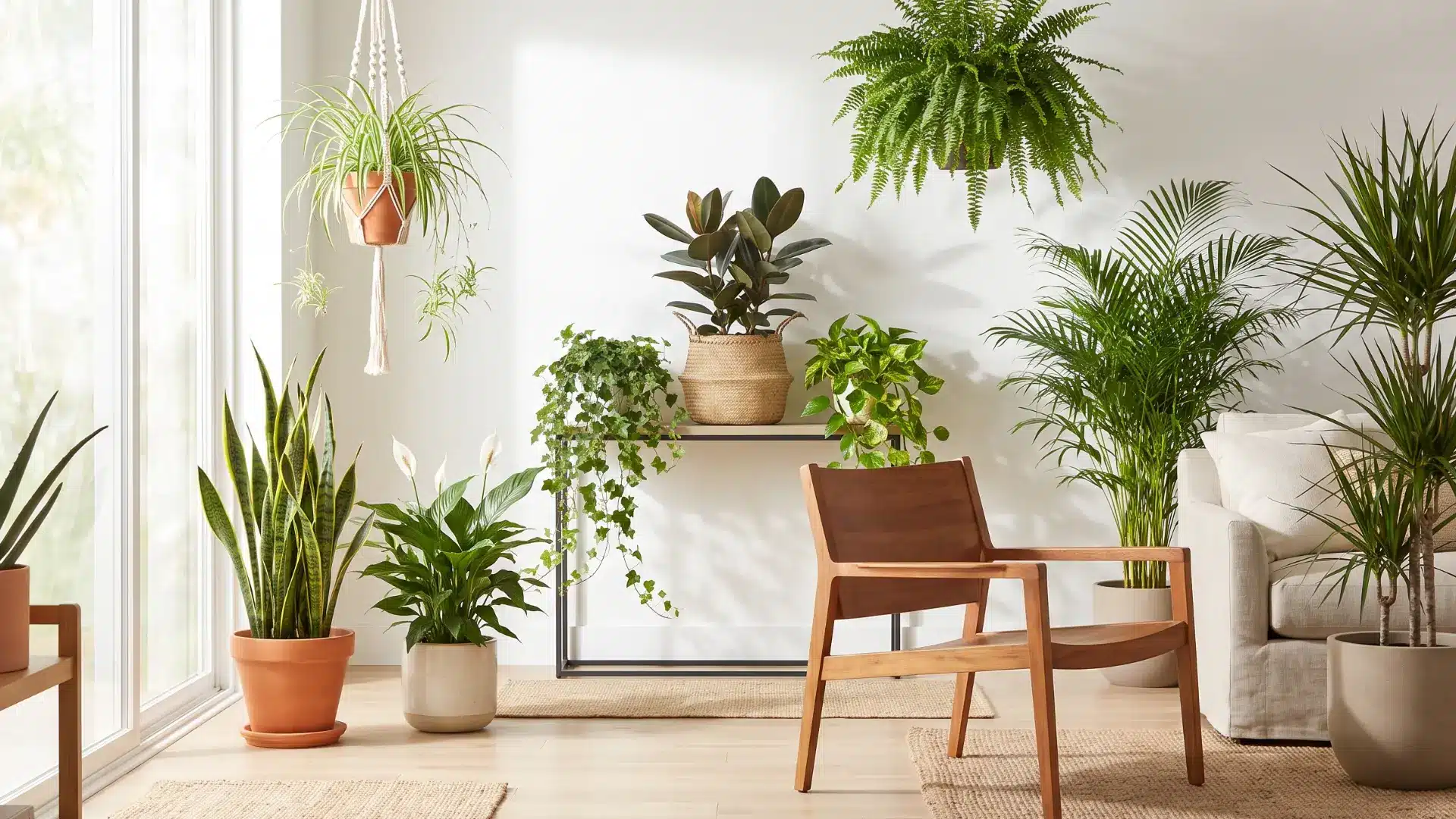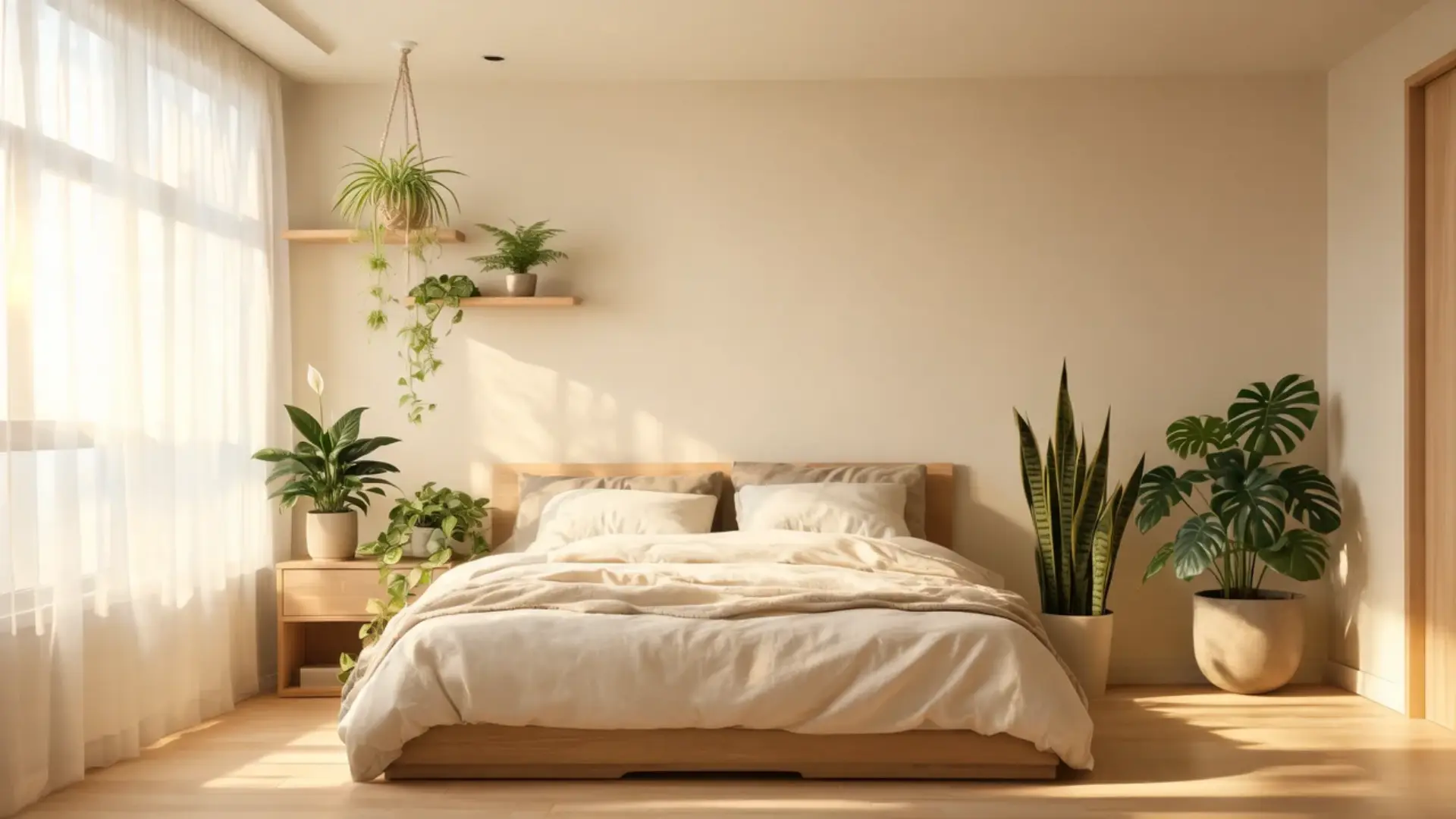
A bedroom should feel calm, comfortable, and easy to live in, and the right plant can soften the space, add a bit of natural color, and make an empty corner feel more welcoming.
What works in your bedroom depends on your light, available space, watering habits, and household needs.
Below you will find options for small nightstands, hanging shelves, bright windows, dark corners, and homes with pets, along with practical care details, placement ideas, and safety notes for each one.
Pick one that matches your room, and you will spend far less time guessing what it needs.
What Makes A Plant Suitable For A Bedroom?
A bedroom plant should match the conditions in your room throughout the year. Light is the first thing to check. A plant beside a sunny window receives far more energy than one placed across the room, even when both spots appear bright to you.
Size also matters. A wide palm can overwhelm a small bedroom, while a compact peperomia may fit neatly beside your lamp. You should also consider watering needs, temperature, humidity, and how quickly the plant grows.
Pet and child safety should be part of the decision too. Several popular houseplants can irritate the mouth or stomach when chewed, a risk covered in the Clemson Extension pet-safe plant list.
If your cat climbs shelves or your dog investigates every new object, choose a safer species instead of relying only on placement.
Plants That Can Thrive In A Bedroom
Each option is a real species or recognized plant group that can grow indoors with suitable light, water, soil, and temperature. Some stay compact enough for a nightstand, while others work better as floor plants.
1. Snake Plant
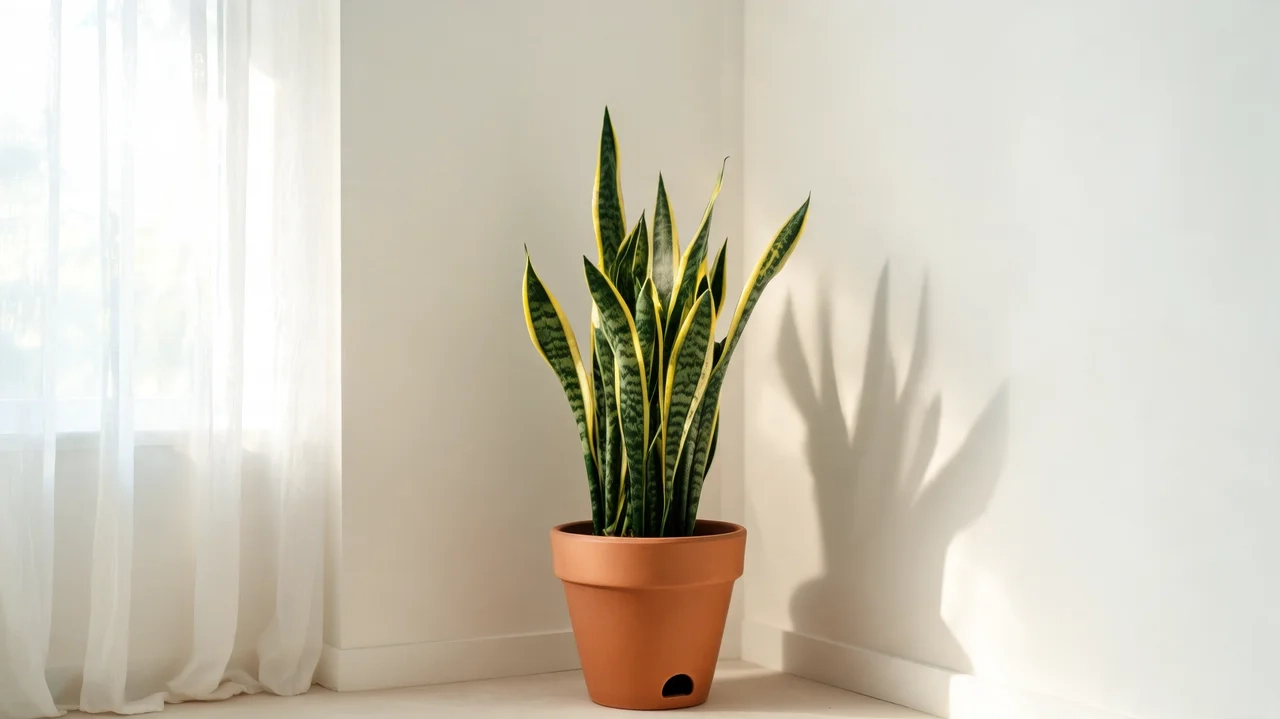
Snake plant, or Dracaena trifasciata, is a dependable choice for bedrooms with limited floor space. Its upright leaves add height without spreading across the room.
It tolerates low to bright indirect light and prefers dry soil between waterings. Use a pot with drainage, since wet roots can rot quickly. Keep it away from pets because chewing the leaves may cause stomach irritation.
2. ZZ Plant
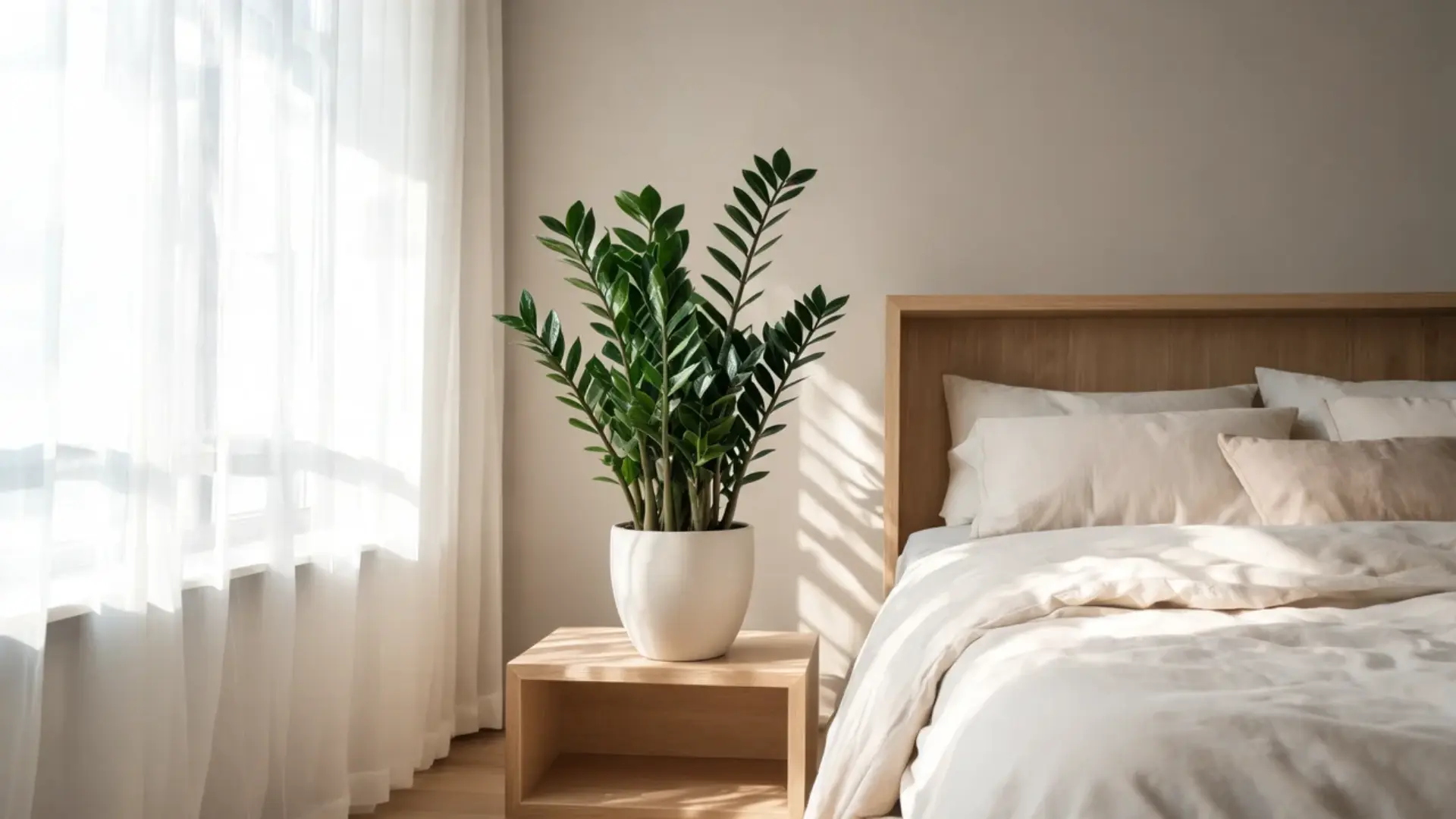
The ZZ plant, or Zamioculcas zamiifolia, suits people who want greenery without frequent care. Its glossy leaves stay neat, and its underground rhizomes store water for dry periods.
It handles low to medium indirect light, but not complete darkness. Let the soil dry well before watering again. Place it on a dresser or floor stand, and keep it away from curious pets.
3. Golden Pothos
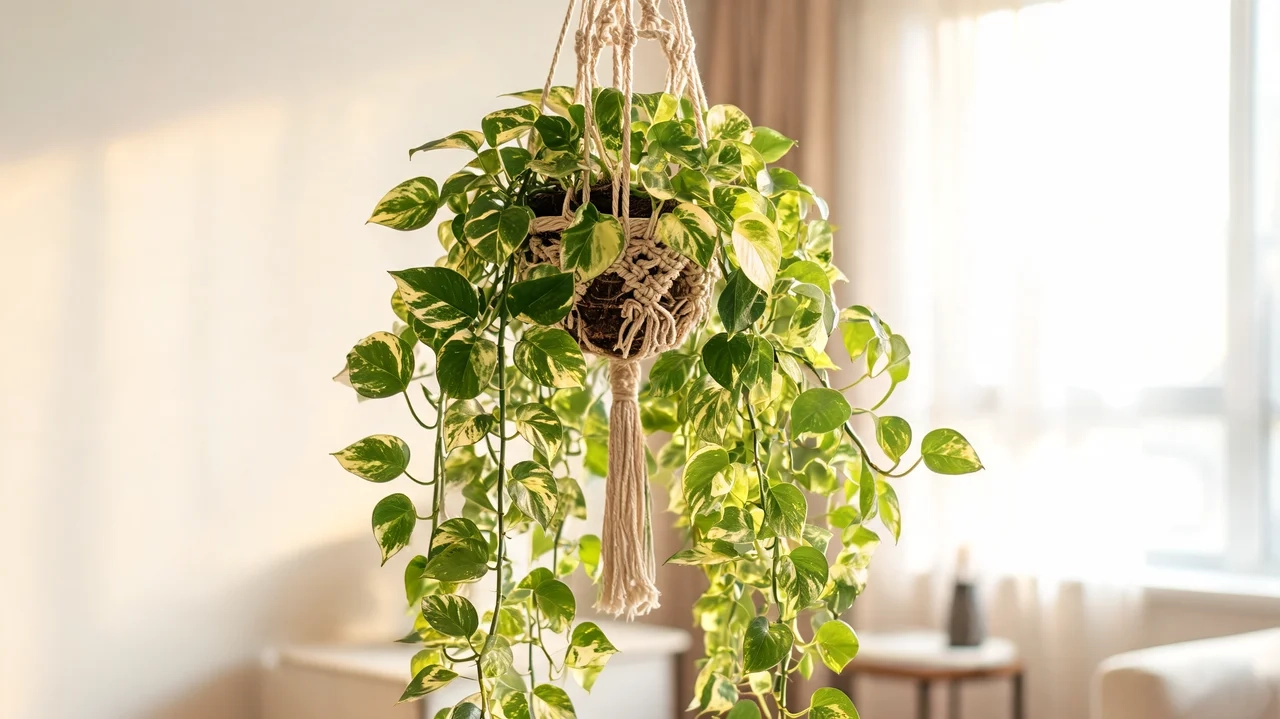
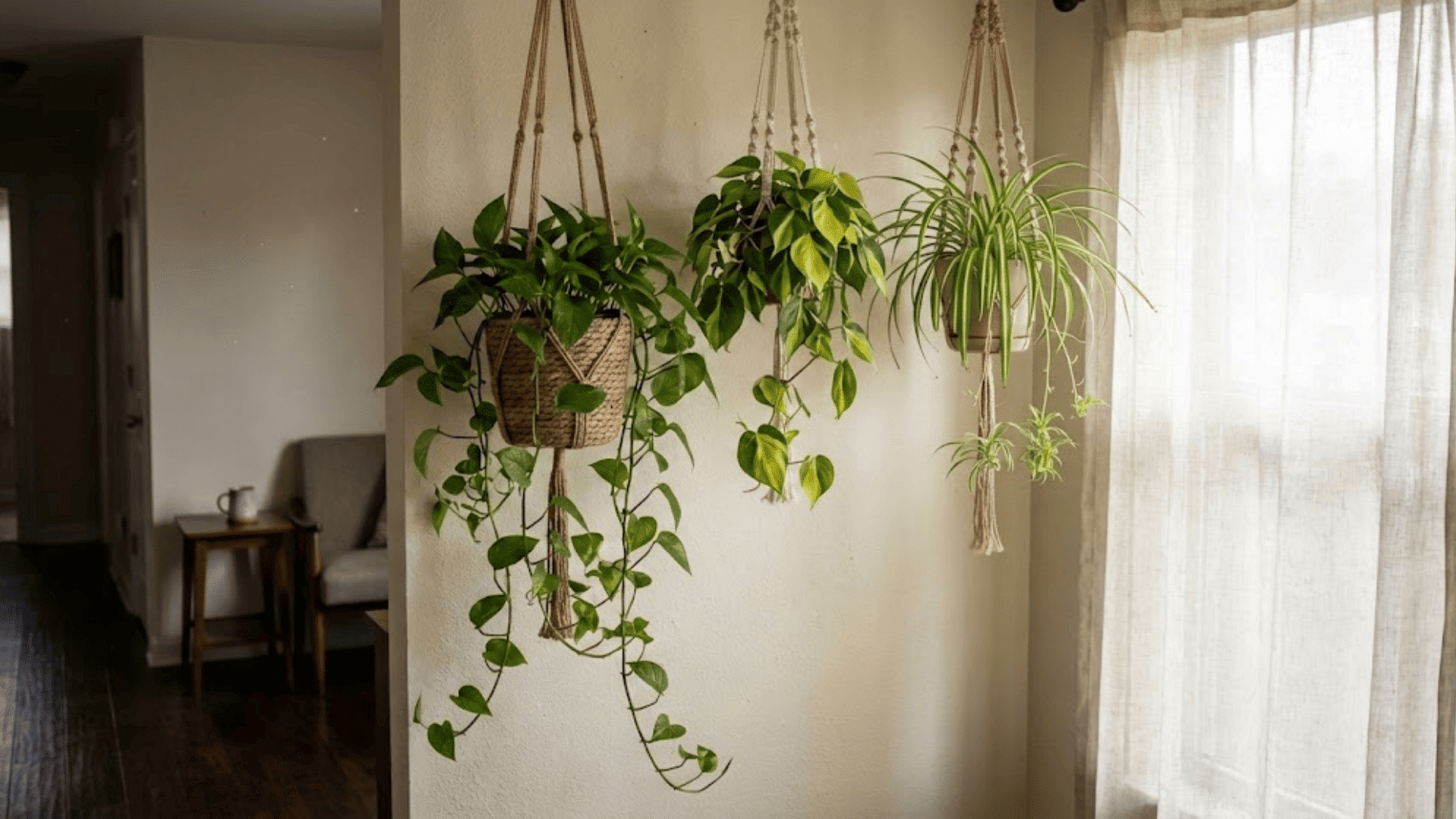
Golden pothos, or Epipremnum aureum, is a flexible trailing plant for shelves, baskets, and tall furniture. Its heart-shaped leaves may show yellow or cream markings in brighter light.
Water when the upper soil feels dry, and trim long vines to encourage fuller growth, a rhythm this pothos care guide breaks down in more detail. It roots easily from stem cuttings. Keep it out of reach because its leaves can irritate pets and children.
4. Spider Plant
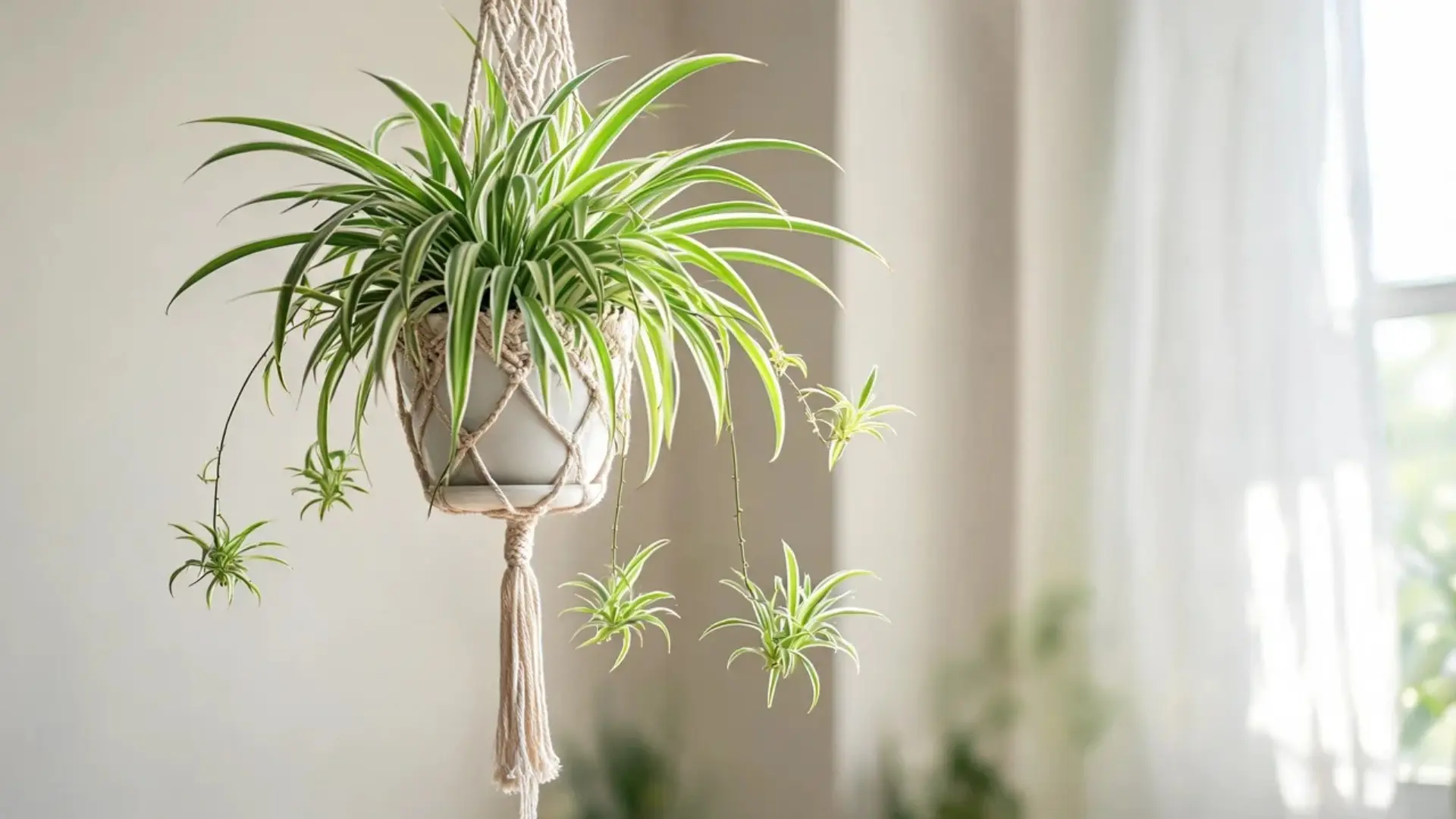
Spider plant, or Chlorophytum comosum, has arching striped leaves that soften shelves and hanging baskets. Mature plants often produce small plantlets on long stems, which you can root in water or soil.
It prefers medium to bright indirect light and slightly dry soil between waterings. Brown tips may appear in dry air. This species is generally considered non-toxic to cats and dogs.
5. Heartleaf Philodendron
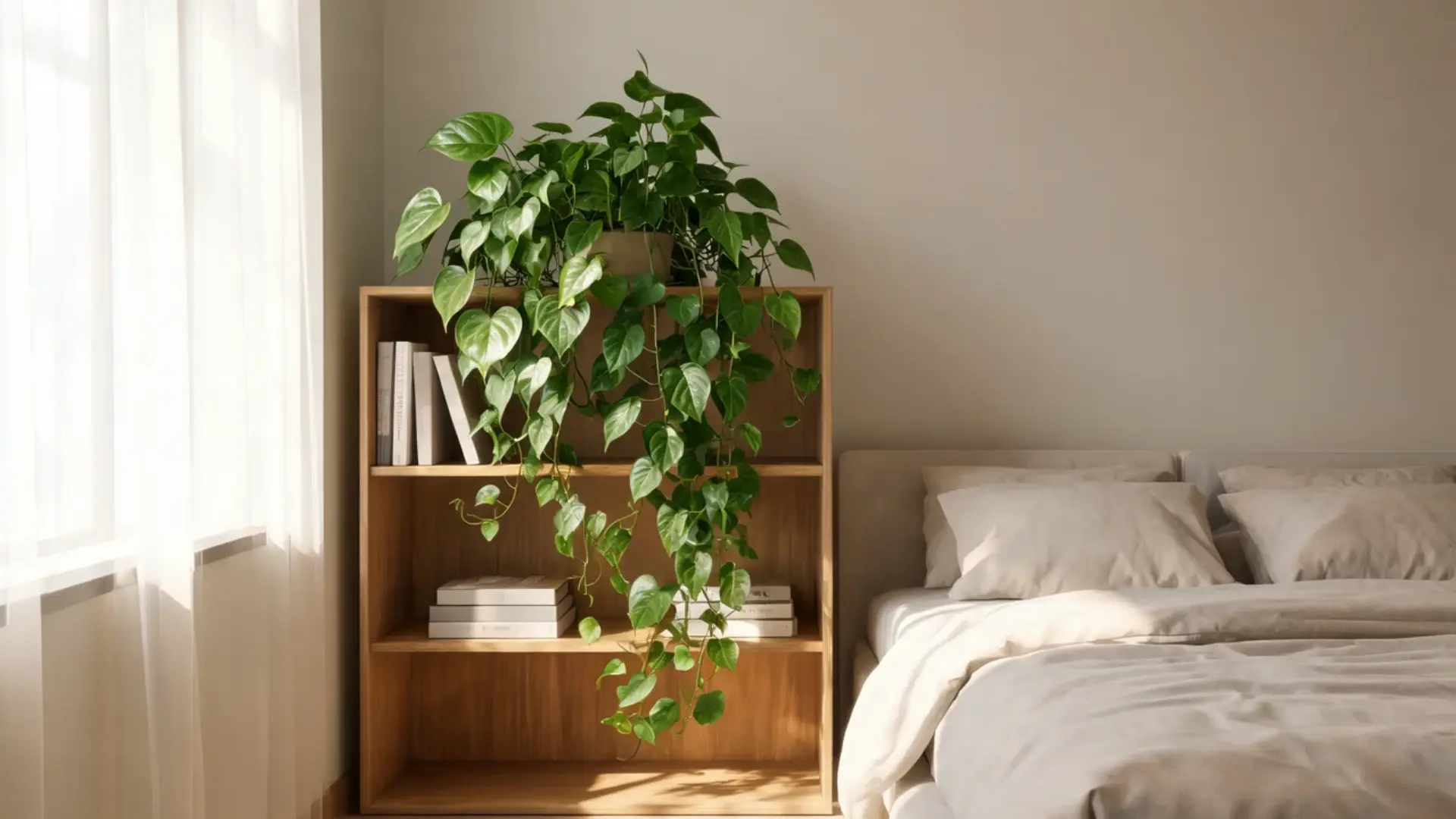
Heartleaf philodendron, or Philodendron hederaceum, brings a relaxed look to shelves and hanging planters. Its glossy, heart-shaped leaves trail naturally or climb a small support.
Medium indirect light produces fuller growth, while darker rooms may cause longer gaps between leaves. Water after the topsoil dries. Prune stretched vines when needed, and keep the plant away from pets because it is toxic if eaten.
6. Chinese Evergreen
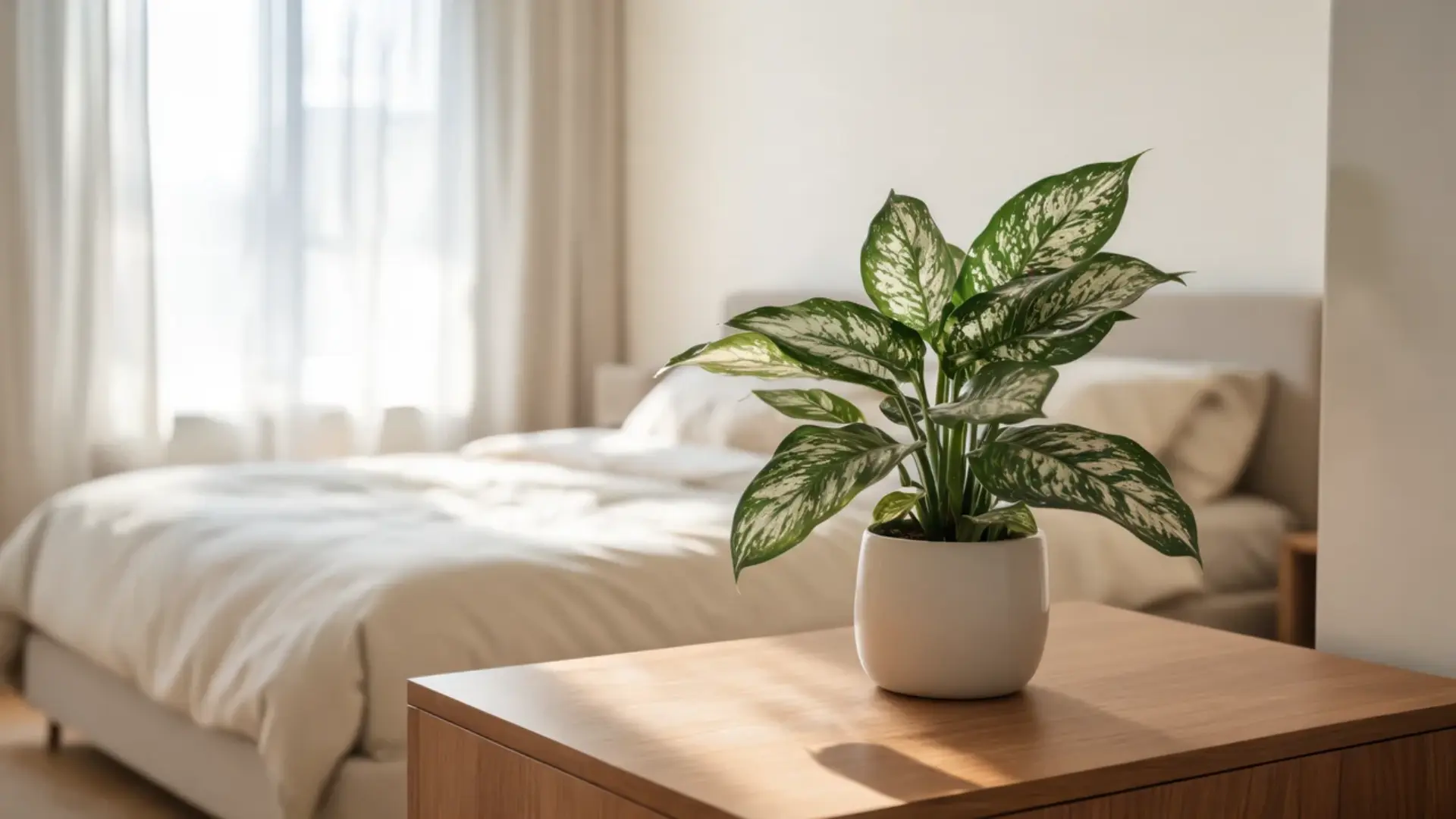
Chinese evergreen refers to plants in the Aglaonema genus, known for green, silver, cream, pink, or red foliage. They cope well with low to medium indirect light and grow slowly enough for bedrooms.
Let the topsoil dry before watering, and protect the plant from cold drafts. Brighter varieties need more light to keep their color. Aglaonema is toxic to cats and dogs.
7. Peace Lily
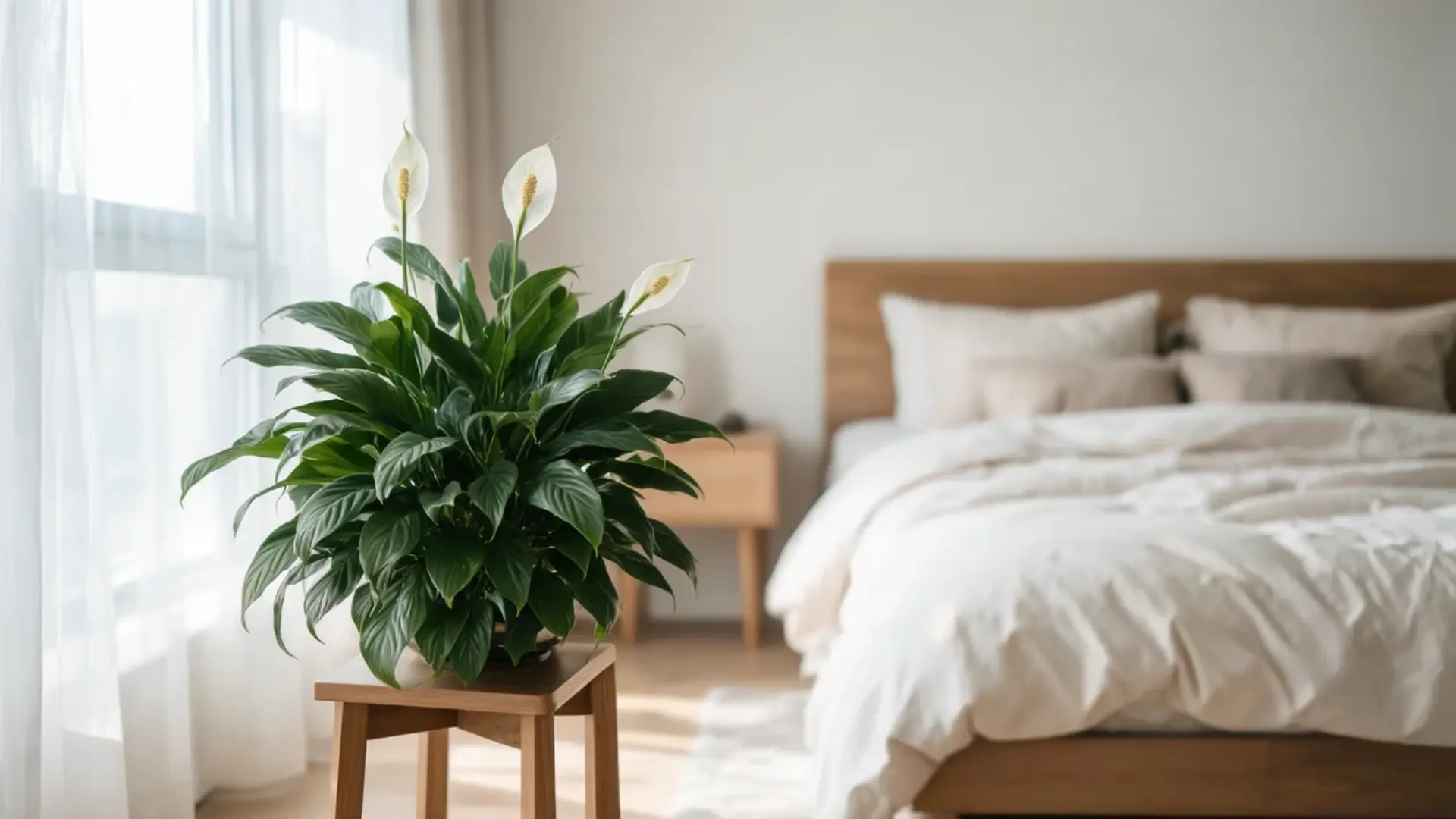
Peace lily, from the Spathiphyllum genus, has dark green leaves and white spathes that brighten a quiet bedroom. It tolerates lower light, but brighter indirect light supports flowering.
Water when the soil surface begins to dry, and avoid letting the roots stay soaked, a balance this peace lily care guide walks through step by step. The leaves may droop when thirsty. Keep peace lilies away from pets because chewing them can cause painful mouth irritation.
8. Parlor Palm
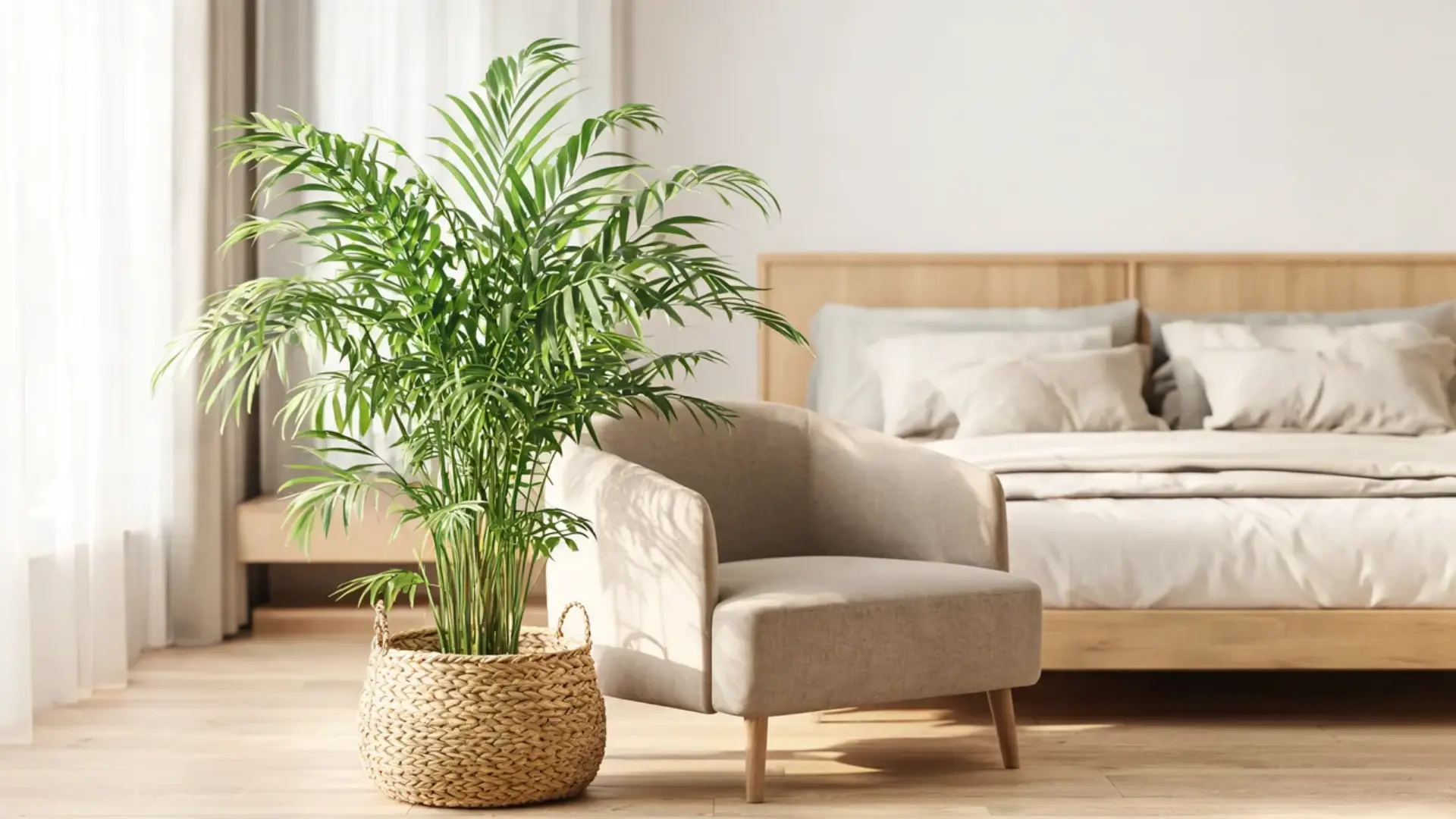
Parlor palm, or Chamaedorea elegans, adds soft tropical texture without taking over the room. Its fine fronds grow slowly and suit tables, stands, or empty corners.
Medium indirect light is best, although it can manage in lower light. Water when the upper soil feels slightly dry. Watch for spider mites in warm rooms. Parlor palms are generally considered non-toxic to cats and dogs.
9. Bird’s Nest Fern
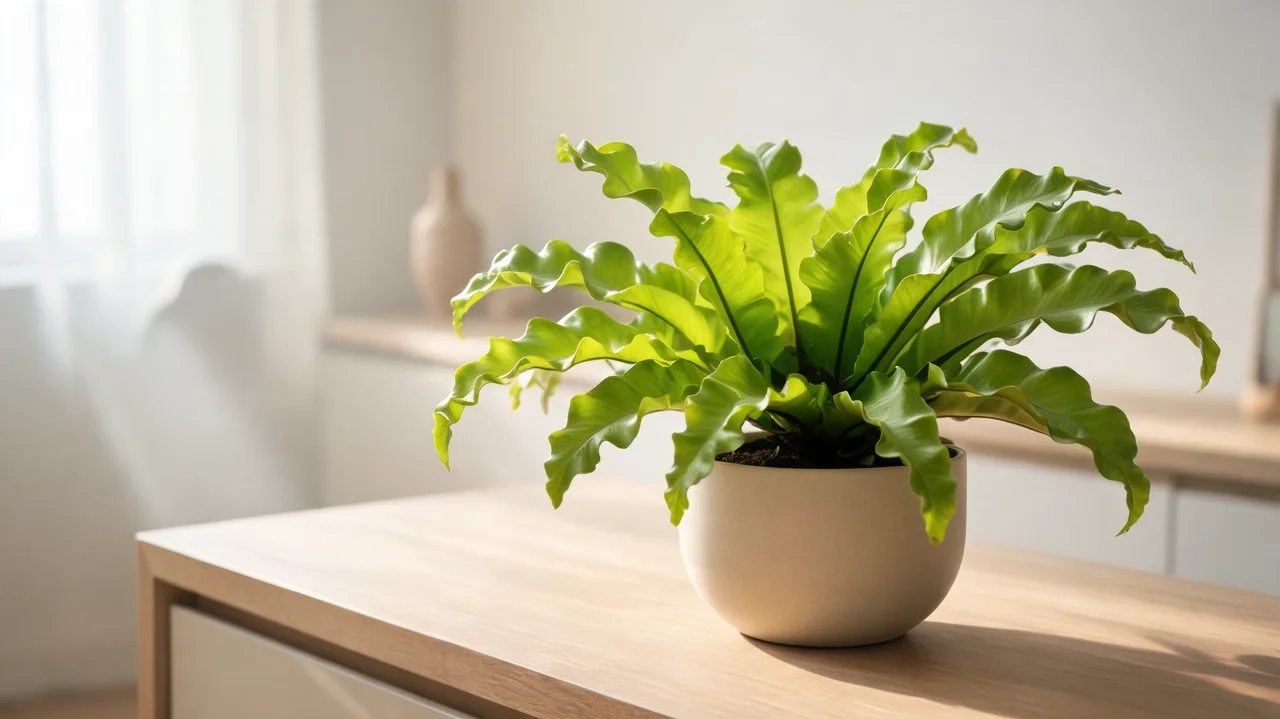
Bird’s nest fern, or Asplenium nidus, grows broad, wavy fronds from a central rosette. Its tidy shape works well on dressers and wide shelves. Give it medium to bright indirect light and keep the soil lightly moist.
Water around the pot rather than into the crown, where trapped moisture may cause rot. This fern enjoys humidity and is generally considered safe for cats and dogs.
10. Boston Fern
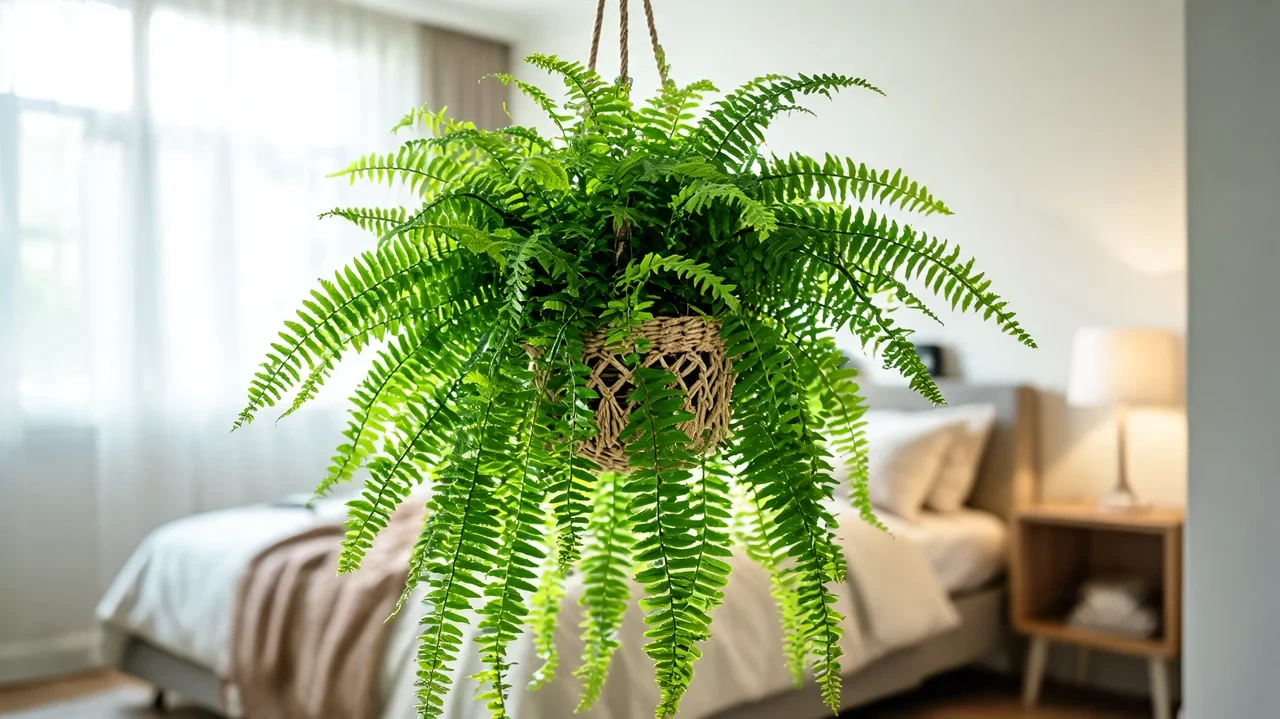
Boston fern, or Nephrolepis exaltata, creates a full, soft look with long, arching fronds. It suits hanging baskets and tall stands in bedrooms with moderate humidity. Keep the soil lightly moist and provide medium to bright indirect light.
Dry air can cause browning and fallen leaflets, so keep it away from heaters. Boston ferns are generally considered non-toxic to cats and dogs.
11. Prayer Plant
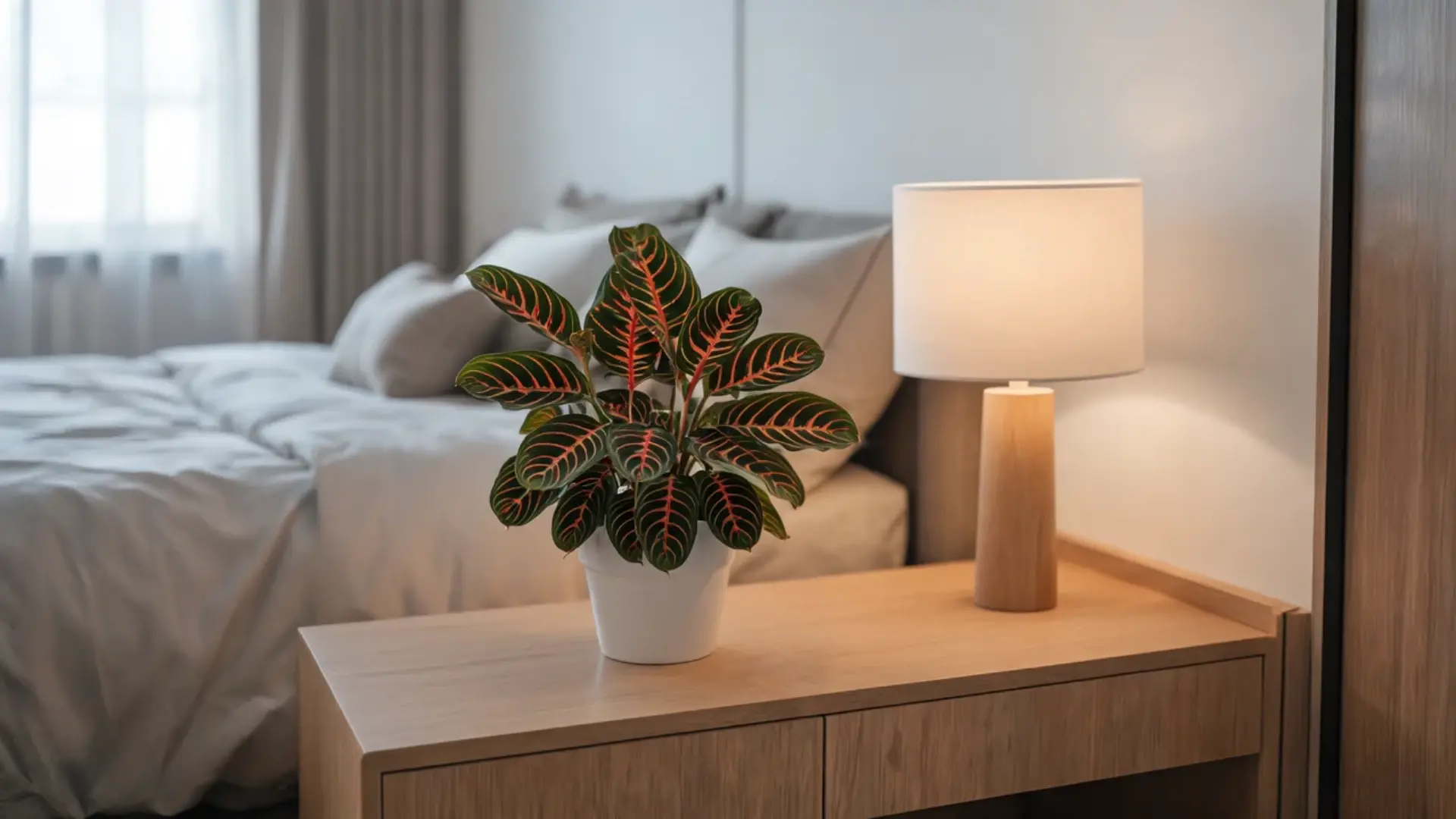
Prayer plant, or Maranta leuconeura, is known for patterned leaves that lift and fold as light levels change. It stays compact enough for a dresser or wide nightstand.
Medium indirect light, lightly moist soil, and moderate humidity support healthy growth. Strong sun can fade the patterns. Dry air may cause brown edges. Prayer plants are generally considered non-toxic to cats and dogs.
12. Calathea
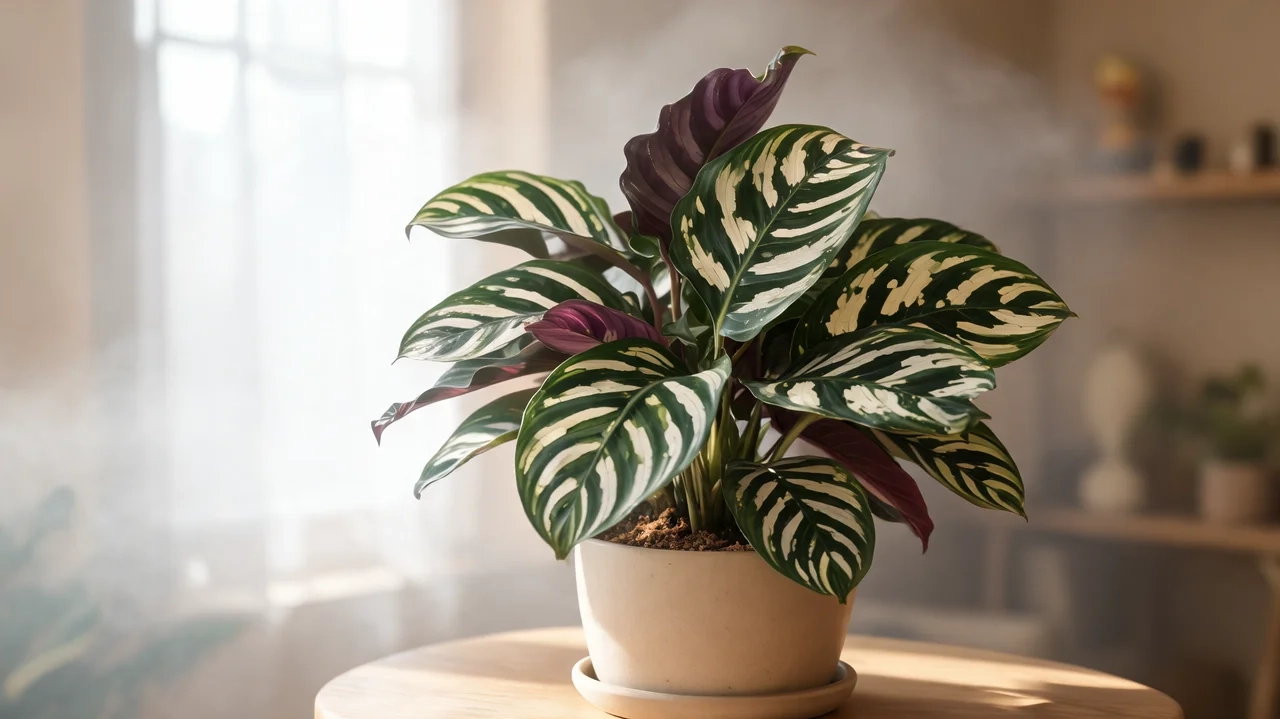
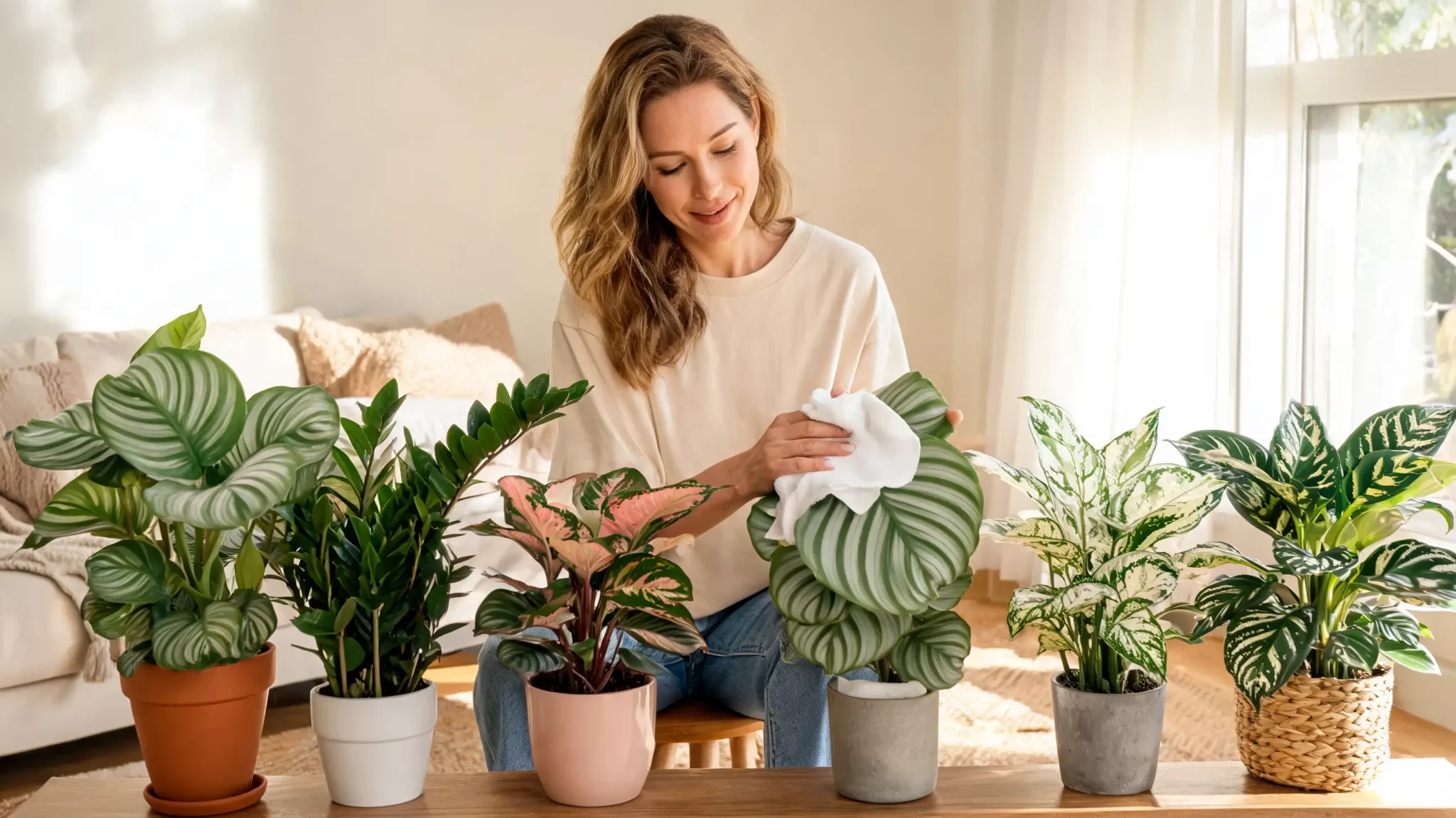
Calathea plants, many now classified in the Goeppertia genus, are grown for striped, spotted, or boldly colored leaves. They prefer medium indirect light, steady warmth, and lightly moist soil.
Dry air or irregular watering can cause curling and brown edges. Use a well-draining mix and keep them away from vents. Calatheas need more attention, but they are generally considered non-toxic to pets.
13. Peperomia
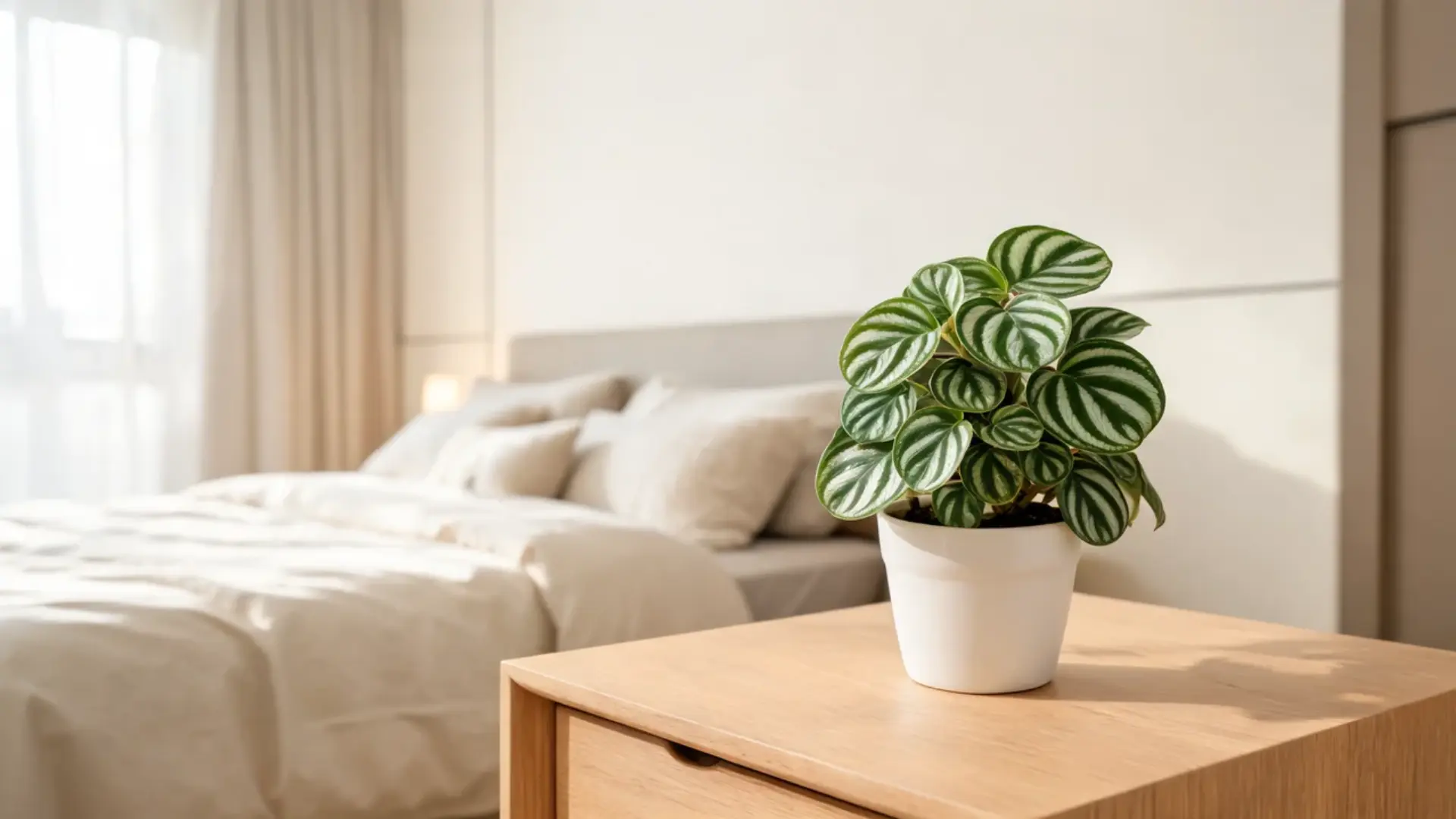
Peperomia includes many compact plants with smooth, rippled, striped, or rounded leaves. Most varieties suit nightstands and narrow shelves because they stay small and grow slowly.
Give them bright indirect light and let part of the soil dry before watering. Their fine roots dislike large, wet pots. Choose a container with drainage. Peperomias are generally considered non-toxic to cats and dogs.
14. Chinese Money Plant
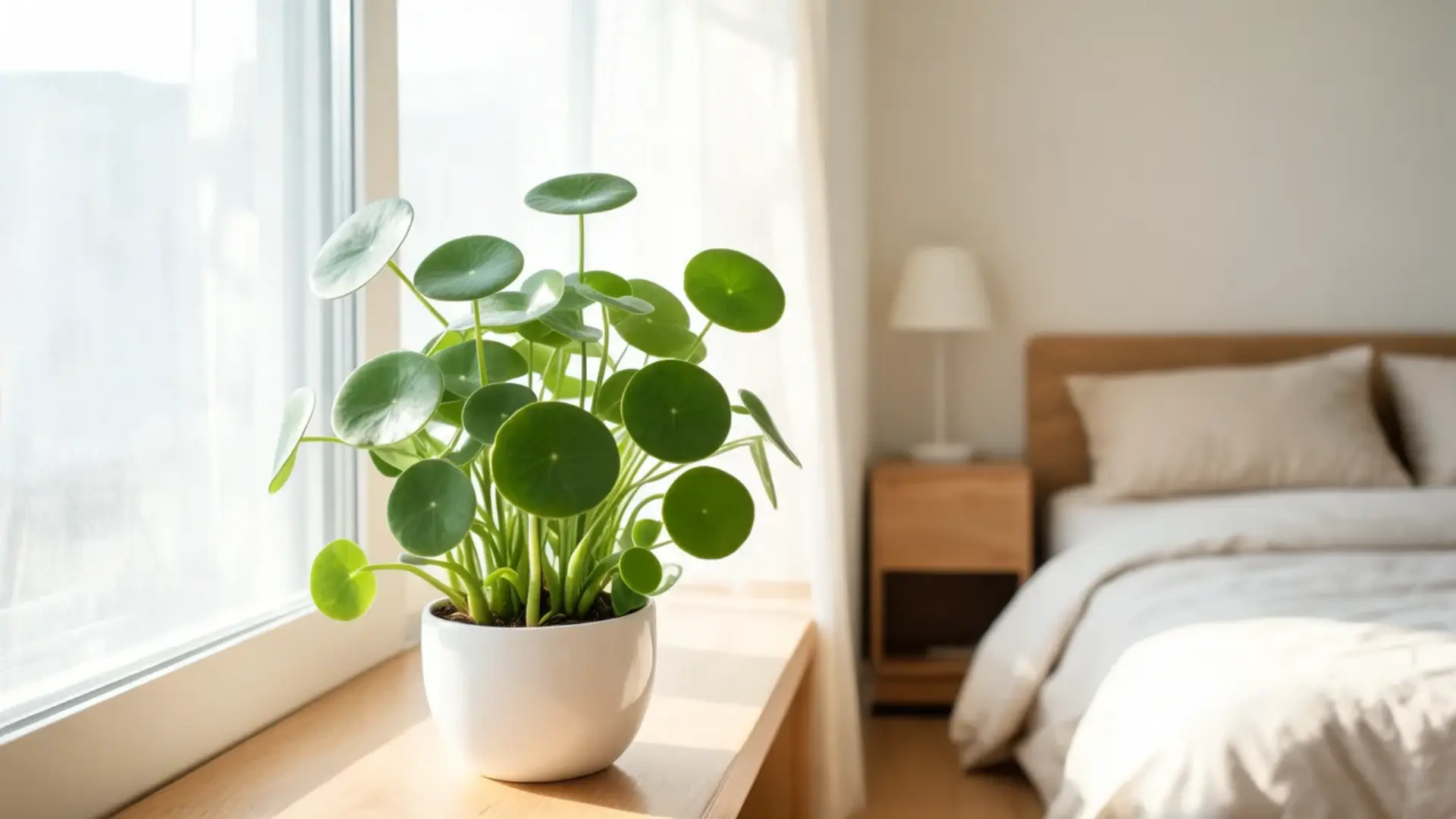
Chinese money plant, or Pilea peperomioides, has round leaves held on long stems, giving it a light and modern shape. Place it in bright indirect light and rotate the pot regularly to keep growth balanced.
Water when the topsoil feels dry, and avoid oversized containers. Healthy plants often produce offsets around the base. This species is generally considered non-toxic to cats and dogs.
15. Rubber Plant
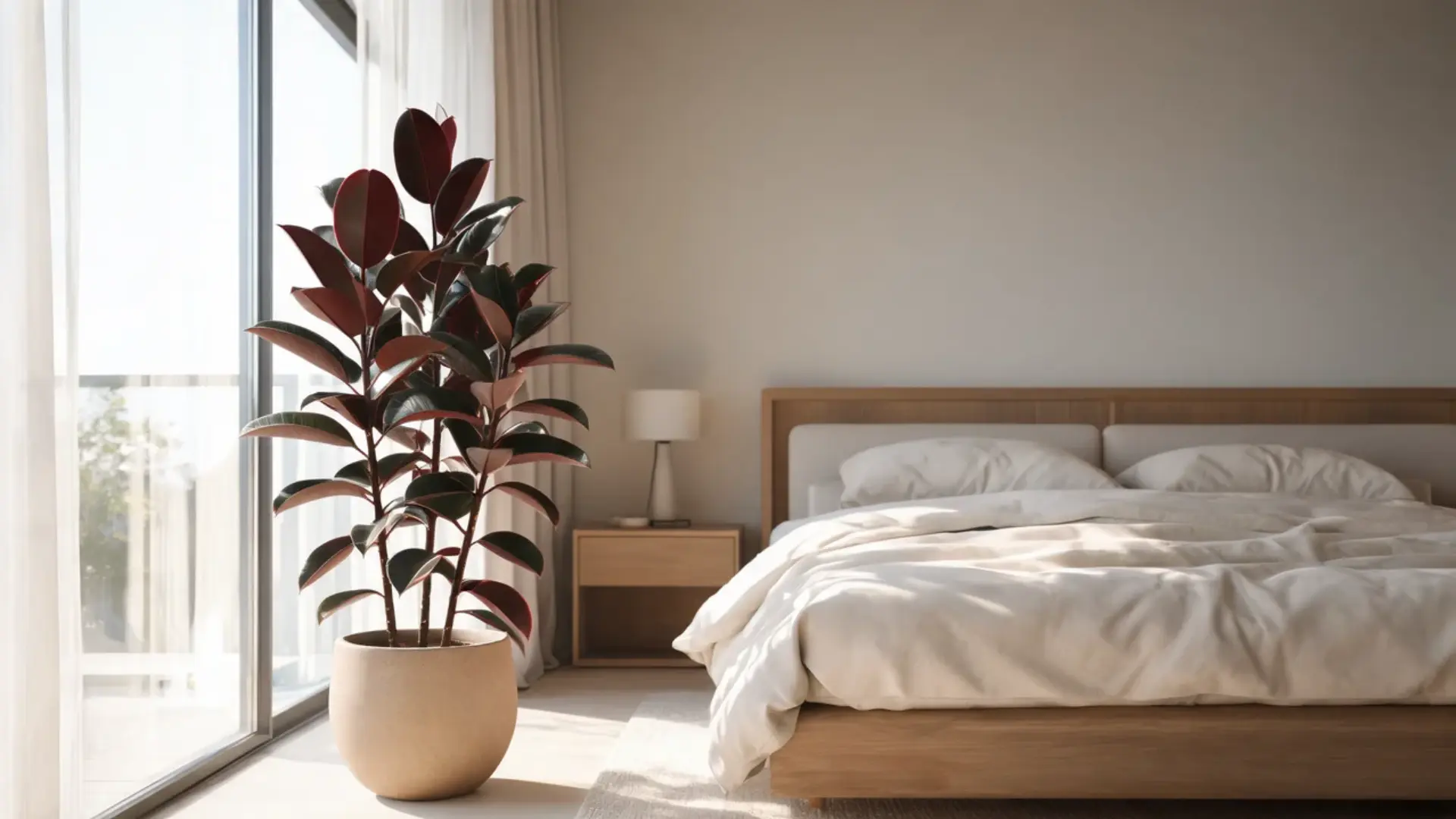
Rubber plant, or Ficus elastica, has thick, glossy leaves and an upright form that suits open bedroom corners. Green, burgundy, and variegated types are available.
Bright indirect light supports strong growth, while darker varieties may tolerate medium light. Let the upper soil dry before watering. Sudden changes can cause leaf drop. Its sap may irritate skin, and the plant is toxic to pets.
16. Dracaena
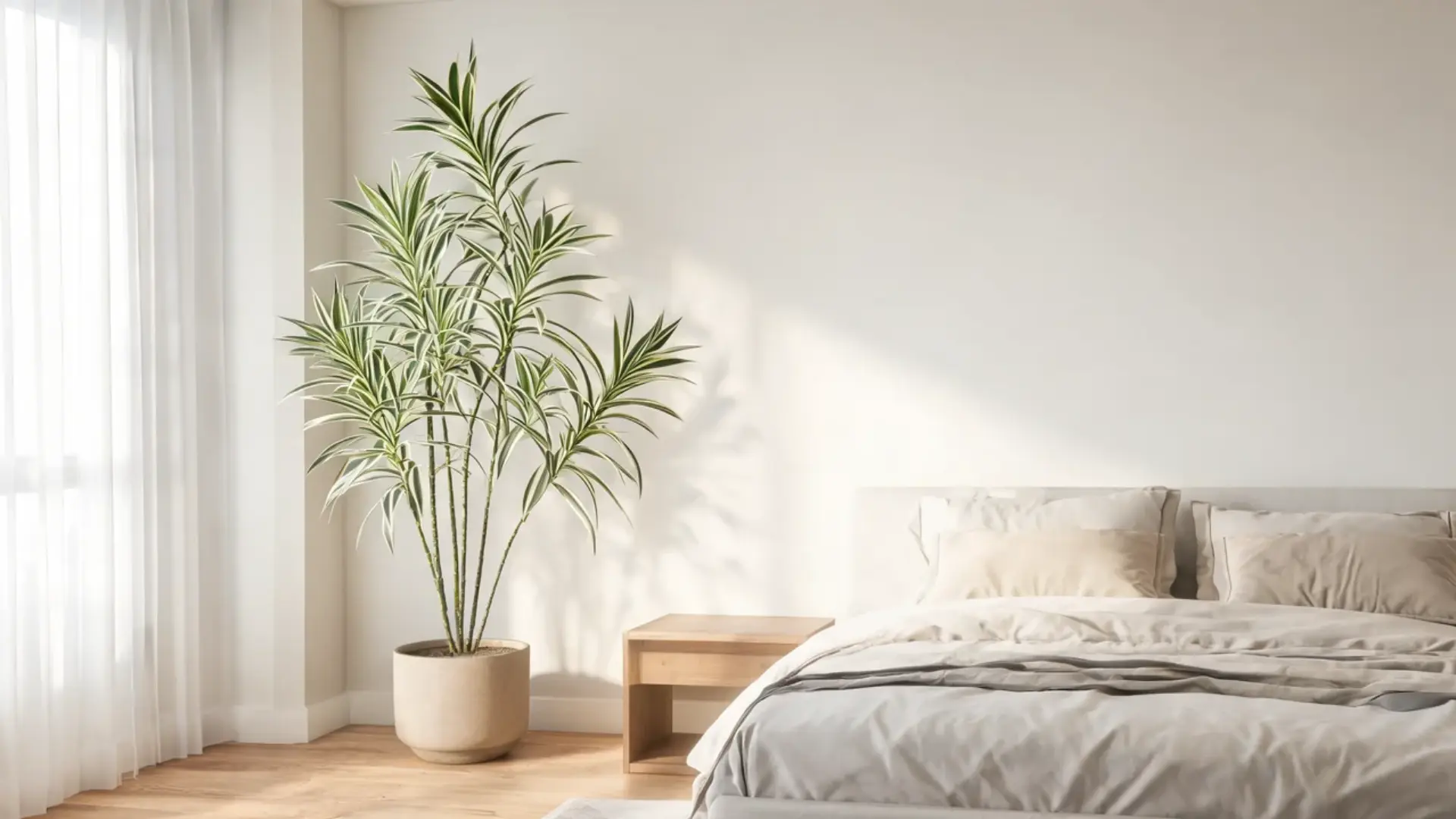
Dracaena includes several upright indoor plants, such as the corn plant and dragon tree. Their narrow leaves add height without taking much floor space. Most prefer medium to bright indirect light, though some tolerate lower light.
Water after the topsoil dries, and watch for brown tips from dry air or mineral buildup. Dracaenas are toxic to cats and dogs, so choose placement carefully.
17. Monstera
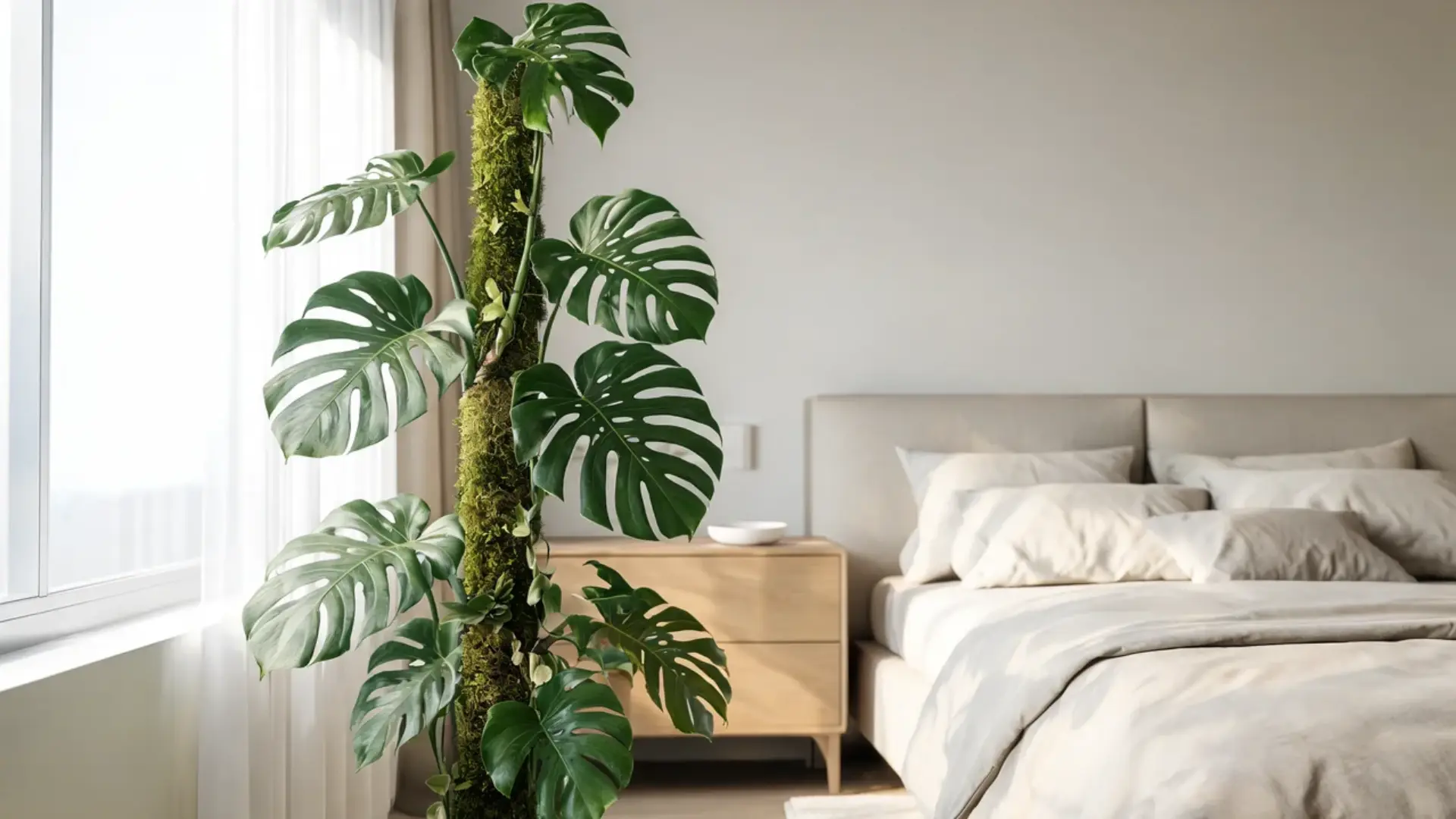
Monstera deliciosa has large leaves that develop natural splits and holes as the plant matures. It suits a spacious bedroom where the foliage can spread freely.
Give it bright indirect light, water when the top few inches of soil dry, and provide a moss pole for support. Wipe dust from the broad leaves. Monstera is toxic if chewed, so keep it away from pets and children.
18. Lucky Bamboo
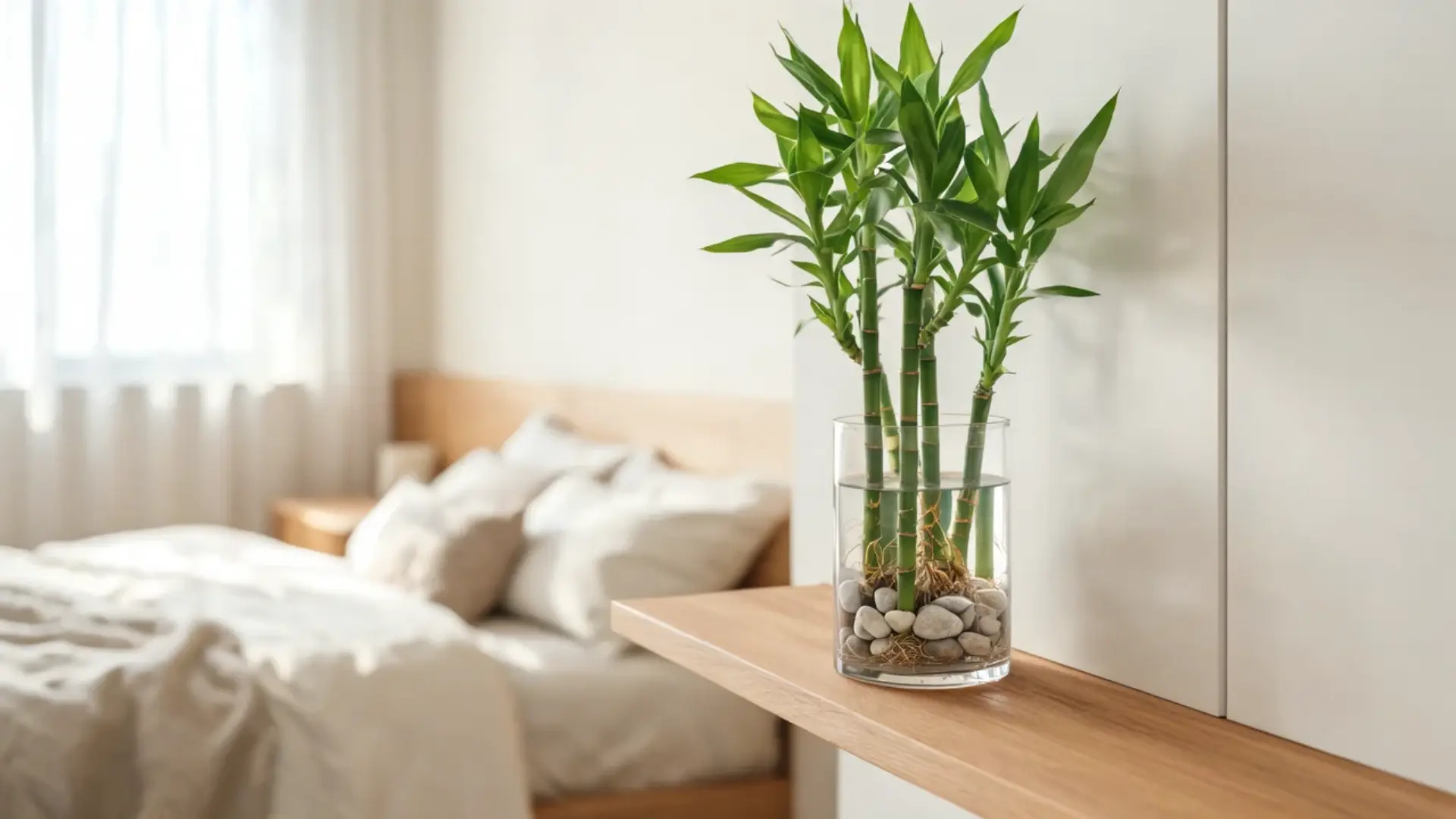
Lucky bamboo, or Dracaena sanderiana, is not true bamboo. Its upright stems can grow in clean water or well-draining soil, making it useful for narrow shelves and small desks.
Give it low to medium indirect light, since strong sun can scorch the leaves. Replace water regularly if grown without soil. Lucky bamboo is toxic to cats and dogs, despite its harmless common name.
19. Satin Pothos
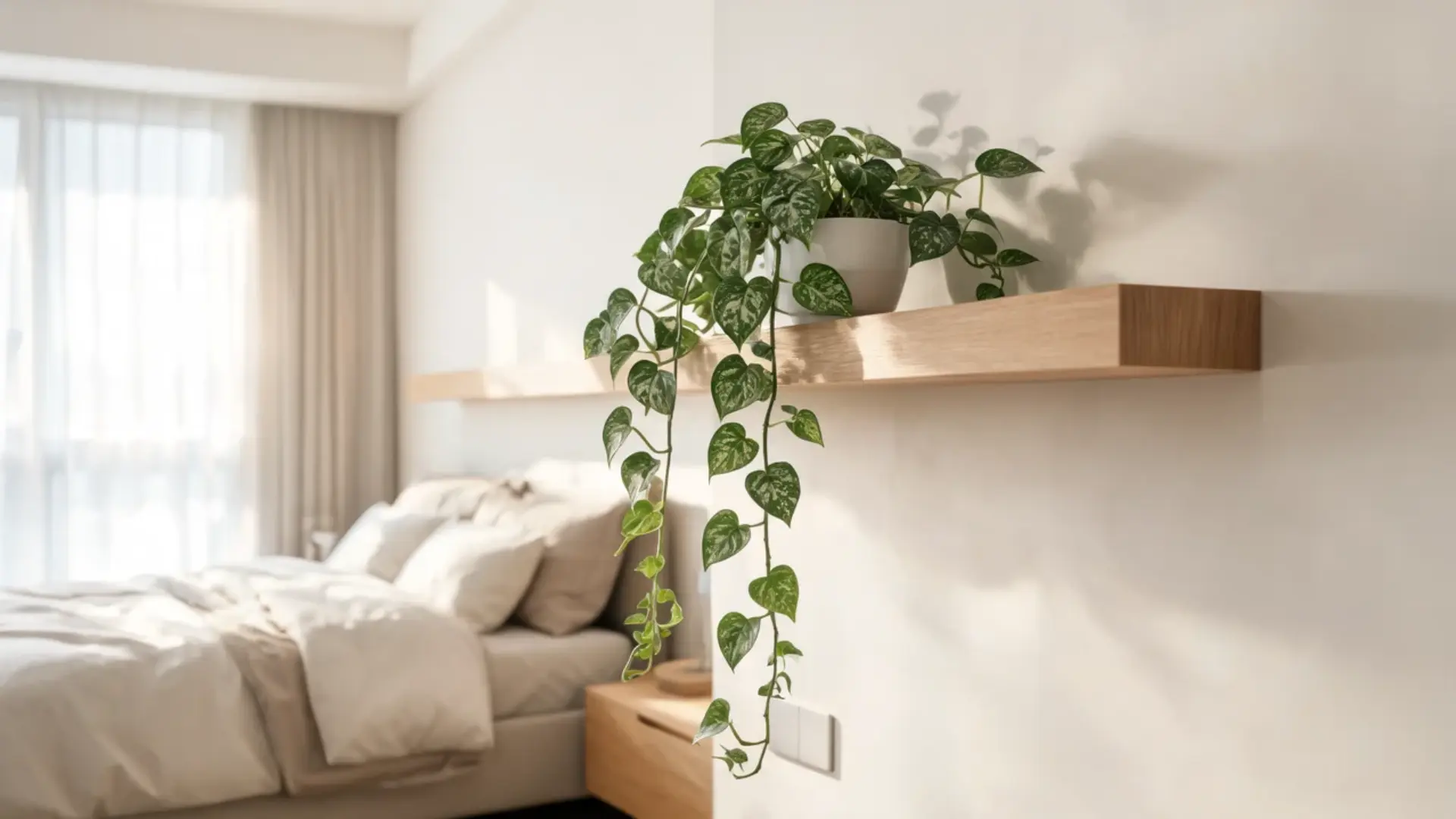
Satin pothos, or Scindapsus pictus, has dark green leaves marked with soft silver patches. It works well in hanging pots or on high shelves where its vines can trail. Medium to bright indirect light keeps the pattern clear.
Let the topsoil dry before watering. Curling leaves may signal thirst. Satin pothos contains irritating crystals and should stay away from pets and young children.
20. Money Tree
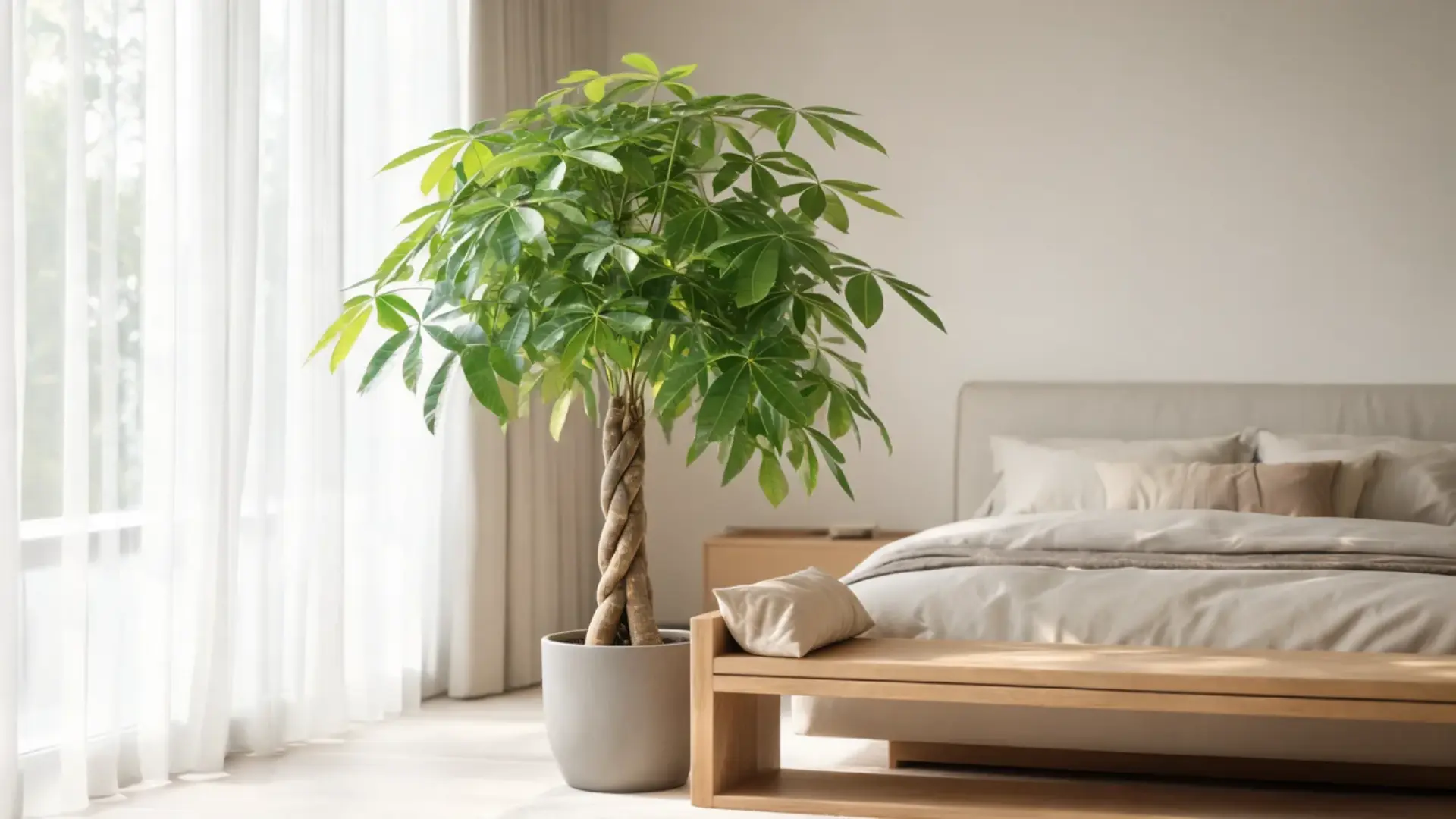
Money tree, or Pachira aquatica, is often sold with braided trunks and a light, leafy canopy. It suits a bright corner without creating heavy visual clutter.
Provide medium to bright indirect light and rotate the pot for even growth. Water when the top few inches of soil dry, then drain thoroughly. Money trees dislike cold drafts. They are generally considered non-toxic to cats and dogs.
21. Ponytail Palm
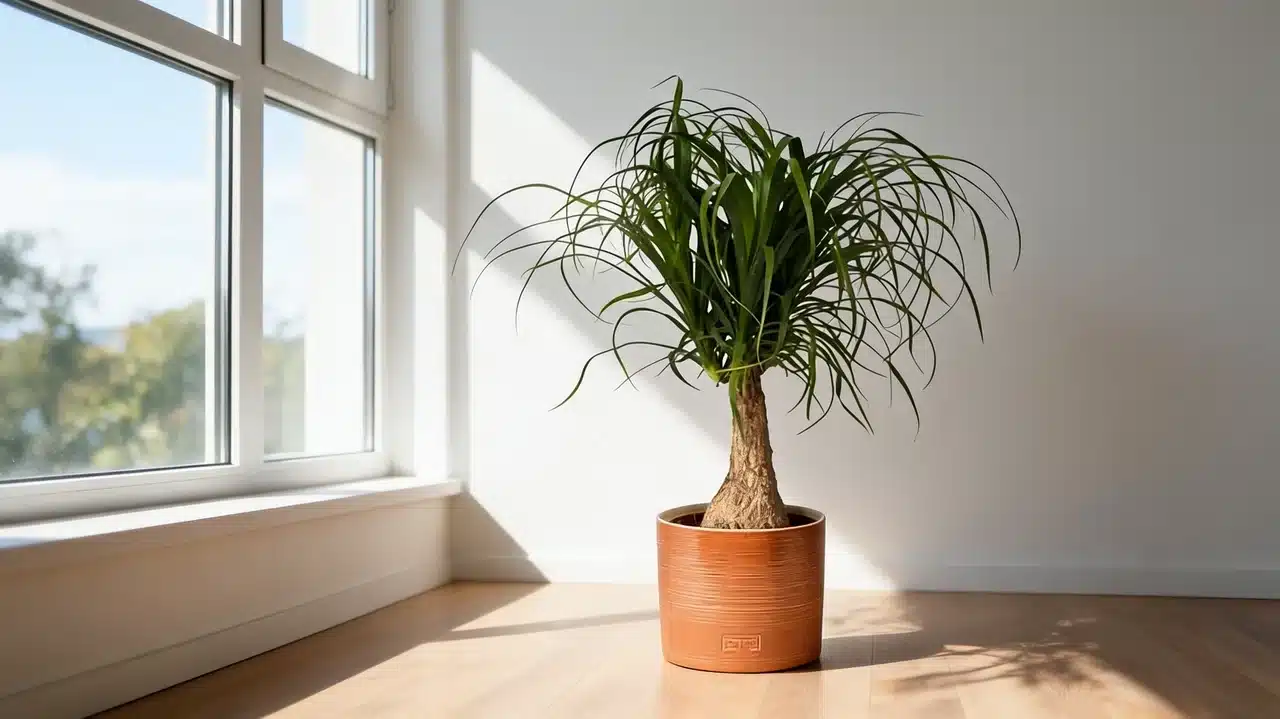
Ponytail palm, or Beaucarnea recurvata, is a drought-tolerant plant with a swollen trunk base and long curved leaves. It prefers bright light and can handle some gentle direct sun.
Let the soil dry thoroughly before watering, since the trunk stores moisture. Its slow growth makes it easy to manage for years. Ponytail palms are generally considered non-toxic to cats and dogs.
22. Cast Iron Plant
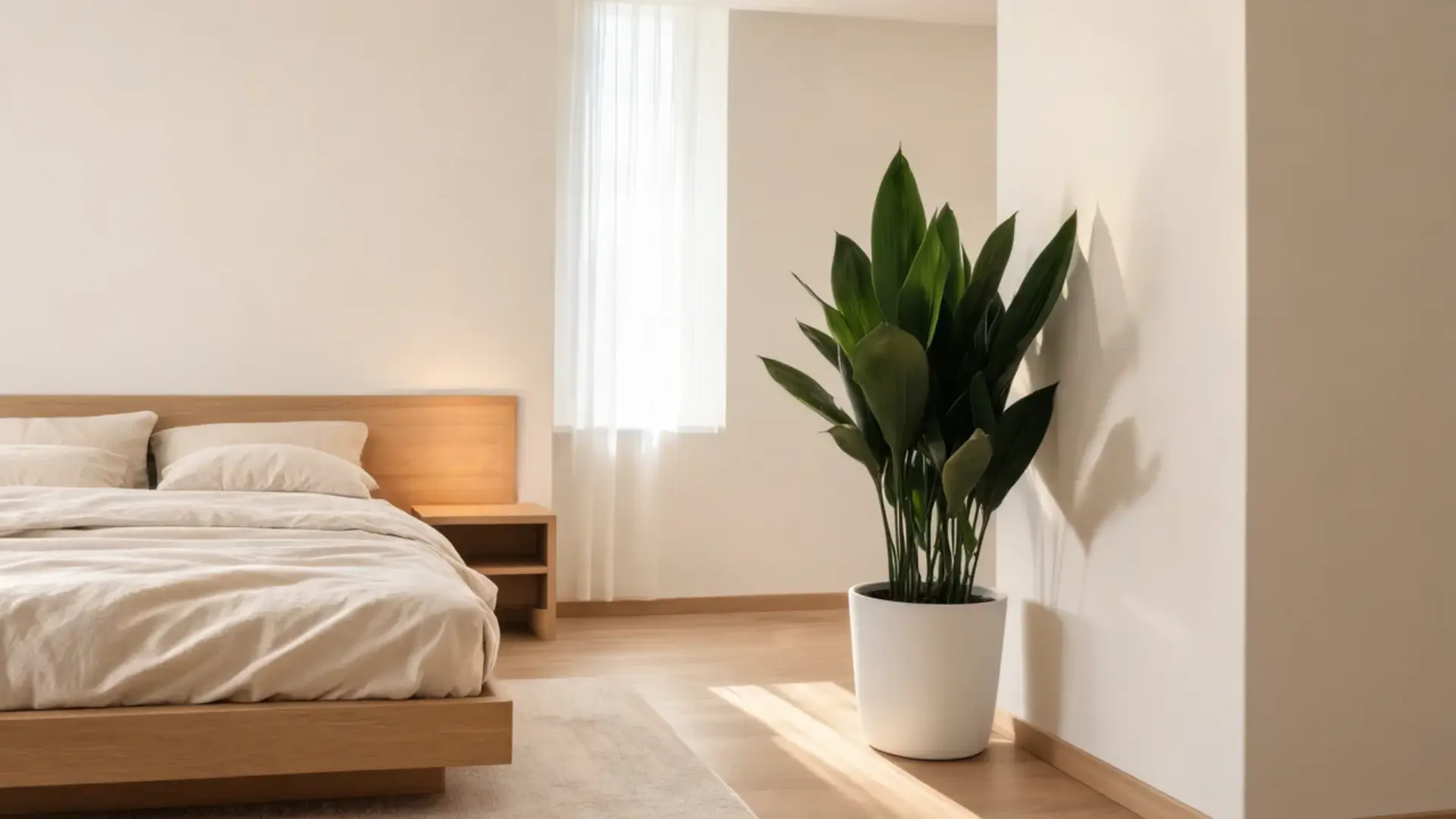
Cast iron plant, or Aspidistra elatior, has broad green leaves that rise directly from underground rhizomes. It tolerates low to medium indirect light and short dry periods better than many houseplants.
Let part of the soil dry between waterings, and protect the foliage from strong sun. Its slow, tidy growth suits shaded corners. Cast iron plants are generally considered non-toxic to pets.
23. Hoya
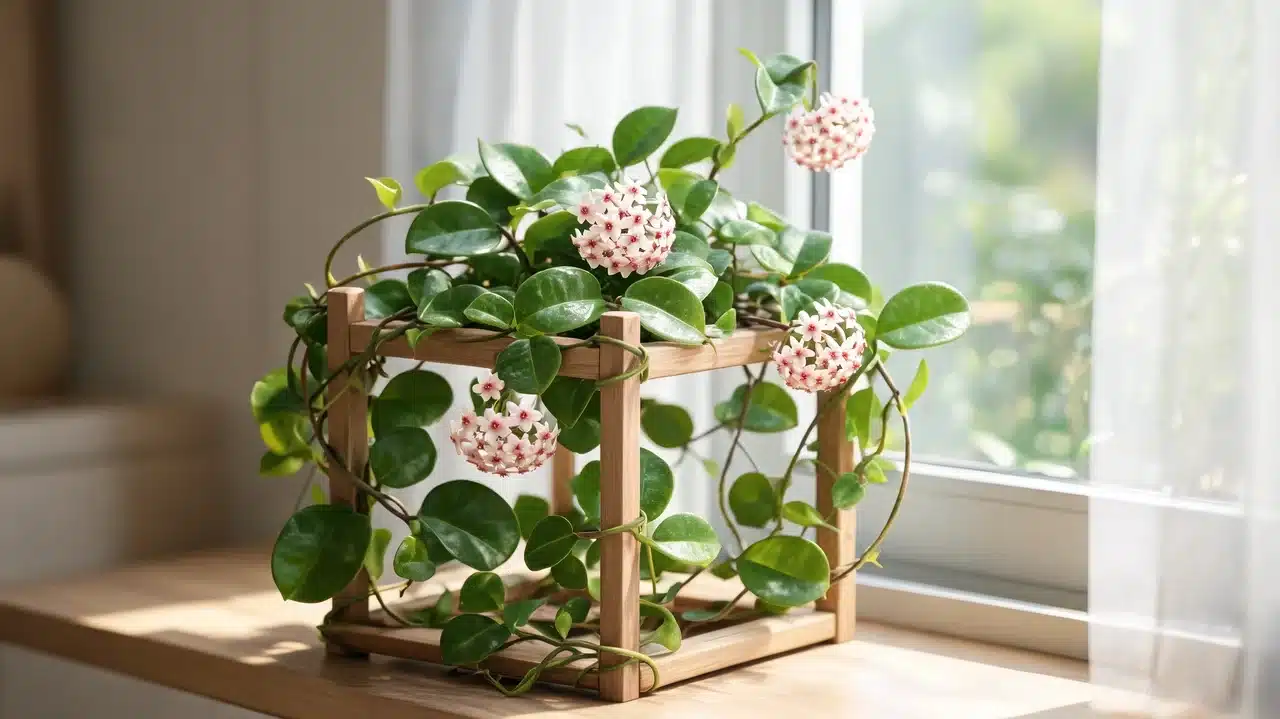
Hoya plants have thick leaves and may produce clusters of star-shaped flowers when light conditions are right. Hoya carnosa is one of the most common indoor types.
Give it bright indirect light and let much of the soil dry before watering. Allow the vines to trail or climb a small frame. Avoid cutting old flower spurs. Hoyas are generally considered non-toxic to cats and dogs.
24. English Ivy
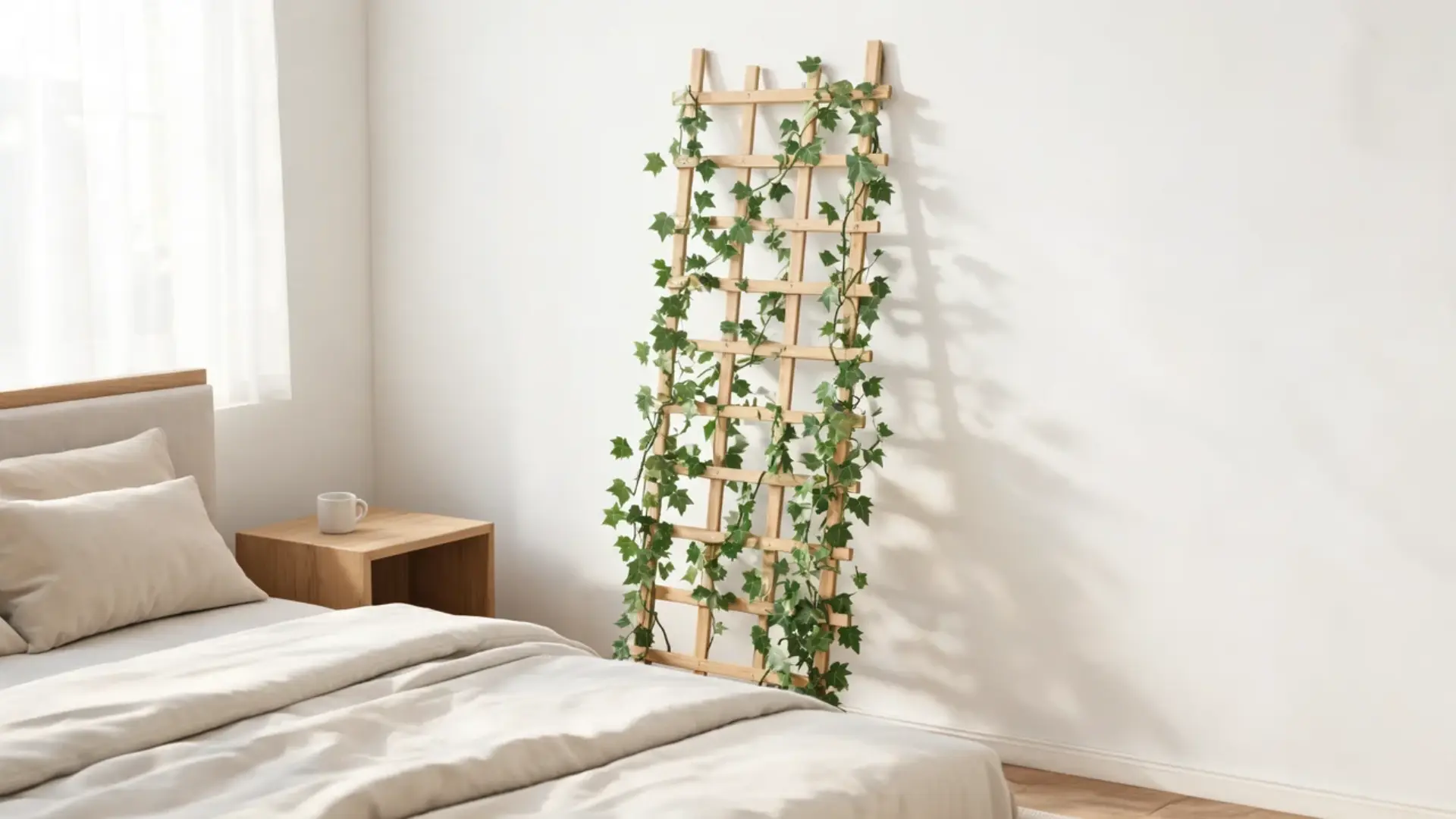
English ivy, or Hedera helix, has lobed leaves that trail from baskets or climb a small support. It prefers bright indirect light, cooler conditions, and good airflow.
Water when the topsoil begins to dry, and check often for spider mites in warm rooms. Trim vines before they attach to walls or furniture. English ivy is toxic to pets and may irritate human skin.
25. African Violet
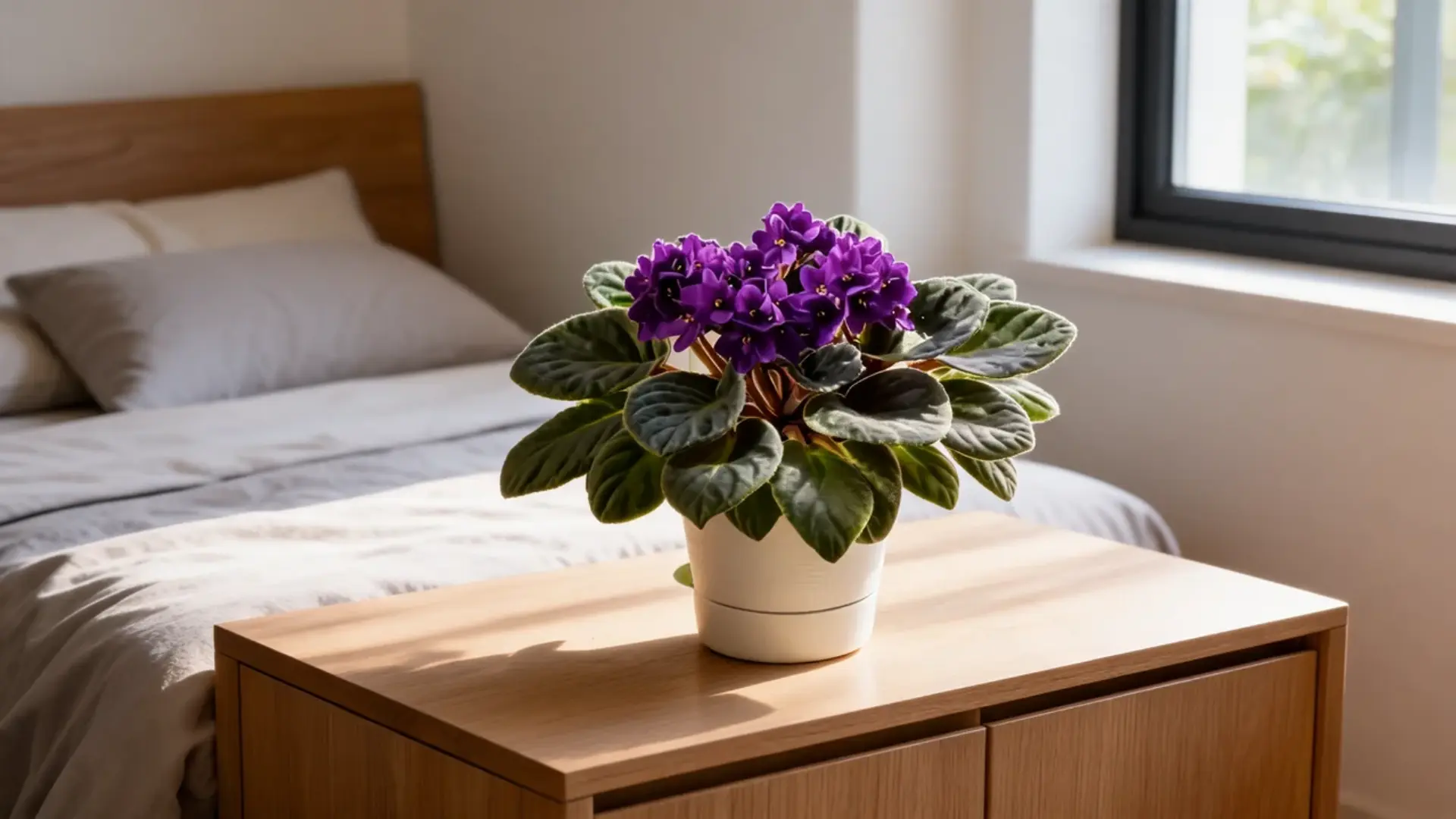
African violets, now commonly placed in the Streptocarpus genus, produce velvety leaves and flowers in purple, pink, blue, or white. They prefer bright indirect light and stable indoor temperatures.
Water when the soil surface begins to dry, and avoid splashing cold water on the leaves. Their compact size suits windowsills and dressers. African violets are generally considered non-toxic to pets.
26. Anthurium
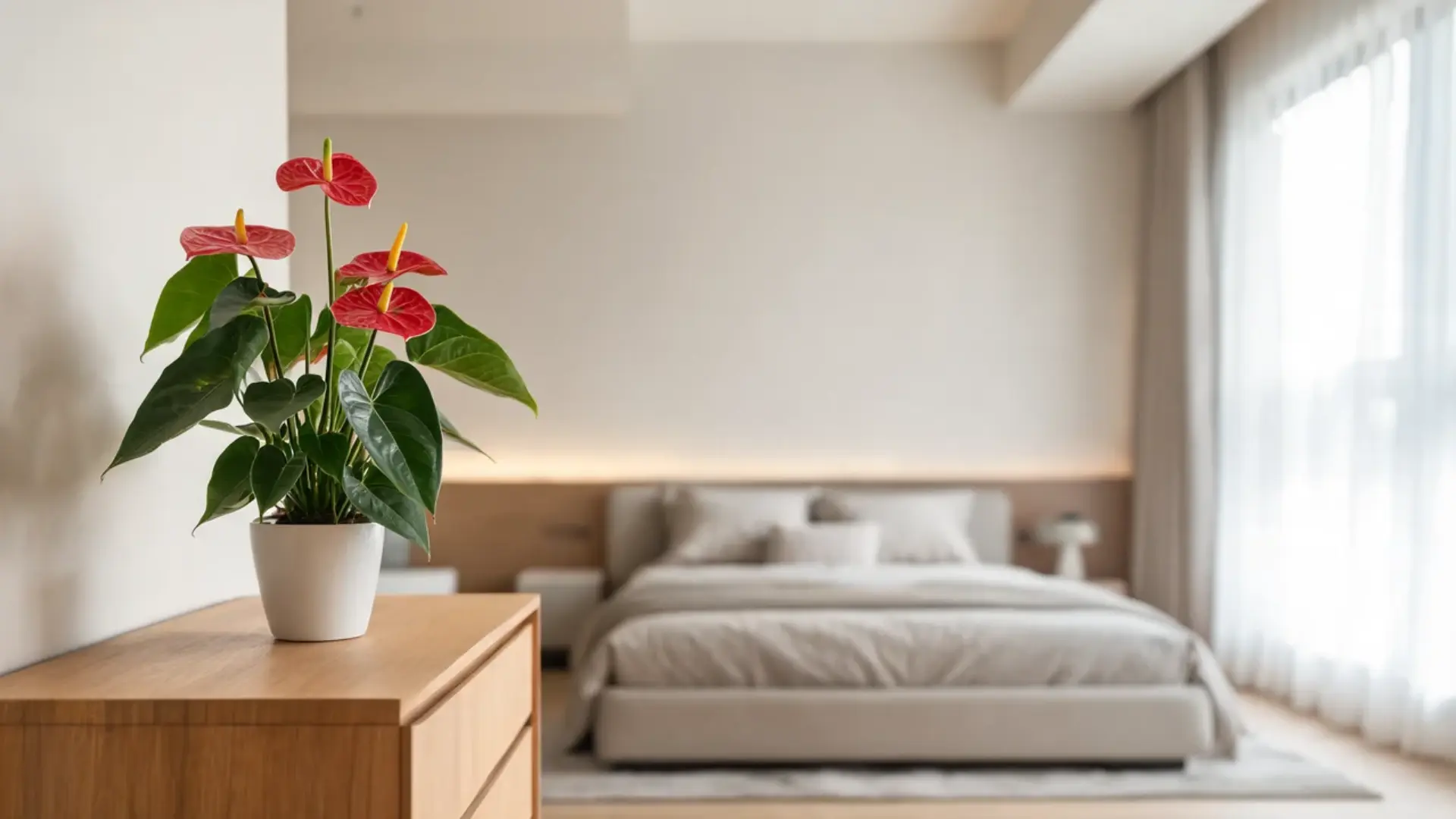
Anthurium plants have glossy leaves and colorful spathes in red, pink, orange, white, or purple. Anthurium andraeanum is a common indoor species.
Bright indirect light supports healthy flowering, while direct sun may scorch the foliage. Water when the topsoil is dry, and provide warmth and humidity. Anthuriums are toxic if eaten, and their sap may irritate sensitive skin.
27. Rex Begonia
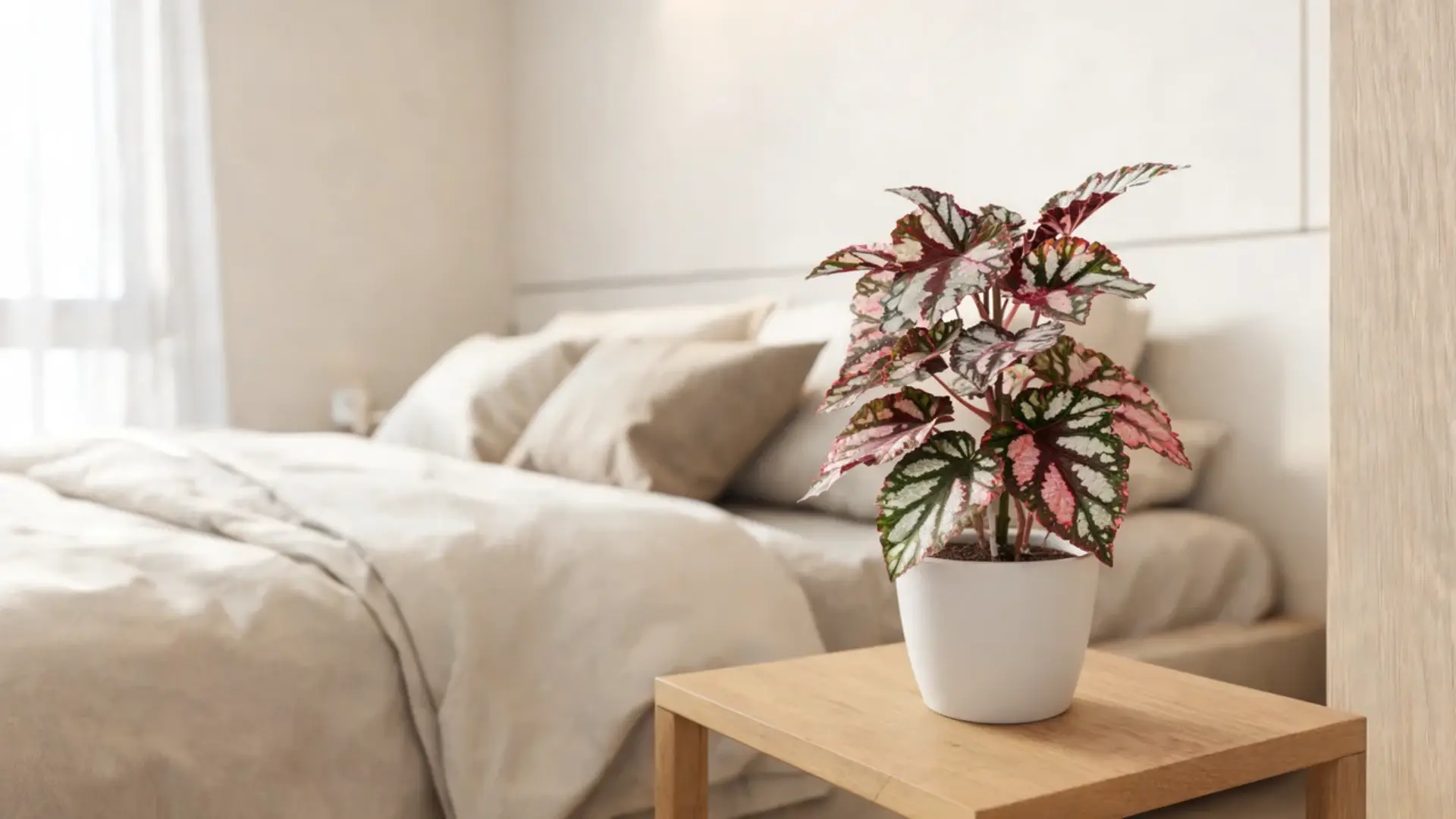
Rex begonias are grown for dramatic leaves marked with silver, green, red, pink, purple, or burgundy. They prefer medium to bright indirect light and a well-draining potting mix.
Water when the upper soil starts to dry, but do not leave the plant dry for long. Avoid wetting the foliage in cool rooms. Begonias are toxic to cats and dogs, especially around their roots.
28. Arrowhead Plant
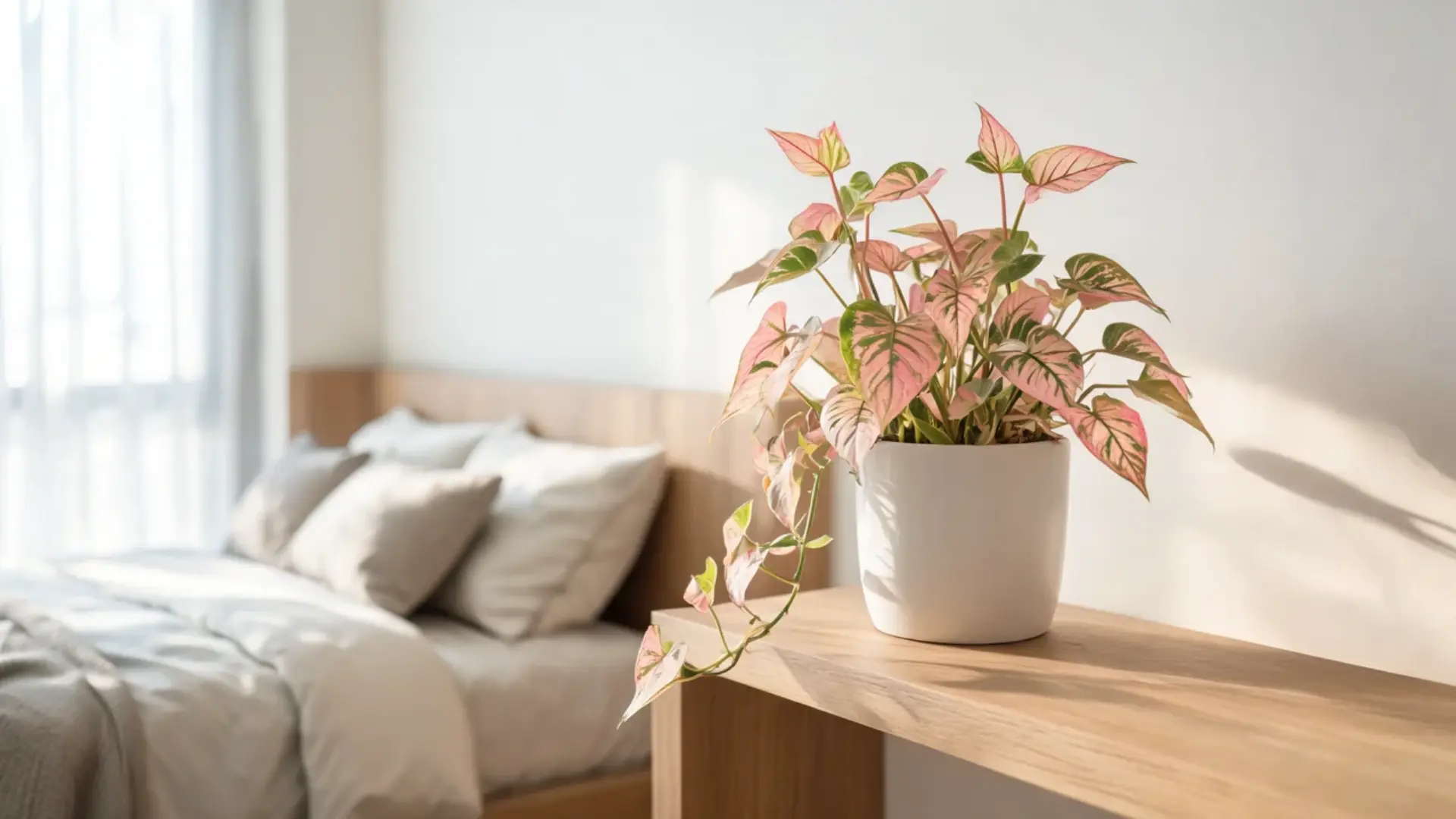
Arrowhead plant, or Syngonium podophyllum, begins with upright arrow-shaped leaves and often develops trailing stems as it matures. Green, cream, pink, and white forms are available.
Bright indirect light suits colorful varieties, while green types manage in medium light. Water when the topsoil is dry. Trim or support the vines as needed. Arrowhead plants are toxic to pets and children.
29. Areca Palm
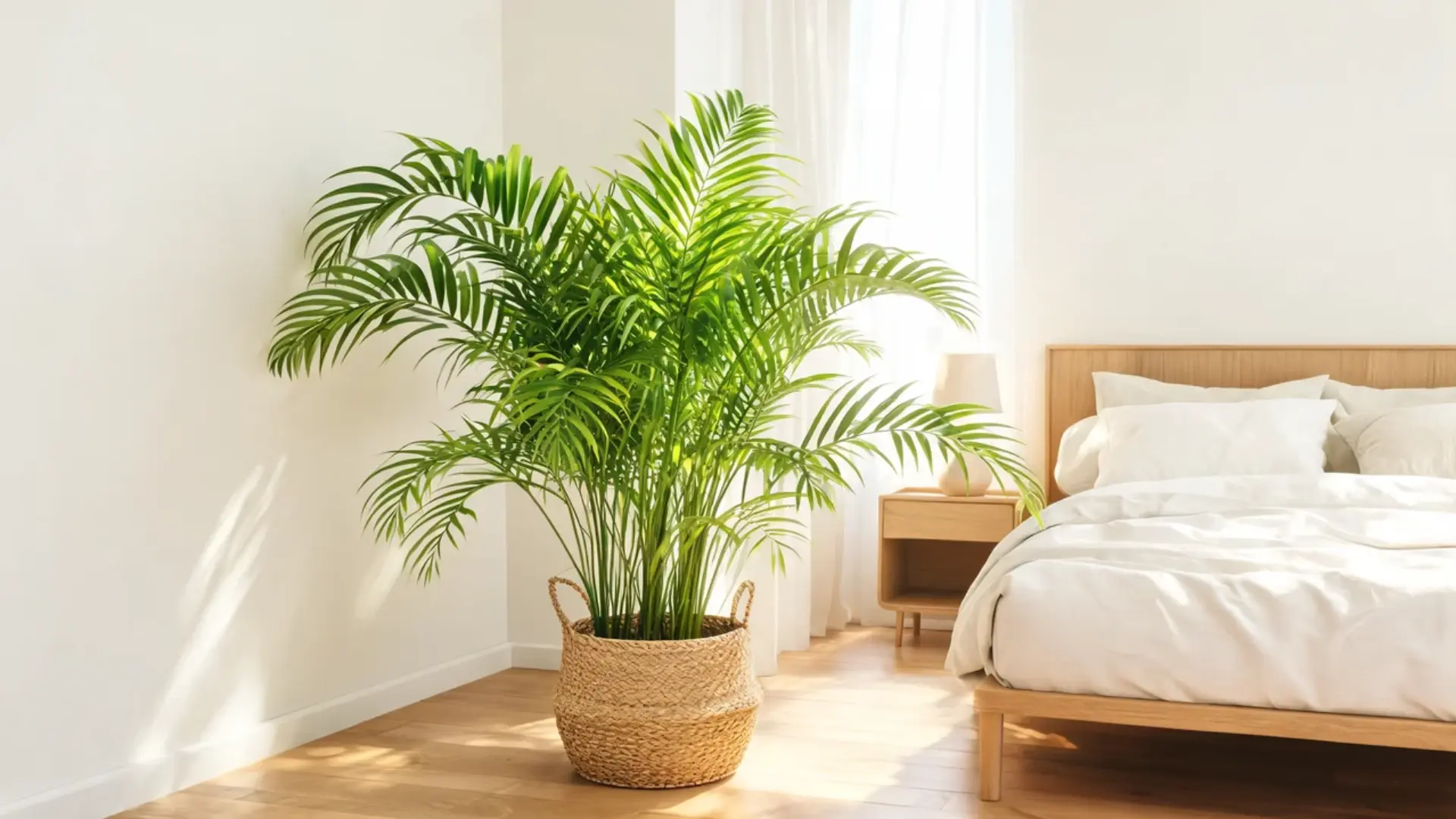
Areca palm, commonly sold as Dypsis lutescens, has slender stems topped with soft, arching fronds. It works best in a bright bedroom with enough room for its full shape.
Provide bright indirect light and water when the upper soil feels slightly dry. Dry air may cause brown tips. Keep it away from vents. Areca palms are generally considered non-toxic to pets.
Can Bedroom Plants Help You Sleep Better?
Plants can support a calmer atmosphere, but they are not a cure for insomnia. A 1989 NASA study, done with the Associated Landscape Contractors of America, found that certain houseplants reduced airborne formaldehyde, benzene, and trichloroethylene inside sealed test chambers.
Later independent reviews found that ordinary rooms, with open doors, moving air, and far fewer plants than a lab, see a much smaller effect, so a plant or two will not replace ventilation or an air purifier.
Snake plant and a few other succulent-type plants use a nighttime photosynthesis process called CAM, which lets them take in carbon dioxide and release oxygen after dark instead of during the day.
This makes them a reasonable pick for nightstand, though the effect on a full-size bedroom stays modest. Looking after a plant can also become a quiet evening habit that helps you slow down before bed.
Choose a bedroom plant because it suits your room and makes the space more pleasant, not because it promises guaranteed sleep.
Bedroom Plant Care And Safety Basics
Healthy indoor plants depend on a few consistent habits rather than a strict routine. Most problems trace back to the wrong light, wet soil, or poor drainage, and University of Maryland Extension research points to overwatering as the leading cause of houseplant loss. These simple habits keep a bedroom plant safe and thriving.
- Check soil with a finger before watering; skip a fixed schedule.
- Use pots with drainage holes to avoid root rot.
- Wipe dust off broad leaves and rotate the pot for even light.
- Watch for spider mites, mealybugs, or fungus gnats near soil and leaves.
- Keep tropical plants away from heating vents and cold drafts.
- Place cacti, agaves, and large snake plants away from walking paths.
- Test scented plants like lavender or hoya near your pillow before committing.
- Set a tray under ferns or flowering plants that shed or drip.
Frequently Asked Questions
Which plant works best for most bedrooms?
Snake plant handles several light levels, needs infrequent watering, and grows upward without using much floor space, making it dependable for most bedrooms. Your best pick still depends on room size, light, pets, and how much care you can offer.
Which houseplants are hardest to kill?
ZZ plant, snake plant, cast iron plant, pothos, and ponytail palm rank among the toughest indoor options. Each tolerates short dry spells, though none should be ignored completely, since every living plant still needs suitable light, drainage, and occasional care.
How many plants belong in one bedroom?
There is no fixed number. Start with one or two plants and see how the room feels, then add more only once you have enough light, space, and time to care for them without creating clutter.
How often should bedroom plants be watered?
Watering depends on the plant, season, room temperature, light, pot size, and soil, so check the soil instead of following a fixed weekly schedule. Some plants need water every few days, while drought-tolerant choices may go several weeks.
Are bedroom plants safe around pets?
Many popular houseplants can irritate the mouth or stomach if chewed. Spider plant, parlor palm, calathea, peperomia, and African violet are generally considered safer picks, though you should confirm the exact species before bringing one home.
Final Thoughts
Picking a bedroom plant does not have to feel complicated once you know what your room already offers. Look at the light near your bed, think about how often you actually want to reach for a watering can, and let that guide you toward something that fits.
Start with one plant, watch how it responds over the first few weeks, and let that experience tell you if your room is ready for another. There is no rush, and no single plant works for everyone.
Scroll back through the list above, pick the one that matches your space and your pace, and give your bedroom a small, living detail worth waking up to. Drop a comment below and share your perspective.