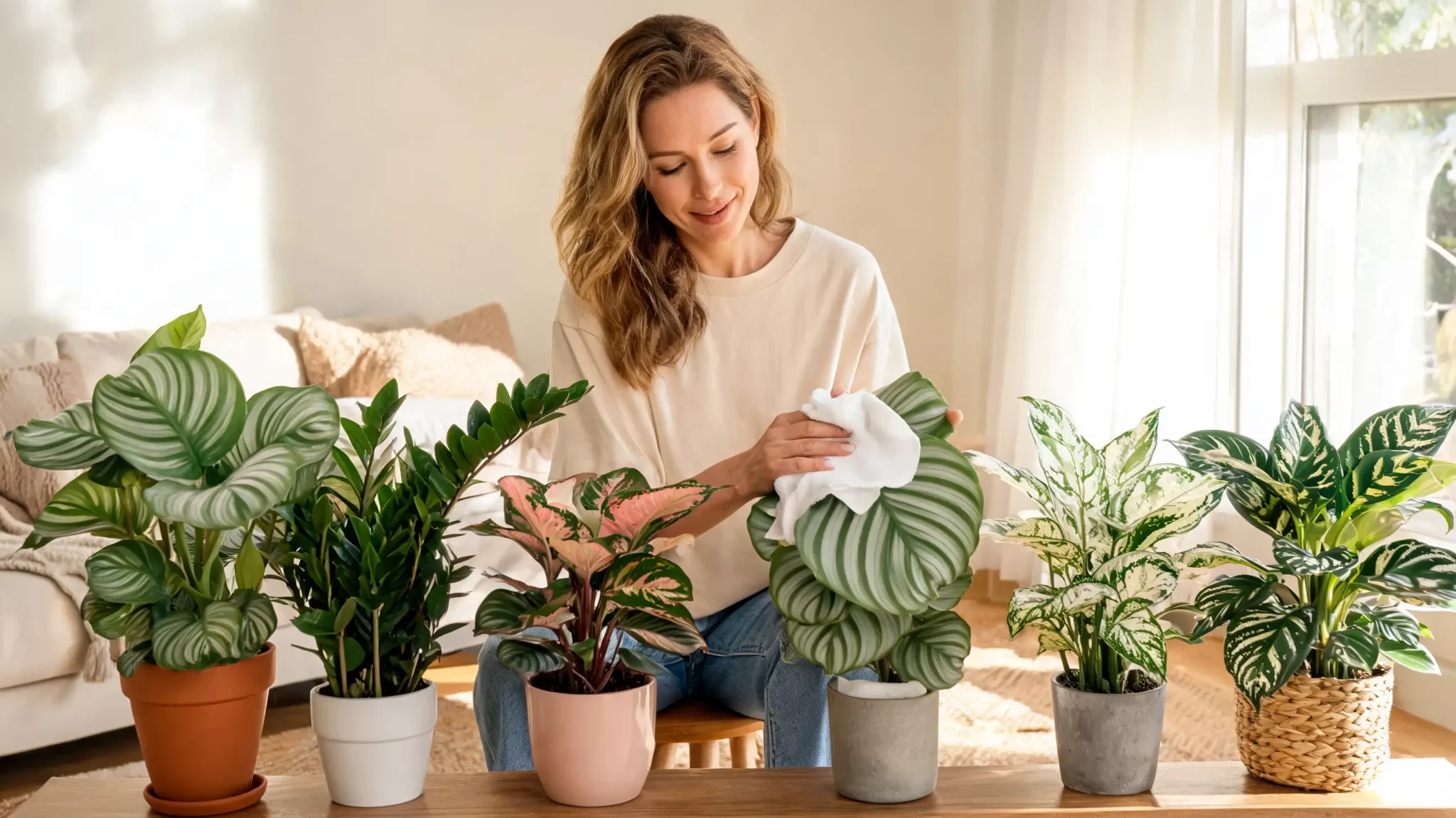
Walking into a plant shop and seeing an entire wall of similar leafy varieties can feel overwhelming. Every pot looks a little different, yet they all blur together after the fifth one.
Picking a favorite gets much easier once a few options sit side by side instead of scattered across a dozen tags and labels. That is exactly what this page sets out to do.
Instead of scrolling through near-identical listings one at a time, you can look at the most popular picks in one place and go from there. Settle in and start comparing the options below.
Quick Answer: What Are the Most Popular Calathea Types?
Calathea is a group of tropical foliage plants known for patterned leaves, colorful undersides, and leaf movement between day and night. Popular types include the Peacock Plant, Rattlesnake Plant, Orbifolia, Pinstripe Calathea, Rose-Painted Calathea, and Eternal Flame.
- Peacock Plant (Goeppertia makoyana): Patterned leaves with purple undersides
- Rattlesnake Plant (Goeppertia insignis): Long, wavy leaves with dark markings
- Orbifolia: Large round leaves with silver-green stripes
- Pinstripe Calathea: Narrow leaves with fine pale stripes
- Rose-Painted Calathea: Pink and cream leaf patterns
- Eternal Flame: One of the few types grown mainly for its flowers
What Is Calathea?
Calatheas are tropical perennials from the Marantaceae family, also called the prayer plant family, since their leaves move upward and change position between day and night.
Many plants still sold as Calathea have been moved to the Goeppertia genus, a reclassification documented by NC State Extension, so you may see both names used for the same species on nursery tags and plant labels.
Calatheas are grown mainly for decorative foliage that can be rounded, narrow, wavy, striped, feathered, marbled, or brightly marked. Some types also produce colorful flowers or ornamental bracts, and appearance can vary widely between species and named cultivars.
Choosing Your Calathea
The right Calathea should fit your room before it fits your preferred leaf pattern. Check conditions in this order.
- Light: Start with the amount of filtered light your chosen spot receives each day.
- Space: Compare mature height and width with the room available around the pot.
- Humidity: Pick a plant that matches the moisture level you can reasonably maintain.
- Watering: Avoid types that need close moisture control if you often forget to water.
- Foliage: Choose your preferred pattern only after the growing conditions match.
- Plant label: Check the botanical name so an older synonym does not confuse you.
Best Beginner-Friendly Calathea Types
Beginner-friendly Calathea types are easier to identify, widely available, and forgiving enough for new plant owners. These six are a solid place to start learning the basics of light, watering, and humidity before branching out.
1. Peacock Plant
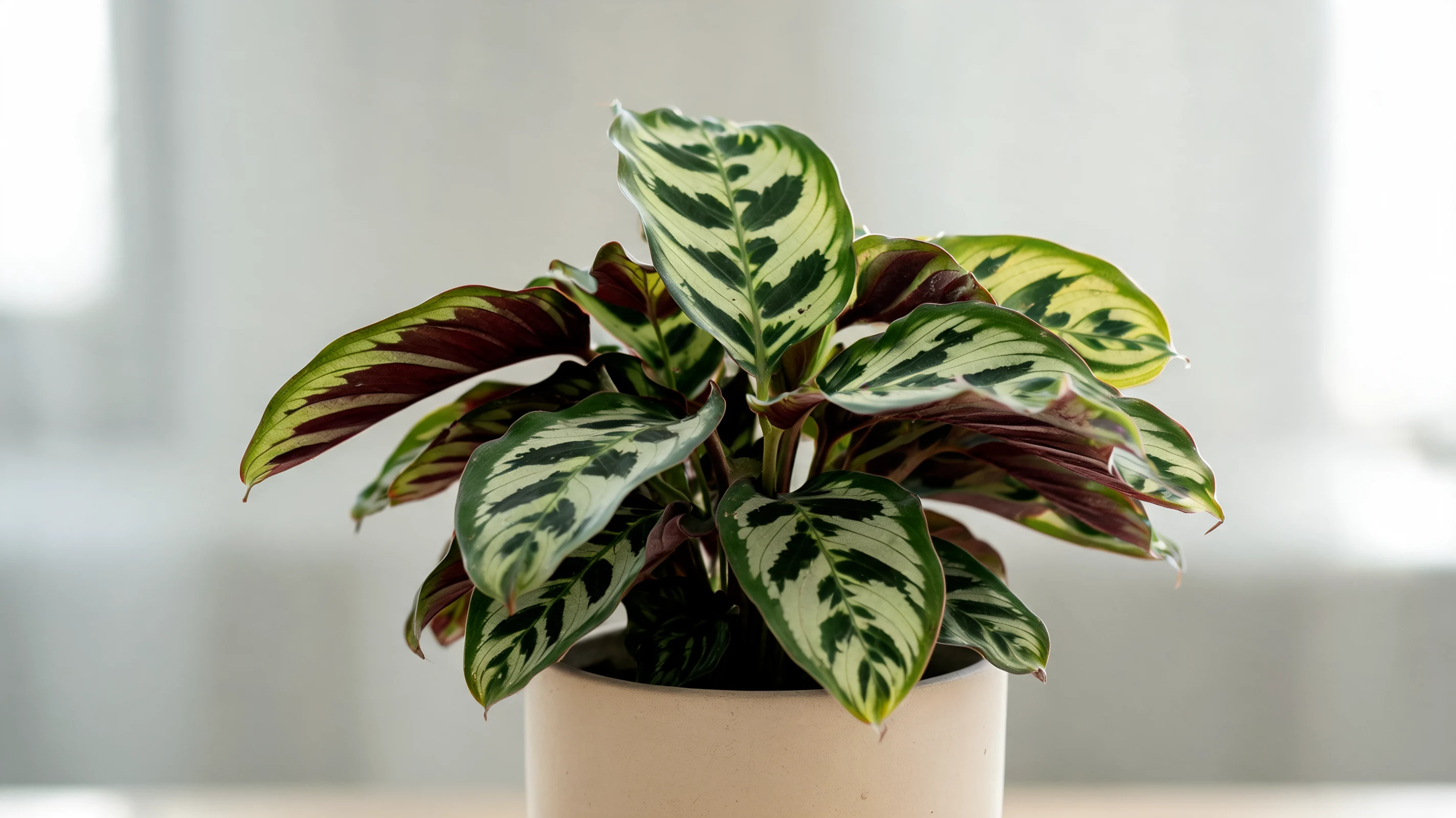
The peacock plant has broad, pale leaves marked with dark green veins and oval patterns, with deep reddish-purple coloring underneath.
|
Key Trait |
Details |
|---|---|
|
Botanical name |
Goeppertia makoyana |
|
Mature size |
Around 30 cm tall |
|
Standout trait |
Oval markings with purple undersides |
2. Rattlesnake Plant
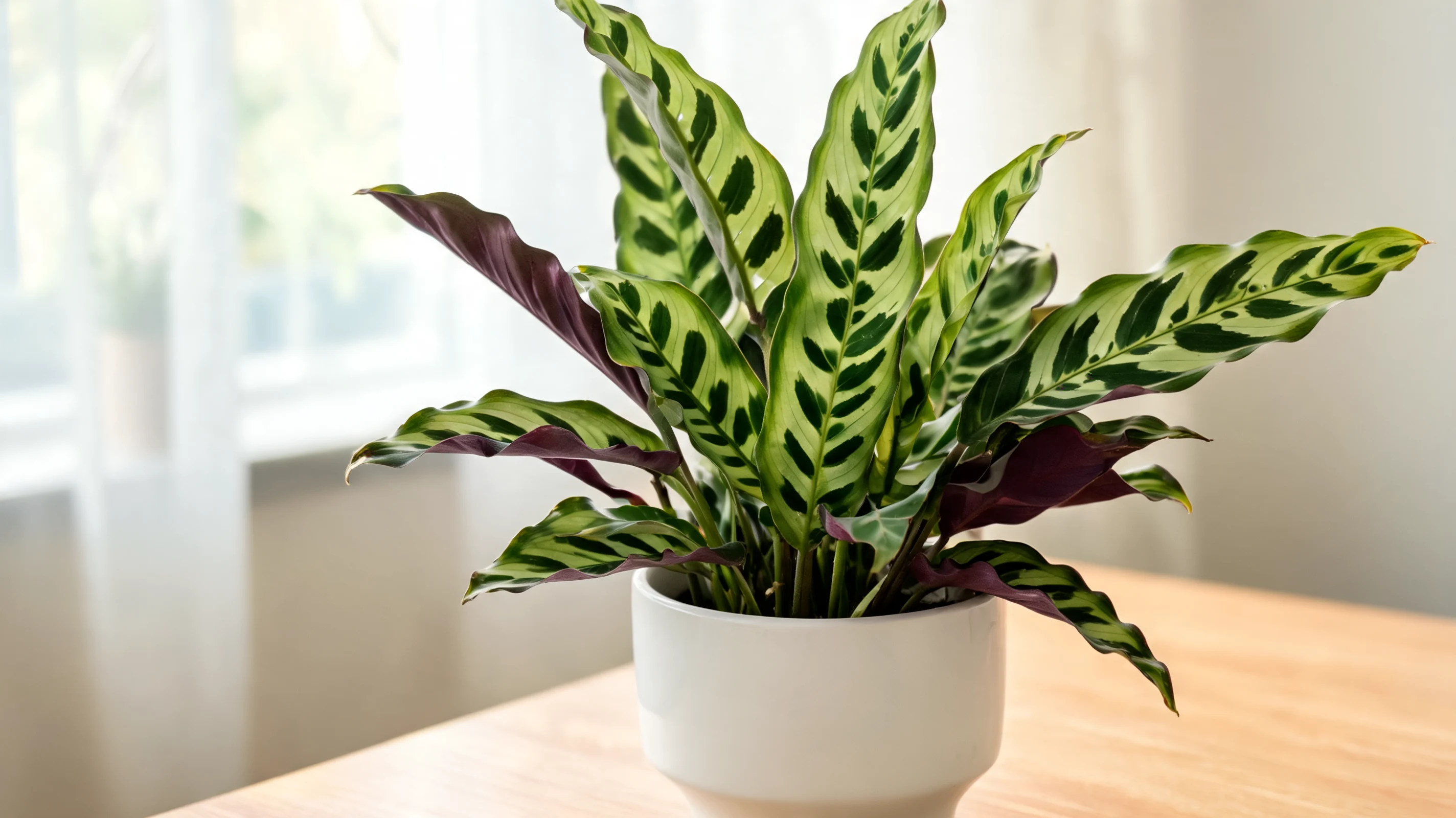
Long, wavy leaves give this plant a narrow, upright shape, with dark green markings running across the lighter green surface.
|
Key Trait |
Details |
|---|---|
|
Botanical name |
Goeppertia insignis |
|
Mature size |
Around 0.5 to 0.8 m |
|
Standout trait |
Wavy leaves with dark purple underside |
3. Orbifolia
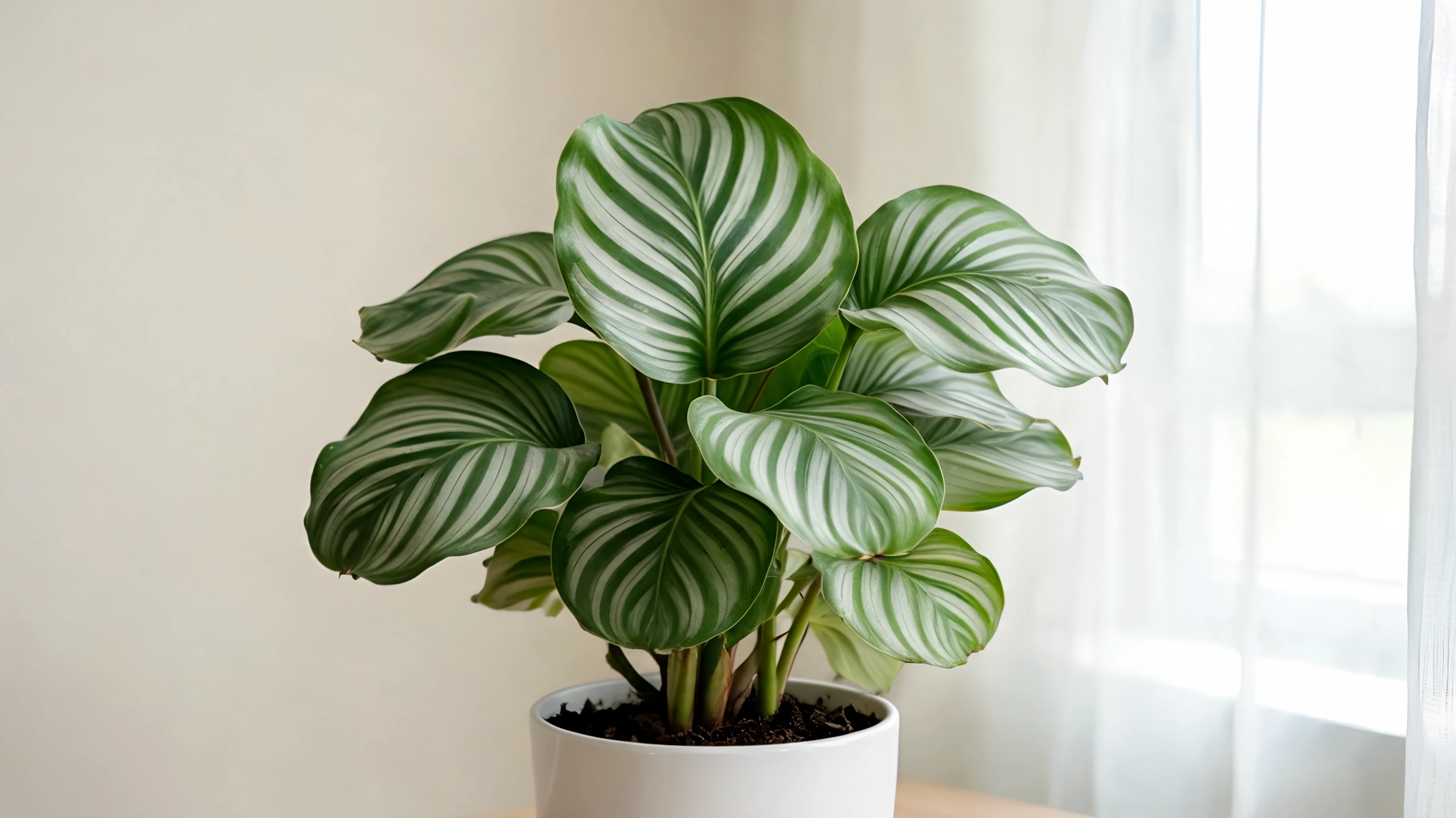
Orbifolia grows large, rounded leaves crossed by broad silver-green bands, and its wide foliage creates a much fuller plant shape.
|
Key Trait |
Details |
|---|---|
|
Botanical name |
Goeppertia orbifolia |
|
Mature size |
Around 2 to 3 feet |
|
Standout trait |
Rounded leaves, best in bright indirect light |
4. Medallion
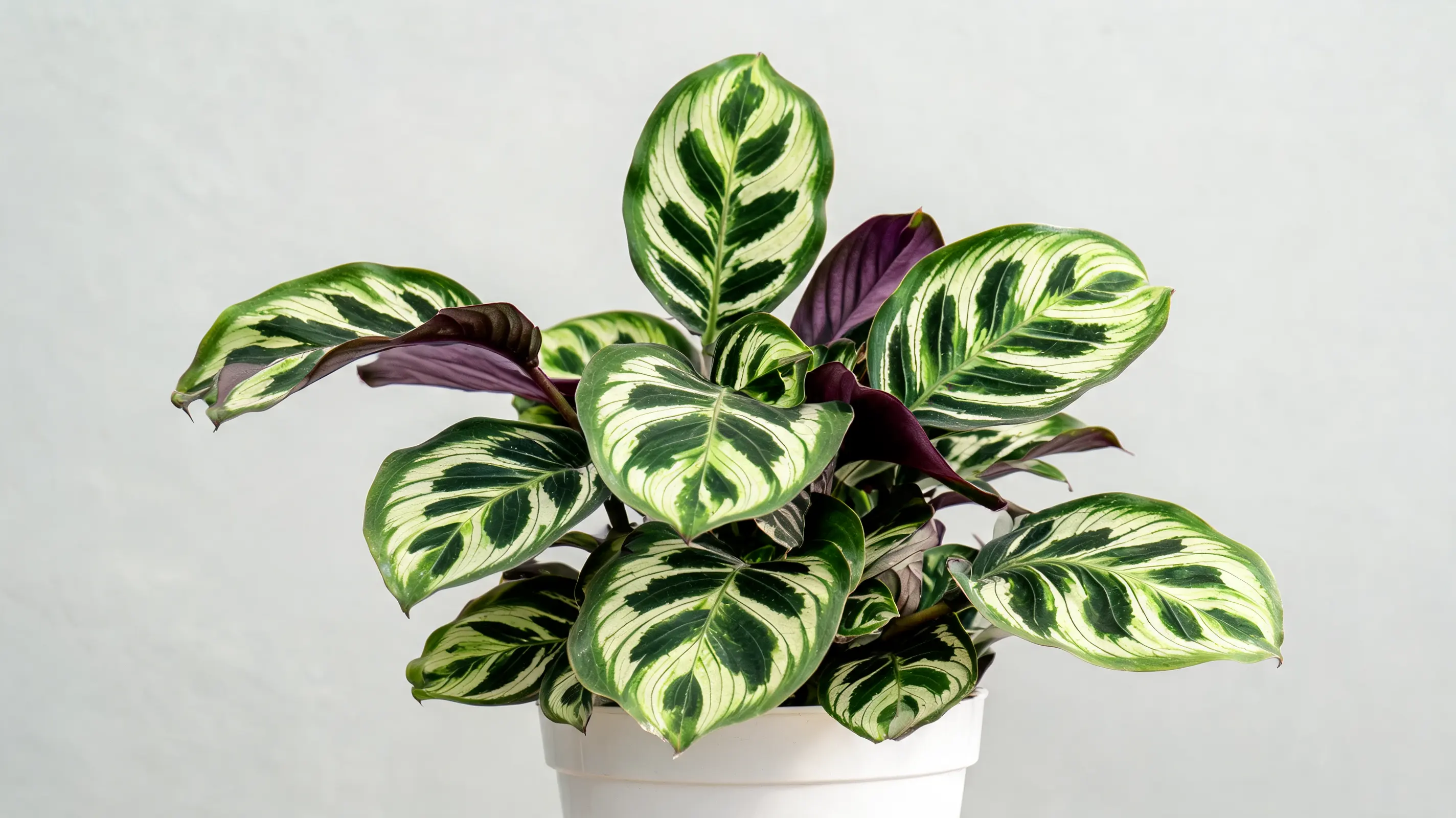
Medallion has broad leaves marked with several shades of green, and deep purple lower surfaces add strong contrast beneath the foliage.
|
Key Trait |
Details |
|---|---|
|
Botanical name |
Goeppertia roseopicta Medallion’ |
|
Mature size |
Around 30 cm |
|
Standout trait |
Feathered green pattern, avoid direct sun |
5. Zebra Plant
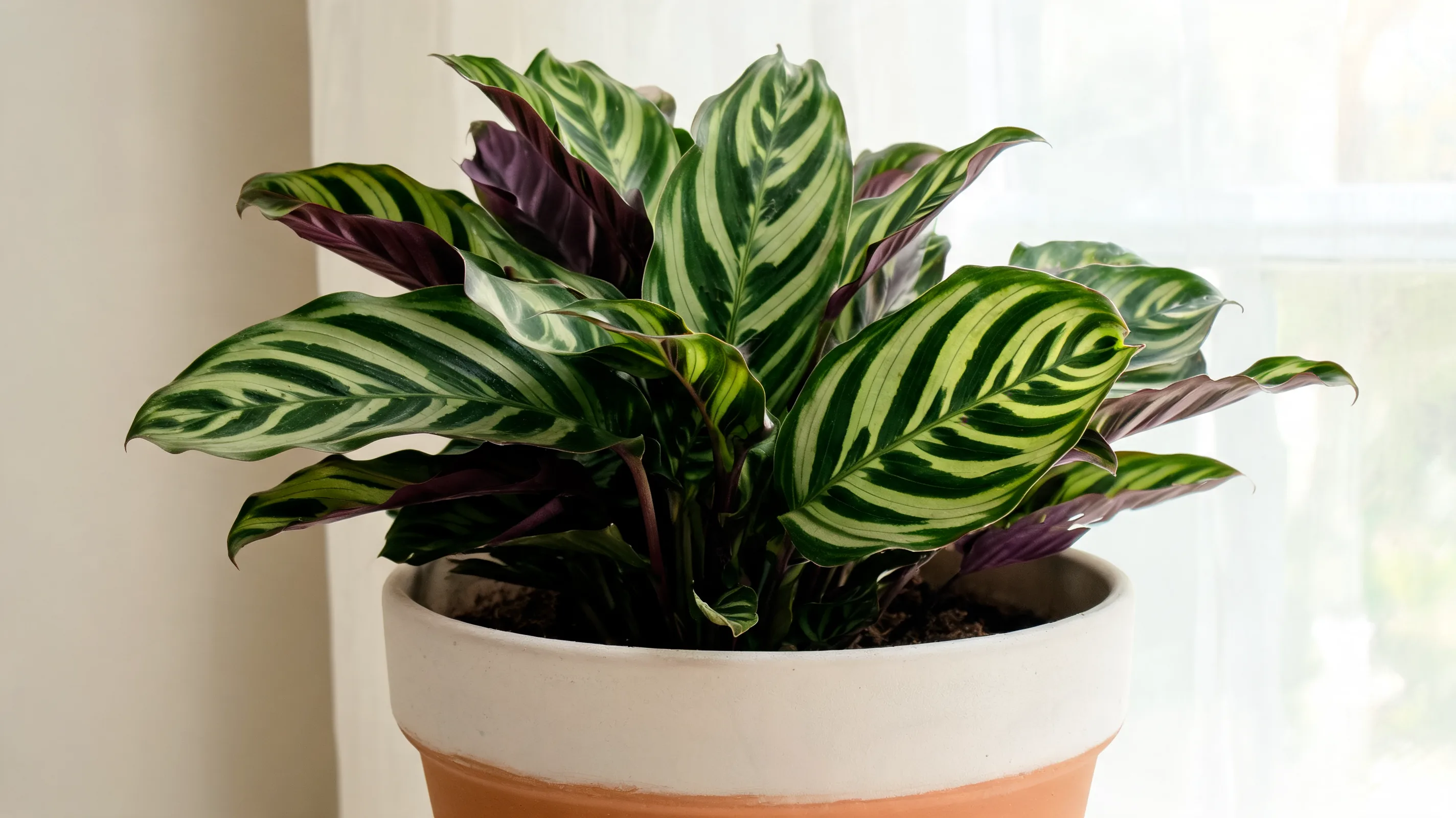
Zebra plant has broad, soft leaves marked with darker green bands, and its striping runs wider than Pinstripe Calathea’s fine lines.
|
Key Trait |
Details |
|---|---|
|
Botanical name |
Goeppertia zebrina |
|
Mature size |
Around 0.6 to 1 m |
|
Standout trait |
Broad dark bands, reddish-purple underside |
6. Network Calathea
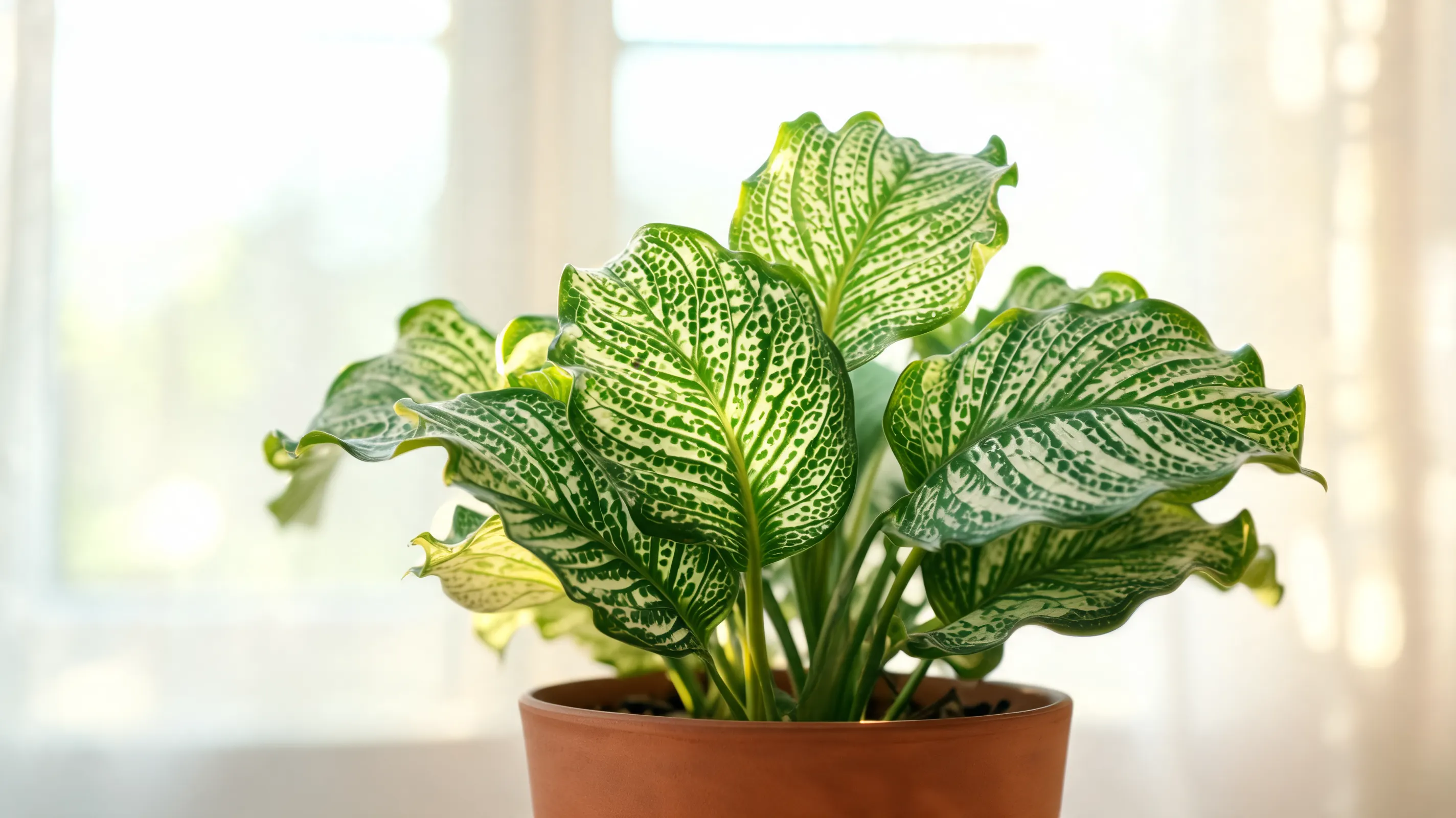
Network Calathea has thick, glossy leaves covered by very fine dark lines, with the markings forming a grid across light green foliage.
|
Key Trait |
Details |
|---|---|
|
Botanical name |
Goeppertia kegeljanii’ Network’ |
|
Mature size |
Around 1 to 2 feet |
|
Standout trait |
Thick, glossy leaves; prefers partial shade |
Small Calathea Types for Shelves and Small Spaces
Small Calathea types are compact varieties that fit well on shelves, desks, and smaller plant stands. Their size makes them useful in rooms where larger Calatheas wouldn’t have enough space to grow.
7. Emerald Feather
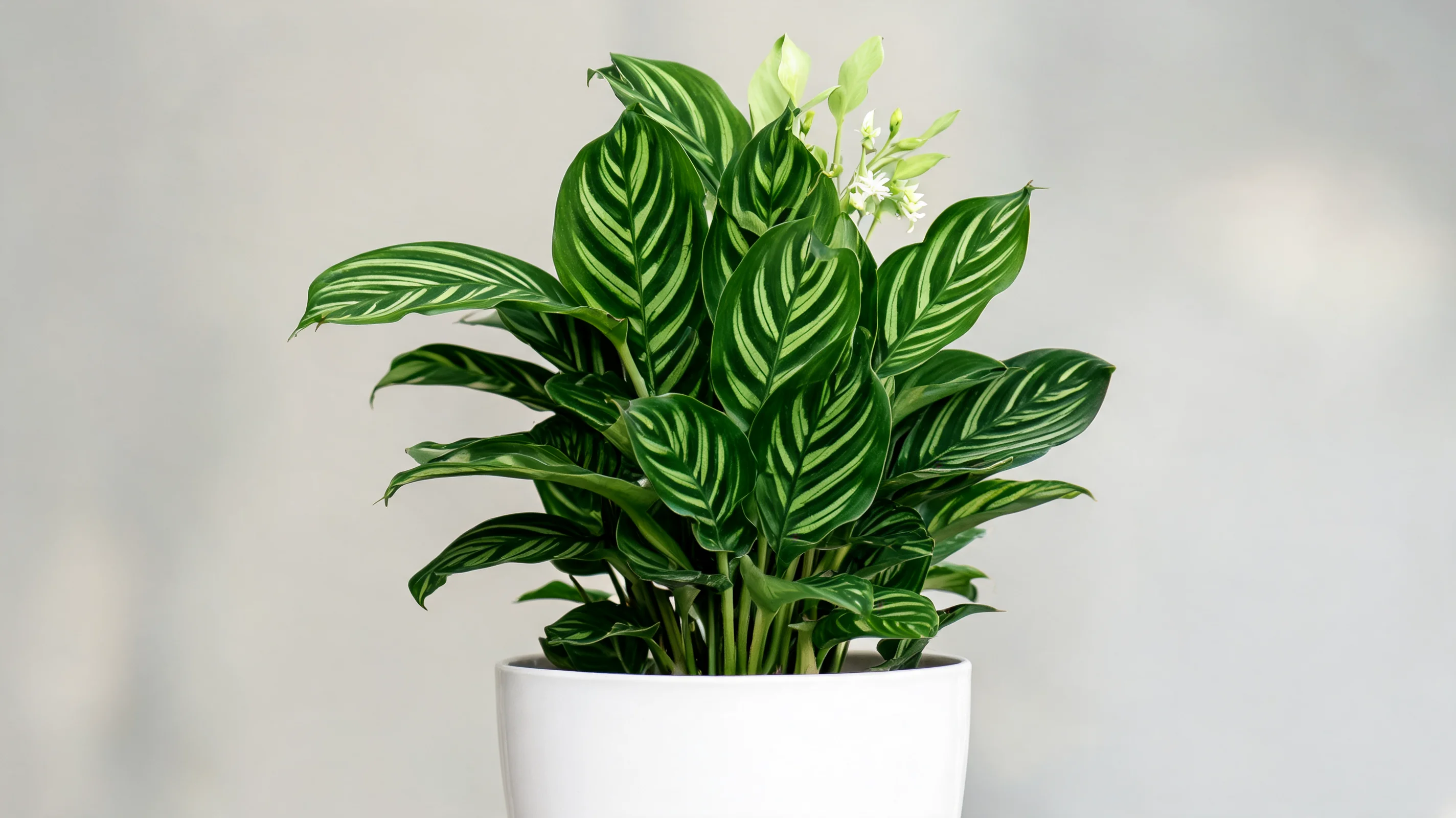
Emerald Feather stays low and forms dark green foliage with lighter feather-like markings, and small white flowers may appear among pale bracts.
|
Key Trait |
Details |
|---|---|
|
Botanical name |
Goeppertia albertii |
|
Mature size |
Around 30 cm |
|
Standout trait |
Feather-like markings, occasional white flowers |
8. Miniature Calathea
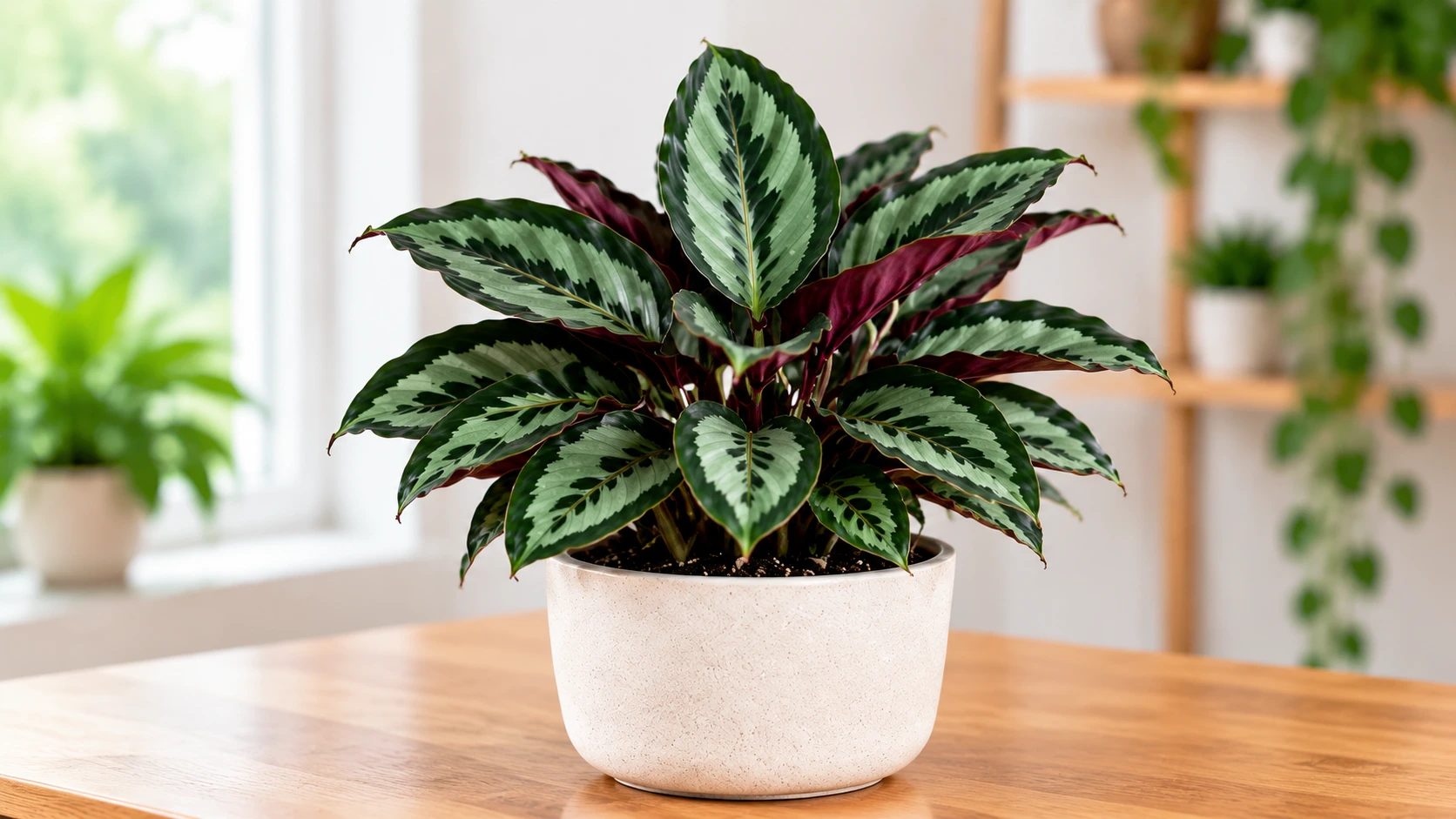
Miniature Calathea stays much shorter than most common floor plants, and its broad dark leaves have a soft, slightly velvety surface.
|
Key Trait |
Details |
|---|---|
|
Botanical name |
Goeppertia micans |
|
Mature size |
Around 12 to 16 inches |
|
Standout trait |
Soft texture; tolerates shade better than most |
9. Silver Plate
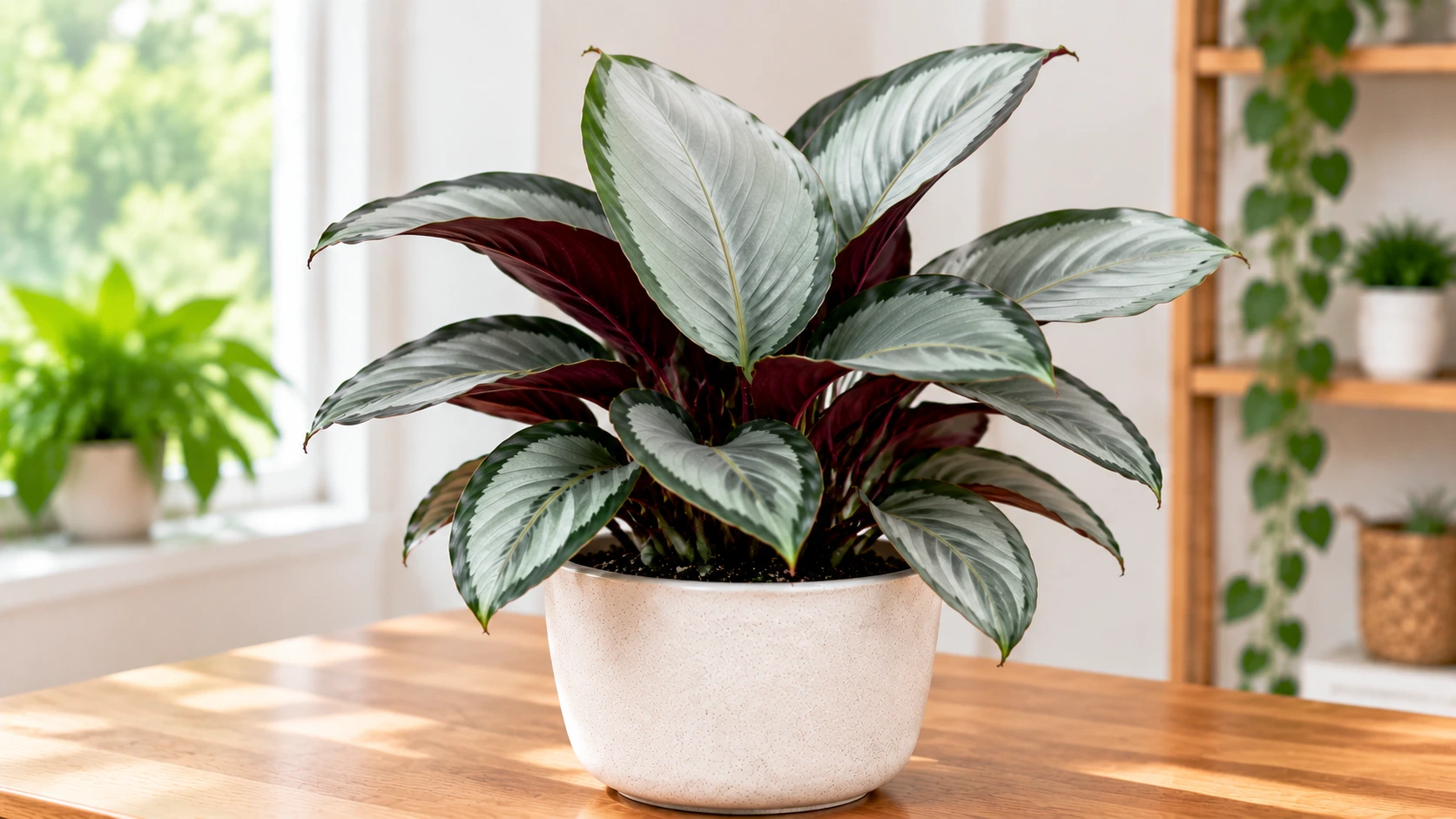
Silver Plate grows broad, silver-grey leaves with purple undersides, and its pale foliage looks very different from striped green types.
|
Key Trait |
Details |
|---|---|
|
Botanical name |
Goeppertia Silver Plate’’ |
|
Mature size |
Around 15 to 30 cm |
|
Standout trait |
Silver-grey leaves, purple underside |
10. Dottie
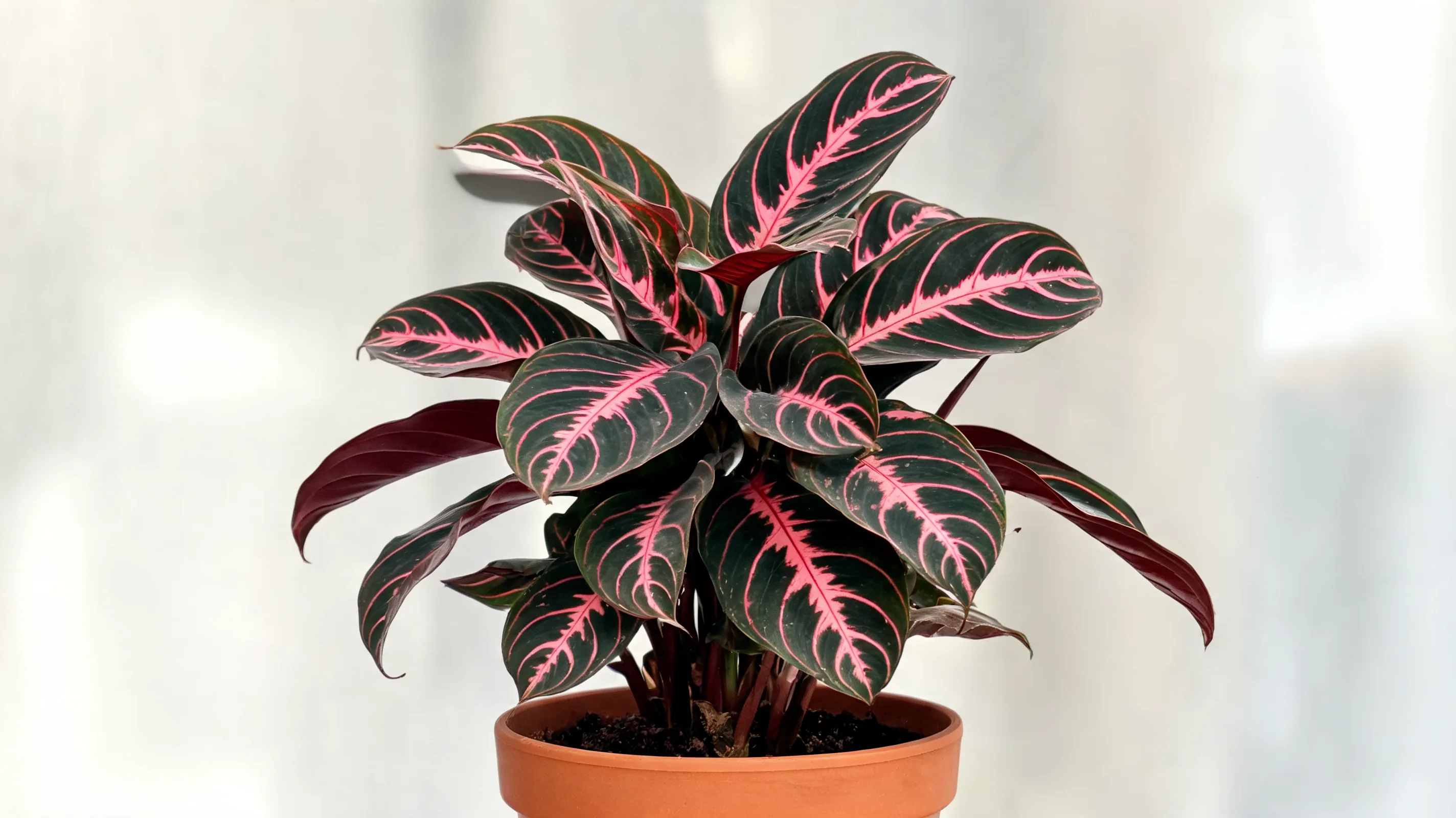
Dottie has very dark green leaves crossed by bright pink markings, and a pink midrib adds stronger contrast through the center.
|
Key Trait |
Details |
|---|---|
|
Botanical name |
Goeppertia roseopicta ‘Dottie’ |
|
Mature size |
Around 40 cm |
|
Standout trait |
Bright pink markings and midrib |
Calathea Types With Striking Leaf Patterns
People choose these Calathea types mainly for their unusual markings, colors, and textures. Their foliage becomes the main feature, ranging from fine stripes to bold marbled designs.
11. Pinstripe Calathea
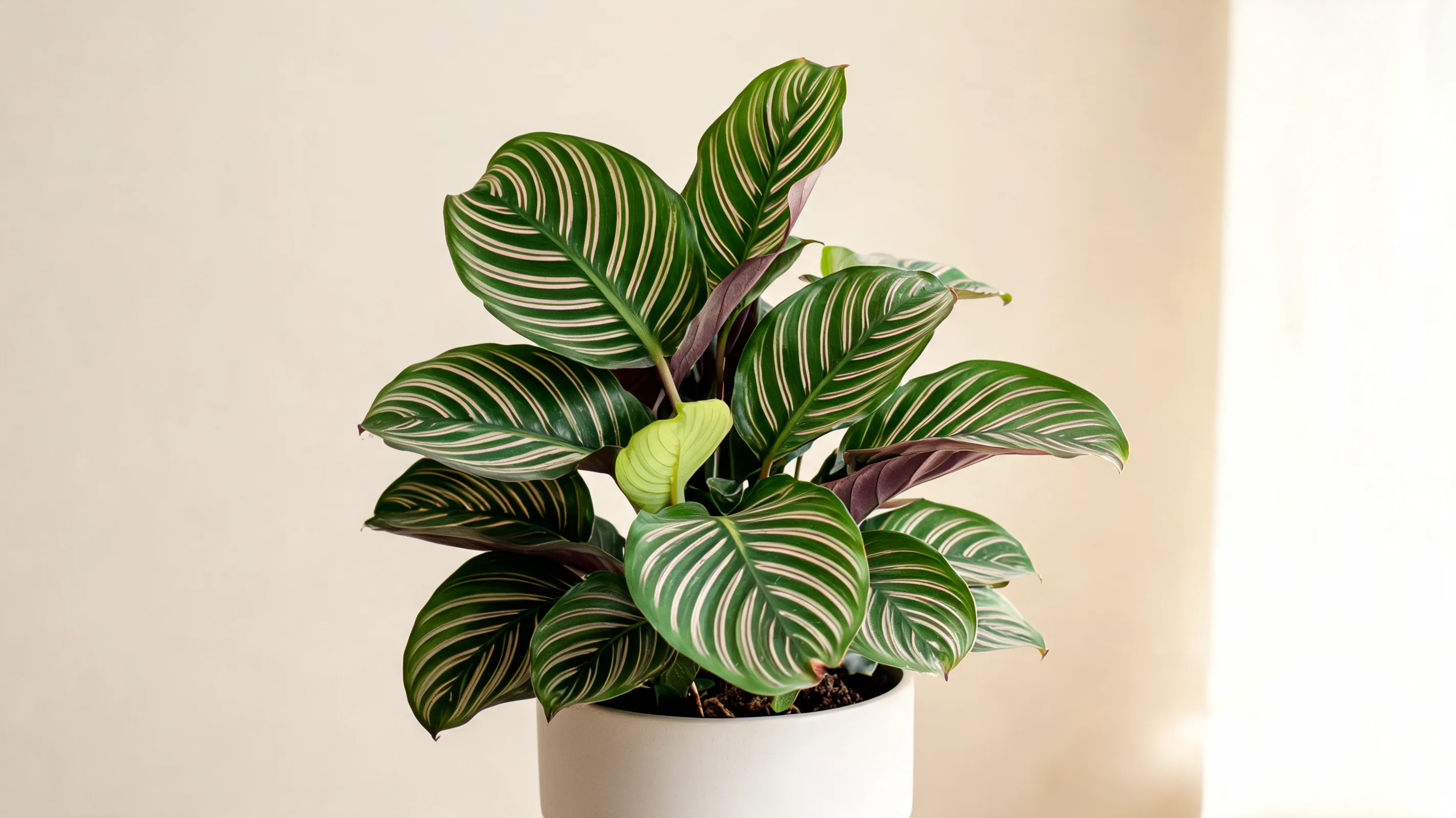
Fine pale lines cross the dark green leaves of Pinstripe Calathea, and purple undersides appear as the leaves change position.
|
Key Trait |
Details |
|---|---|
|
Botanical name |
Goeppertia ornata |
|
Mature size |
Around 1 to 3 feet |
|
Standout trait |
Thin pale pinstripes; prefers partial shade |
12. Rose-Painted Calathea
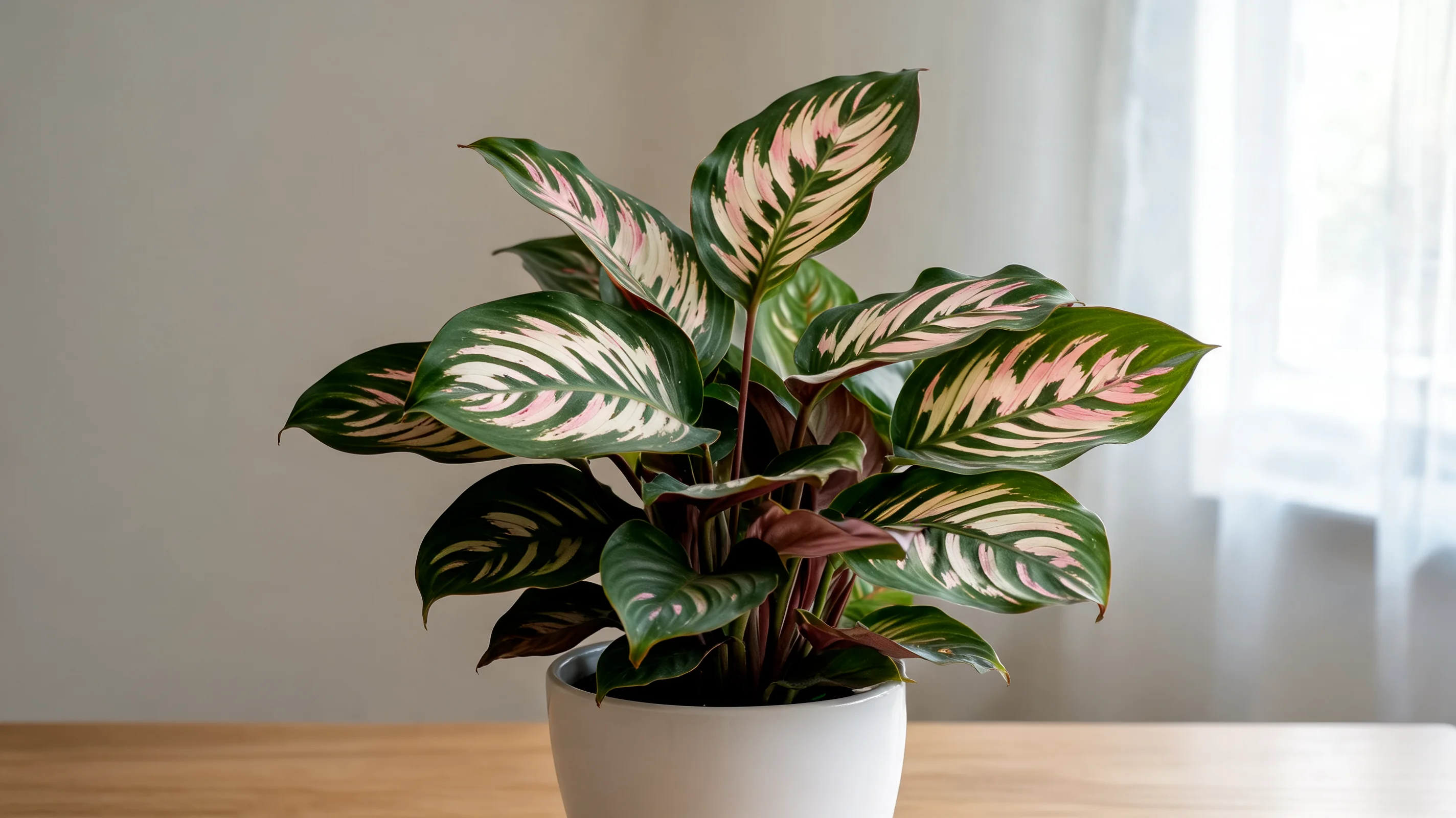
Rose-Painted Calathea has glossy elliptical leaves with cream or pink markings, and its underside is reddish-purple.
|
Key Trait |
Details |
|---|---|
|
Botanical name |
Goeppertia roseopicta |
|
Mature size |
Around 1 to 2 feet |
|
Standout trait |
Cream or pink marks, reddish-purple underside |
13. Beauty Star
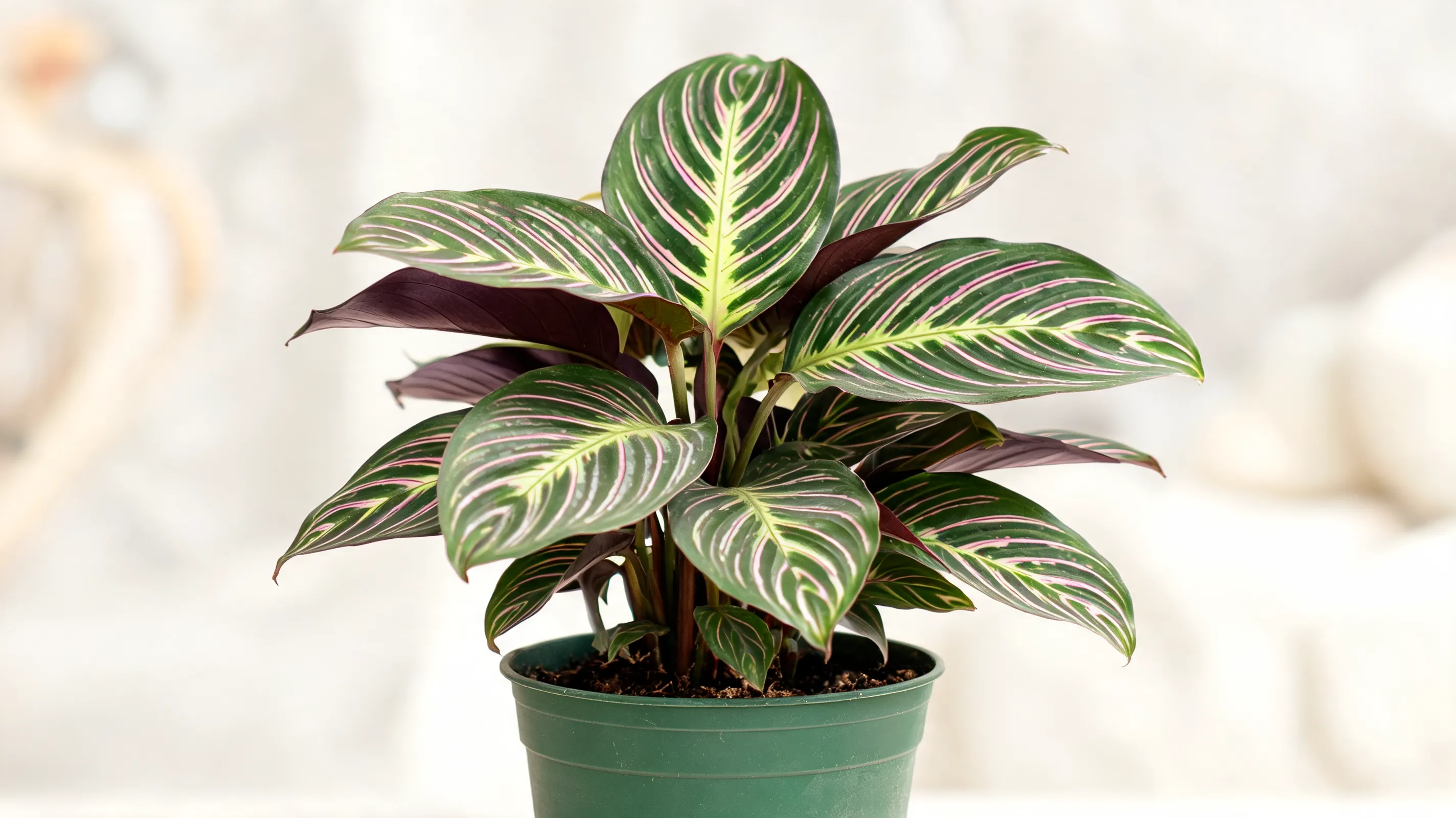
Beauty Star has long green leaves crossed by lighter bands and fine striping, and its narrow foliage gives it a layered appearance.
|
Key Trait |
Details |
|---|---|
|
Botanical name |
Goeppertia ornata Beauty Star’ |
|
Mature size |
Up to about 3 feet |
|
Standout trait |
Long narrow leaves, layered striping |
14. Thai Beauty
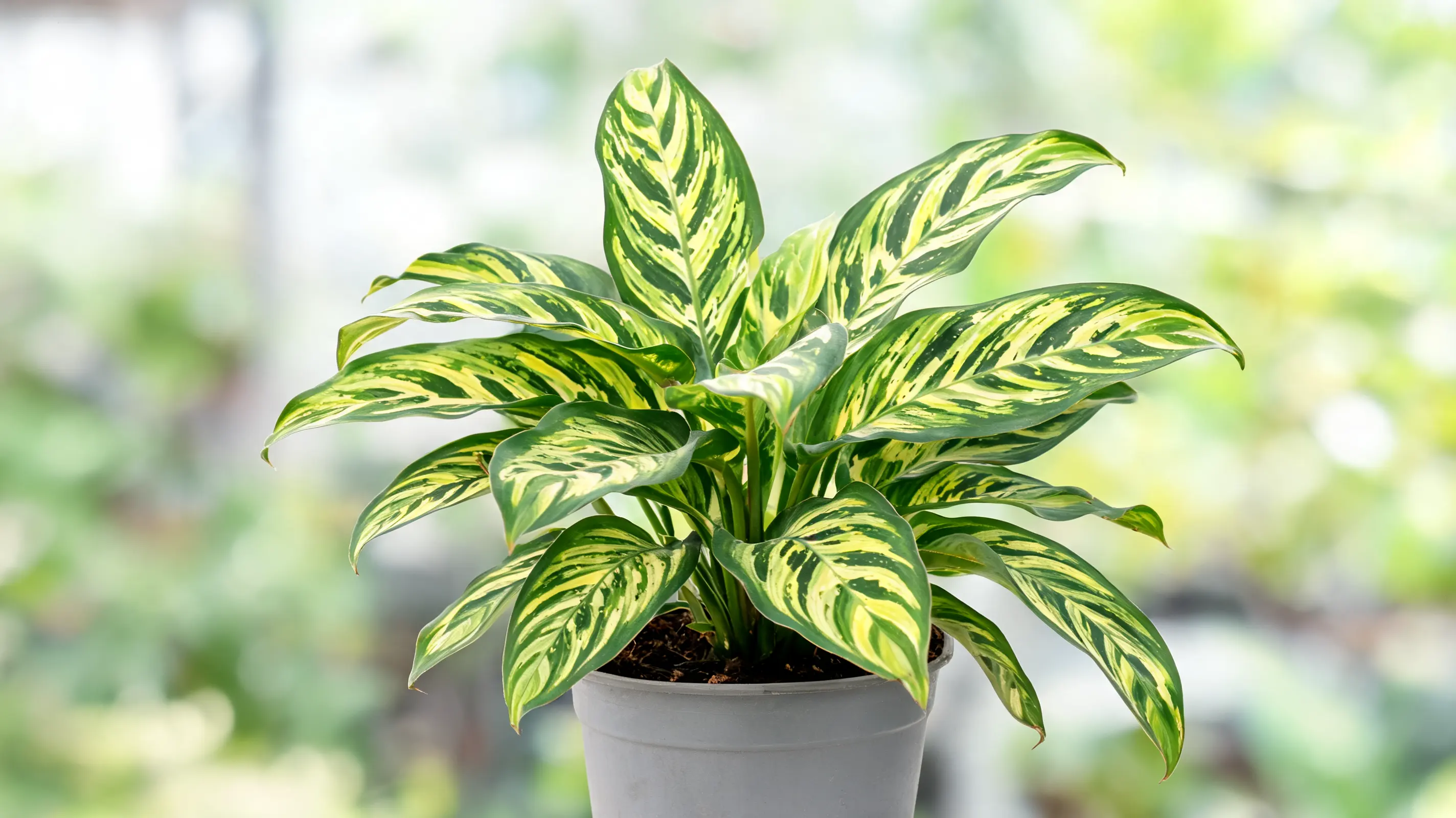
Thai Beauty carries green foliage mixed with lighter green and yellow tones, and the irregular markings give each leaf noticeable contrast.
|
Key Trait |
Details |
|---|---|
|
Botanical name |
Goeppertia Thai Beauty’ |
|
Mature size |
Around 1 to 2 feet |
|
Standout trait |
Irregular green, light green, and yellow marks |
15. Wilson’s Princep
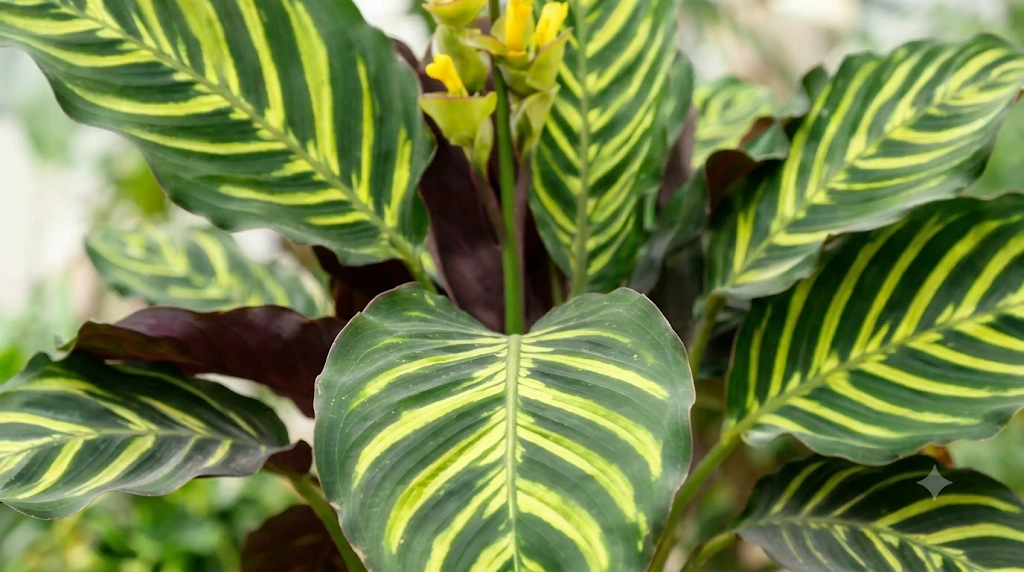
Wilson’s Princep has large elliptical leaves with wavy edges, and yellow-green streaks form two long bands beside the central vein.
|
Key Trait |
Details |
|---|---|
|
Botanical name |
Goeppertia Wilson’s Princep (species parentage not firmly settled) |
|
Mature size |
Around 0.6 to 1.2 m |
|
Standout trait |
Wavy leaves, yellow-green bands, yellow flowers |
16. Fusion White
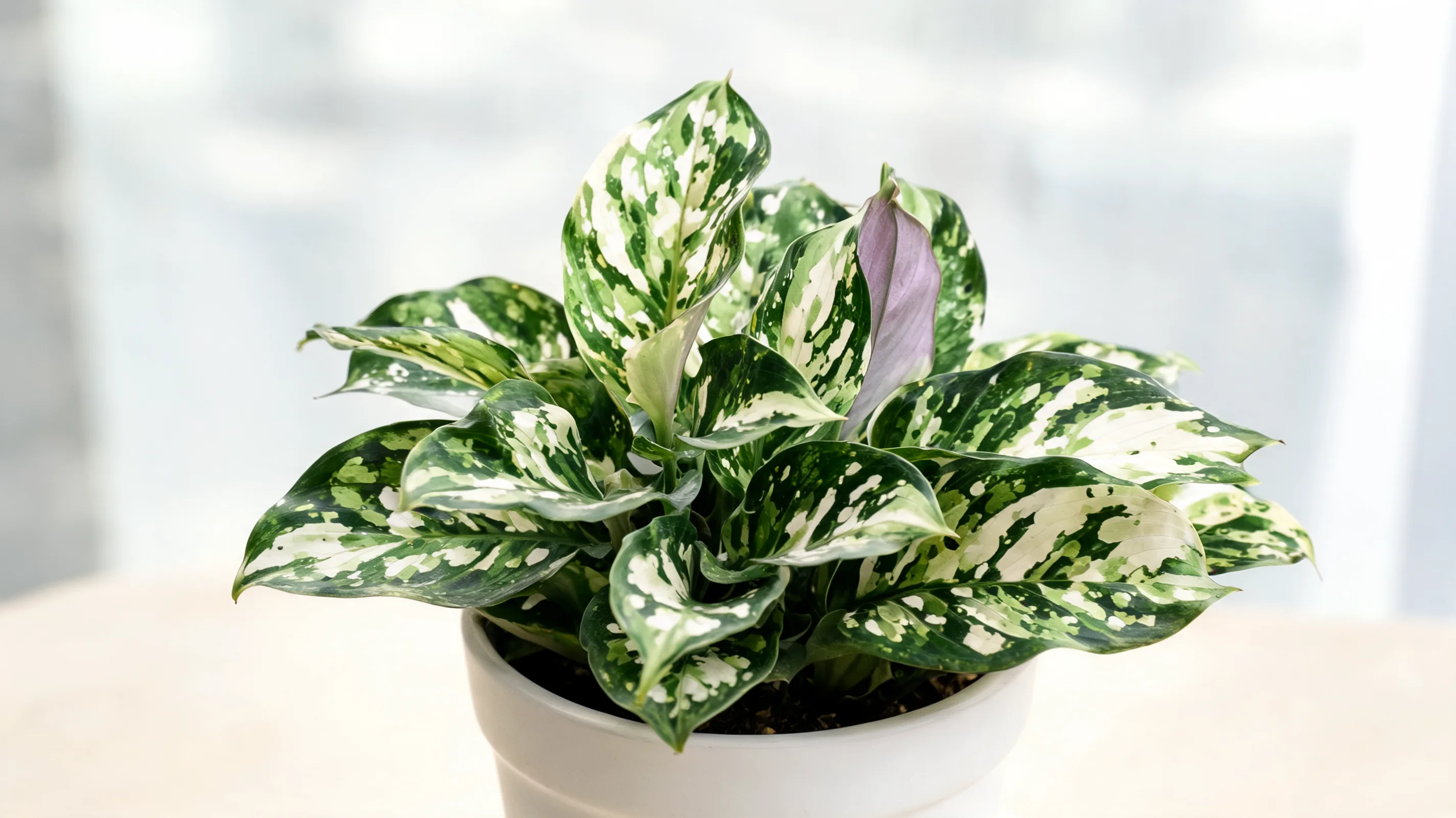
Fusion White produces irregular white, pale green, and dark green marbling, and individual leaves may carry different patterns on one plant.
|
Key Trait |
Details |
|---|---|
|
Botanical name |
Goeppertia lietzei Fusion White’ |
|
Mature size |
Compact growth habit |
|
Standout trait |
Irregular marbled variegation, purple underside |
Large Calathea Types for Bigger Spaces
Large Calathea types suit open areas where their wide leaves and taller growth can develop properly. These five work well as floor plants or larger indoor displays.
17. Jungle Velvet
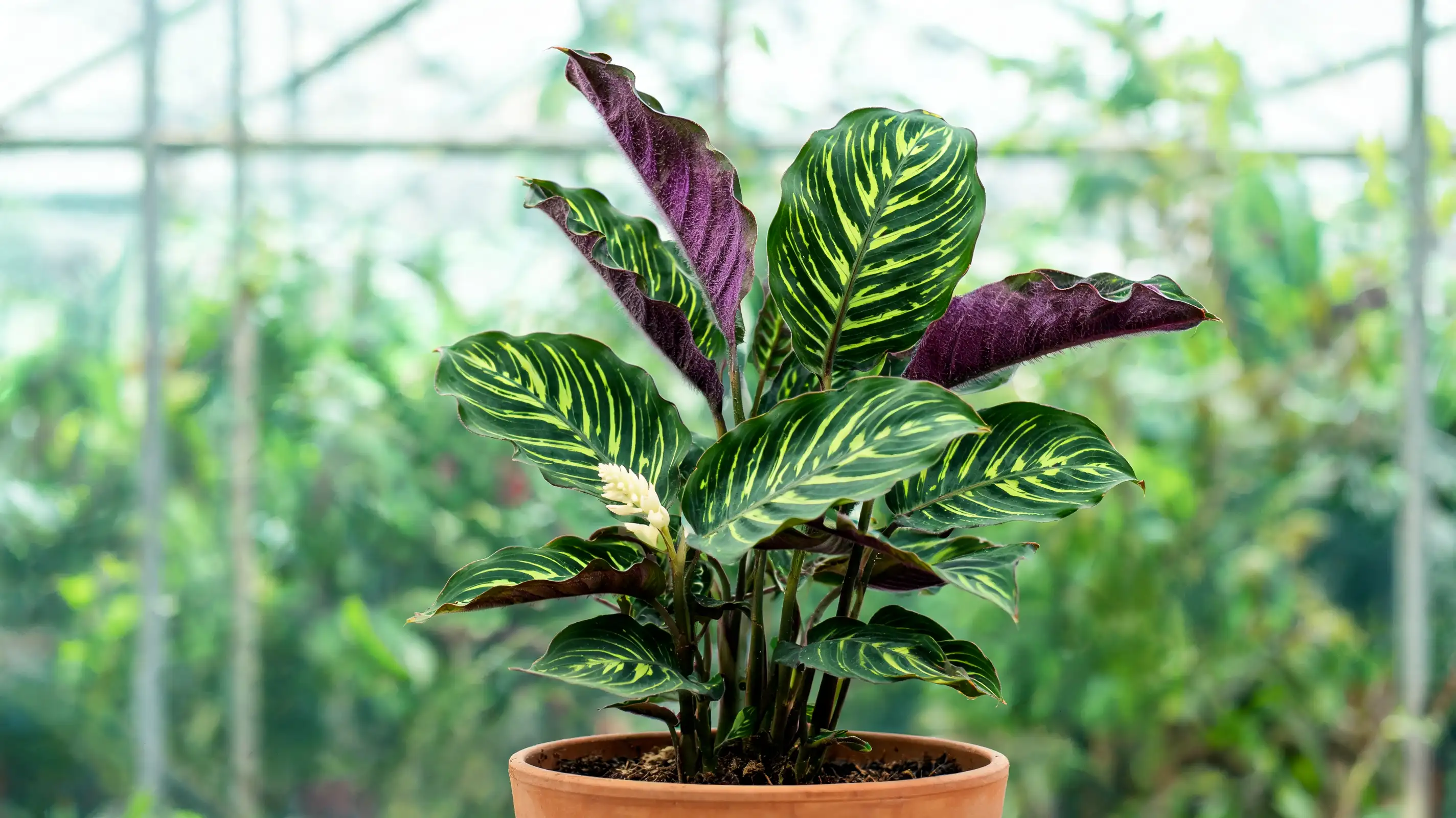
Jungle Velvet has large, soft leaves with pale, feather-like markings, and dense hairs cover the purple underside.
|
Key Trait |
Details |
|---|---|
|
Botanical name |
Goeppertia warszewiczii |
|
Mature size |
Around 3 to 4 feet |
|
Standout trait |
Velvety texture, cream-to-yellow flowers |
18. Velvet Calathea
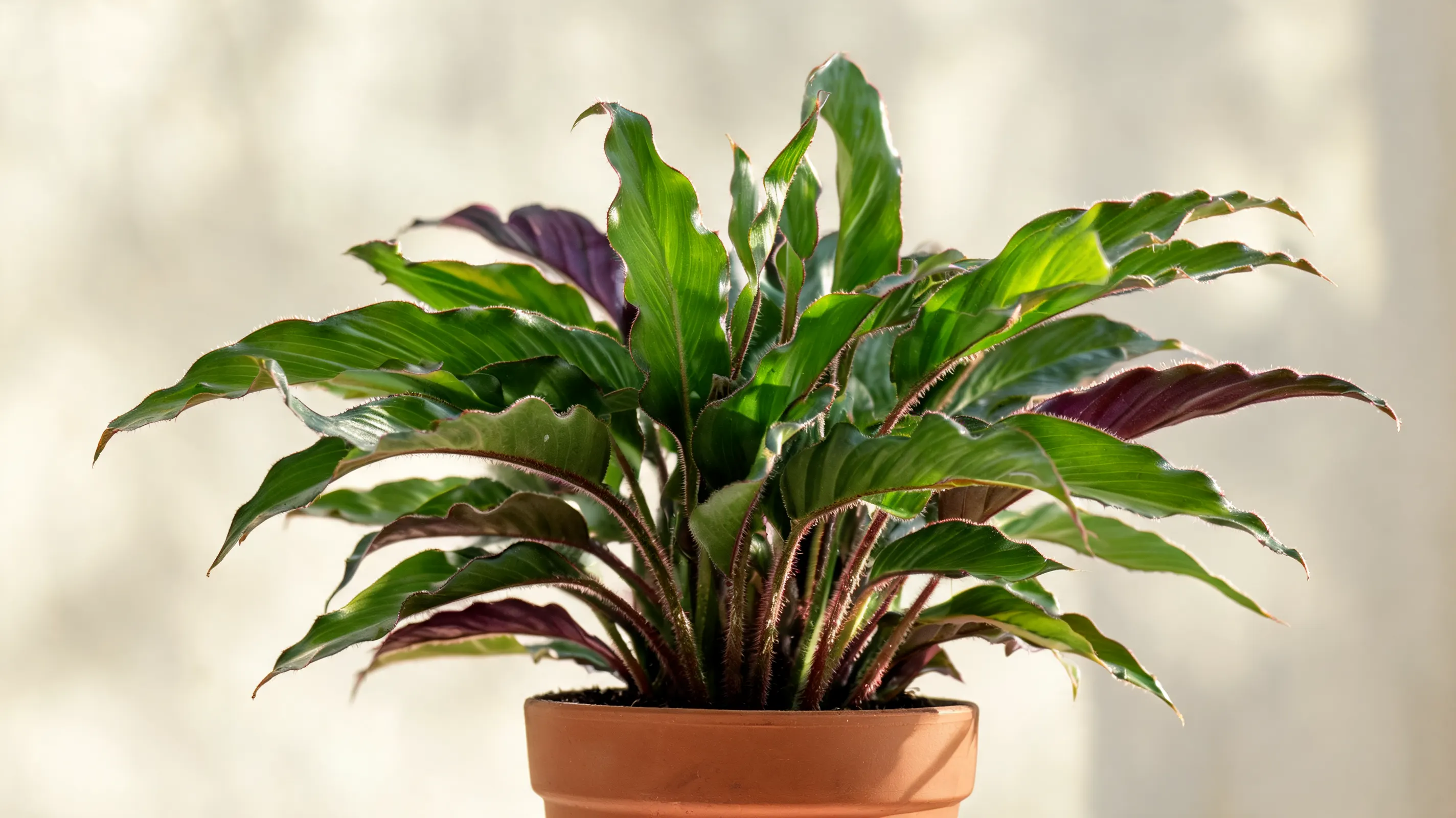
Velvet Calathea grows long green leaves with wavy edges, and fine reddish hairs occur along the stalks, midribs, and lower surfaces.
|
Key Trait |
Details |
|---|---|
|
Botanical name |
Goeppertia rufibarba |
|
Mature size |
Around 2 to 3 feet |
|
Standout trait |
Fine reddish hairs, wavy leaf edges |
19. Cigar Calathea
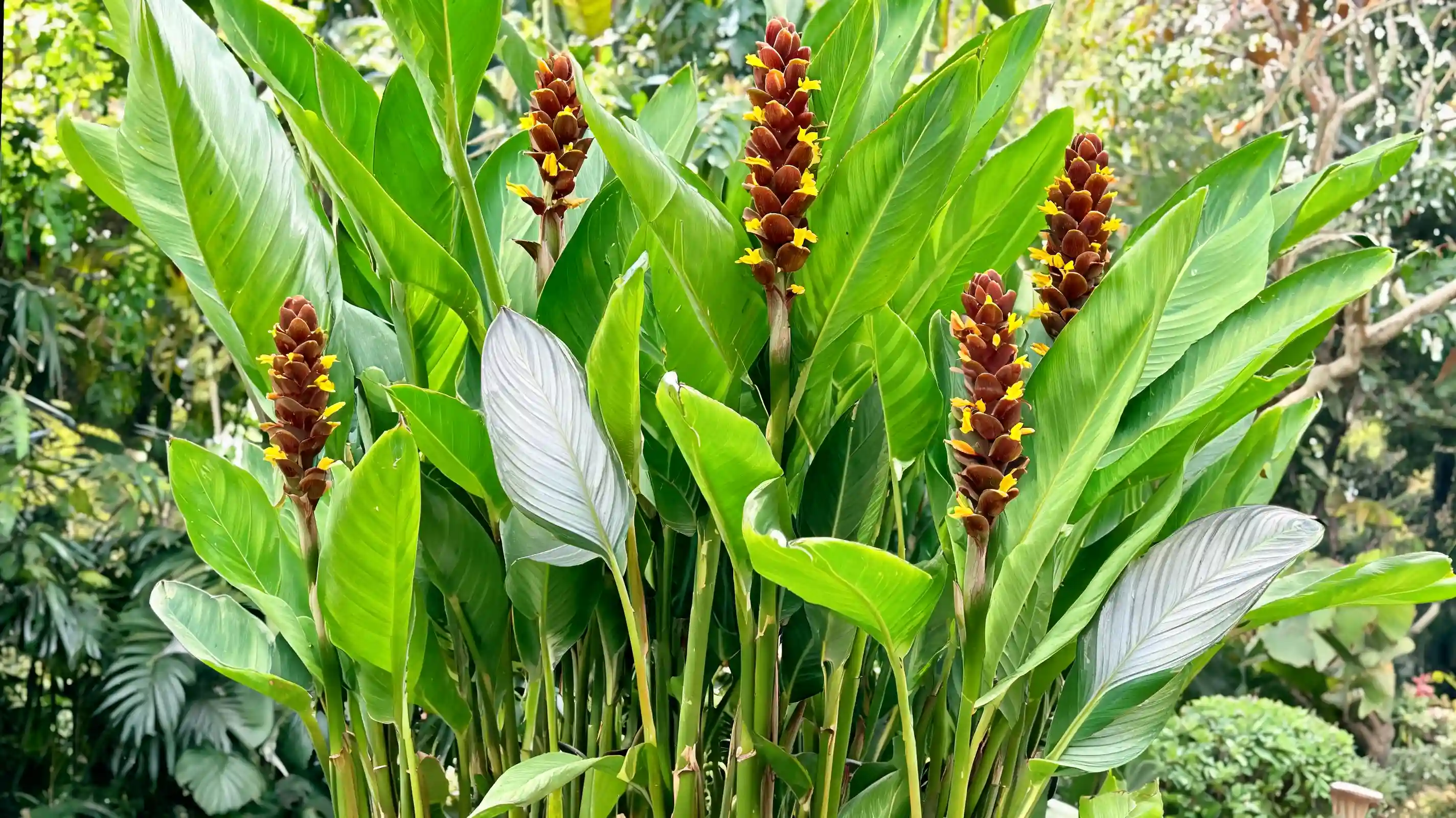
Cigar Calathea grows huge, bright green leaves with silvery, waxy undersides, and reddish-brown bracts form upright flower structures.
|
Key Trait |
Details |
|---|---|
|
Botanical name |
Calathea lutea |
|
Mature size |
Up to about 3 m |
|
Standout trait |
Waxy silver underside, upright bracts |
20.V Veitch’sCalathea
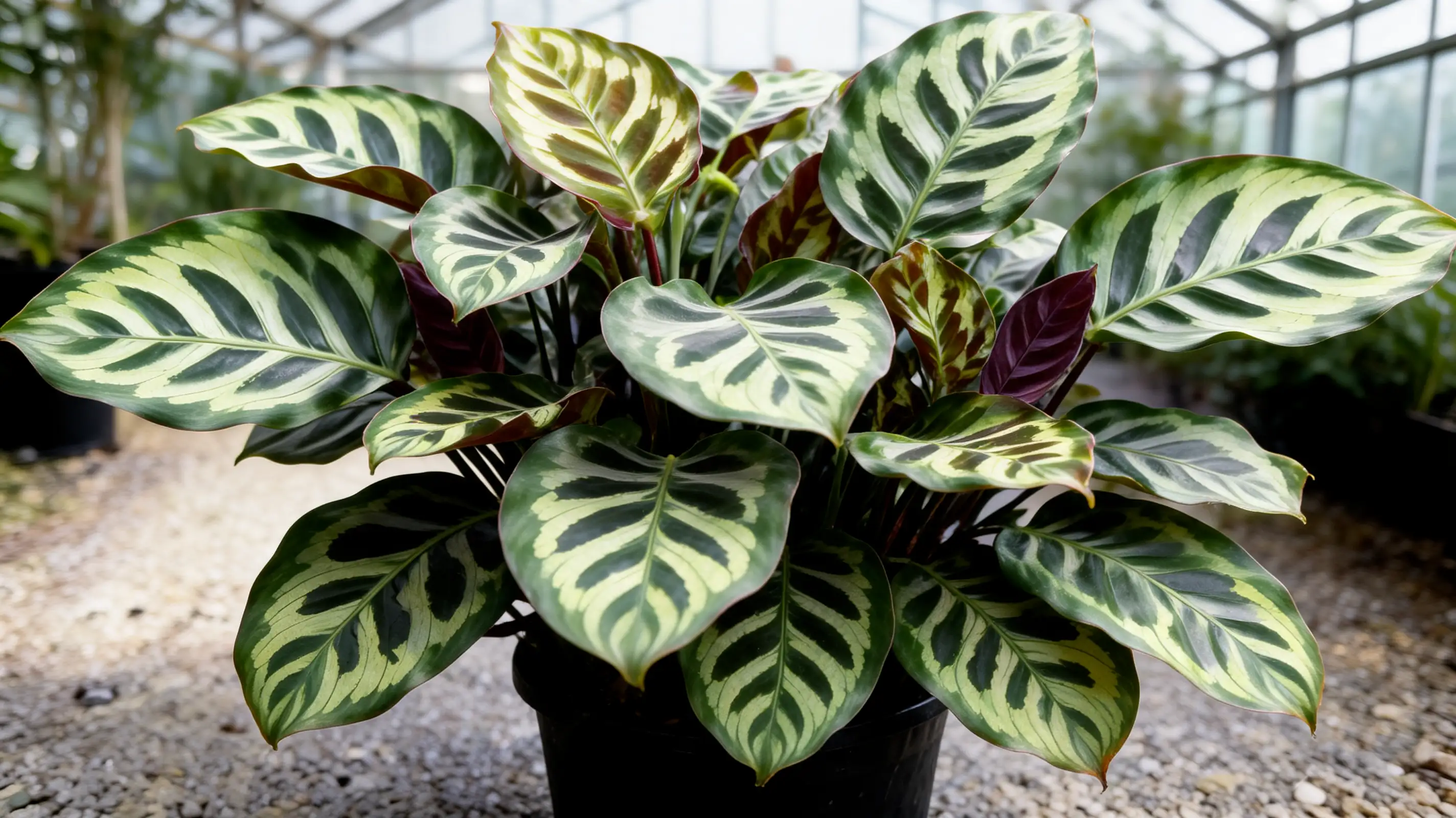
Veitch’s Calathea carries broad foliage with green, yellow-toned, and purple areas, and its species form differs from named Medallion selections.
|
Key Trait |
Details |
|---|---|
|
Botanical name |
Goeppertia veitchiana |
|
Native range |
Ecuador and Peru |
|
Standout trait |
Green, yellow, and purple leaf tones |
21. Fasciata
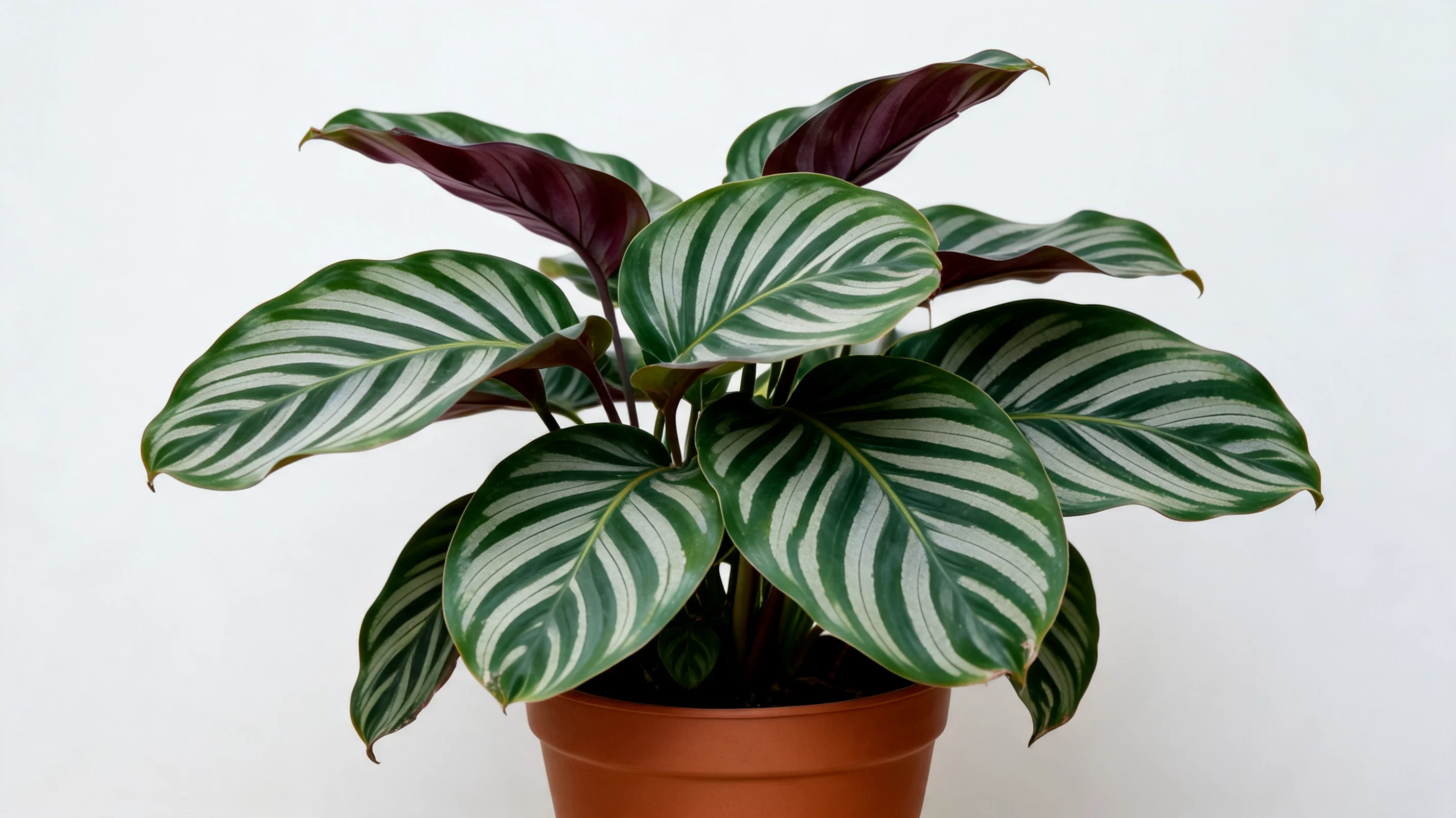
Fasciata has thick, glossy leaves ranging from rounded to oblong, with pale silver-green stripes across the deep green upper surface.
|
Key Trait |
Details |
|---|---|
|
Botanical name |
Goeppertia fasciata |
|
Mature size |
Around 3 to 4 feet |
|
Standout trait |
Broad pale stripes, maroon-to-purple underside |
Flowering Calathea Types
Flowering Calathea types are grown for noticeable flowers or colorful bracts along with their decorative leaves. Their blooms may not appear constantly indoors, but they add an extra feature when conditions are right.
22. Eternal Flame
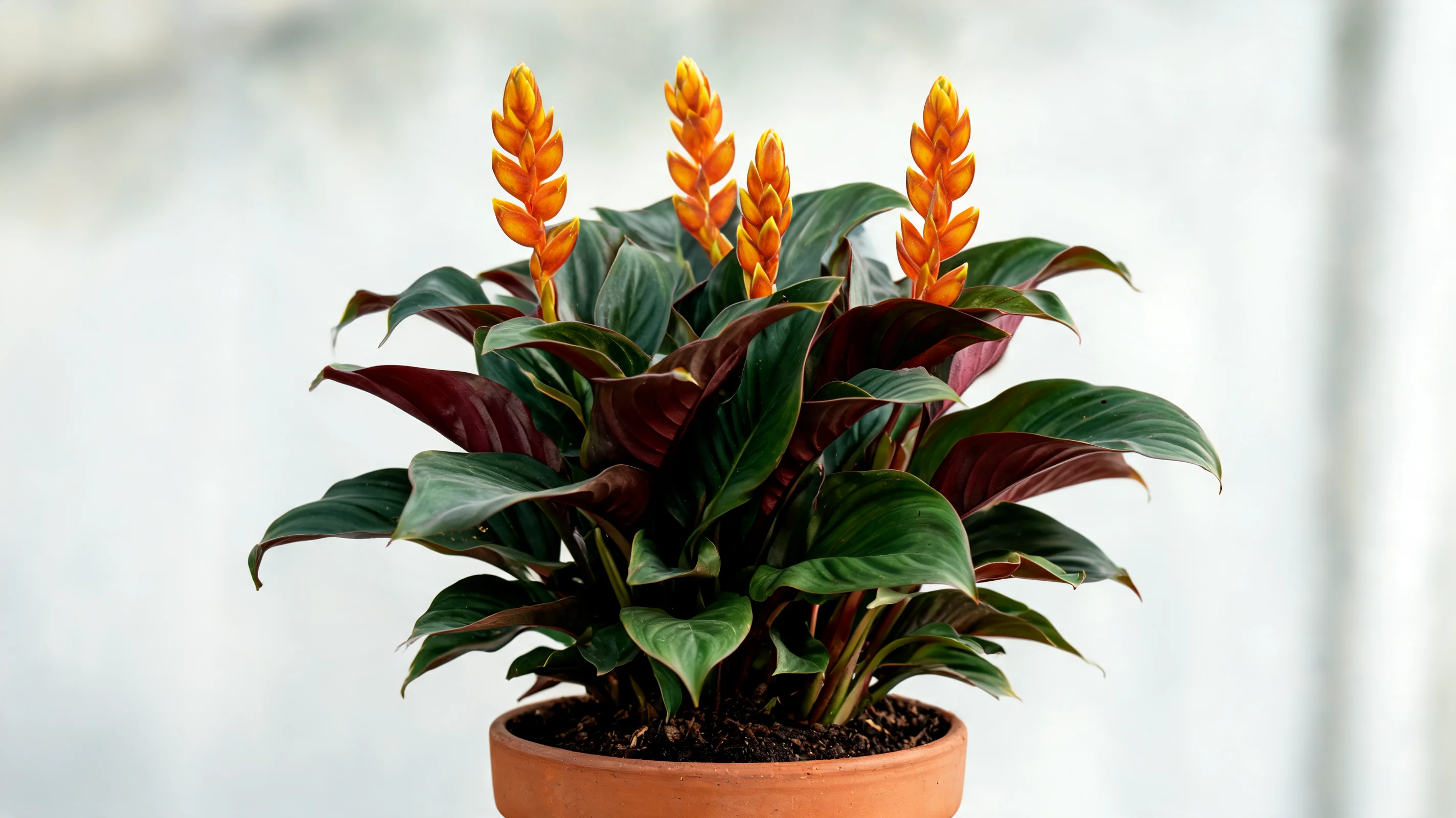
Eternal Flame combines dark foliage with bright yellow-orange bracts, and the flower structures rise above the leaves on upright stalks.
|
Key Trait |
Details |
|---|---|
|
Botanical name |
Goeppertia crocata |
|
Mature size |
Around 20 to 34 inches |
|
Standout trait |
Yellow-to-orange bracts on upright stalks |
23. Blue Ice Calathea
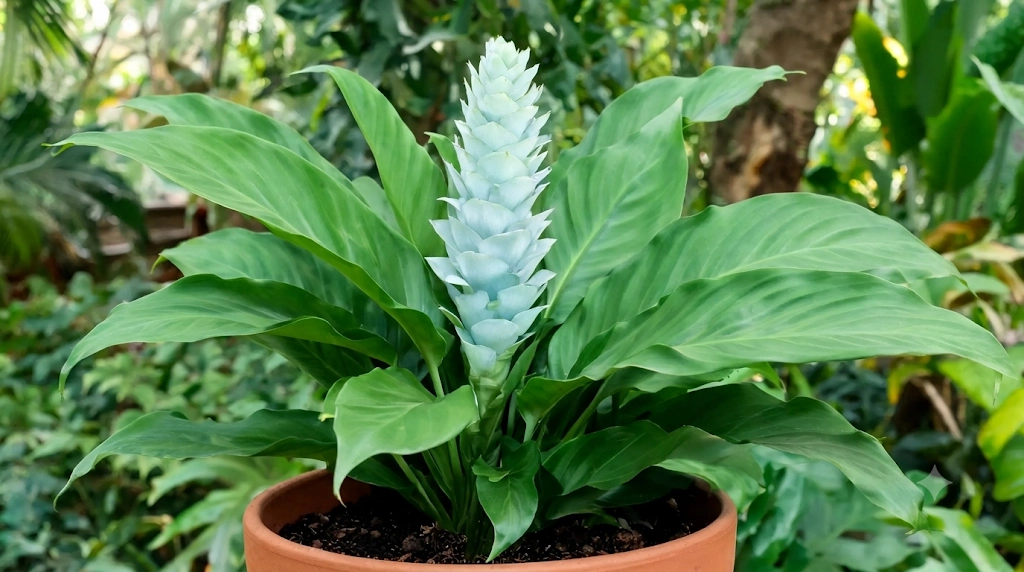
Blue Ice has large green leaves, but its pale blue-white bracts set it apart, and light purple flowers may appear between them.
|
Key Trait |
Details |
|---|---|
|
Botanical name |
Goeppertia burle-marxii Blue Ice’ |
|
Mature size |
Up to about 1.5 m |
|
Standout trait |
Blue-white bracts, pale purple flowers |
24. Rattle Shaker
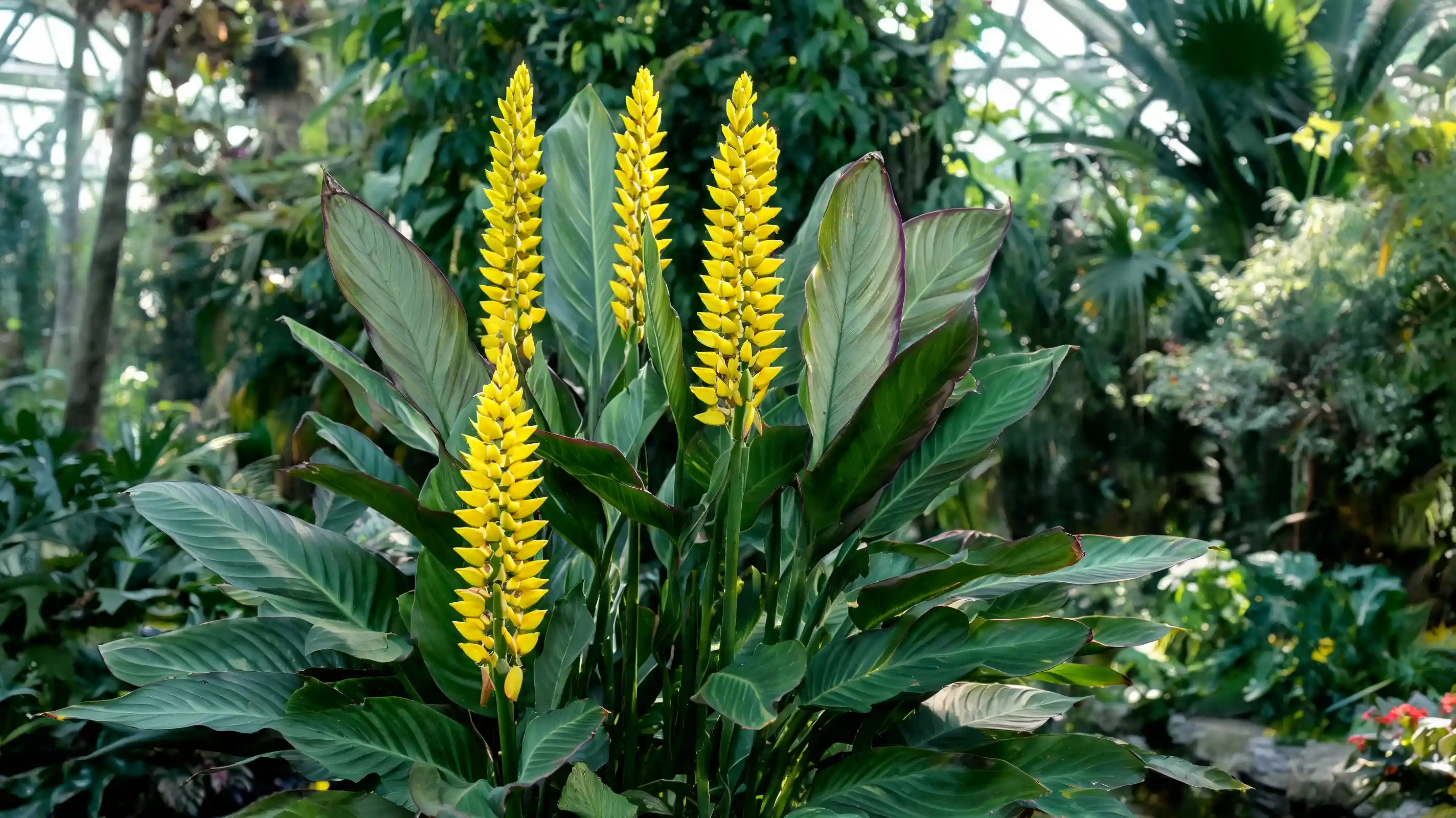
Rattle Shaker is a large tropical Calathea with stacked yellow bracts, and its shape resembles the end of a rattlesnake tail.
|
Key Trait |
Details |
|---|---|
|
Botanical name |
Calathea crotalifera |
|
Mature size |
Up to about 3 m |
|
Standout trait |
Stacked yellow bracts |
25. Coccinea
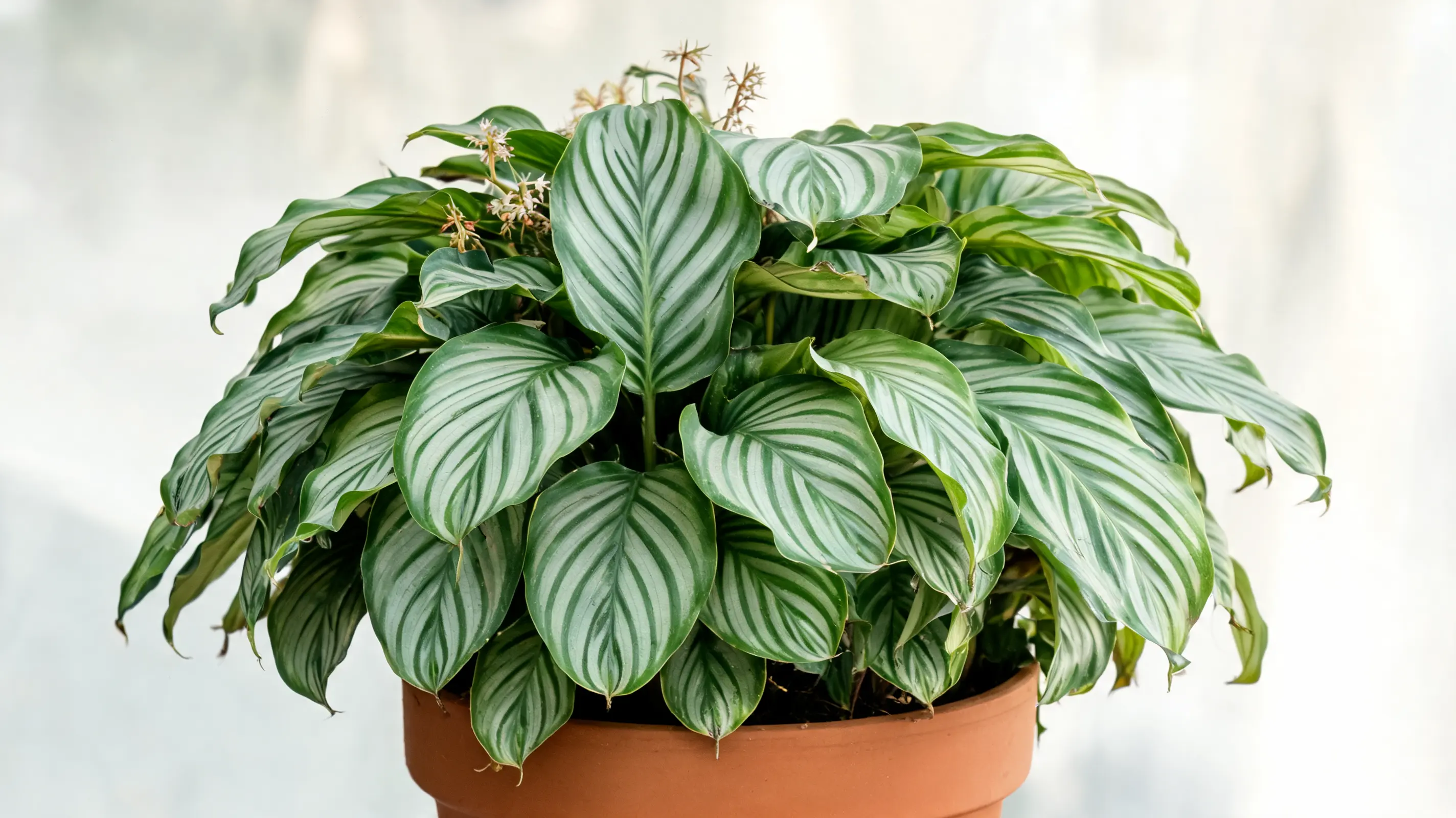
Coccinea forms a rounded clump with long green to silver-green leaves, and darker stripes create a feather-like pattern across the foliage.
|
Key Trait |
Details |
|---|---|
|
Botanical name |
Goeppertia coccinea |
|
Mature size |
Around 18 to 24 inches |
|
Standout trait |
Feather-like stripes; prefers partial shade |
Other Types of Calathea
These 20 additional varieties are less commonly stocked but still turn up at specialty nurseries and online sellers. Availability and exact naming can vary between sellers, so always check the plant label against the botanical name below before buying.
|
Variety |
Botanical Name |
Leaf Look |
|
Variegated Louisae |
Goeppertia louisae ‘Variegated’ |
Green, white, and light green |
|
Rosy |
Goeppertia roseopicta ‘Rosy’ |
Pink and silver-green center |
|
Tanja |
Goeppertia roseopicta ‘Tanja’ |
Rounded, spreading leaves |
|
Undulata |
Goeppertia undulata |
Dark green with pale center stripe |
|
Vittata |
Goeppertia elliptica’ Vittata’ |
Green with pale parallel lines |
|
Albolineata |
Goeppertia majestica ‘Albolineata’ |
Green with white veins |
|
Sanderiana |
Goeppertia majestica ‘Sanderiana’ |
Dark green with bright pink lines |
|
Stella |
Goeppertia lietzei Stella’ |
White and green marbling |
|
Marantifolia |
Goeppertia marantifolia |
Broad green foliage |
|
Red Zebrina |
Goeppertia ecuadoriana |
Olive green with lighter veins |
|
Red Rattle Shaker |
Calathea crotalifera ‘Red’ |
Dark green with pale midrib |
|
Villosa |
Goeppertia villosa |
Light green with dark markings |
|
Mysty |
Goeppertia roseopicta ‘Mysty’ |
Several green tones in bands |
|
Brazilian Calathea |
Goeppertia loeseneri |
Light green with pale midrib |
|
Cora |
Goeppertia roseopicta Cora’ |
Green and metallic silver-green |
|
Silvia |
Goeppertia roseopicta’ Silvia’ |
Green with purple-red markings |
|
Bella |
Goeppertia bella |
Silvery-grey with dark stripes |
|
Argentea |
Goeppertia picturata’ Argentea’ |
Green and silver-grey |
|
Mia Calathea |
Calathea hybrida ‘Mia’ |
Dark green with silver-green bands |
Calathea Care Basics
Most Calathea varieties want the same core conditions, so this section covers the basics once instead of repeating a light and water row in every plant profile below. Individual entries only mention light or water needs when a variety clearly differs from the general pattern here.
- Light: Bright indirect light suits most Calatheas. Too much direct sun burns leaves and fades their patterns, while very low light slows growth.
- Water: Keep soil lightly moist but never soggy. Letting it dry out completely can cause curled leaves, while excess water can harm roots.
- Humidity: Average household air often runs too dry for Calathea. Grouping plants or setting one near other humidity-loving houseplants can help raise moisture around the leaves.
- Temperature: Keep plants away from cold drafts, heaters, and sudden temperature swings.
- Soil: Use a loose, well-draining mix that still holds some moisture.
- Water quality: Some Calatheas react poorly to minerals in tap water. Filtered, distilled, or rainwater helps sensitive varieties.
- Fertilizing: Feed lightly during active growth. Too much fertilizer can damage roots and dull leaf color.
Common Calathea Problems
Calathea problems usually show up as visible leaf changes. Checking the symptoms below can help you decide which adjustment the plant needs in watering, humidity, light, or placement.
|
Problem |
Possible Cause |
What You Can Do |
|---|---|---|
|
Brown leaf edges |
Dry air or mineral buildup from water |
Raise humidity and check water quality |
|
Curling leaves |
Dry soil, low humidity, or temperature stress |
Check moisture and move away from drafts |
|
Yellow leaves |
Overwatering or poor drainage |
Adjust watering and improve drainage |
|
Faded leaf patterns |
Too much direct sunlight |
Move to filtered indirect light |
|
Drooping leaves |
Watering issues or sudden environment changes |
Check soil moisture, keep conditions stable |
|
Crispy leaf tips |
Dry indoor air or mineral buildup |
Raise humidity, consider filtered water |
Most Calathea issues trace back to environmental stress rather than the variety itself. Unlike several common houseplants, Calathea is also considered non-toxic to pets, according to this breakdown of the most toxic indoor houseplants.
Frequently Asked Questions
How many types of Calathea are there?
Dozens of Calathea species and named cultivars exist worldwide, and the exact count keeps shifting since some plants are reclassified into the Goeppertia genus while growers keep introducing new cultivars.
Are Calatheas easy to care for?
Calatheas are beautiful but can be sensitive to dry air, mineral buildup in tap water, and inconsistent watering. Beginners generally get the best results starting with common, forgiving varieties before trying rarer cultivars.
Why are my Calathea leaves curling?
Curling leaves usually point to dry soil, low humidity, cold drafts, or mineral buildup from tap water. Checking soil moisture first, then humidity, then water quality helps narrow down the likely cause.
Why are my Calathea leaves turning brown?
Brown leaf edges typically point to dry air, underwatering, inconsistent moisture, or mineral buildup from tap water. Raising humidity and switching to filtered or distilled water often helps within a few leaf cycles.
Are Calatheas safe for pets?
Calatheas are generally considered non-toxic to cats and dogs, making them a popular pick for pet-friendly homes. It is still worth discouraging pets from chewing on any houseplant, toxic or not, out of general caution.
Final Thoughts
Comparing this many patterned leaves in one sitting can feel like a lot, and that is fair. I still find myself scrolling back through my own plant photos before committing to a new pot.
Pick the one or two that caught your eye the most and start there. My shelf didn’t fill up overnight, and yours doesn’t need to either.
Save this page for the next time you are standing in a nursery aisle trying to remember which name went with which leaf pattern. Let me know in the comments which type ends up coming home with you.