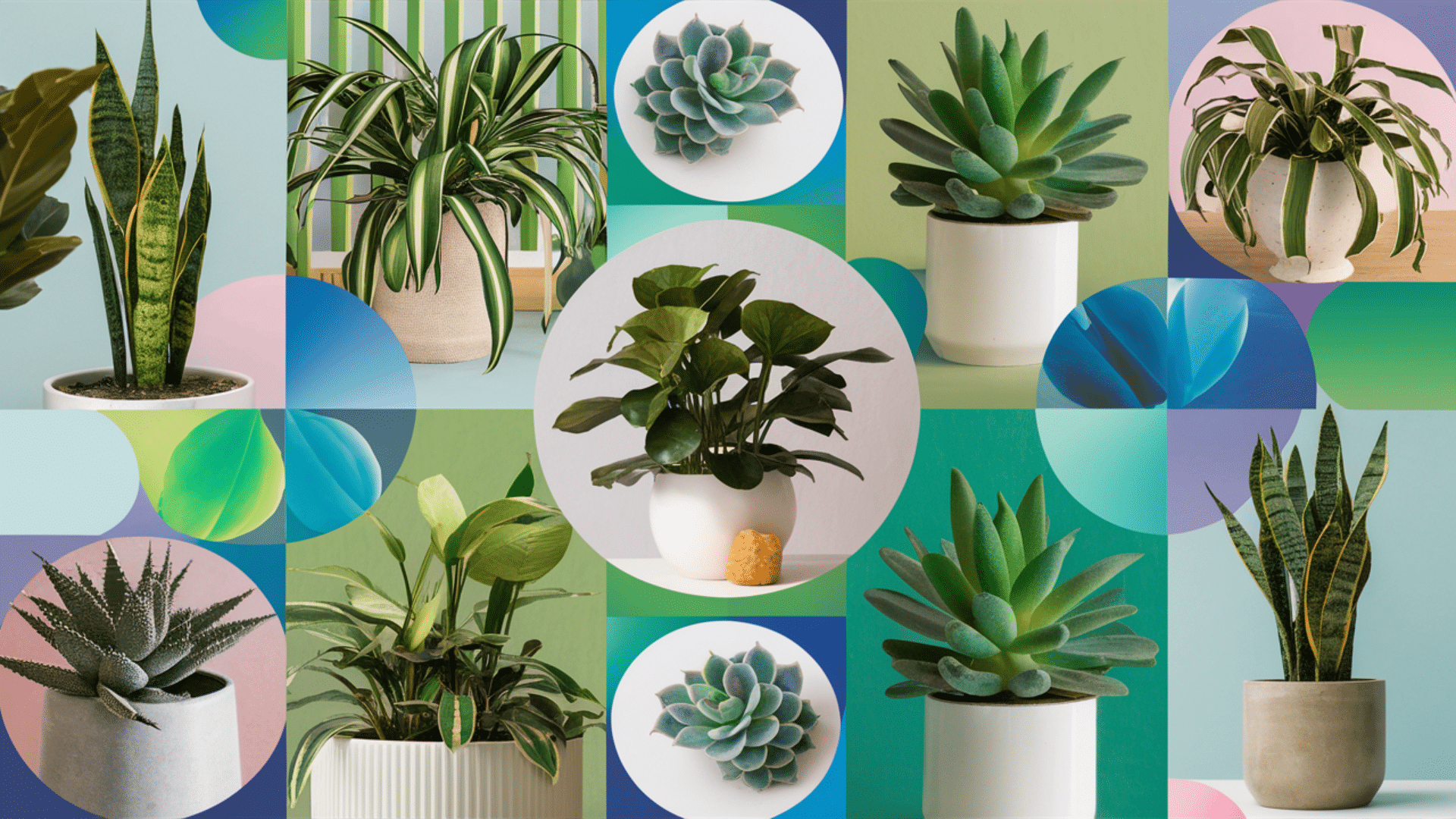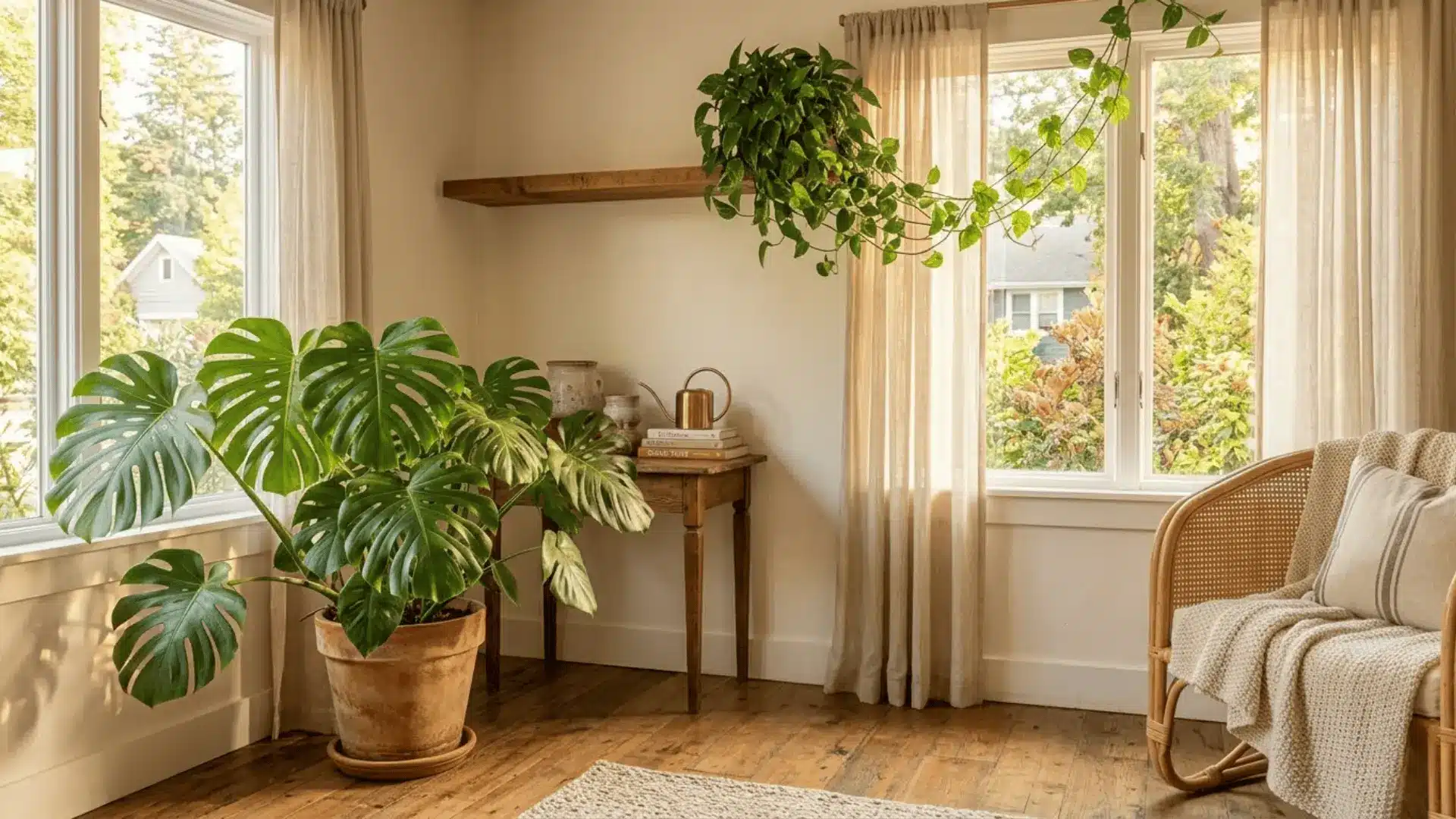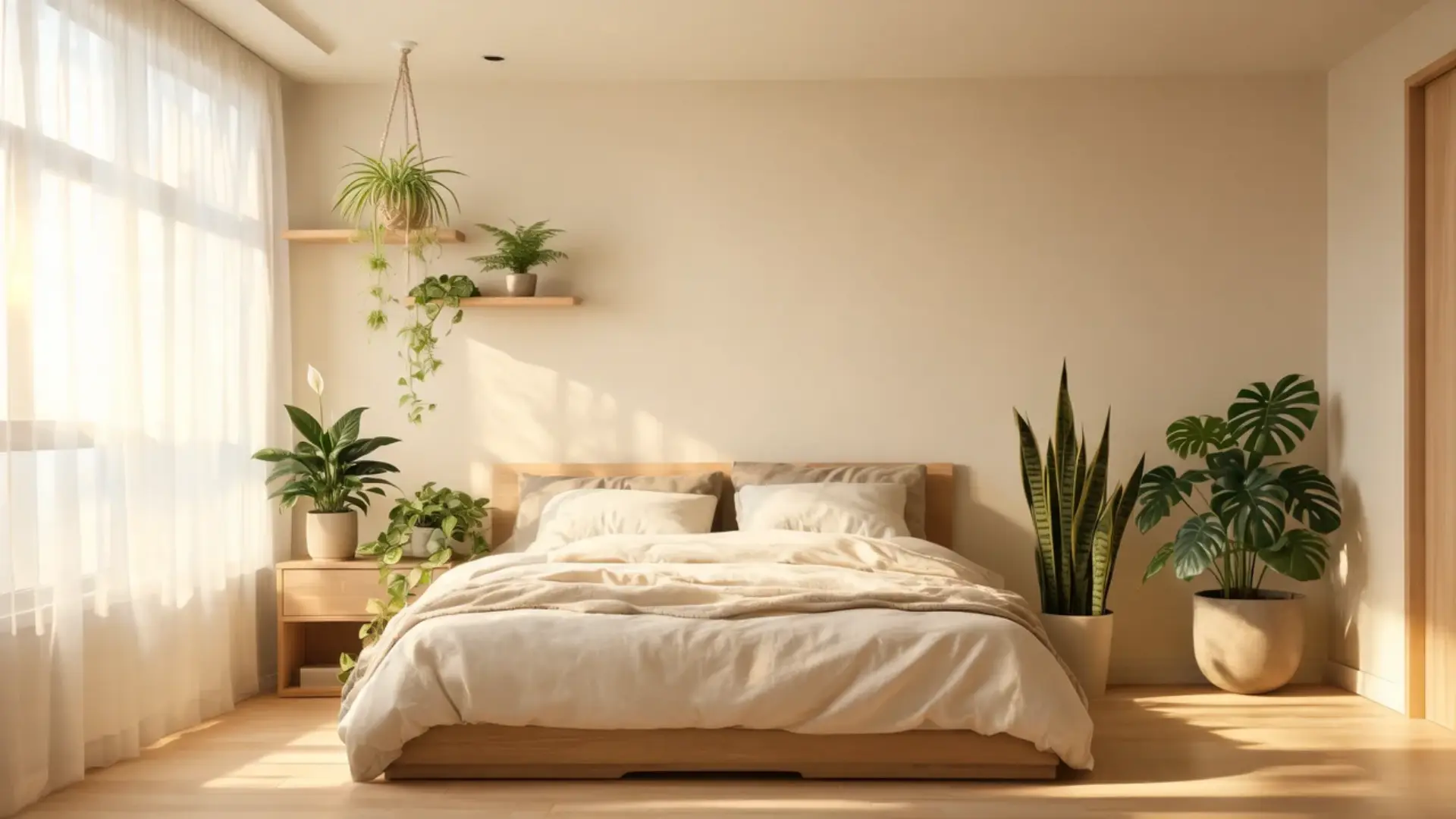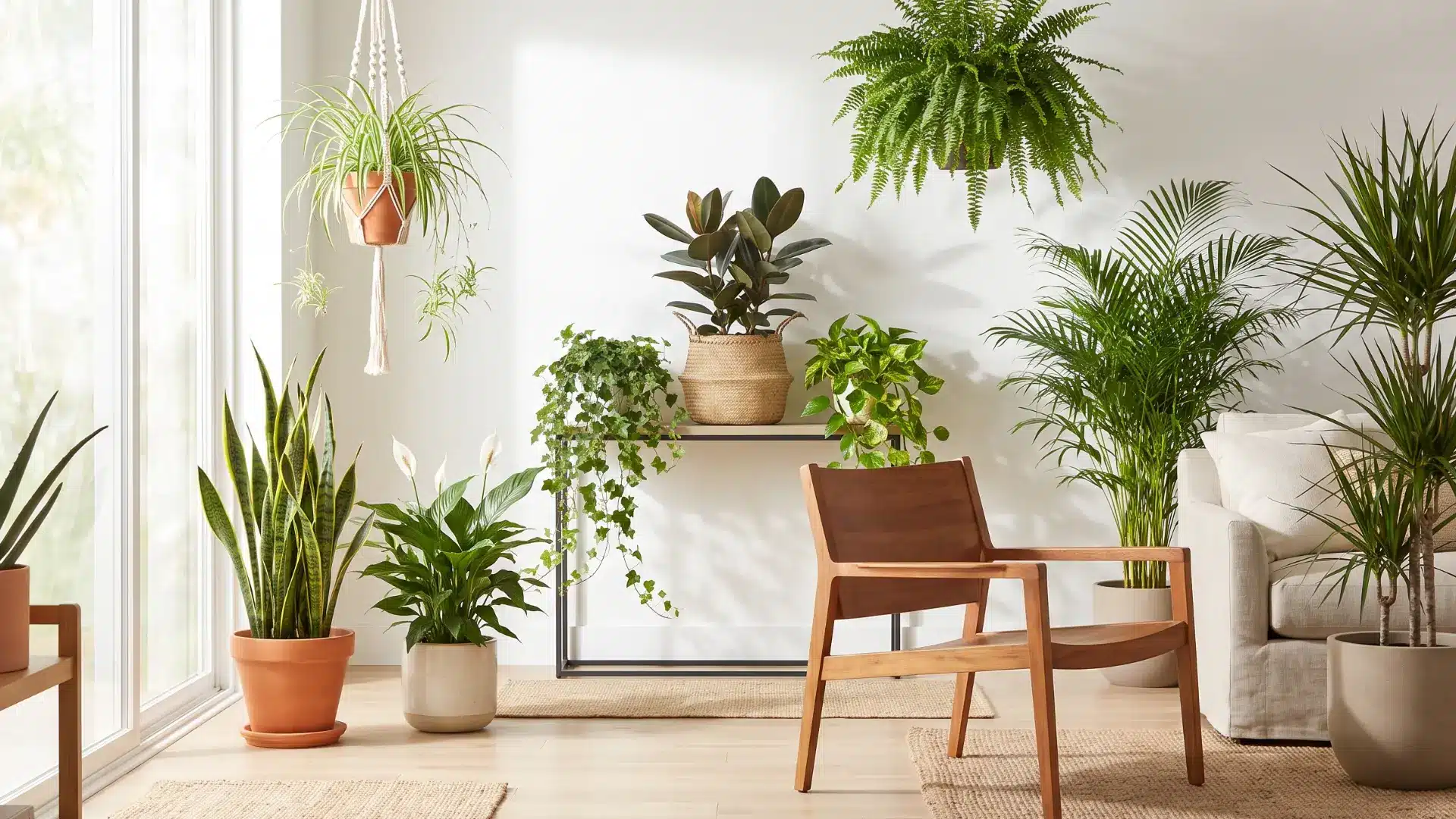
Indoor plants can make your home feel fresher, calmer, and more welcoming. Some plants are also commonly recommended for indoor air support because their leaves, roots, and soil may interact with small amounts of certain airborne compounds.
Popular choices include spider plants, snake plants, peace lilies, golden pothos, Boston ferns, bamboo palms, and dracaenas. However, each plant has different needs, so the right choice depends on your room’s light, humidity, available space, and watering routine.
Below are some of the best indoor plants for air quality, along with their possible benefits, basic care needs, best room placement, and safety around pets. You will also find room-by-room suggestions, pet safety tips, and answers to common questions.
Can Indoor Plants Really Improve Air Quality?
Indoor plants can support cleaner air in several small but meaningful ways.
Their leaves absorb limited amounts of common indoor chemicals like formaldehyde and benzene, while the potting soil and its microorganisms work quietly underground, breaking down some of these pollutants over time.
The original NASA study behind this idea tested exactly these chemicals and found real, if modest, differences between plant species. Plants also release moisture into the air, which can make a dry room feel more comfortable, though this effect stays modest compared to a humidifier.
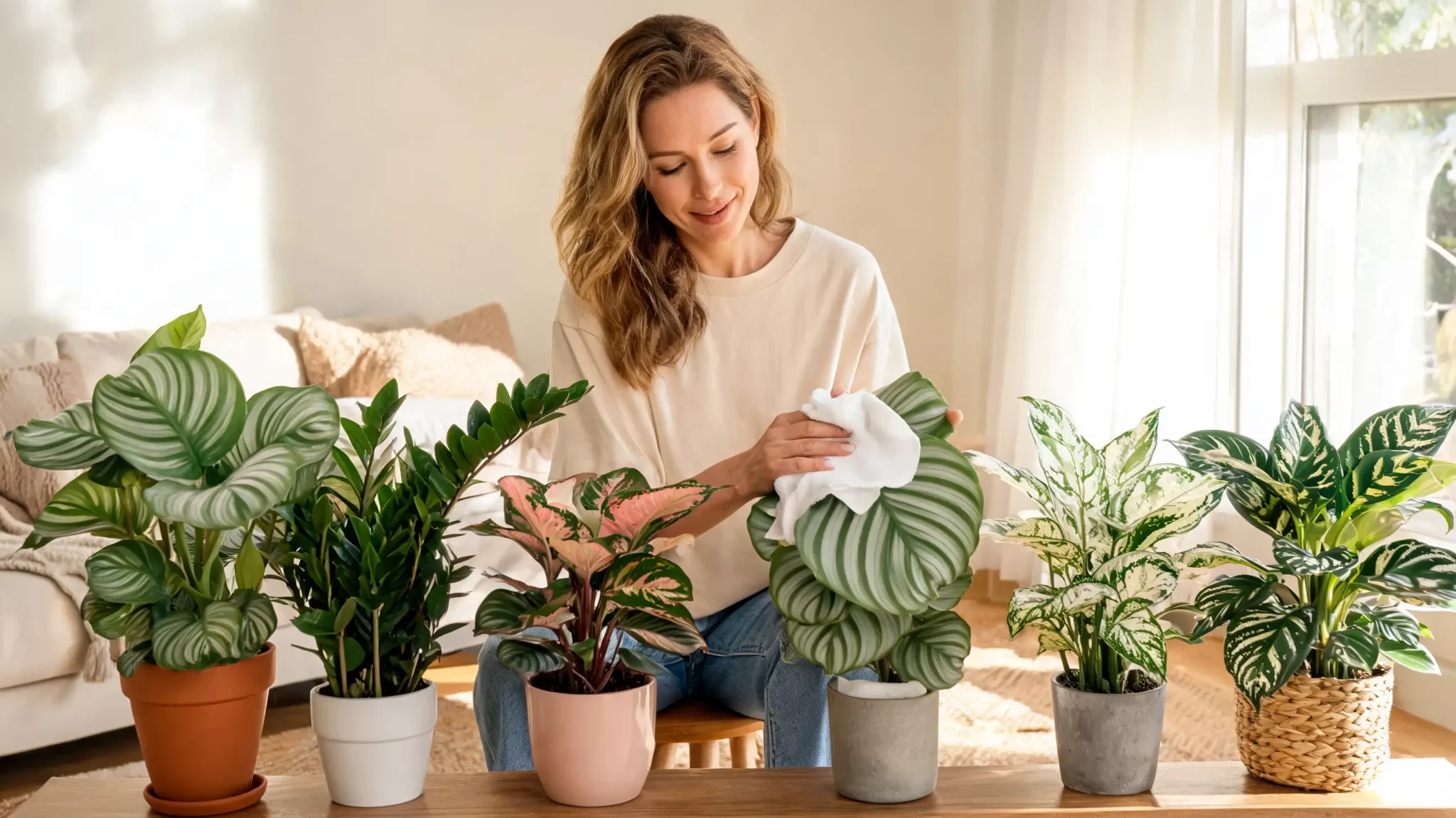
How much a plant contributes depends heavily on its condition: a healthy plant, with clean leaves, the right light, and consistent watering, does far more than a stressed or neglected one. None of this replaces the basics of good air quality, though.
Houseplants work best as one piece of a wider plan that includes fresh airflow, regular cleaning, and cutting down on pollution sources at the root. Pair healthy plants with those habits, and you get a real, if modest, boost to your indoor air.
Best Indoor Plants For Air Quality
The following plants are commonly recommended for indoor spaces. Before choosing one, consider the natural light in your room, how often you can water it, and whether you have pets.
1. Spider Plant: Chlorophytum comosum
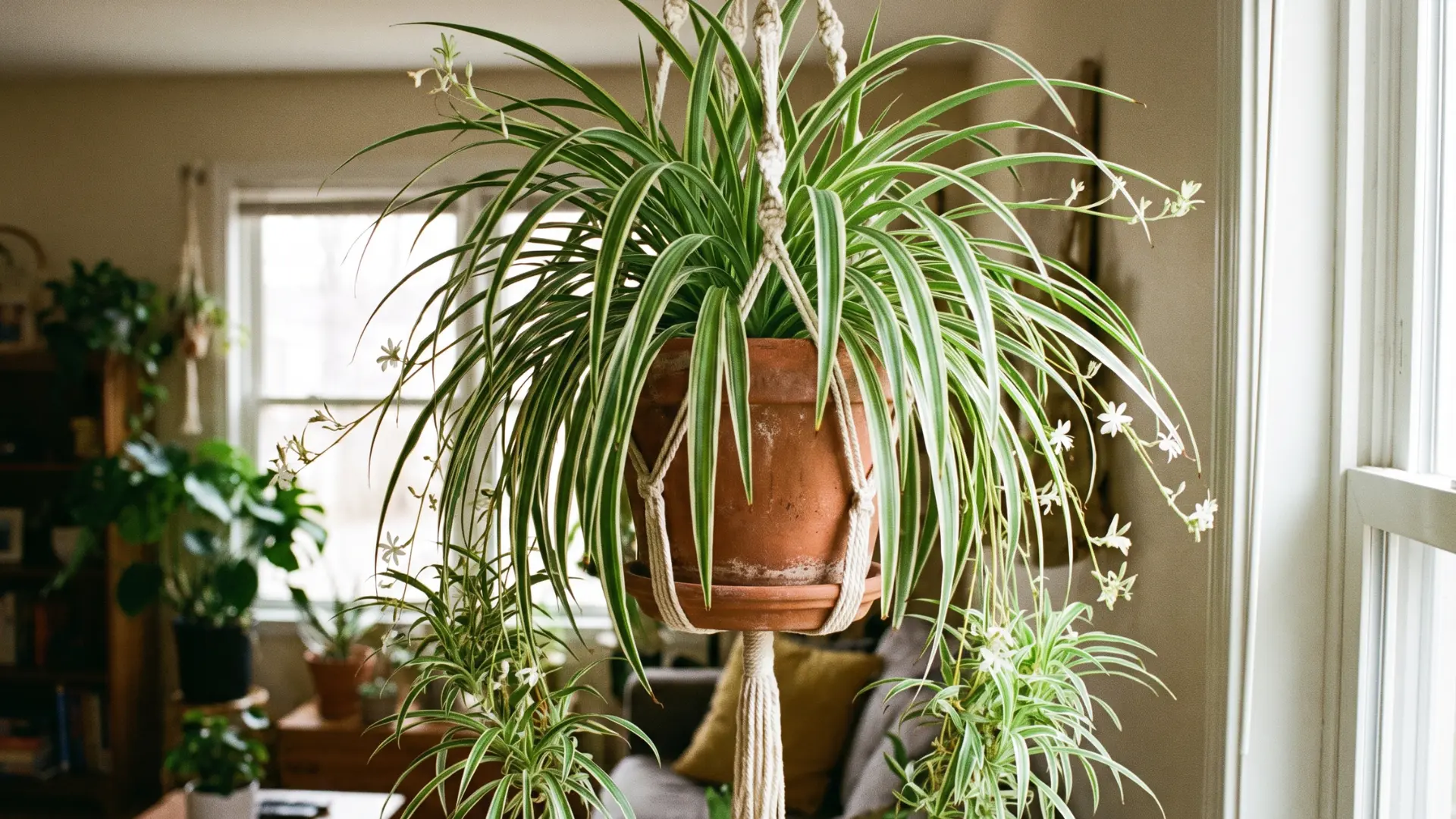
The spider plant is one of the easiest houseplants for beginners. It has long, narrow leaves that grow outward and often produce small baby plants. It fits well on shelves, plant stands, or in hanging baskets.
It grows best in medium or bright indirect light. It can handle a short dry period, but it prefers water when the top of the soil begins to dry. Spider plants are commonly linked with formaldehyde, xylene, and toluene.
They are also listed as safe around cats and dogs, making them a useful choice for homes with pets.
Care tip: Use well-drained soil and water the plant fully. Let the soil dry slightly before watering again. Fertilizer is optional, but you may feed it once a month during spring and summer.
2. Snake Plant: Dracaena trifasciata
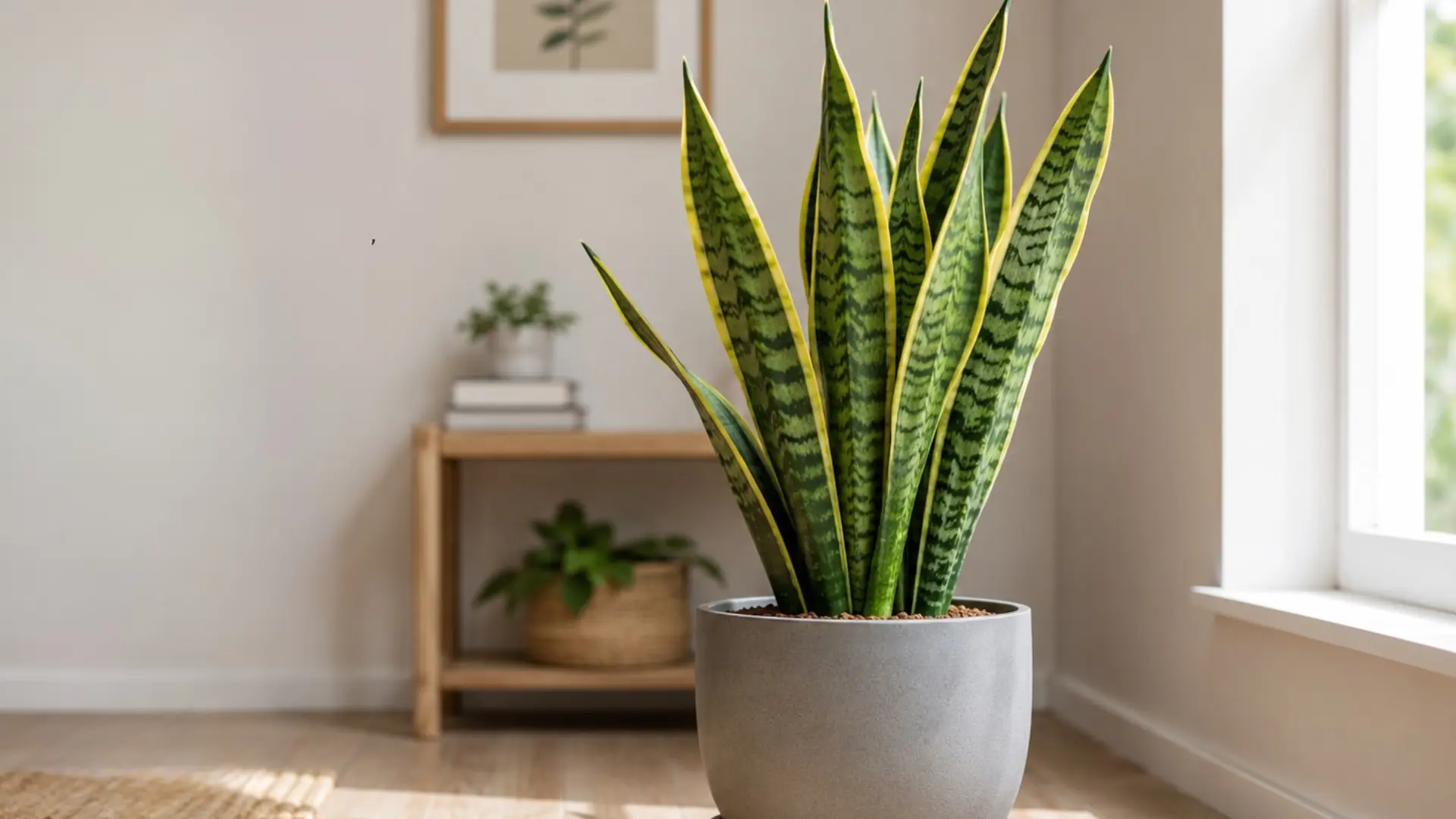
The snake plant has tall, firm leaves that grow straight upward. Its narrow shape makes it a good option for small rooms, empty corners, and areas where a wide plant would take up too much space.
It can grow in lower light, although it grows better with indirect daylight. It also stores water in its leaves, so it does not need to be watered often. It is commonly linked with formaldehyde, benzene, xylene, toluene, and nitrogen oxides.
The snake plant is not considered safe for pets if they chew or eat it.
Care tip: Let the soil dry fully before watering. Do not leave the roots sitting in wet soil, since too much water can damage the plant.
3. Peace Lily: Spathiphyllum species
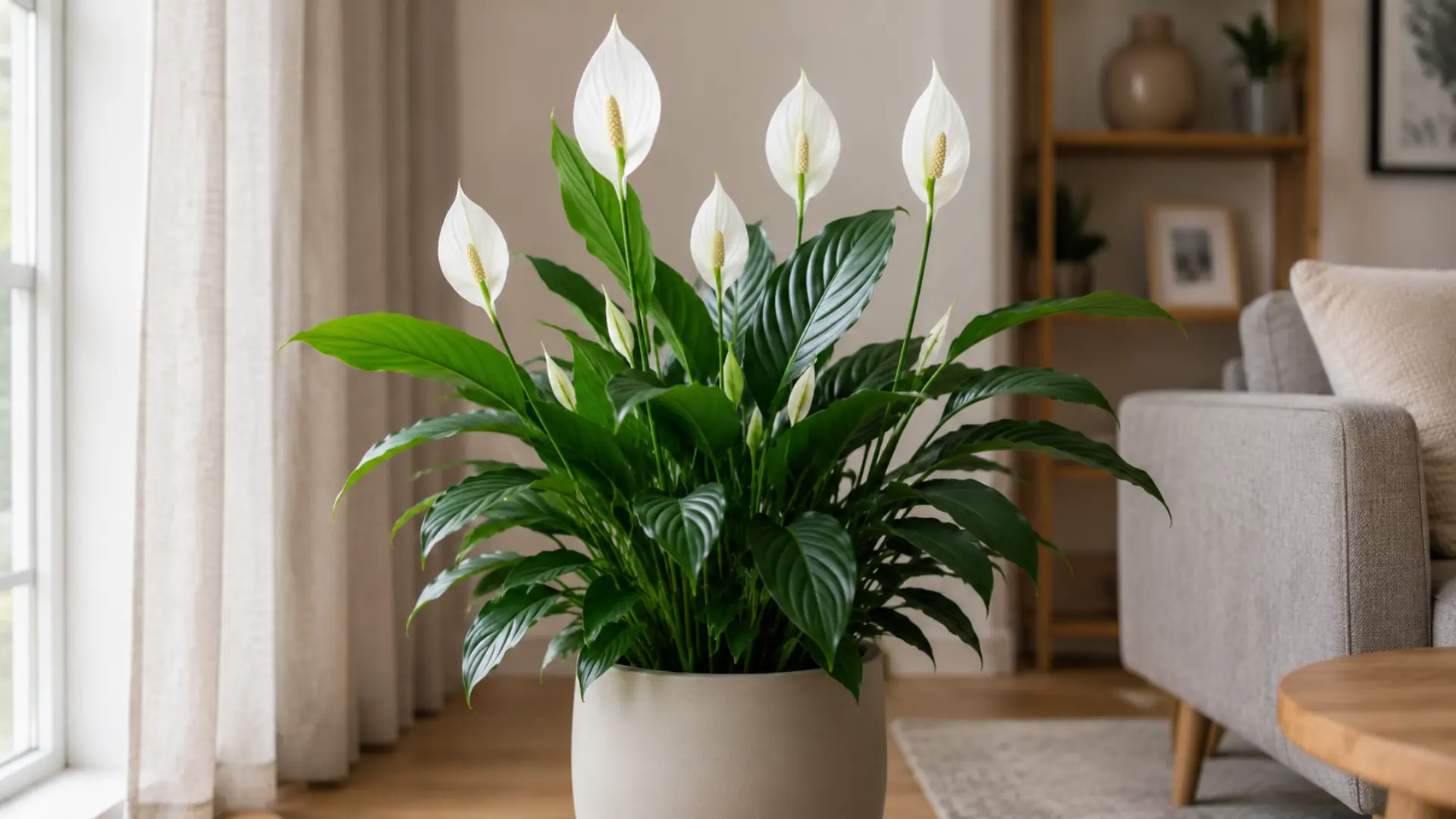
The peace lily has dark green leaves and simple white flowers. It adds color and interest to a room without needing much space.
It grows well in shade or soft indirect light, which makes it suitable for bedrooms, offices, and living rooms. It is commonly linked with formaldehyde, benzene, trichloroethylene, xylene, and ammonia.
Peace lilies are not safe for pets. Keep them away from cats and dogs that may chew the leaves.
Care tip: Water the plant well, then let the soil dry slightly before watering again. Keep it away from strong direct sunlight. It normally needs fertilizer only once or twice a year.
4. Aloe Vera: Aloe barbadensis milMiller
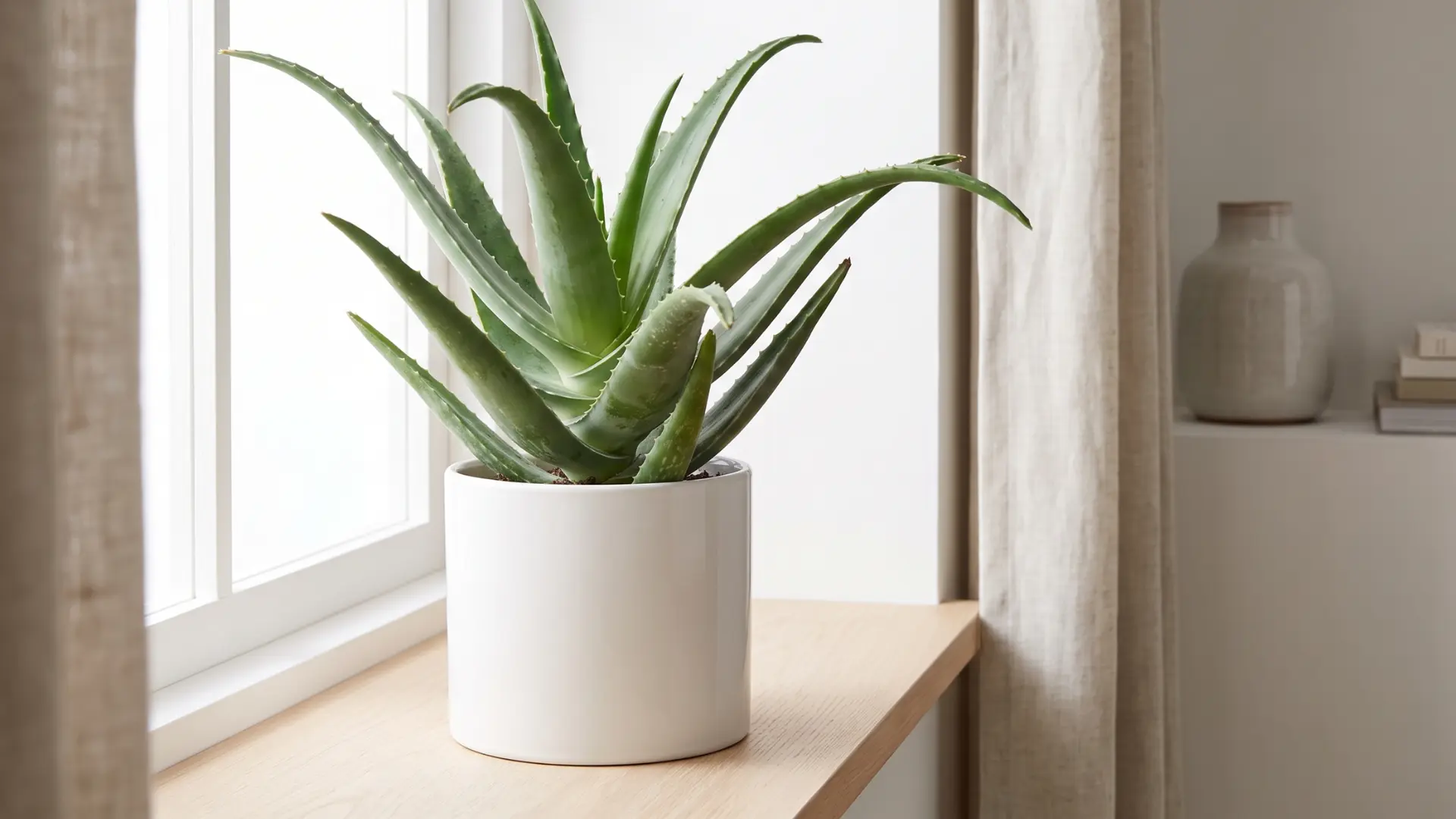
Aloe vera has thick, pointed leaves that store water. This helps it survive dry periods and makes it easier to care for than plants that need steady moisture.
It grows best in a bright room near a window. A sunny table, shelf, or windowsill can work well, but strong midday sun may burn the leaves. Aloe vera is commonly linked with formaldehyde and benzene.
This succulent also shows up often in breezy, natural-toned rooms, an idea covered in this roundup of coastal decorating ideas with houseplants. Aloe vera is not considered safe for pets if eaten.
Care tip: Use fast-draining soil and a pot with drainage holes. Allow the soil to dry before watering again. Too much water is a more common problem than too little water.
5. Boston Fern: Nephrolepis exaltata
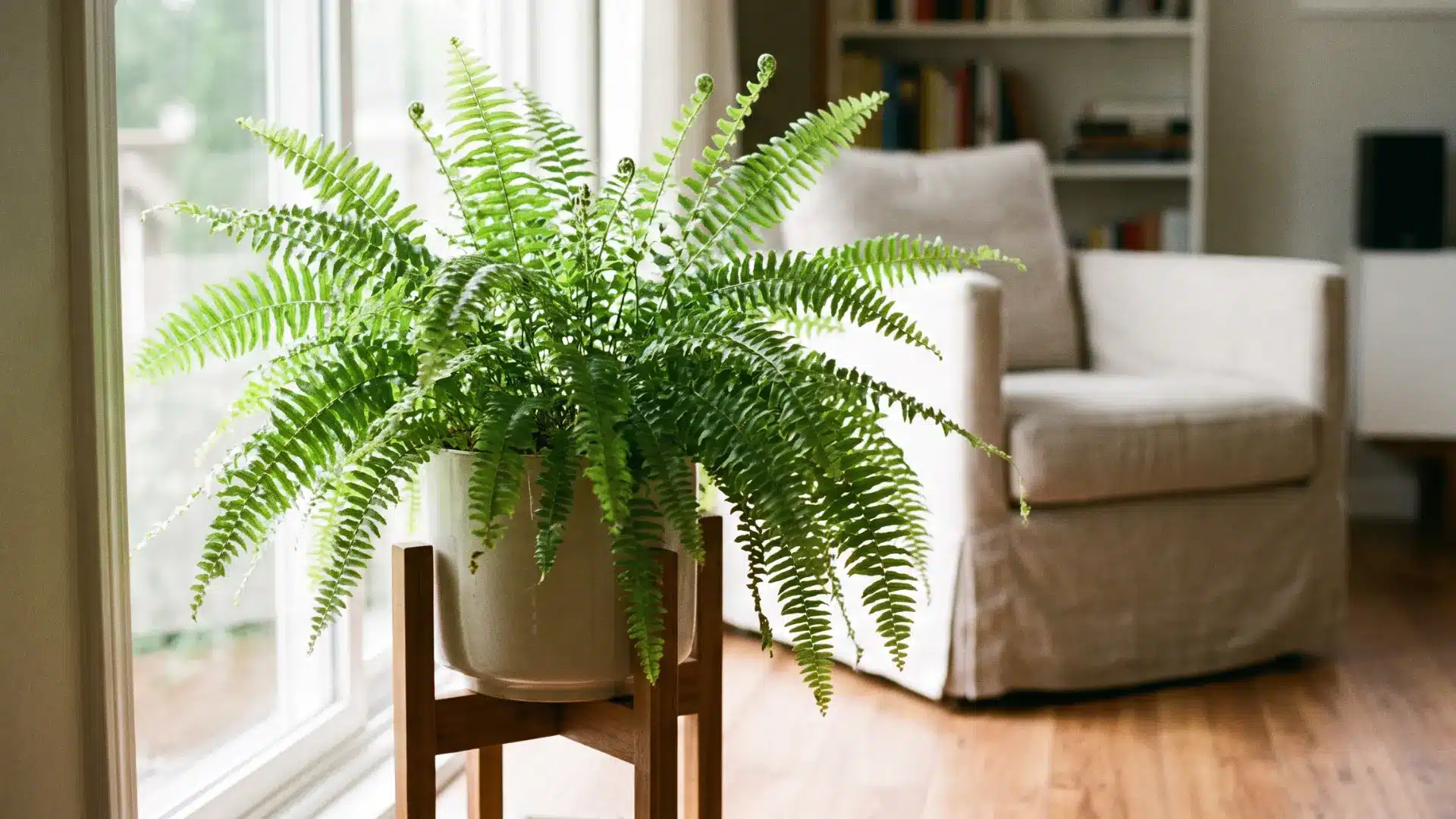
The Boston fern has soft, arching green leaves that create a full and leafy appearance. It works well in hanging baskets, on stands, or on wide shelves.
This plant prefers indirect light, regular water, and higher humidity. It is often linked with formaldehyde and xylene. Boston ferns are also listed as safe around cats and dogs.
The main challenge is keeping the plant moist without soaking the soil. It may struggle in very dry rooms.
Care tip: Place it in a cool spot with indirect light. Water it regularly and mist the leaves when the air is dry. A pebble tray with water can also help add moisture around the plant.
6. English Ivy: Hedera helix
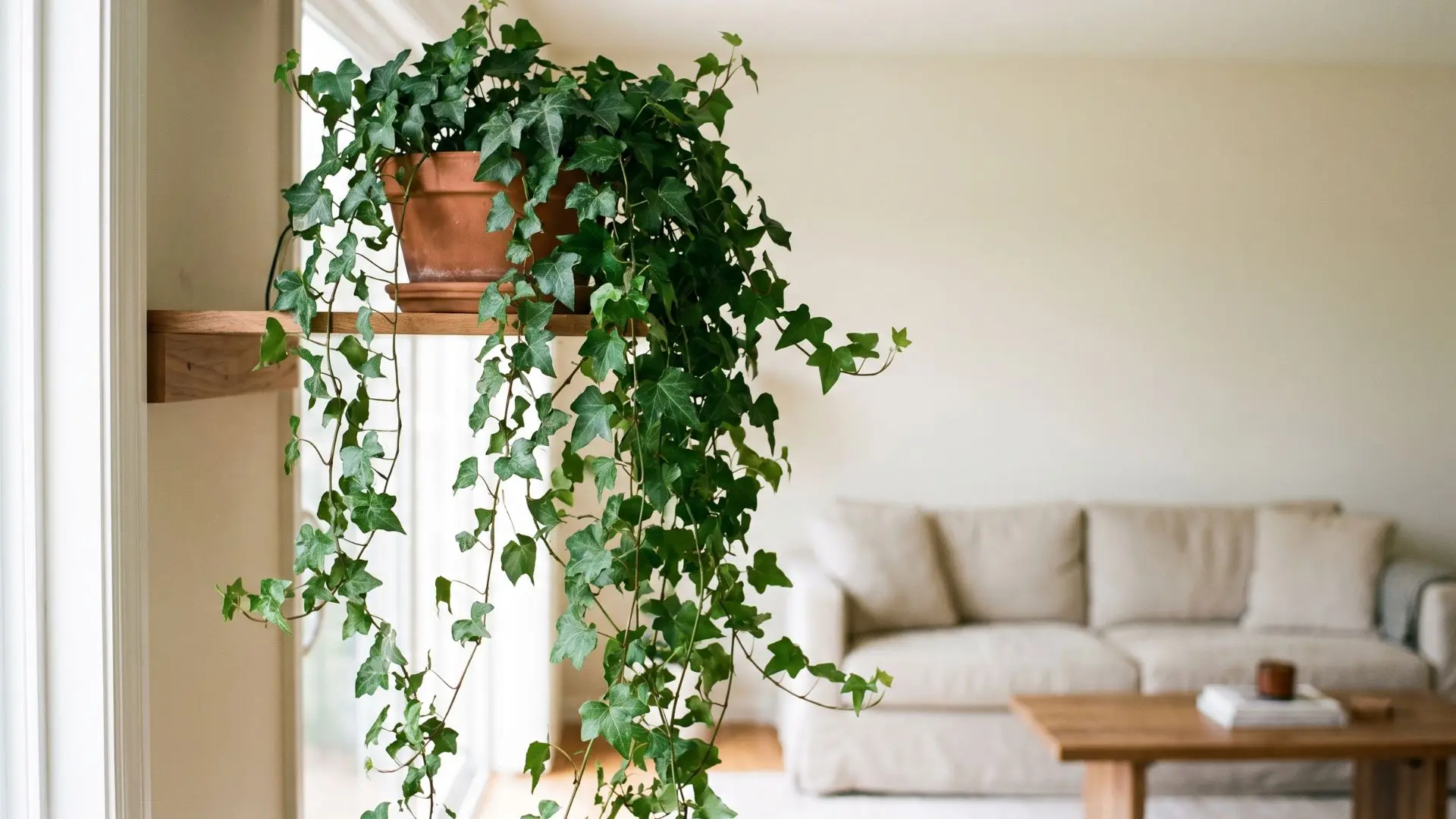
English ivy is a trailing plant with small green leaves. Its vines can hang from a basket, spread across a shelf, or grow along a support.
It prefers bright light and soil that dries slightly between watering. It is commonly linked with formaldehyde, benzene, xylene, and toluene.
English ivy is not safe for pets. A hanging basket may reduce access, but it should still be kept away from pets that climb or jump.
Care tip: Avoid keeping the soil wet for long periods. Too much moisture can lead to leaf and root problems. Feed the plant in early spring and again in midsummer.
7. Rubber Plant: Ficus elastica
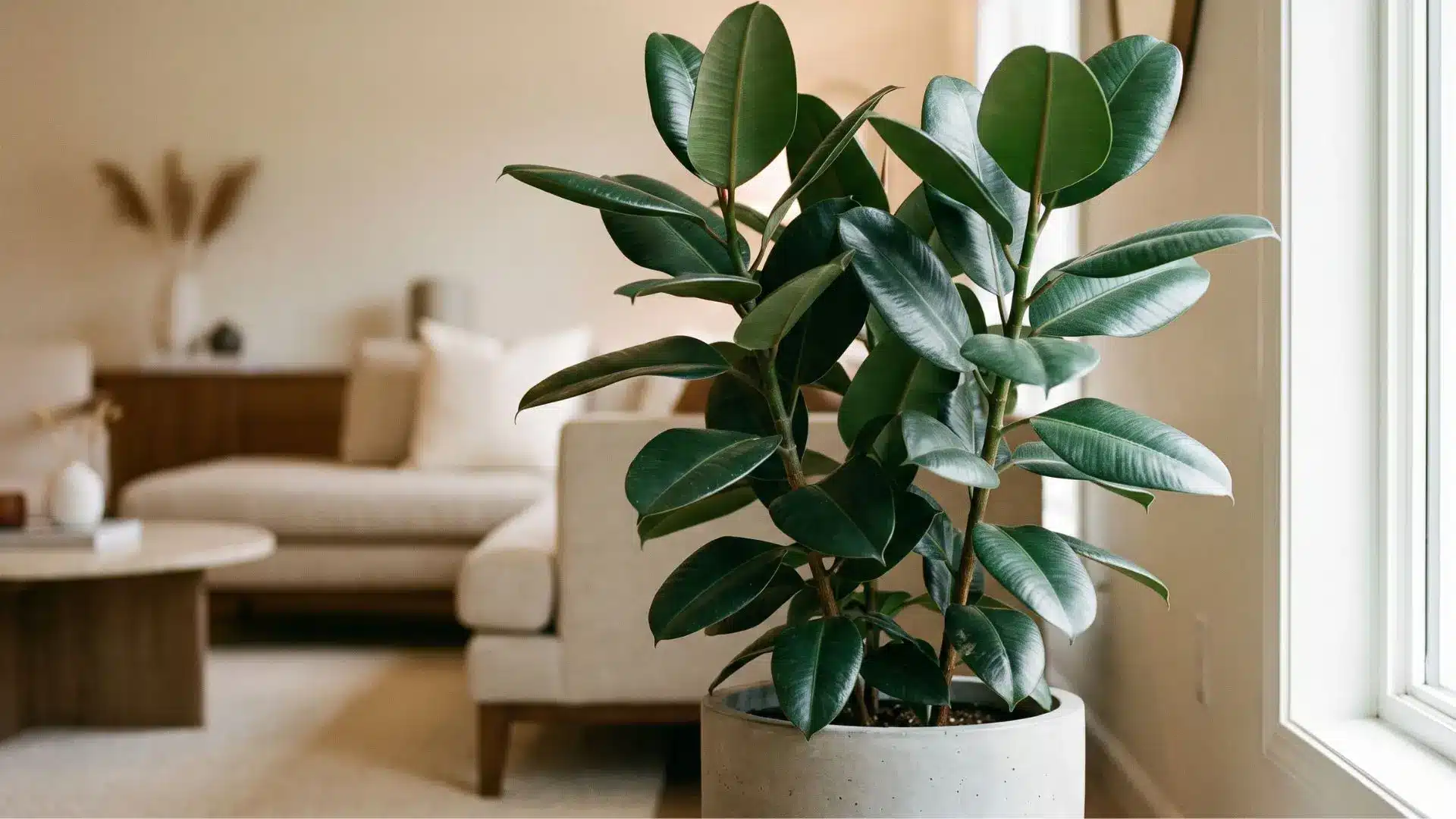
The rubber plant has large, smooth leaves and can grow into a small indoor tree. Its bold shape makes it a strong choice for living rooms, hallways, and open office spaces.
It grows best in bright indirect light. It can reach several feet tall, so it needs more floor space than a smaller table plant. The rubber plant is mainly linked with formaldehyde. It is not considered safe for pets.
Care tip: Water it when the top of the soil feels slightly dry. Use a pot that drains well. During spring and summer, you may feed it with diluted liquid fertilizer every two weeks.
8. Golden Pothos: pipremnum aureum
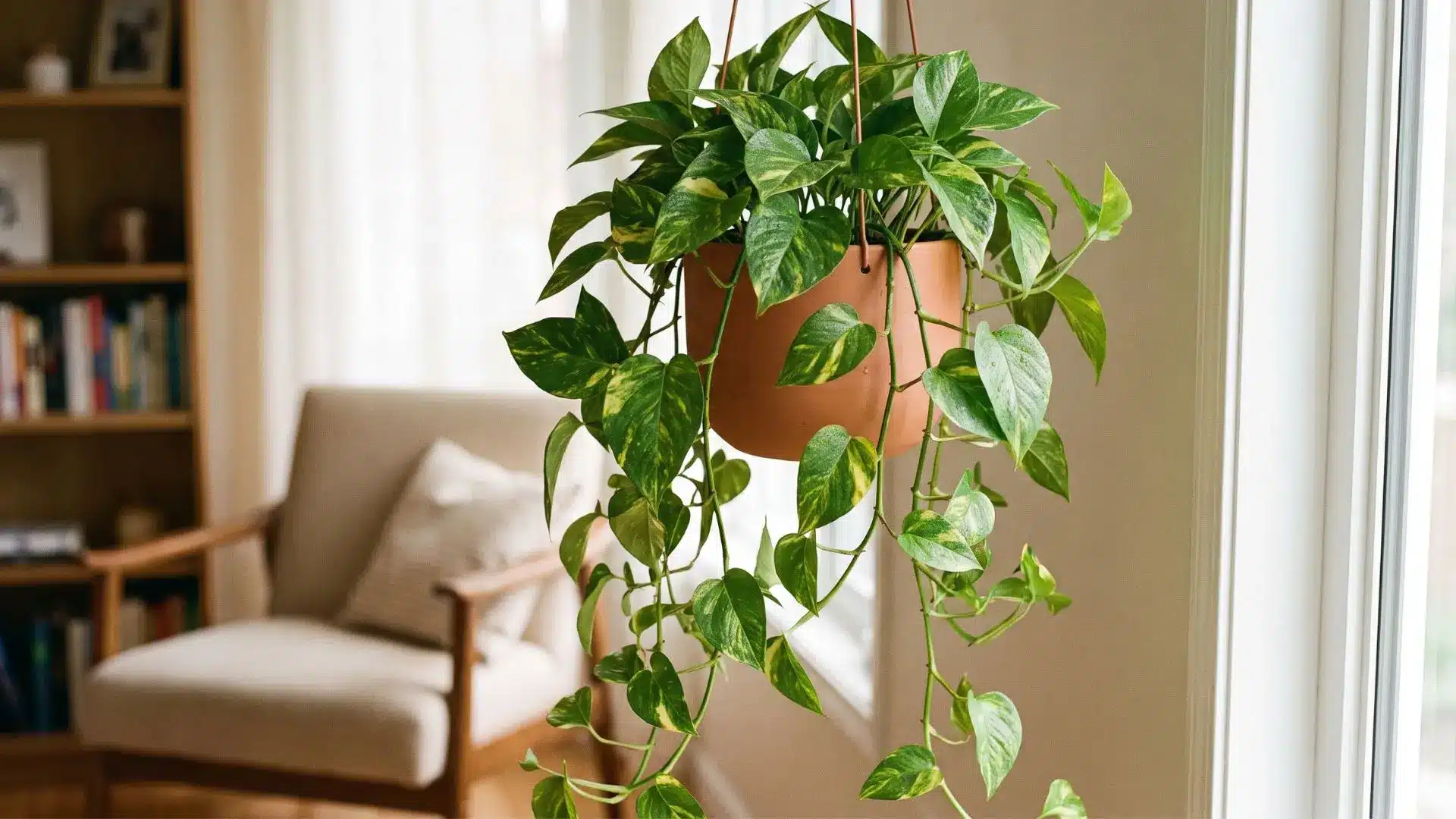
Golden pothos has heart-shaped leaves with green and yellow patterns. Its vines can trail from hanging pots, shelves, cabinets, or plant stands.
It can grow in lower light, although brighter indirect light may help the leaf patterns stay clear. It is a hardy choice for beginners and can handle some missed watering.
Golden pothos is commonly linked with formaldehyde, benzene, xylene, and toluene. It is not safe for pets if eaten.
Care tip: Water when the top layer of soil feels dry. Give it less water during fall and winter. It can grow without regular fertilizer, but a small amount a few times a year may support healthy growth.
9. Bamboo Palm: Chamaedorea seifrizii
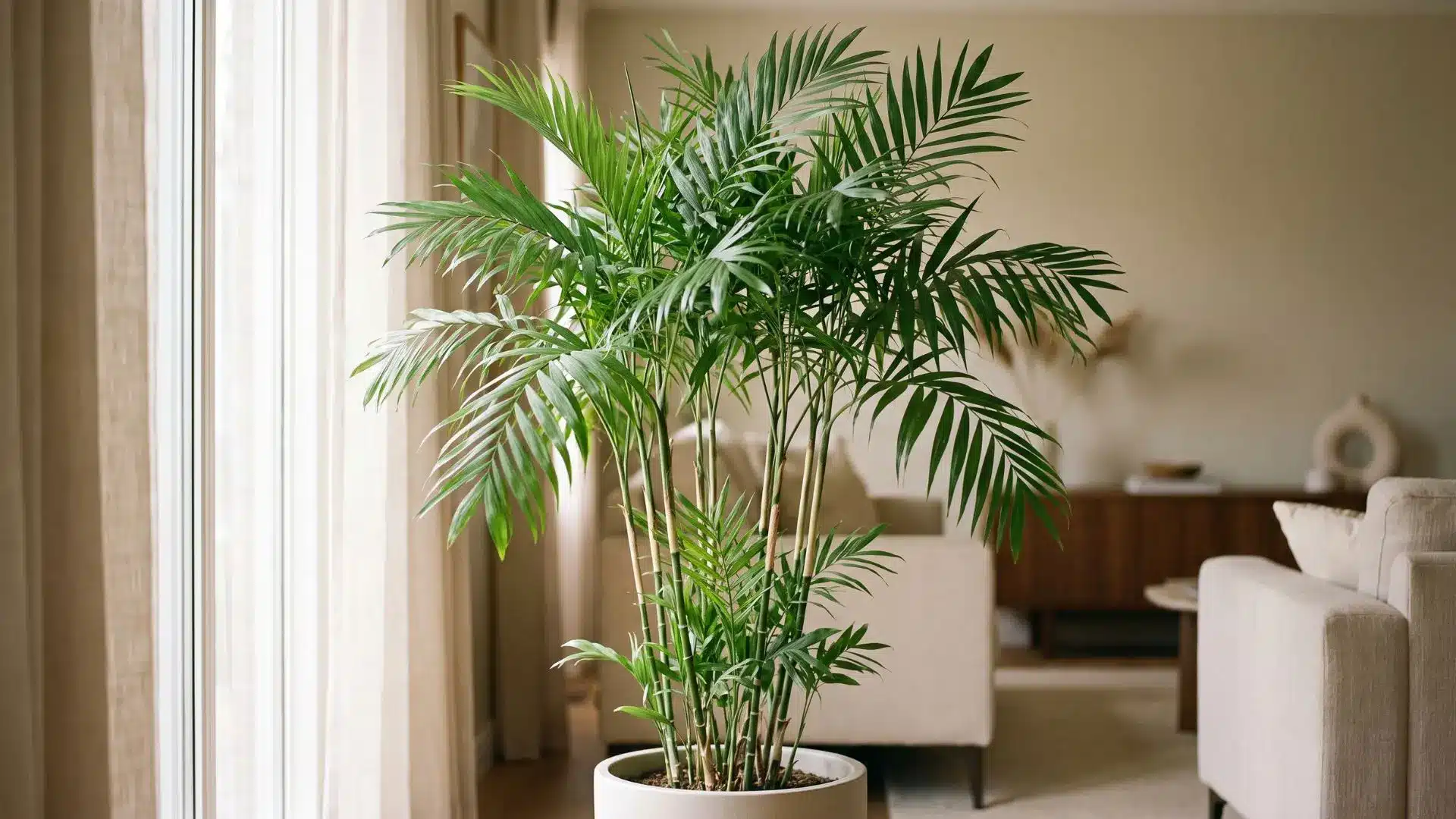
The bamboo palm has thin stems and soft, feather-like leaves. It can add height and greenery to large rooms without looking too heavy.
It grows best in bright indirect light and prefers some humidity. A mature plant may reach between five and twelve feet, so it needs enough room to spread.
It is commonly linked with formaldehyde, benzene, trichloroethylene, and xylene. Bamboo palms are listed as safe for cats and dogs.
Care tip: Water regularly, but do not leave the soil soaked. Remove brown leaves and check under the foliage for mites or other small pests.
10. Dracaena: Dracaena fragrans
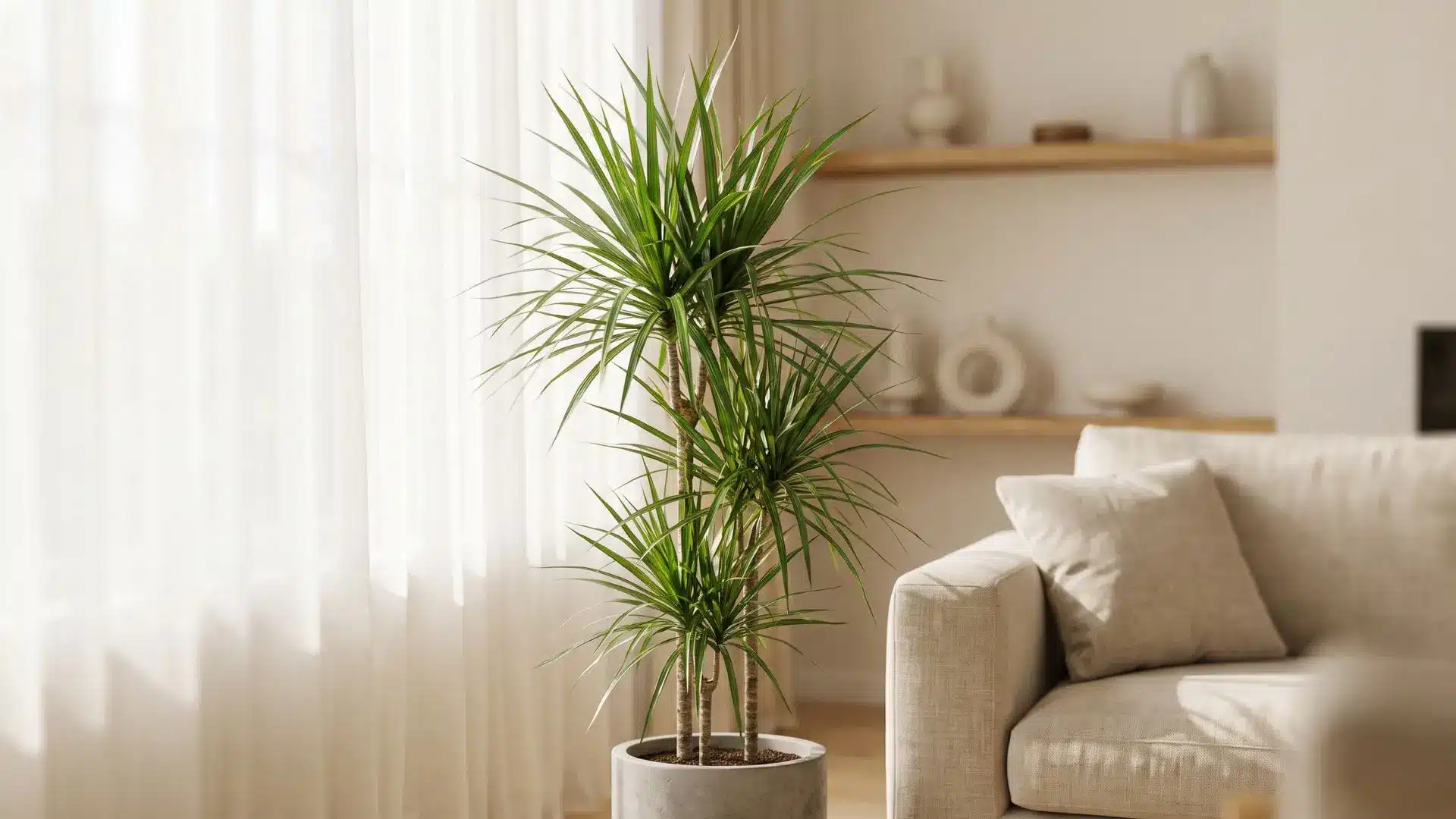
Dracaena plants have upright stems and long green leaves. They work well in offices, bedrooms, and living rooms because they do not need constant attention.
Several types are grown indoors, including Janet Craig, corn plant, and Warneckii. Many prefer filtered or bright indirect light and slightly dry soil.
Dracaenas are commonly linked with formaldehyde, benzene, trichloroethylene, xylene, and toluene. They are not considered safe for pets.
Care tip: Keep the plant away from strong heat and cold. Let the soil dry slightly before watering. Avoid using too much fertilizer because salts may collect in the soil.
11. Areca Palm: Dypsis lutescens
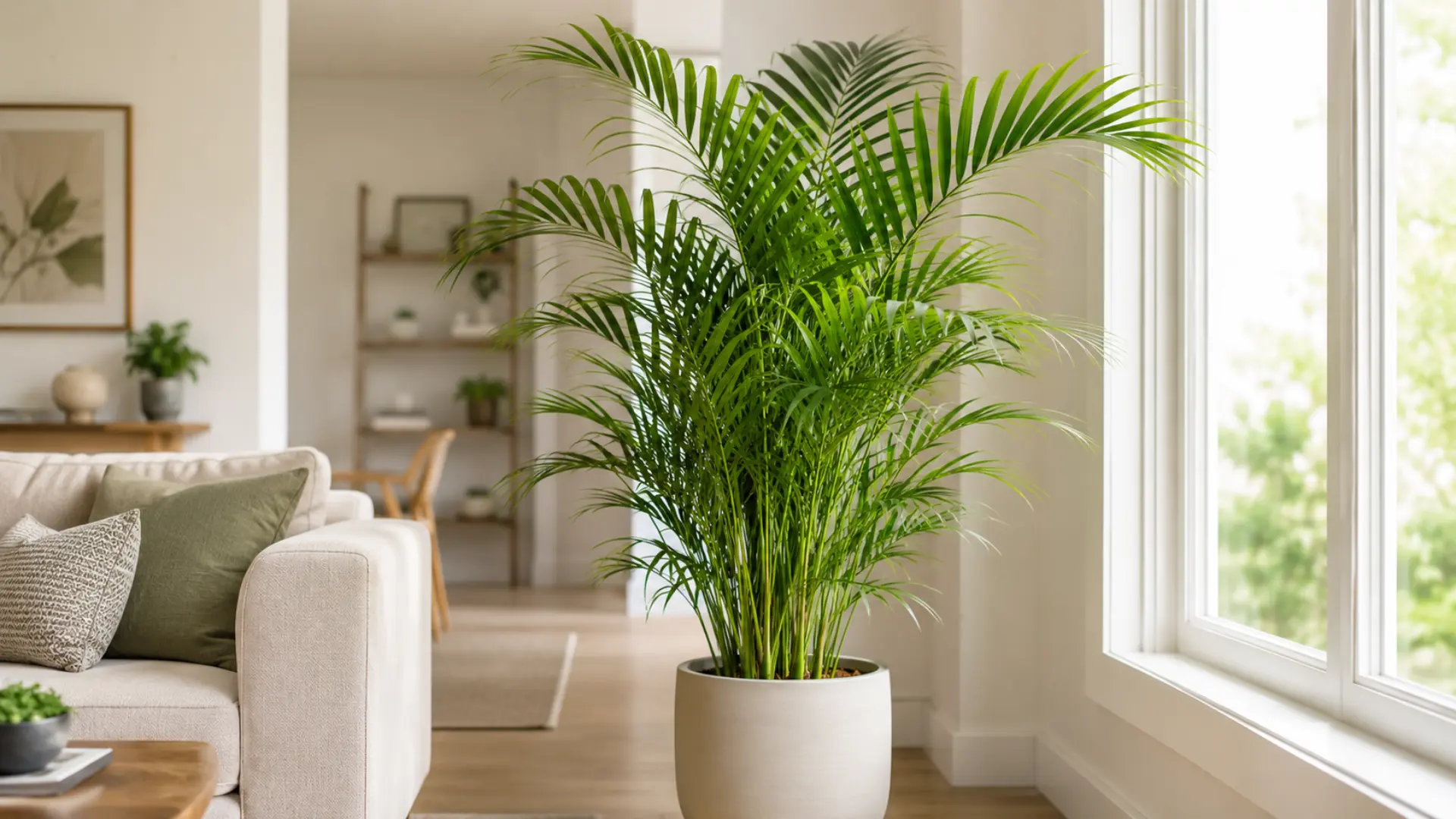
The areca palm has thin stems and soft, arching leaves that give a room a fresh, tropical look. It works best as a floor plant in living rooms, offices, and other open indoor spaces.
It grows well in bright, filtered light and prefers soil that stays slightly moist. The areca palm is commonly linked with formaldehyde, xylene, and toluene. It is also listed as safe around cats and dogs.
Care tip: Place it near a bright window without exposing it to strong direct sunlight. Water when the top of the soil starts to feel dry and use a pot with good drainage.
12. Chinese Evergreen: Aglaonema Species
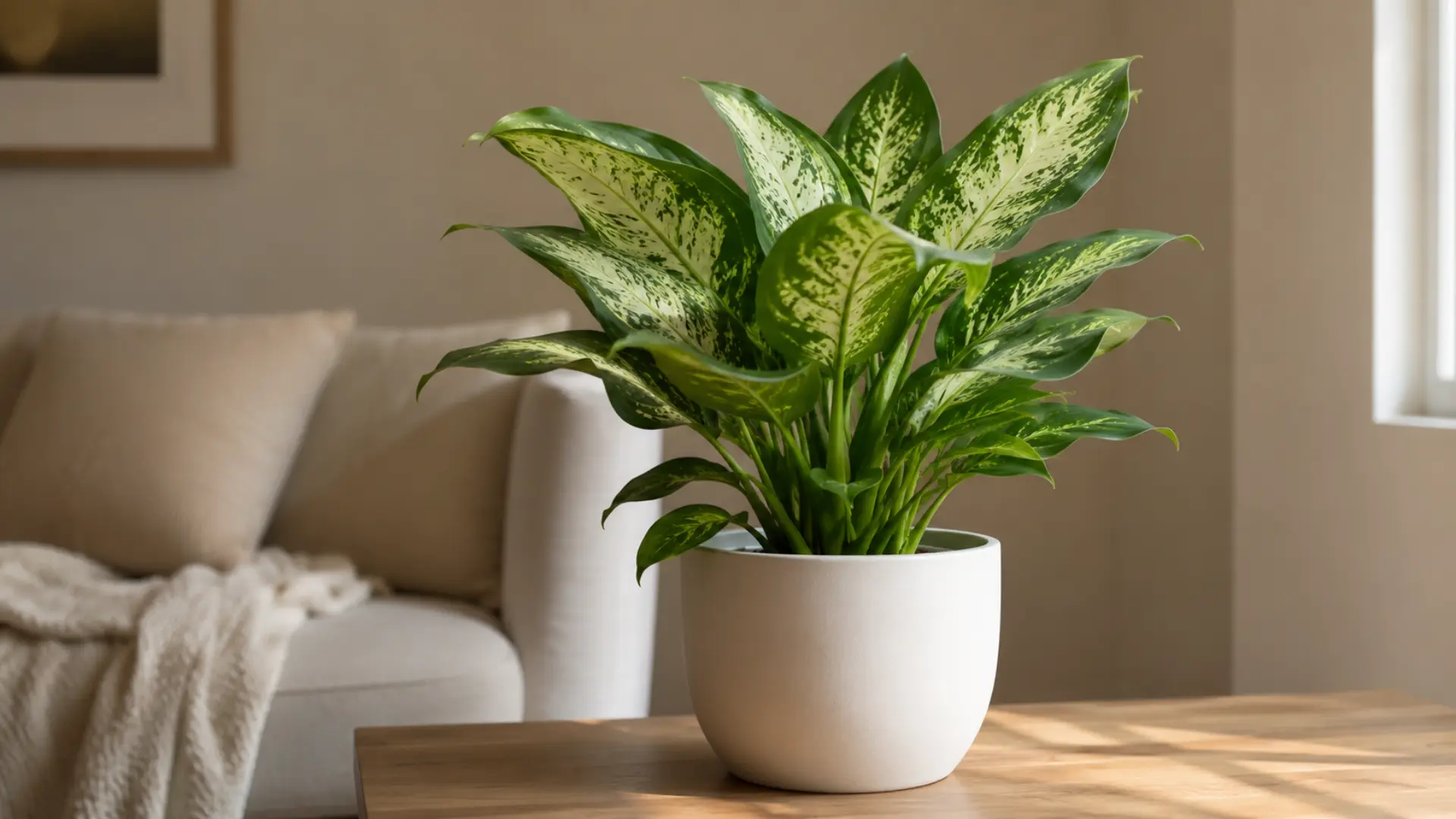
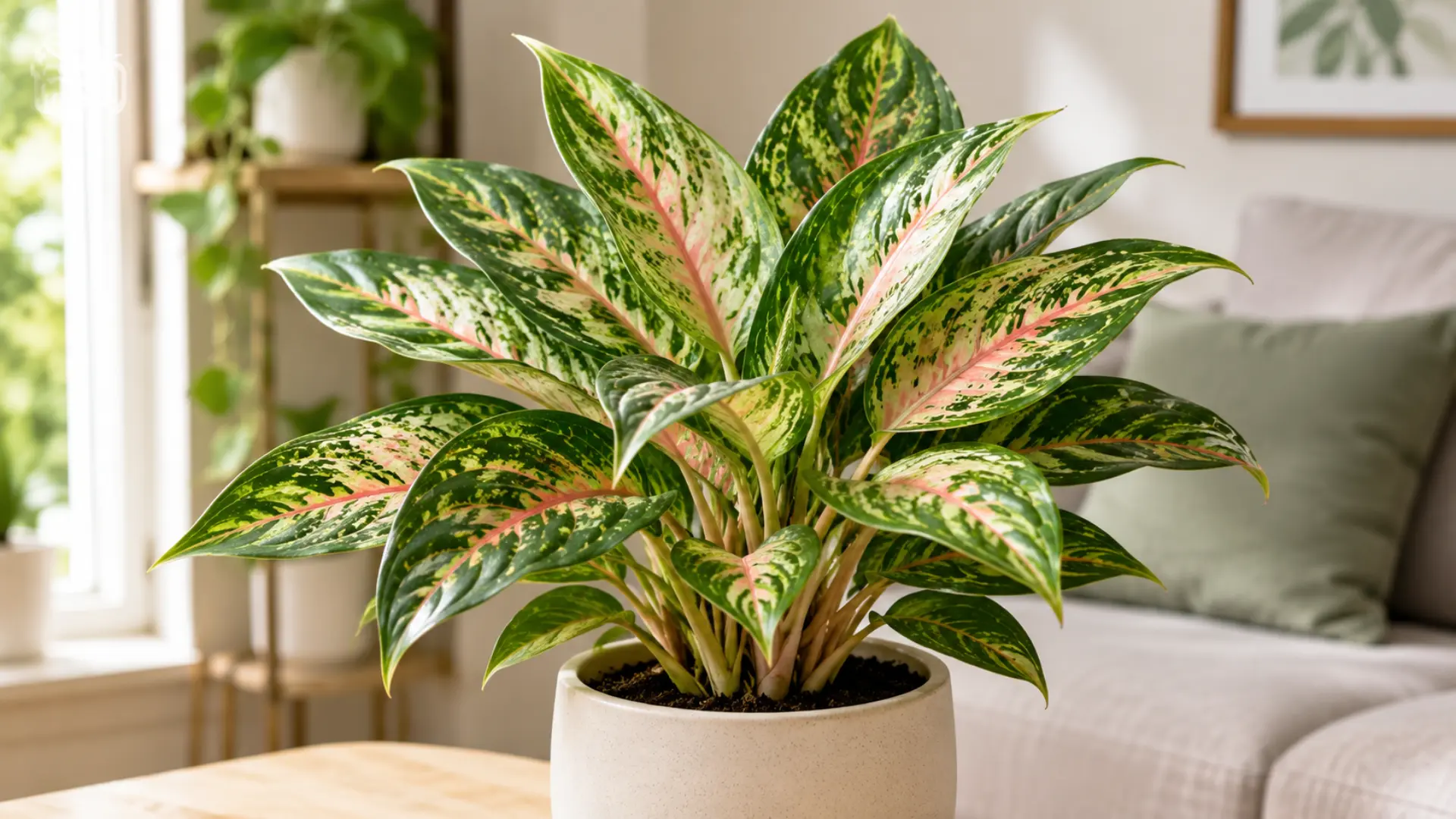
The Chinese evergreen has broad, patterned leaves and grows well in many indoor spaces. Its compact shape makes it suitable for bedrooms, offices, shelves, and small living areas.
It can handle lower light and does not need frequent watering. Chinese evergreen plants are commonly linked with formaldehyde and benzene, making them a popular choice for rooms with limited natural light.
Chinese evergreen is not safe around pets. The ASPCA lists Aglaonema as toxic to cats, dogs, and horses, since it contains insoluble calcium oxalates that can irritate the mouth and throat if chewed.
Care tip: Place it in low or medium indirect light. Let the top of the soil dry before watering, and avoid leaving the roots in wet soil.
13. Gerbera Daisy: Gerbera jamesonii
The gerbera daisy adds bright flowers and fresh green leaves to indoor spaces. It works well on a sunny table, shelf, or windowsill where it can receive plenty of light. It is commonly linked with benzene and trichloroethylene.
However, it needs more attention than many leafy houseplants and may struggle in rooms that are too warm or dark. The gerbera daisy is not considered safe around pets.
Care tip: Give the plant bright light without exposing it to harsh midday sun. Water when the top of the soil feels dry and keep water away from its leaves.
14. Weeping Fig: Ficus benjamina
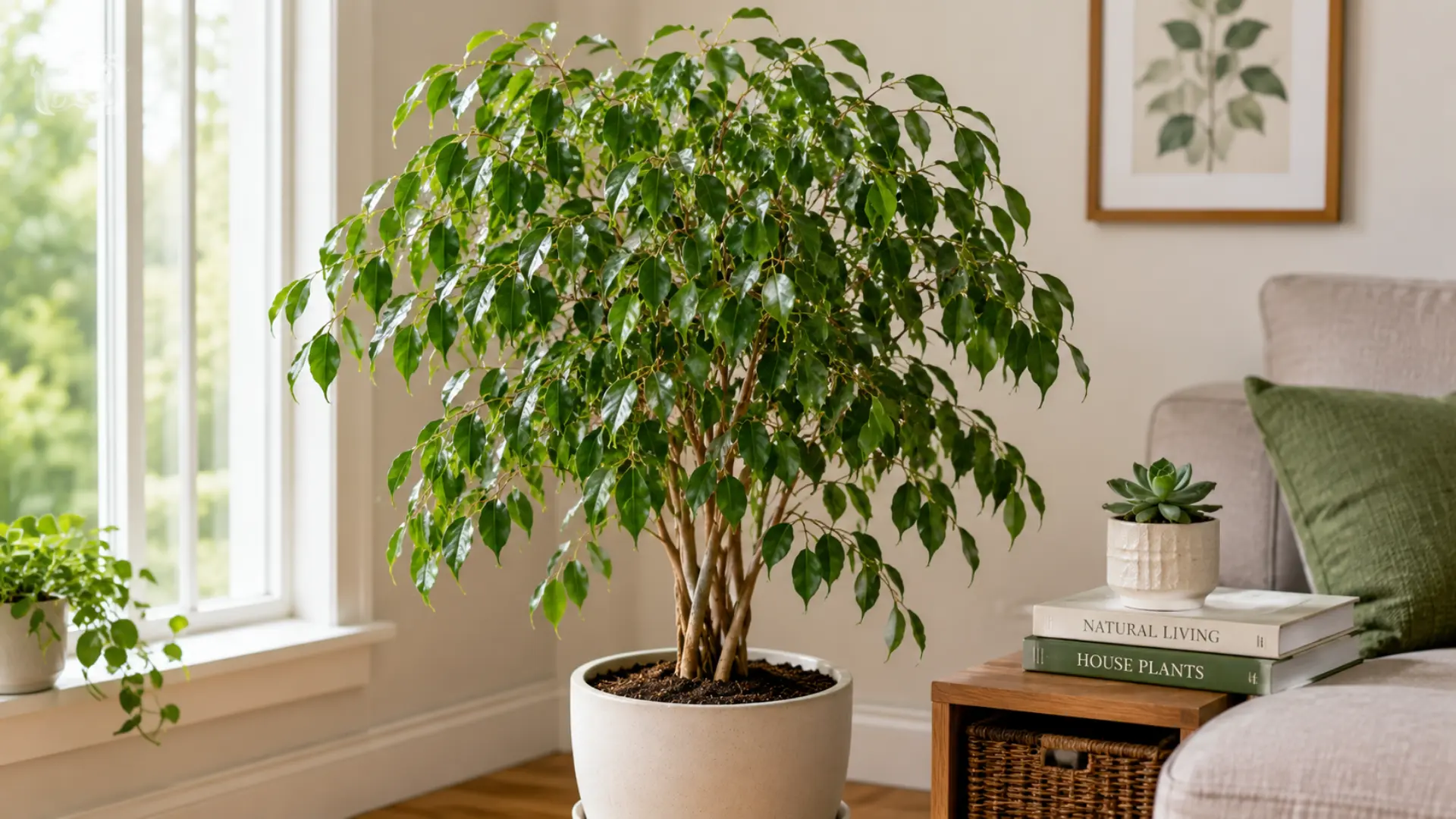
The weeping fig is a small indoor tree with thin branches and glossy green leaves. It can add height to living rooms, hallways, and offices with enough open space.
It grows best in bright indirect light and is commonly linked with formaldehyde, xylene, and toluene. It does not like sudden changes, so avoid moving it once you’ve found a suitable location. The weeping fig is not listed as safe around pets.
Care tip: Water it with room-temperature water and use fast-draining soil. Keep it away from cold air, strong heat, and sudden changes in light.
15. Florist’s Mum: Chrysanthemum morifolium
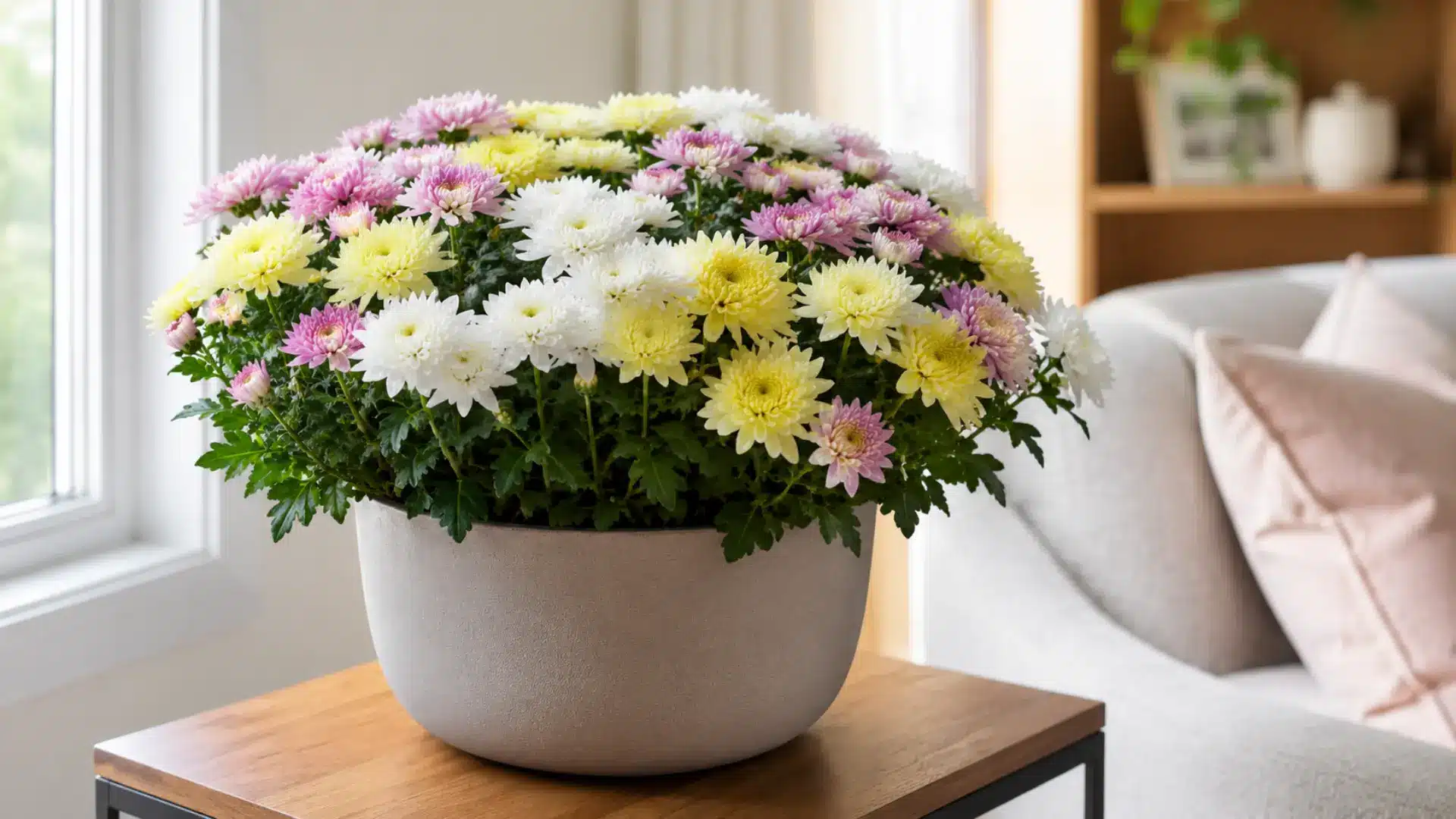
The florist’s mum is a flowering plant that adds strong color to tables, shelves, and bright indoor areas. It is often kept indoors for a short flowering period rather than grown as a permanent houseplant.
Controlled testing linked chrysanthemums with formaldehyde and trichloroethylene. They need bright light and steady moisture to keep their flowers healthy. Florist’s mums are not listed as safe around pets.
Care tip: Place the plant in bright light and water often enough to keep the soil slightly moist. Feed it once a month during its active growing period.
How to Choose the Right Plant for Each Room
Each room has different light, humidity, and space. The table below matches each room with plants that suit its light, humidity, and available space, along with one key care point to keep in mind.
If you want more ideas for styling the plants themselves once you’ve picked them, this collection of cozy plant corner ideas for every room covers arrangement and display by room in more depth.
| Room or Area | Recommended Plants | Why They Work Well |
|---|---|---|
| Bedroom | Snake plant, golden pothos, Chinese evergreen | They can handle lower light and do not need frequent watering. |
| Living room | Rubber plant, dracaena, bamboo palm, areca palm, weeping fig | They suit open spaces with bright indirect light and enough room to grow. |
| Bathroom | Boston fern, bamboo palm, areca palm | They prefer humidity and soft indirect light. |
| Home office | Spider plant, snake plant, Chinese evergreen | They handle common indoor conditions and need limited daily care. |
| Bright windowsill | Aloe vera, gerbera daisy, florist’s mum | They prefer brighter light but need protection from harsh midday sun. |
Good placement helps plants grow better and makes watering and daily care easier.
Indoor Plant Safety for Pets
Some indoor plants in this guide are safer around pets, while others may cause harm if chewed or eaten.
- Safer choices for homes with cats and dogs: Spider plant, Boston fern, bamboo palm, and areca palm are listed as safer options.
- Plants to keep away from pets: Snake plant, peace lily, aloe vera, English ivy, rubber plant, golden pothos, dracaena, Chinese evergreen, gerbera daisy, weeping fig, and florist’s mum should be kept out of reach.
- Choose the location carefully: Place unsafe plants where pets cannot reach, climb to, or knock them over.
- Watch for chewing: Check leaves and soil for signs that pets have disturbed the plants.
- Check before buying: Confirm the safety of any new plant with a veterinarian or a trusted pet safety source.
- Get help when needed: Contact a veterinarian if any pets eat part of a plant or begin showing signs of illness.
Choosing pet-safe plants and placing unsafe ones out of reach helps protect your pets. Stay alert for chewing, check plant safety before buying, and contact a veterinarian after possible exposure.
Frequently Asked Questions
Do air-purifying plants work better in closed rooms?
They may seem more effective in sealed spaces because pollutants stay trapped. In normal homes, moving air and larger rooms reduce the effect of a few plants.
Does potting soil also help remove pollutants?
Yes. Plant roots, potting soil, and tiny soil organisms may help break down some airborne compounds, but their effect remains limited in normal indoor spaces.
Are flowering plants better than leafy plants?
Not always. Flowering and leafy plants may interact with different airborne compounds. Choose a healthy plant that matches your room’s light, humidity, and care needs.
Can indoor plants remove cooking smoke?
No. Indoor plants cannot remove cooking smoke quickly or reliably. Use an exhaust fan, open a window when possible, or run a suitable air purifier.
Final Thoughts
The best indoor plants for air quality is one that fits your space, routine, and household. A plant placed in the right conditions will stay healthier, look better, and be easier to care for over time.
Think about the natural light in each room, how often you can water, and how much space the plant will need as it grows. You should also check whether it is safe around pets before bringing it home.
There is no need to fill every room at once. Start with one or two plants that suit your experience level, then add more as you become comfortable with their care.
Choose a plant from this guide, prepare the right spot, and take your first step toward a greener, calmer, and more welcoming home today. Drop a comment below and let me know which plant you chose.