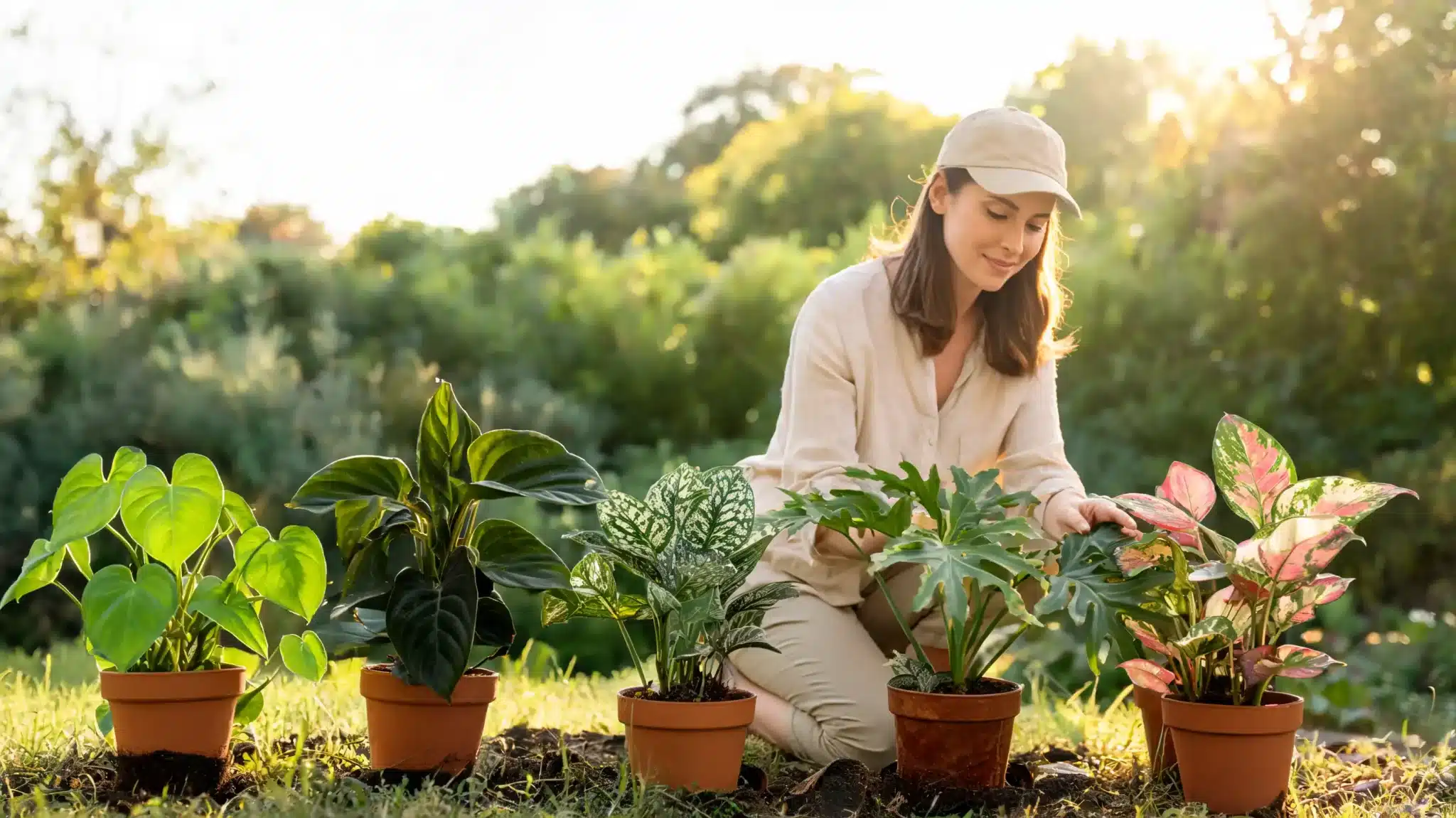
Philodendrons come in hundreds of species and cultivated varieties, and the collection keeps growing as breeders introduce new hybrids. That range makes the many types of Philodendron hard to tell apart, especially if you are new to the plant.
Some climb, some creep along the ground, and some stay in a tidy upright clump.
Leaf shape, color, and texture shift just as much from one variety to the next. Below you’ll get a walk through a wide range of philodendron varieties, from common shelf staples to rare collector picks.
Use it to identify the plant you already own, or compare options before bringing one home. Everything you need to spot the differences sits right here.
What is a Philodendron Plant
A philodendron is a tropical, leafy houseplant from the Araceae family of plants, prized for its easy care and varied foliage. The leaf types of Philodendron differ widely in shape, color, pattern, and growth habit, so each variety looks distinct even to a casual eye.
Here’s a closer look at what sets each variety apart, so you know what to check for when comparing plants.
- Leaf shape: Heart-shaped, split, lobed, narrow, or large, depending on the variety.
- Leaf color and pattern: Mostly green, though some show yellow, white, pink, red, or mixed patterns.
- Growth habit: Some climb as vines. Others grow upright with a self-supporting structure.
- Indoor suitability: Many varieties adapt well to indoor spaces and are grown as houseplants.
- Size: Some stay small enough for a shelf or table. Others grow into large floor plants.
- Ease of care: Several common varieties are simple to grow, good for new plant owners.
Once you know these traits, spotting the differences between varieties gets much easier as you go through the list below.
Types of Philodendron Plants
Philodendron types fall into three broad groups: common, rare, and specialty. Each reflects how easy the plant is to find and how unusual its color or growth habit is.
Many of the climbing varieties on this list need the same kind of support as it grow larger, so a moss pole or trellis is worth having on hand before a leaf starts reaching for one. Start with whichever group matches what you’re looking for.
Common Types of Philodendron
Philodendrons in this range are the ones you’re most likely to find at a garden center or plant shop. They cover a wide mix of leaf shapes, colors, and growth habits, so there’s a good chance one of these houseplants is already sitting in your home.
1. Heartleaf Philodendron
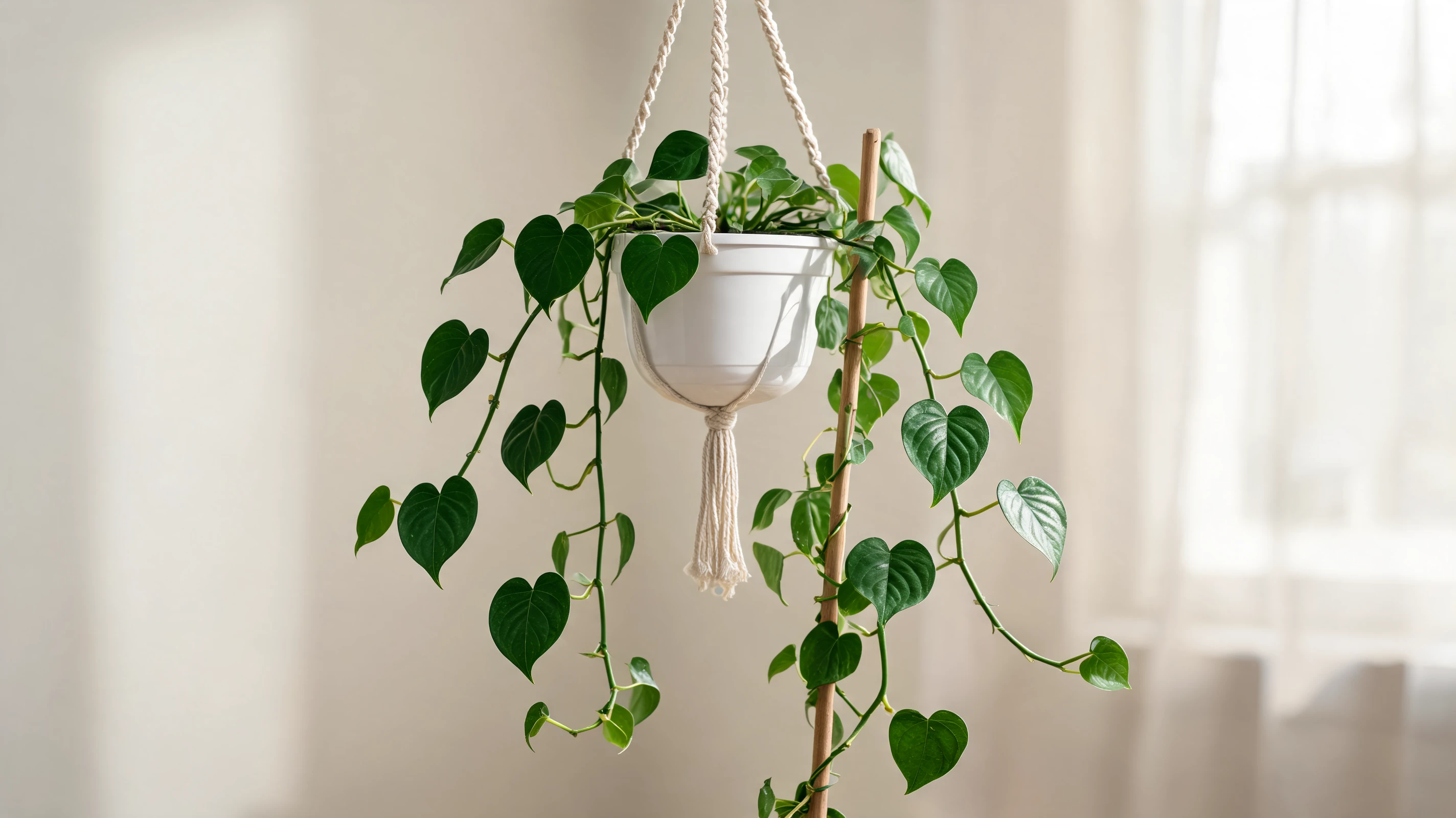
Classic dark green, heart-shaped leaves on long trailing vines. It climbs or trails depending on how it’s grown, and needs almost no fuss. It’s the most common Philodendron sold, which makes it the easiest to find and the go-to starter plant for new growers.
| Field | Information |
|---|---|
| Botanical Name | Philodendron hederaceum |
| Leaf Type | Heart-shaped |
| Leaf Color/Pattern | Solid dark green |
| Growth Habit | Vining/climbing |
| Mature Size | 3–13 ft long, 1–3 ft wide |
| Difficulty | Easy |
2. Brasil Philodendron
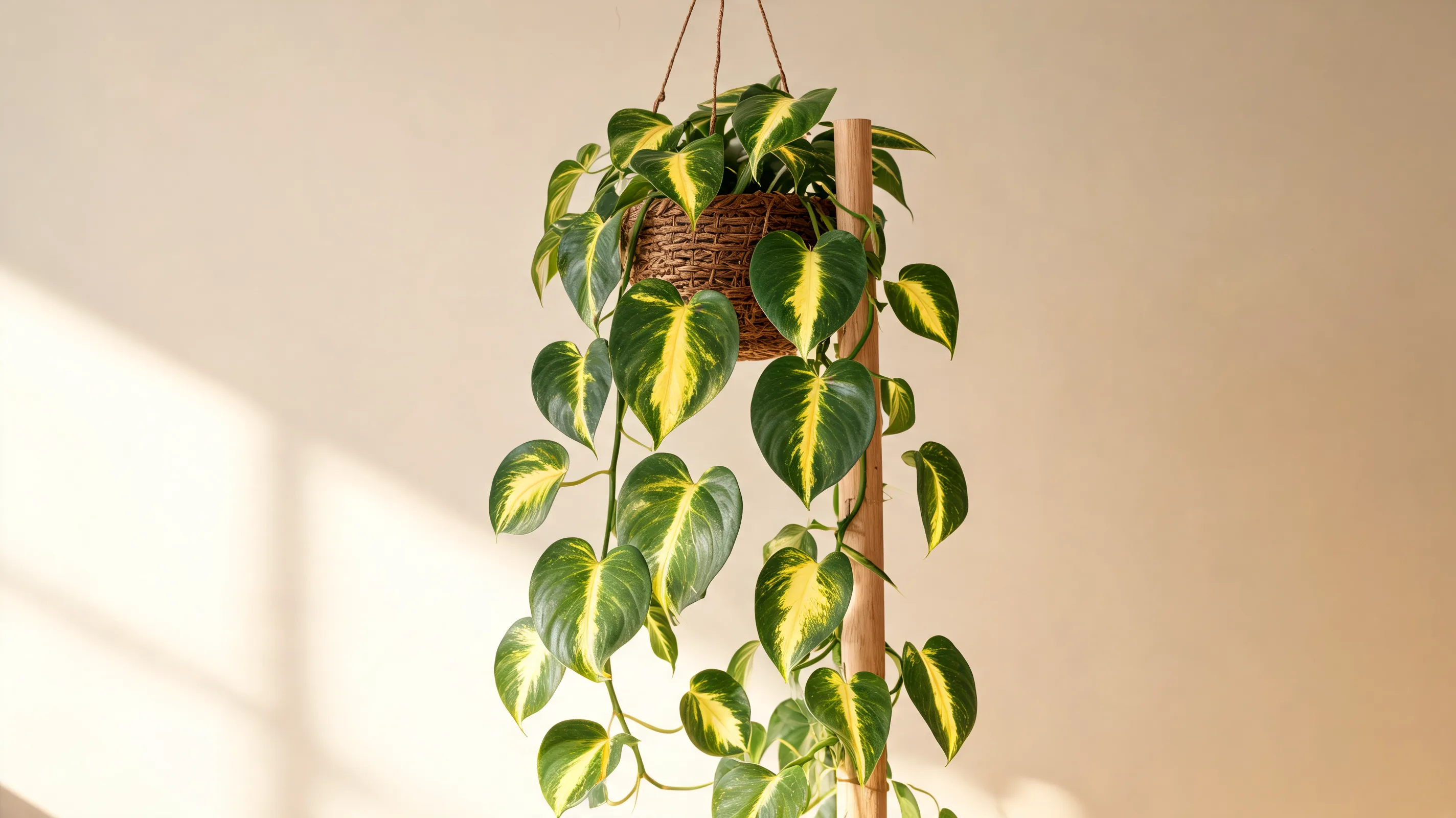
Glossy heart-shaped leaves with a lime-and-gold streak running through rich green edges. It trails or climbs like the standard heartleaf. The two-tone color sets it apart on shelves and in hanging baskets.
| Field | Information |
| Botanical Name | Philodendron hederaceum ‘Brasil’ |
| Leaf Type | Heart-shaped |
| Leaf Color/Pattern | Green with lime/gold center streak |
| Growth Habit | Vining/climbing |
| Mature Size | Up to 3 ft long, 1–3 ft wide |
| Difficulty | Easy |
3. Philodendron Micans
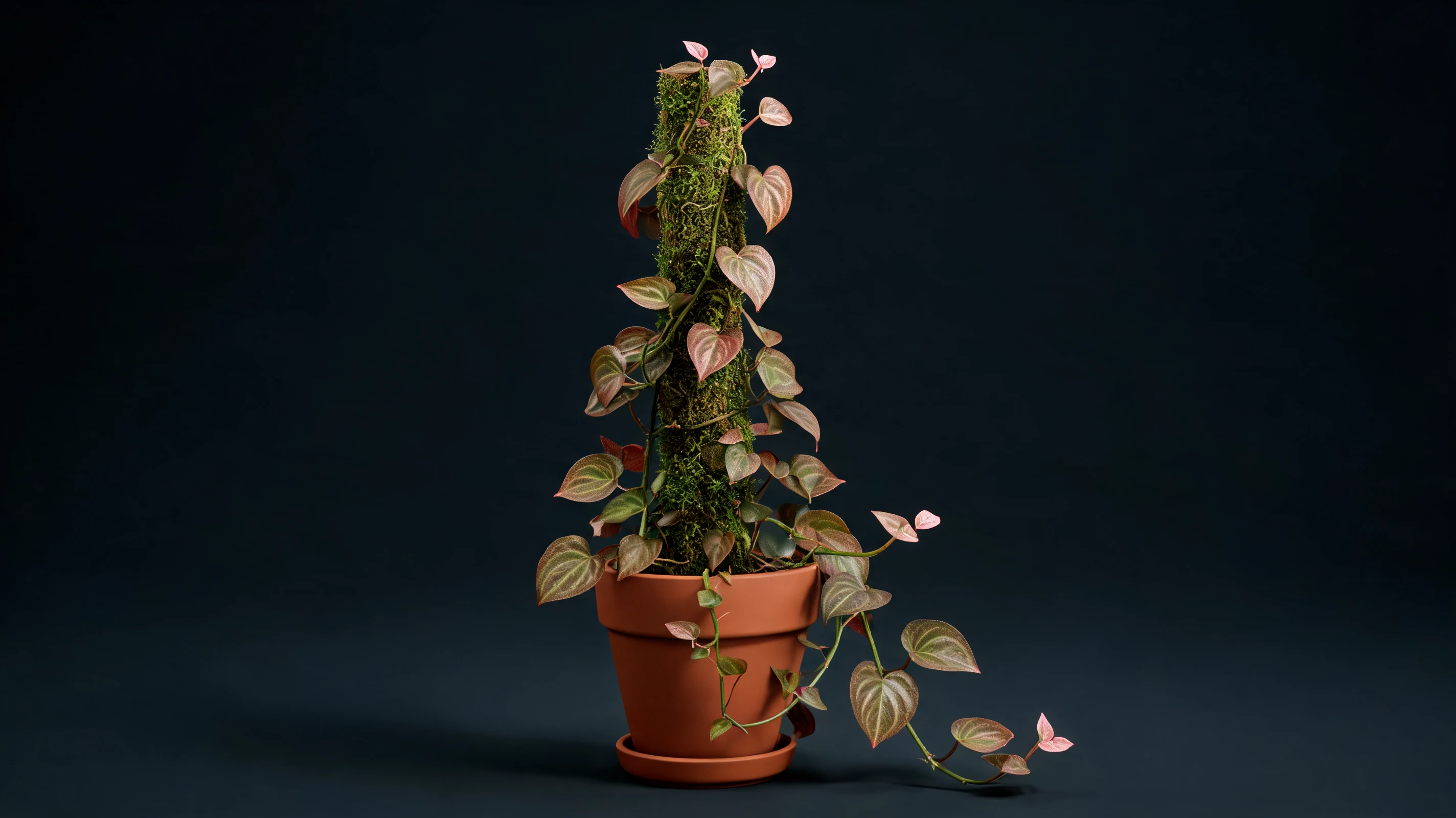
Velvety heart-shaped leaves in bronze-green with a slight shimmer. It trails or climbs, and new leaves emerge pinkish before deepening in color. The velvet texture and color shift make it a favorite for collectors who want something beyond plain green.
| Field | Information |
| Botanical Name | Philodendron hederaceum var. hederaceum |
| Leaf Type | Heart-shaped, velvety |
| Leaf Color/Pattern | Bronze-green with reddish undersides |
| Growth Habit | Vining/climbing |
| Mature Size | Up to 20 ft long outdoors (smaller indoors) |
| Difficulty | Easy-moderate |
4. Lemon Lime Philodendron
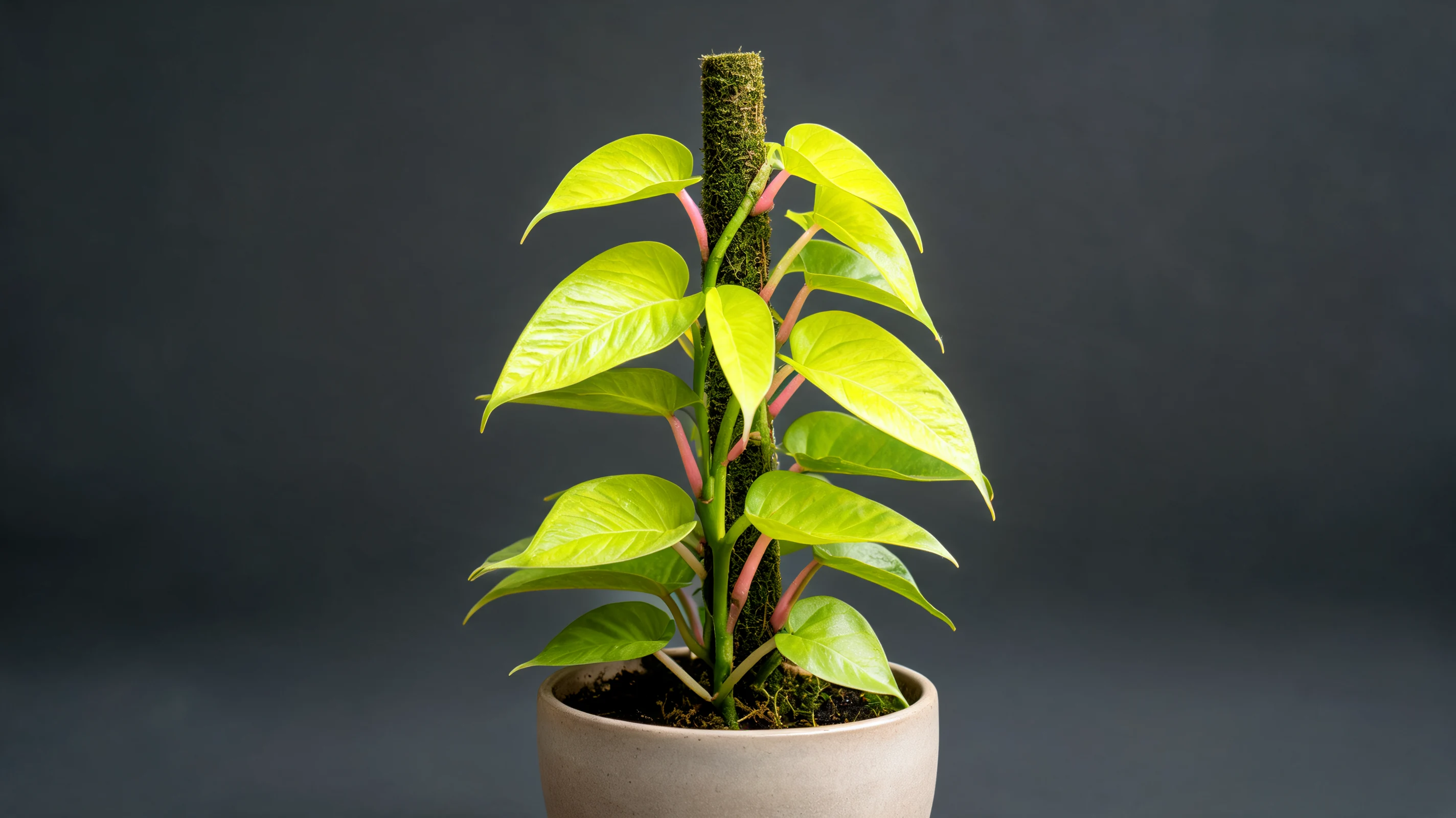
Bright neon-yellow, paddle-shaped leaves with pink petioles. It grows more compactly than its parent plant, Golden Goddess. The eye-catching color makes it a popular pick for adding brightness to a shelf or desk.
| Field | Information |
| Botanical Name | Philodendron Lemon Lime |
| Leaf Type | Paddle-shaped |
| Leaf Color/Pattern | Neon yellow-green |
| Growth Habit | Climbing, compact |
| Mature Size | Smaller and more compact than Golden Goddess |
| Difficulty | Easy |
5. Philodendron Birkin
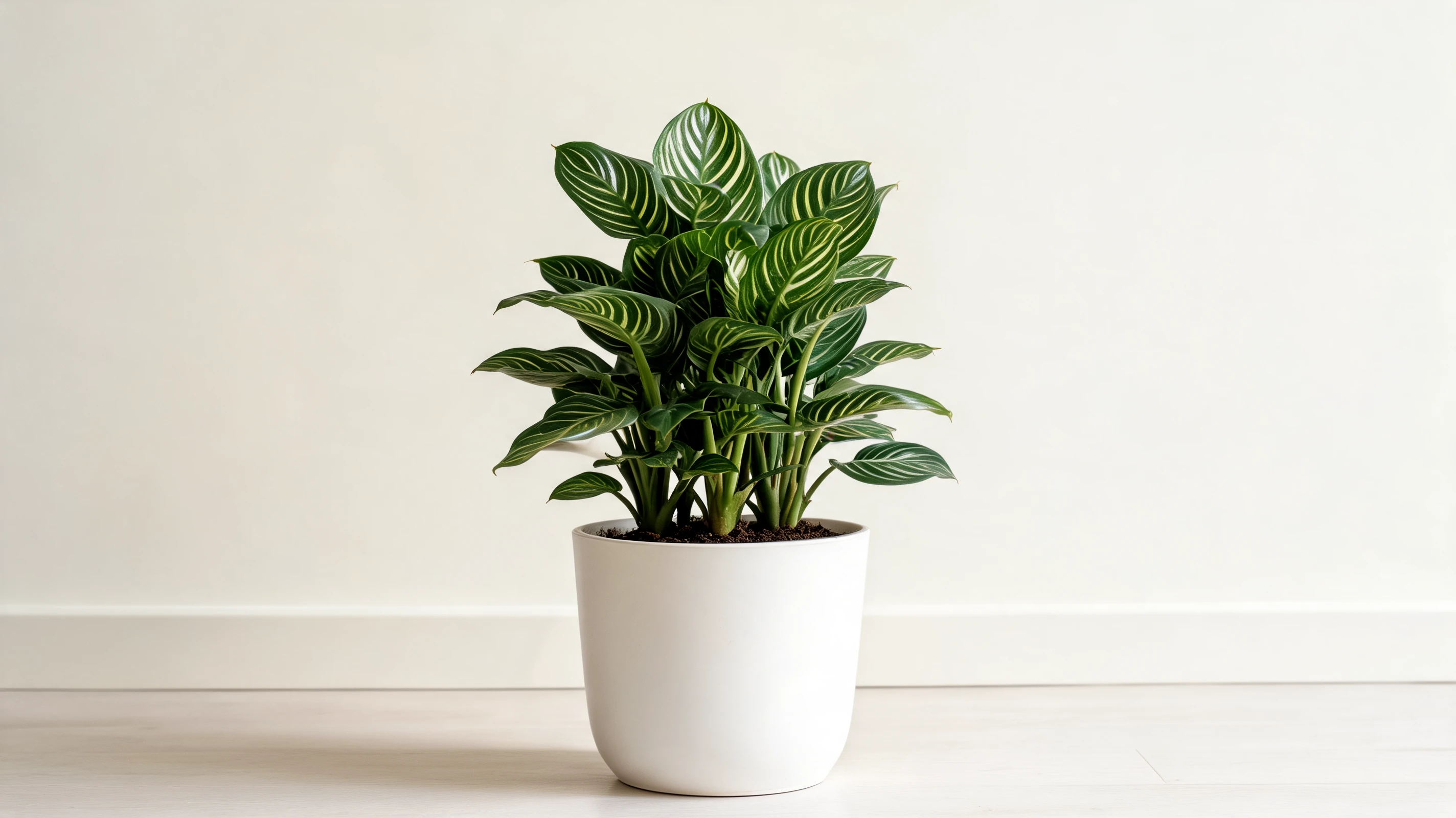
Dark green leaves marked with creamy-yellow pinstripes, each one slightly different. It forms a compact, bushy, upright shape rather than climbing. The unique striping pattern is why it’s become a modern favorite.
| Field | Information |
| Botanical Name | Philodendron Birkin |
| Leaf Type | Oval, glossy |
| Leaf Color/Pattern | Dark green with cream/yellow pinstripes |
| Growth Habit | Upright, self-heading |
| Mature Size | 2–3 ft tall and wide |
| Difficulty | Easy |
6. Green Princess Philodendron
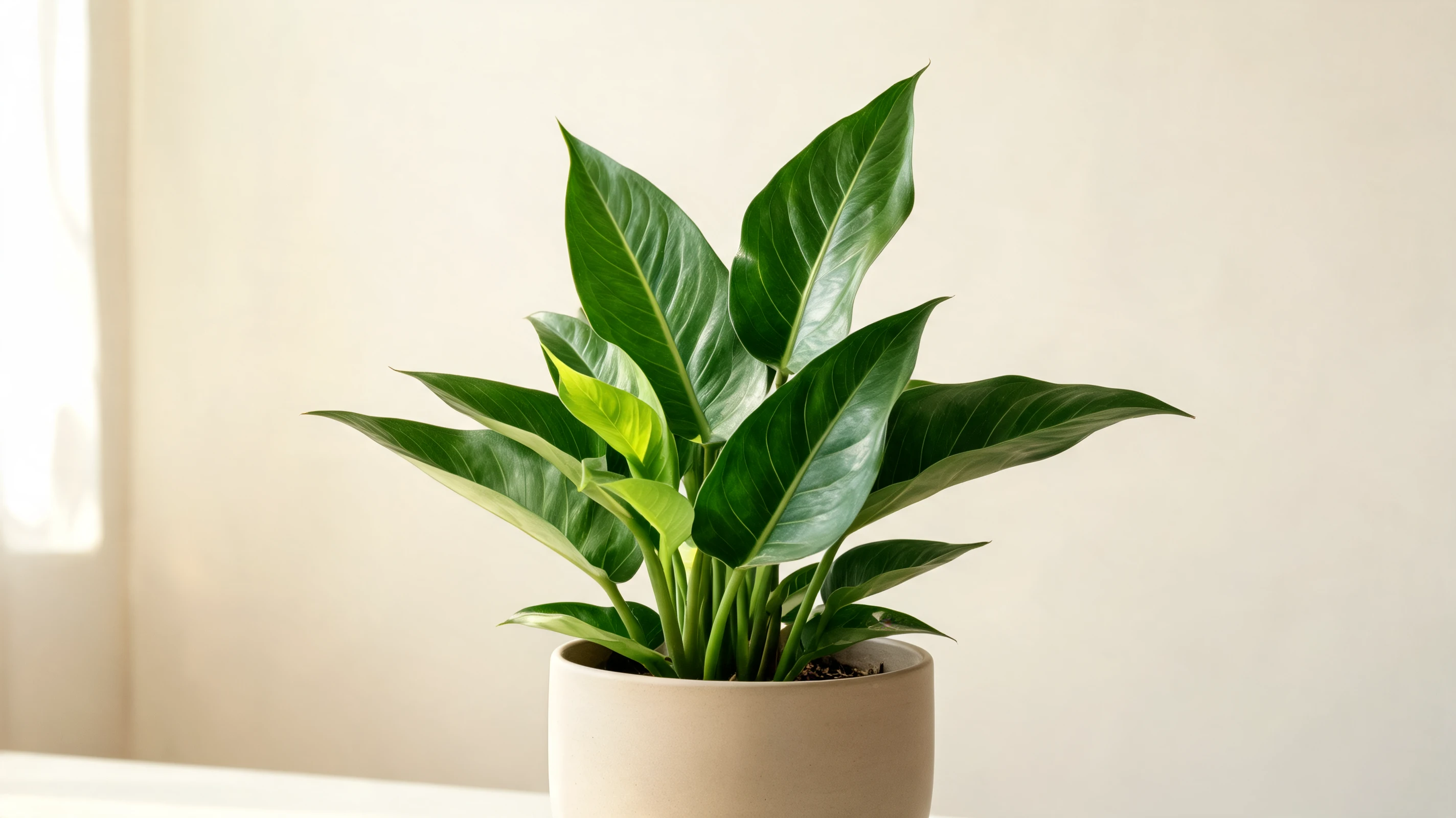
Solid green, arrow-shaped leaves on an upright, tidy plant. It grows slowly, which keeps it manageable for a long time. That slow growth and compact shape make it a good pick for smaller spaces or desks.
| Field | Information |
| Botanical Name | Philodendron erubescens ‘Green Princess’ |
| Leaf Type | Arrow-shaped |
| Leaf Color/Pattern | Solid green |
| Growth Habit | Upright, self-heading |
| Mature Size | Compact, slow-growing |
| Difficulty | Easy |
7. Golden Goddess Philodendron
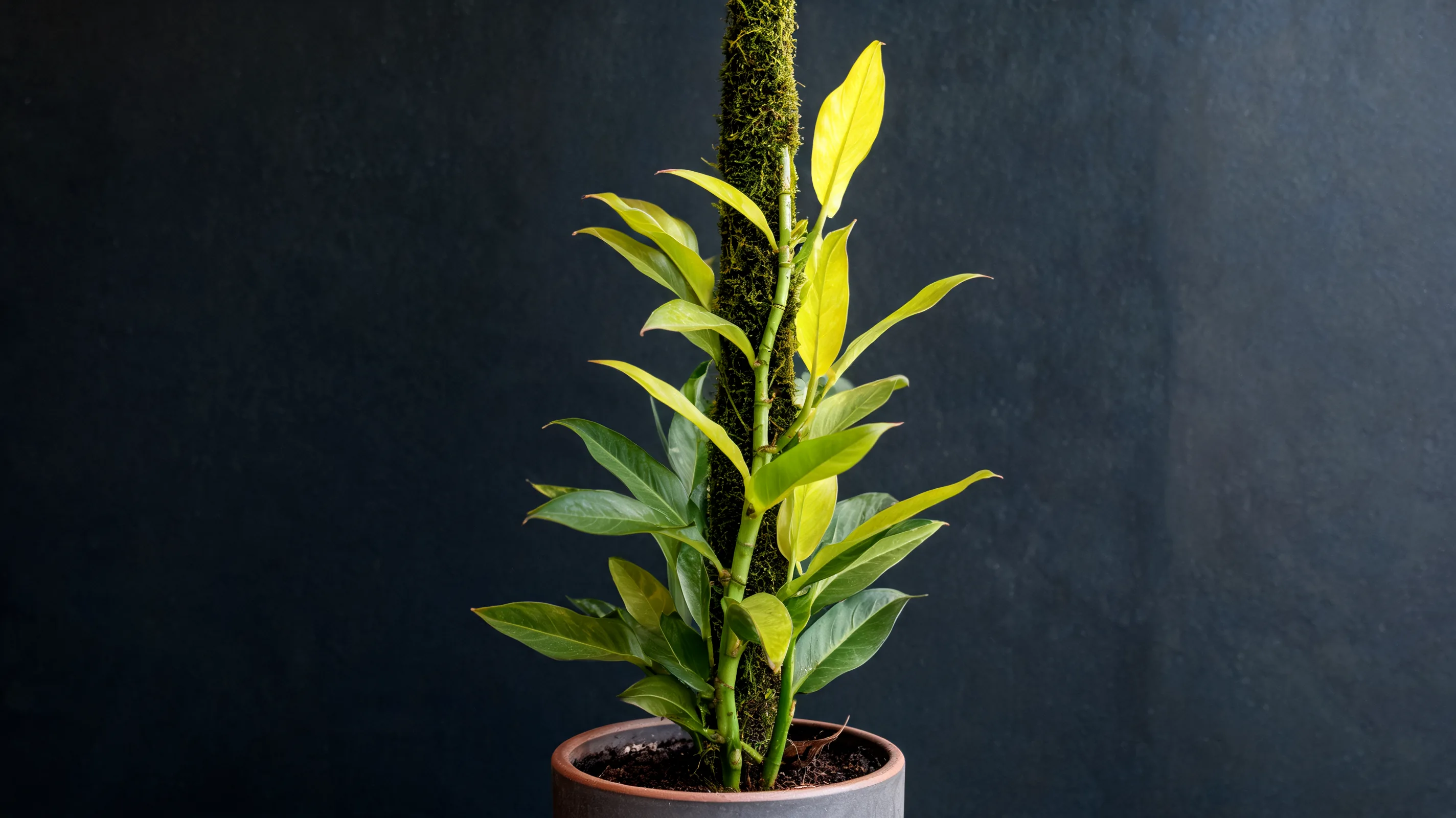
Long, dramatic leaves in bold chartreuse. It climbs when given a pole or support and grows quickly under bright light. The bright golden color is the main draw for anyone wanting a statement plant.
| Field | Information |
| Botanical Name | Philodendron domesticum Golden Goddess’ |
| Leaf Type | Long, elongated |
| Leaf Color/Pattern | Bright chartreuse |
| Growth Habit | Climbing |
| Mature Size | Up to 6 ft with support |
| Difficulty | Easy |
8. Imperial Green Philodendron
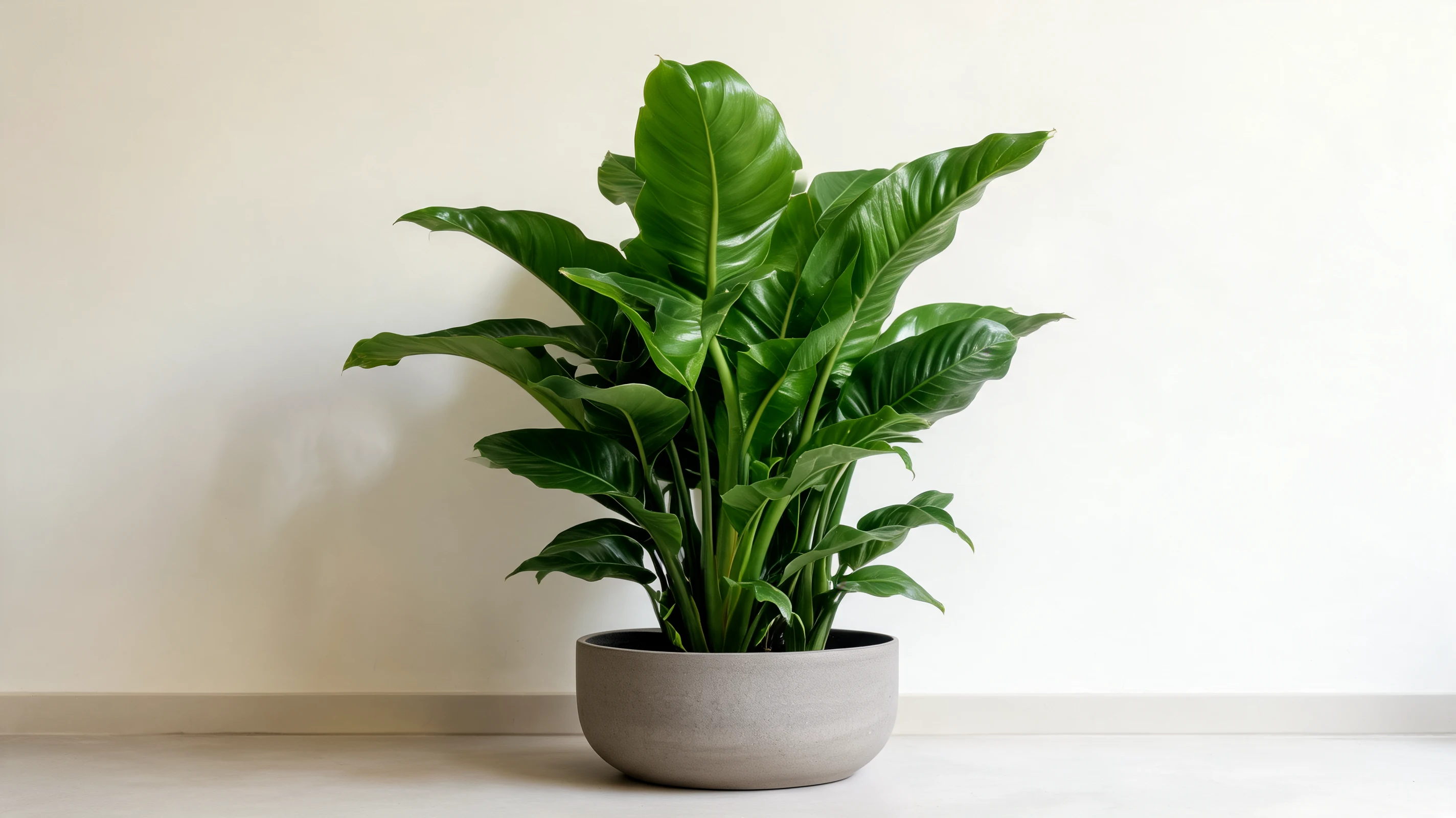
Large, glossy green leaves with a smooth, leathery feel. It stands upright on sturdy stems that support the big foliage. Its size and low-maintenance nature make it popular as a floor plant.
| Field | Information |
| Botanical Name | Philodendron erubescens ‘Imperial Green’ |
| Leaf Type | Broad, heart-like |
| Leaf Color/Pattern | Rich emerald green |
| Growth Habit | Upright, self-heading |
| Mature Size | Leaves up to 18 in long |
| Difficulty | Easy |
9. Rojo Congo Philodendron
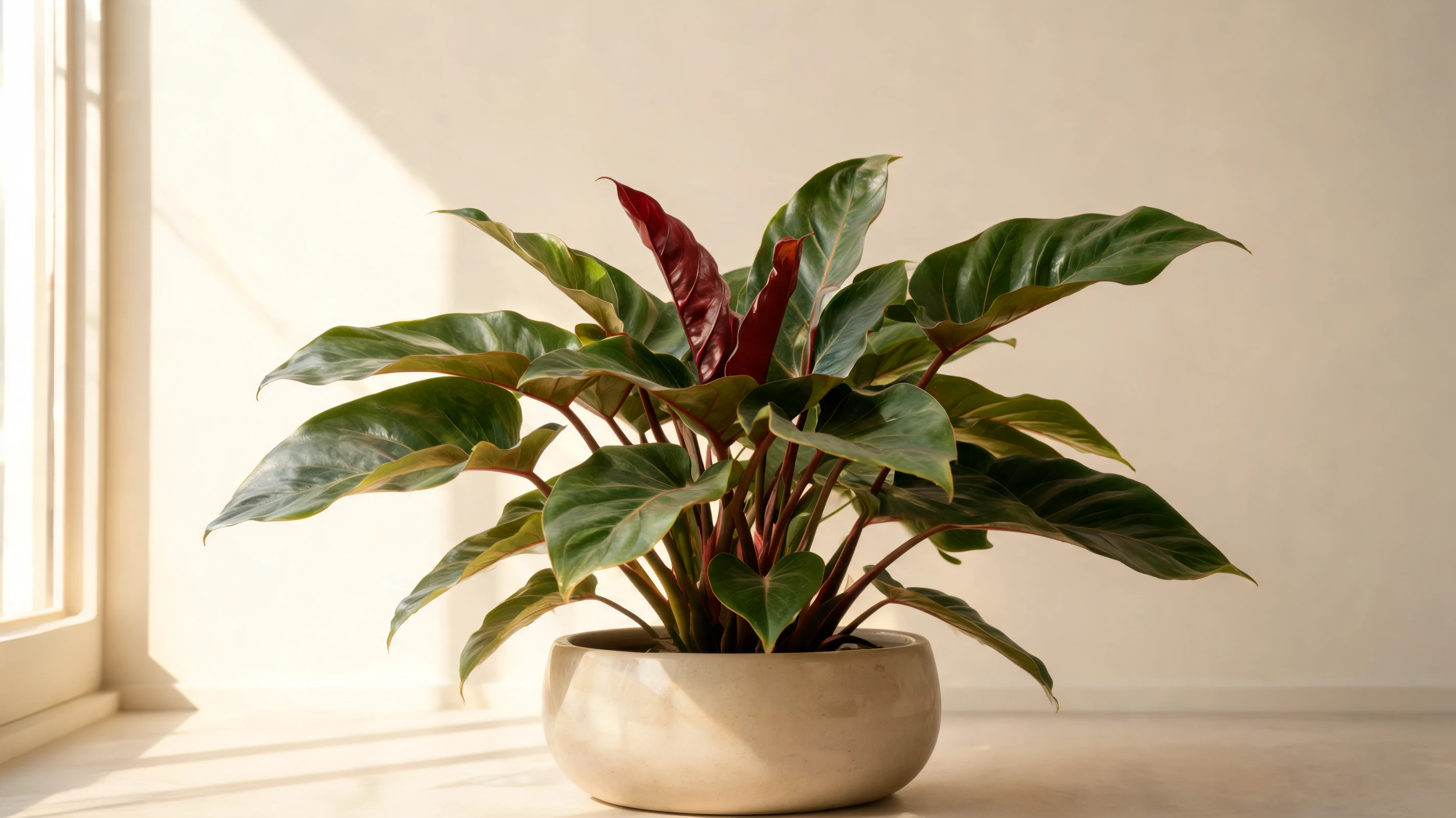
Broad, thick leaves that emerge maroon-red and darken to green with a reddish tint. It develops an open, spreading form and moves fast. Its bold color and vigorous growth make it a standout floor plant.
| Field | Information |
| Botanical Name | Philodendron’ Rojo Congo’ |
| Leaf Type | Broad, oval |
| Leaf Color/Pattern | Dark green with red tint, maroon new growth |
| Growth Habit | Upright, self-heading |
| Mature Size | Up to 4 ft tall and wide |
| Difficulty | Easy |
10. Xanadu Philodendron
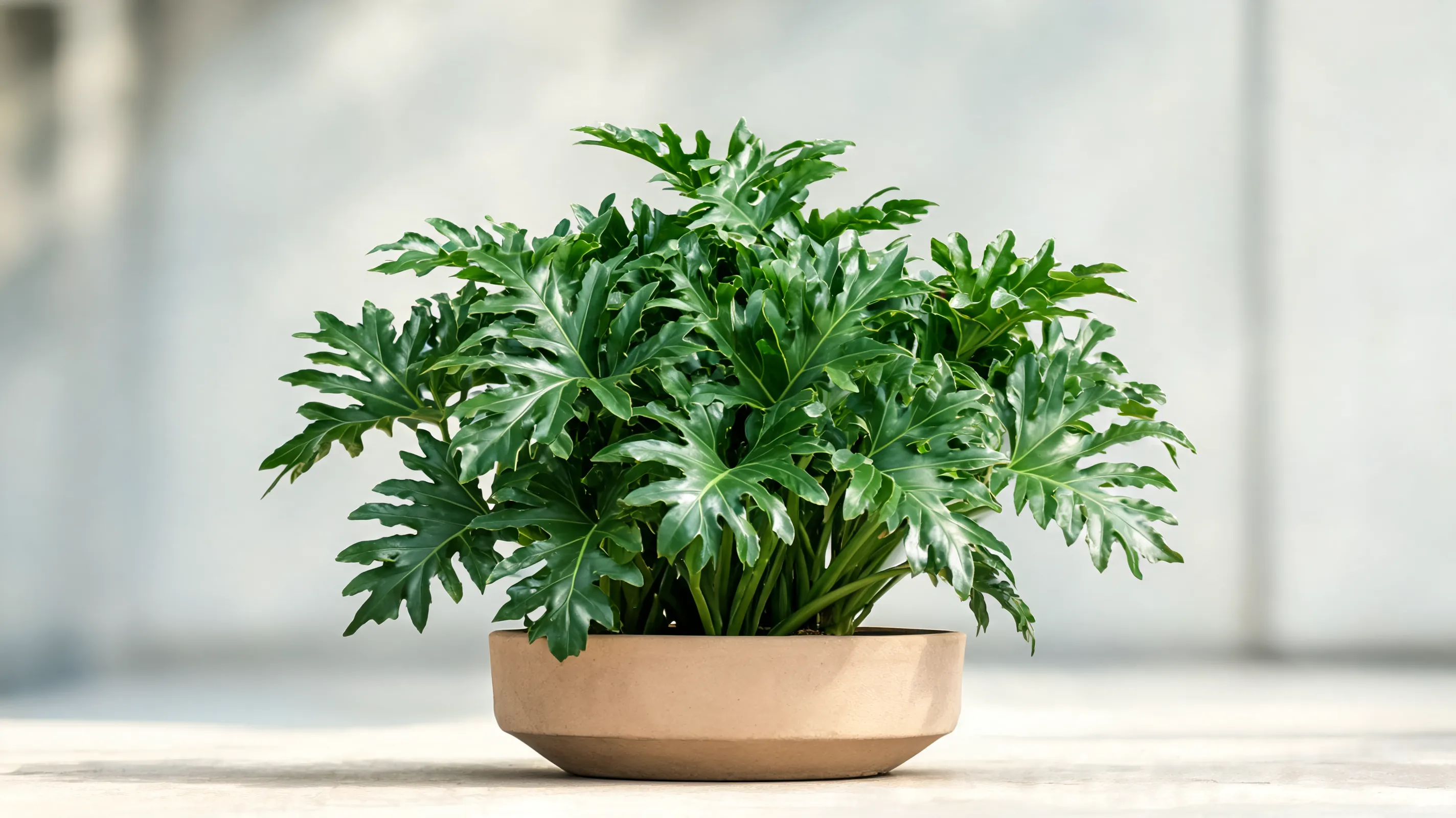
Deeply lobed, glossy green leaves arranged in a full rosette. It builds into a dense, bushy rosette rather than climbing. The compact, jungle-like fullness is why it’s a popular choice for both indoor pots and outdoor beds.
| Field | Information |
| Botanical Name | Thaumatophyllum xanadu |
| Leaf Type | Deeply lobed |
| Leaf Color/Pattern | Glossy green |
| Growth Habit | Upright, self-heading, rosette |
| Mature Size | About 3 ft tall, 4.5 ft wide |
| Difficulty | Easy |
11. Tree Philodendron
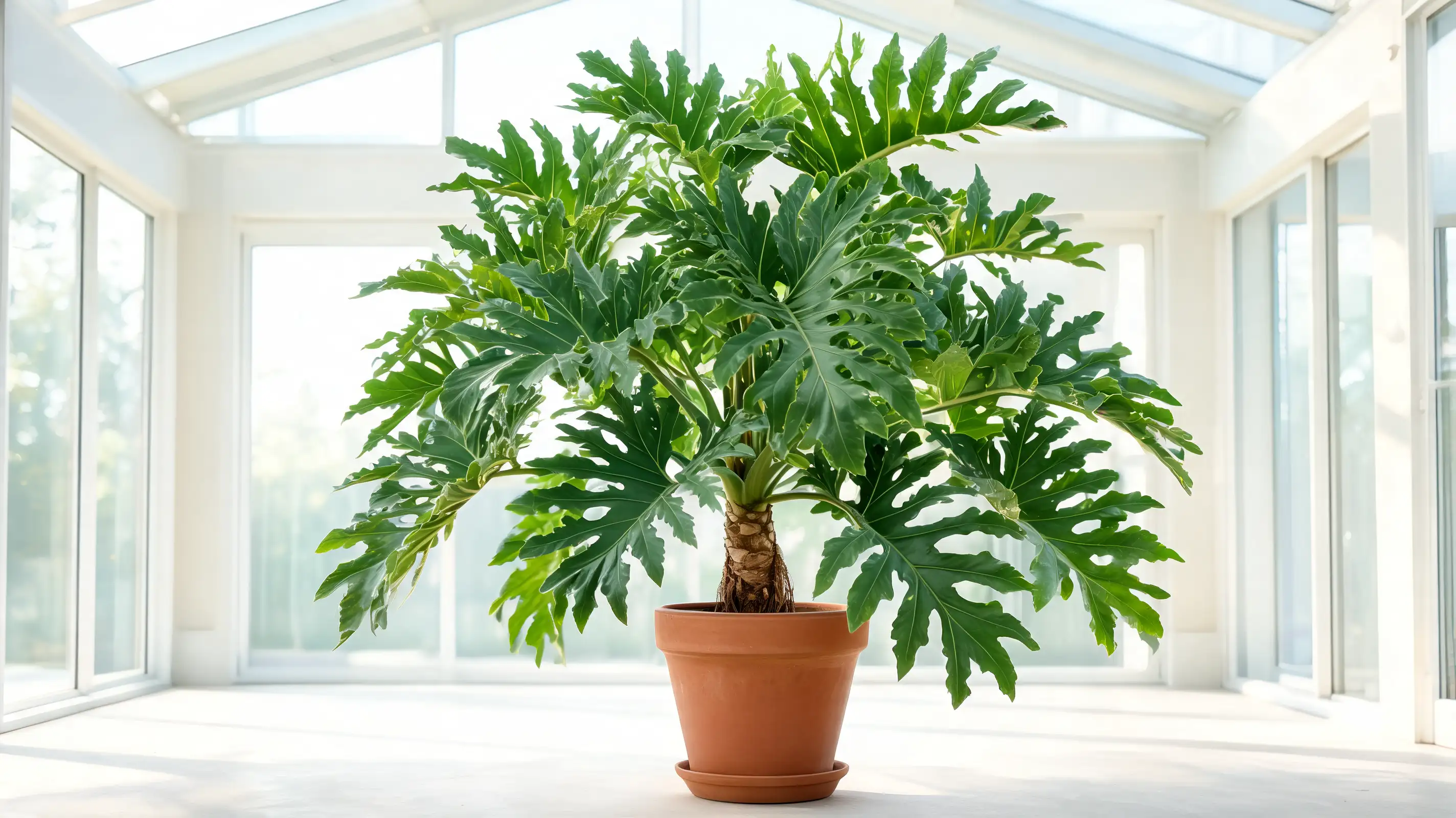
Tree Philodendron is a large split-leaf type with deeply cut green leaves and a thick trunk-like base. It grows upright and can become a large floor plant indoors. This is the broader tree philodendron type rather than a named cultivated form, though a popular selection sold as ‘Hope’ keeps the same lobed leaves in a tighter, more compact rosette for smaller spaces.
| Field | Information |
| Botanical Name | Thaumatophyllum bipinnatifidum (syn. Philodendron selloum) |
| Leaf Type | Deeply lobed, large |
| Leaf Color/Pattern | Green to dark green |
| Growth Habit | Upright, self-heading |
| Mature Size | Up to 5 ft indoors, larger outdoors |
| Difficulty | Easy |
12. Philodendron Cream Splash
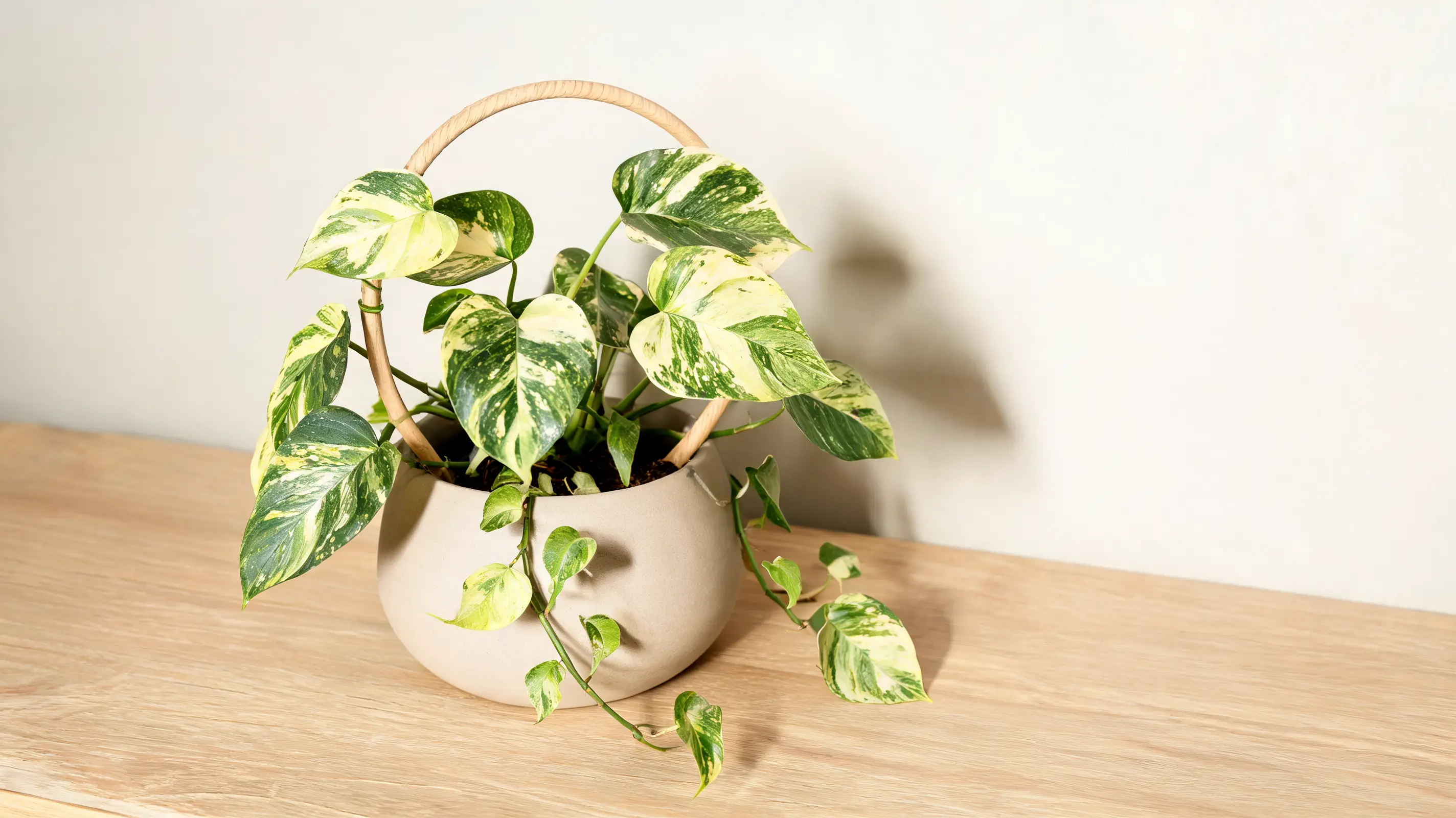
Glossy, heart-shaped leaves splashed with green, light green, and creamy-yellow variegation. It’s a vining plant that trails or climbs, and stays manageable if pruned back. The soft, multi-tone cream variegation is what sets it apart from a standard heartleaf.
| Field | Information |
| Botanical Name | Philodendron hederaceum var. oxycardium ‘Cream Splash’ |
| Leaf Type | Heart-shaped |
| Leaf Color/Pattern | Green with cream/yellow variegation |
| Growth Habit | Vining/climbing |
| Mature Size | Up to 4 ft long |
| Difficulty | Easy |
13. Burle Marx Philodendron
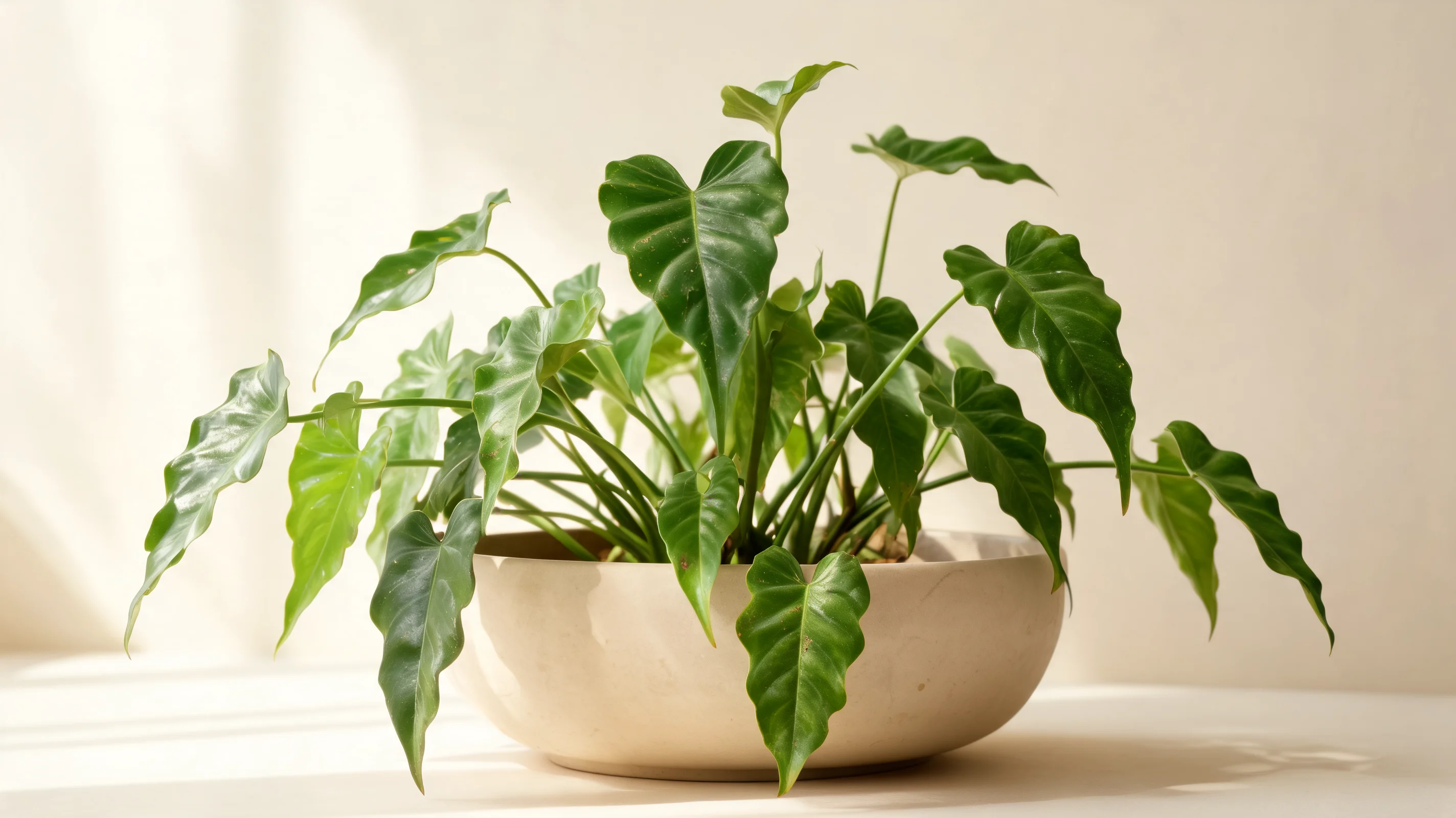
Narrow, glossy, heart-shaped leaves with wavy edges in light-to-dark green. It can trail, climb, or be used as ground cover. Its adaptable growth style is why it works well both indoors and in warm outdoor gardens.
| Field | Information |
| Botanical Name | Philodendron Burle Marx |
| Leaf Type | Narrow, heart-shaped, wavy |
| Leaf Color/Pattern | Light to dark green |
| Growth Habit | Trailing, climbing, or ground cover |
| Mature Size | About 3 ft tall, 2–4 ft wide |
| Difficulty | Easy |
14. Prince of Orange Philodendron
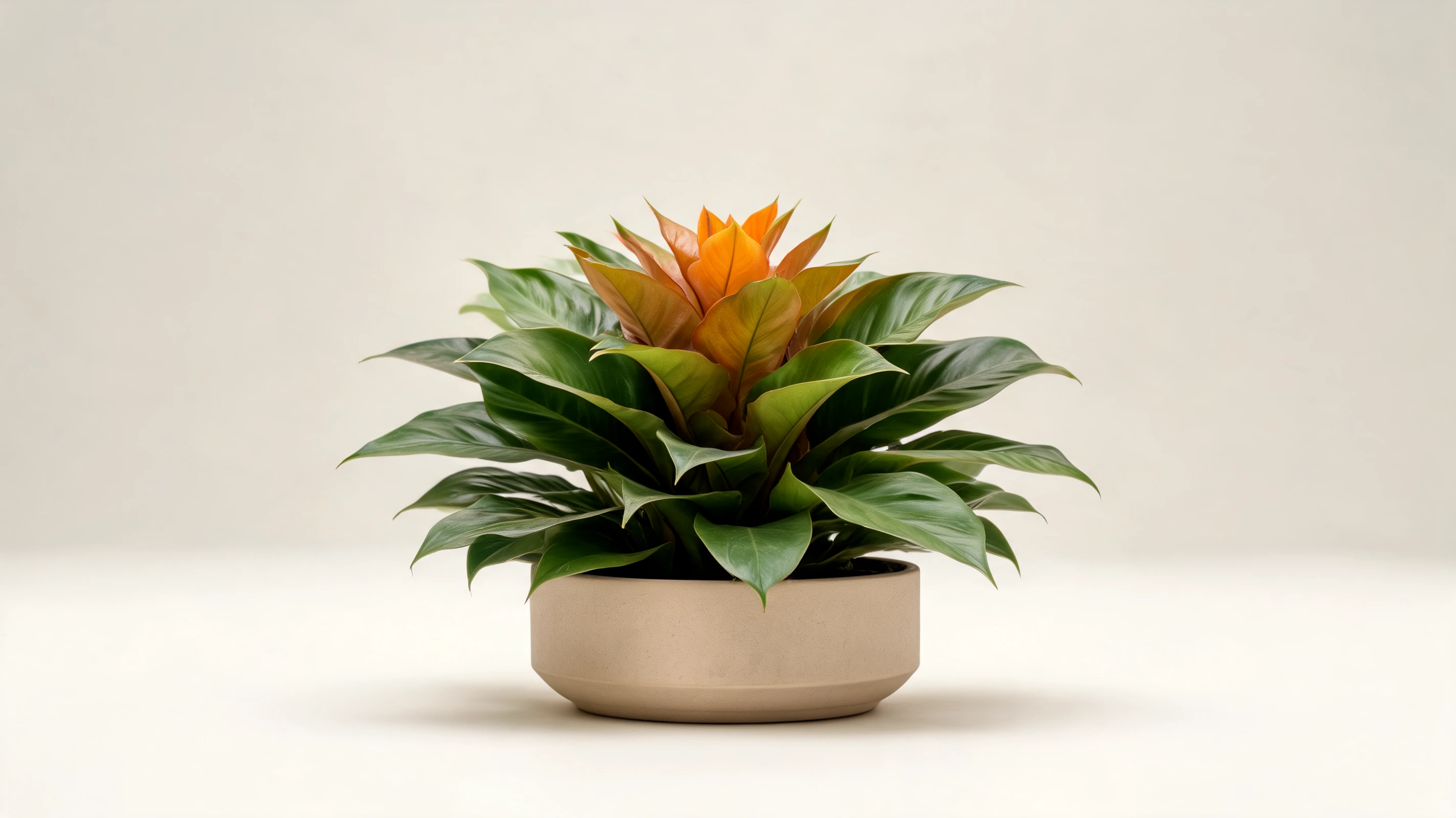
Leaves that open bright orange and shift through copper to green as they age. It stays compact in a tight, upright rosette. The constantly changing leaf color is what draws collectors to this one.
| Field | Information |
| Botanical Name | Philodendron erubescens Prince of Orange’ |
| Leaf Type | Broad, pointed |
| Leaf Color/Pattern | Orange to green as leaves mature |
| Growth Habit | Upright, self-heading, rosette |
| Mature Size | 1–2 ft tall and wide |
| Difficulty | Easy |
15. Black Cardinal Philodendron
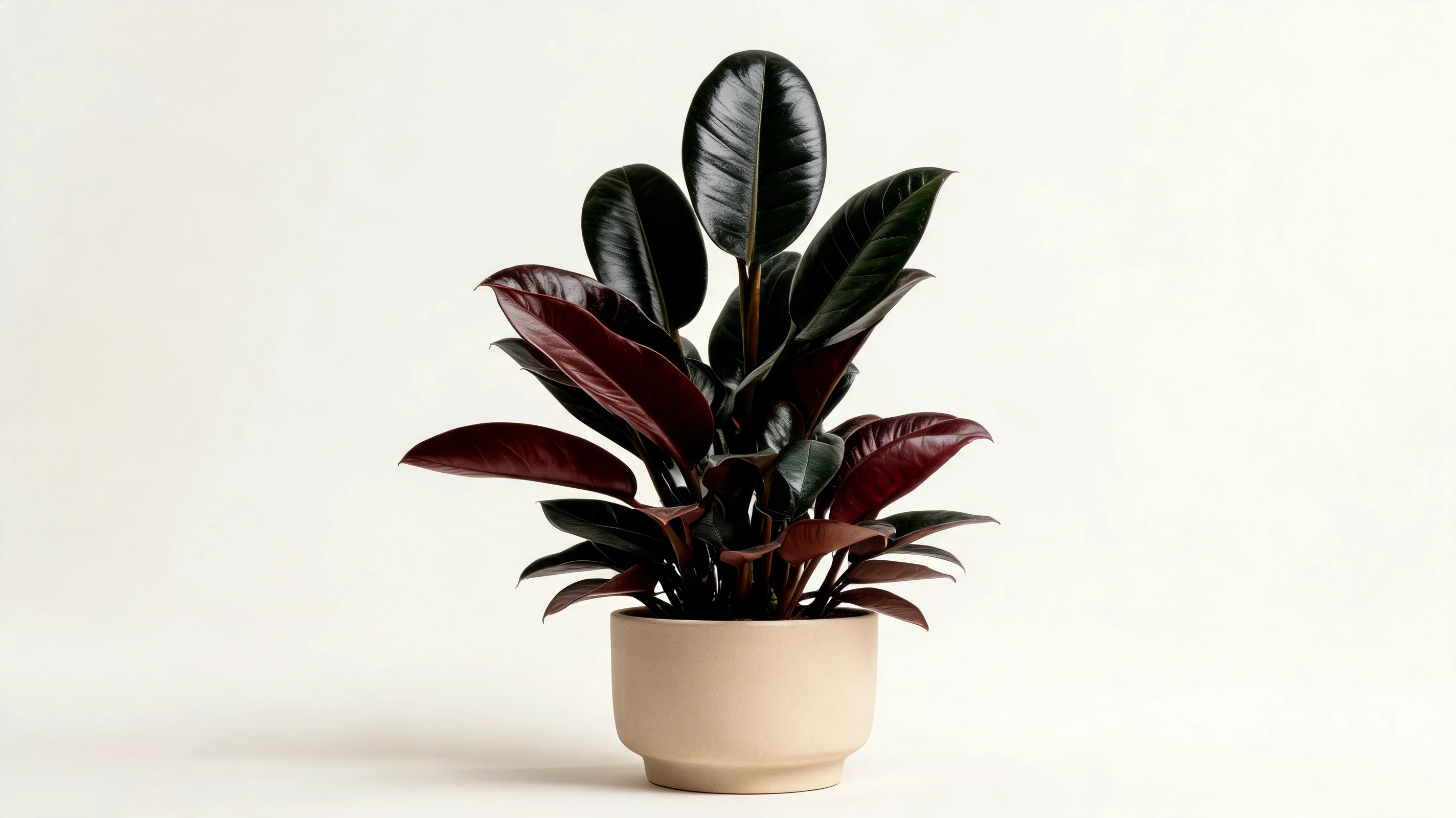
Broad, glossy leaves that start deep burgundy and darken to near-black. It holds a sturdy, compact, upright form. The unusual dark color is the main reason plant collectors seek it out.
| Field | Information |
| Botanical Name | Philodendron erubescens ‘Black Cardinal’ |
| Leaf Type | Broad, oval |
| Leaf Color/Pattern | Deep burgundy maturing to near-black |
| Growth Habit | Upright, self-heading |
| Mature Size | Around 2 ft tall and wide |
| Difficulty | Easy-moderate |
16. Moonlight Philodendron
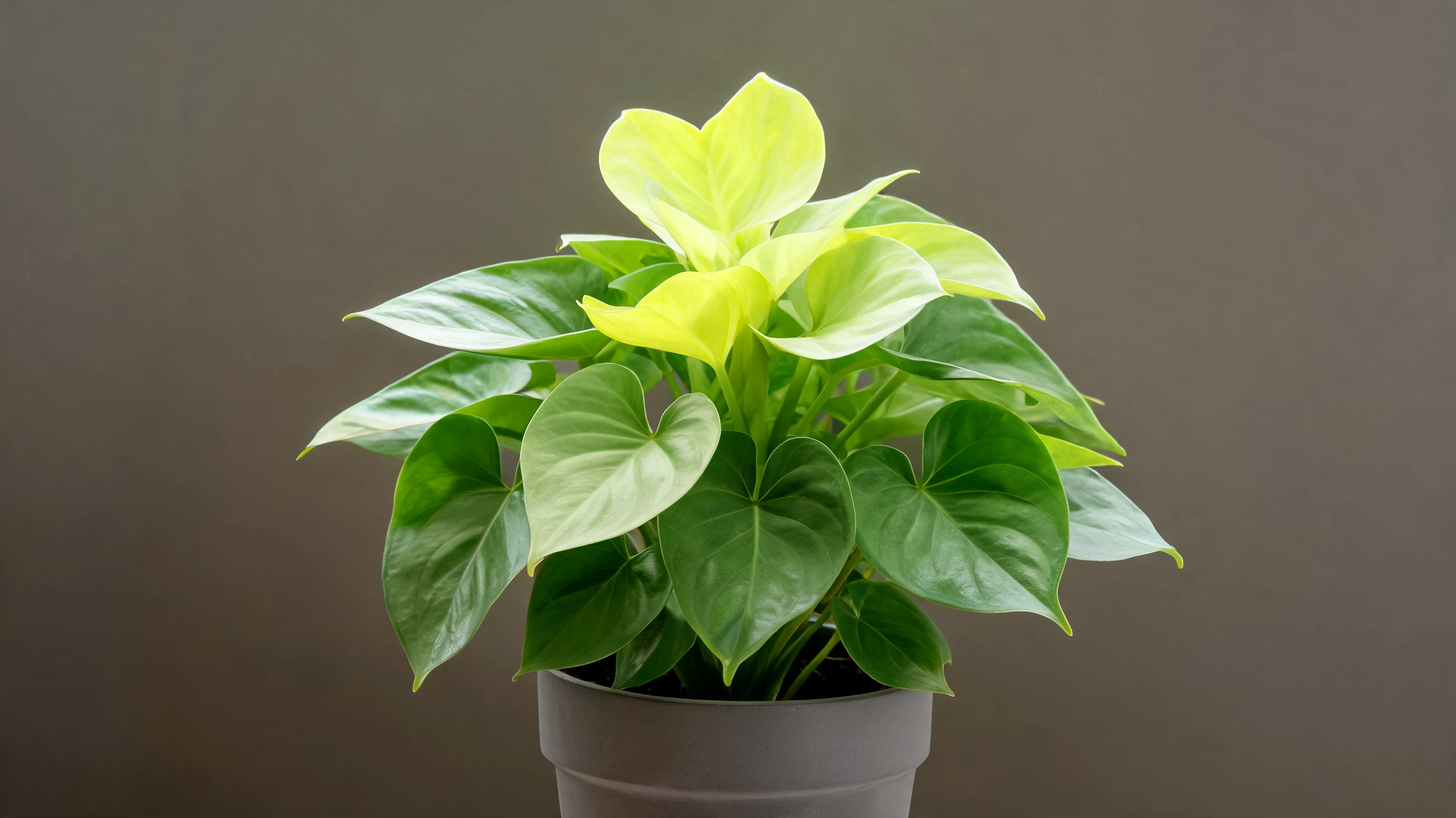
New leaves emerge in a glowing yellow-green and mellow into a softer green as they age, forming a neat rosette. That bright flush of new growth adds contrast next to darker-leaved plants nearby.
| Field | Information |
| Botanical Name | Philodendron Moonlight’ |
| Leaf Type | Broad, heart-shaped |
| Leaf Color/Pattern | Chartreuse to green |
| Growth Habit | Upright, self-heading, rosette |
| Mature Size | Compact, medium size |
| Difficulty | Easy |
17. Super Atom Philodendron
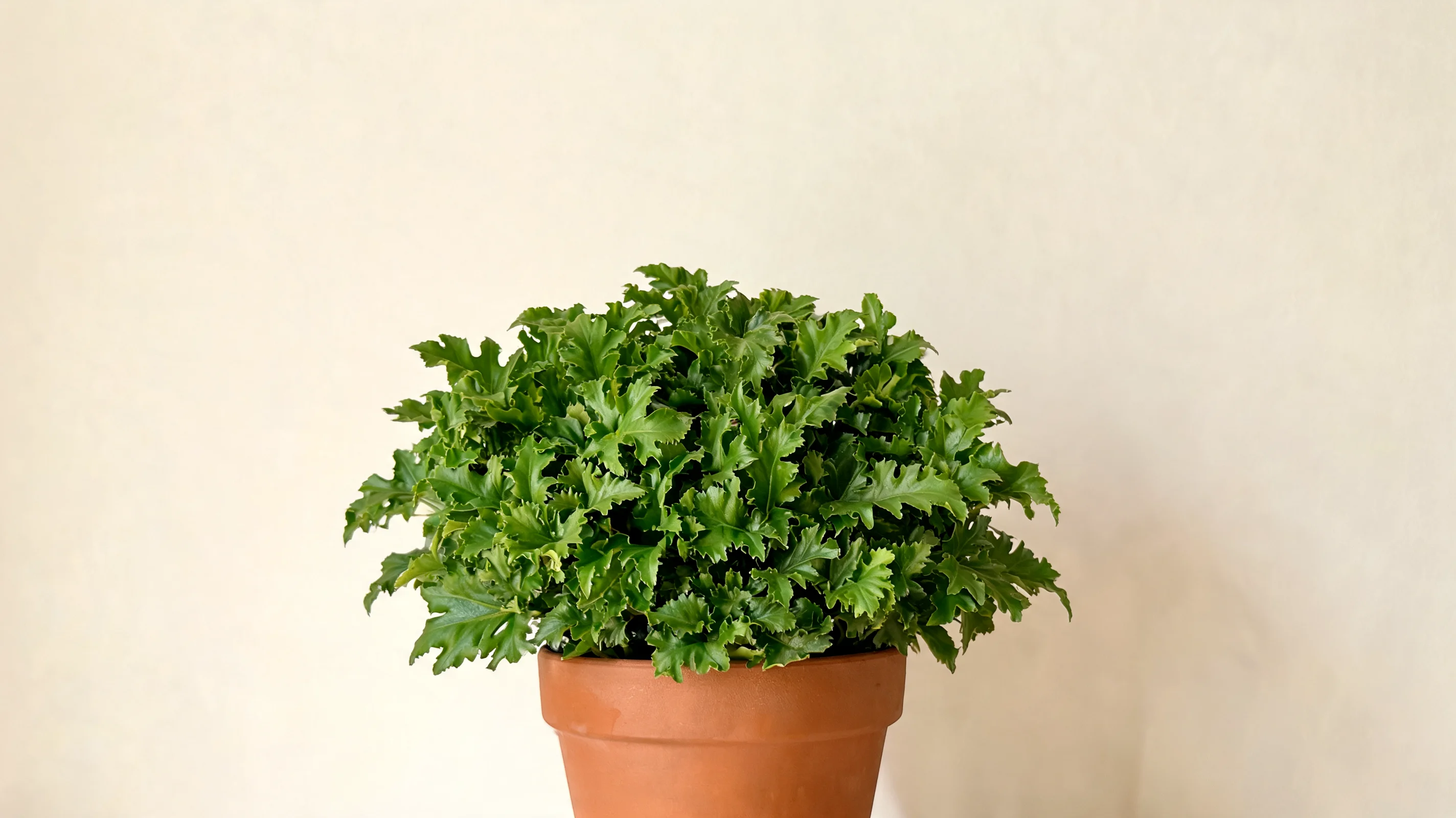
This dwarf selection keeps its small, ruffled bright green leaves in a tight, bushy clump even at full maturity. The compact size fits tight spaces where a full-size Selloum-type philodendron would not.
| Field | Information |
| Botanical Name | Philodendron Super Atom’ |
| Leaf Type | Ruffled, small |
| Leaf Color/Pattern | Bright green |
| Growth Habit | Upright, self-heading |
| Mature Size | 3 ft tall and wide |
| Difficulty | Easy |
18. Philodendron Squamiferum
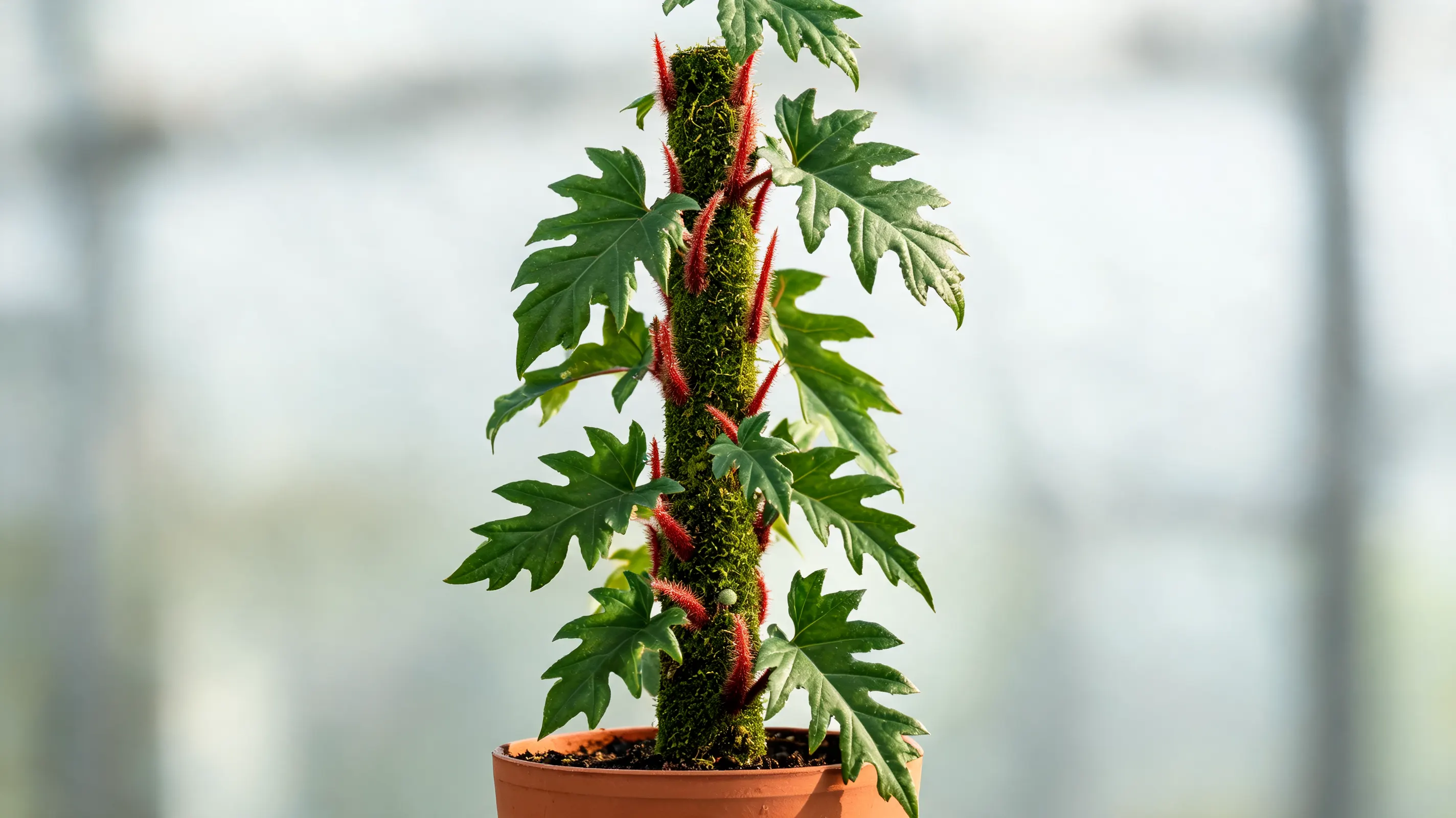
Large, deeply lobed, oak-shaped leaves on distinctive red stems covered in soft, hair-like fuzz. It’s a climbing epiphyte that reaches impressive heights with support. The fuzzy red stems are unlike any other common philodendron and make it instantly recognizable.
| Field | Information |
| Botanical Name | Philodendron squamiferum |
| Leaf Type | Deeply lobed, oak-shaped |
| Leaf Color/Pattern | Green, red fuzzy stems |
| Growth Habit | Climbing |
| Mature Size | Up to 10–15 ft with support |
| Difficulty | Easy-moderate |
19. Silver Sword Philodendron
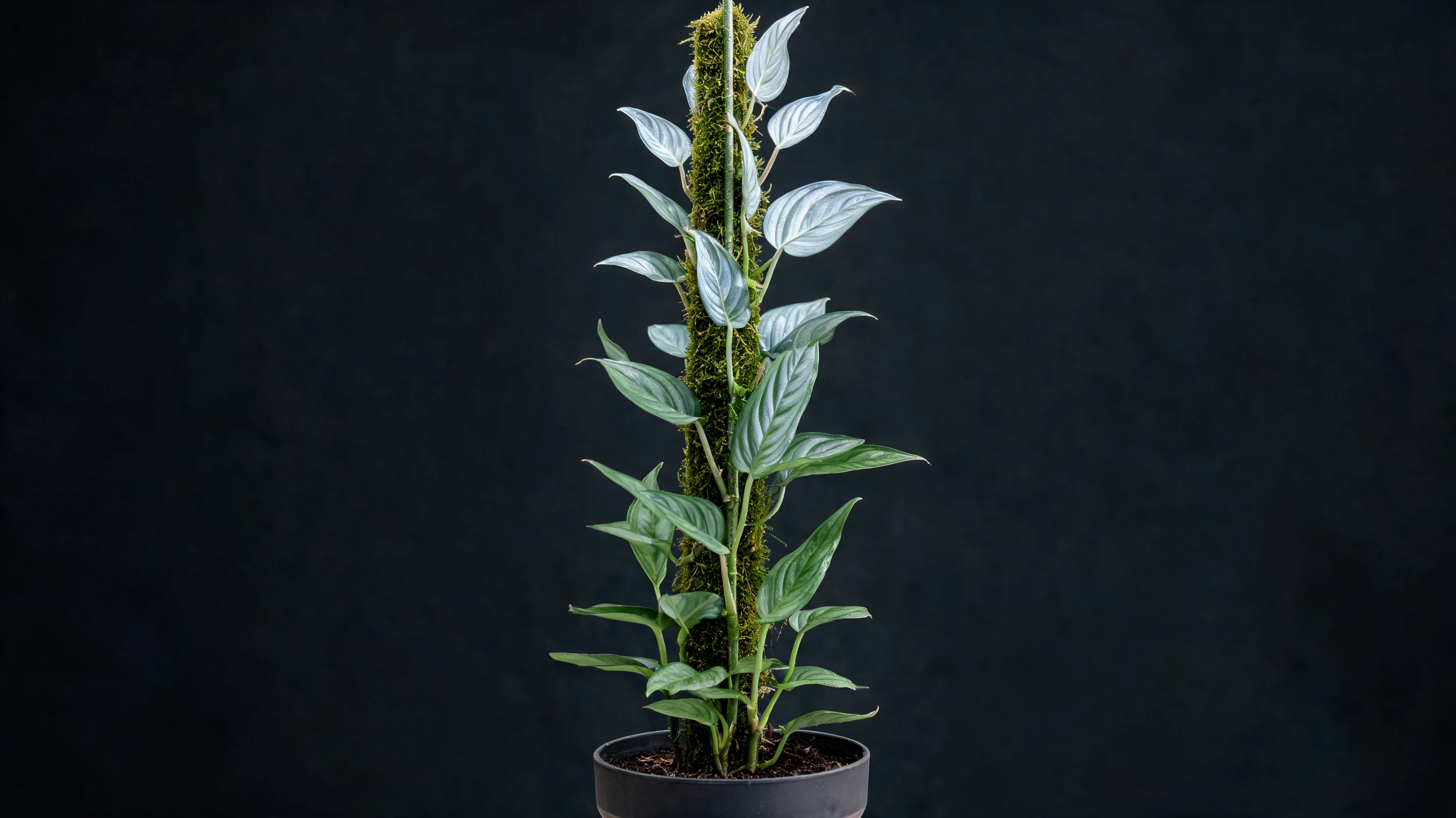
Sword-shaped leaves in a shimmering silver-blue that turn greener with age. It climbs when given support, like a moss pole. The metallic color is rare among philodendrons, which is why collectors prize it.
| Field | Information |
| Botanical Name | Philodendron hastatum |
| Leaf Type | Sword/arrow-shaped |
| Leaf Color/Pattern | Silver-blue, greening with age |
| Growth Habit | Climbing |
| Mature Size | 3–6 ft tall indoors |
| Difficulty | Moderate |
Rare and Collector Types of Philodendron
These varieties are prized for colors, patterns, and textures you won’t find in the common types above. Many are harder to source and need more specific care, which is part of why collectors chase them.
20. Pink Princess Philodendron
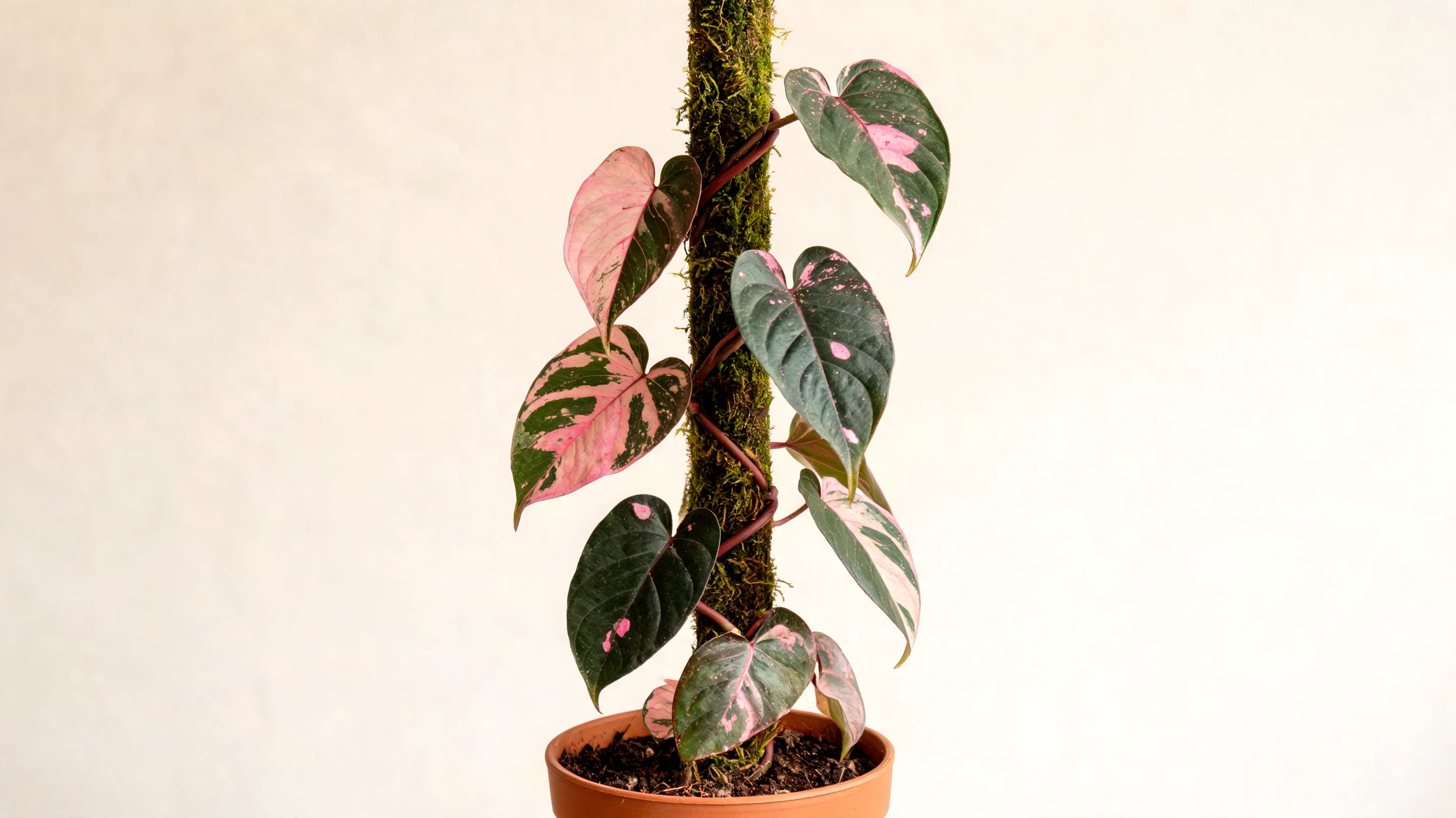
Dark green, almost black leaves splashed with bright pink patches, no two leaves alike. It climbs slowly and trails nicely from a hanging basket. Collectors love it for the unpredictable pink variegation, which shifts with light and can’t be forced.
| Field | Information |
| Botanical Name | Philodendron erubescens ‘Pink Princess’ |
| Leaf Type | Heart-shaped |
| Leaf Color/Pattern | Dark green with pink splashes |
| Growth Habit | Climbing/trailing, slow |
| Mature Size | Leaves up to 8 in long |
| Difficulty | Moderate |
21. White Knight Philodendron
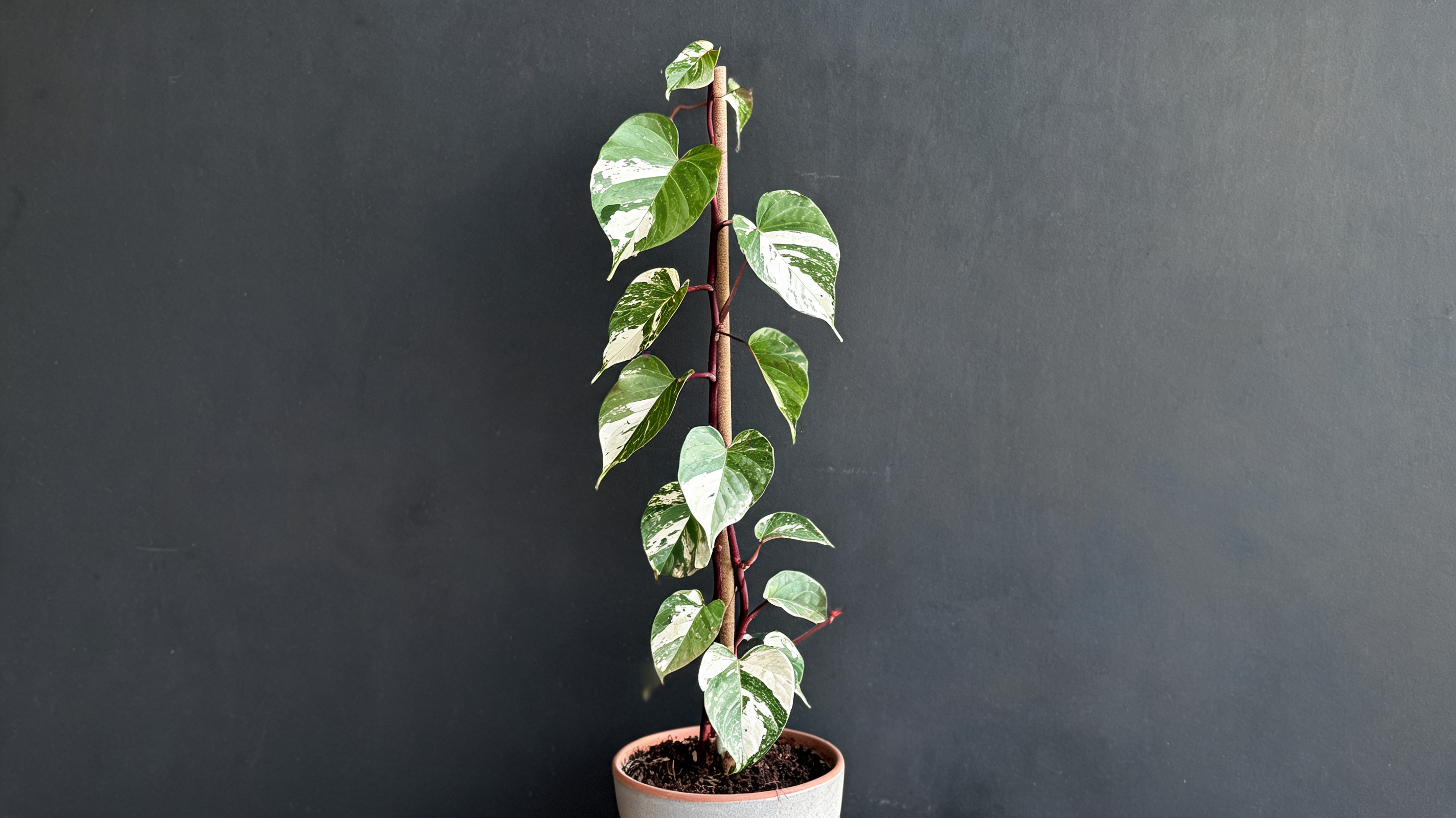
Green leaves marked with crisp white sectors, growing on distinctive burgundy stems. It climbs at a slower, steadier pace than its Pink Princess cousin. The dramatic white variegation paired with dark stems is why growers rank it among the top “royal” philodendrons.
| Field | Information |
| Botanical Name | Philodendron erubescens ‘White Knight’ |
| Leaf Type | Rounded, arrowhead |
| Leaf Color/Pattern | Green with white variegation, burgundy stems |
| Growth Habit | Climbing |
| Mature Size | Leaves 6–18 in long |
| Difficulty | Moderate |
22. White Wizard Philodendron
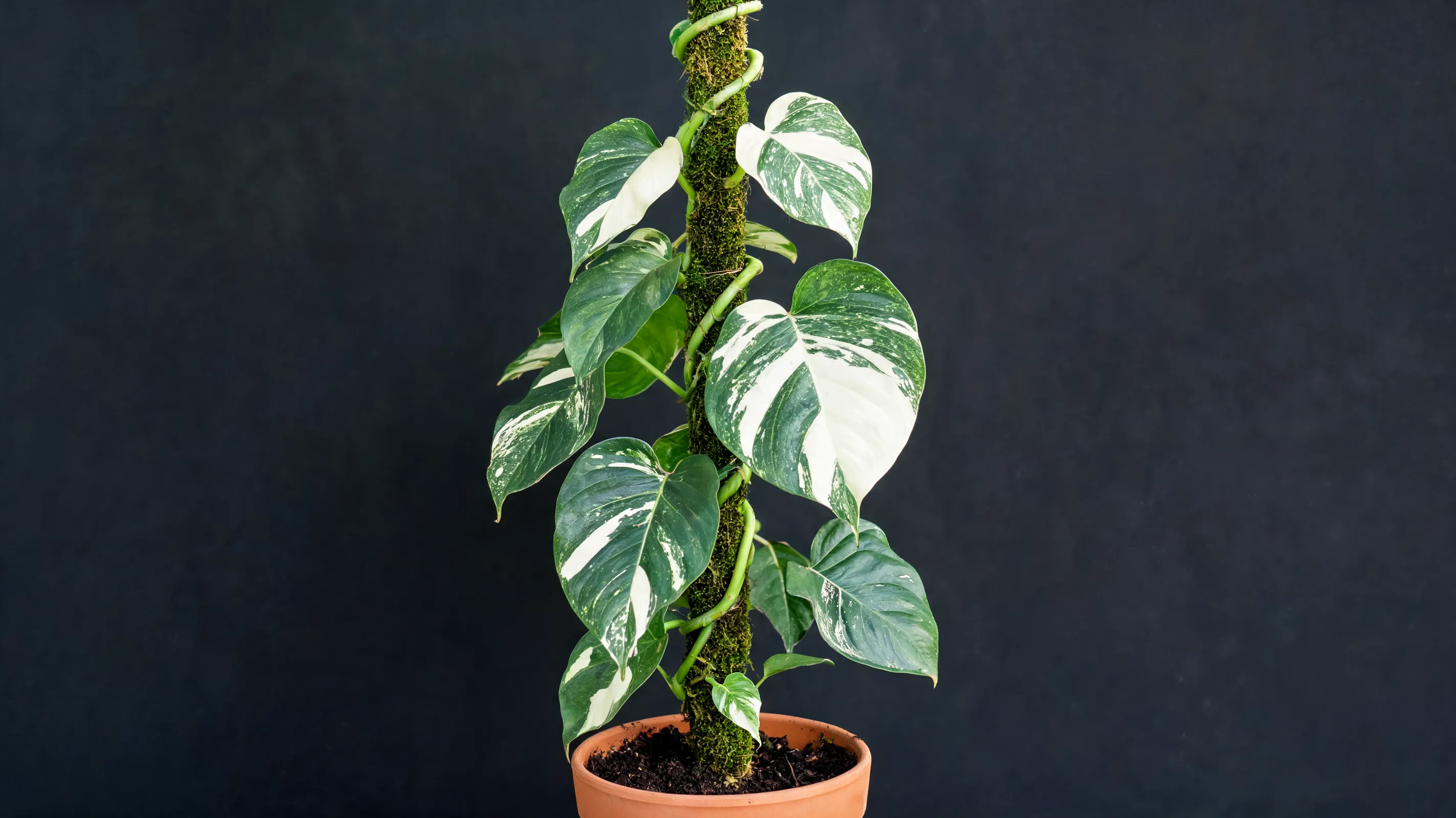
Large, round leaves with bold, sectoral white patches on green stems. It grows faster than White Knight when conditions are right. Its high-contrast variegation and rarity make it one of the most sought-after “royal” philodendrons.
| Field | Information |
| Botanical Name | Philodendron erubescens ‘White Wizard’ |
| Leaf Type | Large, rounded |
| Leaf Color/Pattern | Green with white sectoral patches |
| Growth Habit | Climbing |
| Mature Size | Similar to White Knight |
| Difficulty | Moderate |
23. Florida Ghost Philodendron
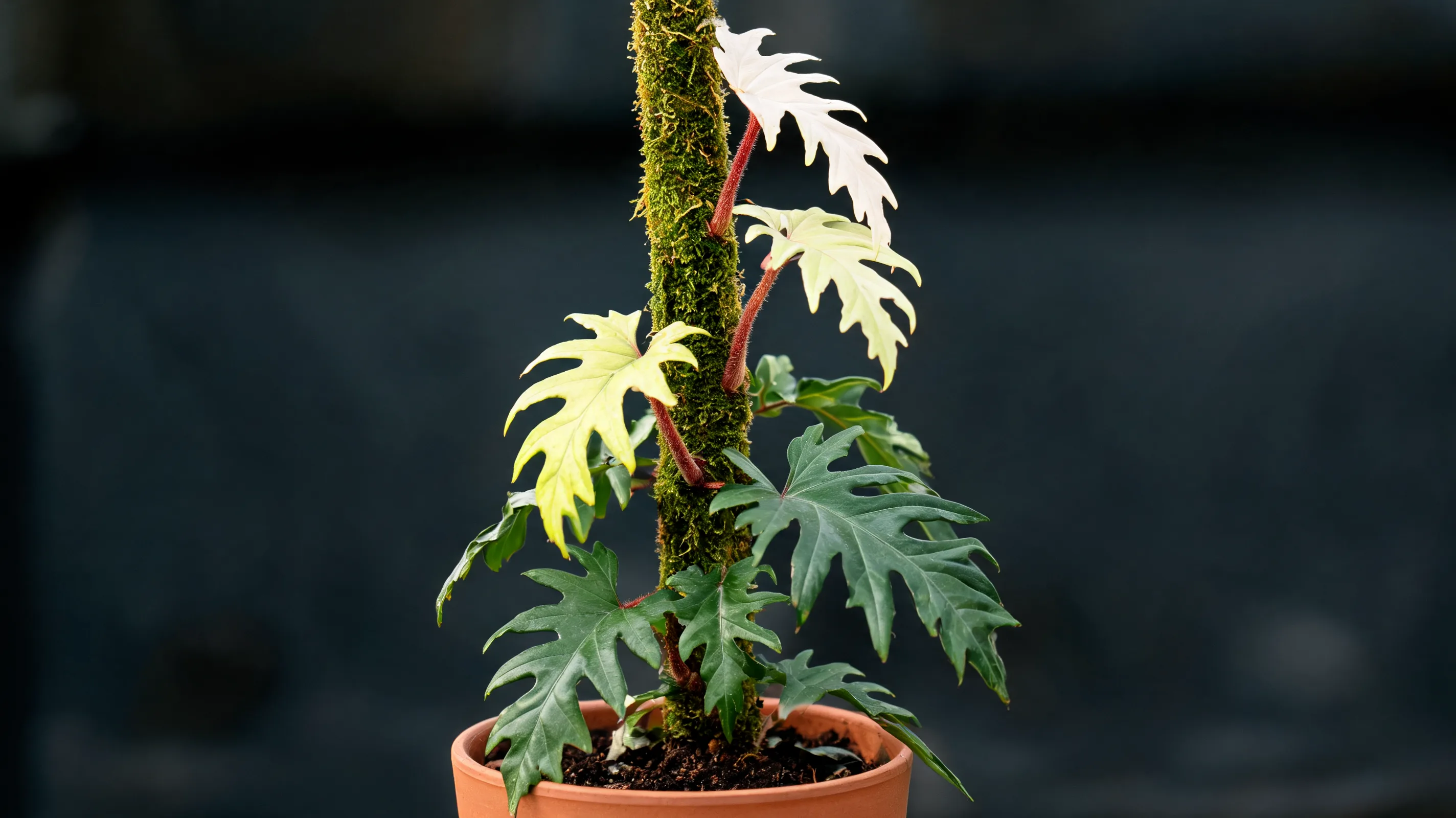
Multi-lobed leaves that unfurl ghostly white before shifting to yellow-green and finally dark green. It climbs on red, slightly hairy petioles. The dramatic color change as each leaf matures is what draws collectors in.
| Field | Information |
| Botanical Name | Philodendron pedatum Florida Ghost’ |
| Leaf Type | Deeply lobed |
| Leaf Color/Pattern | White maturing to green |
| Growth Habit | Climbing |
| Mature Size | 2–4 ft tall, up to 12 in leaves |
| Difficulty | Moderate |
24. Philodendron Gloriosum
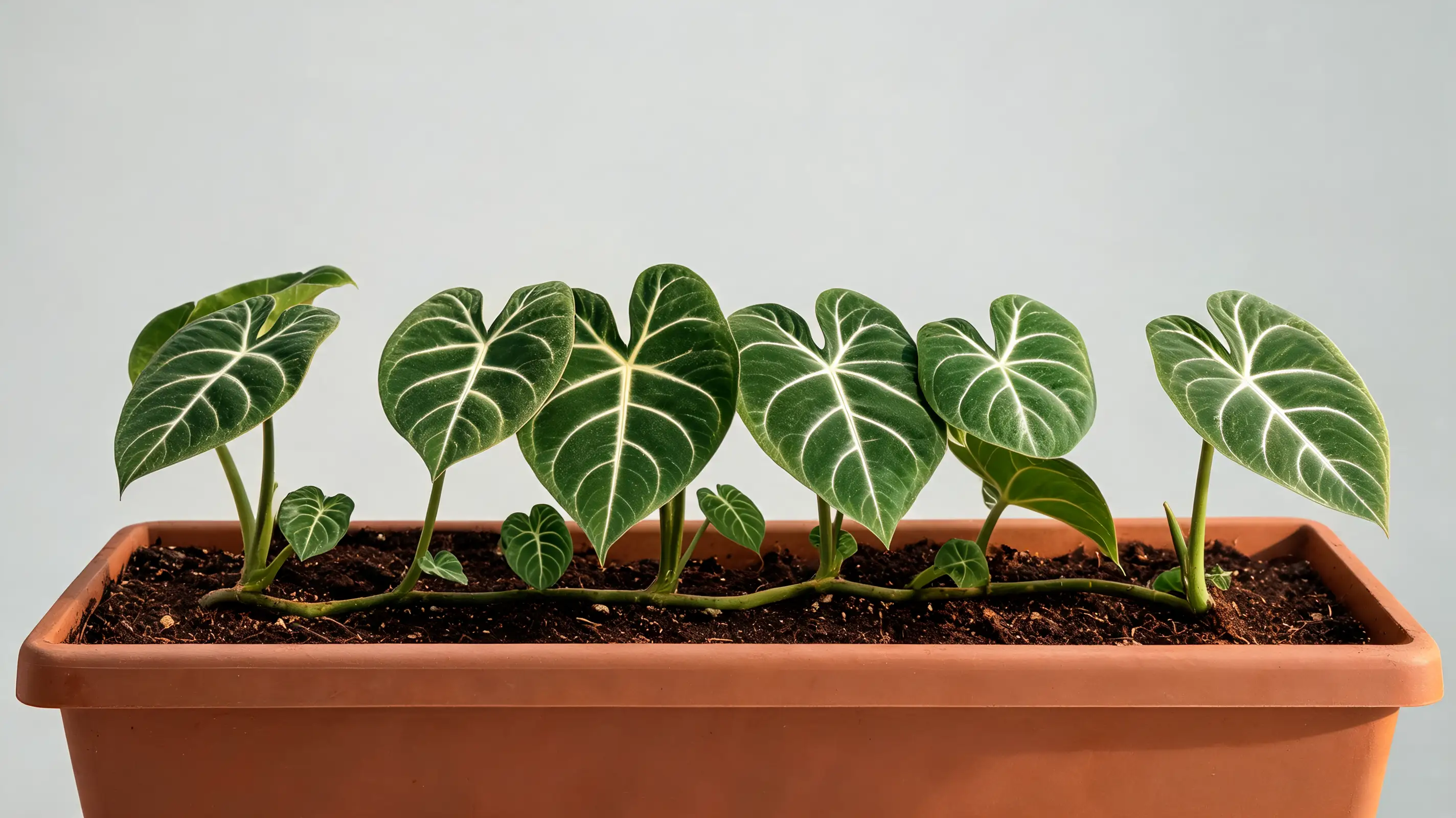
Huge, velvety heart-shaped leaves with bright white veins standing out against deep green. Unlike most philodendrons, it creeps along the ground instead of climbing. Its striking vein pattern and low, spreading habit make it a favorite specimen plant.
| Field | Information |
| Botanical Name | Philodendron gloriosum |
| Leaf Type | Heart-shaped, velvety |
| Leaf Color/Pattern | Deep green with white veins |
| Growth Habit | Creeping (non-climbing) |
| Mature Size | Leaves up to 36 in in native habitat |
| Difficulty | Moderate |
25. Philodendron Verrucosum
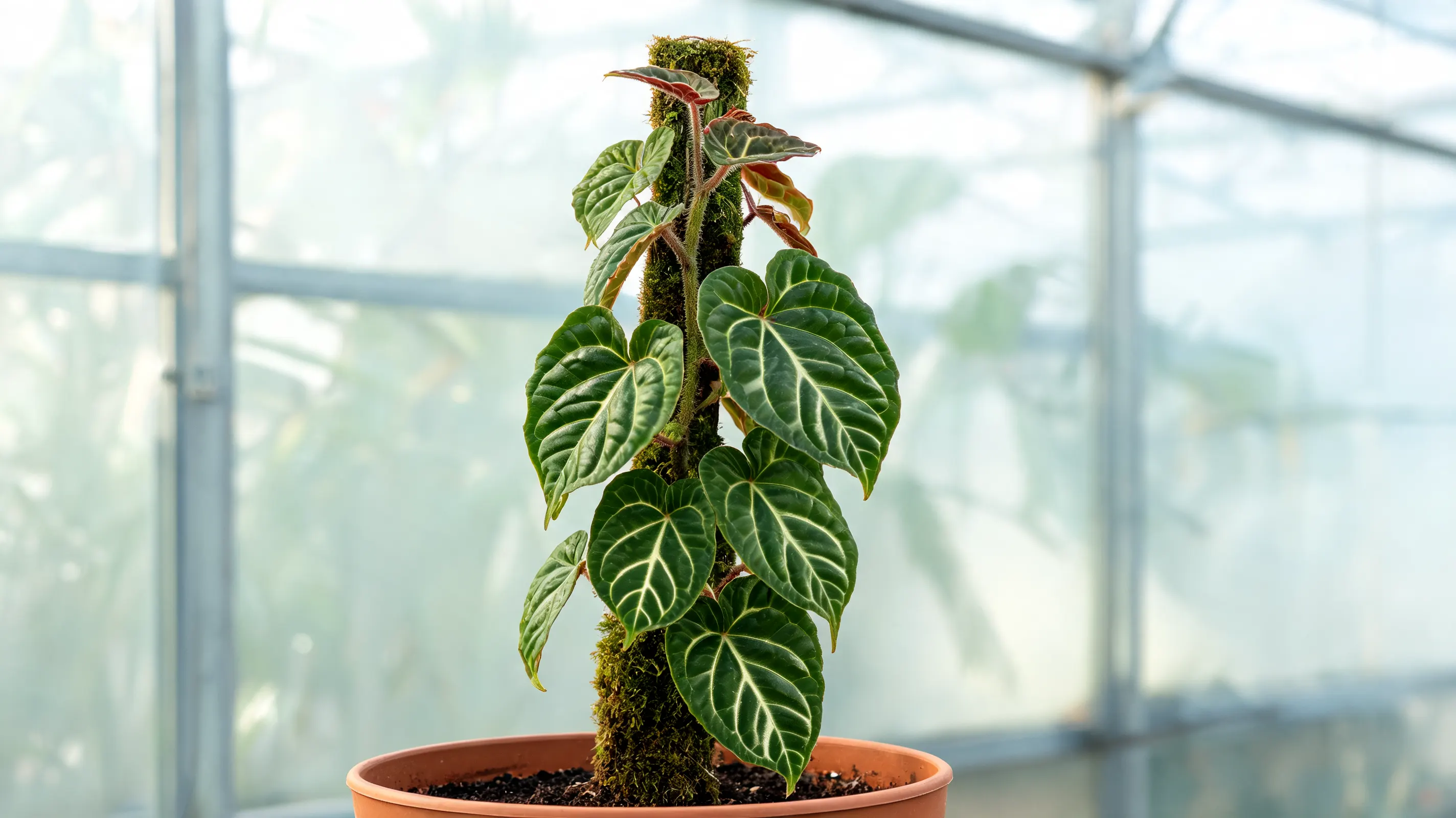
Velvety, wavy-edged leaves with prominent white veins and reddish flushes, plus fuzzy stems. It is a climber that needs steady humidity to grow well. The intricate vein pattern and texture make it a benchmark “velvet philodendron” for collectors.
| Field | Information |
| Botanical Name | Philodendron verrucosum |
| Leaf Type | Heart-shaped, velvety, wavy edges |
| Leaf Color/Pattern | Green with white veins, reddish flush |
| Growth Habit | Climbing |
| Mature Size | Varies, medium to large leaves |
| Difficulty | Moderate |
26. Philodendron Atabapoense
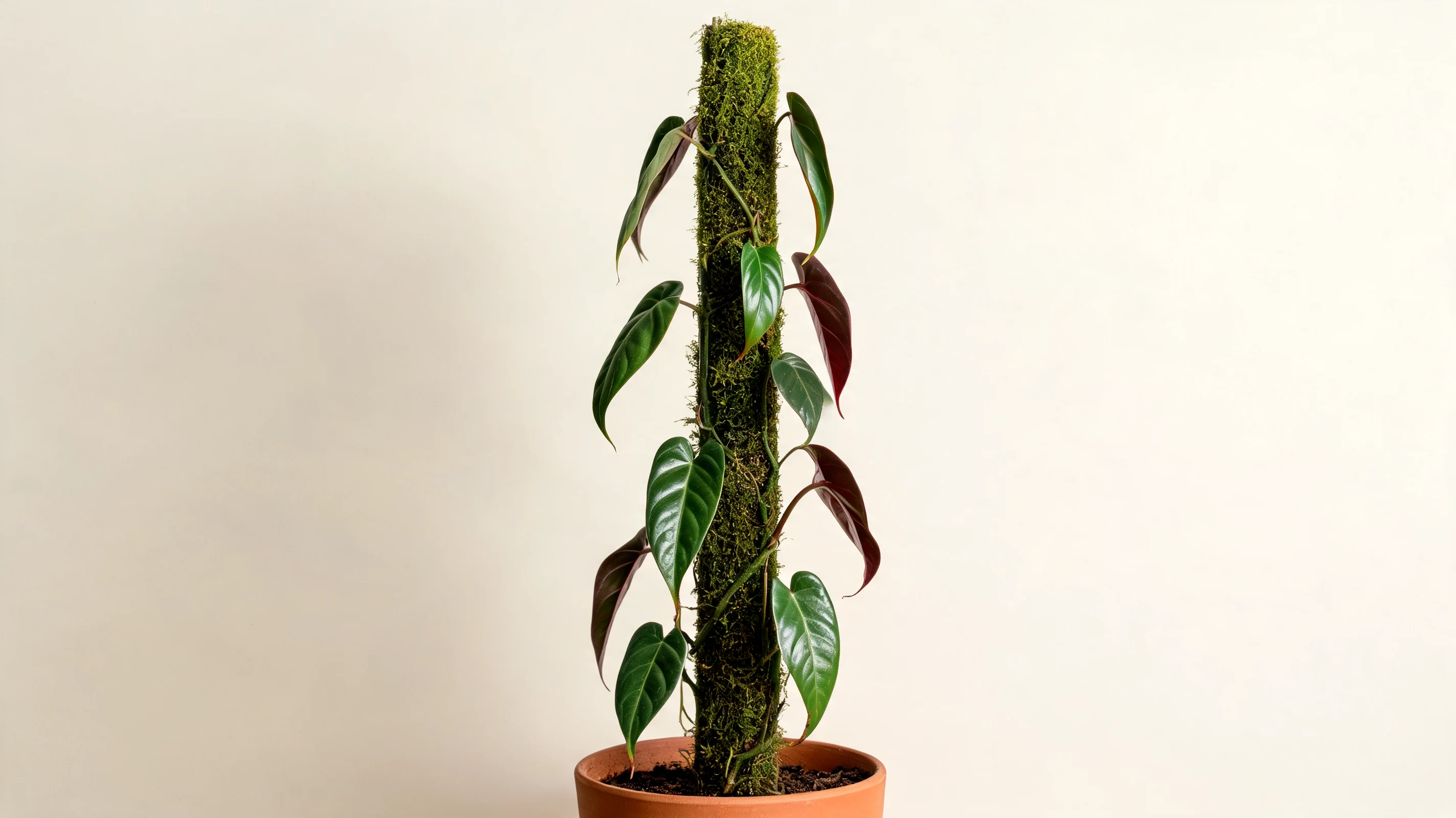
Long, elongated heart-shaped leaves in dark, glossy green with a rich maroon underside. It’s a semi-epiphytic climber that stays fairly narrow as it grows. The striking contrast between the dark green top and maroon underside is the clearest way to tell it apart from similar climbers.
| Field | Information |
| Botanical Name | Philodendron atabapoense |
| Leaf Type | Elongated, heart-shaped |
| Leaf Color/Pattern | Dark green with maroon underside |
| Growth Habit | Semi-epiphytic climber |
| Mature Size | Leaves up to 30 in long, indoors up to 6.5 ft |
| Difficulty | Easy |
27. Philodendron Melanochrysum
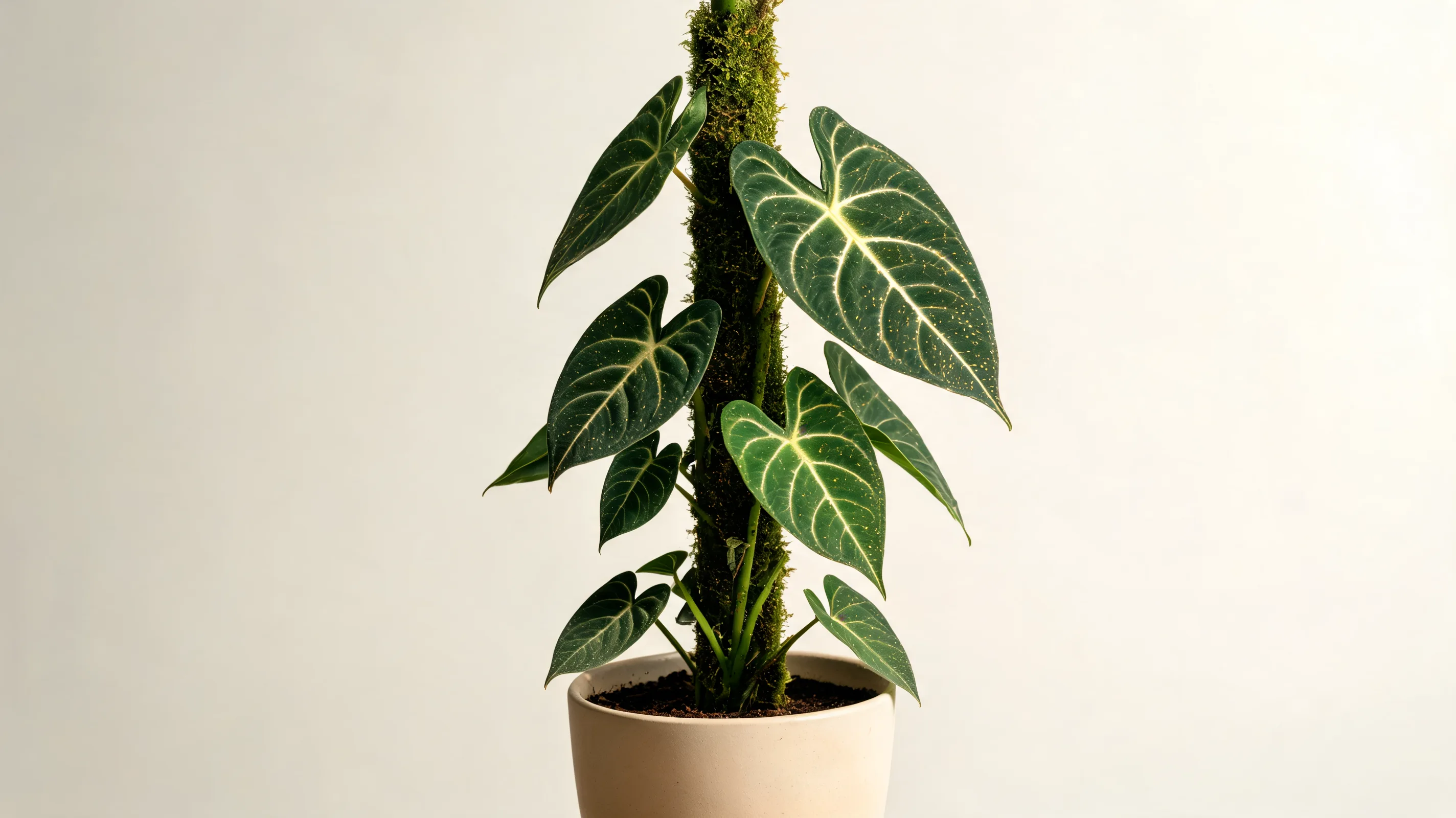
The species behind the Black Gold name: deep, velvety leaves with fine gold flecking visible in sunlight. It climbs and produces progressively larger leaves with a moss pole. Collectors seek the true species form for its rich texture and color depth.
| Field | Information |
| Botanical Name | Philodendron melanochrysum |
| Leaf Type | Elongated, heart-shaped, velvety |
| Leaf Color/Pattern | Dark green-black with gold flecks |
| Growth Habit | Climbing |
| Mature Size | Leaves up to 30 in mature |
| Difficulty | Moderate |
28. Philodendron Mamei
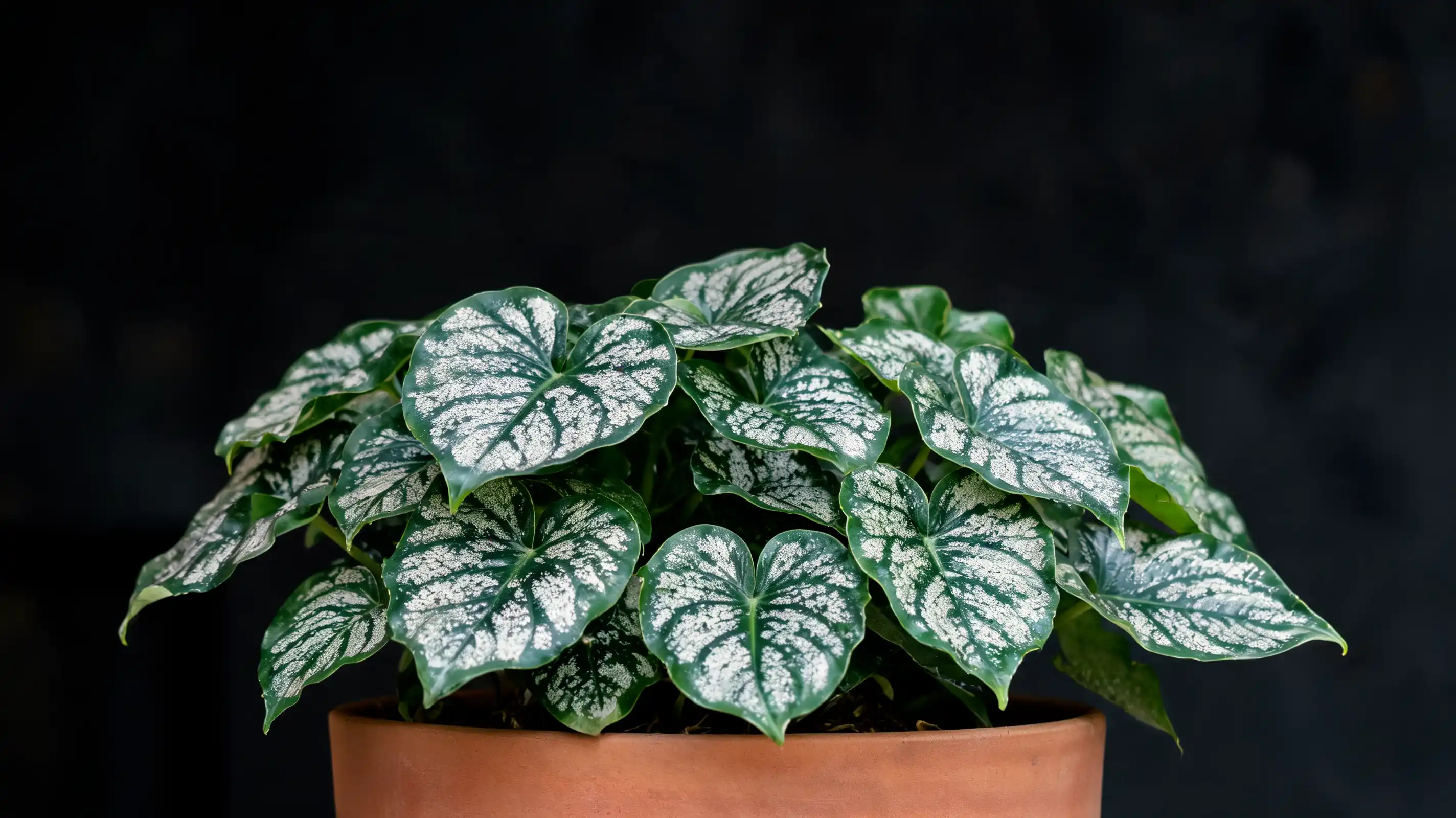
Large, heart-shaped leaves with silvery-white mottling over a deep green base. It’s technically a climber but stays fuller and bushier thanks to its tightly spaced leaf nodes. The shimmering silver pattern is why it’s a favorite among foliage collectors.
| Field | Information |
| Botanical Name | Philodendron mamei |
| Leaf Type | Heart-shaped |
| Leaf Color/Pattern | Deep green with silver mottling |
| Growth Habit | Climbing, compact/bushy |
| Mature Size | Leaves up to 12 in long |
| Difficulty | Moderate |
29. Philodendron Calkins Gold
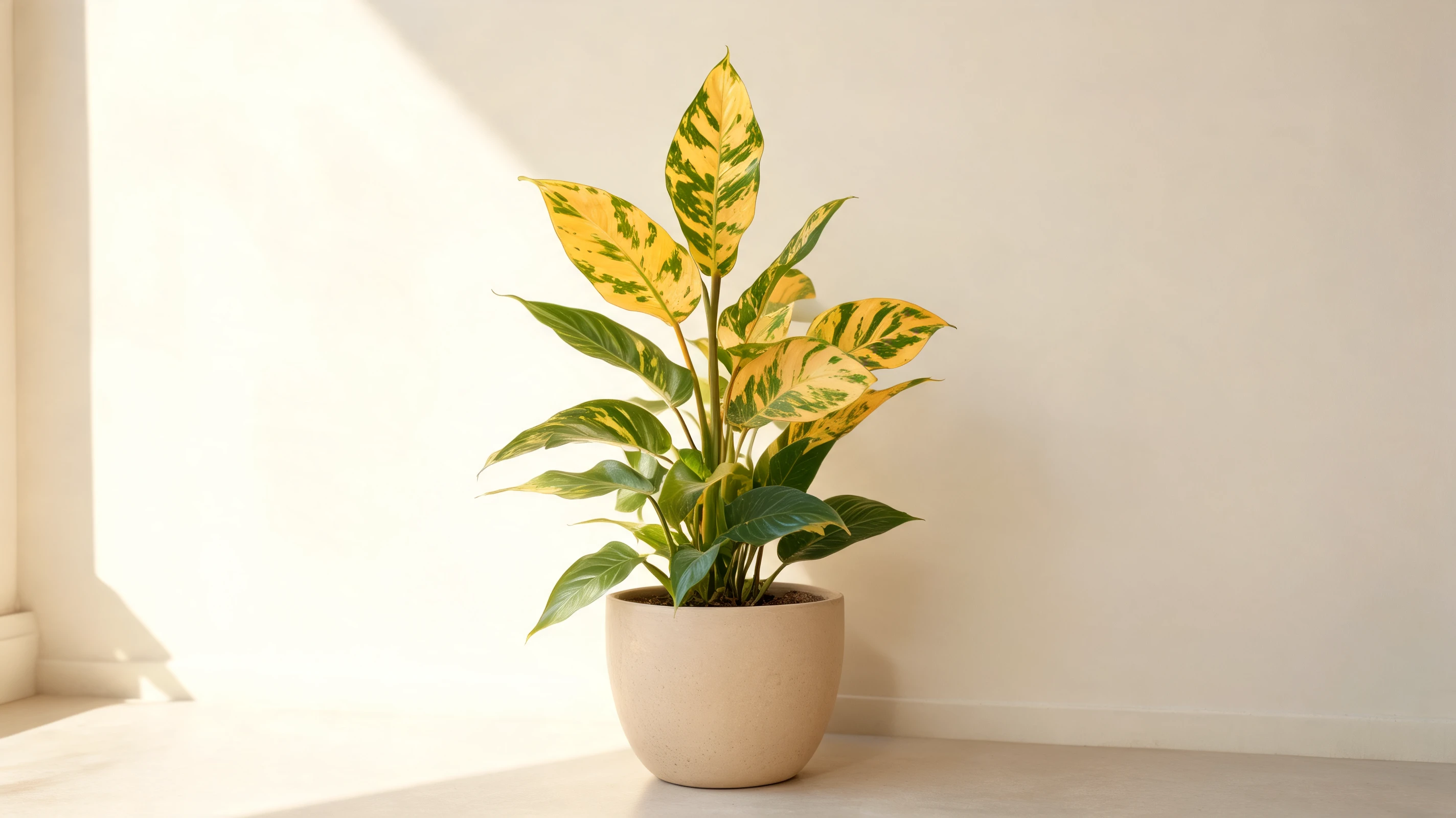
Lance-shaped leaves that emerge bright golden-yellow with green mottling before settling into green tones. It grows in a more compact, upright form compared to vining types. Its rarity and unusual gold coloring make it hard to find and in high demand.
| Field | Information |
| Botanical Name | Philodendron domesticum Calkins Gold’ |
| Leaf Type | Lance-shaped |
| Leaf Color/Pattern | Golden-yellow with green mottling |
| Growth Habit | Compact, semi-climbing |
| Mature Size | Medium, compact form |
| Difficulty | Moderate |
30. Philodendron Sodiroi
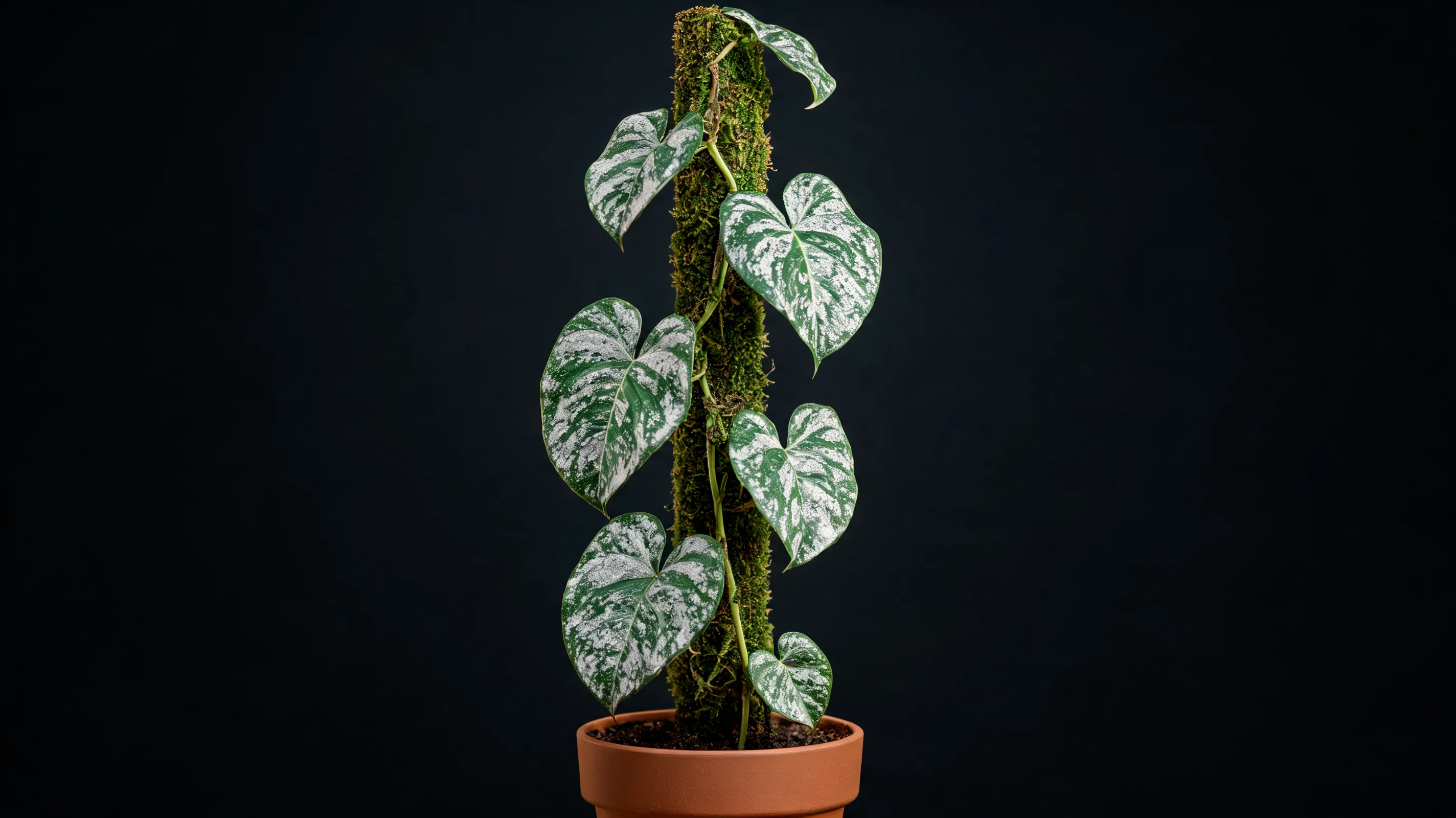
Heart-shaped leaves covered in a silvery mottled pattern over green. It’s a climbing epiphyte that does best with a support to grow larger leaves. The silvery, almost frosted look is what collectors specifically hunt for.
| Field | Information |
| Botanical Name | Philodendron sodiroi |
| Leaf Type | Heart-shaped (cordate) |
| Leaf Color/Pattern | Green with silver mottling |
| Growth Habit | Climbing epiphyte |
| Mature Size | Medium |
| Difficulty | Moderate |
31. Philodendron Splendid
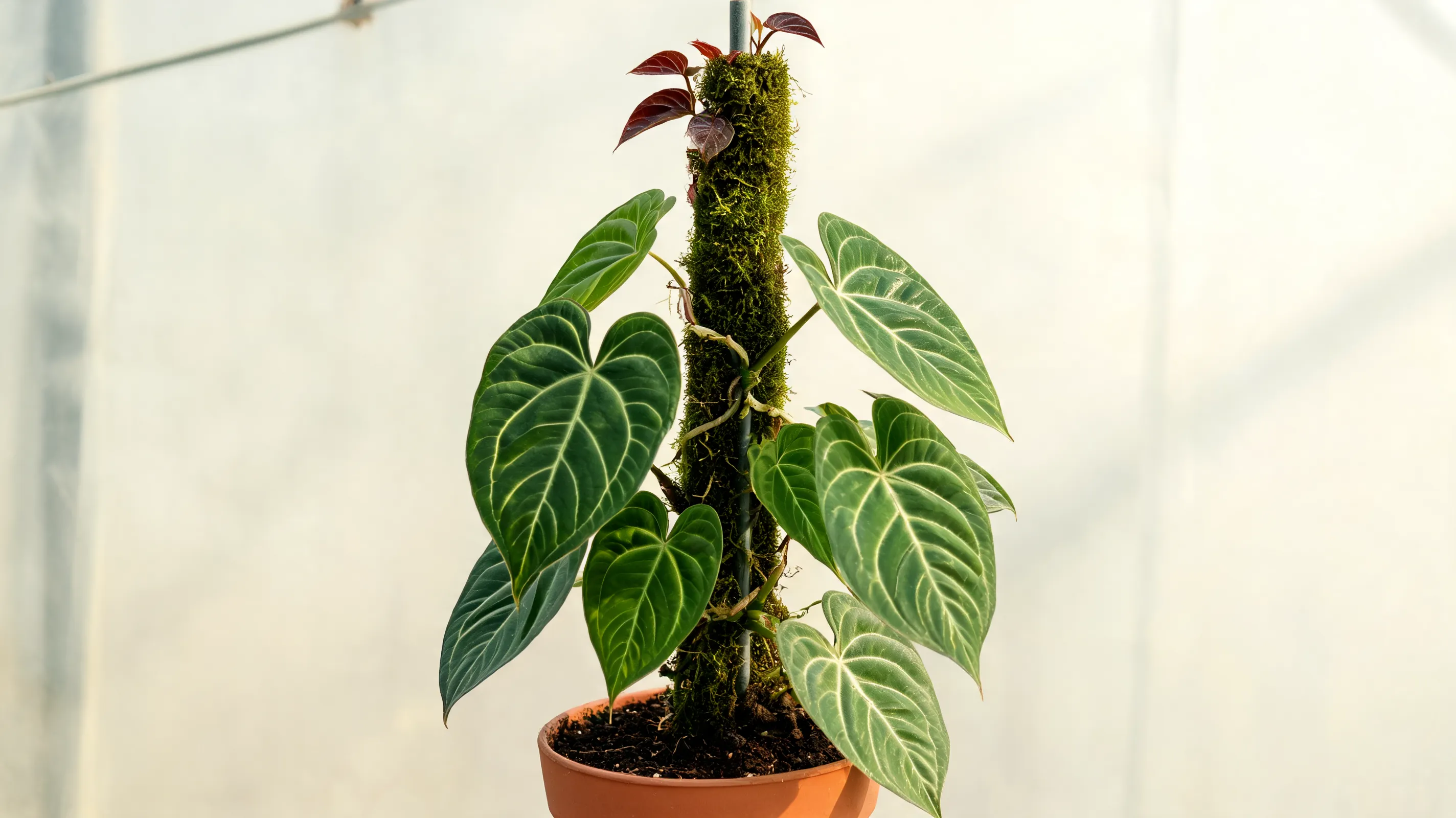
A hybrid with huge, velvety heart-shaped leaves, thick pale veins, and burgundy-toned new growth. It’s a climber, unlike its relative Gloriosum, which crawls. Combining traits from two prized parent species is exactly why it’s a top collector pick.
| Field | Information |
| Botanical Name | Philodendron verrucosum x melanochrysum |
| Leaf Type | Heart-shaped, velvety |
| Leaf Color/Pattern | Deep green with pale veins, burgundy new growth |
| Growth Habit | Climbing |
| Mature Size | Up to 1 ft wide, 2 ft long |
| Difficulty | Moderate |
32. El Choco Red Philodendron
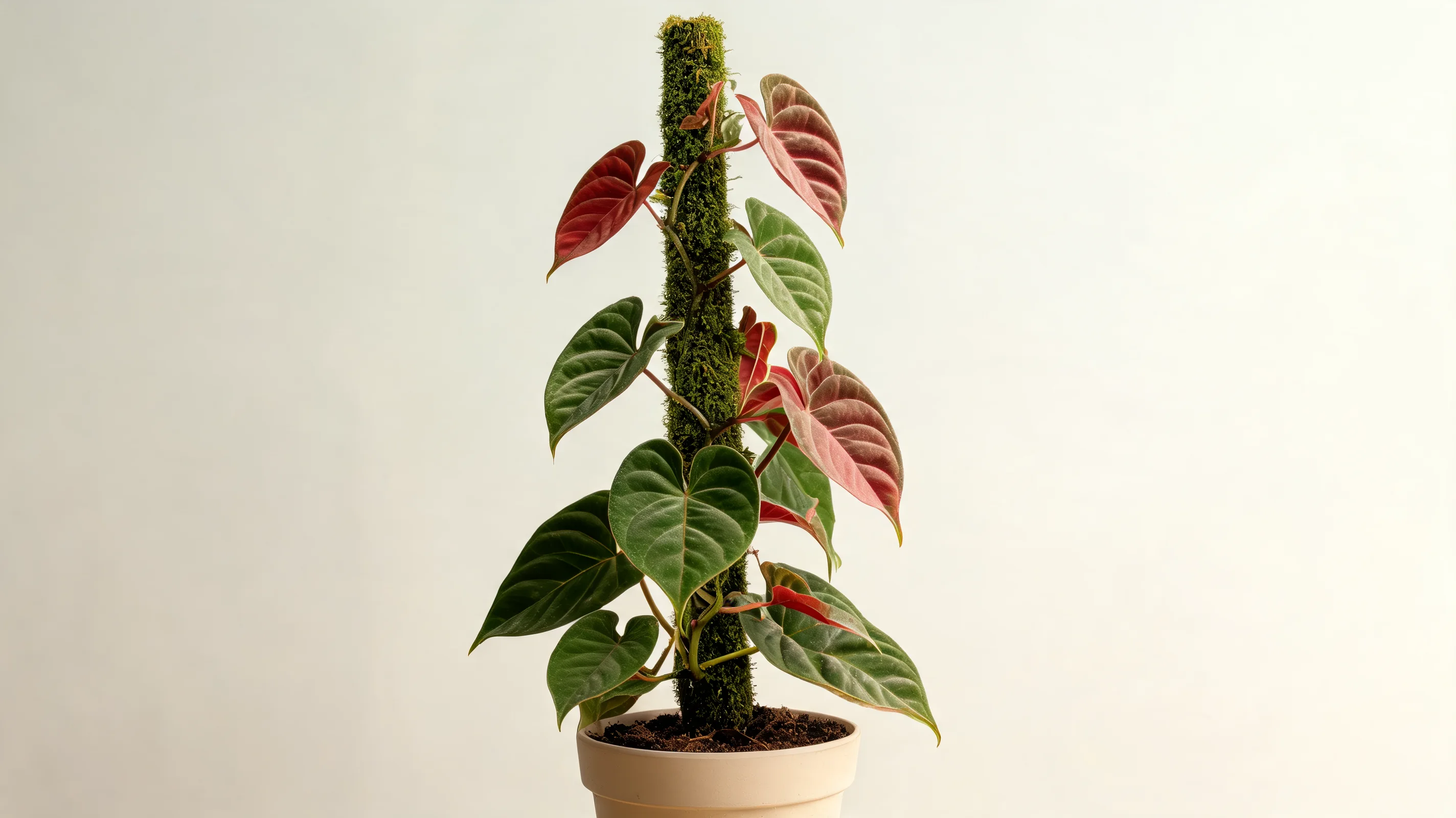
Broad, velvety green leaves with a vivid red underside on new growth that fades as it matures. It climbs with moderate spacing between leaves. The bold red-and-green contrast gives it real presence in a collection.
| Field | Information |
| Botanical Name | Philodendron sp. ‘El Choco Red’ |
| Leaf Type | Broad, heart-shaped, velvety |
| Leaf Color/Pattern | Green with red new growth/underside |
| Growth Habit | Climbing |
| Mature Size | Medium to large |
| Difficulty | Moderate |
33. Philodendron Luxurians
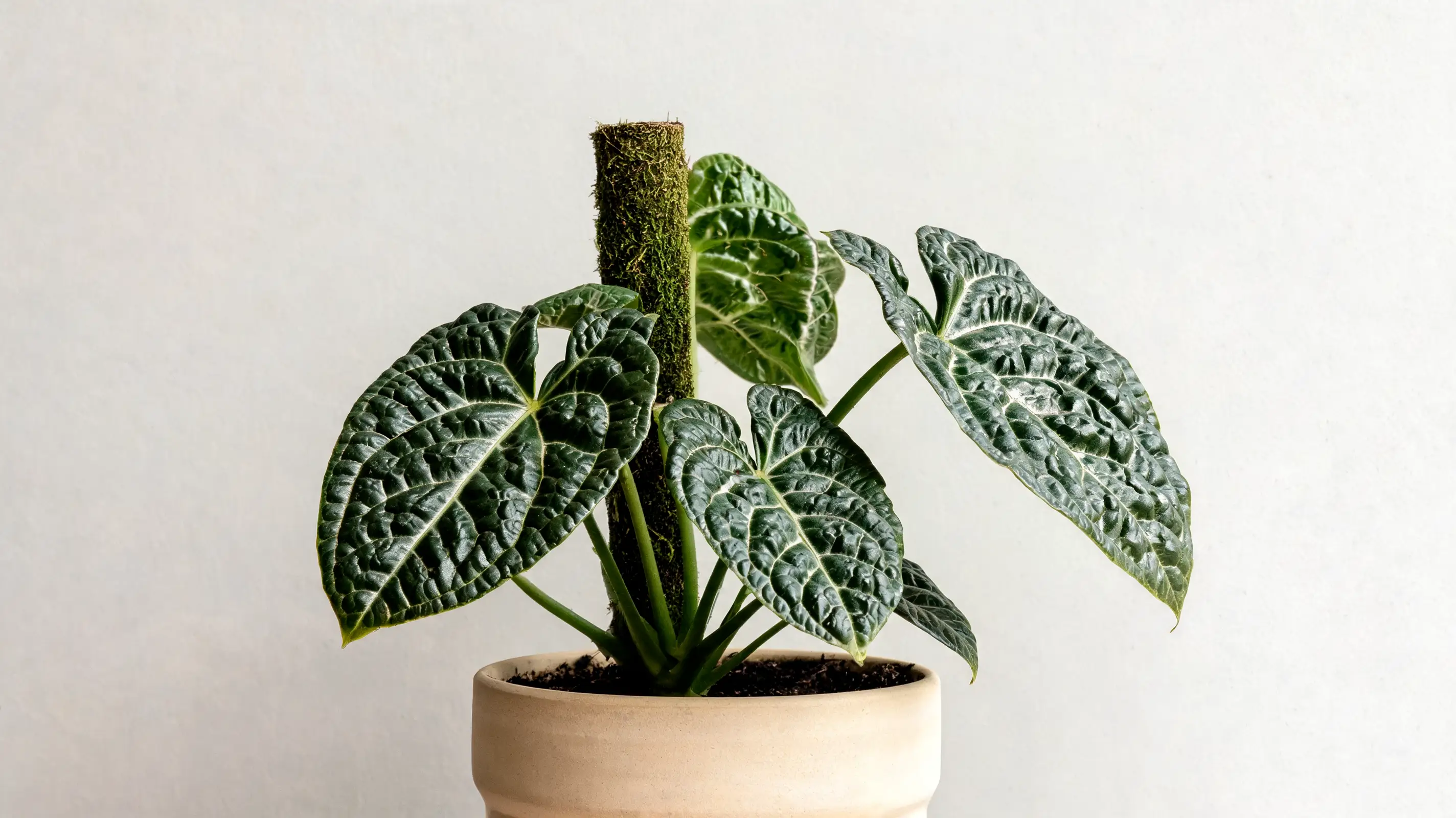
Deeply textured (bullate), thick velvet leaves with shimmering silver-white veins. It stays compact but can semi-climb on a support for larger leaves. Its refined, jewel-like texture is why it’s considered a top-tier velvet philodendron.
| Field | Information |
| Botanical Name | Philodendron luxurians |
| Leaf Type | Bullate (textured), velvety |
| Leaf Color/Pattern | Deep green with silver-white veins |
| Growth Habit | Compact, semi-climbing |
| Mature Size | 24–36 in tall indoors |
| Difficulty | Moderate |
34. Ring of Fire Philodendron
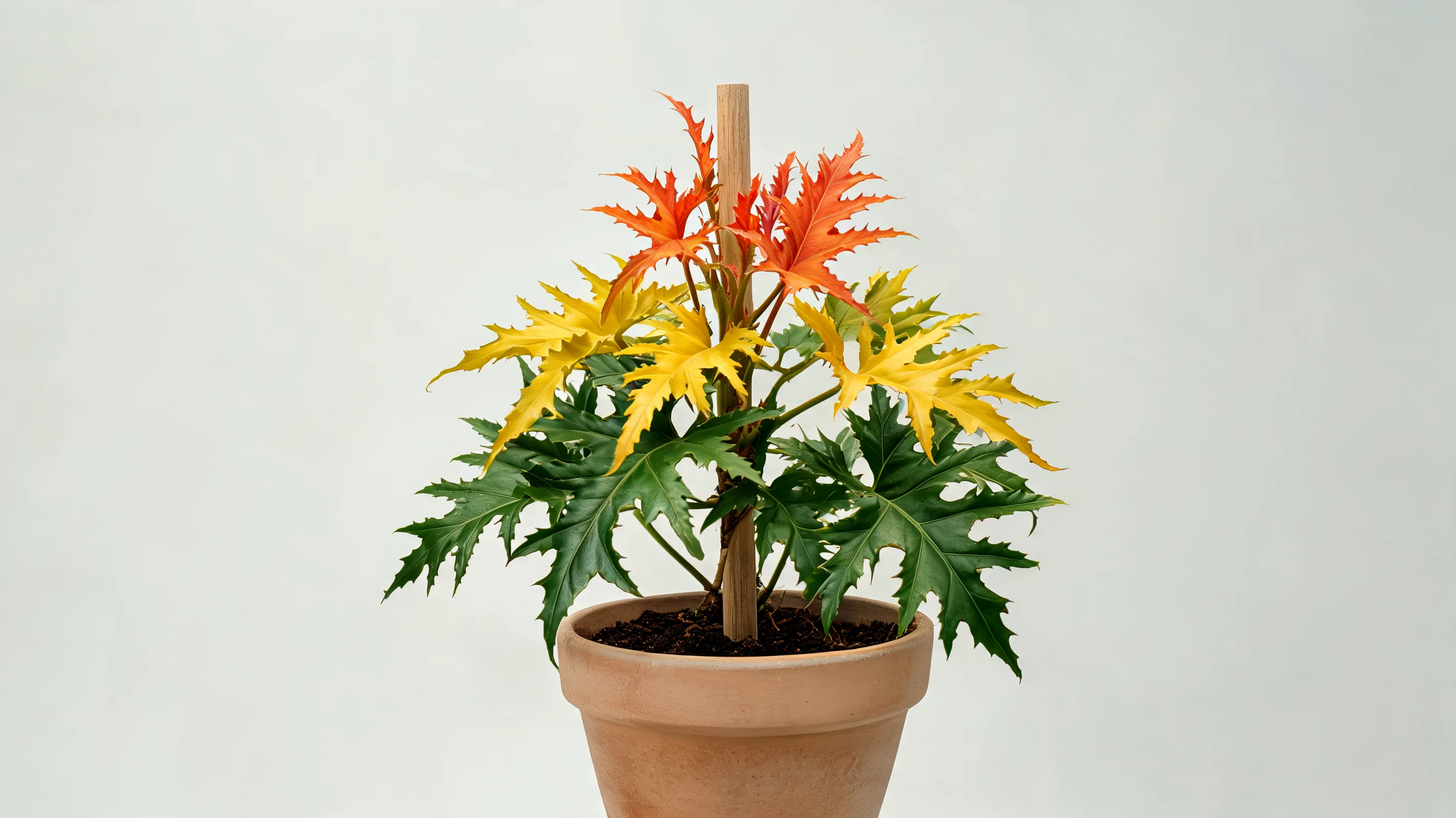
Serrated, deeply lobed leaves that open in fiery orange-red and shift through yellow before settling into green. It grows slowly and can climb with support over time. The ever-changing “fire” color display is the main reason it’s a collector favorite.
| Field | Information |
| Botanical Name | Philodendron erubescens Ring of Fire |
| Leaf Type | Elongated, deeply lobed, serrated |
| Leaf Color/Pattern | Orange-red to yellow to green |
| Growth Habit | Climbing, slow |
| Mature Size | 12–18 in tall, 8–12 in wide |
| Difficulty | Moderate |
35. Florida Beauty Philodendron
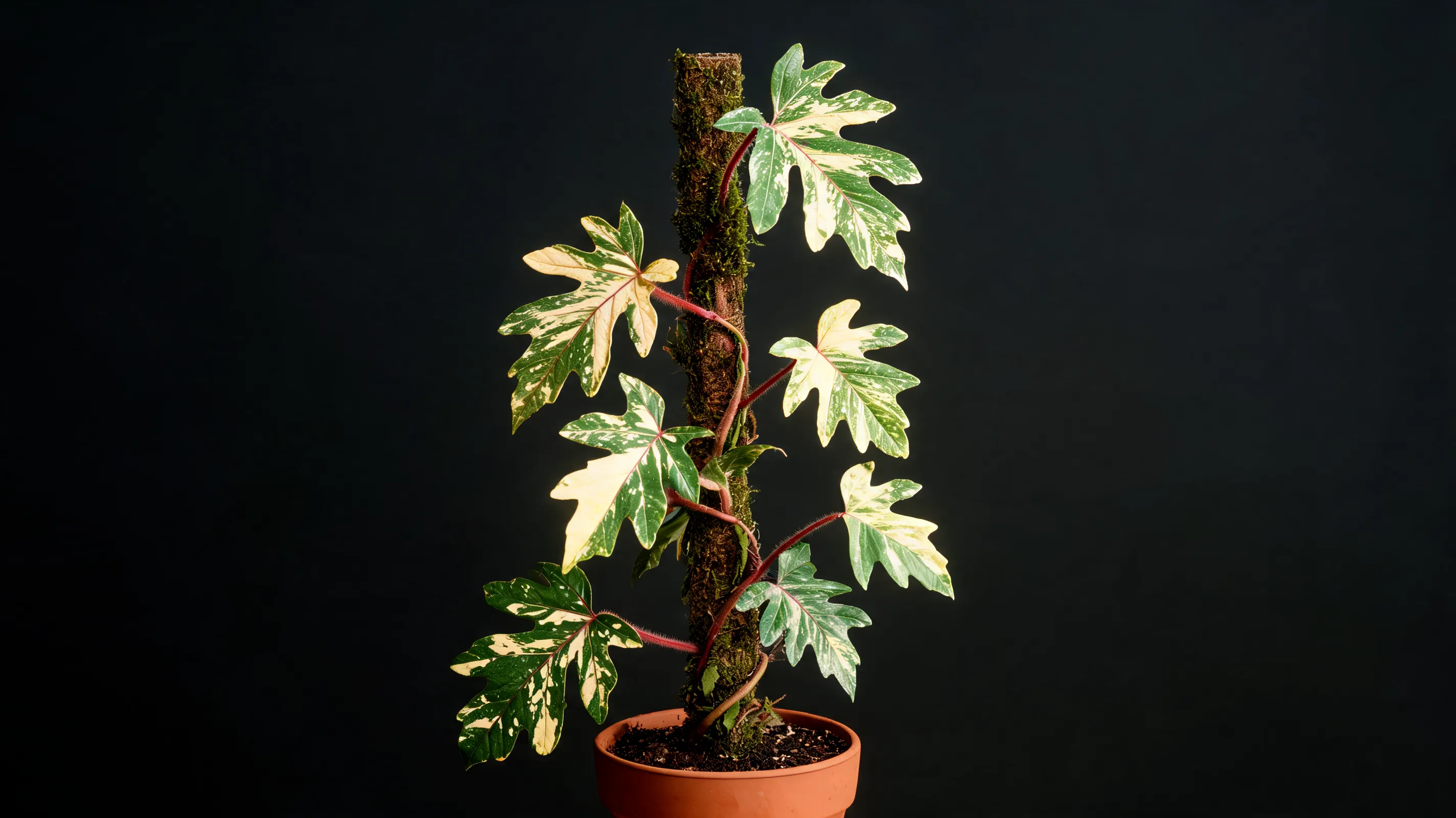
Deeply lobed, oak-like leaves splashed with cream-to-yellow variegation, no two alike. It’s a vigorous climber with slightly hairy, reddish petioles. Each leaf’s unique variegation pattern is exactly why collectors keep coming back to it.
| Field | Information |
| Botanical Name | Philodendron Florida Beauty’ |
| Leaf Type | Deeply lobed, multi-lobed |
| Leaf Color/Pattern | Green with cream/yellow variegation |
| Growth Habit | Climbing |
| Mature Size | Leaves 6–9 in, larger with support |
| Difficulty | Moderate |
36. Strawberry Shake Philodendron
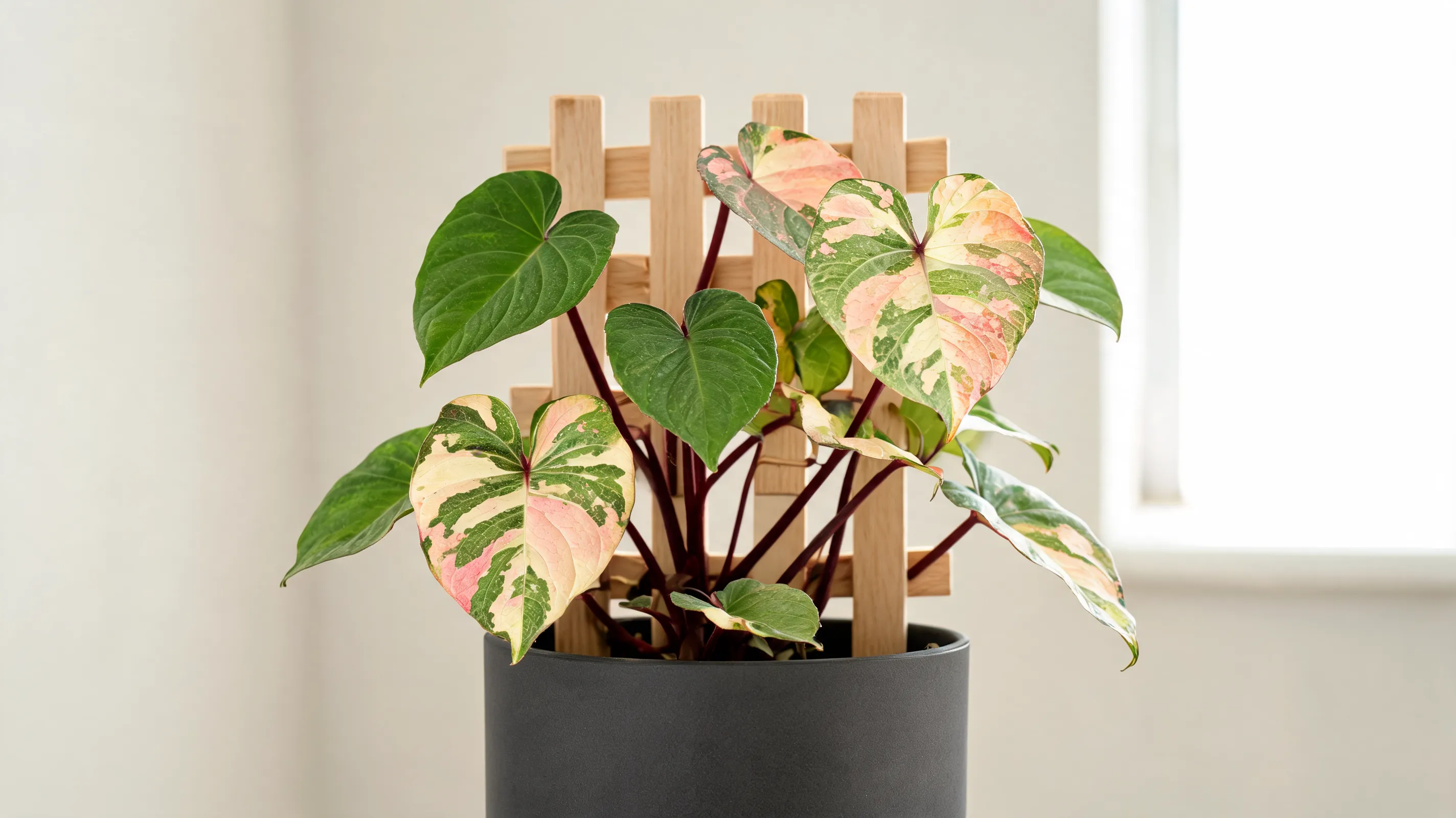
Glossy, rounded triangular leaves on maroon stems, with a variegated form showing pink-cream tones. It climbs or vines with support. The unusual leaf shape and rare pink variegation are what keep it in high demand among collectors.
| Field | Information |
| Botanical Name | Philodendron Strawberry Shake’ |
| Leaf Type | Rounded, triangular |
| Leaf Color/Pattern | Green base, variegated form shows pink/cream |
| Growth Habit | Climbing/vining |
| Mature Size | Medium |
| Difficulty | Moderate |
37. José Buono Philodendron
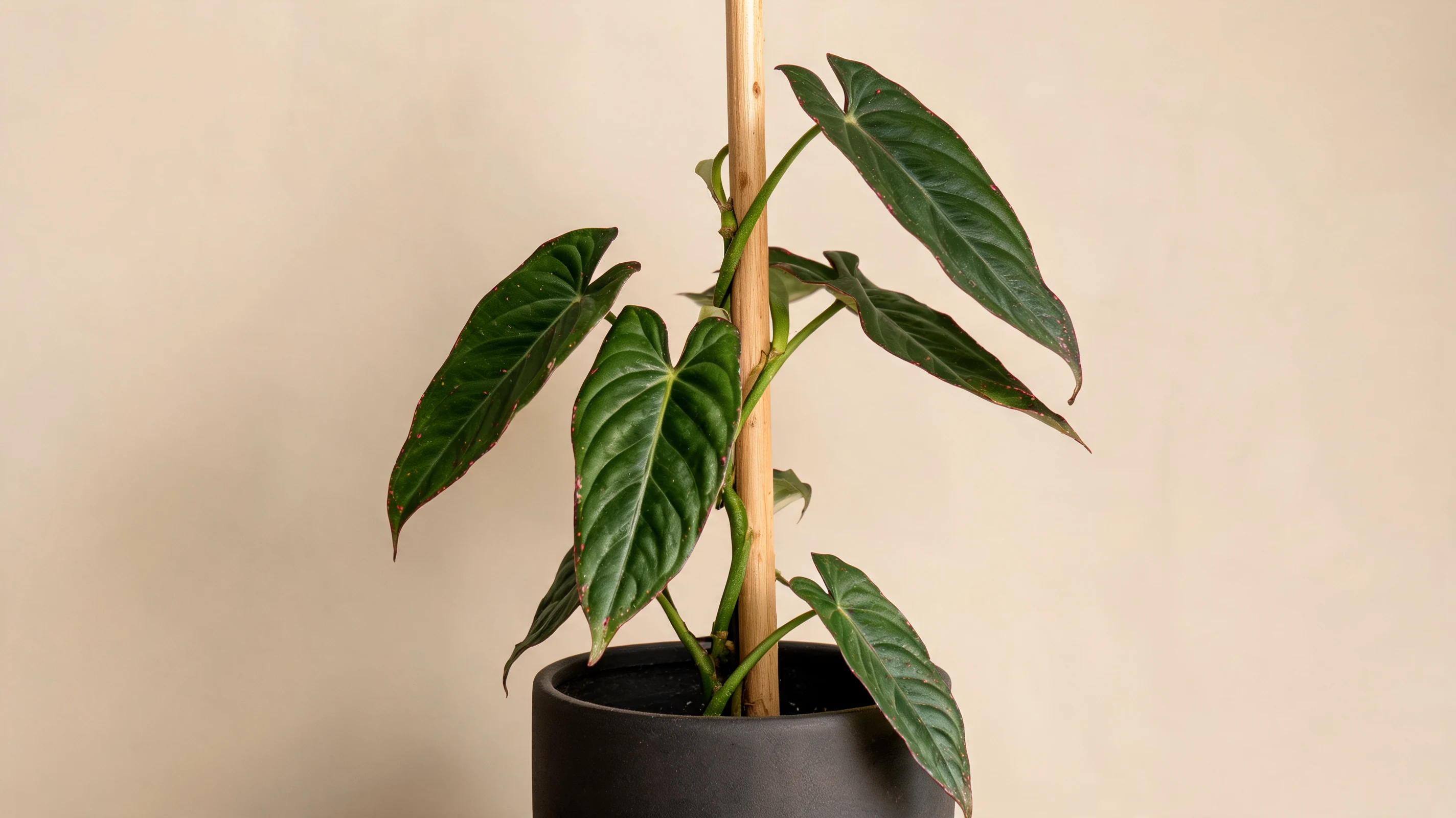
Thick, leathery, elongated heart-shaped leaves, sometimes flecked with red or purple along serrated edges. It climbs and can reach several feet with support. Its bold texture and leaf color make it a standout in a rare-plant collection.
| Field | Information |
| Botanical Name | Philodendron’ José Buono’ |
| Leaf Type | Elongated, heart-shaped, leathery |
| Leaf Color/Pattern | Dark green with red/purple flecks |
| Growth Habit | Climbing |
| Mature Size | Up to 4 ft tall indoors |
| Difficulty | Moderate |
38. Silver Cloud Philodendron
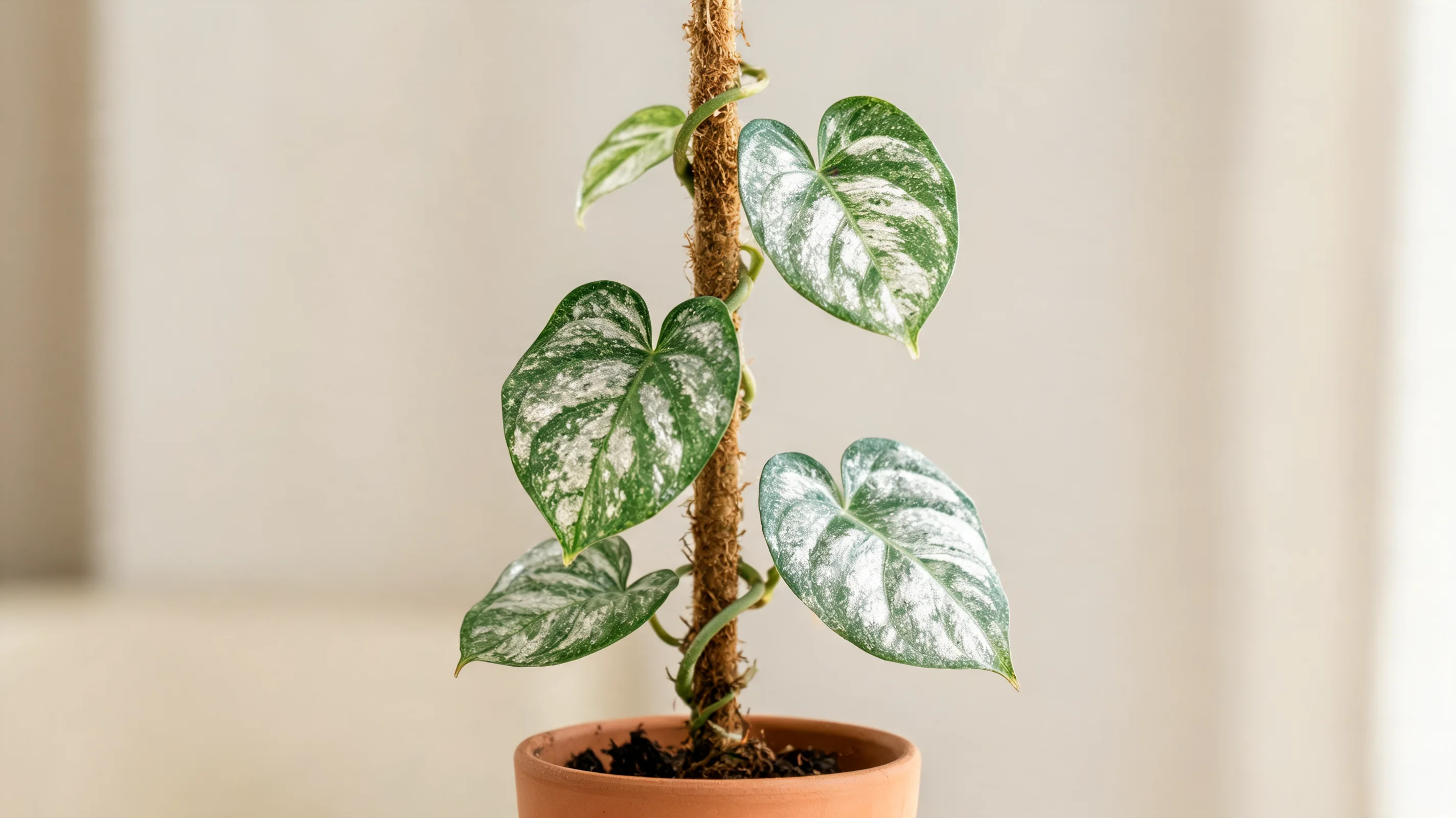
Large, rounded heart-shaped leaves overlaid with patches of shimmering silver sheen. It’s a vining plant closely related to Philodendron mamei but with rounder leaves and more filled-in silver. The dense silver “cloud” effect is why it’s a niche collector pick.
| Field | Information |
| Botanical Name | Philodendron Silver Cloud’ |
| Leaf Type | Rounded, heart-shaped |
| Leaf Color/Pattern | Green with silver patches |
| Growth Habit | Vining |
| Mature Size | Medium-large leaves |
| Difficulty | Moderate |
39. Paraiso Verde Philodendron
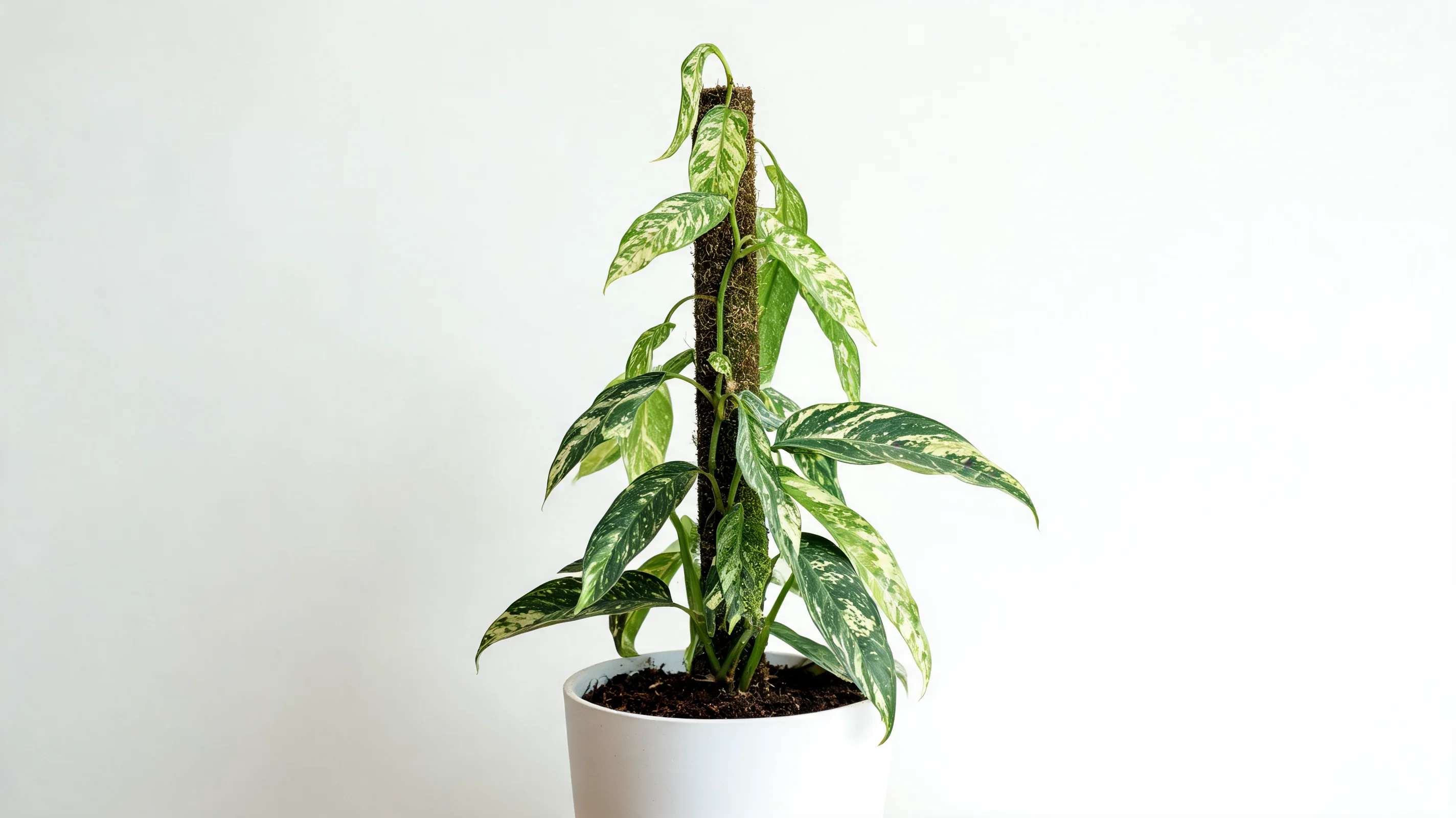
Elongated, strap-shaped leaves with cream variegation that deepens into shades of green as they mature. It’s a dwarf climbing type that stays fairly compact. Its unique, ever-darkening variegation pattern is what makes it a rare find.
| Field | Information |
| Botanical Name | Philodendron Paraiso Verde’ |
| Leaf Type | Elongated, strap-shaped |
| Leaf Color/Pattern | Cream variegation deepening to green |
| Growth Habit | Climbing, dwarf/compact |
| Mature Size | Leaves around 10 in long |
| Difficulty | Moderate |
Specialty Philodendron Varieties
This final batch rounds out the list with less common types, some prized for odd textures, some for unusual growth habits, and a few naturally occurring species you won’t find at a typical garden center.
40. Philodendron Tortum
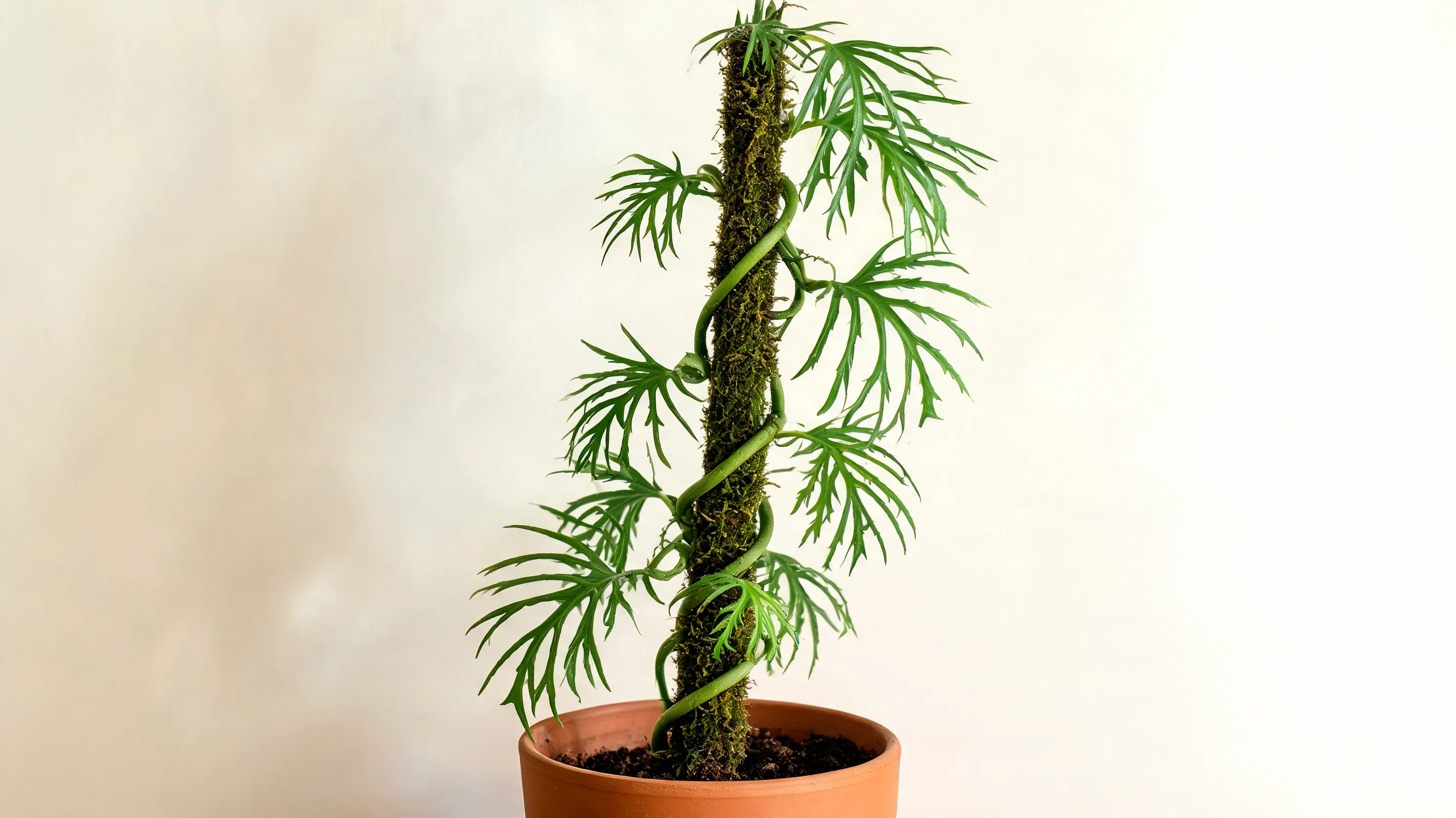
Finely divided, skeletal-looking leaves on gracefully twisted stems. It’s a fast-growing climber that does best on a moss pole. The lacy, almost fern-like leaf shape sets it apart from every other Philodendron on this list.
| Field | Information |
| Botanical Name | Philodendron tortum |
| Leaf Type | Deeply divided, skeletal |
| Leaf Color/Pattern | Green |
| Growth Habit | Climbing |
| Mature Size | Leaves 20–28 in long |
| Difficulty | Easy-moderate |
41. Jungle Boogie Philodendron
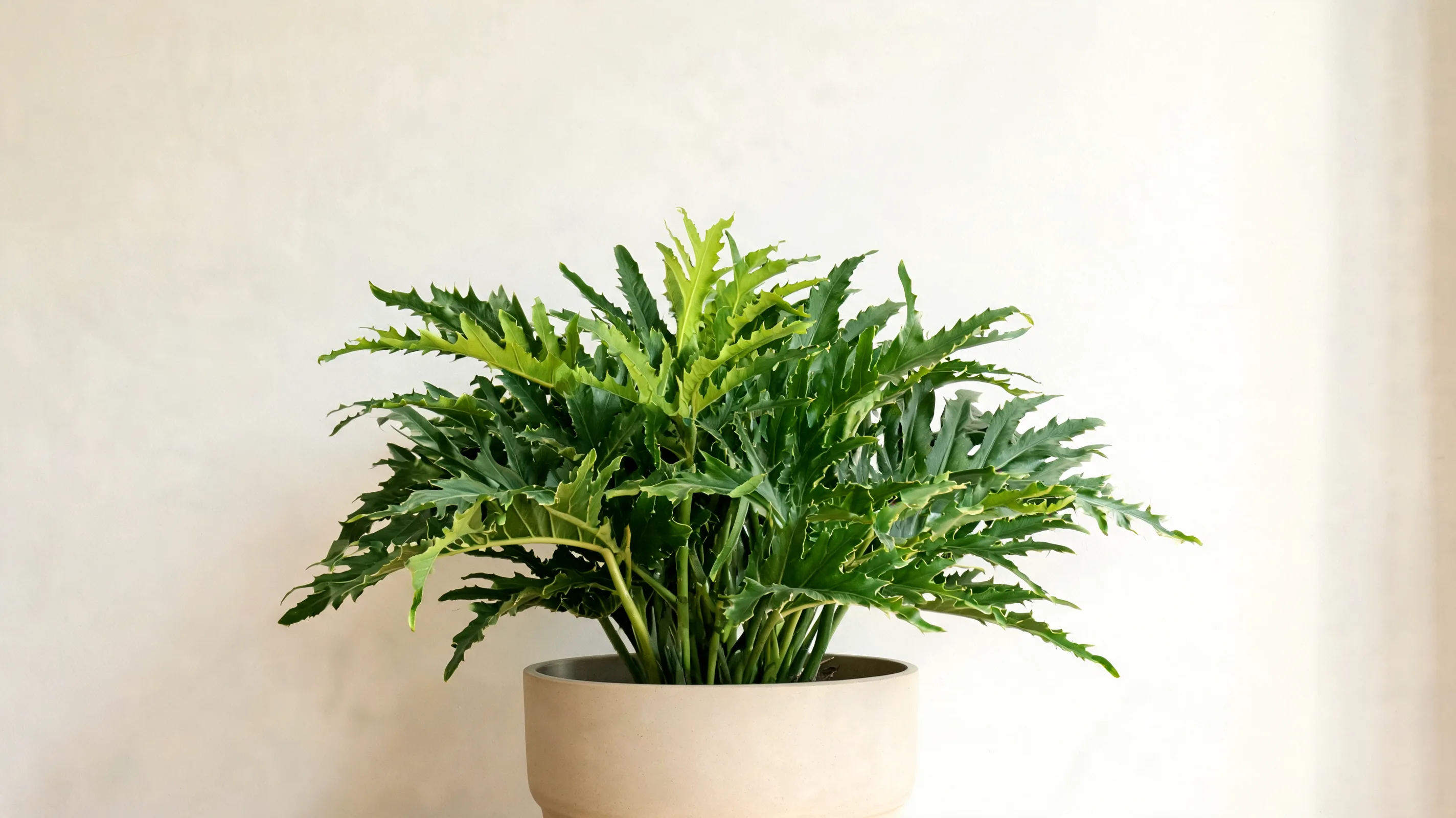
Long, strappy leaves with deeply toothed edges, emerging neon green before deepening. It stands upright in a self-heading form rather than climbing. The jagged, tiger-tooth edge of each leaf is what gives it away.
| Field | Information |
| Botanical Name | Philodendron Narrow (trade name ‘Jungle Boogie’) |
| Leaf Type | Long, narrow, serrated |
| Leaf Color/Pattern | Deep green |
| Growth Habit | Upright, self-heading |
| Mature Size | 4–6 ft tall |
| Difficulty | Easy |
42. Painted Lady Philodendron
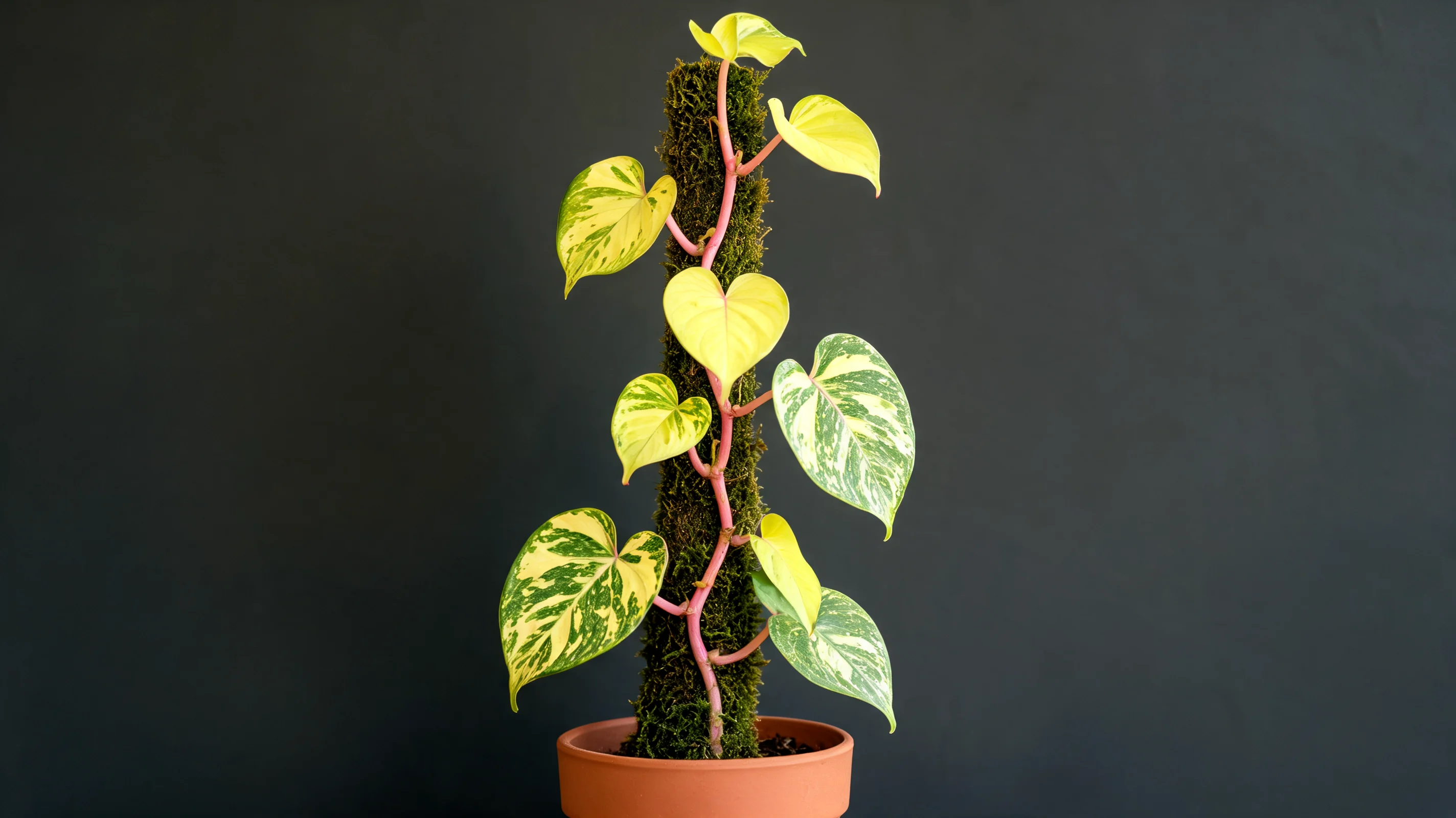
Leaves that open neon yellow and mottle with green as they mature, held on bright pink stems that keep their color. It’s a climbing hybrid. The combination of yellow-green mottling and pink stems is its clearest identifying feature.
| Field | Information |
| Botanical Name | Philodendron erubescens ‘Painted Lady’ |
| Leaf Type | Heart-shaped |
| Leaf Color/Pattern | Neon yellow mottled green, pink stems |
| Growth Habit | Climbing |
| Mature Size | Medium |
| Difficulty | Easy-moderate |
43. Philodendron Grazielae
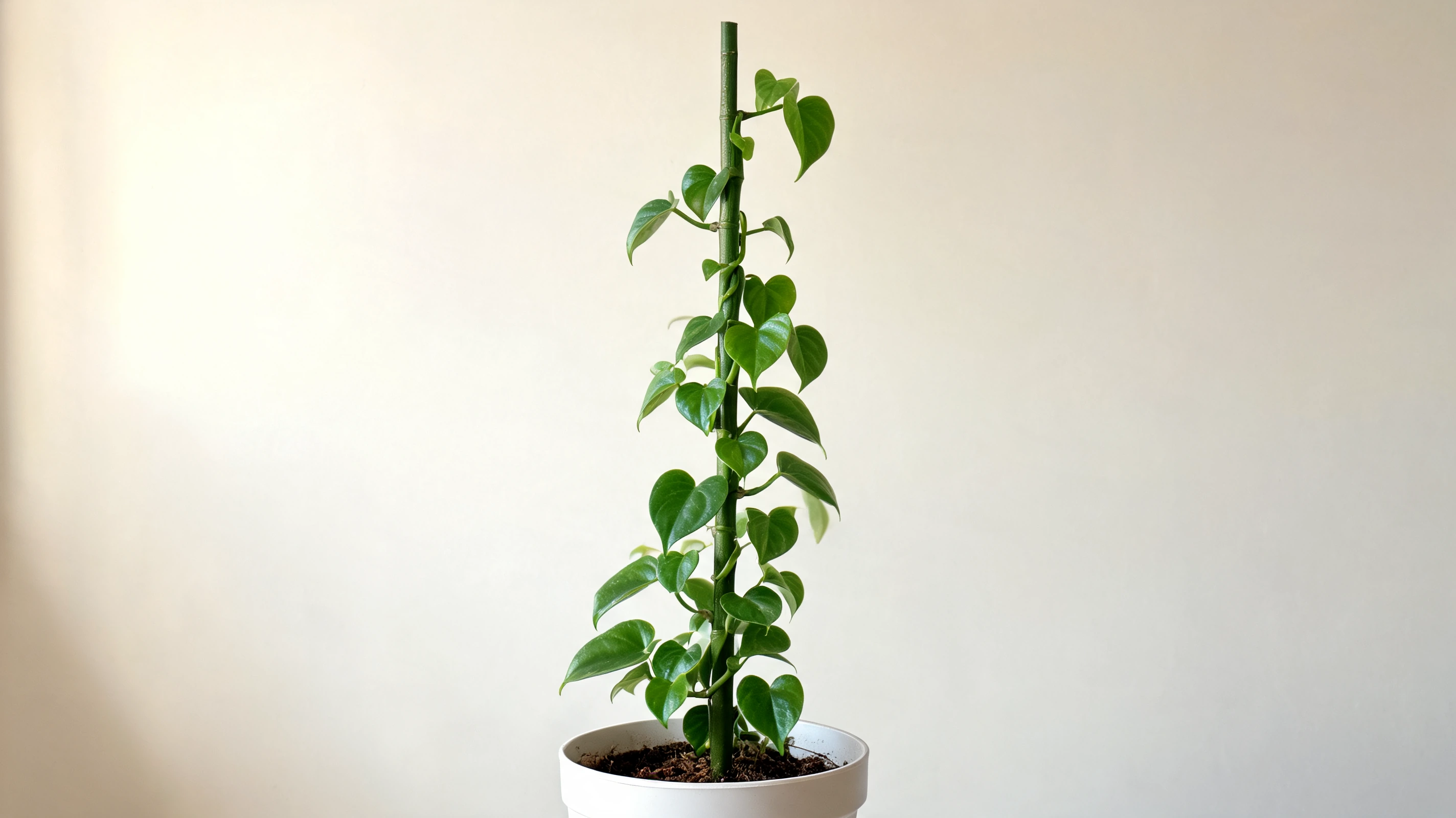
Small, glossy, heart-shaped leaves on a thick, stiff, upright stem. It grows slowly and benefits from a hardscape or support to stay upright. Its unusually small leaf size compared to most philodendrons sets it apart at a glance.
| Field | Information |
| Botanical Name | Philodendron grazielae |
| Leaf Type | Small, heart-shaped (cordate) |
| Leaf Color/Pattern | Glossy green |
| Growth Habit | Upright/climbing, slow |
| Mature Size | Leaves 1.5–4 in wide |
| Difficulty | Moderate |
44. Philodendron Camposportoanum
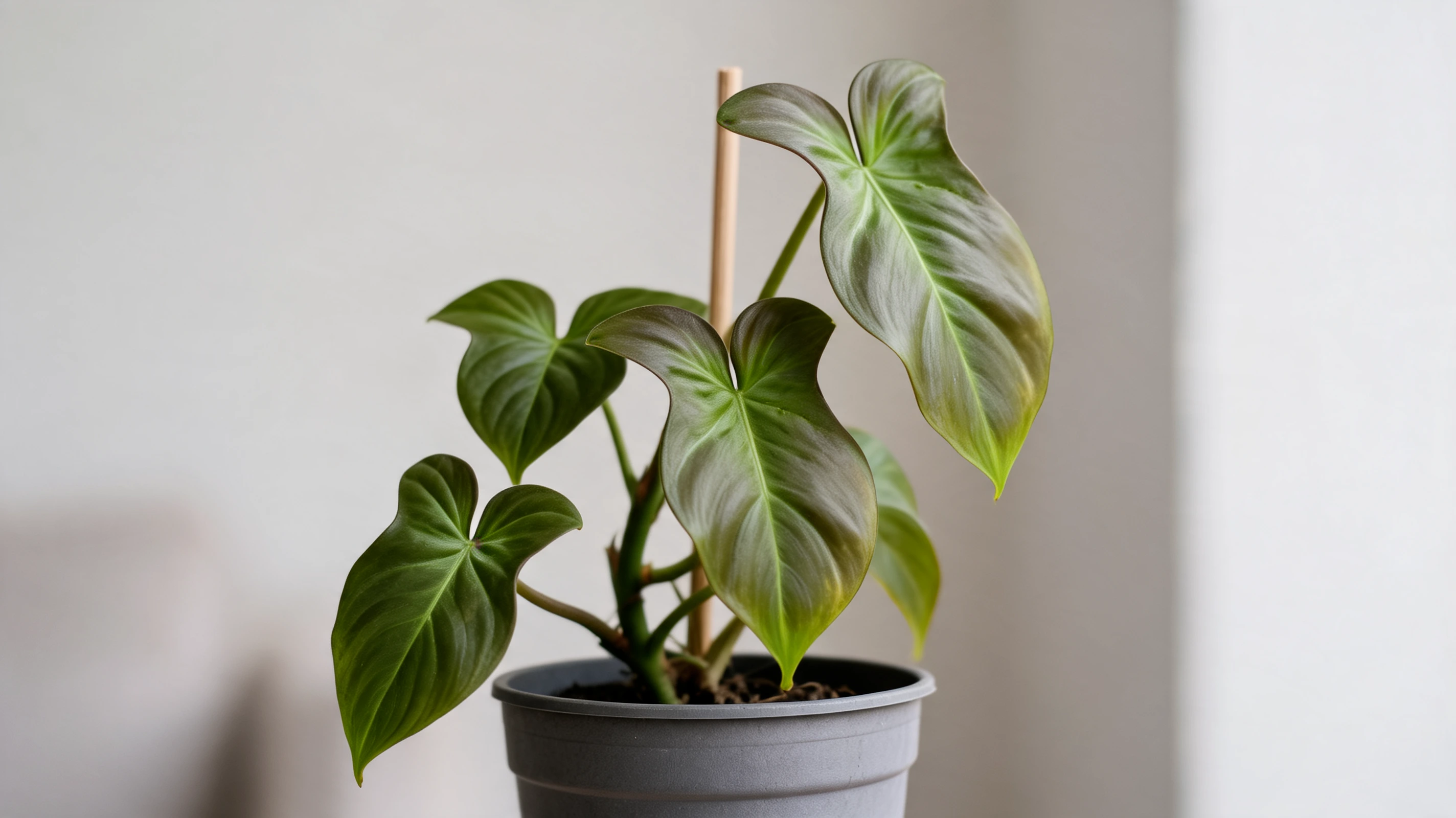
A shape-shifting plant: small velvety black leaves as a juvenile, shifting into heart-shaped, then trilobed “hammer” leaves as it matures. It climbs with support. Having two or three different leaf shapes on one plant at once is its key identifying quirk.
| Field | Information |
| Botanical Name | Philodendron camposportoanum |
| Leaf Type | Changes shape with maturity (velvety to trilobed) |
| Leaf Color/Pattern | Dark green, pink-orange in bright light |
| Growth Habit | Climbing vine |
| Mature Size | About 20–25 in tall |
| Difficulty | Moderate |
45. Philodendron Bipennifolium
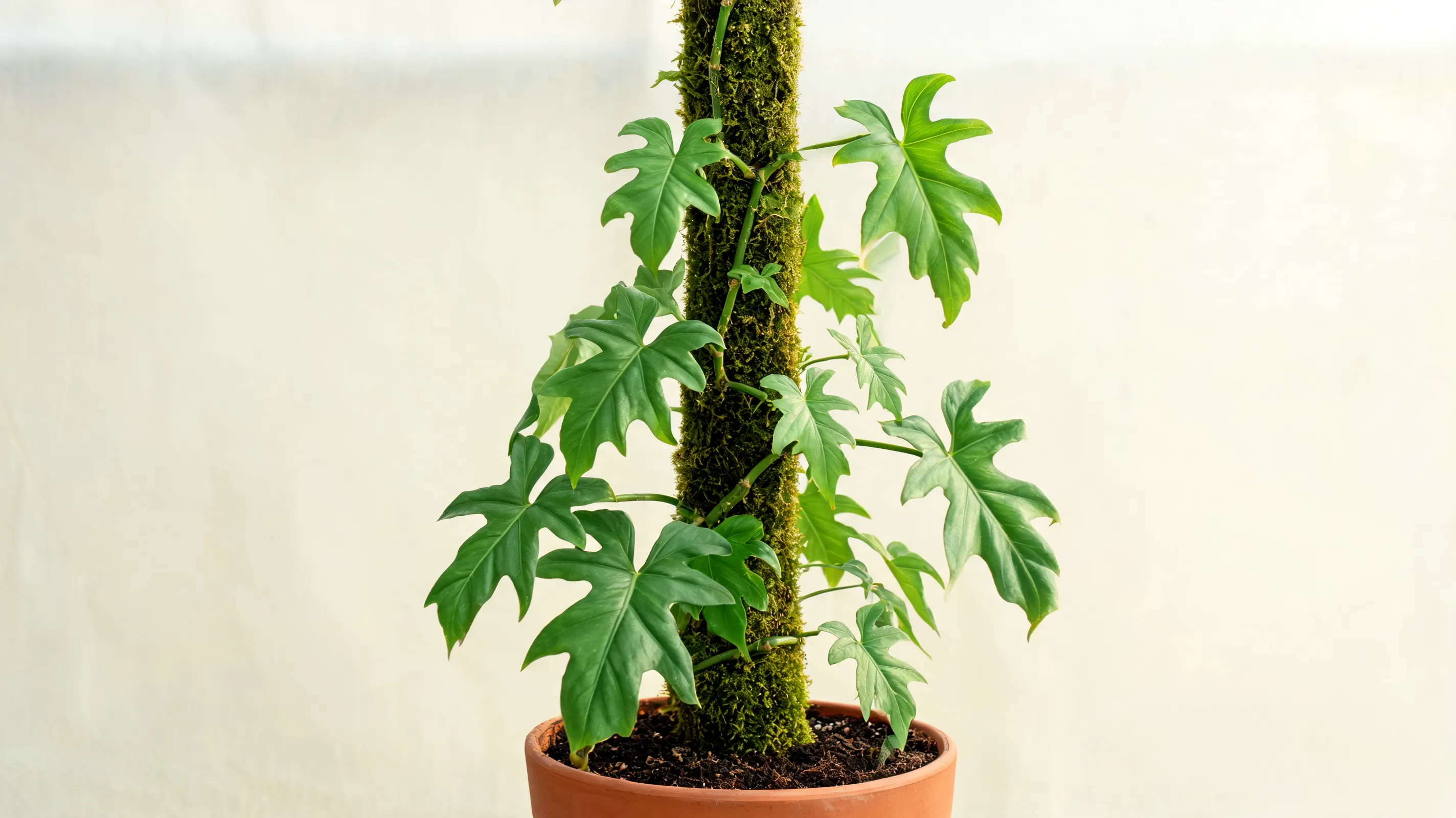
Distinctive five-lobed leaves shaped like a fiddle or violin. It’s a climbing species from Brazil. The fiddle-shaped leaf outline is unmistakable and gives the plant its common nickname.
| Field | Information |
| Botanical Name | Philodendron bipennifolium |
| Leaf Type | Fiddle/violin-shaped, five-lobed |
| Leaf Color/Pattern | Green |
| Growth Habit | Climbing |
| Mature Size | Medium to large |
| Difficulty | Easy-moderate |
46. Philodendron Plowmanii
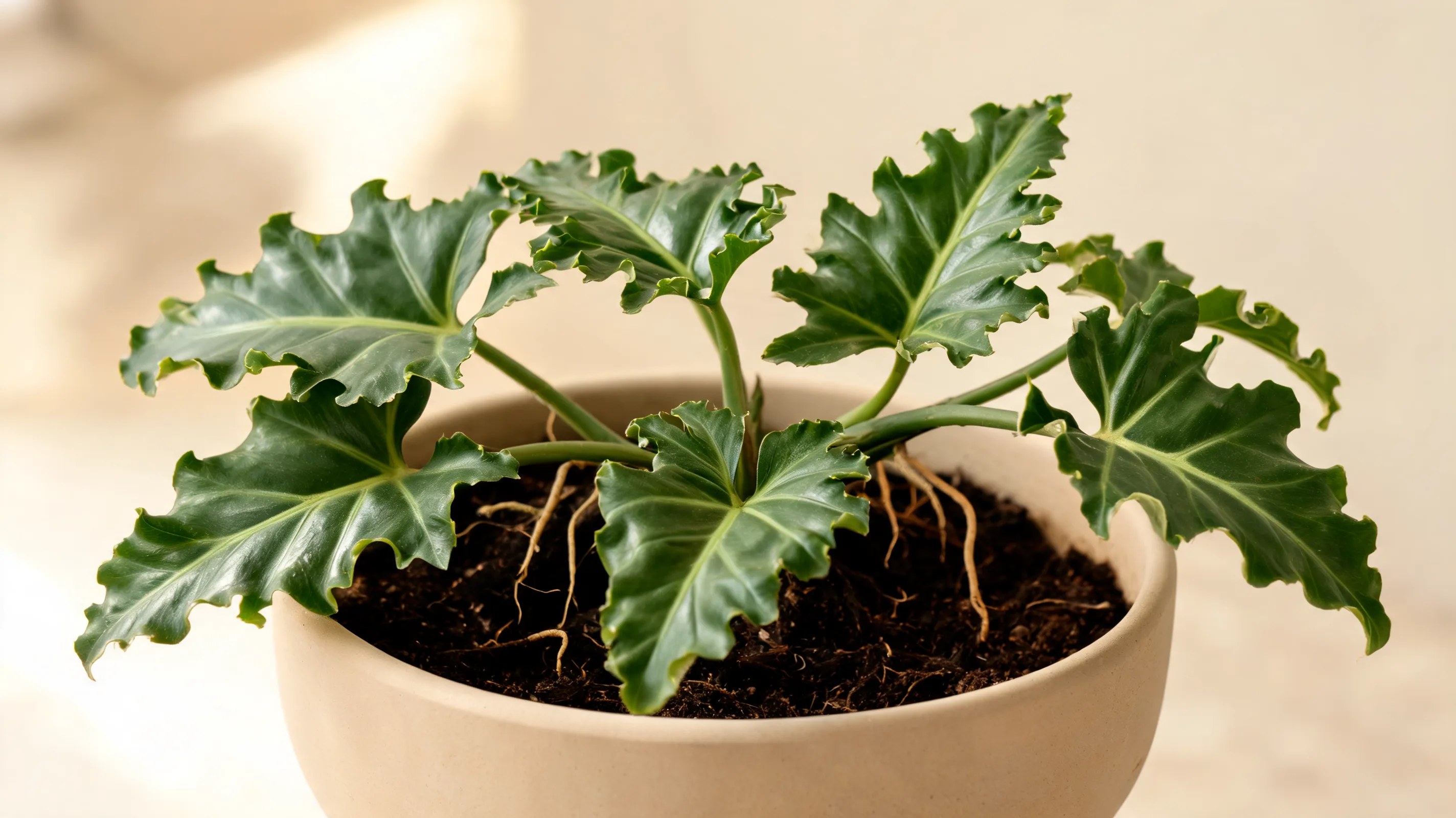
Large, ruffled, deep glossy green leaves with wavy edges and bold veining. It grows as a terrestrial or epiphytic sprawler with aerial roots. The heavily undulating leaf margin is what makes this species easy to spot.
| Field | Information |
| Botanical Name | Philodendron plowmanii |
| Leaf Type | Large, ruffled, wavy edges |
| Leaf Color/Pattern | Deep glossy green |
| Growth Habit | Terrestrial/epiphytic, sprawling |
| Mature Size | Up to 8 ft tall indoors |
| Difficulty | Moderate |
47. Philodendron Pastazanum
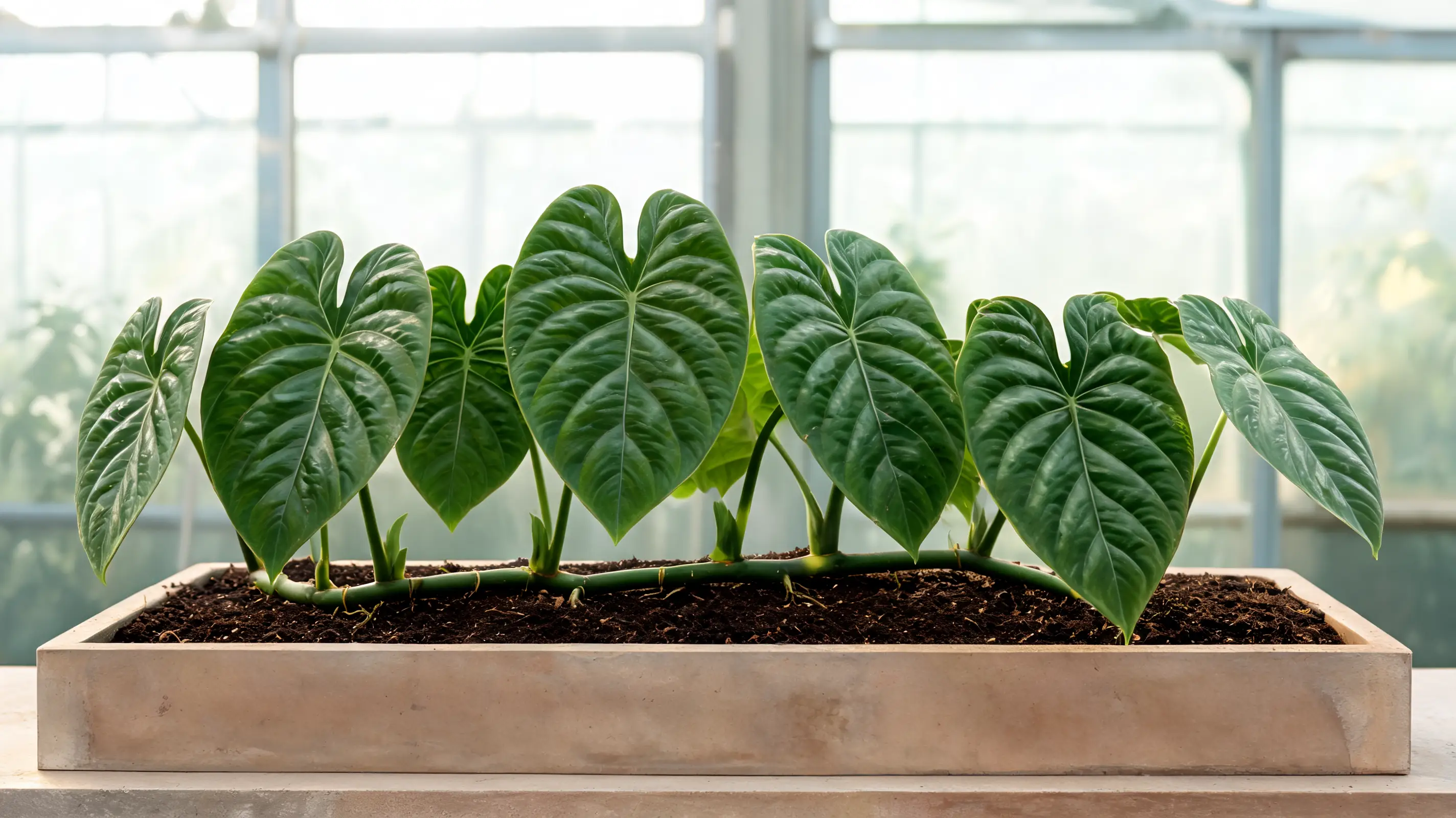
Broad, heart-shaped leaves with sunken veins and a leathery, semi-glossy texture. It creeps along the ground rather than climbing. Its oversized, deeply cordate leaves and ground-hugging growth are the clearest ways to tell it apart.
| Field | Information |
| Botanical Name | Philodendron pastazanum |
| Leaf Type | Broad, heart-shaped |
| Leaf Color/Pattern | Deep emerald green |
| Growth Habit | Creeping (non-climbing) |
| Mature Size | Leaves over 20 in long |
| Difficulty | Moderate |
48. Dean McDowell Philodendron
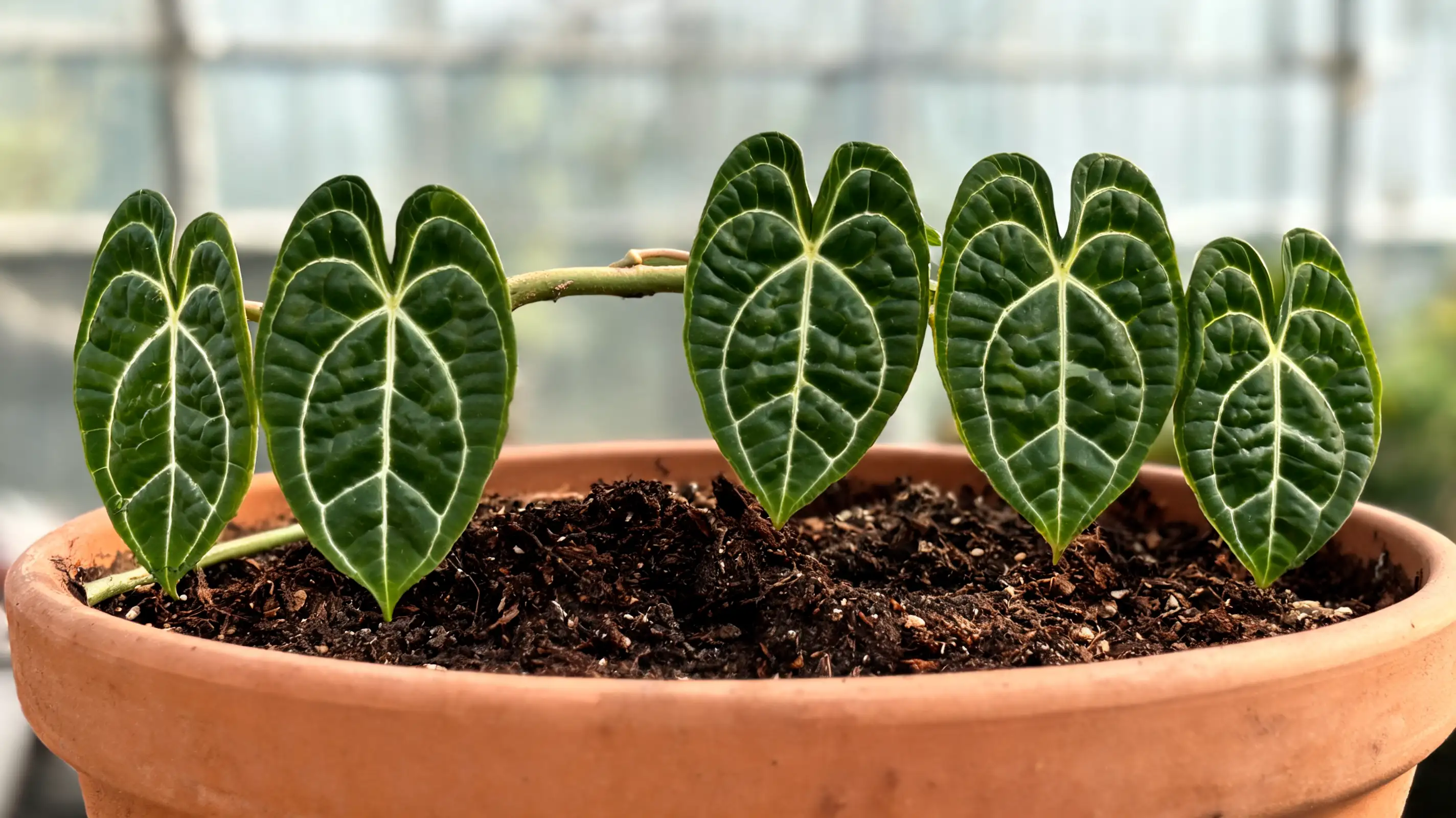
Large, puckered, heart-shaped leaves in dark green with striking white veins. It’s a low, ground-hugging hybrid that doesn’t climb. The combination of a velvety texture with bold white veining is what makes it easy to recognize.
| Field | Information |
| Botanical Name | Philodendron gloriosum x pastazanum ‘Dean McDowell’ |
| Leaf Type | Heart-shaped, puckered, velvety |
| Leaf Color/Pattern | Dark green with white veins |
| Growth Habit | Creeping (non-climbing) |
| Mature Size | Leaves up to 2 ft long |
| Difficulty | Moderate |
49. Philodendron Martianum
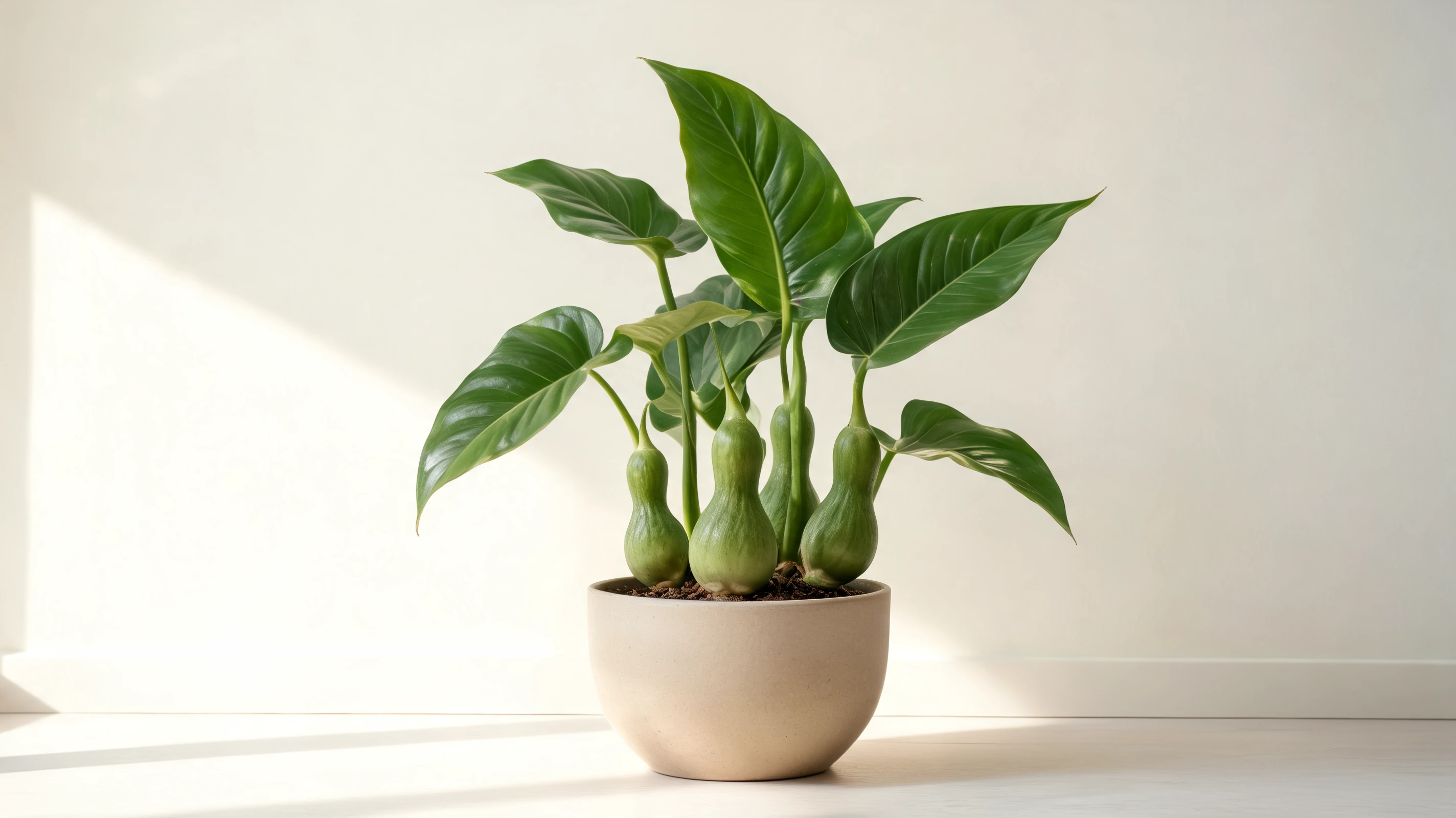
Thick, swollen, flask-shaped petioles carry broad glossy green leaves on a self-supporting plant that never climbs. That bulging, water-storing petiole is exactly why growers nicknamed it the “Flask Philodendron.”
| Field | Information |
| Botanical Name | Philodendron martianum |
| Leaf Type | Broad, lance-shaped |
| Leaf Color/Pattern | Glossy green |
| Growth Habit | Upright, self-supporting |
| Mature Size | Leaves up to 18 in long |
| Difficulty | Easy |
50. Philodendron Maximum
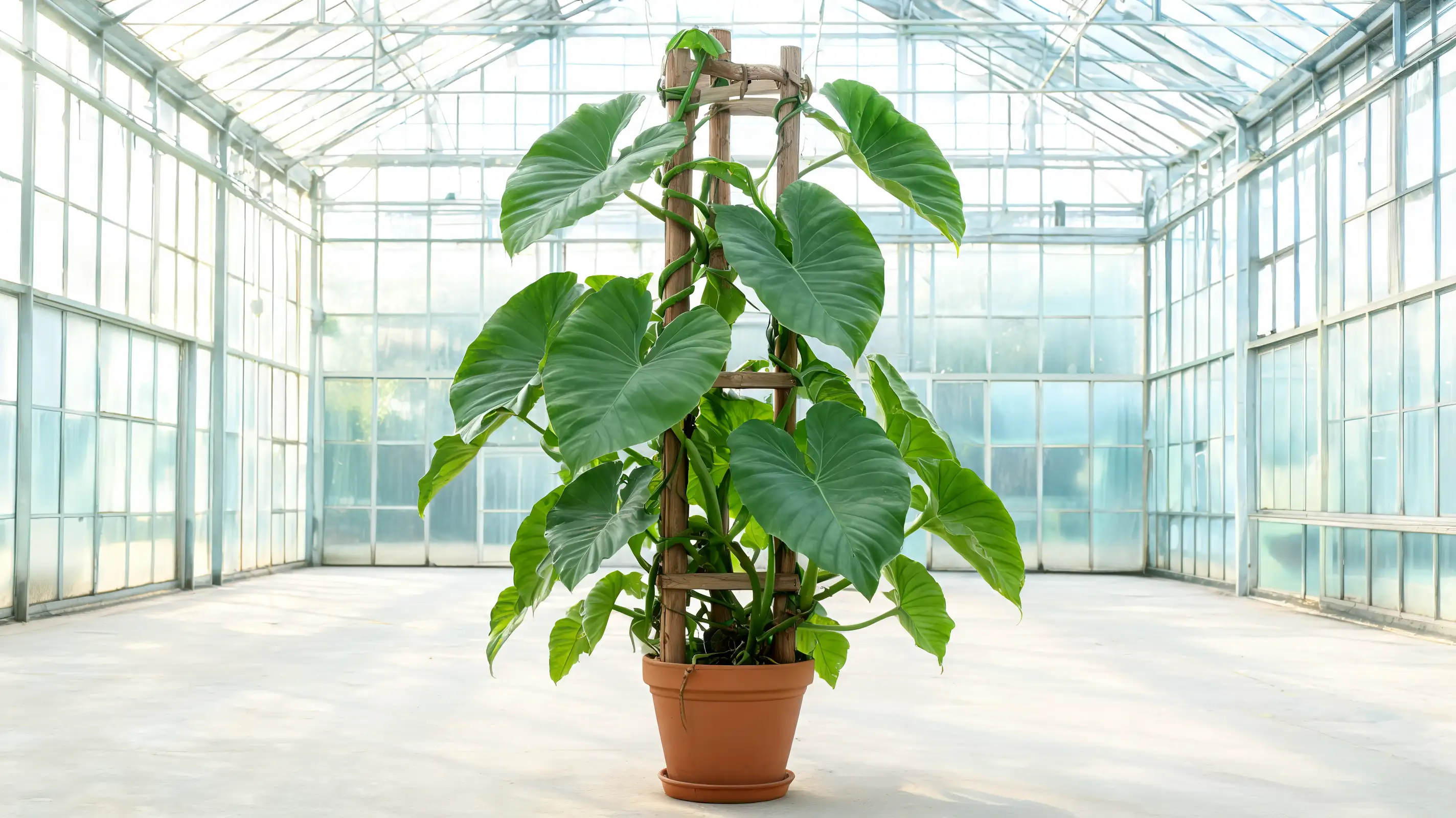
This climber produces some of the largest leaves in the genus, broad and heart-shaped enough to dwarf most other philodendrons, so plan on a sturdy trellis or totem for support. Sheer leaf size alone identifies it in a mixed collection.
| Field | Information |
| Botanical Name | Philodendron maximum |
| Leaf Type | Broad, heart-shaped, very large |
| Leaf Color/Pattern | Green |
| Growth Habit | Climbing |
| Mature Size | Leaves up to 2 ft long |
| Difficulty | Moderate |
51. Philodendron Florida Green
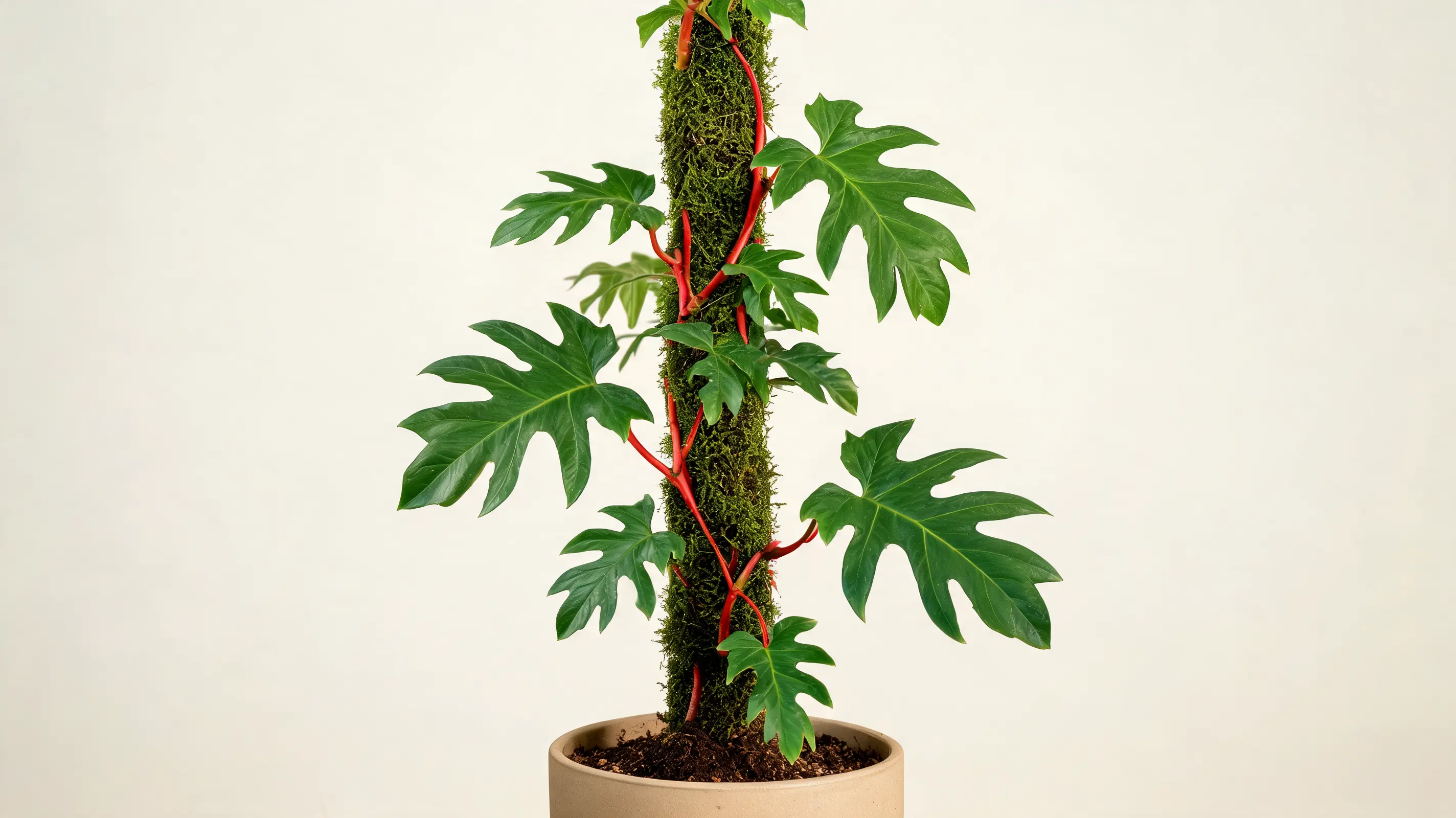
Lobed green leaves on long, striking red stems that can stretch out over a meter. It’s a climbing hybrid between two easy-care species. The bright red stems paired with plain green lobed leaves make it easy to tell apart from its variegated Florida relatives.
| Field | Information |
| Botanical Name | Philodendron squamiferum x pedatum ‘Florida Green’ |
| Leaf Type | Lobed |
| Leaf Color/Pattern | Green, red stems |
| Growth Habit | Climbing |
| Mature Size | Stems up to 3 ft long |
| Difficulty | Easy |
That covers a wide range of philodendron types, from easy beginner classics to rare, velvety collector pieces. Whatever look you’re after, there’s a good chance you’ll find a variety on this list to match it.
Philodendron Care Basics
Philodendron care basics come down to four things: light, water, soil, and placement. Get these right, and most varieties stay healthy with very little extra effort.
- Light: Most philodendrons do best in bright, indirect light, though some varieties handle lower light just fine.
- Water: Water once the top layer of soil dries out. Keeping the soil constantly wet leads to problems fast.
- Soil: A well-draining potting mix is key. Good drainage keeps the roots healthy and prevents rot.
- Placement: Climbing types grow well with a support or hanging basket. Upright types fit nicely on tables or floor spaces.
One more thing worth knowing before you bring a philodendron home: every part of the plant is toxic to cats and dogs, so keep pots out of reach in homes with curious pets or young children. Get the basics right, and most varieties should reward you with steady, healthy growth.
Frequently Asked Questions
Are philodendrons toxic to pets?
Yes. All philodendrons contain calcium oxalate crystals, which irritate the mouth and throat if chewed. Symptoms include drooling, swelling, and vomiting. Keep plants away from cats, dogs, and small children, and contact a vet if ingestion happens.
How can I tell a philodendron apart from a pothos?
Check the new leaf: philodendrons unfurl from a thin sheath called a cataphyll, which dries and falls off. Pothos leaves emerge wrapped in the previous leaf instead. Philodendron stems are also rounder, while pothos stems are more rigid.
Why is my variegated Philodendron losing its color?
Low light is the most common cause. Variegated leaves have less chlorophyll, so they need brighter indirect light to hold their pattern. Once a leaf reverts fully to green, it won’t turn variegated again, though new growth can.
What’s the easiest way to propagate a philodendron?
Cut a stem section with at least one leaf node attached, just below the node. Place it in water or moist soil. Roots usually appear within two to four weeks, depending on the variety and light conditions.
Why are the leaf tips on my Philodendron turning brown?
Brown tips usually point to low humidity, fertilizer buildup, or inconsistent watering. Raise humidity with a tray of water or humidifier, flush the soil occasionally to clear excess salts, and stick to a regular watering schedule.
Final Thoughts
Philodendrons offer more shapes, colors, and textures than almost any other houseplant family around, which makes browsing the many types of Philodendron genuinely fun.
Some stay small enough for a windowsill, while others climb a moss pole or spread wide across a shelf.
Pick one easy variety first, learn its care routine well, and let your confidence build steadily before reaching for a rarer type.
Every leaf shape and color pattern on this list tells you something about how that plant grows, so use those clues whenever you spot a new philodendron at a nursery or a friend’s house.
Which variety caught your eye? Drop a comment below and tell me which Philodendron you’re adding to your own collection next.