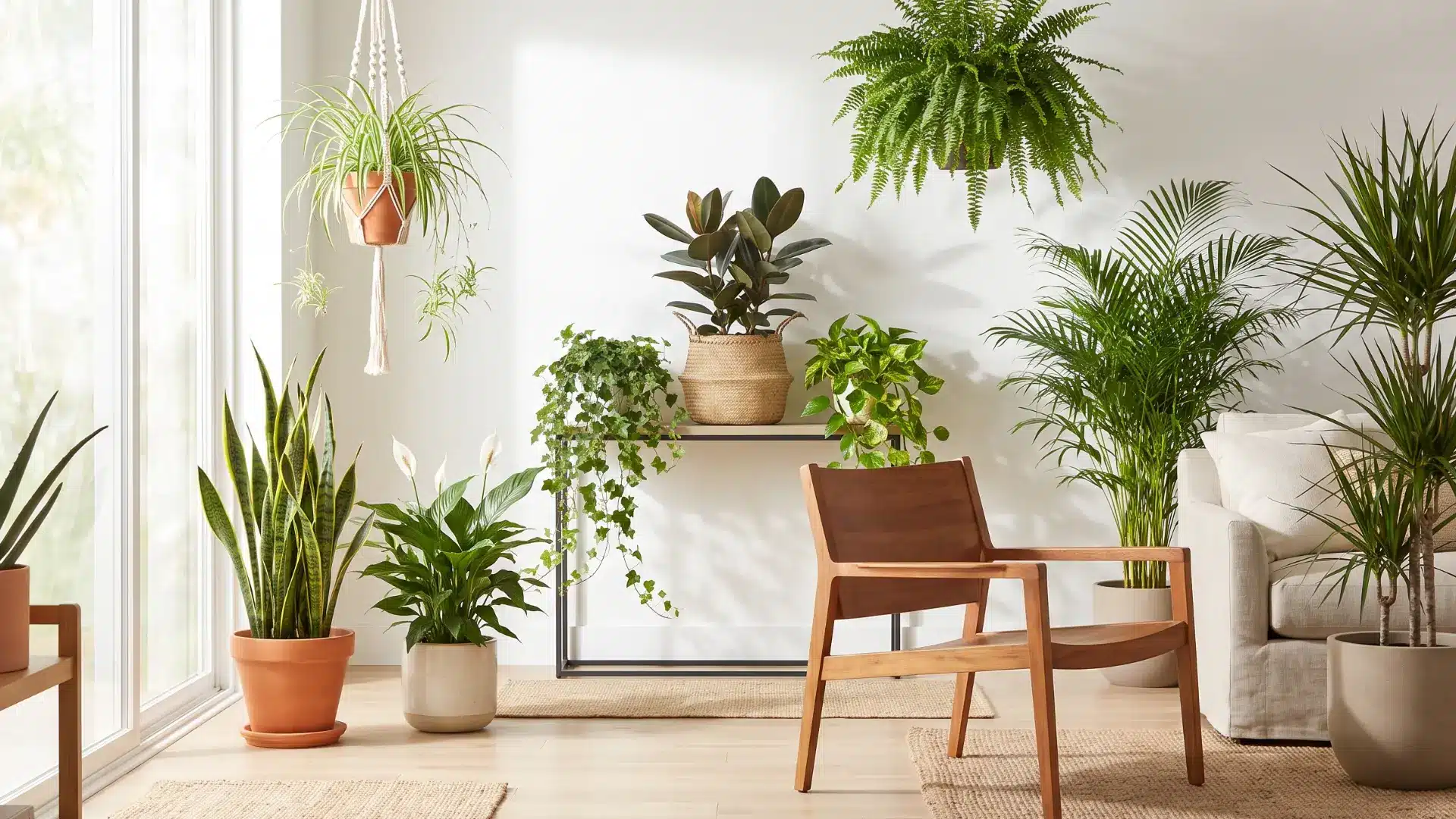
Fresh herbs can make even the simplest meal taste better, and the good news is that you do not need a big backyard to grow them.
Learning how to grow herbs indoors is much easier than most people think, even for beginners who have never touched a gardening tool before.
With a few easy tips and smart ideas, it is possible to keep herbs healthy and growing right inside the home.
Why Indoor Herb Gardens are So Popular
Indoor herb gardening is a simple way to add fresh flavor, greenery, and a relaxing touch to your home without needing a large outdoor garden.
- Fresh Herbs Anytime: Growing herbs indoors keeps fresh ingredients close by for cooking, teas, and garnishes throughout the year.
- Works in Small Spaces: Indoor herb gardens fit easily on windowsills, kitchen counters, shelves, or apartment balconies.
- Beginner-Friendly Gardening: Many herbs grow quickly and need only basic care, making them ideal for first-time gardeners.
- Adds Greenery Indoors: Small herb plants help brighten rooms and make indoor spaces feel fresher and more welcoming.
- Relaxing and Rewarding Hobby: Watching herbs grow and caring for them daily can feel calming and satisfying.
- Saves Money Over Time: Homegrown herbs reduce the need to keep buying fresh herb bundles from the store.
- Easy to Maintain Year-Round: Indoor herbs can keep growing through different seasons with proper light and watering.
Easy Steps to Start an Indoor Herb Garden
From choosing the right pots to watering herbs correctly, these simple steps will help beginners learn how to grow herbs indoors without feeling confused or overwhelmed.
Step 1: Pick a Bright Spot
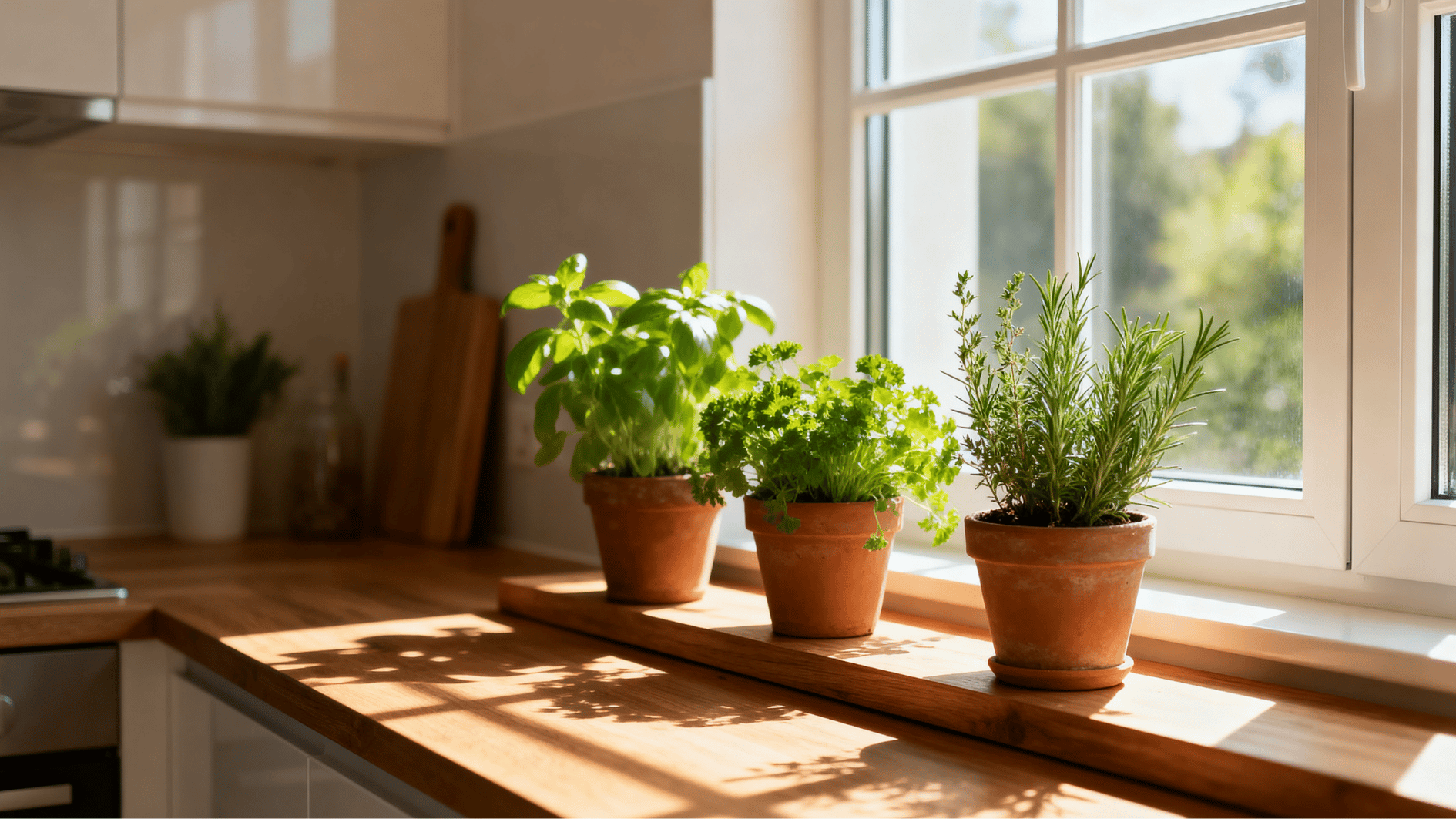
The first step in learning to grow herbs indoors is finding the right place for them. Most herbs love light, so a sunny kitchen window, balcony door, or bright shelf can work well.
Try to place your herbs where they can get a few hours of sunlight each day. If your home does not get much natural light, you can use a small grow light to help them stay healthy.
Step 2: Choose the Right Pots
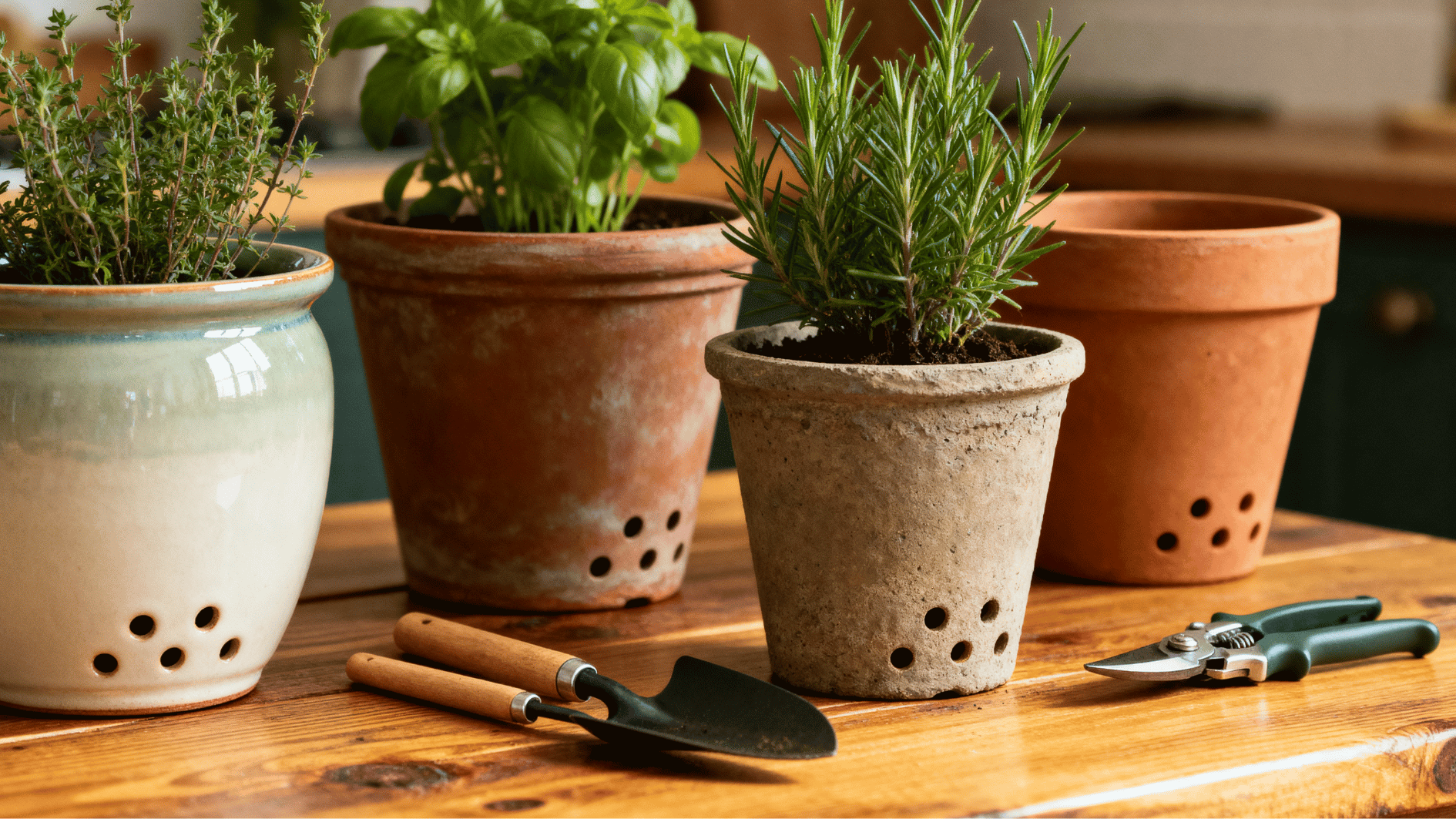
Pick pots that have drainage holes at the bottom. This is important because extra water needs a way to come out. If water stays trapped inside the pot, the roots can become weak or rotten.
Small pots are fine for starting, but make sure each herb has enough room to grow. Mint, for example, grows fast and does better in its own pot.
Step 3: Add Good Potting Soil
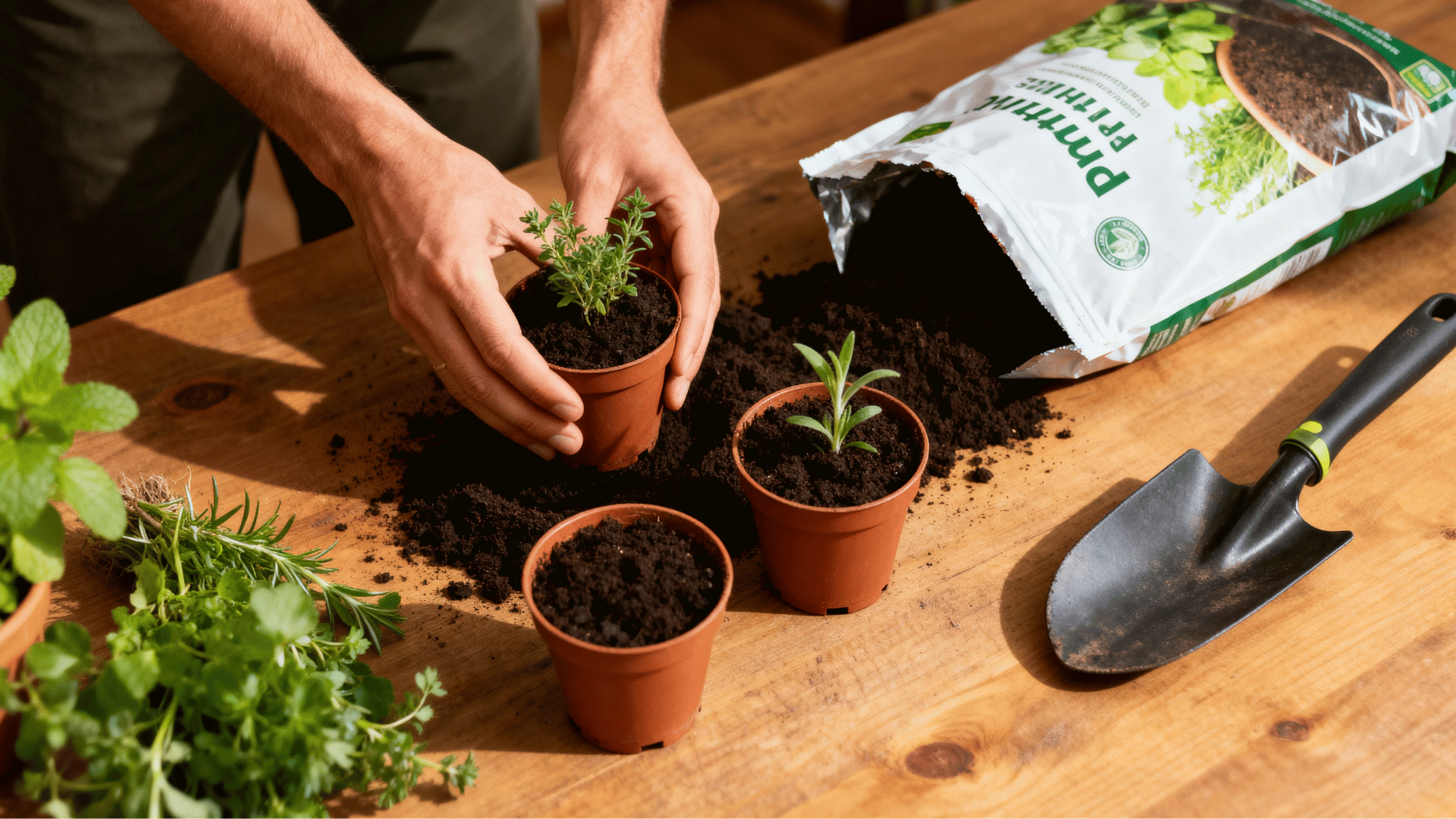
Indoor herbs need light and soft potting soil. Do not use heavy garden soil because it can hold too much water and make it harder for roots to breathe.
A good potting mix keeps the roots comfortable and helps the plant grow better indoors. You can also add a little compost or indoor plant food later, but do not overdo it.
Step 4: Choose Beginner-Friendly Herbs
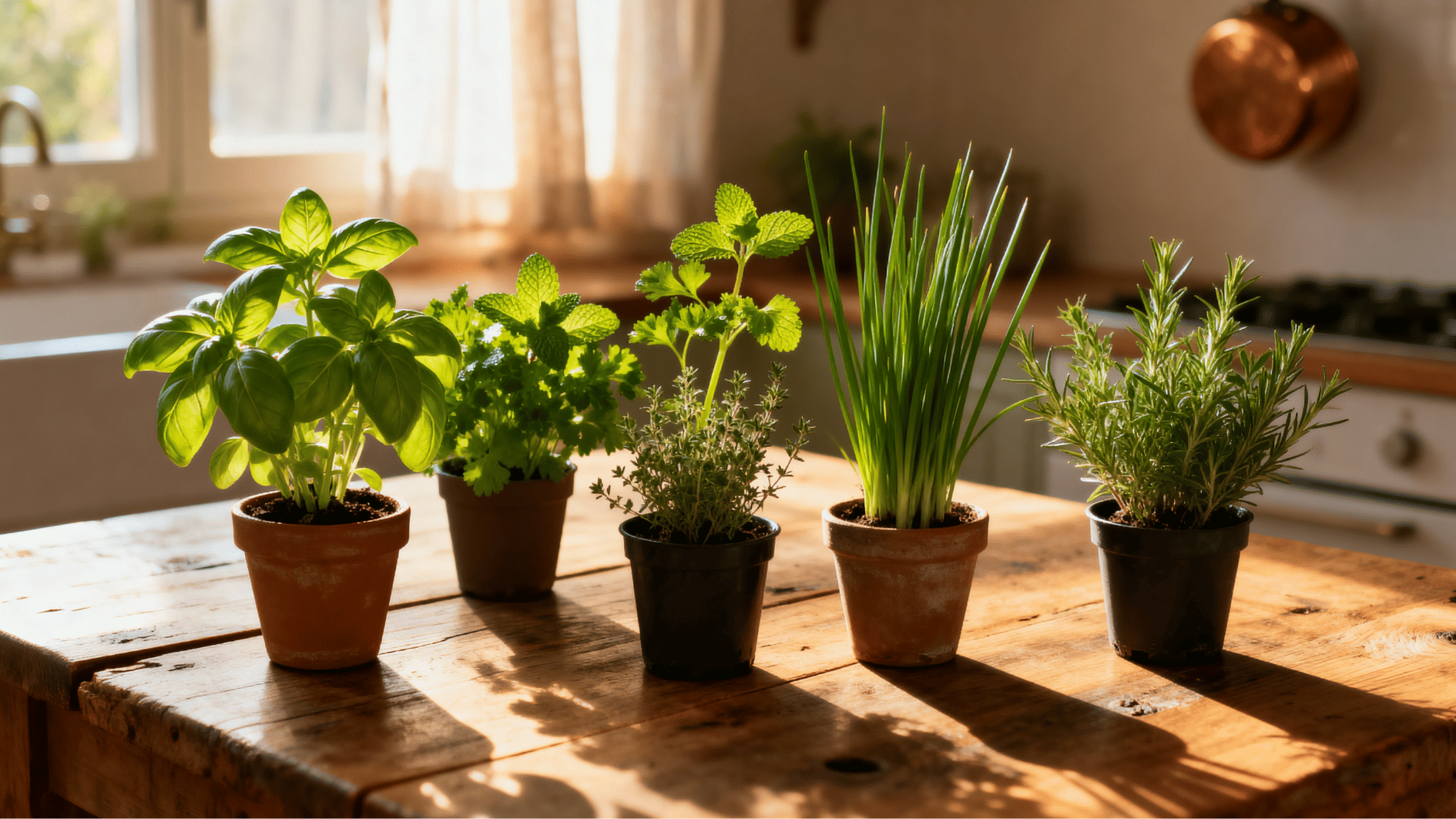
Some of the best herbs to grow indoors are basil, mint, parsley, chives, thyme, and oregano. These herbs are great for beginners because they are useful in cooking and easier to care for.
Start with 2–3 herbs instead of too many at once. This makes the process less confusing and helps you understand what each plant needs.
Step 5: Plant the Herbs Carefully
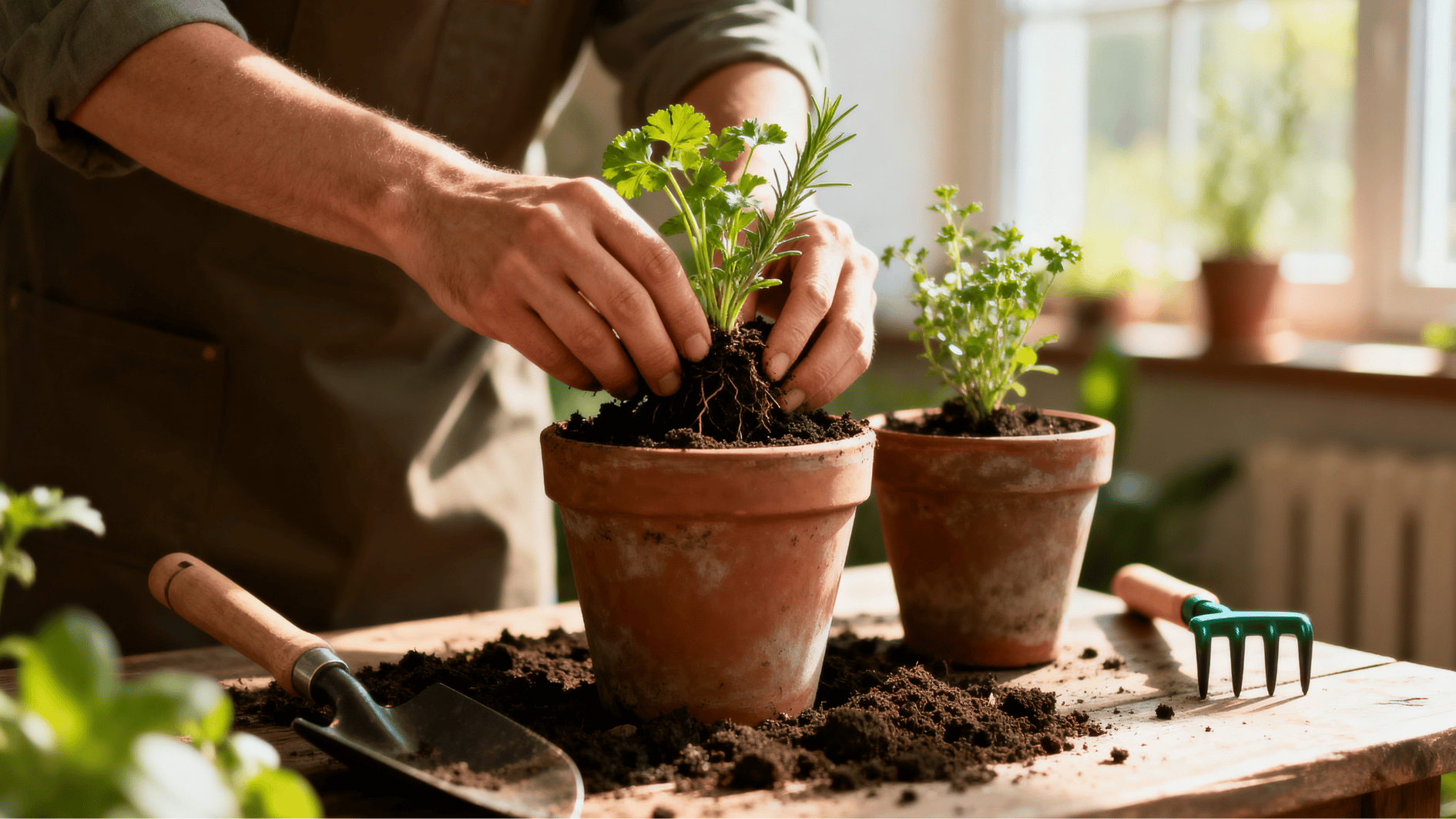
You can start herbs from seeds or buy small baby plants from a nursery. Baby plants are easier for beginners because they have already started growing.
Place the plant in the pot, cover the roots with soil, and press the soil gently. Do not pack it too tightly because roots need space to spread.
Step 6: Water the Right Way
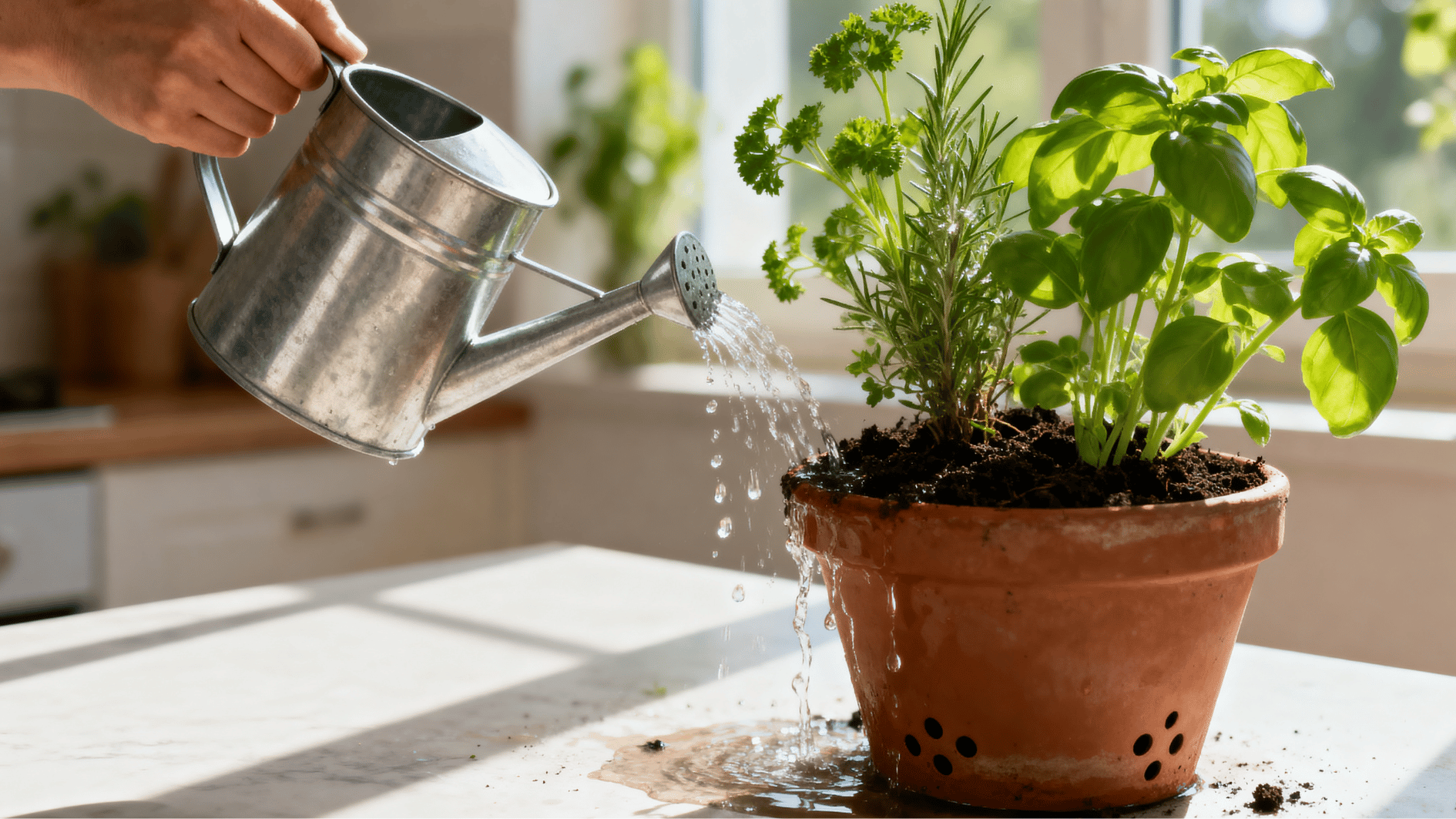
Watering is one of the most important parts of growing herbs indoors. The best rule is to touch the top layer of soil. If it feels dry, water the plant. If it still feels wet, wait.
Too much water can harm herbs faster than too little water. Always water slowly and let extra water drain out from the bottom.
Step 7: Trim Often for Fresh Growth
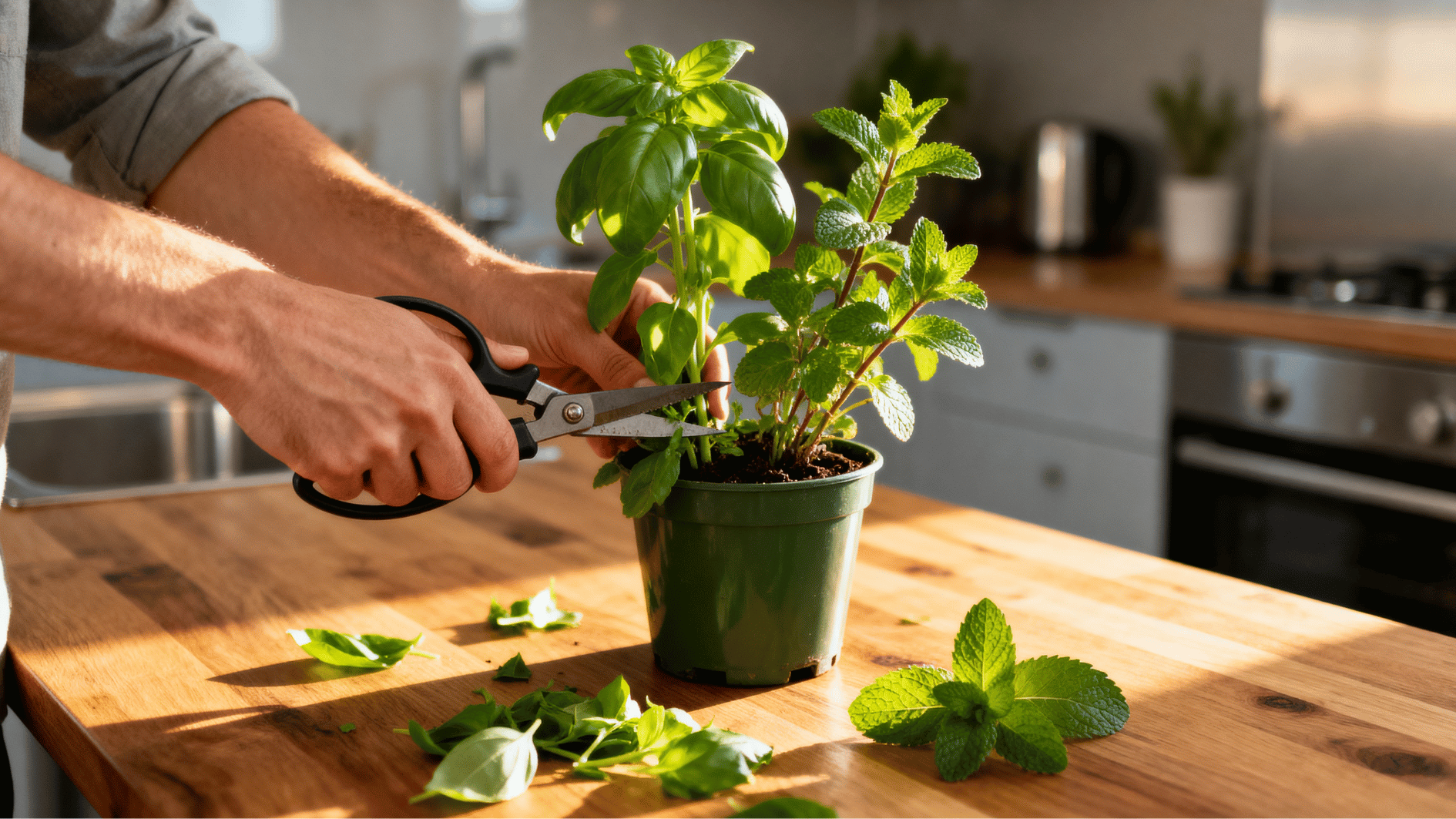
Trimming helps herbs grow fuller and healthier. Once your herbs have enough leaves, snip a few from the top instead of pulling from the bottom.
Regular trimming also gives you fresh herbs for cooking. The more carefully you trim, the better your indoor herb garden will grow over time.
Best Herbs to Grow for Beginners
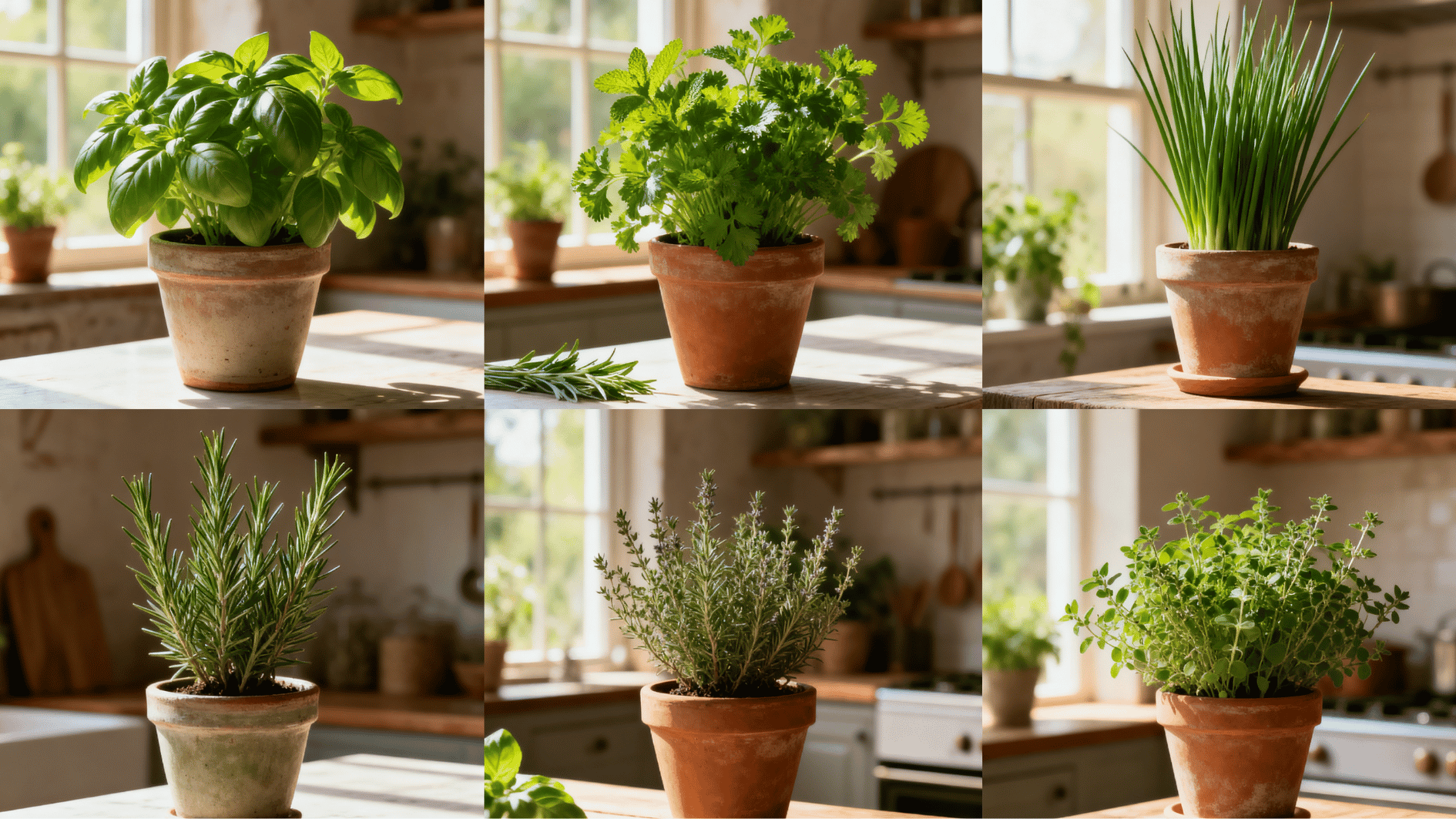
Choosing the right herbs can make indoor gardening much easier and more fun for beginners. Some herbs grow faster, need less care, and adjust better to indoor spaces. Here are some of the best herbs to grow indoors if you are just getting started.
| Herb | Why It’s Great Indoors | Best Uses | Care Tip |
|---|---|---|---|
| Basil | Fast-growing and beginner-friendly | Pasta, pizza, salads | Needs sunlight and regular trimming |
| Mint | Grows quickly in small spaces | Tea, drinks, desserts | Best kept in its own pot |
| Parsley | Easy to maintain indoors | Soups, salads, sauces | Grows well in medium light |
| Chives | Simple and low-maintenance | Toppings and dips | Regrows quickly after cutting |
| Rosemary | Strong smell and bold flavor | Roasted foods and meats | Needs bright light and less water |
| Thyme | Great for beginner herb gardens | Soups and roasted dishes | Does not need frequent watering |
| Oregano | Easy to care for indoors | Pizza, pasta, sauces | Grows well with basic care |
Simple Tips to Keep Herbs Growing Longer
Indoor herbs can stay fresh and healthy for a long time with a little extra care. Small habits like checking plant growth and keeping the environment clean can make a big difference over time.
- Rotate pots every few days so all sides of the plant get even sunlight
- Clean dry or yellow leaves quickly to keep herbs looking healthy
- Feed herbs lightly once a month with indoor plant food or compost
- Repot herbs when roots start outgrowing the container
- Keep herbs away from strong air conditioners or direct heat sources
- Check herbs weekly for tiny insects or damaged leaves
- Move herbs indoors slowly if they were bought from outdoor nurseries
Conclusion
Growing herbs indoors can be a fun and relaxing way to bring more freshness into everyday life. With the right setup, a little care, and beginner-friendly herbs, even small spaces can turn into a healthy indoor garden.
From learning how to grow herbs indoors step by step to finding the best herbs to grow indoors for beginners, each part of the process becomes easier with practice.
Indoor herbs not only add fresh flavor to meals but also make a home feel brighter and more welcoming.
Once the first few herbs start growing, indoor gardening can quickly become a favorite daily habit.
Frequently Asked Questions
Can Indoor Herbs Grow During Winter?
Yes, many indoor herbs can still grow during winter if they get enough light and proper indoor warmth.
How Long Do Indoor Herb Plants Usually Last?
Most indoor herbs can last for months or even years when cared for properly and trimmed regularly.
Can Different Herbs Be Planted In One Pot?
Some herbs can share a pot, but fast-growing herbs may take over and crowd smaller ones.
Do Indoor Herbs Attract Bugs?
Indoor herbs can sometimes attract tiny pests, especially in overly wet soil, but regular cleaning helps prevent this.