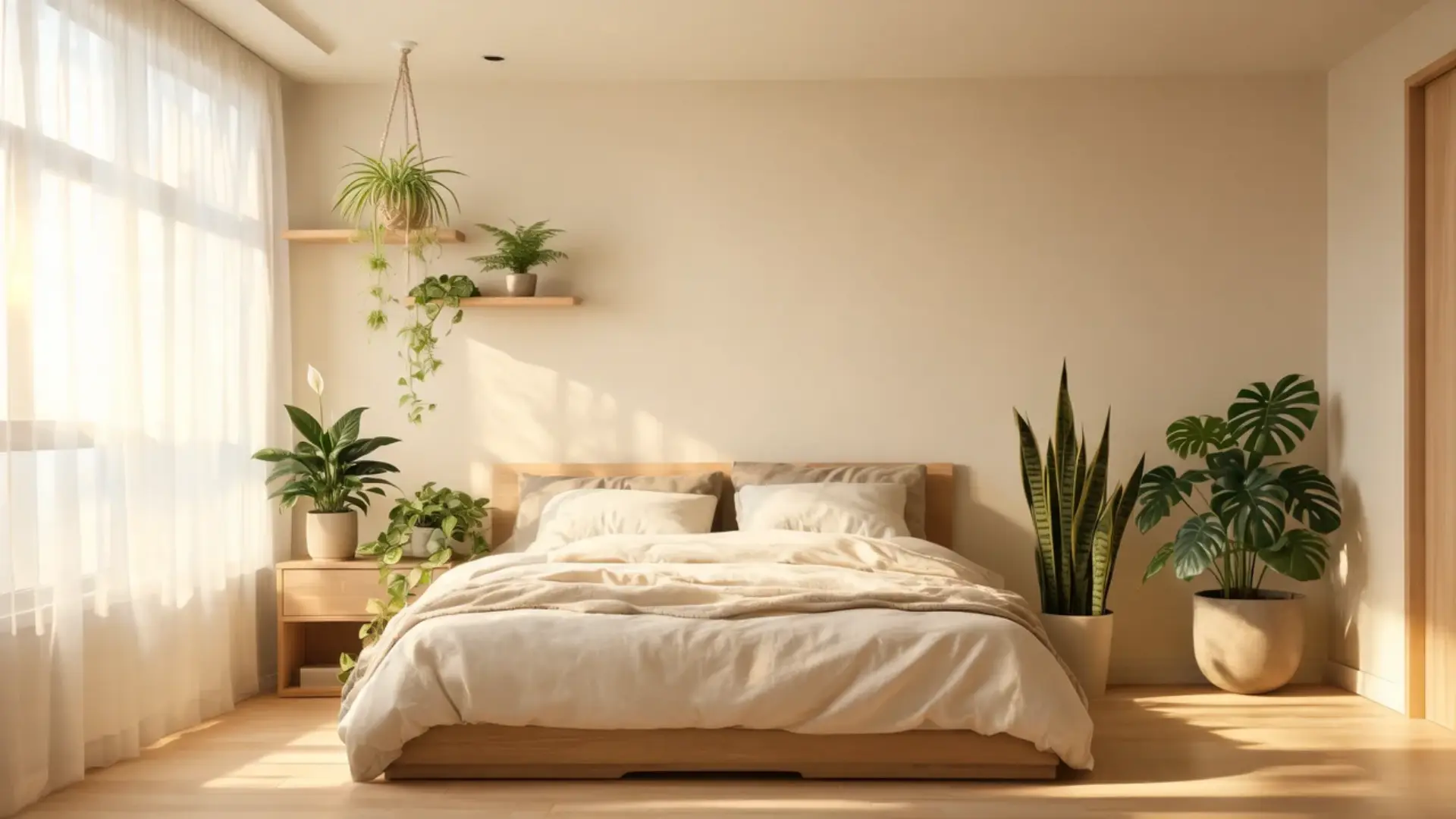
A well-chosen plant bedroom does more than look good on camera. It changes how the room actually feels — quieter, softer, and easier to settle into at the end of the day.
I do not think every popular houseplant belongs beside a bed, because bedrooms have different light, space, and care needs than living rooms or kitchens.
Some plants bring height, some soften shelves, some clean up empty corners, and others add a quiet spa-like mood. My focus here is on what each plant genuinely contributes: style, ease, texture, air freshness, and placement.
You will find several options ahead, plus styling ideas, care notes, safety guidance, and FAQs covering what the main sections leave open.
What Makes a Plant Good for a Bedroom?
A bedroom needs calm, not clutter. The right plant earns its place by suiting the light available, the space on hand, and the care routine that is actually realistic.
Some plants work better on shelves, in empty corners, close to windows, and on nightstands, where smaller footprints matter.
A bedroom plant can bring softness, height, color, texture, or freshness, but it should do one of those jobs well rather than create another thing to manage.
The goal is not more plants; it is better placement. Pet safety matters too, and dedicated guidance on that sits in the safety section below, so it is easy to find when you need it.
Best Plants for a Bedroom
1. Snake Plant
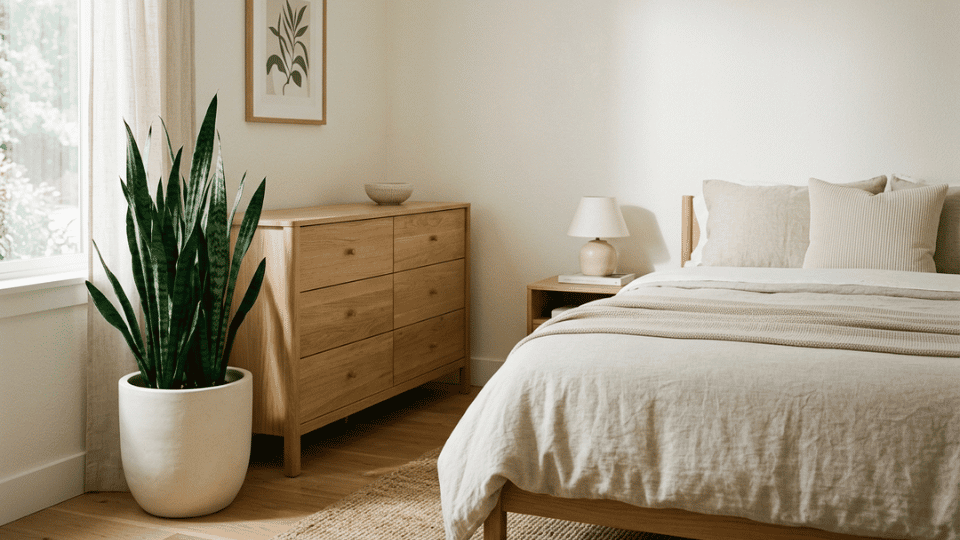
Snake plant is the best first choice because it brings structure without demanding attention. Its upright leaves make a bedroom feel cleaner and more ordered, especially when the room has little floor space.
Unlike many houseplants that need regular checking, the snake plant holds its shape and color even when care is inconsistent.
- Best bedroom role: A dependable plant for low-effort calm.
- Style it like: Use a tall floor pot beside a dresser or wardrobe.
- Fits this aesthetic: Minimal, modern, Japandi, clean, neutral rooms.
- Care note: Let the soil dry completely before watering.
2. ZZ Plant
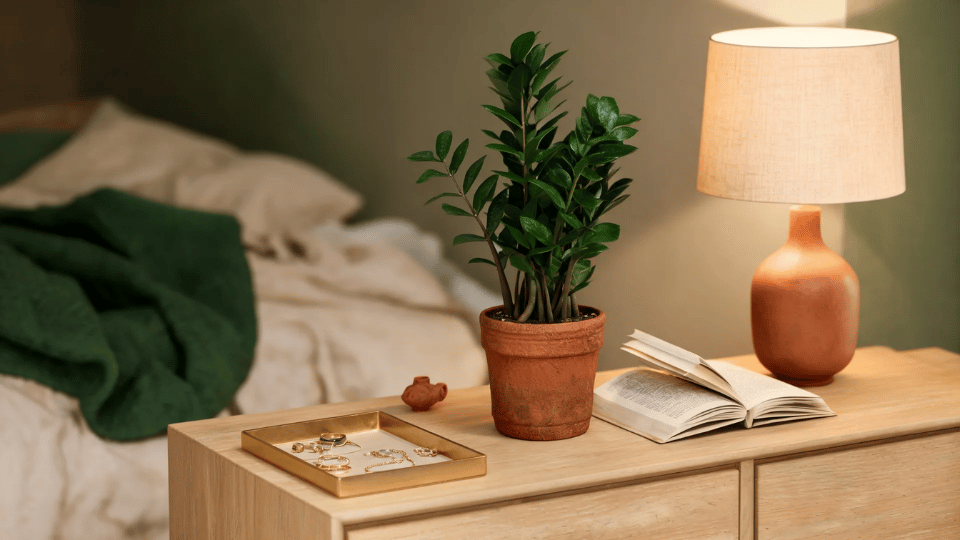
ZZ plant works when someone wants greenery but does not want plant care to become another task on the list. Its glossy leaves give the room a polished look, even when the plant is ignored for a stretch. The waxy surface gently reflects light, giving dim bedroom corners a quiet lift.
- Best bedroom role: Quiet greenery for busy routines.
- Style it like: Place it on a dresser where light hits the leaves softly.
- Fits this aesthetic: Modern, masculine, minimalist, apartment bedrooms.
- Care note: Water lightly and avoid soggy soil.
3. Pothos
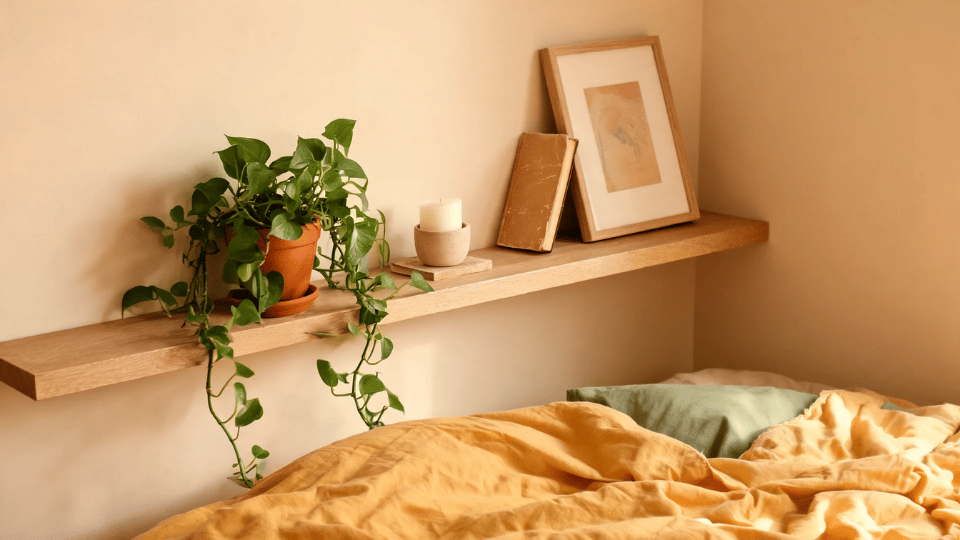
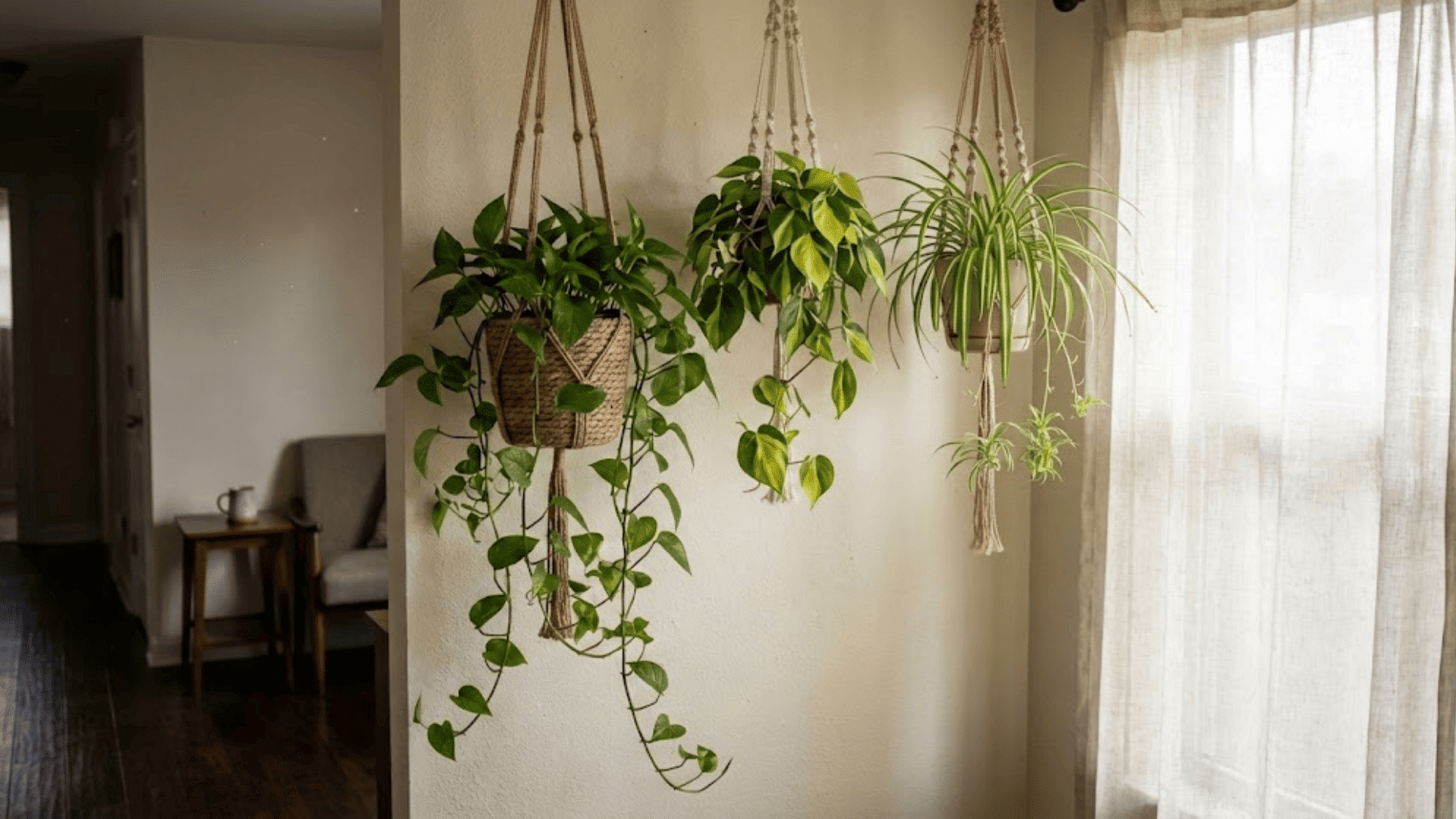
Pothos is perfect when the bedroom needs softness but has no room for another floor pot. Its trailing stems can make shelves, wardrobes, and bookcases feel more natural and lived-in. It grows quickly enough to fill a bare shelf but slowly enough to stay manageable.
- Best bedroom role: Adding movement without using floor space.
- Style it like: Let it trail from a shelf, wall hook, or bookcase.
- Fits this aesthetic: Cozy, boho, renter-friendly, casual bedrooms.
- Care note: Trim long vines to keep the shape tidy.
4. Spider Plant
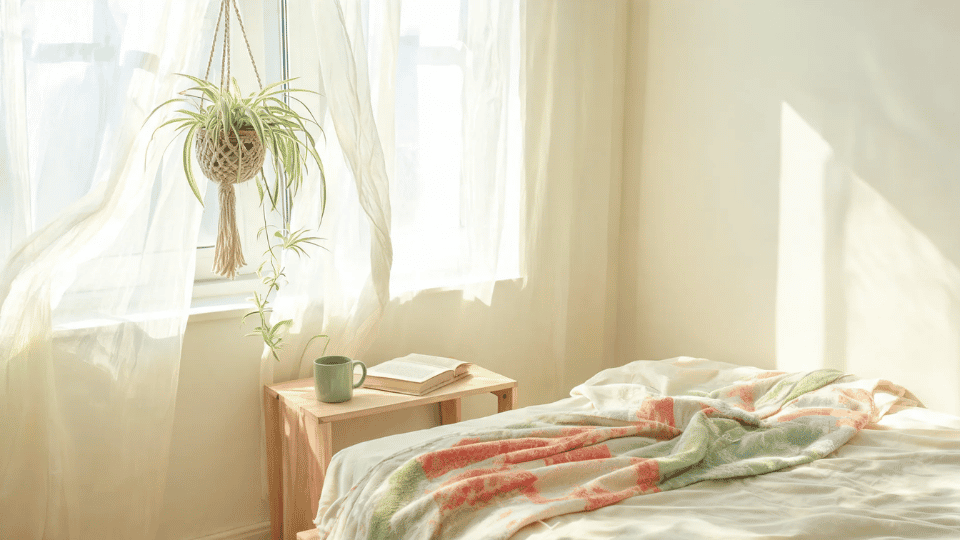
Spider plant brings a brighter, lighter feeling than many dense houseplants. Its arching leaves and dangling baby plantlets make a bedroom feel relaxed without looking too styled or serious. It looks equally at home in a vintage bedroom or a bright modern one.
- Best bedroom role: Freshness and gentle movement.
- Style it like: Hang it near a bright window or place it on a plant stand.
- Fits this aesthetic: Retro, casual, cottage, airy bedrooms.
- Care note: Provide bright, indirect light for fuller growth.
5. Peace Lily
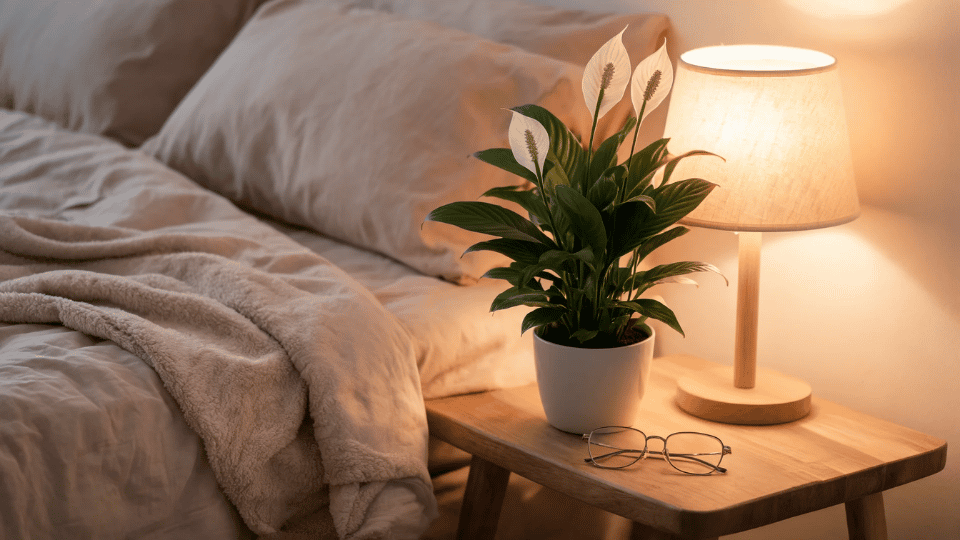
Peace lily belongs in bedrooms that need softness without strong color. The deep green leaves and white blooms create a restful contrast, making the room feel quieter and more composed. It suits spaces where the goal is a calm, spa-like corner.
- Best bedroom role: Creating a calm, spa-like corner.
- Style it like: Put it on a stool, dresser, or simple ceramic stand.
- Fits this aesthetic: Spa, soft neutral, hotel-inspired bedrooms.
- Care note: Keep it away from pets that chew plants.
6. Chinese Evergreen
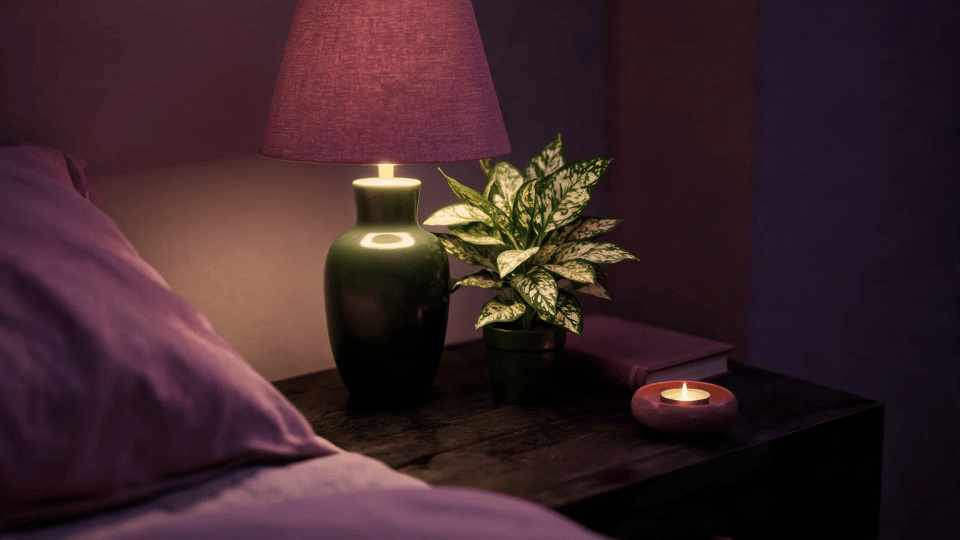
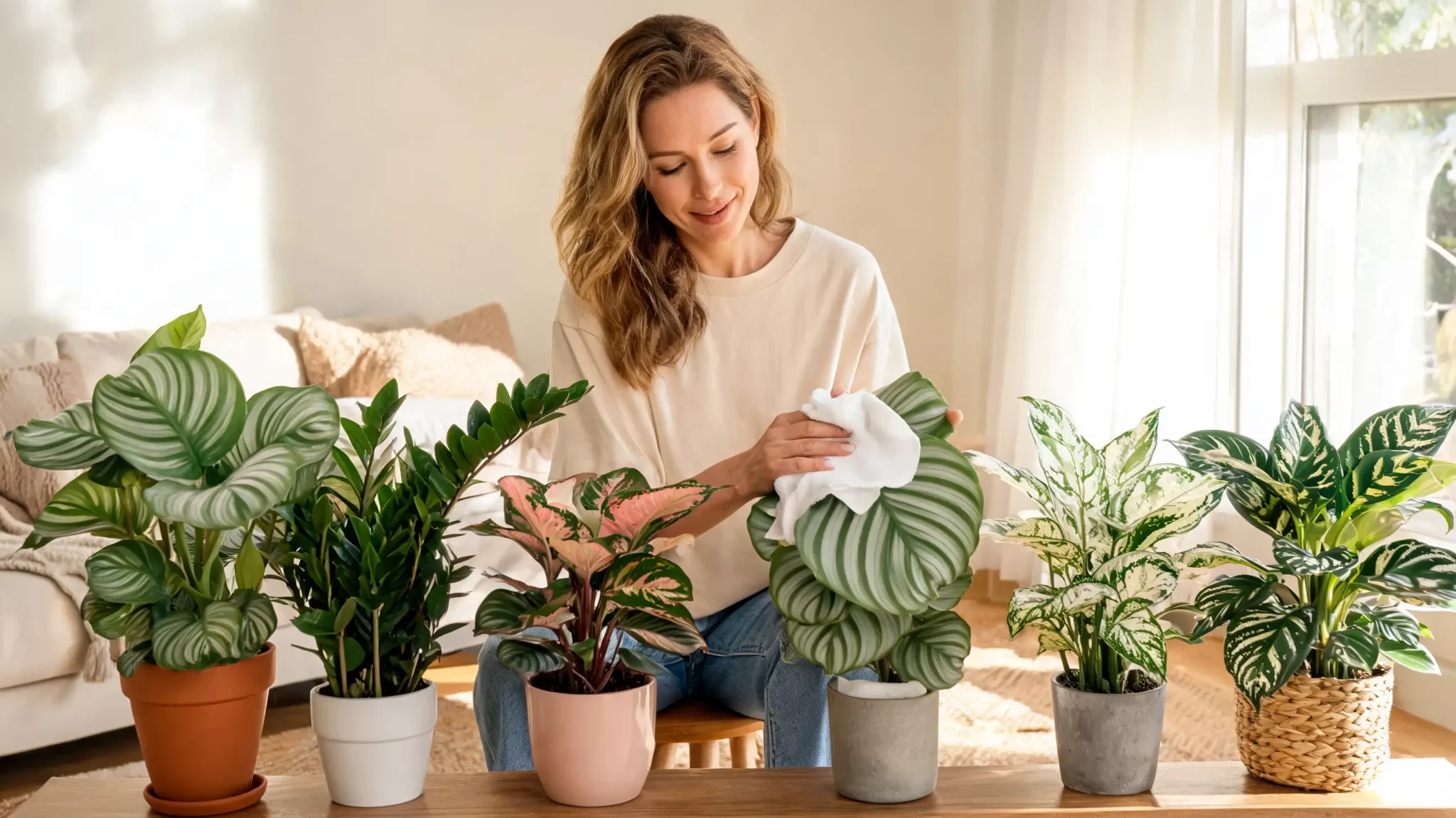
Chinese evergreen is a strong pick when the room is not bright but still needs personality. Its patterned leaves bring color and detail without relying on flowers or a sunny window. Varieties range from deep green with silver streaks to warmer pinks and reds.
- Best bedroom role: Low-light color and pattern.
- Style it like: Use it on a nightstand, desk, or dresser.
- Fits this aesthetic: Soft glam, modern, colorful neutral bedrooms.
- Care note: Avoid cold drafts near windows or vents.
7. Lady Palm
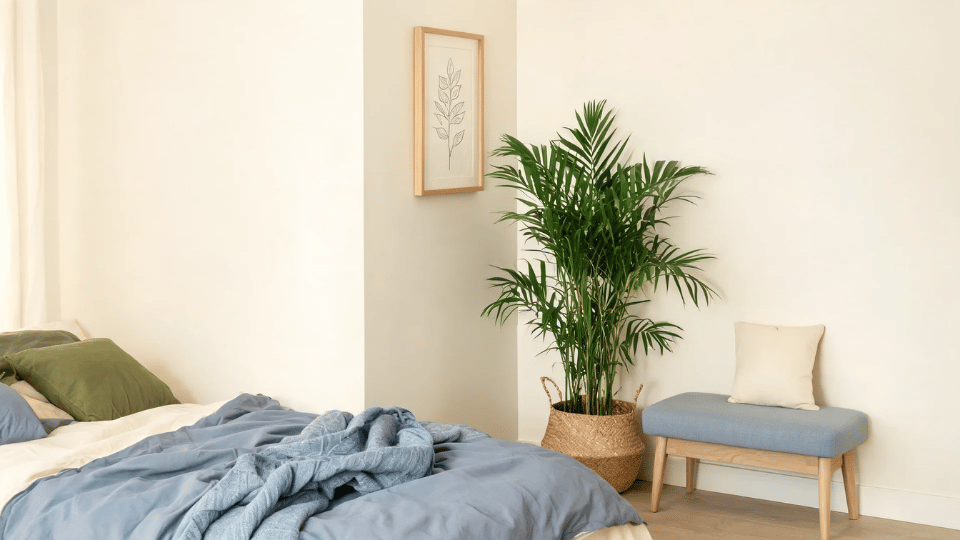
Lady palm fills a bedroom corner in a softer way than sharper upright plants. It gives the room a relaxed, resort-like quality without making the space feel crowded. Its fan-shaped fronds spread gently.
- Best bedroom role: Filling bare corners gently.
- Style it like: Place it in a woven basket near filtered light.
- Fits this aesthetic: Coastal, tropical, hotel, relaxed luxury bedrooms.
- Care note: Keep it out of tight walkways.
8. Monstera
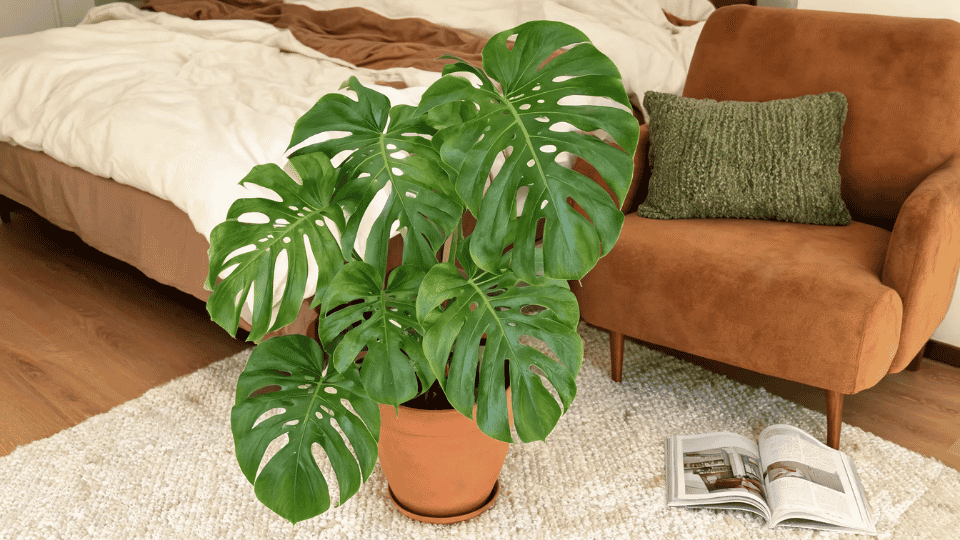
Monstera is for bedrooms that feel flat or unfinished. Its large split leaves can make even a simple room feel styled and intentional, especially when given space to stand alone. One well-placed monstera does more than a collection of smaller plants.
- Best bedroom role: One bold focal point.
- Style it like: Use one large pot rather than several small pots.
- Fits this aesthetic: Boho, modern, earthy, Pinterest-style bedrooms.
- Care note: Give it room to spread as it grows.
9. Aloe Vera
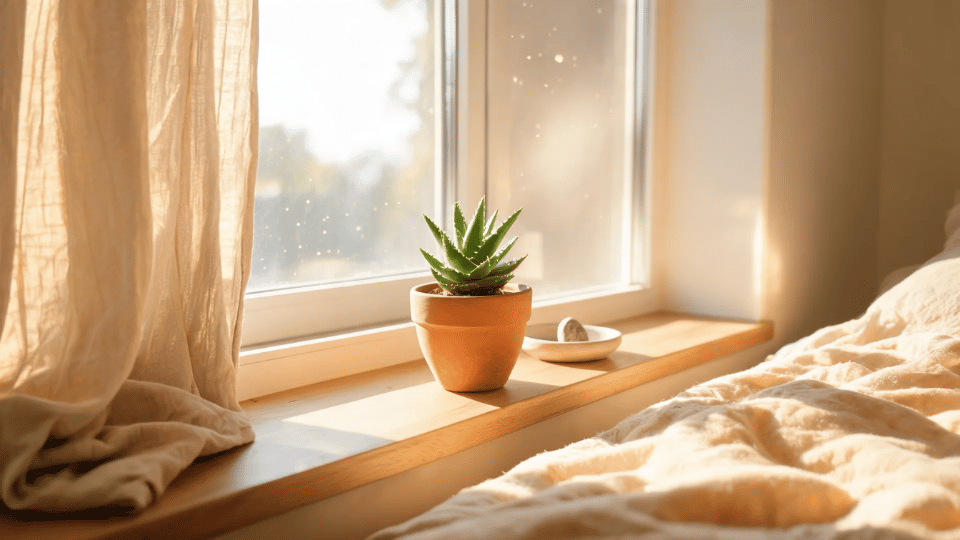
Aloe vera is best when the bedroom has a sunny windowsill. It looks clean and sculptural, making it ideal for greenery without visual clutter. Its upright form and muted green tone blend into minimal setups.
- Best bedroom role: Simple greenery for bright light.
- Style it like: Keep it in a small clay or ceramic pot.
- Fits this aesthetic: Minimal, desert, clean, wellness-inspired bedrooms.
- Care note: Do not place it in a dark corner.
10. Boston Fern (or similar live options)
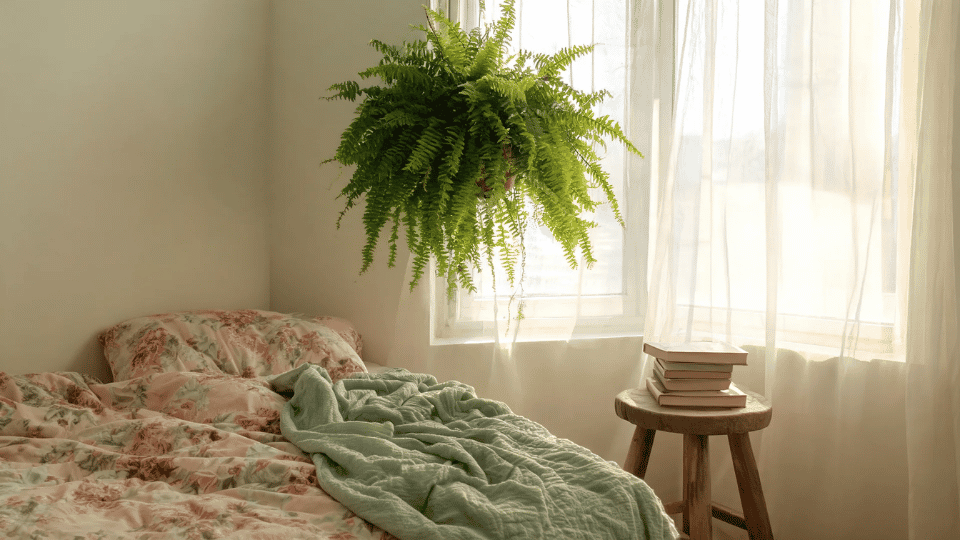
Boston fern brings softness where a bedroom feels too plain or boxy. Its feathery fronds make shelves, hooks, and windows feel gentler and more layered. Its texture alone changes the mood of a room.
- Best bedroom role: Adding soft texture.
- Style it like: Use a hanging basket or an elevated plant stand.
- Fits this aesthetic: Cottage, vintage, romantic, natural bedrooms.
- Care note: It prefers steady moisture and humidity.
11. Rubber Plant
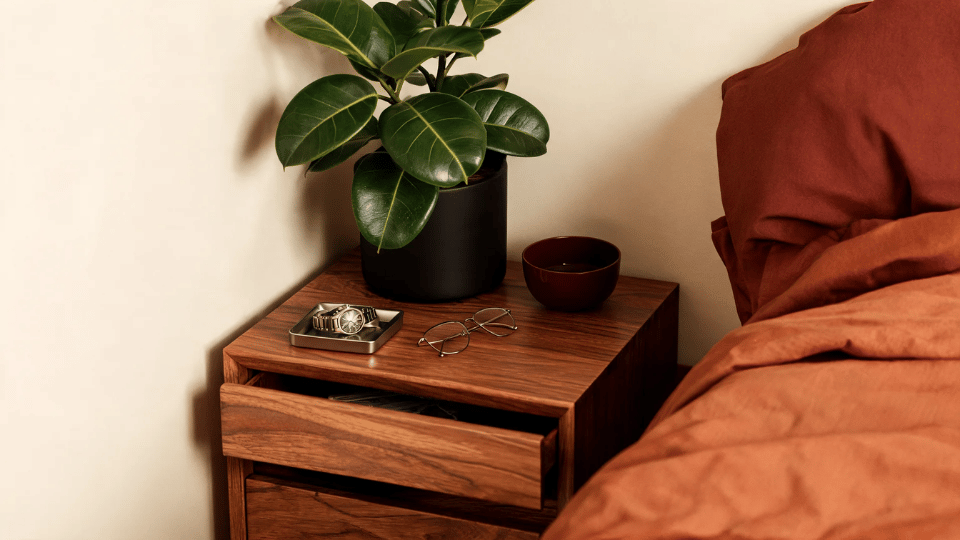
Rubber plant gives a bedroom a more finished, grown-up look. Its thick, glossy leaves add structure. The deep burgundy variety works especially well in rooms with warm tones.
- Best bedroom role: Adding polish and height.
- Style it like: Place it near a bright window in a simple floor pot.
- Fits this aesthetic: Mid-century, modern, polished, neutral bedrooms.
- Care note: Avoid overwatering and cold drafts.
12. Prayer Plant
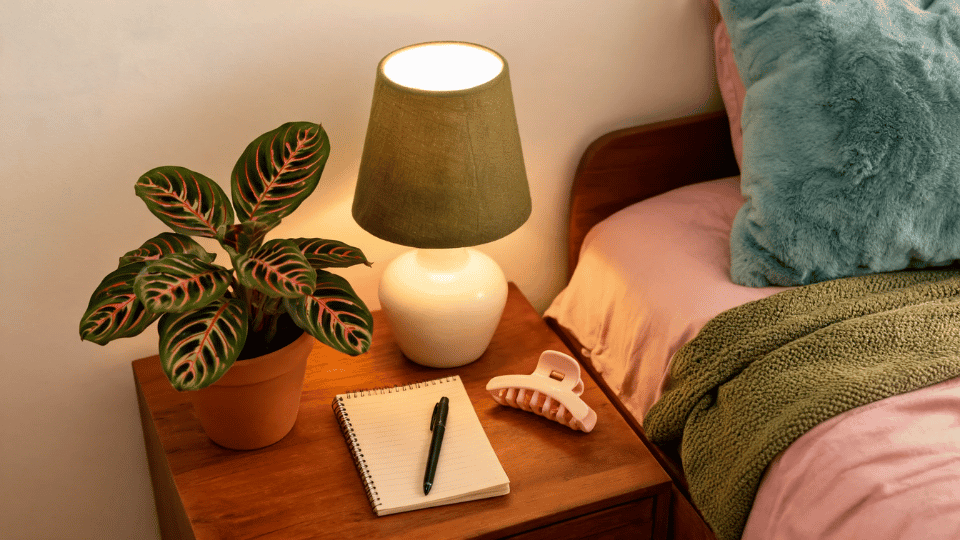
Prayer plant works well when the bedroom needs detail at eye level. Its patterned leaves make a nightstand or dresser feel intentional. The way its leaves fold upward at night makes it feel more alive.
- Best bedroom role: Small-scale pattern and personality.
- Style it like: Keep it in a shallow decorative pot on a dresser.
- Fits this aesthetic: Eclectic, cozy, colorful, artistic bedrooms.
- Care note: It prefers humidity over dry air.
13. Anthurium
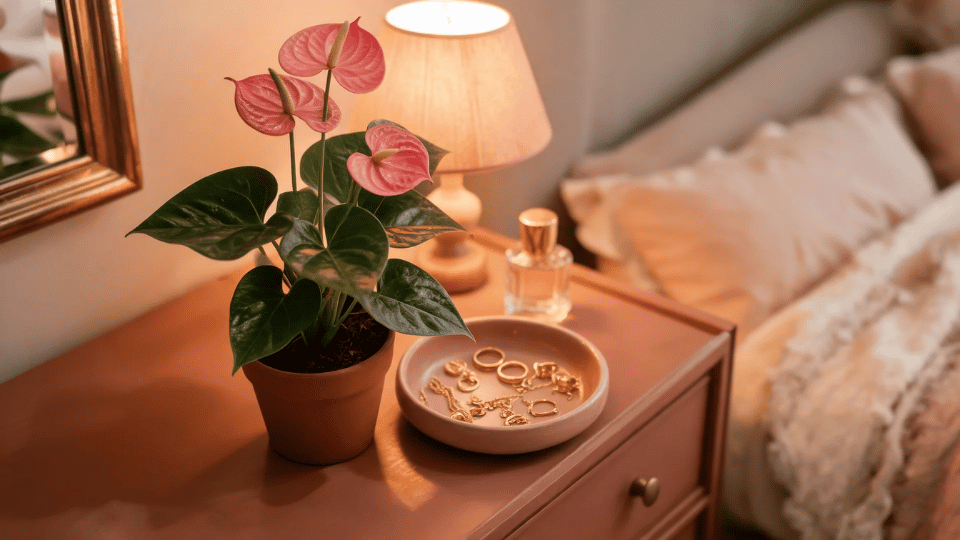
Anthurium adds a refined pop of color without making a bedroom feel busy. Its glossy leaves and long-lasting blooms suit rooms that need one elegant accent. Red varieties feel bold; white and pink ones feel softer.
- Best bedroom role: A refined pop of color.
- Style it like: Place it on a vanity, dresser, or side table.
- Fits this aesthetic: Romantic, glam, modern tropical bedrooms.
- Care note: Keep it in bright indirect light.
14. Bird’s Nest Fern
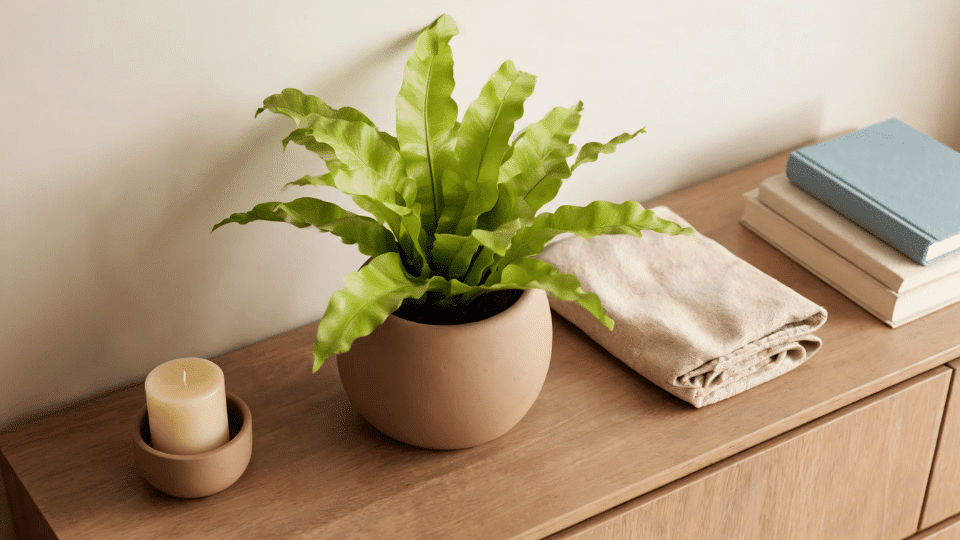
Bird’s nest fern is a good choice when a bedroom needs greenery but not trailing stems or large leaves. Its wavy, tongue-shaped fronds feel fresh and tidy on small surfaces. It stays compact enough for a narrow shelf or vanity.
- Best bedroom role: Neat greenery for shelves or vanities.
- Style it like: Pair it with a simple rounded pot.
- Fits this aesthetic: Minimal, organic, spa, soft modern bedrooms.
- Care note: Keep it away from harsh direct sun.
15. Philodendron
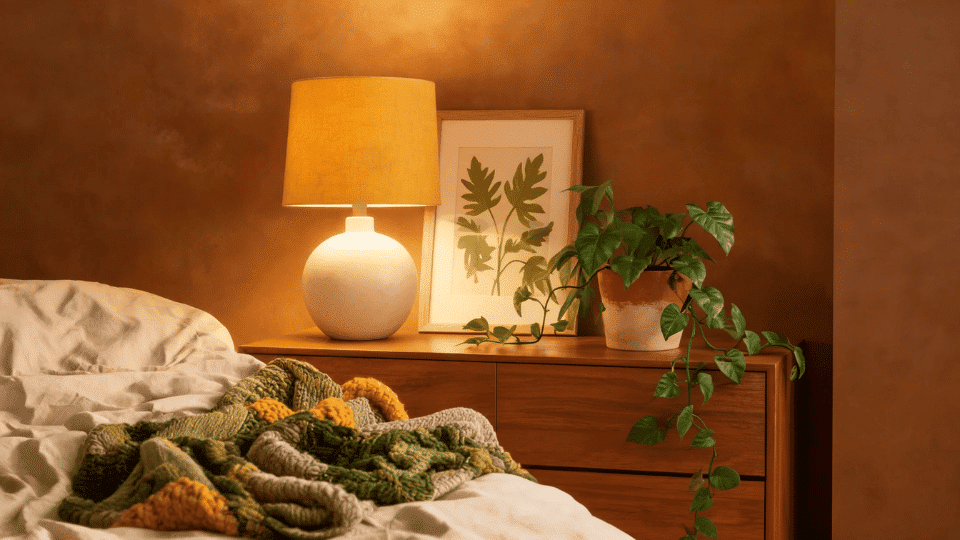
Philodendron brings a softer, slower feel than pothos. It is a better bedroom pick when the goal is trailing greenery that looks effortless rather than dramatic. Its heart-shaped leaves have a gentle quality.
- Best bedroom role: Soft trailing greenery.
- Style it like: Let it fall from a shelf or small wall planter.
- Fits this aesthetic: Cozy, natural, simple, lived-in bedrooms.
- Care note: Do not let it sit in wet soil.
16. Peperomia
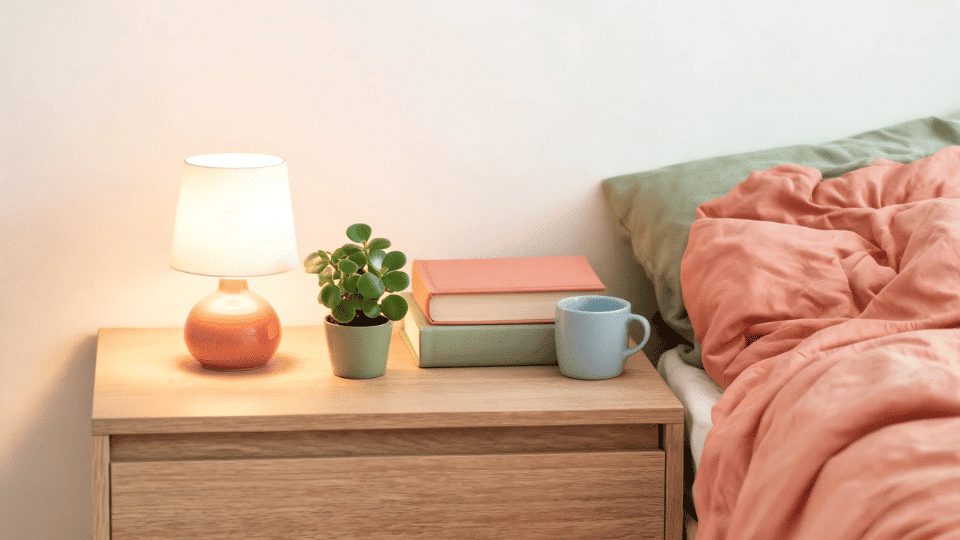
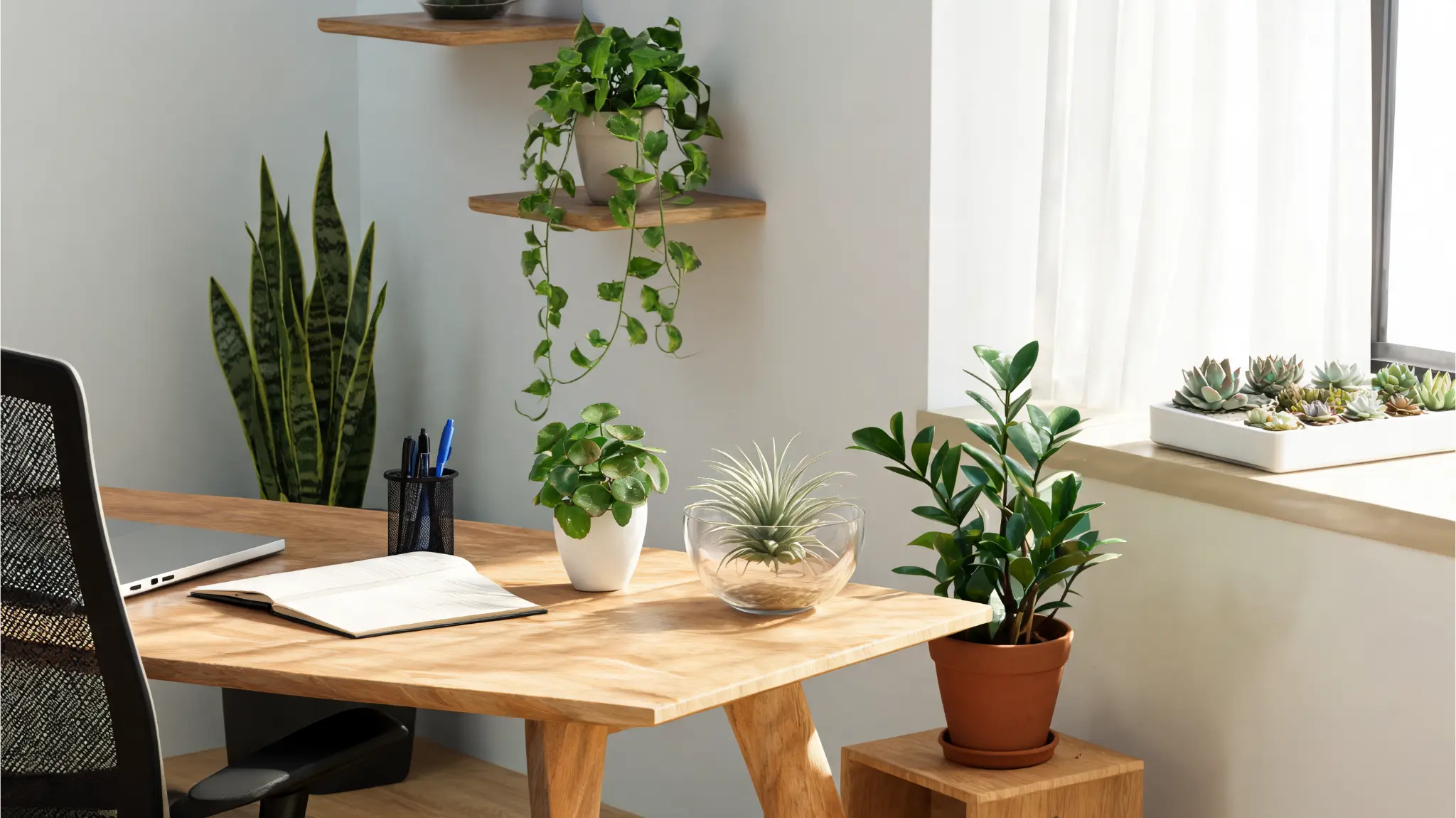
Peperomia is ideal for small bedrooms where every surface matters. It delivers the feeling of a real plant without taking over the nightstand, windowsill, or desk. Hundreds of varieties make it easy to match existing decor.
- Best bedroom role: Compact greenery for tight spaces.
- Style it like: Use it beside books, candles, or a small lamp.
- Fits this aesthetic: Cute, modern, dorm, apartment bedrooms.
- Care note: Let the soil partly dry between waterings.
17. Echeveria
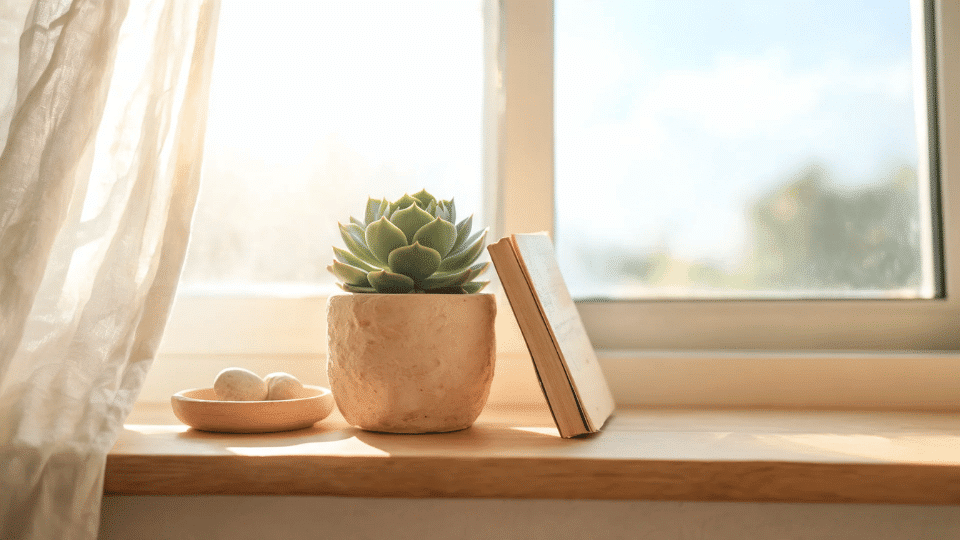
Echeveria is a better fit for bright bedrooms. Its rosette shape is decorative and suits clean surfaces that benefit from a single careful detail. It pairs well with other small objects without dominating.
- Best bedroom role: Sculptural detail for sunny spots.
- Style it like: Place it alone in a small pot on a windowsill.
- Fits this aesthetic: Minimal, desert, Scandinavian, clean bedrooms.
- Care note: It needs strong light and careful, infrequent watering.
18. Orchid
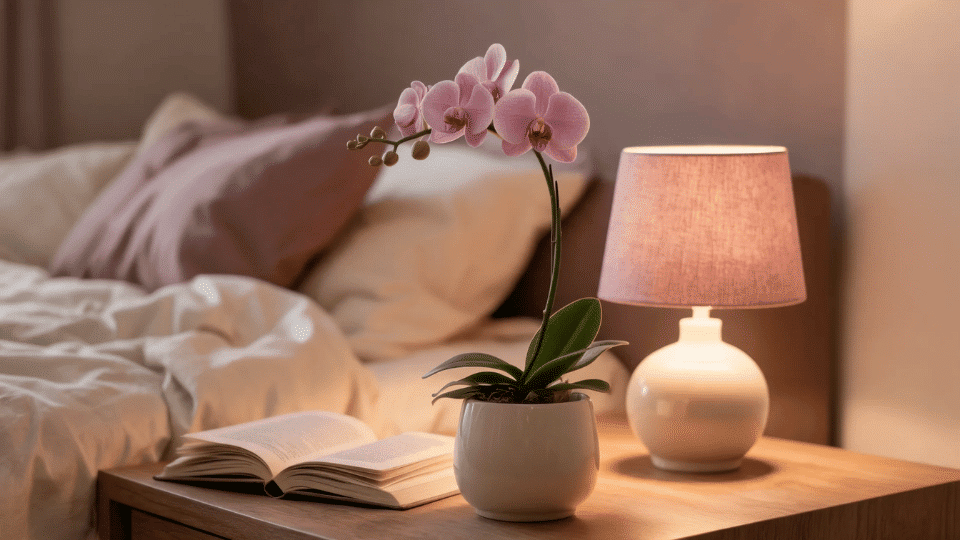
An orchid makes a bedroom feel graceful without adding leafy bulk. It works best as a single focal point on a bedside table, vanity, or dresser. Its long bloom period means it earns its spot for weeks at a time.
- Best bedroom role: Elegant floral focus.
- Style it like: Use one orchid in a clean ceramic pot.
- Fits this aesthetic: Classic, hotel, feminine, refined bedrooms.
- Care note: It prefers bright indirect light, not harsh direct sun.
19. Lavender
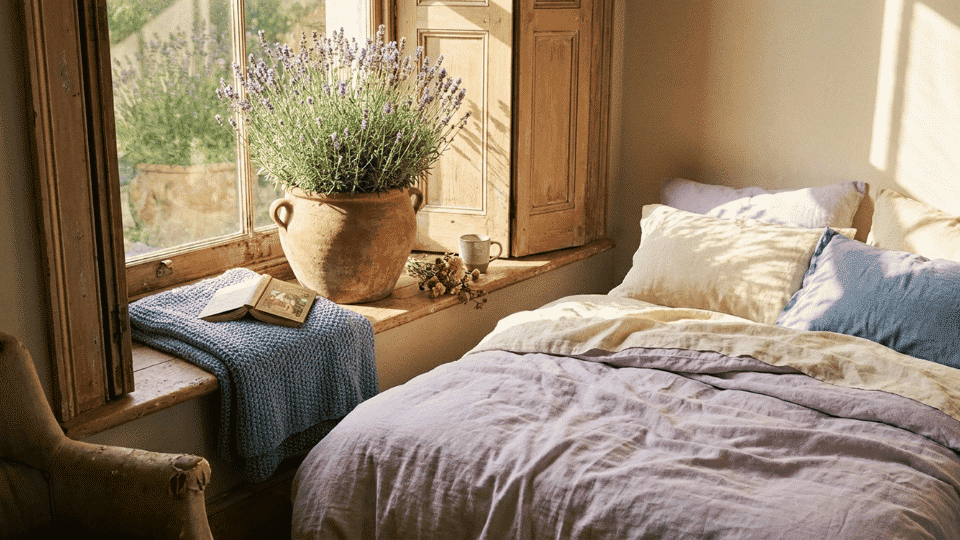
Lavender is best for readers who want scent, not just greenery. A small pot near a sunny window can make a bedroom feel calmer, particularly in the evening. It needs enough sunlight to stay healthy indoors.
- Best bedroom role: Gentle natural fragrance.
- Style it like: Keep it near a sunny window in a rustic or terracotta pot.
- Fits this aesthetic: Cottage, farmhouse, French country, romantic bedrooms.
- Care note: Skip it if your bedroom is consistently dim.
How to Style Plants Without Making Them Crowded
Bedroom plants should make the space feel calmer, not busier. A little styling restraint helps each plant feel intentional, useful, and easy to live with.
- Choose one primary role for your plants: tall, trailing, compact, flowering, or scented. Trying to cover all five in one bedroom usually creates visual noise rather than calm.
- Treat plants like decor with a job, not filler for every empty corner.
- Resist putting plants on every surface. One large floor plant (a lady palm, rubber plant, or monstera) tends to do more for a bedroom than five small pots scattered across a dresser.
- Practice restraint on nightstands. They need to stay functional; a crowded nightstand creates low-level stress rather than calm.
- Match pot material to the room’s existing finishes: woven baskets for warm, natural rooms; matte ceramic for minimal, modern spaces; and glossy or metallic pots for glam or hotel-style rooms.
- Use height variation only when the room has enough space to read each level clearly.
- Leave more empty space when in doubt. Calm bedrooms are rarely the ones with the most plants.
The goal is not to create a plant display. It is to let one or two good choices support the room’s mood without taking over.
Bedroom Plant Safety and Care Rules Worth Knowing
The right plant matters, but care and placement decide whether it stays beautiful, safe, and relaxing in a bedroom over time.
- Check pet safety first: Some bedroom plants are toxic if pets chew the leaves. Peace lily, pothos, and philodendron are among the ones to verify before placing near curious animals.
- Avoid sharp plants near the bed: Spiky or stiff-leaved plants placed beside walkways can be a hazard in a dark room.
- Use drainage pots: Most indoor plants struggle when roots sit in standing water. A pot with a drainage hole and a saucer underneath is the simplest fix.
- Do not overwater at night: Wet soil in a low-airflow room invites fungus gnats. Water in the morning so excess moisture can move before the room closes up.
- Wipe dusty leaves: Clean leaves absorb light better and look healthier. A damp cloth once a month is enough for most plants.
- Keep plants away from vents: Heating and air conditioning dry leaves quickly, cause browning at the tips, and stress plants that prefer stable conditions.
- Watch for pests early: Sticky residue on leaves, tiny flies hovering near soil, or fine webbing on stems are early signs. Handle them quickly before they spread.
These rules are simple, but they prevent the most common bedroom plant problems before they turn into stress or mess.
Frequently Asked Questions
Can bedroom plants survive air conditioning all year?
Some can, but prolonged AC exposure dries the air significantly, which stresses moisture-loving plants like Boston fern and prayer plant the most. Hardy choices like ZZ plants, snake plants, and rubber plants handle dry air better. Position any plant away from direct vent airflow, and consider a small humidity tray for plants that prefer moisture.
Do bedroom plants grow slower than plants in other rooms?
Usually yes. Bedrooms tend to have lower light levels than kitchens or living rooms, and slower light means slower growth. This is not harmful; it simply means the plant needs less repotting and fewer trims. It also means fertilizing less frequently, as a slow-growing plant cannot absorb nutrients at the same rate as one actively putting out new leaves.
Is it better to have one large plant or several small ones?
For most bedrooms, one or two well-chosen plants make a stronger visual impact than many small ones. A single large floor plant reads as a deliberate design element; a collection of mismatched small pots can feel cluttered. Small plants work better when intentionally grouped, same pot style, complementary shapes, rather than placed individually across different surfaces.
What is the best pot material for bedroom plants?
The pot material affects both look and function. Terracotta dries out faster, which benefits succulents and aloe but can be too drying for ferns. Glazed ceramic holds moisture longer, suiting peace lily and prayer plant. Plastic pots retain the most moisture and are the lightest. Choose by the plant’s watering preference first, then match the finish to the room.
Can plants affect the temperature of a bedroom?
Not in a meaningful way. A few houseplants do not generate or remove enough heat to shift the room temperature. They release small amounts of water vapor through transpiration, which can slightly soften extremely dry air, but they are not a substitute for a humidifier in very arid climates. The effect on comfort is subtle and mostly felt with a larger grouping of plants rather than a single specimen.
How do I know if a bedroom plant needs repotting?
Roots growing out of the drainage hole, water running straight through the pot without being absorbed, or a plant tipping over because it has become top-heavy are the clearest signals. Most bedroom plants in lower light need repotting less often than the general one-to-two-year advice suggests. Check the roots once a year by gently easing the plant from its pot rather than waiting for the visible signs above.
The Bottom Line
The best plant bedroom is not the one with the most plants; it is the one where each plant has a clear reason for being there. Snake plants and ZZ plants are easy-care plants with few complaints.
Pothos and philodendron bring life to shelves that would otherwise feel bare. Lady palm and monstera resolve corners that furniture cannot reach.
Peace lily, orchid, anthurium, and lavender shift the mood toward something quieter and more considered. Aloe and echeveria belong near bright windows where other plants would struggle.
I’d start with one of these indoor bedroom plants that matches your actual light and space, then build from there only if the room calls for it. The question worth asking first is not which plant looks best, but which problem in the room needs solving.