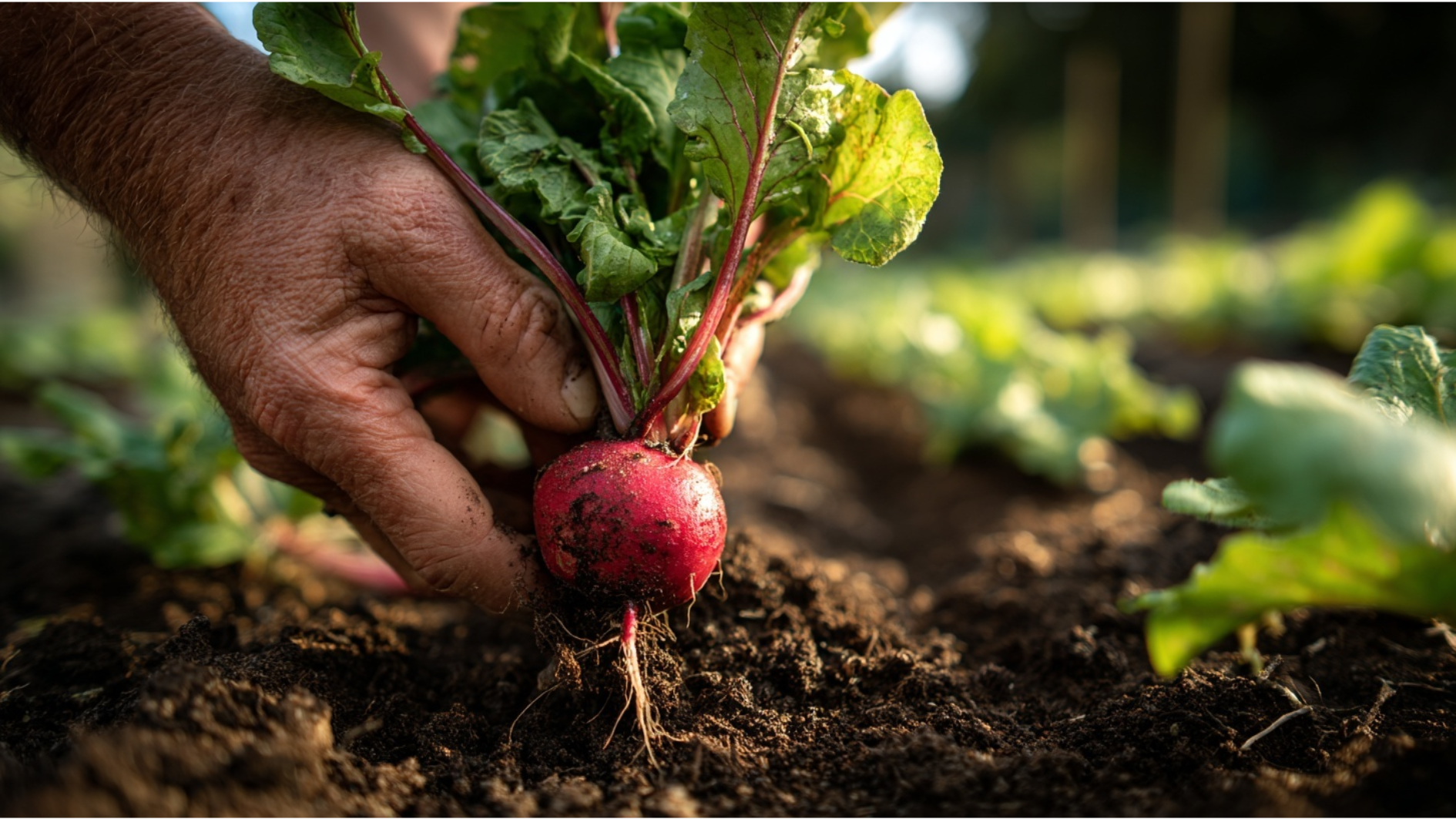
Radishes look simple to grow until harvest day comes and half the crop turns woody, hollow, or far too spicy to enjoy.
The tricky part is that they can go from perfect to disappointing in just a few days, especially during changing spring temperatures.
Many gardeners assume bigger means better, but radishes rarely reward waiting. Understanding when to harvest them makes the difference between crisp roots worth eating and a garden bed full of missed timing.
This guide covers the signs that matter, how different varieties behave, and the easiest ways to keep fresh radishes coming through the season.
Why Radishes are Worth Getting Right
Radishes grow fast, but their best harvest window is surprisingly short. Pull them at the right time and you get crisp texture, mild flavor, and better regrowth throughout the season.
- Fast Results → Ready in as little as 22 days, making them one of the quickest vegetables to harvest
- Better Flavor → Proper timing keeps them crunchy, mild, and less bitter
- Continuous Harvests → Short growing cycles make succession planting easy
- Beginner-Friendly → Simple to grow even in small gardens or containers
Radish Varieties and Their Harvest Window
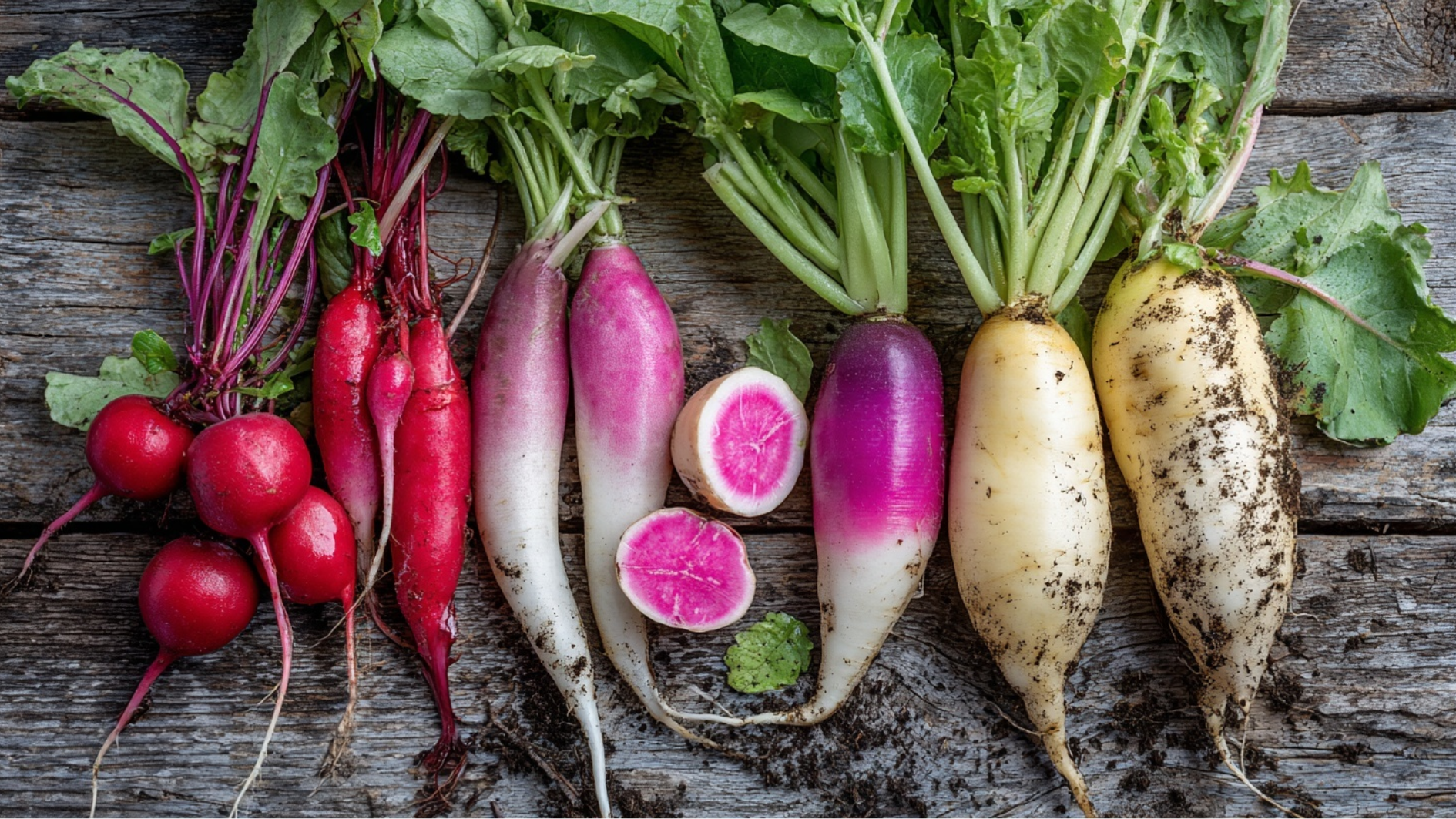
Knowing your variety tells you exactly how long you have, what to watch for, and what grows well next to them.
| Type | Best Season | Days to Harvest | Overripe Signs |
|---|---|---|---|
| Cherry Belle | Spring, fall | 22–30 days | Cracked skin, hollow center |
| French Breakfast | Spring, fall | 25–30 days | Woody, sharp flavor |
| Easter Egg | Spring, fall | 25–30 days | Soft skin, pithy inside |
| Watermelon Radish | Fall, winter | 50–65 days | Fibrous, bitter taste |
| Daikon | Fall, winter | 50–70 days | Spongy center, no crunch |
When are Radishes Ready to Harvest?
Most gardeners in growing communities advise to stop waiting for them to look impressive and start reading what the plant is actually telling you.
1. Shoulders Above the Soil
As a radish matures it pushes its top above the soil line. When you can see a round top sitting just above the surface that is your cue to start checking. Some varieties pop up so clearly they practically tell you themselves.
The mistake most people make is seeing those shoulders and thinking just a few more days will make them bigger and better. It will not. That is exactly the moment to pull.
2. Leaf Height: Around 6 to 8 Inches
Root growth and leaf growth mirror each other more closely than most people realize. Greens around 6 to 8 inches tall and upright usually mean the root below is right where you want it.
If one plant has shot up significantly taller than its neighbors, the radish attached to it has probably already pushed past its best size.
3. Size Over Calendar Days
Most spring radishes are at their best between the size of a large marble and a small golf ball. Past that the texture starts going downhill regardless of how many days the packet says are left.
The days to harvest figure tells you when to start checking, not when to stop waiting. Weather, soil temperature and spacing all affect how fast a radish develops.
4. Watch for Bolting
A flower stalk shooting up from the center of the plant means the window has closed.
Bolting happens fast, sometimes overnight, during a heat wave, and once it starts, the root turns pithy, and the flavor sharpens beyond the point of being pleasant.
If you see a flower stalk, pull it immediately, regardless of size. Whatever is down there is as good as it is going to get.
How to Pull, Store, and Replant Radishes
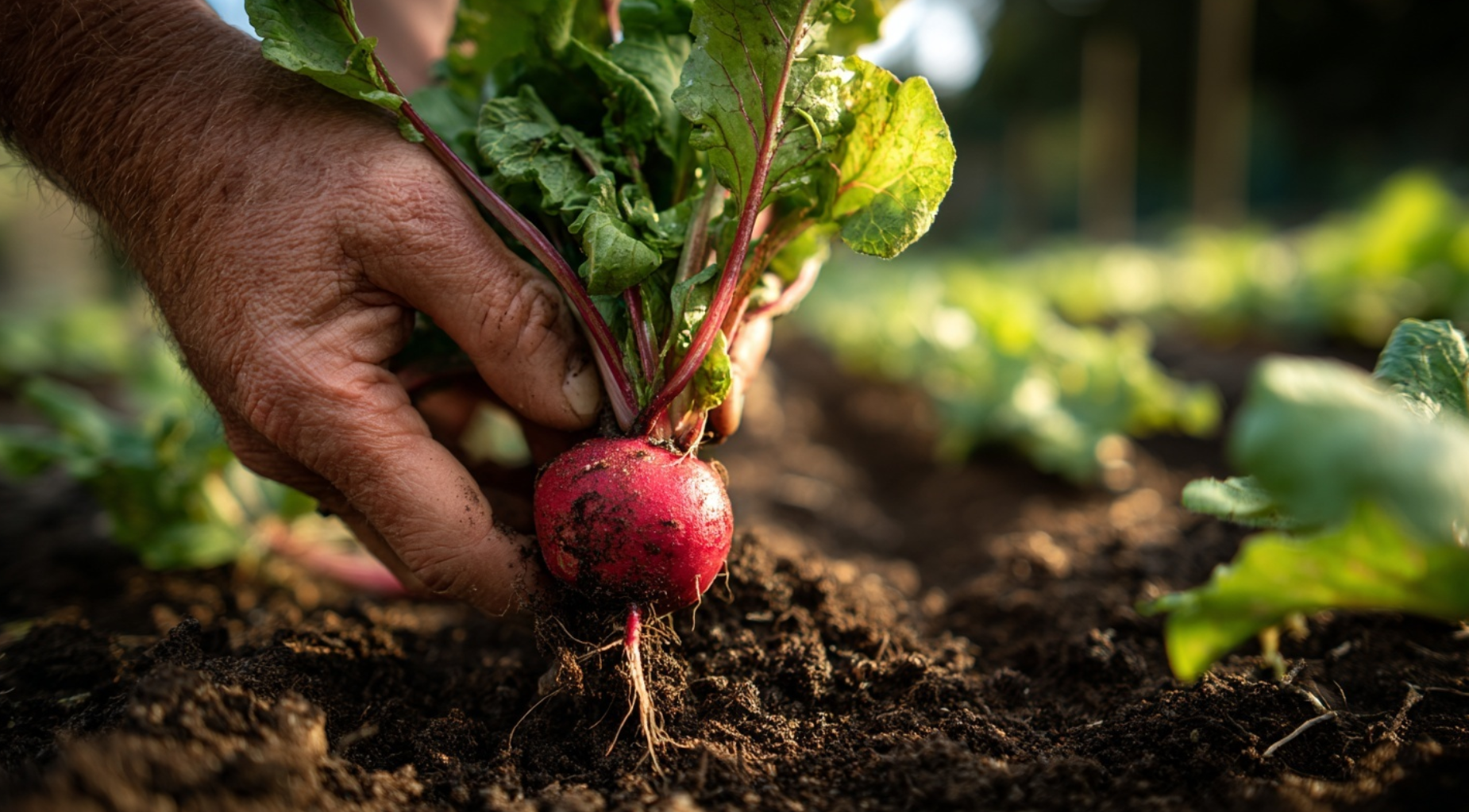
Step 1: Loosen the Soil First
Push a trowel or your fingers a couple of inches from the base before pulling anything.
Dry compacted soil will snap the root clean in half if you yank straight up. It takes ten seconds and saves the whole radish; do not skip it.
Step 2: Grip at the Base
Hold where the leaves meet the root, not halfway up the greens. Gripping too high means the leaves snap off, and you end up digging anyway.
Pull steadily straight upward with even pressure and no twisting, the root comes out cleanly every time.
Step 3: Trim the Greens Right Away
Cut leaves about an inch above the root immediately after pulling. Greens left on pull moisture out of the root, and it goes soft within a day.
Store greens separately, wrapped in a damp paper towel, in the fridge for two to three days. They work well in salads or cooked like spinach.
Step 4: Wash and Store
Rinse off the soil, pat dry, seal in a bag or container, and refrigerate. Fresh radishes keep well for up to two weeks. Left at room temperature, they lose their crunch fast, and there is no getting it back.
Step 5: Replant the Spot
Do not leave the soil bare. If cool weather remains plant another round straight into the same spot with a handful of compost worked in.
Radishes are fast enough that you can squeeze two or three rounds into a single cool season in most US growing zones.
What Happens When You Wait Too Long
Not sure if they are ready? Pull one test radish from the middle of the row. Cut it open, taste it, check the texture. That one tells you everything about the rest.
Once past their peak, radishes go downhill fast, and there is no pulling them back. Here is what to look for and what caused it.
- Cracked skin – uneven watering, combined with leaving them past their peak, the root took up water faster than the skin could handle
- Hollow center – spongy inside instead of solid white, happens fast in warm weather and is the most common complaint in every gardening thread
- Tough texture – should snap cleanly when you bite it, once it goes rubbery nothing fixes it in the kitchen
- Very sharp or bitter – some heat is normal and is what makes radishes interesting, when it turns harsh the root stayed in too long
What Real Gardeners Have to Say
People on Reddit Threads r/gardening and r/vegetablegardening have made every radish mistake worth making. Here is what keeps coming up when people ask when radishes are ready to harvest.
On waiting too long, u/BackyardGrower wrote:
“Left mine an extra week thinking they would get bigger. Every single one was hollow. Did not even bother using them. Pull as soon as you see the shoulders.”
On smaller being better, u/HomeGardenLife shared:
“The ones I pulled early because they looked too small were the best tasting ones. The big ones I waited on were way too sharp. Going smaller on purpose from now on.”
On heat, u/SpringGarden22 said:
“Heat wave came out of nowhere and within days they went from perfect to completely pithy. Fall planting only from now on.”
On succession planting, u/GardenEveryWeek wrote:
“Planting a small row every week changed everything. Always have fresh ones ready without everything maturing at the same time.”
If you want a continuous harvest, plant a small row every two weeks from early spring. By the time the first batch is done the next one is ready.
Browse more on r/gardening here.
Conclusion
There is something quietly satisfying about a vegetable that asks so little and delivers so much. Twenty-two days from seed to table, no fuss, no complicated care routine.
Most things worth growing take months to show up. Radishes show up before you have even properly settled into the season. Get the timing right, and they will never let you down.
Miss it, and even the most carefully tended batch ends up in the compost. That gap, those few days between perfect and past it, is what separates the gardeners who get it from the ones still wondering what went wrong.
Frequently Asked Questions
Can radishes be grown in containers?
Yes. Shallow varieties like Cherry Belle work well in containers at least 6 inches deep. Deeper varieties like Daikon need more room and do better in the ground.
Do radishes need full sun?
They prefer 6 hours of direct sunlight but handle partial shade better than most vegetables. Too much shade though and you get more leaf than root.
Can radishes be grown in summer?
Most varieties bolt fast in summer heat and the flavor turns harsh. Stick to spring and fall for the best results.
How do you know if a harvested radish has gone bad?
A bad radish feels soft, looks shriveled, or smells off. Fresh radishes should feel firm and heavy for their size.