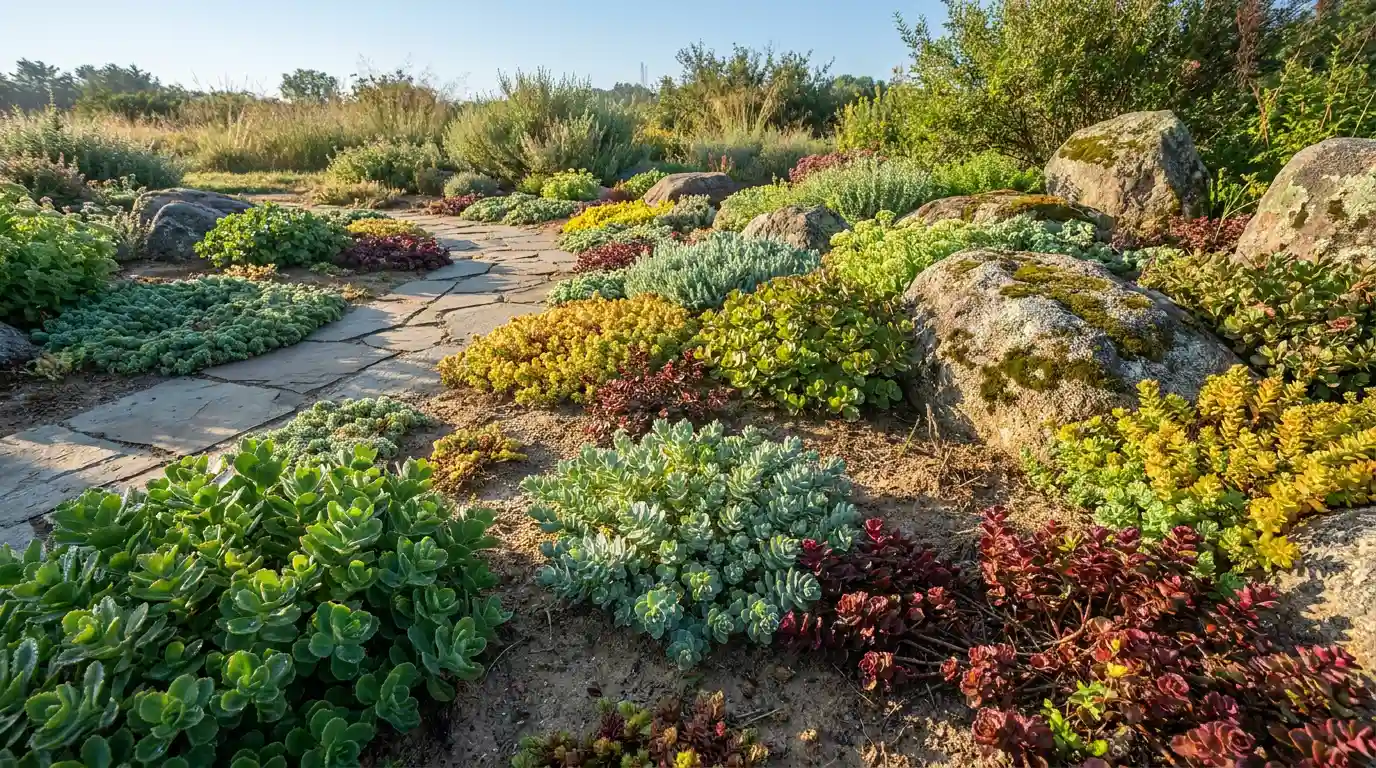
Sedum ground cover offers a simple way to fill sunny spaces with color, texture, and seasonal interest. It grows close to the soil and spreads gradually, creating a living carpet. Wide varieties handle heat, dry weather, and poor soil better than grass.
You can plant sedum on slopes, beside paths, around rocks, or across small lawn areas. Most types need bright sun and soil that drains quickly. They usually require little care after their roots settle and begin spreading.
The best results come from choosing a variety that suits your climate and space. Proper spacing, light watering, and weed-free soil also help young plants establish well. With the right start, sedum can provide lasting coverage with very little ongoing effort.
Is Sedum Ground Cover Right for Your Garden?
Sedum ground cover works best in sunny, dry areas where water drains quickly, much like many other plants that need little water. It is useful on slopes, around stones, and in beds where grass needs too much care. Before planting, check the site against these basic needs:
- Sunlight: Choose a spot with strong sun for most of the day.
- Drainage: Avoid places where water sits after rain.
- Foot Traffic: Keep sedum away from play areas and busy paths.
- Hardiness: Pick a variety suited to local winter temperatures.
These checks can prevent common problems before they start. Sedum needs little feeding and only occasional trimming, but spreading stems may need edging.
If your garden is shaded, wet, or heavily used, another ground cover may be easier to manage. A suitable site helps sedum stay healthy, colorful, and low maintenance.
Best Sedum Ground Cover Varieties
Different sedum types vary in height, color, spread, and cold tolerance, as documented by the North Carolina State Extension for stonecrop species grown as ground cover.
Some form tight mats, while others create loose patches with upright flowers. Your choice should match the space, climate, and look you want.
1. Dragon’s Blood Sedum
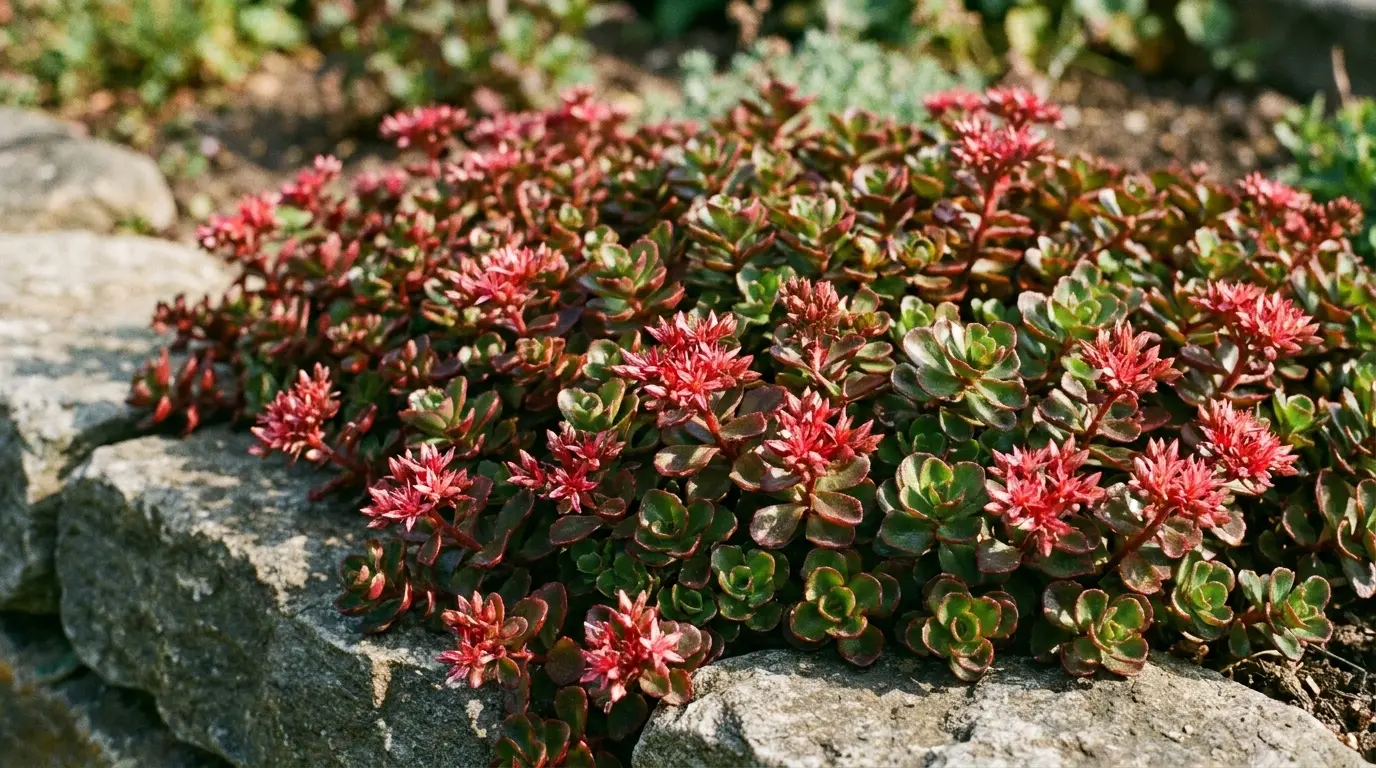
Dragon’s Blood forms a low mat with green leaves that deepen to red in cooler weather. Pink-red flowers appear during summer and add soft color above the foliage.
It works well on slopes, along borders, and around stones. Plant it in full sun for the richest leaf color. Use sandy or gravelly soil that drains fast.
Space young plants widely enough for airflow, since crowded growth can trap moisture after rain.
2. Blue Spruce Sedum
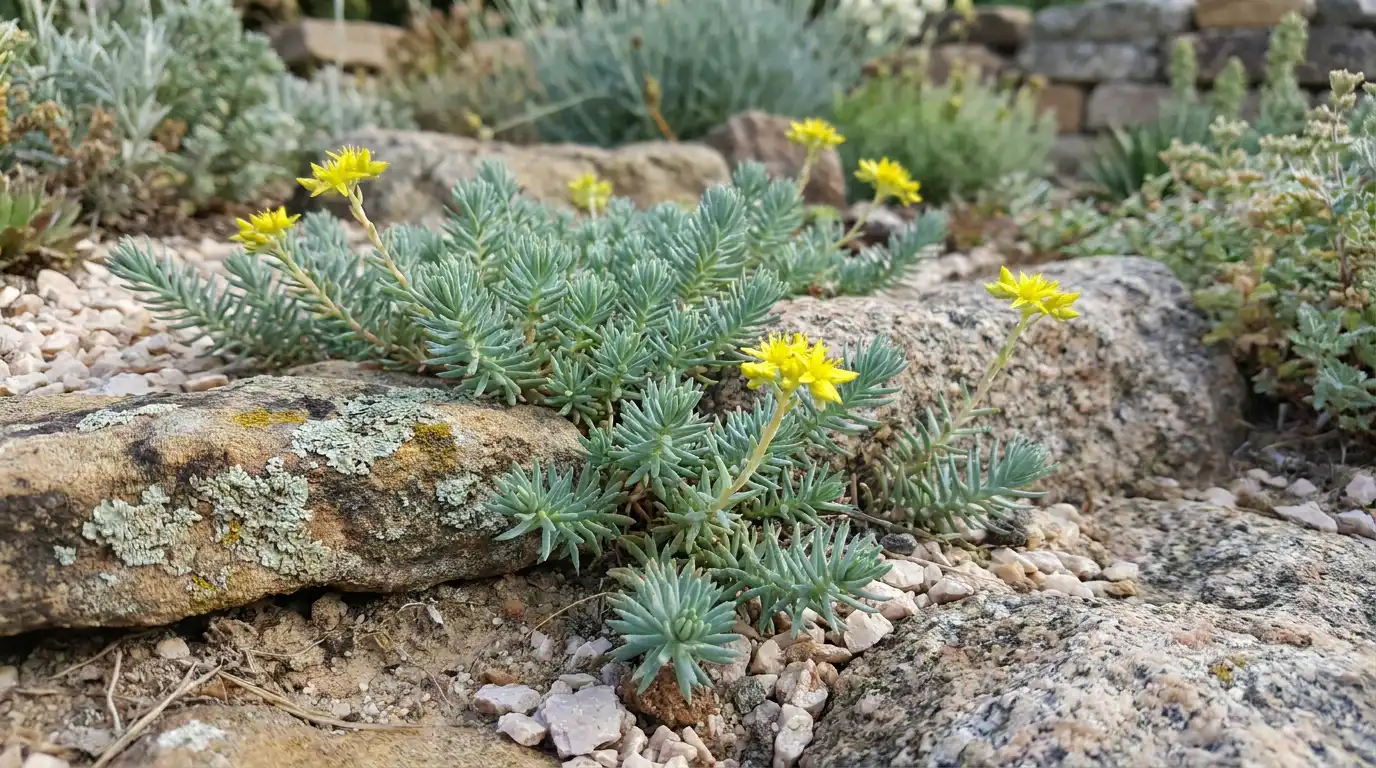
Blue Spruce sedum has narrow, blue-green leaves that resemble tiny evergreen needles. Yellow flowers rise above the foliage in early or midsummer.
Its cool color looks natural beside rocks, gravel, and pale paving. The plant spreads quickly in sunny, dry areas. It accepts poor soil but dislikes standing water.
Trim loose stems when they move into paths. This variety suits gardeners who want texture, quick coverage, and low height.
3. Angelina Sedum
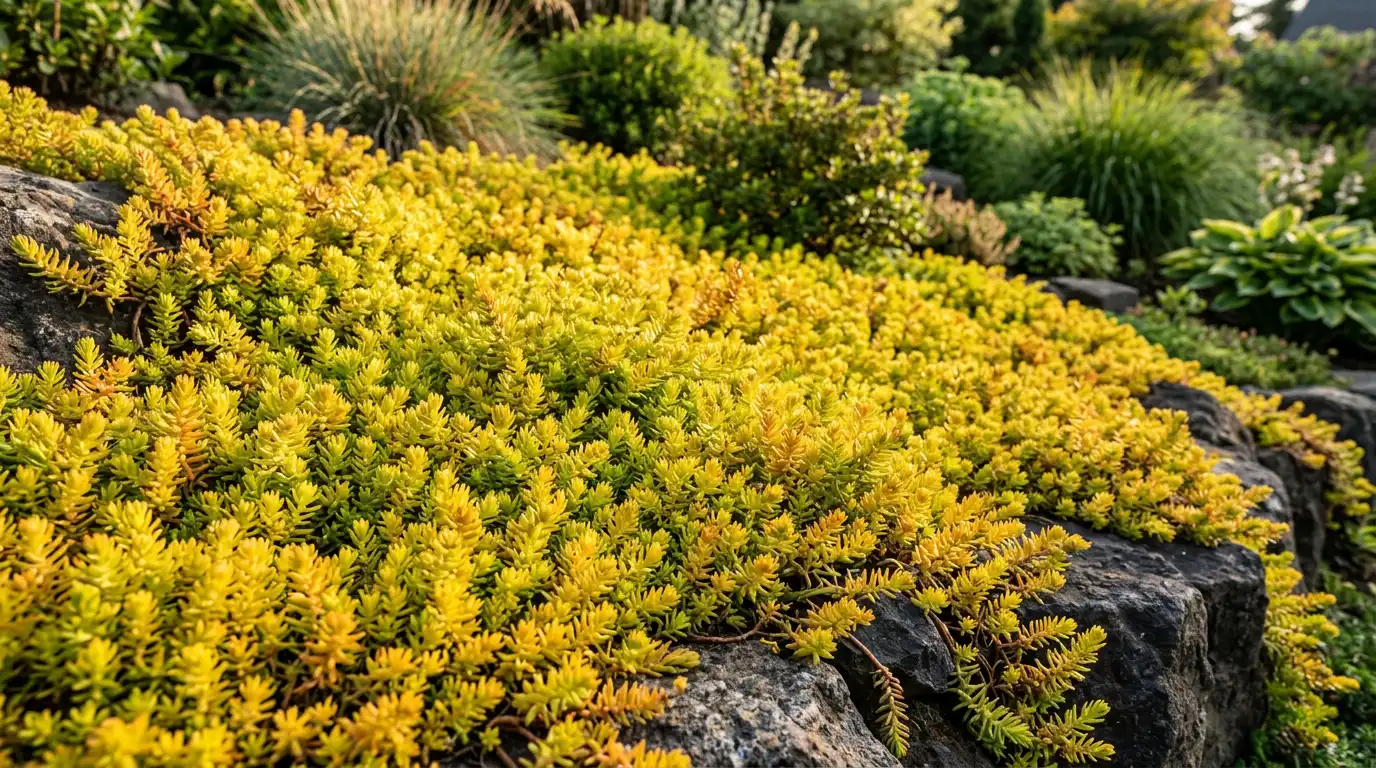
Angelina sedum brings bright gold leaves to dry garden spaces. Its color may turn orange or bronze during cooler weather, adding interest beyond summer.
Use it on slopes, near dark stones, or beside green plants for contrast. It grows best in full sun, though light shade may reduce its color. Give it soil that drains quickly and little fertilizer. Rich soil can produce weak stems that lose the plant’s neat, low shape.
4. White Stonecrop
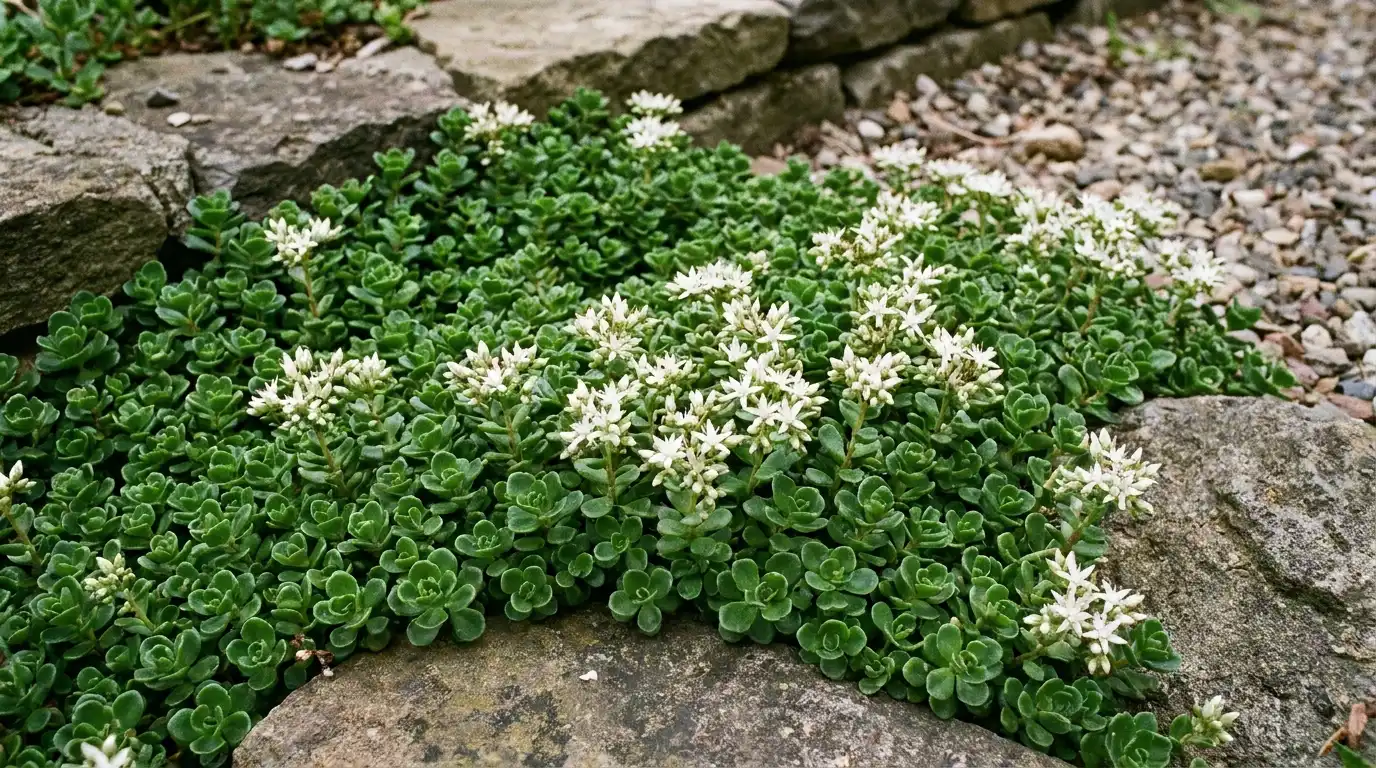
White stonecrop creates a soft carpet of small green leaves. Tiny white flowers appear in summer and can make the planting look lightly dusted.
This type fits between rocks, along dry walls, and near pathway edges. It prefers full sun but may accept a little afternoon shade.
Keep the soil low in nutrients and well-drained. Its spreading stems root easily, so you can move small pieces to fill bare garden spots.
5. Two-Row Stonecrop
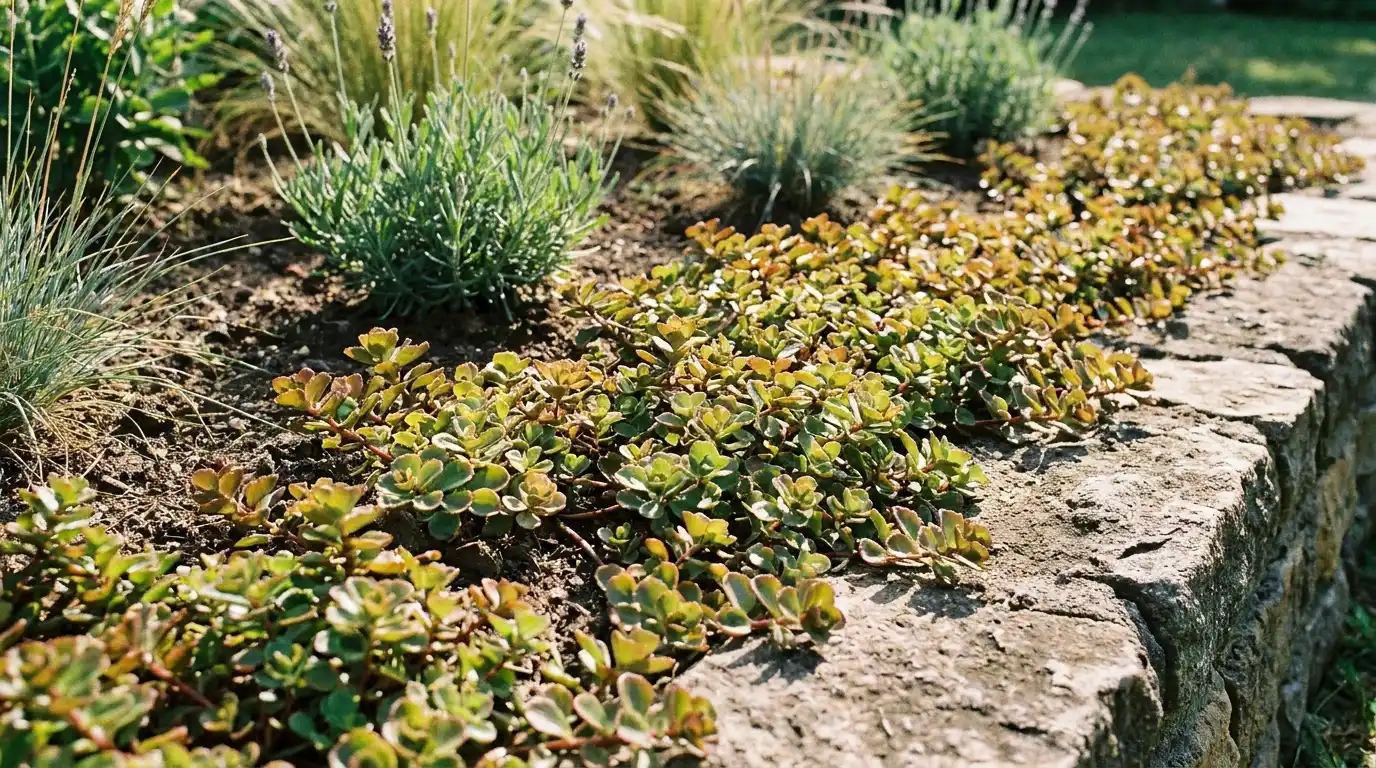
Two-row stonecrop spreads through low stems lined with rounded leaves. Depending on the variety, the foliage may shift from green to red or bronze.
It can cover open beds, soften borders, and fill spaces between larger drought-tolerant plants. Give it direct sun and dry soil after establishment. Water new plants during long dry spells.
Once rooted, reduce watering. Regular, light trimming helps keep the spread within planned garden border edges.
6. Kamtschaticum Sedum
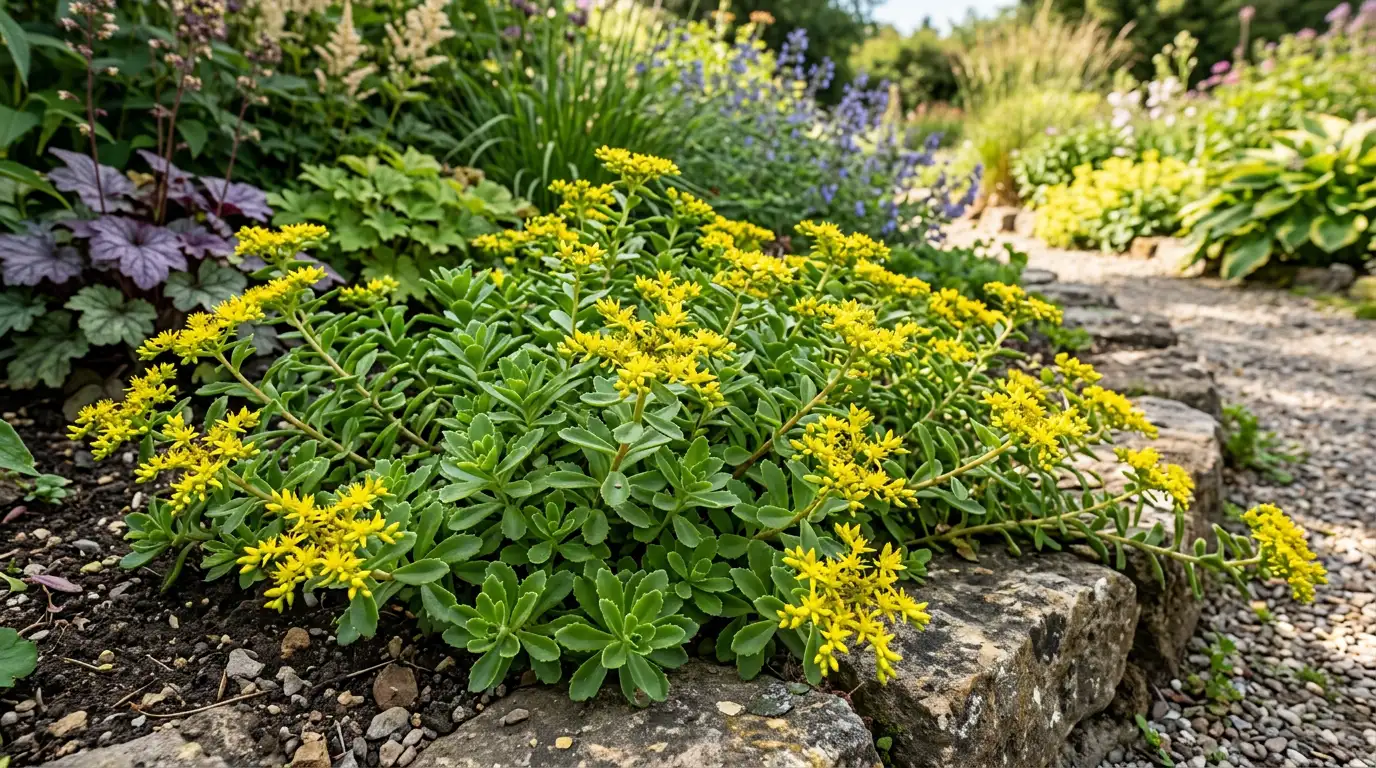
Kamtschaticum sedum grows slightly taller than many mat-forming types. It has fresh green leaves and bright yellow flowers that often appear during summer.
Use it in borders, wide containers, and mixed rock gardens. It handles cold better than some tender sedums, though hardiness varies by selection. Plant it in sunny soil with fast drainage.
Remove faded flower stems when needed, but avoid heavy pruning during strong, healthy, active summer growth.
How to Choose the Right Sedum
Start with your climate, since some sedums handle hard freezes better than others. Check the plant label for its cold range and mature size. A small plant can spread farther than expected after two seasons.
Next, match the leaf color to nearby stones, paths, and plants. Green and blue types feel calm, while gold and red types create stronger contrast.
| Your Need | Feature to Seek | Why It Helps | Good Choice For |
|---|---|---|---|
| Fast coverage | Wide, rooting stems | Helps plants spread quickly across open ground | Slopes, borders, and large gaps |
| Winter interest | Red, bronze, or purple foliage | Keeps the planting attractive after summer | Year-round displays |
| Small spaces | Slow, compact growth | Prevents plants from crowding paths or nearby plants | Pots, edging, and rock gardens |
| Cold areas | Proven local hardiness | Reduces winter damage and plant loss | Frost-prone gardens |
| Hot, dry areas | Thick, fleshy leaves | Helps the plant store water during dry periods | Dry borders and exposed sites |
| Low maintenance | Dense, tidy growth | Reduces pruning, dividing, and cleanup | Busy gardeners and easy-care beds |
| Poor soil | Drought-tolerant, shallow-rooting types | Helps sedums grow where richer plants may struggle | Gravel gardens and rocky ground |
Use the table as a quick reference, but always compare your space with the plant’s mature size, hardiness, and light needs. A well-matched sedum will usually spread more evenly, need less care, and stay attractive for longer.
Sedum Ground Cover Planting Ideas
A mixed planting can add more depth than one solid block. Use these ideas to keep the design balanced and natural.
- Mix varieties: Combine two or three sedums with similar light and water needs.
- Vary leaf colors: Choose different shades, but avoid using every color in one small area.
- Add rocks: Use stones and gravel to improve drainage and highlight the low foliage.
- Repeat plants: Place the same variety beside several stones for a calm, connected look.
- Pair plants: Grow sedum with thyme, small grasses, and other drought-tolerant plants.
- Leave space: Give each plant enough room to reach its mature width.
- Stagger slopes: Plant groups in uneven rows to create a softer, more natural pattern.
These ideas help the planting look organized while giving each sedum enough space to spread evenly.
Where to Plant Sedum Ground Cover
Choose an open area that receives at least six hours of direct sunlight each day. Sedum grows best in bright locations with good airflow and fast-draining soil.
Slopes, raised beds, rock gardens, and gravel areas often provide the dry conditions sedum prefers, similar to the layouts used in these inexpensive desert landscaping ideas for water-wise yards.
You can also plant it beside paths, around stepping stones, or near dry stone walls. Avoid places with heavy daily foot traffic.
Occasional contact is usually fine, but repeated pressure can damage stems and leave bare patches. Containers and green roofs can also work if the growing mix stays light and drains well. Before planting, check the area after rainfall.
Water should move away quickly without forming puddles. Sedum performs best where roots stay airy, dry between waterings, and aren’t left in wet soil.
How to Plant Sedum Ground Cover
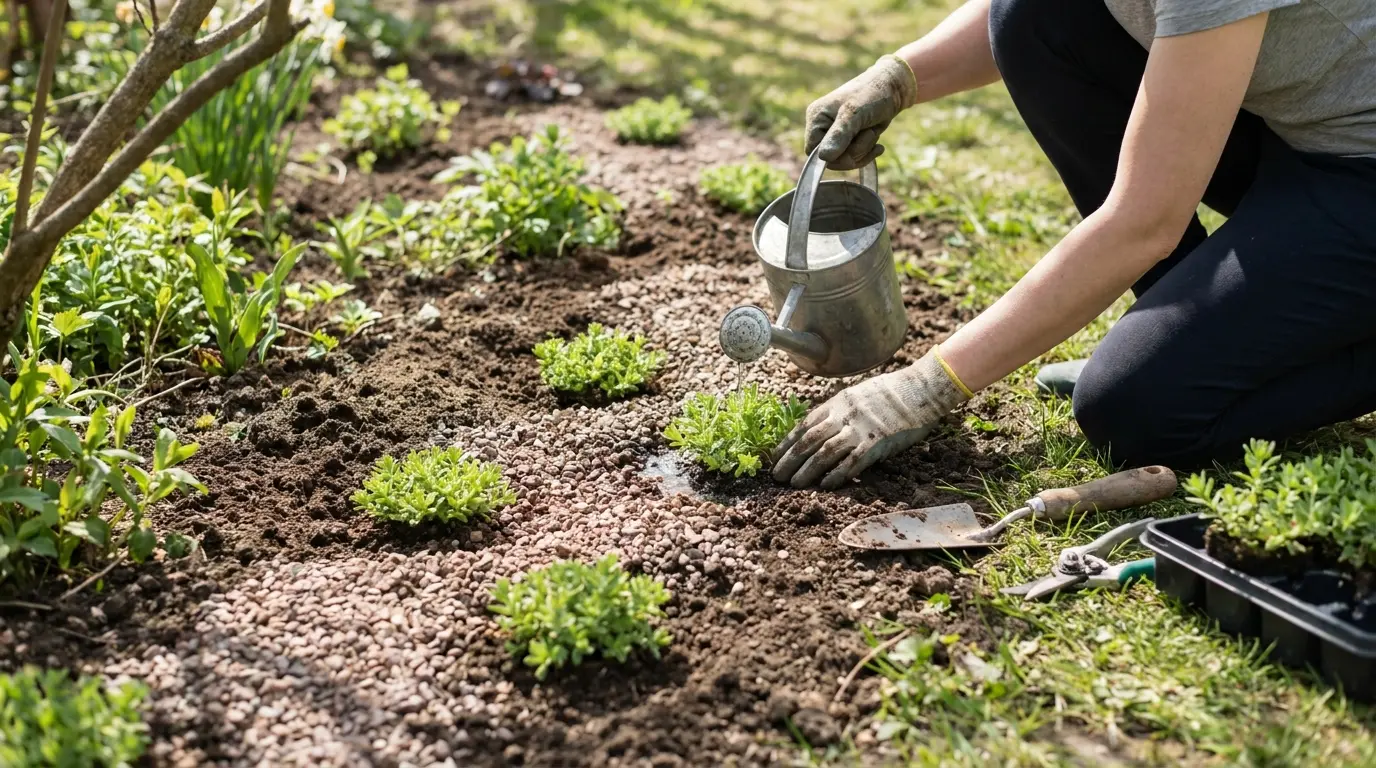
Plant in spring after hard frost, or choose early fall in mild areas. Clear weeds first, including roots that may return through the new plants. Loosen the topsoil and mix in grit when the ground feels heavy. These steps keep planting simple. They also reduce early problems.
- Spacing: Leave room based on the plant’s mature width.
- Depth: Set the top of the roots level with surrounding soil.
- Water: Soak once, then water lightly while roots form.
- Mulch: Use fine gravel instead of moisture-holding bark.
Steady early care helps plants spread without weak growth. Do not add rich compost unless the soil is extremely poor. Sedum needs drainage more than extra food.
Sedum Ground Cover Care
Established sedum ground cover needs less care than many leafy ground covers. Give it plenty of sun, limited water, and well-draining soil that dries between watering.
Young plants need more regular moisture while their roots develop. Once established, sedum usually handles short dry periods well. During long heat waves, water deeply rather than watering a little every day.
| Care Task | Basic Approach | Helpful Tip |
|---|---|---|
| Watering | Lightly while young; rarely when established | Let the topsoil dry before watering again |
| Feeding | Little or none in average soil | Too much fertilizer can cause weak, soft growth |
| Trimming | Cut back stems crossing paths or spreading too far | Trim after flowering or when growth becomes untidy |
| Weed control | Remove weeds while plants are filling gaps | Hand-pull carefully to avoid disturbing shallow roots |
| Winter care | Leave healthy growth unless damaged | Remove dead or damaged stems in spring |
| Dividing | Divide crowded plants when needed | Replant healthy sections to fill bare areas |
Overwatering often causes more trouble than dry soil. Watch the plant before adding water. Firm, full leaves usually mean the plant has enough moisture, while soft or damaged growth may suggest poor drainage or excess water.
Common Sedum Problems
Most sedum problems come from excess moisture or low light. Yellow, soft leaves often point to wet roots. Improve drainage and let the soil dry before watering again. The main warning signs are easy to spot early. Each one points to a likely cause.
- Soft growth: Reduce water and check drainage.
- Stretched stems: Increase direct sunlight.
- Bare patches: Replant rooted pieces after fixing the cause.
- Slugs: Remove hiding places and inspect after rain.
Early changes often prevent wider damage. Thin stems and wide gaps usually mean the plant needs more sun. Move small sections to a brighter place when possible. Weeds can also crowd young plants before the mat closes.
Frequently Asked Questions
Is sedum evergreen?
No, not always. Some varieties stay partly evergreen through winter, while others change color or lose growth in cold months. Climate, variety, sun exposure, and local temperatures all decide how much foliage a sedum plant keeps once winter arrives.
Can sedum grow under trees?
No, not easily. Most sedums struggle beneath dense trees because they receive too little light. A bright, dry spot near the outer edge of a canopy usually works far better than planting in deep shade underneath it.
Is sedum pet-safe?
Yes, mostly. The ASPCA lists most sedum species as non-toxic to dogs and cats, though a few uncommon varieties may cause mild stomach upset if eaten in large amounts. Confirm the exact species with your veterinarian if your pets often chew nearby plants.
Does sedum stop erosion?
Yes, somewhat. Its spreading roots can help hold loose surface soil in place on gentle slopes. It cannot secure steep banks facing deep soil movement, heavy erosion, or serious runoff on its own without extra support.
Final Thoughts
Sedum ground cover can bring color, texture, and easier care to sunny, dry garden spaces. Success starts with the right variety and well-draining soil. Choose a plant that suits your climate, then give it enough room to spread naturally.
Water during early growth, but reduce moisture once the roots settle.
Trim stems only when they cross paths, borders, or nearby plants. Avoid deep shade, wet clay, and areas with heavy foot traffic.
With thoughtful placement, sedum can form a living carpet that changes through each season. It also gives you an option where grass often struggles.
Have you used sedum ground cover in your garden? Share your favorite variety, planting idea, or care tip in the comments below.