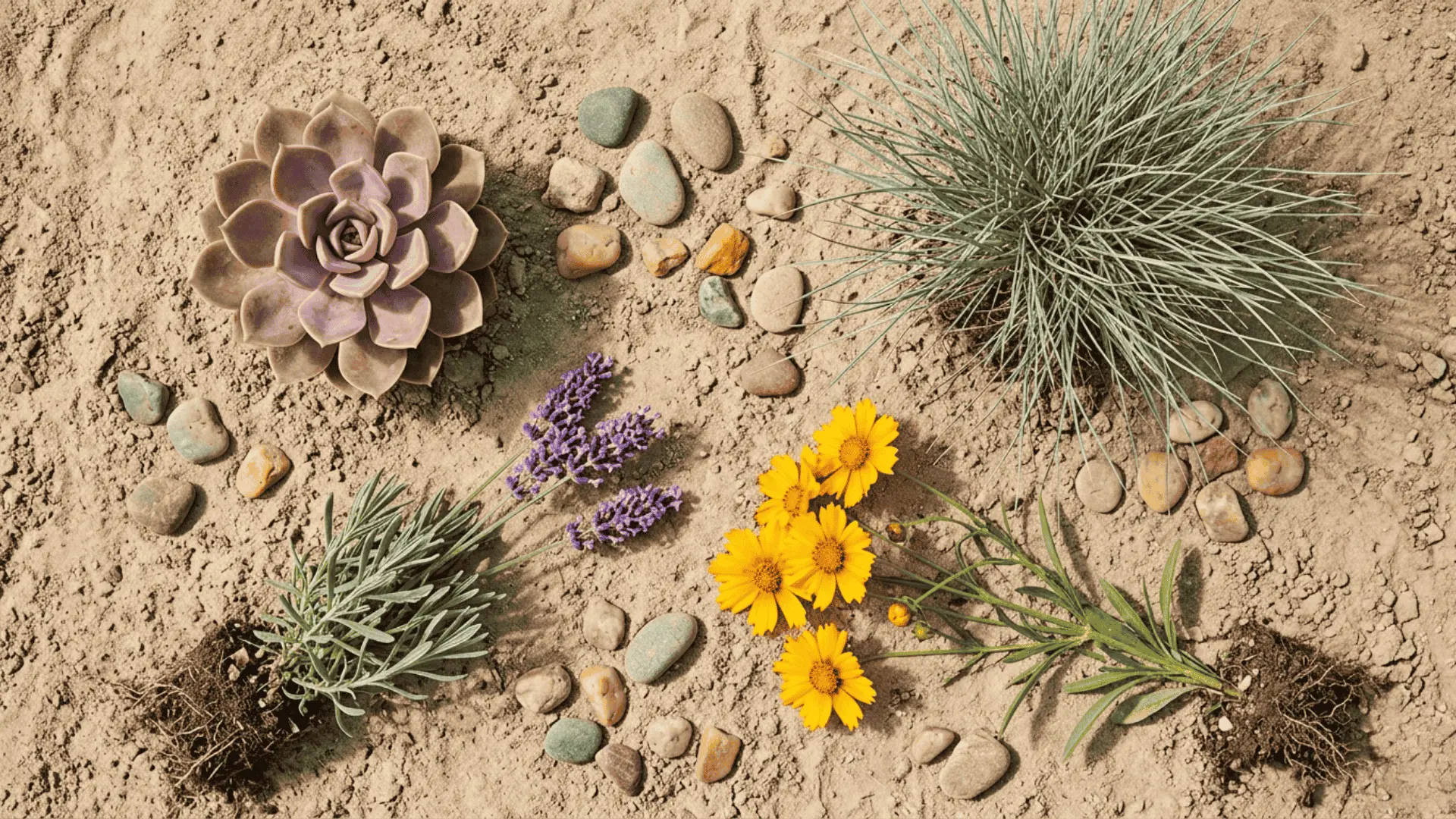
Not every garden needs constant attention to stay beautiful. Some plants are practically built for independence, quietly flourishing even when the rain forgets to show up.
Gardening in a sun-baked yard or working through a packed schedule no longer has to mean watching things wilt.
Nature has already done the hard work, gifting us with plants that don’t need much water yet still manage to look effortlessly lush.
Dusty-rose succulents, feathery ornamental grasses, and sun-loving perennials prove that the most resilient gardens are often the most gorgeous ones.
Wait, Do These Plants Actually Need Water?
Let’s clear something up: every living plant needs water at some point. What sets certain plants apart is how little they actually demand once they settle in.
Drought-tolerant and xeriscape plants are designed by nature to store moisture, grow deep roots, and pace themselves through dry spells without drama.
And honestly, more gardeners are leaning into this approach, not just for convenience.
Low-water gardening supports conservation, adapts beautifully to shifting climates, and creates landscapes that practically take care of themselves.
How to Pick Low-Water Plants That Actually Work for Your Space?
Choosing the right plants goes beyond what looks pretty on a shelf. A little groundwork upfront saves a lot of guesswork later.
- Know Your Climate Zone: Dry desert heat and coastal dryness call for very different plant personalities.
- Read Your Soil: Sandy soils drain fast while clay holds moisture longer, and your plants need to match that rhythm.
- Map Your Sunlight: Full sun lovers will sulk in the shade, and partial shade plants will scorch in open heat.
- Think About Seasons: Some low-water plants go dormant in winter and need even less interference than usual.
- Start With Natives: Plants local to your region are already wired for your exact conditions.
Getting these basics right means your garden does most of the heavy lifting on its own.
Succulents & Cacti
If there’s one plant family that practically wrote the rulebook on drought survival, it’s this one.
Succulents and cacti store water in their leaves and stems, making them the most forgiving choices for dry gardens and forgetful waterers alike.
1. Aloe Vera
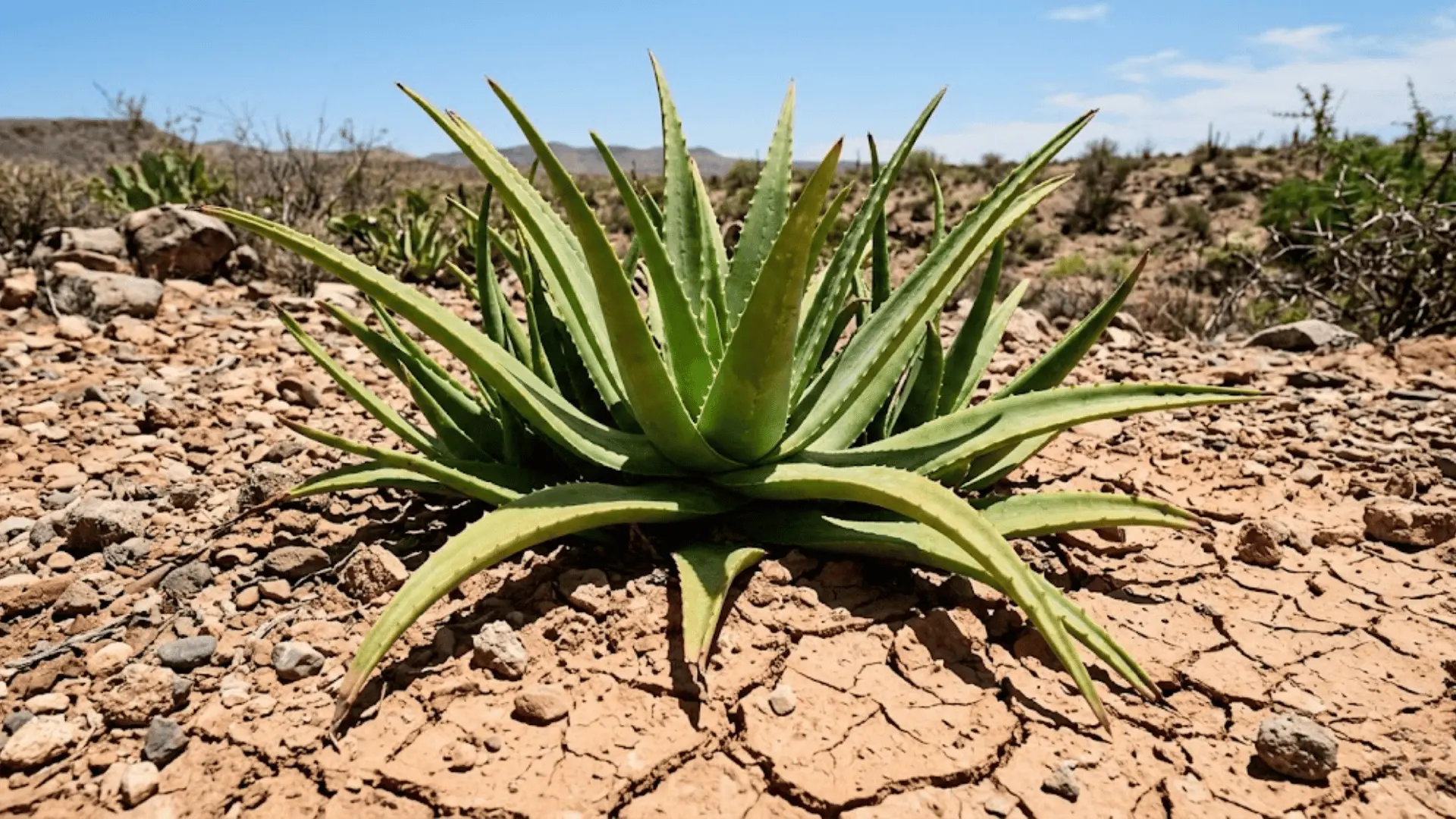
Sun Exposure: Full sun to partial shade
Zone: 8-11
Size: 12-36 inches tall
A classic that earns its place in every low-water garden. Aloe vera is as practical as it is pretty, with thick, moisture-packed leaves that need almost no intervention.
It thrives in containers or garden beds and rewards minimal care with steady, architectural growth year after year.
2. Agave
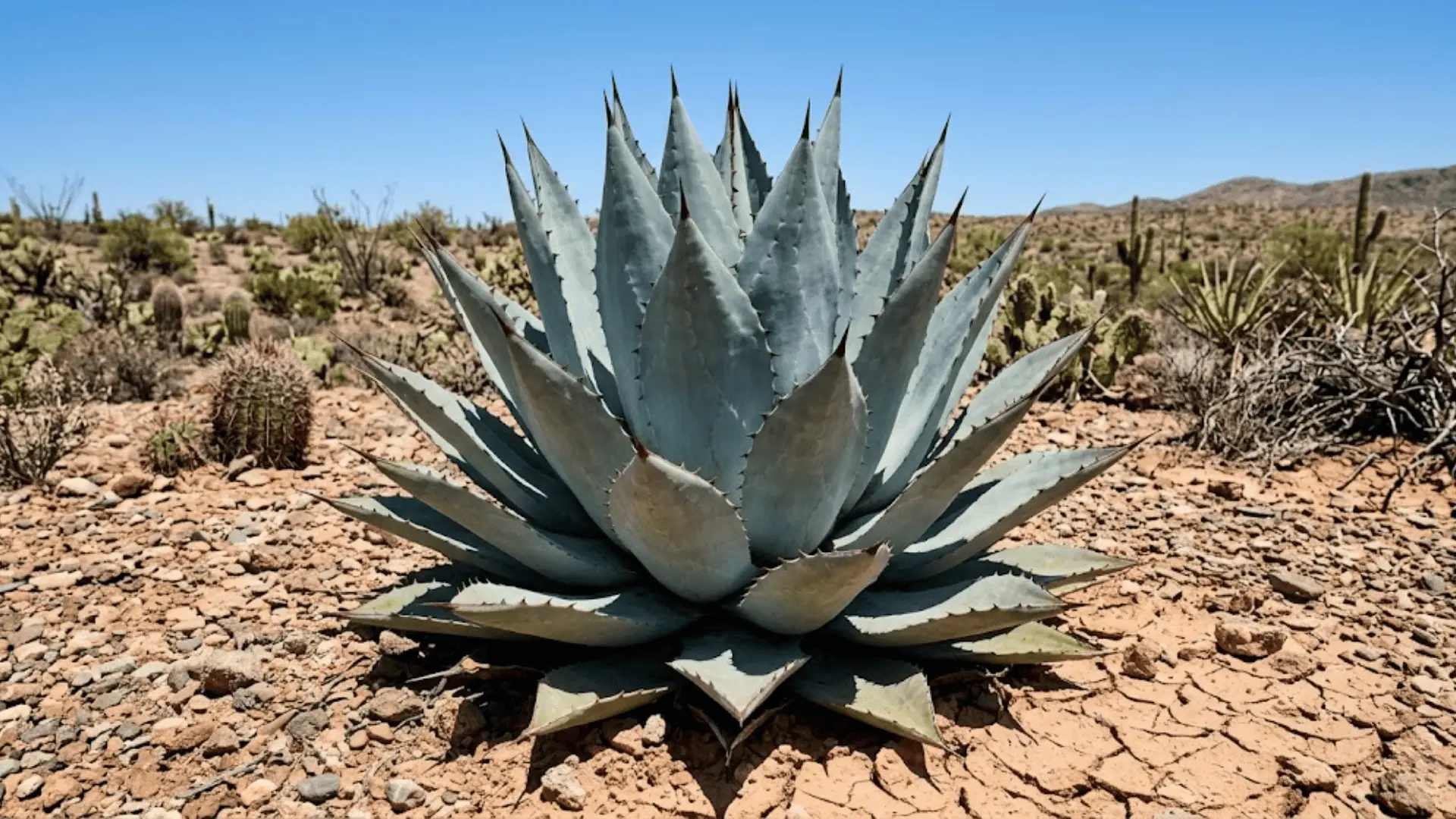
Sun Exposure: Full sun
Zone: 5-11
Size: 60-120 inches tall
Bold, structural, and built for heat, agave is a statement plant that demands almost nothing in return.
Its thick, spiky rosettes store water efficiently, making it one of the most reliable plants that don’t need much water even through extended dry spells and punishing summer heat.
3. Barrel Cactus
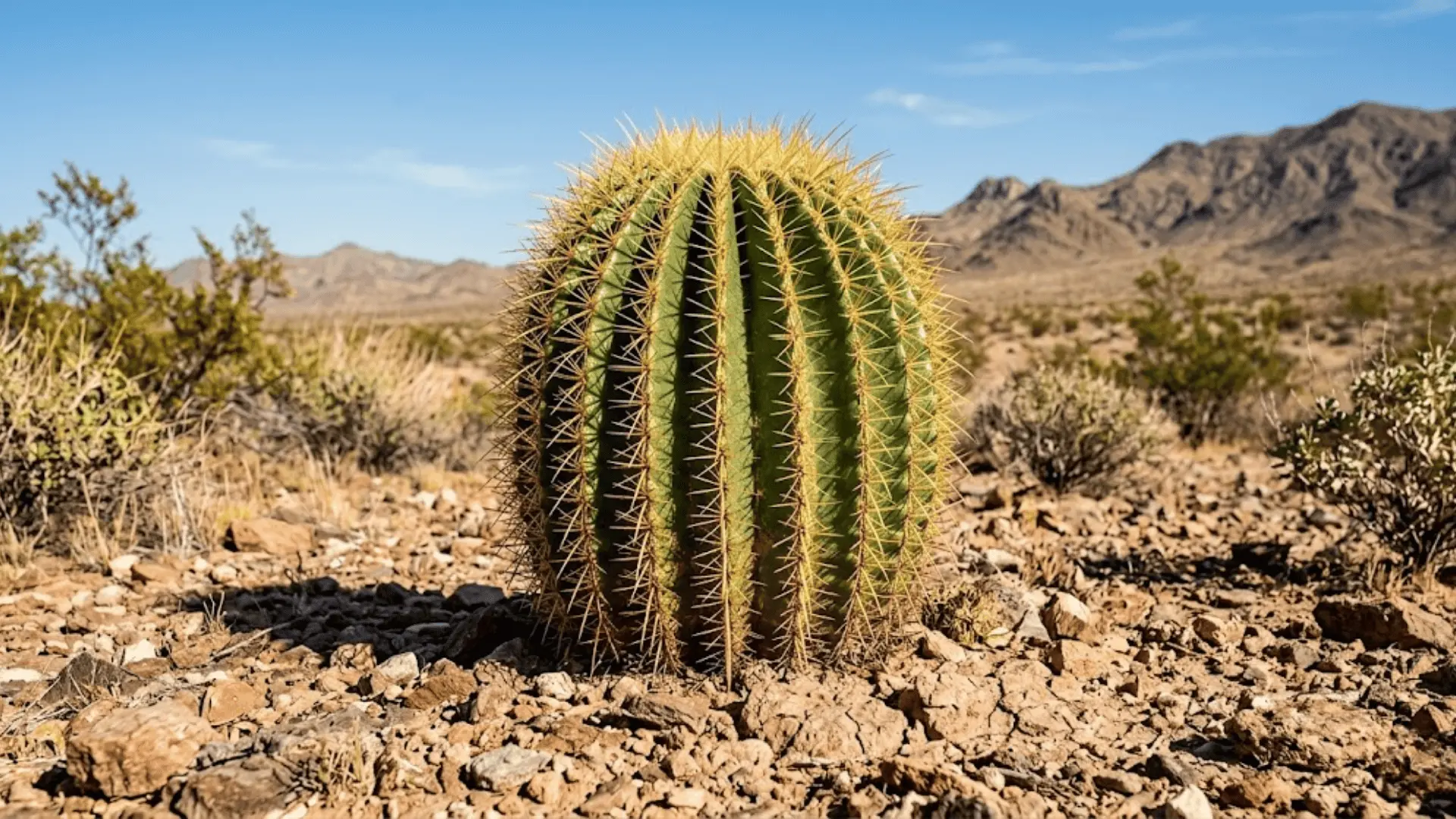
Sun Exposure: Full sun
Zone: 9-11
Size: 24-48 inches tall
Round, ribbed, and remarkably self-sufficient, the barrel cactus is a desert native that thrives on neglect.
It stores water in its thick, waxy body and asks for very little beyond well-drained soil and plenty of sunshine to stay healthy and visually striking through every season.
4. Echeveria
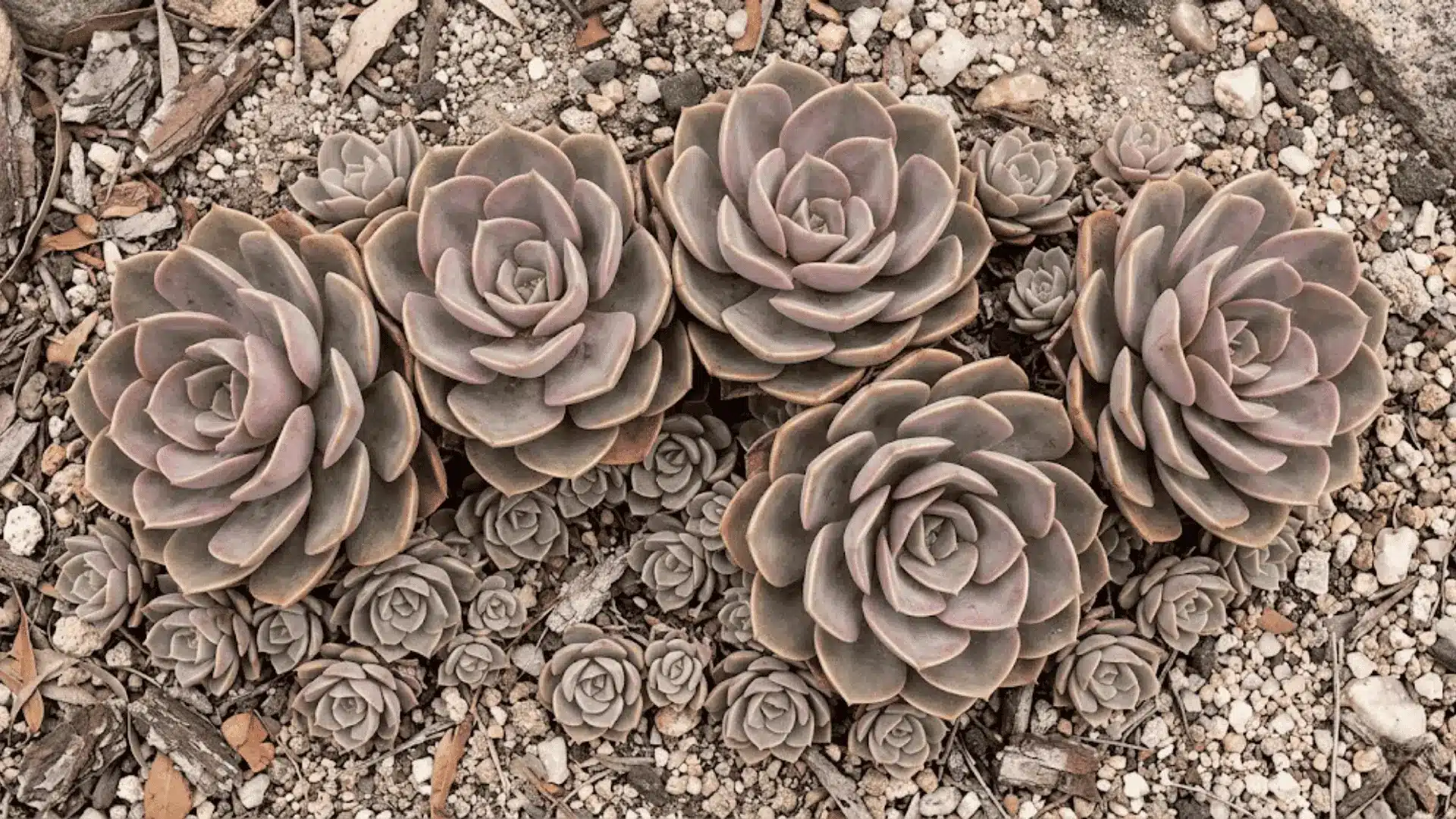
Sun Exposure: Full sun to partial shade
Zone: 9-11
Size: 2-12 inches tall
Echeveria brings a soft, rosette-shaped beauty to low-water gardens with almost no effort.
Its plump, pastel-toned leaves hold moisture well, and it’s equally happy in a terracotta pot on a sunny windowsill or tucked into a dry garden border with equally unfussy neighbors.
5. Sedum
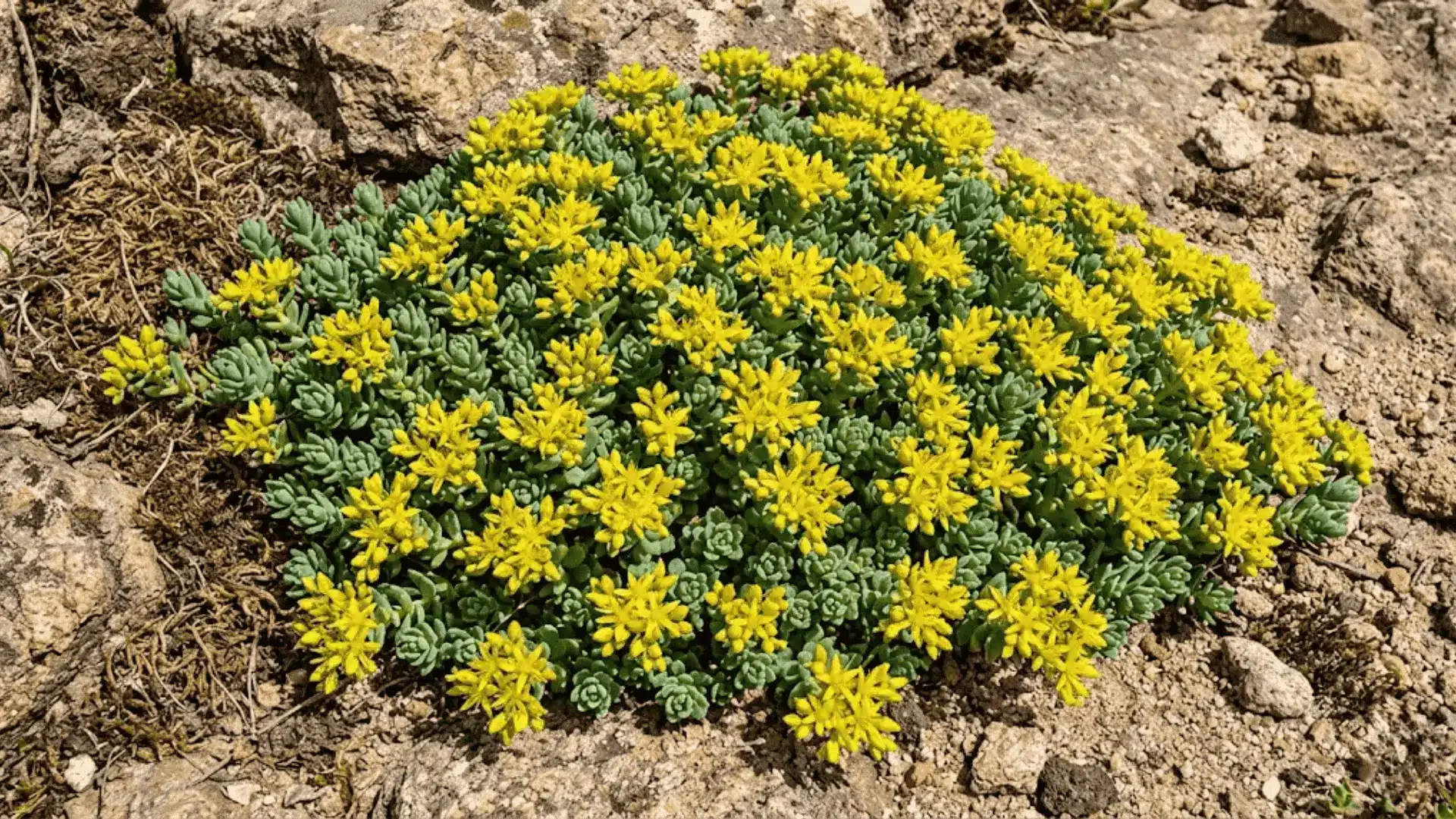
Sun Exposure: Full sun
Zone: 3-9
Size: 6-24 inches tall
Sedum is one of the most versatile low-water plants around, working as both ground cover and a standalone feature plant.
It handles poor soil, intense sun, and dry conditions with ease, and its star-shaped flowers add seasonal color without demanding anything extra from the gardener.
6. Jade Plant
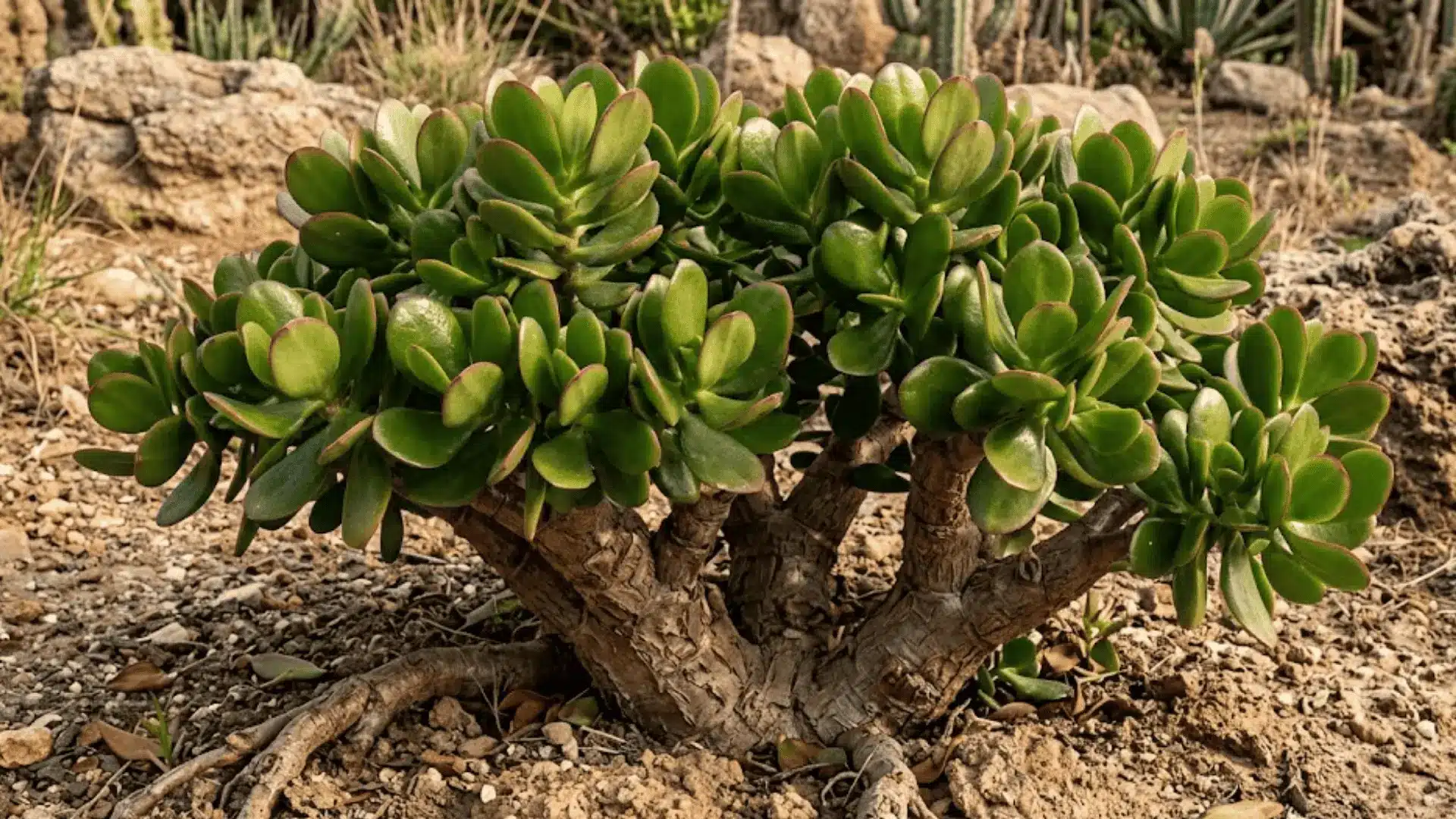
Sun Exposure: Full sun to partial shade
Zone: 10-11
Size: 24-36 inches tall
The jade plant has a calm, bonsai-like grace that suits both indoor and outdoor spaces.
It stores water in its thick, oval leaves and thrives on infrequent watering, making it one of the most low-maintenance plants that don’t need water beyond an occasional, unhurried drink.
7. Prickly Pear Cactus
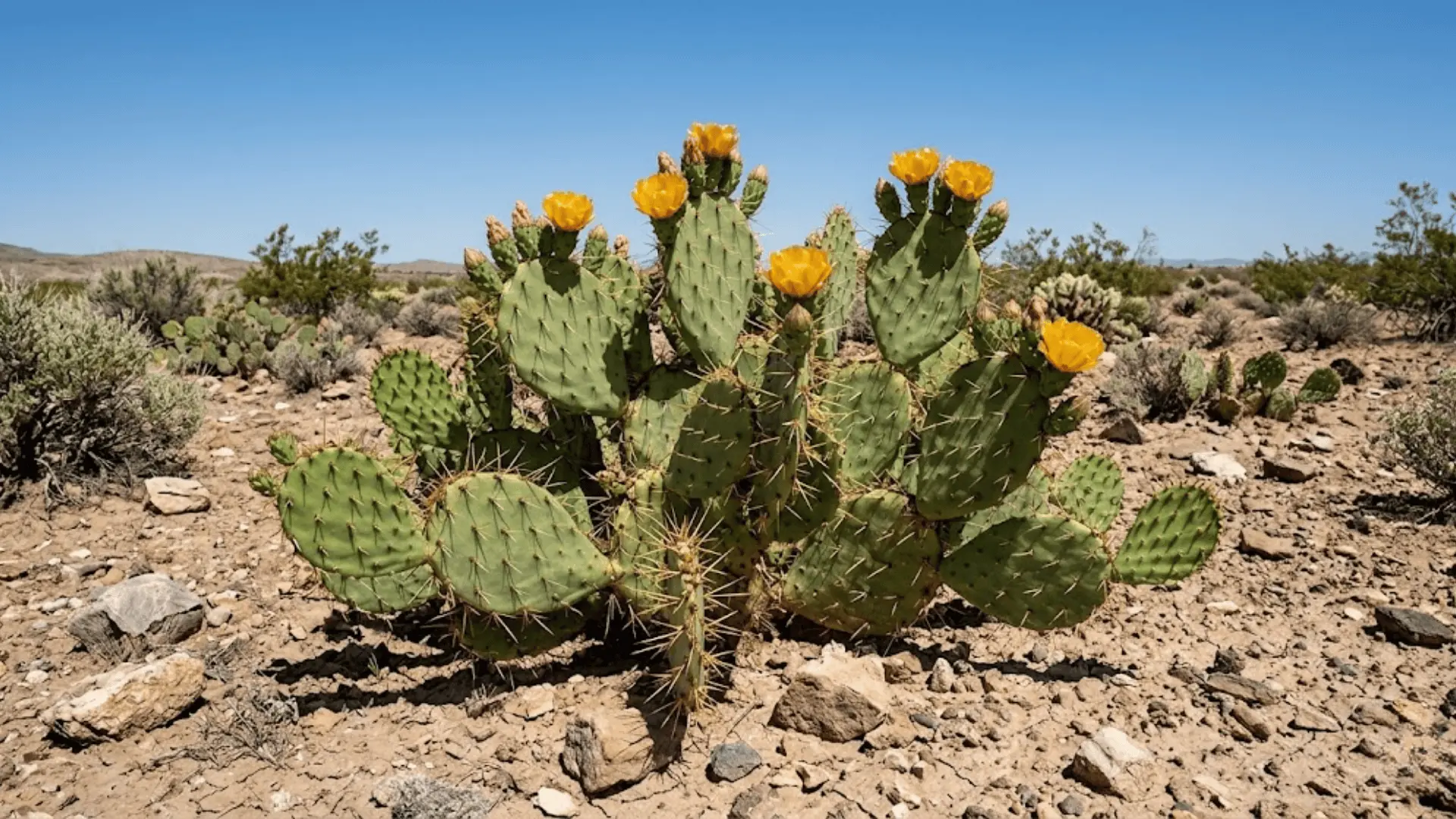
Sun Exposure: Full sun
Zone: 3-11
Size: 36-120 inches tall
Few plants are as adaptable as the prickly pear, which grows across a wide range of climates with minimal water. Its flat, paddle-shaped pads store moisture efficiently, and come summer, it produces bright blooms that make it as ornamental as it is tough and resilient.
8. Hens and Chicks
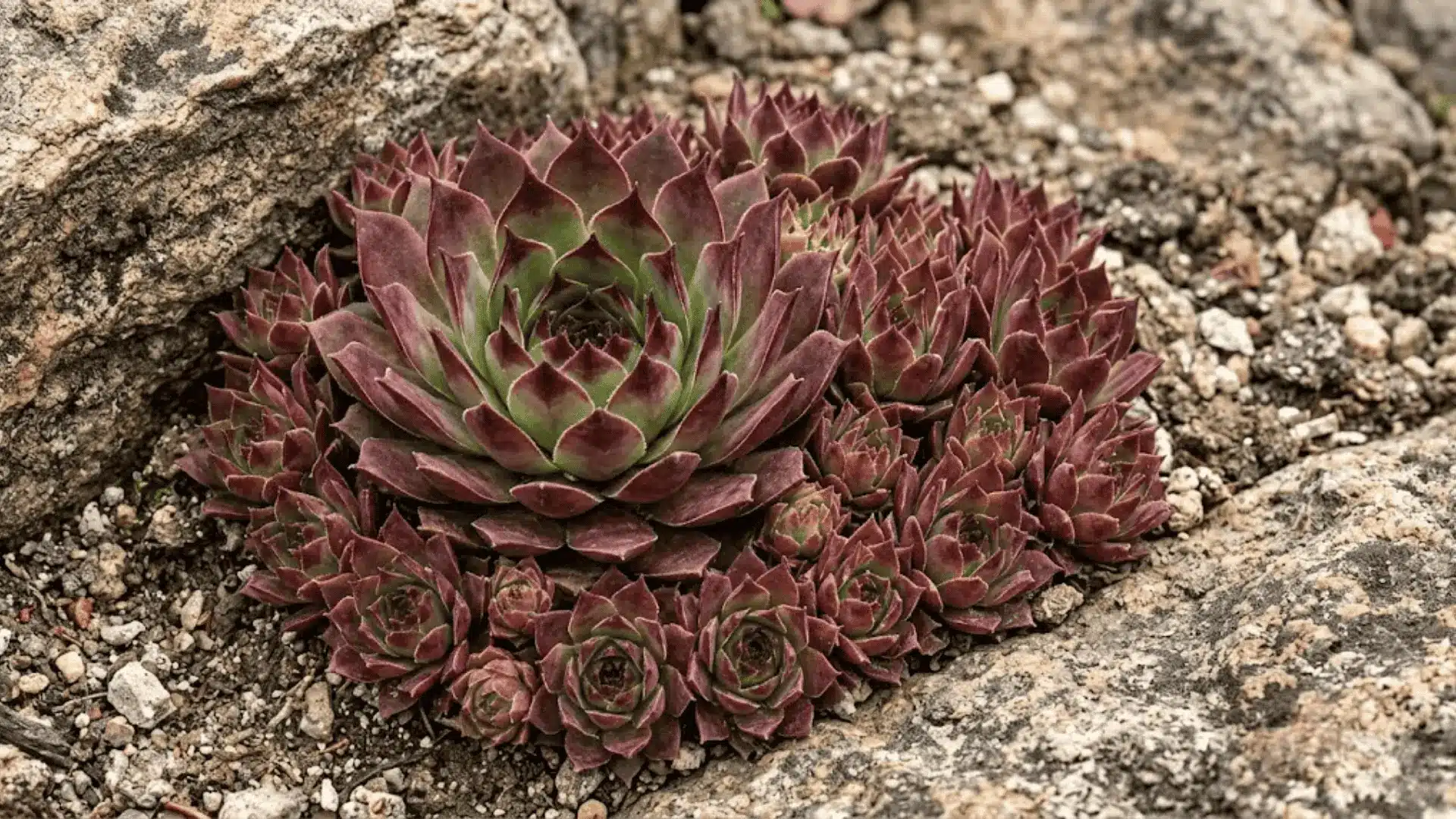
Sun Exposure: Full sun to partial shade
Zone: 3-8
Size: 3-6 inches tall
Hens and chicks spread quietly and steadily, filling gaps in rock gardens and dry borders without much encouragement.
Each rosette produces smaller offsets around it, creating a living carpet of texture and color that asks for almost nothing but a little sunshine and good drainage.
Flowering Plants That Thrive on Neglect
Beauty and low maintenance rarely come packaged together, but these flowering plants manage both effortlessly.
They bloom reliably through dry spells and bring long-lasting color to gardens that don’t get much rain.
9. Lavender
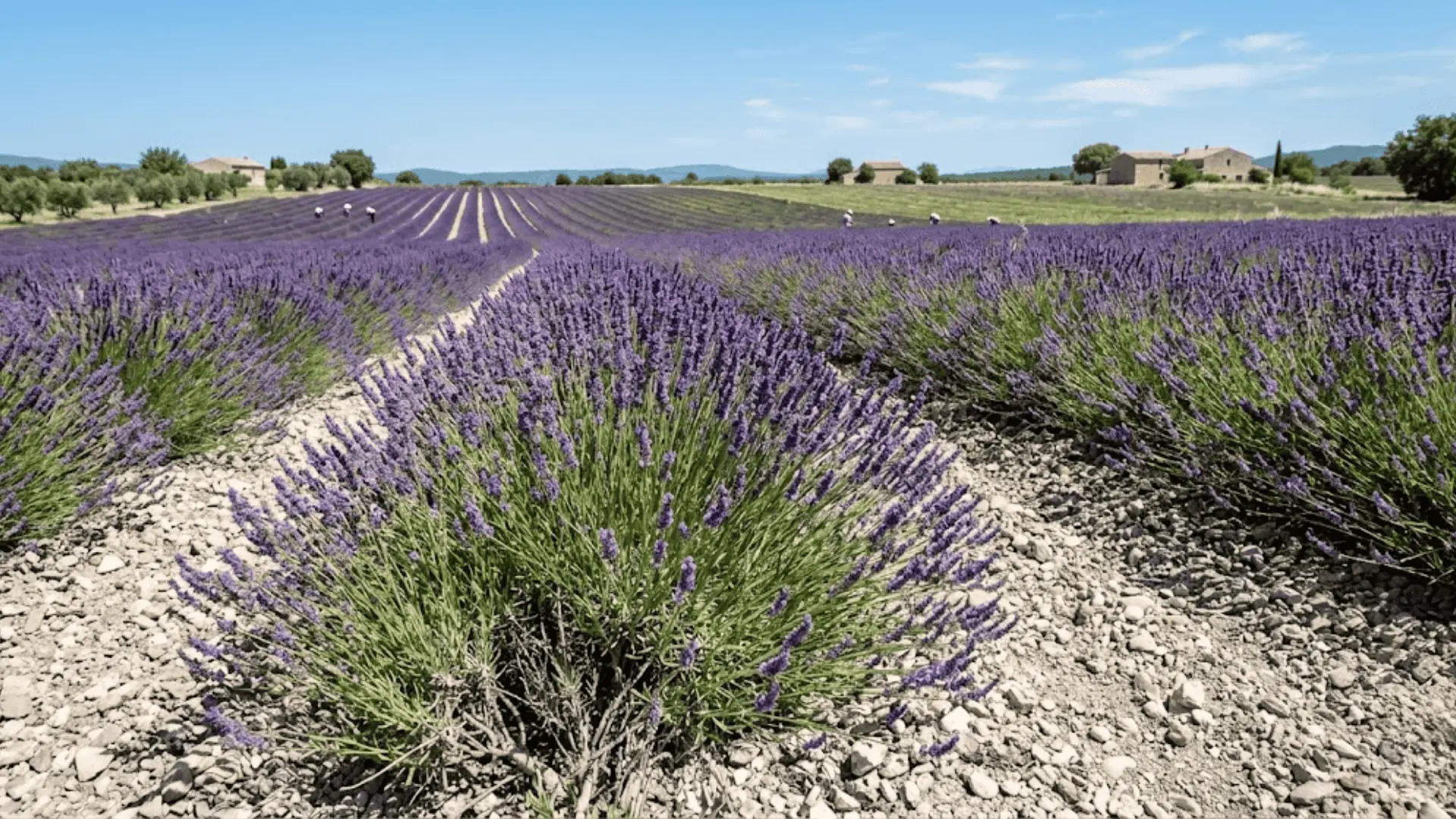
Sun Exposure: Full sun
Zone: 5-9
Size: 12-36 inches tall
Lavender is the quiet overachiever of the low-water garden. It thrives in lean, well-drained soil, fills the air with a calming fragrance, and produces those iconic purple spikes season after season.
The drier and sunnier the spot, the more lavender seems to genuinely love it.
10. Blanket Flower
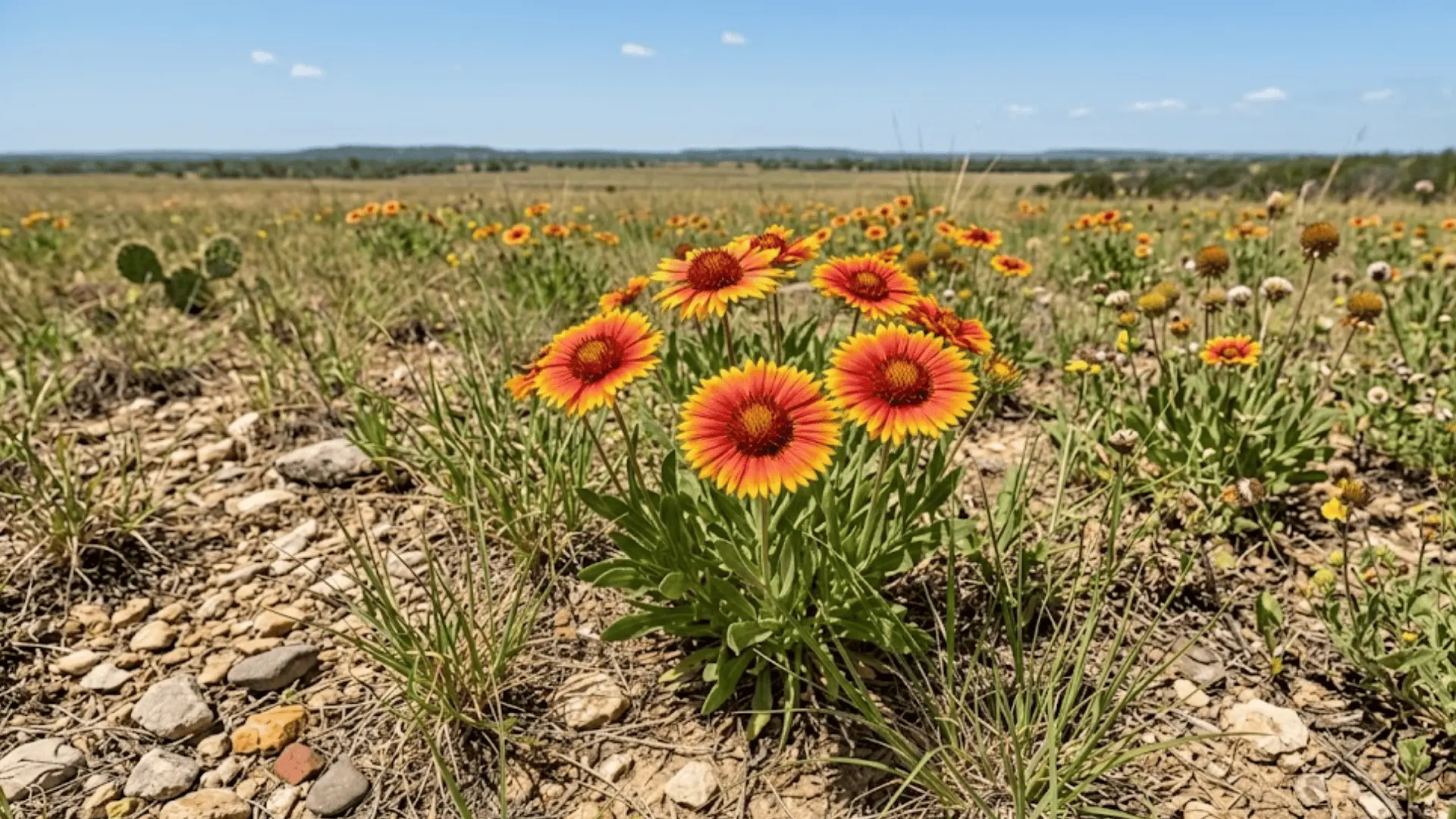
Sun Exposure: Full sun
Zone: 3-10
Size: 12-24 inches tall
Blanket flower brings a warm, sunset palette to dry gardens with very little effort.
Its daisy-like blooms in shades of red, orange, and yellow last through summer heat without needing extra water, making it a reliable and cheerful performer in low-maintenance landscapes all season long.
11. Yarrow
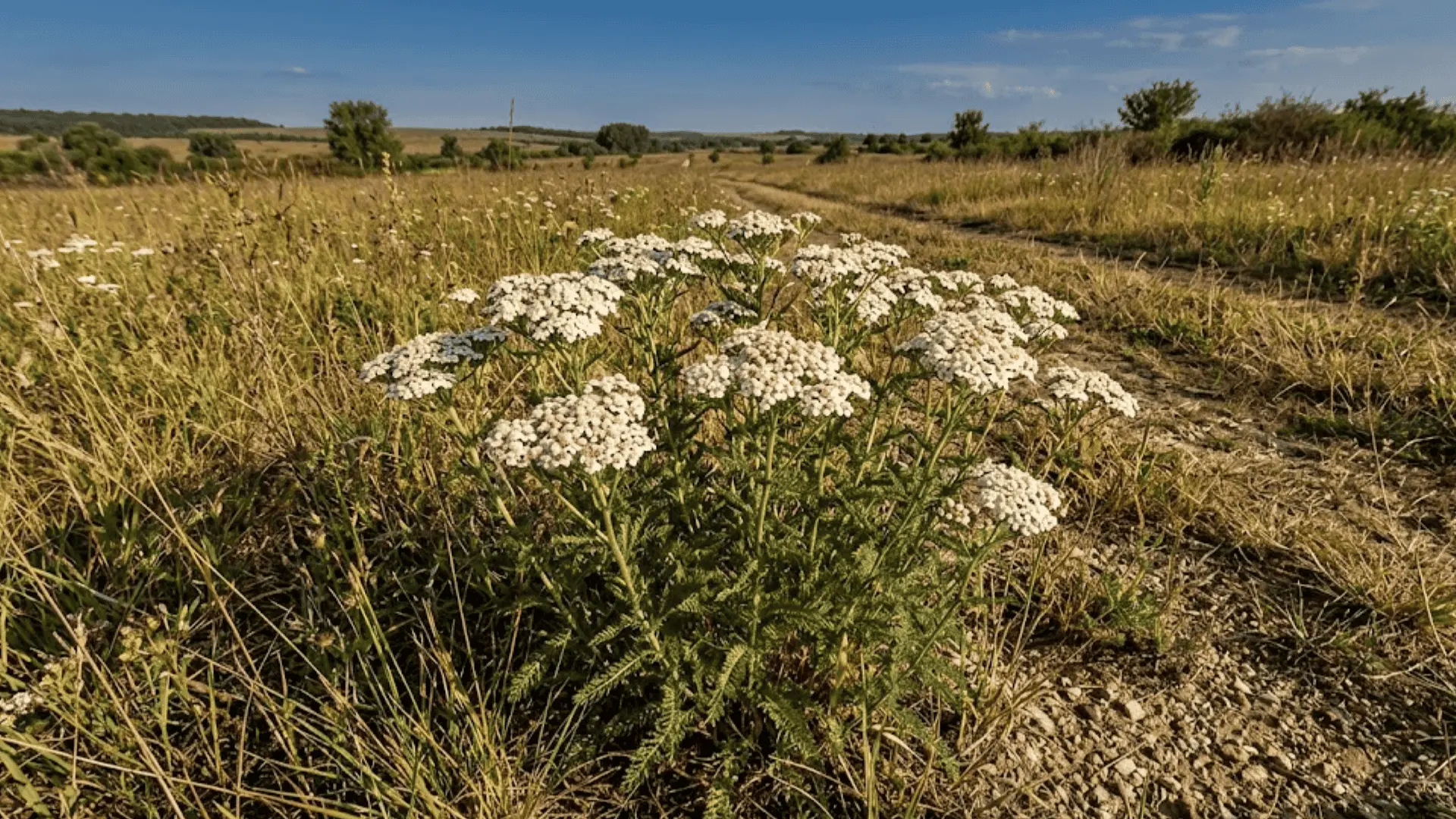
Sun Exposure: Full sun
Zone: 3-9
Size: 24-36 inches tall
Yarrow is a garden workhorse that handles drought, poor soil, and neglect with equal ease.
Its flat-topped flower clusters come in soft whites, yellows, and pinks, and it spreads gently over time, filling in dry patches where other plants simply give up and disappear.
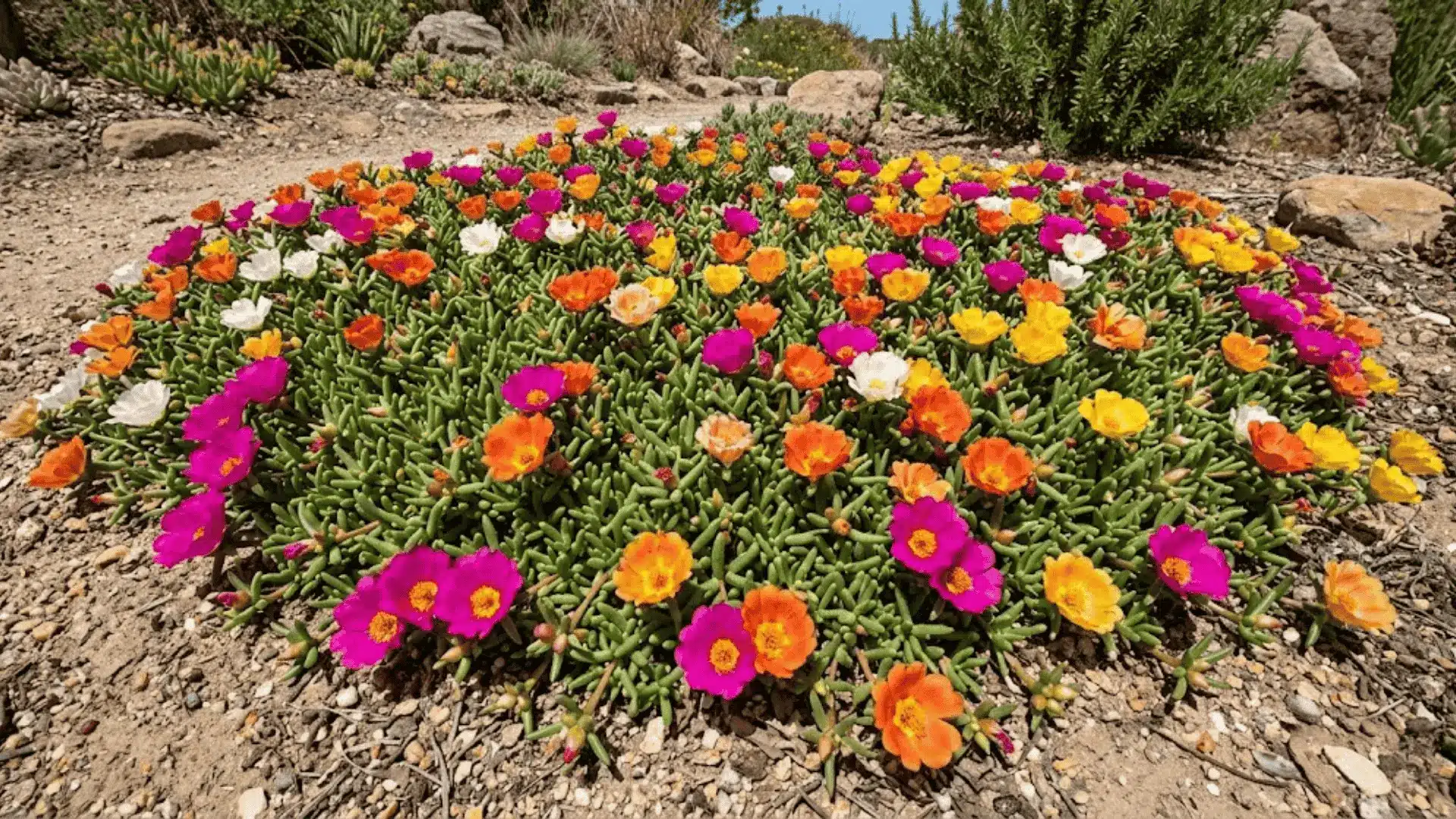
12. Portulaca
Sun Exposure: Full sun
Zone: 2-11
Size: 3-9 inches tall
Portulaca is practically made for hot, dry conditions. Its jewel-toned flowers open wide in the sun and close at night, creating a cheerful, low-growing display that needs almost no watering.
It’s especially well-suited to sandy or rocky soils where other plants consistently struggle.
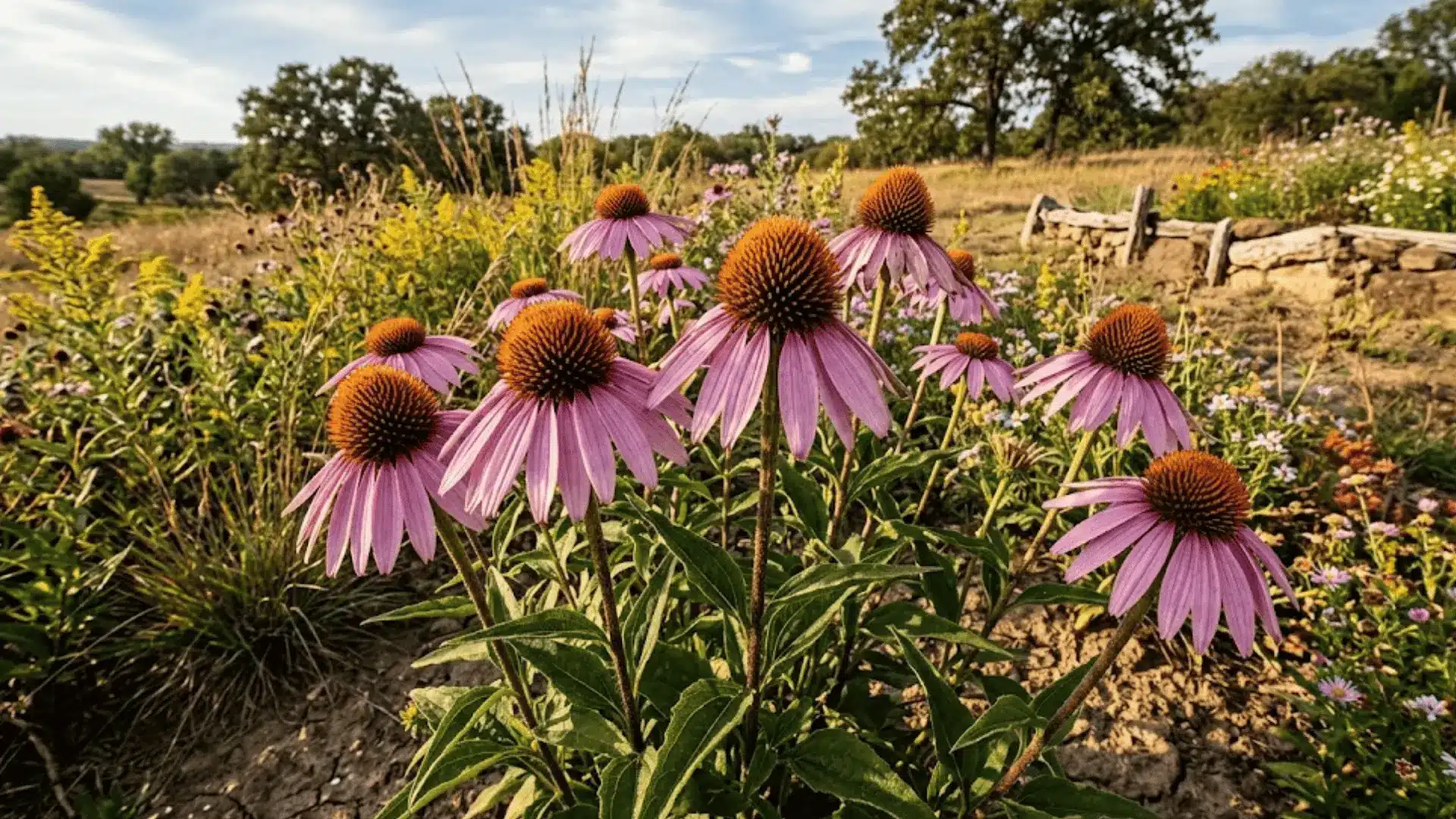
13. Coneflower
Sun Exposure: Full sun to partial shade
Zone: 3-9
Size: 24-60 inches tall
Coneflower is a prairie native that brings bold, daisy-like blooms to dry gardens throughout summer.
Once established, it handles heat and drought without complaint and doubles as a pollinator magnet, drawing bees and butterflies without any extra effort or attention on your part.
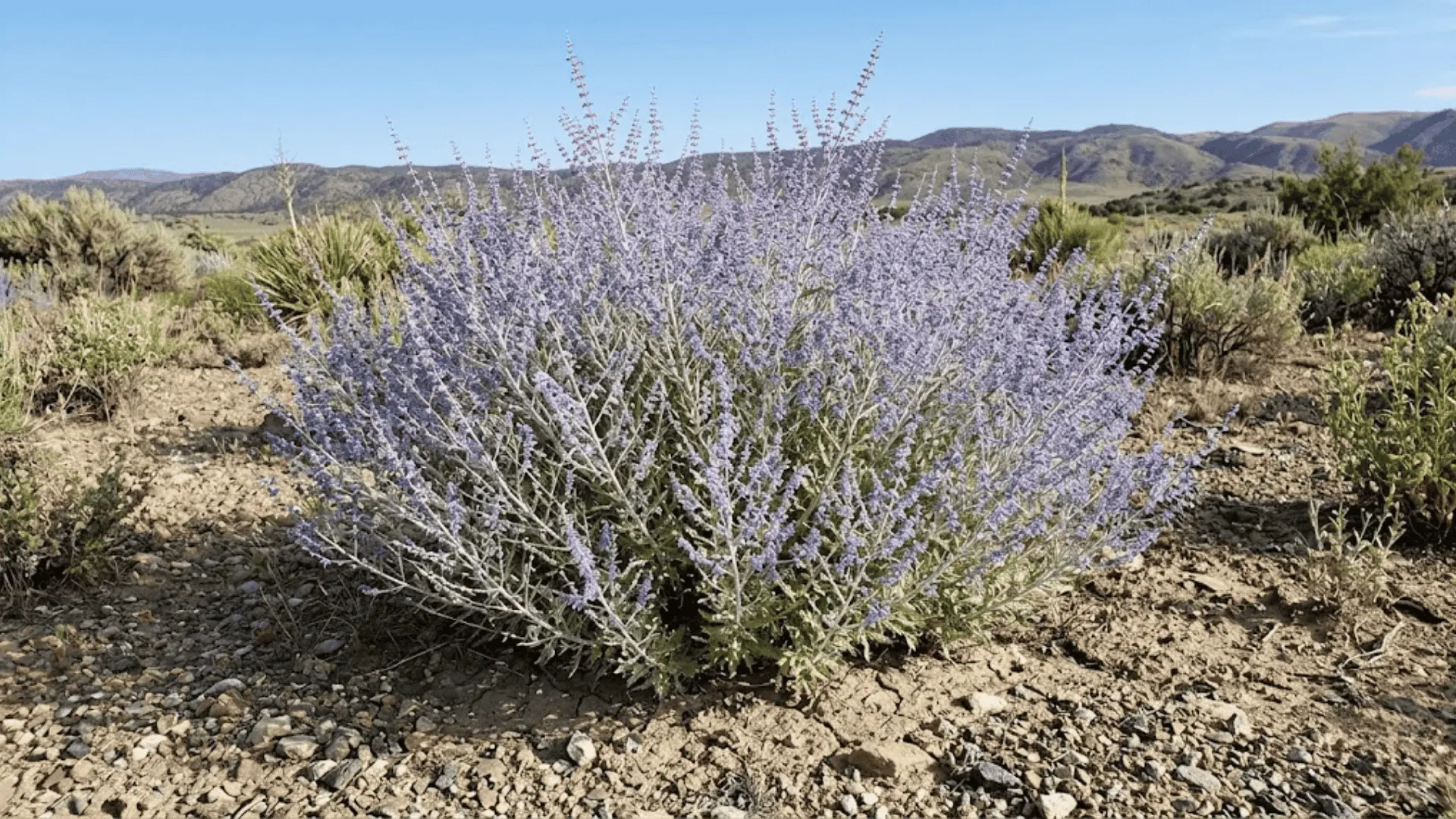
14. Russian Sage
Sun Exposure: Full sun
Zone: 4-9
Size: 36-60 inches tall
Russian sage creates a hazy, silver-blue cloud of color that looks stunning in dry landscapes.
It’s incredibly heat and drought-tolerant once established, and its airy, lavender-like spikes pair beautifully with bolder, more structured plants to create contrast without competition.
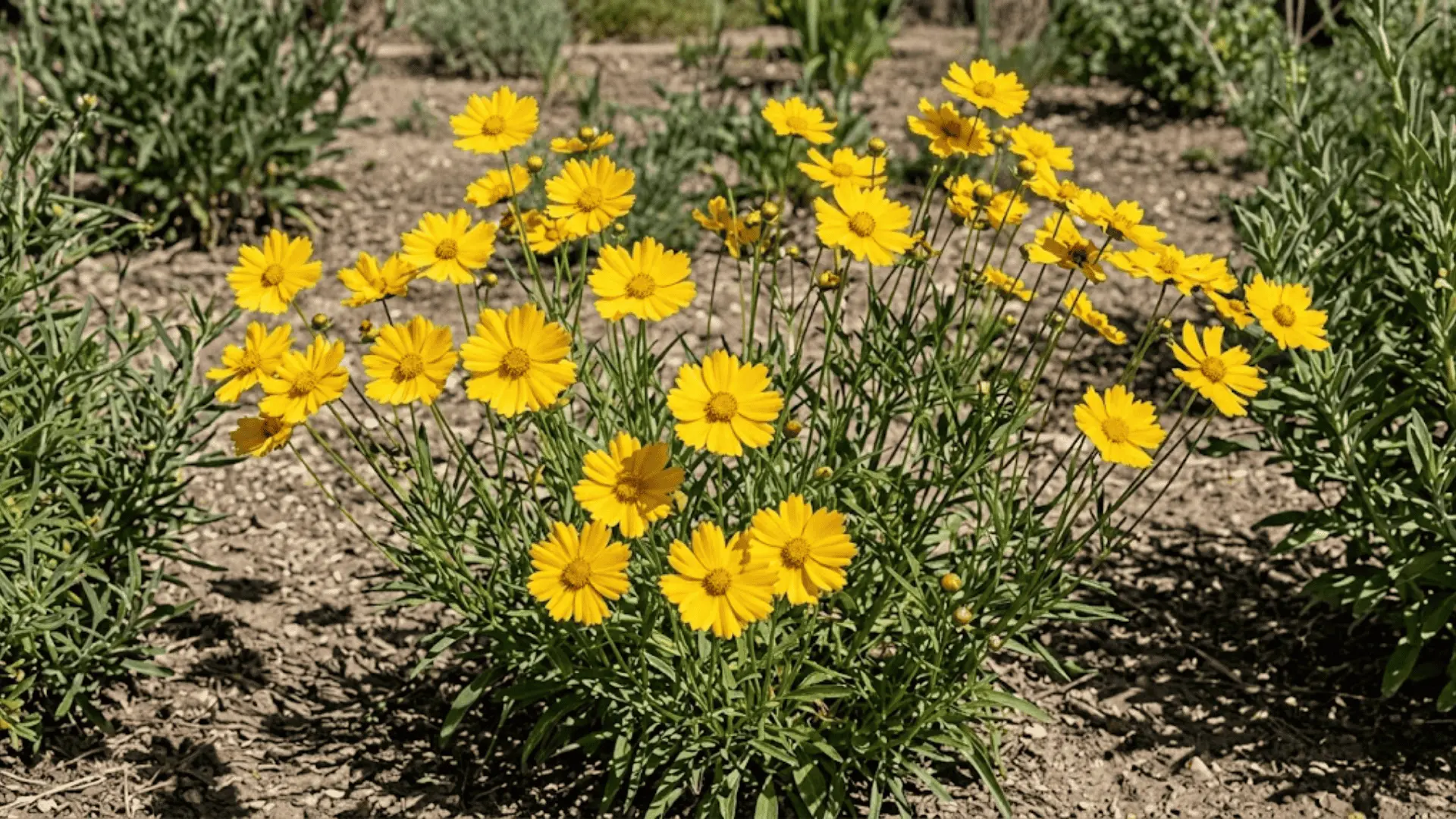
15. Coreopsis
Sun Exposure: Full sun
Zone: 4-9
Size: 12-24 inches tall
Coreopsis is one of the cheeriest low-water flowering plants, producing bright yellow blooms from early summer well into fall.
It’s naturally adapted to dry, open conditions and keeps on flowering even when rainfall is sparse, requiring very little in the way of ongoing care.
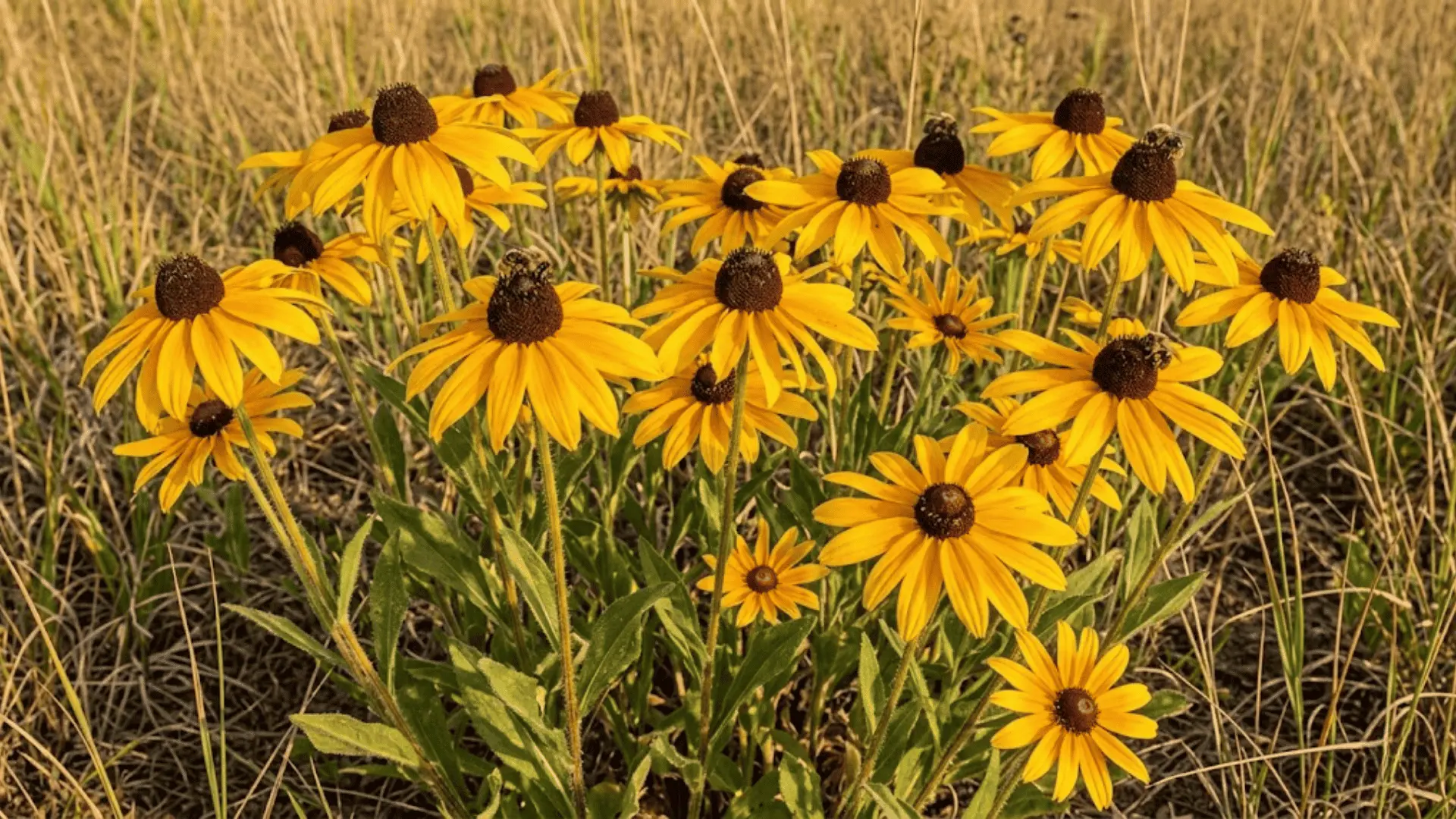
16. Black-Eyed Susan
Sun Exposure: Full sun to partial shade
Zone: 3-9
Size: 24-36 inches tall
Black-eyed Susan is a garden staple for good reason.
Its golden-yellow petals and dark centers bring a wild, meadow-like charm to low-water spaces, and it naturalizes over time, spreading without becoming invasive and blooming reliably with very minimal attention each season.
Hardy Shrubs For Low-Water Landscapes
Shrubs form the backbone of a drought-tolerant garden, offering structure, texture, and seasonal interest without demanding constant care.
These picks are as tough as they are beautiful.
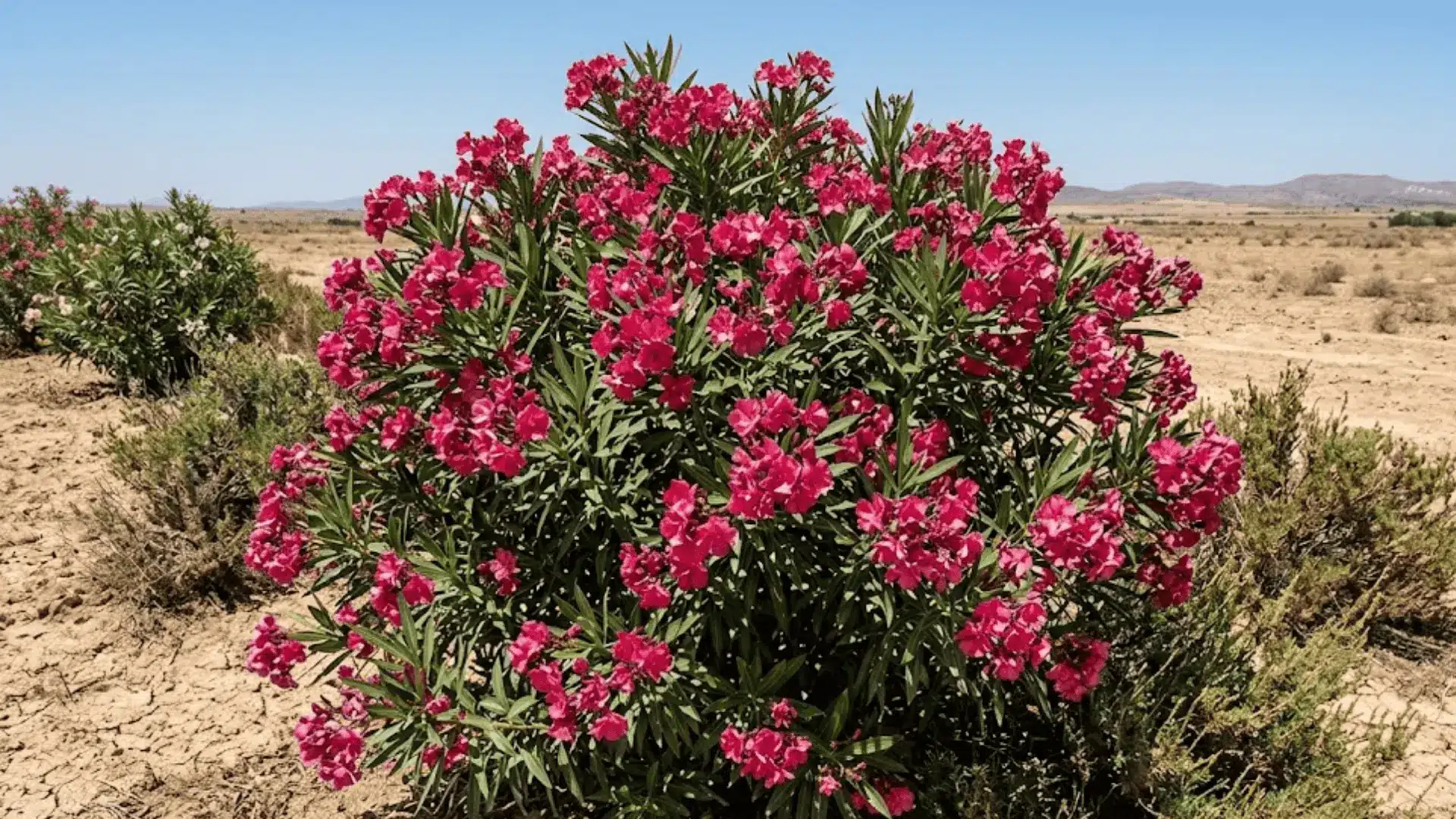
17. Oleander
Sun Exposure: Full sun
Zone: 8-11
Size: 72-144 inches tall
Oleander is a bold, fast-growing shrub that thrives in heat and tolerates drought with ease.
Its clusters of pink, red, or white flowers bloom through summer and add a lush, almost tropical feel to dry landscapes. It’s a reliable choice for hedges and warm-climate screens.
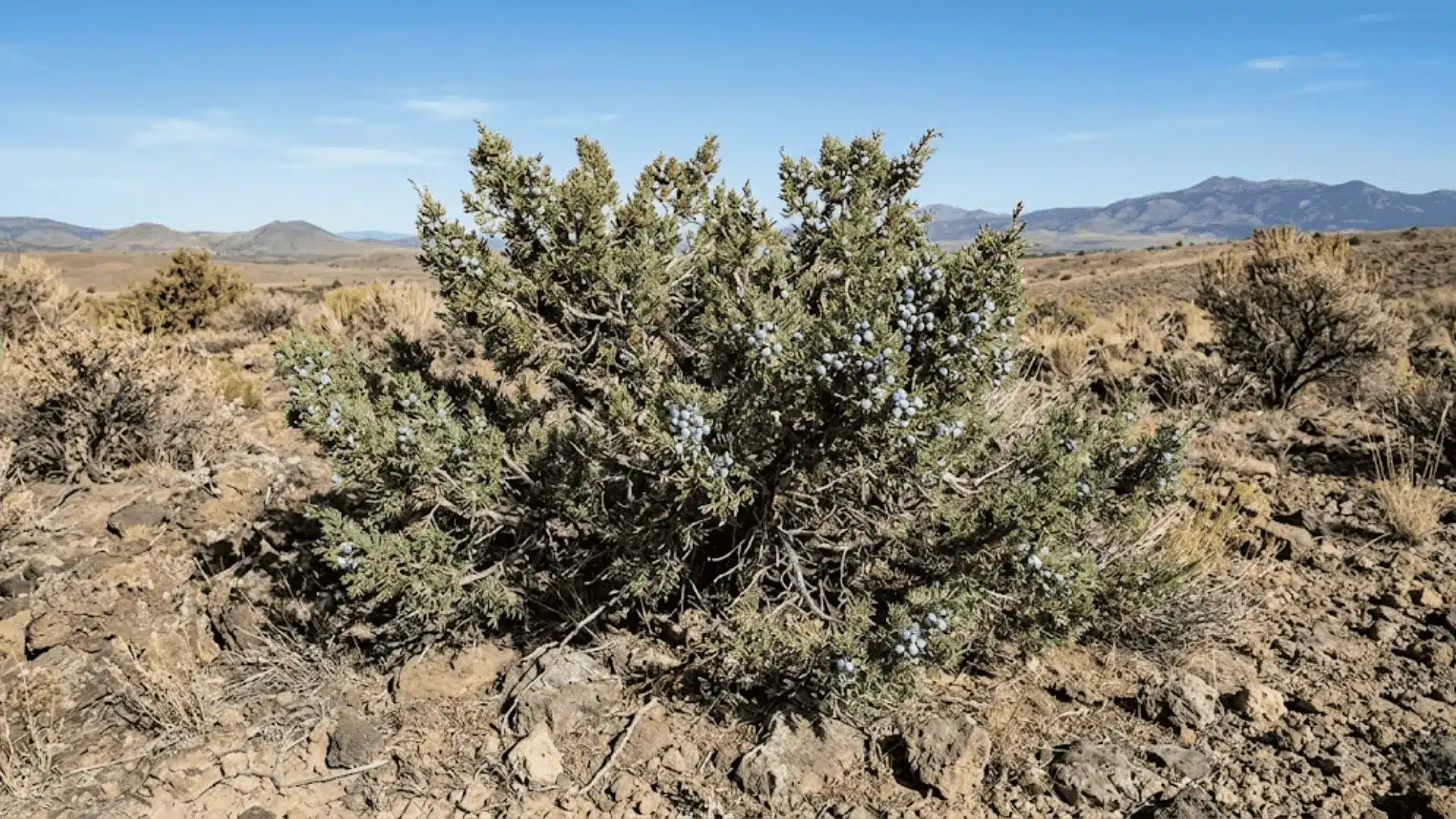
18. Juniper
Sun Exposure: Full sun
Zone: 2-9
Size: 12-240 inches tall
Juniper is one of the most adaptable low-water shrubs available, coming in creeping, upright, and tree-like forms to suit almost any garden.
It handles poor soil, wind, and extended dry periods without any fuss, making it a dependable structural choice throughout every season.
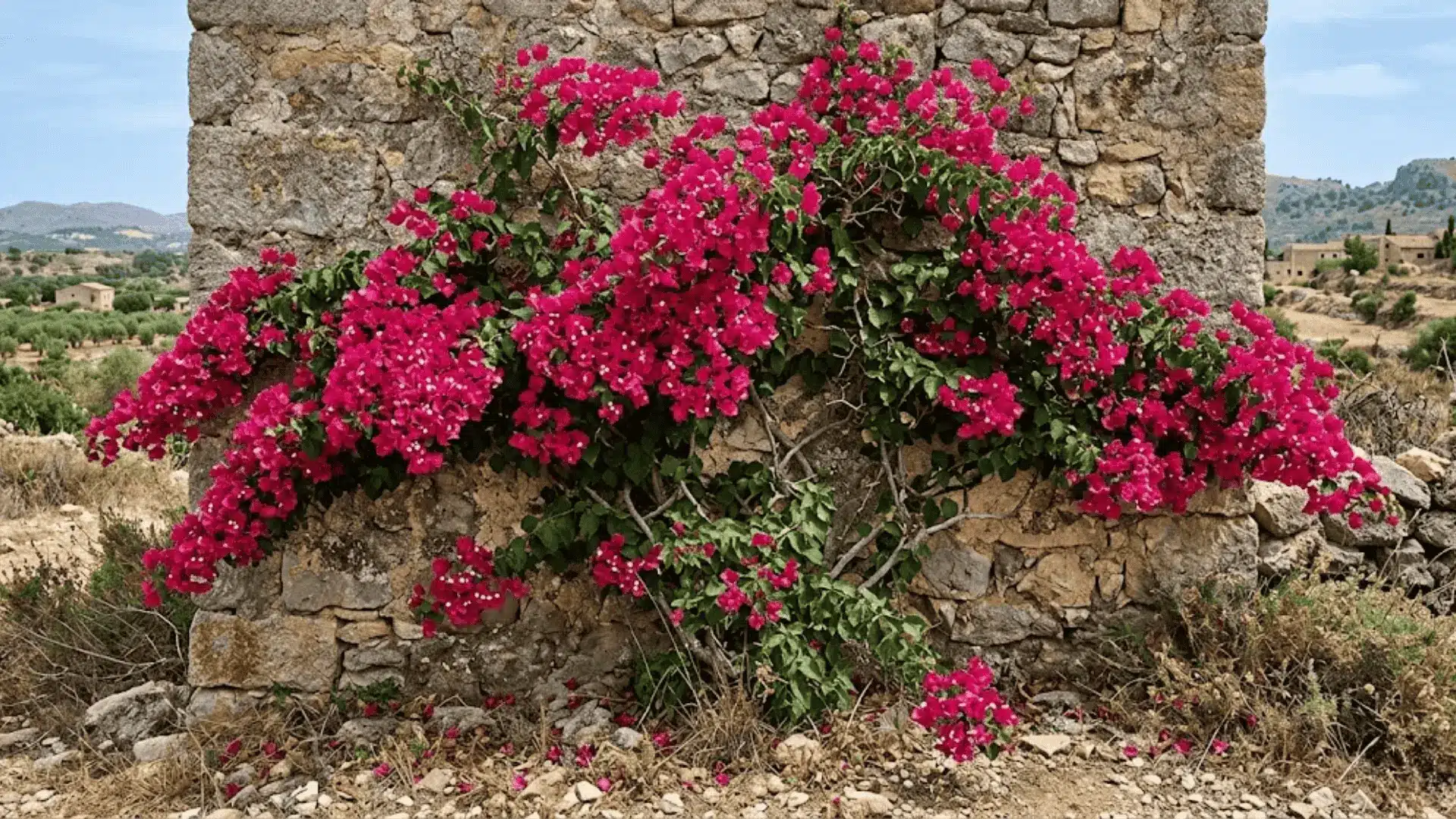
19. Bougainvillea
Sun Exposure: Full sun
Zone: 9-11
Size: 120-240 inches tall
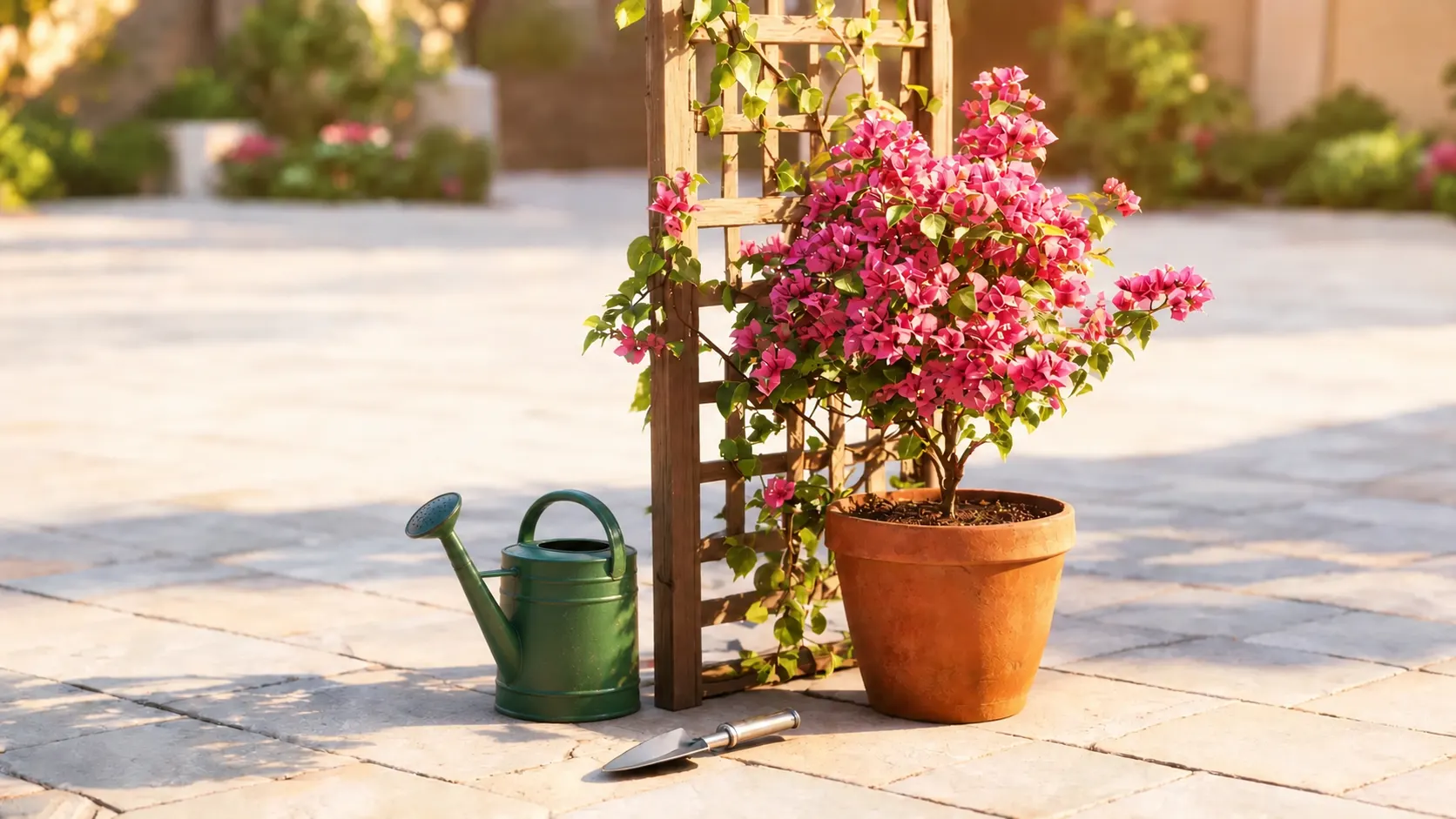
Few plants match bougainvillea’s ability to put on a spectacular show with so little water.
Its papery blooms in hot pinks, oranges, and purples cascade over walls and trellises, and it actually flowers more vigorously when kept deliberately on the drier side.
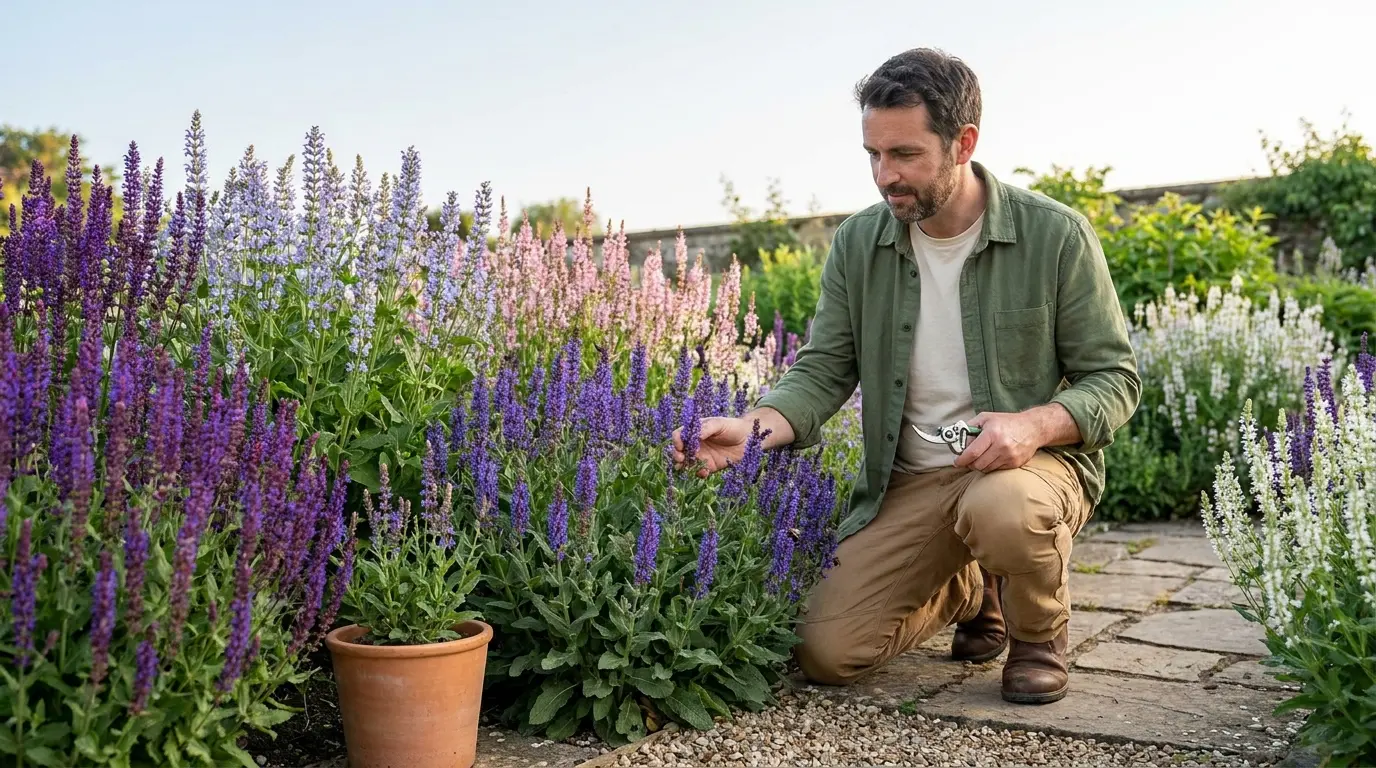
20. Sage
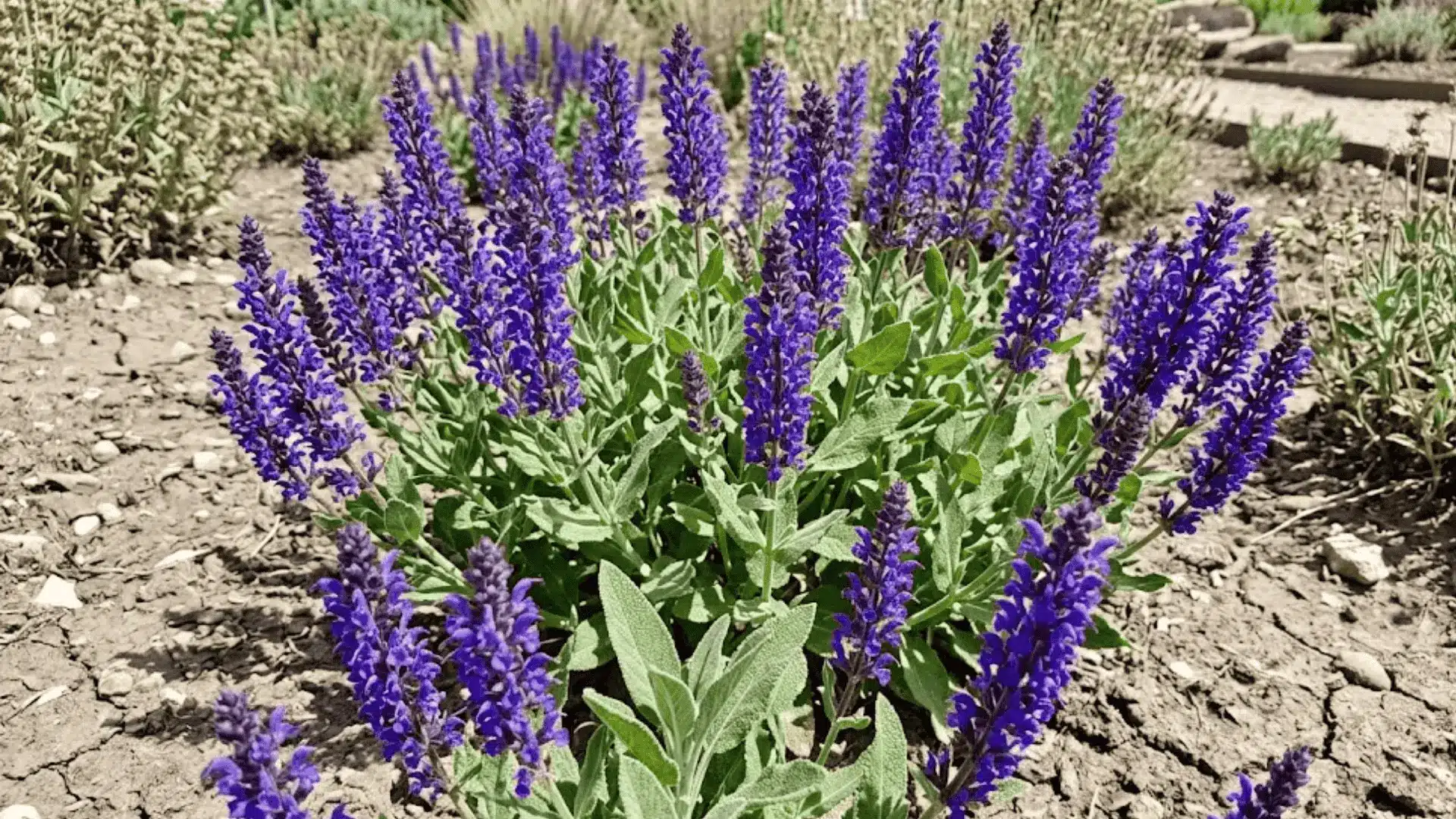
Sun Exposure: Full sun
Zone: 4-11
Size: 18-48 inches tall
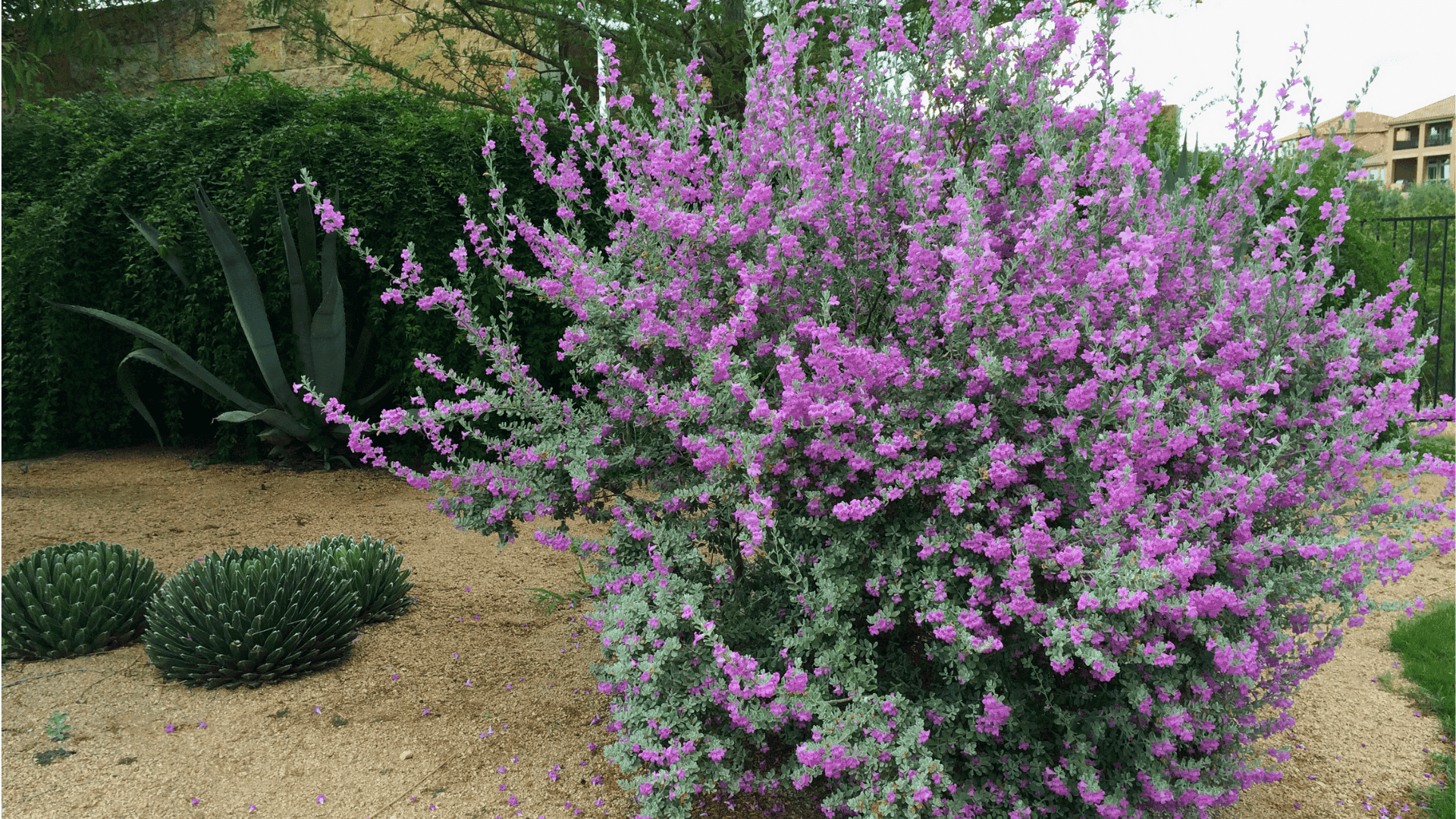
Ornamental sage is a garden-friendly shrub that delivers both fragrance and vibrant color with minimal water.
Its spiky flower clusters attract pollinators reliably, and it settles comfortably into dry, well-drained spots where more delicate plants simply wouldn’t survive a full season.
21. Rosemary
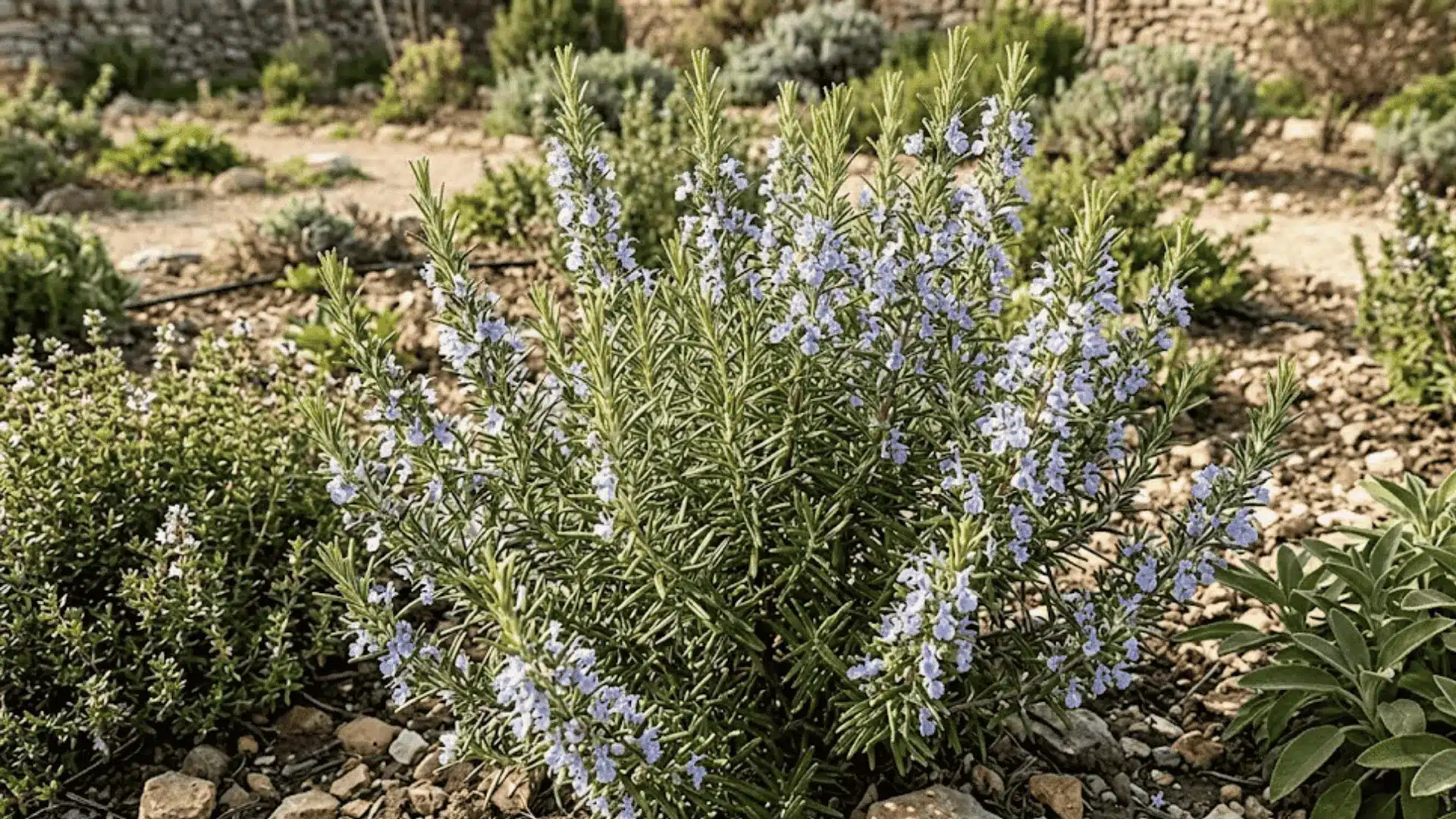
Sun Exposure: Full sun
Zone: 7-11
Size: 24-60 inches tall
Rosemary pulls double duty as both a fragrant herb and a drought-tolerant landscape shrub.
It handles dry, rocky soil and intense sun with ease, produces delicate blue flowers in spring, and brings wonderful evergreen structure to low-water garden designs year-round.
22. Boxwood
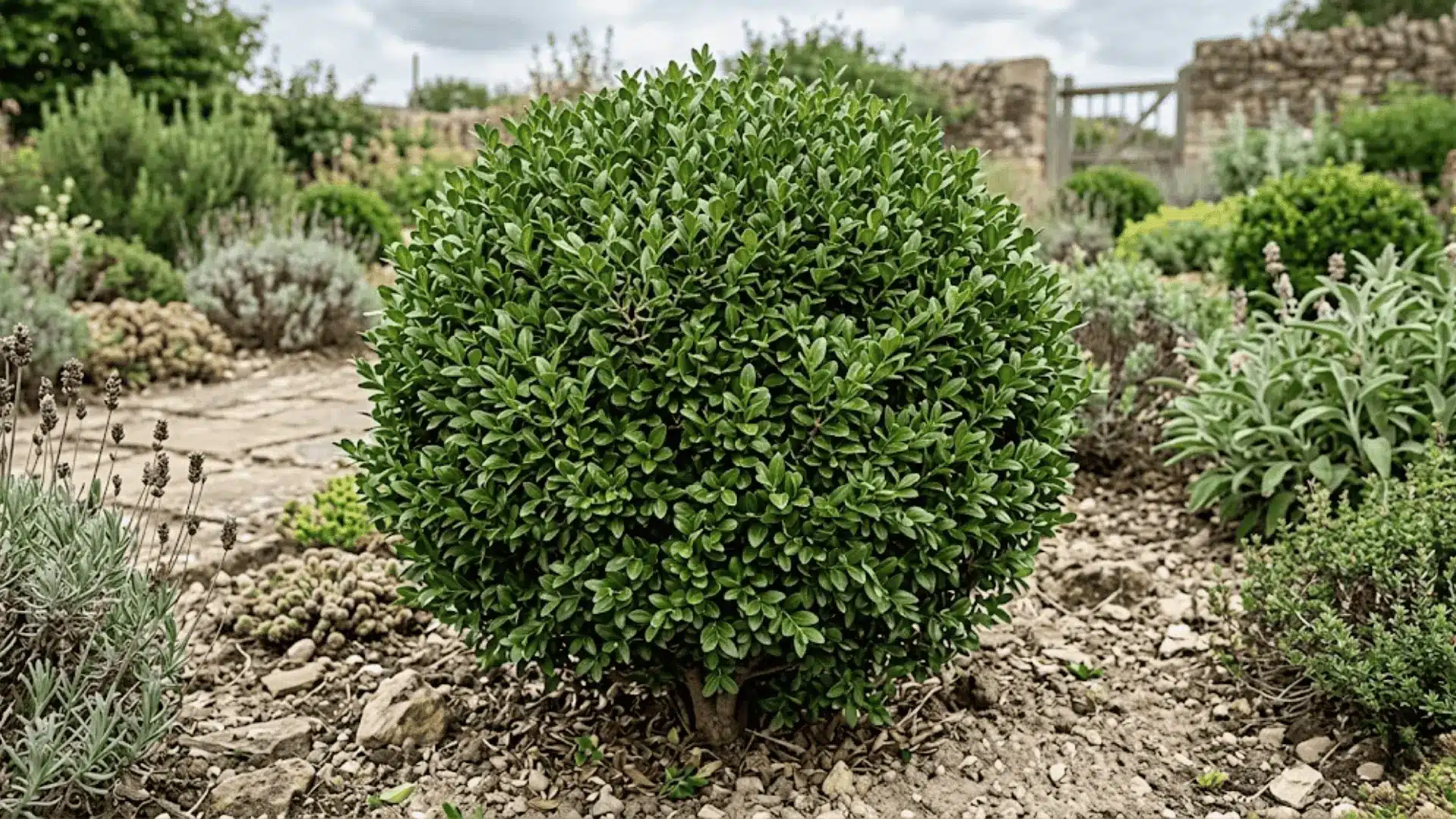
Sun Exposure: Full sun to partial shade
Zone: 5-9
Size: 24-96 inches tall
Boxwood is a classic choice for structure and formality in low-water gardens.
Once established, it tolerates dry conditions reasonably well and holds its dense, compact shape with minimal pruning, working beautifully as a hedge, border plant, or elegant topiary feature.
23. Rockrose
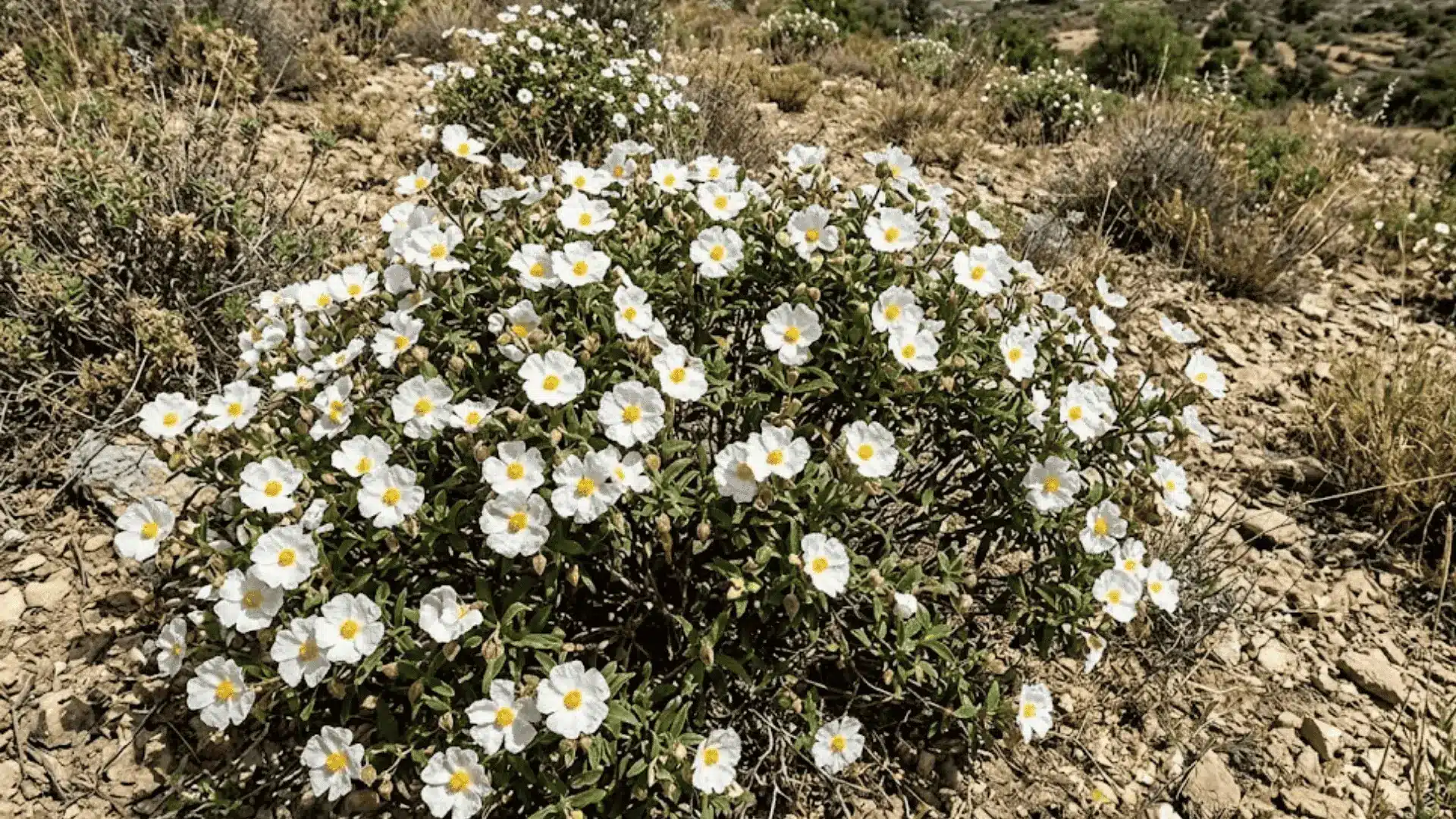
Sun Exposure: Full sun
Zone: 7-10
Size: 24-60 inches tall
Rockrose is a Mediterranean native perfectly adapted to hot, dry summers.
Its papery flowers, often in white or pink with a crinkled texture, bloom generously in spring, and the shrub asks for almost nothing once it finds its footing in well-drained, nutrient-poor soil.
24. Spirea
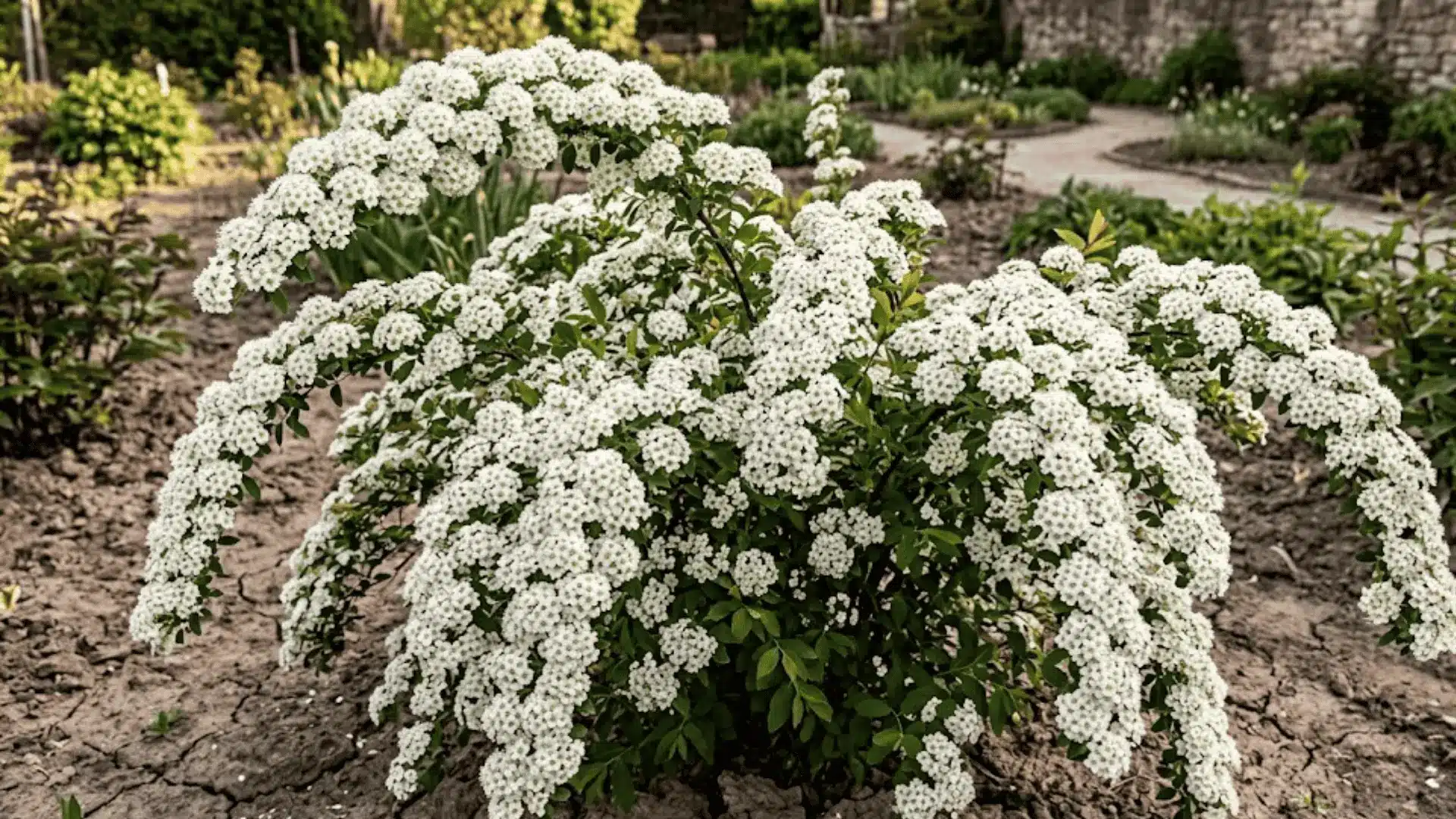
Sun Exposure: Full sun to partial shade
Zone: 3-9
Size: 24-60 inches tall
Spirea is a reliable, easy-care shrub that handles dry spells better than most gardeners expect.
Its arching branches are covered in clusters of white or pink flowers in season, bringing a soft, romantic texture to low-water landscapes without needing much attention at all.
Grasses & Ground Covers That Need Minimal Water
Low-water grasses and ground covers do the quiet work of filling space, suppressing weeds, and adding movement to a garden with almost no upkeep.
These are the unsung heroes of drought-tolerant design.
25. Blue Fescue
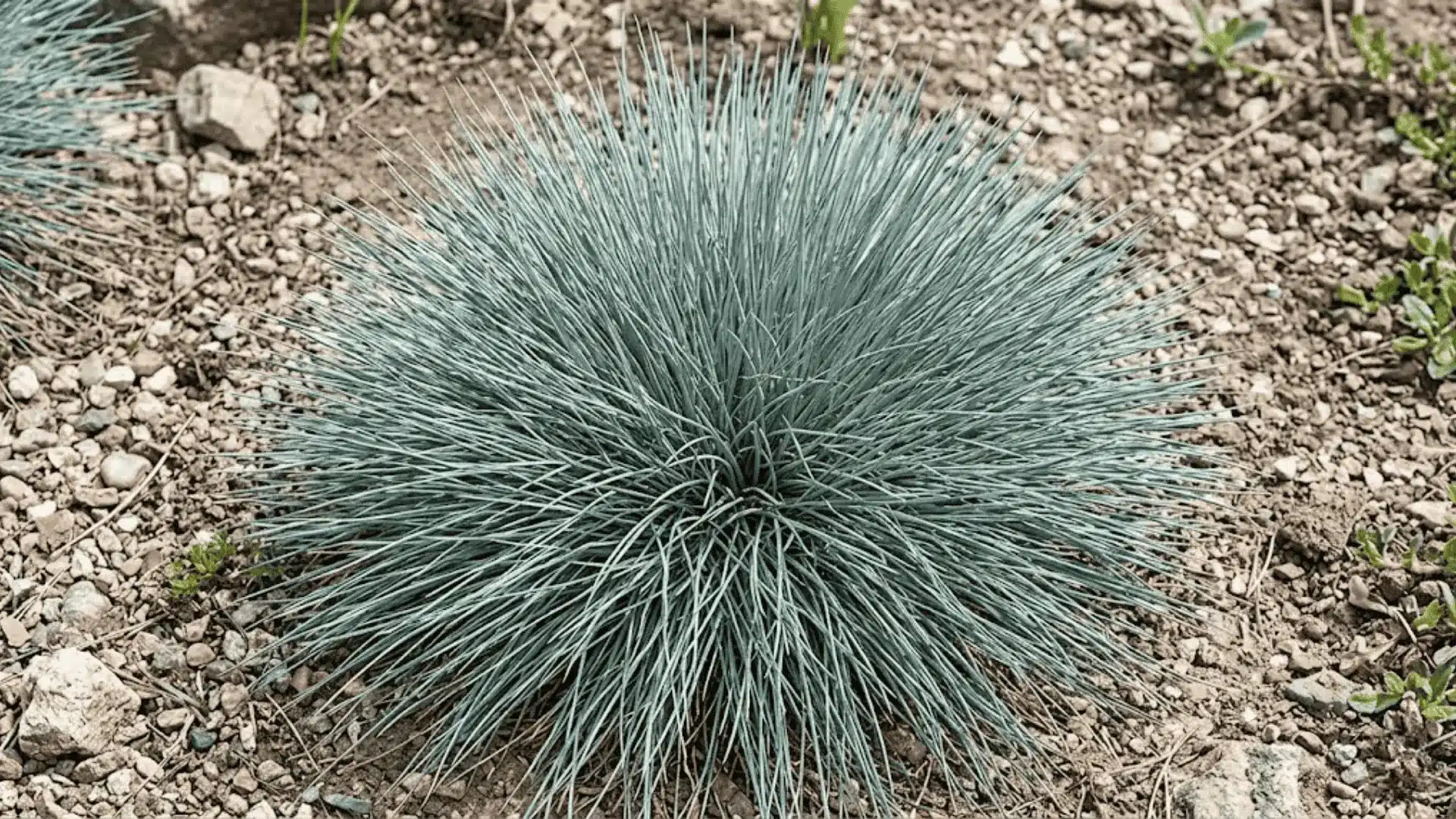
Sun Exposure: Full sun
Zone: 4-8 Size: 6-12 inches tall
Blue fescue is a compact ornamental grass with a striking, silvery-blue color that adds cool contrast to dry garden beds.
It forms tidy, rounded clumps and thrives in poor, well-drained soil, asking for very little water once it comfortably settles in.
26. Fountain Grass
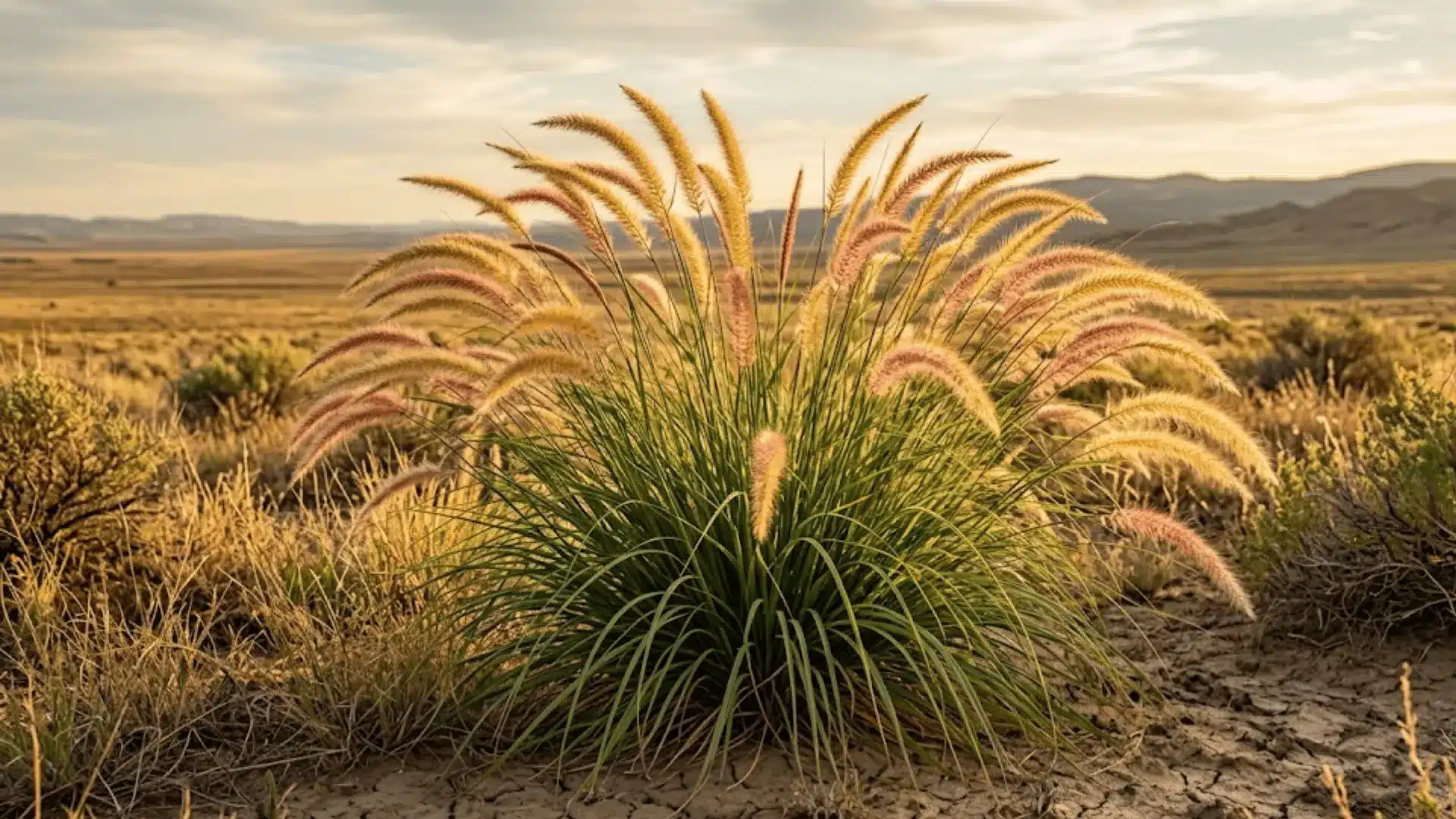
Sun Exposure: Full sun
Zone: 5-9
Size: 24-60 inches tall
Fountain grass earns its name with graceful, arching blades that sway beautifully in the breeze.
It handles heat and drought with ease, and its feathery plumes add soft, textural interest to low-water landscapes from the height of summer through late fall.
27. Liriope
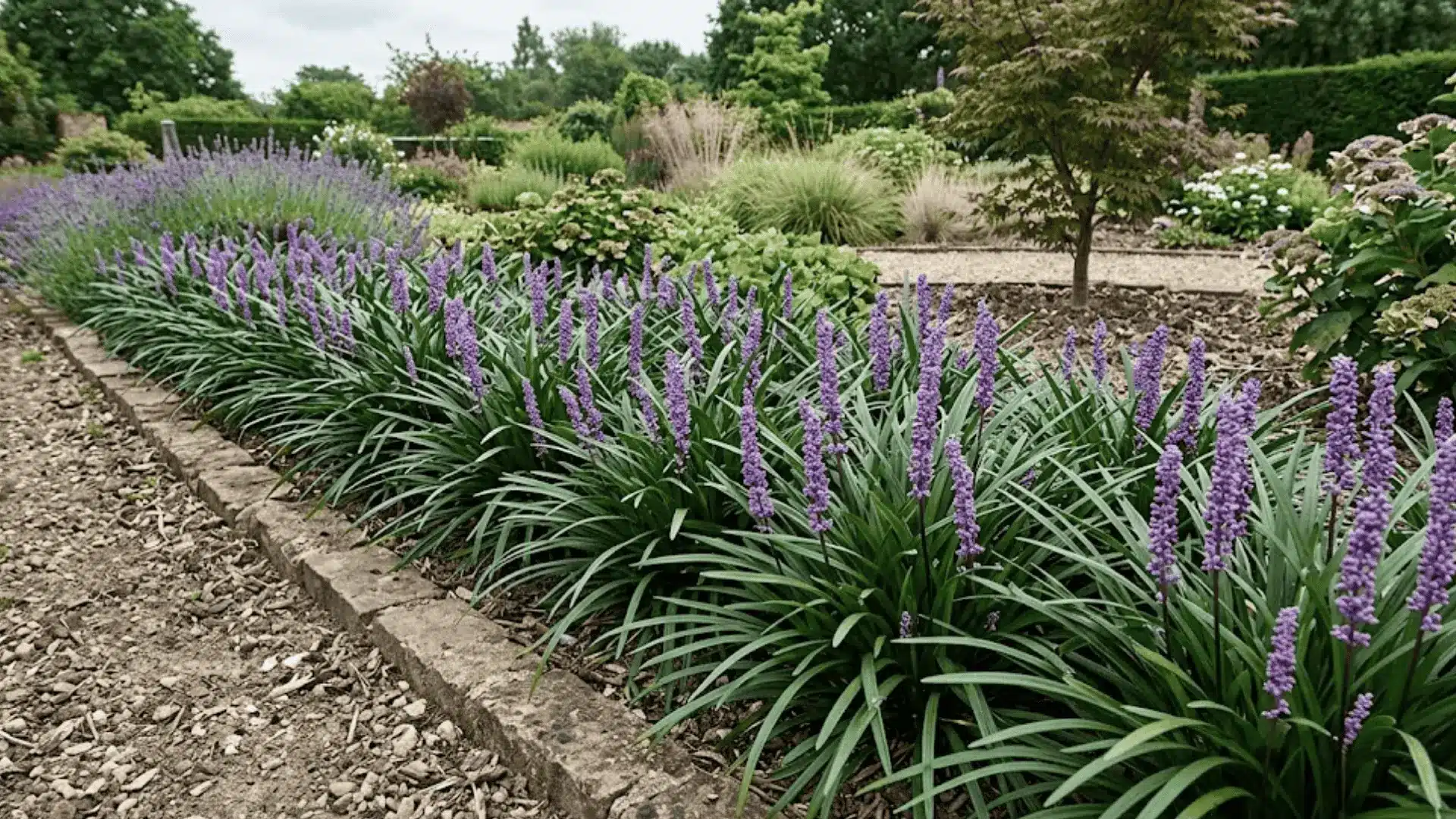
Sun Exposure: Full sun to full shade
Zone: 5-10
Size: 12-18 inches tall
Liriope is one of the most versatile ground covers for low-water gardens, tolerating everything from full sun to deep shade.
Its grass-like foliage stays evergreen in mild climates, and it produces small purple flower spikes in late summer that add quiet seasonal charm.
28. Creeping Thyme
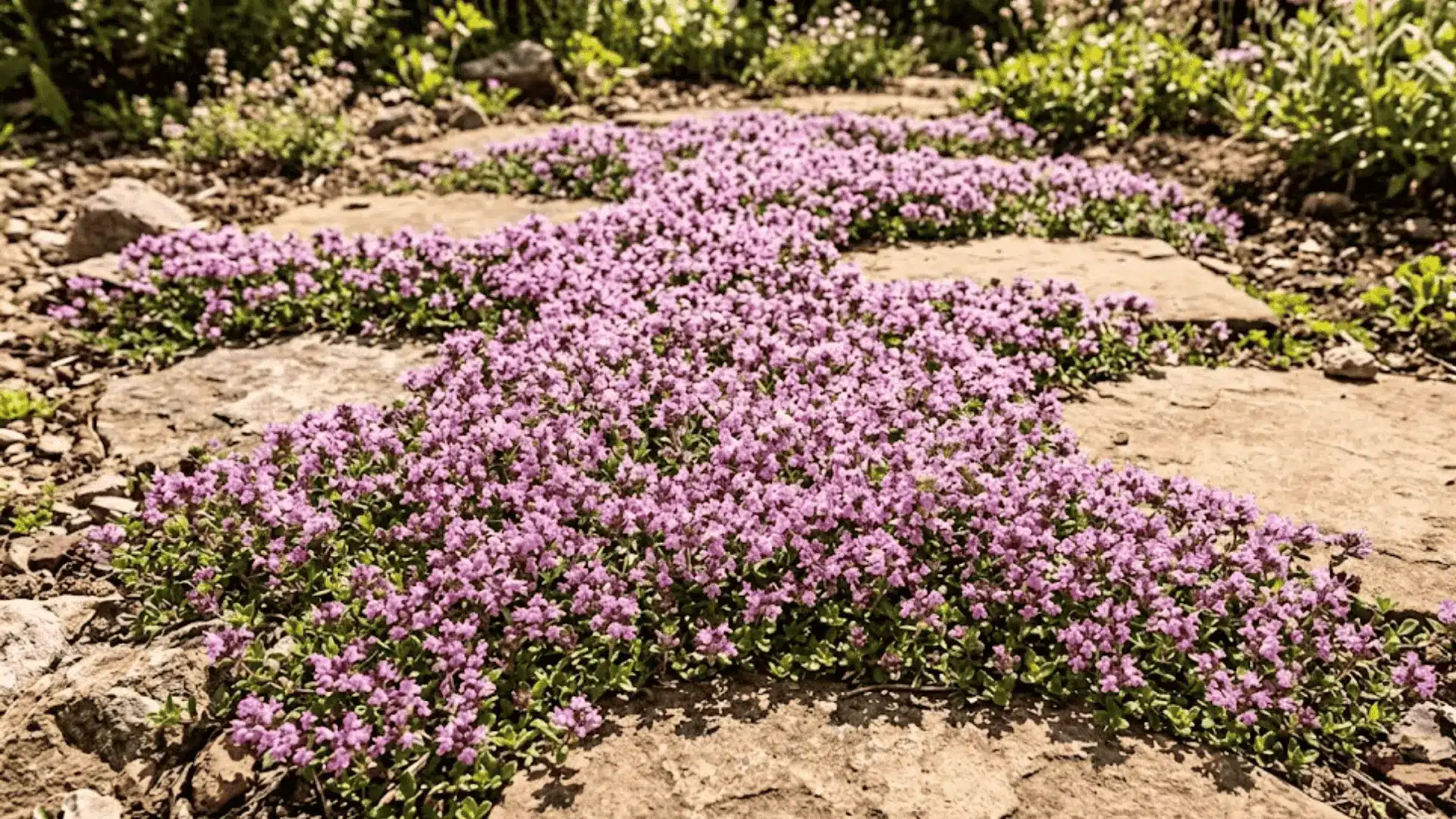
Sun Exposure: Full sun
Zone: 4-9
Size: 2-4 inches tall
Creeping thyme is a fragrant, flowering ground cover that thrives in dry, sunny spots.
It spreads low and wide, filling gaps between stepping stones and rocky borders with a carpet of tiny pink blooms in summer, all while needing almost no water to stay healthy.
29. Ice Plant
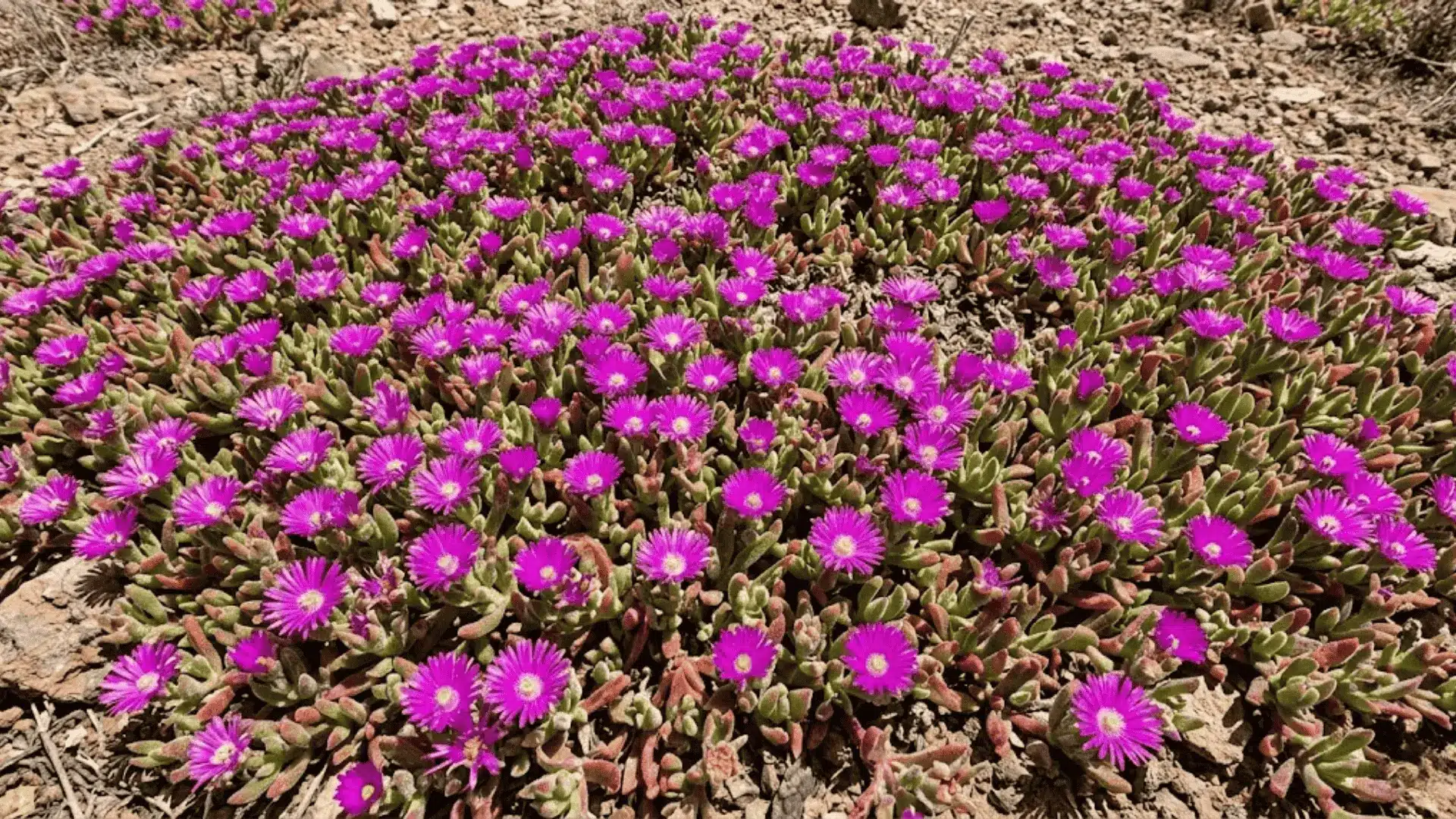
Sun Exposure: Full sun
Zone: 5-10
Size: 3-6 inches tall
Ice plant is a succulent ground cover that handles drought and heat with ease.
Its daisy-like flowers in vivid purples, pinks, and yellows bloom prolifically through summer, and its fleshy leaves shimmer with a crystalline texture that gives it an almost otherworldly appearance.
30. Dichondra
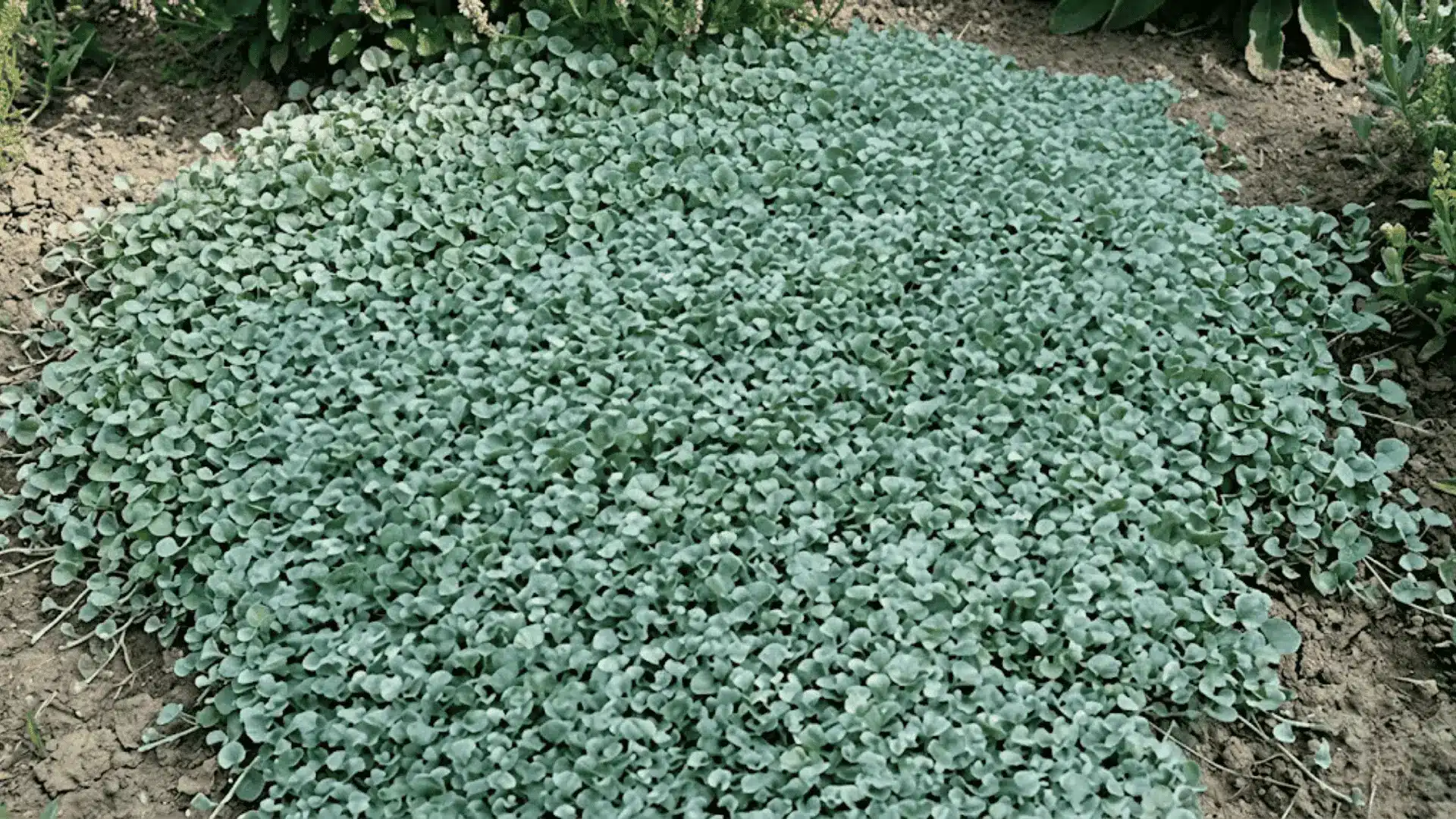
Sun Exposure: Full sun to partial shade
Zone: 7-11
Size: 1-3 inches tall
Dichondra creates a smooth, lush-looking carpet of small, round leaves that works beautifully as a lawn alternative in dry climates.
It grows low to the ground, handles light foot traffic, and needs far less water than traditional grass, making it a genuinely smart choice.
31. Ajuga
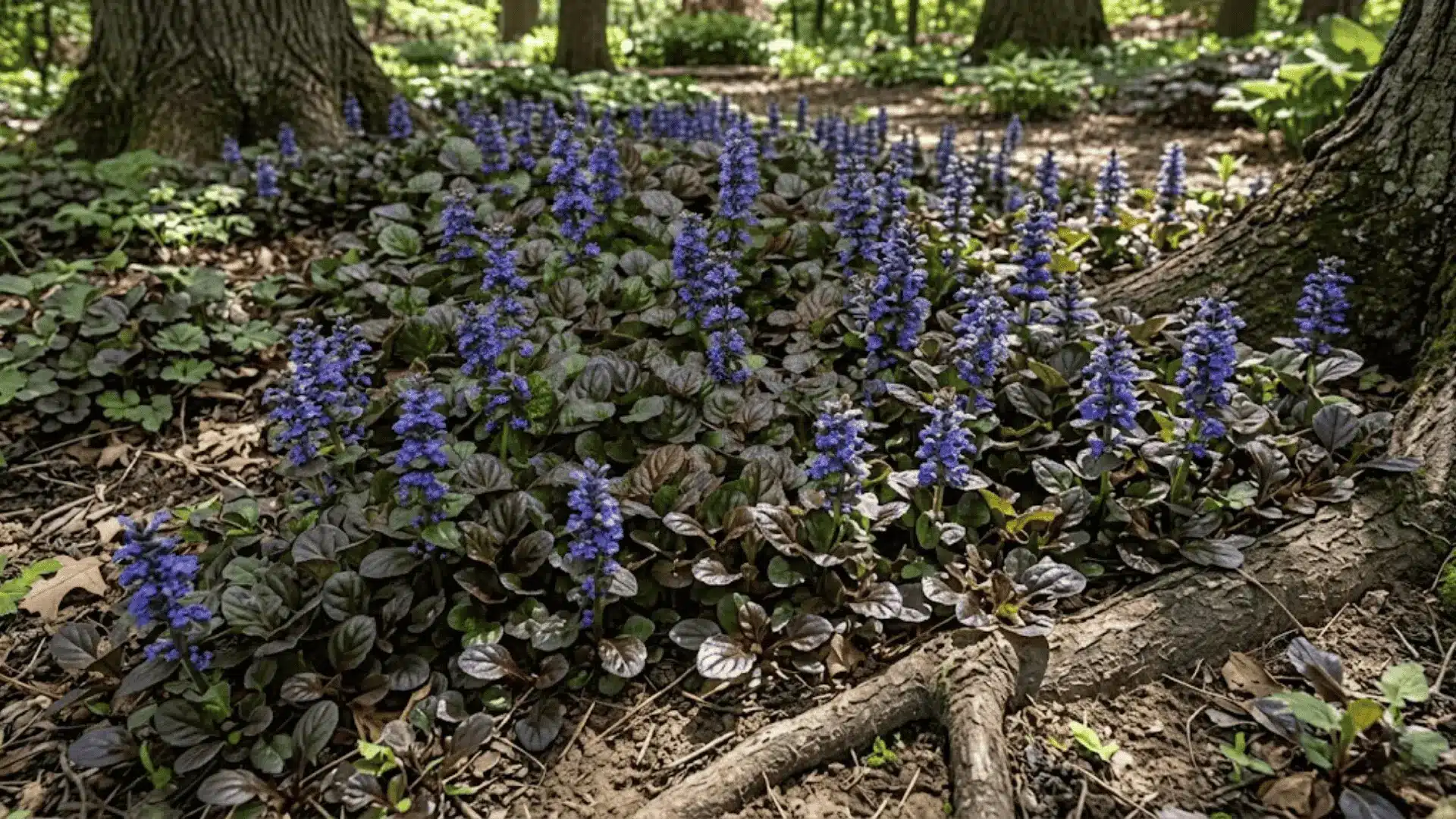
Sun Exposure: Partial to full shade Zone: 3-9 Size: 4-9 inches tall
Ajuga is a shade-loving ground cover that spreads quickly to fill problem areas under trees and along dry borders.
Its deep bronze or purple foliage is striking year-round, and it produces upright spikes of blue flowers in spring that bring a welcome burst of color.
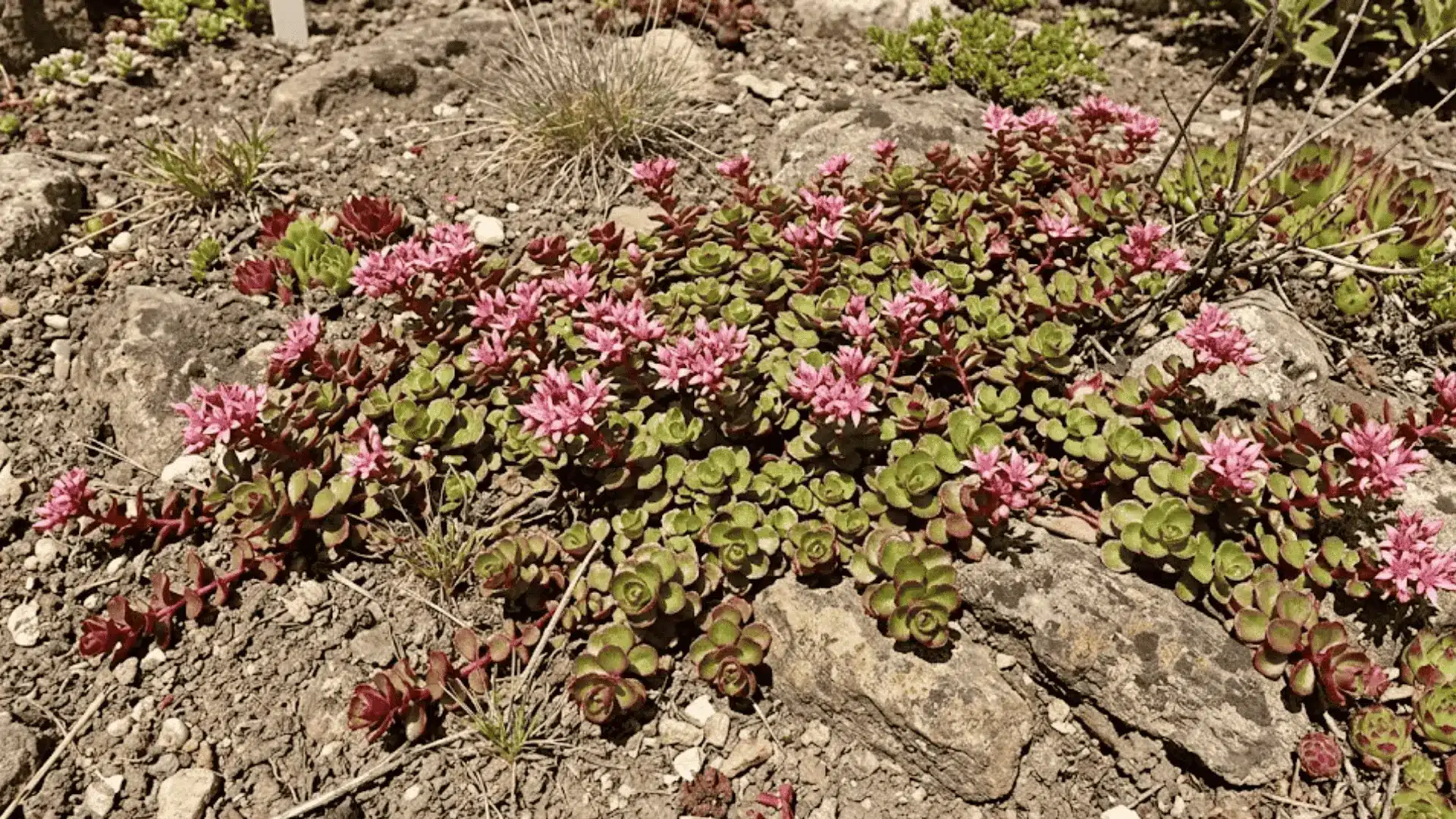
32. Sedum Ground Cover
Sun Exposure: Full sun
Zone: 3-9
Size: 2-6 inches tall
Sedum in its ground cover form is one of the toughest low-water plants available.
It creeps steadily across dry, rocky surfaces, tolerates poor soil, and produces clusters of small star-shaped flowers in late summer. It’s virtually indestructible once established and looks beautiful doing it.
Trees That Survive With Little Water
A drought-tolerant tree is one of the best long-term investments a gardener can make.
Once established, these trees ask for very little while offering shade, structure, and seasonal beauty that lasts for years.
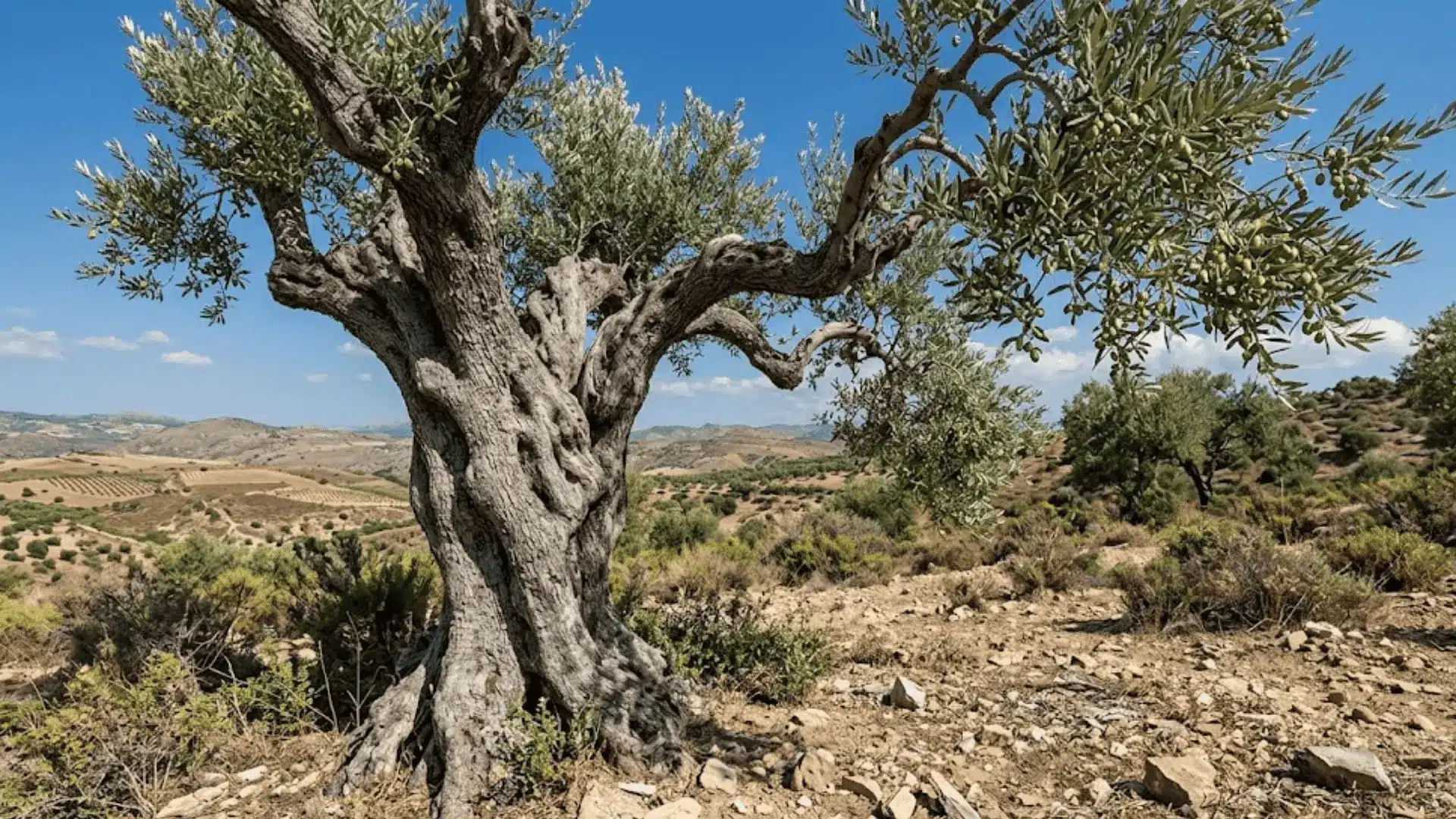
33. Olive Tree
Sun Exposure: Full sun
Zone: 8-11
Size: 120-360 inches tall
The olive tree is the picture of Mediterranean resilience, thriving in poor, dry soils where many trees would struggle.
Its silver-green foliage has a timeless, sculptural quality, and once established, it needs almost no supplemental water to stay healthy and beautiful for decades.
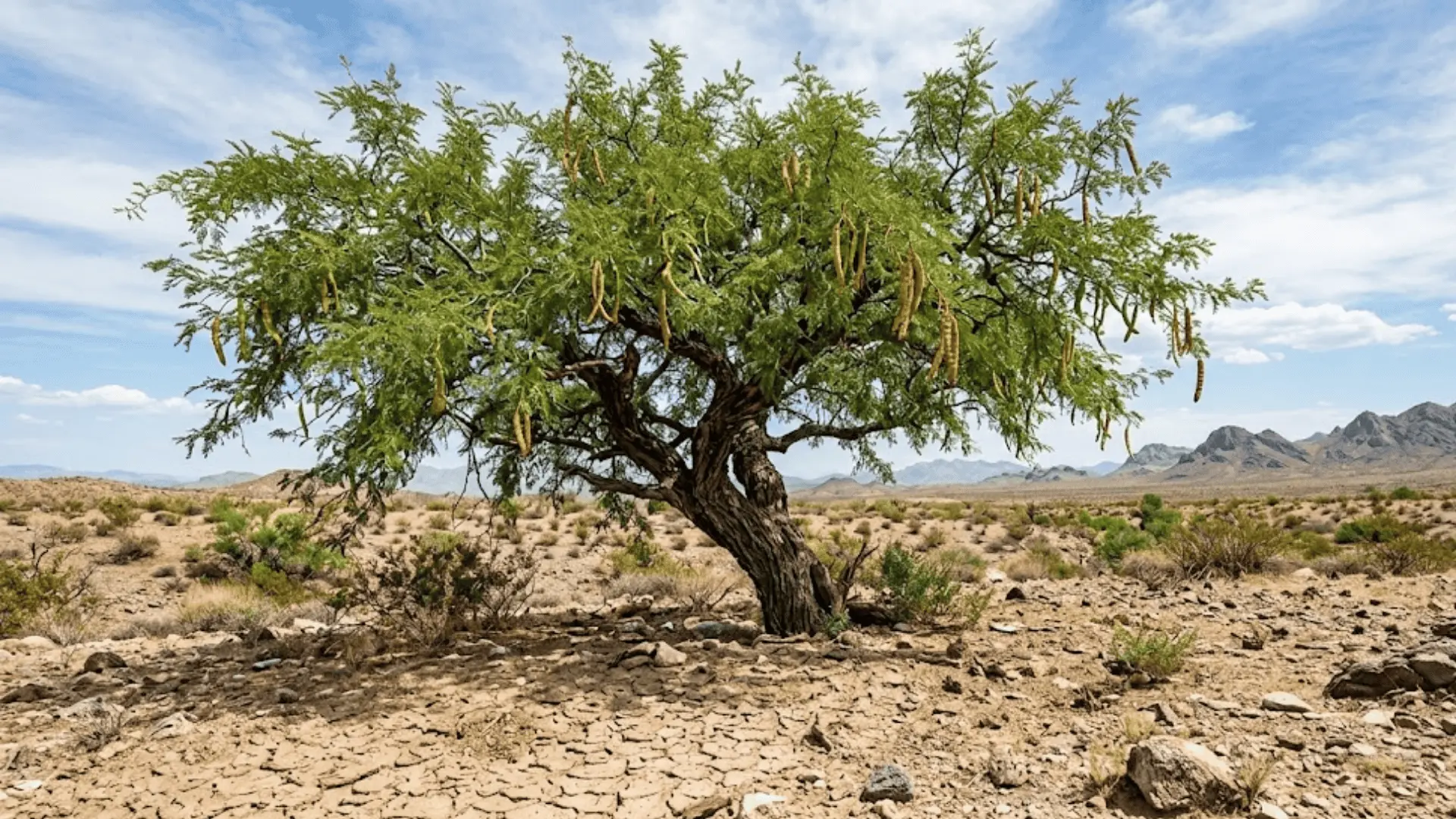
34. Mesquite Tree
Sun Exposure: Full sun
Zone: 6-11
Size: 120-240 inches tall
Mesquite is a desert-born tree that handles extreme heat and prolonged drought without missing a beat.
Its deep root system taps into underground moisture, and its feathery, fine-textured canopy provides welcome shade in hot, dry landscapes without requiring much care or intervention.
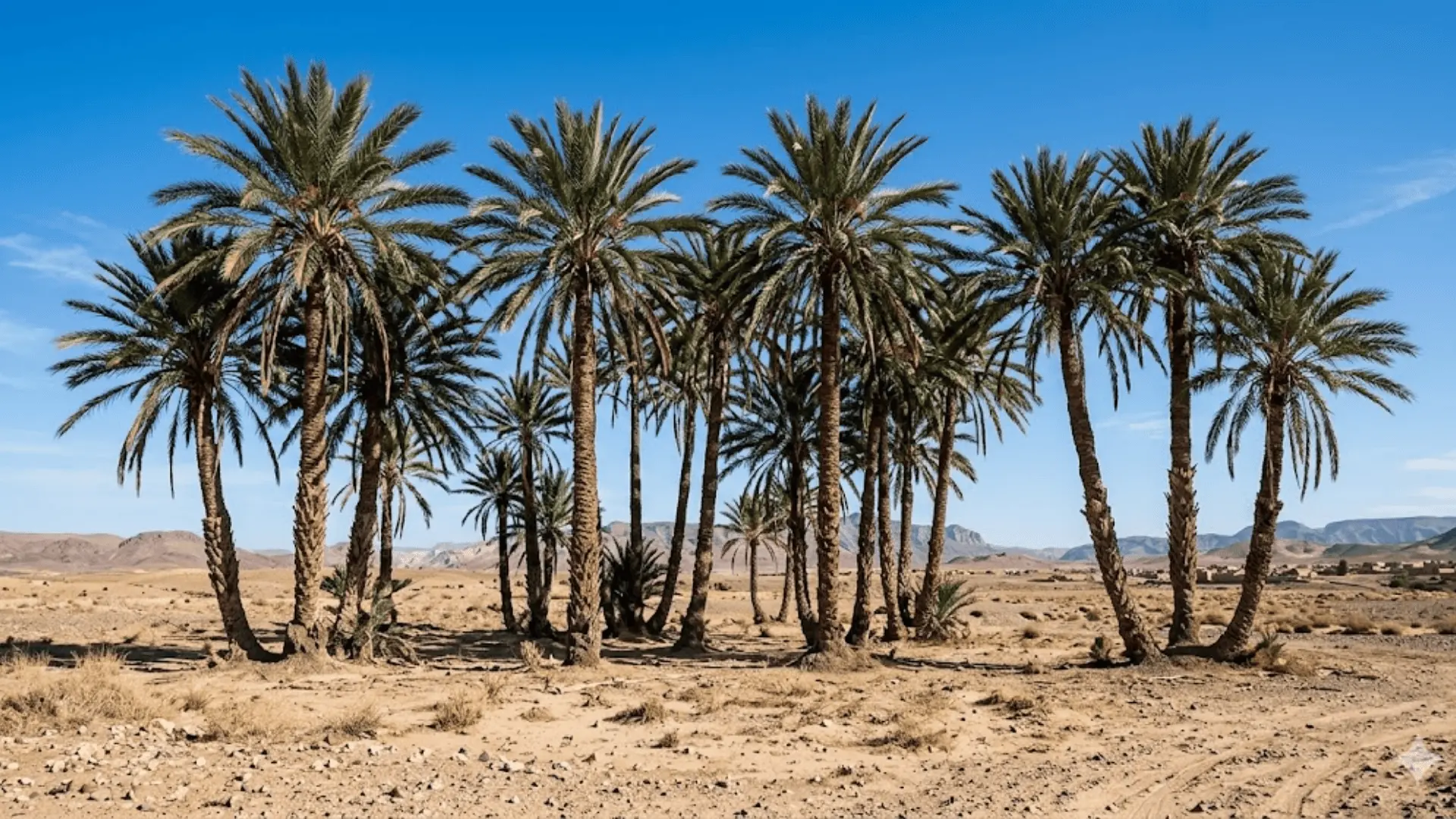
35. Palm Trees
Sun Exposure: Full sun
Zone: 8-11
Size: 120-1080 inches tall
Many palm varieties are naturally drought-tolerant once established, making them a striking low-water choice for warm, sunny climates.
They bring an unmistakable tropical structure to dry landscapes and handle extended dry periods far better than their lush appearance might suggest.
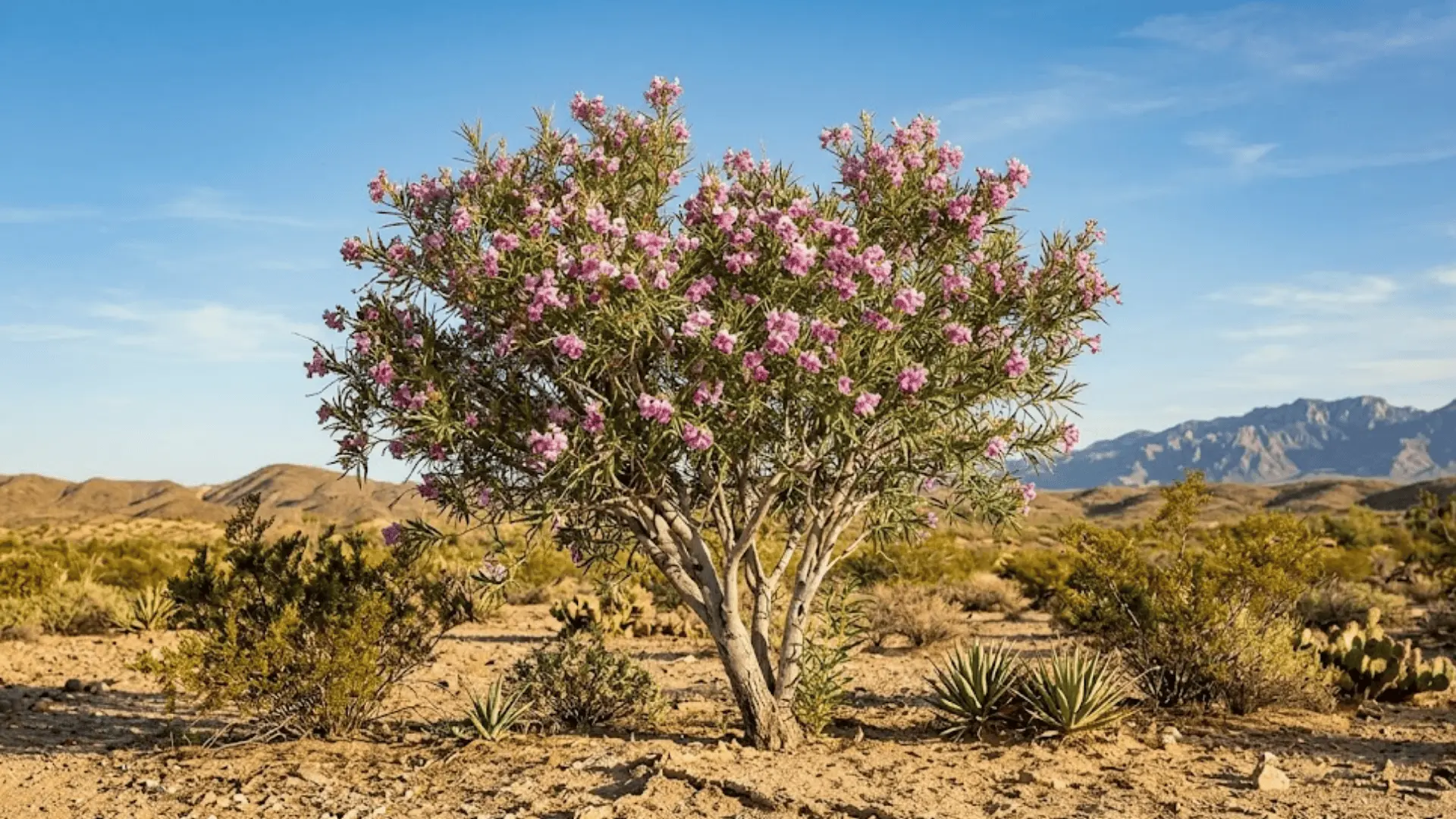
36. Desert Willow
Sun Exposure: Full sun
Zone: 6-11
Size: 120-300 inches tall
Despite its name, desert willow is not a true willow but a heat-loving flowering tree that thrives with very little water.
Its trumpet-shaped blooms in pink, lavender, and white appear throughout summer, making it one of the most ornamental drought-tolerant trees available anywhere.
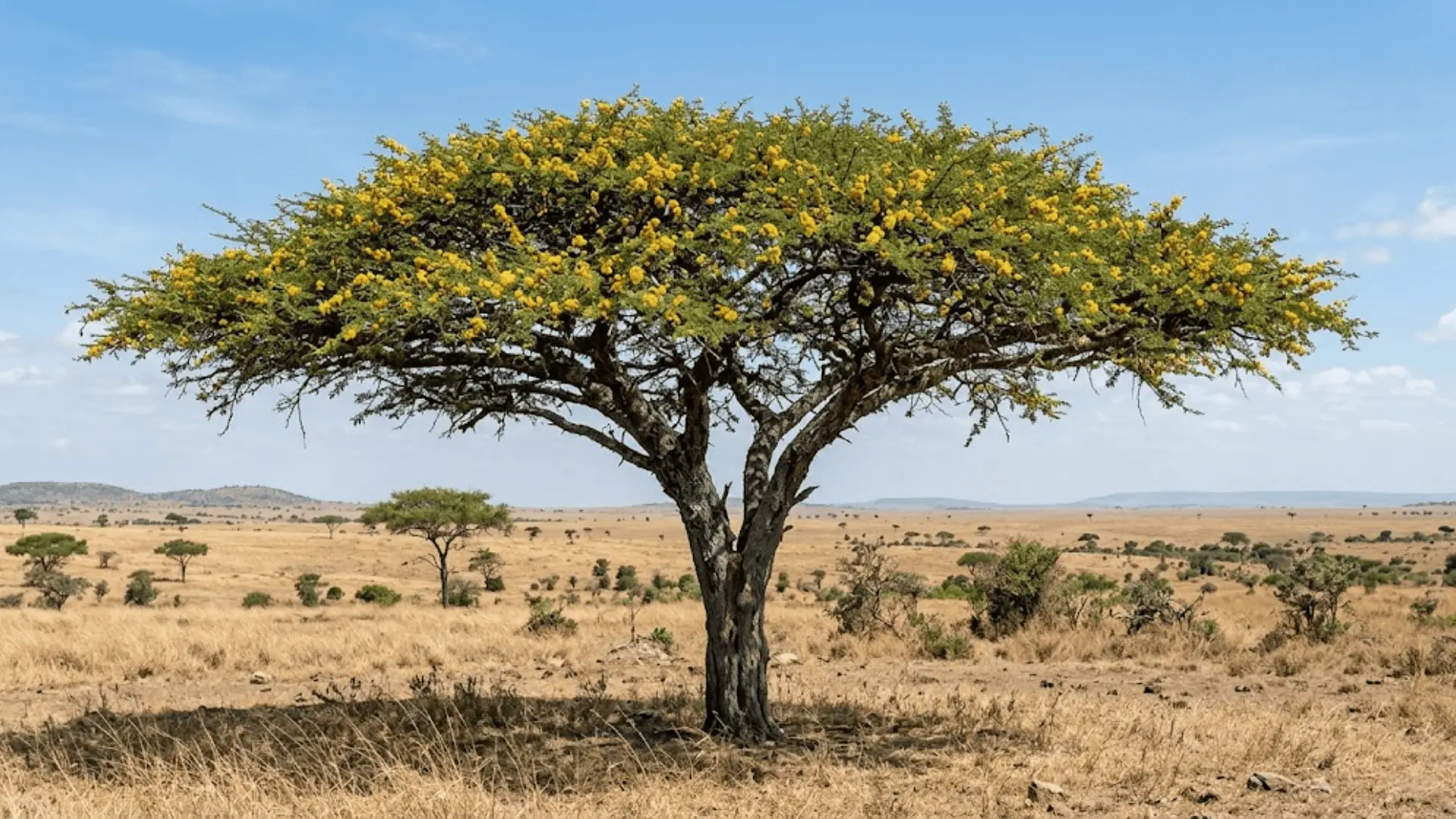
37. Acacia
Sun Exposure: Full sun
Zone: 9-11
Size: 120-360 inches tall
Acacia is a fast-growing, drought-hardy tree that brings bold structure and golden flower clusters to dry landscapes.
It establishes quickly, handles poor soils well, and creates meaningful shade without needing regular irrigation once its root system is firmly in place.
Herbs That Thrive on Minimal Water
A low-water herb garden is one of the most practical things a gardener can grow.
These herbs are naturally adapted to dry, sunny conditions and reward minimal watering with generous harvests and wonderful fragrance.
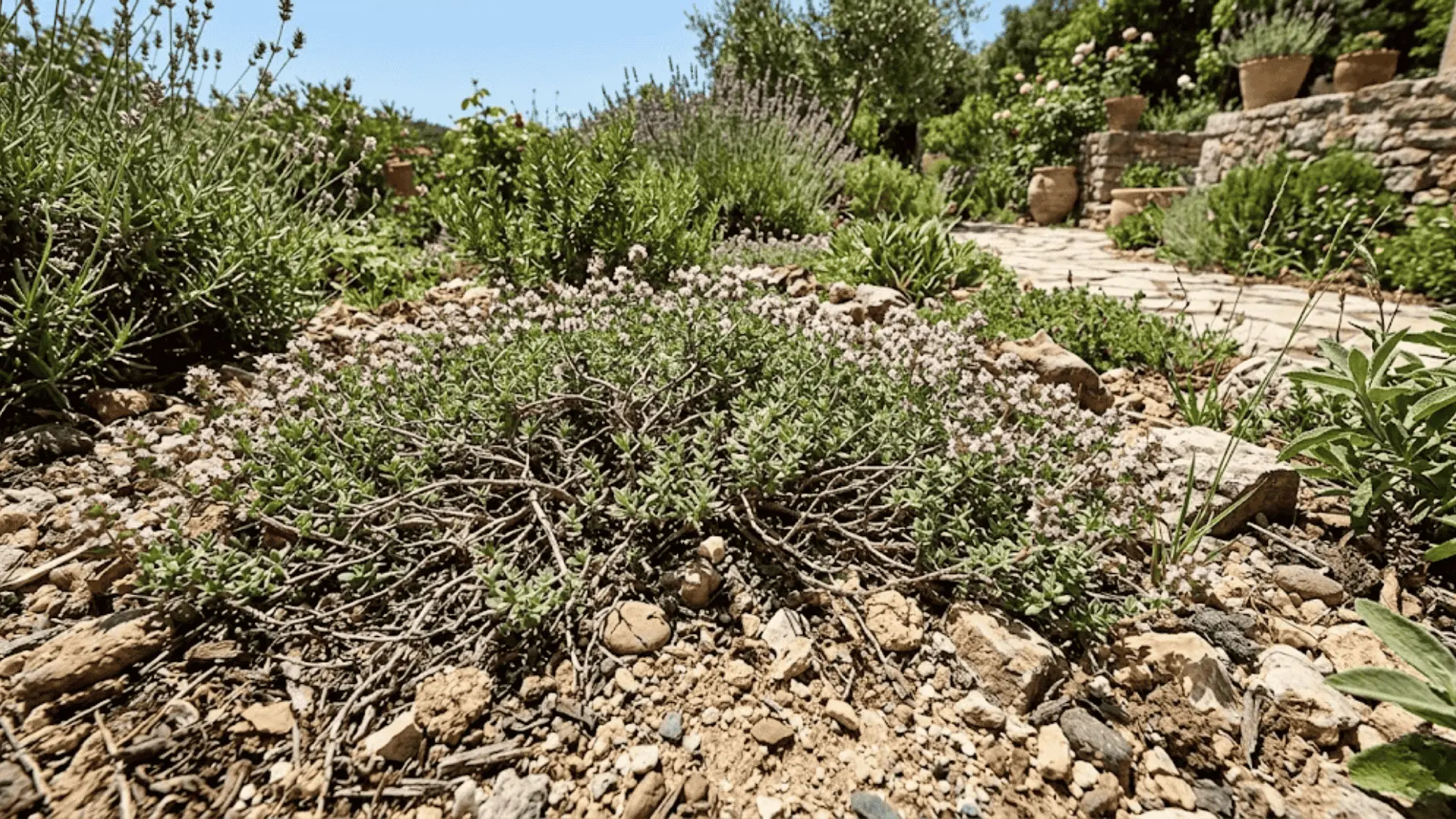
38. Thyme
Sun Exposure: Full sun
Zone: 4-9
Size: 6-12 inches tall
Thyme is a Mediterranean herb that positively thrives in dry, well-drained soil.
It stays low and spreads, works beautifully between paving stones or as a fragrant border plant, and produces small pink flowers in summer that pollinators adore, all with minimal water needed.
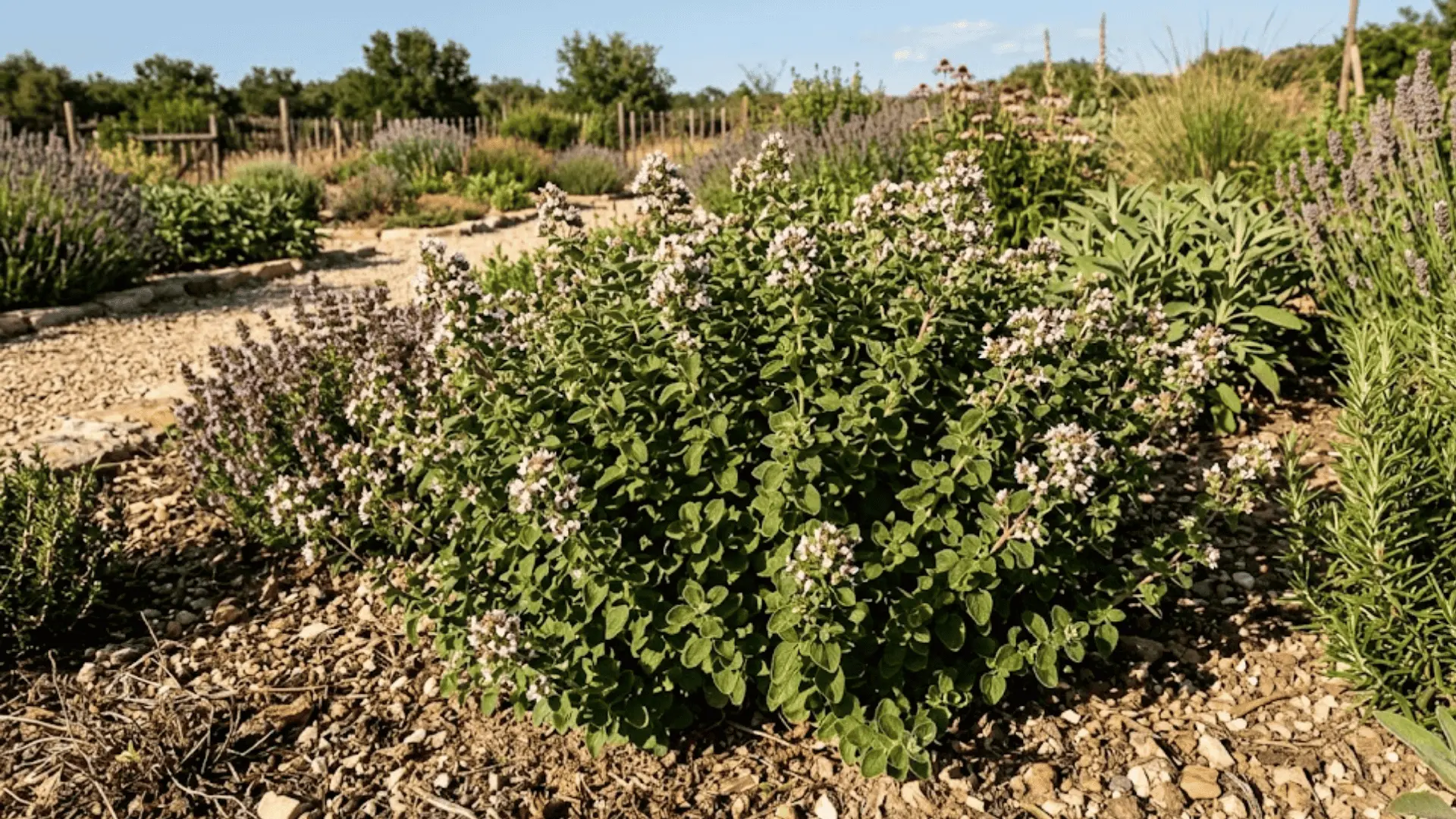
39. Oregano
Sun Exposure: Full sun
Zone: 4-10
Size: 12-24 inches tall
Oregano is as tough as it is flavorful, handling drought and heat without any drop in quality.
It grows happily in lean, dry soil and keeps producing aromatic leaves through the growing season, asking for nothing more than good drainage and a reliably sunny spot.
40. Lavender
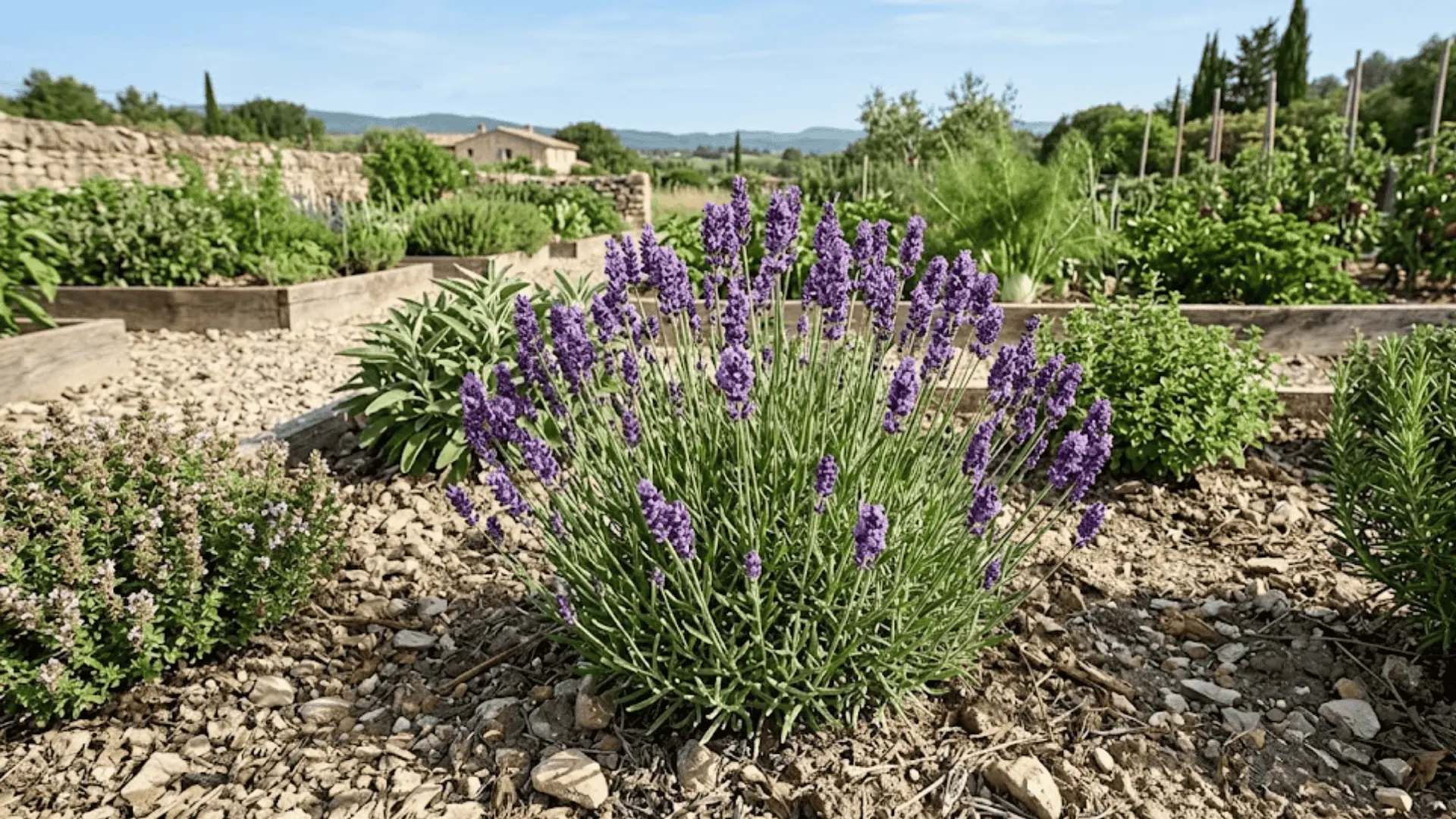
Sun Exposure: Full sun
Zone: 5-9
Size: 12-36 inches tall
Grown as a culinary and aromatic herb, lavender brings the same drought-tolerant resilience to the kitchen garden as it does to the ornamental border.
Its leaves and flowers are both useful and beautiful, thriving in dry, rocky conditions, where most herbs merely survive.
41. Chives
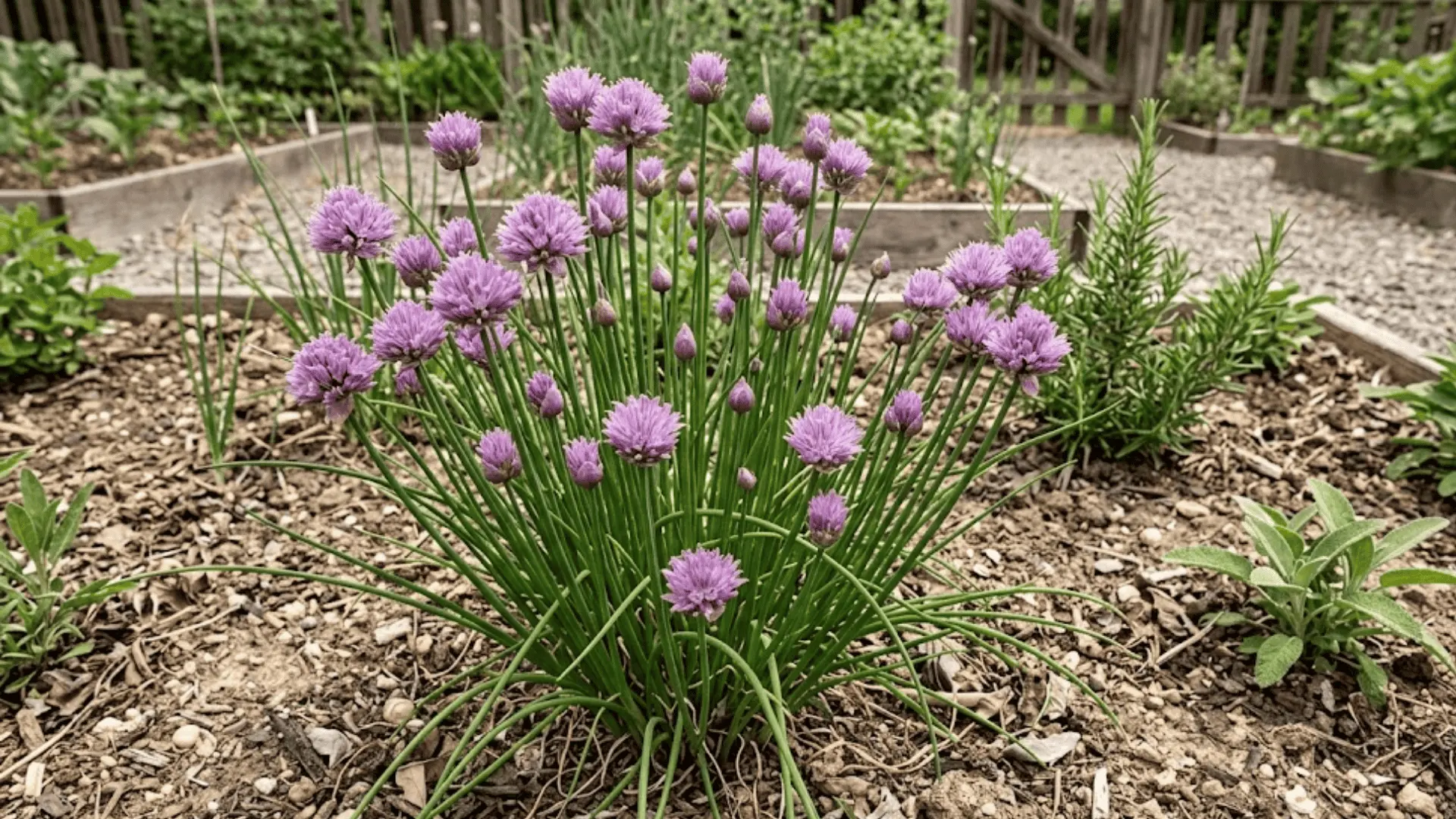
Sun Exposure: Full sun to partial shade
Zone: 3-9
Size: 12-20 inches tall
Chives are one of the most undemanding herbs in the garden, growing steadily with very little water once established.
Their slender green blades are endlessly useful in the kitchen, and their round purple flowers in spring make them just as attractive as they are practical.
42. Tarragon
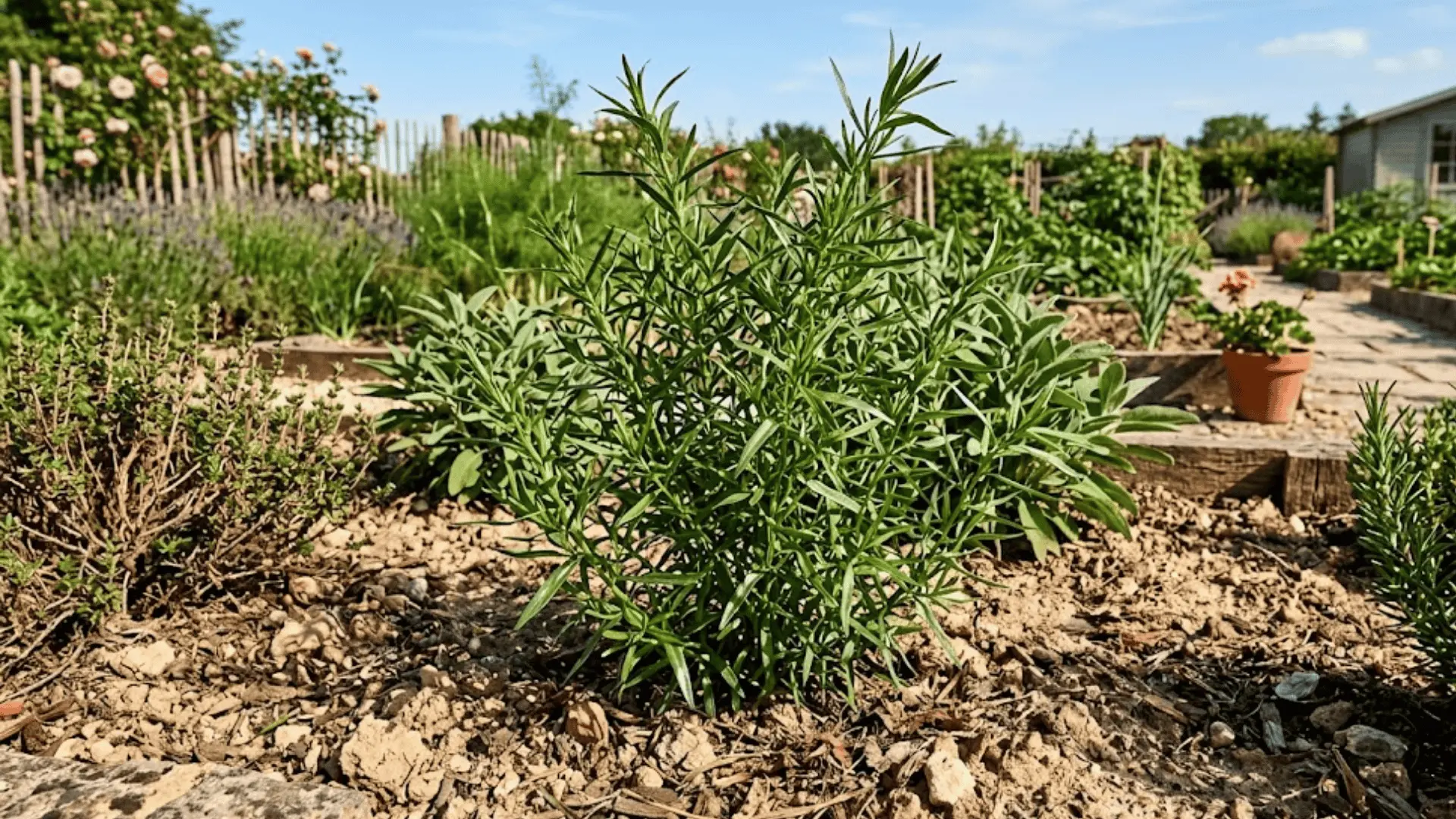
Sun Exposure: Full sun
Zone: 4-8
Size: 18-36 inches tall
French tarragon is a refined, drought-tolerant herb that asks very little once it finds a warm, sunny spot.
Its slender, anise-scented leaves are a staple of classic cooking, and it handles dry summer conditions gracefully, going semi-dormant in winter and returning each spring reliably.
43. Marjoram
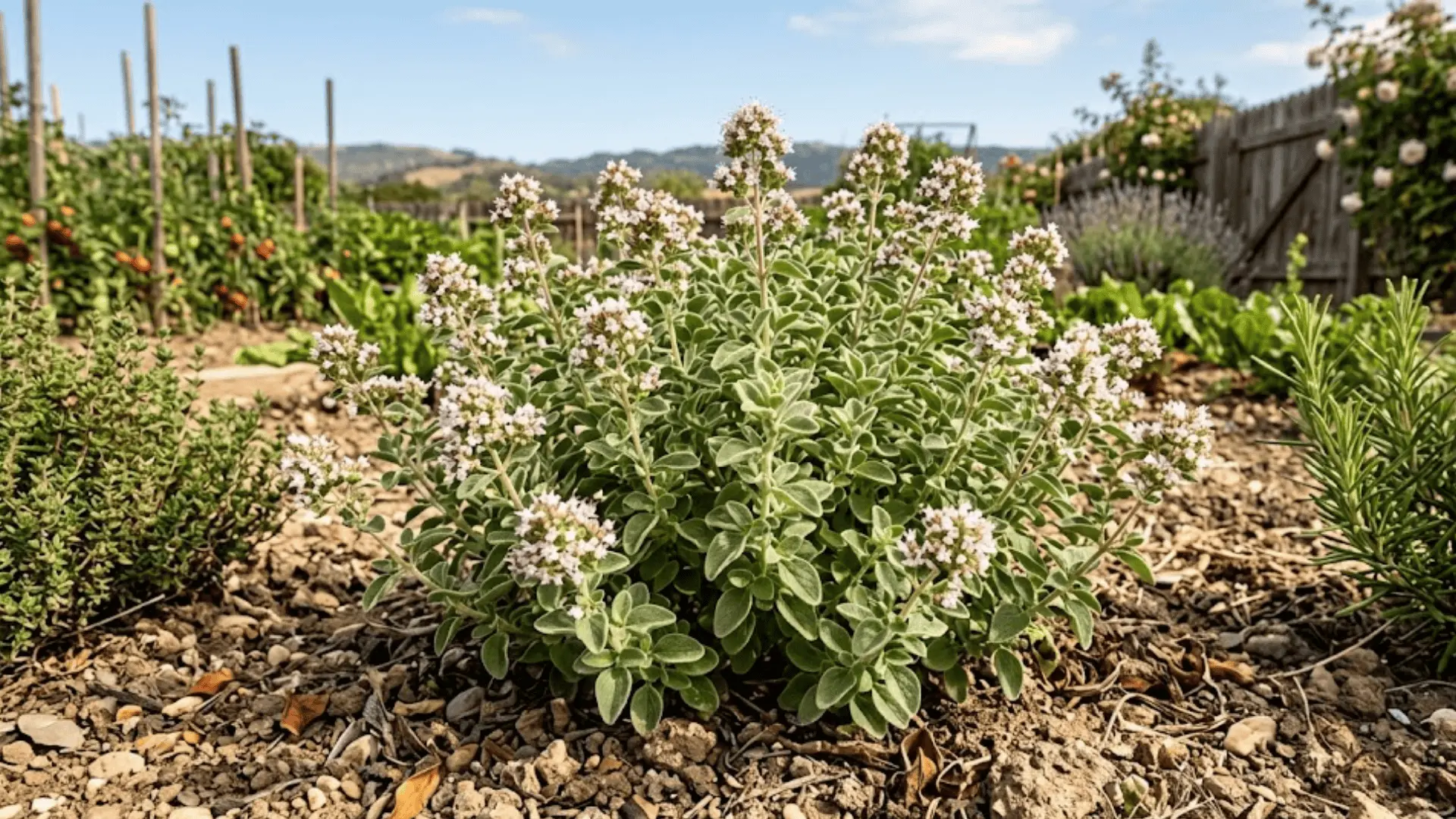
Sun Exposure: Full sun
Zone: 9-10
Size: 12-24 inches tall
Marjoram is a gentle, sweet-scented herb that thrives in warm, dry conditions with minimal watering.
It’s closely related to oregano but carries a softer, more delicate flavor, and it grows neatly in containers or garden beds, making it a charming addition to any low-water herb garden.
How to Create a Low-Water Garden: A Step-by-Step Guide
Building a drought-tolerant garden doesn’t require starting from scratch. A few intentional choices upfront make the difference between a garden that struggles and one that quietly thrives.
- Step 1: Start with the Right Plants. Prioritize natives and regionally adapted species that are already wired for your local rainfall patterns.
- Step 2: Fix Your Soil First. Improve drainage in clay-heavy soil or add organic matter to sandy soil so water reaches roots efficiently rather than running off.
- Step 3: Layer on the Mulch. A generous layer of mulch across your beds slows evaporation, regulates soil temperature, and cuts watering frequency significantly.
- Step 4: Group Plants by Water Needs. Placing thirstier plants together and drought-tolerant ones separately makes watering intentional and prevents overwatering by habit.
- Step 5: Consider Drip Irrigation. A simple drip system delivers water directly to the root zone, eliminating waste and giving your garden consistent moisture without the guesswork.
Get these foundations right, and the garden largely takes care of itself, season after season.
Real Gardener Tips for Growing Plants With Minimal Water
Seasoned gardeners will tell you that overwatering kills more plants than underwatering ever will. Roots need air as much as moisture, so letting the soil dry out between sessions is rarely a bad thing.
When you water, go deep and infrequently rather than shallow and often, as this encourages roots to reach further down and become naturally more drought-resilient.
Mulching your beds is the single easiest way to hold moisture in longer. And grouping plants by water needs saves both time and guesswork.
For real-world advice straight from the gardening community, this Permies forum thread is worth a read.
That’s a Wrap
Building a garden around plants that don’t need water isn’t a compromise; it’s a choice that works quietly in your favor, season after season.
The right plants, planted thoughtfully, have a way of making a garden feel effortless and alive all at once.
Low-water gardening asks very little and gives back generously, whether that’s color, fragrance, structure, or simply the peace of a space that tends itself.
Start with one plant, see how it settles in, and let the garden grow from there.
Which low-water plant are you adding to your garden first? Drop it in the comments!