Growing peppers is rewarding, but what you plant nearby matters just as much. The right pepper companion plants can support stronger growth, better health, and improved yield.
Companion planting uses smart plant pairings to manage pests, support soil nutrients, and make better use of your garden space. It is a simple method backed by both traditional and modern practices.
In this blog, you will learn which plants grow well with peppers, which to avoid, and how to plan your garden for better results.
What is Companion Planting and Why Does It Matter for Peppers?
Before pairing plants, you need to understand how companion planting works for peppers. It involves growing plants close together so they support each other in practical ways.
Peppers are sensitive to pests, soil competition, and temperature shifts, so their surrounding plants play an important role in their growth. The right companions can help manage pests, support pollination, and improve soil conditions.
Some plants repel harmful insects, while others attract beneficial ones or improve soil health over time.
However, not all plants work well together. Choosing the right combinations helps you avoid competition and maintain a more productive pepper garden.
Pepper Companion Plants That Support Strong Growth
These are the plants that genuinely earn their place next to your peppers. Each one brings something specific to the table, so read through the full list and pick the companions that match what your garden needs most
1. Basil
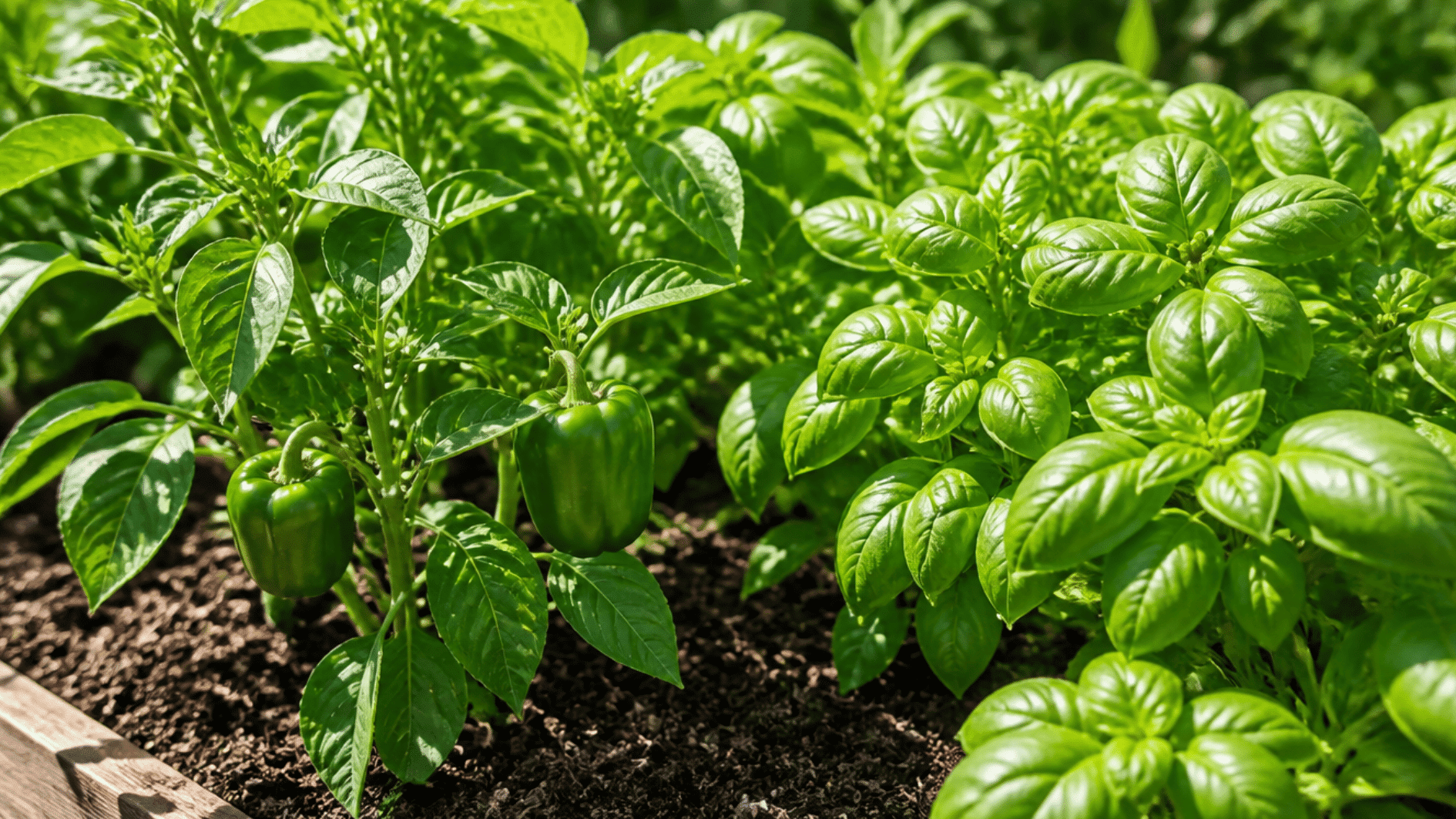
Basil is one of the most widely used pepper companion plants because it grows well in the same warm conditions.
Its strong aroma helps keep harmful insects away, and it fits easily into small garden spaces. Regular trimming keeps it productive and prevents overcrowding near pepper plants.
What to Keep in Mind:
- Pinch back regularly – it loses pest-repelling strength once it bolts.
- Plant within 12–18 inches of peppers for the effect to work.
2. Parsley
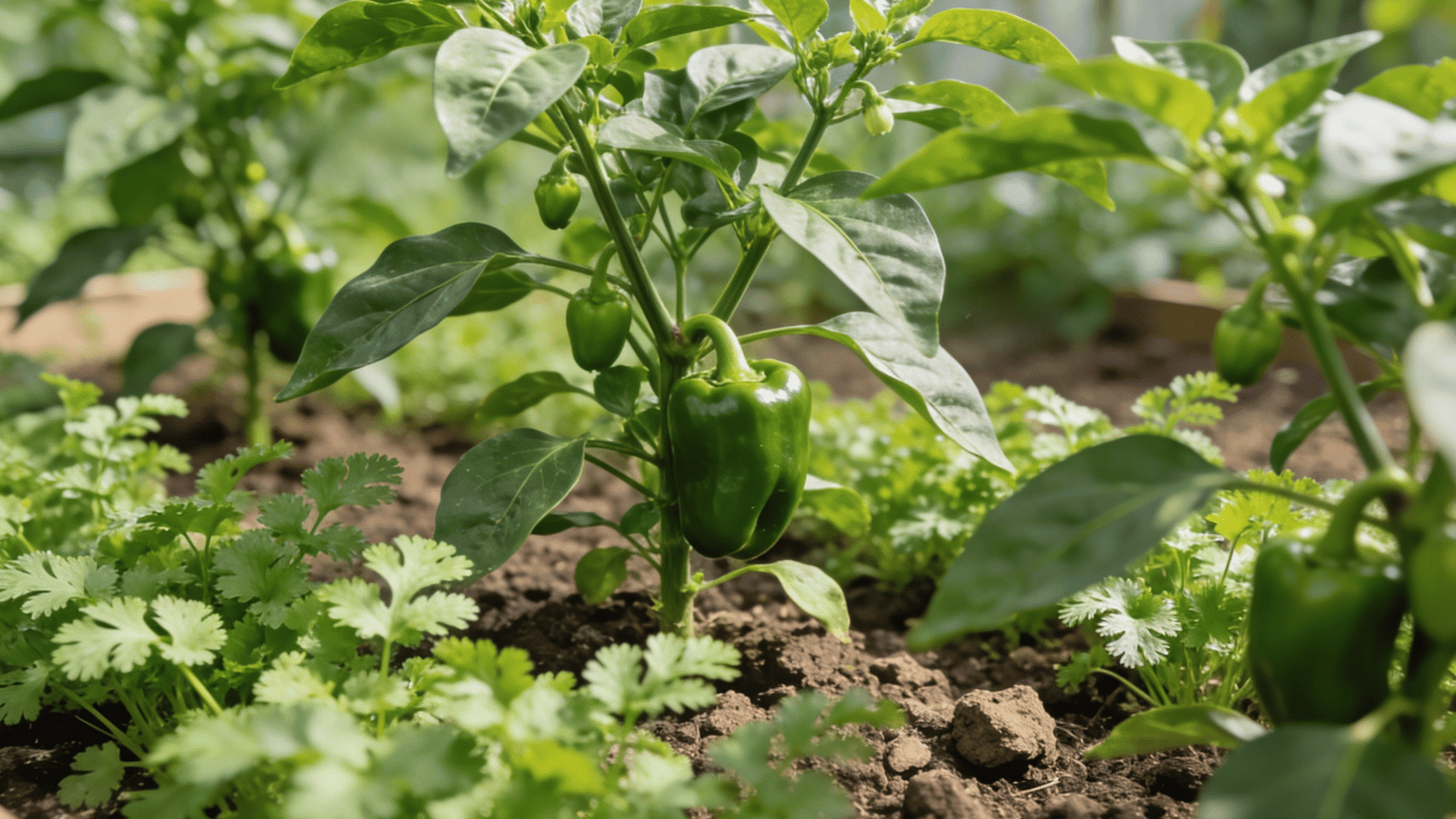
Parsley is a practical companion that fits easily around pepper plants due to its low, compact growth. It plays a useful role in attracting beneficial insects, especially when allowed to flower.
At the same time, it covers exposed soil, helping maintain moisture and reduce weed growth. Since parsley thrives in similar sunlight and soil conditions, you can grow it alongside peppers without changing your care routine.
What to Keep in Mind:
- Let it flower – harvesting constantly removes the blooms that attract beneficial insects.
- Bolts in its second year – replace them annually for consistent results.
3. Oregano
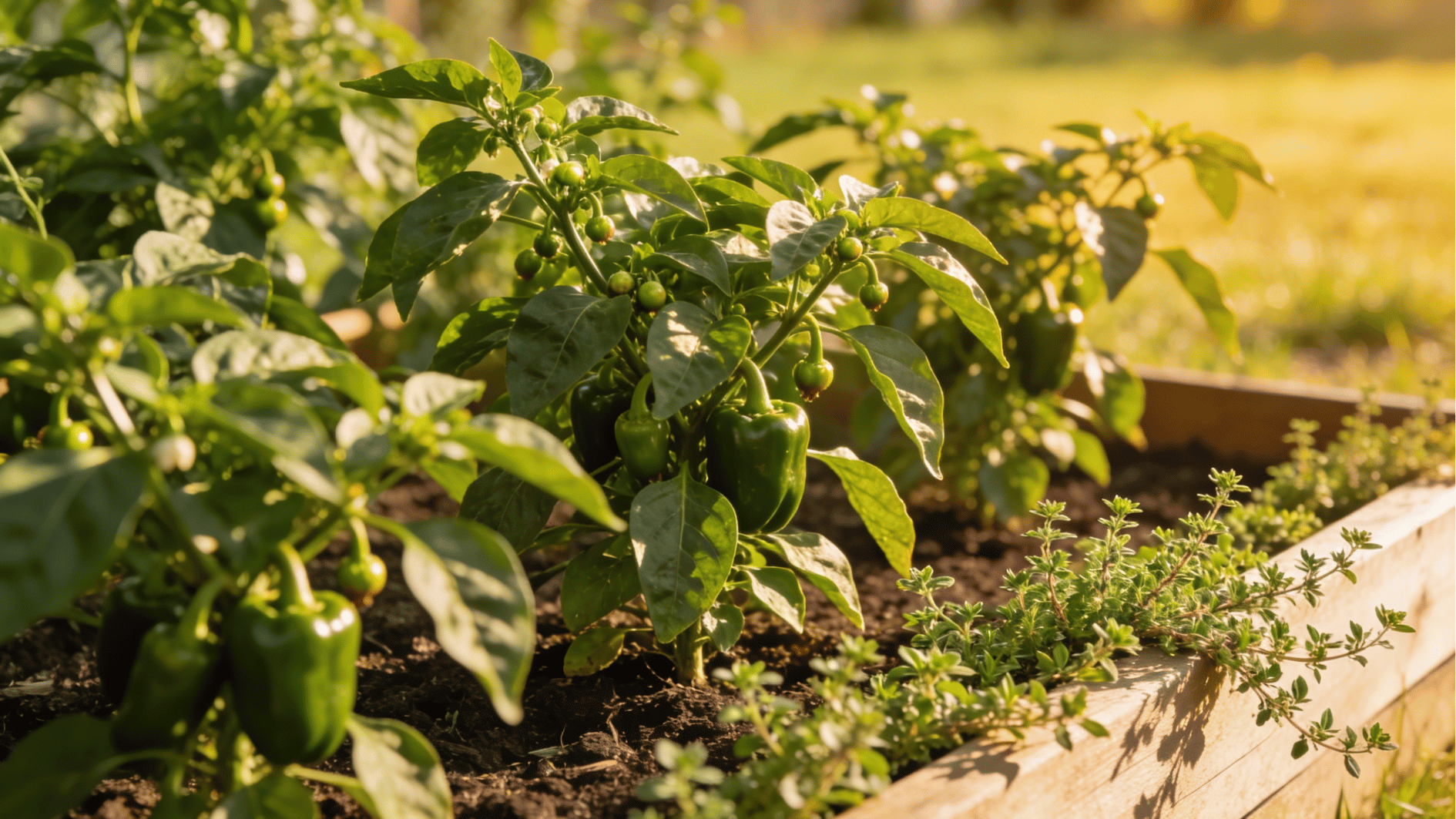
Oregano is a hardy herb that works well as a border plant around peppers. Its spreading habit keeps it close to the ground, so it does not block sunlight or compete for vertical space.
The strong scent of its leaves helps deter insects, making it a useful addition to natural pest management. Once established, oregano requires little maintenance and adapts well to dry conditions.
What to Keep in Mind:
- Spreads aggressively – trim it back so it does not crowd pepper plants.
- Needs well-drained soil; it will not perform in waterlogged conditions.
4. Chives
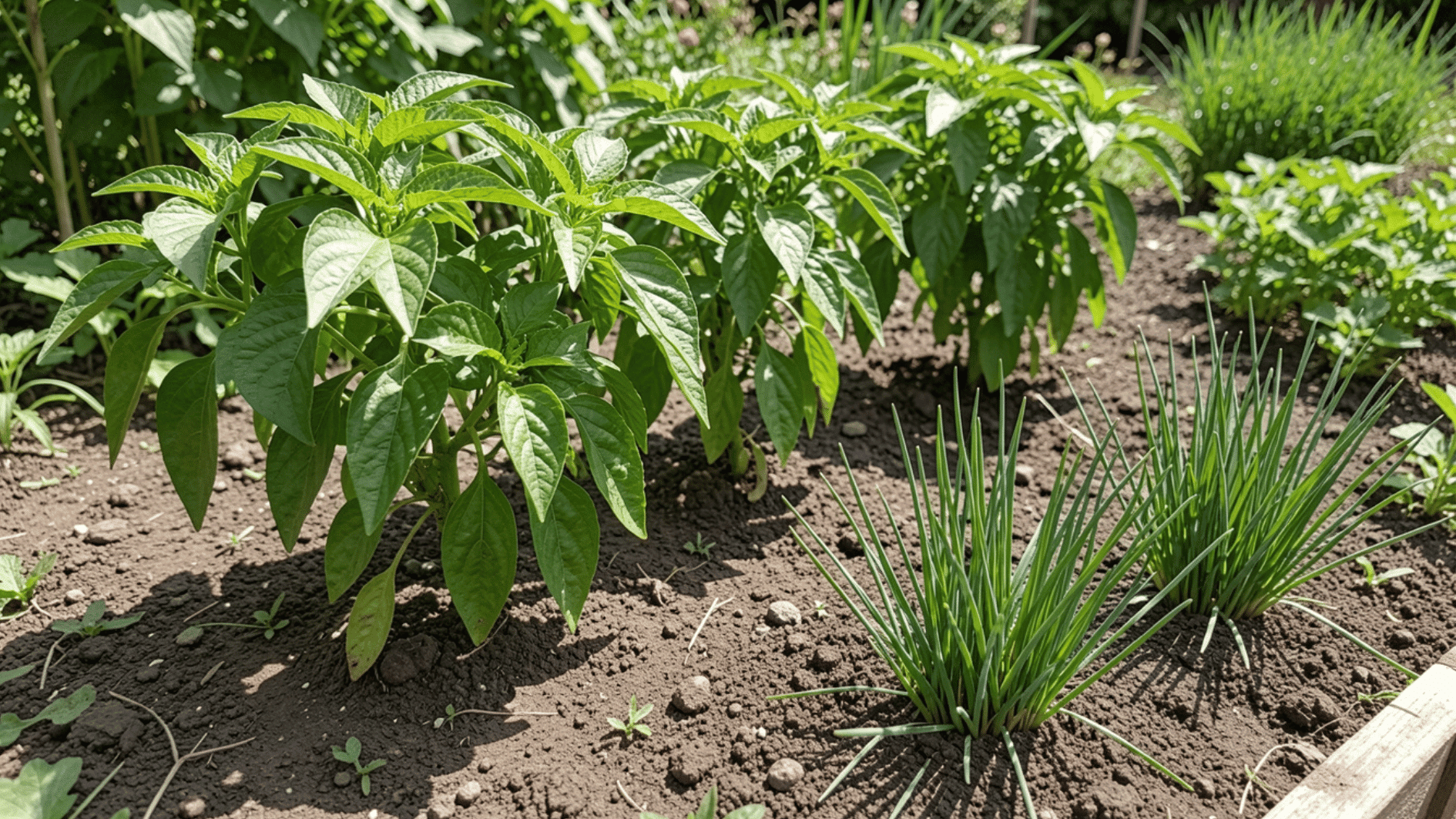
Chives are a compact, upright plant that fits easily into small spaces around pepper plants. Their mild onion-like scent helps reduce pest activity by confusing insects that rely on smell.
Since chives have shallow roots, they do not compete with peppers for nutrients below the soil. They are also perennial in many regions, meaning they return each year with little effort.
What to Keep in Mind:
- Deadhead spent blooms to prevent prolific self-seeding across the bed.
- The pest-deterring effect is mild – it works best alongside stronger companions like garlic.
5. Dill (Young Plants Only)
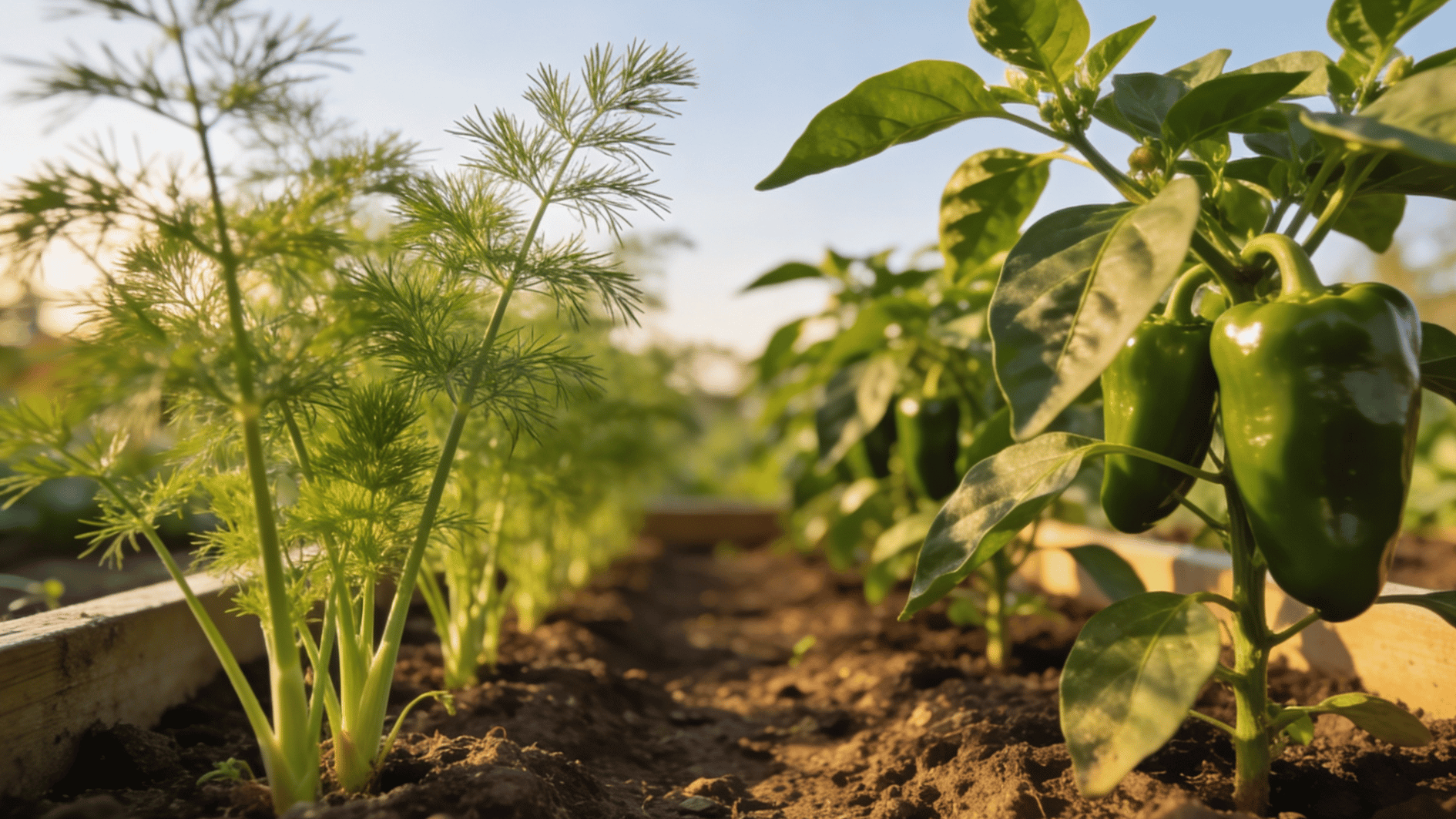
Young dill can support your pepper plants by attracting beneficial insects, such as parasitic wasps, which feed on common pests. It works best when planted early and kept in its early stage.
As dill matures, it may begin to affect nearby plants, so it should be harvested or removed before it reaches full size. Proper timing allows you to gain its benefits without unwanted effects.
What to Keep in Mind:
- Remove it before full maturity – mature dill inhibits pepper growth.
- The window between useful and harmful is short – monitor it closely.
6. Marigolds
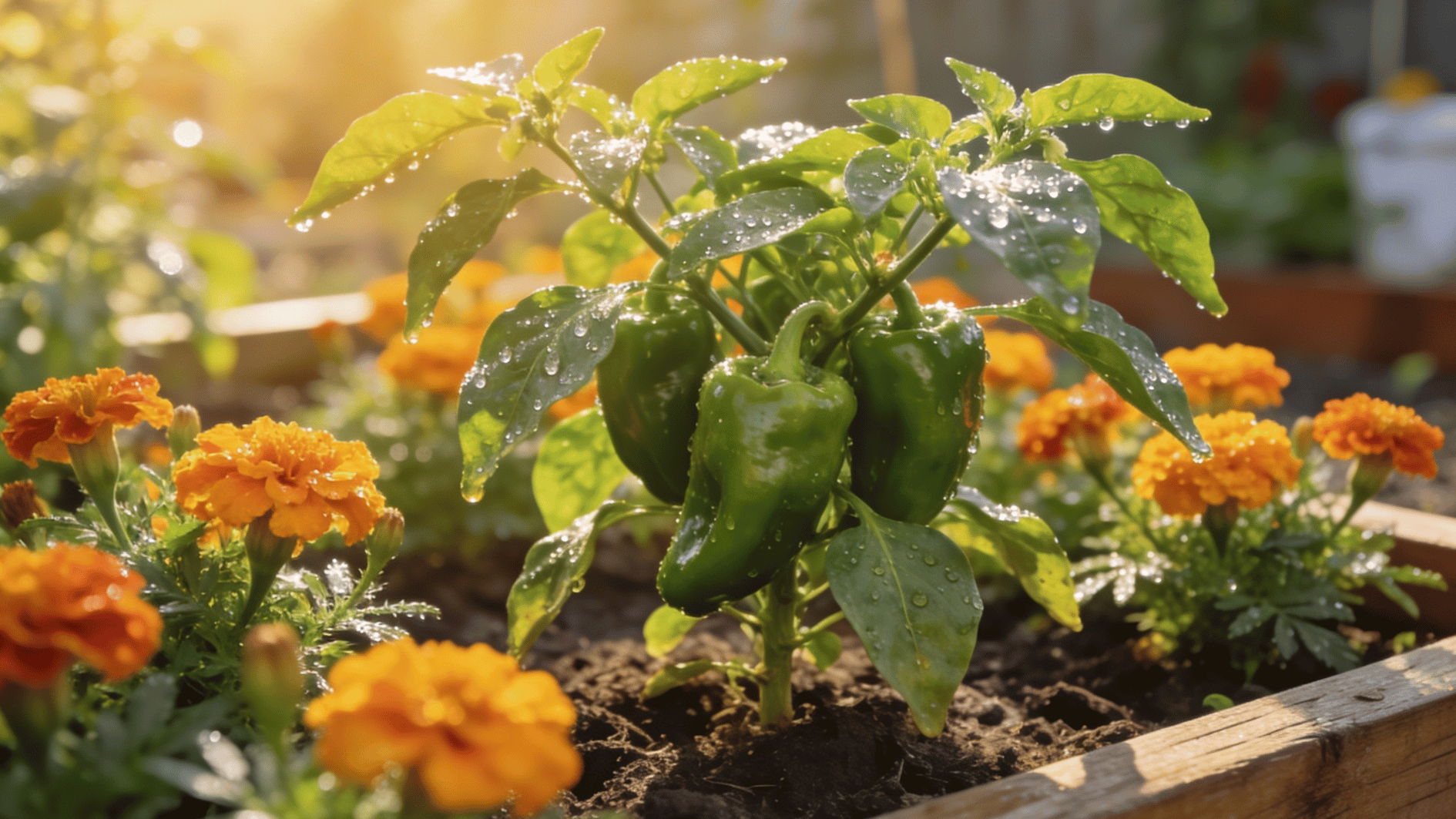
Marigolds are widely used in vegetable gardens due to their strong pest-control properties. They can be planted around the edges of your pepper bed to form a protective border.
Their roots release compounds that help reduce soil pests, while their scent discourages above-ground insects.
In addition, their flowers can bring pollinators into your garden, supporting overall plant productivity.
What to Keep in Mind:
- Only French marigolds (Tagetes patula) suppress nematodes – other varieties do not.
- Plant densely and leave them in all seasons – a sparse border will not control nematodes.
7. Nasturtiums
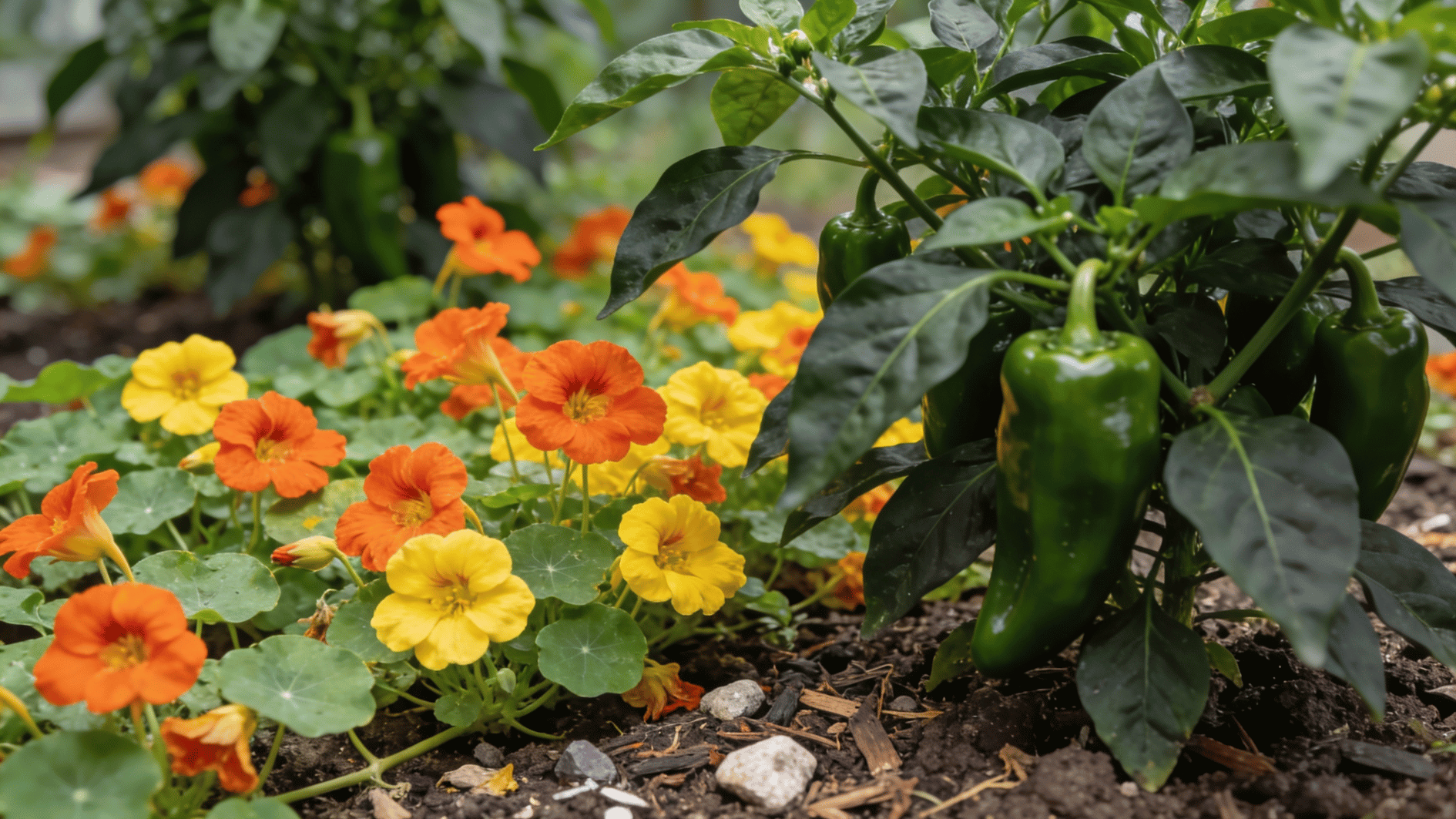
Nasturtiums are a strategic companion that attracts pests away from your pepper plants. They spread across the ground, covering soil and helping reduce moisture loss.
Their bright flowers also attract beneficial insects that feed on pests, adding another layer of support. By drawing attention away from peppers, nasturtiums help limit damage without additional effort.
What to Keep in Mind:
- Remove aphid-infested plants promptly – leaving them lets pests migrate back to peppers.
- Avoid nitrogen-rich fertilizer; it produces dense leaves but fewer flowers.
8. Petunias
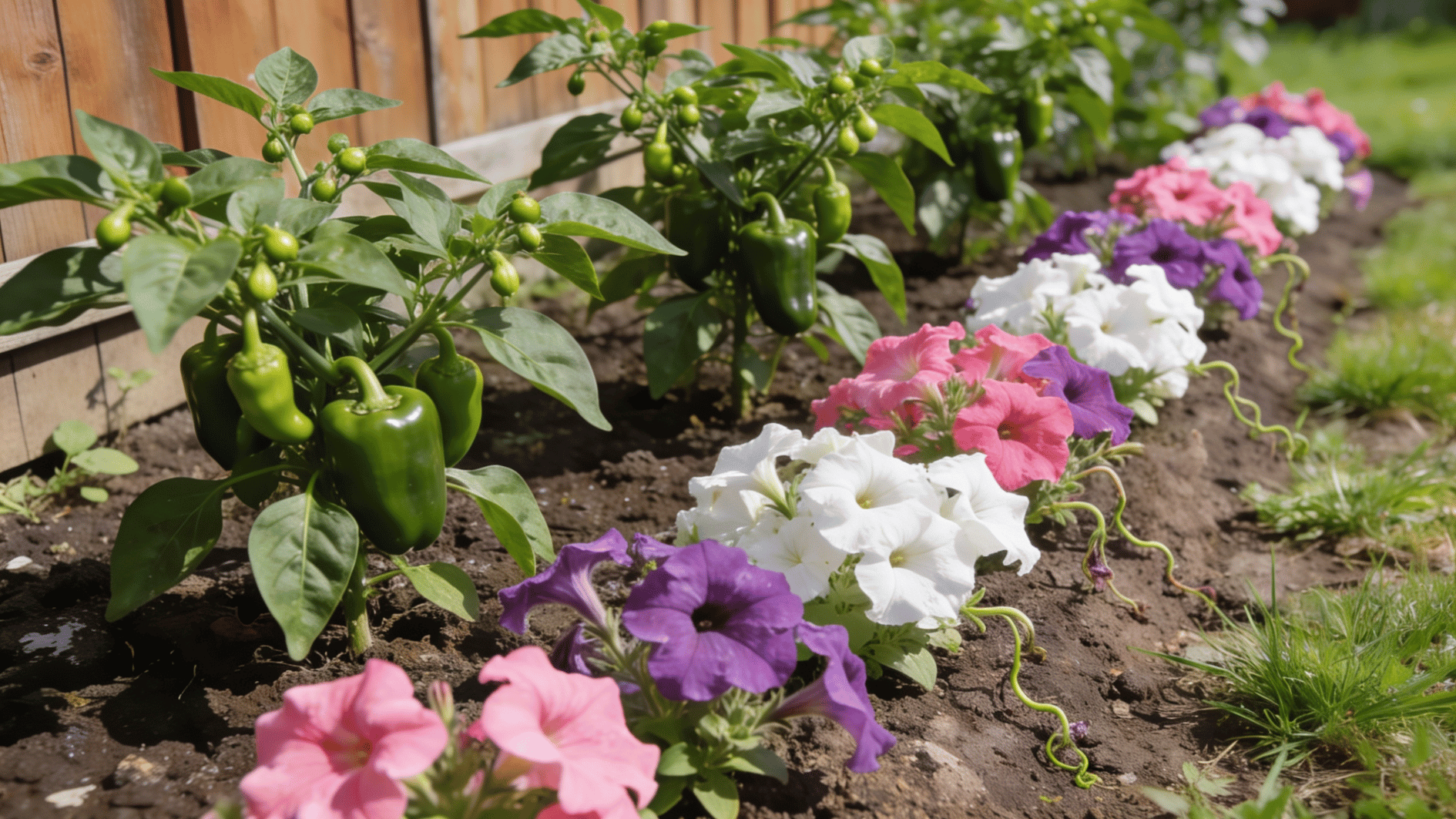
Petunias are a simple and effective choice for planting near peppers. They stay compact and do not crowd nearby plants, making them ideal for borders.
Their natural properties help reduce pest activity, especially from small insects that affect vegetable crops. Petunias also add visual interest to your garden while serving a practical role in maintaining plant health.
What to Keep in Mind:
- Deadhead regularly – they stop flowering and lose function if neglected.
- Sticky stems can trap beneficial insects too – observe to keep the balance in your favor.
9. Borage
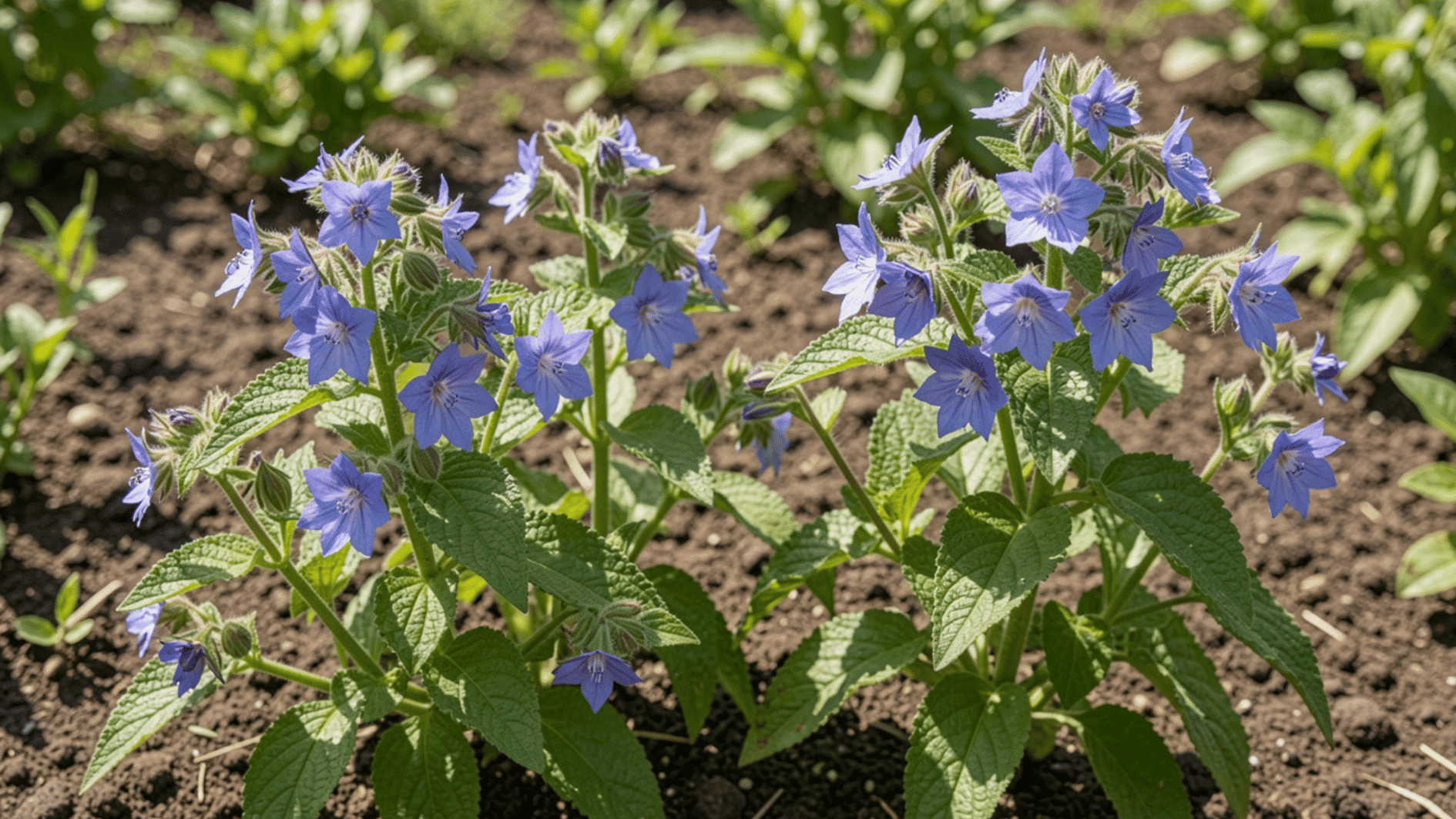
Borage is a strong choice for improving pollination in your pepper garden.
Its flowers attract bees, which can increase the number of visits to your plants and support better fruit production. Over time, borage also contributes to soil quality as it breaks down.
Its presence helps create a more balanced growing environment without requiring extra maintenance.
What to Keep in Mind:
- Remove flower heads before seeds drop – it self-seeds very aggressively.
- Grows up to 2–3 feet wide – space it well to prevent shading your peppers.
10. Carrots
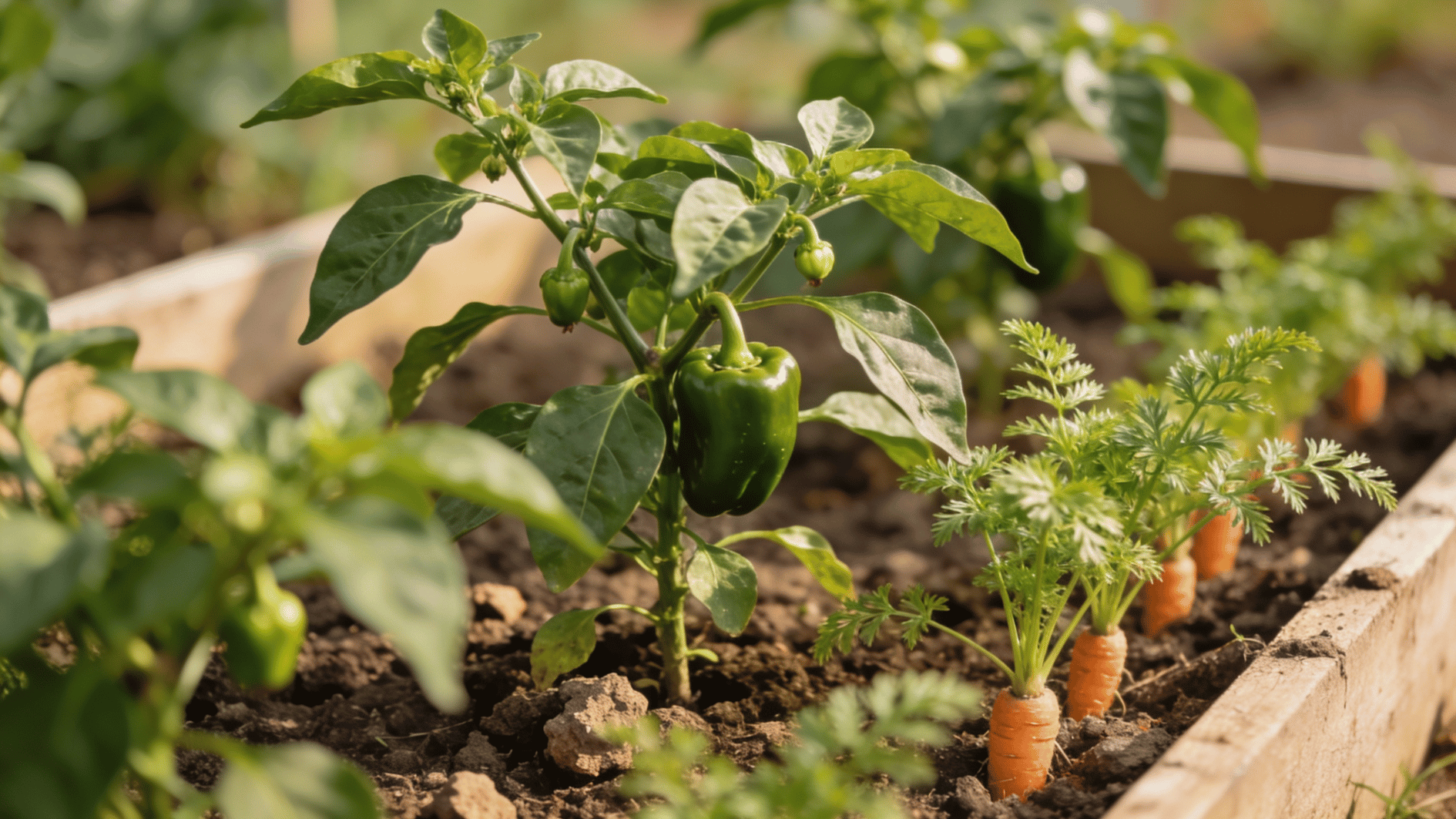
Carrots grow deep below the soil surface, making them a good companion for peppers with shallower root systems. This reduces competition while improving soil structure as the roots develop.
Their growth helps loosen compact soil, improving drainage and allowing nearby plants to expand their roots. Carrots also take up little above-ground space, allowing you to use your garden bed efficiently.
What to Keep in Mind:
- Will not grow in compacted or clay-heavy soil – amend before planting.
- Thin seedlings properly; overcrowded carrots will not loosen the soil effectively.
11. Spinach
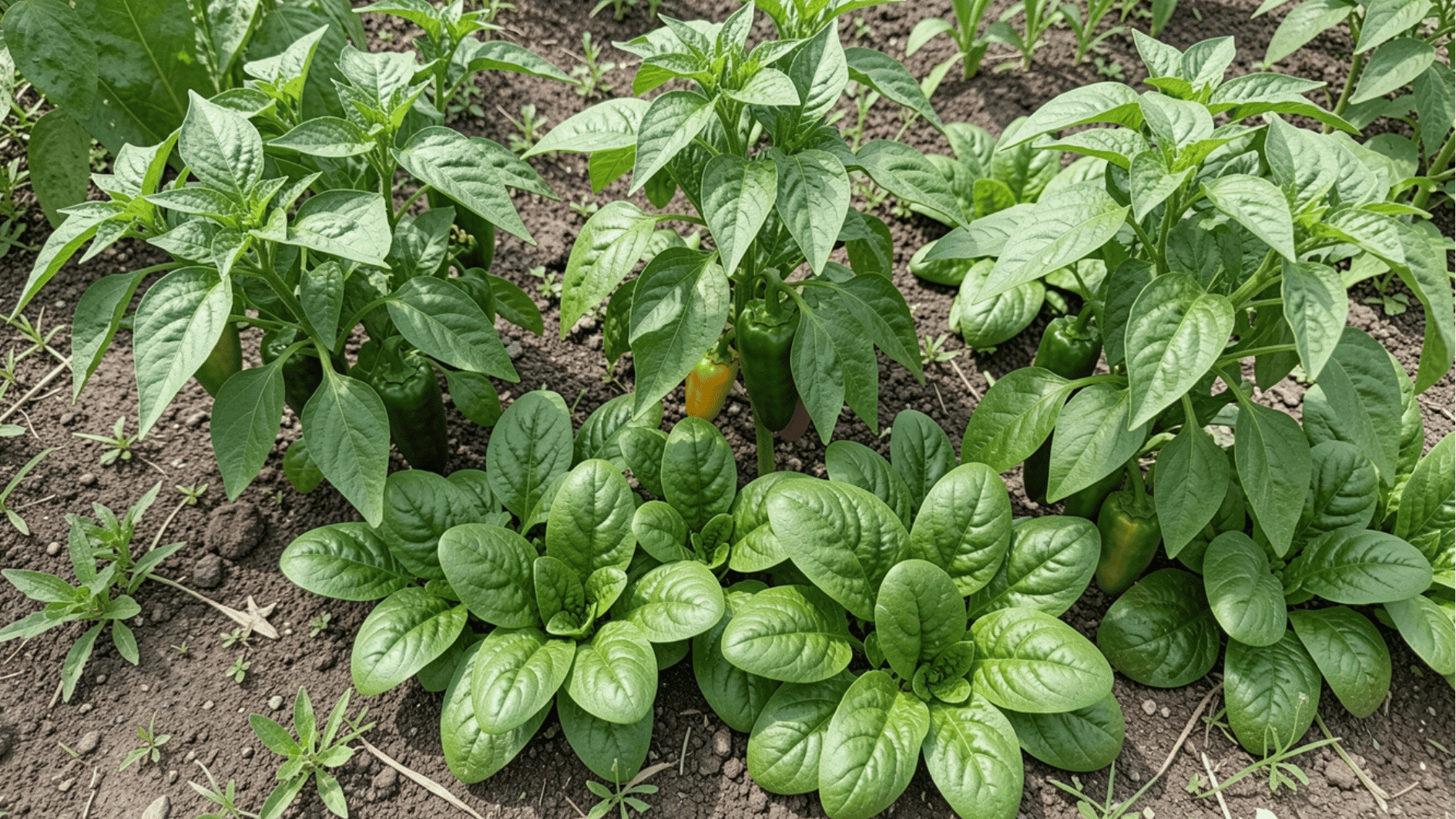
Spinach is a useful addition during the early stages of your pepper garden. It grows quickly and can be planted before peppers fully establish.
Its low growth helps cover the soil, reducing moisture loss and limiting weeds. As peppers grow taller, spinach can still continue in partial shade, making it a flexible option throughout the season.
What to Keep in Mind:
- Bolts fast above 75°F – in warm climates, its useful window is very short.
- Remove it promptly once it bolts; beyond that, it wastes space and moisture.
12. Lettuce
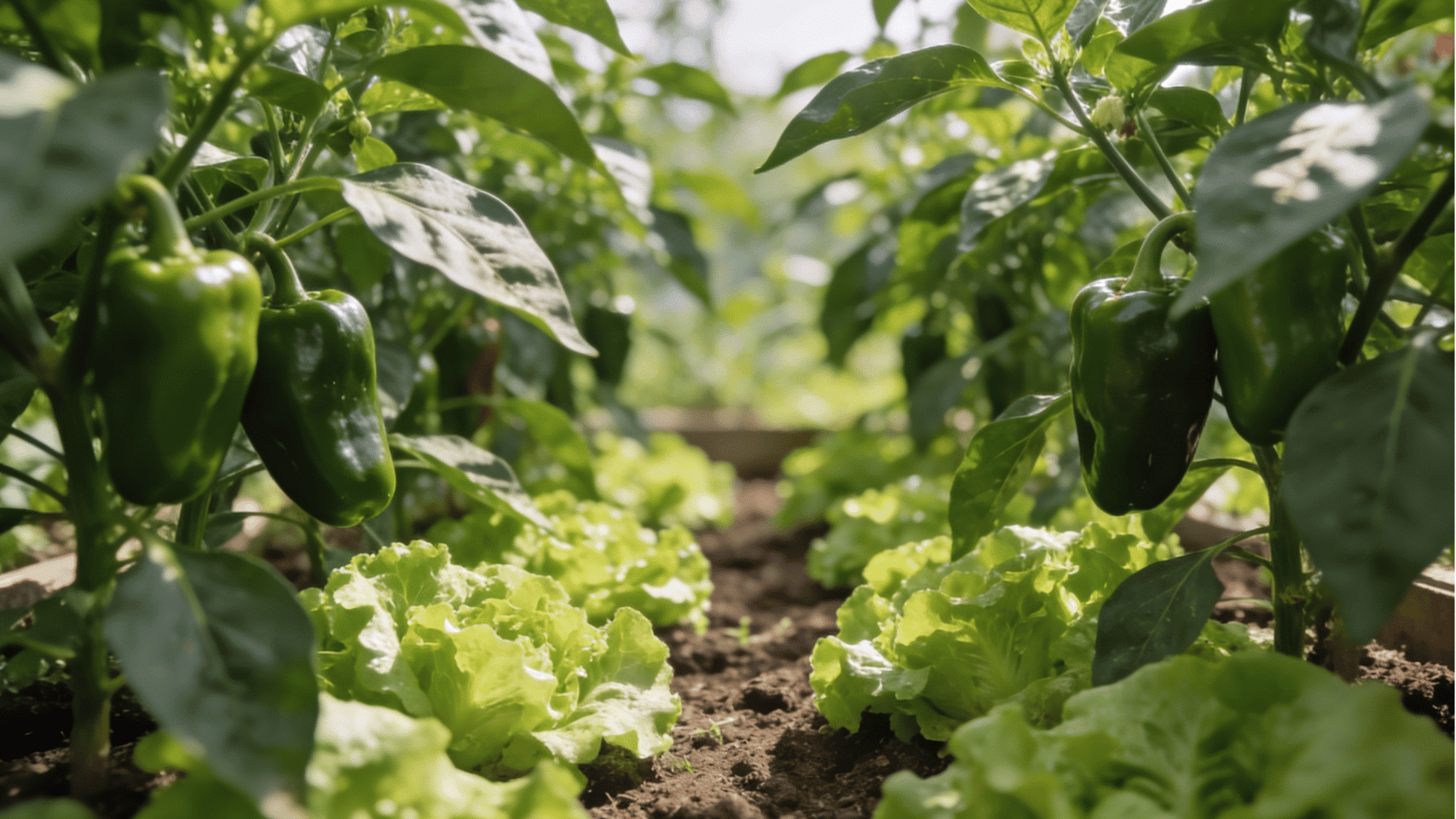
Lettuce works well in the space around pepper plants, especially as they begin to grow taller. It tolerates partial shade and helps keep the soil surface cool and moist.
Since lettuce grows quickly, you can harvest it early, freeing up space when peppers need more room. Its shallow roots ensure it does not compete heavily for nutrients.
What to Keep in Mind:
- Harvest before peak summer heat – bolted lettuce attracts slugs and pests.
- Slugs are a shared risk with spinach – use a physical barrier if they are a known issue.
13. Onions
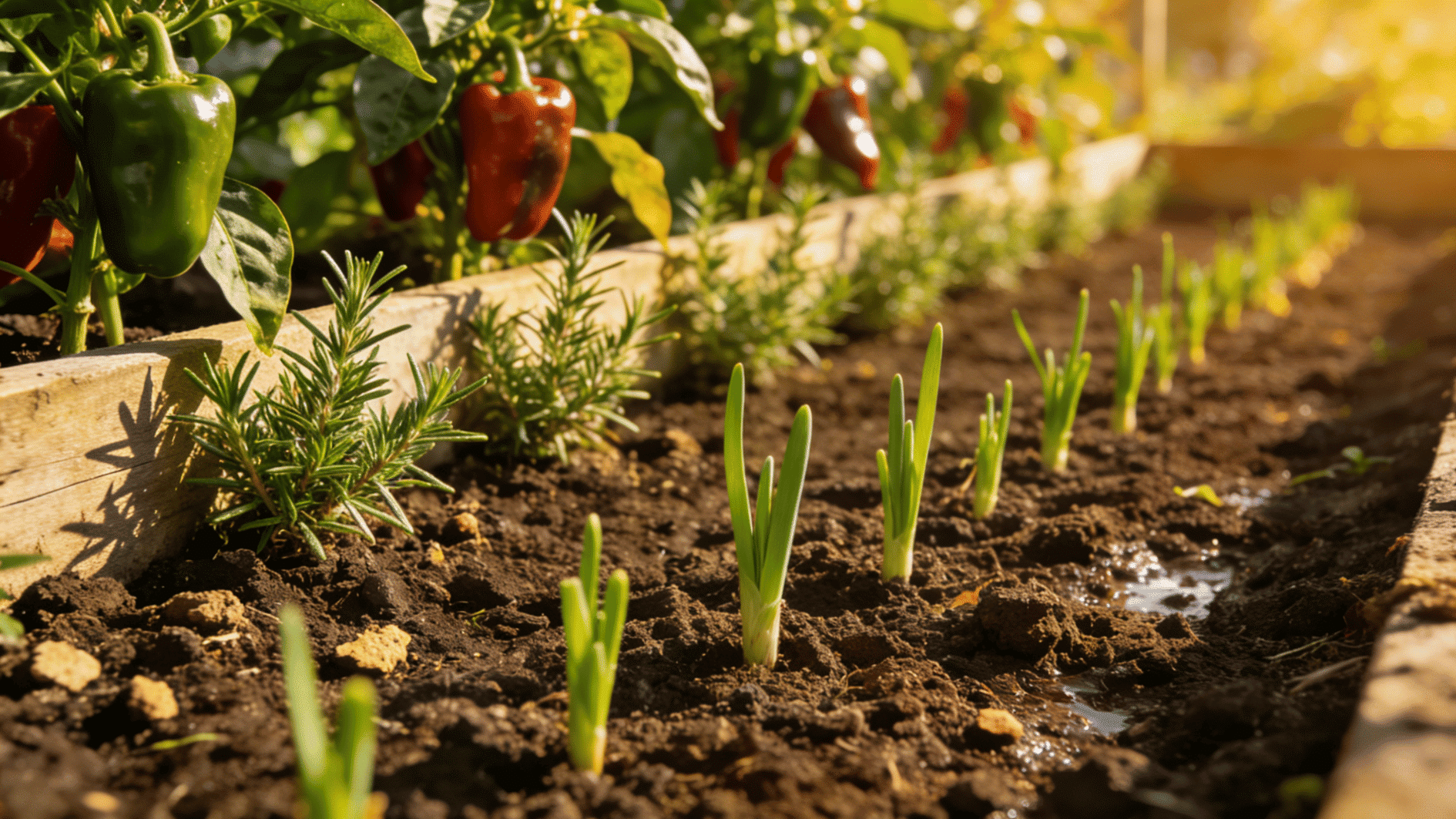
Onions are a practical companion due to the compounds they release, which help reduce pest activity.
They grow upright and require very little space, making them easy to place between or around pepper plants.
Their presence helps create a less inviting environment for insects while allowing peppers to grow without interference.
What to Keep in Mind:
- Bulbing types take 90–120 days – plan planting early so they are active when needed.
- Pest deterrence is weaker than garlic – combine with stronger companions for better results.
14. Garlic
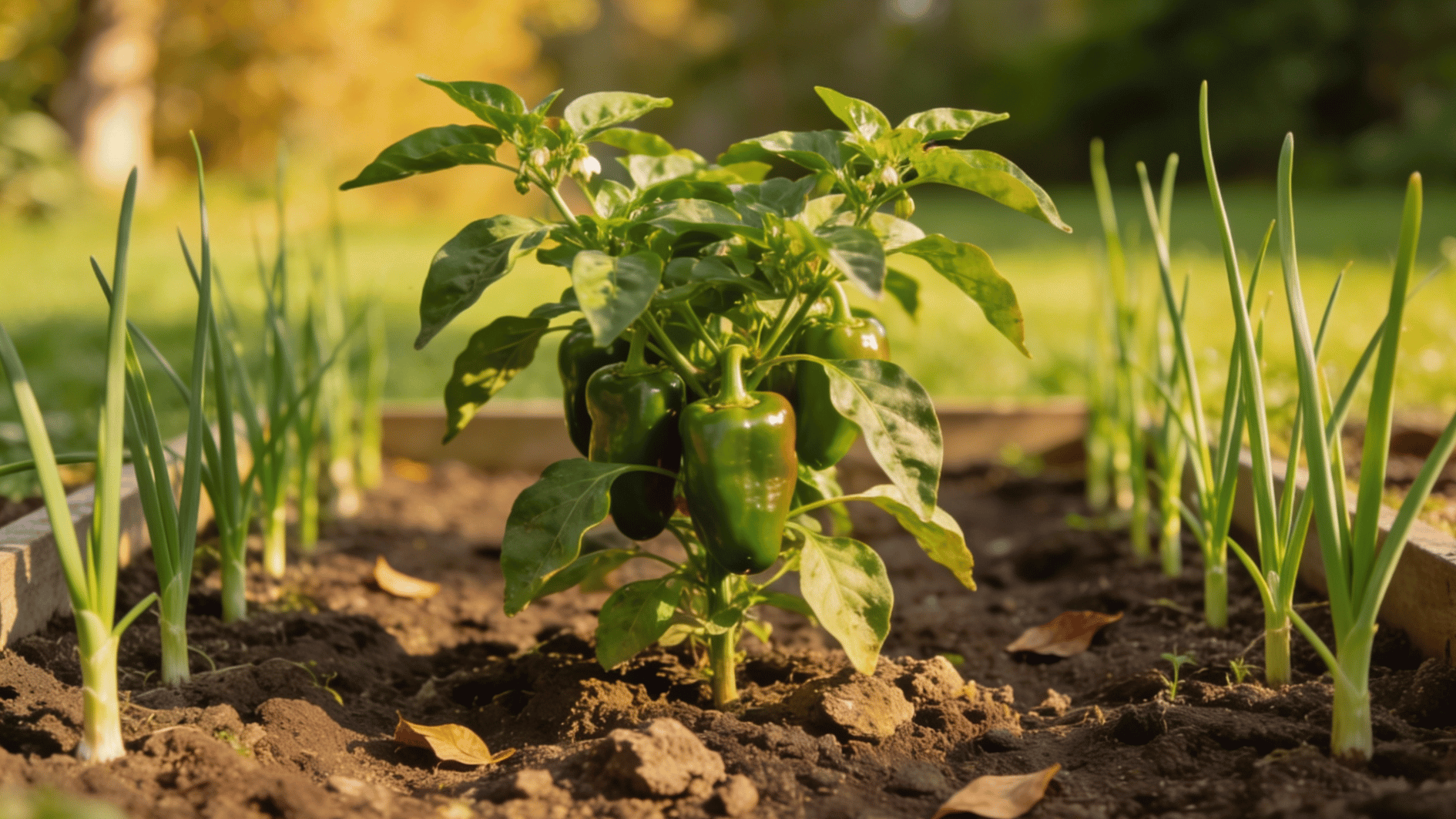
Garlic is a strong natural pest deterrent that works well alongside peppers. Its compounds help reduce insect activity and can also support healthier soil conditions.
It can be planted around the edges of your pepper bed to create a simple protective barrier. Garlic grows without competing for space or nutrients, making it a low-maintenance companion.
What to Keep in Mind:
- Plant in fall for best results – spring-planted garlic produces weaker bulbs and a weaker effect.
- Space cloves at least 4–6 inches apart to avoid moisture competition in dry periods.
15. Corn
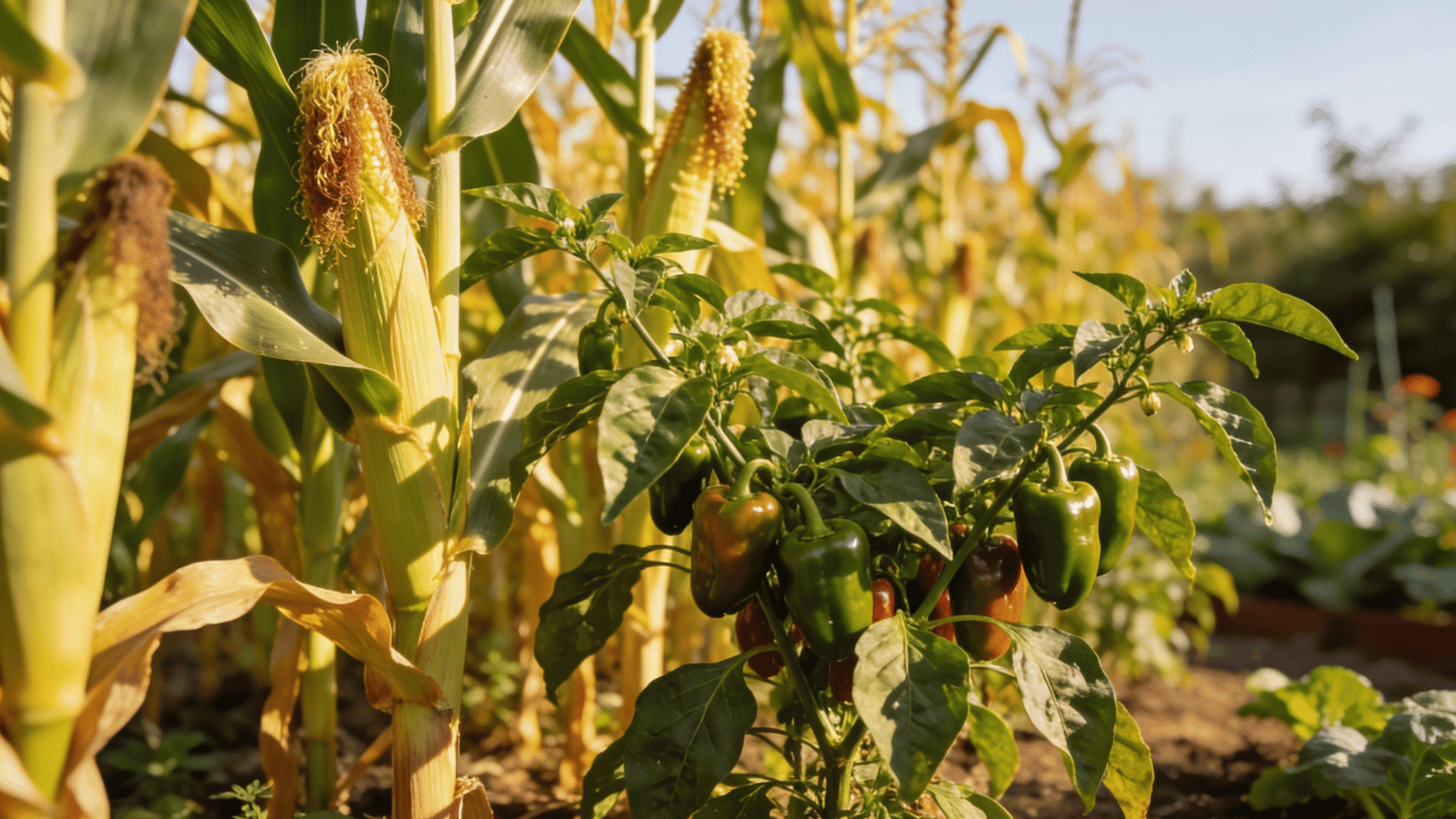
Corn can support pepper plants in larger gardens by acting as a wind barrier. Its tall structure helps protect peppers from strong winds that may damage stems or affect growth.
Proper spacing is important so it does not block sunlight. When placed correctly, corn can improve growing conditions without interfering with pepper development.
What to Keep in Mind:
- Only practical in large garden setups – too disruptive in small or raised beds.
- Position on the north side of the bed and keep at least 18–24 inches away to avoid shading peppers.
16. Tomatoes (With Caution)
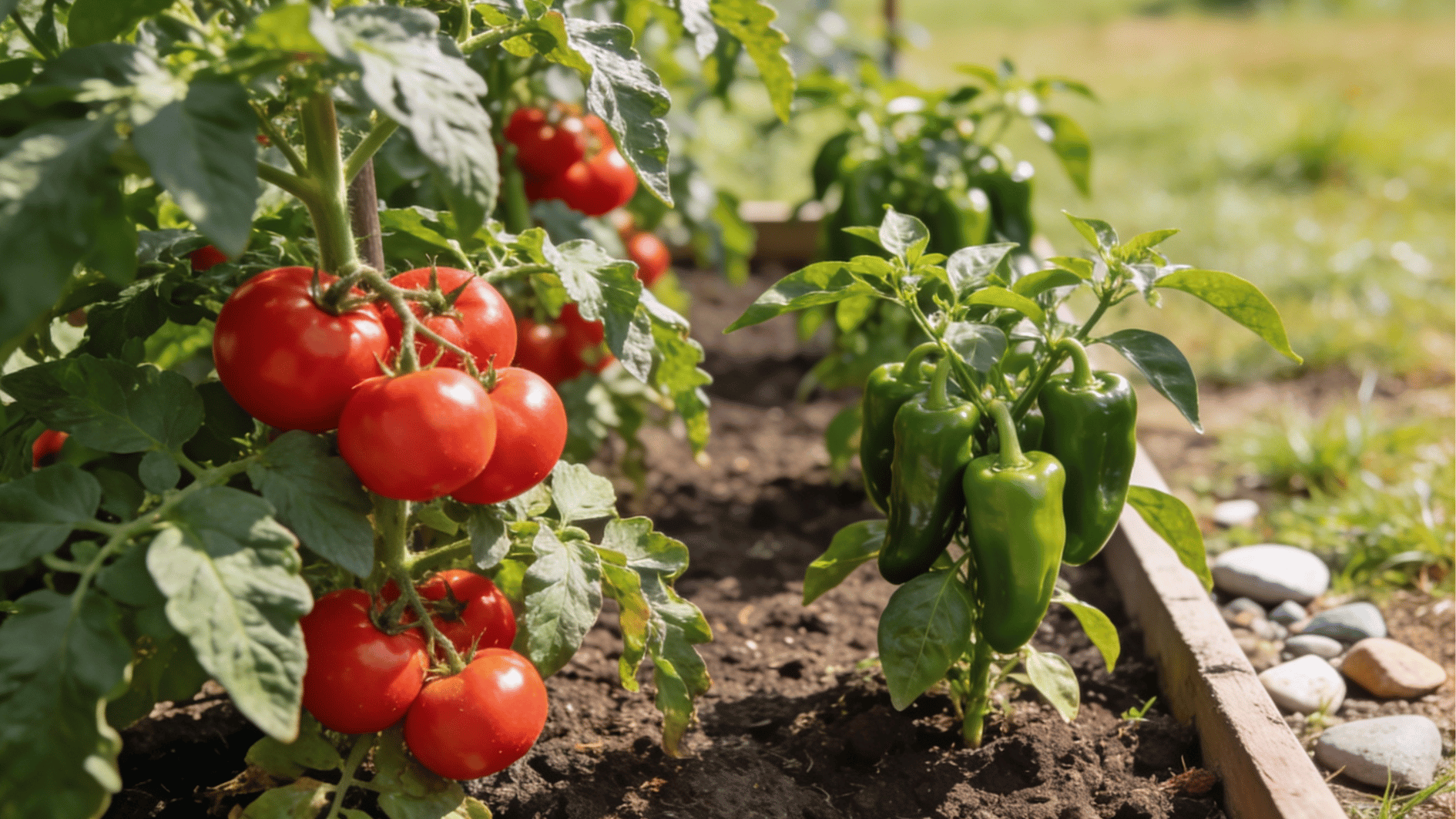
Tomatoes share many of the same growing needs as peppers, making them easy to manage in the same garden. However, both plants are prone to similar diseases, so planting them too close can increase risks.
Keeping proper spacing and rotating crops regularly helps reduce potential issues while still allowing you to grow them in nearby areas.
What to Keep in Mind:
- Never grow them in the same soil two seasons in a row – rotation is essential.
- Remove infected foliage immediately to slow any spread between the two crops.
17. Rosemary
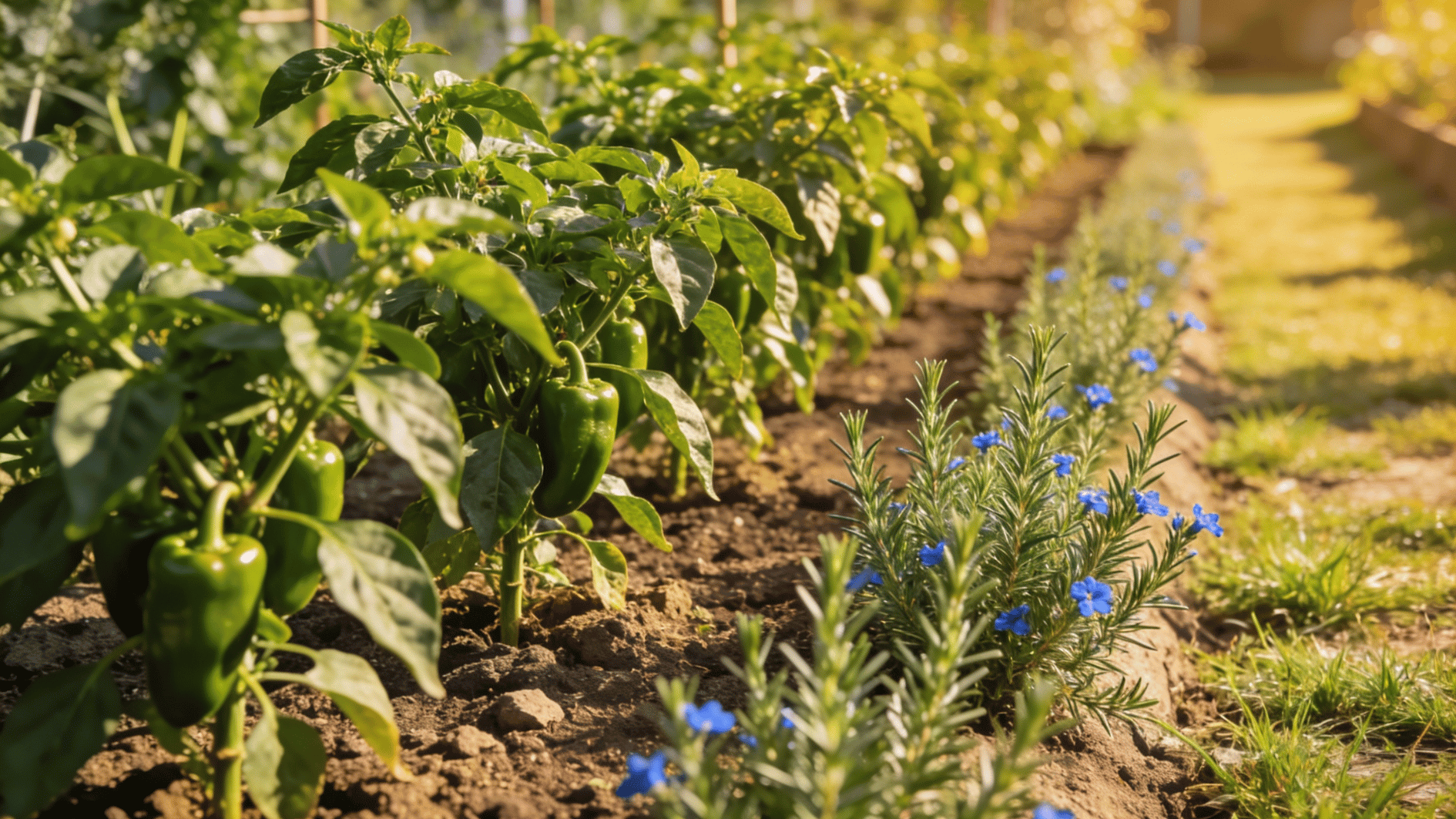
Rosemary works well as a permanent border plant around pepper beds. Its strong scent deters aphids, bean beetles, and cabbage moths without taking up significant ground space.
It thrives in full sun and well-drained soil – conditions that align closely with what peppers need.
What to Keep in Mind:
- Grows slowly but becomes quite large – give it adequate space from the start
- Do not overwater near peppers; rosemary in consistently moist soil will decline quickly
18. Thyme
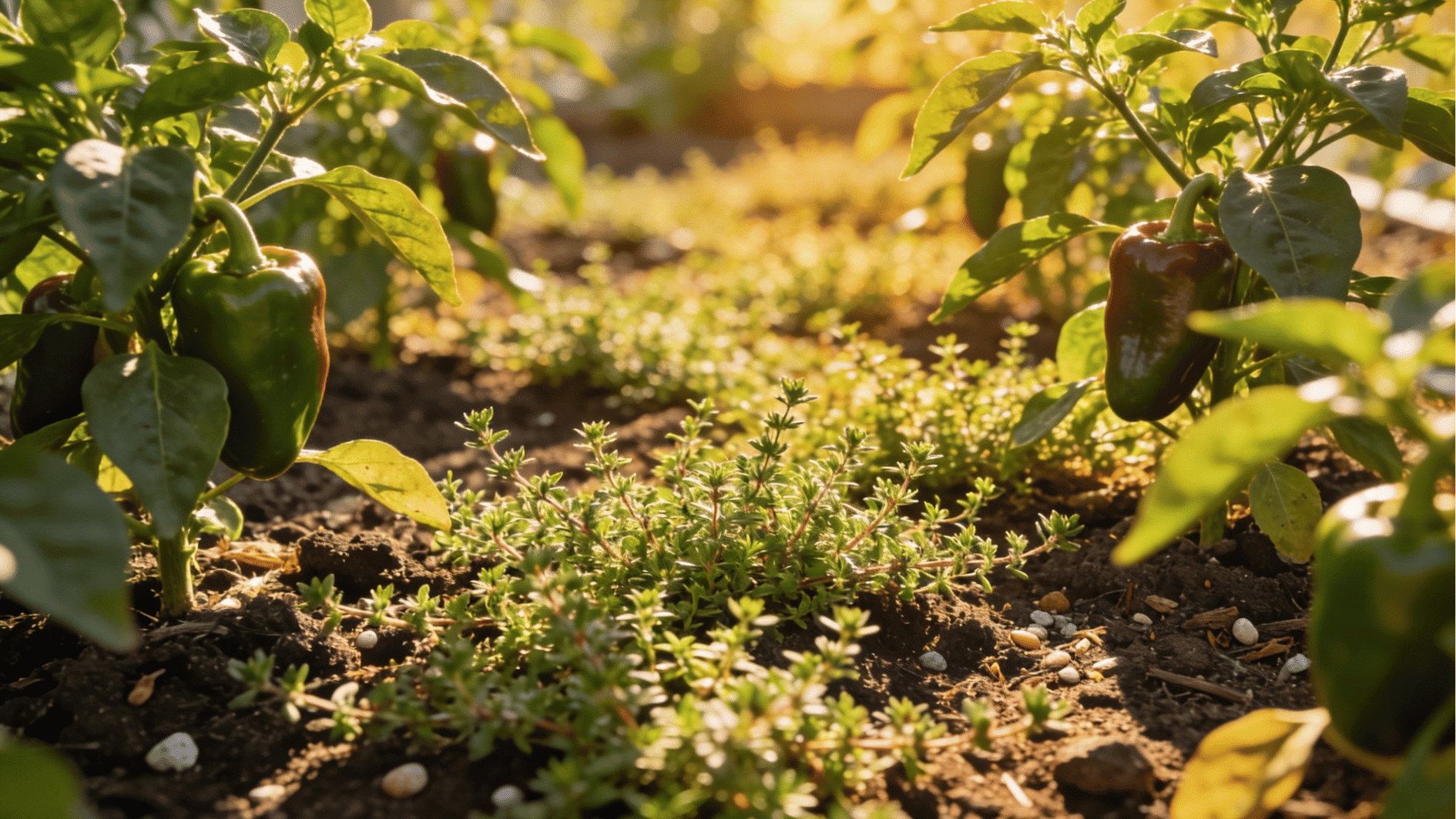
Thyme spreads across the soil surface, functioning as both a ground cover and a pest deterrent. Its aromatic oils repel whiteflies, cabbage worms, and aphids while keeping soil cool and moist.
It is drought-tolerant and compact enough to tuck between pepper plants without competing for light or root space.
What to Keep in Mind
- Trim flower buds regularly – it loses pest-deterring potency once it flowers
- Replant or divide every 2–3 years as older plants become woody and less effective
19. Sage
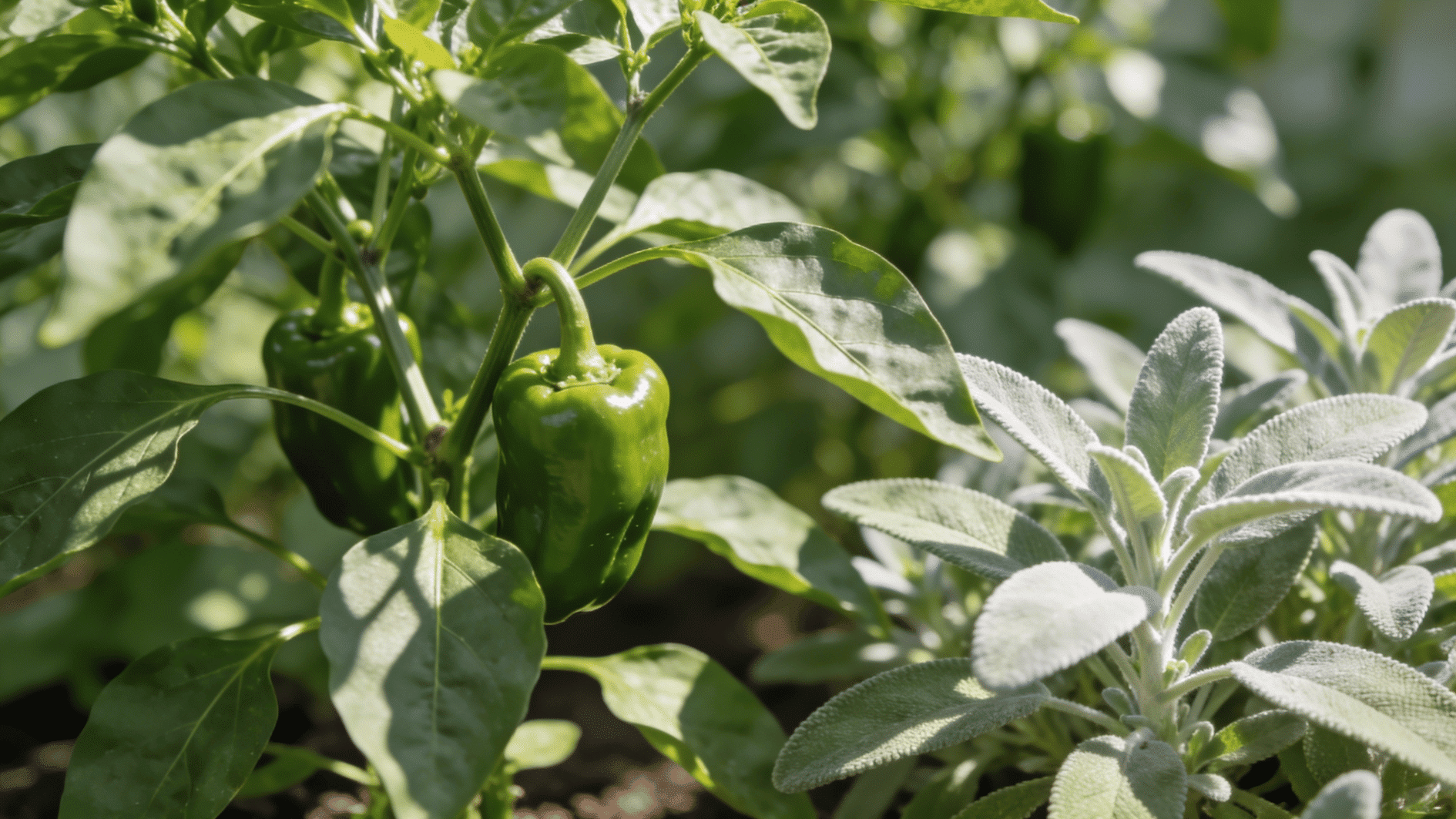
Sage repels flea beetles, aphids, and spider mites – pests that commonly damage peppers early in the season. It stays low and does not block sunlight from reaching your pepper plants.
Once established, it is drought-tolerant and requires very little maintenance through the growing season.
What to Keep in Mind
- Do not plant near cucumbers or onions – sage inhibits their growth.
- Plan your bed layout carefully if those crops are anywhere nearby.
20. Marjoram

Marjoram has a compact growth habit and attracts hoverflies and predatory wasps that reduce pest populations around peppers. It grows in similar conditions to peppers and does not compete for nutrients.
It grows in similar soil and sun conditions as peppers and does not compete for nutrients or moisture.
What to Keep in Mind
- Often confused with oregano at nurseries – check the label before purchasing.
- The two have different growth habits and companion benefits, so the distinction matters.
21. Lavender
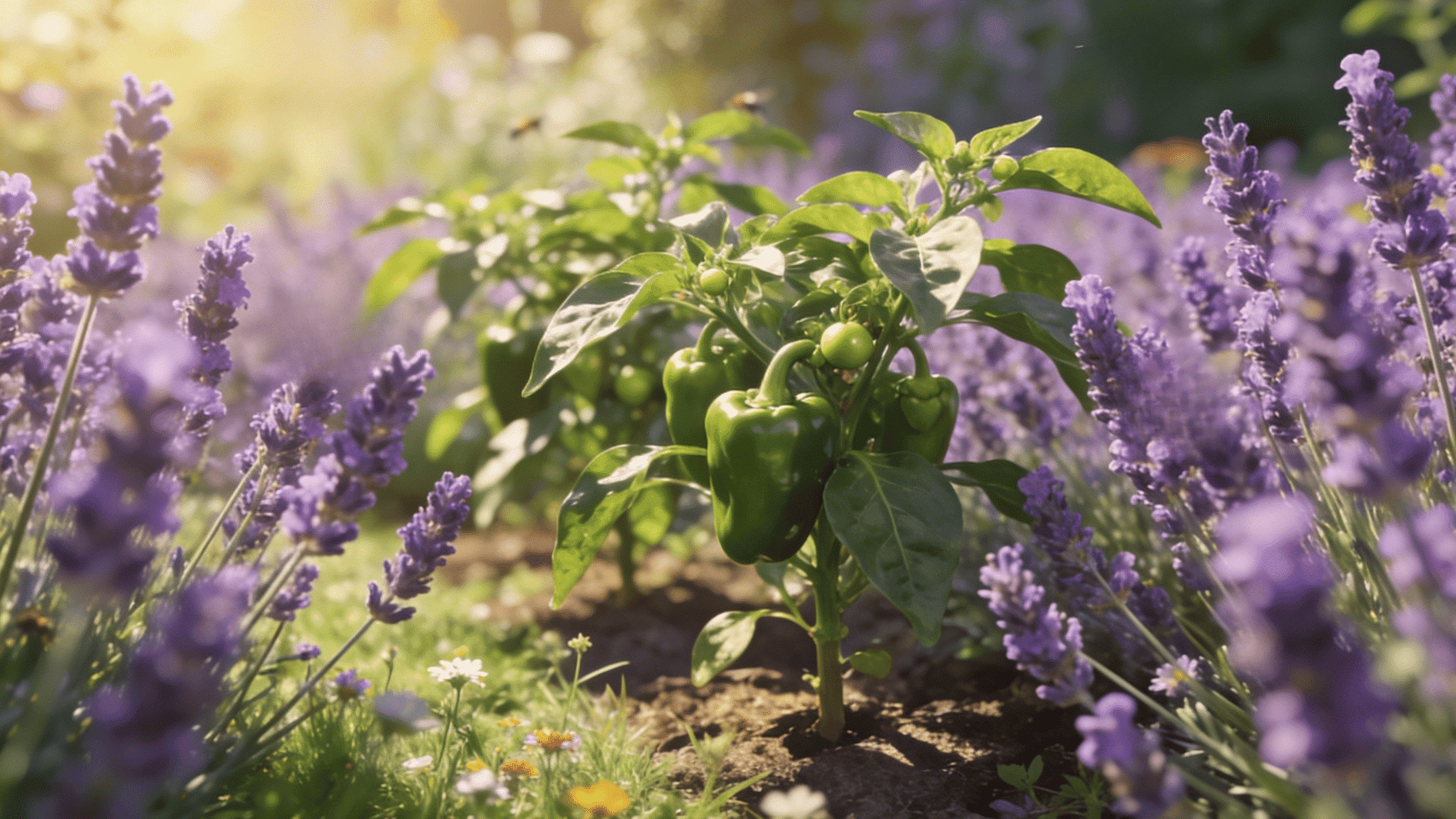
Lavender repels aphids, whiteflies, and certain moths when planted along the outer edge of a pepper bed. Its flowers attract bees during the critical pepper flowering stage.
It is perennial in most temperate climates, so it comes back each year without replanting.
What to Keep in Mind
- Requires well-drained, slightly alkaline soil – it will fail in heavy or acidic conditions
- In humid climates, ensure good air circulation to prevent root rot
Plants You Should Never Grow Near Peppers
Knowing what not to plant next to peppers is just as important as knowing what works. These plants will actively set your pepper crop back, and some can cause real damage.
| Plant | Why to Avoid | Impact on Pepper Plants |
|---|---|---|
|
Fennel |
Releases allelopathic compounds from roots | Inhibits growth and affects nearby plants |
|
Brassicas |
Heavy nutrient feeders attract pests | Compete for nitrogen and bring caterpillars |
|
Kohlrabi |
Competes for nutrients; possible chemical effects | Can slow or reduce pepper growth |
|
Pole Beans |
Attract bean beetles; compete for space | Increases pest risk and reduces resources |
|
Apricot Trees |
Release compounds harmful to solanaceous plants | Toxic to peppers within the root zone |
How to Set Up Companion Planting in Your Pepper Garden
Having the right companion plants is important, but the way you arrange them matters just as much.
A well-planned garden layout can help improve airflow, reduce pests, retain moisture, and support stronger pepper growth throughout the season.
- Plant Pest-Repelling Flowers Around the Edges: Add marigolds, petunias, or chives around the garden border to help keep common pests away from pepper plants.
- Space Herbs Carefully Between Peppers: Grow basil and parsley near peppers while leaving enough space to prevent overcrowding and poor airflow.
- Use Low-Growing Plants as Ground Cover: Plant lettuce or spinach beneath peppers to help shade the soil and hold moisture longer.
- Start Fast-Growing Companions Early: Plant quick-growing companions first so they become established before pepper plants spread out.
- Rotate Crops Each Growing Season: Change planting locations yearly to help reduce soil diseases and prevent pest buildup naturally.
Conclusion
Companion planting gives your peppers a stronger foundation without adding complexity to your routine. The right plant combinations handle pest control, soil health, and space efficiency – all at once.
Start with a few high-impact choices: marigolds along the border, basil between your plants, and garlic around the edges.
Keep the bad companions away, rotate your beds every season, and refer back to this list each time you plan a new grow. Small, intentional choices at planting time lead to a noticeably healthier pepper harvest.