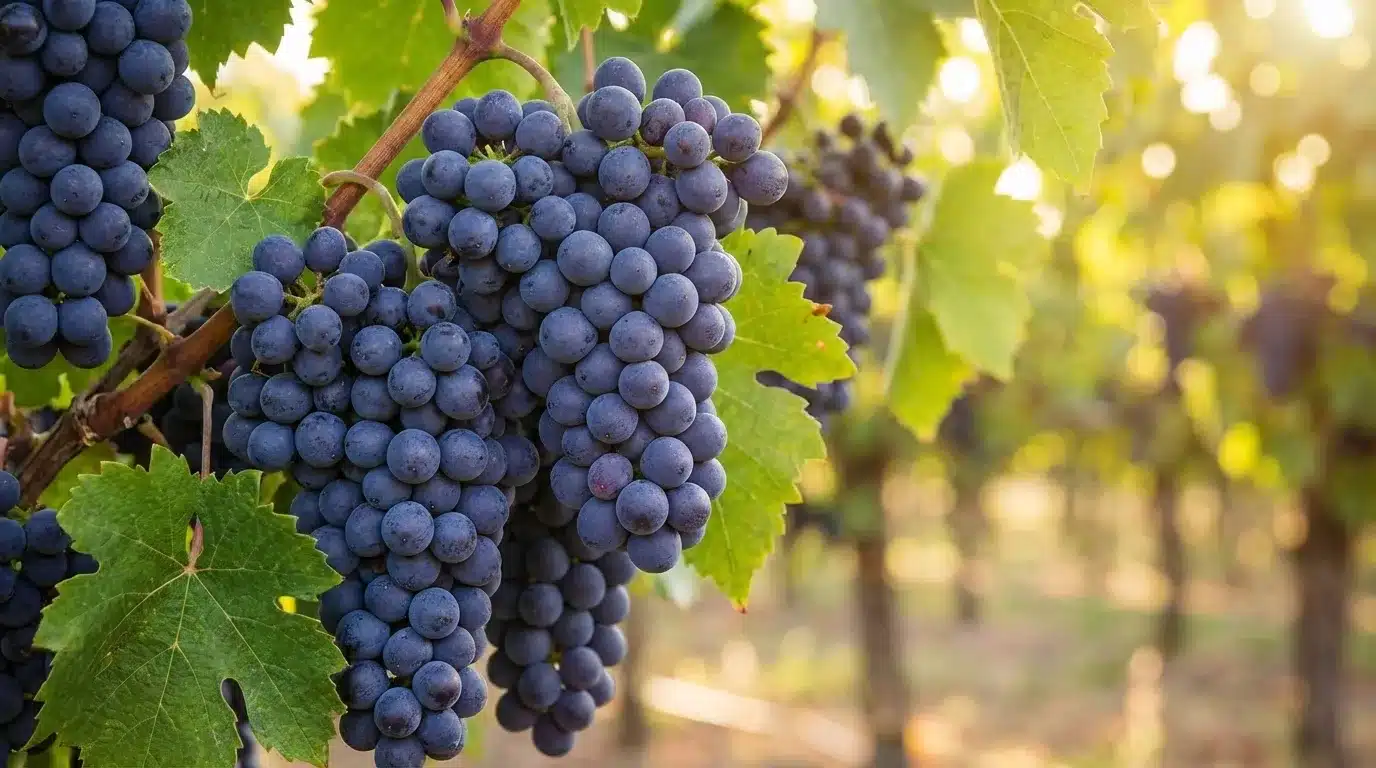
You can grow fresh grapes in your backyard, and one vine can feed your family for over 30 years. Most first-time growers struggle because they skip two things: picking the right variety and setting up a trellis first.
This guide covers how to plant grapes the right way, step by step. You will learn what type suits your climate, how to prepare your soil, and how to care for your vines each season.
You will also learn how to avoid common mistakes that slow growth or reduce fruit quality. With the right setup, your vine can start producing sooner than you expect.
A little planning at the start makes a huge difference in long-term yield. Let’s get started.
Essential Grape-Growing Facts
Before you buy a vine or dig a hole, it helps to know the basics at a glance. Here is everything you need to know upfront.
| Detail | Info |
|---|---|
| Best time to plant | Early spring, after the last frost |
| Sun needed | Full sun, 7 to 8 hours daily |
| Soil pH | 5.5 to 6.5 |
| Vine spacing | 6 to 8 feet apart |
| Muscadine spacing | 10 to 20 feet apart |
| Trellis required | Yes, install before planting |
| First fruit | Year 3 to 4 after planting |
| Root depth | 36 inches or more |
| USDA Growing Zones | 4 to 10 |
| Frost-free days needed | 155 to 160 minimum |
Types of Grapes You Can Grow at Home
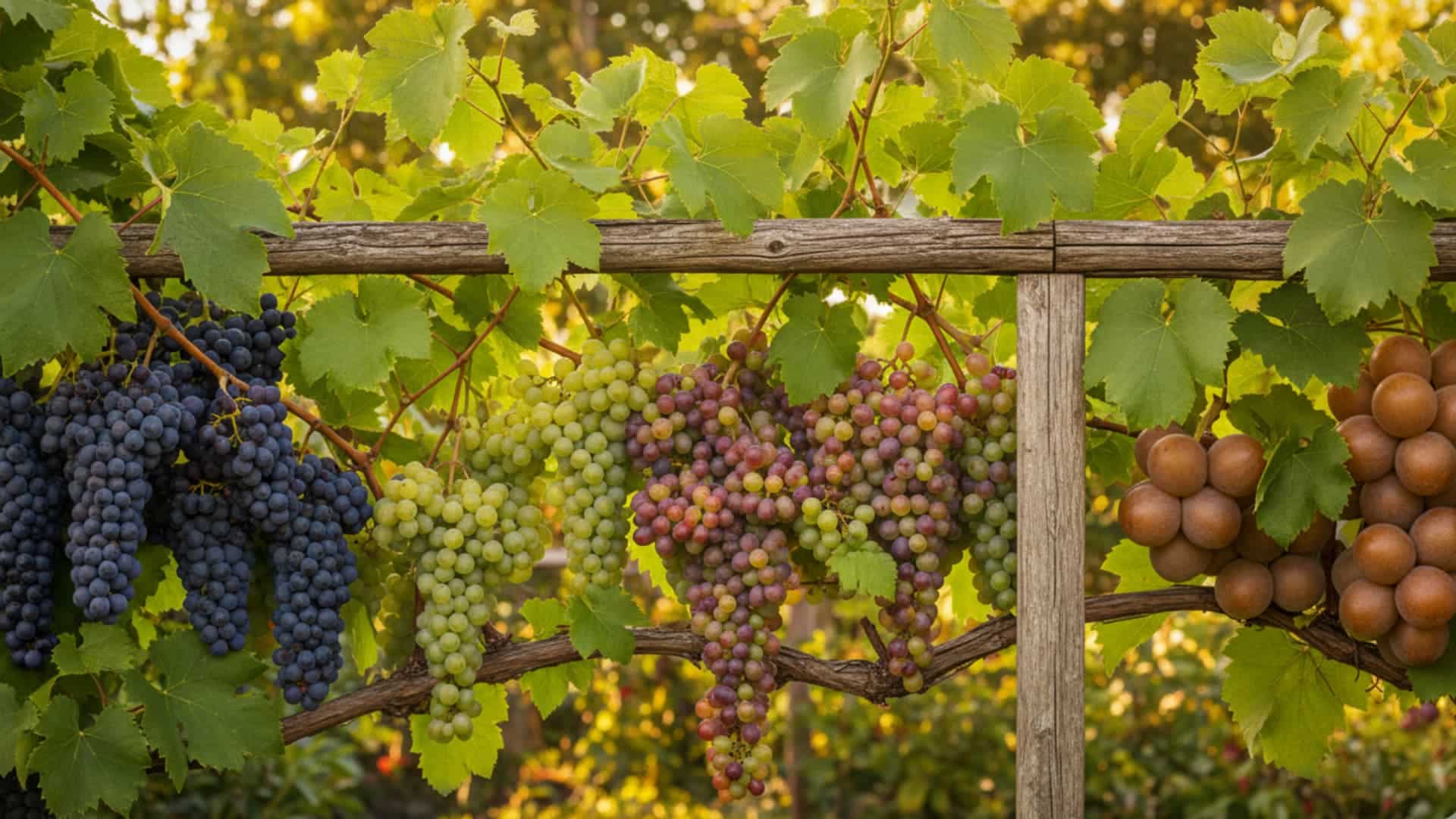
Not all grape varieties work the same way in every backyard. Picking the right type is the most important decision you will make before planting.
American Grapes(Vitis labrusca): The most cold-hardy type, suited for USDA zones 4 to 7. Best for table eating, juice, and jelly. Common picks: Concord, Niagara, Catawba.
European Grapes(Vitis vinifera): These prefer a warm, dry, Mediterranean-style climate and are better suited for winemaking than the table. Common picks: Cabernet Sauvignon, Chardonnay, Thompson Seedless.
Hybrid Grapes: Tend to be cold-hardy and disease-resistant, though not as flavorful as European varieties. A solid middle-ground choice for most US climates.
Muscadine Grapes(Vitis rotundifolia): They are best suited for hot, humid climates and Southern gardens. Their thick skin makes them best for jams, wine, or other processed grape products.
Seedless vs. Seeded: Most home growers prefer seedless for fresh eating. Keep in mind that seedless varieties generally do not do well in northern climates and may need winter protection.
What Month Do You Plant Grapes?
Plant grapevines in early spring, after the date of the last hard freeze has passed. Vines are usually purchased as dormant, bare-root plants at this time.
Fall planting is also possible, but it should happen at least six weeks before the first frost so roots can develop. Roots will continue to grow as long as the ground does not freeze.
For most home gardeners across the US, early spring remains the safest window.
How to Plant and Grow Grapes in Easy Steps
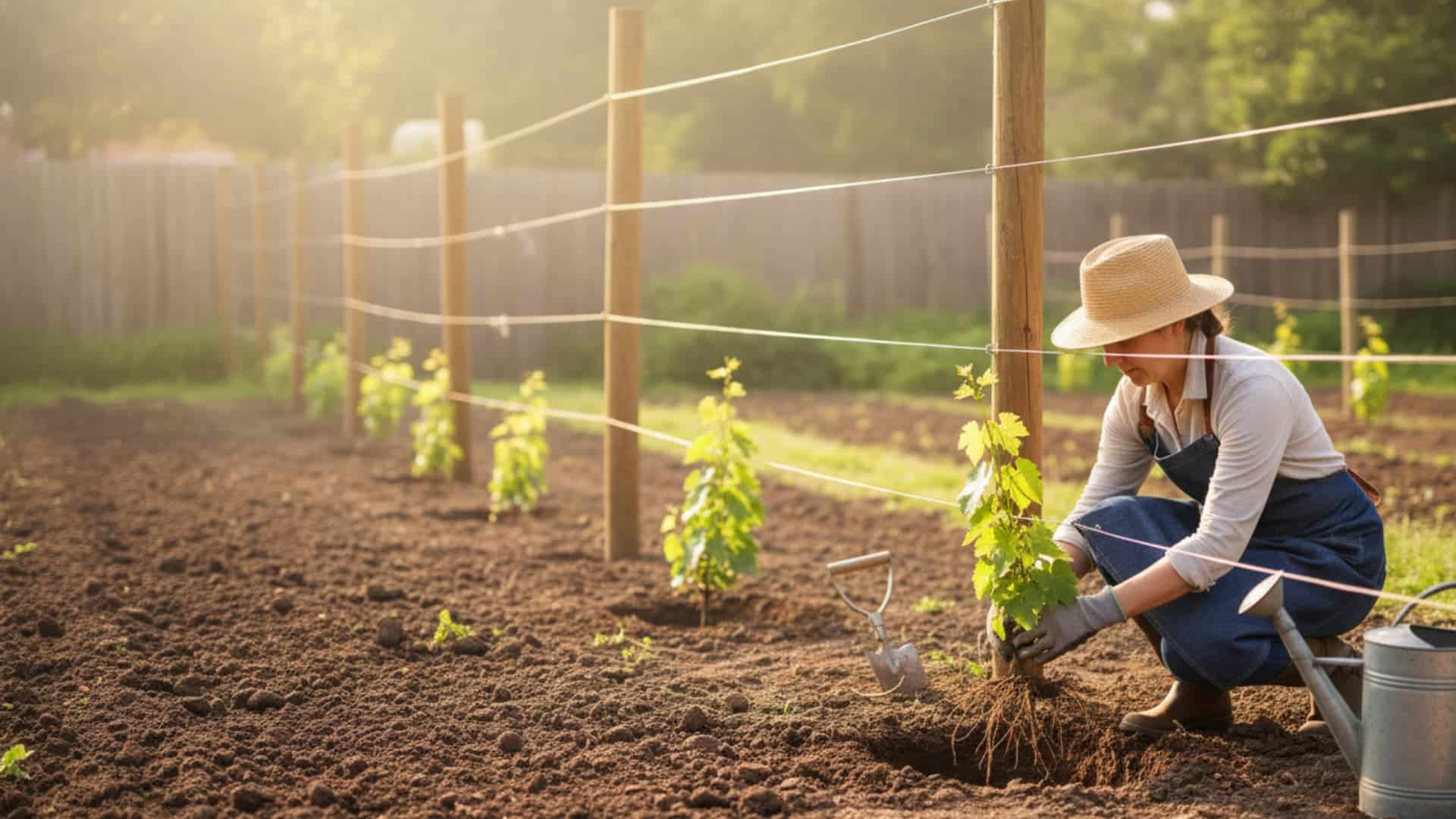
Growing grapes at home takes patience, but the process is straightforward when broken into clear steps. Follow these five steps and your vines will have everything they need from day one.
Step 1: Pick the Right Spot
Choosing the right location is the foundation of a healthy grapevine.
- Plant in full sun to provide the heat needed to ripen the fruit. Each vine needs about 6 feet of space.
- Sites with early morning sun allow foliage to dry more quickly, which reduces disease problems.
- Grapes do well on a slope; it keeps air moving and stops frost from settling. A slope facing east or southeast works well. North-south rows give the most sun exposure.
- Avoid low spots where cold air collects overnight. Good airflow matters as much as sunlight.
Step 2: Prepare Your Soil
Good soil prep before planting saves you years of problems later.
- Soil must drain well and should have a pH in the range of 5.5 to 6.5.
- Test your soil several weeks before planting. Grapevines need high potassium levels.
- If planting in heavy clay soil, amend it with compost. Getting the soil pH right is more important than soil texture alone.
- Highly fertile soil is not recommended. If the soil is too rich, the vine grows fast but produces poor fruit.
- Do not mulch right after planting. Mulch keeps the soil too cool, and grapevines grow best in warmer soil.
Pro Tip: Keep herbicides that contain 2,4-D away from your grape area. Grapes are extremely sensitive to it, enough 2,4-D can drift up to a mile through the air and damage your crop.
Step 3: Set Up Your Trellis Before You Plant
Most home gardeners plant first and figure out support later. That is a mistake.
- Do not plant grapes first and wonder about trellising later. Grapes need a trellis to grow on from day one.
- A standard trellis is 5 to 6 feet tall. Use posts that are 7 to 8 feet long, set 2 feet into the ground, spaced 20 feet apart.
- The support must be in place at planting. A sturdy trellis or arbor both work well.
- Trellising is the first line of defense against pests and improves airflow for better overall plant health.
Step 4: Plant Your Grapevines Correctly
This is the core of how to plant grapes, and the steps matter. Space most bunch grapes 6 to 8 feet apart. Leave at least 8 feet between rows. Muscadines need 10 to 20 feet of space.
Planting steps:
- Before planting, soak the roots in water for 2 to 3 hours.
- Cut off any long or broken roots so the remaining roots spread evenly in the hole.
- Dig a hole 12 inches deep and 12 inches wide. Fill with 4 inches of topsoil.
- Plant vines with the lowest bud on the cane 2 to 3 inches above the soil surface.
- Cover the roots with 6 inches of soil and tamp down. Fill the rest, tamp again, and water well.
Step 5: Water, Feed, and Care for Young Vines
The first two years are all about building strong roots, not growing fruit.
- Watering: Young grapes need about half an inch to 1 inch of water per week during the growing season. Apply water only to the root zone. Getting foliage wet encourages disease.
- Feeding: Young vines may not need any fertilizer for the first 2 to 3 years. If needed, apply a small amount of 10-10-10 fertilizer about 2 to 3 weeks after planting, kept at least 1 foot from the base.
- Weeding: Keep the ground under the vines clear of other plants throughout the growing season.
- Year 3 onward: Start a regular fertilization routine using a balanced organic fertilizer each February and May.
How to Prune Grapevines
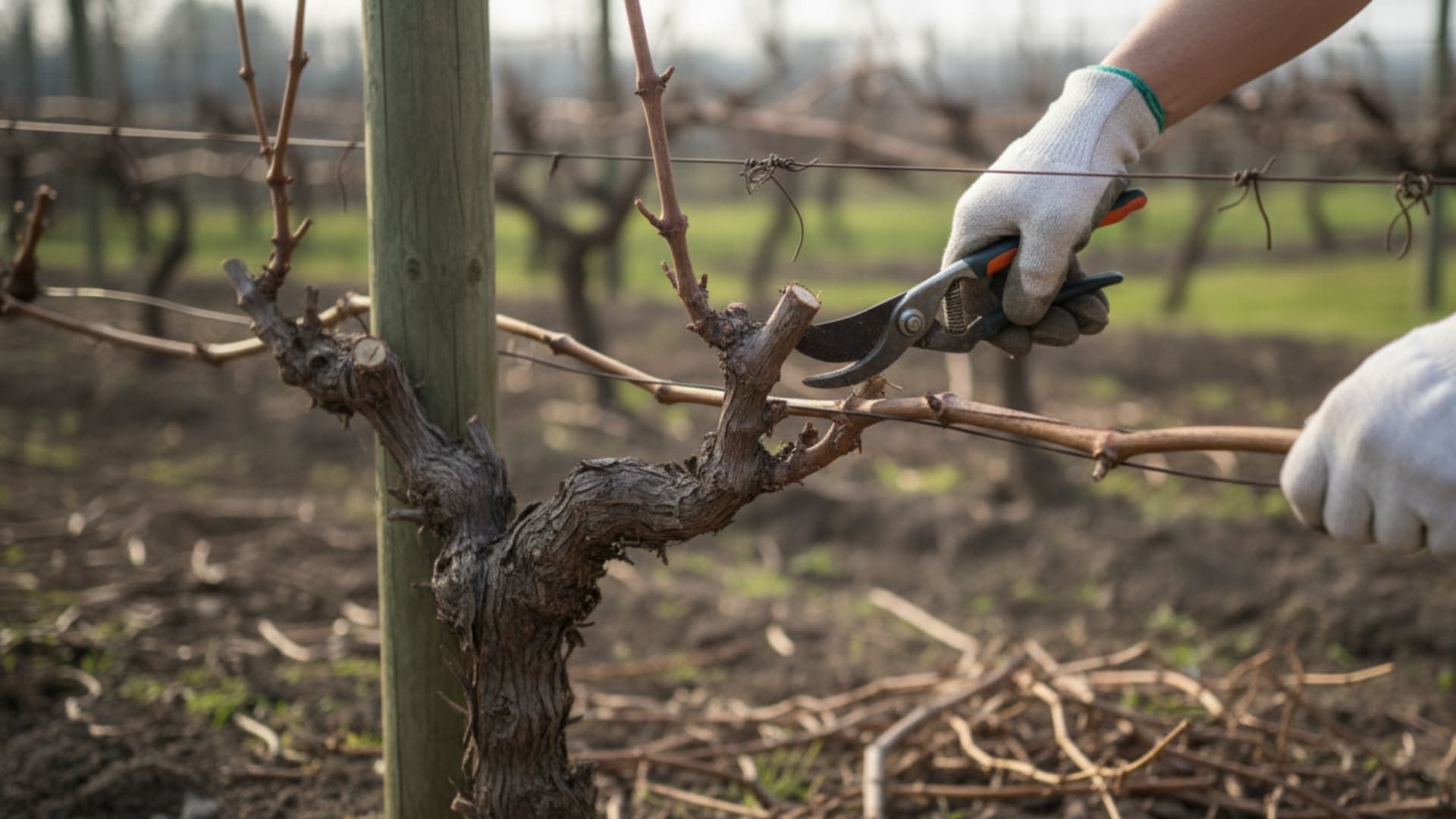
Pruning is the step most home growers get wrong, and it directly affects how much fruit you get. Here is what you need to know before you pick up your shears.
- Annual pruning is critical. In an average vineyard, 80 to 90 percent of new growth is pruned off each winter because grapes are produced on new shoots, not old branches.
- The most common mistake is not pruning hard enough. Once a vine is fully established, you cut off more than you leave behind.
- Skipping hard pruning leads to fewer flower buds and smaller fruit and can even cause vines to skip a year between harvests.
- When to prune: Prune in spring before leaves emerge.
- What to keep: One to two main trunks, two to four woody arms, and bud-containing spurs for next season’s growth.
- Do not allow more than two flower clusters per shoot to develop.
Common Pests and Diseases to Watch For
Grapevines face a handful of recurring threats. Catching problems early keeps your vines healthy and your harvest full. Here is a quick reference for the most common issues.
| Pest or Disease | What It Does | How to Handle It |
|---|---|---|
| Japanese Beetles | Chew holes in leaves, leaving a lace-like pattern. Active from late June through August. | Check plants twice a week in the morning; knock beetles into soapy water |
| Black Rot | A widespread fungal disease that often reduces yields significantly. | Improve airflow; remove dead leaves and old berries regularly |
| Powdery/Downy Mildew | Common fungal issues that spread in humid conditions | Correct vine spacing, proper pruning, and fungicides when needed |
| Phylloxera | Aphid-like insect that damages roots | American table grapes are naturally resistant |
| Spotted Wing Drosophila | An invasive fruit fly that feeds on grapes and causes significant damage in large numbers | Report to your state agriculture department; monitor frequently |
Pro Tip: Cleaning up dead leaves and berries and keeping the ground under your vines clear reduces both disease and pest pressure throughout the season.
When Do Grapes Start Producing Fruit?
Expect your first real harvest in year 3 or 4, around late summer or early fall. It takes 4 to 5 years for a vine to fill the trellis and reach its full production level.
With proper care, a grapevine can produce fruit for 30 years or more. The first two years are for building roots and structure; resist the urge to rush for fruit. Good things take time, and grapes are worth the wait.
Summing It Up
Learning how to plant grapes is not complicated; it just requires doing things in the right order.
Choose a variety that fits your climate, pick a sunny spot with good drainage, set up your trellis before you plant, and prune without hesitation every year.
Your vine will reward that care with fruit for decades. With consistent care, each season brings stronger growth and better harvests.
Have you already picked your grape variety? Drop your questions in the comments; we would love to help you get started.
Frequently Asked Questions
Do You Need Two Grape Plants to Get Grapes?
No. Grapes are self-fruitful, meaning pollen from one plant is enough for fertilization and fruit growth. Having more than one vine can boost yields, but it is not required.
How Long Does It Take a Grape Plant to Bear Fruit?
Most vines produce their first real crop around year 3 after planting. Full production typically comes by years 4 to 5.
Do Grapevines Come Back Every Year?
Yes. Grapes are woody perennial vines, meaning they return each growing season from the same root system and live for many decades with proper care.
What Is the 12 Grape Rule?
The 12 grape rule is a New Year’s tradition, eating 12 grapes at midnight for good luck in the 12 months ahead. It is not related to grape growing, but it does remind us how deeply grapes are woven into culture around the world.