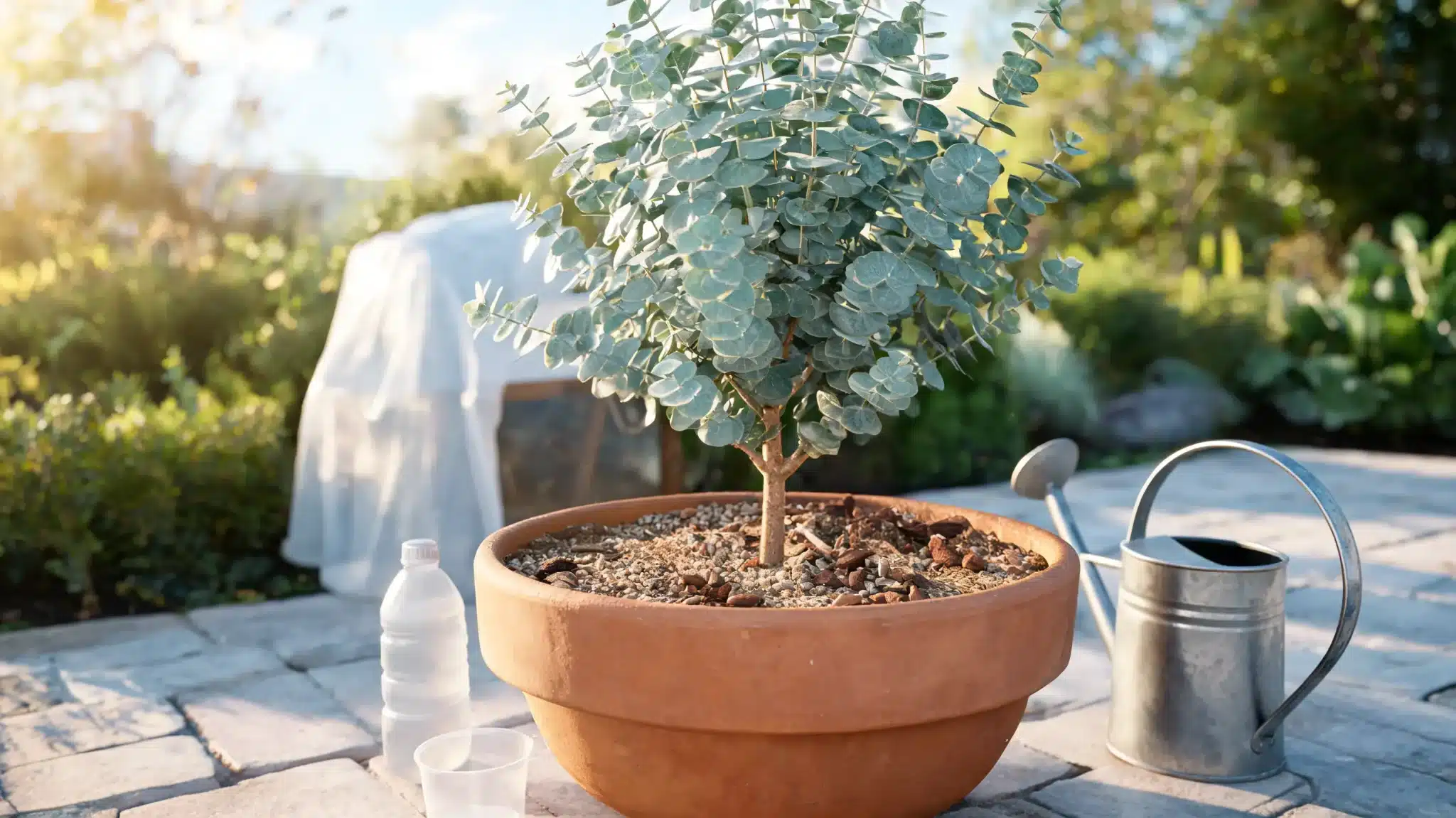
Eucalyptus can grow well in a pot when you choose a compact variety and give it enough sun, drainage, root space, and steady care. Learning how to grow eucalyptus successfully in a container starts with picking the right plant for the space you have.
The main challenge is managing its fast growth while keeping the soil from staying too wet and the roots from becoming cramped.
A poor setup can lead to weak growth, yellow leaves, or frequent repotting. The right variety, pot, soil mix, watering routine, and pruning schedule make container care much easier.
You’ll learn how to choose and plant eucalyptus, place the pot, water and feed it, control its size, repot it safely, and handle common problems so the plant stays healthy and manageable for years.
Why Gardeners Grow Eucalyptus in Containers
Small yards and patios rarely have room for a full-size tree, which is exactly why container gardening has made eucalyptus so popular with people who still want its look. Eucalyptus fits neatly alongside other small-space pot gardening options for anyone working with a compact patio or balcony.
The silvery foliage and rounded juvenile leaves bring color and texture to a deck or entryway that few other plants can match, and cut stems from a home-grown pot work well in arrangements.
A compact size also means the plant can move with the seasons, shifting toward stronger light in winter or into a sheltered corner during a storm. Because the pot can be moved, where to plant eucalyptus doesn’t have to be a one-time decision the way it would be in open ground.
Fragrant leaves add another layer of appeal, releasing a clean, herbal scent whenever they’re brushed or trimmed. None of this requires special skill; it simply asks for a setup suited to a plant that would rather be in the ground.
Choose the Right Eucalyptus Variety for a Container
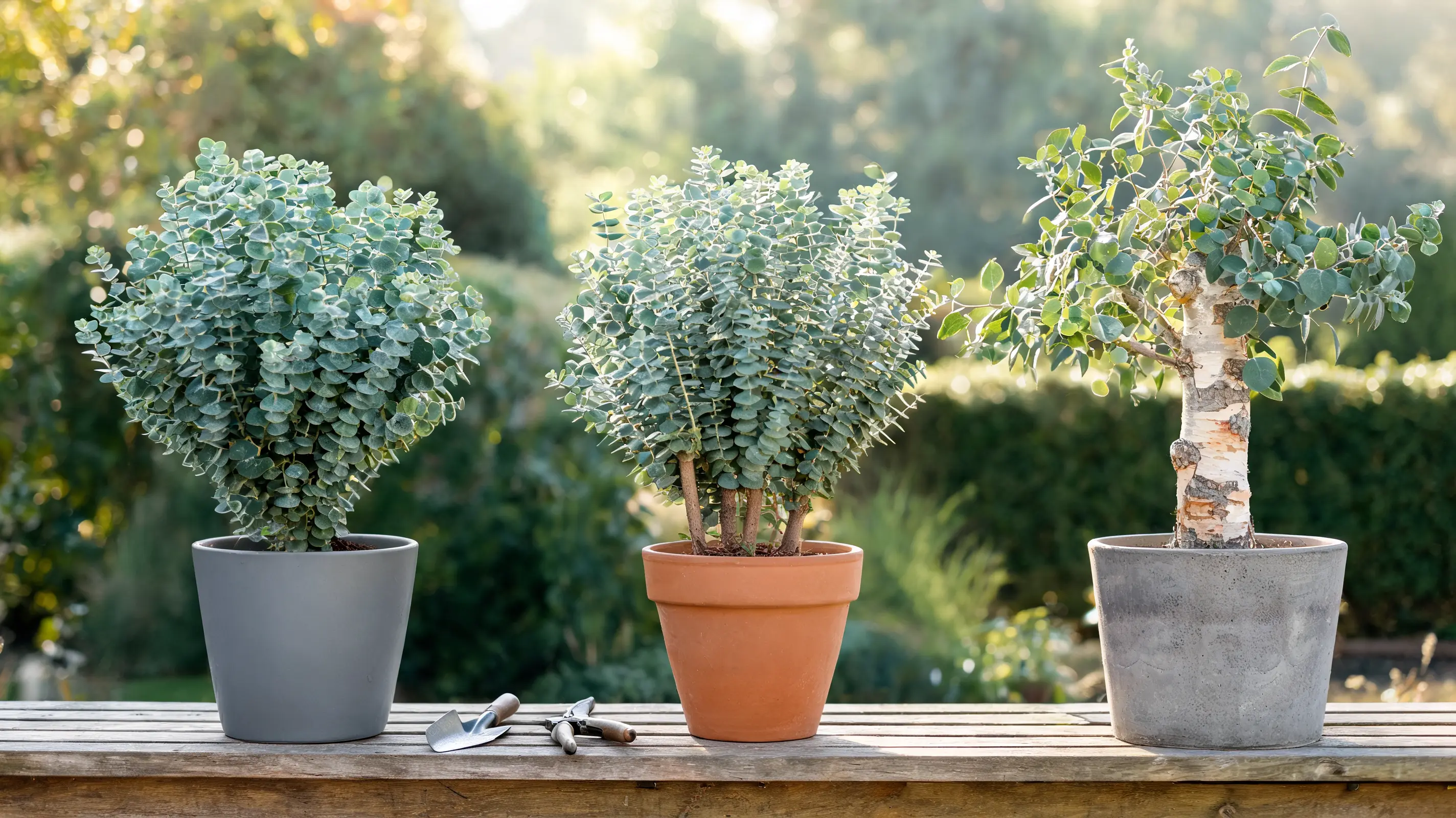
Not every eucalyptus behaves the same way once it’s boxed into a pot. Full-size varieties can add several meters a year, and no container gives roots room for that kind of growth. Compact and slow-growing varieties are the better fit.
Here are a few worth looking at for pots:
- Eucalyptus gunnii ‘Azura’: compact habit with small, round, blue-green leaves. Trains well as a bush or a single-stem standard.
- Eucalyptus archeri: grows a bit faster, but stays manageable as a multi-stem bush if pruned in late spring.
- Eucalyptus pauciflora (snow gum): slower growing and more compact than most, with attractive peeling bark as it matures.
Pick one of these, and sizing your pot correctly gets a lot easier. They stay in scale with a pot, respond well to pruning, and don’t need constant repotting to keep pace. Always check a variety’s mature height before you buy it.
That one number tells you almost everything about how much work the plant will need later on. Picking the right variety is really the first decision in how to grow eucalyptus successfully in a small space.
How to Grow Eucalyptus in a Pot: Step-by-Step
Once you’ve picked a variety, growing it well comes down to a handful of steps done in order. Get the container, soil, and planting right, and the rest of the care becomes routine. Skipping one is usually where potted eucalyptus problems start. Here’s the order that works best.
Step 1: Select a Large Well-Draining Pot
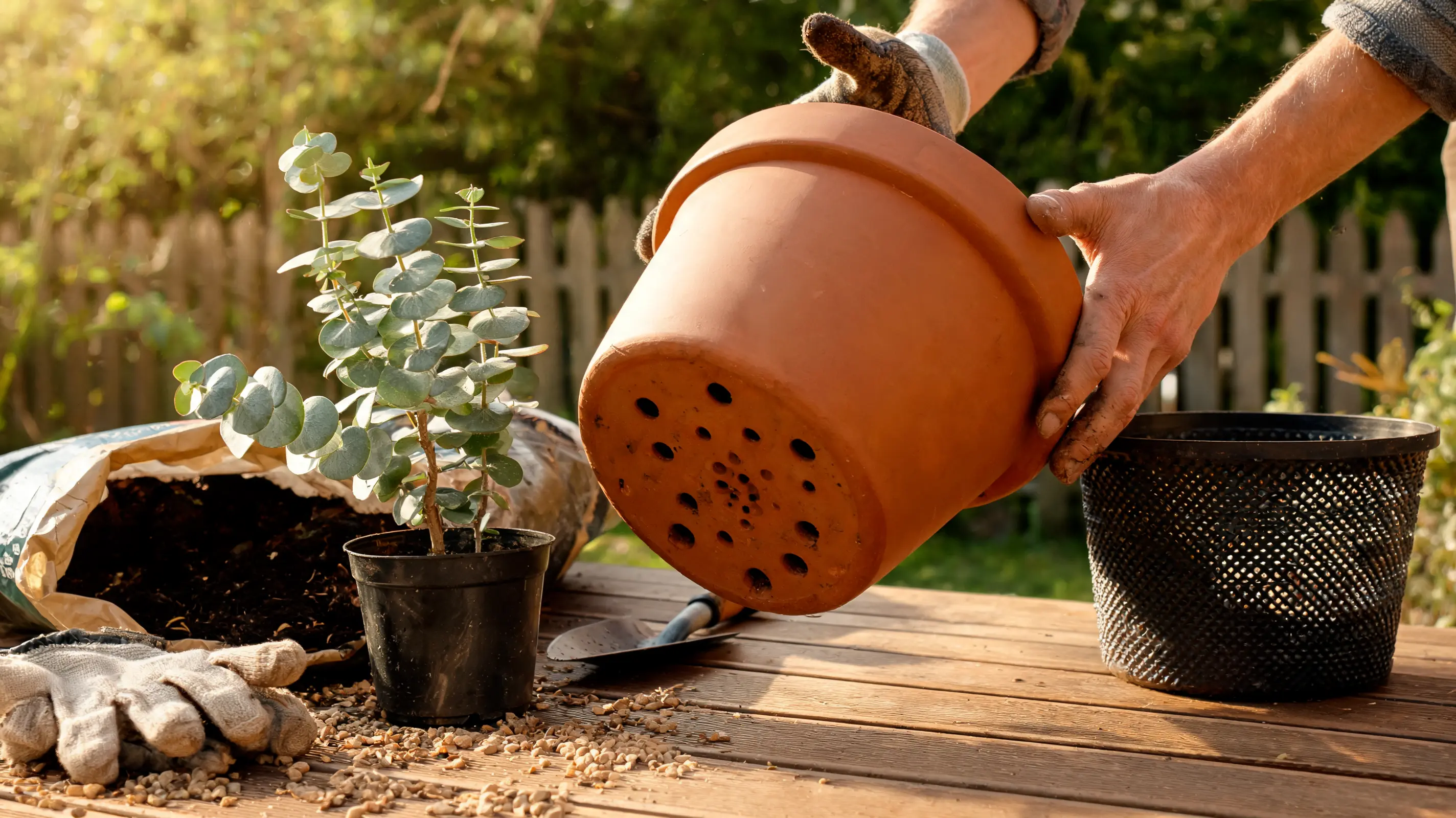
Choose a pot with plenty of drainage holes so that water can escape freely. Bigger is better, since roots need space to spread as the plant grows. A container size chart for pots can help you match the size to the plant instead of guessing.
Air-pot style containers take this further by air-pruning the roots, which keeps the foliage healthier. If you repot later, move up to a container around four times the current volume.
Step 2: Use a Free-Draining Potting Mix
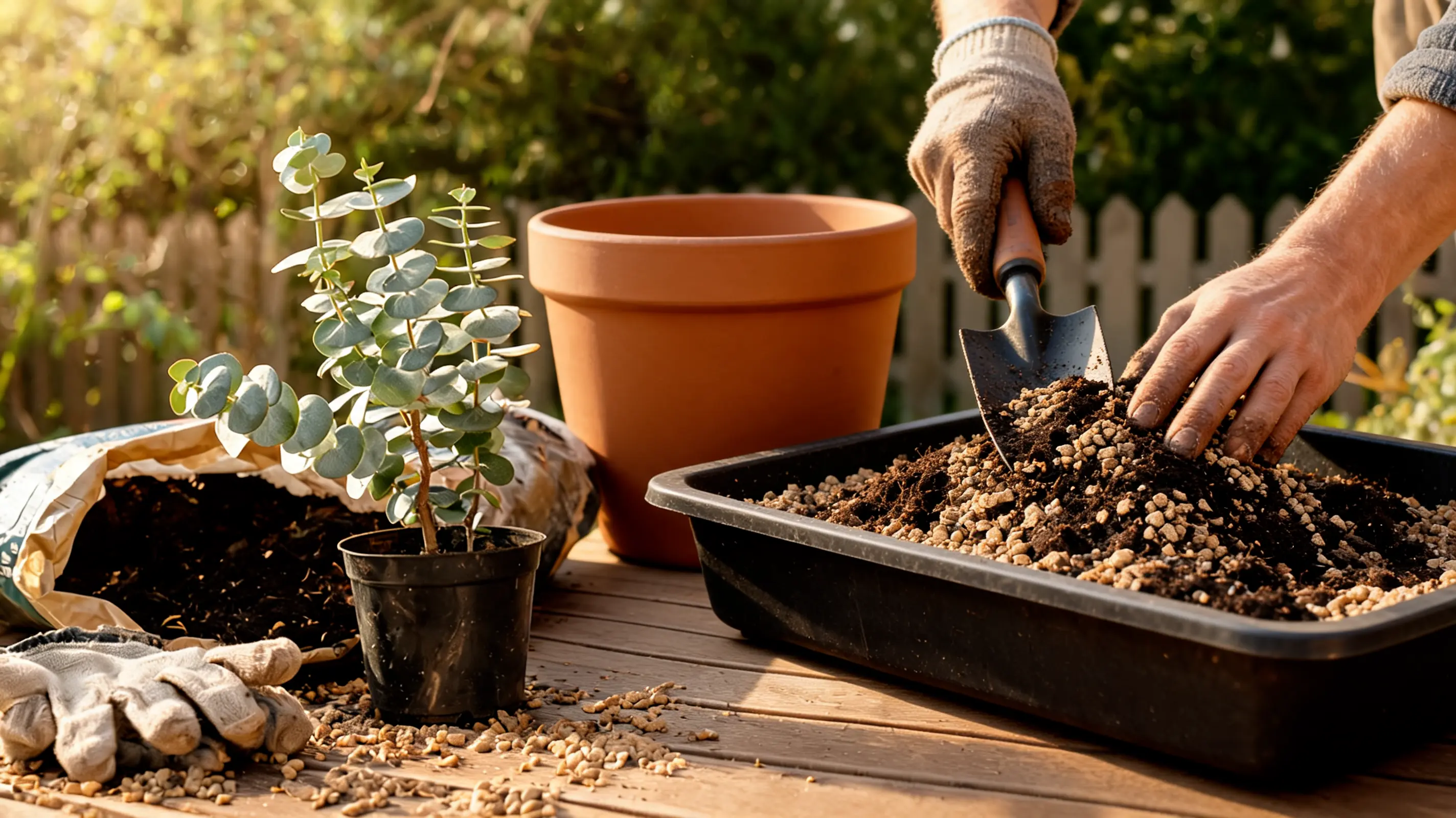
The Royal Horticultural Society recommends well-drained soil with up to 30% horticultural grit mixed in, which helps maintain moisture without waterlogging around the roots.
If your mix drains slowly, add coarse bark or grit to open it up before planting. A few minutes of prep here saves a lot of trouble later, once the plant is settled in the ground.
Step 3: Plant It Carefully
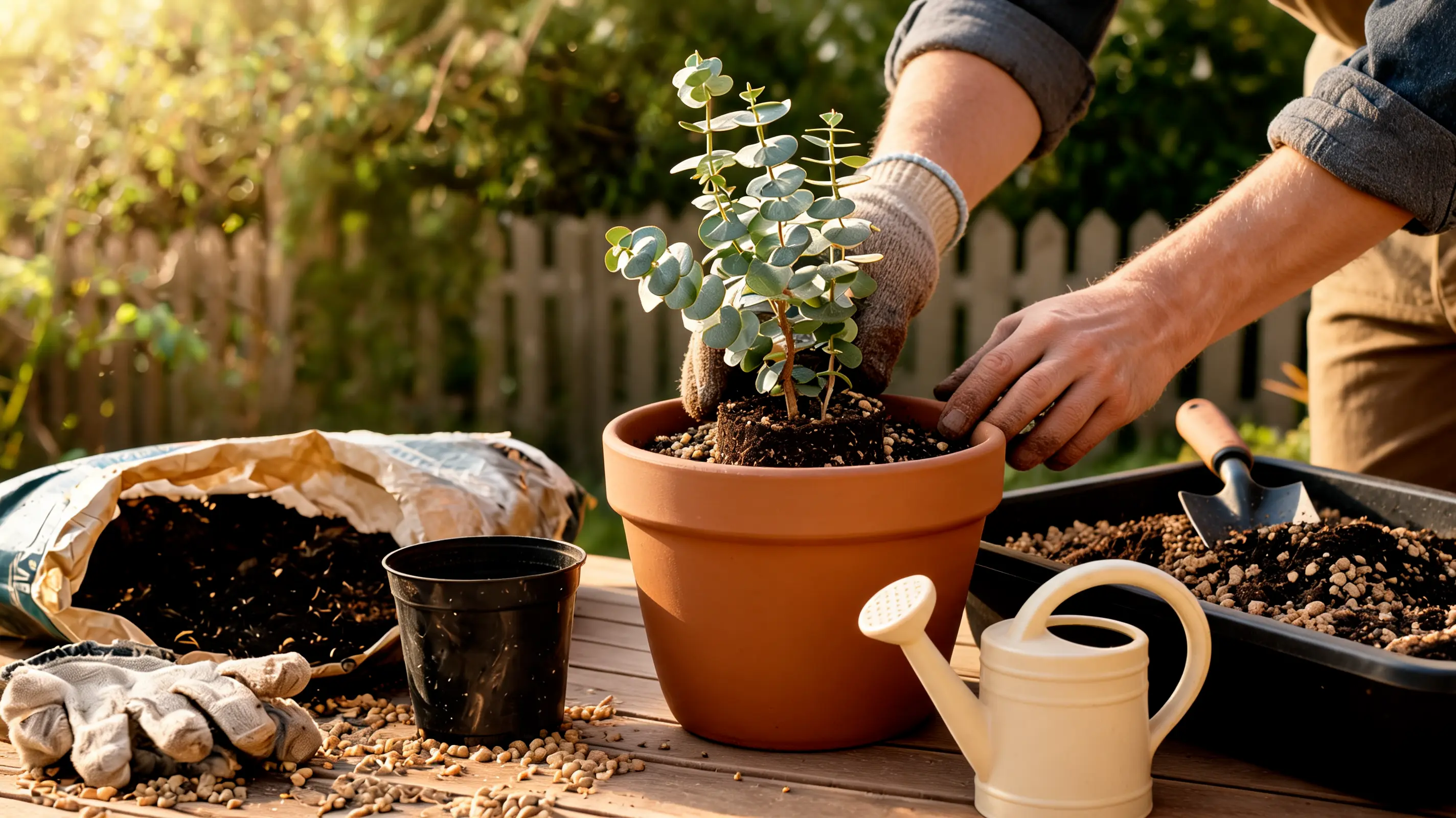
Handle the roots gently, since eucalyptus doesn’t like being disturbed once it’s settled. Place the plant in the container, keeping the root ball intact throughout.
Use fresh potting mix rather than reused soil, especially if you’re repotting. Water well right after planting to help the roots settle into their new space.
Step 4: Water on a “Check First” Schedule
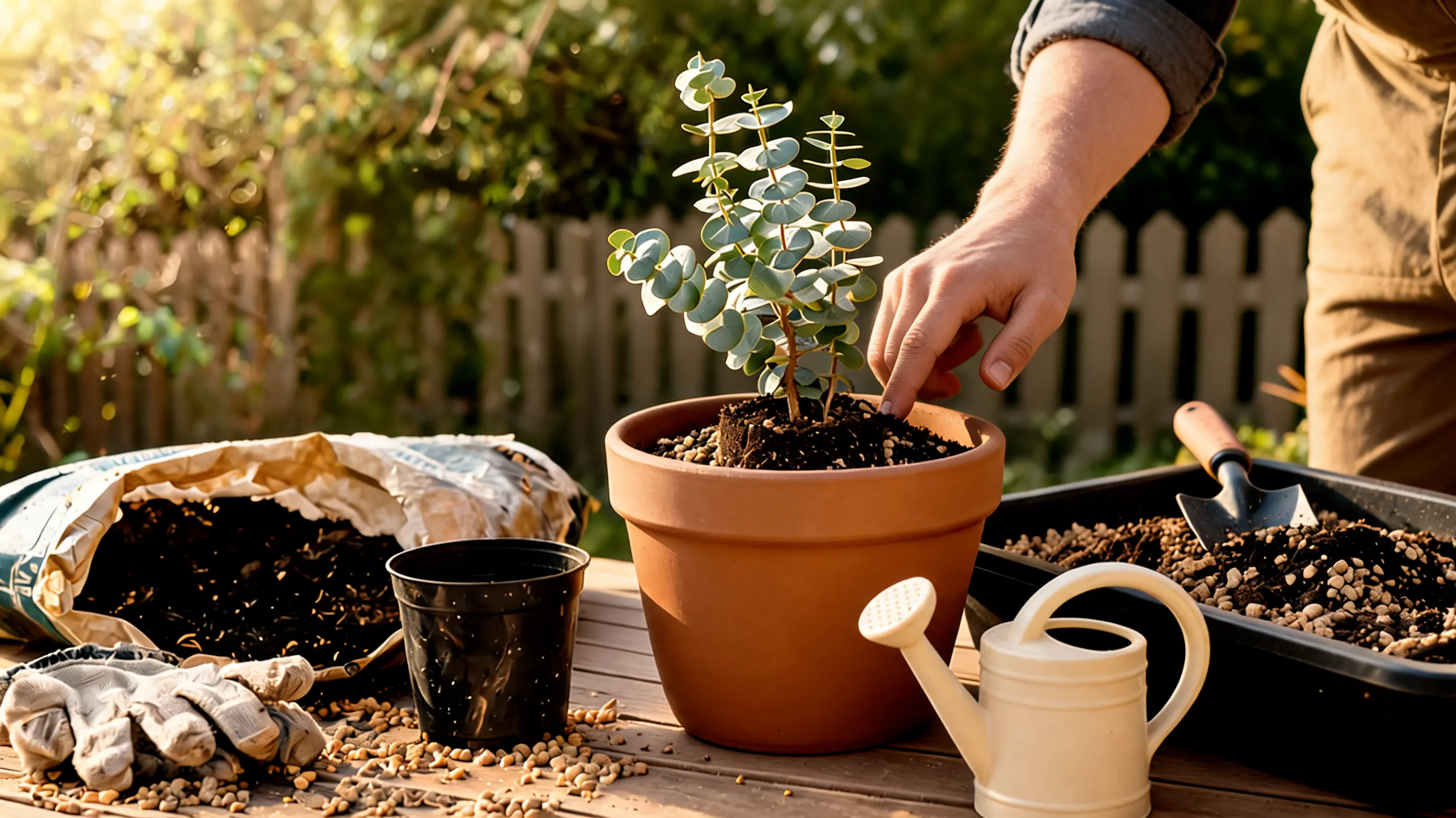
Check the soil before each watering, and water only when the top few centimeters feel dry. Pots dry out faster than open ground, so this matters more than it sounds.
Keep the soil moist during the growing season, but never soggy, and cut back sharply once winter arrives. Shriveled leaves mean too little water; yellow leaves usually mean too much.
Step 5: Feed During Spring and Summer
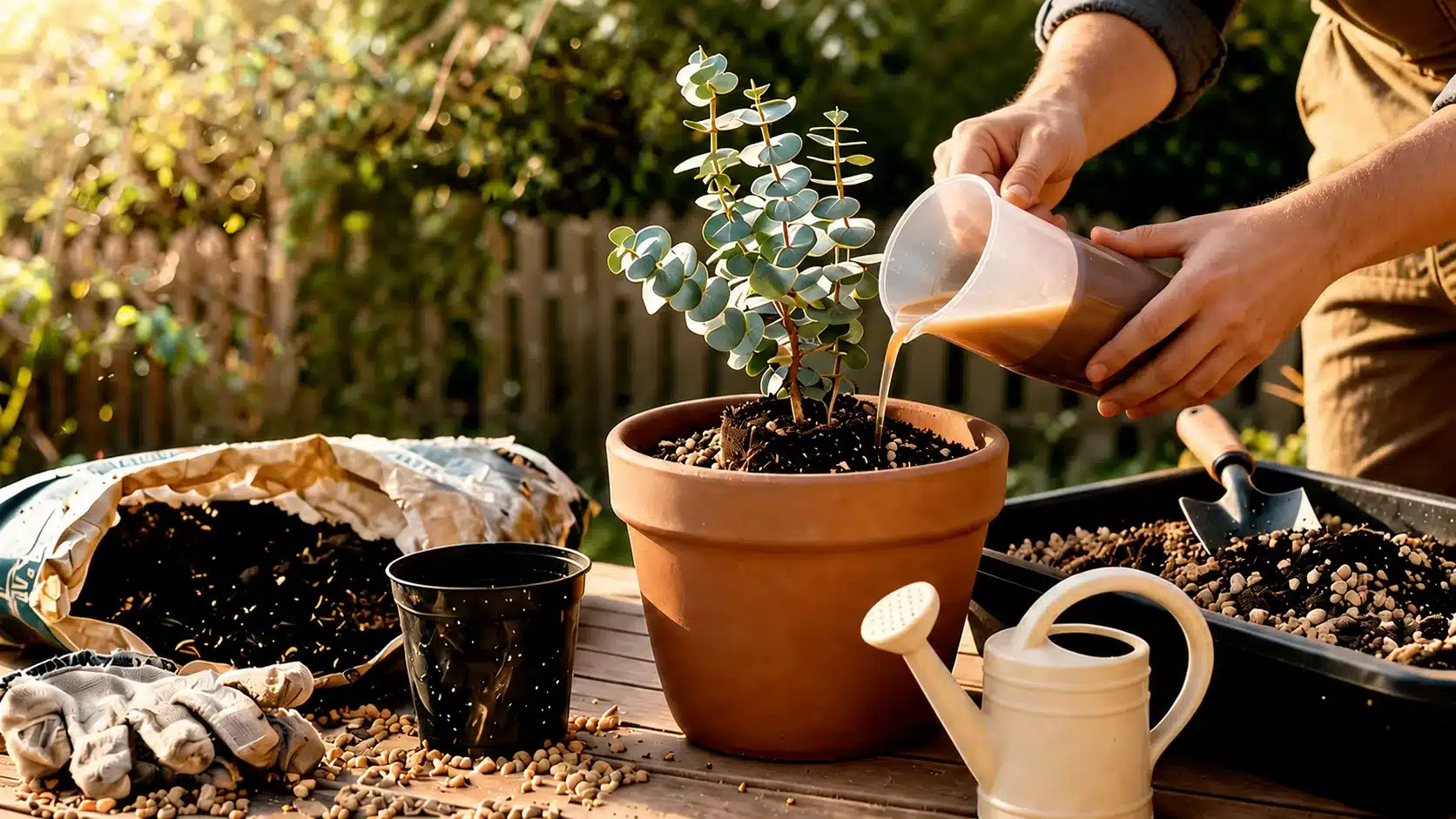
Container plants rely on you for nutrients, since their roots have limited space to search for food. Feed with a liquid fertilizer monthly during the growing season.
Start in spring and continue through early fall, when growth is strongest. Skip feeding entirely once winter arrives, since the plant isn’t growing much anyway.
Step 6: Prune to Control Size and Shape
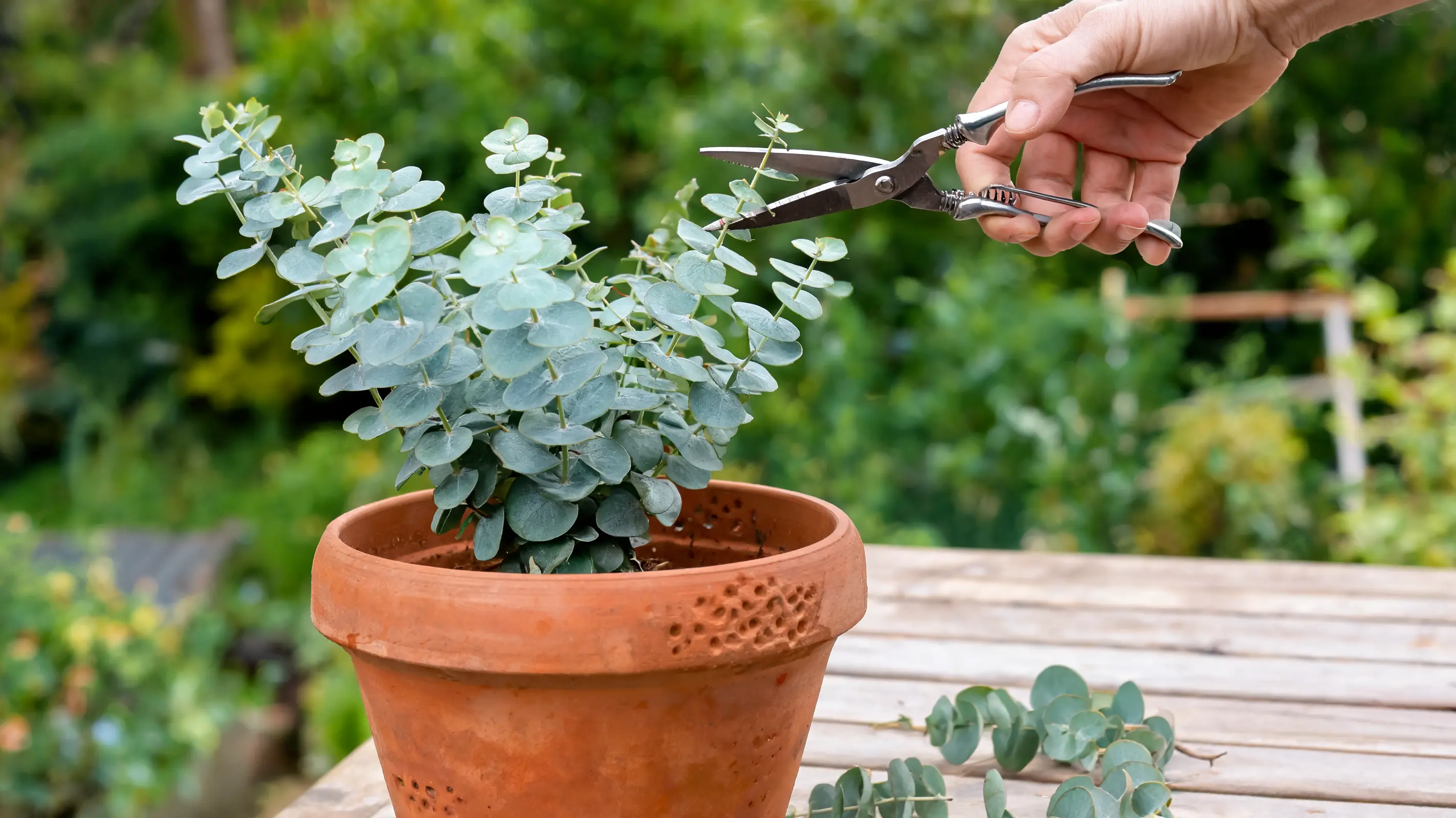
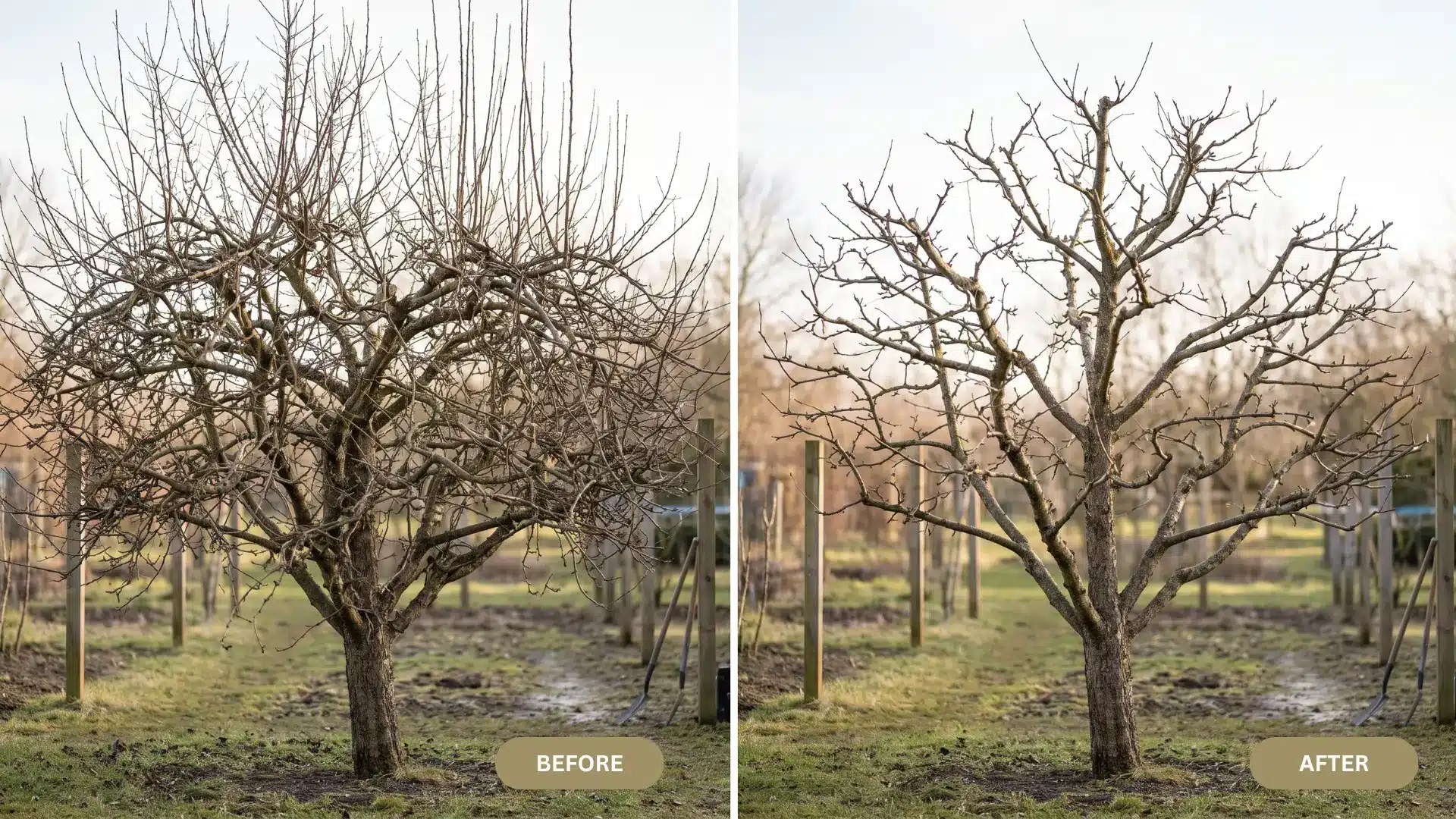
Eucalyptus grows fast, and pruning is how you keep a potted one in check. Most varieties need at least one proper prune a year to stay a manageable size.
Avoid pruning during hard frost or deep winter, since fresh cuts left exposed to cold can suffer dieback. Complete the main prune in late winter or early spring before growth begins.
Finding the Right Location for Your Eucalyptus Pot
Where you place the pot matters as much as what’s inside it. Deciding where to plant eucalyptus, even in a container, comes down to matching light, shelter, and space together, since eucalyptus is a sun-lover by nature and a few placement mistakes account for most of the problems it runs into.
- Full sun: aim for at least six hours of direct light daily. Shade leads to weak, thin growth that struggles to recover.
- Shelter from wind: strong gusts damage leaves and branches, and large pots are hard to move once they’re in place.
- Frost protection: move containers somewhere sheltered, such as against a south- or west-facing wall, once temperatures drop. Raising pots on feet also helps drainage in winter.
- A spot you won’t need to move often: repositioning a large container is a lot of work, and it stresses the roots each time.
Get the spot right early, and you’ll spend far less time correcting problems later.
Eucalyptus Growing Conditions
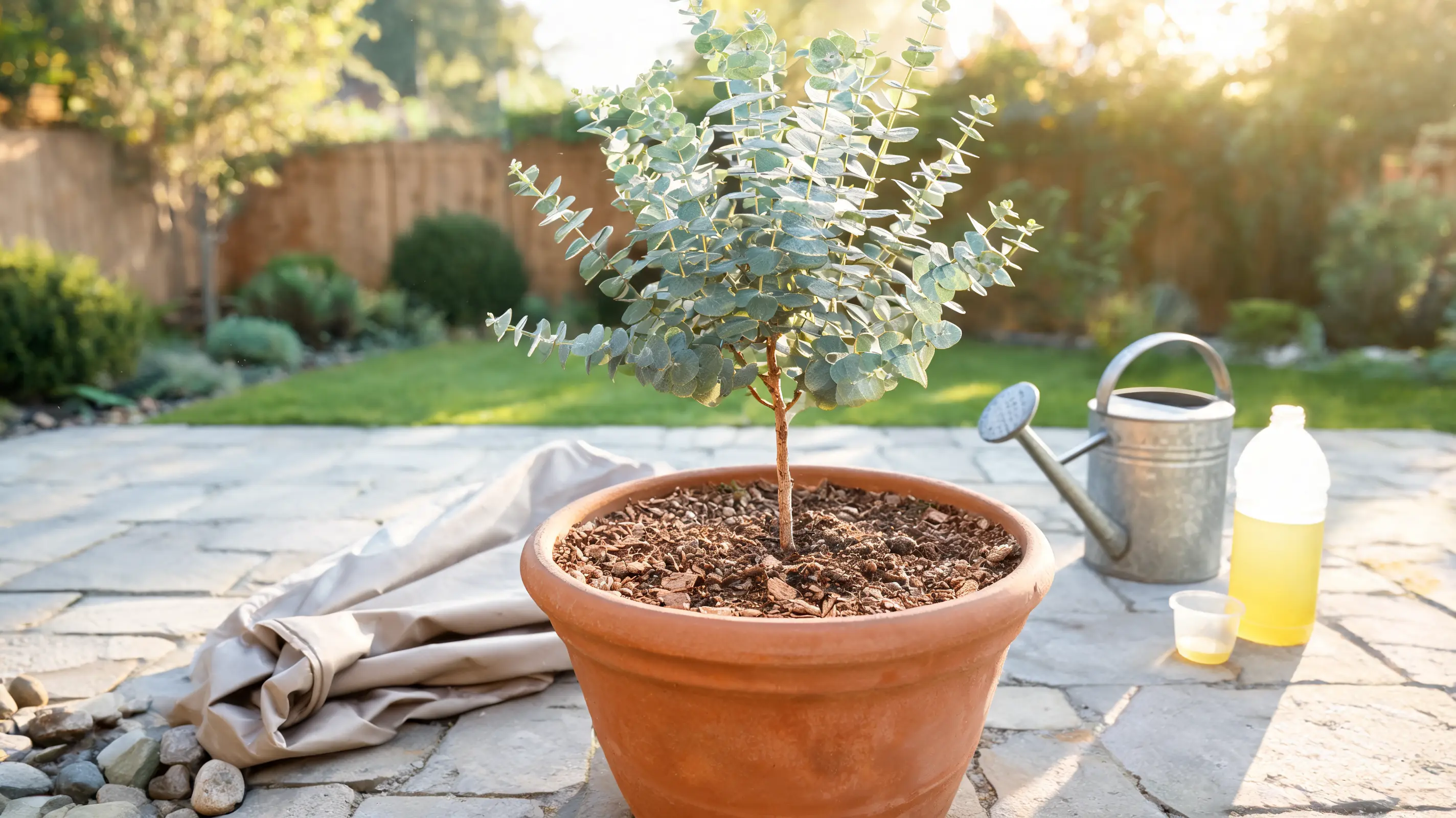
Strong light keeps growth compact, while free-draining soil and careful watering help prevent the root problems that commonly affect potted eucalyptus. Matching these eucalyptus growing conditions closely is what keeps a potted plant on track through the growing season.
| Condition | What Eucalyptus Needs |
|---|---|
| Sunlight | Full sun, at least 6 hours of direct light daily |
| Soil | Free-draining, slightly acidic mix; add grit or bark if it drains slowly |
| Water | Moist but never soggy in the growing season; reduce sharply in winter |
| Temperature | Comfortable in mild-to-warm conditions; protect pots when it drops near freezing |
| Feeding | Feed monthly during the growing season |
Match these five conditions consistently, and most potted eucalyptus problems never show up in the first place. Keep this table nearby during the growing season, and use it to double-check your setup whenever a leaf looks off, or growth seems slower than expected.
Repotting Your Eucalyptus
Young eucalyptus may need repotting every year, while mature plants can often stay in the same container for two to three years. Repot when roots grow through the drainage holes or circle tightly inside the pot.
- Root care: Gently loosen the root ball, trim any circling roots, and replace the old mix with fresh potting mix.
- Best time: Repot in spring or summer so the roots have time to settle before colder weather.
- Aftercare: Move the plant into a container around four times the current volume, water it well, and keep it out of direct sun for a few days.
Give the plant a few days to settle, then return it to its usual sunny spot and normal care routine.
Common Problems and How to Fix Them
Even a well-cared-for eucalyptus runs into trouble sometimes, usually from watering habits, sunlight levels, or the occasional pest. Here’s what to watch for, along with a straightforward fix for each one, so small issues don’t turn into bigger setbacks.
| Problem | Likely Cause | Fix |
|---|---|---|
| Yellow leaves | Overwatering or poor drainage | Check drainage holes; let the soil dry slightly between waterings |
| Shriveled, dry leaves | Underwatering or heat stress | Water more consistently; move the pot out of harsh wind |
| Weak, leggy growth | Not enough sunlight, or a pot that’s too small | Move to a brighter spot; check if it’s time to size up the container |
| Small raised bumps on leaves | Eucalyptus gall wasp | Remove and destroy affected leaves; most common in early spring |
| Sticky residue or tiny bugs on leaves | Aphids or scale | Treat with insecticidal soap or neem oil, covering the underside of leaves |
Check your eucalyptus every week or so, especially through spring, when new growth and pests both tend to show up first.
The Center for Invasive Species Research at UC Riverside notes that gall-forming wasps have spread through many eucalyptus-growing regions, which is why catching the small raised bumps early matters. Most fixes only take a few minutes once you know the cause.
Tips to Keep Your Potted Eucalyptus Healthy Over Time
A few consistent habits do more for a potted eucalyptus than any single fix ever could. None of them take much time on their own, but skipping them regularly is usually where slow decline and repeat problems start to creep in.
- Check more often during hot weather, then reduce watering sharply as growth slows in winter.
- Repot once roots start to feel cramped, moving up gradually.
- Keep the plant in full sun and out of harsh wind.
- Check for damaged or crowded growth in spring.
- Move pots to a sheltered spot before winter sets in.
Follow these habits through the year to keep your eucalyptus healthy, compact, and easier to manage. It rewards routine over effort, so a little attention regularly goes a lot further than the occasional big fix.
Frequently Asked Questions
Can eucalyptus really grow well in a pot?
Yes. Choose a compact variety, a large well-draining pot, and a full-sun spot. With steady watering and a yearly prune, potted eucalyptus stays healthy for years.
How big a pot does eucalyptus need?
Start with a pot around 20 to 30 cm across for a young plant, then increase to roughly four times the volume each time you repot, so roots always have room to grow.
Do I need to prune eucalyptus every year?
Yes, most potted varieties need at least one prune a year, done in late winter or early spring, plus a light trim in late spring to keep growth compact.
Why are my eucalyptus leaves turning yellow?
Yellow leaves usually mean the soil is staying too wet. Check the drainage holes, ease off watering, and let the top few centimeters dry out between waterings.
Can potted eucalyptus survive winter outdoors?
Established eucalyptus is often hardy, but pots expose roots to more cold than open ground does. Move containers somewhere sheltered once temperatures drop near freezing.
Final Thoughts
Learning how to grow eucalyptus in a pot is easier when you focus on a few basic needs. Choose a compact variety, use a stable container with good drainage, and place it where it receives full sun and some shelter from strong wind.
Check the soil before watering, feed during active growth, and prune at the right time to control size. Repot only when the roots become crowded, and give the plant extra protection as temperatures fall.
Small, regular checks will help you catch yellow leaves, dry growth, pests, or drainage problems early. With the right setup and steady seasonal care, your eucalyptus can remain healthy, compact, and manageable for years.
Drop a comment below and let me know if you have further questions.