Your onion tops have fallen over. But are the bulbs actually ready to come out of the ground?
Onions are usually ready to harvest around 80 to 100 days after planting. Some varieties need three to five months. The clearest signs are fallen tops, yellowing leaves, and a soft, thin neck just above the bulb.
The day count is a helpful starting point. But the final call should come from the plant itself and the weather forecast.
Pull too early, and the bulbs may be smaller with a shorter storage life. Wait too long in wet soil, and they may rot. Learn every step from reading the signs and lifting safely to curing properly and storing your crop well.
What Are the Basics of Harvesting Onions?
A useful maturity check starts with the whole plant, not one leaf or one date. Onion type, daylight, temperature, soil, and watering can all affect timing, and so can the planting depth and spacing chosen at the start of the season, since crowded or overly deep bulbs often mature unevenly. Two onions planted on the same day may finish at different times.
| What Your Onions Look Like | Best Next Step |
|---|---|
| Most tops are down, leaves are fading, and necks are soft, with the outer skin starting to feel papery | Plan to harvest on a dry day, then let the bulbs cure before storing them |
| Some tops are down, but necks are thick and green, and the bulbs still feel firm | Wait and check again in a few days rather than pulling them early |
| Bulbs look ready, but heavy rain is coming, and the ground will likely stay wet | Lift mature bulbs before the soil becomes soaked and harder to work |
| Plants are maturing at different speeds, which is common across a single row or bed | Harvest the ready bulbs now and leave the greener plants to finish in the ground |
| Bulbs are damaged, soft, bolting, or showing signs of rot near the neck | Use them soon instead of storing them, since they will not keep well |
For more accurate advice, share the onion type, planting date, recent weather, and note if the plants came from seeds, sets, or transplants. After harvest, storage onions need to be lifted carefully, cured well, and checked regularly.
When to Harvest Onions?
Harvest onions when several maturity signs appear together. The strongest sign is natural top fall, which happens when the neck weakens as the plant finishes growing. Check the tops, leaves, necks, bulb size, and outer layers across most of the row.
1. Most Tops Have Fallen Naturally
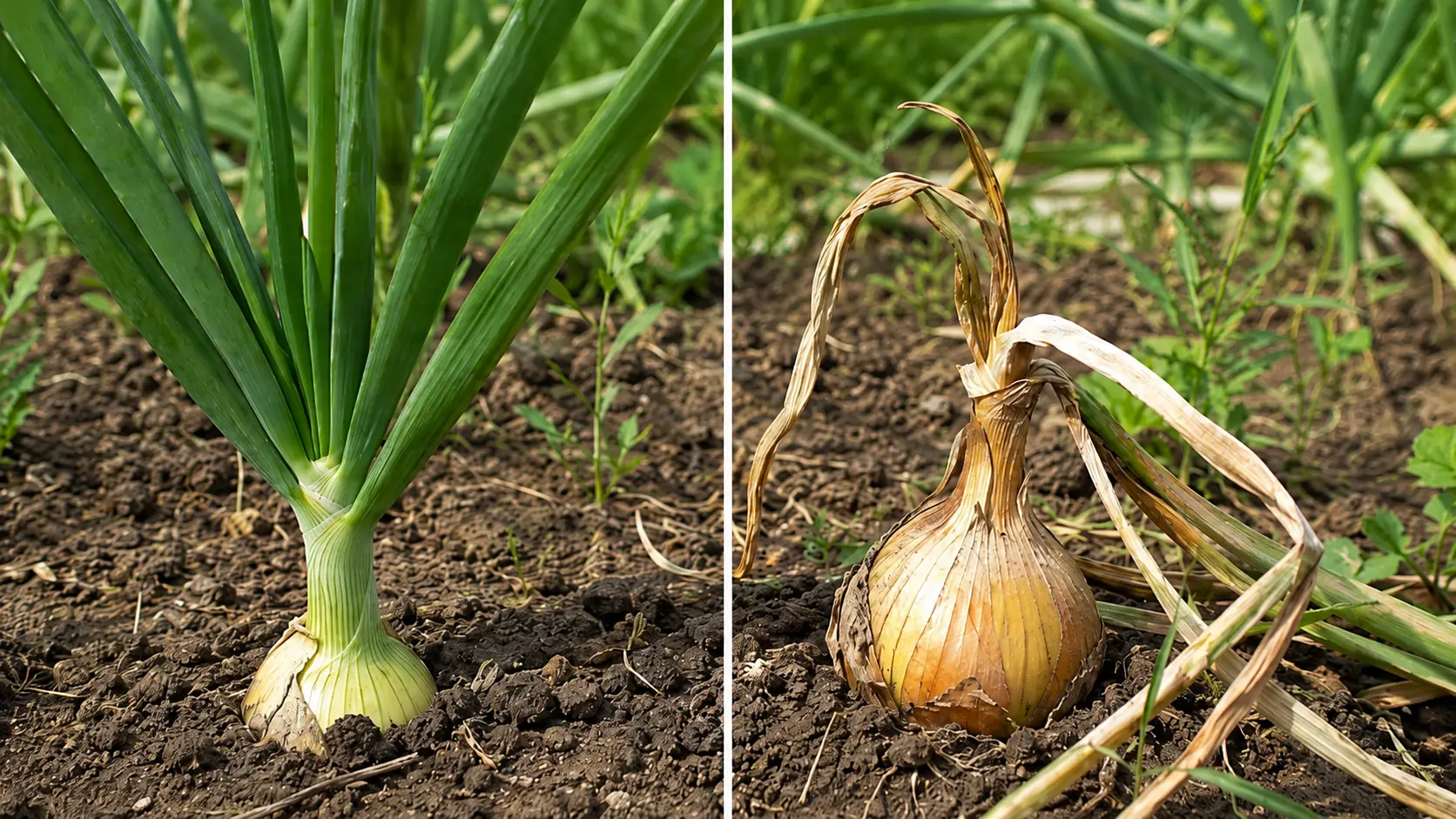
A mature onion row usually has most tops lying flat or leaning heavily toward the ground. This happens naturally as the neck weakens and the plant finishes active growth.
One or two fallen tops are not enough to judge the whole crop. Look for a clear change across most plants, and avoid pushing healthy tops down by hand.
2. Leaves Are Yellowing or Drying
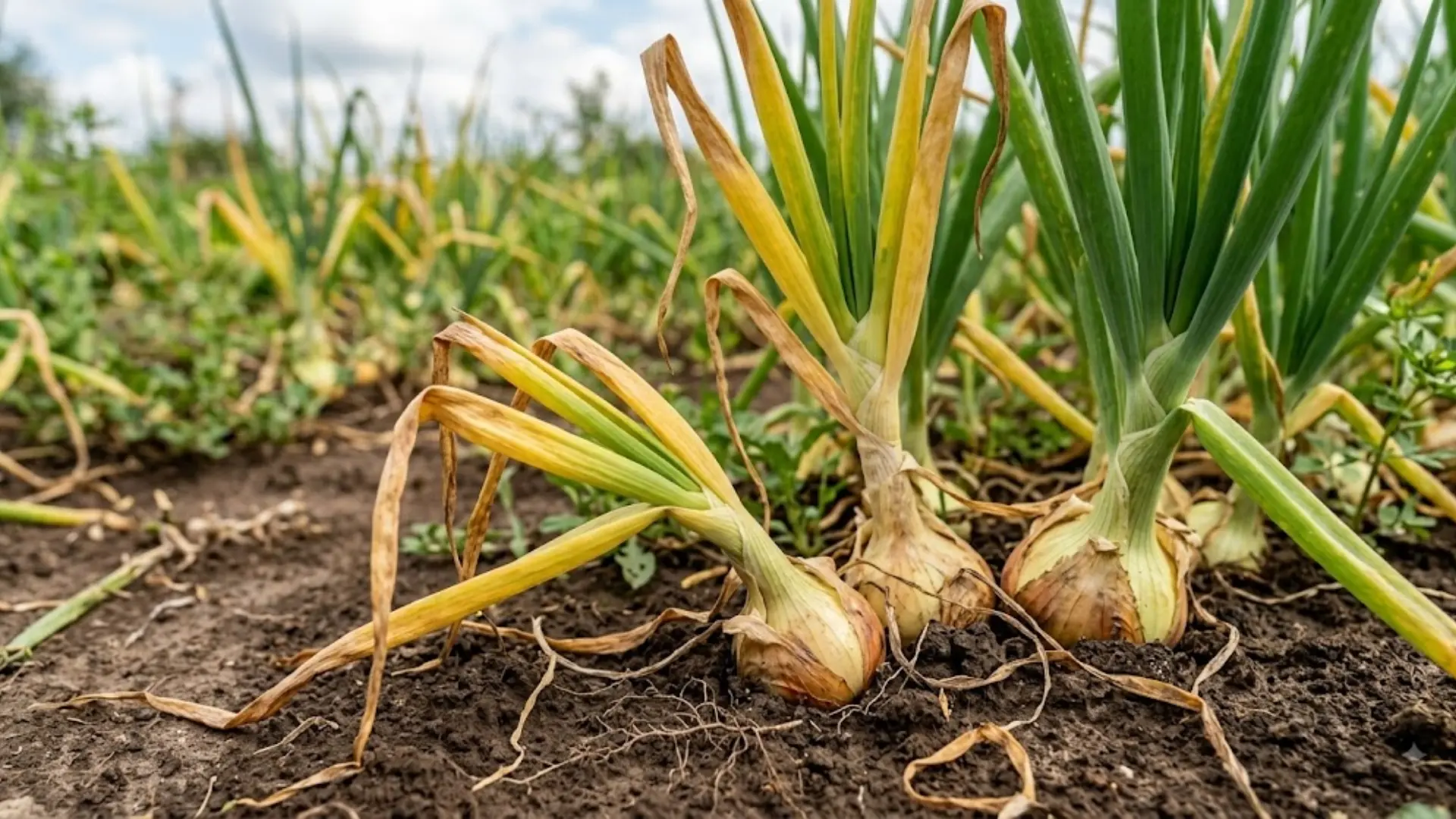
As onions mature, their leaves begin to fade from green to yellow, brown, or dry. Bright green, firm leaves usually show that the plant is still growing.
Some onions may stay greener because of differences in shade, spacing, soil moisture, or variety. Focus on the overall pattern across the bed rather than waiting for every plant to look exactly the same.
3. The Neck Feels Soft and Thin
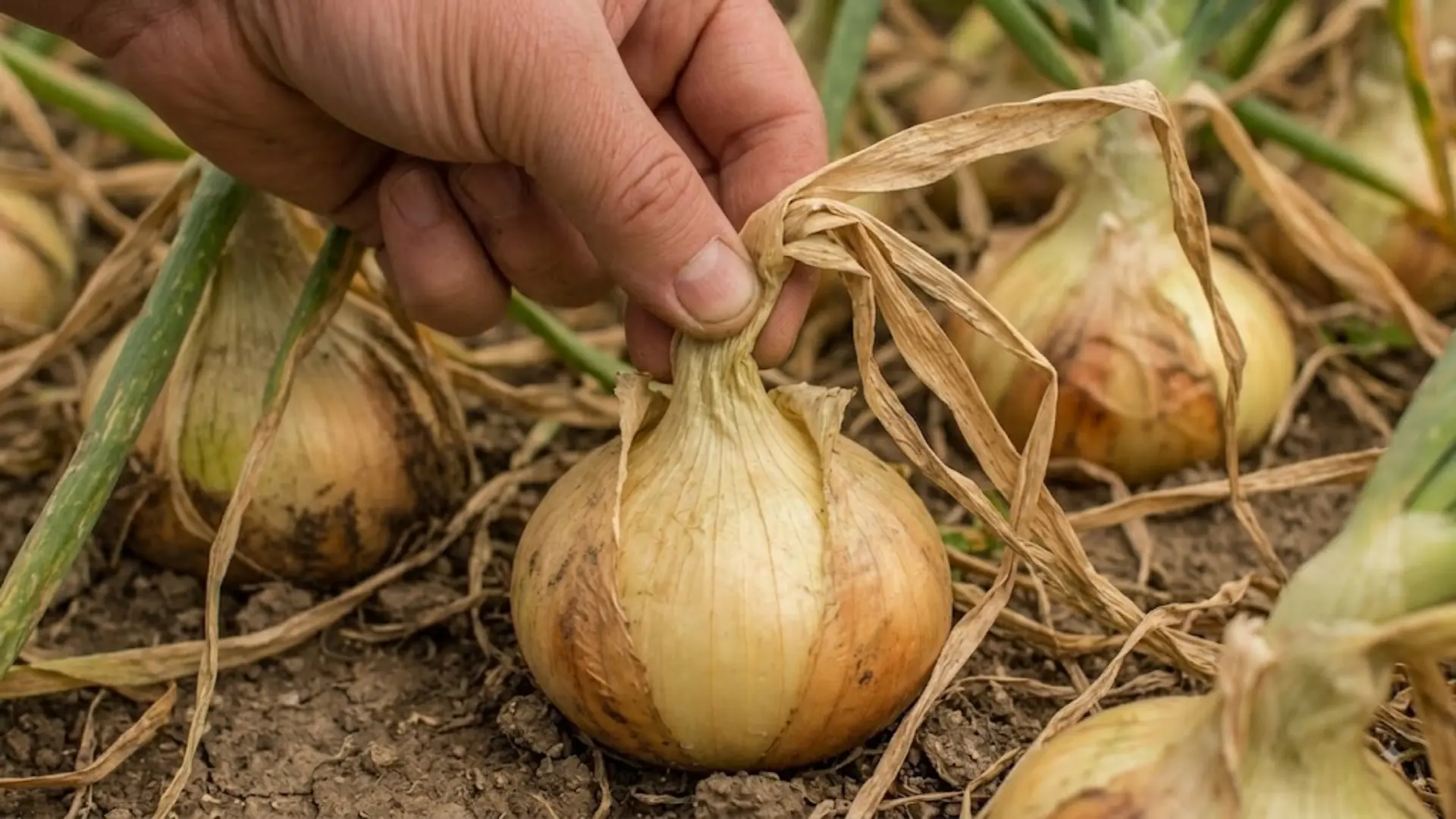
Gently press the neck where the leaves meet the top of the bulb. A mature onion usually has a neck that feels narrow, soft, and weak because active growth has slowed.
If the neck is still thick, firm, and green, the plant likely needs more time. Onions harvested with thick necks may cure more slowly and often do not store as well.
4. The Outer Layers Look Slightly Papery
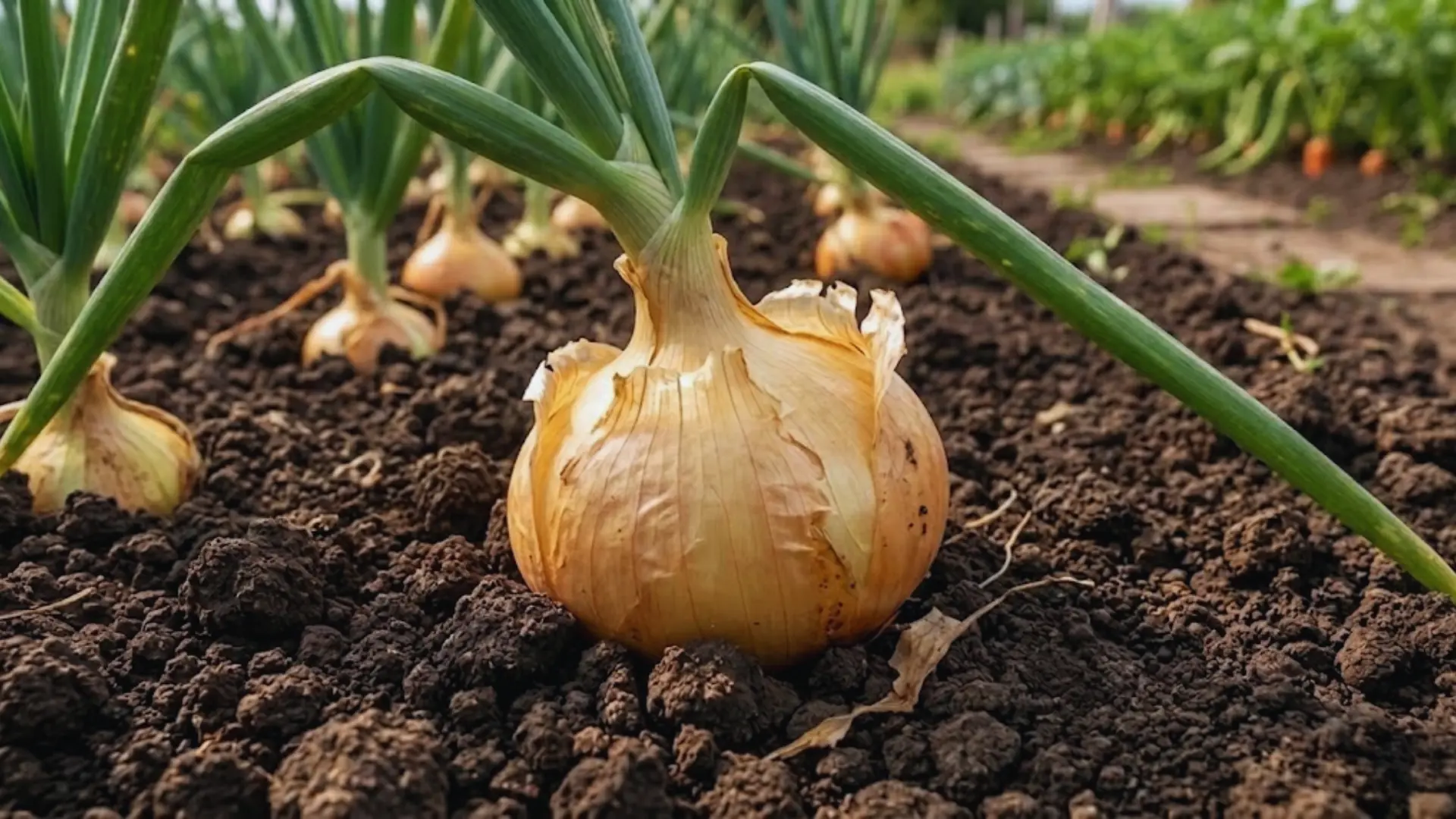
Near harvest, the exposed part of the bulb often develops outer skin that looks dry, thin, or slightly papery. This is a useful sign that the onion is approaching maturity, but the skin does not need to be completely dry in the soil.
Most of the firm, papery covering forms later while the bulbs are curing after harvest.
5. The Bulb Looks Fully Developed
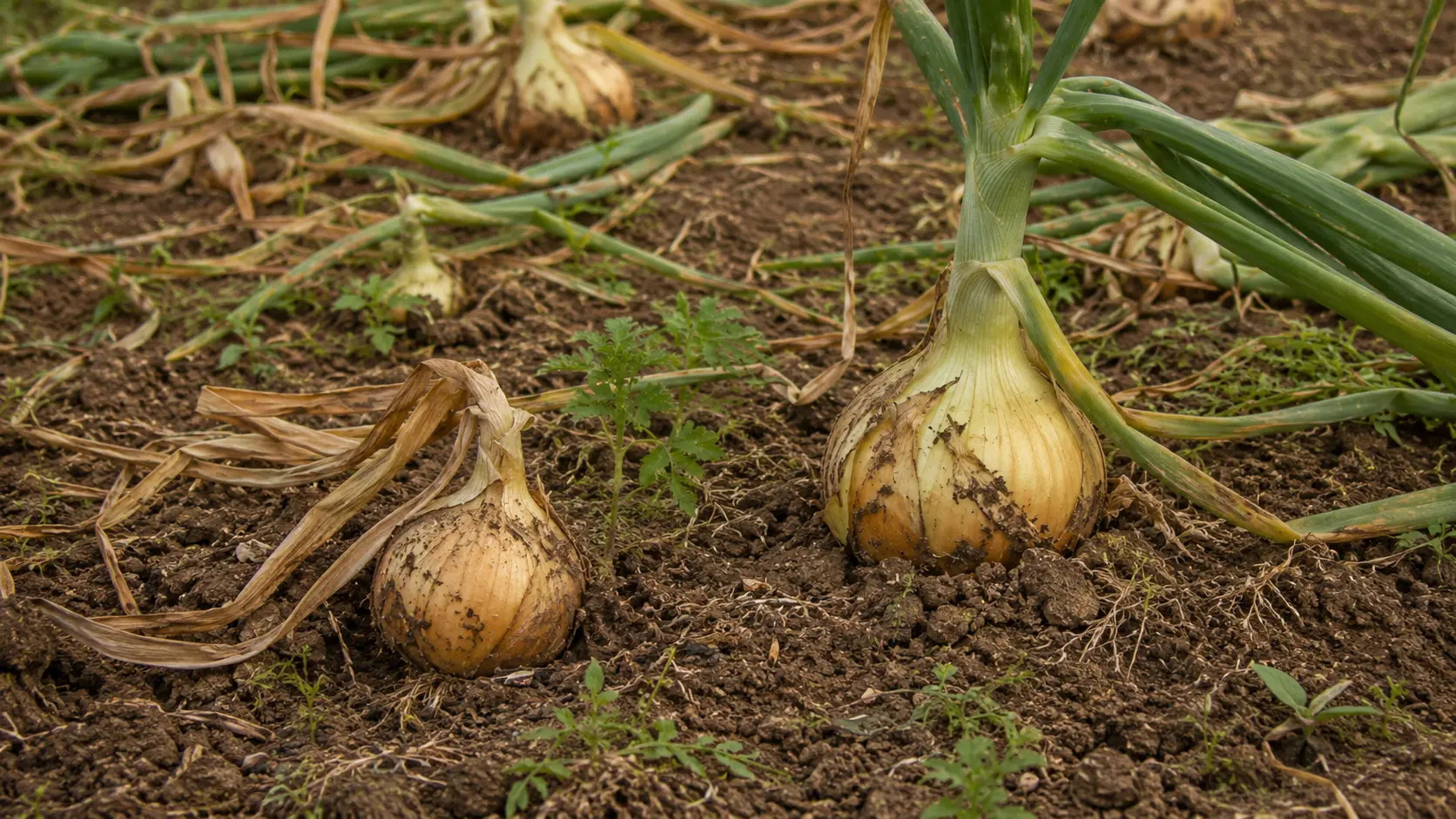
Bulb size can help confirm maturity, but it should not be the main reason you harvest. A smaller onion may be fully mature, while a larger bulb can still have green leaves and a thick neck.
Look for a well-formed bulb along with fallen tops, drying leaves, and a soft neck before deciding that the crop is ready.
How to Make the Final Decision?
Before you harvest, look at the overall condition of the plants rather than relying on just one sign. The tops, necks, leaves, weather, and differences across the bed can help you decide to harvest now, wait a little longer, or lift the onions in stages.
- Harvest now: Most tops are down, necks are soft, and the forecast is dry.
- Wait: Leaves are green, tops are upright, and necks are firm.
- Harvest soon: Bulbs look mature, but heavy rain or hard frost is expected.
- Harvest in batches: Some plants are ready while others remain upright.
Do not wait for every onion to look the same. Maturity can vary across one bed because of shade, soil moisture, spacing, or small differences in growth. Bulb size should support your decision, not control it. A smaller bulb can be mature, while a large bulb may still have a thick green neck. The leaves and neck often give a clearer answer than size alone.
What Are the Typical Days to Harvest Onions?
Many onions take about 80 to 100 days to reach harvest size. Some varieties may need three to five months, especially when grown from seed or planted in cooler conditions.
Onions grown from sets may be ready in about 80 days, while those grown from seed often need around 90 to 100 days. These are useful estimates, not fixed deadlines.
| Planting Method | Approximate Time | Main Readiness Check |
|---|---|---|
| Onion sets | Around 80 days | Fallen tops and thin necks |
| Onion seeds | Around 90 to 100 days | Drying leaves and full bulbs |
| Bulb onions in general | Around three to five months | Several readiness signs together |
Several conditions can change the timing:
- Variety: Some onions mature faster than others. Sweet onions and storage onions may follow different growth patterns.
- Daylight: Onion types are often suited to certain day lengths. Poorly matched types may form smaller bulbs or mature at an unexpected time.
- Temperature: Cool weather may slow growth, while warm conditions may speed parts of the growing process.
- Watering: Regular watering supports bulb growth. Too much water near harvest may leave the soil wet and raise the risk of decay.
- Soil: Loose, well-drained soil allows bulbs to grow and makes harvesting easier.
- Planting method: Sets, seeds, and transplants may reach maturity at different speeds.
Once most tops have fallen and the soil is not extremely dry, reduce or stop watering before harvest. Avoid adding more water when mature bulbs are already sitting in damp soil.
Use the day count as a reminder to inspect the crop. Do not pull every bulb simply because a certain number of days have passed.
How to Harvest Onions Safely?
Safe onion harvesting protects the bulb, neck, and outer skin from cuts and bruises. By choosing dry conditions, loosening the soil carefully, and handling each onion gently, you can improve curing and storage results.
Step 1: Choose a Dry Harvest Day
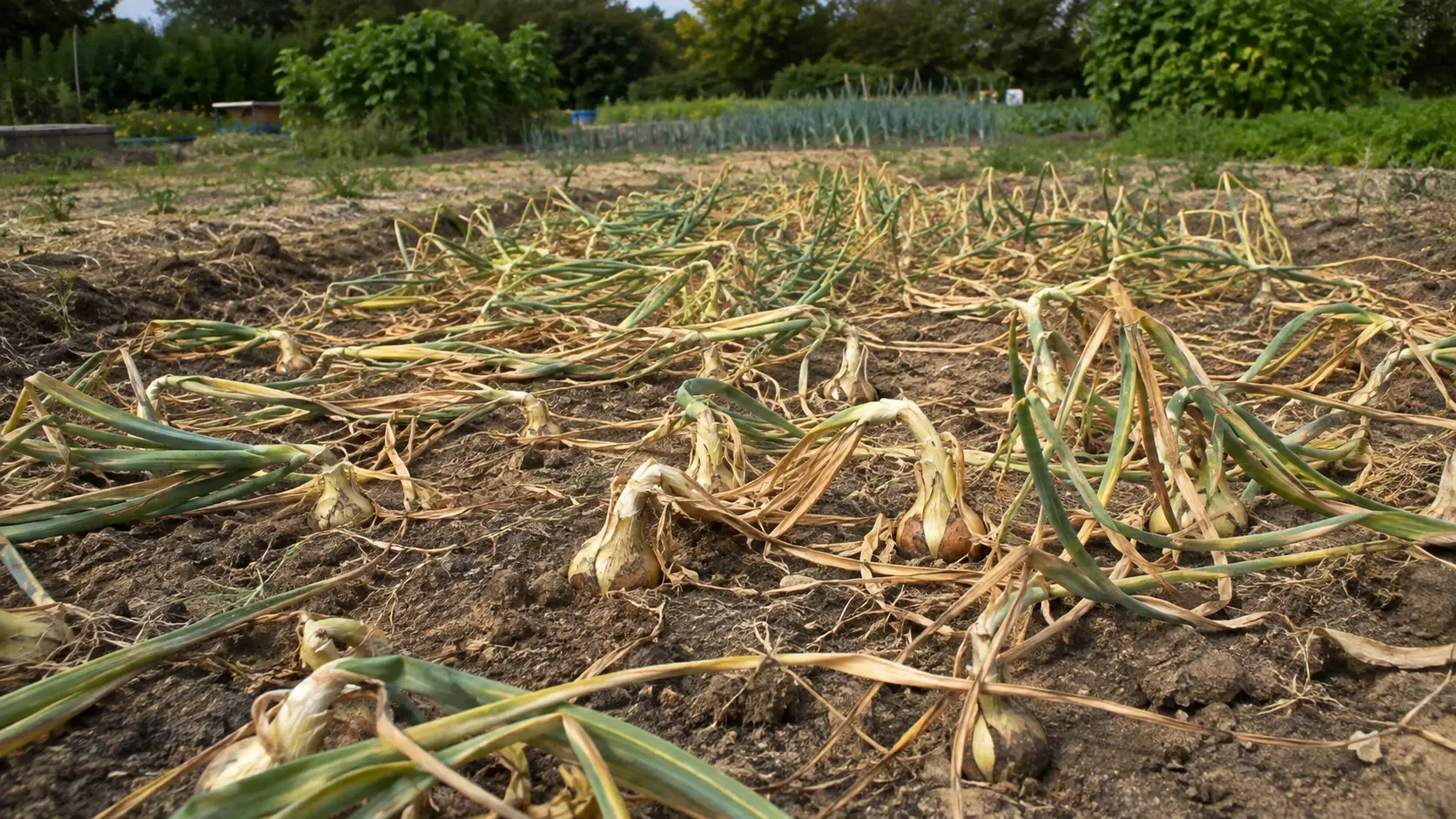
Harvest when the soil is dry and no heavy rain is expected. Dry soil is easier to loosen and does not stick heavily to the bulbs.
Before starting, check that most tops have fallen naturally, the leaves are fading, and the necks feel soft and thin. If the necks are still thick and green, give the plants more time when the forecast allows.
Step 2: Loosen the Soil
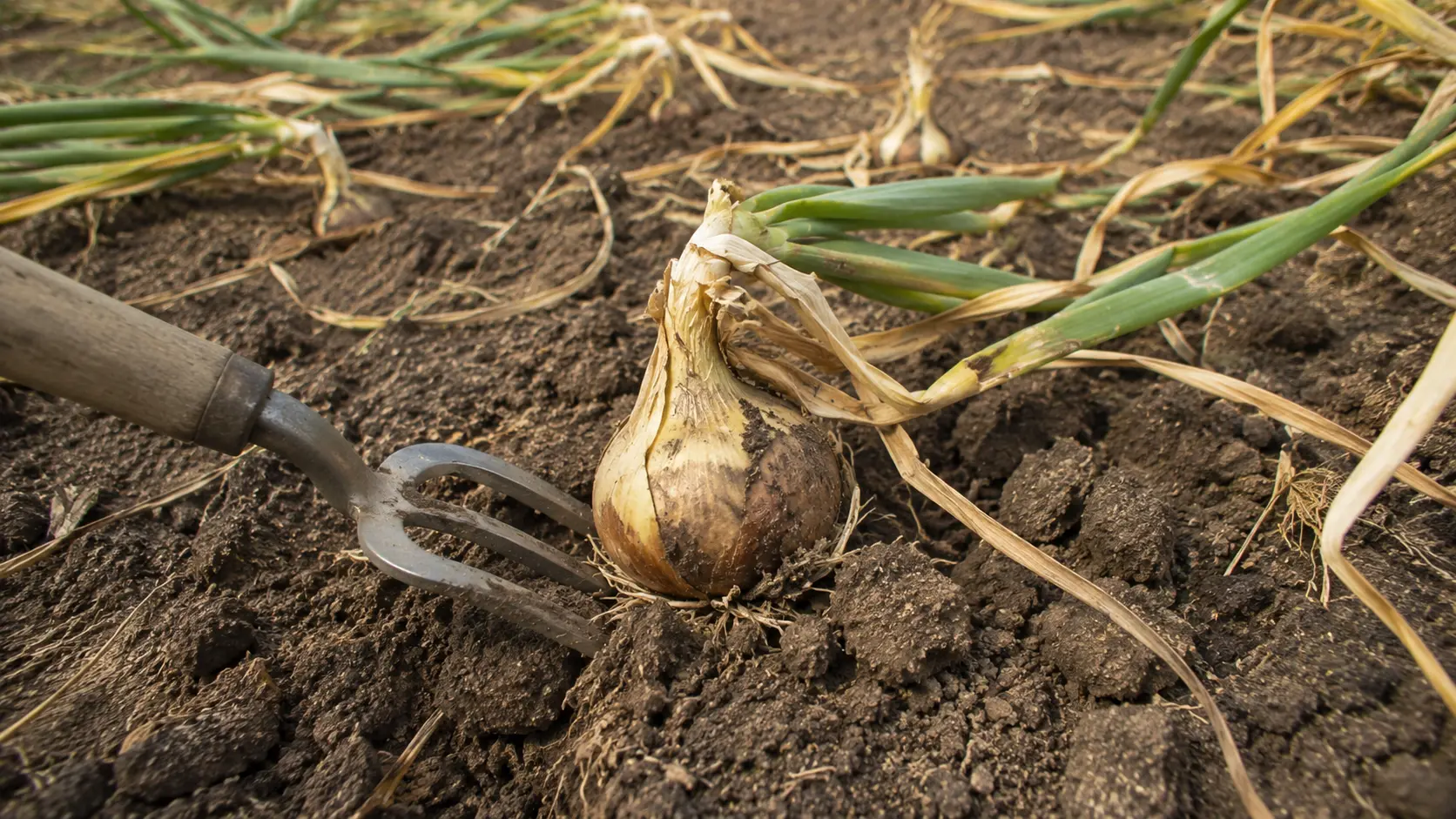
Place a garden fork, trowel, or shovel beside the onion. Keep the tool a few inches away from the bulb to avoid cutting or piercing it, since a blade set too close can slice into the outer layers before you even see the damage.
Gently push the tool into the soil and lift the surrounding earth. The goal is to free the roots without damaging the bulb or neck. Work slowly around the whole plant rather than levering from just one side, and check the ground first if it feels unusually firm or compacted.
Step 3: Lift the Bulb Gently
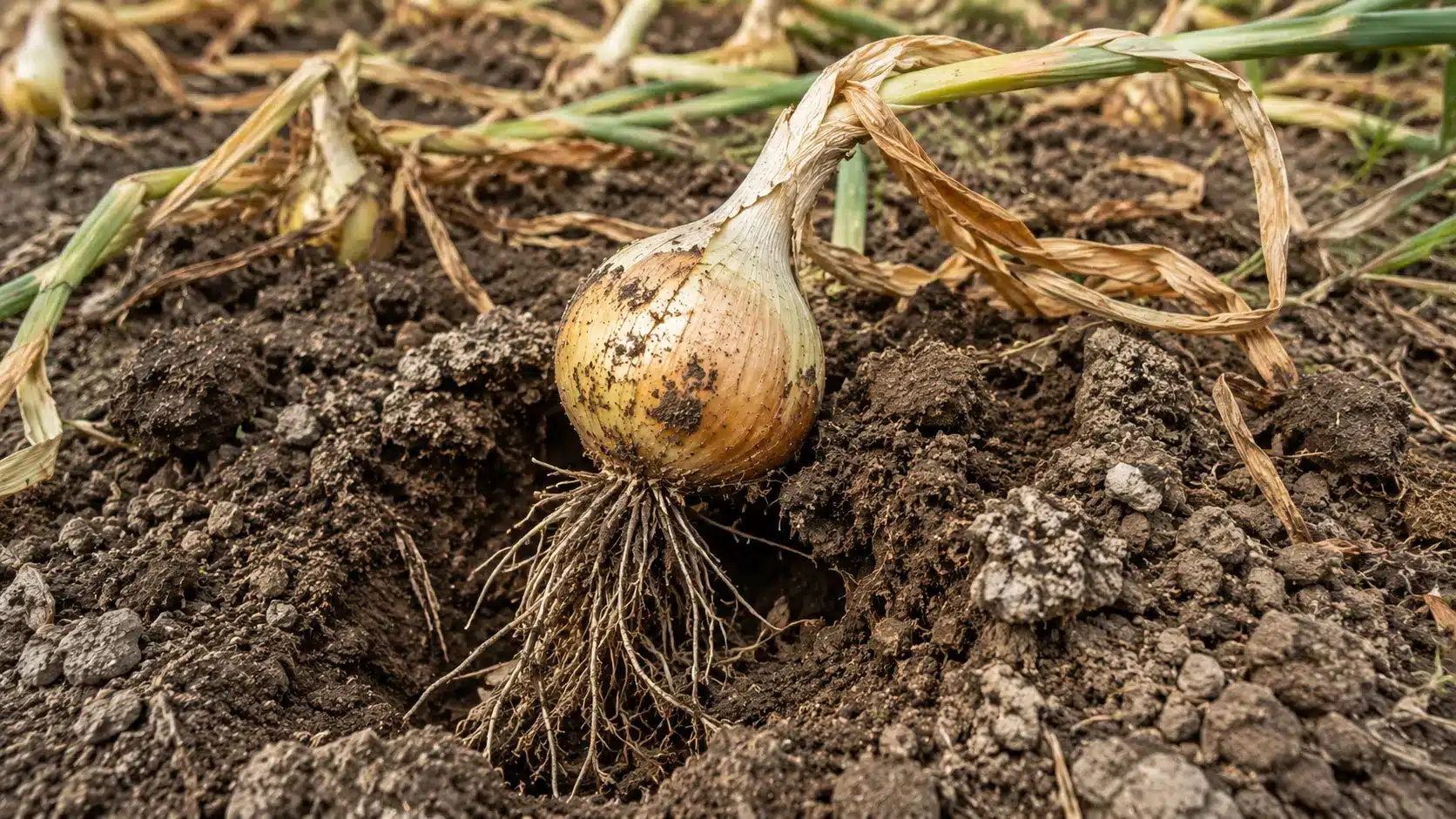
Support the onion near its base and lift it from the loosened soil. Avoid pulling hard on the leaves because the neck may tear away from the bulb.
If the onion does not come out easily, loosen the soil again. Brush away only loose dirt and do not wash bulbs that are meant for curing.
Step 4: Sort and Prepare the Bulbs
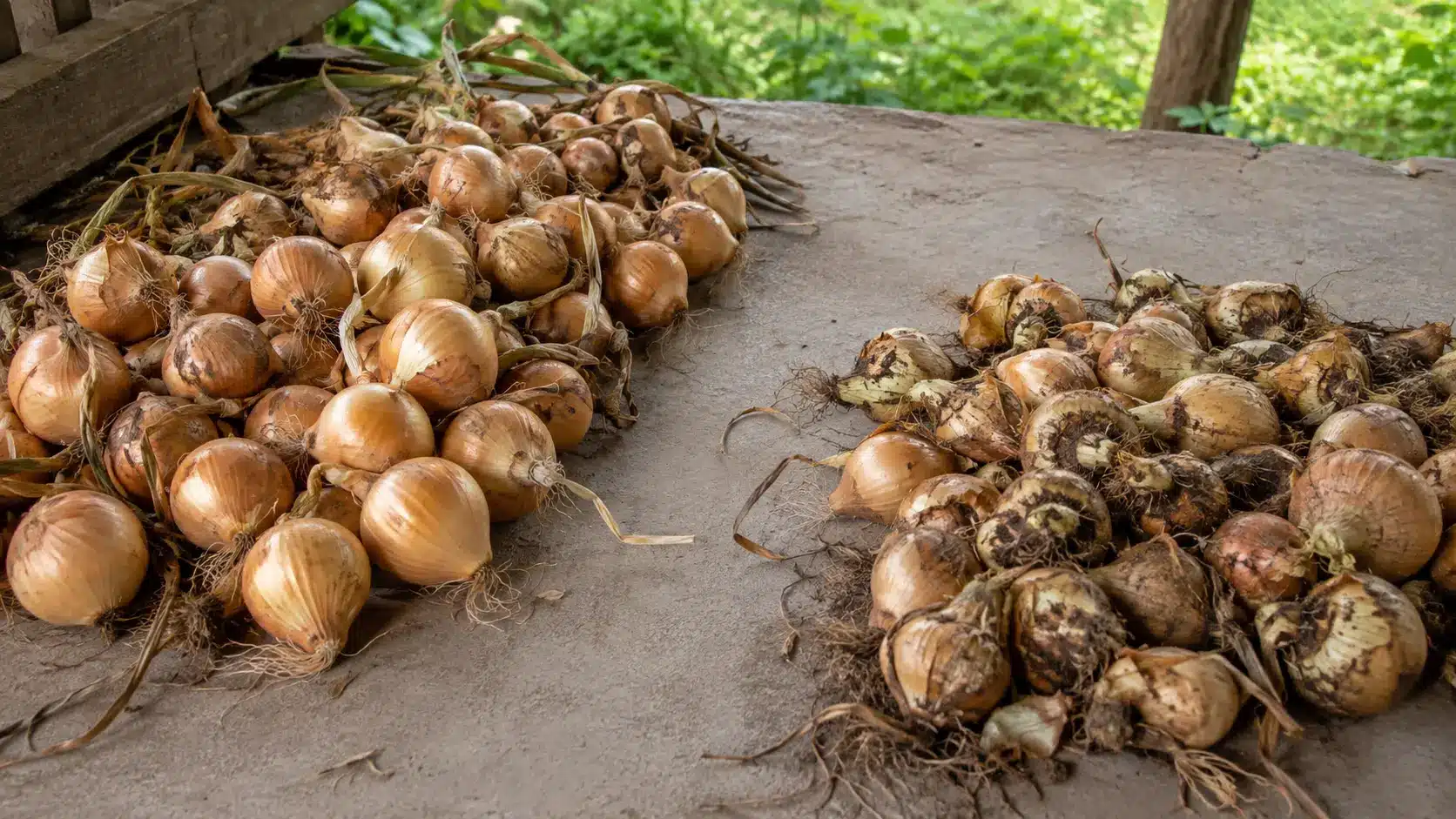
Check each onion as soon as it comes out of the soil. Keep firm, healthy bulbs separate from onions with cuts, bruises, soft spots, mold, insect damage, or broken necks.
Move healthy bulbs to a dry, shaded place with steady airflow. Use damaged or bolted onions first because they may not cure or store well.
Once the onions are lifted, sort them before curing and keep damaged bulbs separate. Careful handling at harvest helps healthy onions dry evenly, lowers the risk of rot, and keeps more of your crop suitable for storage.
How Do You Cure Onions?
Curing removes moisture from the neck, roots, and outer layers, the same drying process used when curing garlic after harvest for other allium crops. As the onion dries, it develops a papery skin that protects it in storage and reduces the risk of mold.
| Topic | What to Know |
|---|---|
| Where to cure | A dry, shaded spot with steady airflow, such as a covered porch, shed, or ventilated shelf, with room to lay onions in a single layer |
| How to arrange them | A small gap between each bulb, no stacking while moist, occasional turning for airflow, and tops and roots left attached until fully dry |
| How long it takes | One to three weeks; warm, dry conditions with good airflow speed it up, while high humidity, large bulbs, or poor ventilation slow it down |
| Neck | Thin and completely dry |
| Outer skin | Dry and papery |
| Roots | Dry and shriveled |
| Bulb | Firm with no soft areas |
| Surface | Free from wet spots and mold |
| Neck growth | No fresh green shoots |
Check every onion before placing it into storage. Keep any bulb that feels damp, soft, damaged, or sprouted separate from the healthy bulbs. Use it soon, or discard it if decay is present.
How to Store Onions After Curing?
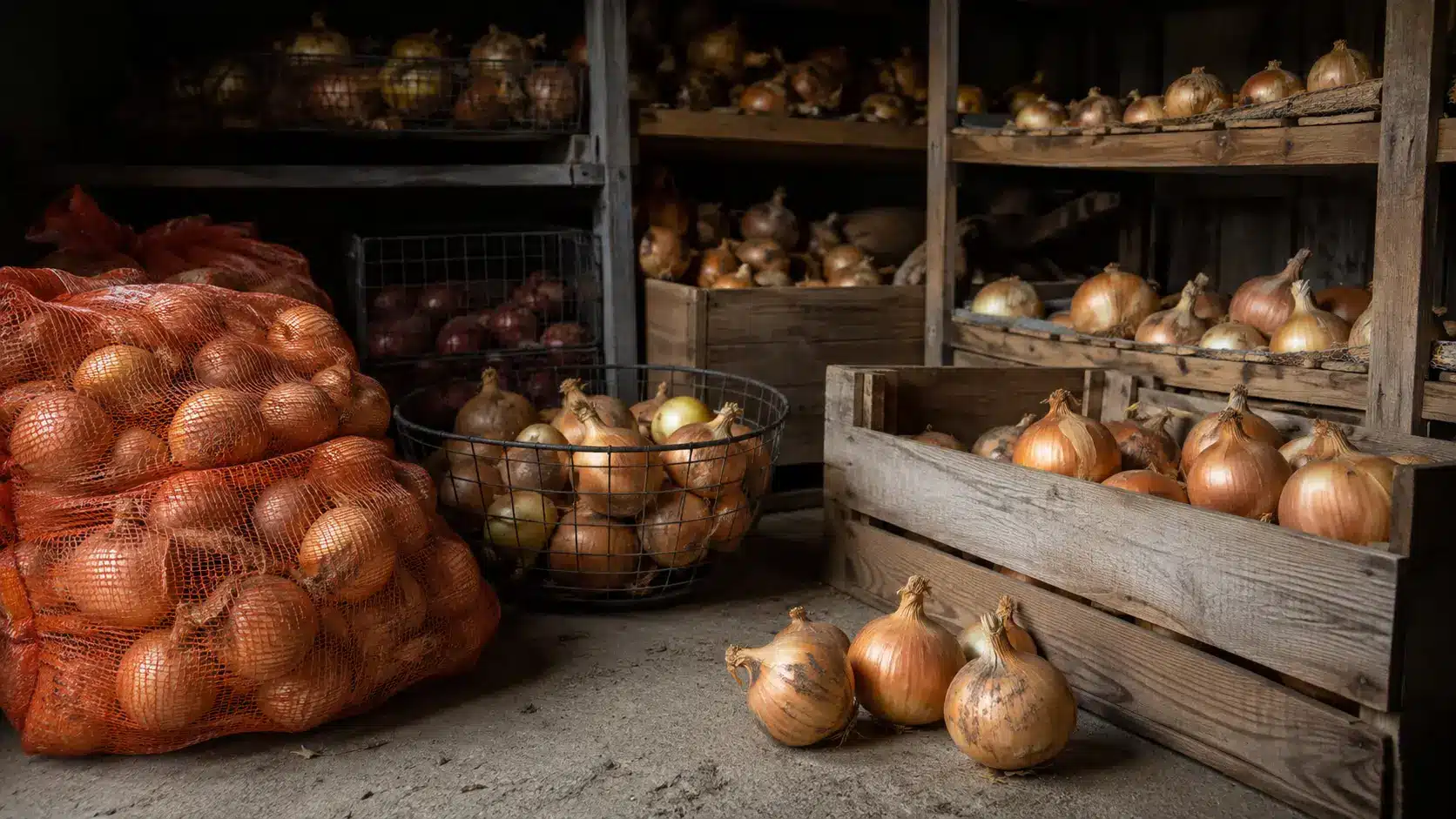
Store only onions that are firm and fully dry in a cool, dark, dry, frost-free space with good airflow. The University of Minnesota Extension notes that onions kept above roughly 40°F tend to sprout sooner, so a consistently cool spot helps them last. Mesh bags, wire baskets, open crates, shallow boxes, and ventilated shelves all work well.
Avoid sealed plastic bags and airtight containers because they trap moisture and can cause mold, soft spots, and rot. Arrange the onions loosely so air can move around each bulb, and do not stack or pack them tightly.
Check them every few weeks and remove any onions that become soft, wet, moldy, leaky, or sprouted.
Fresh roots may mean the storage area is too humid, while green shoots often mean it is too warm. Storage life depends on the onion variety, curing quality, and storage conditions, and sweet onions usually do not last as long as pungent storage varieties.
Use onions with small marks or minor flaws first, and keep the firmest, driest, and healthiest bulbs for longer storage.
How Does Weather Affect Onion Harvesting?
Weather can change the best time to lift onions, even when the bulbs appear ready. The University of Massachusetts Extension points out that harvesting after rain or during high humidity raises the risk of post-harvest disease, so matching the condition of the plants with the forecast helps you choose a safer harvest day.
| Weather | Best Action | Why It Matters |
|---|---|---|
| Dry weather | Harvest when the soil is dry. | Bulbs lift cleanly and easily. |
| Heavy rain expected | Harvest mature onions before rain. | Long periods of moisture can raise the risk of rot. |
| Hard frost expected | Lift mature bulbs before frost. | Frost reduces storage life. |
| Uneven maturity | Harvest ready bulbs in batches. | Plants mature at different rates. |
| Harvesting too early | Wait if tops and necks are green. | Bulbs may be smaller and harder to cure. |
| Waiting too long | Harvest before harsh weather arrives. | Delays increase damage and disease risks. |
The safest harvest time comes from checking both the plants and the forecast. Look for fallen tops, fading leaves, and soft necks, then choose a dry day whenever possible.
What Do Gardeners Say About Onion Harvest Timing?
Not every onion follows the same schedule. Sometimes the best advice comes from someone who has faced the same situation in their own garden.
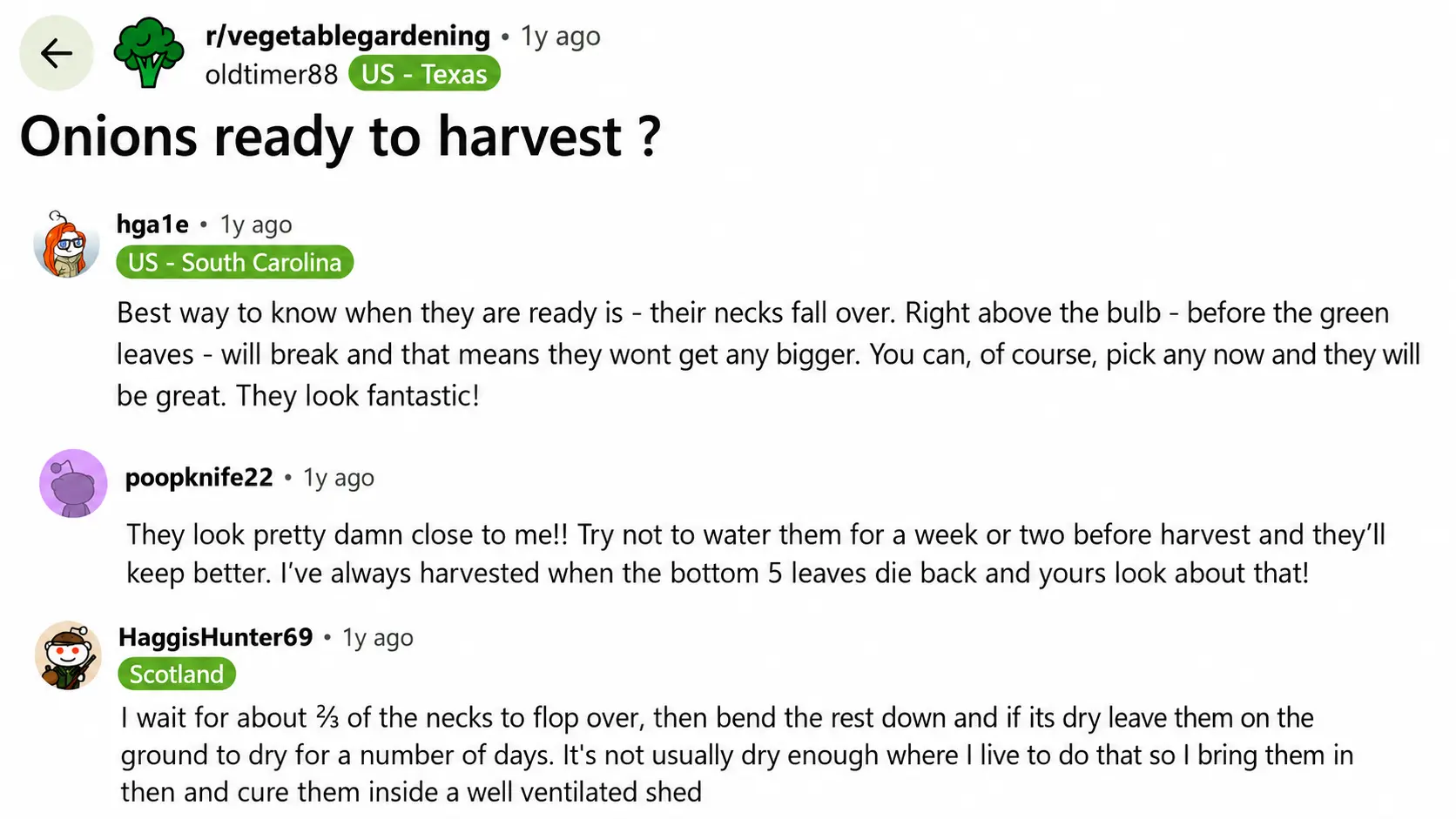
A gardener on Reddit posted photos of red onions that had passed their expected maturity date. The leaves were dying back, but the tops had not fully fallen. The question was simple: harvest now or wait?
Most replies focused on the condition of the plant, not the calendar. Gardeners suggested waiting for the tops to flop over naturally and using the two-thirds rule, which means harvesting when about two-thirds of the necks have fallen.
If outdoor conditions are too damp, the bulbs can be cured in a well-ventilated shed. You can also harvest a few onions early for fresh use if they look close to ready, while leaving the rest in the ground a little longer so the bulbs have more time to size up.
Community advice can help when your onions do not match a fixed timeline.
For more useful feedback, share a photo of the full row, a close-up of the neck, the planting date, onion type, and recent weather. Compare several plants before making the final decision, since one onion may mature sooner than the rest.
What Onion Harvesting Mistakes Should You Avoid?
Avoiding a few common mistakes can protect bulb quality, improve curing, and extend storage life. Pay attention to maturity signs, weather, lifting technique, airflow, and handling so your onions stay firm, dry, and less likely to rot.
- Do not rely only on the calendar or bulb size: Use the date as a reminder, but check the leaves, neck, and overall maturity too.
- Do not force healthy tops down or harvest thick, green necks: Let the tops fall naturally and wait for the necks to soften.
- Do not leave mature onions in soaked soil: Wet conditions can increase the risk of rot.
- Do not pull bulbs by the leaves or dig directly under them: Loosen the soil beside the plant and support the bulb while lifting.
- Do not wash or crowd bulbs during curing: Keep them dry and spaced out for good airflow.
- Do not trim tops or roots too early: Wait until they are fully dry.
- Do not store damaged onions with healthy ones: Use cut, bruised, soft, or sprouting bulbs first.
Careful harvesting and curing make a clear difference in how long onions last. Handle each bulb gently, keep damaged ones separate, and allow plenty of drying time before trimming or moving the crop into storage.
Frequently Asked Questions
Can you leave onions in the ground too long?
Yes. Once onions are mature, leaving them in wet soil for too long can cause rot, splitting, sprouting, pest damage, or loose skins. Harvest them when most tops have fallen and a dry period is expected.
Why are onions harvested at night?
Onions are not usually harvested at night in home gardens. Some commercial growers work at night or early morning to avoid extreme heat, reduce sun damage, keep bulbs cooler, and provide safer conditions for workers.
Can you eat onions immediately after harvesting?
Yes. Freshly harvested onions are safe to eat without curing. Their skins and necks will still be moist, so they will not store well. Use them soon, especially if they are damaged, soft, or bolted.
Can you harvest onions after they have flowered or bolted?
Yes. Bolted onions are edible, but the flower stalk can create a firm or woody center and reduce bulb size. Harvest them promptly, remove any tough center, and use them fresh because they store poorly.
Final Thoughts
Harvesting onions at the right time comes down to watching the plants, not just counting days. If you are unsure when to harvest onions, look for fallen tops, fading leaves, thin necks, and a stretch of dry weather.
The usual onion days-to-harvest range gives you a helpful estimate, but variety, soil, watering, and temperature can change the timing. Once lifted, handle each bulb gently, cure it with plenty of airflow, and store only onions that are firm and fully dry.
Check the whole row and harvest in batches when needed, since bulbs may mature at different speeds.
Before lifting your crop, inspect the tops and necks, review the forecast, and choose the driest available day for a cleaner harvest and better storage results. Use these tips during your next harvest to protect your onions and help them stay fresh for longer.
Drop a comment below and tell me: Have you harvested your onions yet?