Spinach grows fast, but it only feels easy when the timing is right. If you want to learn how to grow spinach in a home garden, start with cool weather, loose soil, and steady moisture.
I have seen spinach fail more often due to late planting than to poor effort, so my first focus is always the spinach growing season.
This blog explains when to plant, where to grow it, how to choose seeds, how to water it, when to harvest, and what to grow beside spinach to keep the bed productive after the crop finishes.
Growing Spinach: Basics and Planting Timing
Spinach is a cool-season leafy green, so timing decides the crop before any fertilizer, tool, or watering routine can help.
It grows best when the weather is cool, the soil is moist, and the plant is not pushed by summer heat. Spring planting can work well if seeds go in early enough.
Fall planting is often easier because the weather cools as the plant matures. In warm regions, spinach usually performs best in fall, winter, or very early spring. In colder regions, spring and fall both work, especially with row cover or a simple cold frame.
| Growing factor | Best condition | Why it matters |
|---|---|---|
| Season | Spring or fall | Cool weather keeps leaves tender and slows bolting. |
| Soil temperature | About 45°F or warmer | Seeds need cool, workable soil for better germination. |
| Light | Full sun to partial shade | Cool weather suits full sun, while warmth makes shade useful. |
| Moisture | Evenly damp soil | Dry swings can stress plants and reduce leaf quality. |
| Harvest stage | Baby leaves or mature leaves | Early picking gives tender leaves and extends the crop. |
Use local frost dates instead of a national month-by-month calendar, because planting months change widely across the United States.
Climate note: Exact planting months vary by state, elevation, USDA zone, and local frost dates. A frost-date framework is more accurate than one national calendar.
For spring, sow as soon as the soil is workable and cool enough for germination. For fall, sow before the first frost while the soil still holds warmth.
Penn State Extension recommends spring planting several weeks before the last frost and fall planting several weeks before the first frost.
Choose the Right Garden Space, Soil, and Seeds
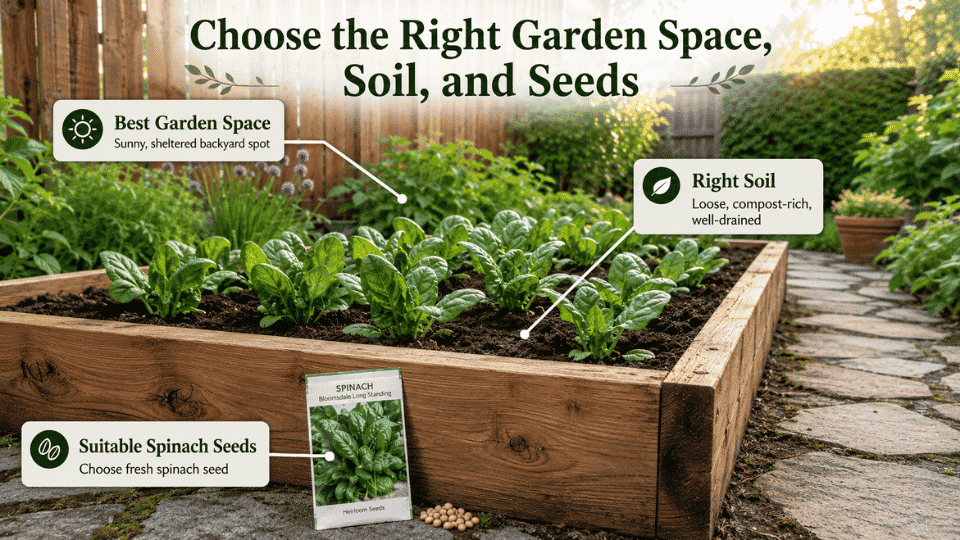
Before sowing, make three careful choices: the growing spot, the soil condition, and the seed type suited to your season.
Pick a Cool, Easy-to-Water Garden Spot
Spinach grows well in a raised bed, garden row, or wide container with drainage holes. The best spot gives enough light without trapping heat around the leaves.
Full sun is useful in cool weather, but afternoon shade helps when temperatures start rising.
- Choose nearby water access: Spinach needs steady moisture, so distant beds often get neglected during dry spells.
- Avoid puddling spots: Wet soil can weaken roots and make seedlings collapse before they establish.
- Skip hot wall edges: Brick, concrete, and south-facing walls can quickly raise heat around plants.
- Use containers wisely: Wide pots work better than tiny pots because they dry out more slowly.
Prepare Loose, Fertile Soil
Spinach has shallow roots, so the top few inches of soil need good structure. Mix finished compost into loose soil before planting. The goal is soil that holds moisture but still drains after rain or irrigation.
- Add finished compost: Compost improves moisture balance, soil texture, and steady nutrient release.
- Avoid fresh manure: It can burn seedlings and pose food safety risks.
- Check the texture: Good soil should hold shape lightly, then crumble when pressed.
- Target neutral soil: A pH near 6.5 to 7.0 works well for many home gardens.
Soil pH note: Extension sources give slightly different spinach pH ranges. A practical home-garden target is slightly acidic to neutral soil, unless a soil test recommends something different.
Choose Fresh Spinach Seeds
Fresh seed improves germination, especially when soil conditions are not perfect. Pick the seed type based on how you plan to use the leaves.
Smooth-leaf spinach suits salads, while savoy and semi-savoy types offer more texture.
- Smooth-leaf spinach: Easy to wash and useful for baby spinach harvests.
- Savory spinach: Crinkled leaves hold up well in texture but need extra cleaning after rain.
- Semi-savoy spinach: A balanced choice for many beginner home gardens.
- Slow-bolting varieties: Helpful in mild warmth, but not a solution for true summer heat.
How to Plant Spinach Seeds Step by Step
Spinach is usually easiest when direct-sown outdoors. Keep the process simple, because careful timing and moisture matter more than complicated tools.
Materials Required
| Material | Why do you need it |
|---|---|
| Hand trowel or small garden fork | Helps loosen the topsoil without disturbing the whole bed too deeply. |
| Rake | Level the surface so seeds sit at a consistent planting depth. |
| Watering can or hose wand | Gives a gentle spray that keeps seeds covered and prevents soil washout. |
| Plant labels | Tracks the spinach variety and sowing date, which helps with future planting decisions. |
| Optional row cover | Protects seedlings from pests, wind, frost, and sudden weather changes during early growth. |
Step 1: Loosen and Level the Bed
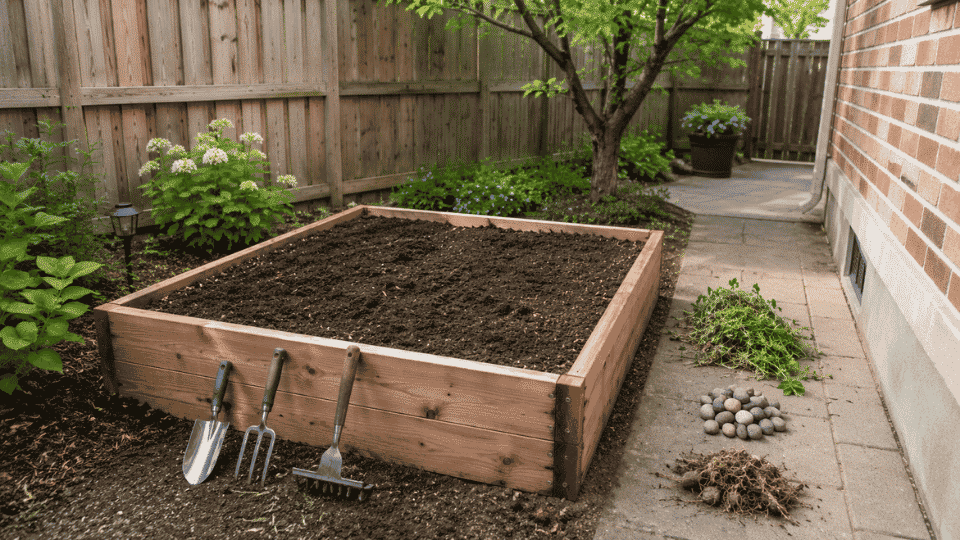
- Loosen the top 6 to 8 inches so young spinach roots can spread through the soil easily.
- Remove stones, large roots, and weeds before they compete with seedlings for space and moisture.
- Rake the surface smooth so seeds sit evenly and germinate at a similar depth across the bed.
Step 2: Sow the Seeds at the Right Depth
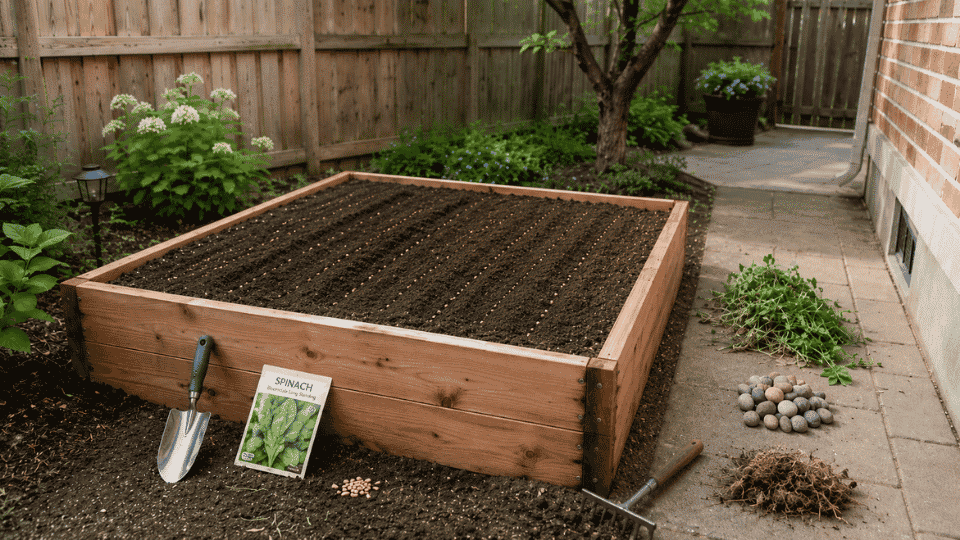
- Plant spinach seeds about 1/2 inch deep, because shallow sowing helps seedlings emerge more evenly.
- Space rows about 8 to 12 inches apart so watering, thinning, and harvesting stay manageable.
- For small beds, sow in short bands instead of long rows to use space more efficiently.
Planting tip: Do not bury spinach seed too deeply. Shallow, even planting gives seedlings a better chance to emerge together.
Step 3: Water Gently After Sowing
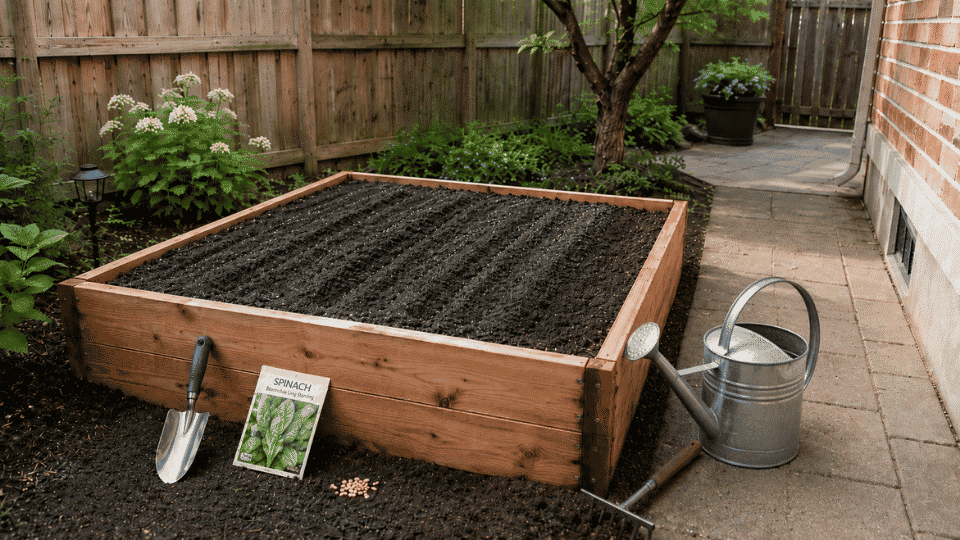
- Use a soft spray so the seeds stay covered instead of washing into uneven clumps.
- Keep the soil surface evenly damp until seedlings appear and begin steady early above-ground growth.
- Check containers more often because potting mix dries faster than in-ground garden soil during sunny weather.
Step 4: Thin the Seedlings
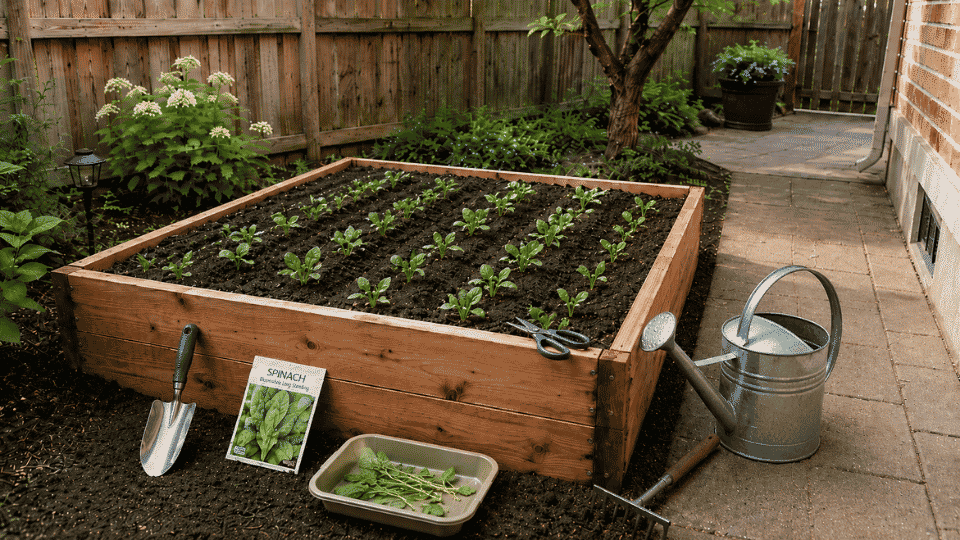
- Thin seedlings once they are large enough to handle without damaging nearby young plants or shallow roots.
- Leave about 3 inches between plants, so leaves have enough space to size up properly.
- Use scissors instead of pulling when roots are crowded, as pulling might disturb the seedlings you want to keep.
Thinning tip: Crowded spinach looks promising at first, but tight spacing reduces airflow, leaf size, and long-term harvest quality.
Step 5: Sow Again for a Longer Harvest
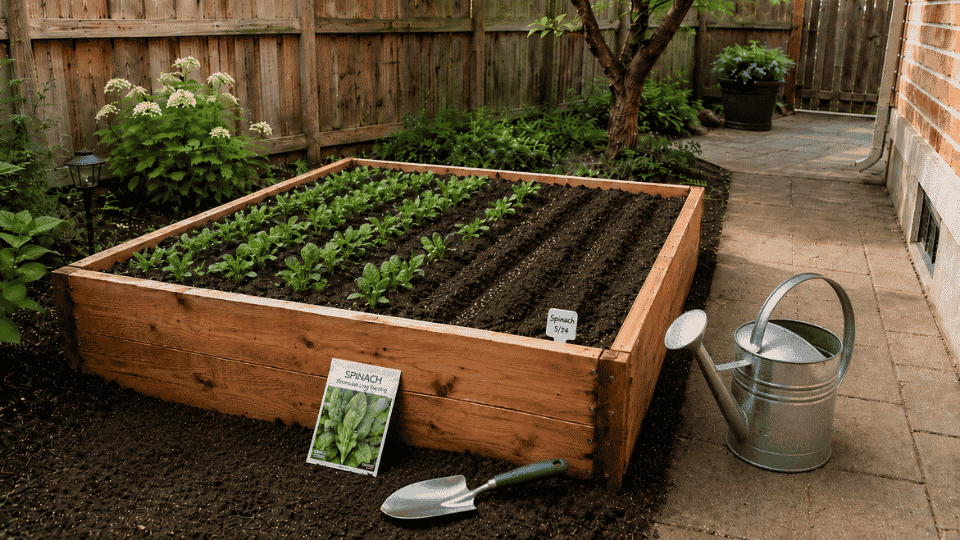
- Plant small batches every 1 to 2 weeks during cool weather for a steadier harvest.
- Stop sowing when heat is likely to arrive before the next batch reaches harvest size.
- Use fresh seed each season if older packets have previously given weak, slow, or patchy germination.
Spinach Care Schedule From Sowing to Harvest
A growth-stage schedule is easier than a national calendar. It tells readers what to do based on the plant’s progress.
| Stage | Main task | What to check |
|---|---|---|
| 2 to 4 weeks before sowing | Choose the site and improve the soil | Drainage, weeds, compost, and shade pattern |
| Planting day | Sow, label, and water gently | Seed depth, spacing, and bed moisture |
| Days 1 to 10 | Keep the seedbed evenly damp | Dry crusting, birds, slugs, and washed-out seed |
| Weeks 2 to 3 | Thin seedlings and watch growth | Crowding, pale leaves, and uneven patches |
| Weeks 3 to 5 | Feed lightly only if needed | Slow growth, yellowing, or wet soil problems |
| Weeks 4 to 6 | Begin baby-leaf harvest | Tender outer leaves and healthy centers |
| Weeks 6 and beyond | Harvest often or clear bolting plants | Heat stress, flower stalks, and bitter leaves |
This schedule works best when adjusted to the weather. My usual rule is simple: respond to the plant stage, not the calendar date.
Watering and Harvesting Spinach for Higher Yield
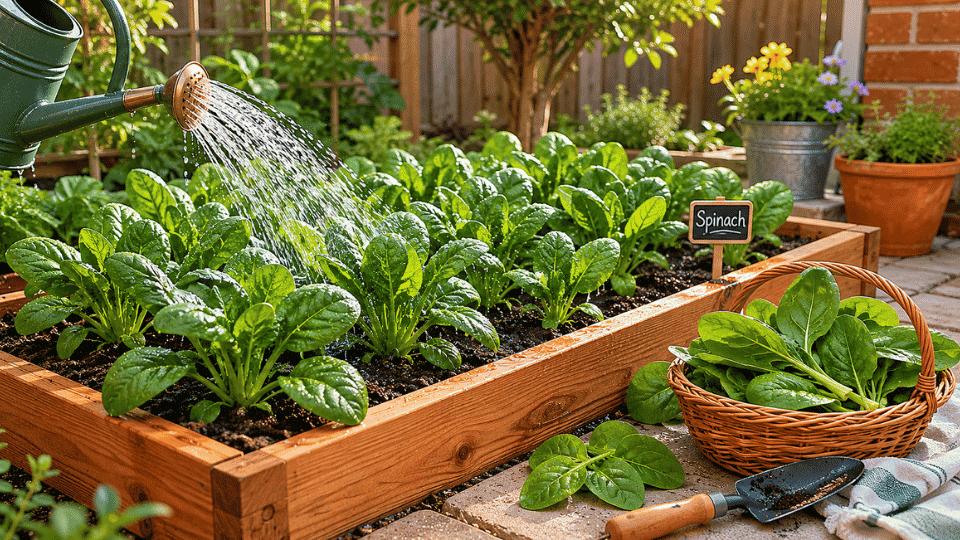
Watering and harvesting go hand in hand because both affect leaf texture, plant stress, and the length of time the spinach bed remains productive.
1. Keep Moisture Consistent
Spinach needs evenly damp soil because shallow roots dry out quickly. The soil should feel moist, not sticky or waterlogged. Drip irrigation and soaker hoses work well because they water roots without soaking every leaf.
- Use the top-inch test: Water when the top inch feels dry to the touch.
- Water in the morning: Morning watering gives leaves time to dry before evening.
- Watch containers closely: Pots dry out faster than garden beds, especially in the wind.
- Reduce watering after rain: Spinach dislikes saturated soil, even though it likes moisture.
2. Use Mulch Without Smothering Seedlings
A light mulch layer helps protect moisture once seedlings are visible and stable. Straw, shredded leaves, or fine compost can work. Keep mulch away from tiny crowns so air still moves around young plants.
Mulch tip: Heavy mulch around baby spinach can trap dampness and invite slugs. Use a thin layer and adjust after seedlings grow.
3. Harvest Leaves Before Quality Drops
Spinach tastes best when leaves are picked young and often. Harvest outer leaves first, while leaving the center point to keep growing. If hot weather is coming, pick heavily rather than waiting for larger leaves.
- Baby leaves: Pick when leaves are tender and large enough to use.
- Outer-leaf harvest: Remove mature outside leaves while protecting the growing center.
- Whole-plant harvest: Cut plants when heat, crowding, or bolting is close.
- Morning harvest: Pick early for crisp leaves with better storage quality.
What to Grow Beside Spinach and After Spinach
Spinach pairs best with crops that like cool weather, stay compact, or finish before the bed becomes crowded.
- Radishes are among the easiest crops to grow, besides spinach. They mature quickly, use little space, and can be pulled before spinach needs more room.
- Scallions also fit well because they grow upright and do not shade the leaves. Lettuce and cilantro share similar cool-season needs, so they make sense in a salad-style bed.
- Peas can be planted alongside spinach if they are placed carefully. Put the trellis on the north side of the bed, so it does not block too much sun.
- Carrots can also grow nearby because they use the soil differently, although they need careful thinning and loose ground.
Once true spinach struggles with heat, change the bed instead of fighting the season.
Bush beans, basil, Swiss chard, amaranth greens, Malabar spinach, and New Zealand spinach can keep the space productive during warmer months.
These crops are not all the same as spinach, but they help maintain a steady harvest when cool-season leaves decline.
Common Spinach Problems and Simple Fixes
Most spinach problems come from timing, moisture, spacing, or pests. A quick diagnosis helps save the next sowing, even if one crop struggles.
| Problem | Likely cause | Simple fix |
|---|---|---|
| Seeds do not sprout | Old seed, dry surface, or warm soil | Use fresh seed and keep the seedbed damp. |
| Plants bolt early | Heat, long days, drought, or crowding | Plant earlier, water evenly, and use shade during warm spells. |
| Yellow leaves | Low nitrogen, wet roots, or stress | Check drainage first, then feed lightly if needed. |
| Leaf tunnels | Leaf miner damage | Remove damaged leaves and use row cover next planting. |
| Small plants | Crowding, weak soil, or uneven watering | Thin properly and improve the bed before sowing again. |
| Bitter leaves | Heat stress or delayed harvest | Harvest younger leaves and switch crops when weather warms. |
Do not judge the whole garden by one weak spinach crop. Adjust timing, moisture, or spacing, then sow again during the next cool window.
Frequently Asked Questions
Can spinach grow indoors near a window?
Spinach can grow indoors, but a window alone often gives weak results. A bright south-facing window may grow baby leaves, while a grow light gives stronger growth. Keep the room cool, use a container with drainage, and avoid placing plants near heaters or hot glass.
Should spinach seeds be soaked before planting?
Spinach seeds do not always need soaking, but a short soak can help when germination has been uneven. Soak briefly, then plant right away into prepared soil. Do not leave soaked seeds sitting for long, because they can rot before they sprout.
Can spinach survive frost?
Spinach can handle light frost, and cool weather can improve leaf quality. Young plants and exposed leaves may suffer during hard freezes. Row cover, low tunnels, or cold frames help protect the crop and can extend harvest in colder regions.
Why are my spinach leaves small?
Small spinach leaves usually point to crowding, poor soil, uneven watering, or heat stress. Thin the seedlings early, keep moisture steady, and check whether the season is already too warm. If plants are starting to bolt, harvest what you can and replant later.
Is spinach better in raised beds or containers?
Raised beds are better for larger harvests because spacing and moisture are easier to manage. Containers work well for patios, balconies, and small spaces. The main difference is watering, since containers dry faster and need closer attention during sunny or windy weather.
Summing Up
Learning how to grow spinach in a home garden becomes simpler when the crop is treated as seasonal, not difficult.
Fresh seed, loose soil, careful watering, and timely harvests create better leaves than heavy feeding or guesswork. Once the spinach growing season ends, heat-tolerant greens can take over the same space.
I would start with one small cool-season bed, then adjust the next sowing from what worked.
Share your results, questions, or local planting window in the comments, because my favorite garden lessons often come from comparing real growing notes.