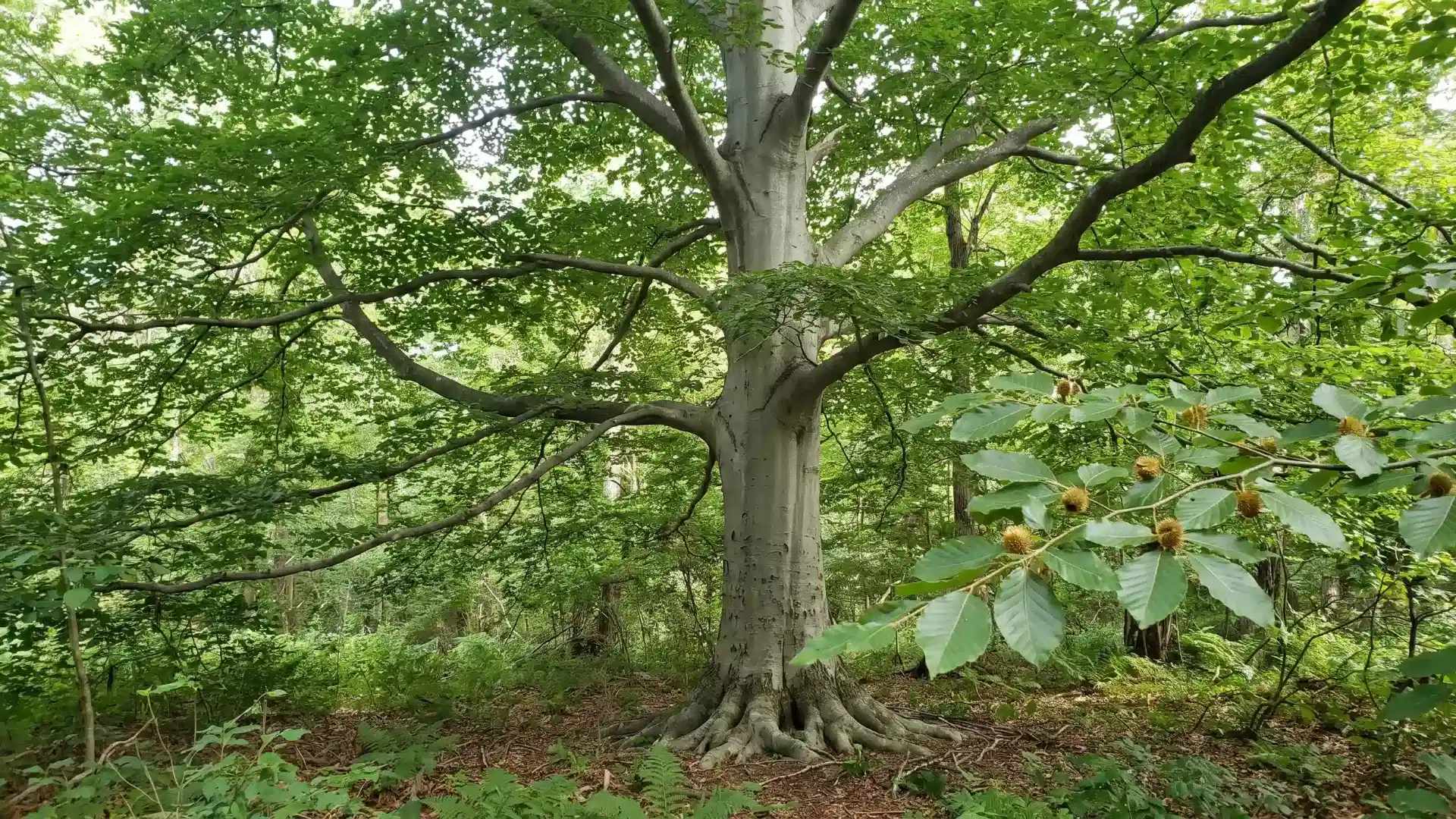
A beech tree stands out with its smooth gray bark, rounded crown, and oval leaves lined with straight veins and small teeth.
In North America, the name usually points to the American beech, Fagus grandifolia, a slow-growing tree native to the eastern half of the country.
Its leaves stay dark green through summer, then shift to yellow, bronze, or brown once fall arrives. Some of these dried leaves cling to the branches all winter, making the tree stand out even after its neighbors have gone bare.
Here you’ll learn how to spot a beech tree by its bark, leaves, buds, fruit, and size, along with its growing needs, common problems, and value to wildlife.
What is a Beech Tree?
Beech trees are deciduous hardwoods in the Fagaceae family. They belong to the Fagus genus and are known for their long lives and small nuts called beechnuts. American beech grows across much of eastern North America, while common or European beech is native across large parts of Europe.
A beech tree produces both male and female flowers on the same plant, and wind carries the pollen. After pollination, small triangular nuts develop inside prickly husks. These nuts provide food for birds and mammals. Beech trees often grow in forests with moist, well-drained soil, and young trees can tolerate shade as they develop.
Beech Tree: Key Identification Clues
Beech identification works best when you check several parts of the tree together. Leaf arrangement, trunk texture, winter buds, nut cases, and flowers each add a clue. Checking more than one feature also helps separate beech from similar broadleaf trees.
1. Beech Tree Leaves
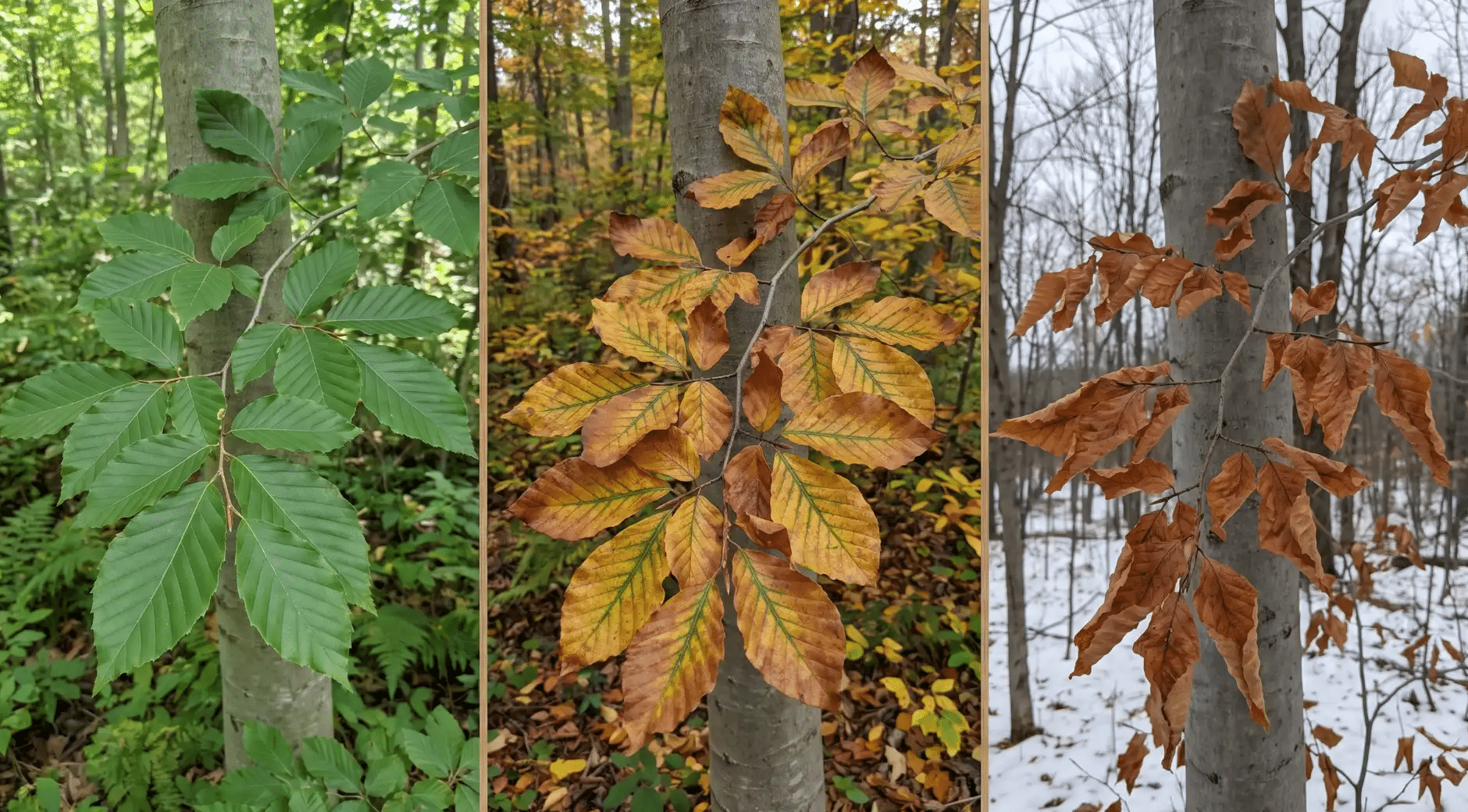
Oval leaves taper to a pointed tip, with toothed edges and straight side veins. New growth starts silvery-green, darkening as it matures, then turning yellow, bronze, or brown in fall. Many leaves cling on through winter, a trait called marcescence. That single-blade, straight-veined pattern also helps rule out compound-leaved trees, since something like ash tree leaves grows several leaflets on one stem instead of a single blade.
American beech leaves run 3-6 inches long, growing singly along the twig. Common beech leaves are smaller, about 4-9 cm, with soft young hairs that fade over time.
2. Bark
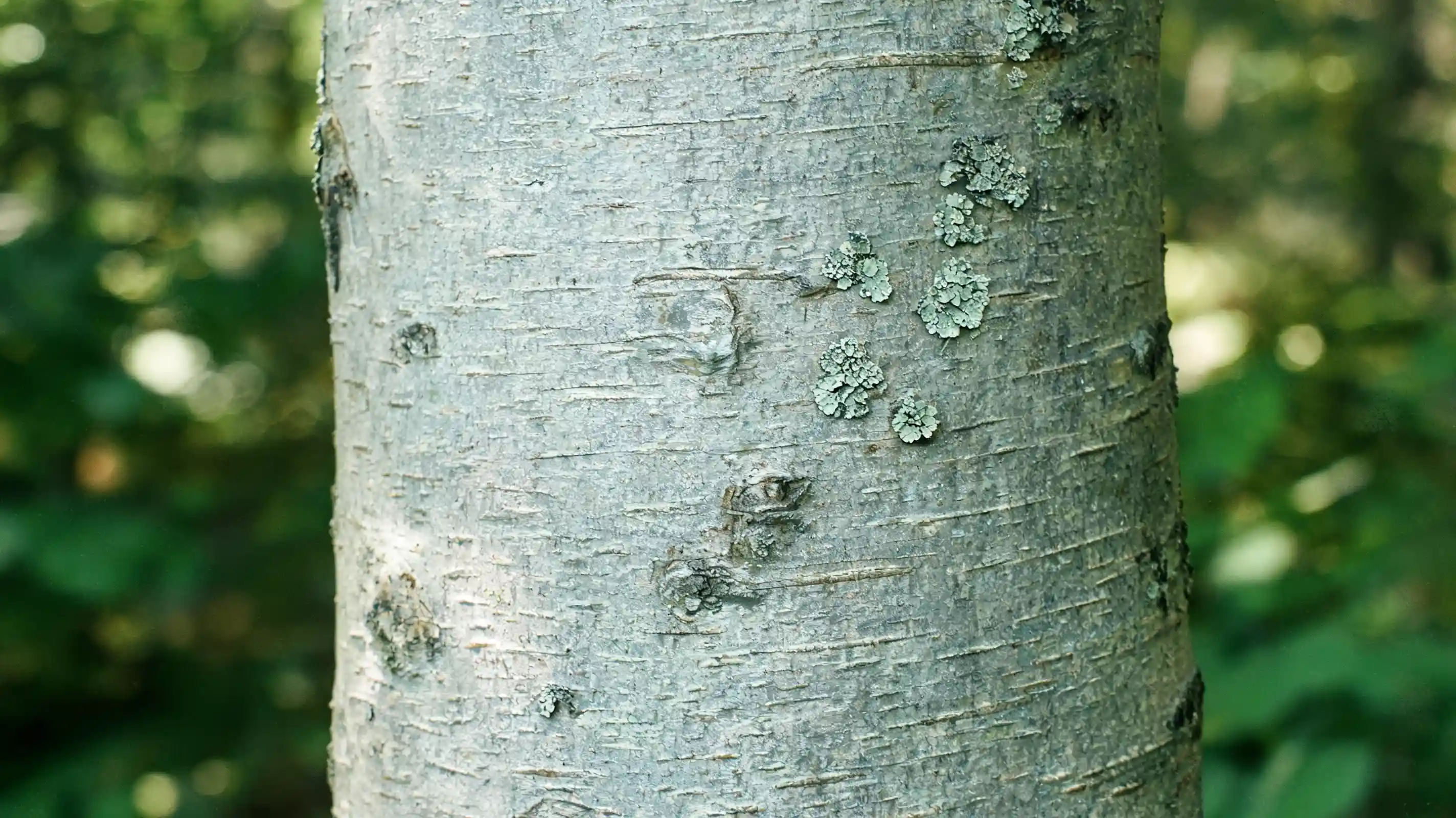
Bark is one of the most reliable ways to recognize a beech tree, since it stays smooth and thin even as the tree matures. Its color runs a pale silver-gray, without the deep ridges or rough texture common to other large trees.
This smooth surface takes marks easily, which is why carved initials and old scars tend to show up so often on beech trunks.
3. Buds and Twigs
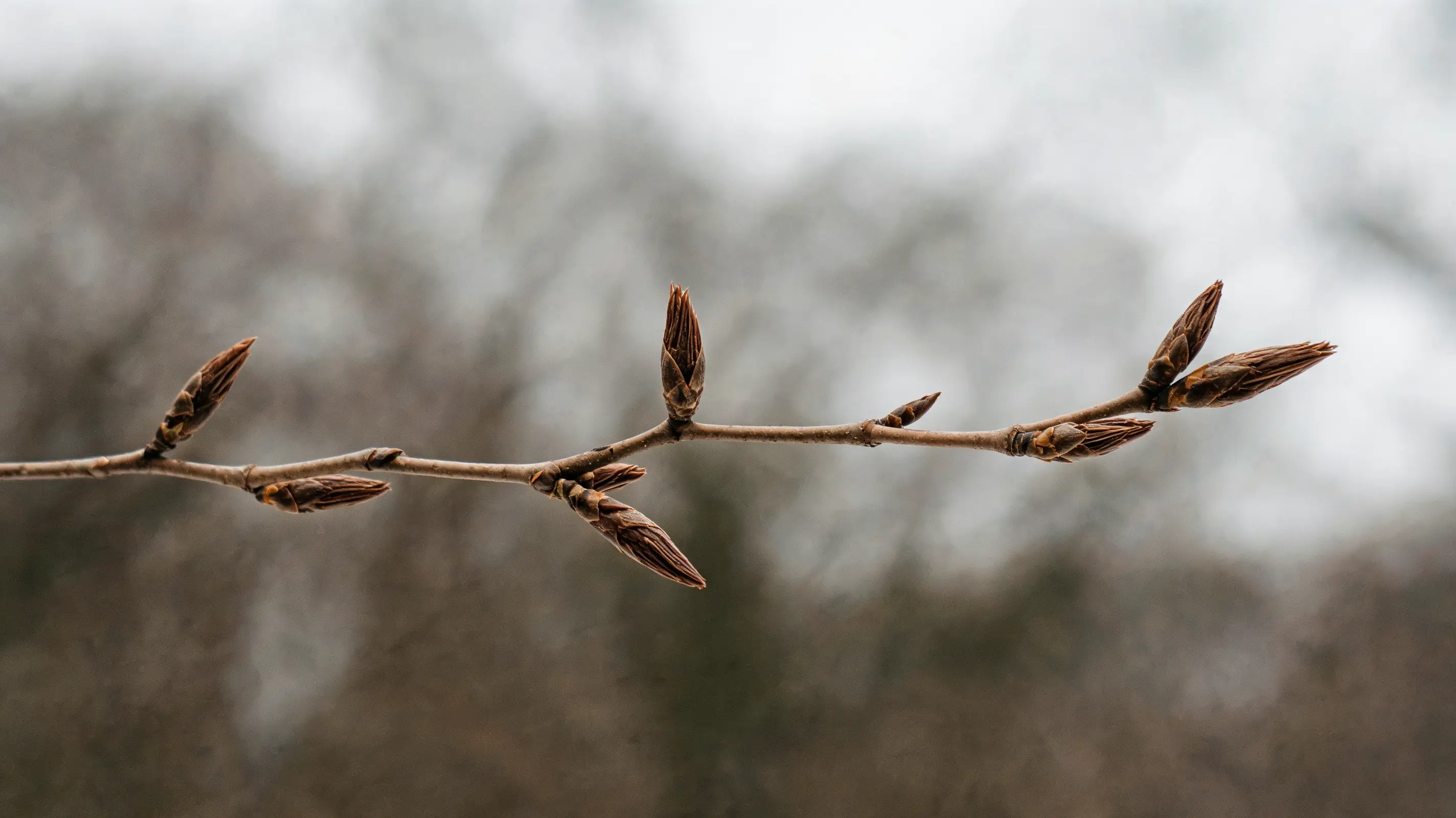
Once the leaves fall, beech is still easy to identify by its buds. They grow long, narrow, and sharply pointed, wrapped in tight, overlapping scales that give them a distinct cigar-like shape.
These buds sit at an angle along slender twigs that zigzag slightly from node to node, a small detail that helps separate beech from other bare winter trees nearby.
4. Beechnuts
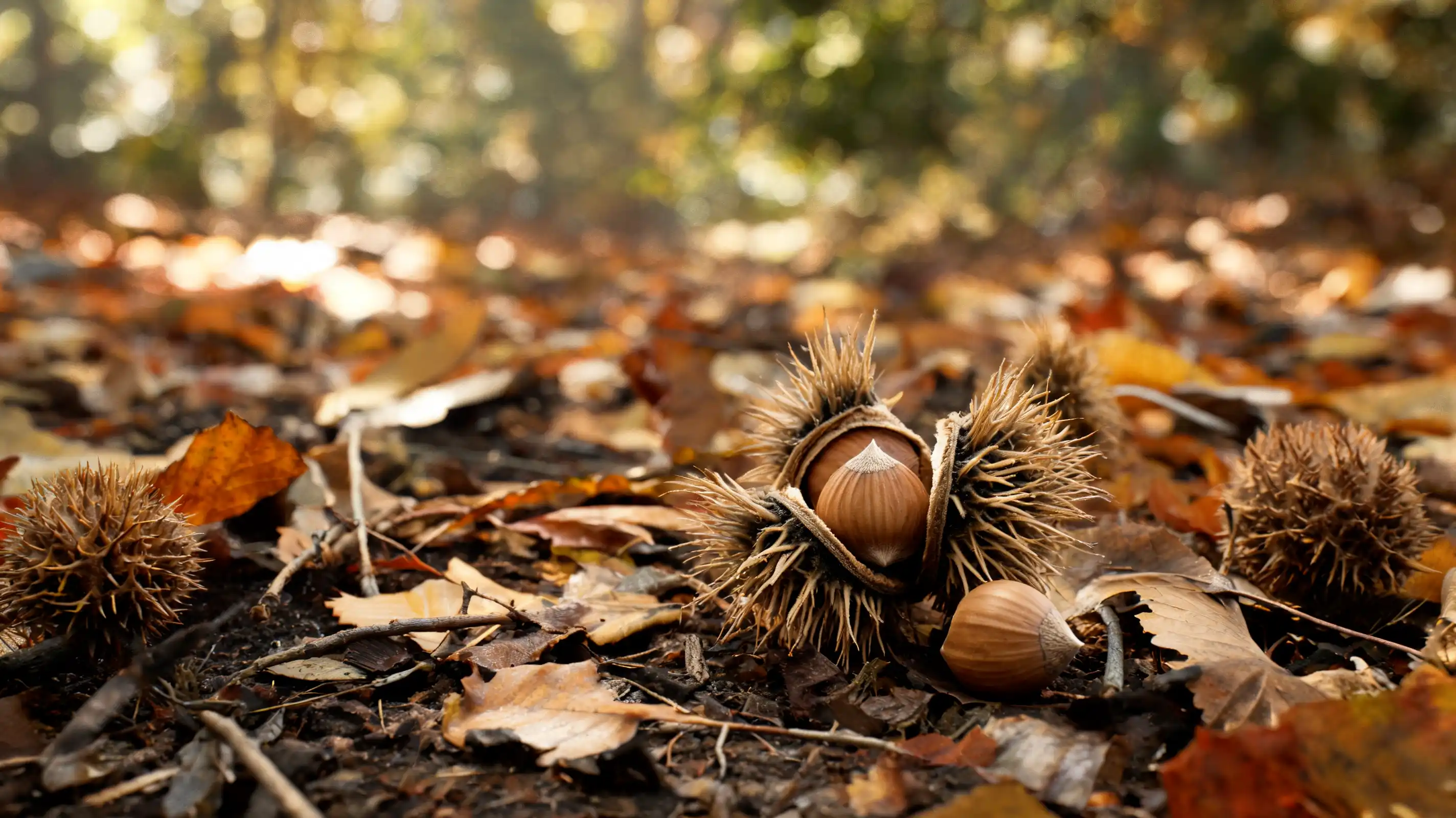
Beechnuts are small, three-sided nuts that typically grow in pairs, tucked inside a rough, bristly husk with four lobes. As fall arrives, this husk dries out and splits open, releasing the nuts to the ground below. The USDA Forest Service notes that a tree usually needs to reach about 40 years old before it produces a substantial nut crop.
Their small size and sharp, triangular shape make them easy to tell apart from the fruit of most other hardwood trees.
5. Beech Flowers
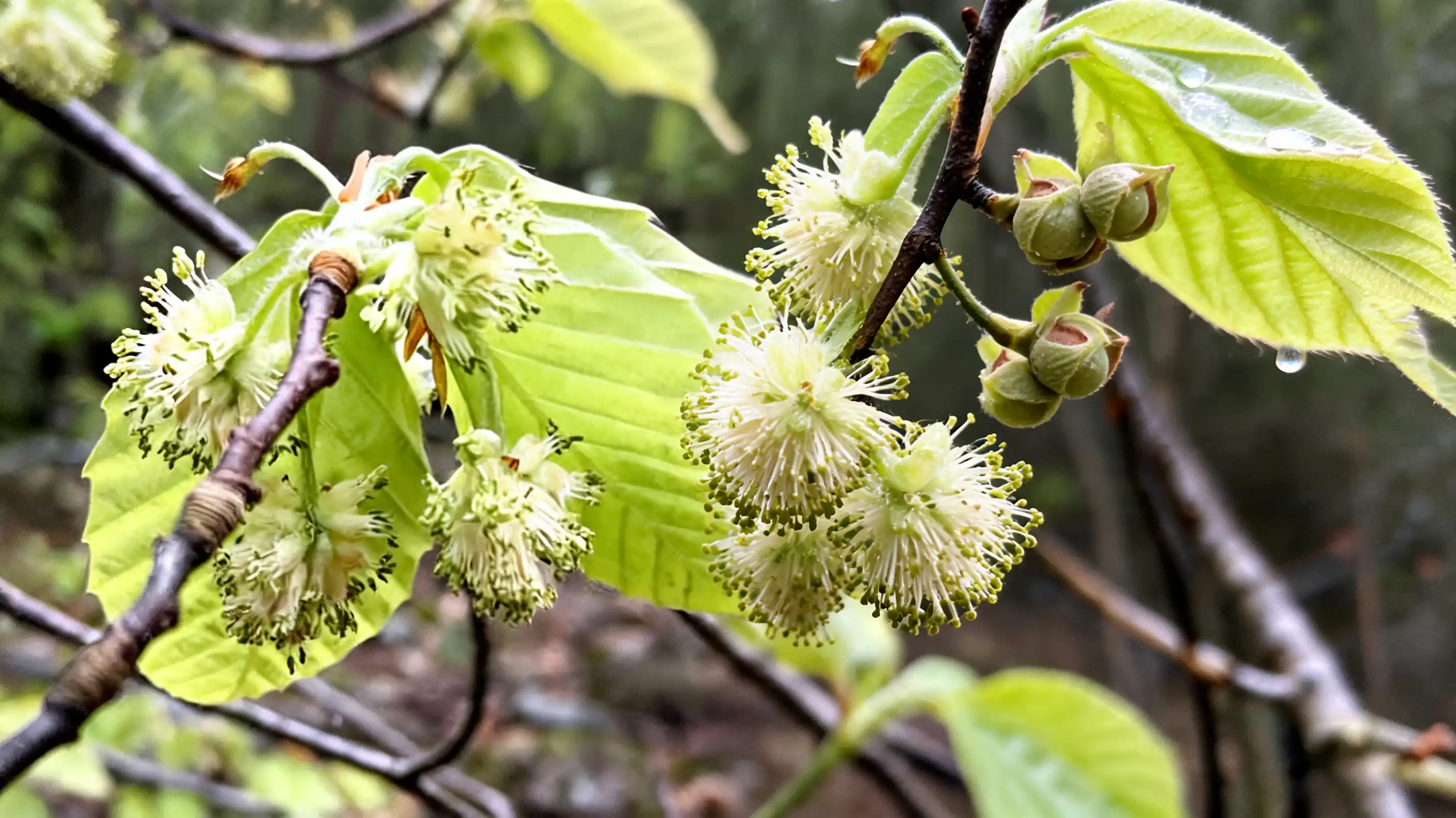
Beech flowers show up briefly each spring, just as new leaves begin to open. Male flowers form small, round, hanging clusters, while female flowers grow in pairs, each held within a small cup-like base. Once pollinated, these female flowers slowly develop into the woody, bristly husks that hold the tree’s beechnuts by early fall.
How to Identify a Beech Tree
Bark, leaves, buds, and fruit each leave their own clue behind, and checking them together builds a far more reliable picture than any one feature alone.
- Step 1: Check the Bark: Look for a smooth, thin, silver-gray trunk that stays smooth even with age.
- Step 2: Look at the Leaves: Oval, toothed beech tree leaves with straight side veins confirm the typical beech shape.
- Step 3: Examine the Buds: Long, narrow, sharply pointed buds along zigzagging twigs stand out once leaves drop.
- Step 4: Search for Beechnuts: Small triangular nuts inside bristly husks confirm the tree, especially in fall.
- Step 5: Compare Look-Alikes: Common beech can be confused with hornbeam. Hornbeam leaves have more sharply serrated edges, while common beech has a softer, wavier margin.
Matching a few of these signs together, rather than leaning on just one, gives you a confident answer even when the season or the tree’s age changes how it looks.
Where Do Beech Trees Grow?
Beech species are spread across three regions: North America, Western Eurasia, and East Asia. American and European beech are the most studied and widely grown, so their conditions are covered in detail below.
1. American Beech
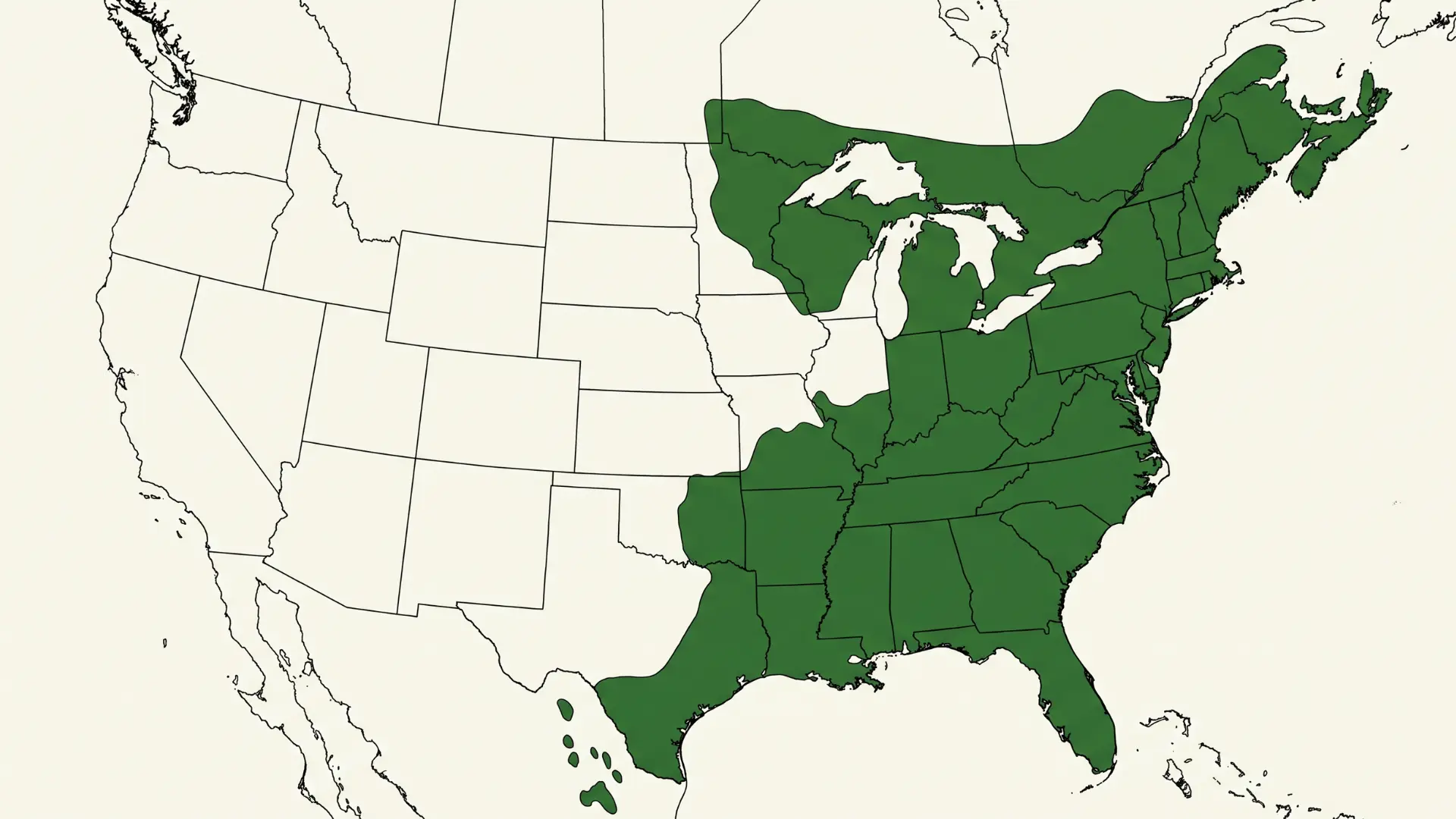
A few growing conditions tend to show up together wherever American beech thrives, and spotting them can support an identification made from the tree itself.
- Soil: Moist, well-drained, and usually acidic soil supports healthy growth.
- Light: Young trees tolerate shade, while open light supports a broader crown.
- Moisture: Steady moisture helps, but standing water can harm the roots.
- Terrain: Northern slopes, low woods, and sheltered ravines often hold suitable moisture.
- Forest setting: Sugar maple, hemlock, and the many types of birch trees found in eastern forests often share the same moist, well-drained slopes.
Habitat alone cannot confirm a beech tree. Always check its bark, buds, leaves, or fruit before settling on a name.
2. European Beech
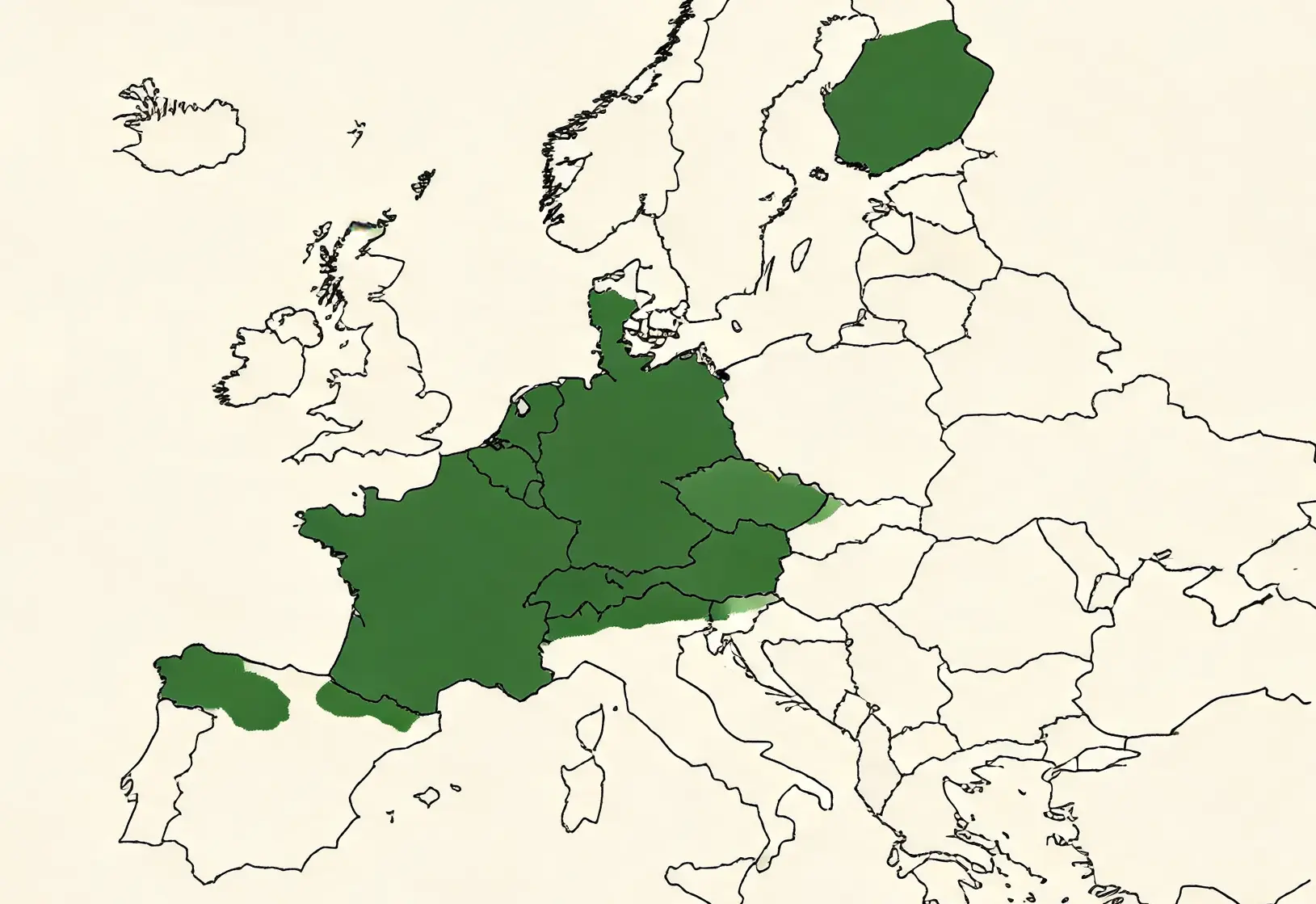
European beech also favors a specific set of conditions, and matching a few together helps confirm the tree along with its bark and leaves.
- Soil: Well-drained soil, often chalk, limestone, or light loam, supports healthy growth.
- Climate: A humid atmosphere suits it best, though hard winter frost can stress the tree.
- Light: Grows in full woodland shade as well as in the open, as a single tree.
- Terrain: Drier, free-draining slopes are preferred over low, wet ground.
- Forest setting: Dense canopy limits undergrowth, leaving a thick carpet of fallen leaves below.
The same rule applies here: pair these habitat clues with the tree’s bark, buds, or leaves rather than relying on location alone.
3. Japanese, Chinese, and Engler’s Beech
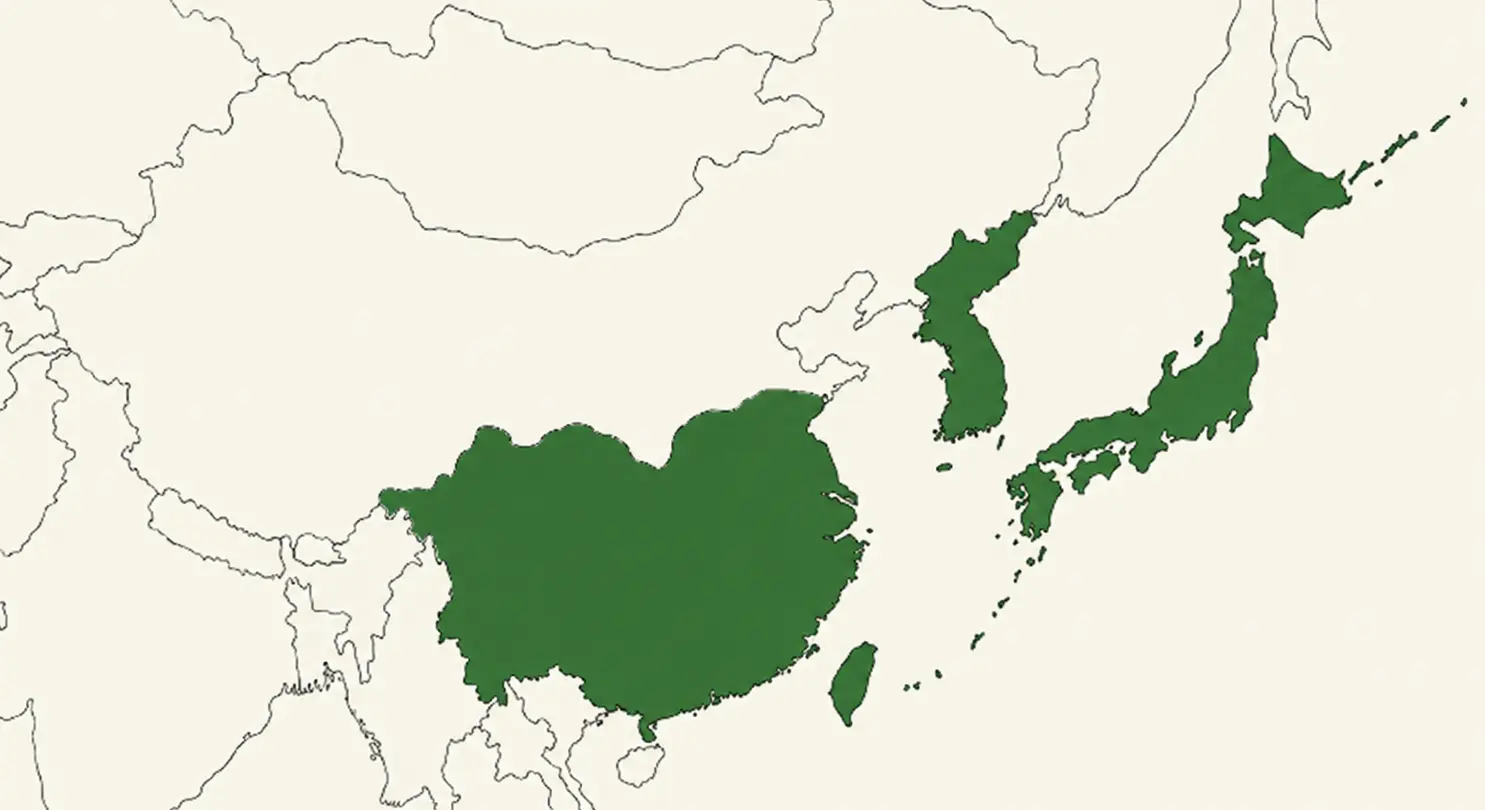
These East Asian beech types share broadly similar mountain forest conditions, though detailed growing data isn’t as well documented as it is for American or European beech.
- Region: Found across Japan, China, Taiwan, and South Korea
- Setting: Grow in mountain forests alongside other native hardwoods
- Soil: Prefer moist, well-drained forest soil, similar to other beech species
Two lesser-known beech types also grow further west, in the humid forested terrain around the Caspian region. Like their East Asian relatives, specific growing details for these types aren’t well documented compared to American or European beech.
Significance and Uses of Beech Tree
Beech serves both as a landscape tree and a source of dependable hardwood. Its broad, dense crown makes it a popular shade tree for parks and large yards, while its smooth bark and rich fall color add year-round appeal.
The wood itself is hard and close-grained, making it well suited for furniture, cabinetry, and flooring. It also holds up to regular indoor wear, works well for tool handles and turned pieces, and produces thin veneer sheets used to cover furniture and panels.
Seasoned beech burns hot, making it a favorite for firewood too. It doesn’t hold up well outdoors, though, so it’s best kept away from exposed, weather-facing structures.
Common Beech Tree Pests and Diseases
Beech trees generally stay healthy, but a few pests and diseases can weaken them over time. Spotting the early signs of any of these issues makes treatment easier and helps protect the tree’s long-term health.
| Pest/Disease | Signs to Watch For | How to Care |
|---|---|---|
| Beech bark disease | Reddish cankers on bark from scale insect and fungus combo | Control scale insects early; remove badly infected trees |
| Beech leaf disease | Dark banding, wrinkled or crinkly leaves | Report sightings; consult an arborist for treatment options |
| Woolly aphid | Fluffy white masses on leaves and stems | Rinse off with a strong blast of water |
| Root rot (Phytophthora) | Thinning canopy, weak growth | Avoid overwatering; ensure well-drained soil |
Catching these problems early keeps a beech tree healthier for longer. Regular checks on bark, leaves, and canopy density help spot trouble before it spreads too far.
Frequently Asked Questions
What is the difference between American beech and European beech?
American beech is native to eastern North America and has larger, more clearly toothed leaves. European beech is native to Europe and usually has smaller leaves with shallower teeth. Both are valued hardwoods used often in furniture and flooring.
How often do these trees produce beechnuts?
Good crops often occur every 2 to 8 years, with lighter production in the years between. Consistent care, including steady moisture and full sun exposure, can help support healthier yields during these fruitful periods.
Can animals eat beech nuts, and which ones do?
Yes, beech nuts are a favorite food for wildlife. Squirrels, chipmunks, raccoons, mice, and birds all eat them regularly. Black bears and wild turkeys rely on them too, especially in fall when the nuts drop from their bristly husks.
Can tree roots damage a driveway?
Shallow, spreading roots can disrupt nearby pavement as they grow thicker over time. To avoid damage, position the tree away from driveways, sidewalks, foundations, and underground utilities so you can enjoy it without worrying about lifted concrete later.
What’s the difference between this tree and a hornbeam?
Beech tree leaves have wavy edges lined with fine hairs, while hornbeam leaves show sharp, serrated edges instead. Bark differs too: beech stays smooth and gray, while hornbeam bark often looks fluted or muscle-like along the trunk.
Final Thoughts
Spotting a beech tree gets easier once you check a few features together: smooth gray bark, oval toothed leaves, long pointed buds, and small triangular nuts in bristly husks. Seasonal clues help too, like leaves that cling on through winter or flowers that appear briefly each spring.
Beyond identification, beech trees offer real value: dense shade, strong hardwood, and food for birds and mammals through fall and winter. Keeping an eye out for early signs of disease or pest damage goes a long way toward keeping one healthy for decades to come.
Next time you’re out on a walk, look for these signs on a nearby tree: bark, leaves, buds, and nuts, and see if you can spot a beech with confidence. Drop a comment below and let me know if you have any further questions about beech trees.