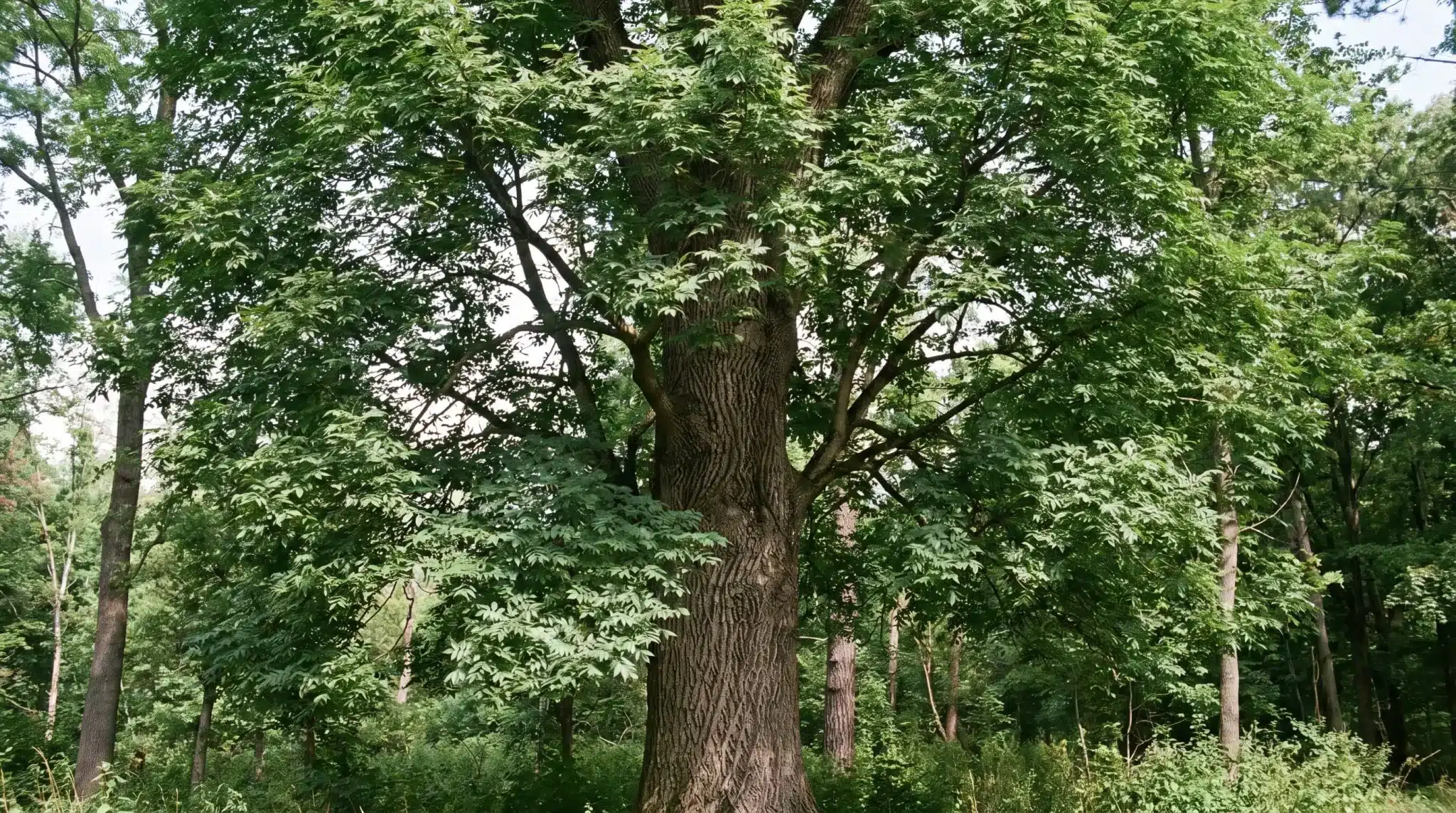
Do you have a tree in your yard with leaves growing in small groups, but you’re not sure if they are ash tree leaves? Many people find it hard to tell an ash tree apart from other trees, and it gets even trickier once you add look-alikes like elder or mountain ash into the mix.
The good news is once you know what to check, ash leaves are not hard to spot. You just need to look at a few simple things: how the leaves are arranged, how many small leaflets each one has, and how the branches grow.
Learn how to identify ash tree leaves, spot the differences between similar trees, and verify your find by examining bark and buds.
What is an Ash Tree?
An ash tree has a few clear signs you can spot right away, once you know what to look for. It belongs to the genus Fraxinus, part of the olive family, and its leaves grow in a compound pattern: 5 to 9 small leaflets set opposite each other along one central stem, ending in a single leaflet at the tip.
Each leaflet is oval in shape, pointed at the tip, with small teeth running along the edges, and the whole leaf often turns yellow or a soft purple before dropping in fall.
Its branches grow opposite one another too, not staggered like most trees, and this branching pattern remains one of the easiest and most reliable ways to spot an ash from a distance, even in winter when the leaves are gone.
With age, the bark forms tight, diamond-shaped ridges, giving the trunk a rough, woven look that sets it apart from the smoother bark of many nearby trees. Together, these traits- opposite branching, compound leaves, and ridged bark- offer a solid starting point for identifying an ash before checking finer details like buds or seeds.
Key Features of Ash Tree Leaves
Ash trees have three telltale leaf traits that make them stand out from other trees: a compound structure made up of several small leaflets, an opposite growth pattern that runs through branches, leaves, and buds, and clear seasonal color shifts as the year moves along.
Spotting even one of these traits is a strong clue, but recognizing all three together makes identification far more reliable. Here’s what to look for in each one.
1. Compound Leaves with Several Leaflets
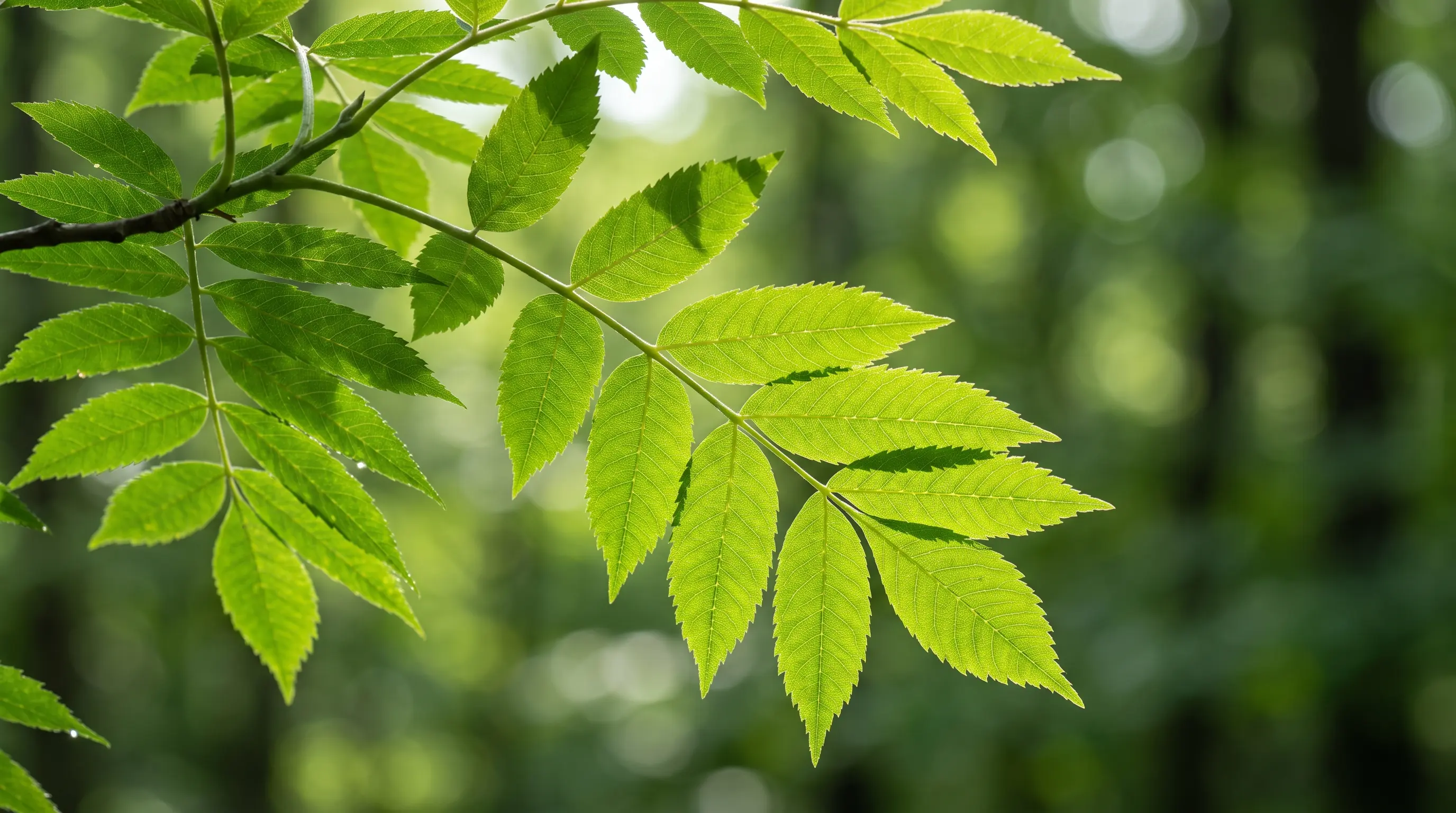
Ash leaves are compound; each leaf is made of several smaller leaflets attached to one stem.
- Most ash trees have 5 to 9 leaflets, though some have up to 11
- Each leaflet is oval with a pointed tip
- Edges have light sawtooth serration
This layered structure is one of the clearest signs of an ash tree. How each leaflet attaches- a clear stalk, a short winged base, or none at all- can even hint at the species.
2. Opposite Branches, Leaves, and Buds
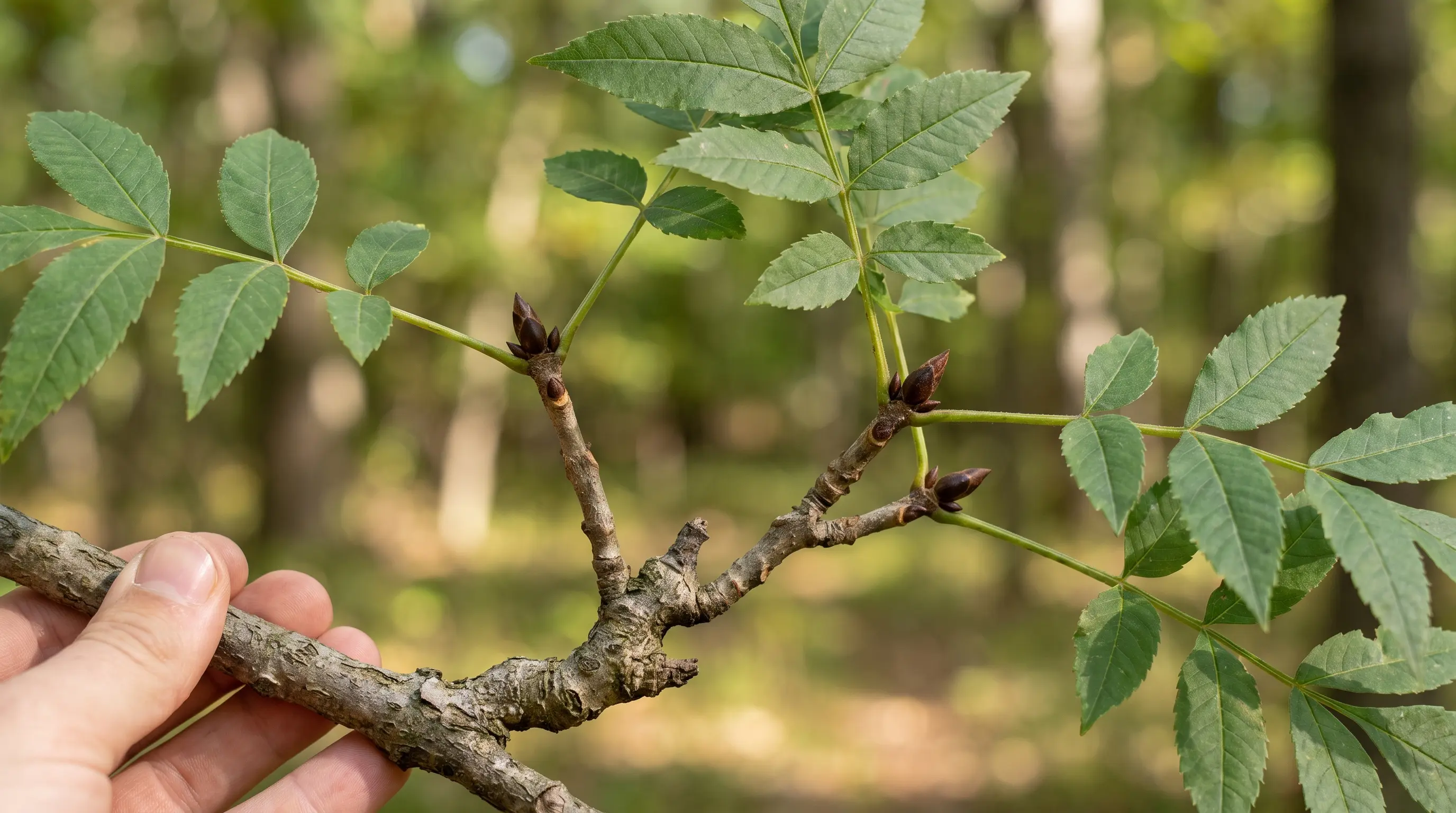
Ash trees grow their branches, leaves, and buds directly across from each other, not staggered like most trees.
- This opposite pattern extends to the buds too, not just branches and leaves
- The symmetry is rare in nature, which makes it one of the strongest identifiers
Spot this pattern paired with compound leaves, and it’s very likely an ash. This same opposite growth also carries through to the U-shaped leaf scars left behind after leaves drop, making it a reliable identifier even in winter when the tree is bare.
3. Seasonal leaf changes
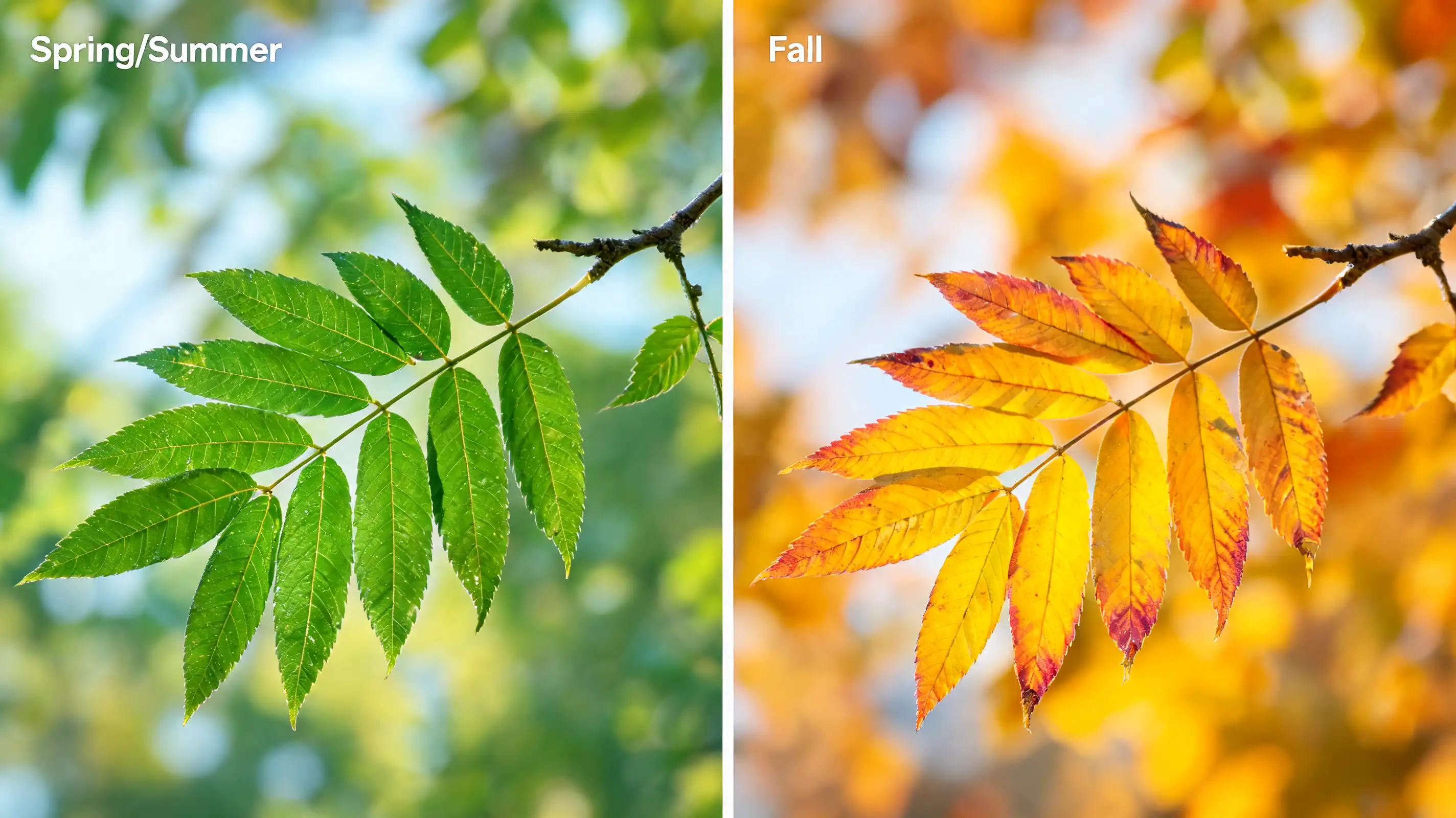
Ash leaves shift color with the seasons, giving you another way to confirm what you’re looking at beyond just leaf shape and branch pattern.
- Spring and summer: deep, healthy green
- Fall: golden yellow or reddish-purple, depending on the species
Tracking these seasonal shifts can help confirm identification, especially when paired with leaf shape and branch pattern.
How to Identify if You Have an Ash Tree
The leaves may point you toward an ash tree, but a few other features can help you confirm it. Check the bark, buds, twigs, flowers, and seeds together, since each stage of the growing season leaves its own distinct clue behind.
- Step 1: Check the Bark. Young ash bark is smooth and gray-brown, roughening into a diamond ridge pattern with age, clearer on older trees. Running a finger across the ridges can help you feel the pattern even when light is poor.
- Step 2: Look at the Buds and Twigs. Ash buds grow in opposite pairs, ranging from brown to black, often with a slightly domed or blunt tip. U-shaped leaf scars beneath them help confirm ID in winter, when leaves are gone.
- Step 3: Look for Flowers. Small purple or pale flowers appear in spring, often before the leaves fully open, growing in loose clusters near the tips of the branches.
- Step 4: Look for Winged Seeds. Female ash trees grow winged samaras that spin down in clusters by fall, often lingering on bare branches into winter. Match these with the leaf pattern to confirm the species.
No single clue settles the question on its own. Checking bark, buds, flowers, and seeds together builds a far more reliable picture than relying on leaf shape alone, especially once seasonal look-alikes start to blur the line between related species.
Identify the Most Common Ash Tree Species
Not all ash trees have the same leaflets, bark, or fall color. Once you recognize the basic ash leaf and branch pattern, you can look at these smaller differences to narrow down the species.
White, green, and black ash are three of the most common types found in North America. Their leaflet attachment, bark texture, growing location, and seasonal color can help you tell them apart.
1. White Ash Tree Leaves (Fraxinus Americana)
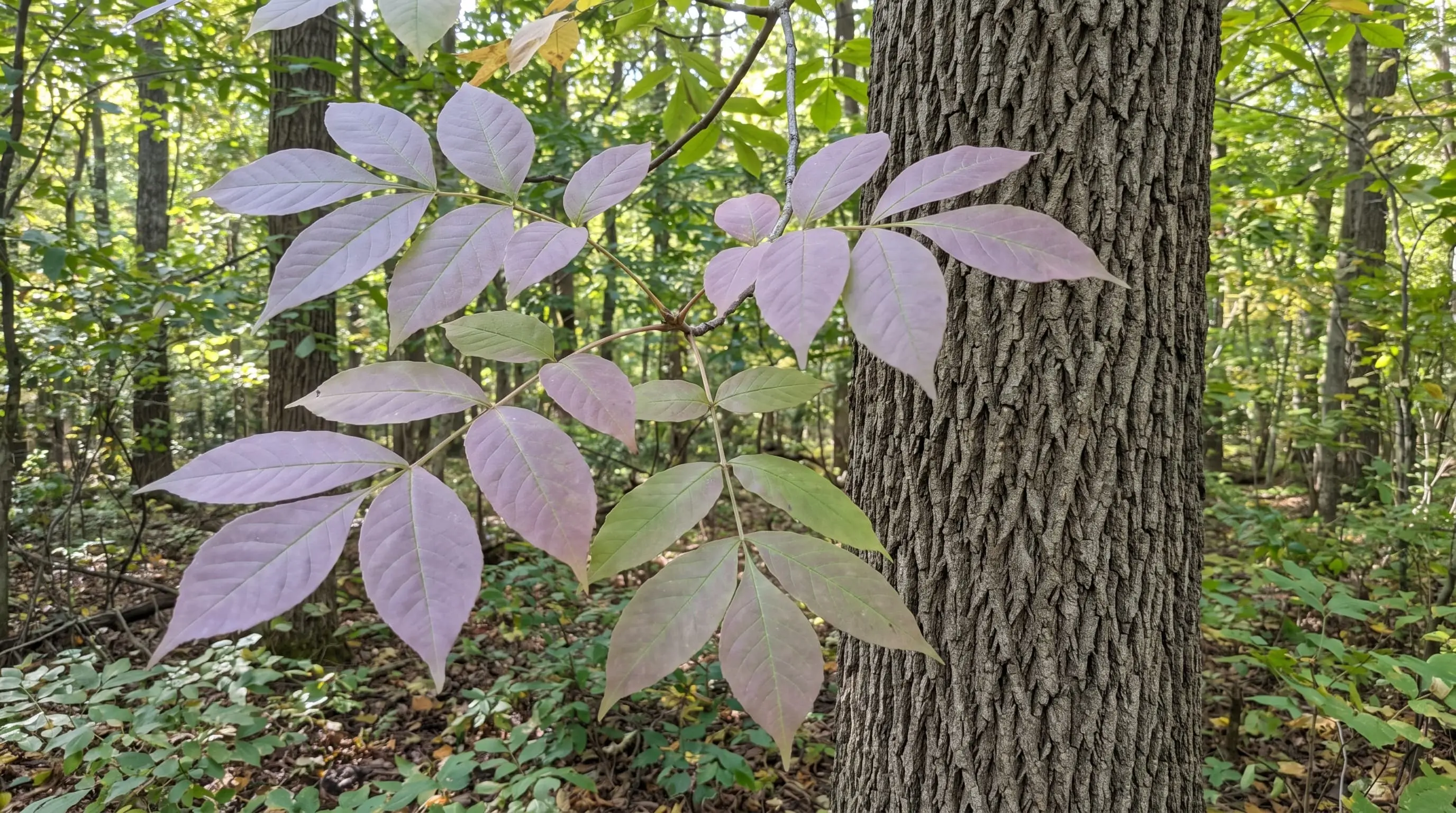
White ash usually has 7 leaflets, sitting within the typical ash range. Each leaflet sits on its own short stalk, with a clear, well-defined base.
The edges are smooth or lightly toothed near the tip. In fall, the leaves turn a soft purple. The bark on older trees forms narrow ridges with deep valleys, and it feels firm when you touch it.
2. Green Ash Tree Leaves (Fraxinus Pennsylvanica)
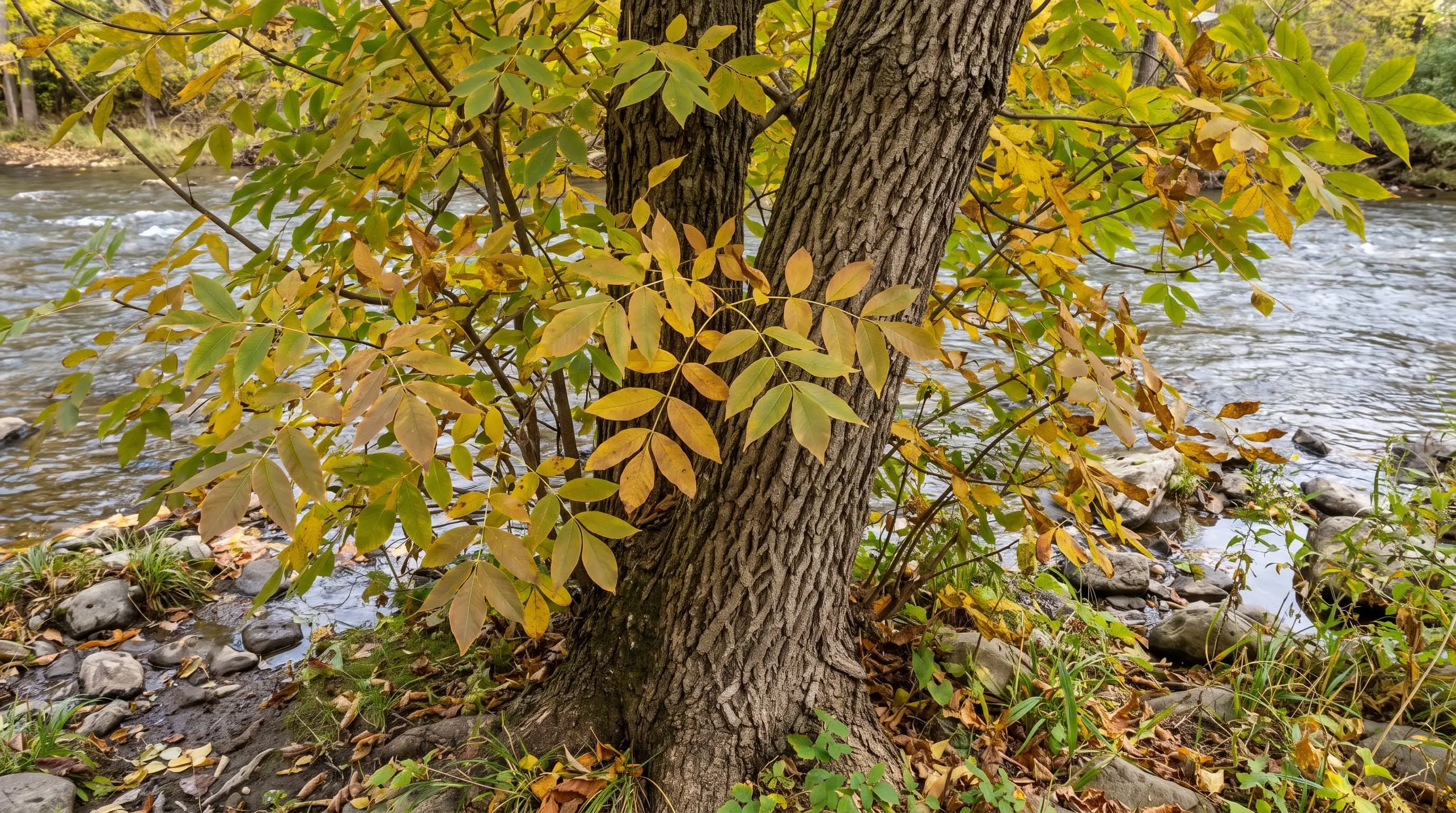
Green ash follows a similar range, usually 7 to 9 leaflets. Instead of a clear stalk, each leaflet tapers down to a short, winged base. The leaves turn yellow or bronze in fall rather than purple.
The bark is flakier and forms plate-like sections, with cracks running across it instead of straight up and down. This tree also tends to grow in wetter spots, like near rivers and floodplains.
3. Black Ash Tree Leaves (Fraxinus Nigra)
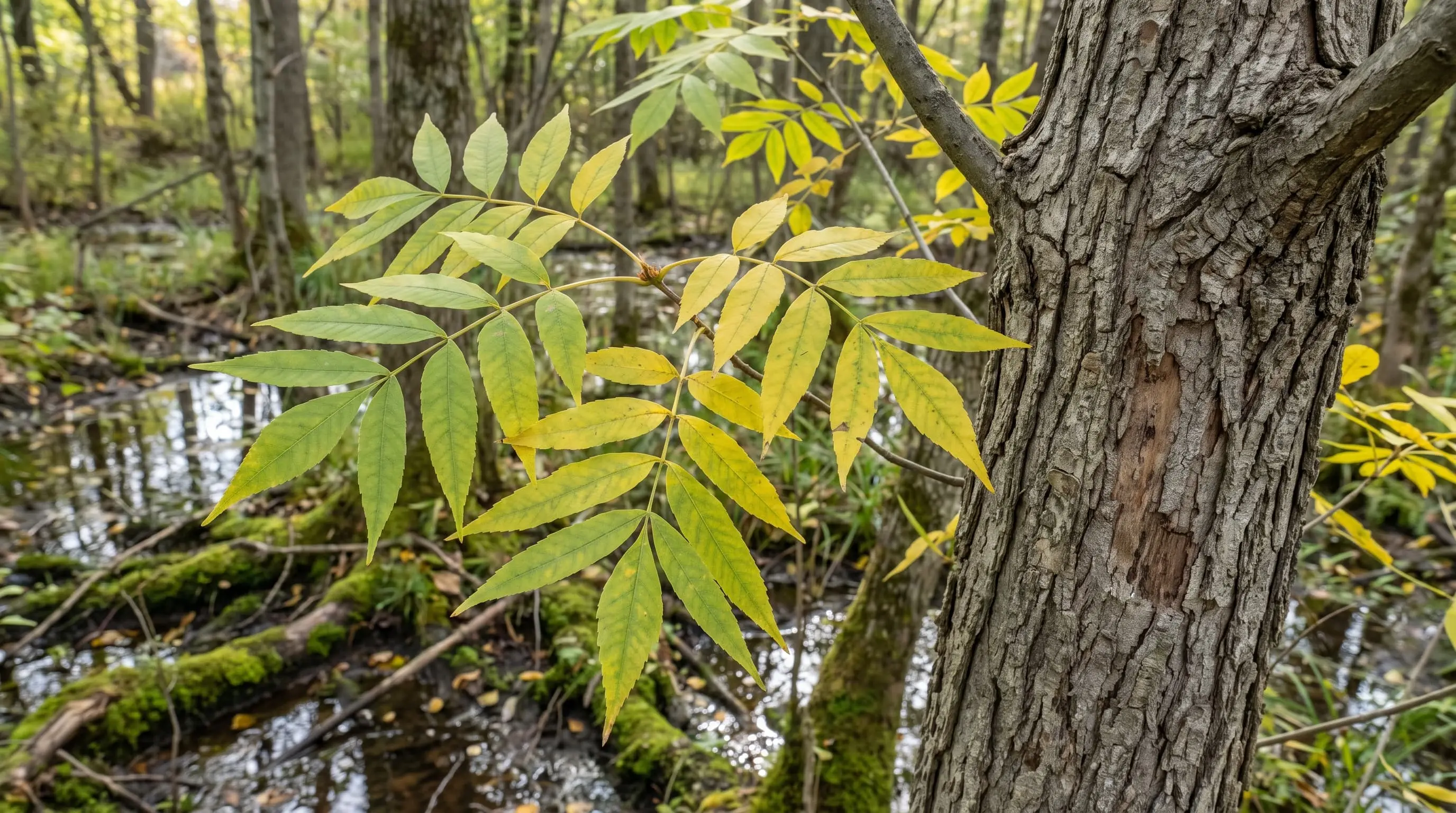
Black ash stands out with more leaflets, usually seven to eleven, and they grow without stalks except for the one at the very tip. The edges have light, uneven teeth.
You’ll also notice small tan hairs where the leaflets meet the main stem. Black ash grows best in wet, low ground like swamps and marshes, and its bark is gray, soft, and rubs off easily when touched.
White vs Green vs Black Ash: Quick Comparison
The differences can seem small when you check one feature at a time, like comparing leaflets on one tree to bark on another. Looking at a single trait alone often leads to mixed-up identification, since several ash species share overlapping traits.
The table below brings the main signs together in one place, so you can compare leaflets, bark, fall color, and growing conditions across all three species side by side.
| Feature | White Ash | Green Ash | Black Ash |
|---|---|---|---|
| Leaflets | 5 – 9 (usually 7) | 7, 9 | 7, 11 |
| Leaflet base | Clear stalk, well-defined | Tapers to short, winged base | No stalk (except end leaflet) |
| Leaflet edges | Smooth or lightly toothed near tip | Small, forward‑pointing teeth | Light, uneven teeth |
| Fall color | Soft purple | Yellow or bronze | Yellow |
| Bark texture | Narrow ridges, firm | Flaky, plate-like, cracks across | Soft, corky, rubs off easily |
| Where it grows | Rich, moist upland soil | Wet spots, floodplains, riverbanks | Swamps, marshes, low wet ground |
Compare multiple traits together for the most accurate identification. Leaflets, bark, fall color, and growing conditions provide stronger clues when viewed as a whole rather than relying on a single feature.
Trees Commonly Mistaken for Ash
A few trees share traits with ash and can cause mix-ups, especially at a quick glance. Knowing the differences helps you avoid a wrong ID.
- Mountain Ash (Rowan): Not a true ash tree; it belongs to the Rose family. Leaflets are narrower with saw-toothed edges throughout.
- Elder: Also confused with ash, but has fewer leaflets and skips the strict opposite branching pattern.
- Black and English Walnut: Pinnately compound leaves, but arranged alternately (not opposite) along the stem. Fruit is a round, leathery, husked walnut.
- Black Locust and Honeylocust: Also pinnately compound with alternate leaves; both can have thorns and produce pea-like seed pods, unlike ash.
- Tree of Heaven: Large pinnately compound leaves (up to 24 inches), alternate arrangement, with jagged leaflet margins at the base.
- Sumac: Alternate pinnately compound leaves, smaller tree or shrub, with dense red flower clusters.
A quick check of the leaflets and branching pattern is usually enough to rule out look-alikes like boxelder, golden raintree, maples, and hickories. Once you know what sets them apart, telling them apart from a true ash gets much easier.
North Carolina’s state forestry agency confirms that mountain ash and other “ash” name-alikes are not true Fraxinus species and are never attacked by emerald ash borer, according to this state ash tree identification resource.
How Long Ash Trees Live and How Big They Grow
Healthy ash trees can live 100 years or more, making them a solid long-term choice for many yards. Telling leaf shapes apart gets easier with practice, much like separating maple leaf types by their lobes and edges.
They grow fast too, adding about 2 to 3 feet in height each year under good conditions.
Most ash trees reach 50 to 80 feet tall, with a spread of 30 to 50 feet, though some have grown as tall as 115 feet. Green ash tends to grow fastest in heavy soils, while species suited to drier, rocky ground grow well despite less water. That long lifespan depends on staying healthy, though.
Left untreated, emerald ash borer can kill an ash tree within just 2 to 4 years, drastically shortening that natural lifespan.
The opposite branching and compound leaves used to identify ash are also the same traits the Nebraska Forest Service points to when confirming whether a stressed tree is a true ash at risk from the borer.
Root behavior varies by species too, and redbud tree roots raise the same kind of concern homeowners weigh when comparing large shade trees for a yard.
Other Ash Species Around the World
Ash trees grow well beyond North America too. Different species have adapted to their own regions, from tall European forests to the dry stretches of the American Southwest, each suited to the soil and climate it grows in:
- European ash: tall, upright shape with grey bark
- Manna ash: southern Europe; known for sweet sap once used medicinally
- Arizona ash: thrives in dry southwestern climates
- Oregon ash: prefers wet, low-lying land
- Manchurian ash: East Asia; strong wood, yellow fall color
- Texas white ash, Carolina ash, California ash, single-leaf ash: regional types suited to local soil and climate”
Whatever the region- dry southwest heat, wet lowlands, or cold East Asian winters- some ash species have adapted to handle it, proving just how flexible this tree family really is.
Frequently Asked Questions
Are rowan and elder true ash trees?
No. Mountain ash (rowan) belongs to the Rose family, not the true ash family, while elder is a separate genus altogether. Both are often mistaken for ash because of similar leaf shapes, but neither is a true ash species.
Can a tree with ash dieback or emerald ash borer be saved?
Yes, a tree with ash dieback or emerald ash borer can be saved if it is treated early. Trees can be protected with pesticides only if the tree has not lost more than 30% to 50% of its canopy.
Is an ash tree a good choice for planting at home?
Ash trees have plenty going for them: an upright, rounded shape, strong fall color, and hardy, adaptable growth. Planting an ash tree is usually not recommended due to the devastating impact of the Emerald Ash Borer beetle. A mix of tree species is a safer bet for your yard.
Which ash tree species is considered best?
White ash is often seen as the most valuable, thanks to its strong, durable wood used for furniture, tool handles, and baseball bats. It also has attractive purple fall color and grows well in rich, moist soil.
What are the uses of ash tree?
Ash wood is tough, absorbs shock well, and doesn’t splinter easily. It’s commonly used for tool handles, furniture, hockey sticks, oars, and baseball bats, making it a popular choice for both practical tools and sporting equipment.
Key Takeaway
Spotting an ash tree gets easier once you know the signs: compound leaves with opposite branching, confirmed by bark, buds, and seeds if needed. Watch for look-alikes like mountain ash and elder, and check the small differences between white, green, and black ash to pin down the exact species.
Tree health matters too. Threats like emerald ash borer and ash dieback can change an ash tree’s look fast, so catching early signs helps. With these tips, you can identify an ash tree with confidence, wherever you spot one.
Next time you’re out on a walk, take a closer look at the trees around you. Check the leaves, the bark, the buds; see if you can spot an ash. The more you practice, the faster you’ll be able to tell one species from another.
Drop a comment below and tell me if you found this helpful in identifying ash tree leaves.