Not every three-leaf plant is dangerous. Poison ivy is, and it’s worth learning to spot. It hides in places you’d never expect: on a fence, in a flower bed, or beside a sidewalk in town. It doesn’t always look the way people think.
Sometimes it’s shiny, sometimes dull, and the leaves can turn red before fall even starts.
Here’s the part most people skip: you can’t remove poison ivy safely until you know what you’re looking at. Mix it up with a harmless look-alike, and you waste time or spray the wrong plant.
Below, you’ll learn how to identify poison ivy with confidence and get rid of it for good.
What Is Poison Ivy
The traits below show how it survives year-round, spreads through roots and seeds, and returns for many years.
- Woody perennial: The same plant regrows year after year instead of dying off and starting from seed each season.
- Contains urushiol: An oily resin in the sap, present in the leaves, stems, roots, and berries. Even a tiny, unnoticeable amount is enough to cause a reaction, and the oil can stay active on tools, gloves, or clothing far longer than most people expect.
- Risky to handle in every season: Every part of the plant can contain urushiol, even when leaves are gone.
- Sensitivity builds over time: Some people react on first contact. Others develop sensitivity only after repeated exposure over months or years.
- Spreads two ways: Through creeping underground roots that send up new shoots nearby, and through seeds in its berries, which birds spread over long distances.
- Long-lived patches: Left alone, a single plant can keep expanding for decades through both root spread and reseeding.
Together, these traits explain why poison ivy can stay in one area for years. Now you can focus on the signs that separate it from harmless look-alikes.
How to Identify Poison Ivy
Confirming any woody plant works best across more than one season, the same multi-season approach used to tell a Bradford pear tree apart from similar-looking species.
1. The “Leaves of Three” Rule
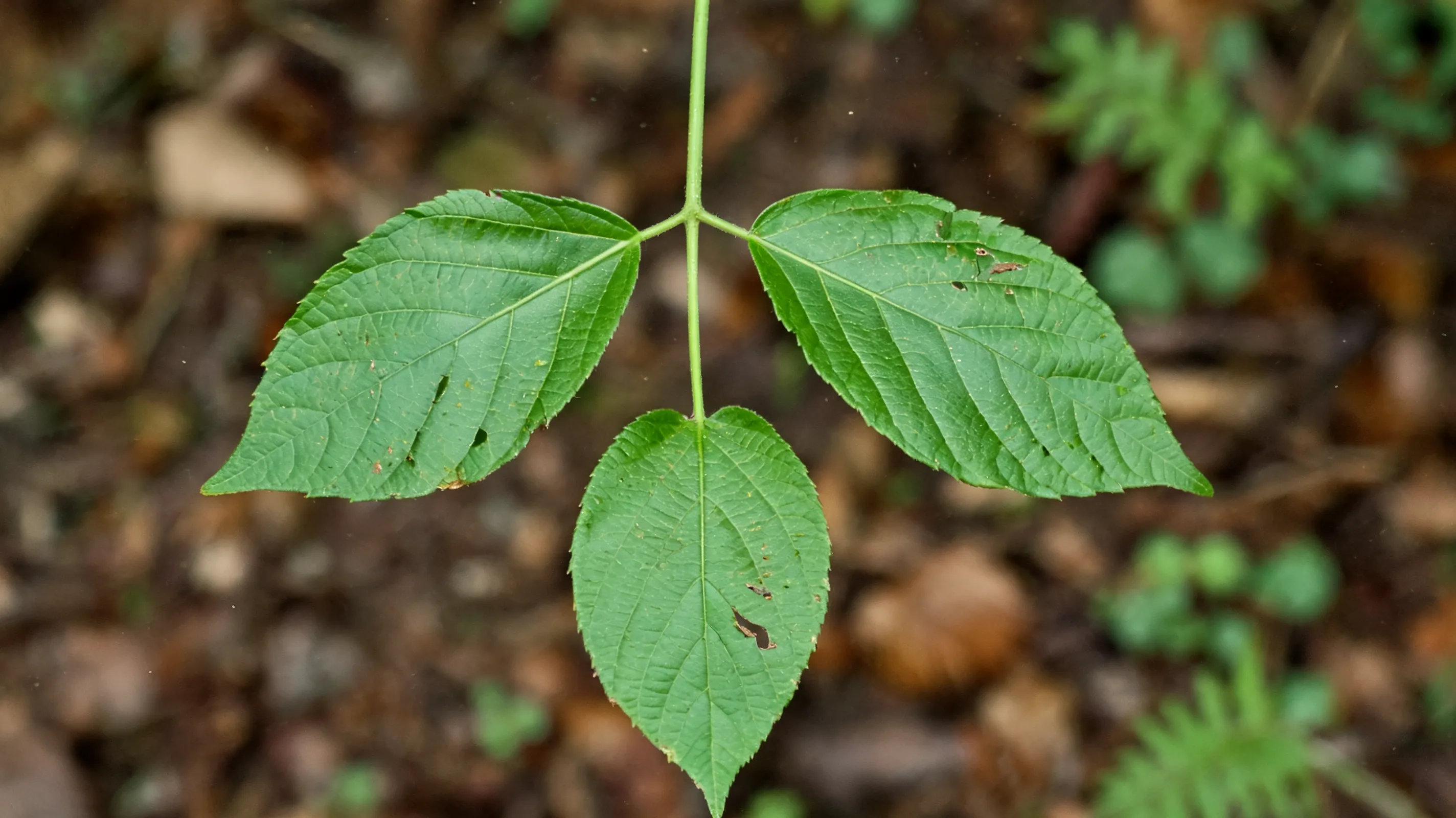
Every poison ivy leaf has three leaflets, and a few specific details separate it from harmless plants that share the same basic shape.
- Middle leaflet: Sits on a longer stalk than the two leaflets beside it.
- Side leaflets: Sit directly across from each other, forming a small “V” shape.
- Arrangement: Leaf clusters alternate along the main vine rather than lining up across from one another.
That single detail, alternate versus opposite, separates poison ivy from several harmless plants that share the same three-leaf pattern.
2. Leaf Shape, Color, and Texture
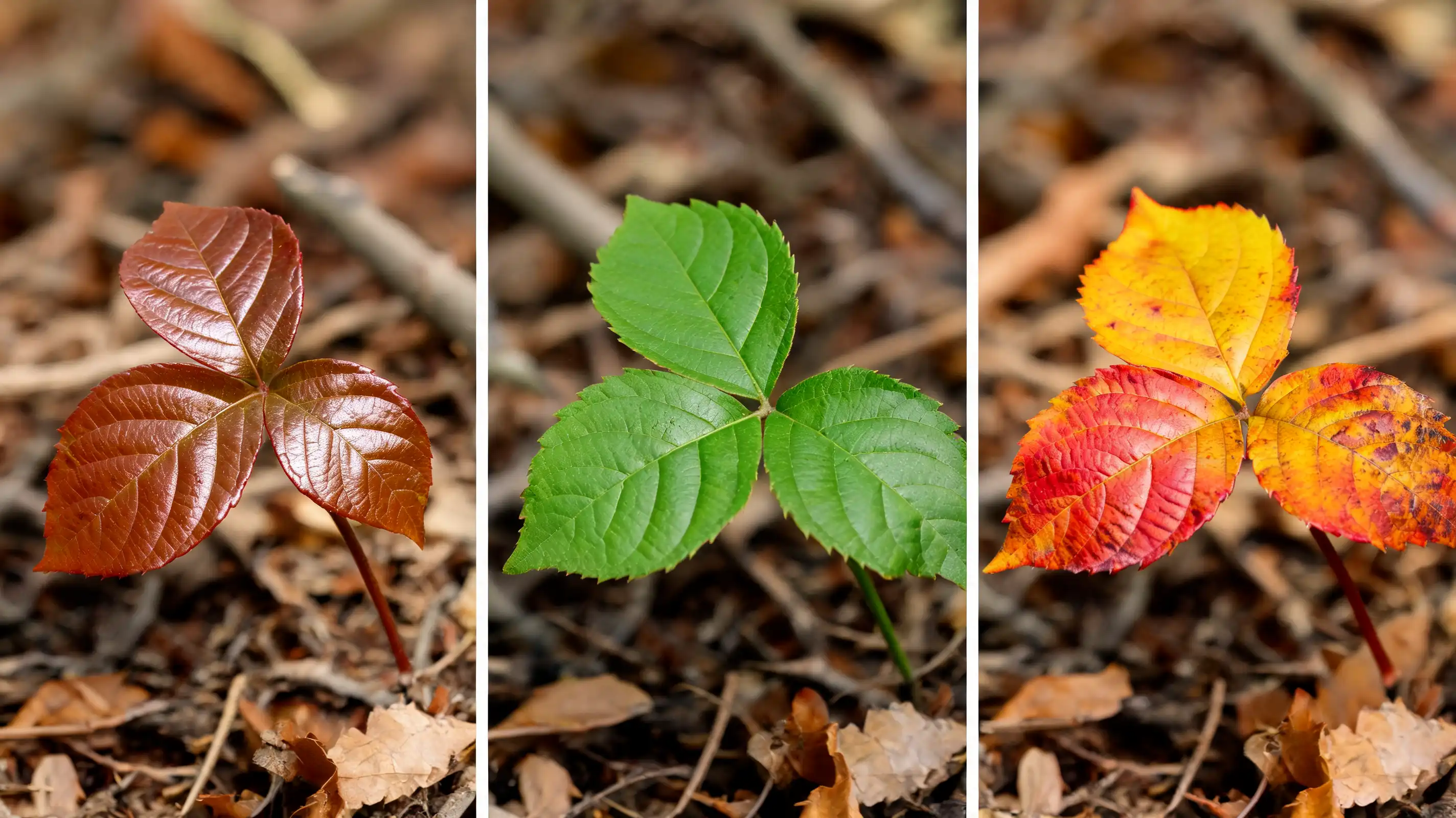
Poison ivy leaflets are usually egg-shaped, with edges that may look smooth, jagged, or lightly toothed.
- Spring: New leaves may appear red or bronze before turning green.
- Summer: Leaves are green and may look glossy or dull.
- Fall: Leaves turn yellow, orange, or red.
The surface is not fuzzy and often looks slightly waxy. This helps separate poison ivy from fuzzy-leaved plants like beans.
3. Vines, Shrubs, and Ground Cover
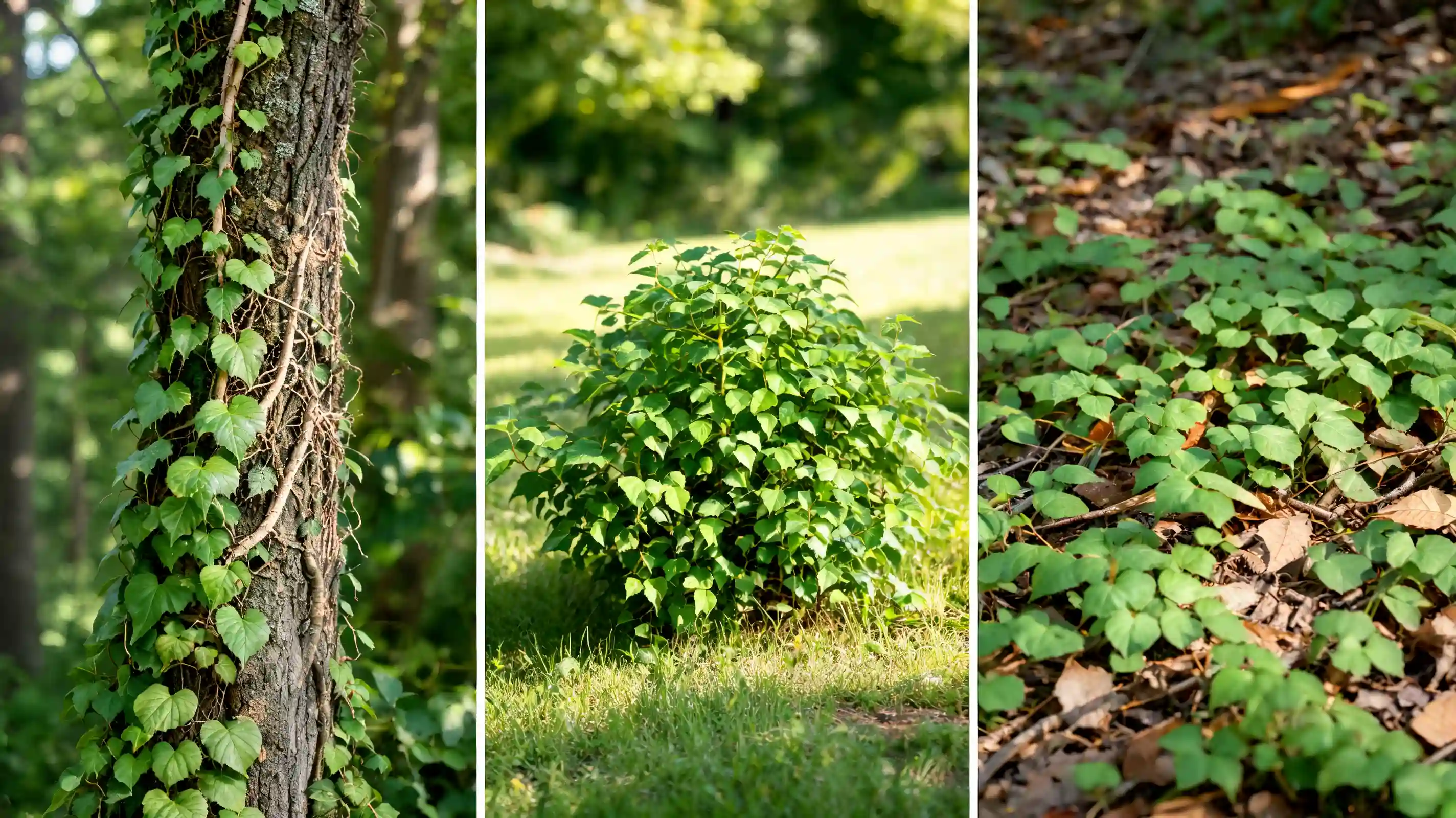
Poison ivy doesn’t stick to one shape, so height alone won’t tell you what you’re looking at.
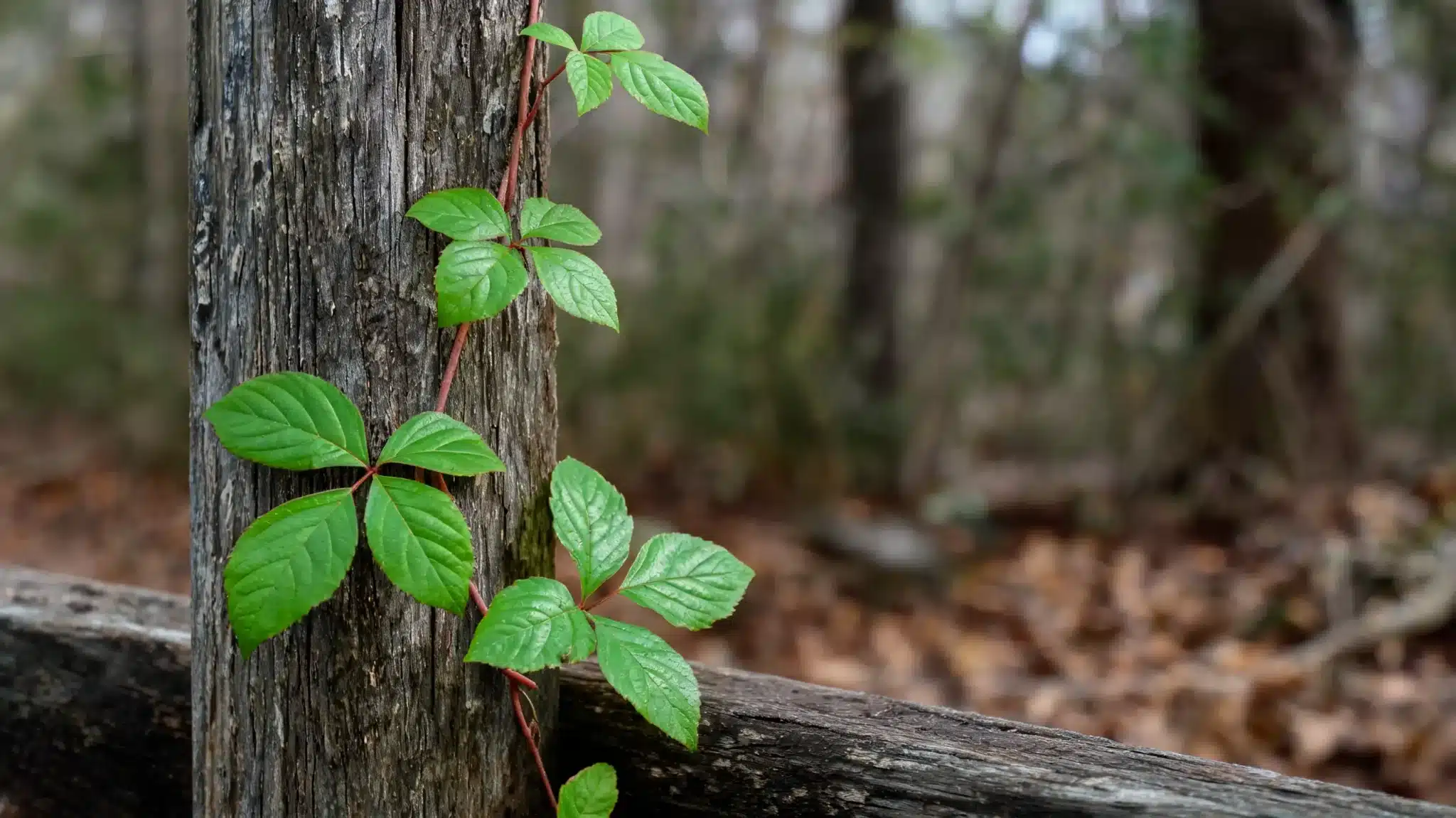
- Vine: Climbs trees, fences, and walls using hairy aerial roots that grip the surface.
- Shrub: Grows low and bushy, usually a few feet tall, without climbing anything.
- Ground cover: Spreads flat across open soil, often in patches easy to miss underfoot.
Because it takes these three forms, poison ivy can show up at ankle height in a garden bed or several feet up a tree trunk in the same yard.
4. Flowers and Berries
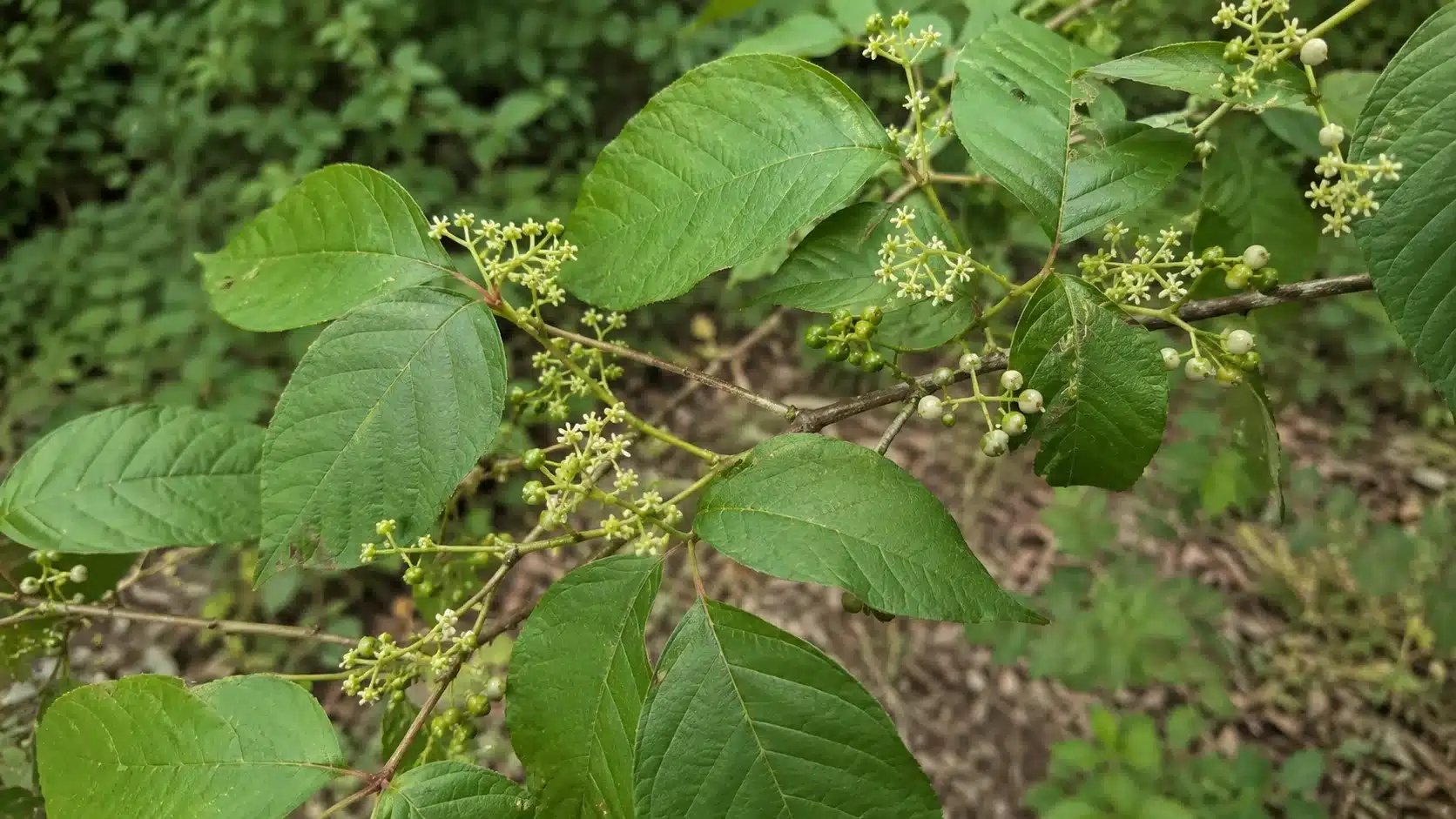
Mature poison ivy plants also produce flowers and berries, which add another reliable clue once a plant is old enough to bloom.
- Flowers: Small, greenish-white clusters appear in late spring at the leaf joints and are easy to miss unless you look closely.
- Berries: Round and waxy, starting green in summer and ripening to a pale white or cream color by fall. According to the Clemson University Home & Garden Information Center, this white, waxy fruit is one of the more reliable identification markers once a plant is mature enough to produce it.
- Reliability: Berries alone are not enough to confirm poison ivy, since a few other vines produce whitish fruit too, but paired with leaf pattern and growth form, they add strong support.
Birds feed on the berries and spread the seeds without any reaction themselves, which is part of why patches can turn up in unexpected new spots each year.
5. Identifying Bare Vines in Winter
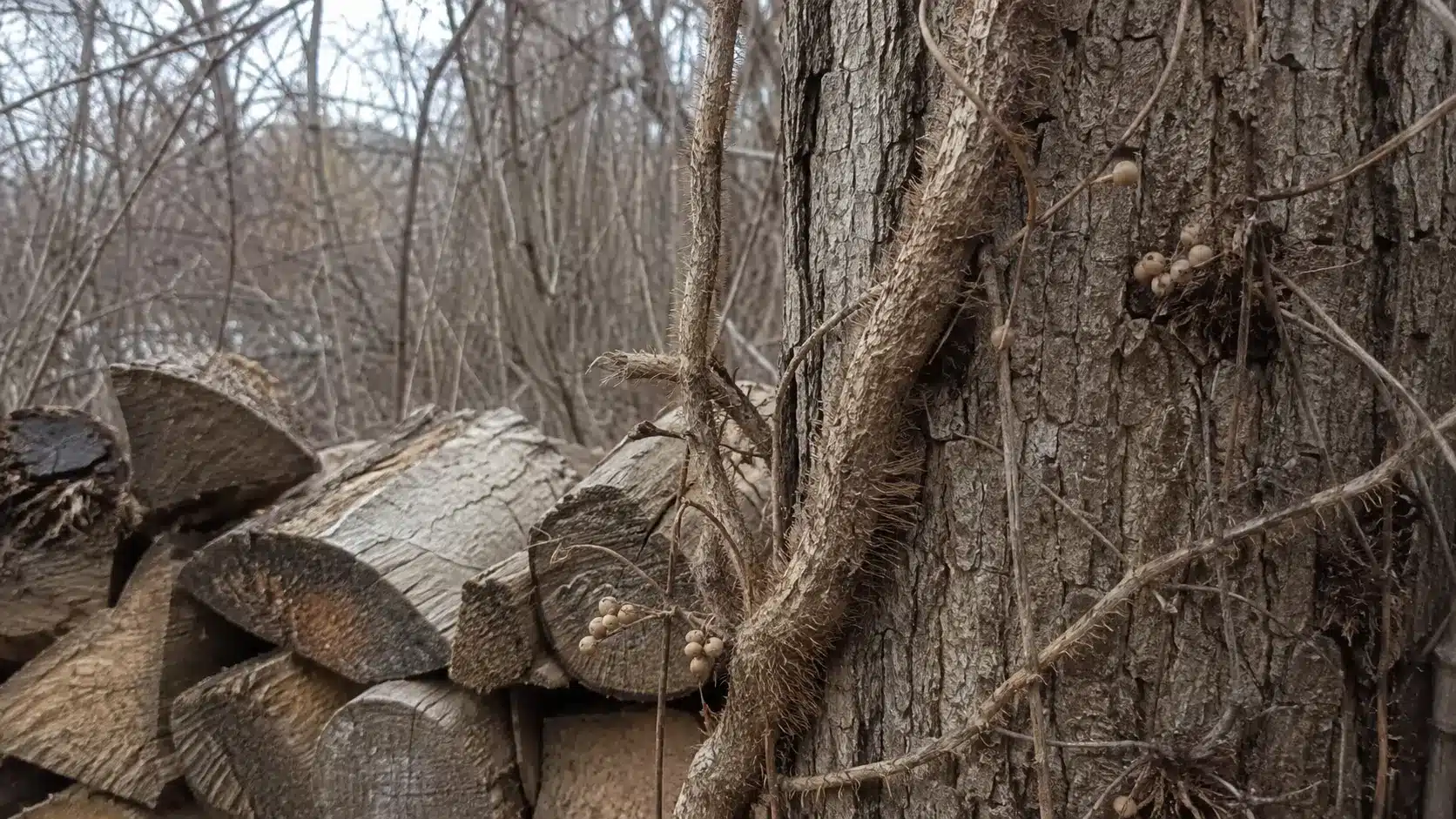
Once the leaves drop, identification gets harder, but a few details still give it away.
- Vine texture: Looks like a thick, hairy rope, covered in dense, brownish aerial rootlets that grip the bark tightly.
- Leftover berries: Dried berries sometimes still cling to the vine into winter, and older stems can look almost woody enough to mistake for a small branch.
- Ongoing risk: The oil stays just as active in this dormant state, so bare vines still deserve the same caution as a fully leafed-out plant.
This matters most before handling firewood or brush piles, since a vine tangled through the wood can carry active oil without a single leaf in sight.
Eastern vs. Western Poison Ivy
Poison ivy is not one single, uniform plant across the country, and knowing which species is more common in your region can explain why the growth form does not always match the description above. The table below compares the two main species found in the United States.
| Feature | Eastern Poison Ivy (T. radicans) | Western Poison Ivy (T. rydbergii) |
|---|---|---|
| Region | Eastern, southern, and midwestern United States | Northern and western United States, into Canada |
| Typical Growth Form | Climbing vine, though it can also grow as a shrub | Low, upright shrub |
| Aerial Roots | Common, used to grip trees, fences, and walls | Rare; rarely develops the roots needed to climb |
The growth form may shift depending on which species is more common where you live.
Where Poison Ivy Typically Grows
Knowing the kind of spot poison ivy favors can narrow things down before you even check a single leaf.
- Woodland edges: Common where forest meets a clearing, trail, or yard, since it thrives on the extra sunlight along the tree line.
- Fence lines and walls: Aerial roots make fences, brick, and tree trunks easy surfaces to climb.
- Riverbanks and low ground: Moist soil near streams, ditches, and low-lying areas supports dense patches.
- Disturbed soil: Construction sites, roadsides, and neglected garden beds often let it take hold before anyone notices.
- Suburban yards: It shows up in flower beds, under hedges, and along property lines just as often as in the woods.
Checking these likely spots first, especially fence lines and the edges of wooded areas, means you already have a reasonable guess before you ever look at the leaves themselves.
Poison Ivy vs. Common Look-Alikes
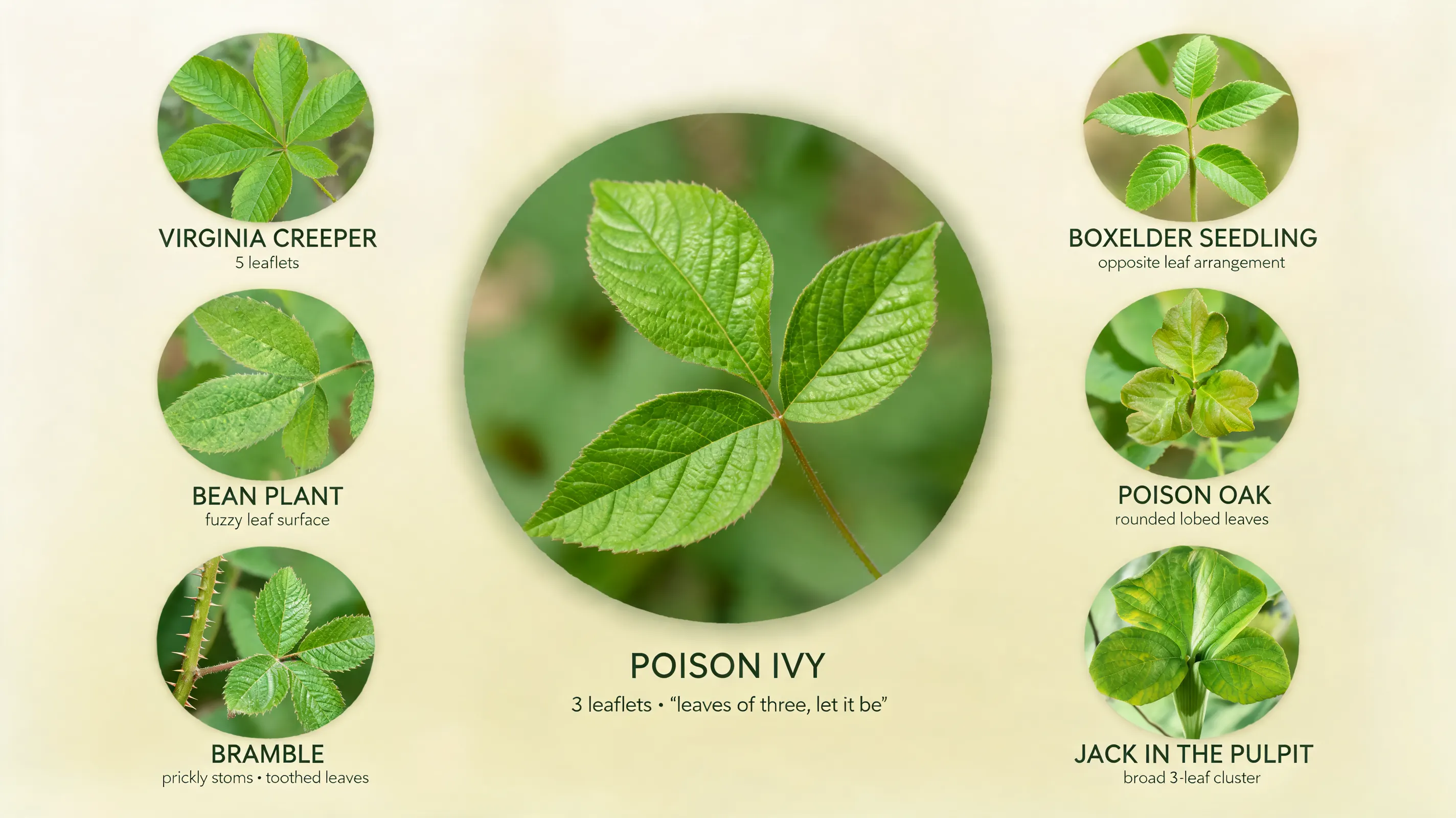
Several common plants share poison ivy’s three-leaf pattern. A quick side-by-side makes the differences easier to spot than reading plant by plant.
| Plant | Leaf Count | Key Difference |
|---|---|---|
| Virginia Creeper | Usually 5 | Occasionally shows 3, but leaflets fan out like fingers |
| Boxelder Seedling | 3 | Leaves sit directly opposite each other on the stem |
| Poison Oak | 3 | Lobed, rounded edges; grows as a low shrub, not a vine |
| Jack-in-the-Pulpit | 3 | Center leaflet has almost no stem |
| Brambles | 3 | Prickly stems and finely toothed leaf edges |
| Bean Plant | 3 | Slightly fuzzy leaf surface |
| Clematis | 3 (paired) | Leaves grow directly opposite, not alternating |
Of all the plants on this list, poison oak and poison ivy get confused the most, even by people who’ve dealt with both for years. Treating both the same way keeps you safe either way.
How to Kill Poison Ivy
Removal comes down to two choices: pulling it out by hand or treating it with herbicide, and neither works in a single pass. Digging out the roots suits small patches, wearing waterproof gloves since roots carry urushiol too, while repeated cutting wears down larger growth over time.
- Glyphosate: Best for fence lines and spot treatment on new growth. Apply on a warm, dry day for the best results.
- Triclopyr: Suited to non-garden areas and spots near fences. Apply once the vine has reached full leaf growth.
- 2,4-D: Works best mixed with other herbicides rather than alone, since it is weak on its own and can harm nearby plants.
None of these products offer a one-time fix, so expect to reapply through the season. Never burn poison ivy, since the CDC warns the smoke carries urushiol and can cause a reaction in your lungs, and the oil stays active on tools and clothing for years.
Check fence and tree lines regularly and pull small shoots early to keep it from coming back.
Quick Identification Checklist
Before you touch a suspicious plant, run through this short list. Matching several signs together is always more reliable than judging by just one.
- Arrangement: Leaf clusters alternate along the stem rather than sitting directly across from each other.
- Texture: Slightly waxy, not fuzzy, with edges that can be smooth, toothed, or lobed.
- Fruit: Small greenish-white to cream berries appearing from late summer into fall.
- Growth form: Vine, shrub, or ground cover, often climbing with hairy aerial roots.
If a plant matches most of these points, treat it as poison ivy until you can confirm otherwise, since caution costs far less than a rash.
Common Mistakes When Identifying Poison Ivy
The most common mistakes in identifying poison ivy come from judging it by shine or leaf count alone. These features shift with age and season, so compare the signs in the table below before deciding whether a plant is poison ivy.
| Common Mistake | Why It Is Misleading |
|---|---|
| Assuming shine confirms it | Poison ivy leaves can look glossy, dull, or matte, depending on age |
| Checking only the leaves | Older vines can look hairy, and stems and roots can also cause a rash |
| Writing off bare winter vines | A leafless vine can look harmless, but the hairy aerial roots and dormant oil still pose a real risk |
Avoiding these mistakes makes identification more reliable. When several signs match at once, you can judge the plant with more confidence instead of relying on one feature that changes with the season.
Frequently Asked Questions
How do you tell poison ivy apart from poison oak by leaf shape?
Poison ivy leaflets tend to be smoother and more pointed, with edges that can vary from smooth to toothed. Poison oak leaflets are more rounded and lobed, closer in shape to an actual oak leaf, and usually grow as a low shrub rather than a climbing vine.
Does poison ivy look the same on a tree as it does on the ground?
Not exactly. As a climbing vine, poison ivy often shows larger leaves and thick, hairy aerial roots gripping the bark. As ground cover, the same plant tends to produce smaller leaves that grow closer together, low to the soil, easy to overlook underfoot.
Can poison ivy leaves be smooth-edged instead of jagged?
Yes, edges vary from smooth to jagged to lightly toothed, sometimes even on leaflets from the same plant, so edge shape alone cannot confirm or rule out poison ivy. Weigh edge shape together with leaf arrangement, growth form, and seasonal color before deciding.
How long does a poison ivy rash last?
A poison ivy rash usually lasts one to three weeks, depending on the amount of urushiol exposure and how your skin reacts. Severe reactions may last longer and should be checked by a healthcare professional.
What should you do after touching poison ivy?
Wash exposed skin with soap and water as soon as possible. Clean clothing, tools, and gloves because urushiol can remain active on surfaces.
Can poison ivy spread from person to person?
Poison ivy rash does not spread from person to person. The rash develops from urushiol exposure, but oil on skin, clothing, pets, and tools can cause new reactions.
What kills poison ivy permanently?
No single treatment removes every patch forever. Removing roots where possible and following up with repeated treatment is usually needed.
Final Thoughts
Once you know how to identify poison ivy, it isn’t hard to spot. Alternating growth and a waxy shine that shows up more than people expect are usually enough to confirm what you are looking at, especially once you factor in growth form and berries.
That single habit, checking before you touch anything, saves you weeks of itching down the road. It also means you’re not wasting time spraying a plant that never needed to go, or leaving a real patch untreated because it looked harmless.
Walk your yard this week with these details in mind, and check fence lines, tree trunks, and shaded corners where it likes to hide. Found a patch, or still unsure what you’re looking at? Let me know in the comments.