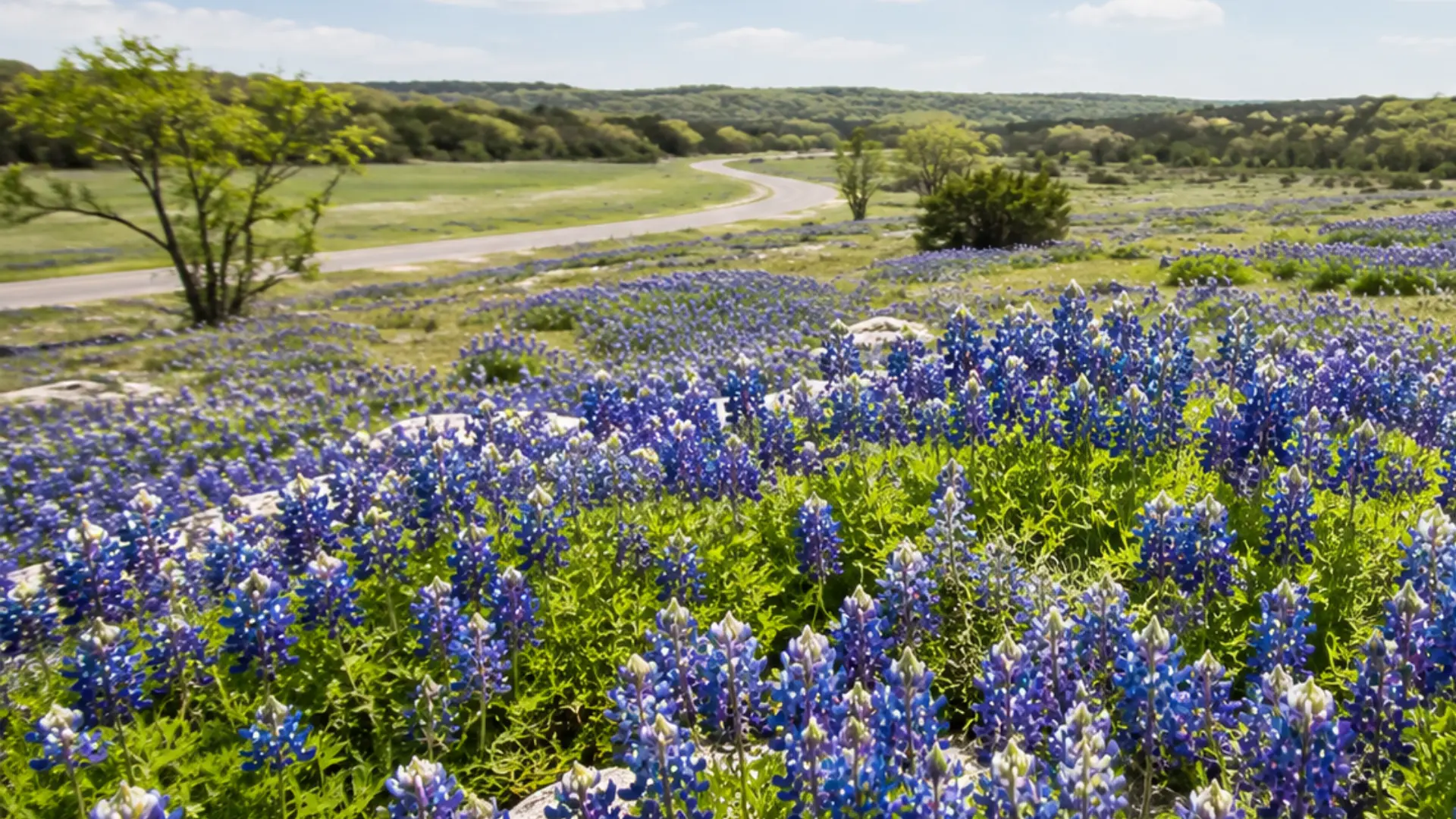
Each spring, the Texas bluebonnet brings a familiar burst of color to the Texas landscape. For many people, seeing these flowers along country roads and across open land signals the arrival of a new season.
Yet the plant offers much more than its famous blue appearance. Its botanical background, growth cycle, relationship with wildlife, and place in Texas history all help explain why it receives so much attention year after year.
Below, learn what this wildflower is, how to identify it, when it blooms, where it grows, its ecological value, why it became the state flower, and the legends surrounding it.
What Is the Texas Bluebonnet?
The Texas bluebonnet is an annual wildflower known scientifically as Lupinus texensis. Its is commonly called Texas lupine, buffalo clover, and wolf flower.
Botanical Classification:
| Classification | Details |
|---|---|
| Genus | Lupinus |
| Species | texensis |
| Family | Fabaceae, or pea family |
| USDA plant symbol | LUTE |
The name bluebonnet is not limited to a single species. Several related plants in the genus Lupinus share the name, while Lupinus texensis is the species most closely associated with the familiar blue spring displays seen across much of Texas. The classification above matches the entry maintained in the USDA PLANTS Database, the federal government’s standardized reference for plant names and symbols.
How to Identify a Texas Bluebonnet
Identifying a Texas bluebonnet gets easier once you know what to look for. Here is a closer look at the specific features that make this wildflower easy to recognize in the field.
1. Upright Blue Flower Clusters
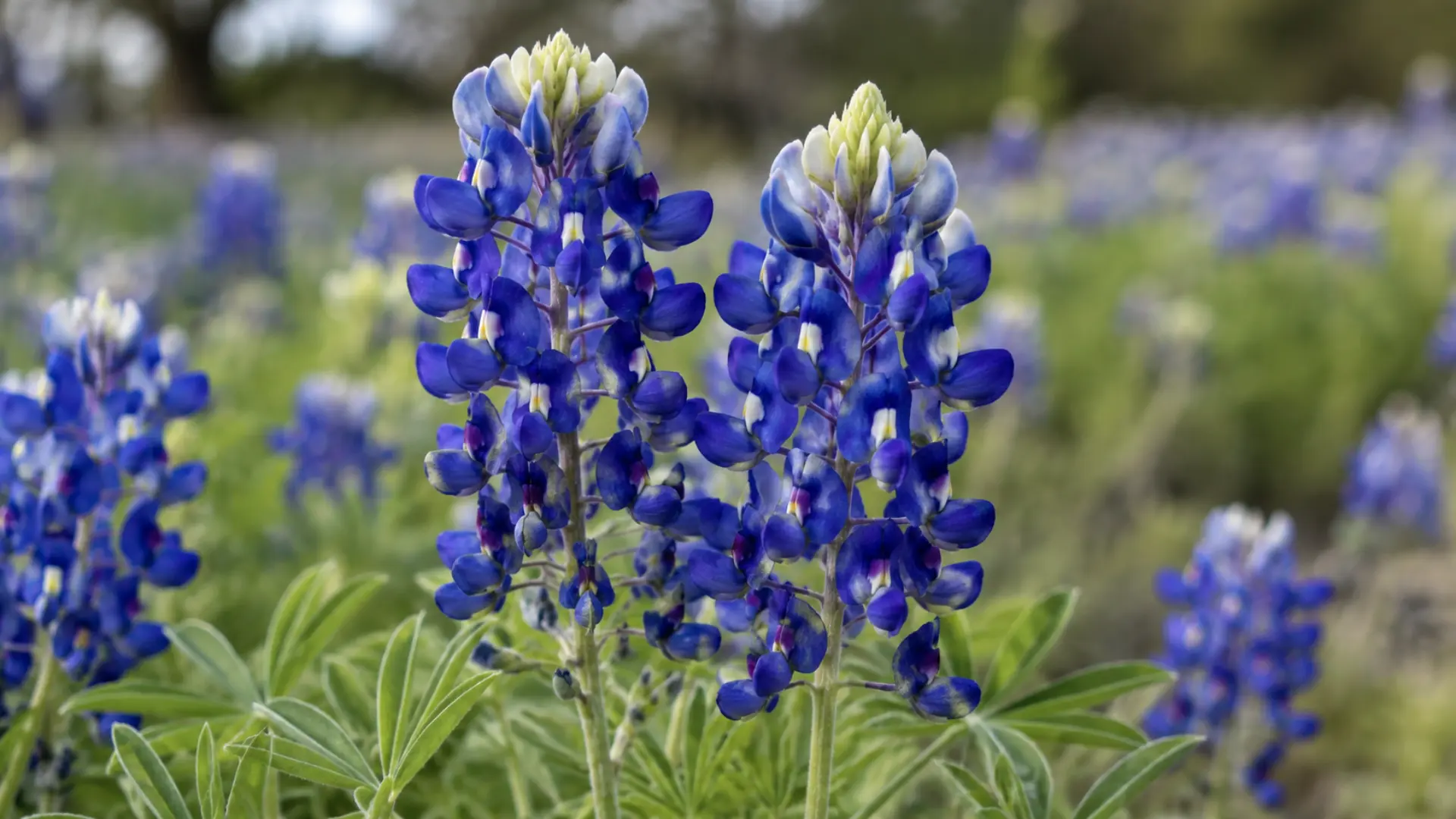
Texas bluebonnet flowers grow on upright spikes that may carry dozens of individual blooms. Each flower has the rounded, pea-like shape typical of the legume family.
The clusters are usually blue or blue-purple, with lighter or white coloring near the top. Their dense arrangement and pale tips make them one of the plant’s easiest features to recognize.
2. Hand-Shaped Leaves
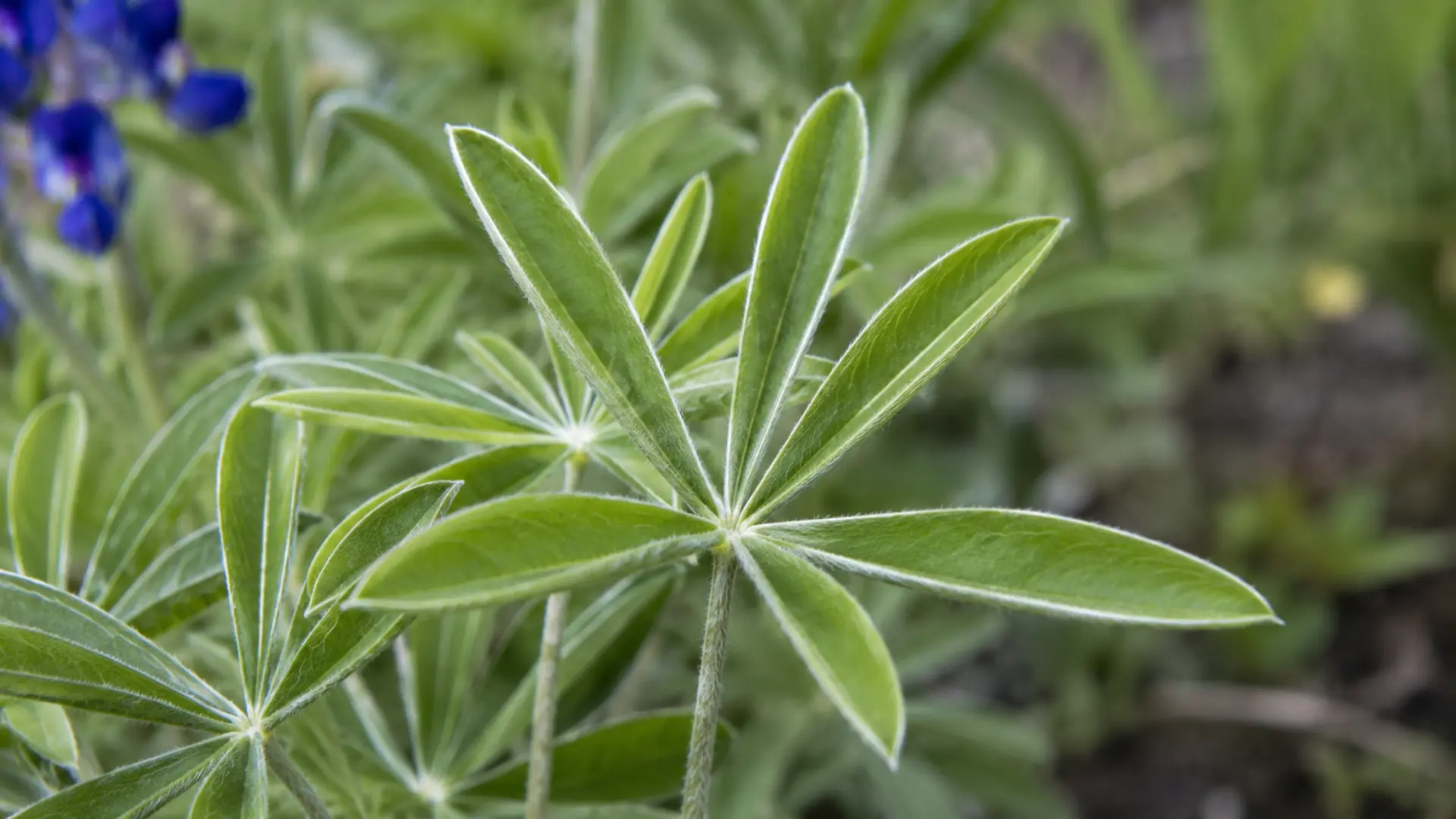
The leaves are another helpful identification feature, especially before the flowers fully open. Each leaf usually has five narrow leaflets spreading outward from a single central point, creating a shape similar to an open hand.
Their light-green color and slightly soft or velvety surface can also help distinguish bluebonnets from nearby wildflowers with similar blooms.
3. Short, Branching Stems
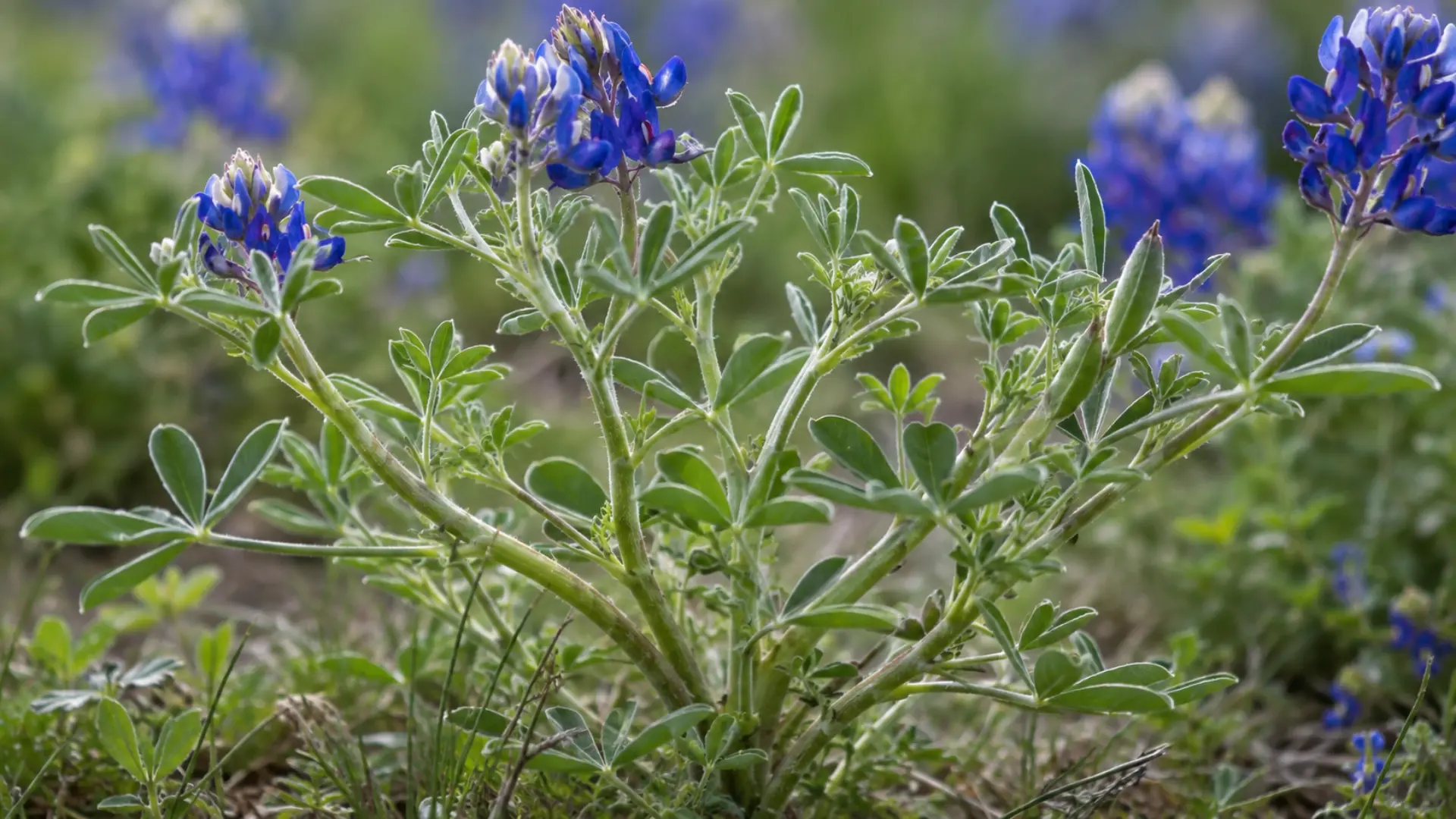
Texas bluebonnets usually grow about 6 to 18 inches tall and develop several short stems that branch outward near the base. These stems support both the leaves and upright flower spikes.
This compact, rounded growth habit is different from plants that develop one tall central stalk and contributes to the dense appearance of bluebonnet patches in spring.
4. Taproot and Seed Pods
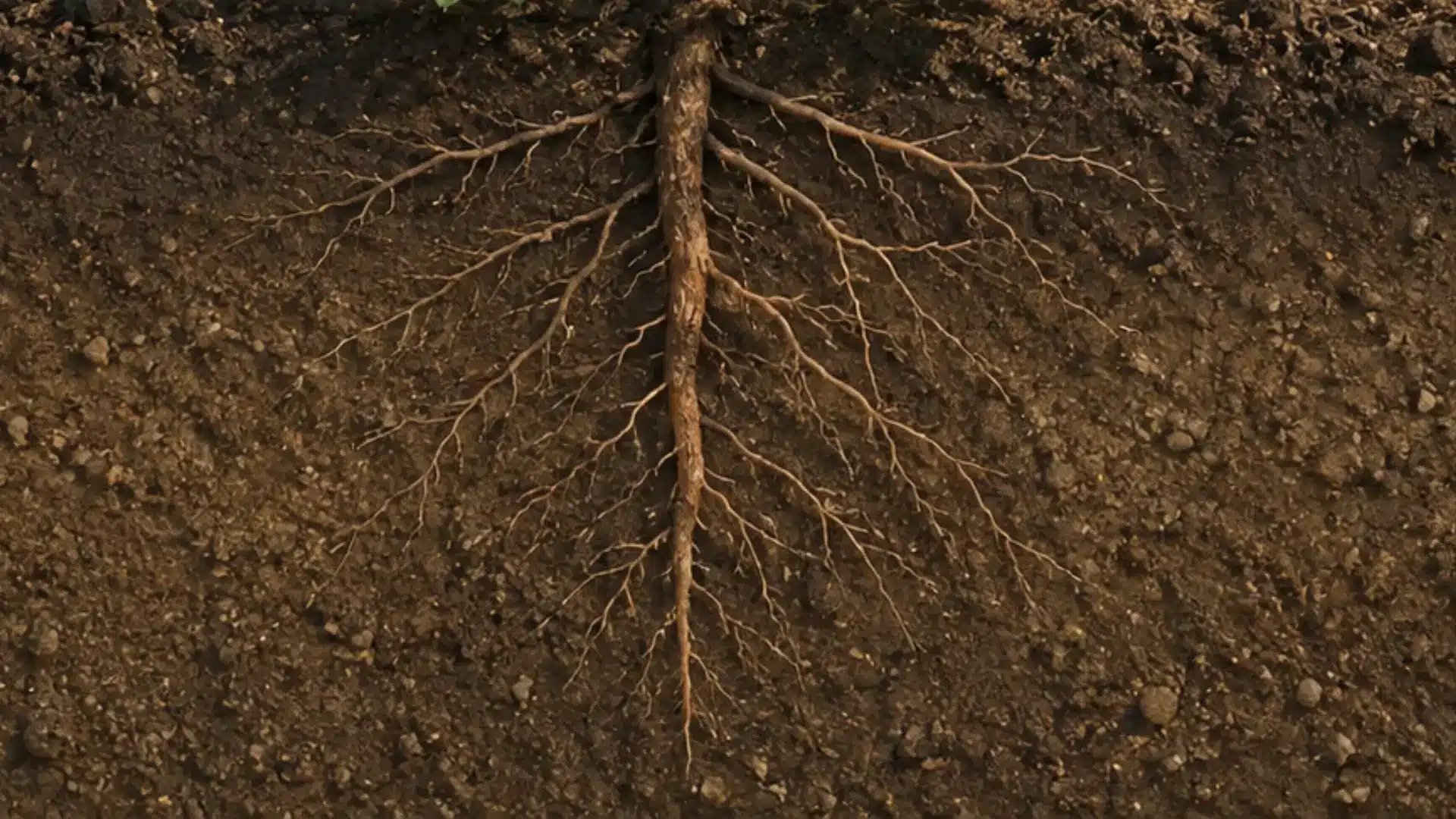
Below the soil, a Texas bluebonnet develops a taproot that anchors the plant during its growing season. After flowering, dry legume-style seed pods begin forming along the stems.
These pods contain seeds that can produce future plants. As the flowers fade, the developing pods become a useful feature for identifying bluebonnets later in the season.
Where Do Texas Bluebonnets Grow?
The name suggests a plant found only in Texas, but its natural range tells a broader story that helps explain why the state remains most closely tied to it.
- Native range: Lupinus texensis is native mainly to Texas, with populations extending into nearby regions.
- Blackland Prairie: One of the main areas linked to natural bluebonnet populations.
- Edwards Plateau: Bluebonnets are also commonly found across this limestone-rich region of central Texas.
- Roadside presence: The flowers are widely seen along highways and roadsides, especially where seeding programs are active.
- Beyond Texas: Its range extends beyond state and national boundaries alike.
According to the U.S. Fish and Wildlife Service, the species’ range extends from Louisiana through Texas and into northern Mexico, though it remains most closely associated with the Lone Star State.
When Do Texas Bluebonnets Bloom?
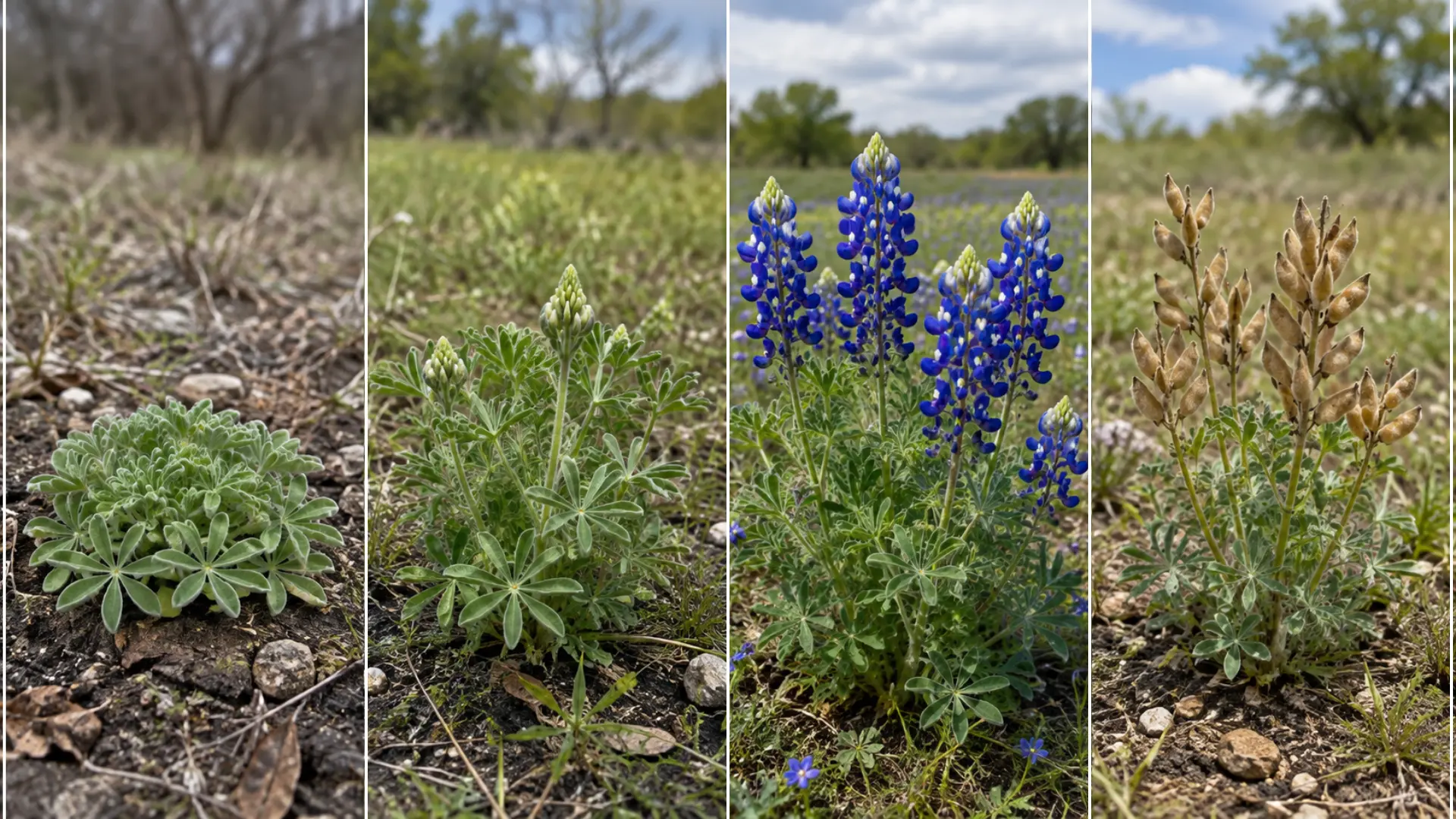
These wildflowers generally bloom from March through May, with many large displays appearing during March and April. The exact timing can shift each year depending on rainfall, winter temperatures, spring warmth, soil moisture, location, and competition from surrounding plants.
Warmer areas may begin flowering earlier, while cooler regions often reach peak bloom later. The plant’s seasonal cycle starts months before the flowers appear, beginning with fall germination and winter rosette growth.
| Season | What happens |
|---|---|
| Fall | Seeds begin to germinate |
| Winter | Young plants form low leaf rosettes |
| Early spring | Stems begin growing taller |
| Spring | Blue flower spikes open |
| Late spring | Seed pods form and mature |
| Summer | The annual plant dries out and dies |
This cycle lets the plant survive shifting weather and return each year through its own seeds. Home landscapes across the Gulf Coast often rely on similar self-seeding wildflower meadows to keep color coming back year after year.
Why Are Texas Bluebonnets Important?
Texas bluebonnets play an important role beyond their springtime appearance. By supporting pollinators, interacting with beneficial soil bacteria, and contributing to native habitats, these wildflowers help strengthen the ecosystems where they naturally grow across Texas each year.
- Support bees: The flowers provide value to native bees, bumblebees, and other flower-visiting insects.
- Attract butterflies: The blooms attract butterflies and serve as host plants for some species.
- Work with soil bacteria: Their roots form nodules with bacteria that add nitrogen to soil.
These interactions place bluebonnets within a larger food web, linking flowering plants, pollinating insects, butterfly larvae, and microorganisms in the soil. Native ornamental grasses like pink muhly grass offer similar season-long support for pollinators in home landscapes.
Why Is the Bluebonnet Texas’ State Flower?
Texas lawmakers took up the state flower question in 1901, weighing cotton for its economic weight and cactus for its toughness before settling on the bluebonnet.
The original 1901 designation named Lupinus subcarnosus specifically, and lawmakers expanded it in 1971 to include Lupinus texensis and any other bluebonnet variety.
The National Society of Colonial Dames of America in Texas played a key role in building support for the flower, displaying artwork and placing potted specimens on lawmakers’ desks to showcase its natural appeal.
Legends Connected With the Texas Bluebonnet
Several legends are connected with this flower, but these stories belong to folklore rather than documented history.
The Lady in Blue legend links the flower’s deep blue color to María de Jesús de Ágreda, a Spanish nun said to have appeared to the Jumano people while wearing a blue cloak.
Another well-known Comanche legend tells of a young girl who sacrificed a treasured possession during a difficult winter, after which blue flowers appeared across the land.
These stories helped shape the cultural meaning of the bluebonnet, connecting it with themes of faith, sacrifice, hope, and renewal. While the legends are not scientific explanations, they remain an important part of Texas folklore.
Frequently Asked Questions
Is it illegal to pick bluebonnets in Texas?
No specific state law bans picking bluebonnets, despite the popular myth. Trespassing on private property, damaging highway medians, or entering fenced pastures without permission can still lead to fines or other legal trouble, so use good judgment near roadsides.
Are Texas bluebonnets poisonous?
Bluebonnets are not meant to be eaten. Their seeds and other plant parts contain alkaloid compounds that can cause illness in humans and animals if swallowed in any real quantity, so keep pets and children away from seed pods.
Can bluebonnets be in colors other than blue?
Yes. Deep blue is most common, but bluebonnets also appear in white, pink, maroon, and purple due to natural variation and selective breeding, including the maroon strain developed as a nod to Texas A&M University.
Can you grow bluebonnets at home?
Yes. Bluebonnets grow well from seed in full sun and well-drained soil. Fall planting works best, since seeds need cool winter temperatures before they sprout and flower the following spring, and scarified seed improves germination rates.
Final Thoughts
Spotting a Texas bluebonnet along the roadside carries a little more meaning once you know what to look for.
The flower spikes, the soft green leaves, the branching stems, and the seed pods that follow each bloom all tell part of the same story, one that plays out fresh every spring.
Next time a patch of blue catches your eye on a Texas drive, it might be worth a slower look.
There is always a little more happening in that small patch of color than a quick glance reveals, from the roots below the soil to the pods waiting to form.
Drop a comment below and tell me: have you ever seen this flower?