I love how birch trees look, but naming one from a quick glance is trickier than it seems. Some show bright white bark, while others lean bronze, salmon, gray, brown, or nearly black, and that variation is exactly what makes people ask what color birch is.
Here, I walk through the many types of birch trees you might spot on a walk or bring home for your yard, from paper and river birch to dwarf forms and named garden cultivars, along with the native range tied to each one.
You’ll learn how bark, leaves, size, habitat, and growing region help tell one apart from another, and which birches suit wet soil, cold climates, small yards, or narrow spaces.
What Color Is Birch?
So, what color is birch, and which species fits the tree in front of you? The honest answer is that birch has no single color.
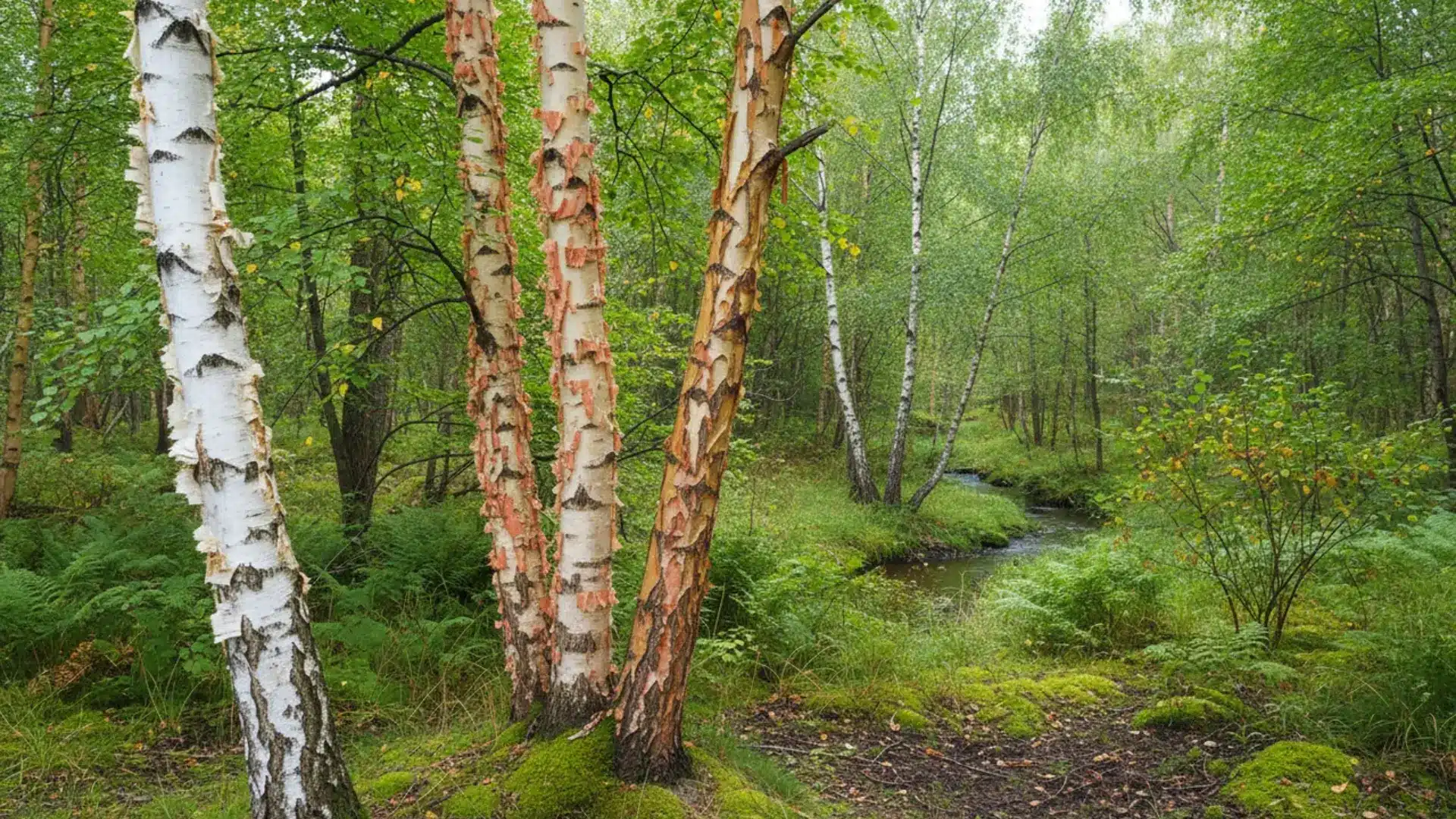
Bark can appear white, silver, gray, bronze, pink, salmon, brown, reddish, or nearly black, and the exact shade depends on the species, the tree’s age, and which layer of bark is currently exposed.
Peeling bark often reveals a lighter color underneath, which is why the same trunk can show two or three tones at once. Because color shifts with age, weather, and the time of year, it is rarely enough to confirm a species alone.
Leaf shape, growth habit, bark texture, and native range all add supporting evidence.
The sections below walk through each of these clues in turn, starting with the full range of bark colors, then moving into how that color changes as a birch matures, and how leaf color shifts through the seasons.
Common Birch Bark Colors
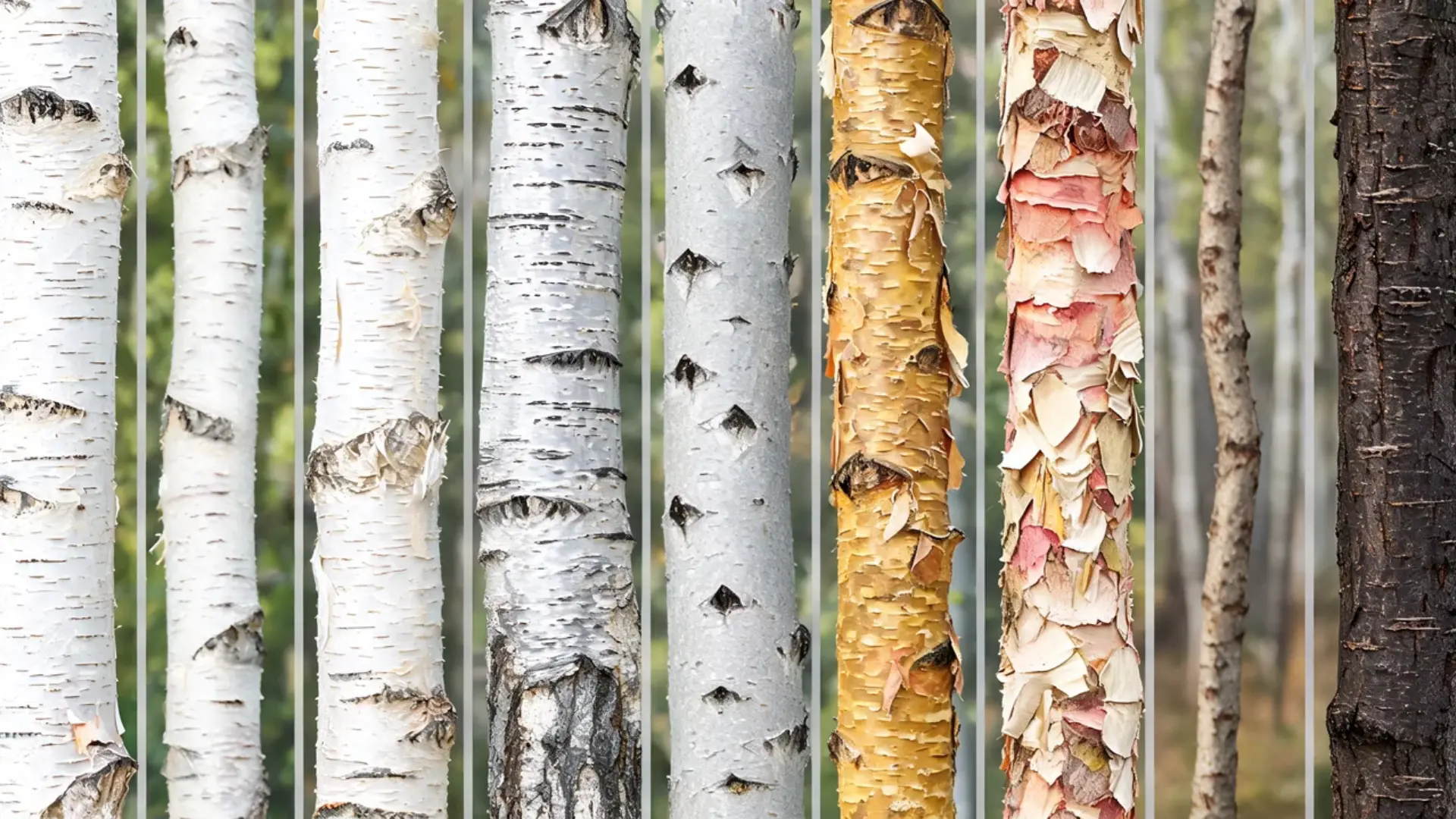
Birch bark covers a wider color range than many people expect. Each species has its own shade, markings, and texture.
- White: Paper, Himalayan white, and Japanese white birch have pale white bark.
- Silver-white: Silver birch has white bark with a soft silver tone.
- Gray-white: Gray birch and Whitespire have pale bark with gray or dark markings.
- Yellow-bronze: Yellow birch has golden or bronze bark that peels in narrow strips.
- Pink or salmon: River birch and its cultivars show pink, salmon, tan, and brown tones.
- Reddish brown: Sweet birch and water birch can have dark red-brown bark.
- Brown-gray: Bog birch usually has darker, less showy bark.
- Brown: Dwarf birch has brown bark on its low, shrubby stems.
- Blackish: Mature water birch may have bark that looks almost black.
These colors may overlap on one trunk. River birch often shows several shades as its outer bark curls away.
Birch Trees of Other Continents
Dwarf birch and paper birch both grow in very cold regions, though they look nothing alike once mature. Dwarf birch stays a low shrub across tundra and exposed northern land, while paper birch grows into a full-sized tree across cold North American forests.
Their mature size and growth form separate them quickly, even though both tolerate long winters.
Dwarf birch spreads across northern Europe and Asia, while paper birch remains mainly a North American species, rarely found growing wild elsewhere.
This size gap matters most when identifying a birch from a distance, since a tall trunk rules out dwarf birch, while a low shrub rules out paper birch.
Other birches trace back to Eurasia: silver birch grows across temperate Europe and Asia, known for its white bark; Himalayan white birch comes from the Himalayan region; Japanese white birch is linked with northeastern Asia.
Cultivars do not have separate natural ranges, since they are selected garden forms of these wild birches.
A Closer Look at Types of Birch Trees
Now that you know how birch colors and native ranges differ, look closer at types of birch trees. Each one has its own bark, form, size, and growing style.
1. Paper Birch
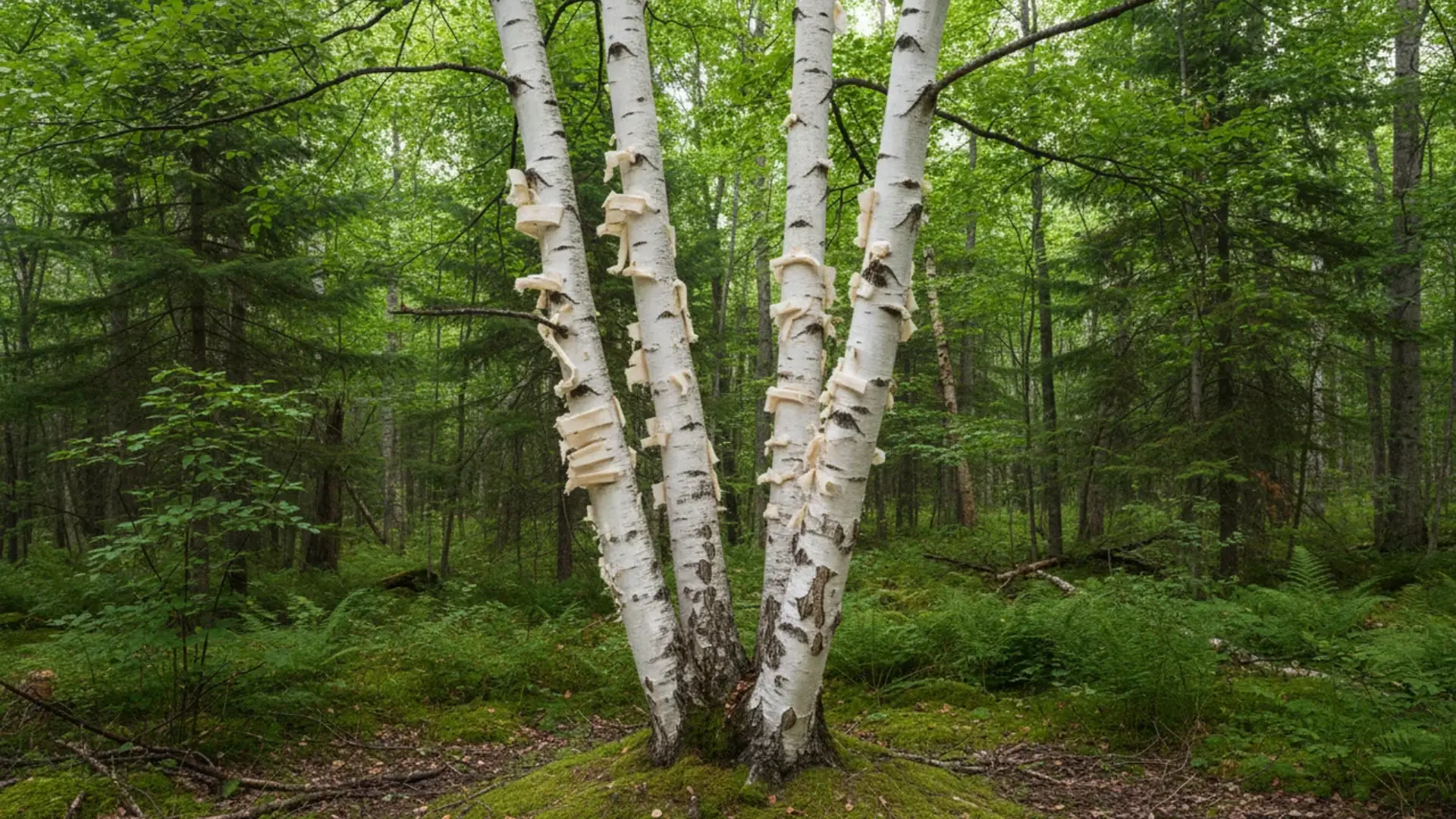
- Botanical name: Betula papyrifera
- Bark: white and peeling
- Native region: northern North America
- Growth form: one or several trunks
- Main clue: paper-like bark sheets
Paper birch is a northern tree with white bark that peels in thin sheets. It grows across Alaska, Canada, and northern states, and it prefers cool, moist sites. Gray birch looks similar, but its bark rarely peels.
2. River Birch
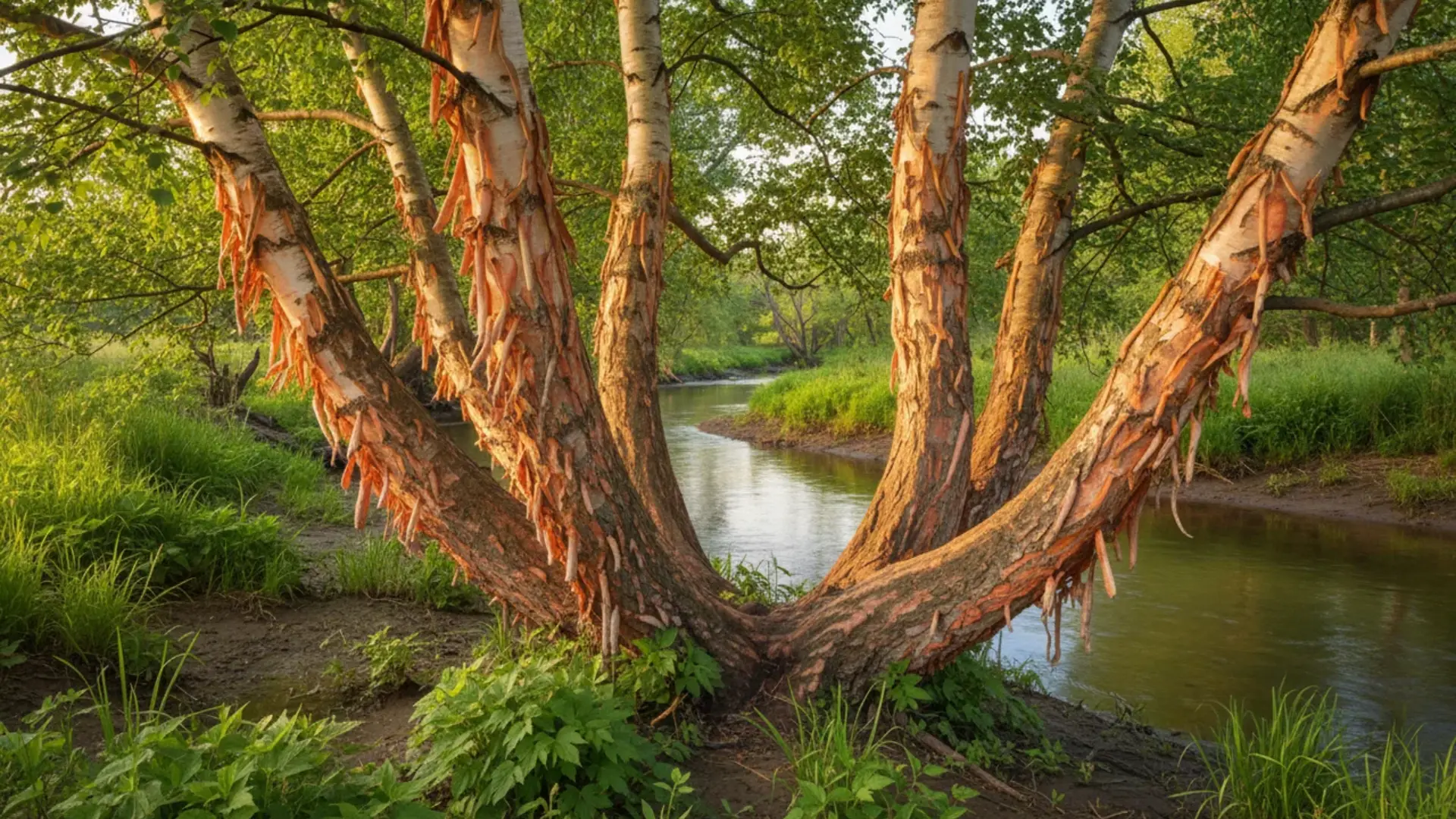
- Botanical name: Betula nigra
- Bark: salmon to red-brown
- Native region: eastern United States
- Growth form: one or several trunks
- Main clue: curled, multicolored bark
River birch grows near rivers, floodplains, and other wet ground. Its peeling bark shows salmon, pink, tan, and brown tones. It handles summer heat better than many birches, and it also resists bronze birch borer better than many pale-barked species.
River birch is also one of the faster-growing landscape trees, reaching 40 to 70 feet while tolerating wet soil that would kill many other species, a trait it shares with several profitable trees to grow for extra income on a larger property.
3. Yellow Birch
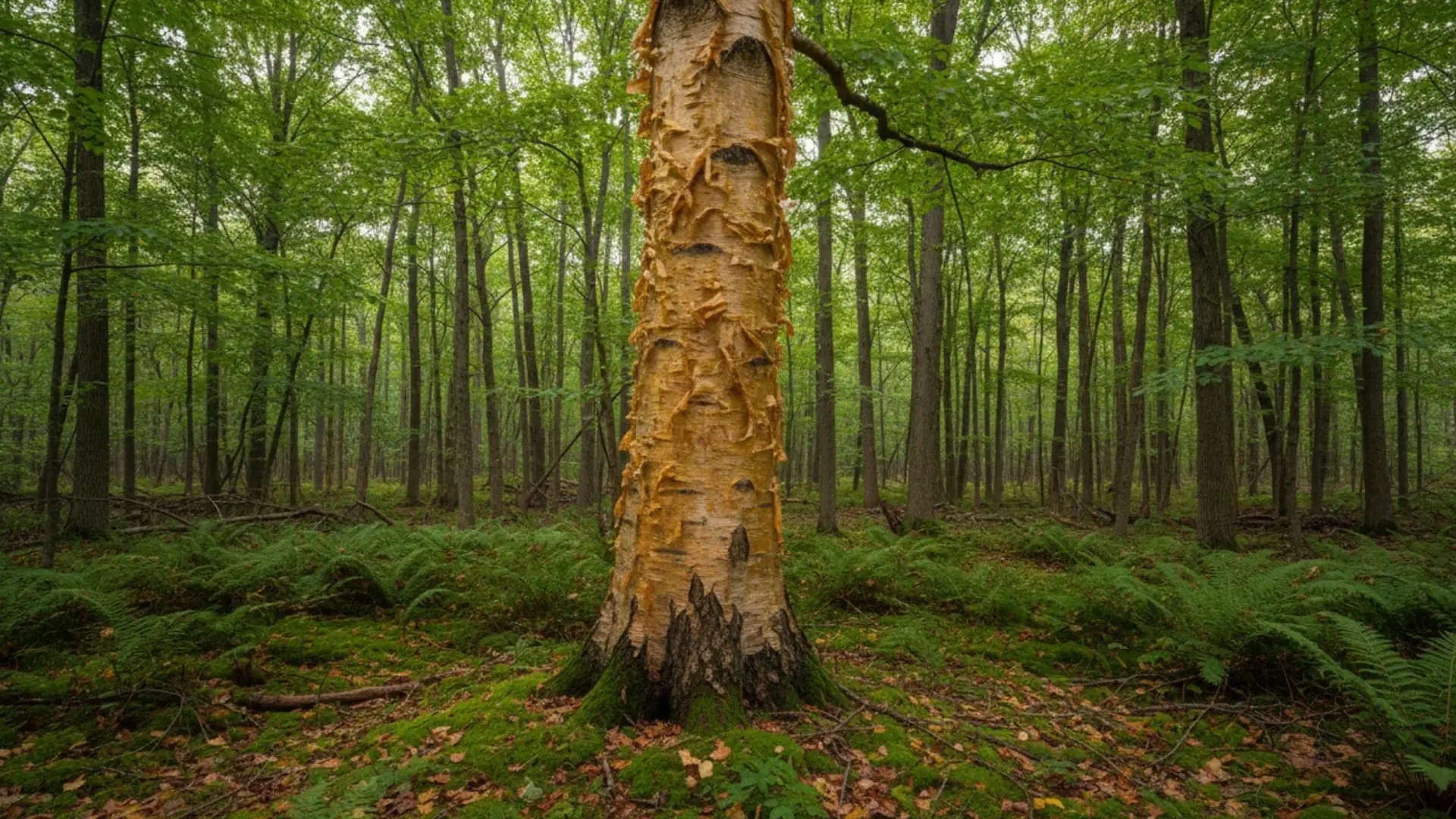
- Botanical name: Betula alleghaniensis
- Bark: yellow-bronze
- Native region: northeastern North America
- Growth form: large single trunk
- Main clue: shredded bronze strips
Yellow birch is a large forest tree with yellow-bronze bark that peels into narrow, curled strips. It grows in cool, moist northeastern forests and may live longer than many birches, so it needs ample space to reach maturity.
4. Gray Birch
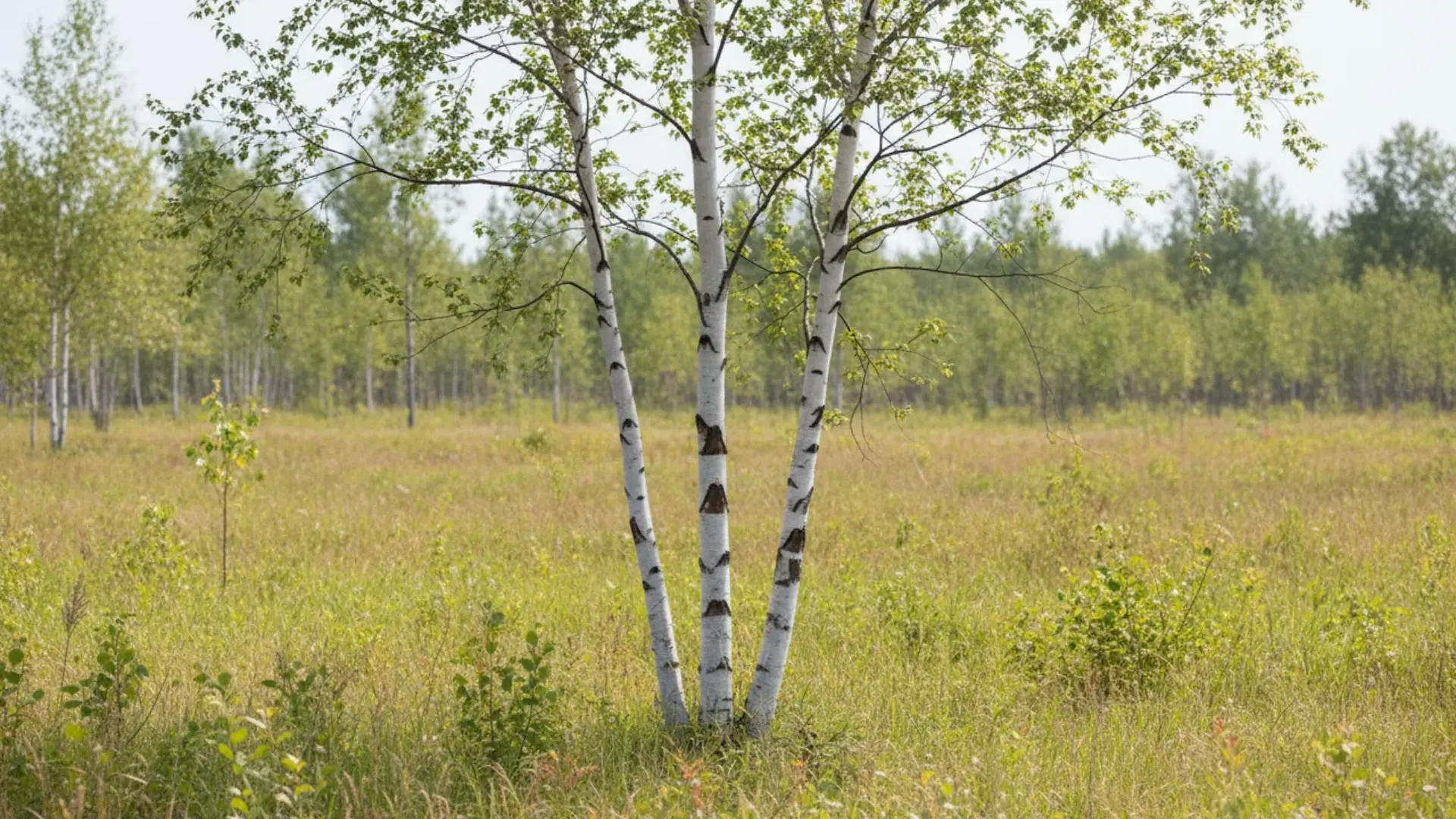
- Botanical name: Betula populifolia
- Bark: gray-white
- Native region: eastern North America
- Growth form: one or several trunks
- Main clue: dark triangular marks
Gray birch is a smaller eastern tree that often appears in clearings. Its pale bark usually has dark triangular branch marks, which help separate it from paper birch. It grows quickly on open ground and may form several trunks.
5. Sweet Birch or Black Birch
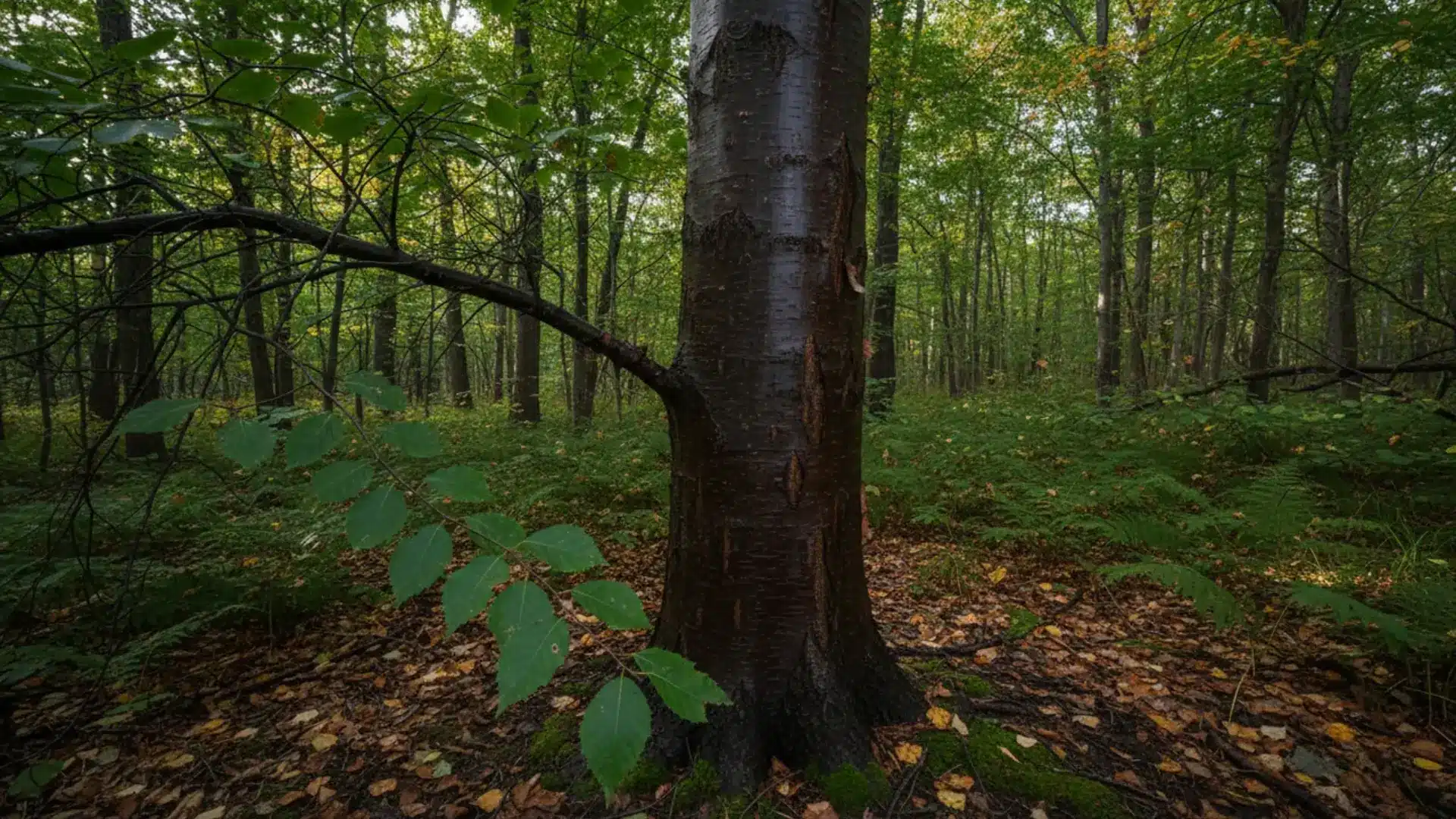
- Botanical name: Betula lenta
- Bark: dark gray or red-brown
- Native region: eastern North America
- Growth form: single trunk
- Main clue: wintergreen-scented twigs
Sweet birch is a dark-barked woodland tree from eastern North America. Mature bark can resemble cherry bark, and broken twigs carry a wintergreen scent, which helps with identification. Black birch is another common name, but regional usage varies.
6. Silver Birch
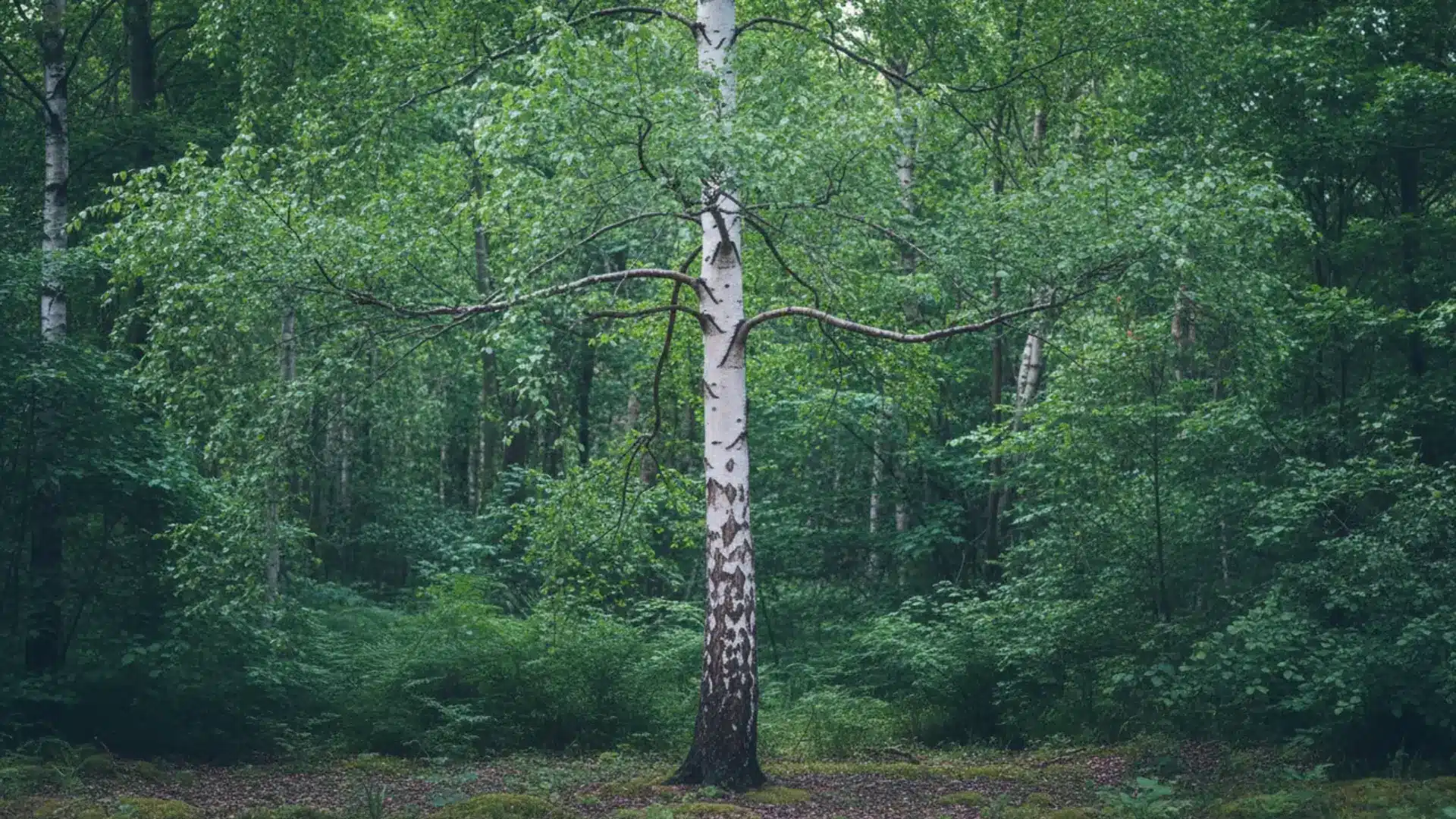
- Botanical name: Betula pendula
- Bark: white or silver
- Native region: Europe and Asia
- Growth form: single trunk
- Main clue: hanging branch tips
Silver birch is a Eurasian tree with white bark and hanging branch tips. Its crown becomes rounder as it matures. Warm, dry sites can increase stress and insect risks, and several weeping garden forms come from this species.
7. Himalayan White Birch
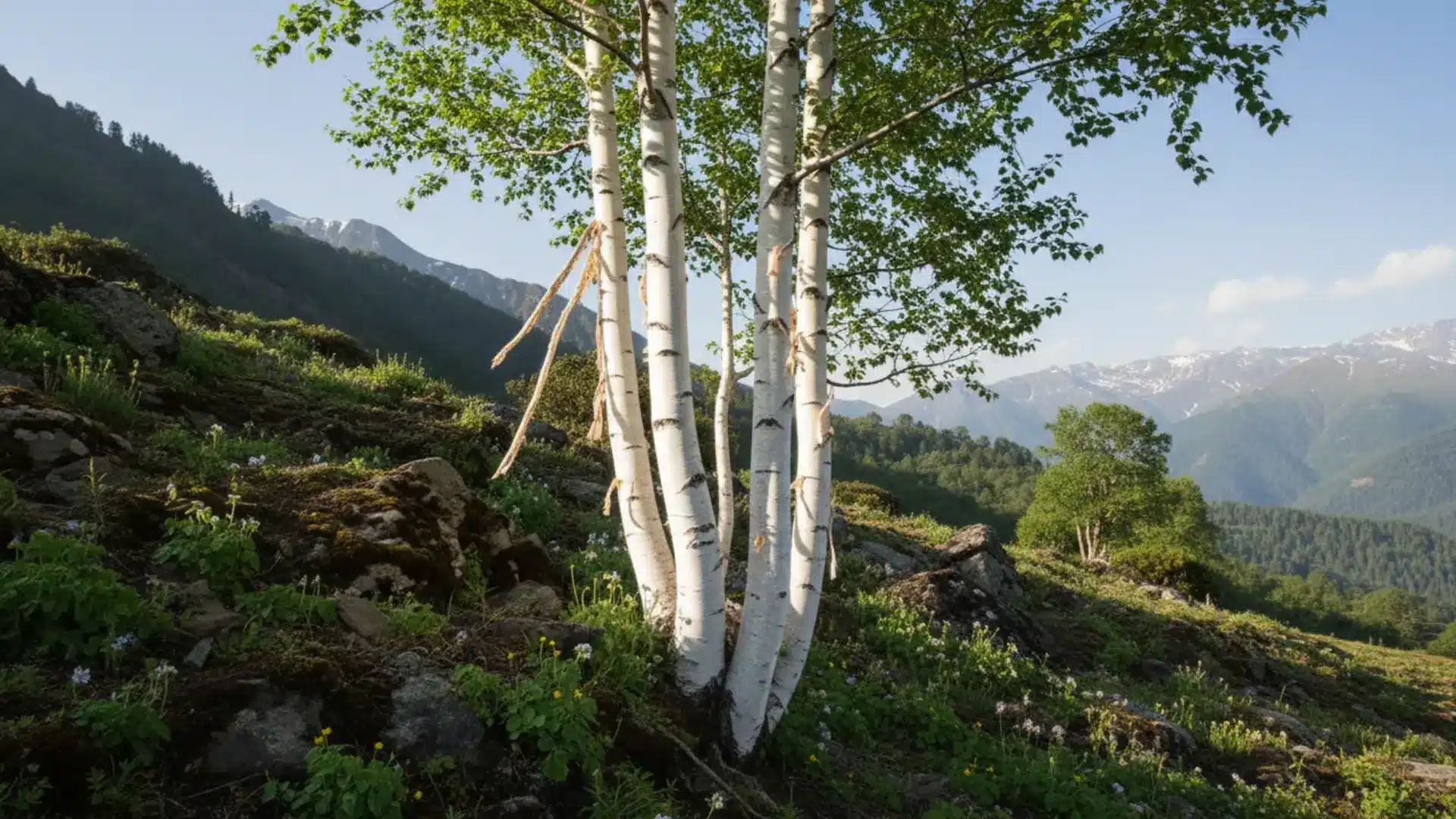
- Botanical name: Betula utilis subsp. jacquemontii
- Bark: bright white
- Native region: western and central Himalayas
- Growth form: medium upright tree
- Main clue: strong white trunk color
Himalayan white birch is a mountain tree with bright white bark. It grows best in cool conditions with moist soil. Some references use Betula utilis var. jacquemontii, while Kew accepts the subspecies name, so both forms may appear on plant labels.
8. Japanese White Birch
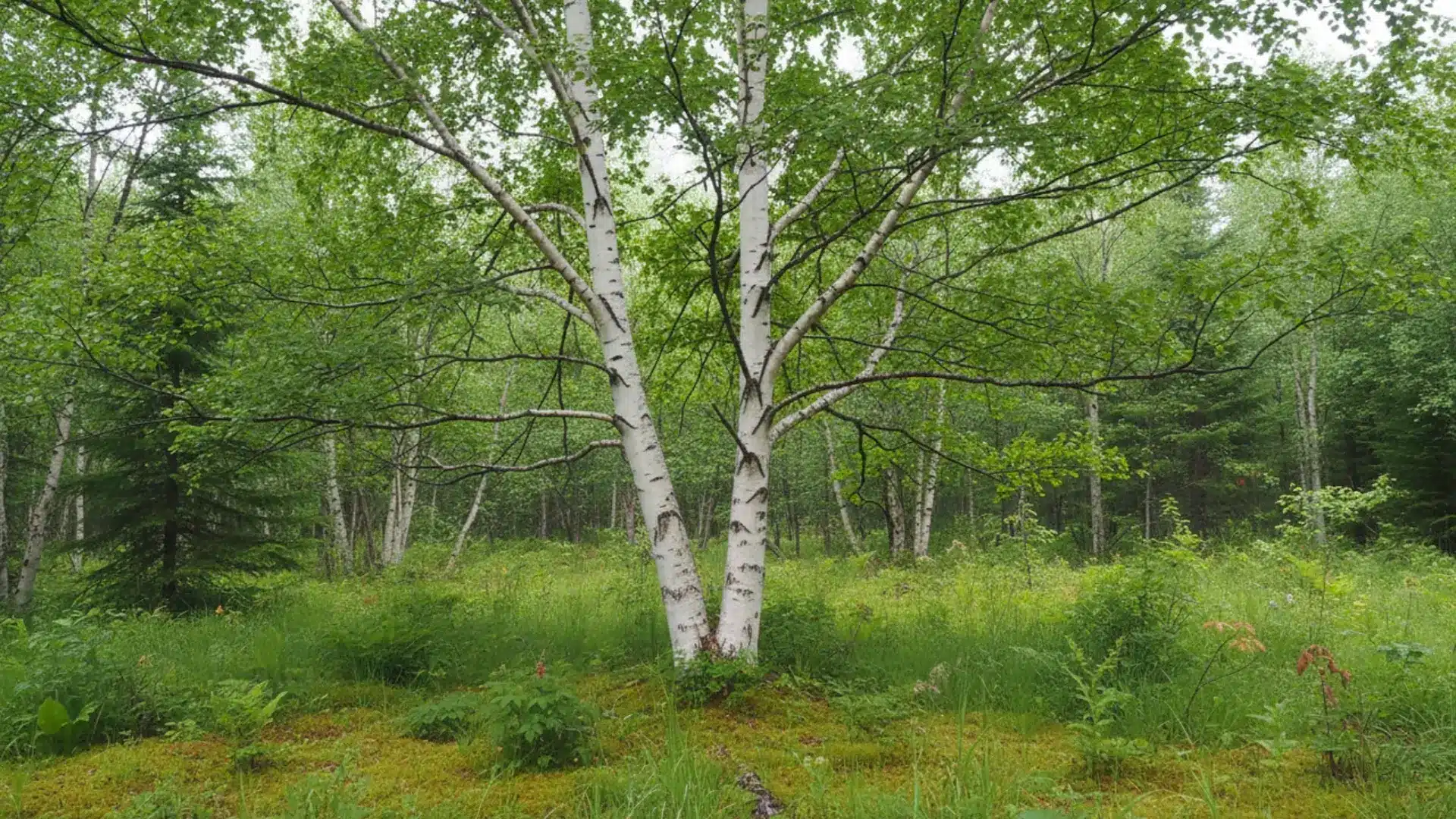
- Botanical name: Betula platyphylla
- Bark: white
- Native region: northeastern Asia
- Growth form: medium or large tree
- Main clue: thin spreading branches
Japanese white birch is an East Asian tree with white bark and thin branches. It prefers cool sites with steady moisture. Nurseries often use Betula platyphylla or Betula platyphylla var. japonica, and plant labels may vary between sellers.
9. Water Birch
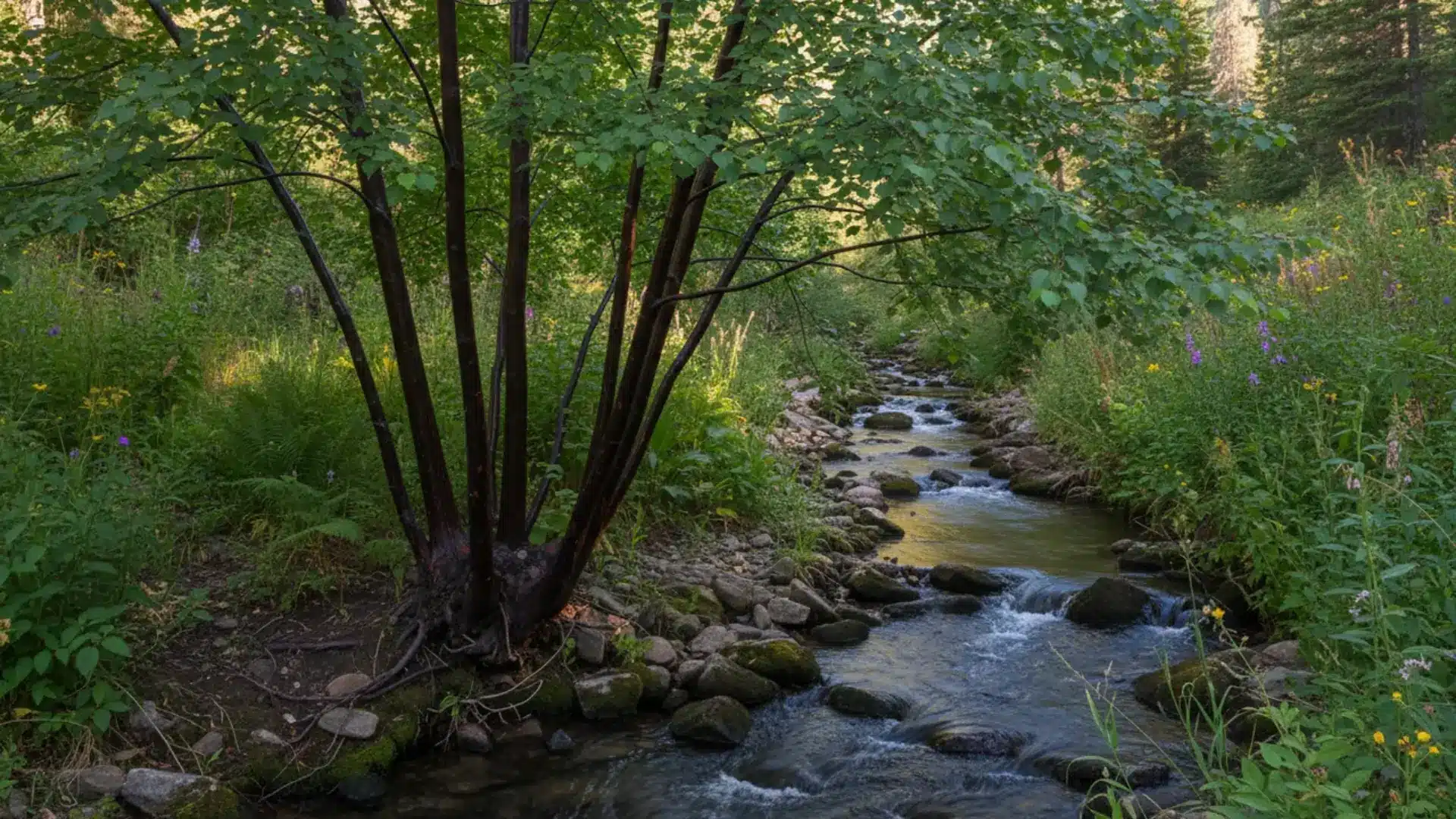
- Botanical name: Betula occidentalis
- Bark: dark red-brown or blackish
- Native region: western North America
- Growth form: shrub or small tree
- Main clue: smooth, non-peeling bark
Water birch is a western streamside birch with dark, non-peeling bark. It usually grows as a shrub or small tree, and its bark may look red-brown, blackish, or nearly black. A wet mountain setting helps separate it from river birch.
10. Bog Birch
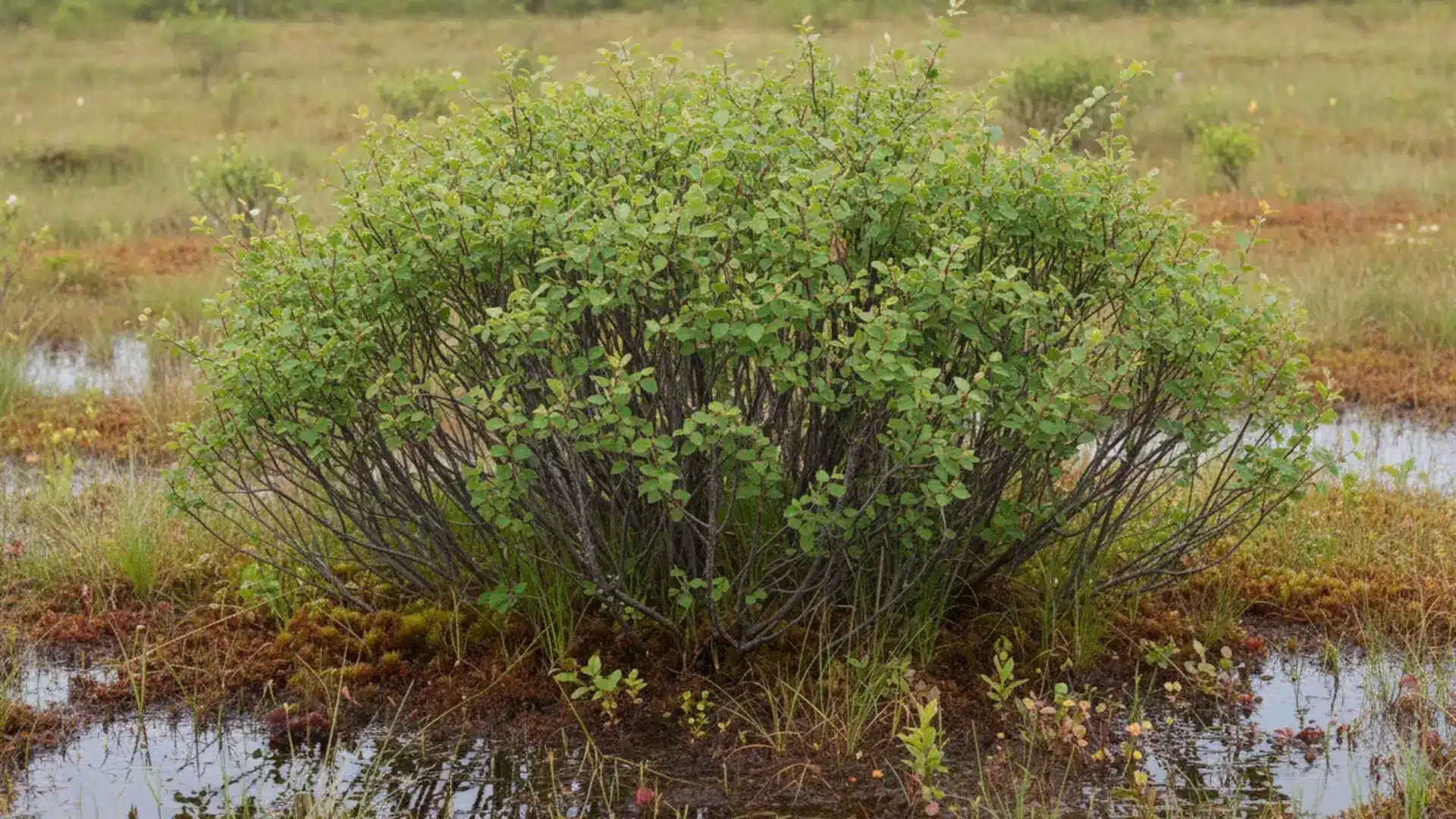
- Botanical name: Betula pumila
- Bark: brown-gray
- Native region: North America
- Growth form: clumping shrub
- Main clue: low growth in wet ground
Bog birch is a clumping shrub from wet parts of North America. It grows around bogs, ponds, and damp ground, and it tolerates occasional flooding and some difficult soils. Its short form separates it from taller wet-site birches.
11. Dwarf Birch
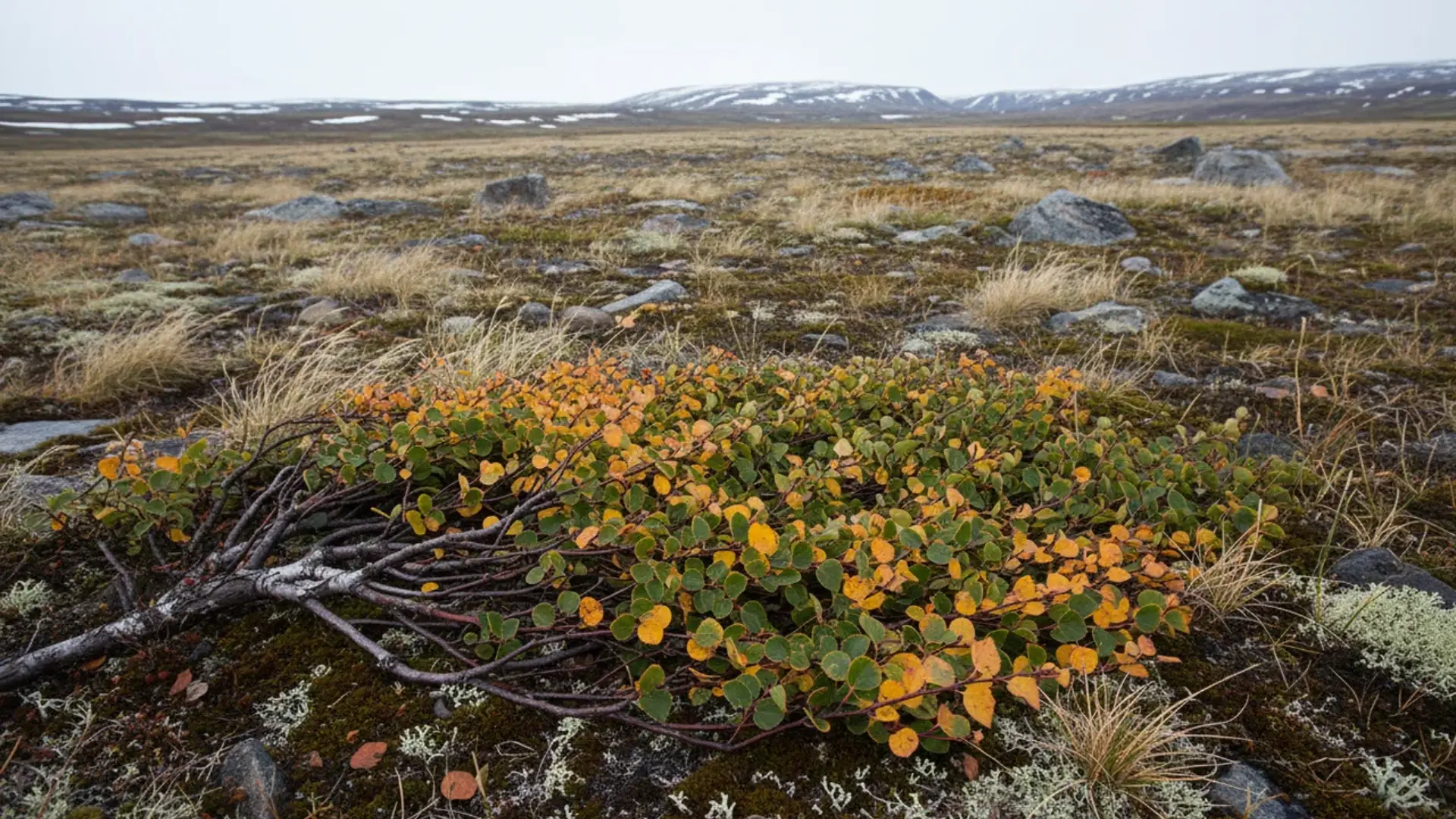
- Botanical name: Betula nana
- Bark: brown
- Native region: Arctic and northern regions
- Growth form: low shrub
- Main clue: very short mature height
Dwarf birch is a low shrub found across Arctic and cool northern regions. It often grows on tundra and exposed land, and its small size helps it withstand cold, windy conditions. Unlike tree-sized birches, it does not provide much shade.
12. Heritage River Birch
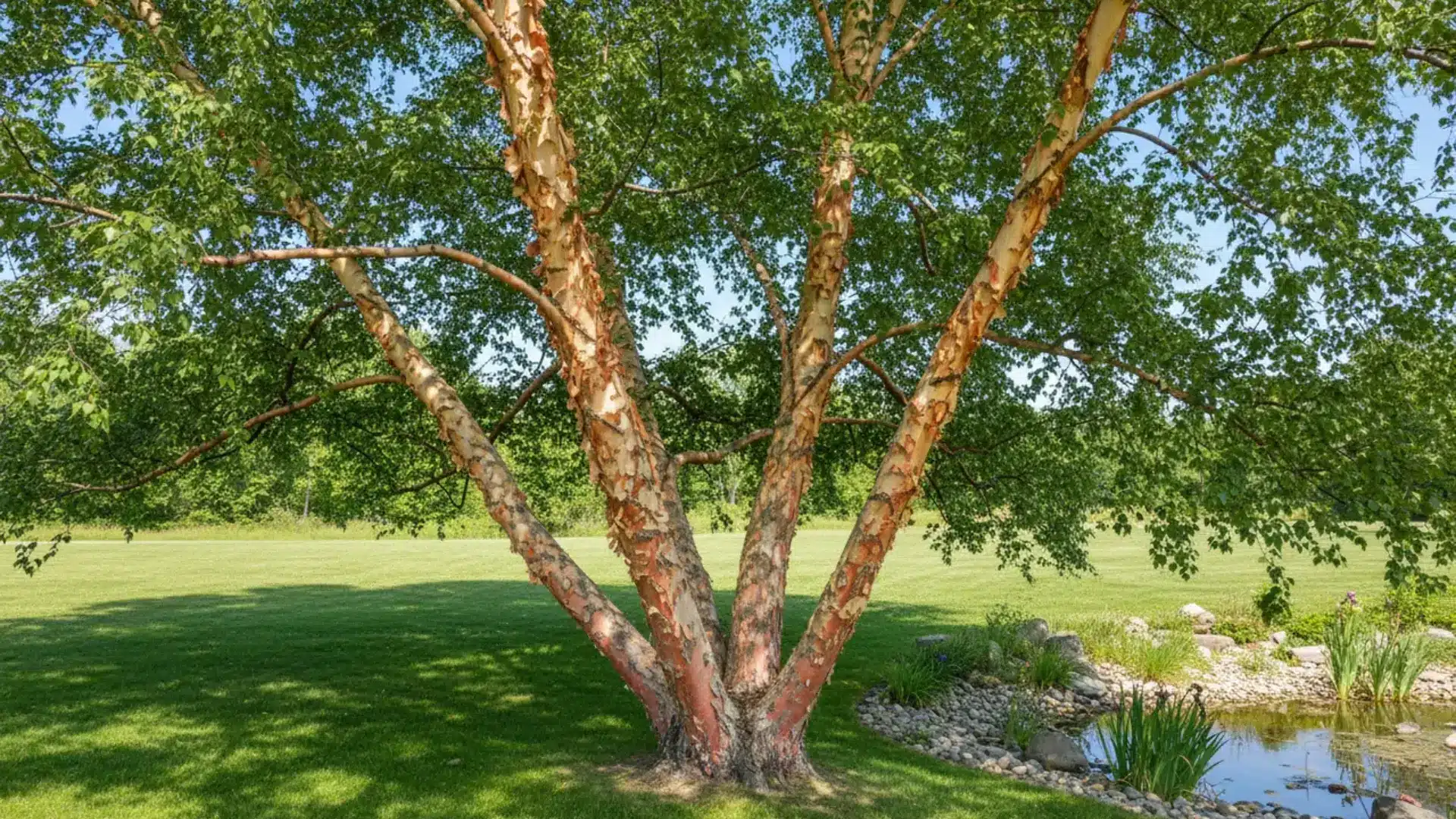
- Full name: Betula nigra ‘Cully’ Heritage
- Parent species: river birch
- Bark: salmon, cream, tan, and brown
- Growth form: one or several trunks
- Garden fit: larger moist sites
Heritage is a large river birch cultivar with peeling, multicolored bark. It may grow with one trunk or several. ‘Cully’ is the cultivar name, while Heritage is the trade name, and it suits moist sites with ample growing space.
13. Little King or Fox Valley River Birch
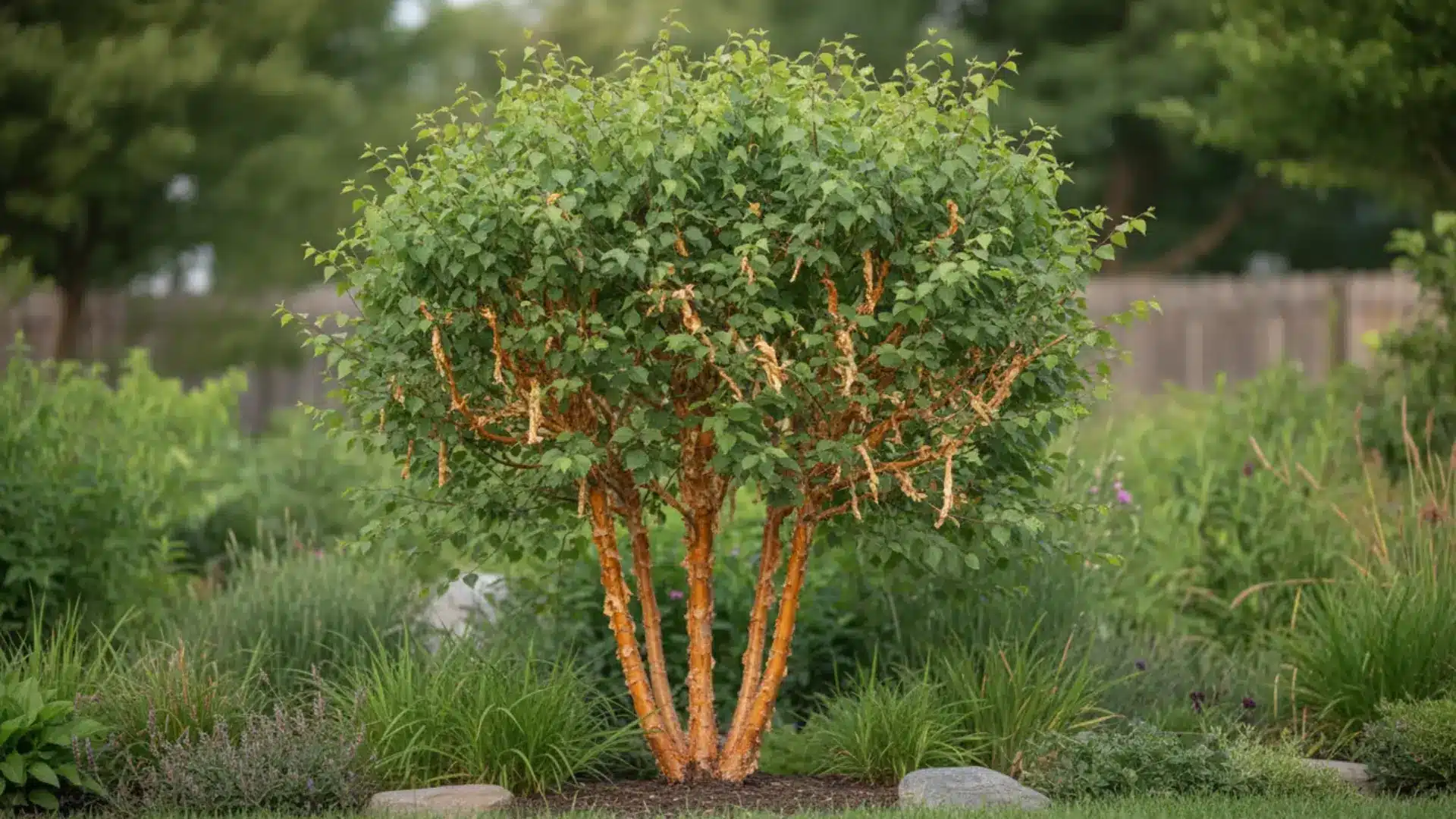
- Full name: Betula nigra ‘Little King’ Fox Valley
- Parent species: river birch
- Bark: orange-brown
- Growth form: dense and multi-stemmed
- Garden fit: small yards and rain gardens
Little King is a compact river birch cultivar with several stems. Its orange-brown bark peels early and shows lighter layers. Fox Valley is its trade name, and the plant suits small yards and rain gardens, since Heritage grows much larger.
14. Whitespire Birch
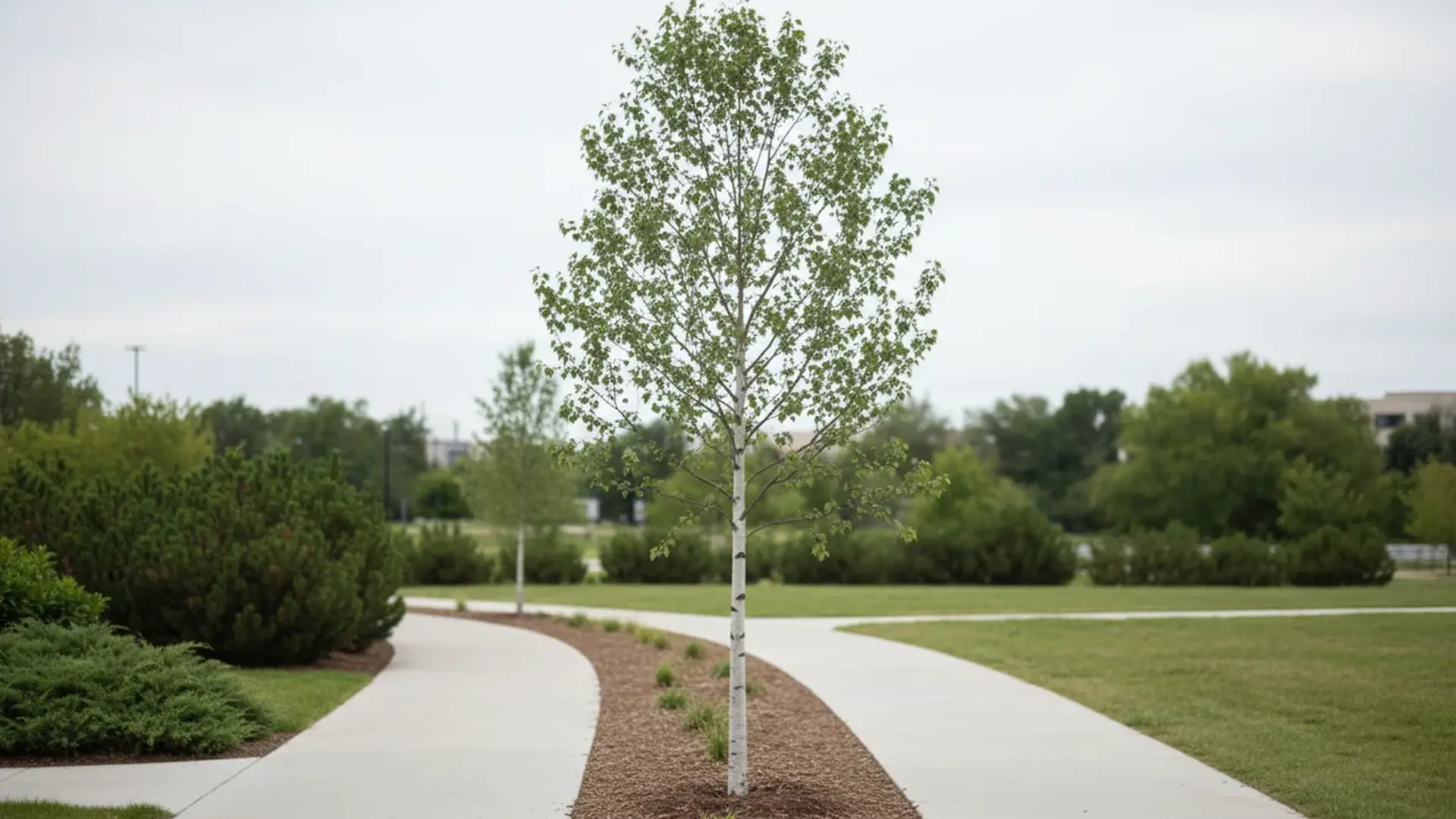
- Full name: Betula populifolia ‘Whitespire’
- Parent species: gray birch
- Bark: pale gray-white
- Growth form: narrow and upright
- Garden fit: limited-width spaces
Whitespire is a pale-barked cultivar with a narrow, upright form. It is commonly listed under gray birch, and its limited spread suits cool urban sites and narrow planting spaces. Older labels may connect it with Japanese white birch, since its parentage was reclassified after further study.
15. Dakota Pinnacle Birch
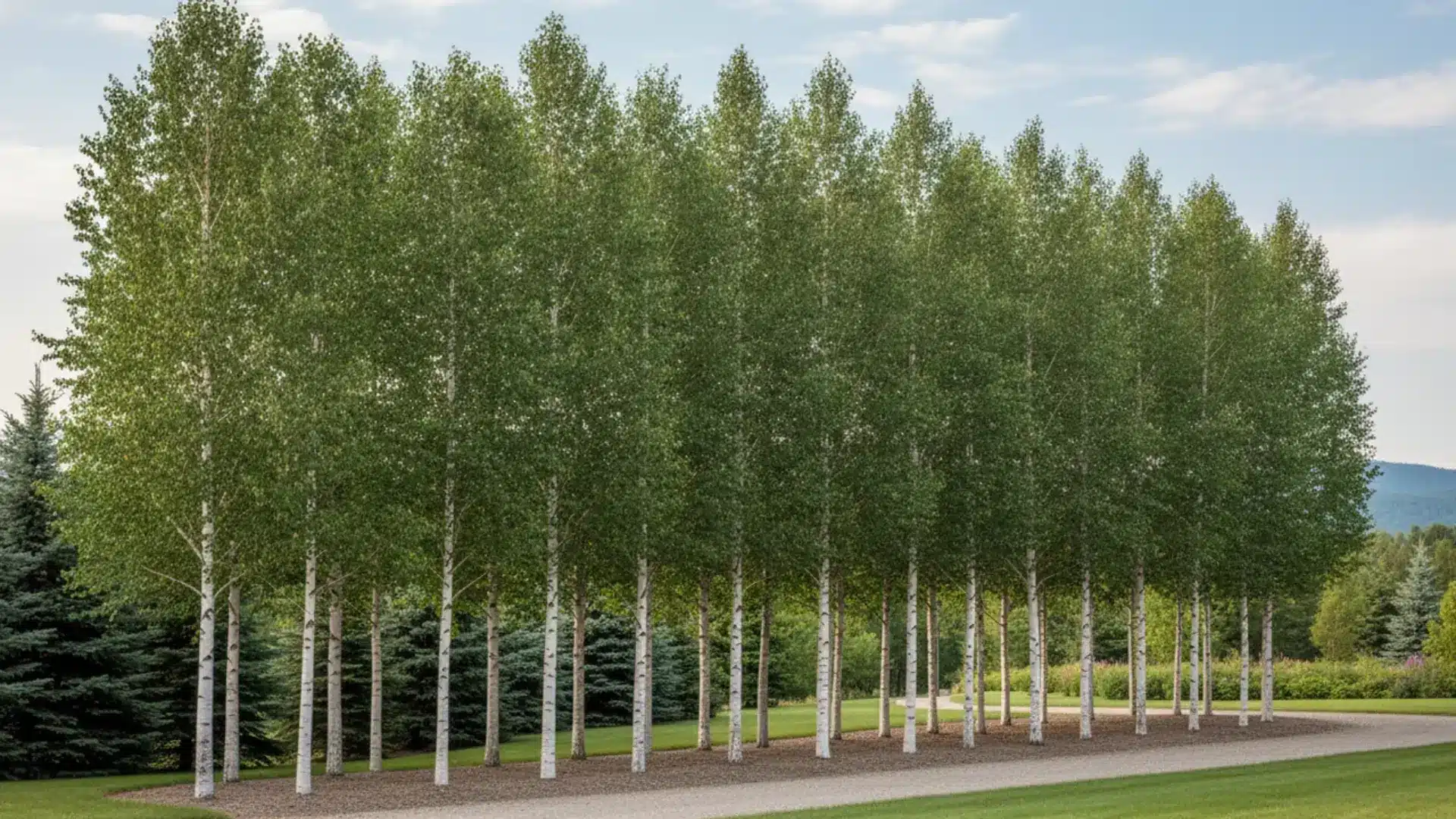
- Full name: Betula platyphylla ‘Fargo’ Dakota Pinnacle
- Parent species: Japanese white birch
- Bark: white
- Growth form: narrow and upright
- Garden fit: screens and narrow areas
Dakota Pinnacle is a narrow Japanese white birch cultivar with white bark. Its upright crown uses less horizontal space. ‘Fargo’ is the cultivar name, while Dakota Pinnacle is the trade name, and it suits screens and narrow planting areas.
Many birches look similar from a distance. A closer check of the bark, leaves, form, and location helps separate them.
Does Birch Bark Change With Age?
Young and mature birches can look quite different, since bark shifts in color, texture, and peeling style as the tree grows. Young bark often starts pale, smooth, or slightly reddish before darkening with age, and many species also peel more heavily once their trunks mature.
The lower trunk is usually the first place this shows, often turning rough, dark, or cracked before the upper bark changes much. When bark does peel, the layers underneath can reveal cream, tan, pink, or light brown tones unlike the outer surface.
Paper birch is a good example of how misleading this can be. It keeps its pale look for years, yet the lower trunk still tends to darken over time. Silver birch follows a similar pattern, developing darker bark near its base while the rest stays lighter.
Because of this, color alone is rarely enough for a firm identification. Checking the leaves, habitat, bark texture, and overall growth form alongside bark color gives a far more reliable answer, the same layered approach behind comparing maple leaf identification traits on a completely different shade tree.
How to Identify a Birch Tree by Its Bark and Leaves
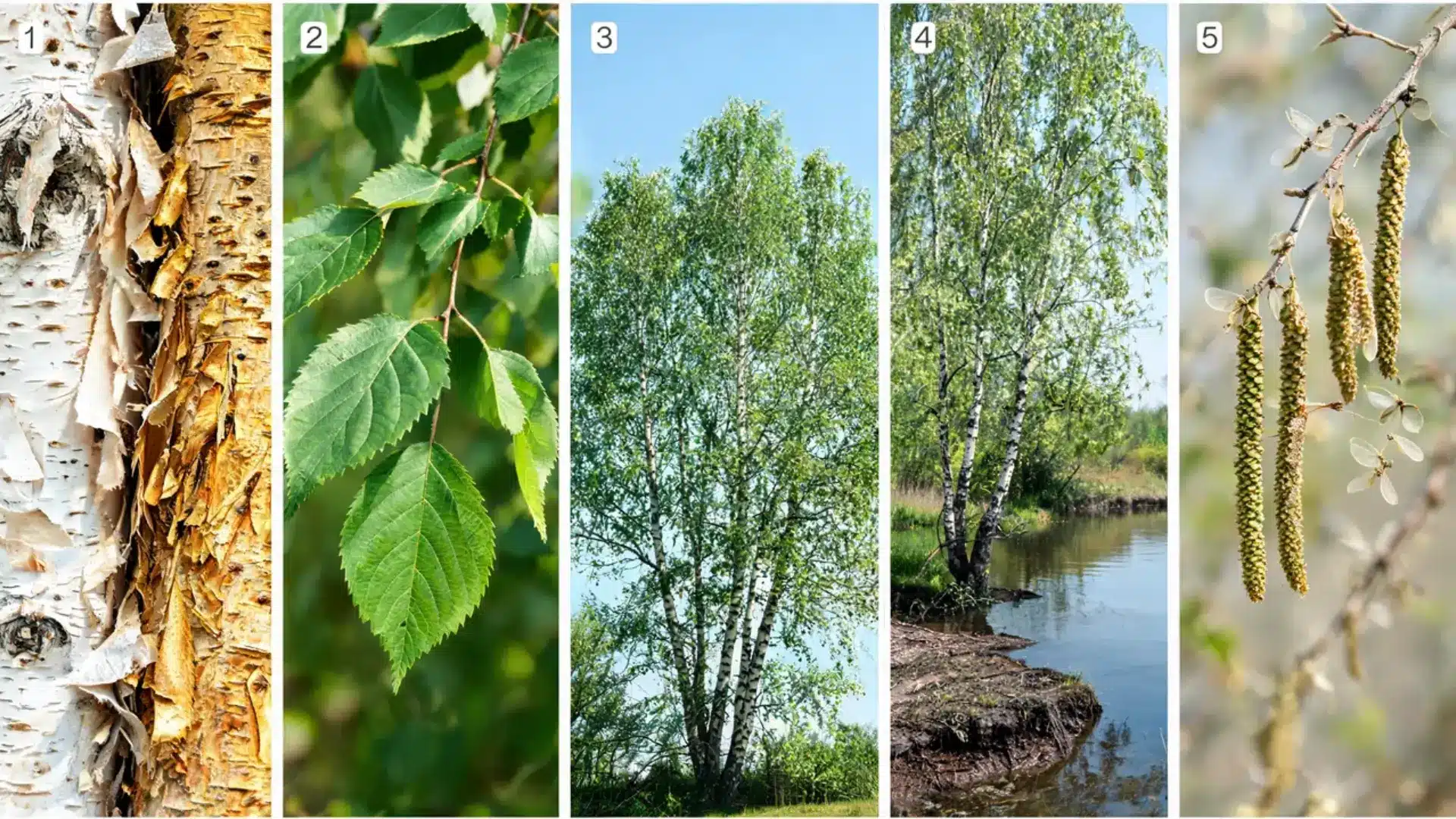
Check the Bark and Leaves
Bark gives the first clue, but a reliable match uses several features together. Check the bark color, texture, and peeling pattern: paper birch peels in thin sheets, yellow birch has bronze strips, and gray birch stays smoother.
Then compare the leaves, since birch leaves are usually more oval than the rounder leaves of aspen.
Confirm With Growth Form and Habitat
Step back and study the whole plant, noting its height, trunk number, crown shape, and branch direction.
Growing location narrows things further, since river birch favors wet lowlands, water birch favors western streams, and dwarf birch grows across tundra. When bark and leaves look alike, smaller features like twig scent and seed timing settle it.
Plan for Space and Watch for Pests
Check the mature height and width before planting, since a young birch can outgrow its space. Birch also has an aggressive root system, so keep large trees away from underground pipes.
Match the yard size to the species, and watch for bronze birch borer, which affects pale-barked birches more than river birch.
Birch Trees in Local Ecosystems
Naturally occurring birches support forests, wetlands, tundra, and open land, and their role shifts with species and habitat. Here’s how a birch fits into the landscape around it.
- Food and shelter for wildlife: Birch seeds, buds, catkins, and leaves feed birds, insects, and small mammals, while branches offer nesting space and cover from predators, a relationship the U.S. Forest Service documents in its research on birch wildlife habitat management.
- Birches near water: River birch lines eastern floodplains, water birch favors western streams, and bog birch grows in marshy ground, each with its own natural range.
- Birches in open ground: Gray birch appears quickly in clearings with one trunk or several, while paper birch grows larger in the same open settings.
- Why native range matters: A birch’s native range narrows the likely species and hints at its climate and habitat, pointing toward northern regions or western streams depending on the type.
Taken together, these patterns show that a birch is rarely just decorative. Where it grows naturally says as much about the surrounding ecosystem as it does about the tree itself.
Frequently Asked Questions
Are birch trees evergreen?
No, birch trees are deciduous. Their leaves turn yellow or gold in fall before dropping; bare branches remain through winter, and fresh green growth returns each spring.
How long do birch trees live?
Lifespan varies by species, climate, soil, and health, but many landscape birches live 40 to 90 years, and yellow birch can survive much longer in good forest conditions.
How fast do birch trees grow?
Most birches add about one to two feet a year in good conditions. River birch grows fastest, sometimes reaching two feet yearly in moist, well-draining soil with regular water.
When should you prune a birch tree?
Prune during late fall or winter, when sap flow is lower, and avoid spring pruning since fresh cuts can bleed heavily. Remove only dead, damaged, diseased, or crossing branches.
Can birch pollen cause allergies?
Yes, birch pollen is one of the most common tree allergens, often triggering sneezing, itchy eyes, and a runny nose as it peaks each spring.
Final Bark
A birch can fool you at first glance, but the right clues tell the full story. Peeling patterns, leaf shape, size, habitat, and native range work together, making the many types of birch trees far easier to recognize.
The same approach helps you pick the right tree for your yard. River birch suits warmer, wetter ground, while paper birch prefers colder climates, and smaller cultivars fit tighter spaces.
Start with climate, soil, and available room before worrying about bark color, then check pest risks and the plant label. A little patience with these details pays off the next time you’re out for a walk.
Bring these clues along on your next walk, and see which birch you can name first. Drop a comment below and tell me which birch you love.