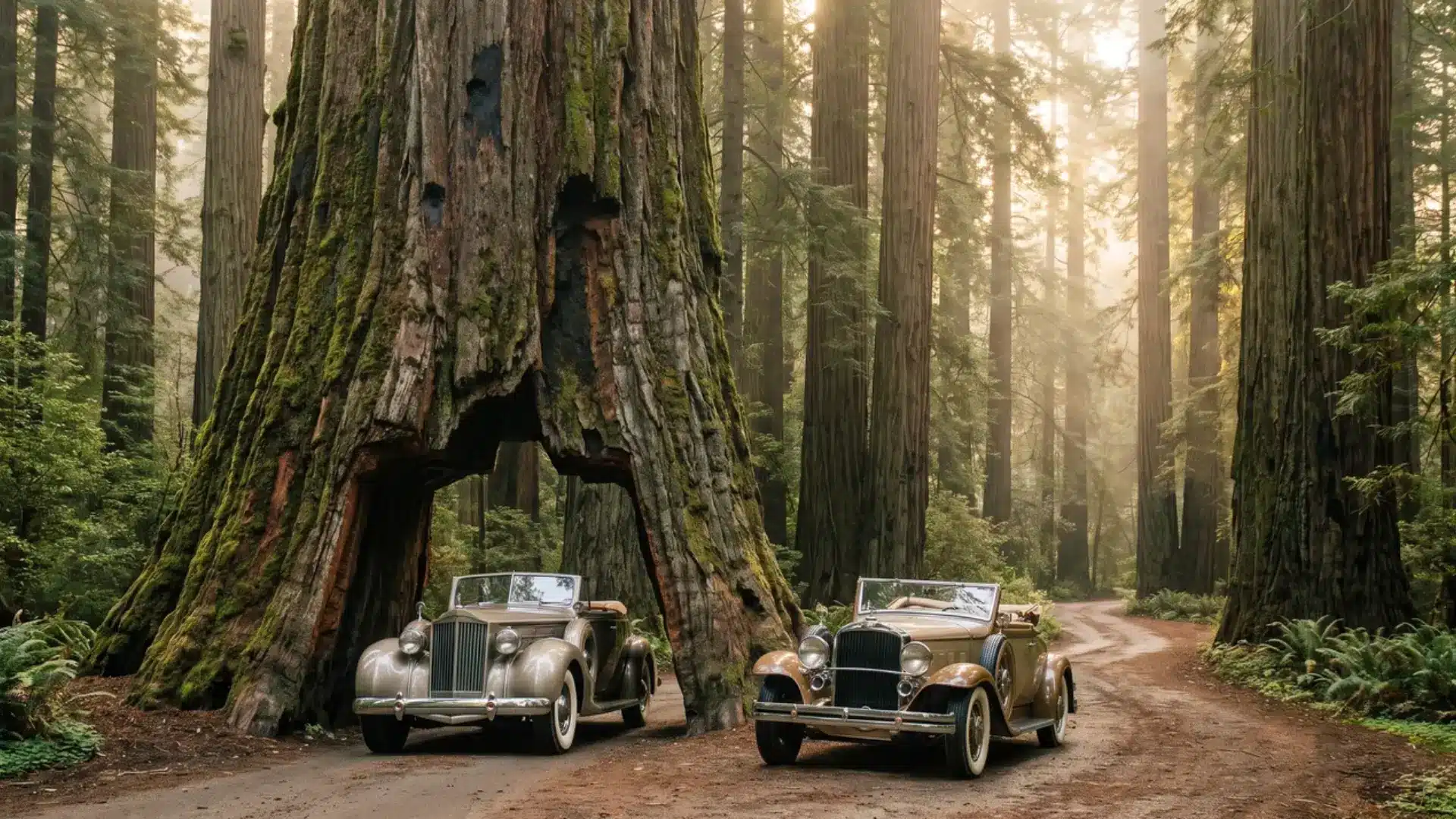
California’s drive-through trees have attracted visitors for more than a century. Old photographs show carriages and cars passing through huge trunks, and those images turned the trees into famous roadside attractions.
However, they are not all coast redwoods. Some were giant sequoias, while others were dead trees or fallen logs, and their stories differ quite a bit once you look closer.
It’s easy to see why these trees still capture people’s imagination: driving straight through a living trunk feels almost unreal, and old photographs have kept that image alive for generations, even as new stories and viral clips add their confusion.
Anyone searching for what happened to the drive-through redwood tree they remember will find the full story below.
What Happened to the Drive-Through Redwood Tree Recently?
Search “drive-through tree” today and much of what surfaces is not a tree falling down at all. It is a video of a car getting stuck. Vehicles have wedged into the Shrine Tree and the Chandelier Tree in viral clips from recent years, with headlines describing the tree as swallowing the car.
In both cases, the vehicle was simply too wide once mirrors and body panels were factored in, and the trees themselves were undamaged. That distinction matters for anyone searching to find out what actually happened to these trees.
No living or historic drive-through tree covered in this guide has fallen or been damaged in a widely reported incident in recent years. The two real losses, Pioneer Cabin and Wawona, happened in 2017 and 1969.
The National Park Service’s own account of these tunnel trees addresses this exact confusion, noting that visitors often ask about a tree that either no longer exists or was never inside the park they are visiting.
The rest of this guide separates the historical collapses from the trees still standing, and explains why a tunnel through a living trunk creates risk even when no storm is in the forecast.
Why Tunnel Trees Were Created
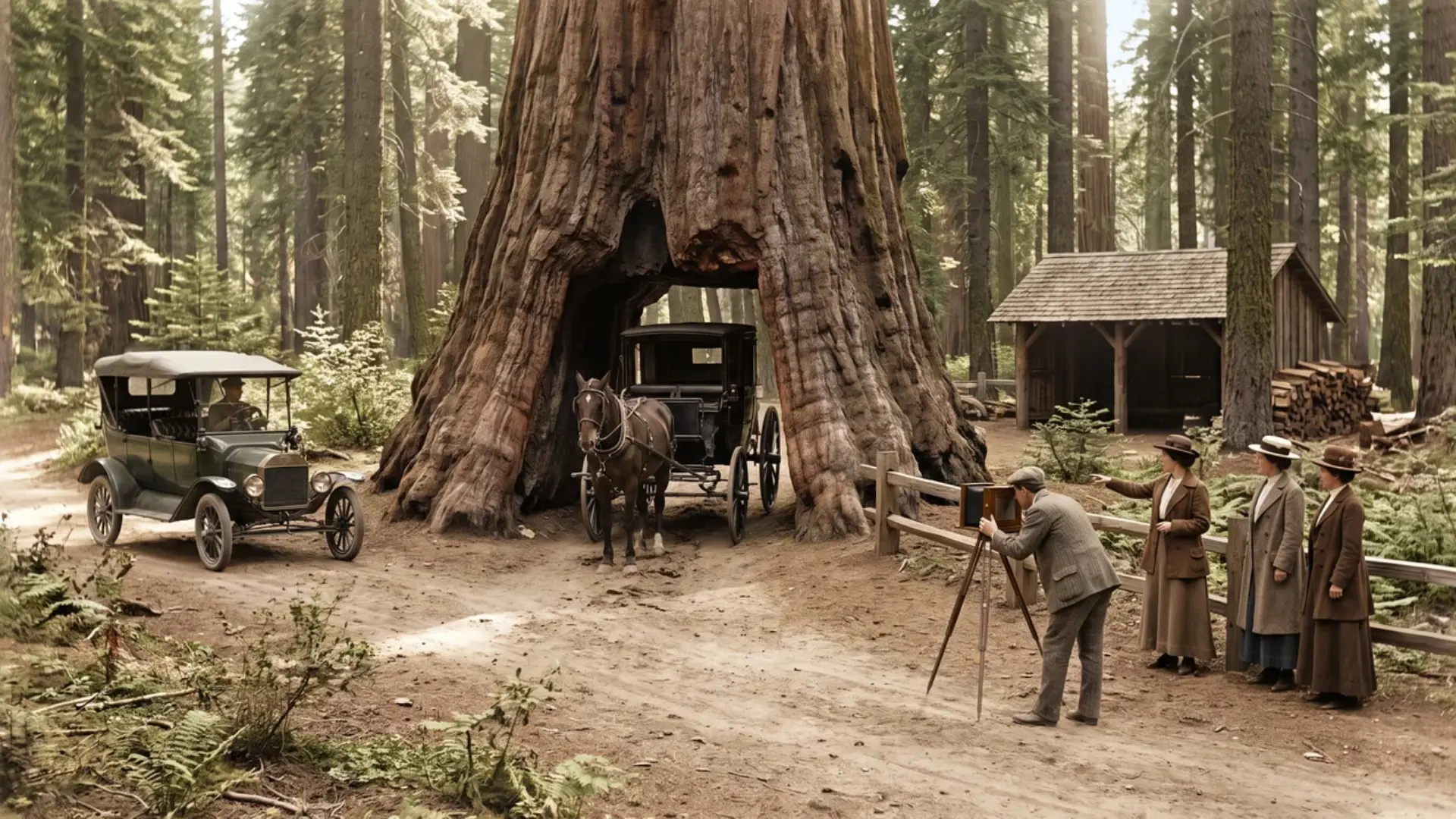
Tunnel trees became popular during the early years of California tourism. Roads, towns, parks, and businesses wanted attractions that would bring visitors. A tunnel through a huge tree created a memorable experience and striking photographs.
Horse-drawn carriages were common when several early tunnels were created. Visitors could ride through a tree and compare the carriage with the huge trunk. As cars became popular, photographs of vehicles inside trees helped promote California road trips, nearby towns, and local hotels.
The openings also helped people understand the trees’ size. A carriage or car gave visitors a clear point of comparison. Famous photographs then carried that image far beyond California.
The Dead Giant in Yosemite’s Tuolumne Grove is another example. It was already dead when workers cut a tunnel through it in 1878. Owners of the Big Oak Flat Road wanted more travelers, so they moved the road closer. Visitors could then ride through the dead trunk.
California’s Famous Drive-Through Trees
California’s famous tunnel trees have fascinated visitors for more than a century. These unusual attractions include coast redwoods, giant sequoias, fallen trees, and even dead trees that were carved into tunnels. While some became famous tourist stops, others fell because of age, storms, decay, and natural forces.
| Tree | Type | Location | What Happened |
|---|---|---|---|
| Pioneer Cabin Tree | Giant sequoia | Calaveras Big Trees State Park | Fell in 2017 |
| Wawona Tunnel Tree | Giant sequoia | Mariposa Grove, Yosemite | Fell in 1968-1969 winter |
| Dead Giant | Dead giant sequoia | Tuolumne Grove, Yosemite | Tunnel created in 1878 |
| Tour Through Tree | Coast redwood | Klamath | Private attraction |
| Shrine Tree | Coast redwood | Myers Flat | Private attraction |
| Chandelier Tree | Coast redwood | Leggett | Private attraction |
| Tunnel Log | Fallen giant sequoia | Sequoia National Park | Tunnel cut after the tree fell |
Each tree has a different story. Its species, location, ownership, and condition determine whether visitors can still experience it today.
Famous California Drive-Through Trees: What Happened to Each One
The Pioneer Cabin Tree, a giant sequoia in Calaveras Big Trees State Park, had a tunnel carved through its trunk in the 1880s. Heavy rain and flooding toppled the tree in January 2017, ending its run as a famous attraction.
1. Pioneer Cabin Tree: The Giant Sequoia That Fell in 2017
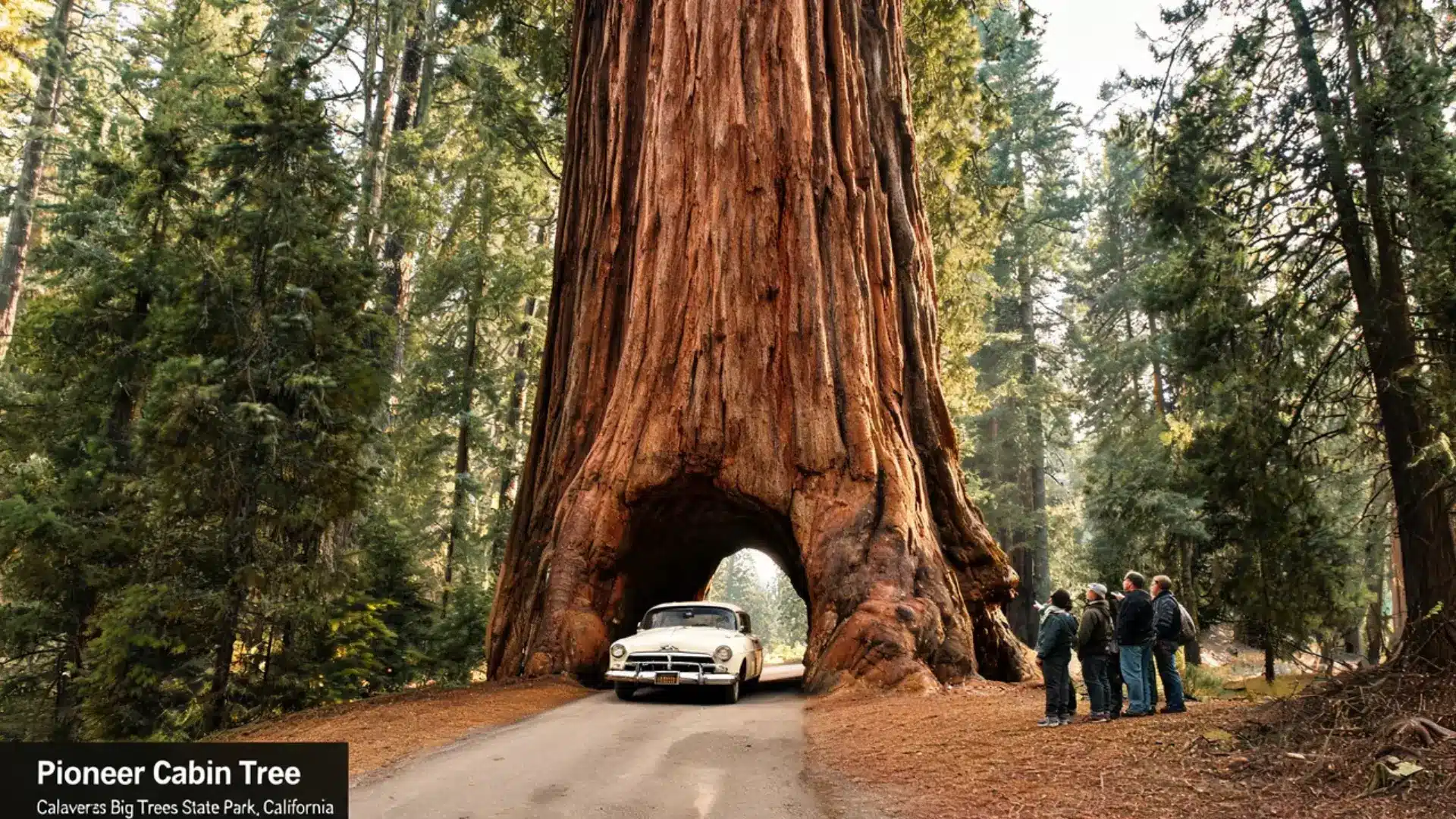
The Pioneer Cabin Tree was one of California’s most famous drive-through trees before it fell on January 8, 2017. This giant sequoia stood in Calaveras Big Trees State Park and had attracted visitors for generations.
Lightning damage, trunk decay, root problems, and heavy winter rain weakened the tree over time. The tree’s fall showed how natural events and human changes can affect historic landmarks.
Workers carved and enlarged the opening in Pioneer Cabin in 1881. Horse-drawn carriages passed through the tunnel for decades, and cars began using it in the 1920s. Although the tunnel removed part of the trunk, experts believe the collapse happened because of several combined factors, including decay, runoff, and storm pressure.
2. Wawona Tunnel Tree: Yosemite’s Fallen Drive-Through Giant
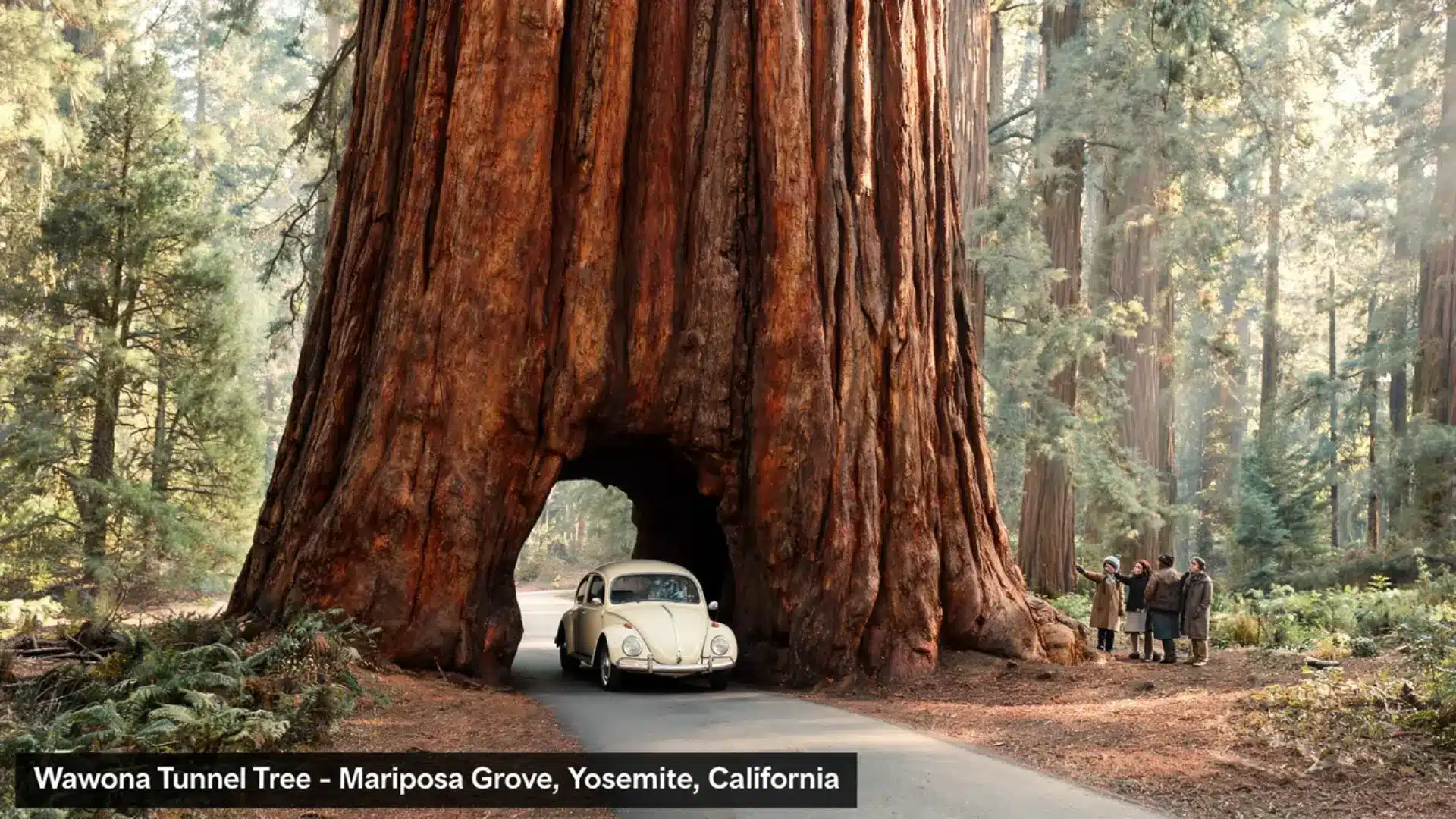
The Wawona Tunnel Tree was a famous Yosemite tunnel tree located in Mariposa Grove. Workers carved a vehicle-sized tunnel through the living giant sequoia in 1881. For decades, visitors drove wagons, cars, and buses through the opening, making it one of Yosemite’s most photographed trees.
The tree fell during the winter of 1968-1969 after heavy snow, wet soil, age, and structural weakness affected its stability. Wawona was around 2,100 years old when it collapsed. The tunnel reduced some of its strength, but severe weather played a major role in its final fall.
3. Dead Giant: The Old Tunnel Tree of Tuolumne Grove
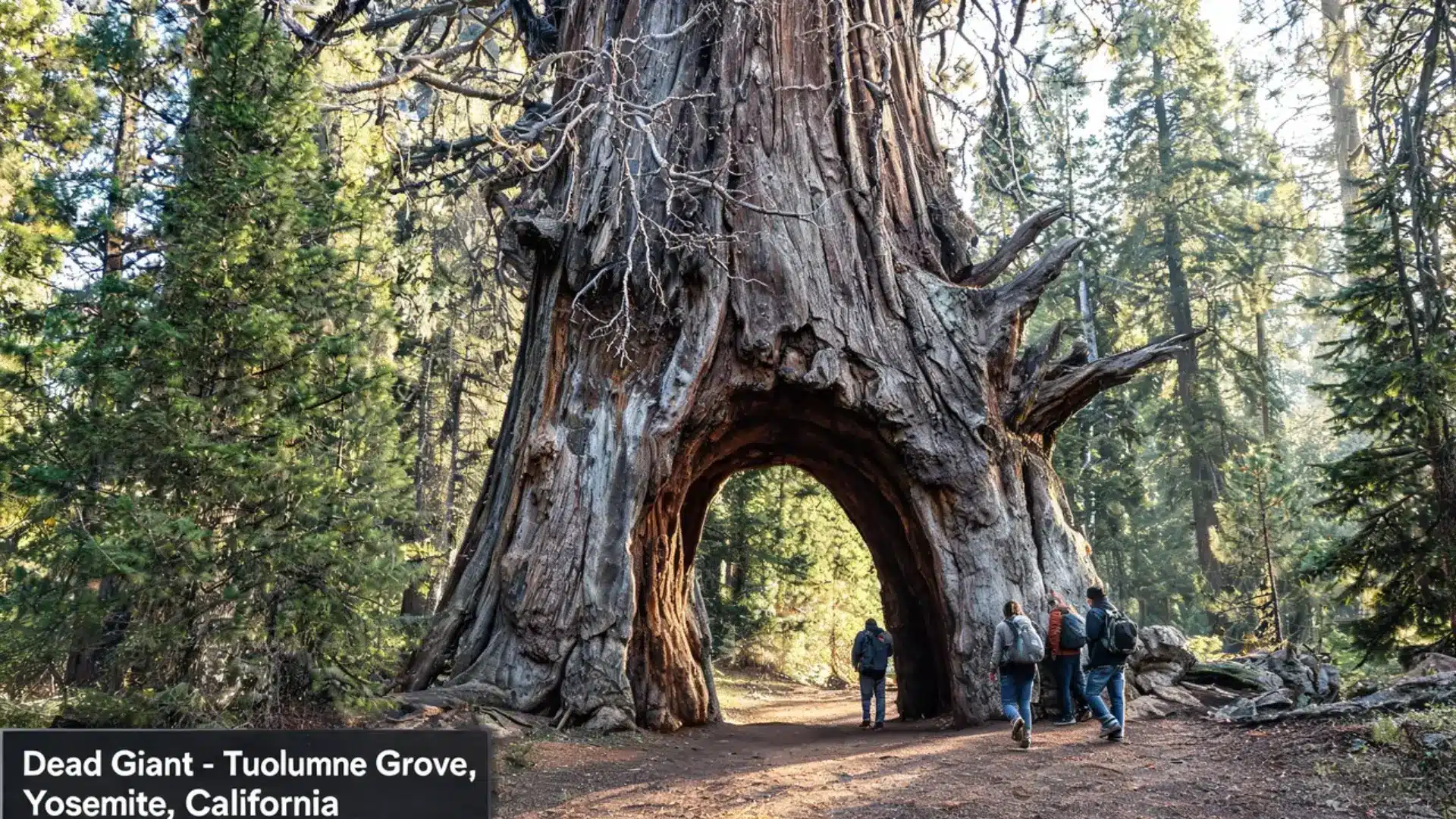
The Dead Giant is a former giant sequoia in Yosemite’s Tuolumne Grove. Unlike living tunnel trees, this tree was already dead when workers created a passage through its trunk in 1878. The tunnel became one of the earliest examples of a California drive-through tree attraction.
Because the tree was no longer living, visitors could walk through the opening without affecting a growing tree. Today, the Dead Giant remains an important reminder of how early tourism shaped the way people experienced Yosemite’s massive sequoias.
4. Chandelier Tree: The Living Redwood in Leggett
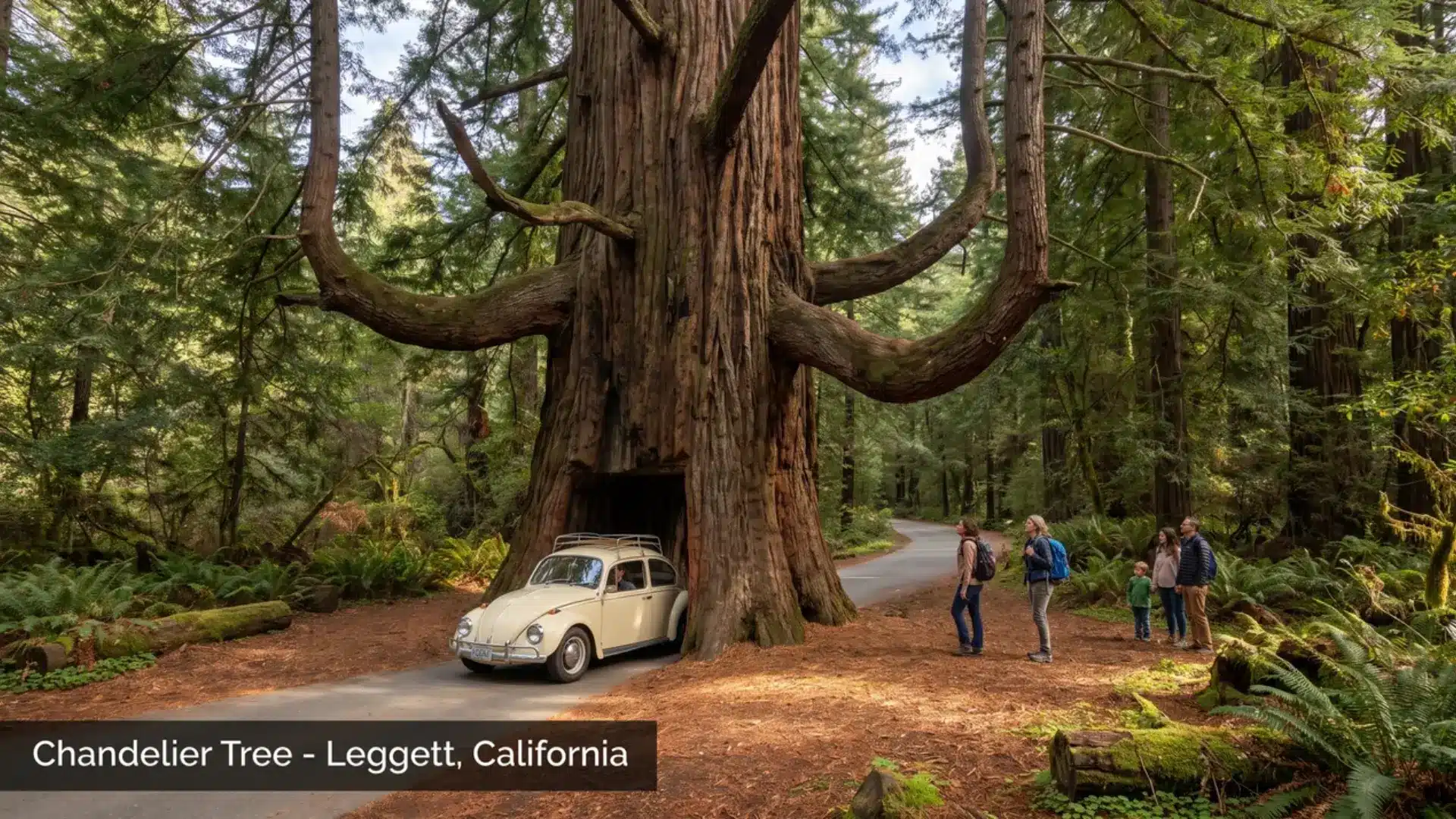
The Chandelier Tree is one of California’s best-known living coast redwood attractions. Located in Leggett inside the private Drive-Thru Tree Park, this tree continues to welcome visitors who want to experience a drive-through redwood.
Coast redwoods can live for more than 1,000 years and have thick bark that helps protect them from fire and damage. Many standard vehicles can pass through the opening, but larger vehicles such as RVs, trailers, and vehicles with roof equipment may not fit. Visitors should check current rules before arriving.
5. Shrine Tree: The Myers Flat Drive-Through Redwood
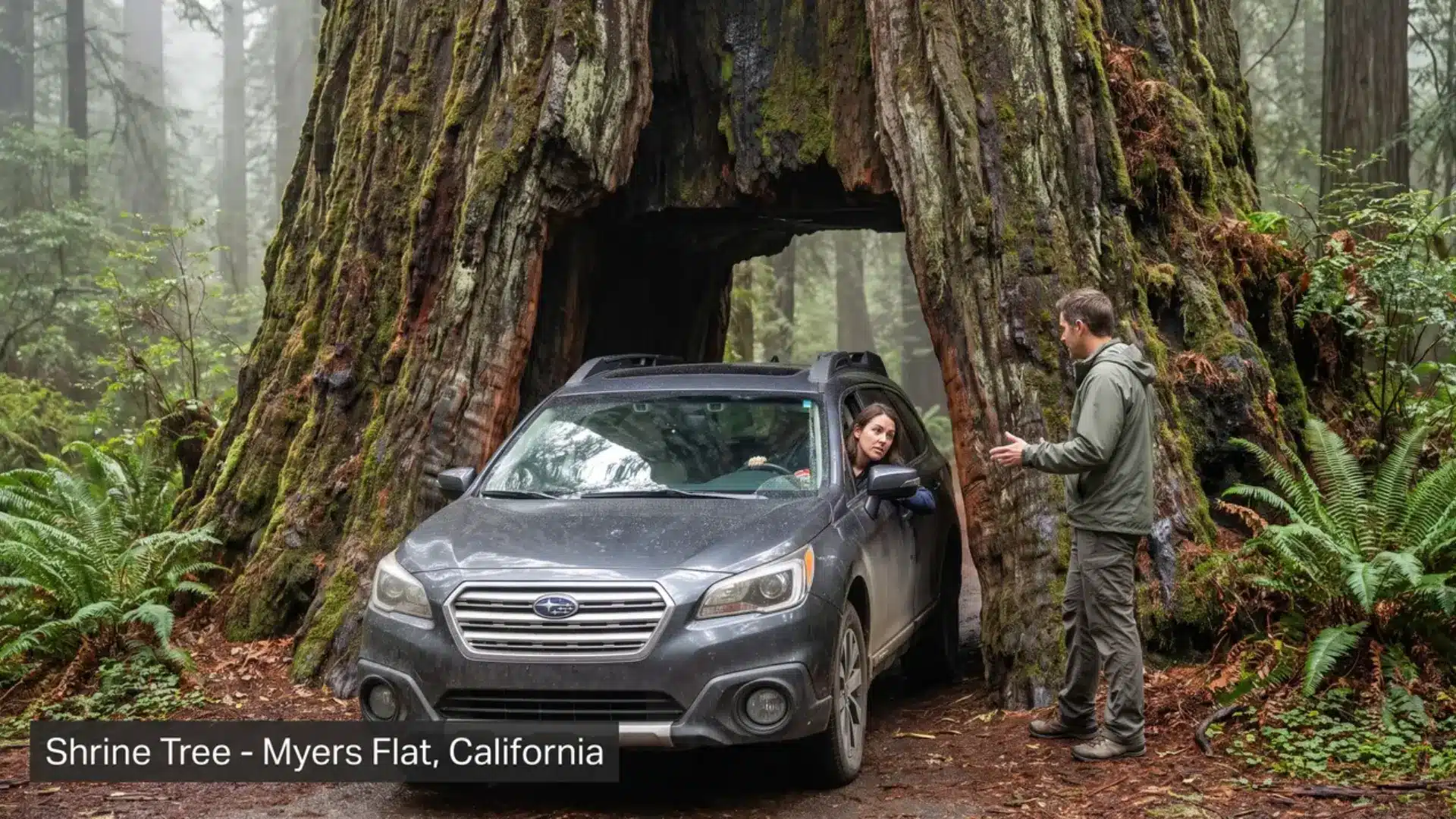
The Shrine Tree is a living coast redwood located near Myers Flat along the Avenue of the Giants. This private attraction gives visitors a chance to see a historic redwood tunnel tree without entering a national park.
The tunnel opening is narrower than some other attractions, so vehicle size matters. Drivers should consider their vehicle height, width, mirrors, and roof attachments before attempting to pass through. Access details, fees, and visiting conditions can change, so checking current information is recommended.
6. Tour Through Tree: The Klamath Redwood Attraction
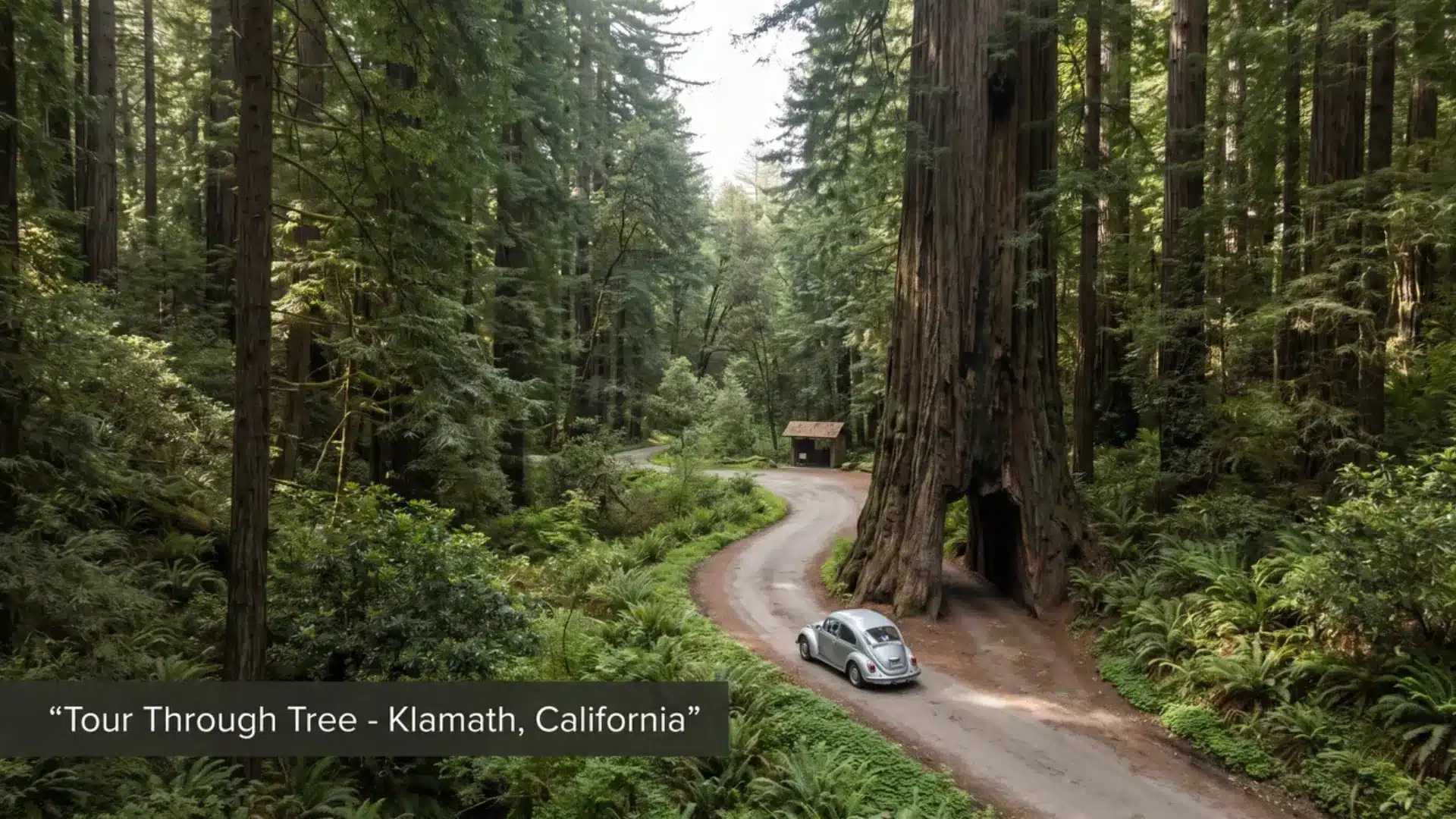
The Tour Through Tree is a private coast redwood attraction near Klamath. It offers visitors another opportunity to experience a classic California tunnel tree outside the Redwood National and State Parks system.
The attraction is different from park-managed locations because access rules depend on private ownership. Roads, tunnel size, fees, and opening schedules may change throughout the year. Visitors planning a trip should check current conditions before driving there, especially if traveling with a larger vehicle.
7. Tunnel Log: The Fallen Sequoia Tunnel in Sequoia National Park
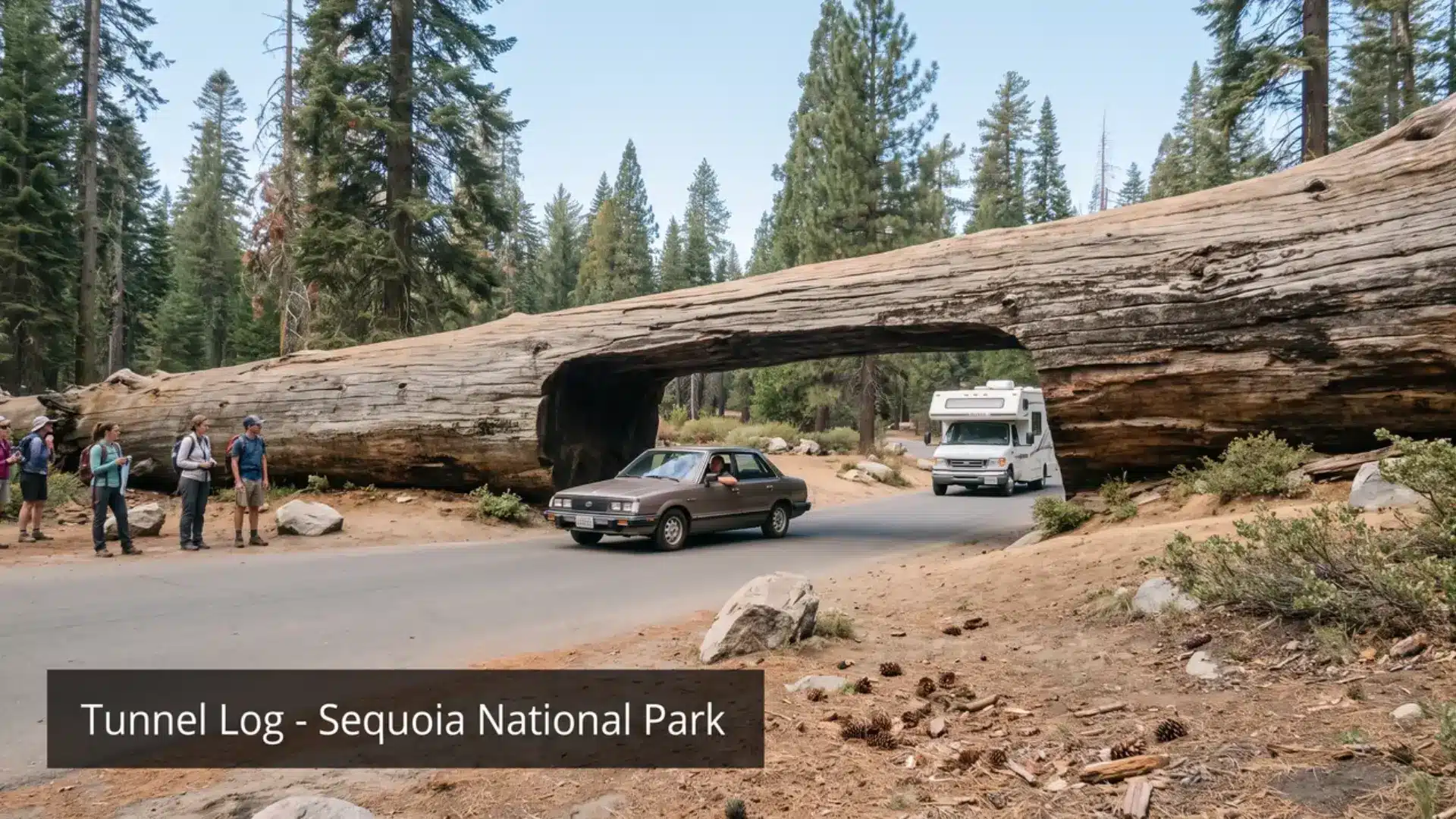
The Tunnel Log is a unique giant sequoia tunnel because the tree was already fallen before the opening was created. The tree fell across Crescent Meadow Road in Sequoia National Park in 1937, and workers cut a tunnel through the trunk the following year.
Unlike living drive-through trees, Tunnel Log does not require cutting into a standing tree. Larger vehicles can use a nearby bypass route. Today, it remains one of the most recognizable attractions in Sequoia National Park.
How Tunnels Can Weaken Living Trees
A tunnel cut through a living tree does more than change its shape. It removes supporting wood, exposes the trunk to the elements, and often works alongside other stresses already acting on the tree. Here’s how that damage typically unfolds:
- Loss of supporting wood: Cutting a large tunnel removes part of the trunk’s supporting wood, so the remaining wood must carry the same weight with less material, weakening the tree’s structure.
- Same principle, smaller scale: Removing a large limb from any backyard tree works the same way; a bigger wound just takes longer to close.
- Exposed inner wood: A tunnel exposes wood that normally stays protected, letting in rain, insects, fungi, and decay, which weakens the tree further over time.
- Added outside pressures: Wet soil, flooding, snow, wind, lightning, and root decay can all affect stability, and a tunnel often contributes to collapse rather than causing it alone.
- Different histories, similar outcomes: Pioneer Cabin’s opening began as lightning damage before workers enlarged it, while Wawona’s tunnel was cut directly through living wood. Both faced added stress from weather, soil, age, and decay.
Taken together, these factors explain why a tunnel tree rarely fails from one cause alone. The cut itself weakens the trunk, but weather, soil conditions, and time usually finish the job.
Accidents and Tree-Swallowing Claims
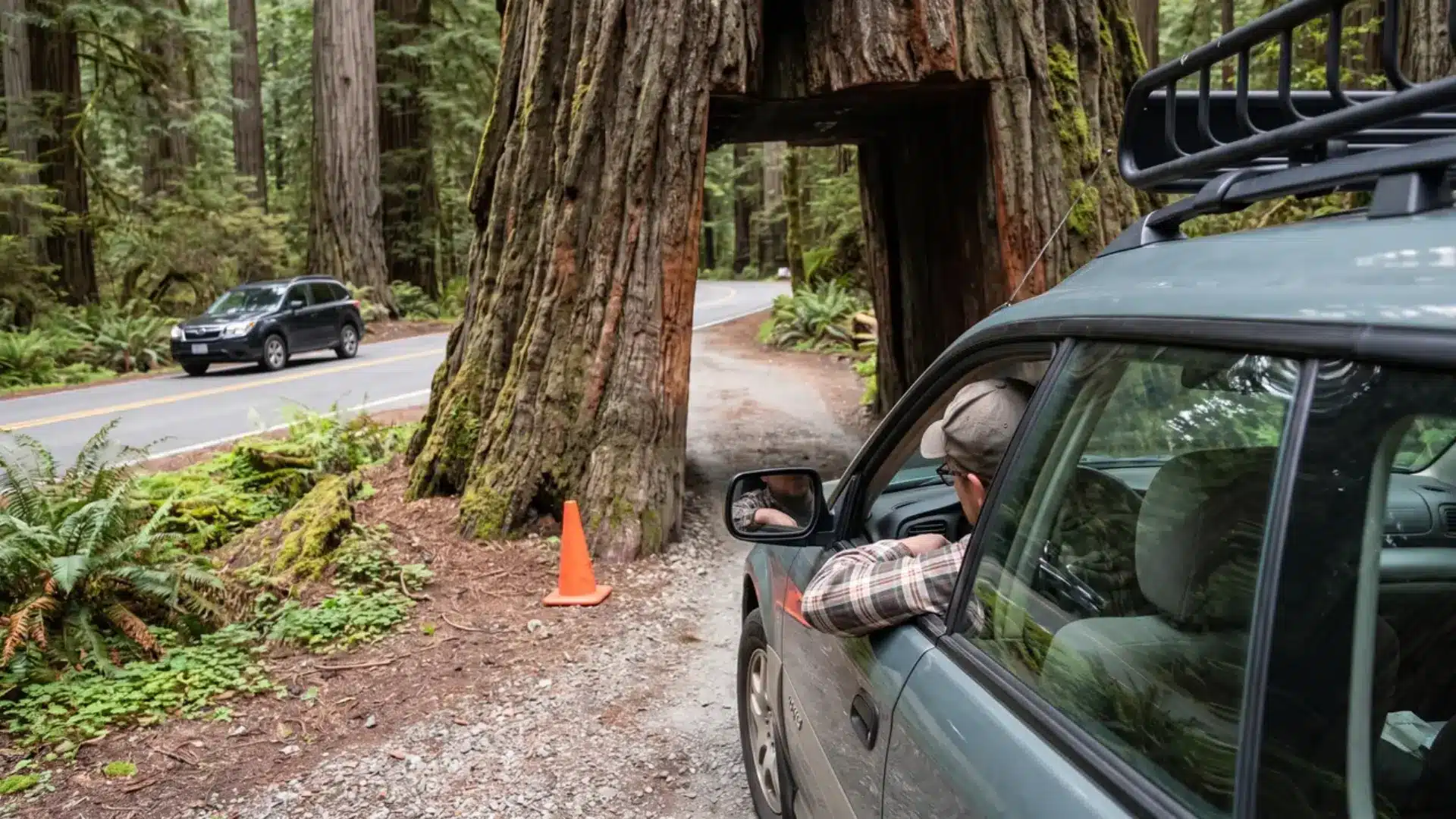
Some stories claim a drive-through tree “swallowed” a car, but no confirmed case involves the main trees covered here.
What actually happens is far less dramatic: a vehicle can get stuck because it’s too tall, too wide, or hard to turn inside the opening, and mirrors, roof racks, and cargo boxes can scrape against the sides, much like the SUV that got wedged in Humboldt County’s Shrine Drive-Thru Tree in an incident covered by The Cool Down.
A stuck or scraped vehicle is not the same thing as a tree collapse. Pioneer Cabin fell while its trail was closed to visitors, and no one was hurt when it came down. The real risk for drivers isn’t the tree failing beneath them; it’s misjudging their own vehicle’s size.
Before entering, drivers should check their vehicle’s height and width against posted limits and look for a bypass road, since larger SUVs, vans, RVs, and trailers often don’t fit through these narrow, century-old openings.
Why Parks Stopped Creating New Tunnel Trees
Park values have changed since the first tunnel trees appeared. Early managers often used unusual natural features to attract visitors. Modern parks focus more on protecting living trees and whole forest systems. This includes roots, soil, water, plants, animals, and nearby habitats.
Cutting a tunnel through a living trunk removes support and creates a lasting wound. The opening may expose inner wood to moisture and decay.
Road building can also compact soil around roots, and the same concern shapes modern thinking about a mature tree’s root zone at home, since heavy equipment and disturbed soil place pressure on roots the tree depends on for water and stability, a balance also covered from a different angle in a roundup of cozy plant corner ideas for every room.
Visitor safety has also become more important. A weak trunk, damaged root system, or falling branch can create serious risks. Parks now use trails, viewpoints, signs, and educational displays instead of cutting new tunnels.
These methods help visitors understand the trees without causing permanent damage. They also protect the wider forest around each tree.
Tips for Visiting a Drive-Through Tree
A little planning can help you avoid road problems and vehicle damage. Check the attraction, weather, and your vehicle before leaving.
- Check whether the attraction is currently open.
- Confirm the tunnel’s height and width limits.
- Measure mirrors, roof racks, cargo boxes, and other equipment.
- Check whether SUVs, vans, RVs, trailers, or trucks can fit.
- Review current admission fees and payment options.
- Check nearby road conditions and weather alerts.
- Follow staff instructions and posted signs.
- Use a bypass when your vehicle is too large.
- Remember that living drive-through redwoods are private attractions.
- Do not assume they are inside Redwood National and State Parks.
- Avoid visiting during storms, flooding, or high winds.
Published measurements only help when you include mirrors and roof equipment. Use the bypass whenever you are unsure about clearance. That same appreciation for a single, show-stopping tree carries over into home landscaping too, where a set of front yard palm tree ideas shows how one well-placed specimen tree can anchor an entire yard the way these giants anchor a forest.
Frequently Asked Questions
Was Pioneer Cabin a redwood or a giant sequoia?
Pioneer Cabin was a giant sequoia, not a coast redwood. It stood in Calaveras Big Trees State Park. People often use “redwood” as a broad name for California’s largest trees. However, giant sequoias and coast redwoods grow in different areas.
Is Tunnel Log a living tree?
No. Tunnel Log is a fallen giant sequoia in Sequoia National Park. It fell across Crescent Meadow Road in 1937. Workers cut the opening through the fallen trunk during the following summer.
Did Wawona fall because of its tunnel?
The tunnel likely weakened Wawona’s trunk, but it was not the only cause. Heavy snow, wet soil, age, and structural weakness also placed stress on the tree.
Are the drive-through trees inside Redwood National Park?
The three living drive-through coast redwoods are not inside Redwood National and State Parks. They are private attractions in Leggett, Myers Flat, and Klamath. Tour Through Tree is located near the parks.
Can an SUV or RV fit through a drive-through tree?
It depends on the vehicle and the attraction. Many SUVs, vans, RVs, trailers, and trucks are too large. Roof racks, mirrors, and cargo boxes can also reduce clearance. Check exact limits and use the bypass when needed.
Final Thoughts
Pioneer Cabin and Wawona were two of California’s best-known tunnel trees, and together they answer the question of what happened to the drive-through redwood tree that still circulates online.
Both giant sequoias eventually fell, though their damage histories differed. Pioneer Cabin faced lightning, decay, heavy rain, runoff, and root damage. Wawona’s tunnel weakened its trunk, while snow, wet soil, age, and weakness added pressure.
Three private living coast-redwood attractions remain listed: Chandelier Tree, Shrine Tree, and Tour Through Tree. Tunnel Log is different because it is a fallen giant sequoia. Its opening was cut after the tree fell.
Tunnels can weaken living trees, but weather, soil, roots, age, and earlier damage also matter. Modern parks no longer cut new tunnels through living trees. They now use trails, viewpoints, signs, and careful access.
Drop a comment below and let me know if you have ever encountered a drive-through redwood tree.