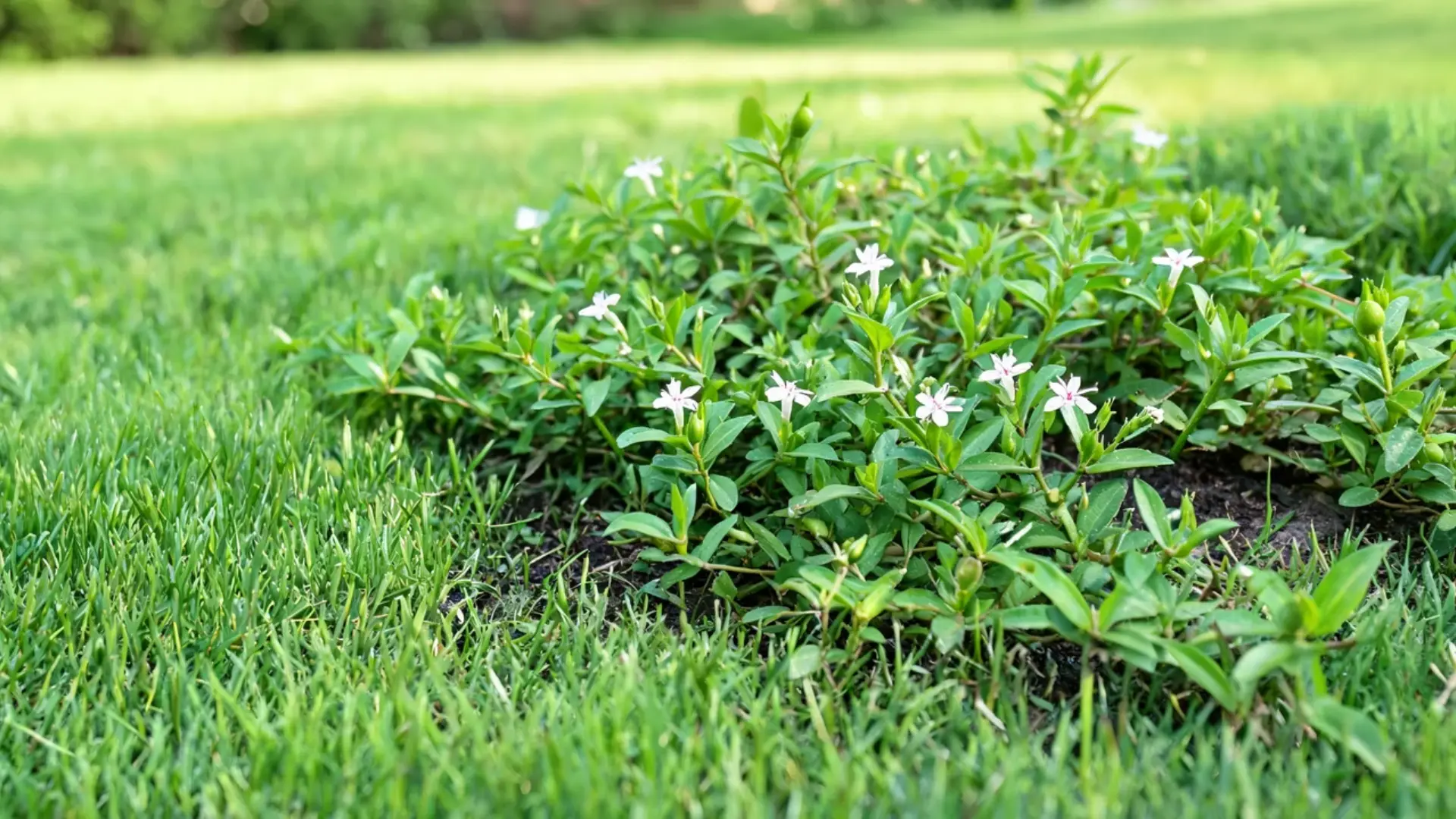
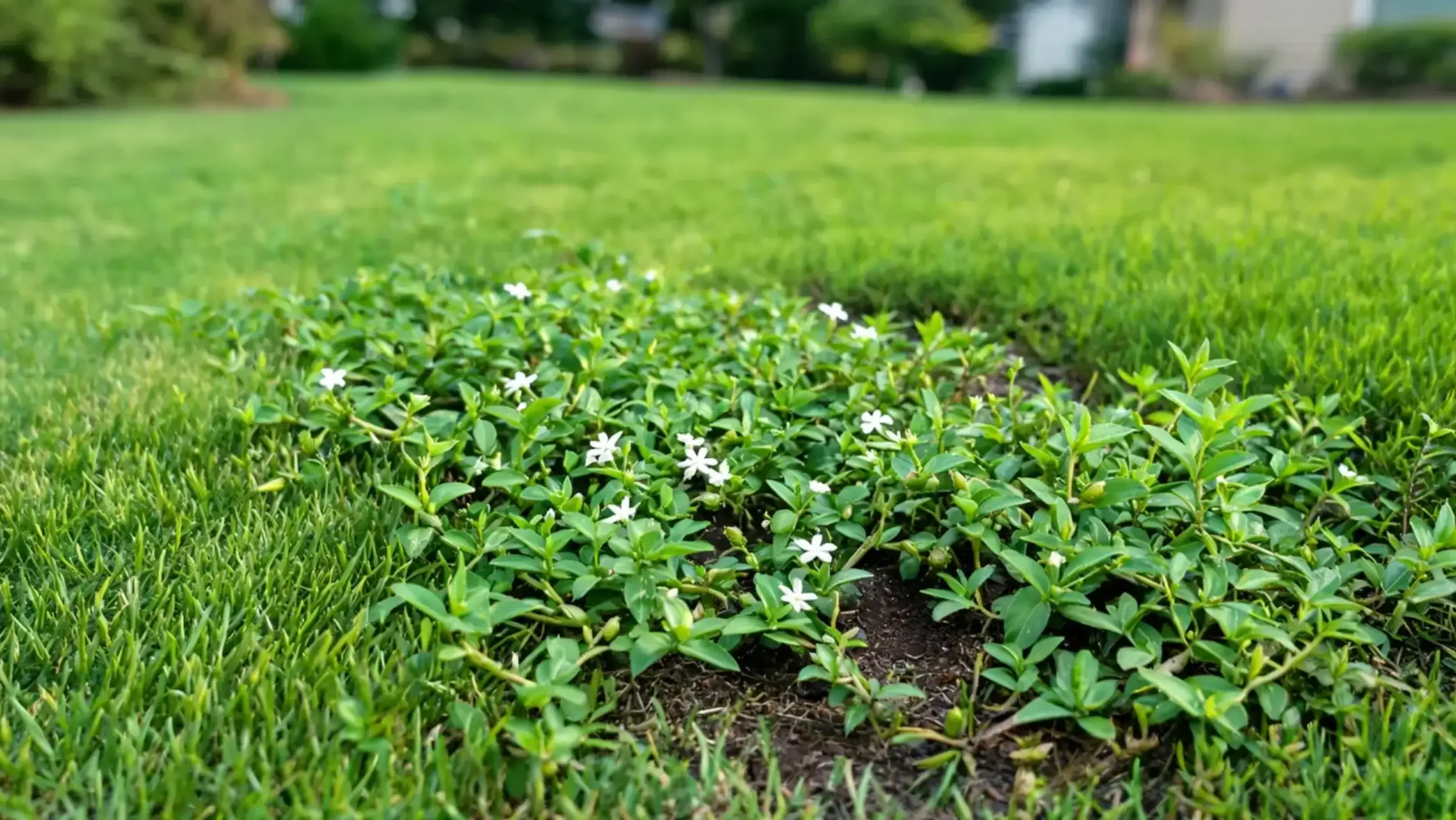
Virginia buttonweed (Diodia virginiana) is a warm-season perennial lawn weed known for creeping stems, deep roots, and small white flowers.
It often appears quietly in lawns, especially after periods of heavy rain or frequent watering, blending into grass until its spreading growth becomes noticeable. Learning how to recognize it early can make control much easier.
Grab a cup of coffee, step outside, and take a slower look at what has been quietly spreading.
What Is Virginia Buttonweed?
Virginia buttonweed (Diodia virginiana) is a warm-season broadleaf perennial in the madder family (Rubiaceae), known for its creeping stems and small white flowers. It grows close to the ground and develops spreading branches, deep roots, and underground stems.
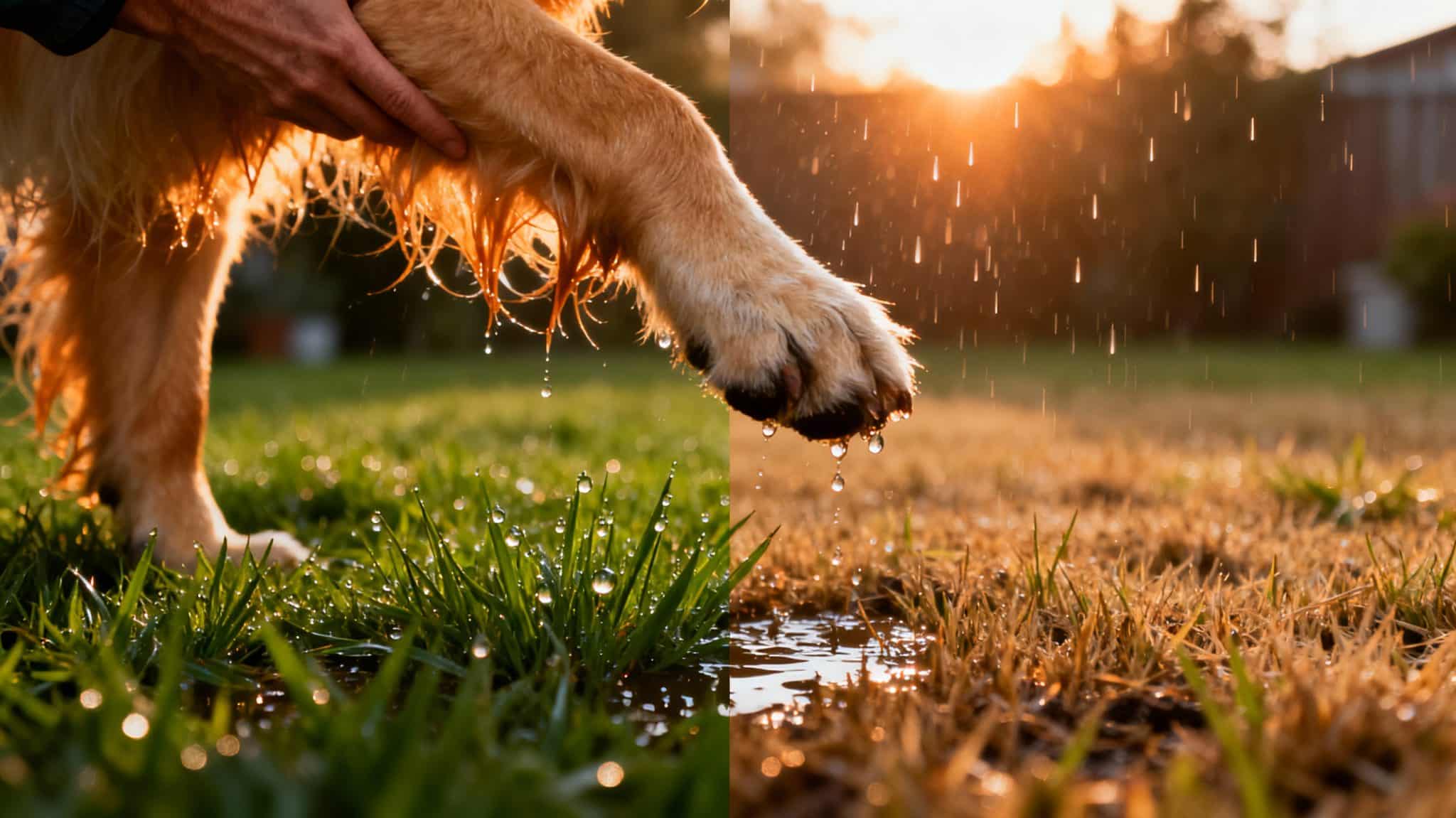
The weed is common across the southeastern United States, especially in warm, humid locations. It often settles into wet turf where frequent mowing and weak drainage allow it to remain hidden and spread steadily.
Unlike a summer annual that dies at the end of one growing season, it can survive below the soil and return when warm weather arrives.
The plant can also tolerate mowing heights as low as one-half inch, a trait confirmed by this University of Georgia Extension bulletin. This allows it to stay beneath the grass canopy, where it can go unnoticed until a patch has grown much larger.
Virginia Buttonweed: Quick Facts
Before diving into treatment and prevention, it helps to understand the basic traits of this lawn weed.
| Attribute | Detail |
|---|---|
| Scientific name | Diodia virginiana |
| Plant family | Rubiaceae (madder family) |
| Plant type | Herbaceous perennial |
| Growth habit | Low-growing, mat-forming, spreads by roots and runners |
| Flower colour | Small white, star-shaped blooms |
| Blooming period | Summer through early fall |
| Preferred conditions | Damp, poorly drained, or overwatered soil |
| Native range | Southeastern and eastern United States |
How to Identify Virginia Buttonweed
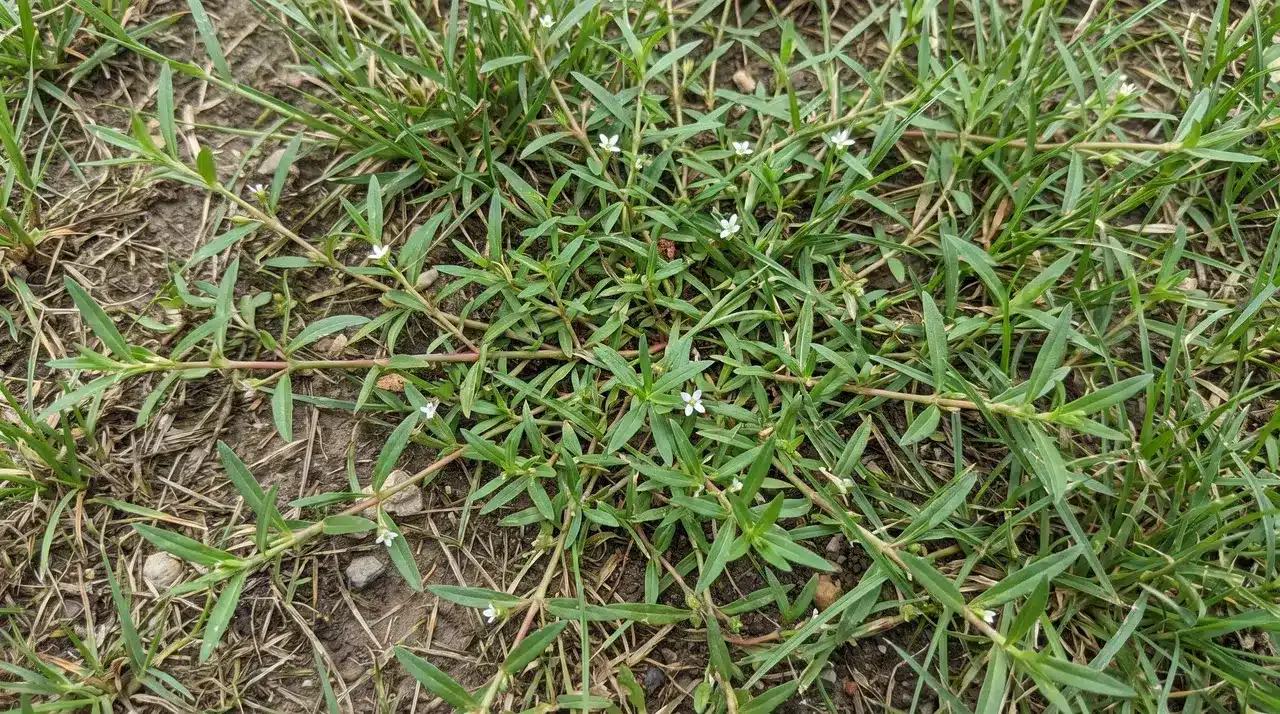
Look for opposite leaves, low spreading stems, small white flowers, oval green fruit, and a flat growth pattern. The table below gives you the main visual signs, so you can confirm the plant quickly without reading several separate descriptions.
| Plant Feature | What to Look For |
|---|---|
| Leaves | Narrow to oval leaves growing in opposite pairs |
| Leaf texture | Slightly thick with rough edges |
| Leaf color | Green, sometimes with yellow mottling or red margins |
| Stems | Low, spreading, and occasionally hairy |
| Flowers | Small, white, four-petaled, and star-shaped |
| Fruit | Green, oval, hairy, and ridged |
| Growth habit | Flat, tangled mats growing beneath the grass |
These details help separate it from other creeping lawn weeds, including the common weeds in grass that share similar low, spreading habits.
How Virginia Buttonweed Spreads
Virginia buttonweed spreads through seeds, roots, underground stems, and broken plant pieces. Water movement, lawn equipment, and leftover fragments can help it reach new areas and form new patches.
Seeds and Surface Water
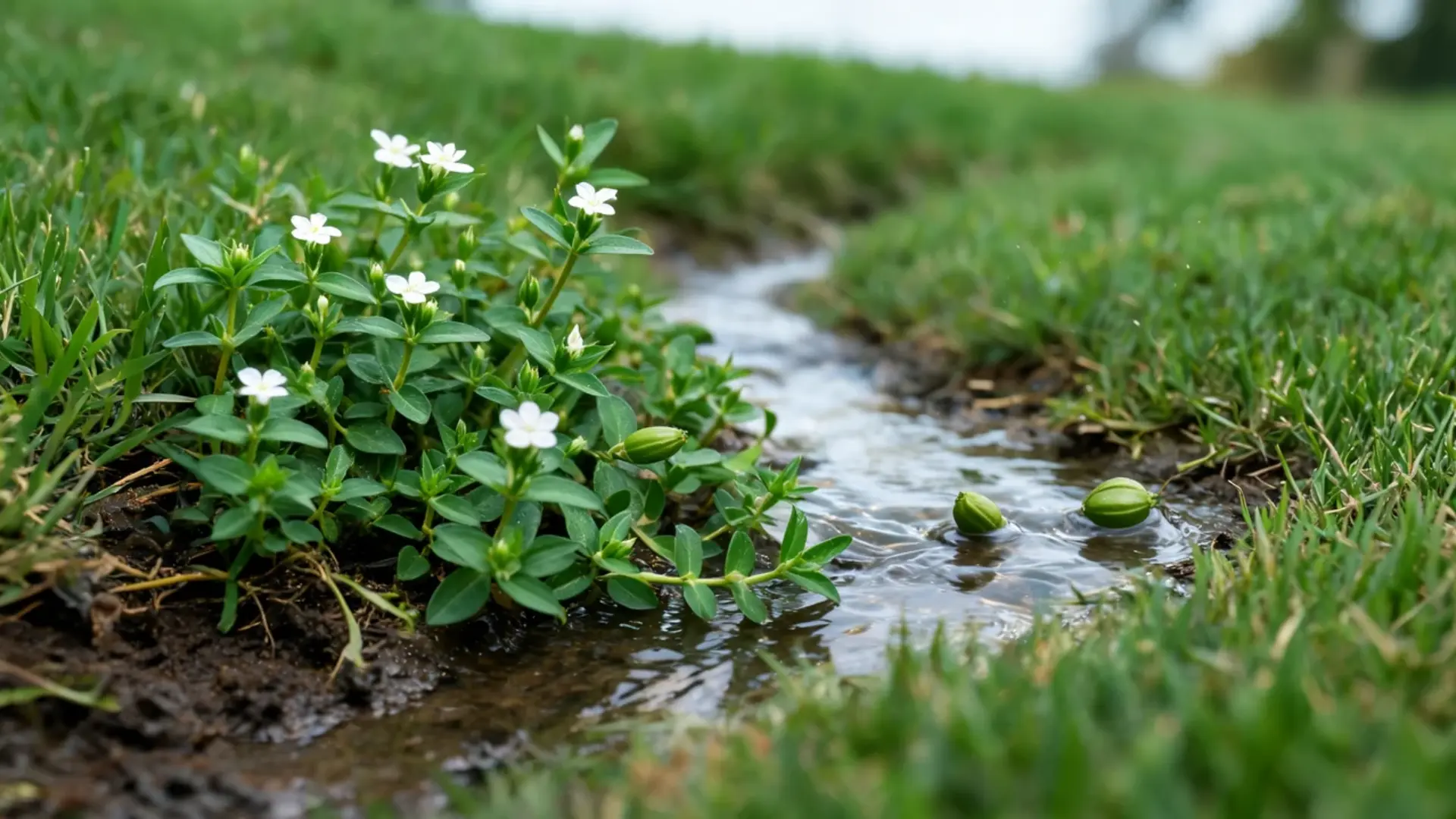
The plant produces fruit containing seeds that can move with surface water. Heavy rain or irrigation runoff may carry them into lower parts of the lawn.
Removing plants before heavy fruit production and reducing runoff can help limit new seedlings. The fruit can float through shallow water, which helps explain why new plants may appear downhill from an existing patch or along irrigation paths.
Stem Fragments and Roots
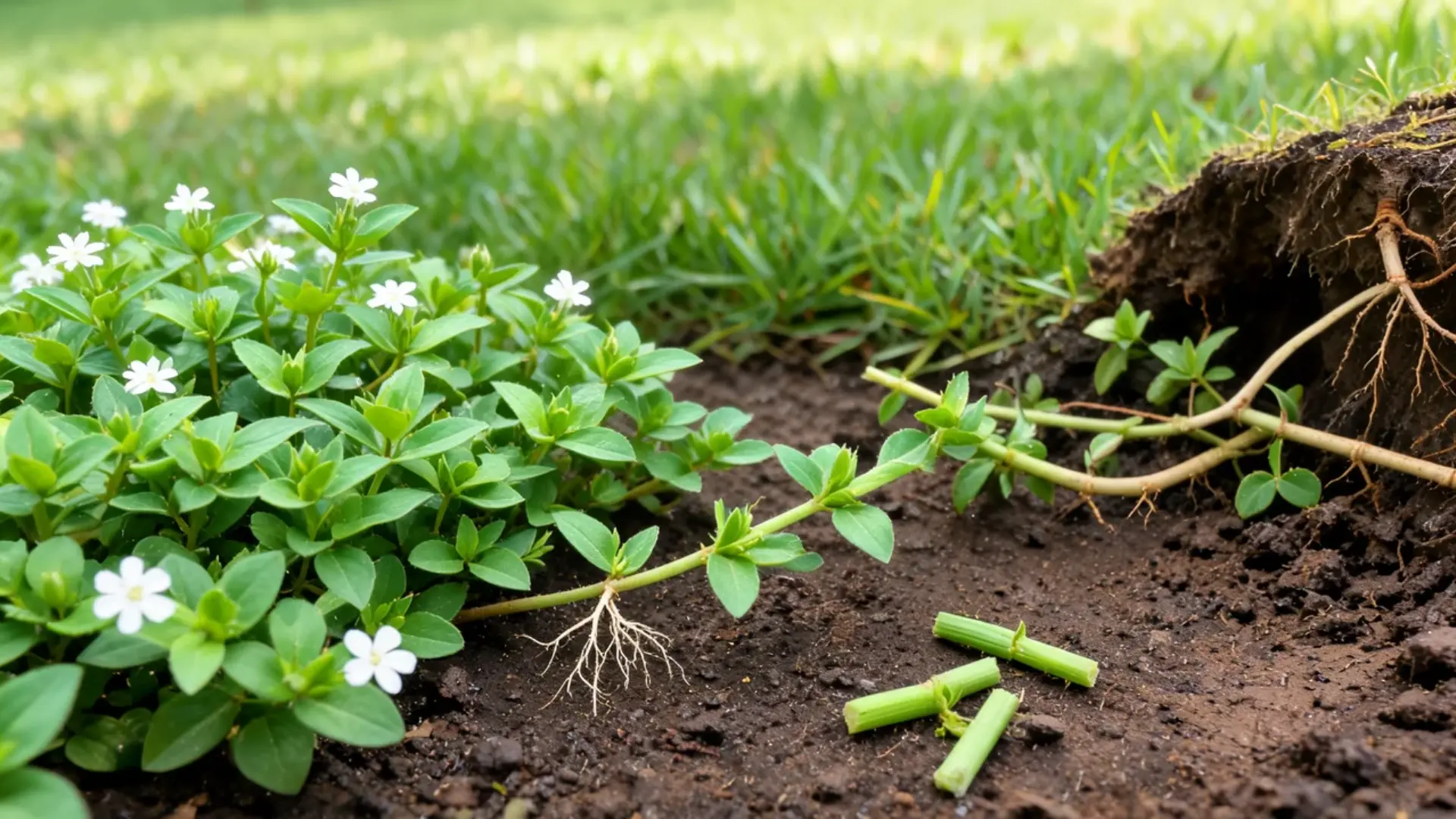
Stem fragments can develop roots when they land on moist soil, while underground roots and rhizomes can produce new shoots. Living pieces left behind during mowing, trimming, or removal may continue growing.
Collecting clippings from heavily affected areas and cleaning mower blades or trimmers before moving to other lawn sections can help reduce spread. Mowing can reduce visible growth but does not remove the underground plant system.
Where Does Virginia Buttonweed Grow?
It can take hold in different soils, but performs best where moisture stays high, which explains why it keeps returning to the same damp trouble spots. The list below covers the most common problem areas.
- Low areas: These spots stay wet for hours or days after rainfall.
- Compacted soil: Packed ground slows drainage, giving the weed room to spread.
- Drainage ditches: Channels that hold runoff water stay damp for longer periods.
- Overwatered beds: Leaking sprinklers and downspouts keep soil consistently moist nearby.
- Shaded spots: Shade slows evaporation, so moisture lingers longer than in sun.
This weed can take hold in several popular lawn grasses, including bermudagrass, centipedegrass, St. Augustinegrass, tall fescue, and zoysiagrass, so the right control method depends heavily on which grass you have.
Virginia Buttonweed Benefits
People often search for buttonweed’s benefits because the plant is native to parts of the United States. In unmanaged wet areas, it may act as low ground cover and form part of the local plant community.
1. Value in Natural Areas
In natural areas, buttonweed can provide ground cover in damp locations where other plants struggle to grow.
Its low growth habit may help protect exposed soil and add seasonal interest through small flowers. However, its value depends on the setting and management goals, as it may not suit every landscape.
2. Value in a Maintained Lawn
Within maintained lawns, buttonweed often creates uneven areas and competes with turfgrass for space and resources. Its spreading habit can reduce lawn uniformity and make recovery more challenging over time.
Homeowners usually focus on control when aiming for thicker grass coverage because this plant does not improve overall turf quality.
3. Erosion Control
In wet or disturbed areas, buttonweed may offer some erosion support by forming a low mat across bare soil.
This growth pattern can slow runoff and help stabilize certain spots near drainage areas or fields. While not ideal for all landscapes, it may provide temporary cover where other vegetation limited.
4. Pollinator Support
The small white flowers of buttonweed can provide pollinator value during blooming periods by attracting bees and other small insects. This support may be most noticeable in areas with fewer flowering plants available nearby.
Although modest, these interactions contribute to local biodiversity and add another role within natural plant communities.
Why Virginia Buttonweed Becomes a Lawn Problem
This weed becomes a persistent lawn problem because its low growth lets it hide beneath mower blades while it competes directly with turfgrass for water, nutrients, light, and available space.
| Problem | Why It Matters |
|---|---|
| Low growth | It stays below mower blades and survives close mowing |
| Fast spread | Stems root at the nodes and expand across the soil |
| Turf competition | It takes up space, water, light, and nutrients |
| Fragment growth | Cut stem pieces may develop into new plants |
| Deep regrowth | Roots and rhizomes can produce fresh shoots |
| Wet-soil tolerance | It grows best where drainage is poor, and turf is weak |
Because the plant can survive below the soil, successful control usually requires better lawn care, repeated monitoring, and follow-up treatment. The Clemson Extension Home and Garden Information Center notes that maintaining a dense, healthy turf stand is one of the most effective ways to limit how far it spreads.
How to Prevent Virginia Buttonweed
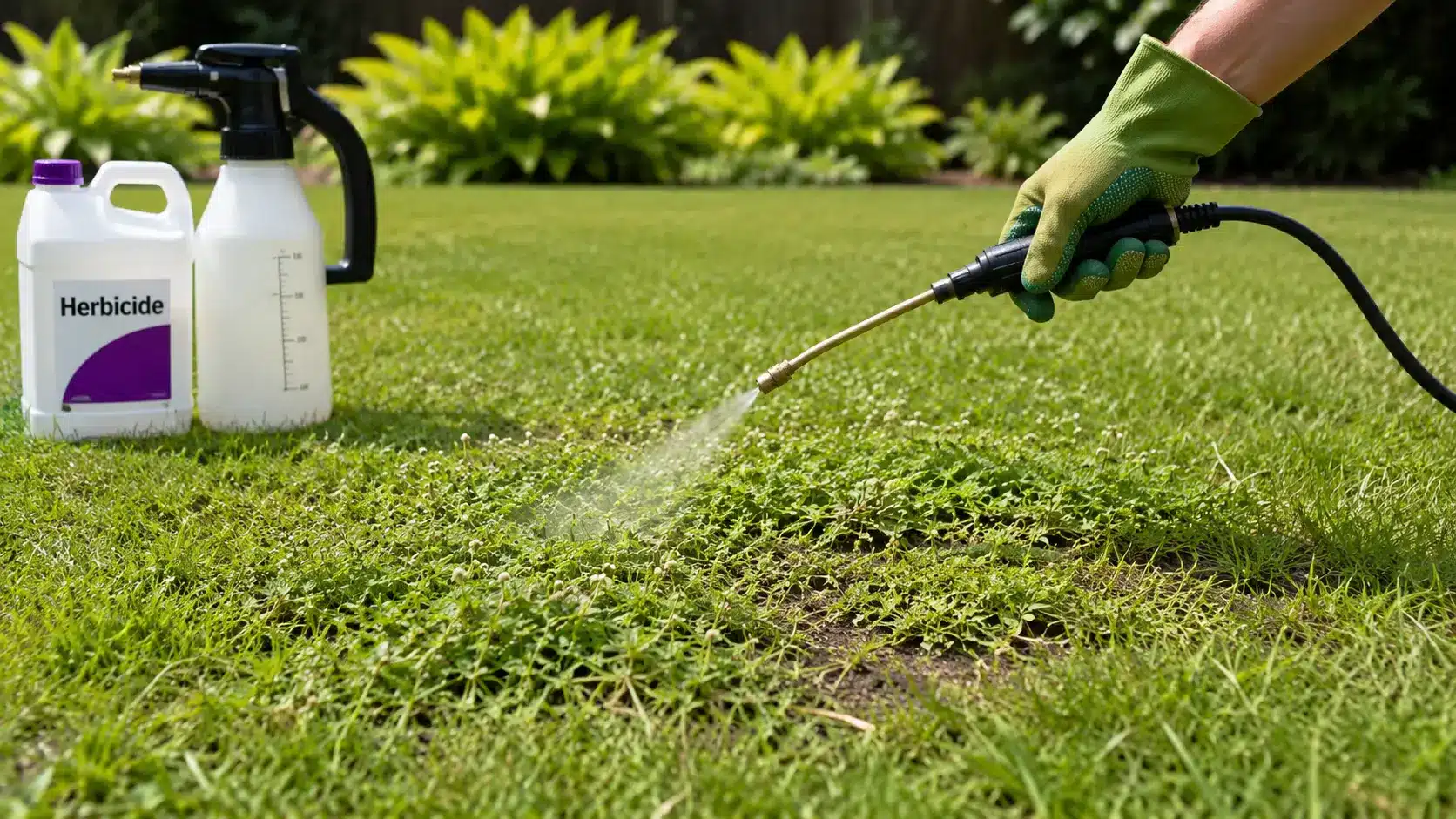
Prevention focuses on correcting the lawn conditions that allow buttonweed to establish and spread. Proper watering, drainage, and mowing practices make it much harder for new patches to take hold.
1. Improve Drainage and Irrigation
Adjusting watering habits and fixing wet spots can make the lawn less suitable for buttonweed growth.
- Repair leaking sprinklers, redirect downspouts, and clear blocked drainage paths.
- Avoid frequent, light watering that keeps the soil surface constantly damp.
- Water according to your grass type, soil conditions, and local weather.
- Improve drainage in areas that remain wet after rainfall.
2. When to Treat Virginia Buttonweed
Early treatment gives better results because young plants are easier to manage than mature patches.
- Spring: Check returning growth and treat early before patches expand.
- Summer: Active growth can improve results, but high heat may stress turf.
- Early fall: Check remaining plants before new fruit and seed production.
3. Herbicide Options
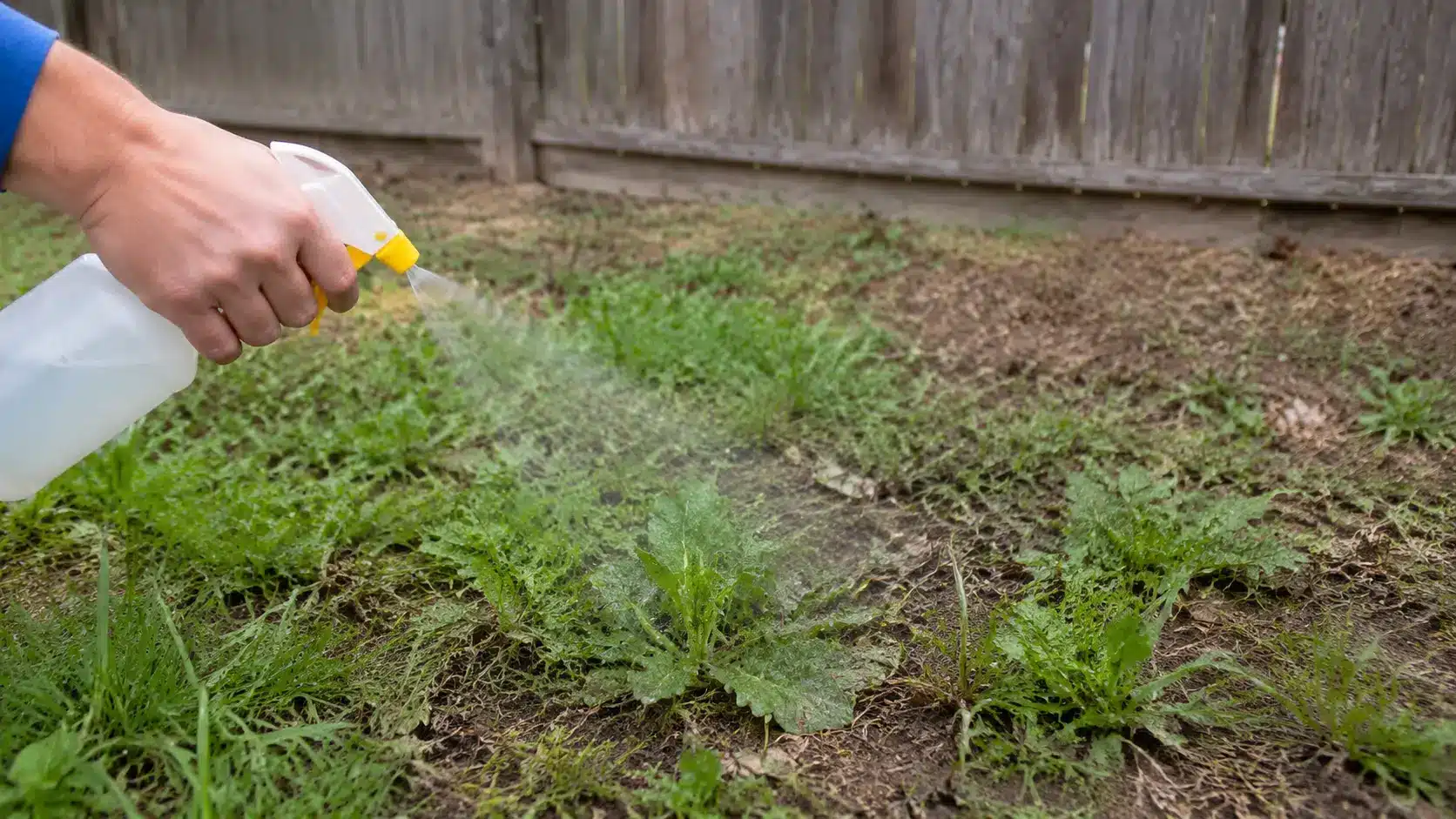
Established buttonweed patches often require postemergence herbicides because they target active plant growth rather than seeds, while preemergence products generally do not affect existing roots or plant fragments already established in the turf.
| Active Ingredient(s) | Formulation Type | Effectiveness |
|---|---|---|
| 2,4-D, dicamba, and MCPP | Combination product | Fair to good |
| Metsulfuron | Single active ingredient | Poor to fair |
| Metsulfuron and sulfentrazone | Combination product | Good |
| Thiencarbazone, iodosulfuron, and dicamba | Combination product | Good to excellent |
| Triclopyr and clopyralid | Combination product | Good |
| Trifloxysulfuron | Single active ingredient | Fair to good |
Always check the product label for approved turf species, application rates, and temperature limits before use. Avoid treating grass affected by heat, drought, disease, or other stress conditions.
How to Remove Virginia Buttonweed
Small, isolated patches are often easiest to handle by hand rather than reaching straight for a herbicide. Work when the soil is slightly moist, since damp ground makes it easier to pull the entire root system free without snapping stems below the surface.
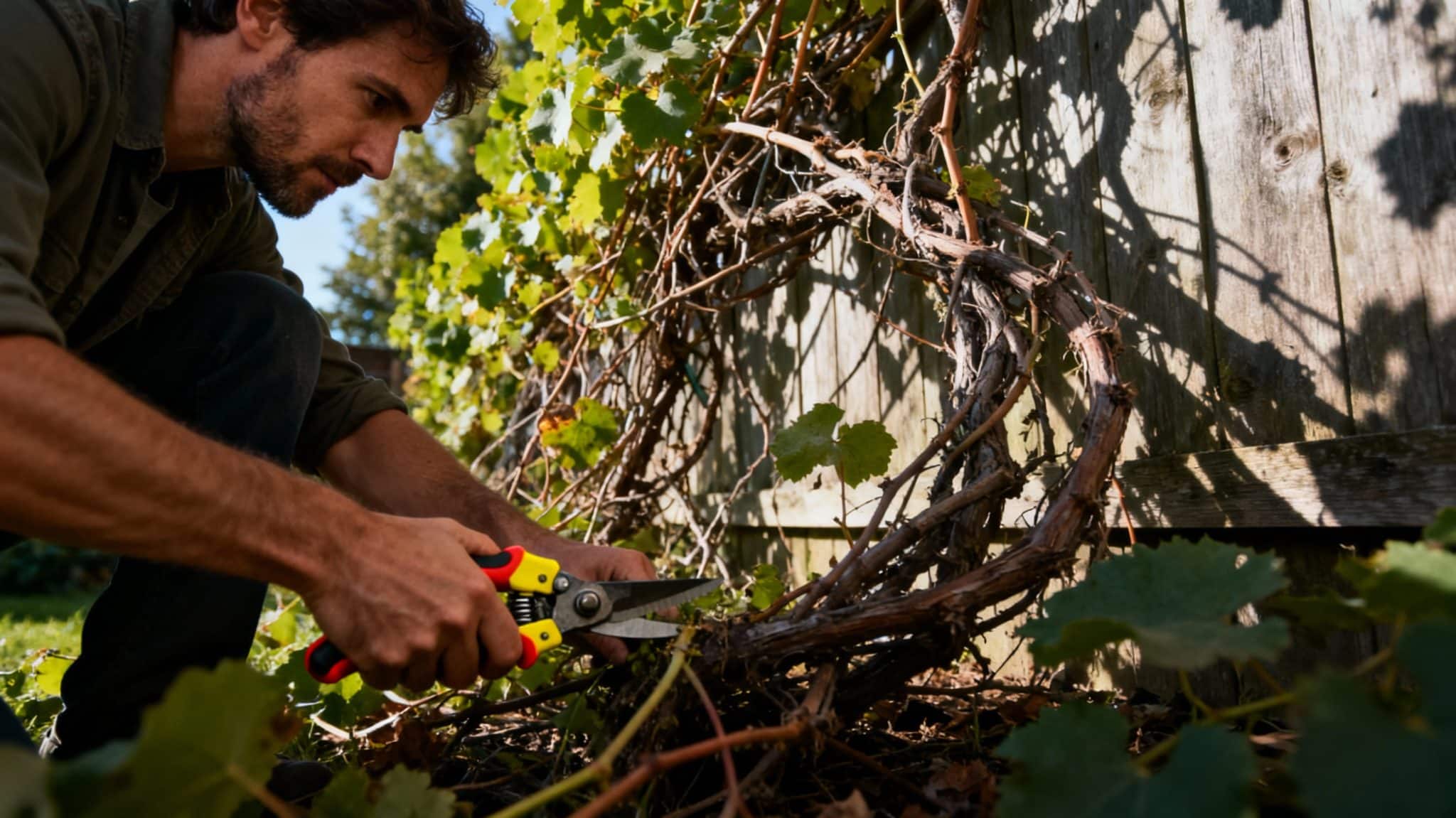
Loosen the soil with a trowel and lift the roots, runners, and rooted nodes together as a single mass, rather than pulling only the visible stems, since anything left behind can resprout.
Wear gloves during removal, since prolonged contact with the sap can occasionally irritate sensitive skin. Place all removed material in a sealed bag rather than a compost pile, since fragments dropped on moist soil can take root elsewhere.
Once cleared, fill the bare patch with topsoil or grass seed so turf can recover the space. Check back every one to two weeks and pull any new shoots before they spread again.
Common Control Mistakes
Even a solid treatment plan can fall short if a few common missteps creep in along the way.
- Pulling only the stems
- Mowing the lawn too low
- Leaving plant fragments on wet soil
- Using the wrong herbicide for your turf
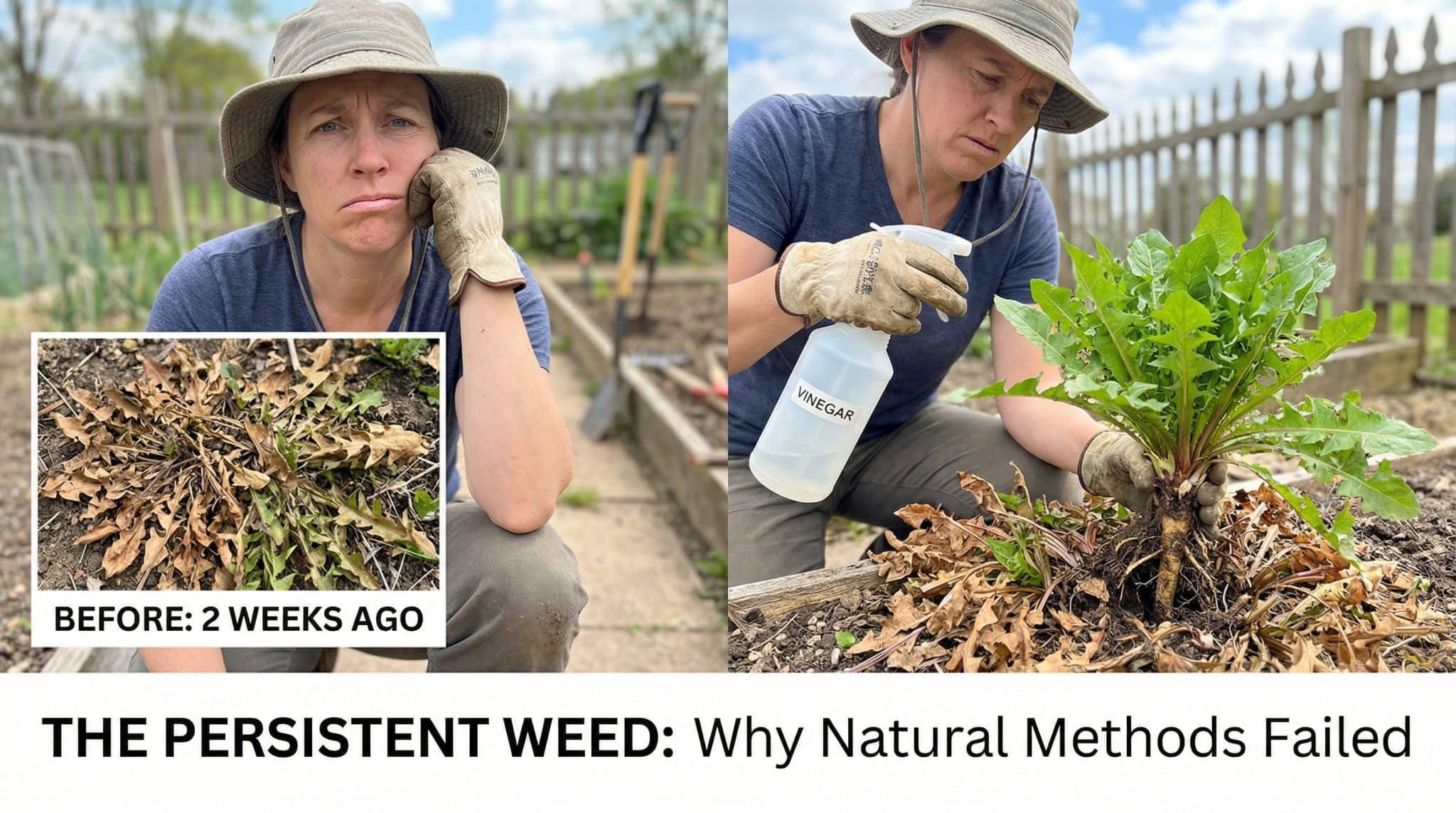
- Assuming brown leaves mean the weed is dead
- Stopping after one treatment
- Ignoring drainage problems
Frequently Asked Questions
Is this weed considered invasive?
Virginia buttonweed is native to parts of the United States, so it is not classified as invasive everywhere. It still spreads aggressively in managed lawns because of its creeping stems, deep roots, and ability to grow from broken plant fragments.
How quickly does the weed spread?
Spread speed depends on moisture, turf condition, and available plant fragments left in the soil. In warm growing conditions, small patches can expand quickly across lawns with excess moisture, weak grass coverage, or poor drainage near low spots.
Does mowing get rid of the plant?
Regular mowing can keep buttonweed less noticeable, but it does not stop regrowth from underground parts. Roots, rhizomes, and stem fragments can keep producing new shoots throughout the season, allowing the plant to return after cutting.
Is the plant an annual or a perennial?
Virginia buttonweed is a perennial rather than an annual, meaning it survives for multiple years instead of completing its life cycle in one season. It returns from underground roots and rhizomes once warm weather resumes each year.
What removes this weed permanently?
No single treatment removes Virginia buttonweed forever. The best results come from combining careful removal, improved drainage, healthy turf growth, and repeated herbicide treatments, since leftover roots and stem fragments can produce new growth afterward.
Final Thoughts
Virginia buttonweed is difficult to manage because it spreads through multiple plant parts and thrives in damp lawn conditions.
Early identification, proper drainage, healthy turf, and consistent follow-up can help reduce future growth and restore a stronger lawn.
Gardening tends to reward patience more than urgency, and most outdoor challenges soften once a simple routine is in place. Drop a comment below and let me know if you have any further questions.