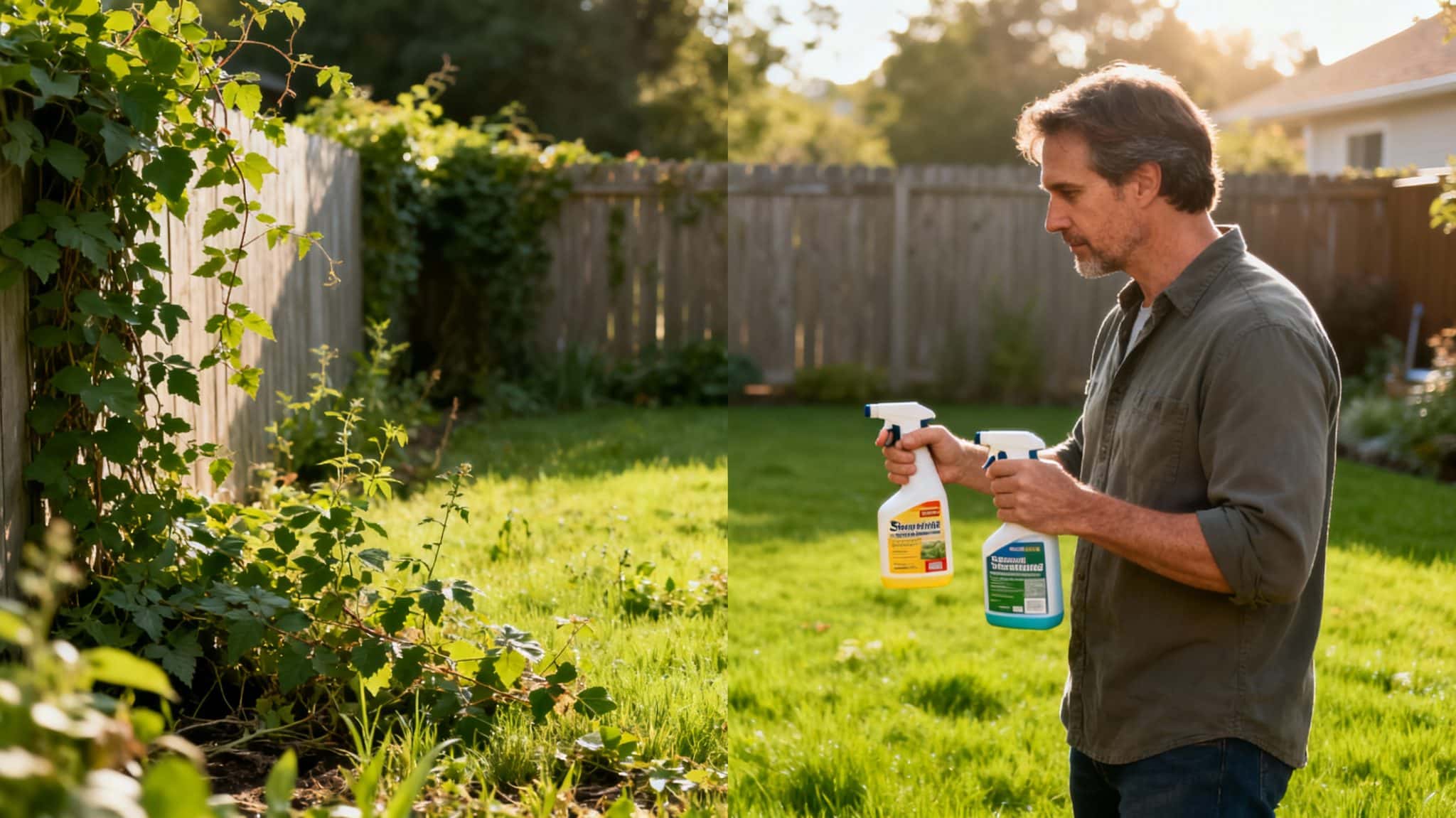
Every gardener reaches a point where the weeds win the weekend. After years of watching my backyard get overtaken by stubborn crabgrass and clover creeping through the patio cracks, the search for a better solution led me to something surprisingly simple: the kitchen cabinet.
Homemade weed killers made from everyday ingredients like vinegar, salt, and dish soap can be just as effective as store-bought herbicides, without the chemical runoff or the price tag.
Below, I’ll walk you through the best recipes, application tips, and honest trade-offs so you can take back your garden on your own terms.
What are Natural Weed Killers and How Do They Work?
A natural weed killer is any solution made from non-synthetic ingredients that damages or kills unwanted plants without relying on commercial herbicides.
The science behind them is straightforward: most homemade formulas work by either dehydrating plant tissue, lowering soil pH to an unbearable level, or stripping the waxy coating on leaves that normally locks in moisture.
Ingredients like white vinegar, table salt, and dish soap each play a specific role in this process. Understanding this helps you pick the right recipe for the right weed.
What Causes Weeds to Grow in the First Place?
Weeds are not random. They show up where conditions favor them: bare soil left without mulch, compacted ground where grass can’t compete, and patches that receive uneven water.
Cracks in driveways and patios are especially vulnerable because they offer weeds a sheltered spot with minimal competition from surrounding plants.
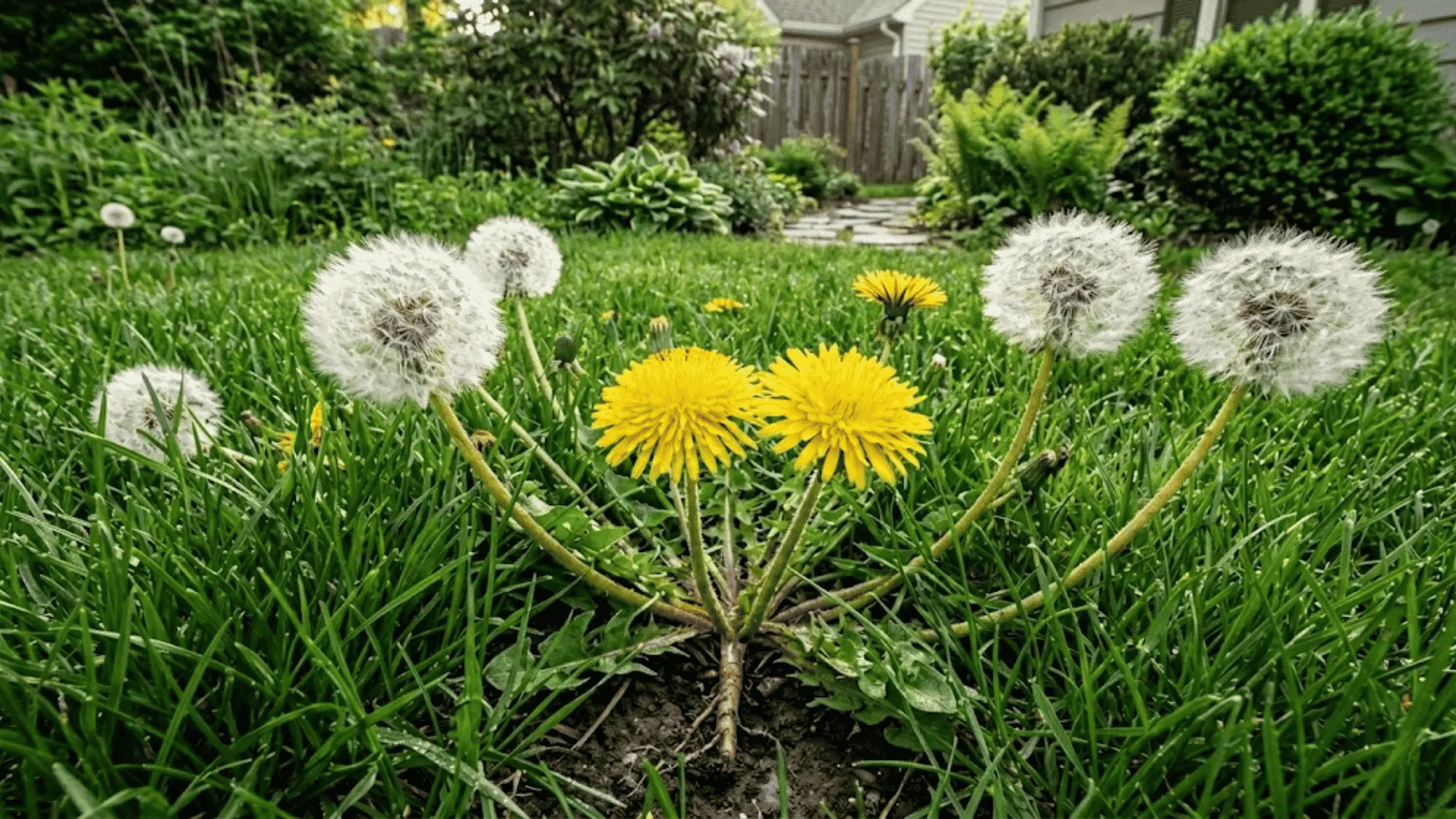
Poor drainage creates the damp, nutrient-rich pockets that tap-rooted weeds like dandelions and dock specifically target.
Slopes and edges where topsoil has thinned out are equally susceptible. Once you understand what’s inviting them in, choosing a treatment that addresses both the weed and the underlying condition becomes much easier.
A surface-level spray handles the visible plant, but fixing the root cause, like adding mulch or improving drainage, significantly reduces how often you need to reapply any formula.
Effective Homemade Weed Killer Recipes
The recipes below cover the most-tested, widely used formulas by me, from the classic vinegar-salt combo to gentler hydrogen peroxide solutions.
Each one has a specific use case, so matching the recipe to your situation matters more than picking the strongest option.
1. Vinegar Weed Killer Recipe
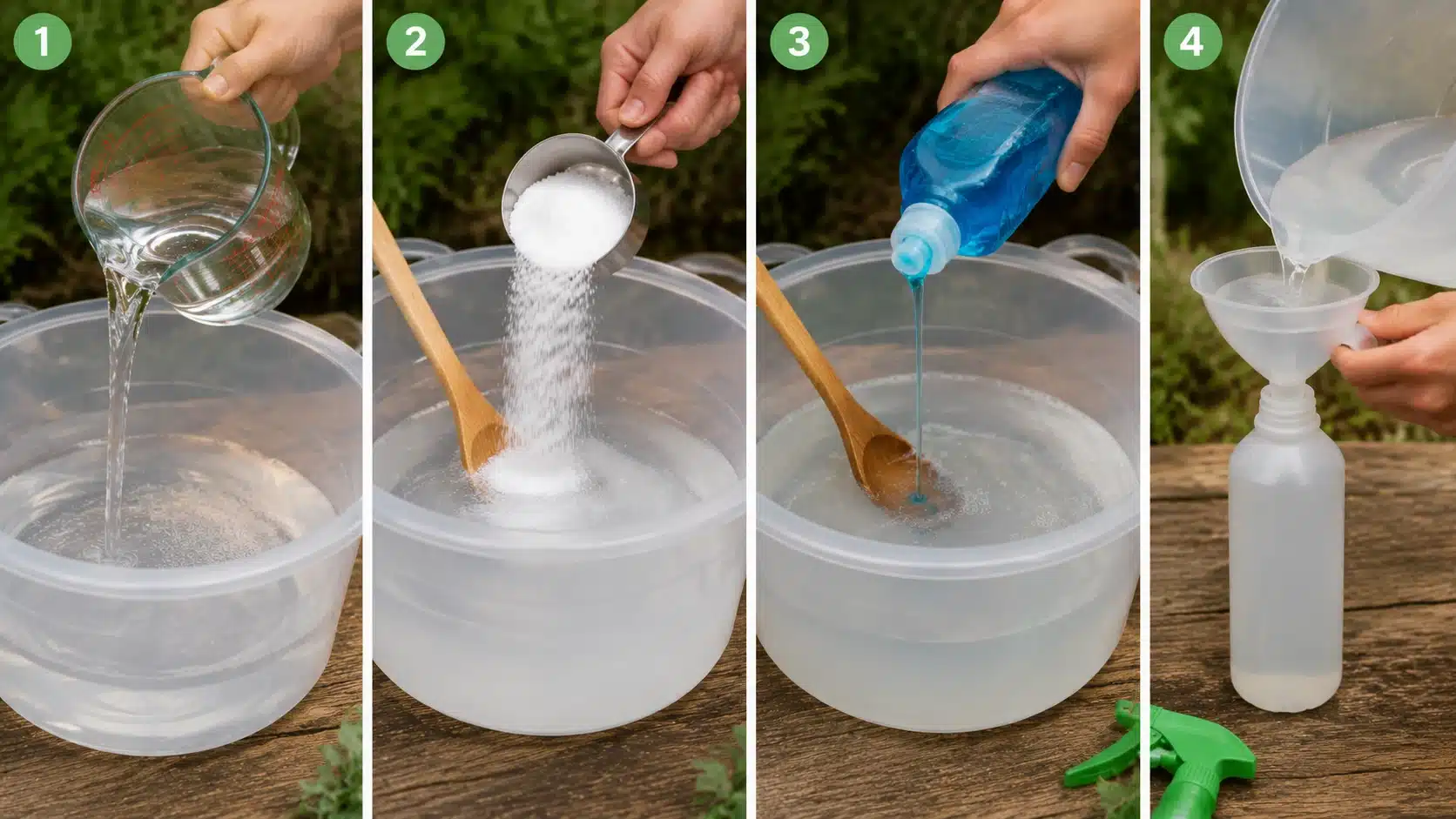
This is the recipe most gardeners start with, and for good reason. White vinegar’s acetic acid dehydrates weeds quickly; the salt prevents regrowth by disrupting the soil’s water balance; and dish soap acts as a surfactant, holding everything to the leaf surface. It works best on young, actively growing weeds in full sun.
Ingredients:
- 1 gallon white vinegar (5% acetic acid)
- 1 cup table salt
- 1 tablespoon dish soap
How to make it:
- Pour the vinegar into a large mixing bowl or bucket, then add the table salt and stir until fully dissolved.
- Add dish soap and stir gently to avoid creating excess foam.
- Transfer the solution to a spray bottle or garden sprayer.
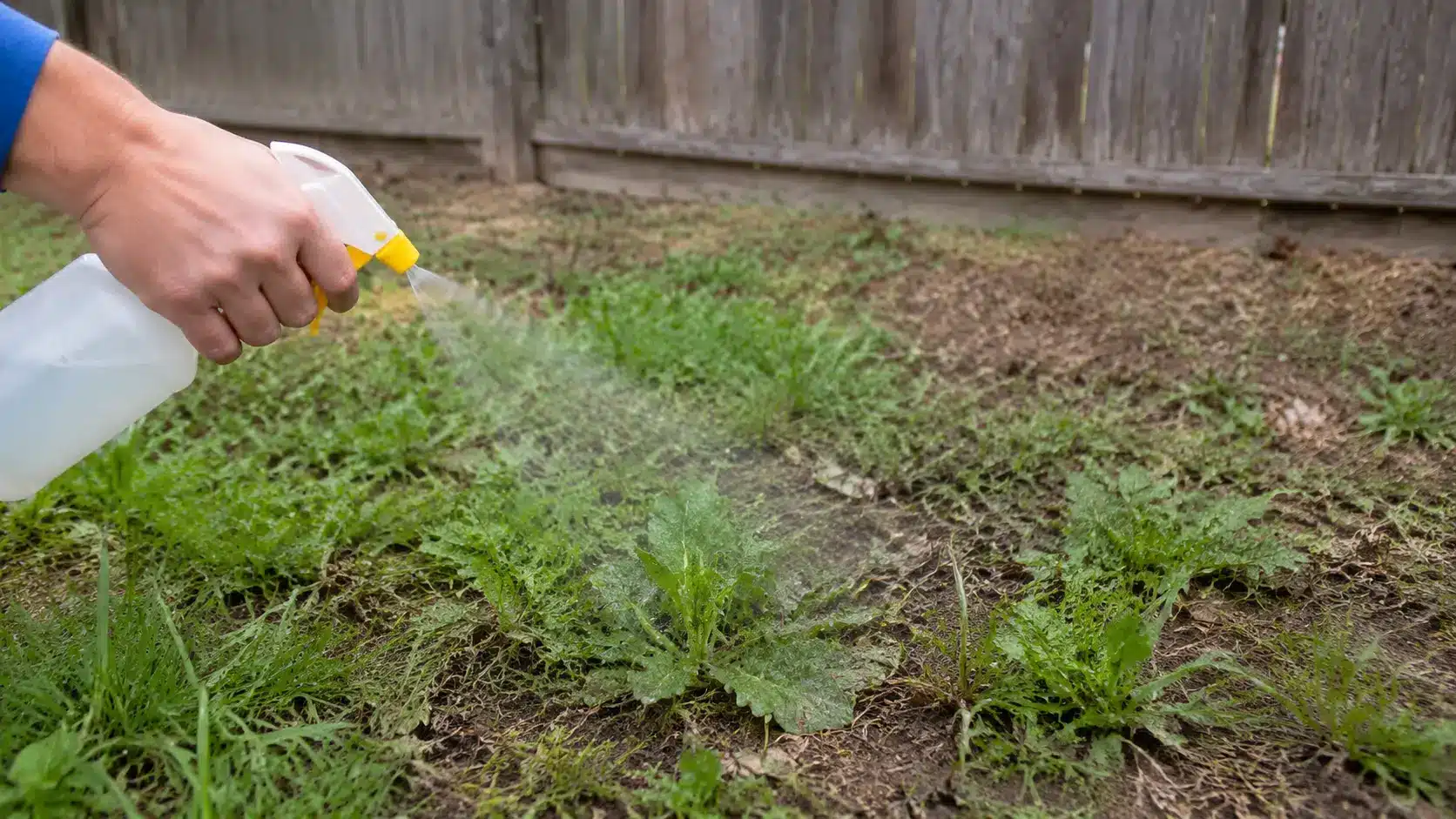
- Spray directly onto weed leaves and stems on a dry, sunny day, avoiding any surrounding plants you want to keep.
| Application tip: Results show within a few hours on a hot day. Repeat after rain, since the solution washes away, leaving no soil-level residue on the surface. |
2. Epsom Salt Weed Killer Recipe
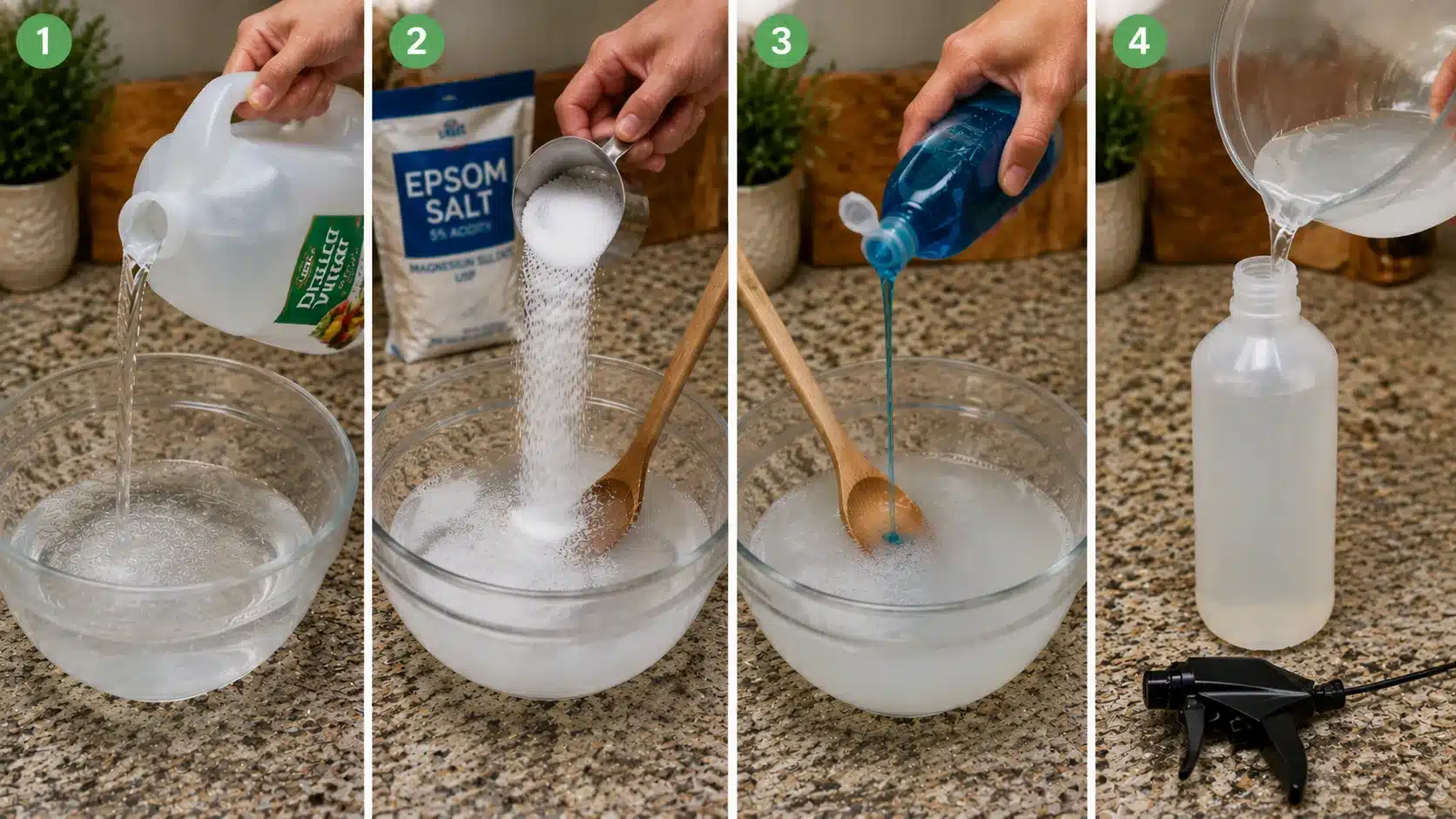
Swapping table salt for Epsom salt changes the chemistry slightly. Magnesium sulfate pulls moisture from plant cells more aggressively in certain soil types, making this version particularly effective on weeds in hard, compacted areas like driveways and stone paths. The vinegar base keeps the pH low enough to prevent quick regrowth.
Ingredients:
- 1 gallon of white vinegar
- 1 cup Epsom salt
- 2 teaspoons dish soap
How to make it:
- Combine vinegar and Epsom salt in a large container, stirring until the salt is fully dissolved.
- Add dish soap and mix gently to avoid creating excess foam.
- Pour the solution into a spray bottle or garden sprayer with a directional nozzle.
- Apply on a clear, sunny day, aiming precisely at the weed base to avoid soil spread.
| Application tip: This formula breaks down more slowly on hard surfaces, so it tends to stay effective a little longer between applications than the standard salt version. |
3. Hydrogen Peroxide Weed Killer Recipe
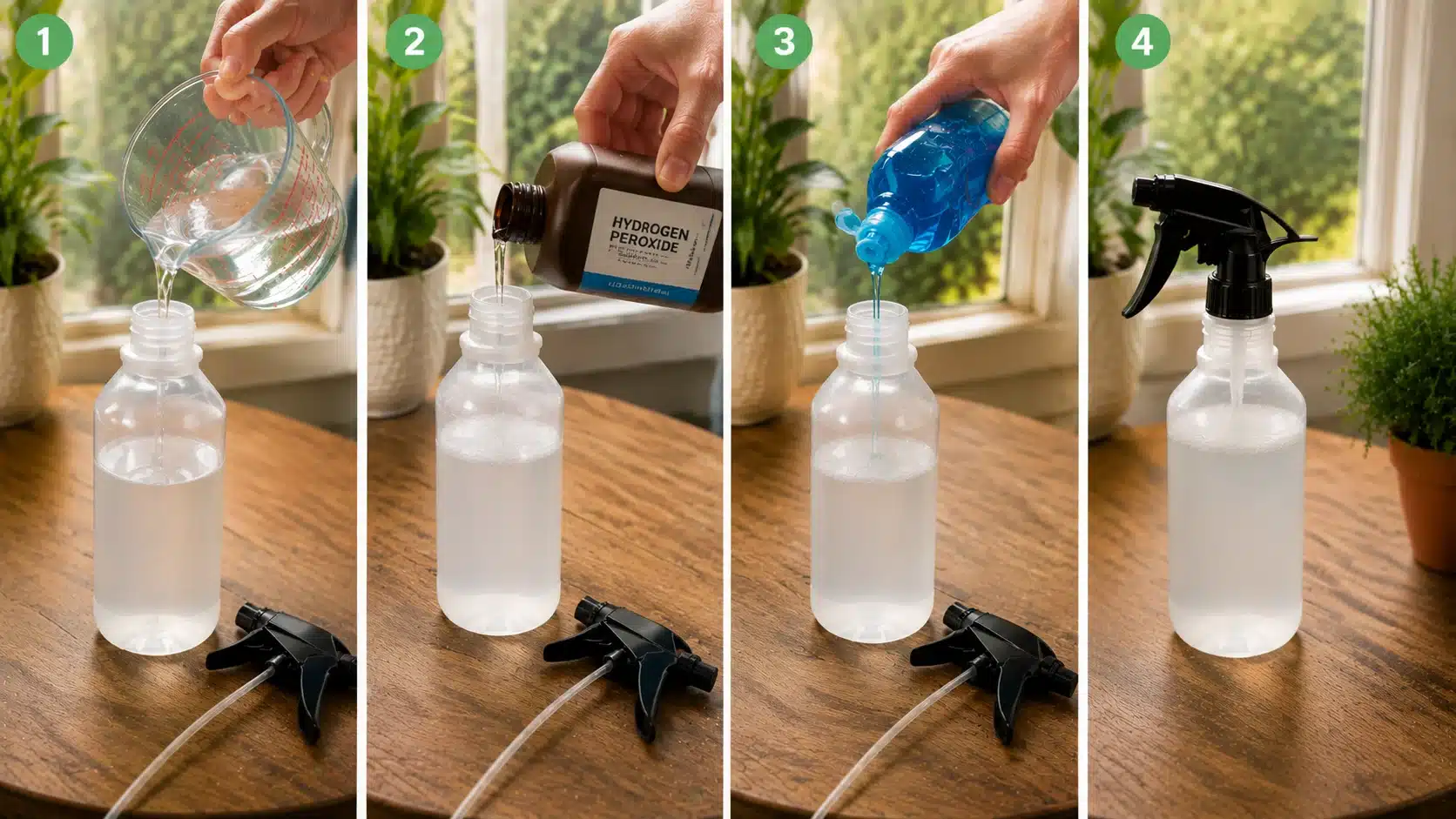
Hydrogen peroxide is the gentler option in this list. It oxidizes plant tissue on contact and breaks down into water and oxygen, leaving no lasting chemical residue in the soil. This makes it the better pick for weeds growing near plants you care about, such as in flower beds or vegetable garden borders.
Ingredients:
- 1 quart of water
- 1 oz hydrogen peroxide (3%)
- 1 tablespoon dish soap
How to make it:
- Pour 1 quart of plain water into a clean spray bottle or container.
- Add 1 oz of 3% hydrogen peroxide, available at any pharmacy, along with one tablespoon of dish soap.
- Seal the container and shake gently to mix, avoiding too many bubbles.
- Spray directly onto weed foliage, focusing on full leaf coverage for the fastest result.
| Application tip: This solution is less aggressive, so it works better on annual weeds and seedlings than on deep-rooted perennials. Multiple applications spaced a few days apart give the best results. |
Additional DIY Weed Killer Recipes to Try
Beyond the three core recipes, there are plenty of other ingredient combinations that work in specific conditions. The table below gives a quick reference for each formula, its main ingredients, and where it performs best:
| Recipe | Main Ingredients | Best For |
| Lemon Juice Weed Killer | Lemon juice, salt, dish soap | Garden beds and pathways on sunny, dry days |
| Corn Gluten Meal Preventer | Corn gluten meal | Stopping weed seeds from sprouting in early spring |
| Baking Soda Weed Killer | Baking soda, water | Cracks and small weed patches; keep away from garden soil |
| Salt and Water Weed Killer | Salt, water | Hard-to-reach areas like fence lines and retaining walls |
| Garlic and Hot Pepper Spray | Garlic, cayenne pepper, water | Garden beds where pest deterrence is also a priority |
| Bleach Weed Killer | Household bleach, water | Driveway and patio cracks only; never near wanted plants |
| Rubbing Alcohol Weed Killer | Rubbing alcohol, water | Smaller infestations with deep or stubborn root systems |
| Fish Tank Water Treatment | Aquarium water (nitrogen-rich) | Organic garden use where added nutrients are acceptable |
| Clove Oil Weed Killer | Clove oil, water | Quick-acting spot treatment; use sparingly to protect soil |
| Molasses Weed Killer | Molasses, water | Dual-purpose: kills surface weeds while adding organic matter |
How to Safely Apply Homemade Weed Killers
Safe application protects both your garden and you. Before picking up the spray bottle, a few practical steps can prevent accidental damage to surrounding plants, soil, and anyone sharing the yard with you:
- Wear gloves and eye protection: Vinegar and salt solutions can irritate skin and eyes, especially on windy days when drift is likely
- Check the wind: Spray on calm days to prevent the solution from hitting plants you want to keep. Even a light breeze can carry enough mist to scorch nearby herbs or flowers
- Use a directional nozzle: A fine-mist setting covers more surface area, while a stream setting gives you better control in tight spaces, such as between paving stones
- Avoid pre-rain application: Rain washes the solution off before it can work, and the runoff can carry salt and acid into garden beds or storm drains
- Keep pets and children away: Keep them off the treated area until the solution dries completely, usually within a few hours on a warm day
Getting these basics right before each application saves you from re-treating areas where accidental overspray killed the wrong plants. A little preparation upfront significantly reduces the overall effort.
Environmental Impact of Homemade Weed Killers
Compared to synthetic herbicides like glyphosate, most homemade solutions break down faster and don’t accumulate in groundwater the same way.
Vinegar degrades rapidly in soil, and hydrogen peroxide leaves only water and oxygen after reacting. That said, “natural” does not automatically mean safe for every situation.
Salt at high concentrations can render soil uninhabitable for years, which works in your favor for a driveway crack, but can cause real damage near a raised garden bed or lawn edge.
Diluted bleach, if it reaches storm drains, can disrupt local aquatic ecosystems in ways that aren’t immediately visible.
The environmental upside of homemade formulas is real, particularly when compared to chemical alternatives that linger in the soil for months.
However, the location, quantity, and frequency of application still need careful consideration to avoid unintended consequences.
Pros and Cons of Using Homemade Weed Killers
Homemade formulas are genuinely useful, but they are not a straight replacement for every situation. Here is an honest look at both sides:
Advantages:
- Made from ingredients most households already have, keeping costs low
- No synthetic chemicals, making them safer around children and pets once dry
- Easy to make in small or large batches as needed
- Faster to obtain than ordering specialty herbicides
Drawbacks:
- Non-selective, meaning they kill any plant they contact, not just weeds
- Salt-heavy formulas can degrade soil structure and inhibit future planting in that spot
- Less effective on deep-rooted perennial weeds like bindweed or thistle without repeated treatments
- Results depend on the weather, and a cloudy day can significantly reduce effectiveness
Knowing these limitations upfront helps you use homemade formulas where they perform well and avoid situations where they are likely to cause more problems than they solve.
Best Time to Apply Homemade Weed Killers for Maximum Effectiveness
Timing matters more than the formula itself. The ideal conditions are a sunny, dry day with temperatures above 70°F and no rain forecast for at least 24 hours.
Morning application works well because the sun intensifies throughout the day, driving the solution deeper into leaf tissue and speeding up the drying process.
Avoid applying in the evening, when overnight dew forms and dilutes the treatment before it has had enough time to work. Spring and early summer are the most effective treatment windows, when weeds are actively growing and haven’t yet gone to seed.
Spraying after a weed has flowered is largely reactive and rarely prevents the next round of growth. Catching weeds at the seedling or early growth stage cuts the next generation off before it establishes, reducing how often you need to reapply altogether.
Frequently Asked Questions
Do vinegar, salt, and dish soap really kill weeds?
Yes. Vinegar’s acetic acid breaks down the waxy coating on leaves, salt draws moisture out of plant cells through osmosis, and dish soap helps the solution stick instead of beading off. Weeds typically show wilting within a few hours and complete browning within 24 to 48 hours on a warm, dry day.
Will homemade weed killers harm my garden soil?
Salt-based formulas can raise soil salinity and make planting difficult in treated spots. Vinegar alone temporarily lowers soil pH, which most soils recover from within a few weeks. Hydrogen peroxide is the safest option for use near garden beds because it breaks down completely, leaving no lasting residue.
How often do you need to reapply homemade weed killers?
Most formulas need reapplication after rain or every one to two weeks for persistent weeds. Established perennials with deep root systems may require three to five treatments before showing significant decline. Consistent application to young weeds before they root deeply produces the fastest and most lasting results.
Closing Thoughts
Getting rid of weeds does not have to mean reaching for harsh chemicals or spending money on commercial herbicides.
The best homemade weed killers use ingredients already sitting in most kitchens, and when applied at the right time and in the right conditions, they genuinely work.
The vinegar-salt-soap formula handles most situations in my garden well, the hydrogen peroxide version protects areas near plants worth keeping, and the table of additional options covers everything from stone pathways to organic vegetable beds.
Start with one formula, see how your weeds respond, and adjust from there. A weed-free garden is less about the perfect recipe and more about staying consistent with it. Drop a comment below and let me know which one of these worked for you.