Have you noticed how some indoor plants seem unhappy, even when you care for them often?
Snake plants usually need less attention, yet the wrong routine can still weaken roots and damage leaves. Too much water, poor drainage, harsh sunlight, or cold drafts may slowly affect their health.
The good news is that snake plant care becomes simple once you understand what the plant needs. A few steady habits can help you avoid common problems and support healthy, upright growth.
You do not need special tools, expensive products, or a strict daily schedule. In this guide, I’ll explain how to take care of a snake plant at home through clear, practical steps.
What You Should Know Before Caring for a Snake Plant
Snake plant care isn’t just about watering less. You also need to understand how the plant stores moisture. Its thick leaves hold water, which helps the plant manage short dry periods.
However, soil that remains wet can harm the roots and soften the leaves. Light also affects how quickly the soil dries. A plant in low light usually needs water less often.
Pot size, drainage, room temperature, and plant variety also shape your care routine. Checking these conditions first helps you avoid common mistakes and respond to problems sooner.
Understanding Snake Plant Varieties
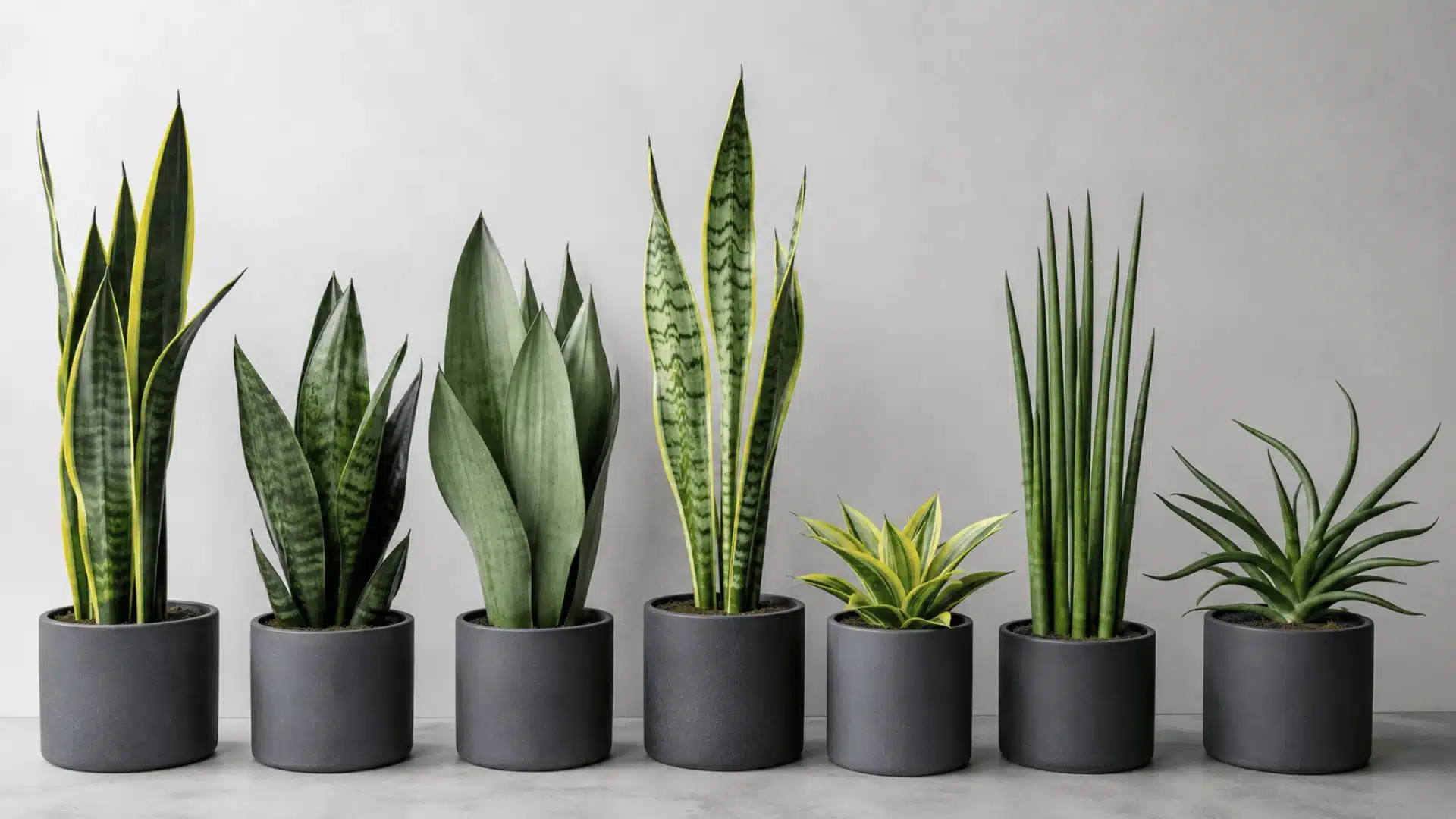
Snake plants come in several heights, colors, and leaf shapes. Many shops still label them as Sansevieria. Knowing your variety helps you choose the right location, pot, and cleaning routine. This naming has shifted in recent years, and the NC State Extension Plant Toolbox now lists most of these cultivars under the genus Dracaena rather than the older Sansevieria name.
| Snake plant variety | Appearance | Best placement | Main care point |
|---|---|---|---|
| Black Gold | Tall green leaves with yellow edges | Floor spaces and bright corners | Use a stable pot and filtered light |
| Black Jack | Short leaves with yellow borders | Desks, shelves, and side tables | Keep it near gentle natural light |
| Black Robusta | Tall dark leaves with pale bands | Offices and living room corners | Turn the pot for balanced growth |
| Futura Robusta | Short, broad, patterned leaves | Cabinets and wide shelves | Keep the leaves away from busy paths |
| Golden Hahnii | Small leaves forming a nest shape | Desks and compact spaces | Check small pots before adding water |
| Cylindrica | Firm, rounded leaves growing upward | Open shelves and modern rooms | Leave space around spreading leaves |
| Starfish Sansevieria | Thick leaves spreading from the center | Wide tables and open displays | Protect the leaves from knocks |
Each variety has its own shape, but their basic needs remain much the same. Use draining soil, gentle light, and careful watering for every type.
What Will You Need to Maintain Your Snake Plant
You only need a few basic items to care for your plant properly, and getting the container right from the start makes everything easier since sizing your plant’s container correctly affects drainage and root health more than most people expect. Keep these supplies nearby so regular checks stay simple.
- Drainage pot: Choose a container with an open hole underneath.
- Potting mix: Use loose soil made for indoor succulents or cacti.
- Watering container: Pick one that lets you pour slowly.
- Clean scissors: Use them for damaged or unhealthy leaves.
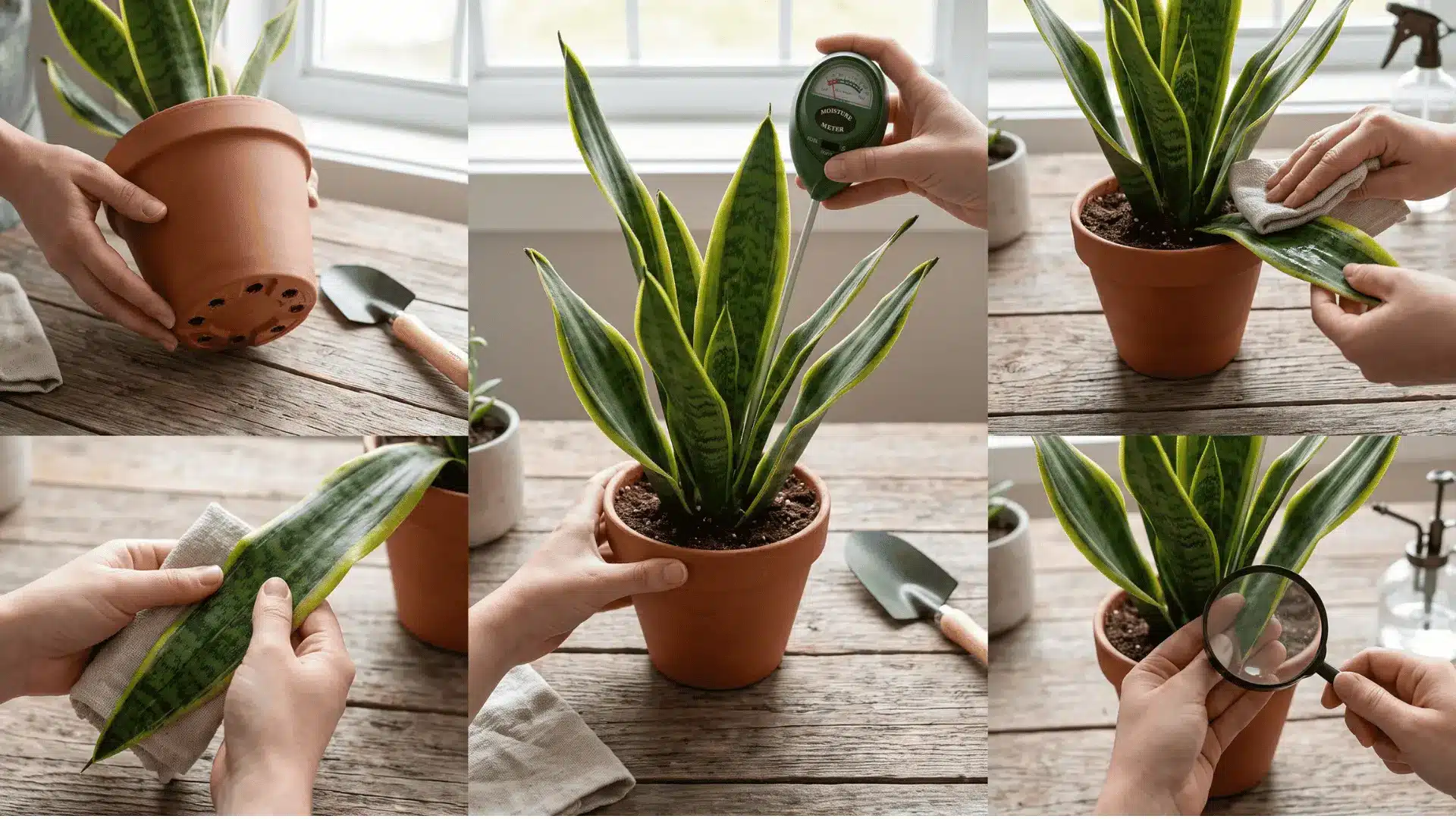
- Soft cloth: Wipe dust and small pests from the leaves.
- Mild plant food: Apply it only during active growth.
These items cover most routine care needs. You do not need expensive tools or a complicated plant care system.
How to Take Care of a Snake Plant Indoor: Step by Step
A snake plant grows best when each care step follows a clear order. Start with the pot and light, then manage water, feeding, cleaning, and repotting. The routine below gives your plant steady care without unnecessary attention. It also helps you spot small problems before they damage the roots or leaves.
Step 1: Prepare Pot and Soil Correctly

Choose a pot with at least one drainage hole, since trapped water can weaken the roots. The container should be only slightly wider than the plant’s root area.
Fill it with a loose cactus or succulent mix that dries without becoming hard, and if you’re repotting an older plant, checking the best soil mix components can help you match texture and drainage to what established roots actually need. A stable pot also supports tall leaves and prevents tipping.
Step 2: Set Light and Room Conditions
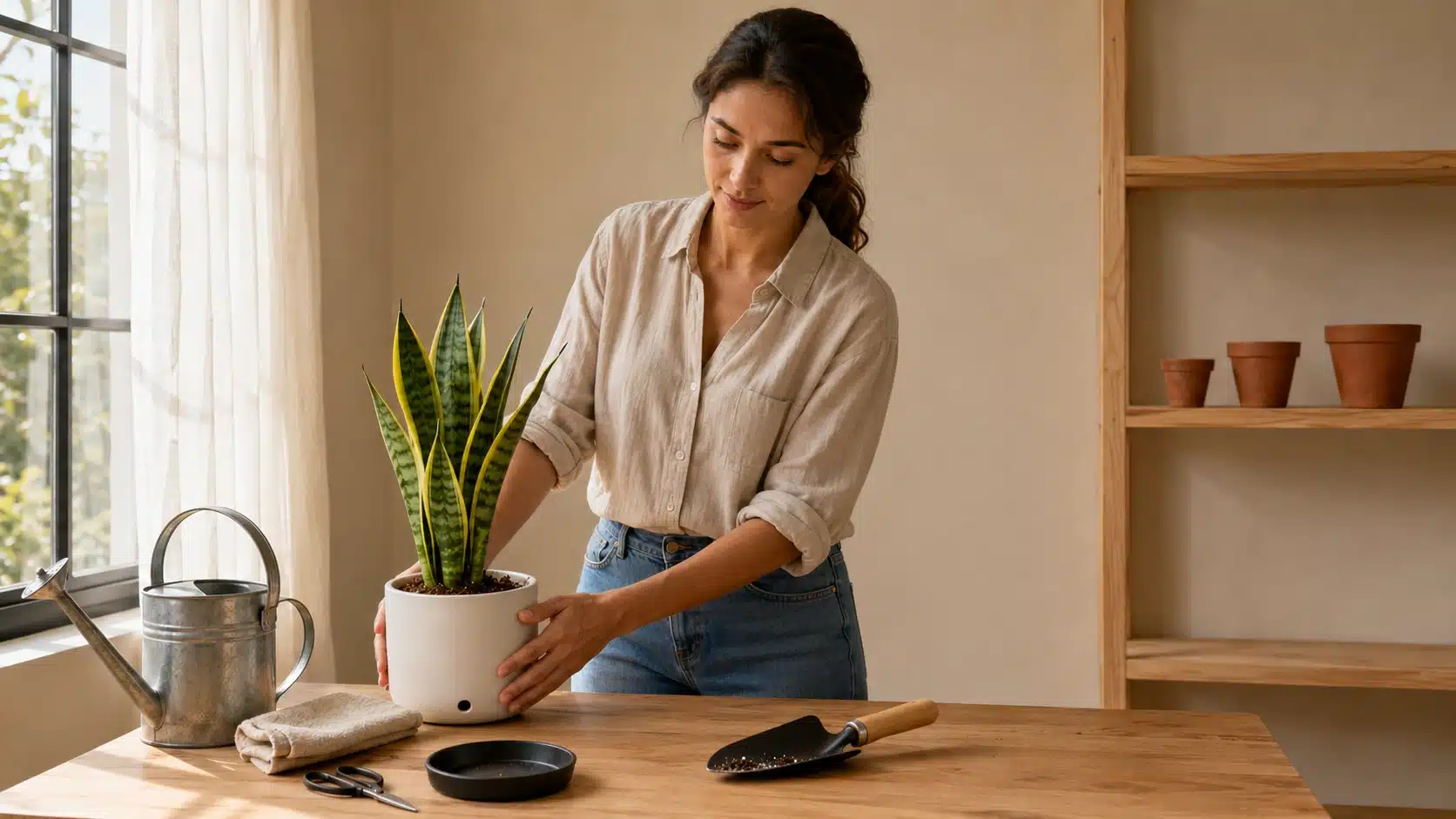
Set the plant near a window where it receives bright, indirect light for much of the day. A sheer curtain can soften strong sunlight and protect the leaves. Keep the pot away from cold glass, open doors, radiators, and air conditioners.
Sudden temperature changes can stress the plant, while steady conditions help the leaves remain firm, upright, and evenly colored. Rotate the container monthly so each side receives balanced light.
Step 3: Test Soil Before Adding Water
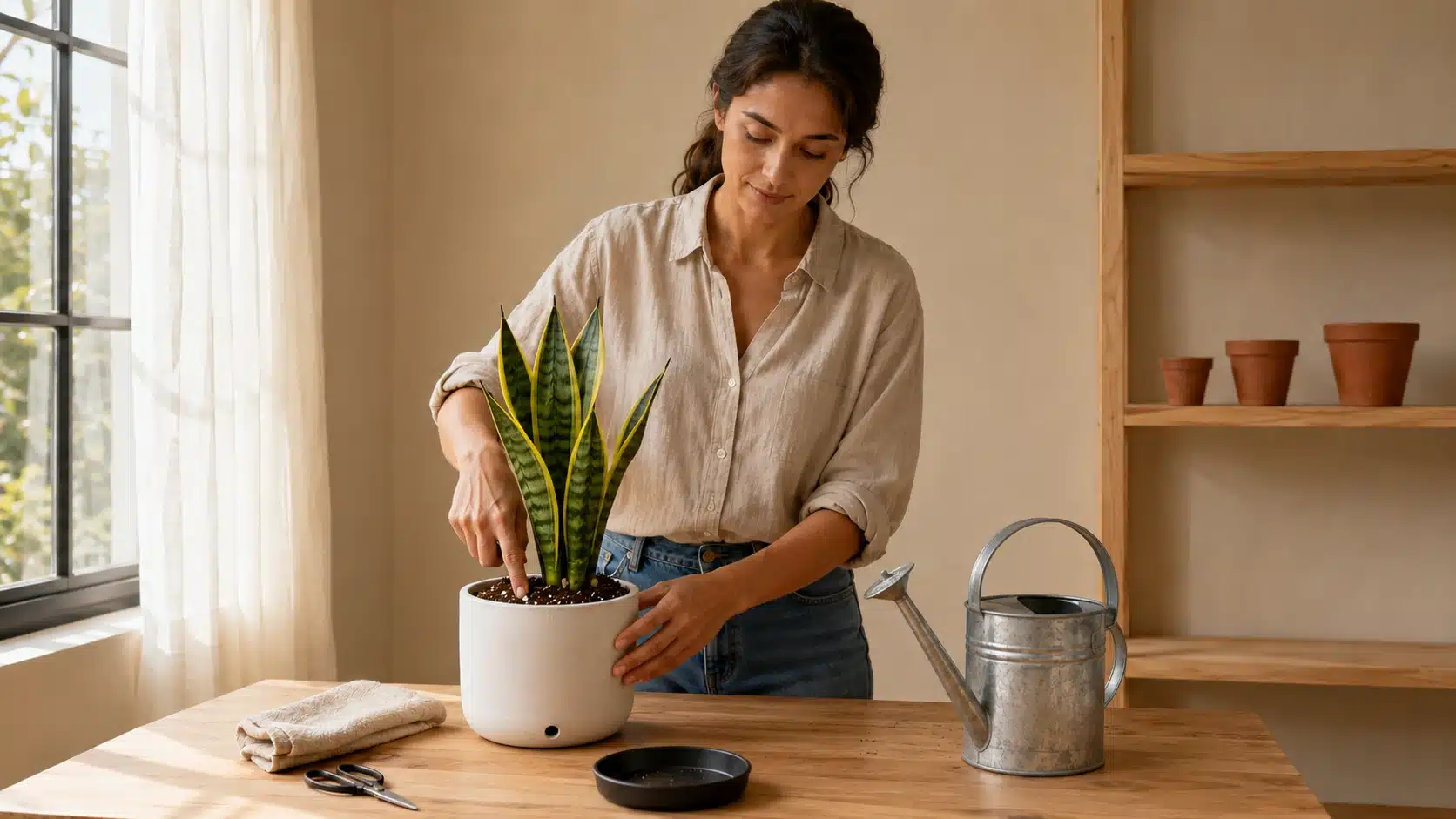
Push your finger several inches into the soil before you decide to water. The surface may look dry while moisture remains around the deeper roots, and learning to recognize overwatering symptoms early can prevent the soft, mushy roots that are hard to reverse once they set in.
Wait until the soil feels dry throughout the checked area, especially during winter or in low light. This test is more reliable than a weekly schedule, because temperature, pot size, and sunlight affect drying time. Check again after several days when you still notice moisture.
Step 4: Water Deeply and Drain Fully
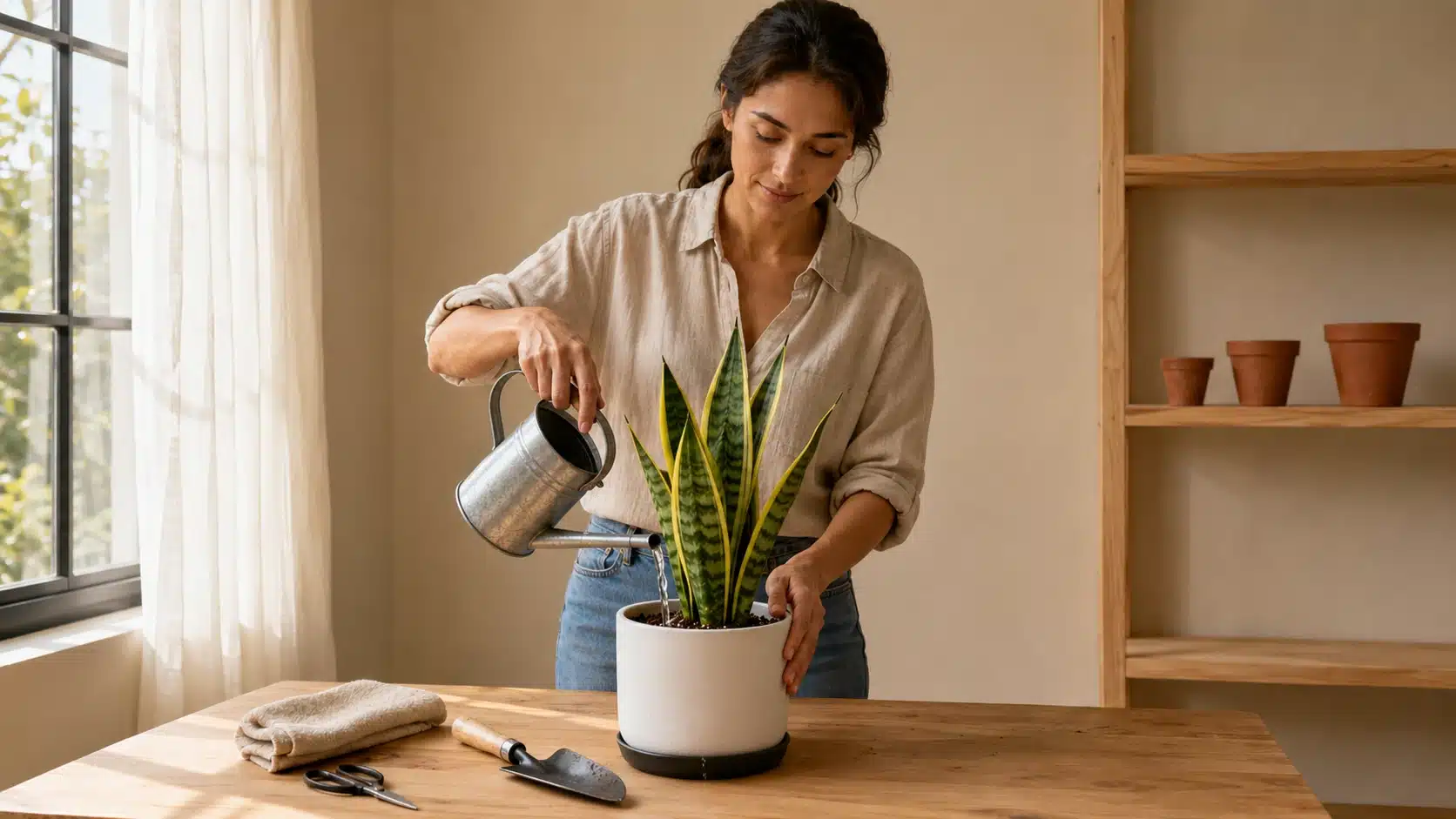
Pour water slowly across the soil until a small amount drains from the bottom. This method moistens the root area more evenly than adding a quick splash.
Let the pot finish draining, then empty any water left in the tray. Never leave the roots standing in water, since constant moisture may cause soft leaves, dark patches, and lasting root damage. Keep water away from tightly packed leaf centers whenever possible.
Step 5: Clean Leaves and Feed Lightly
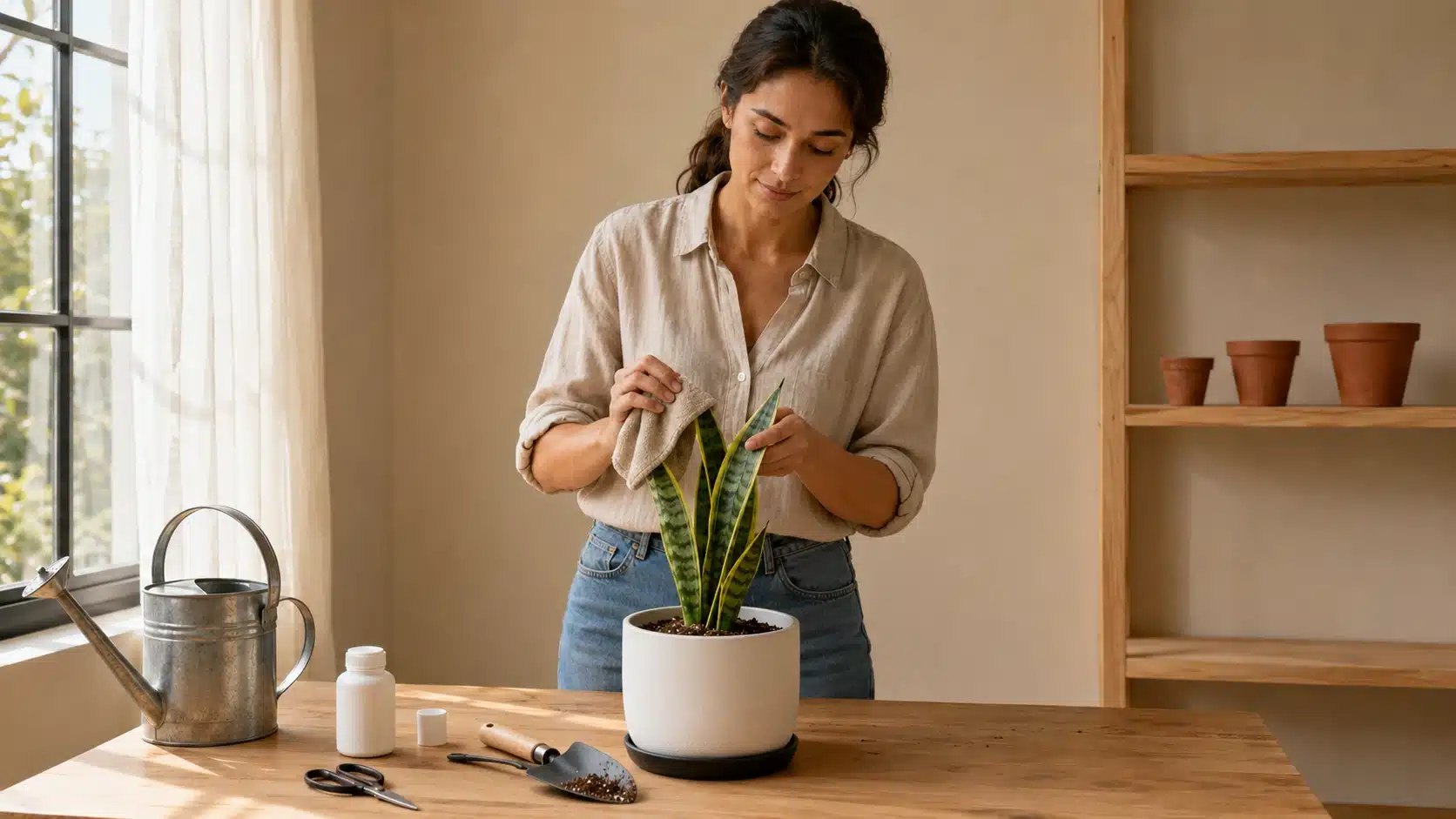
Wipe the leaves with a soft, damp cloth every few weeks to remove dust. While cleaning, check both sides for pests, soft spots, or fresh damage.
Feed lightly during spring or summer when new growth appears. Use diluted plant food and follow the label carefully, because excess fertilizer can leave mineral buildup and harm healthy roots. Skip feeding during the colder winter months when the plant’s growth naturally slows indoors.
Step 6: Prune Damage and Repot Carefully
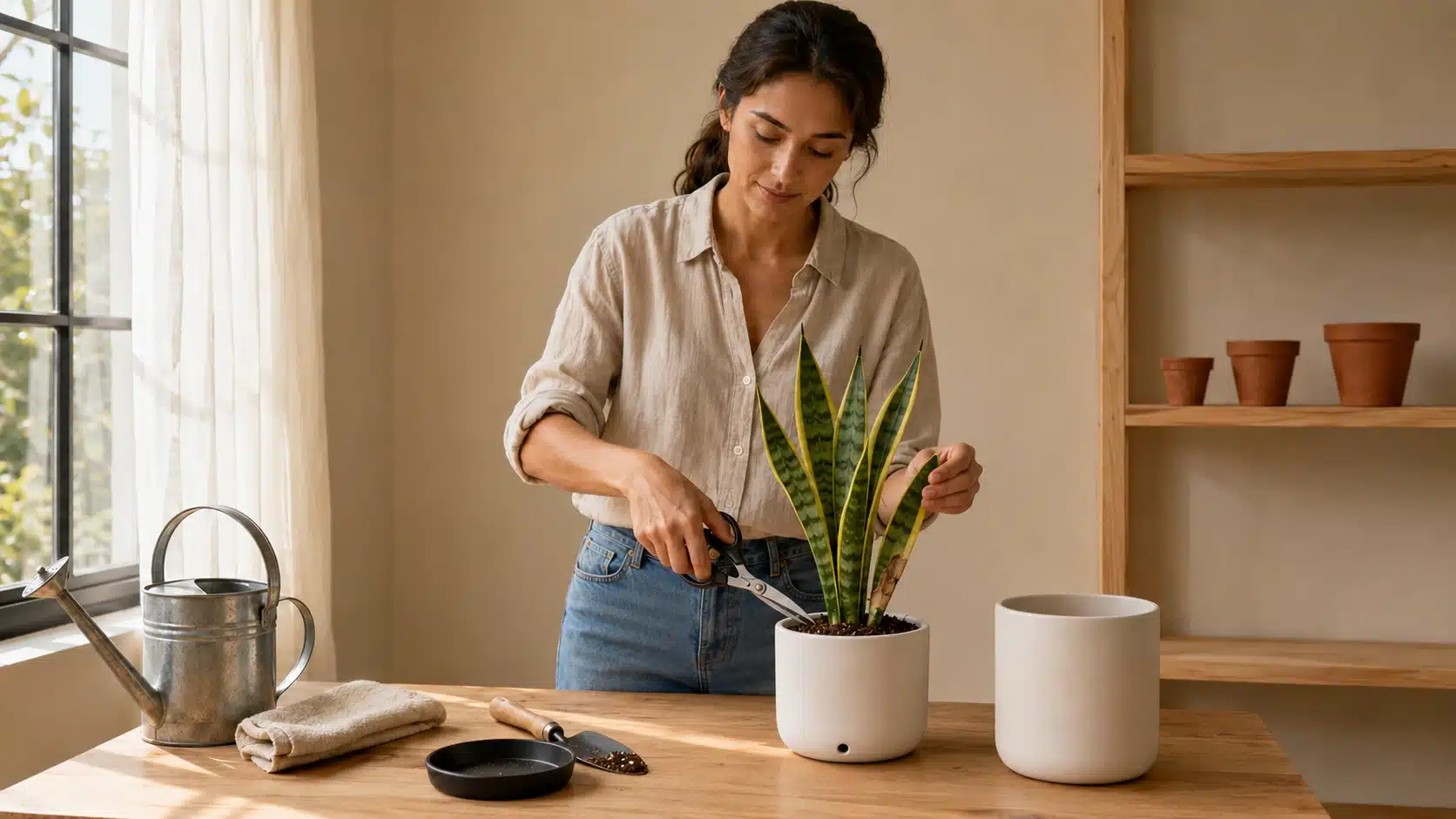
Remove only leaves that are soft, badly brown, or seriously damaged. Use clean scissors and cut close to the base without harming nearby healthy growth.
Repot when roots appear through the drainage hole, crack the container, or make the plant unstable. Choose a pot one size larger, add fresh draining soil, and return the plant to similar light while it settles. Avoid watering heavily during the first few days after repotting.
Low-Light and Bright-Light Snake Plant Care
Light affects more than how quickly a snake plant grows. It also changes how fast the soil dries, so your watering routine should match the room’s brightness and conditions closely. This table shows how indoor light affects growth and watering.
| Condition | Growth pattern | Water use | Care approach |
|---|---|---|---|
| Low light | Slow growth with fewer new leaves | Soil dries slowly | Check the soil carefully and water less |
| Medium indirect light | Steady growth and balanced color | Soil dries at a moderate rate | Follow regular soil checks |
| Bright indirect light | Faster growth and stronger markings | Soil may dry sooner | Check moisture more often |
| Strong direct sun | Possible fading or burned patches | Soil may dry unevenly | Move the plant behind a curtain |
| Windowless room | Very limited long-term growth | Soil may remain wet longer | Add a suitable plant light |
Use this table as a guide, then watch how your plant responds. Regular soil checks will help you adjust care before light-related stress begins to damage the leaves or roots.
Care Tips for Different Snake Plant Shapes
Tall and compact varieties share basic needs, but their shapes create different care concerns. Focusing on those differences can prevent damaged leaves and unstable pots.
Caring for Tall Snake Plants
Tall types need firm support because their leaves can make light pots unsteady. The following checks can help keep upright plants balanced.
- Pot weight: Use a container that will not tip easily.
- Light direction: Turn the pot to reduce leaning growth.
- Walking space: Keep long leaves away from narrow paths.
- Base support: Press soil gently around loose stems.
- Leaf cleaning: Support each leaf while wiping away dust.
These small steps protect tall leaves from bending and splitting. They also help the plant grow in a more balanced shape.
Caring for Compact Snake Plants
Short varieties suit desks and shelves, but small containers can change moisture levels quickly. Pay attention to these details when caring for compact types.
- Pot depth: Avoid containers that hold large amounts of unused soil.
- Moisture check: Test below the surface before watering.
- Shelf light: Make sure nearby objects do not block natural light.
- Leaf center: Keep water from sitting between tightly packed leaves.
- Air space: Leave room around the plant for gentle airflow.
Compact plants still need careful watering, even when their pots appear dry. Always test the soil rather than judging by the container’s size.
Common Problems That Affect Snake Plants
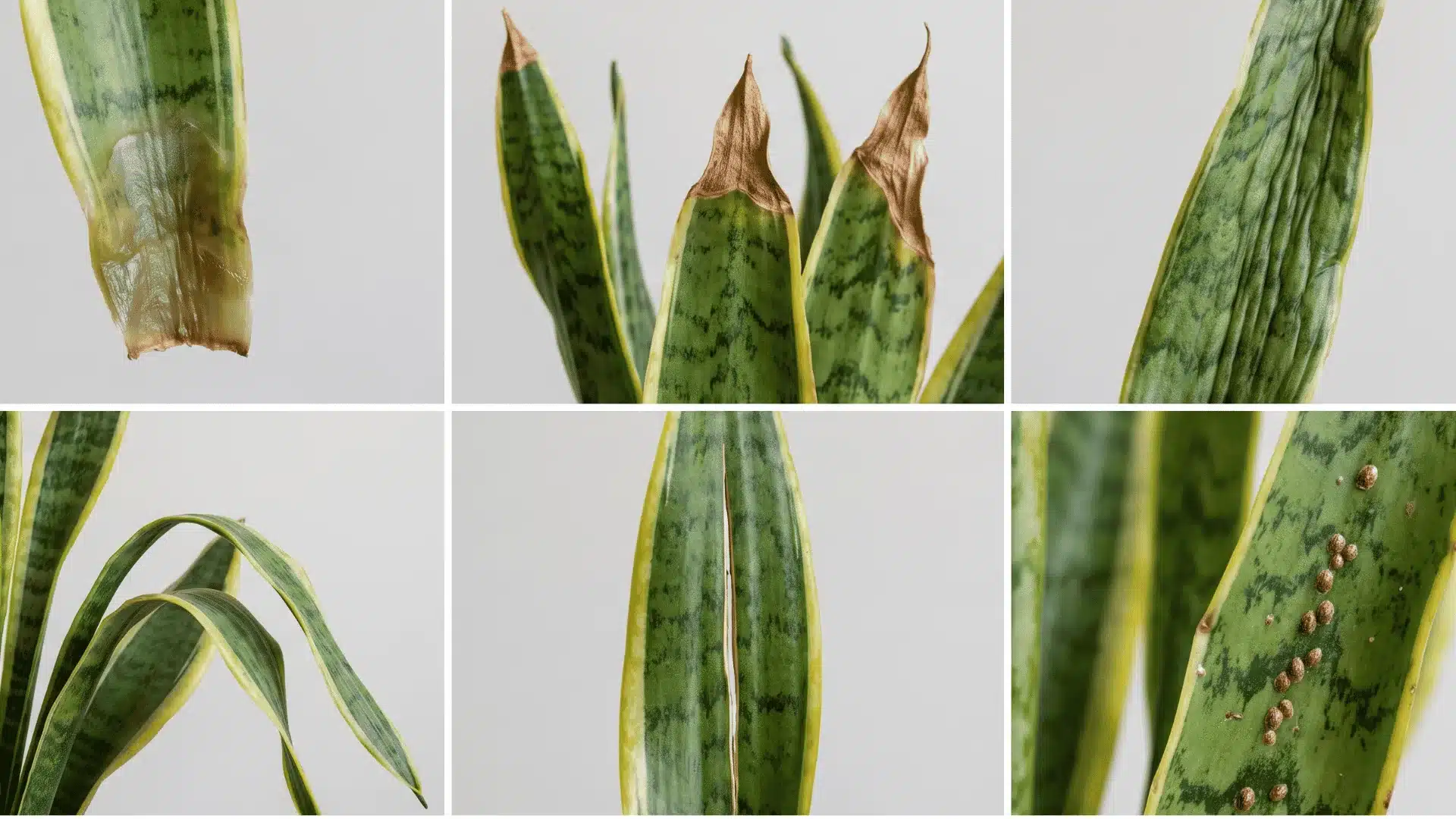
Snake plants often show problems through visible leaf changes. These signs may relate to watering habits, drainage, temperature changes, physical damage, or pests. Checking these symptoms early can help protect the plant and prevent the issue from becoming worse.
| Leaf Sign | Possible Cause | What To Check |
|---|---|---|
| Soft Leaves | Overwatering or poor drainage | Soil moisture and root condition |
| Dark Brown Patches | Excess water causing decay | Watering routine and drainage |
| Crisp Brown Areas | Dry soil or long periods without water | Soil moisture and room conditions |
| Wrinkled Leaves | Cold exposure or dry soil | Temperature and watering |
| Drooping Growth | Weak support, loose soil, or wet roots | Root health and pot stability |
| Split Leaves | Physical damage from handling, pets, or objects | Plant placement and leaf condition |
| Raised Spots | Scale insect activity | Leaf surface and pest presence |
Raised bumps along the leaf are usually the first visible sign of an infestation, and the University of Maryland Extension’s guide to scale insects on indoor plants walks through how to spot and treat them before they spread to nearby leaves.
Check the soil, drainage, and recent changes in the plant’s environment before making adjustments. Avoid changing watering habits too quickly, as sudden changes can add extra stress and make recovery harder for the snake plant.
Maintenance Checklist
Long-term care depends on small habits performed at the right time. A simple routine helps you notice changes without disturbing the plant. These habits keep snake plant care manageable and consistent. Regular checks are usually more useful than frequent watering or feeding.
- Weekly check: Look for pests, leaning leaves, and soft areas.
- Soil check: Test the soil before every watering.
- Monthly cleaning: Wipe dust from the leaves with a damp cloth.
- Pot rotation: Turn the container so growth stays even.
- Seasonal review: Adjust watering when light and temperature change.
- Yearly inspection: Check the pot, roots, and soil condition.
- Quick cleanup: Remove fallen soil or damaged plant material.
Frequently Asked Questions
Is a Snake Plant Safe Around Pets?
Snake plants may cause stomach problems when cats or dogs chew their leaves. Place the plant beyond your pet’s reach, especially when your animal often bites or plays with indoor plants.
Can a Snake Plant Grow in Water?
A leaf cutting can develop roots in water, but long-term water growth needs careful maintenance. Change the water regularly and watch for soft areas that may show decay.
Why Is My Snake Plant Growing Sideways?
Sideways growth may happen when the strongest light comes from one direction. Turn the pot regularly and provide balanced indirect light to encourage more even growth.
Can Snake Plants Produce Flowers Indoors?
A mature snake plant may produce small flowers indoors, though this is uncommon. Flowering can depend on age, light, root conditions, and other environmental factors.
Should I Use Tap Water for My Snake Plant?
Tap water works in many homes. However, water with heavy mineral content may leave marks or dry tips. Filtered water may help when mineral buildup becomes a regular problem.
Can I Separate New Snake Plant Shoots?
New shoots can be separated when they have developed healthy roots. Remove the plant carefully, divide the root section with a clean tool, and place each part in draining soil.
Final Thoughts
I know plant care can feel uncertain when every room has different conditions. Once you understand how snake plants use light and water, the routine becomes much clearer.
Focus on dry soil, good drainage, steady temperatures, and gentle natural light. Check the leaves often because they can reveal problems before the plant becomes weak.
I have found that simple, regular checks prevent most serious snake plant care problems. Use these steps in your home and adjust them as you learn how your plant responds.
Drop a comment below and let me know how yours turned out.