Hydrangeas are one of the most rewarding flowering shrubs to grow, but pruning them can feel confusing at first. If you’re learning how to prune hydrangeas, the key is knowing that varieties need attention at different times.
One wrong cut can remove flower buds, leaving plenty of green growth but fewer blooms the following season. Some hydrangeas flower on old wood, while others bloom on new growth.
Once you know which type you have and when it forms buds, pruning becomes much easier. A few careful cuts can improve airflow, remove weak growth, and support healthy flowering.
With the right timing, you’ll know what to cut, what to keep, and how to help your hydrangea stay strong year after year.
Why Pruning Is Necessary for Hydrangeas
Pruning helps hydrangeas stay healthy, neat, and productive. Removing dead, broken, or diseased branches improves airflow and reduces the chance of problems spreading through the shrub.
It also gives strong stems more room to grow, prevents crowding, and keeps the plant from becoming difficult to manage.
Regular pruning can also control size and shape, which helps when a hydrangea blocks a path or produces thin stems that cannot support heavy flower heads. The University of Illinois Extension notes that hydrangeas blooming on new wood can safely lose up to one-third to one-half of their total mass in a single session.
Careful cuts help the shrub keep a balanced, natural structure as it grows. Since the right timing depends on the hydrangea type, the next section walks through each one.
Hydrangea Types and Varieties to Know Before Pruning
Hydrangeas form flower buds in different ways, so each group follows a different pruning schedule. Some flower on stems grown the previous year, while others bloom on fresh growth.
Many gardeners also grow hydrangeas as flowering privacy shrubs alongside other Gulf Coast favorites, so identifying your bloom cycle helps you prune with confidence and protect next season’s flowers.
1. Hydrangeas That Bloom on Old Wood
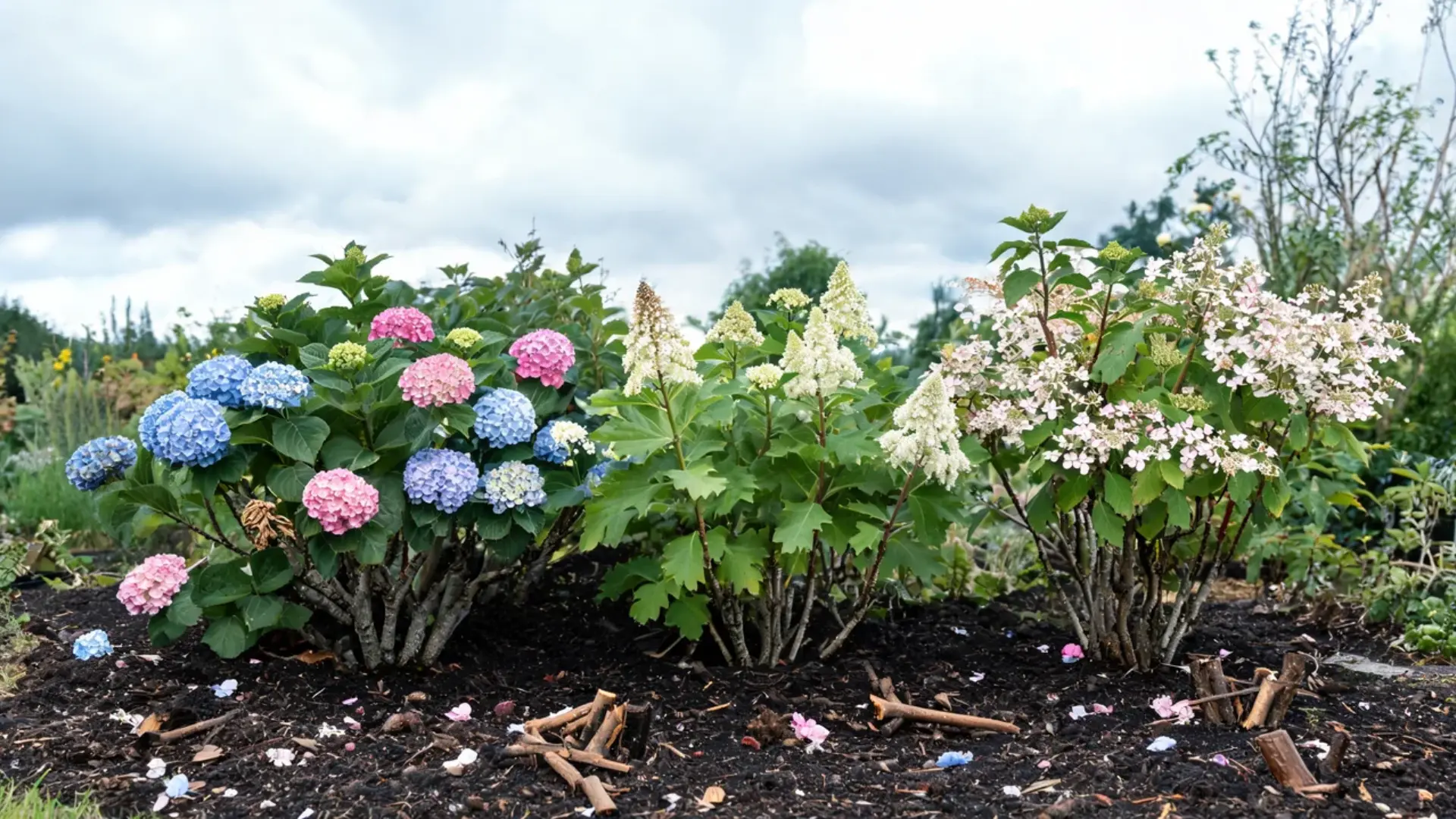
Old wood hydrangeas set flower buds on the previous year’s growth. Clemson Cooperative Extension recommends pruning only after flowering to protect next year’s blooms.
- Bigleaf hydrangeas (Hydrangea macrophylla): Prune after flowering; remove damaged stems.
- Oakleaf hydrangeas (Hydrangea quercifolia): Prune after flowering only to shape.
- Mountain hydrangeas (Hydrangea serrata): Prune lightly after flowering.
Heavy pruning here removes next season’s buds, so cut only what is needed.
2. Hydrangeas That Bloom on New Wood
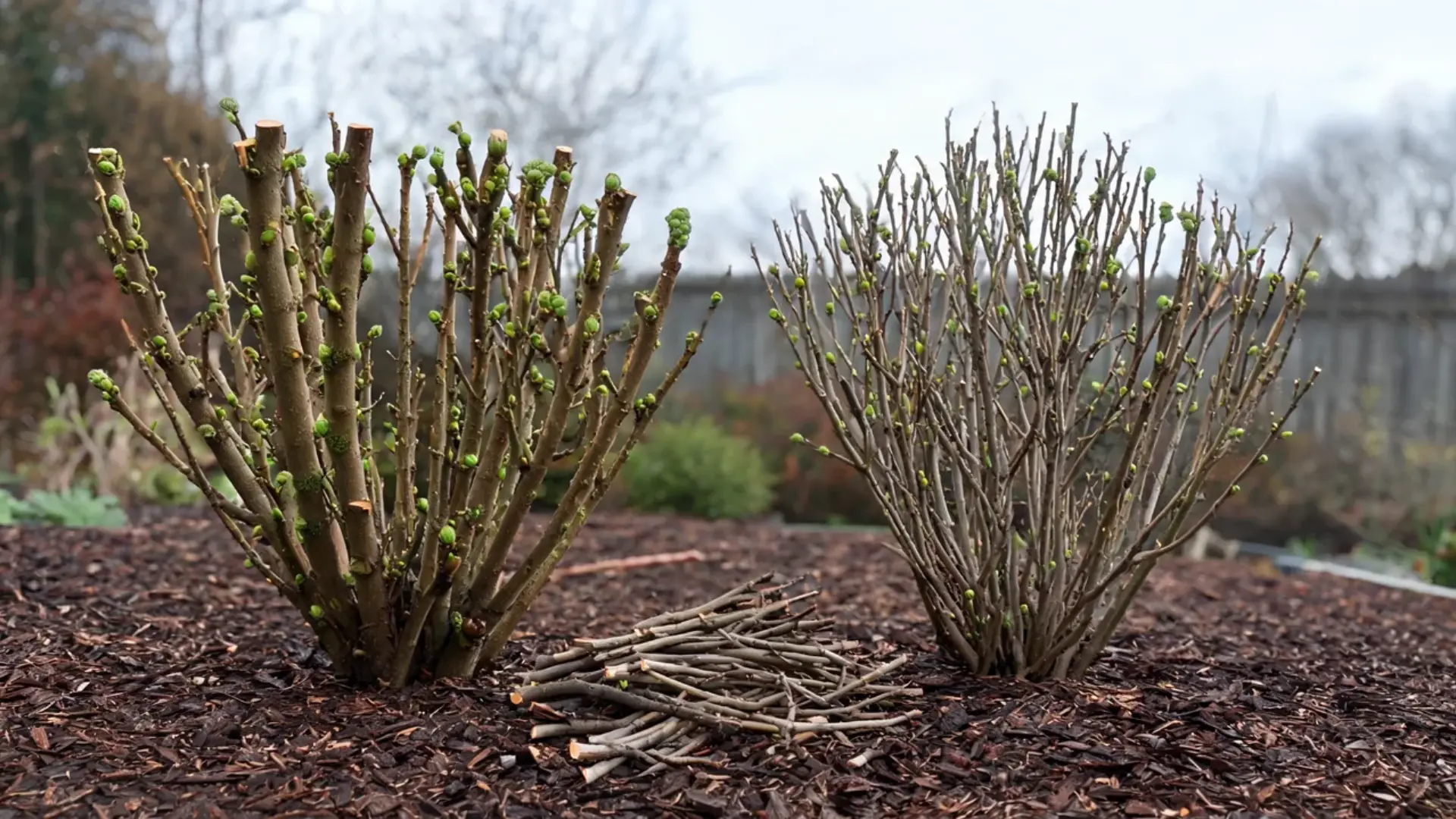
New wood hydrangeas set buds on fresh growth, which allows flexible timing. The University of Maryland Extension recommends pruning in late winter or early spring before new growth begins.
- Panicle hydrangeas (Hydrangea paniculata): Remove weak or crossing branches; reduce height by a third.
- Smooth hydrangeas (Hydrangea arborescens): Thin crowded growth and reduce height as needed.
Keep enough strong stems in place to support healthy, balanced flowering all season.
3. Reblooming Hydrangeas
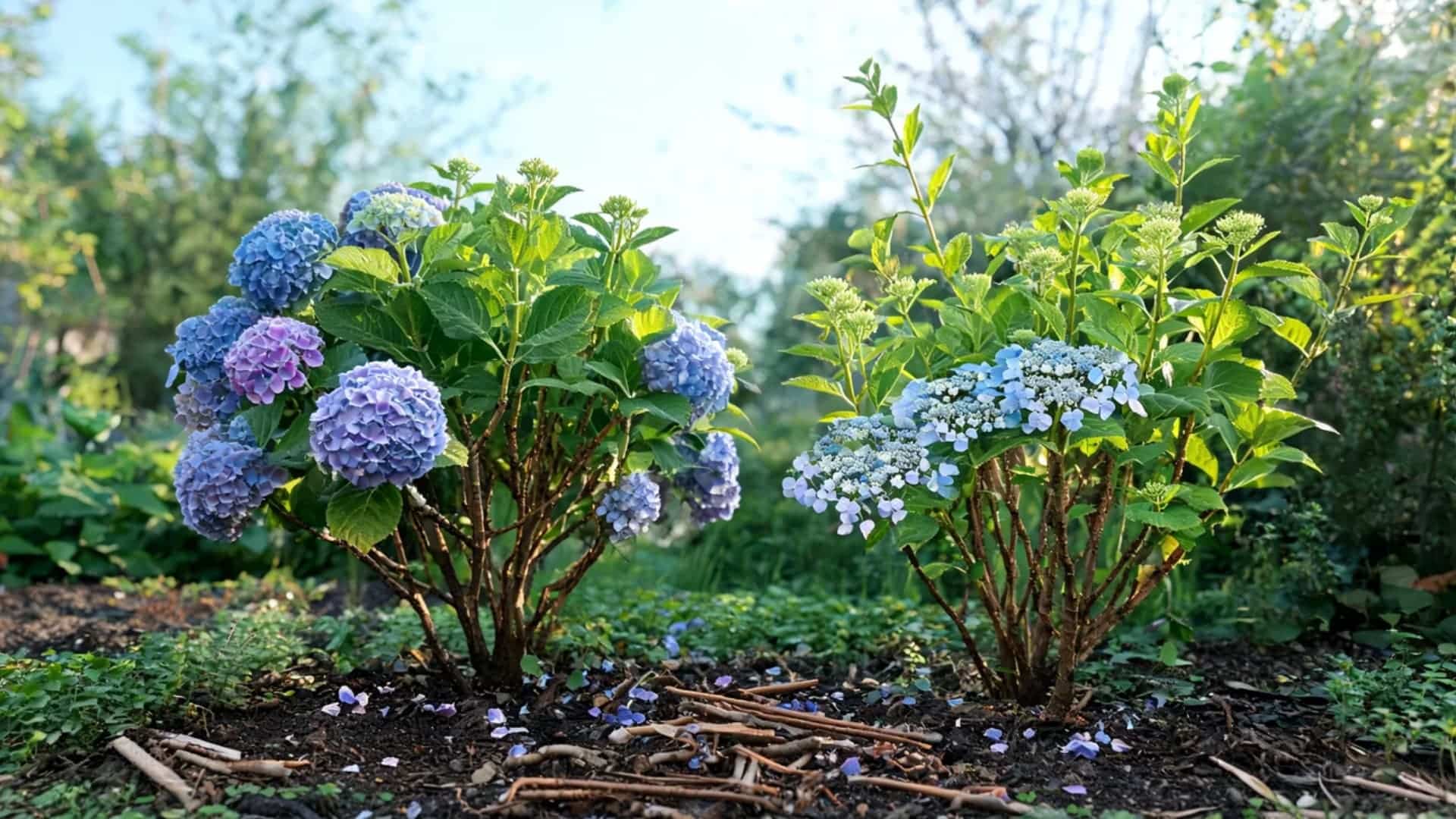
Reblooming hydrangeas flower on both old and new wood, so older stems stay in place while fresh growth adds more blooms later. If unpredictable rebloom timing feels risky for your yard, panicle hydrangeas bloom steadily from summer into fall instead.
- Reblooming bigleaf hydrangeas: Remove crowded branches; shape lightly after flowers fade.
- Reblooming mountain hydrangeas: Preserve older stems; make only light cuts after flowering.
Older stems may already carry buds, so avoid heavy fall or winter pruning.
How to Prune Hydrangeas: Step by Step
Once you have identified your hydrangea and selected the right time for pruning, follow a clear sequence to manage the process. Understand how to prepare tools, assess plant health, remove unwanted growth, and make precise cuts that support strong structure and future flowering.
Step 1: Disinfect and Prepare Your Pruning Tools
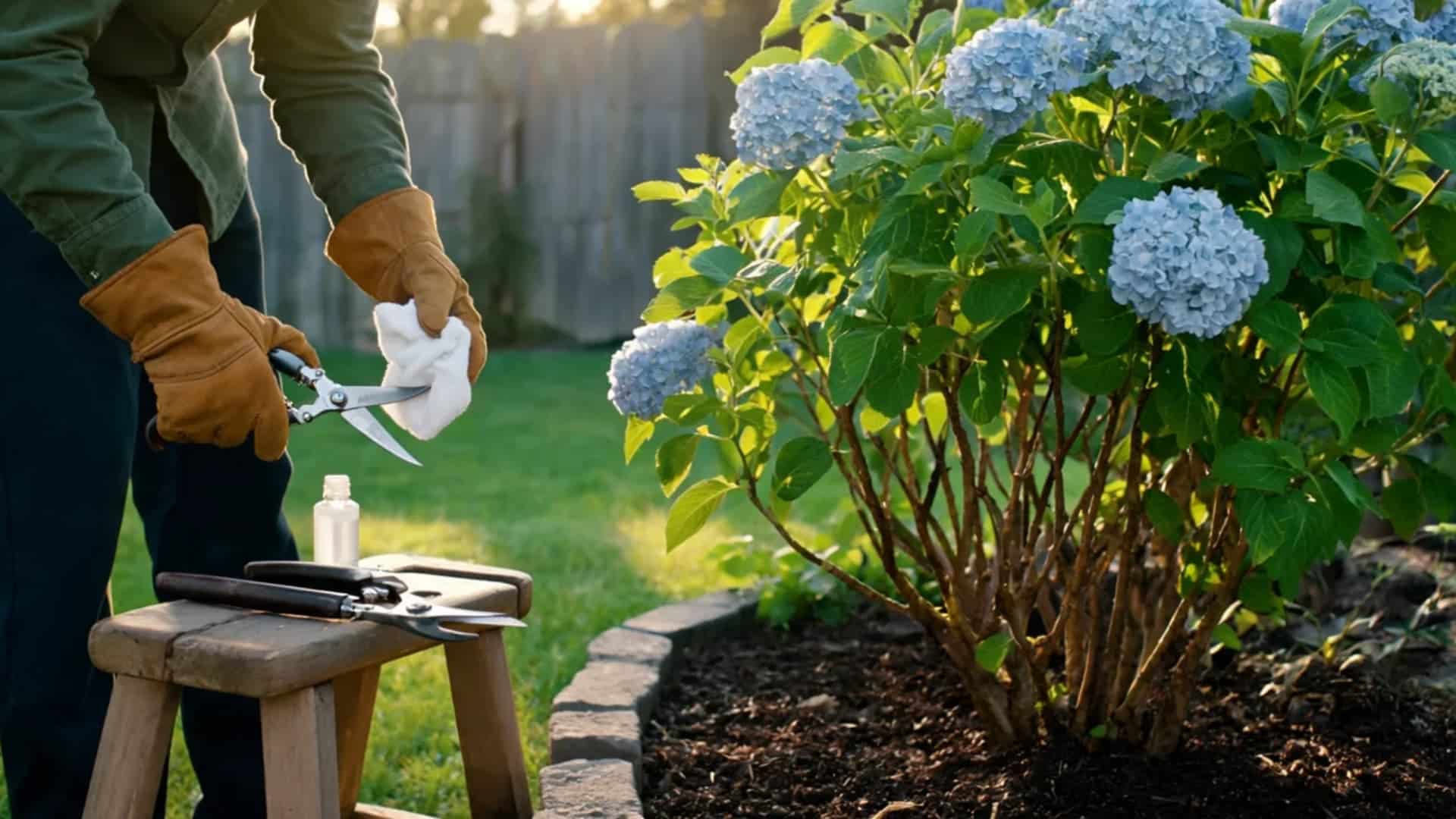
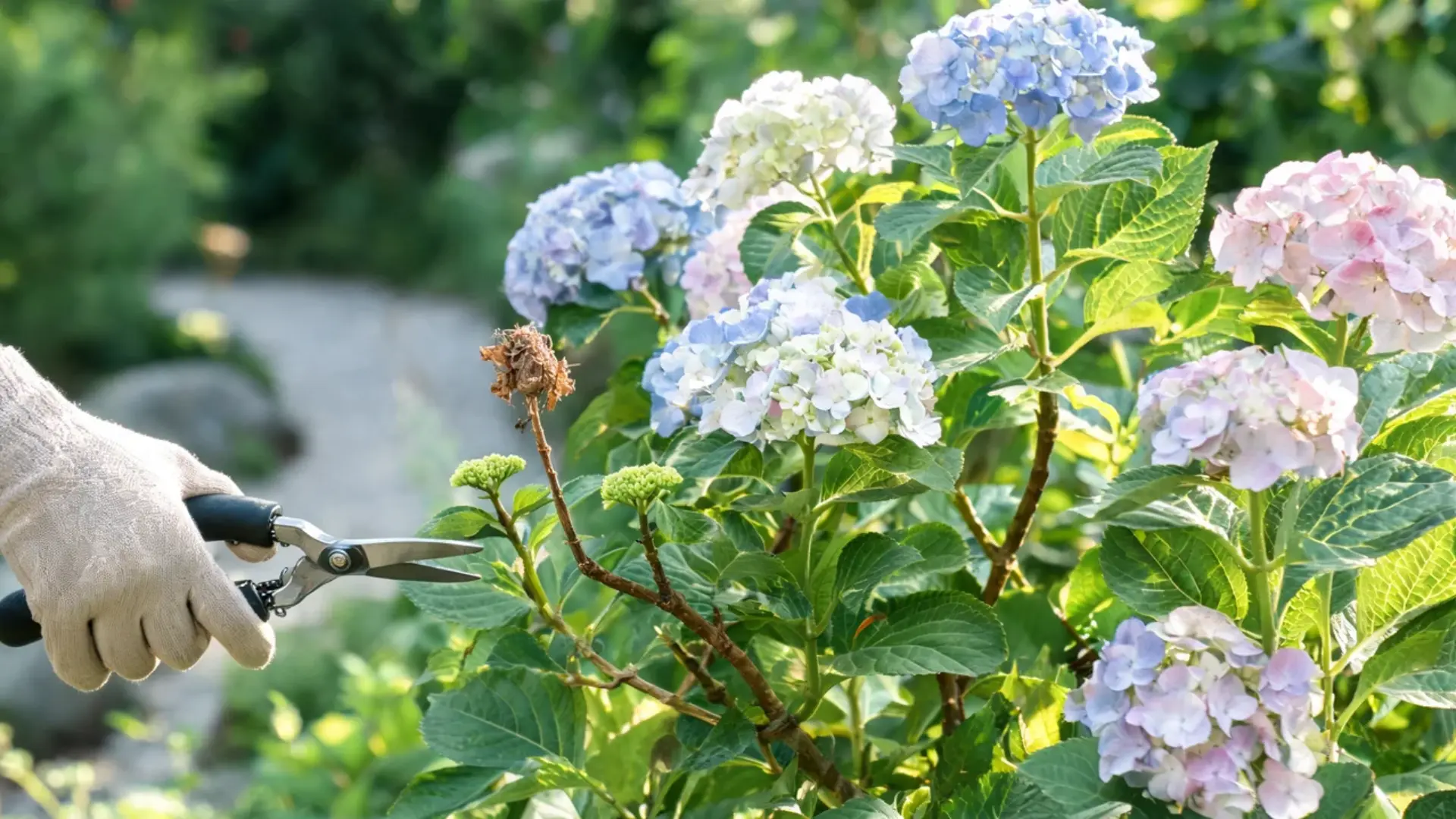
Use sharp bypass pruning shears for small and medium stems and sturdy loppers for thicker branches. Wear gardening gloves to protect your hands.
Check that each tool is clean, sharp, and free from rust or loose parts. Wipe the blades with rubbing alcohol before pruning, again after cutting diseased growth, and before moving to another shrub.
Step 2: Inspect the Shrub
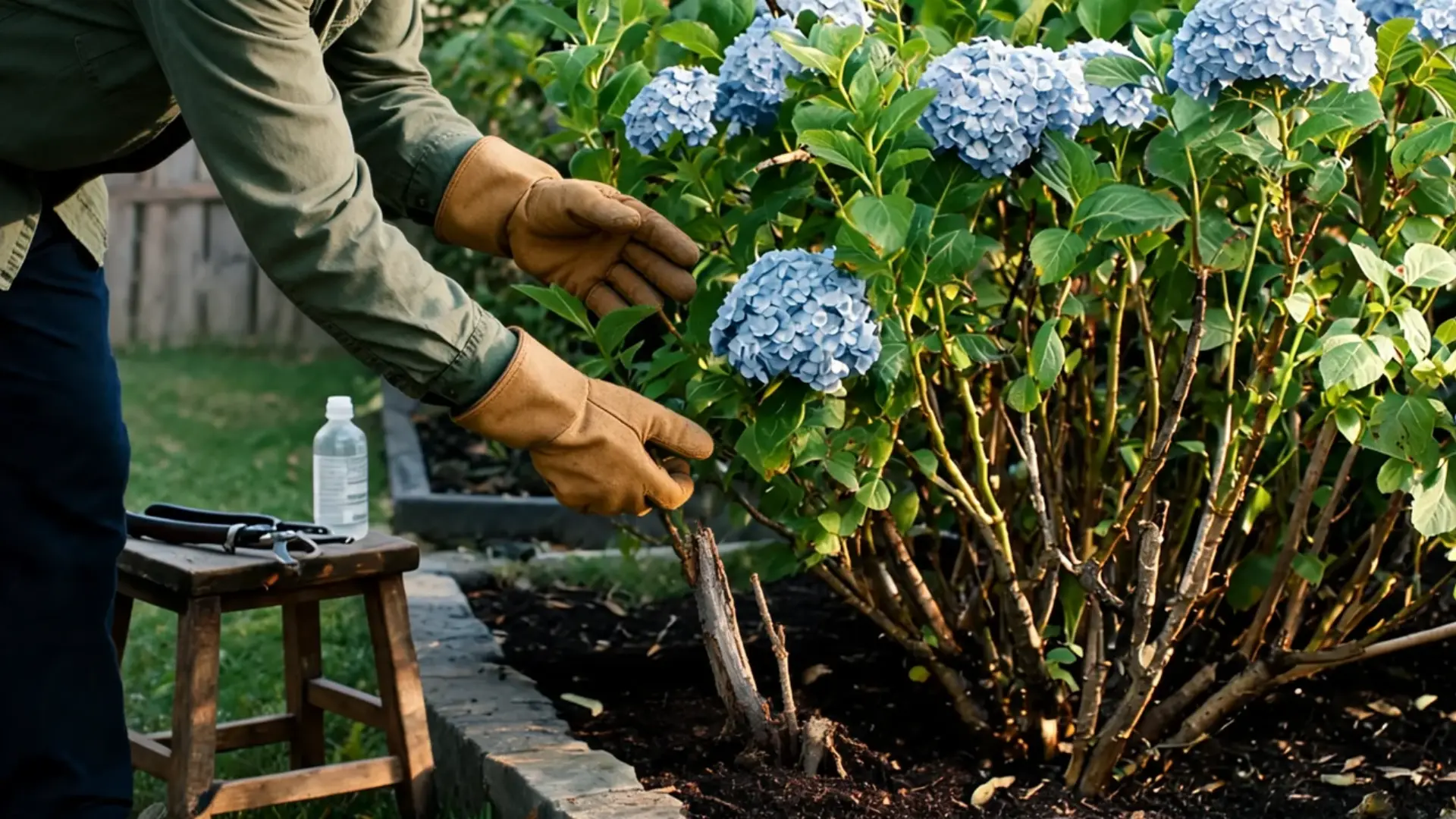
Study the entire hydrangea before making any cuts. Check the stems from the base upward and look for branches that appear dead, broken, diseased, or weak.
View the shrub from several angles to understand its natural shape. Mark or remember the stems that need attention before removing anything. This keeps your pruning focused and controlled.
Step 3: Remove Unhealthy Stems
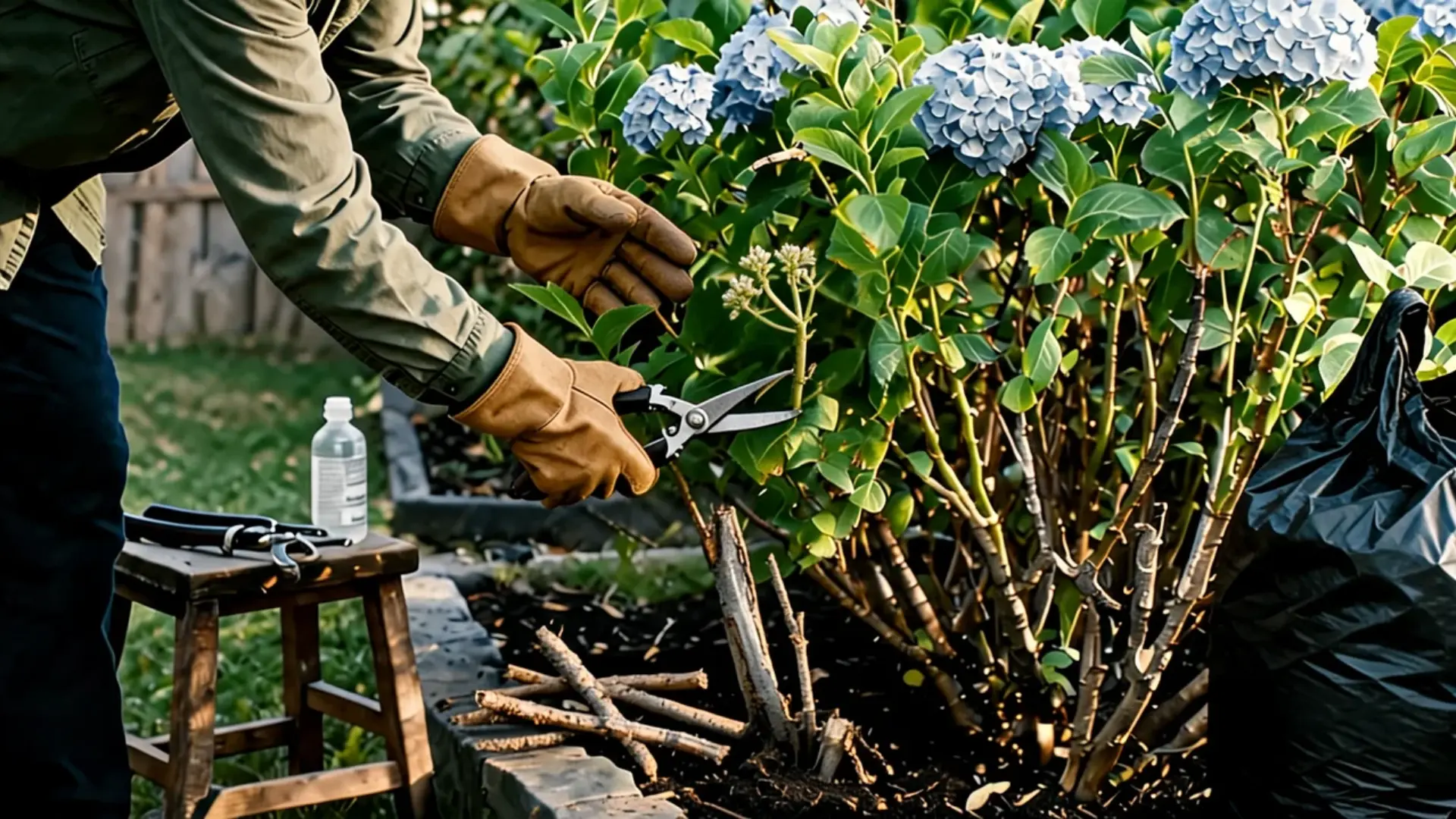
Remove dead, broken, or diseased stems before shaping the shrub. Follow each damaged branch back until you reach firm, healthy wood, then make the cut at that point.
Take out badly infected stems completely and place them in the rubbish instead of the compost pile. This helps reduce the chance of disease spreading to other garden plants.
Step 4: Make Clean, Well-Placed Cuts
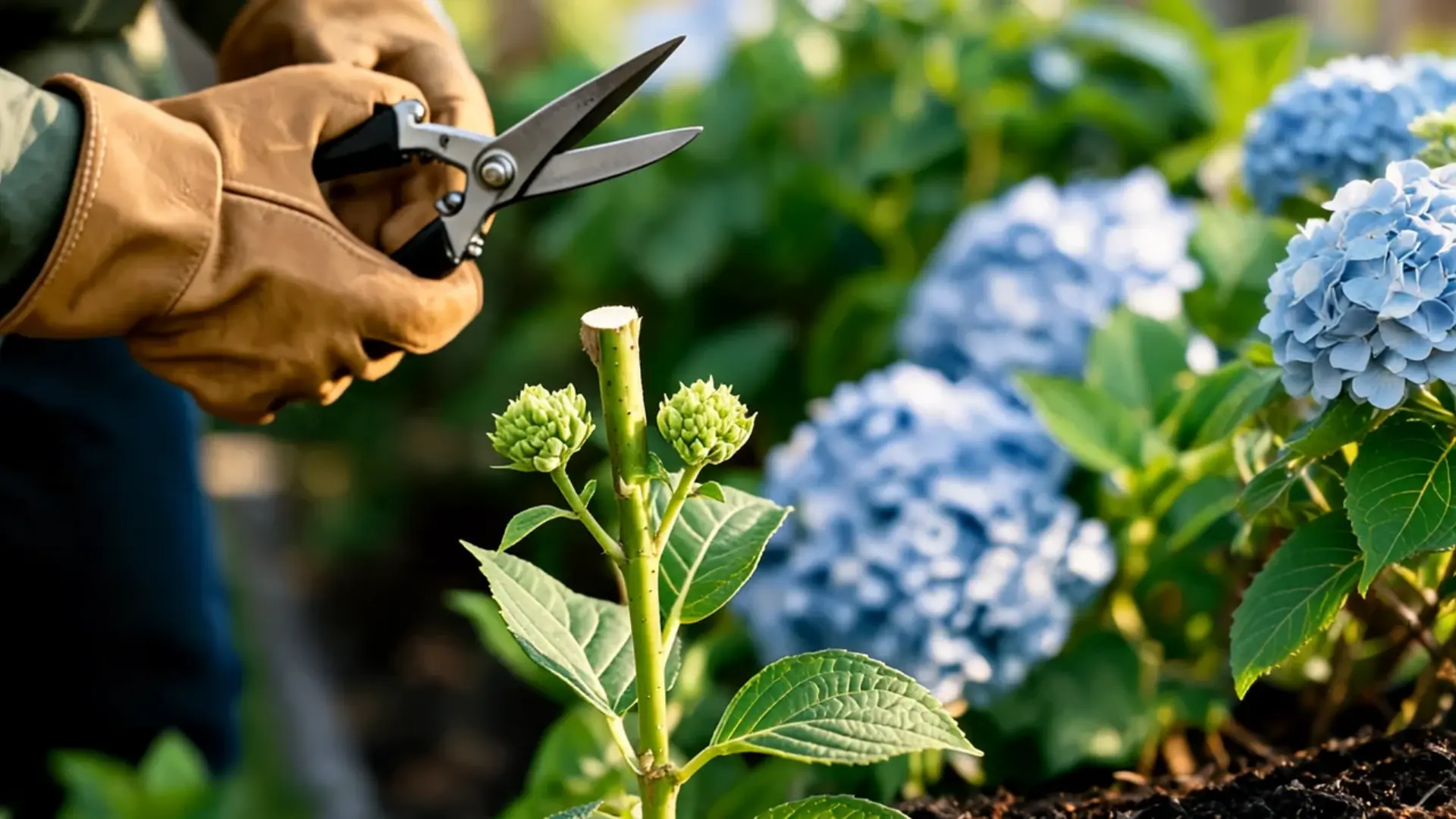
Position the shears about one-quarter inch above a healthy pair of outward-facing buds. Make one smooth cut at a slight angle so water can drain away from the buds.
Avoid crushing, splitting, or tearing the stem. A clean cut heals more easily and reduces the risk of infection or further stem damage as the plant recovers.
Step 5: Check the Plant’s Shape
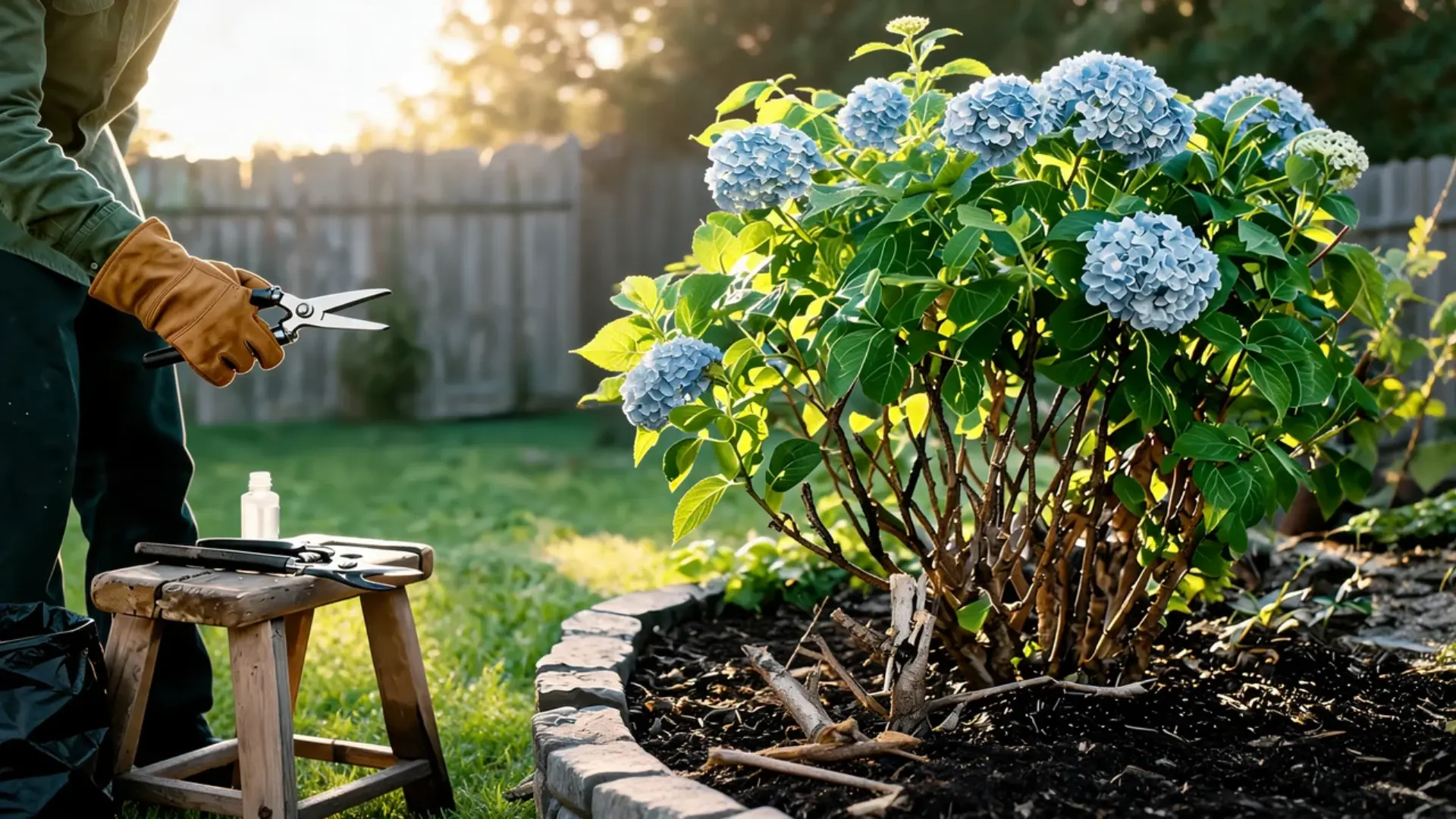
Step back every few cuts to check the hydrangea from different angles, and stop once it looks balanced and full. Avoid removing more than one-third of the plant in a single session.
Clear away the cuttings and water the shrub. Careful yearly pruning keeps its natural shape and supports regular flowering.
When to Prune Hydrangeas Throughout the Year
Pruning hydrangeas at the right time protects developing flower buds, and the safest window depends on whether your plant blooms on old wood, new wood, or both. Use the table below as a quick reference.
|
Hydrangea Type |
Bloom Cycle |
Best Time to Prune |
What to Do |
|---|---|---|---|
|
Bigleaf hydrangea |
Old wood |
Immediately after flowering in summer |
Remove faded blooms and dead or damaged stems. Avoid heavy pruning. |
|
Mountain hydrangea |
Old wood |
Immediately after flowering in summer |
Lightly shape the shrub and remove weak or damaged growth. |
|
Oakleaf hydrangea |
Old wood |
After flowering in summer |
Remove only dead, broken, or unwanted branches. |
|
Panicle hydrangea |
New wood |
Late winter or early spring |
Remove weak or crowded stems and lightly reduce the plant’s height. |
|
Smooth hydrangea |
New wood |
Late winter or early spring |
Cut back damaged or weak growth before new leaves appear. |
|
Reblooming hydrangea |
Old and new wood |
After the first flowering period |
Deadhead faded flowers and remove damaged stems without heavy pruning. |
Old-wood varieties should be pruned soon after flowering, new-wood varieties before spring growth begins, and reblooming types need only light, careful cuts. Dead or diseased branches can be removed at any time of year.
Common Hydrangea Pruning Mistakes to Avoid
A few common mistakes can affect a hydrangea’s health and flowering. Knowing what to avoid matters as much as knowing how to prune correctly.
- Pruning at the wrong time: removes flower buds; identify your hydrangea type first.
- Ignoring dead or diseased branches: limits airflow and can spread problems.
- Using dull or dirty tools: damages stems and spreads disease between cuts.
- Skipping a full plant check: leads to unnecessary cuts on healthy stems.
- Composting diseased stems: can spread problems; discard infected branches instead.
Avoiding these common pruning mistakes can make a noticeable difference in your hydrangea’s overall health and flowering performance.
By pruning at the right time, making thoughtful cuts, and regularly maintaining your shrub, you’ll encourage stronger growth and enjoy beautiful blooms season after season.
Frequently Asked Questions
Can young hydrangeas be pruned?
Young hydrangeas need little pruning during their first few years. Remove only dead or damaged stems so the plant can build strong roots and branches. Once established, begin seasonal pruning based on its old-wood or new-wood bloom type.
How long does it take a hydrangea to recover after pruning?
Most hydrangeas show new growth within a few weeks during the growing season. Recovery time depends on the variety, pruning severity, weather, and plant health. Regular watering and proper care can help the shrub recover more quickly.
Can I prune hydrangeas after heavy rain?
Wait until the leaves and branches are dry before pruning. Wet conditions can increase the risk of fungal infection through fresh cuts. Dry stems are also easier to inspect, so waiting one or two days after rain is usually best.
Do potted hydrangeas need to be pruned differently?
Potted hydrangeas follow the same basic pruning rules, but they usually need lighter cuts to stay compact. Remove dead or damaged stems first, then prune according to bloom type. Avoid heavy trimming because container plants have limited root space.
How can I tell if a hydrangea branch is dead?
A dead branch often looks dry, brittle, and brown or gray inside. Lightly scratch the bark with your fingernail. Green tissue means the stem is alive, while a branch that snaps easily and shows no green can be safely removed.
Final Thoughts
Pruning hydrangeas doesn’t have to be intimidating. Once you know your hydrangea type and its blooming cycle, learning how to prune hydrangeas becomes much easier, since you’ll know exactly when to cut, what to remove, and what to leave alone.
A few well-timed cuts each year improve airflow, encourage healthier growth, and help your shrubs produce the vibrant blooms they’re known for. Each variety has different needs, so identifying your plant first can help you avoid accidentally removing next season’s flowers.
With the right technique and a little patience, your hydrangeas will reward you with stronger stems and beautiful blooms year after year. Tried these steps on your own hydrangeas already? Share how it went in the comments below.