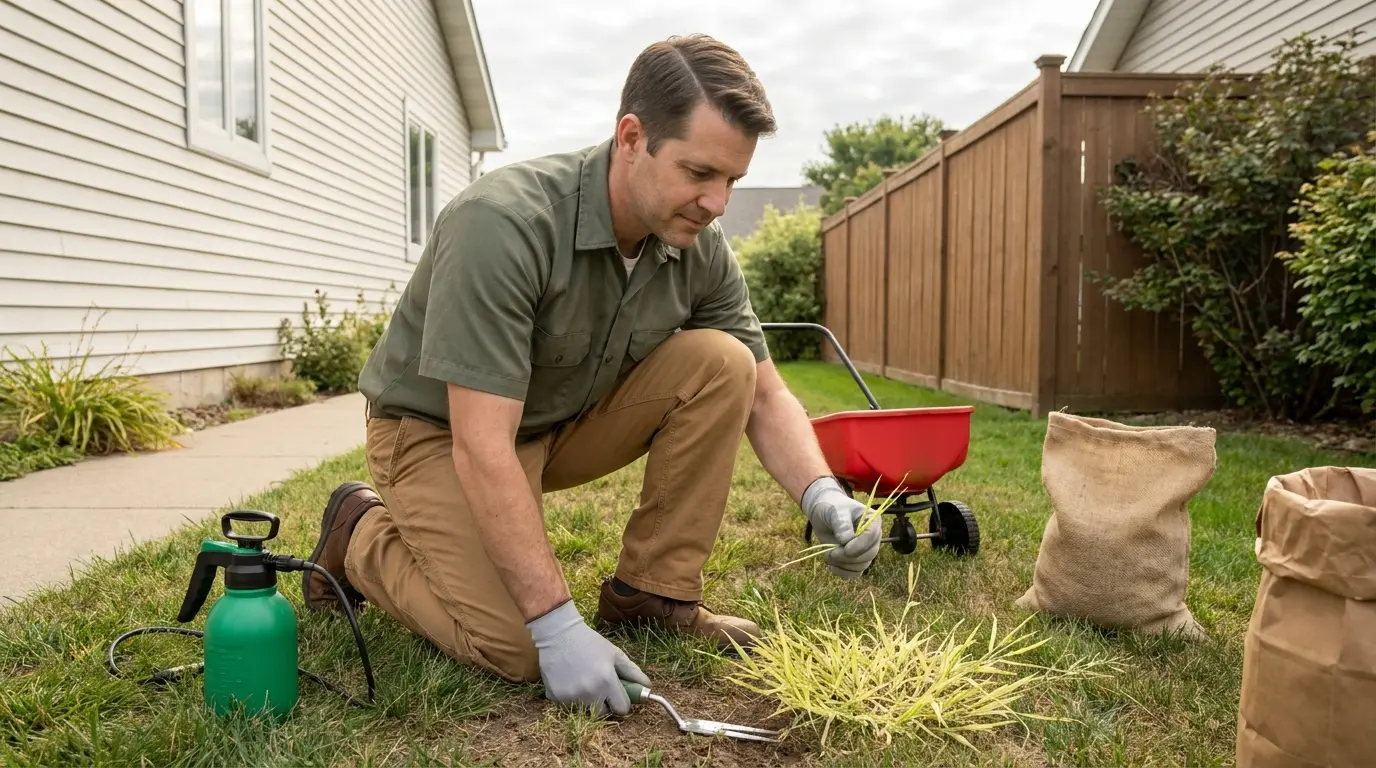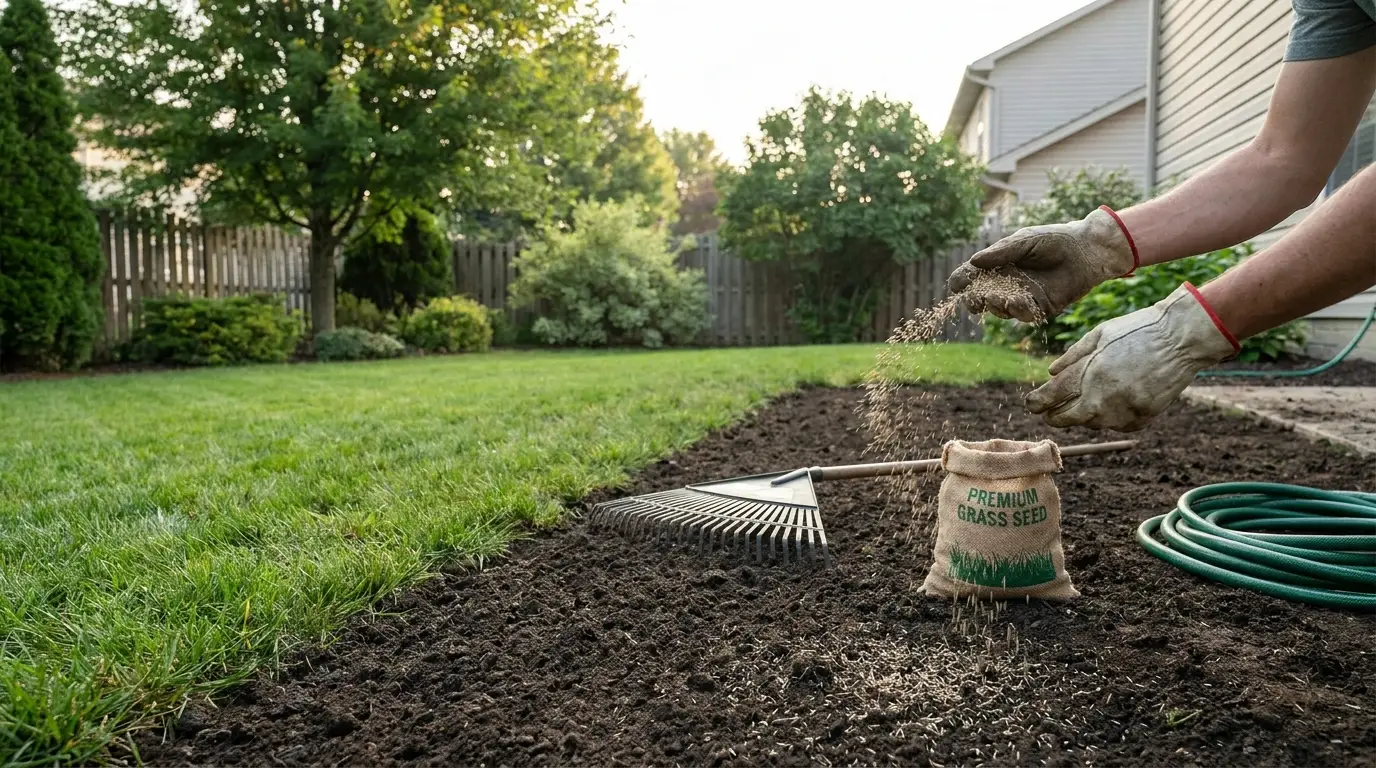
Learning how to plant grass seed starts with giving each seed the conditions it needs for healthy growth. Good soil, even coverage, steady moisture, and the right seed choice all help new grass establish well.
You can use the same basic process for a new lawn or a thinning lawn. The main difference is how much seed you apply. Before planting, check the soil, sunlight, and condition of the lawn.
Loosen hard ground, clear weeds and debris, and choose seed that suits the amount of sun your lawn receives. A simple watering and aftercare plan also matters, as young grass can dry out or be easily damaged.
Why Proper Lawn Preparation Matters
When learning how to plant grass seed, proper lawn preparation gives the seed a better chance to germinate uniformly and develop strong roots. The soil should be loose, level, and able to hold moisture without becoming waterlogged.
Poor soil conditions can lead to thin growth, bare patches, and uneven results. Good seed-to-soil contact also helps each seed stay in place and reach the moisture it needs during germination.
According to Penn State Extension, selecting seed suited to the site and preparing a smooth, firm soil surface are the foundational steps of successful lawn establishment.
A well-prepared surface makes the rest of the planting process easier to manage. It also helps water spread evenly across the lawn rather than collect in low areas.
Taking time to prepare the site first creates better growing conditions and gives new grass a stronger start.
Best Time to Plant Grass Seed
The best time to plant grass seed depends on the grass type, soil temperature, and local weather. Choosing a suitable planting season helps seeds germinate consistently and develop stronger roots.
Getting the timing right matters just as much for thin, patchy lawns as for bare soil, since young grass responds to the same temperature and moisture cues no matter how it is planted.
- Cool-season grass: Sow when soil reaches 50°F to 65°F, usually early fall or spring.
- Warm-season grass: Plant once the soil temperature is at or above 65°F, typically in late spring.
- Hot, dry periods: Delay seeding because heat can dry the soil too quickly.
- Heavy rain: Wait until storms pass to prevent seed from washing away.
A well-timed planting window also gives new grass enough time to establish before extreme heat or cold arrives. Homeowners working with an established lawn instead of bare soil can review these seasonal windows in more detail when overseeding a thin lawn successfully, since the same temperature guidelines apply to filling in weak areas.
A well-timed planting window also gives new grass enough time to establish before extreme heat or cold arrives. Homeowners working with an established lawn instead of bare soil can review these seasonal windows in more detail when overseeding a thin lawn successfully, since the same temperature guidelines apply to filling in weak areas.
Grass Seed Planting Schedule by Region
Local frost dates and average soil temperatures can move the ideal window by several weeks. Use the table below as a regional starting point, then confirm with a soil thermometer before spreading seed.
|
Region |
Cool-Season Seeding Window |
Warm-Season Seeding Window |
|---|---|---|
|
Northern U.S. |
Mid-August to mid-September |
Limited use, only suitable in the warmest northern pockets |
|
Transition Zone |
Late August to early October |
Mid-May through June |
|
Southern U.S. |
Rarely used, heat limits cool-season lawns |
April through June |
Illinois Extension recommends getting cool-season seed down at least 45 days before the average first fall frost, since slower species need extra time to root before winter arrives, so mark that date on the calendar early.
How to Check If Conditions Are Right

Soil conditions decide more than any date on a calendar. Checking temperature, weather, and moisture together shows if the ground is ready.
A soil thermometer, a rain gauge or forecast app, and a small trowel are all that’s needed.
-
Check soil temperature: Insert a soil thermometer about one inch deep in a few spots.
-
Track the trend: Watch readings over several days rather than a single afternoon.
-
Match the target: Confirm the reading matches the target range for the grass type.
-
Read the forecast: Check the short-range forecast for steady weather with no frost or heavy rain.
-
Test the ground itself: Dig a small test patch to confirm moist, well-drained soil.
Once soil temperature, steady weather, and workable moisture all line up, the lawn is ready for seeding. Skip any one of those checks, and even the right season can leave new grass struggling to take hold.
How to Plant Grass Seed: Step by Step
Once the site is ready, follow each step in order. Start by choosing the right grass seed, measuring the lawn, and preparing the soil. Then spread the seed across the lawn, rake it lightly into the surface, and water the area carefully.
Each step helps improve seed-to-soil contact and supports even lawn growth.
Tools and Materials Required
Gather the tools you need before you start so the planting process goes smoothly. Depending on your lawn size and soil condition, you may need:
- Tape measure or measuring wheel
- Garden rake
- Garden fork or cultivator
- Seed spreader for larger lawns
- Hose with a fine-spray nozzle or sprinkler
- Wheelbarrow for moving soil or compost
- Shovel for spreading topsoil or topdressing
Step 1: Choose Grass Seed for Your Lawn

Choose grass seed that matches your climate, sunlight exposure, and lawn use. Cool-season grasses, such as fescue and ryegrass, grow well in many cooler areas. Check how much sun the lawn receives each day.
Choose a shade-tolerant mix for areas with limited sunlight and a tougher variety for busy lawns. Read the seed packet before planting to make sure the grass type suits your local growing conditions and the amount of traffic the lawn receives.
Step 2: Measure the Lawn and Calculate Seed
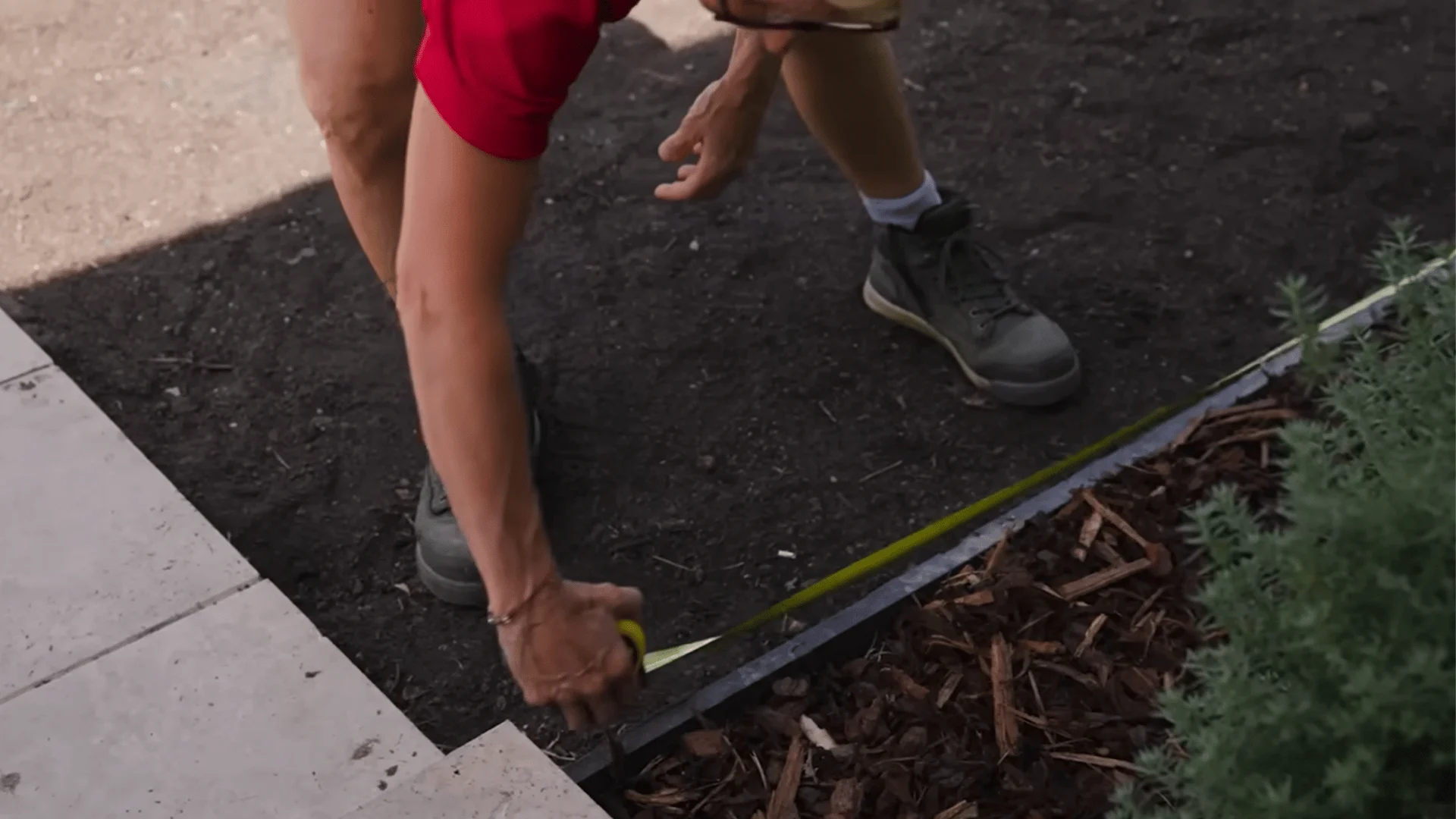
Measure the lawn’s length and width, then multiply the numbers to find the total area. This tells you how much grass seed you need. New lawns typically need 15 to 20 lbs of seed per 1,000 sq ft, while overseeding needs about half that rate.
Use the new-lawn rate for bare soil and the overseeding rate for a thinning lawn. Measuring first helps you apply the recommended amount of seed, prevent overcrowding, and reduce the chance of running out halfway through the job.
Step 3: Prepare and Level the Soil
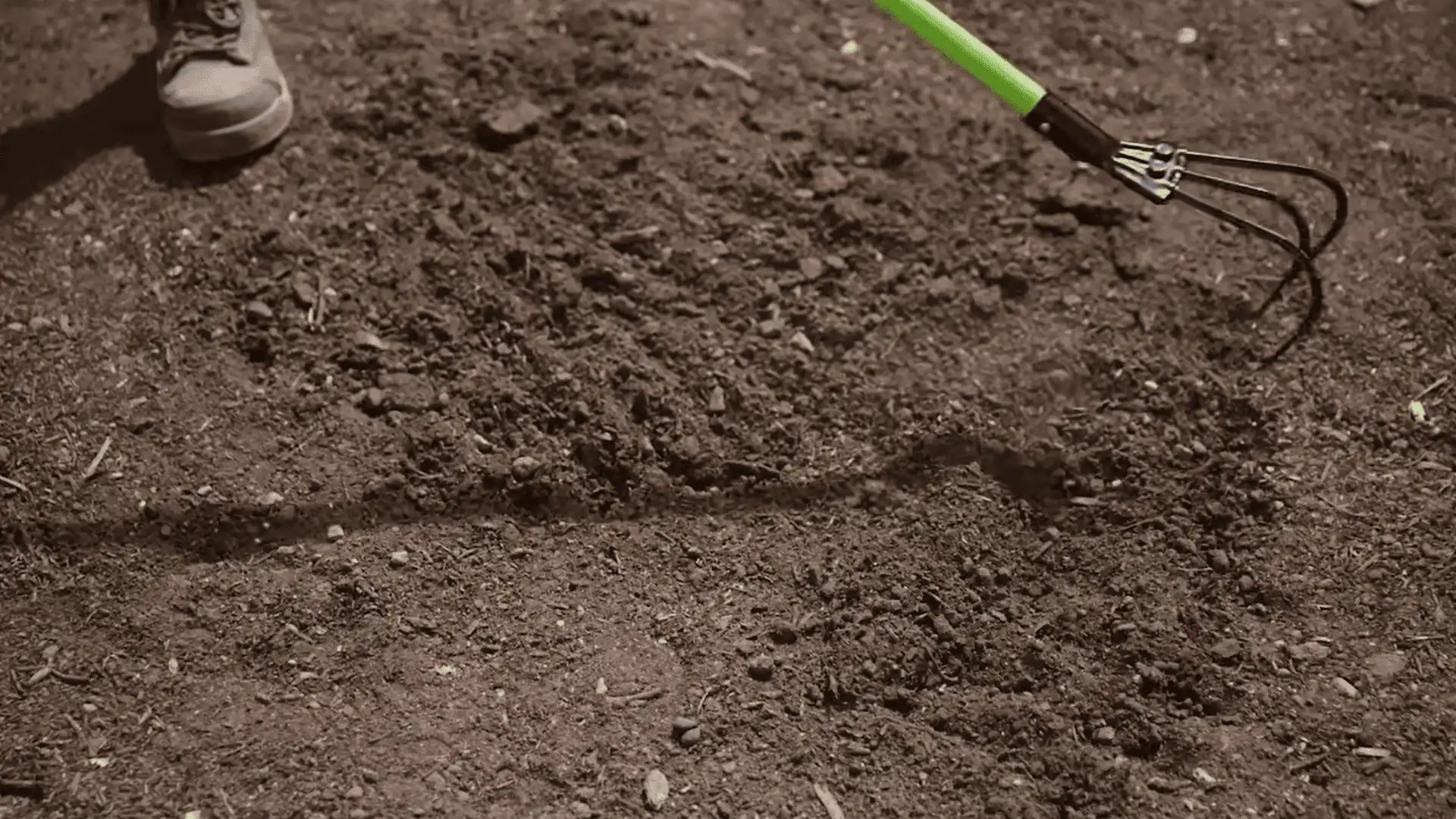
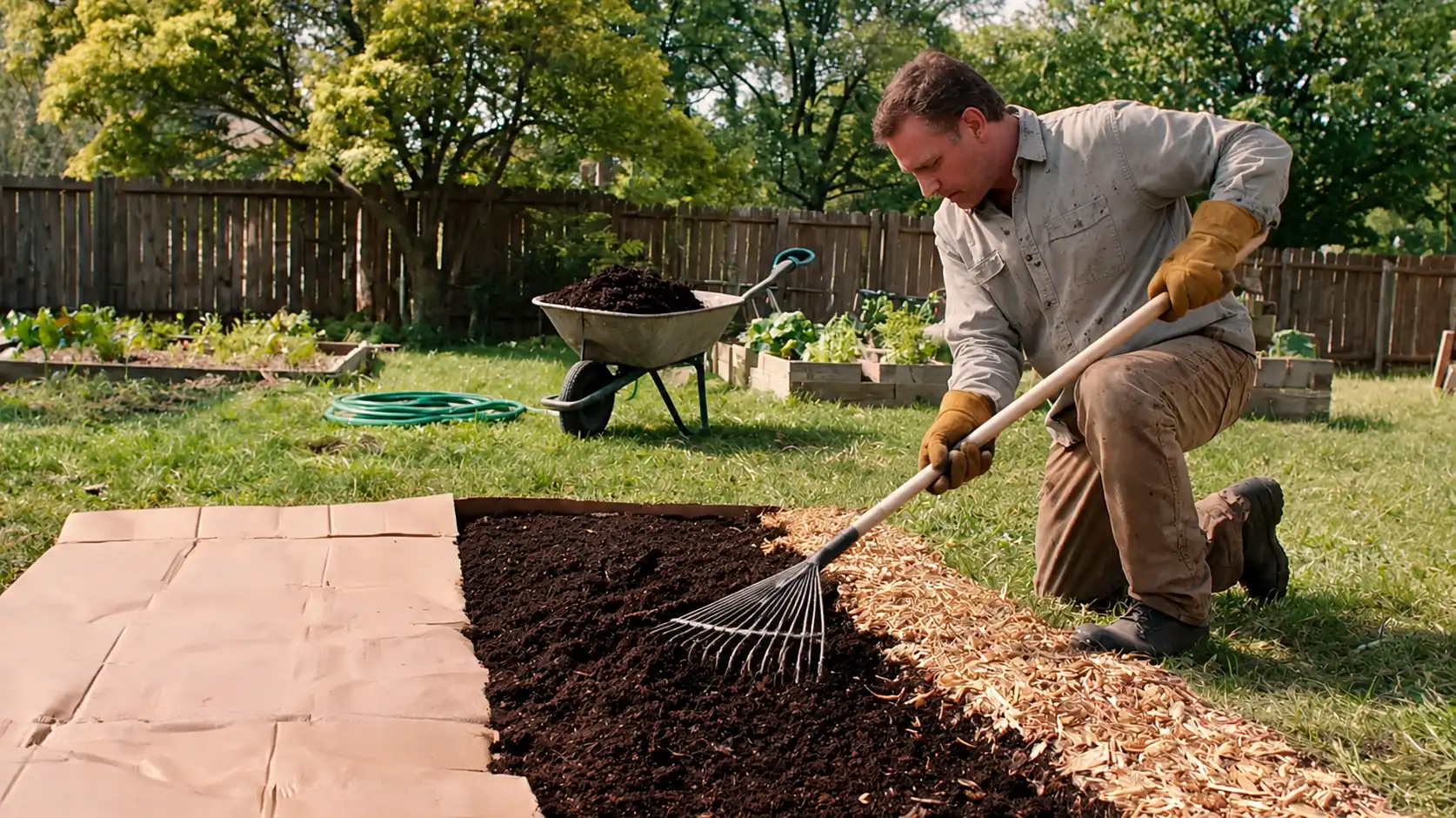
Remove weeds, stones, sticks, and other debris before planting. Loosen compacted soil with a rake, garden fork, or cultivator, then break apart large clumps. Level the surface so water and seed do not collect in low spots.
Add a thin layer of quality soil only if the surface needs improvement. Smooth, loose ground gives grass seed better soil contact and allows young roots to move into the soil more easily after germination begins.
Step 4: Spread the Grass Seed
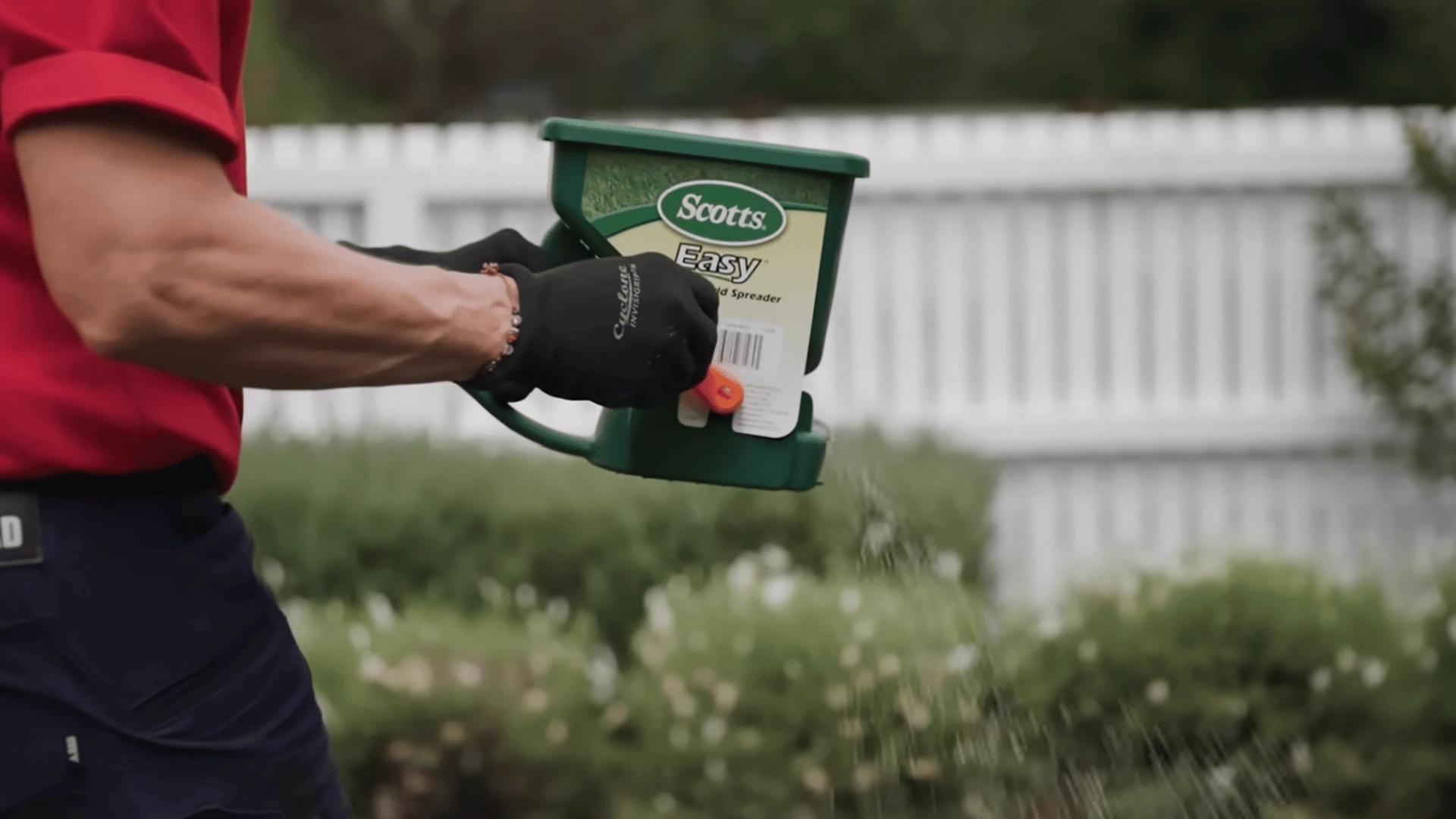
Use the amount of grass seed you calculated in Step 2. Spread it by hand or with a seed spreader, depending on the size of the lawn.
For even coverage, divide the seed into two parts. Spread the first half while moving east to west, then apply the second half while moving north to south.
This crossing pattern helps cover the lawn more evenly and reduces missed spots. Move at a steady pace so too much seed does not collect in one area.
Step 5: Rake and Cover the Seed
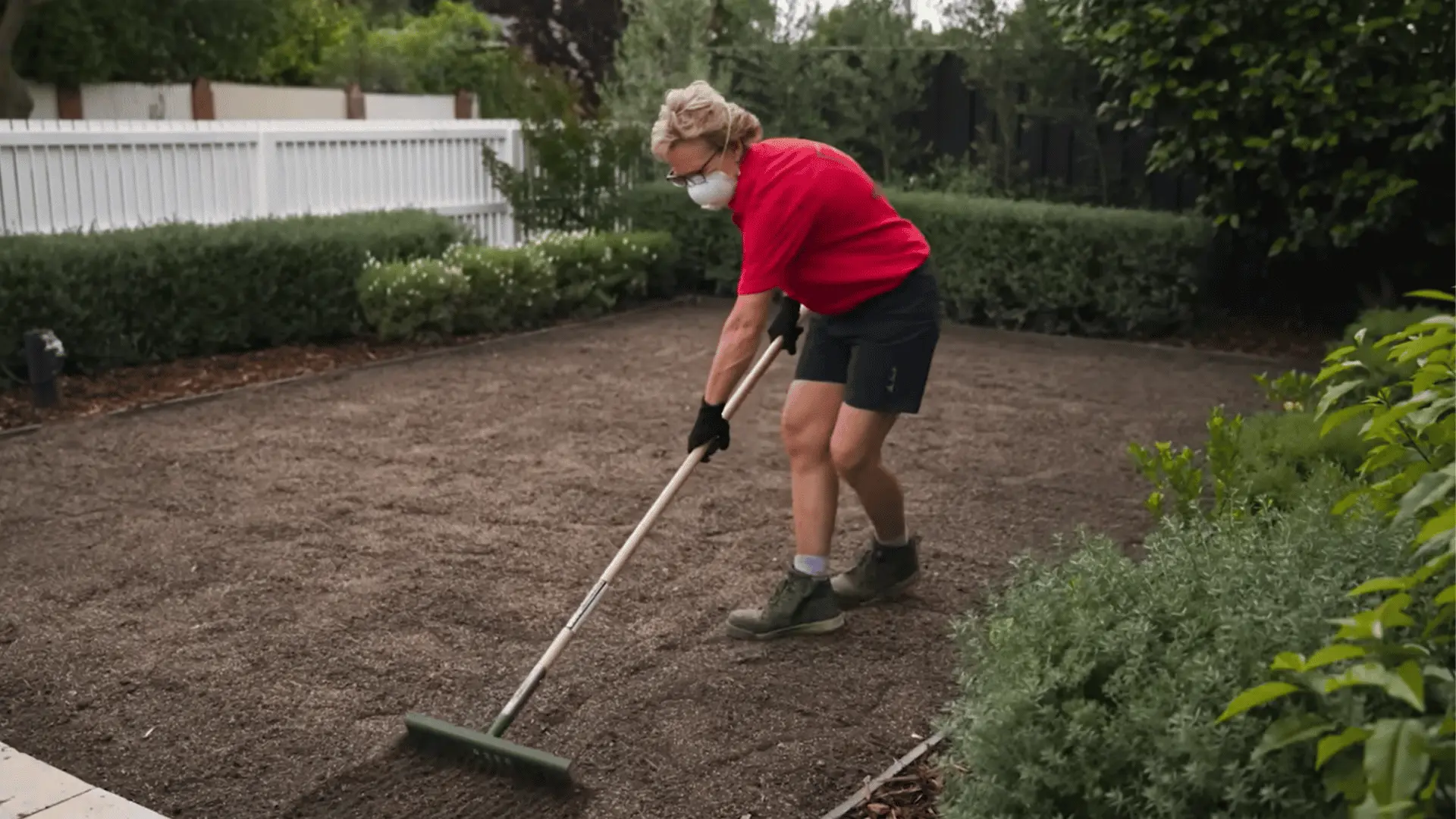
After spreading the seed, lightly rake the surface to help the seed settle into the upper layer of soil. Keep it close to the surface instead of burying it deeply.
If the area dries quickly, add a very thin layer of topdressing, such as fine soil or compost, to help hold moisture and keep the seed in place.
Do not cover the seed too heavily. The goal is good seed-to-soil contact while still allowing enough air and moisture for germination.
Step 6: Water and Care for the New Grass
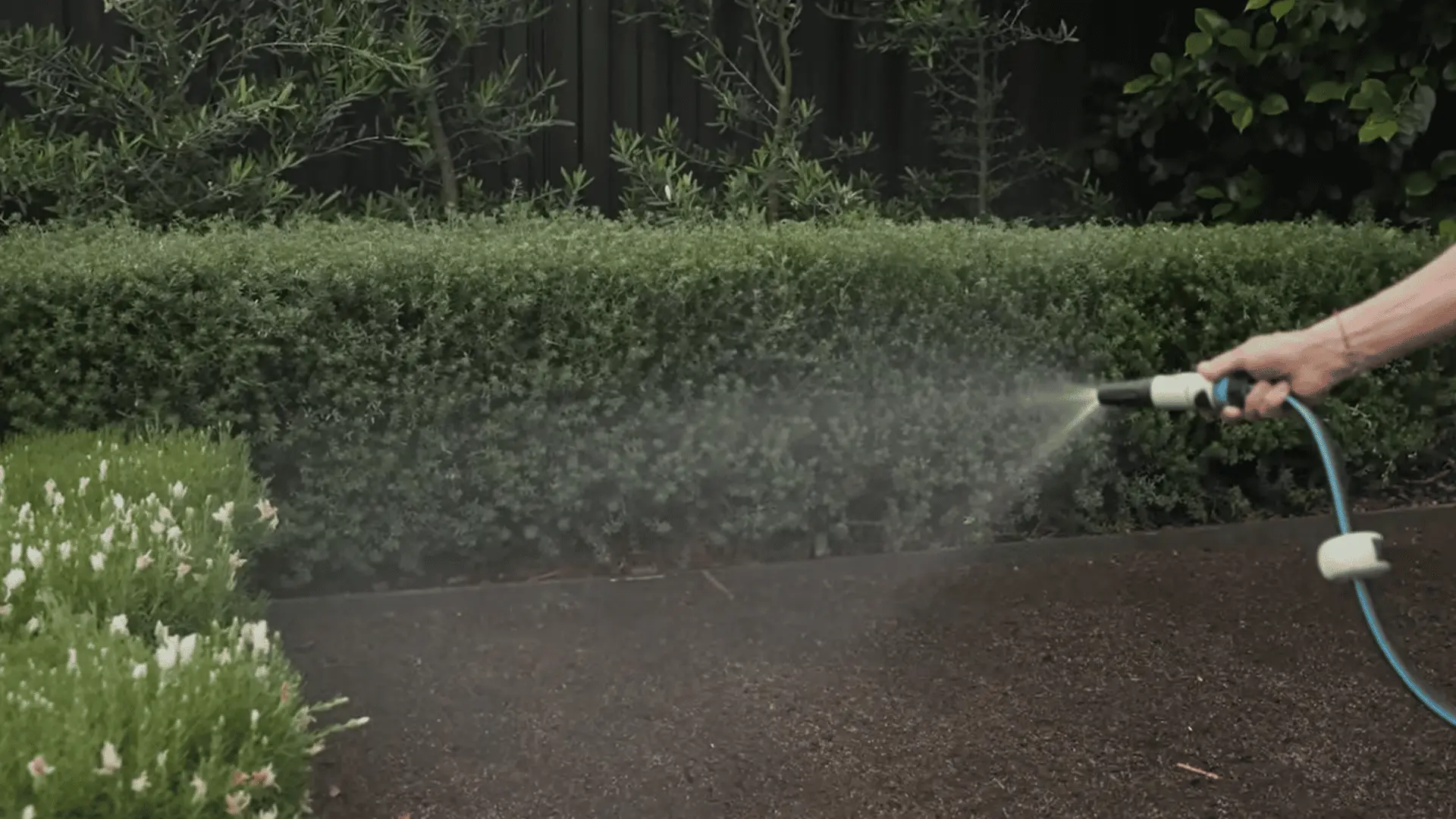
Water the seeded area gently with a fine spray so the seed stays in place. Keep the top 1/4 to 1/2 inch of soil moist during germination, without letting it become soaked.
Avoid strong streams of water or puddles because they can move the seed and create uneven coverage. Continue checking the soil as the grass begins to sprout.
This video demonstration walks through the process of planting grass seed from start to finish and explains how to adjust moisture as the seedlings develop.
How Often Should You Water New Grass Seed?
New grass seed needs steady moisture during germination, but too much water can move the seed or create puddles. Keep the soil surface damp rather than soaked. Watering needs change as the grass develops from bare seed into an established stand.
| Growth Stage | Watering Goal | How to Water | What to Watch For |
|---|---|---|---|
| Before sprouting | Keep the surface consistently moist | Use a light spray once or more as needed | Avoid puddles, runoff, and exposed seed |
| Early seedlings | Water when the surface starts to dry | Apply gentle, shallow watering | Watch for wilting, crusting, or dry patches |
| Stronger growth | Reduce frequency and water more deeply | Soak the soil more thoroughly but less often | Encourage roots to grow deeper into the soil |
Check the soil each day instead of following a strict schedule. Heat, wind, shade, and rainfall can change how quickly the surface dries. Texas A&M AgriLife Extension advises watering newly seeded areas lightly but frequently so the seed and the surrounding soil stay consistently moist.
Use a soft spray so water does not disturb the seed. As roots develop, gradually allow moisture to reach deeper into the soil.
Grass Seed Aftercare
Young grass needs steady care after the first shoots appear. At this stage, the goal is to protect new growth while strengthening the lawn. Small, consistent habits during this window do more to protect the lawn than any single fix applied later. Focus on these aftercare steps:
- Limit foot traffic: Keep people, pets, and equipment off the lawn. Early traffic can flatten seedlings or pull them from soft soil.
- Wait before reseeding: Give thin areas time to fill in before adding more seed. Some spots may improve as nearby grass develops.
- Control weeds carefully: Remove weeds before they compete with young grass for space and nutrients. Avoid aggressive pulling while the soil is still loose.
- Time mowing carefully: Wait until the grass is tall and well established. Use a sharp mower blade and avoid cutting too low.
- Watch for lawn problems: Look for bare patches, damaged seedlings, or areas that are growing more slowly than the rest of the lawn.
Regular checks during the first few weeks can help you spot small problems early and keep the new lawn growing evenly. Knowing when to ease off daily watering is one of the clearest signs of progress, and reviewing when to stop watering new grass seed can help you time that transition with confidence instead of guessing.
Common Grass Seeding Mistakes to Avoid
Small mistakes can slow grass seed germination or leave uneven growth. Most problems stem from poor soil contact, the wrong seed rate, or improper watering. The table below shows common problems and how to avoid them, so small oversights do not compound into larger repairs later on.
| Mistake | Why It Causes Problems | Better Approach |
| Hard soil | Roots struggle to develop | Loosen the upper soil before seeding |
| Wrong seed | Grass may struggle in local conditions | Match seed to sunlight and climate |
| Too much seed | Seedlings compete for space | Follow the seed packet rate |
| Heavy watering | Seed may wash away | Use a gentle spray |
| Seed buried too deeply | Seedlings may struggle to reach the surface | Keep seed close to the soil surface |
If several problems appear together, correct the soil and watering conditions before adding more seed. Avoid trying to fix thin growth by adding large amounts of seed or water. Give the lawn time to develop, then reseed small bare areas if needed.
What to Do If You Miss the Ideal Window
Missing the ideal planting window does not always mean waiting a full year. Your best option depends on grass type, weather, and how late the season has become.
-
Repair bare patches instead of reseeding the entire lawn
-
Keep new seed consistently moist until grass establishes
-
Avoid foot traffic while seedlings develop roots
-
Wait if frost, drought, or saturated soil makes success unlikely
Cool-season lawns can use spring seeding once soil is warm and moisture is steady. Weeds and preemergent herbicides can interfere with growth. In colder areas, dormant seeding is another option: spread seed after soil cools but before freezing. Test a small area before reseeding the whole lawn.
Frequently Asked Questions
How long should you stay off newly seeded grass?
Keep foot traffic to a minimum while the grass is young. Walking, playing, or moving equipment across new seedlings can flatten them or disturb roots before they become established.
How long does grass seed take to germinate?
Germination time depends on the grass type, soil temperature, and moisture. Some seeds sprout within a week, while other varieties may need several weeks in total.
Should I fertilize when planting grass seed?
Starter fertilizer can support early root growth if the soil needs extra nutrients. A soil test can help you decide whether fertilizer is necessary and prevent you from adding nutrients the lawn does not need.
Can you put grass seed directly on top of soil?
Grass seed can be spread over soil, but it grows more reliably when it has good contact with the surface. Lightly rake the soil before and after spreading the seed so the seed settles into the upper layer rather than sitting loosely on top.
Can you walk on newly seeded grass?
It is best to avoid walking on newly seeded areas whenever possible. If you need to enter the lawn for watering or basic care, step carefully and limit the amount of time spent on the new grass.
Final Takeaway
Planting grass seed works best when each step is completed in a clear sequence. If you are learning how to plant grass seed, focus on good soil preparation, the right seed choice, even spreading, light covering, and steady moisture during early growth.
Give the new lawn enough time to establish before fixing every thin area. Small bare patches can be reseeded later if they do not fill in naturally.
Keep foot traffic low while seedlings are young, and mow only when the grass is strong enough to handle cutting. A little patience and regular care during the first few weeks can help the lawn grow more evenly.
Have you planted grass seed before? Share your results, questions, or challenges in the comments.