Your carpet has been through a lot. Coffee drips, muddy shoe prints, pet accidents, and everyday foot traffic all leave their mark over time.
You do not always need expensive products or a rented machine to get things smelling and looking fresh again.
Learning how to clean carpets with baking soda is one of the easiest wins in home care. It is cheap, safe for kids and pets, and the method takes less than five minutes of actual effort.
This guide walks you through the proper DIY process, stain-specific tips, and honest advice on when baking soda works and when you need a different approach.
What Does Baking Soda Actually Do to Carpet?
Baking soda, or sodium bicarbonate, is a mild alkaline powder that absorbs moisture and oil that accumulate in carpet fibers.
When it comes into contact with acidic odor compounds, such as pet urine or food smells, it neutralizes them at the source rather than masking them. That is the key difference.
It does not mask the smell with a fragrance; it pulls the odor particles out. It also has a slightly gritty texture that helps loosen light surface dirt when worked into the carpet with a soft brush.
What You Need Before You Start
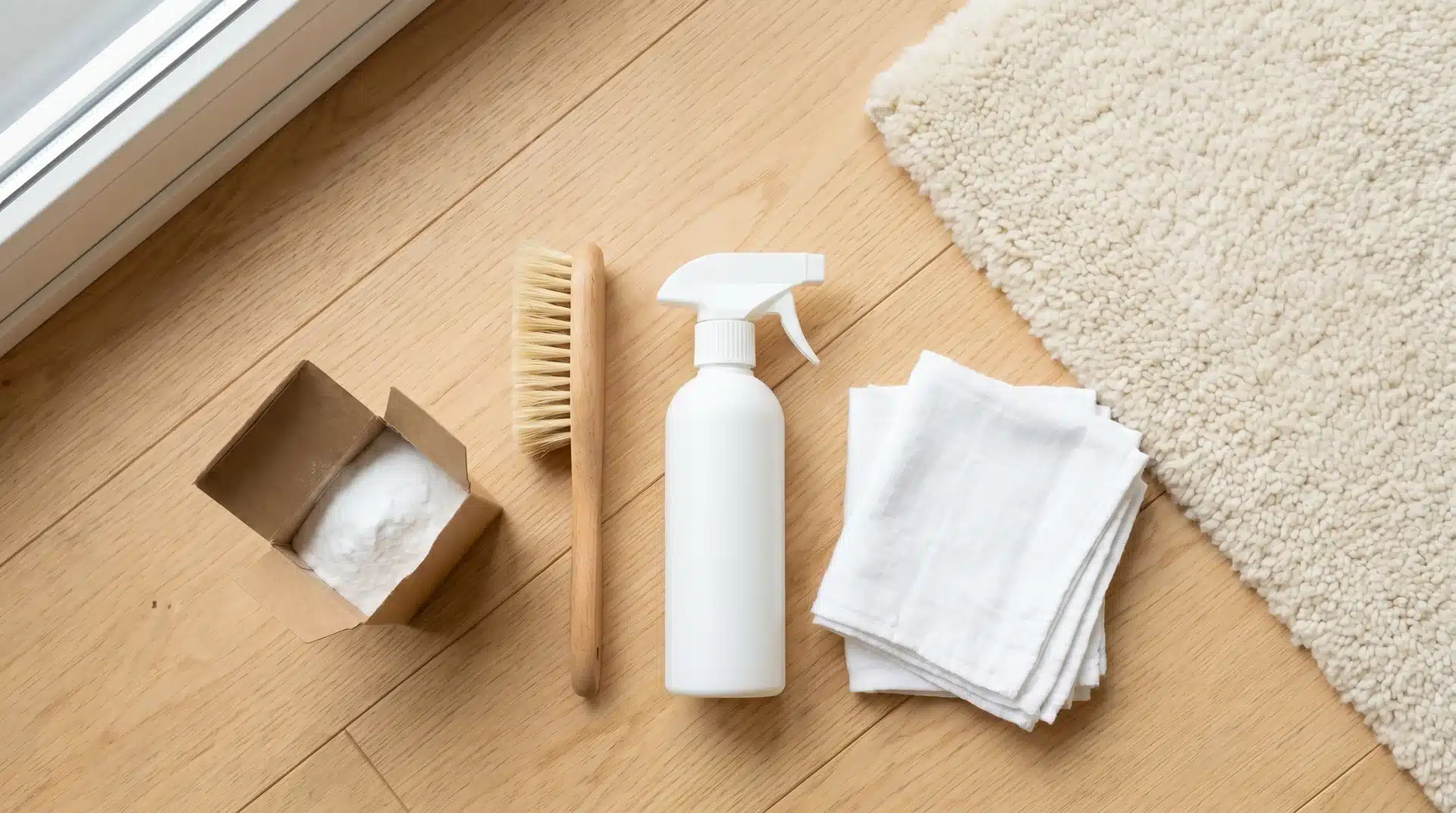
Before you begin, check your carpet type and gather what you need. This takes 2 minutes and saves you from a mess you didn’t plan for.
| Item | Purpose |
|---|---|
| Baking soda (1-2 cups for a standard room) | Main cleaning agent |
| Fine mesh sieve or shaker bottle | Spreads powder evenly |
| Vacuum cleaner (HEPA filter preferred) | Before and after application |
| Soft bristle brush | Works powder into fibers |
| Clean cloths or paper towels | Blotting stains |
| Spray bottle with water | Optional, for the wet method |
| White vinegar | Optional, for stain treatment |
Quick tip: Test a small, hidden patch of your carpet first. This is especially worth doing on dark-colored or natural-fiber carpets, such as wool, where reactions can be more noticeable.
How to Clean Carpets with Baking Soda: 5-Step Method
A lot of people skip steps one or five, and that is usually why results are patchy. Follow each step, and you will get a noticeably fresher carpet with very little effort.
Step 1: Vacuum the Carpet First
Start by thoroughly vacuuming the entire area. Loose dirt, dust, and pet hair sitting on the surface will stop baking soda from reaching the fibers.
Skipping this step means you are just sprinkling powder on top of debris, not into the carpet itself. Use slow, straight passes and do not rush.
Step 2: Sprinkle Baking Soda Evenly
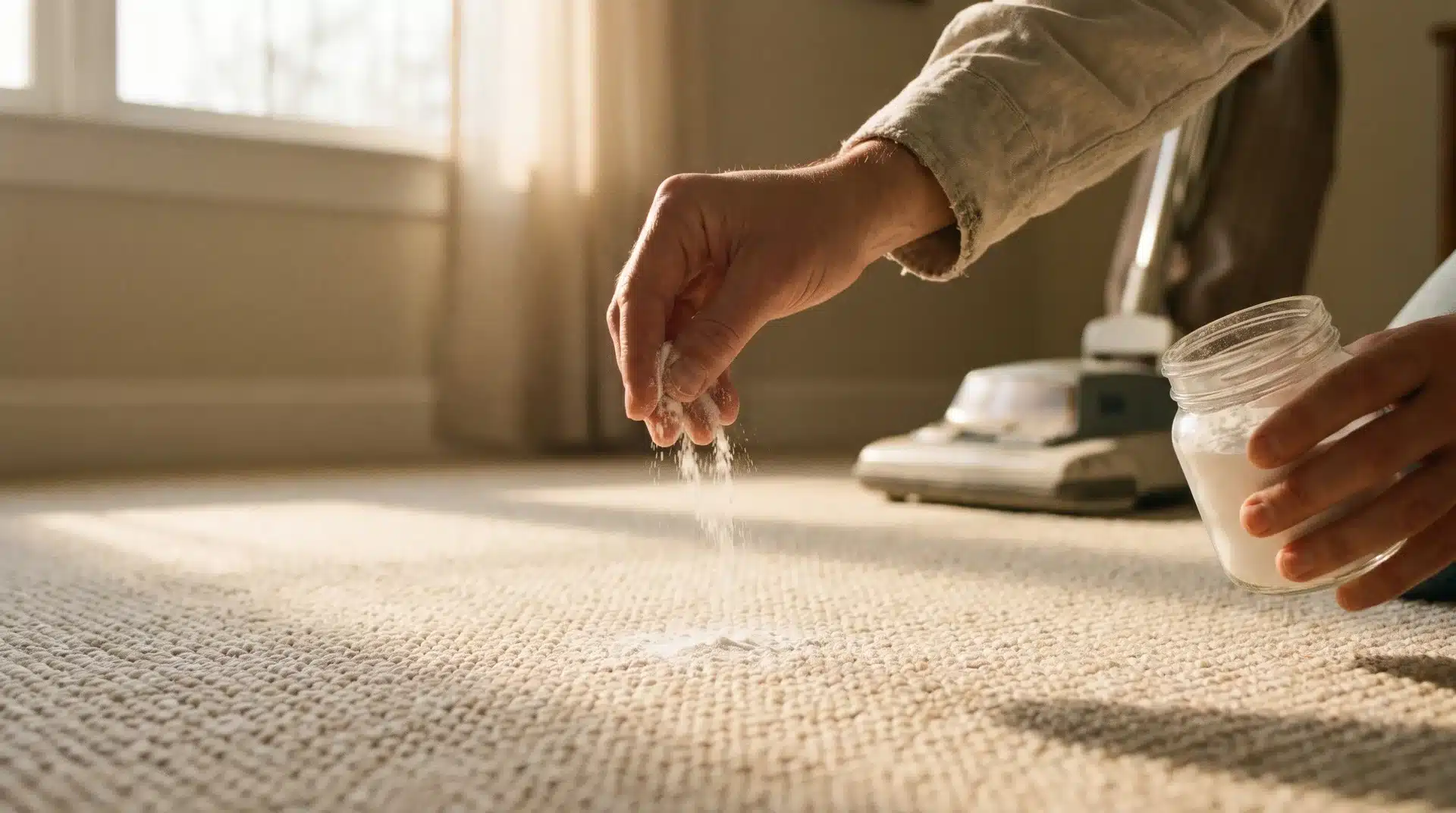
Use a sieve or shaker bottle to apply a thin, even layer across the carpet. Do not pile it on. A light coating is enough for general freshening.
For high-traffic spots like the area in front of the sofa or near the door, add a slightly heavier layer. The carpet must be completely dry before you do this.
Applying baking soda to a damp carpet turns it into a paste that sticks to the fibers and is very hard to remove.
Step 3: Let It Sit
For light freshening, leave it for at least 15 to 30 minutes. For odor removal, a few hours works better. For strong pet smells or long-sitting stains, leave it overnight.
Eight to twelve hours give the powder time to fully absorb. A good habit is to apply it before bed and vacuum in the morning.
Step 4: Brush It in Gently (optional but Helpful)
Use a soft brush to gently work the powder between the carpet fibers. Move in two directions across the carpet.
This step makes a real difference on thicker or shaggy carpets where the powder would otherwise just sit on top.
Step 5: Vacuum Again, Slowly
This is the step people rush, and it matters. Vacuum slowly with overlapping passes. Baking soda is a fine powder, and your vacuum needs time to pull it all out.
Empty the canister or check the bag more often than usual during this step. Fine powder can clog vacuum filters, so if you use a bagless model, clean the filter after you finish.
How to Use Baking Soda on Carpet for Specific Stain Types
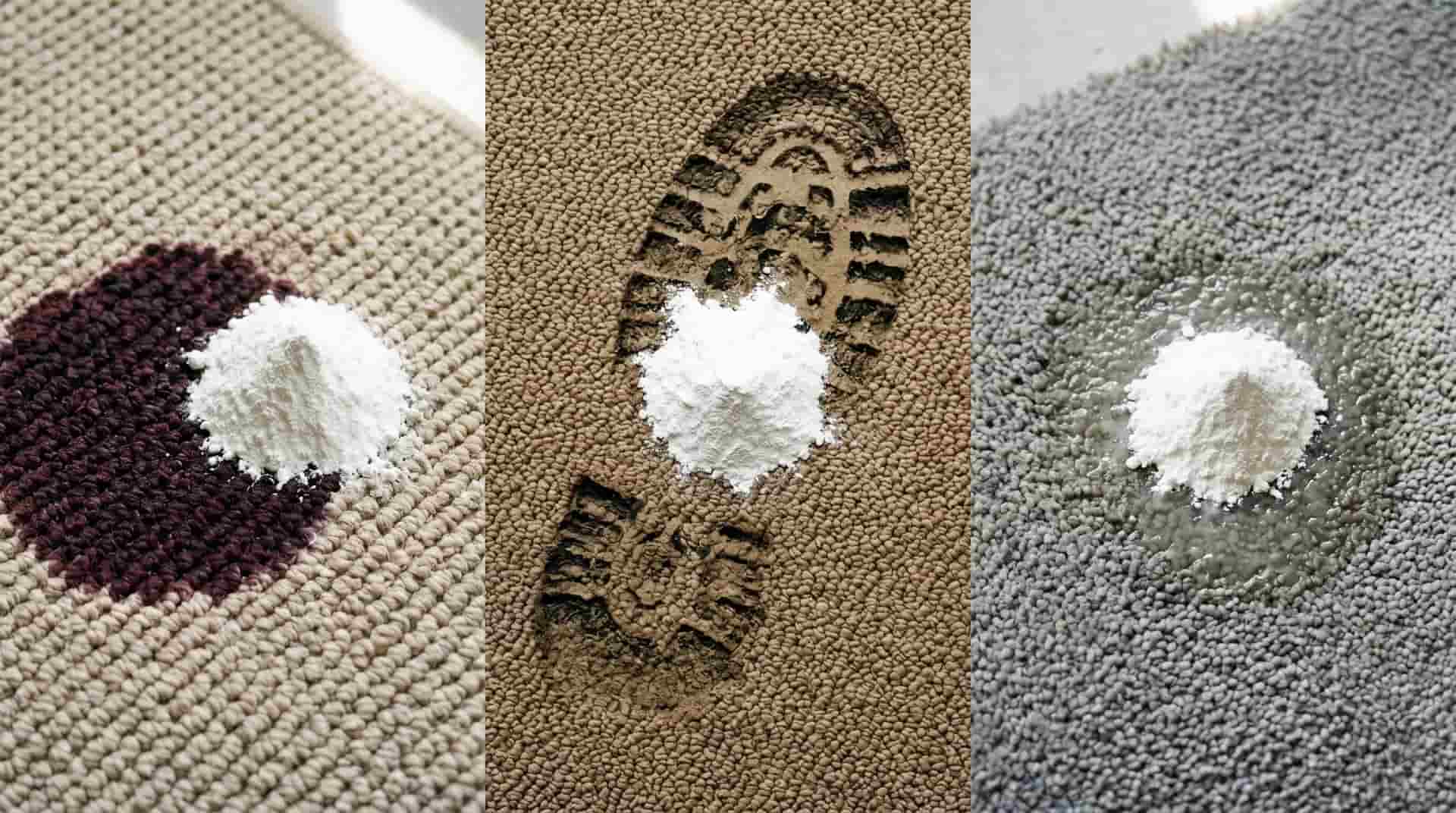
Different stains need slightly different handling. Getting the first step right makes the rest of the process much easier.
Non-Greasy Stains (Wine, Mud, Coffee)
Fresh stains always respond better than dried ones. Act as soon as you can.
Blot the stain with a clean cloth to absorb as much liquid as possible. Press down, do not rub. Rubbing pushes the stain deeper into the fibers. Sprinkle a generous layer of baking soda over the wet spot, then cover it with a damp paper towel or cloth.
Leave it for at least three hours. When you remove the cloth, the baking soda will have absorbed much of the stain. Vacuum the area and check the result. Repeat if the stain is still faintly visible.
Greasy Stains (Oil, Butter, Pizza)
Greasy stains are trickier because the oil bonds to carpet fibers, leaving a residue that attracts more dirt over time.
Press a paper towel firmly into the stain to lift as much grease as you can. Do not scrub. Then sprinkle a heavy layer of baking soda directly over the spot. Leave it overnight, or even longer if you can.
The longer it sits, the more oil it draws out. Vacuum thoroughly the next day and check the area. If a faint outline remains, apply another layer and leave it again overnight before vacuuming.
Pet Stains and Odors
Pet accidents need quick action. The longer the urine sits, the harder it is to remove the smell.
Blot up as much liquid as you can with paper towels. Then cover the area with a thick layer of baking soda. For stronger, more persistent odors, mix 1 cup of baking soda with 10 to 15 drops of your favorite essential oil, then sprinkle the mixture over the spot.
Leave it overnight and vacuum in the morning. One caution: if you have pets, some essential oils are toxic to animals. Keep pets away from the treated area until it is fully vacuumed and dry.
Baking Soda + Vinegar Method: Does It Work?
Yes, but with clear limits. Sprinkle baking soda on the stain, then lightly spray a 1:1 mix of white vinegar and water over it. The fizzing you see is a chemical reaction that helps lift surface stains.
Let it sit for five to ten minutes, blot with a clean cloth, let the area dry fully, and then vacuum. It works well on fresh stains, such as wine, coffee, and food spills.
Do not use this method on wool carpets because vinegar’s acidity can damage natural fibers, and never soak the carpet. The area should be damp, not wet.
Other Alternative Cleaning Methods
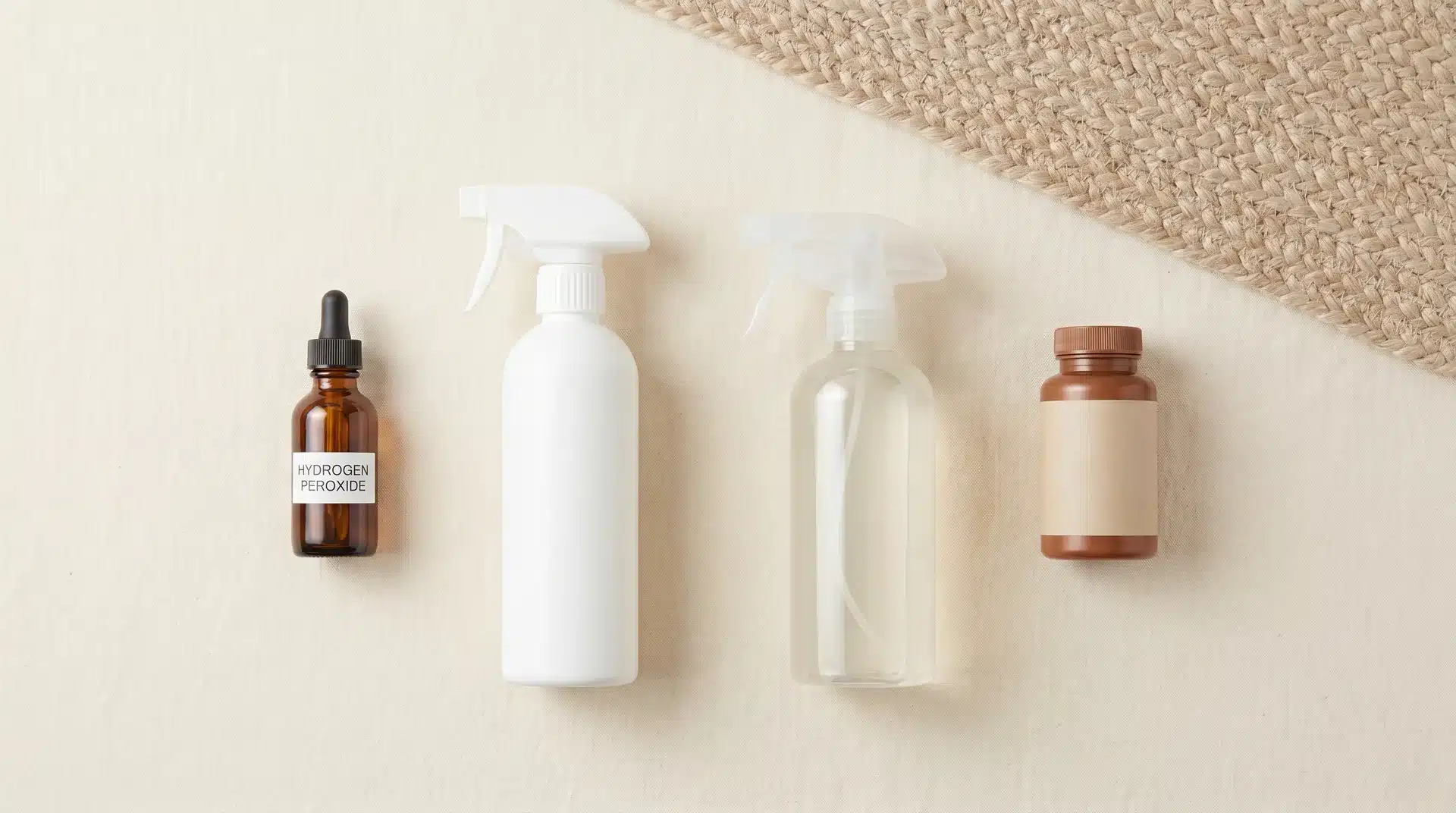
Baking soda handles light jobs well, but some situations call for something stronger. Here is a quick look at what else works.
Two things before you start:always spot test any new cleaning solution on a hidden patch first, and never over-wet the carpet. A damp carpet that takes too long to dry can develop mold beneath the padding.
- Baking soda + hydrogen peroxide: Make a paste with baking soda and 3% hydrogen peroxide, apply it to the stain, let it dry fully, then vacuum. Always spot test first, especially on darker carpets, as hydrogen peroxide can lighten fibers.
- Dish soap + water: Mix 1 teaspoon of dish soap with 1 cup of warm water, blot the stain with a cloth, then rinse the area with plain water to prevent soap residue from attracting new dirt.
- Commercial enzyme cleaner: Spray directly onto pet stains or biological spills and let it sit for the dwell time on the label. Enzyme cleaners break down proteins in urine that baking soda alone cannot reach.
- Steam cleaning: A hot water extraction machine pulls deep-seated dirt and odors out of carpet fibers and padding. It is worth doing every 12 to 18 months, and it remains the most thorough cleaning option available without calling a professional.
What Baking Soda Cannot Do?
Baking soda is a useful tool, but it has real limits. Using it for the wrong job can make cleaning harder later, especially before a professional service.
| What You Might Expect | The Reality |
|---|---|
| Removes deep stains like dried blood or red wine | It does not. Dried organic stains need enzyme-based cleaners or professional treatment. |
| Kills bacteria and sanitizes | It does not sanitize. It neutralizes odors only. |
| Deep cleans carpet fibers and padding | It works only on the surface layer. |
| Fully vacuums out every time | Fine particles can slip through the carpet backing and into the padding, where even a strong vacuum cannot reach them. |
| Safe for all carpet types | Not for wool- or natural-fiber rugs. Baking soda has a pH of around 9. Wool fibers prefer a pH of around 5.5, and repeated exposure can cause lasting damage. |
| Can replace professional cleaning | No. If odors return after two or more treatments, the source is deeper than the surface. |
Tips to Keep Your Carpet Cleaner for Longer
- Keeping a carpet clean between deep treatments comes down to a few simple habits. None of these requires any products.
- Use doormats at every entry point. They catch a surprising amount of dirt before it even reaches the carpet.
- Take your shoes off at the door. Shoe soles carry outdoor debris, bacteria, and chemicals that grind into carpet fibers with every step.
- Vacuum at least once a week. In high-traffic areas like hallways and entryways, twice a week is worth it.
- Treat spills right away. A fresh spill lifts out in a few minutes. The same spill an hour later is a different problem.
- Rotate furniture every few months. Furniture legs repeatedly press down on the same carpet fibers, creating wear patterns that are hard to reverse.
- Use a carpet protector spray after cleaning. It adds a light barrier that slows the rate at which new dirt bonds to the fibers.
How Often Should You Use Baking Soda on Carpet?
For a home without pets or children, once every four to six weeks is enough for general freshening. If you have pets or kids, once a month or after each accident works well for controlling odors.
High-traffic areas like hallways and entry points can tolerate a light treatment every 2 to 3 weeks. One thing to keep in mind: baking soda used too frequently without thorough vacuuming can build up in the carpet backing over time.
If you notice your carpet looking slightly dull or pale in treated areas, that is residue. Vacuum more slowly and thoroughly than usual to clear it.
Wrapping It Up
Cleaning your carpet with baking soda is one of those home care habits that pays off when done right. The five steps are simple, the cost is low, and the results hold up for everyday freshening and mild stains.
It does have limits, and knowing them saves you time. For pet odors that keep returning, dried organic stains, or carpets that have not had a proper clean in over a year, pair baking soda with a stronger method or book a professional service.
Have you tried using baking soda on carpet at home? Drop your experience in the comments.
Keeping your home clean does not have to be complicated. Check out the DIY Guides for more simple, practical home care tips.