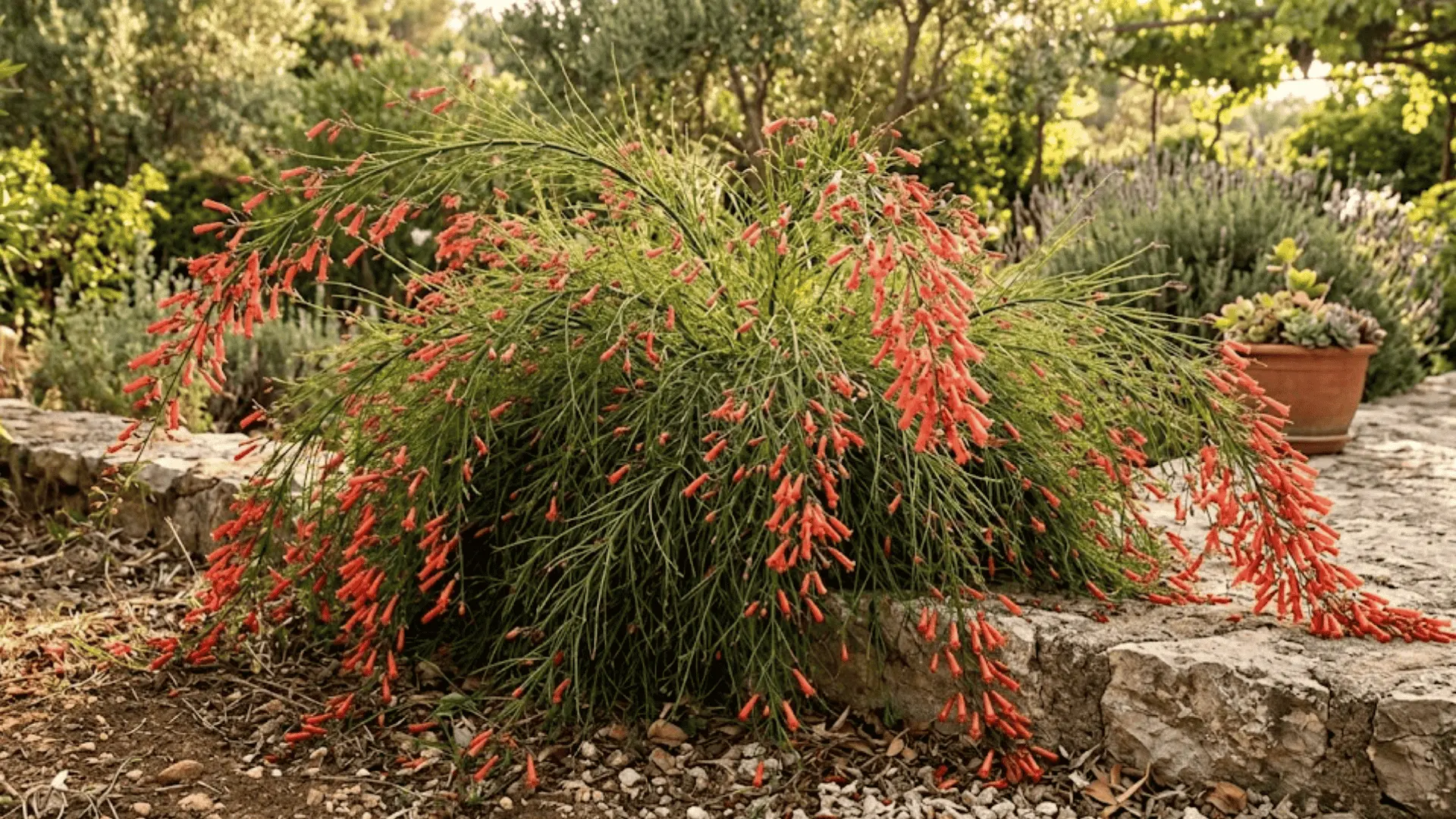
Firecracker plants have this quiet kind of magic about them, the sort that makes your garden look put-together effortlessly without demanding much from you in return.
With its cascading stems and those tiny, flame-bright blooms, Russelia equisetiformis brings movement, color, and life to any space it touches.
Growing it in a sunny garden bed or letting it spill out of a hanging basket, this plant rewards even the most laid-back gardeners beautifully.
If you’ve been looking for a low-fuss perennial with serious visual payoff, you’re in the right place.
What Makes Firecracker Plant a Gardener’s Favorite?
There’s a reason this plant keeps showing up in gardens everywhere, and once you grow it, you’ll completely understand the obsession.
Hummingbirds and butterflies can’t seem to stay away from its nectar-rich blooms, making it an instant win for pollinator gardens.
It flowers generously from spring through fall, and in warmer climates, it barely takes a break at all. Tuck it into containers, let it trail over borders, or display it in hanging baskets as it adapts beautifully.
Best of all, once established, it handles drought without skipping a beat, making it genuinely beginner-friendly.
What is a Firecracker Plant?
Formally known as Russelia equisetiformis, the firecracker plant also goes by charming names like coral plant and fountain plant.
It grows as a cascading, shrub-like perennial with arching stems that spill gracefully outward, giving it that signature flowing silhouette.
Key Characteristics
- Vivid tubular red and orange flowers that practically glow in sunlight.
- Trailing stems that can reach an impressive length at full maturity.
- A long blooming season stretching from spring through fall, and virtually year-round in warmer climates.
How to Plant a Firecracker Plant?
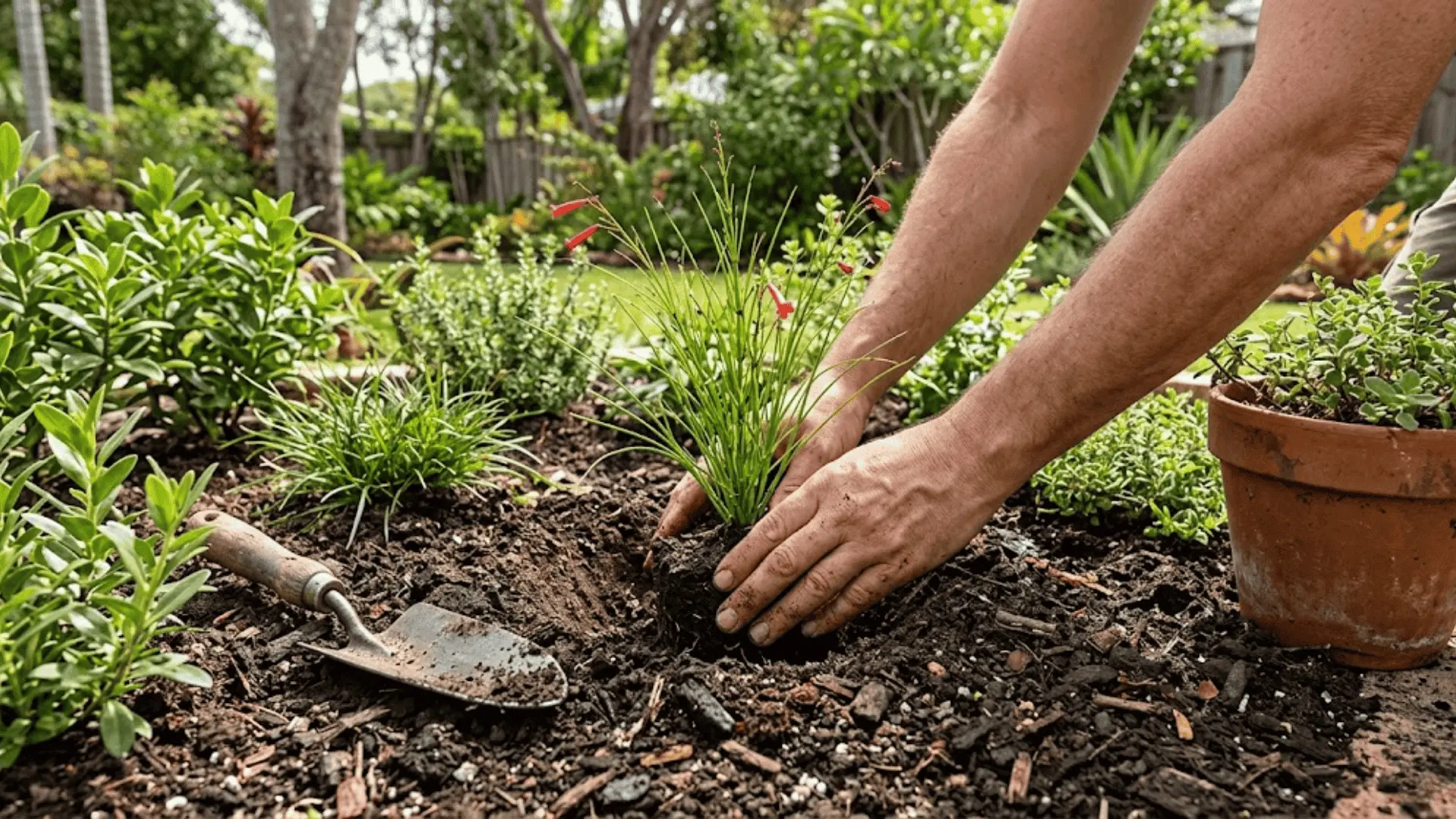
Getting the planting part right sets the tone for everything that follows. Nail the basics early, and this plant will practically take care of itself.
Setting the Stage: Timing and Location
Planting in spring or early summer gives the roots enough time to settle in before the heat peaks.
For location, choose a spot that soaks up full sun generously, as this directly fuels its blooming. It adapts well to both garden beds and containers, though good drainage is non-negotiable either way.
Step-by-Step Planting Guide
Starting strong means giving your firecracker plant a solid foundation from day one.
Here’s how to do it right:
- Loosen the soil and mix in well-draining, compost-rich medium before planting.
- Space plants generously apart to allow for their natural cascading spread.
- Plant at the same depth as the nursery container, no deeper.
- Water thoroughly right after planting, then let the soil dry slightly between sessions.
Firecracker Plant Care Essentials
Once it’s in the ground, this plant asks for very little. Get these core care habits right, and it’ll reward you with blooms that just keep coming.
1. Light Requirements
Full sun is where this plant truly thrives. Aim for at least 6 or more hours of direct sunlight daily for the most generous blooms.
It can manage in partial shade, but expect fewer flowers and a slightly less vibrant display.
If you’re growing it indoors or on a patio, a south-facing spot tends to work really well.
2. Watering Needs
Less is genuinely more here. Water moderately and always let the soil dry out between sessions to avoid overdoing it.
Once established, the firecracker plant handles drought surprisingly well, making it quite forgiving for gardeners who don’t always stick to a strict watering schedule.
When in doubt, underwater rather than over, as soggy roots are far more damaging than a dry spell.
3. Soil Requirements
Getting the soil right from the start makes everything else easier.
Here’s what to keep in mind:
- Well-draining sandy or loamy soil is the ideal base for healthy growth.
- Avoid heavy clay or compacted ground that traps moisture around the roots.
- Mixing in compost or organic matter improves both drainage and nutrient availability.
- Waterlogged soil is one of the quickest ways to trigger root rot.
4. Temperature and Humidity
This is a warm-weather lover through and through. It performs best in temperatures ranging between 65 and 85 degrees Fahrenheit, and genuinely struggles once frost enters the picture.
In cooler climates, container plants should be moved indoors before temperatures dip too low.
It also appreciates moderate humidity, though it adapts reasonably well as long as it isn’t exposed to prolonged cold or freezing conditions.
5. Fertilizing Schedule
Feeding your firecracker plant on a simple seasonal rhythm keeps it blooming consistently without overdoing it.
Here’s a straightforward schedule to follow:
| Season | Frequency | Notes |
|---|---|---|
| Spring & Summer | Every four to six weeks | Use a balanced fertilizer |
| Fall | Taper off gradually | Reduce application frequency |
| Winter | None | Let the plant rest fully |
Pruning, Training & Maintenance
A little pruning goes a long way with this plant. Done right, it keeps the firecracker plant looking full, shapely, and consistently loaded with blooms.
Timing and Shaping: What to Know?
The best time to prune is right after a flowering cycle or in early spring before new growth kicks in. For shape, trim back any leggy or overgrown stems to encourage a bushier, more compact form.
Regular light trimming prevents the plant from sprawling too loosely and keeps its cascading silhouette looking intentional rather than overgrown.
How to Prune for More Blooms?
Pruning doesn’t have to be complicated. A few clean, intentional cuts at the right spots make all the difference:
- Step 1: Use clean, sharp shears to avoid damaging the stems.
- Step 2: Identify and remove spent or dead stems at the base.
- Step 3: Trim back overly long stems to just above a leaf node.
- Step 4: Clear away any crossed or crowded stems to improve airflow.
Propagation: Grow More Firecracker Plants
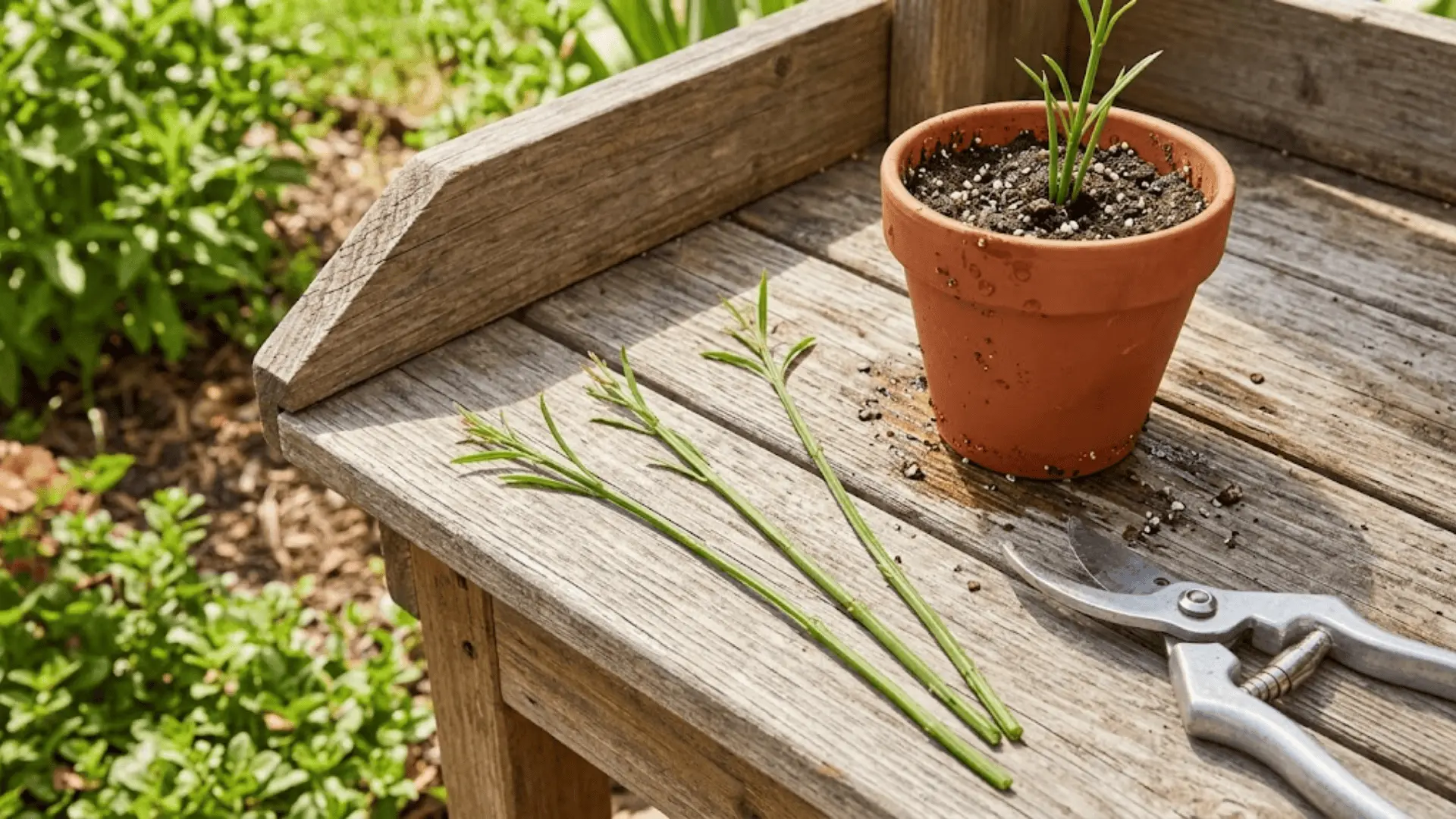
The good news is that the firecracker plant propagates really easily, and a single healthy plant can give you many more without much effort at all.
Stem Cutting Method
Spring or early summer is the sweet spot for taking cuttings, when the plant is actively growing, and roots establish quickly. Here’s how to go about it:
- Step 1: Snip a healthy stem cutting of around 4 to 6 inches just below a node.
- Step 2: Strip the lower leaves cleanly, leaving only a few at the tip.
- Step 3: Plant the cutting in well-draining, moist soil and firm it gently around the base.
- Step 4: Place in bright, indirect light and keep the soil consistently moist until roots establish.
Common Problems & Solutions
Even the most low-maintenance plants hit a rough patch occasionally. Here’s an honest look at what might be going wrong and how to fix it without overcomplicating things.
Problem 1: My Firecracker Plant Just Won’t Bloom
Solution: Chances are it isn’t getting enough sun. Move it to a spot that receives full, direct sunlight for most of the day. As one gardener in a community forum put it, these plants genuinely want 6 or more hours of direct sun.
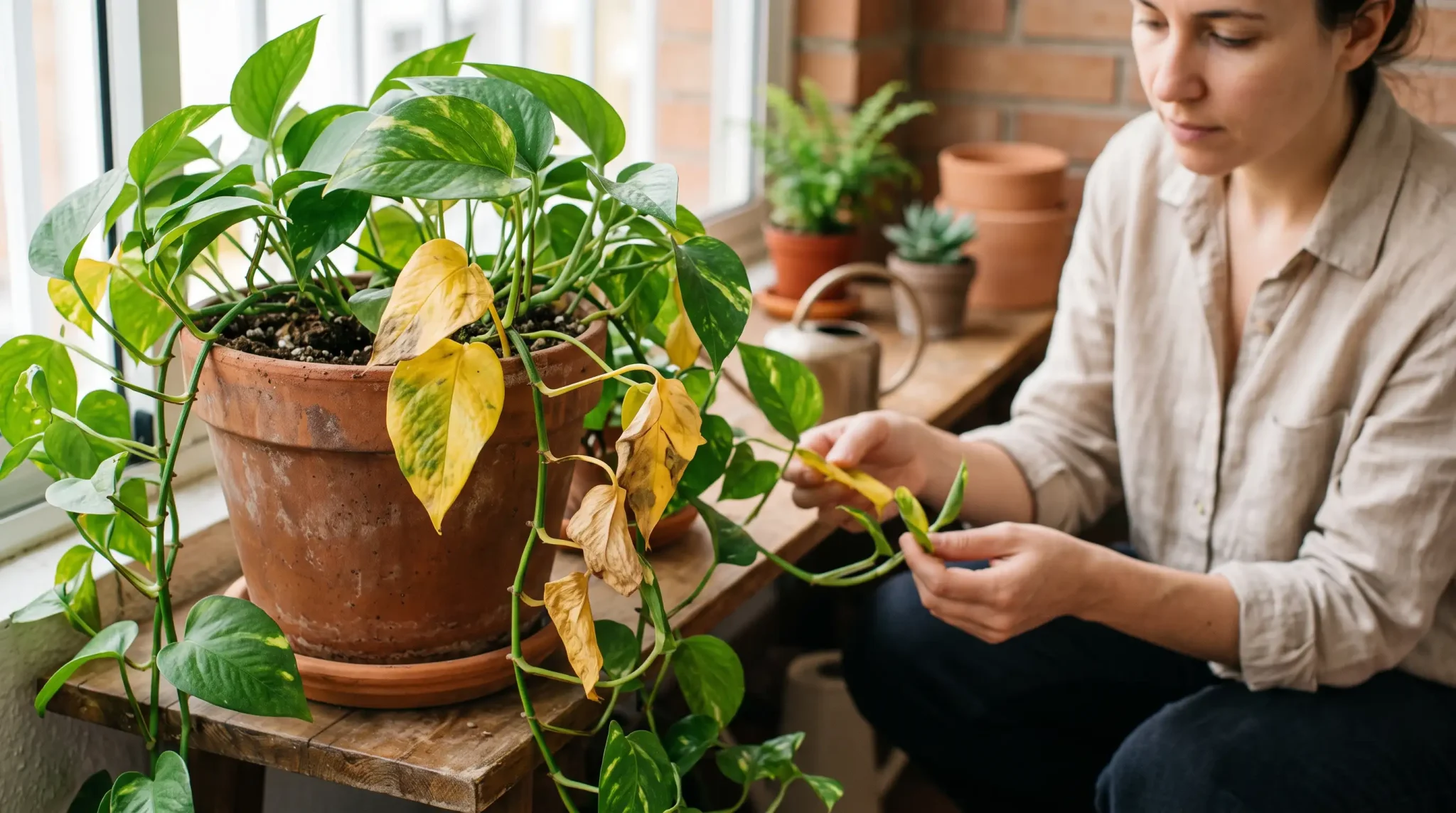
Problem 2: The Leaves on My Firecracker Plant are Turning Yellow
Solution: This is almost always a watering or drainage issue. Pull back on watering frequency, check that your soil drains freely, and consider repotting if roots are sitting in moisture for too long.
Problem 3: I’m Spotting Tiny Bugs All Over My Plant
Solution: Aphids and whiteflies are the usual suspects here. Treat promptly with neem oil or insecticidal soap, applying it in the early morning or evening to avoid leaf scorch and repeat every few days until the infestation clears.
Problem 4: My Firecracker Plant Looks Stretched Out and Sparse
Solution: Leggy growth usually comes down to too little light or infrequent pruning. Trim back the overgrown stems and shift the plant to a sunnier spot, and you should start seeing a fuller, more compact shape.
Curious what other gardeners have experienced? This Reddit thread on firecracker plant care is a great place to browse real questions and community-tested advice.
Seasonal Care Guide
The firecracker plant’s needs shift gently with the seasons, and adjusting your care routine accordingly keeps it healthy all year round.
During summer, increase watering frequency and keep up with your feeding schedule as the plant is in full growth mode and burning through nutrients quickly.
Once the cooler months arrive, scale watering back significantly and ease off fertilizing entirely.
In frost-prone areas, move container plants indoors before temperatures drop, and if it’s growing in the ground, a light layer of mulch around the base offers just enough protection to see it through.
Indoor vs. Outdoor Growing
The firecracker plant can adapt to both settings, but knowing what each environment offers helps you set the right expectations from the start.
| Factor | Indoor Growing | Outdoor Growing |
|---|---|---|
| Light | Bright window, preferably south-facing | Full sun, 6 or more hours daily |
| Bloom Potential | Moderate, fewer flowers overall | High, abundant, and consistent blooming |
| Climate Suitability | Works in any climate with the right spot | Best in warm, frost-free climates |
| Maintenance | Needs more attention to light and humidity | Generally, more self-sufficient once established |
| Best For | Gardeners in cooler regions | Gardeners in warm or tropical climates |
Benefits of Growing Firecracker Plants
There are plenty of reasons this plant has earned such a devoted following among gardeners.
Here are the ones that really stand out:
- Its nectar-rich blooms attract hummingbirds and butterflies, turning your garden into a lively pollinator haven.
- Once settled in, it’s remarkably low-maintenance and forgiving, even for beginner gardeners.
- A long blooming season from spring through fall means color that sticks around far longer than most perennials.
- Its natural drought tolerance makes it a smart, water-conscious choice for gardens in warmer, drier climates.
Honestly, it’s the kind of plant that gives generously while asking for very little, and that’s a combination that’s genuinely hard to beat.
Landscaping & Design Ideas
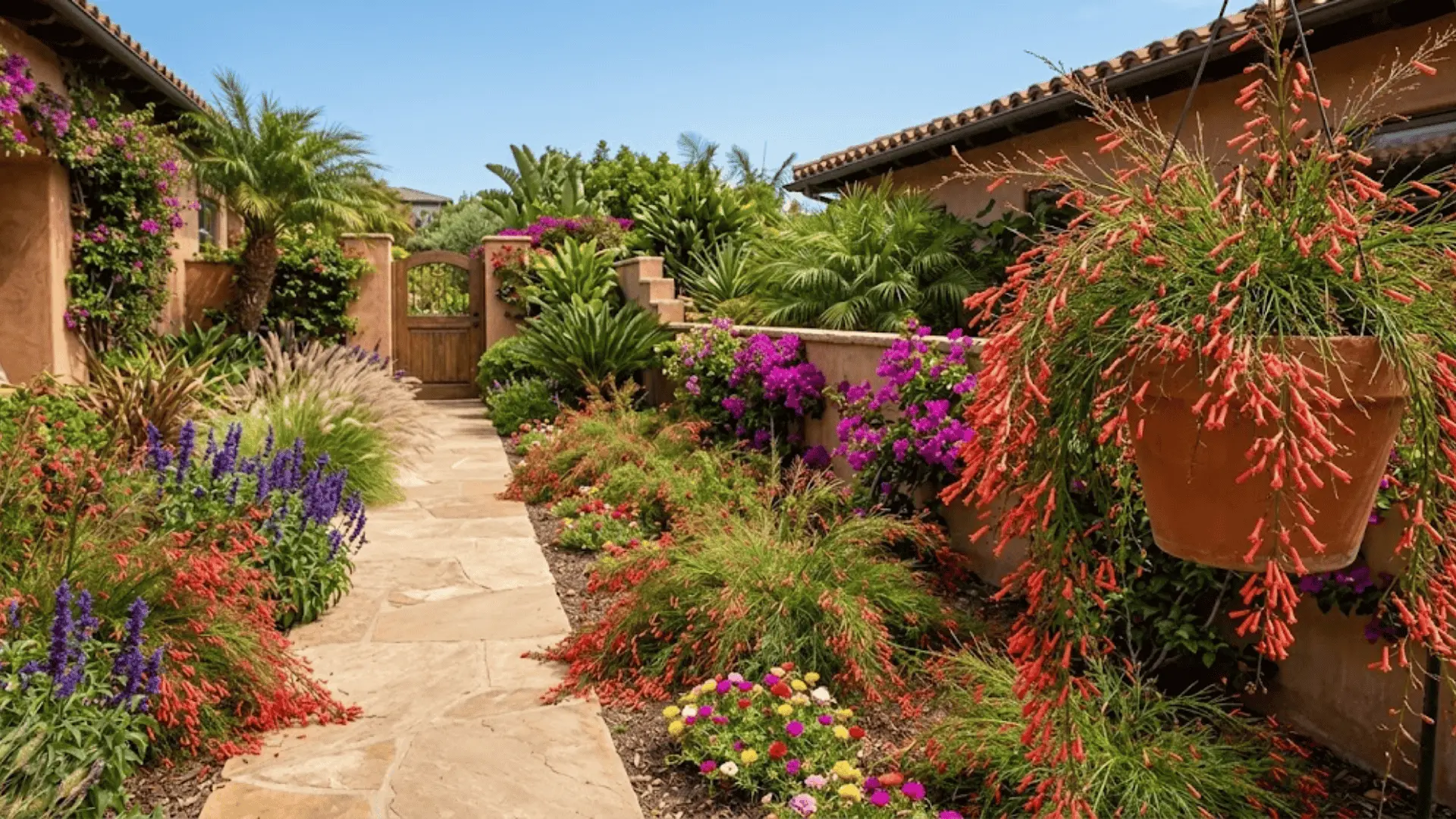
The firecracker plant is as versatile as it is beautiful, and a little thoughtful placement goes a long way in making it a true showstopper in your space.
| Use Case | Best For | Pairs Well With |
|---|---|---|
| Hanging Baskets | Cascading, trailing displays | Lantana, sweet potato vine |
| Garden Borders | Pathways and bed edging | Salvia, ornamental grasses |
| Ground Cover | Slopes and open areas | Bougainvillea, portulaca |
Firecracker Plant Care Tips for Maximum Blooms
A few small, consistent habits make the biggest difference when it comes to keeping this plant blooming at its best.
Keep these in mind:
- Prioritize full sun placement as it’s the single biggest driver of abundant blooming.
- Always let the soil dry out between watering sessions to avoid root stress.
- Prune regularly to remove spent stems and redirect the plant’s energy into fresh growth.
- Feed consistently with a balanced fertilizer throughout the active growing season.
- Choose a well-draining soil mix from the start to set a strong foundation.
A little attention to these basics goes a long way, and the blooms you get in return make every bit of it worth it.
Final Thoughts
Firecracker plant care really comes down to giving it sunshine, decent drainage, and the occasional trim.
Do that consistently, and this plant will fill your garden with cascading color season after season with very little fuss in return. It’s the kind of addition that quietly upgrades a space without demanding constant attention.
If you’ve been growing one or are just getting started, we’d love to hear how it’s going.
Drop your experience, questions, or favorite growing tips in the comments below, because conversations like these are where the best gardening wisdom lives.