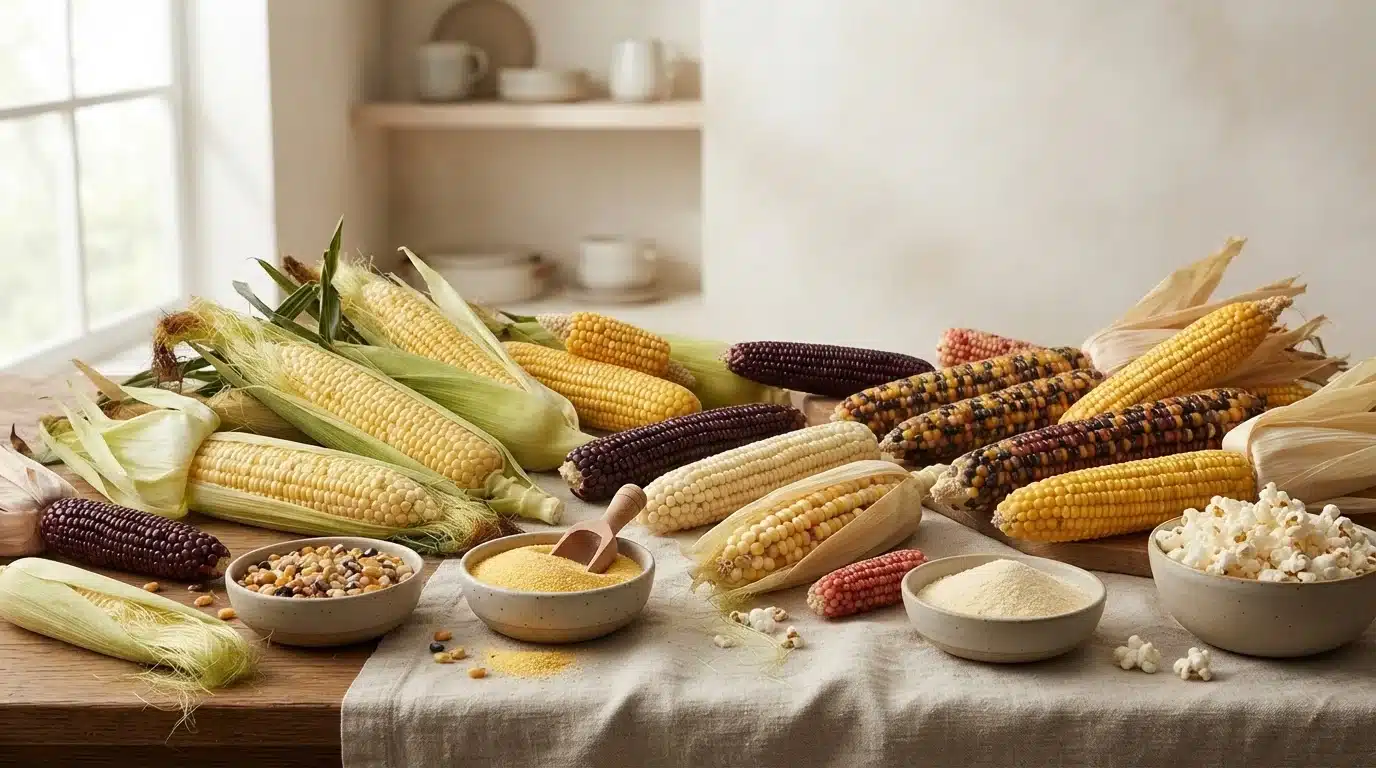
Try popping sweet corn kernels straight off a fresh ear, and nothing happens. Try eating field corn raw off the stalk, and it tastes nothing like the ear you grilled last weekend.
Corn seems like one simple crop until you notice how different one ear can really be from the next. Learning the types of corn clears up plenty of confusion at the seed rack, the farmers market, and the grocery aisle.
Once you know what separates one kernel from another, choosing the right corn gets a lot easier. Grab a coffee, and take a look at what sets these apart.
How Are Types of Corn Classified?
Corn is usually classified by kernel traits rather than by color or variety name. The differences come from the endosperm, the starchy part inside the kernel, along with sugar content, moisture, and how the kernel changes as it dries.
Corn and maize refer to the same plant, Zea mays; corn is the common term in North America, while maize is used more widely elsewhere.
According to New Mexico State University Extension, corn is commonly grouped into flint, flour, dent, popcorn, sweet, and waxy corn based on these kernel traits.
Pod corn is a separate botanical form rather than a common endosperm type like the other six, since each kernel grows wrapped in its own small glume, a husk-like covering.
A type is a broad group, while a variety is a named form within that group. Sweet corn is a type, while Silver Queen is a variety. Bloody Butcher belongs to dent corn, and Strawberry Popcorn belongs to popcorn.
Sweet Corn vs Field Corn
These two get confused constantly, since both come from the same species but serve almost opposite purposes in the kitchen and the field. If you’re timing your planting, this Gulf Coast vegetable planting calendar covers sowing windows for corn and other crops in the region.
| Sweet Corn | Field Corn |
|---|---|
| Picked young, at the milk stage | Harvested mature and dry |
| High sugar, tender kernels | High starch, hard kernels |
| Eaten fresh, grilled, or canned | Used for feed, meal, and industry |
| A small share of total US corn acreage | The most widely grown type in the US |
Types of Corn at a Glance
The seven groups below cover the main kernel-based types. Use this table to compare their key traits, typical harvest stage, and main uses before reading the full profiles.
| Type | Key characteristic | Typical harvest | Main use |
|---|---|---|---|
| Sweet | High sugar and tender kernels | Milk stage | Fresh eating |
| Dent | Soft center with hard sides | Mature and dry | Feed, processing, and industry |
| Flint | Hard glassy kernel | Mature and dry | Polenta, meal, and hominy |
| Flour | Mostly soft starch | Mature and dry | Fine flour and meal |
| Popcorn | Hard hull holds moisture | Fully dry | Popping |
| Waxy | Starch rich in amylopectin, a branched starch form | Mature | Food and industrial starch |
| Pod | Each kernel has a glume | Mature | Mainly ornamental |
Corn color works separately from type. A blue corn can belong to the flour or flint groups, while red and multicolored kernels often show up in flint or popcorn varieties.
Different Types of Corn and Their Uses
Here is a closer look at what actually separates these seven groups from each other.
1. Sweet Corn
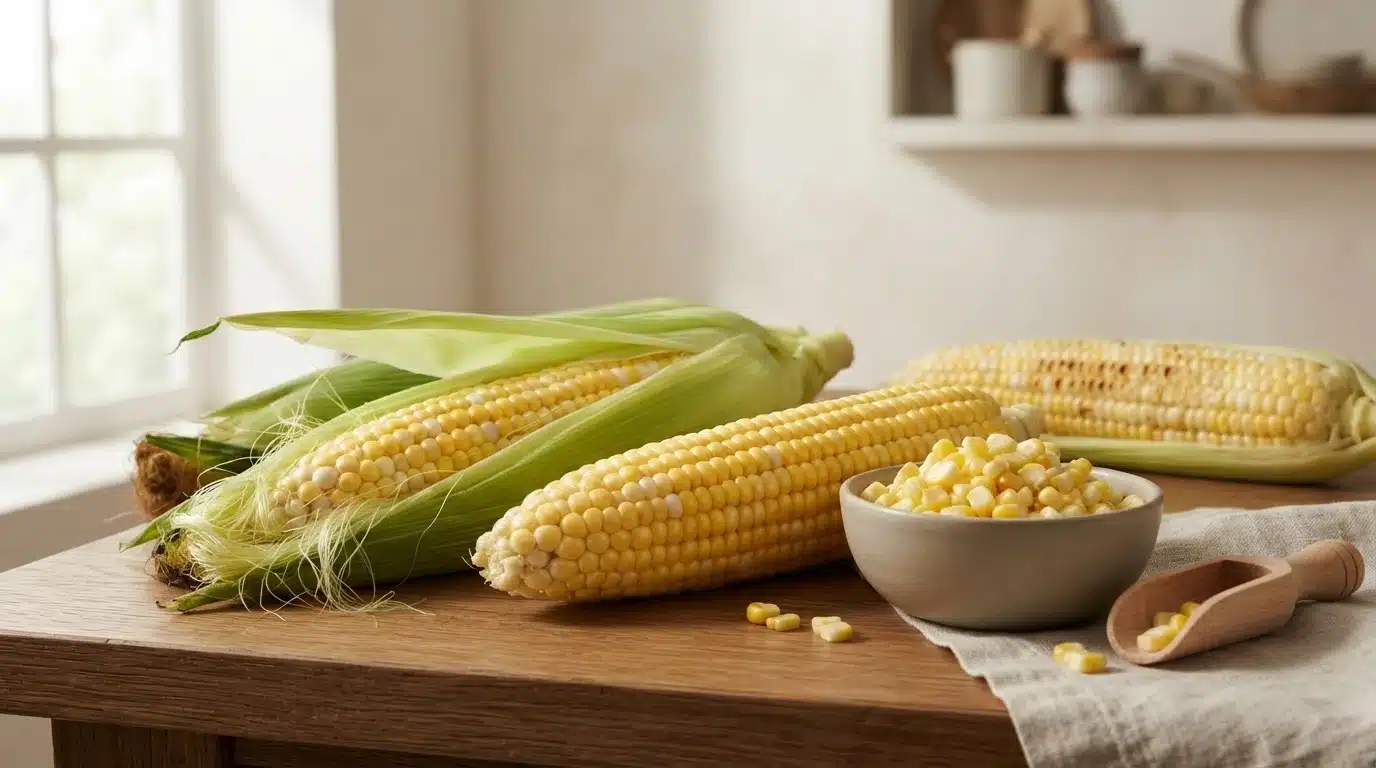
Sweet corn has more sugar and less starch when picked young, giving it a juicy texture. It is harvested at the milk stage and works well for corn on the cob, grilling, roasting, freezing, and canning.
Varieties fall into sugary, sugary enhanced, or supersweet groups, each with a different sweetness.
2. Dent Corn (Field Corn)
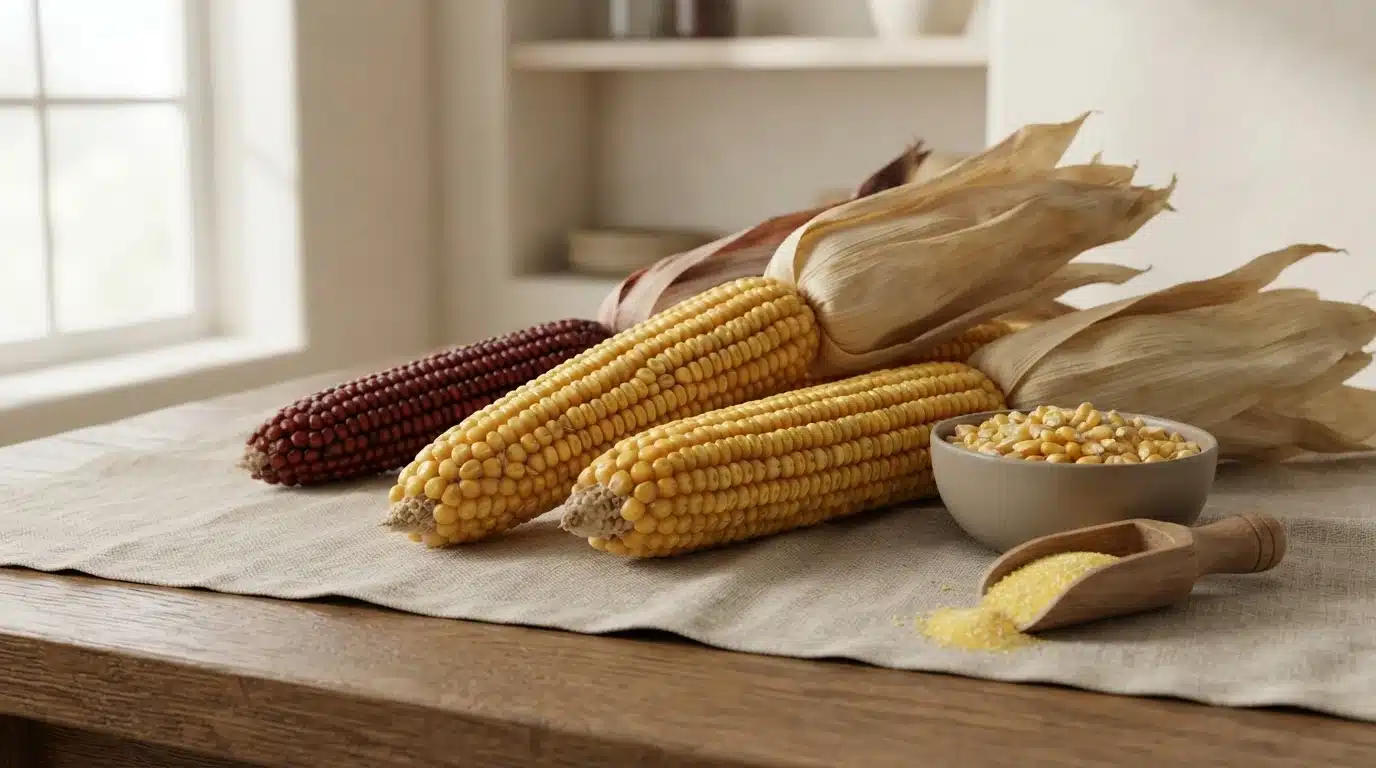
Dent corn, also called field corn, has hard starch along the sides and softer starch in the center, which shrinks as it dries and leaves a dent at the top.
It is the most widely grown type in the US, usually harvested dry for livestock feed, cornmeal, starch, and ethanol.
3. Flint Corn
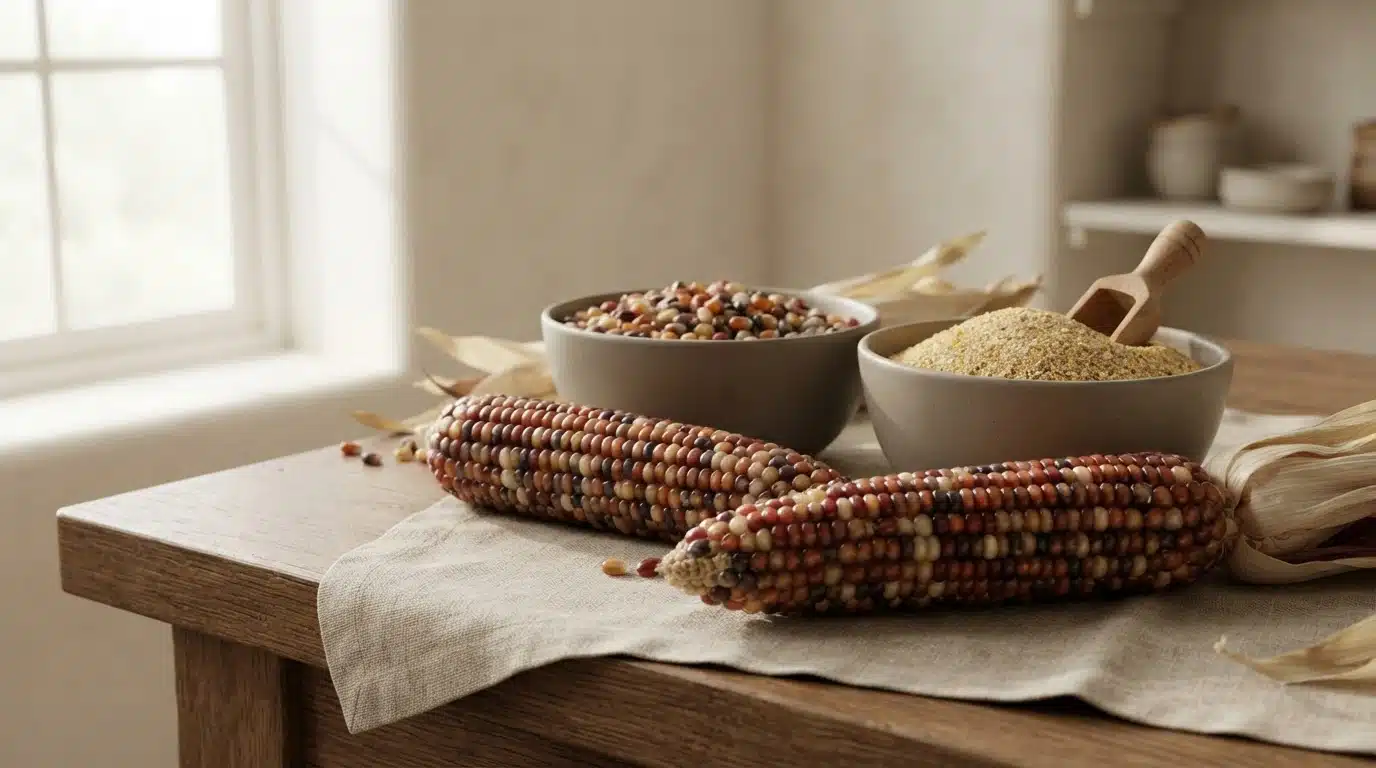
Flint corn has a hard, glassy outer endosperm, unlike dent corn’s soft center, which suits the kernels well for dry storage and coarse grinding.
Its flavor can be deeper and nuttier than flour corn, and the ears often come in striking colors, used for coarse meal, grits, polenta, and atole.
4. Flour Corn
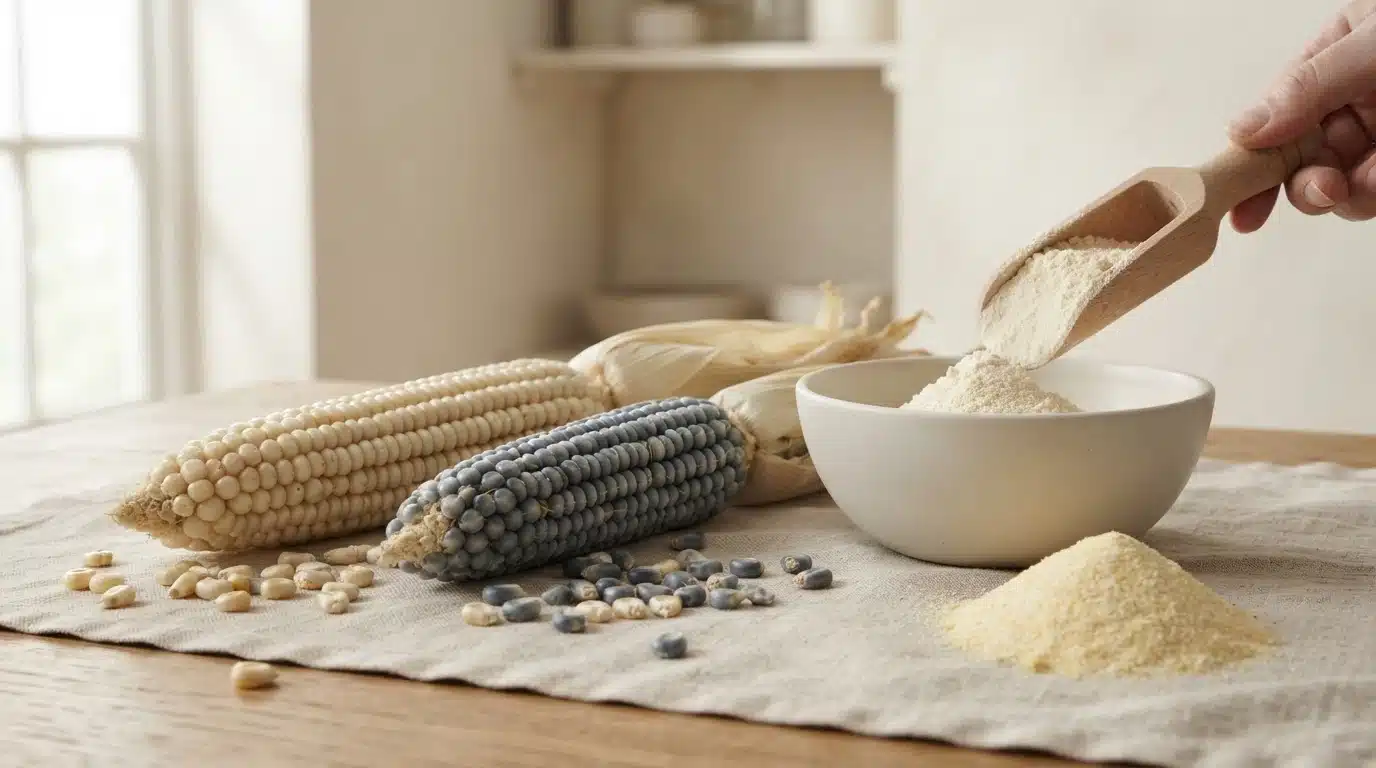
Flour corn contains mostly soft starch beneath a thin outer covering, so it grinds finer than dent or flint corn. Its flavor is mild, and growers usually let the ears mature and dry before processing.]
It suits fine cornmeal, tortillas, tamales, and pinole, with Hopi Blue as a common example.
5. Popcorn
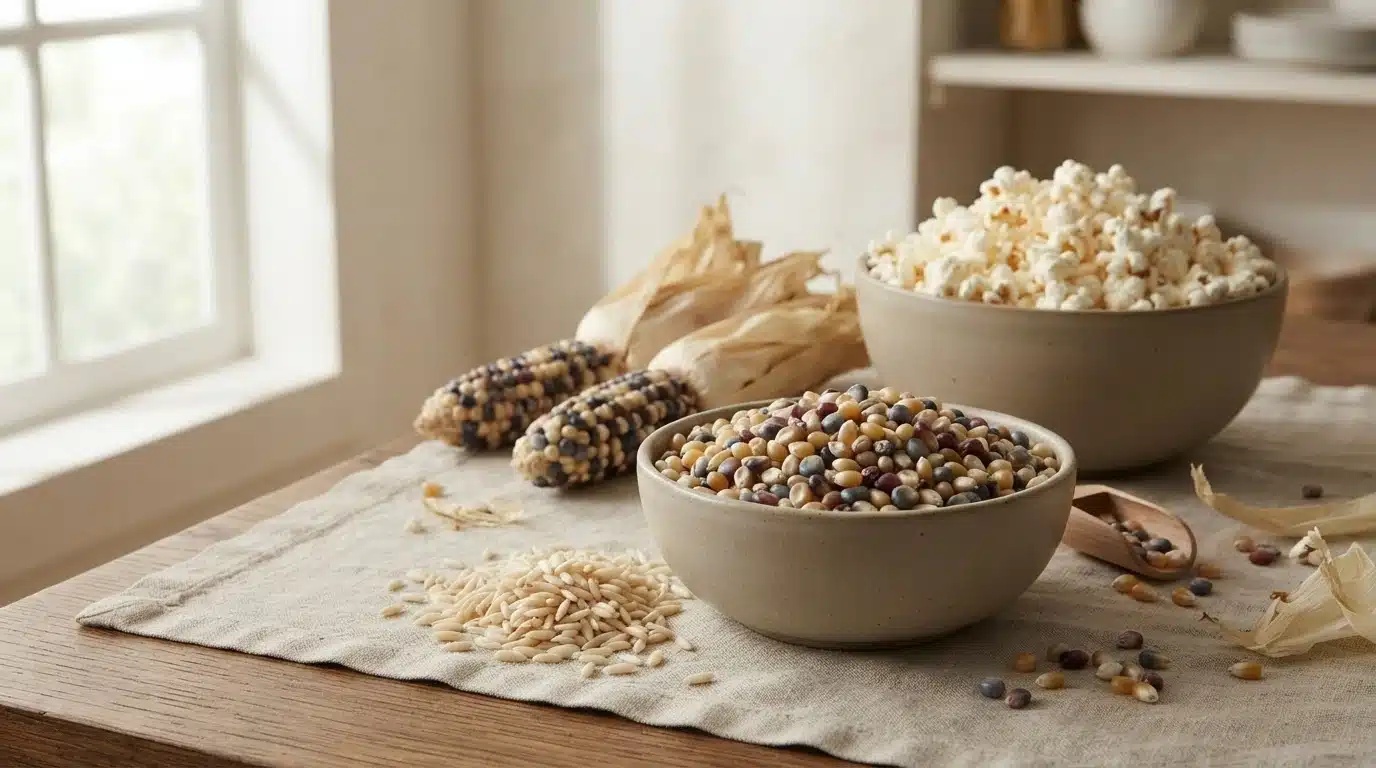
Popcorn is a specialized form of flint corn, according to SDSU Extension, with a hard hull that holds moisture until heat turns it to steam and the kernel bursts inside out.
Kernels are classed as pearl or rice before popping, and butterfly- or mushroom-shaped after popping.
6. Waxy Corn
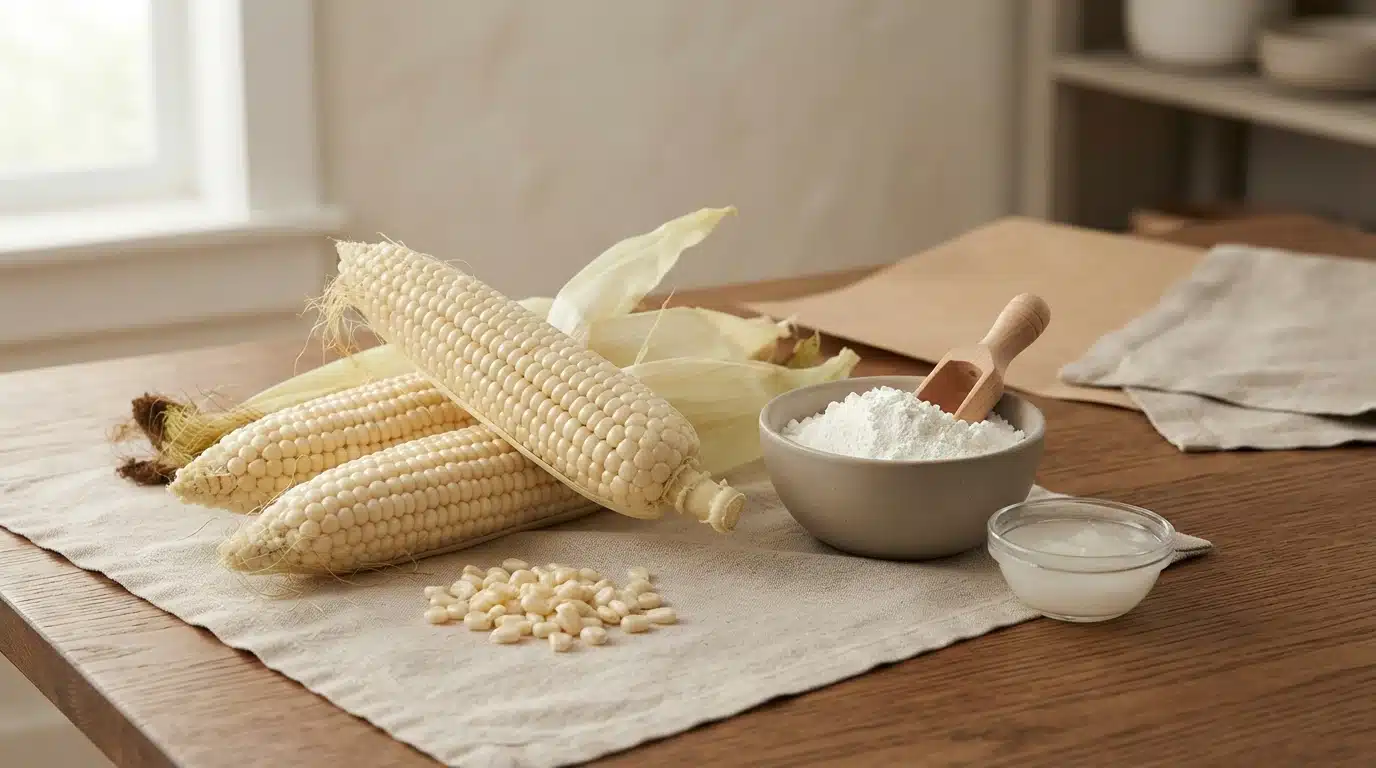
Waxy corn is set apart by its starch, made almost entirely of amylopectin, which gives it thickening qualities different from most other corn types.
It shows up in food starches and in products such as adhesives, paper, and textiles, and can be eaten, though it is grown mainly for starch.
7. Pod Corn
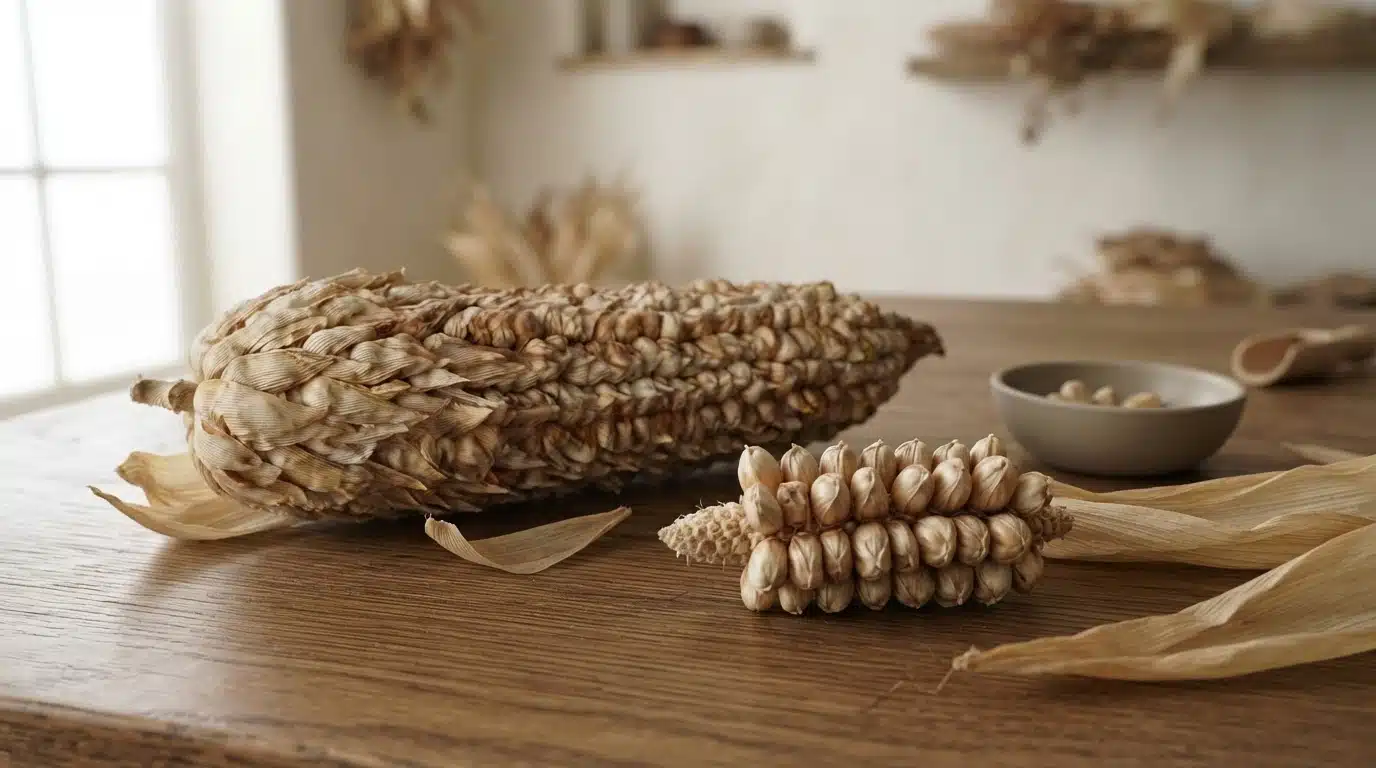
Pod corn looks unusual because every kernel grows wrapped in its own small glume, rather than sitting exposed on the cob.
It can carry flint, dent, flour, sweet, popcorn, or waxy endosperm underneath that covering, setting it apart from the six kernel-based groups and giving it little commercial food value beyond novelty.
Specialty and Lesser-Known Corn Varieties
Beyond the seven main groups, corn also comes in regional forms, color groups, and named cultivars. These add variety in flavor, size, and food traditions without creating new basic categories.
1. Blue and Purple Corn
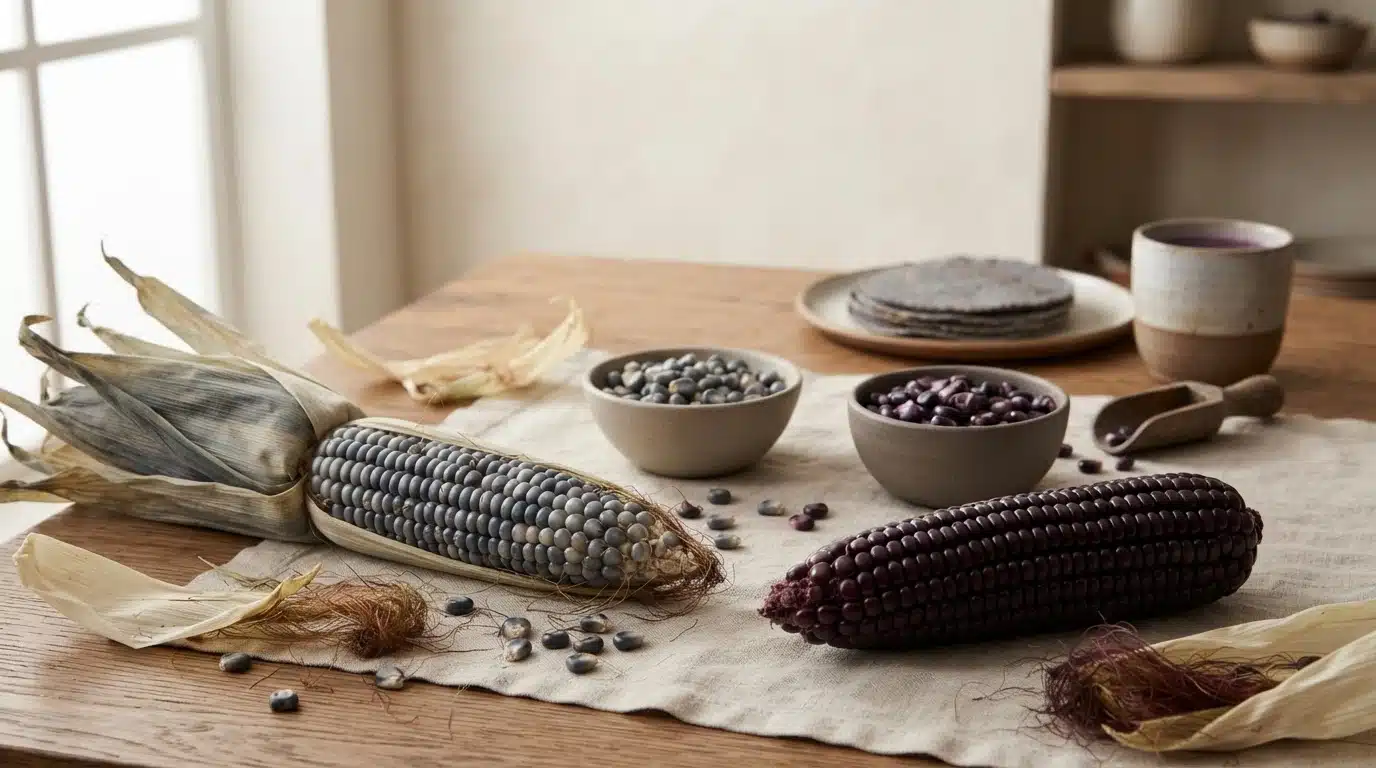
Blue corn is important in the American Southwest and Mexico for tortillas, chips, and drinks, often with a nutty flavor that sets it apart from standard yellow corn.
Purple corn is tied to the Andes, especially Peru, where it flavors breads, desserts, and drinks. Hopi Blue is a well-known example.
2. Choclo and Cacahuazintle
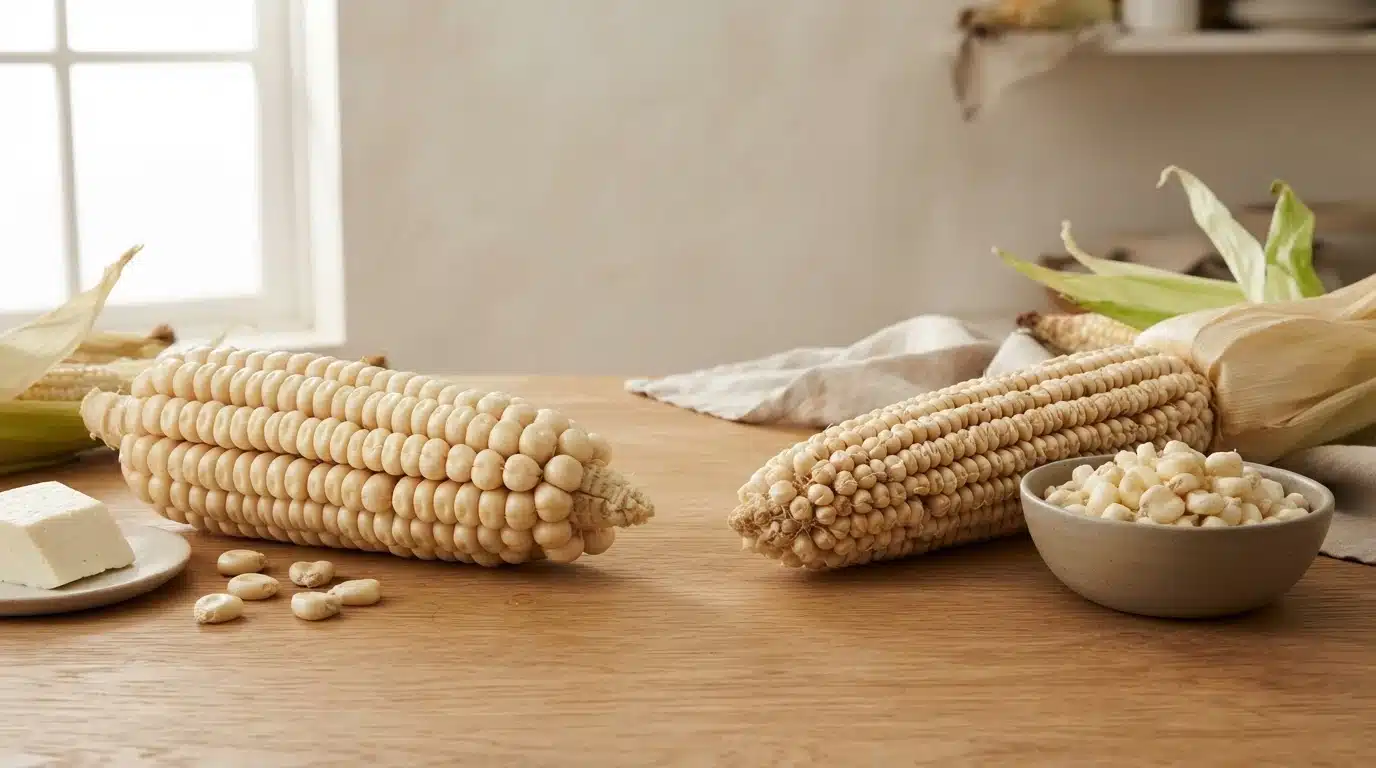
Choclo is an Andean corn with unusually large, chewy kernels, often served with cheese, added to stews, or lightly toasted as a savory snack food.
Cacahuazintle is a large-kernel Mexican corn with a floury texture, closely linked with pozole, where the prepared kernels become the main part of the dish.
3. Glass Gem Corn
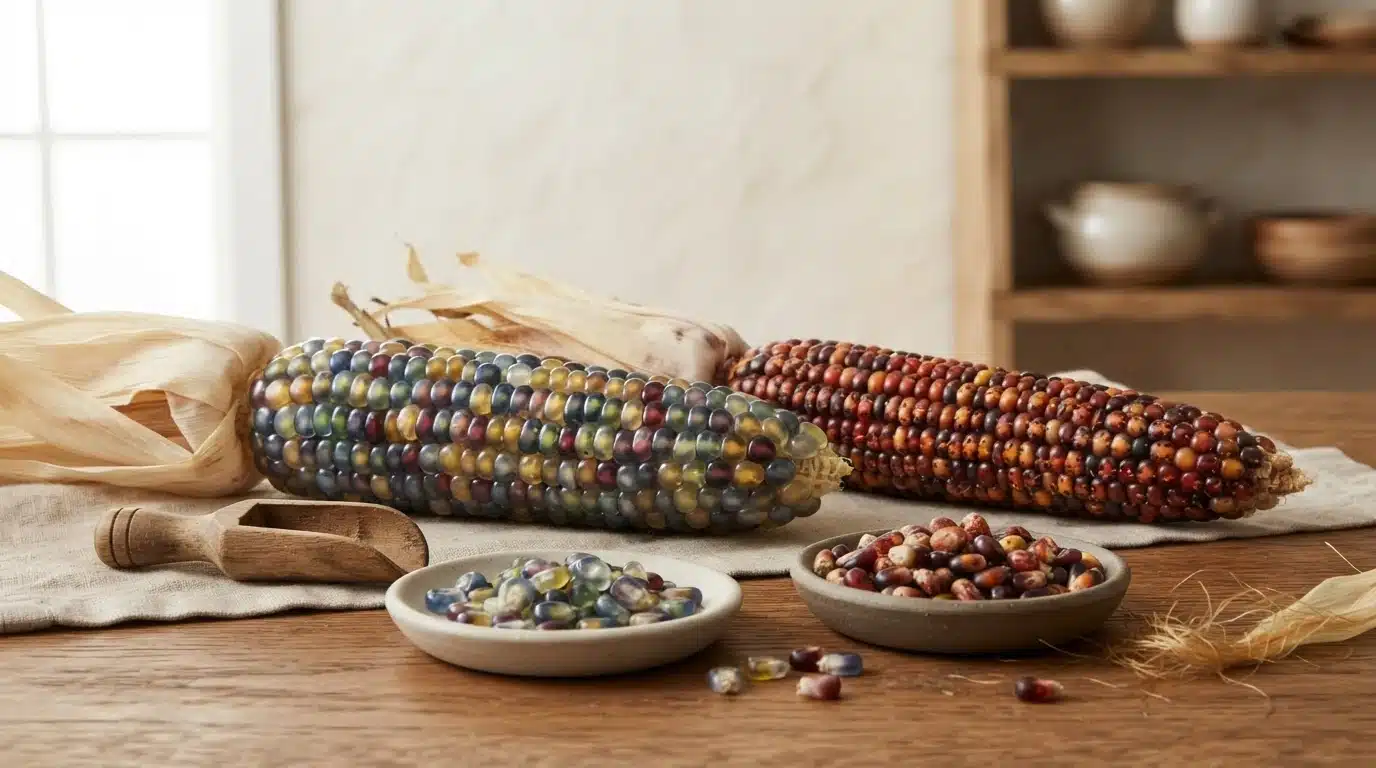
Glass Gem is grown mainly for its translucent, multicolored kernels rather than for eating, though some strains can still be ground into fine meal or popped like other flint types.
Painted Mountain is a similar cold-hardy ornamental type often grown alongside it, prized for surviving unusually short growing seasons well.
Which Type of Corn Is Best for Each Use?
The right corn depends on what you plan to make. If you’re growing from heirloom seed, checking how long corn seed stays viable before planting can save you a wasted season. Otherwise, use this table to match the job to the corn.
| What you want to make or do | Best corn choice |
|---|---|
| Corn on the cob | Sweet corn |
| Make fine corn flour | Flour corn |
| Make cornmeal | Dent, flour, or flint corn, based on texture |
| Make grits or polenta | Flint corn or hominy |
| Make tortillas or tamales | Dent, flint, or flour corn processed into masa |
| Pop for snacks | Popcorn |
| Feed livestock | Dent or field corn |
| Produce starch or industrial goods | Dent corn or waxy corn |
| Use for seasonal decoration | Colorful flint corn, ornamental cultivars, or pod corn |
Corn Products and Labels Often Mistaken for Corn Types
Some corn names describe harvest stage, processing, or intended use rather than a separate corn type.
- Baby corn: Corn harvested very early, before kernels and cob fully develop. The whole tender ear is edible and common in stir-fries and salads.
- Hominy, masa, and cornmeal: These are corn products, not separate types. According to the University of Illinois Extension, nixtamalization soaks dried field corn in an alkaline solution to soften and remove the hull, producing hominy that can be ground into masa.
- Grits and polenta: Grits are a coarse ground-corn preparation, and polenta is a dish typically made from coarse cornmeal.
- Heirloom corn: Describes varieties kept and passed down over generations, and can apply to several corn types rather than one kernel group.
- Ornamental corn: Grown mainly for decoration, describing intended use rather than a separate category.
Frequently Asked Questions
How many types of corn are there?
There are six main kernel-based types: sweet, dent, flint, flour, popcorn, and waxy. Pod corn is sometimes added as a seventh, since each kernel develops its own papery covering rather than a shared endosperm pattern.
What is the most common type of corn grown in the US?
Dent corn, also called field corn, is the most widely grown type in the United States by a wide margin. Most of the harvest goes toward livestock feed, exports, cornmeal, starch, and ethanol production rather than fresh eating.
What is the difference between sweet corn and field corn?
Sweet corn is picked young for high sugar and eaten fresh, while field corn is left to mature and dry for feed, starch, and processing. Field corn also makes up far more of the total US corn harvest.
Can popcorn kernels be ground into cornmeal?
Yes. Dried popcorn kernels can be ground into meal, though the texture differs from meal made with dent or flour corn. Popcorn’s hard hull can also make it a slower, coarser grind.
Can different types of corn cross-pollinate?
Yes. Corn is wind-pollinated and grows best in blocks of several short rows rather than one long row, so nearby varieties flowering at the same time can easily cross. This matters for gardeners saving seed or protecting a specific flavor.
Final Thoughts
That’s really all there is to it. Corn turns out to be a lot more interesting than it looks sitting in a produce bin or a feed sack.
Once you start noticing the differences, it is hard to look at an ear the same way again. Learning the types of corn like this makes grocery runs and garden planning feel a little more fun, not confusing.
Every kernel has its own small story once you know what to look for. Thanks for sticking around, and here’s hoping your next batch of corn turns out exactly the way you hoped.
Drop a comment below and let me know whcih type of corn is your favorite.