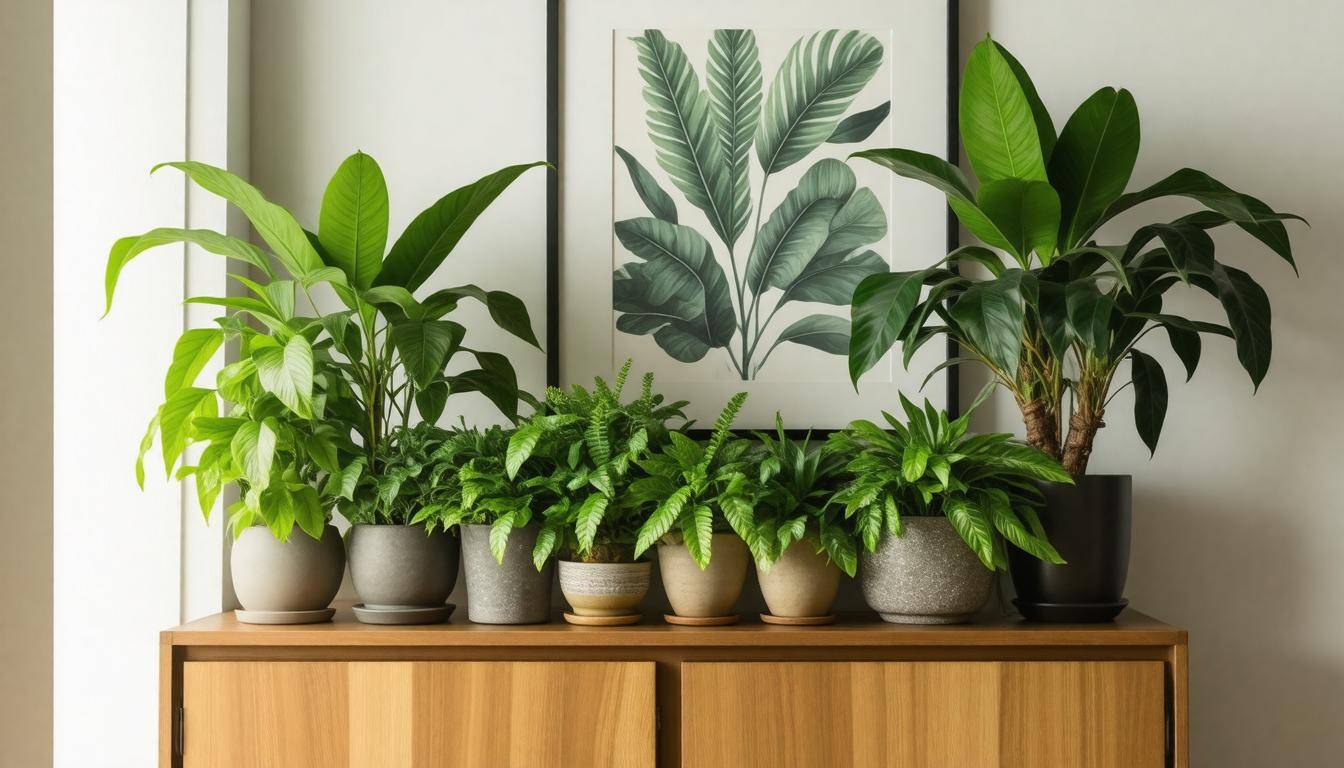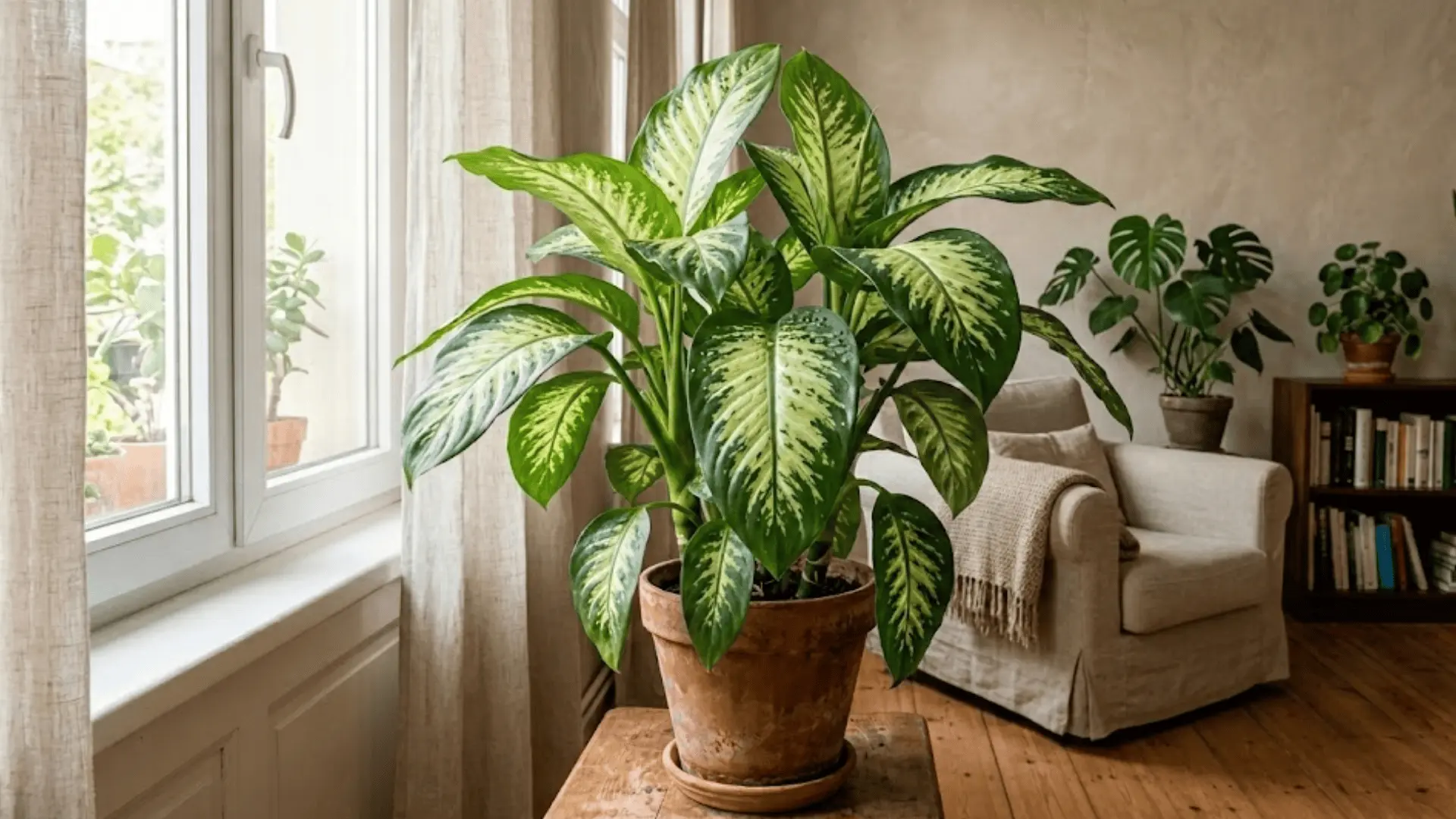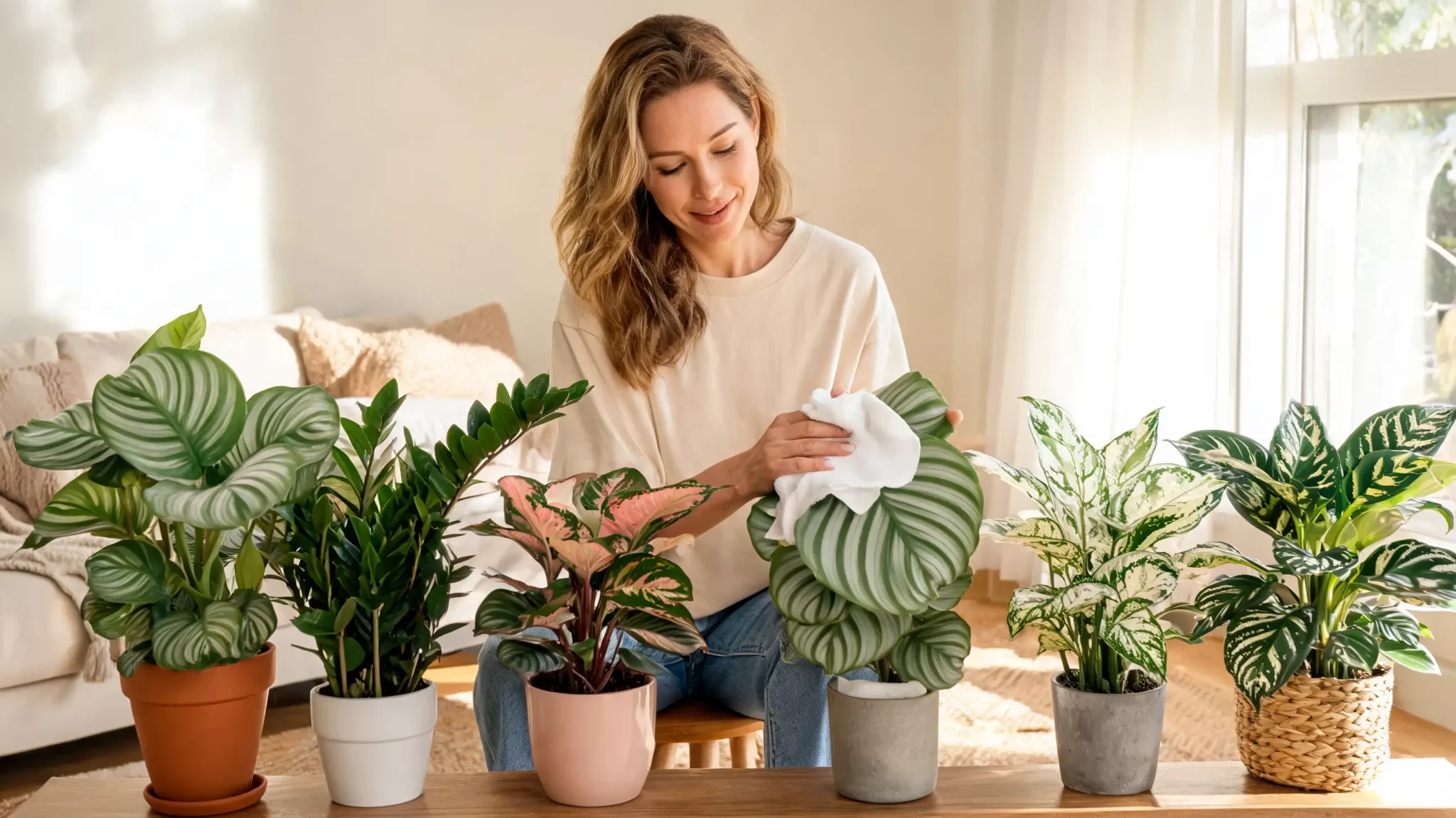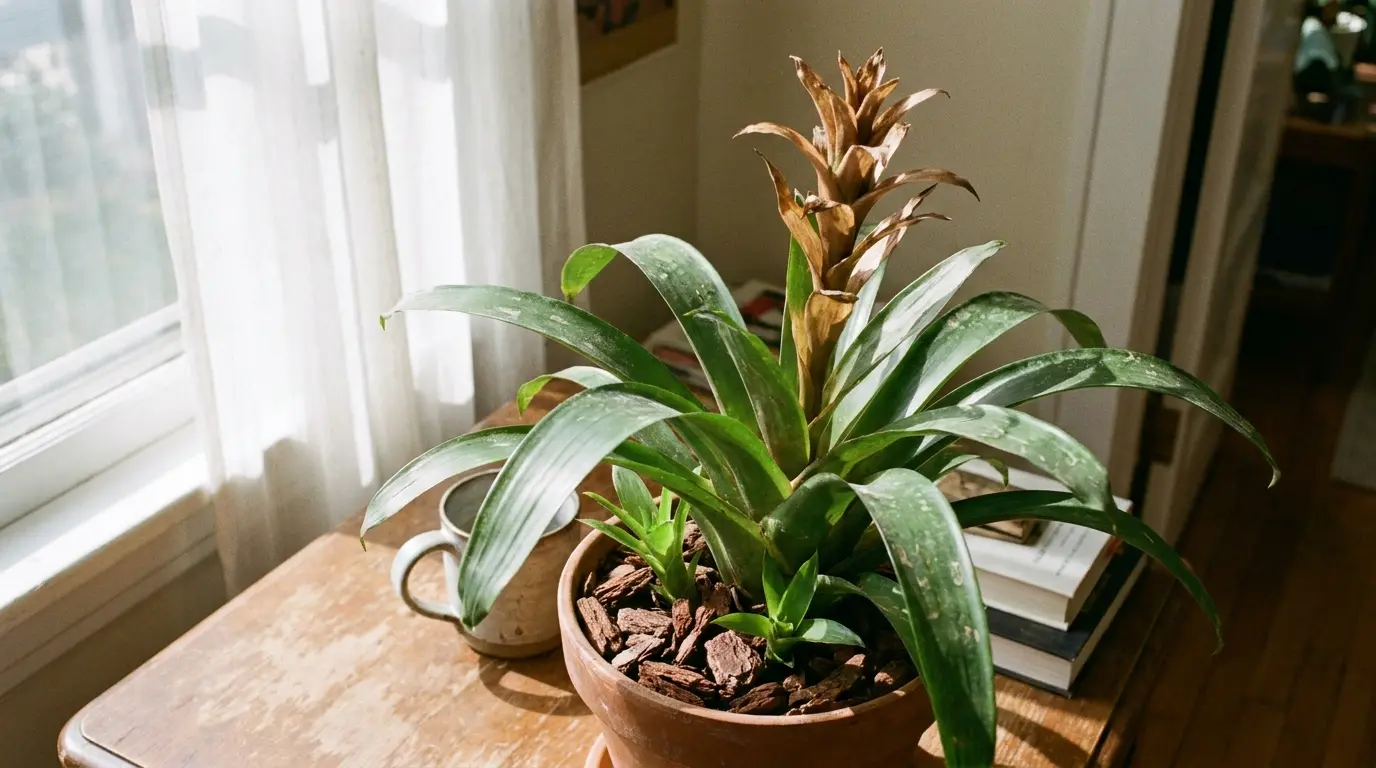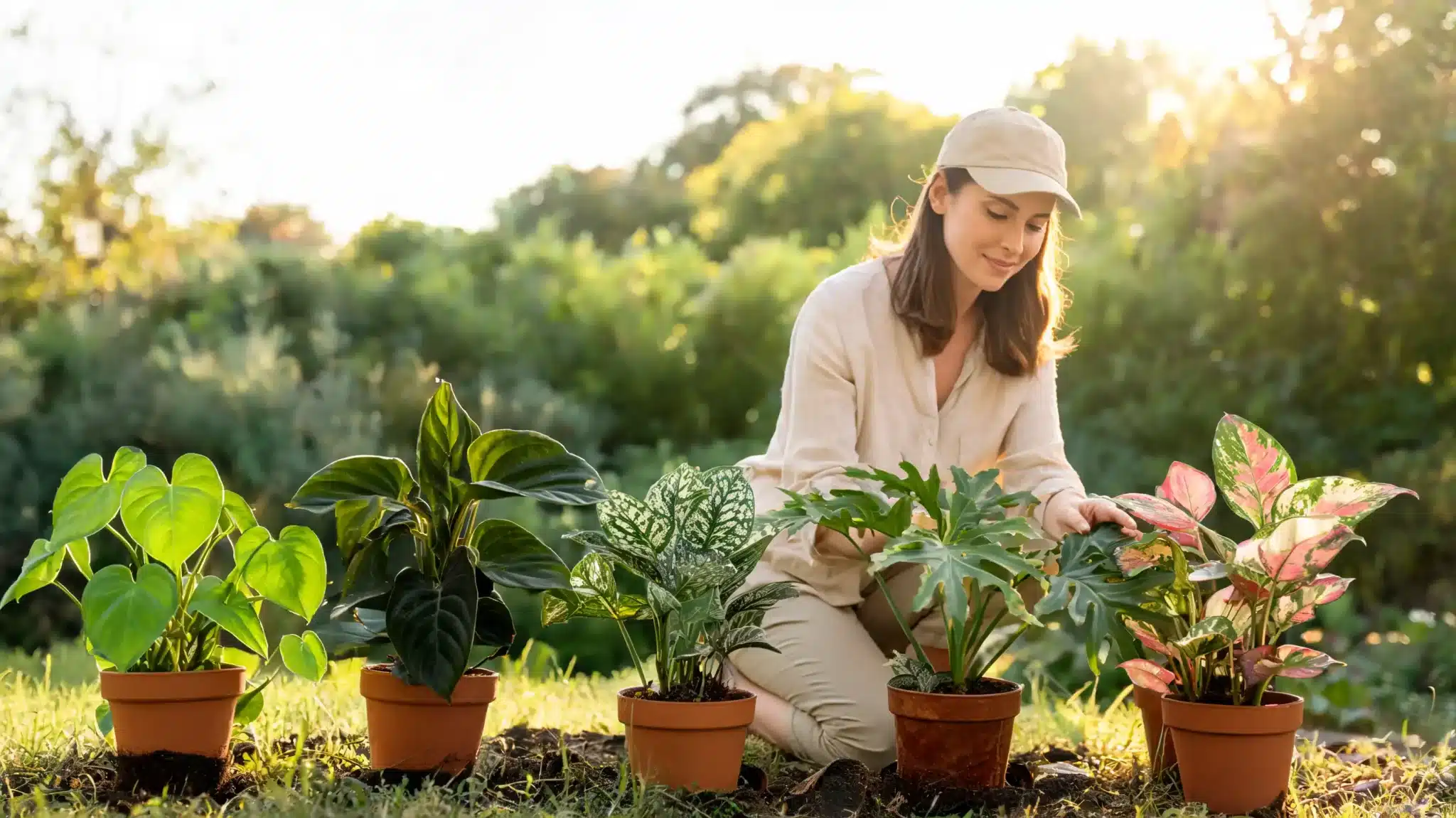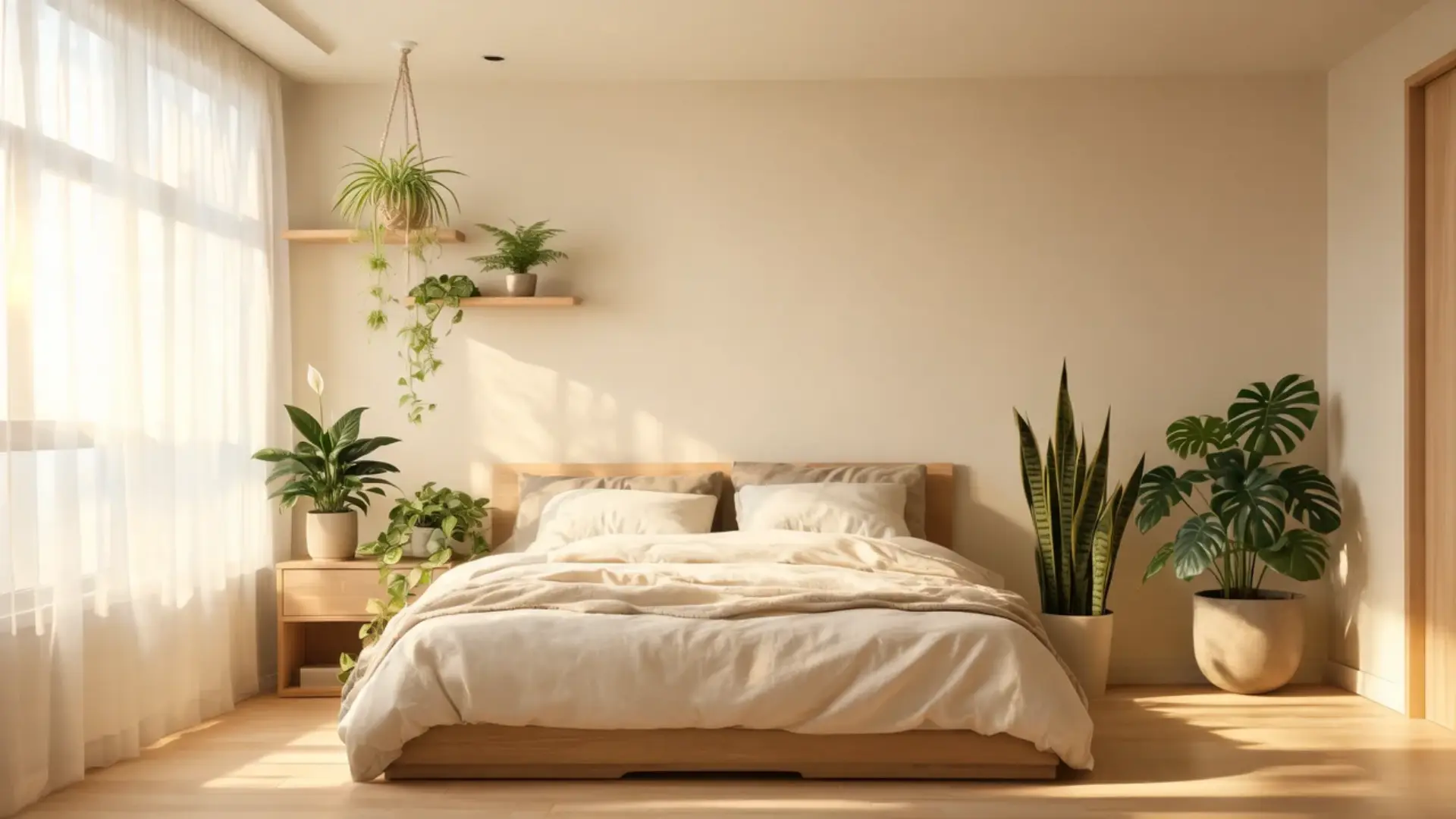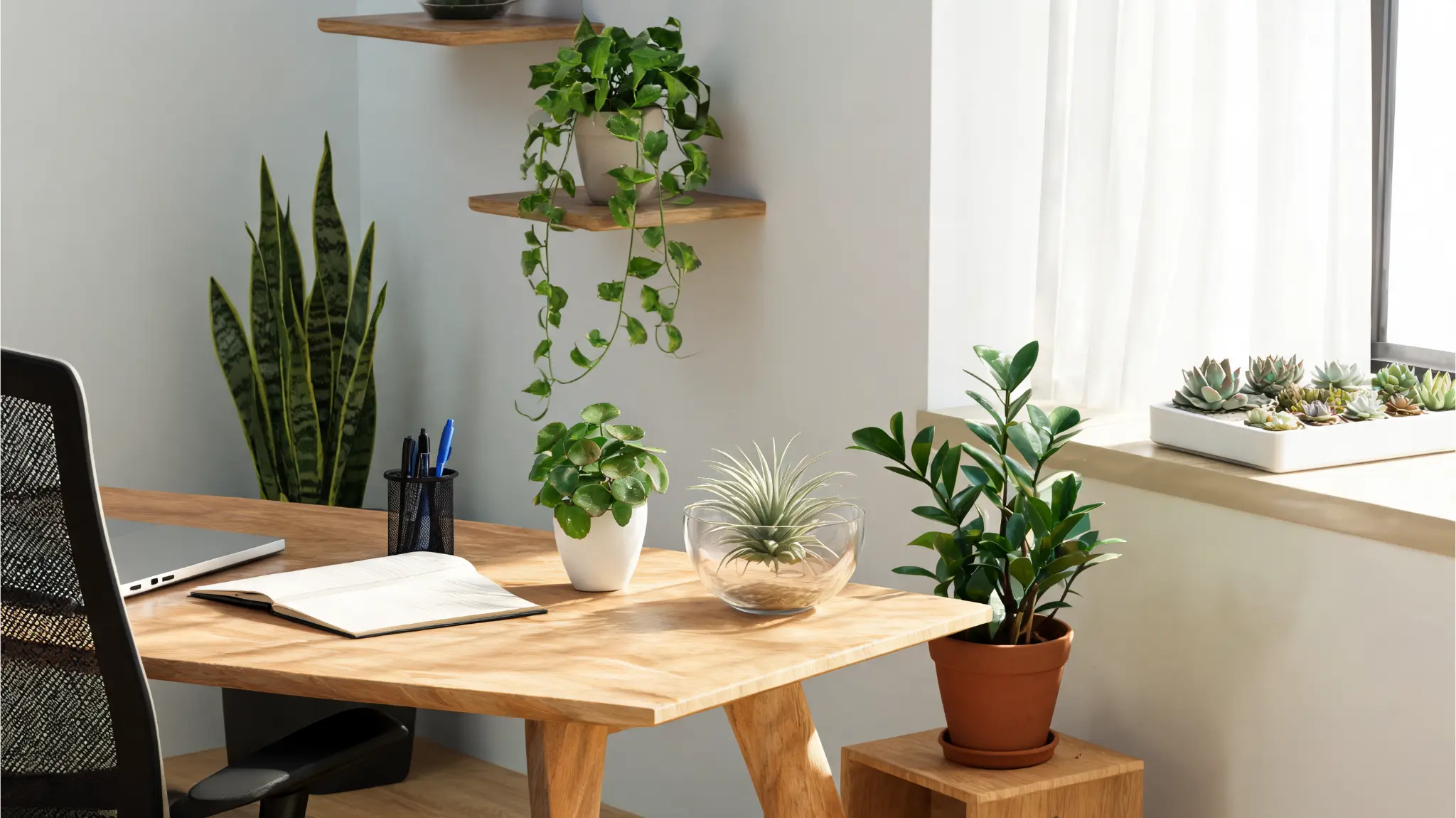
Some desks feel tired before the day even starts. A good plant can make that same space feel warmer, fresher, and easier to sit in.
The best office plants should fit the spot first. A small pot may work beside your laptop, while a taller plant may make an empty corner feel less bare. The right choice should also handle dry air, indoor light, and the weeks when watering gets pushed back.
Start with your light, space, and care routine. Once those match, the plant is much easier to keep looking good.
How to Match a Plant to Your Office Space
The right plant should fit your light, space, and daily routine. Start with where it will sit, then choose a plant that can handle that spot.
| Office Situation | Best Plant Choices | Why They Fit |
|---|---|---|
| Small desk | Peperomia, Lucky Bamboo, Air Plant, African Violet | Compact and easy to place near a laptop |
| Low-light corner | ZZ Plant, Snake Plant, Cast Iron Plant | Strong picks for dimmer office spots |
| Shelf or cabinet | Pothos, Heartleaf Philodendron, Spider Plant | Trailing leaves soften storage areas |
| Bright window spot | Jade Plant, Aloe Vera, Succulents | These need stronger light to stay healthy |
| Floor or empty corner | Dracaena, Rubber Plant, Parlor Palm | Taller plants fill blank space well |
| Reception or client area | Peace Lily, Anthurium, Chinese Evergreen | Polished enough for front-facing spaces |
If your office has no window, skip bright-window plants unless you use a grow light. That one choice can save you from picking a plant that looks good at first but struggles later.
Best Office Plants That Look Good and Handle Work Life
These office plants work best when you match them to the right spot first. Use the notes under each plant to quickly see where it fits and what it adds to your workspace.
1. Snake Plant
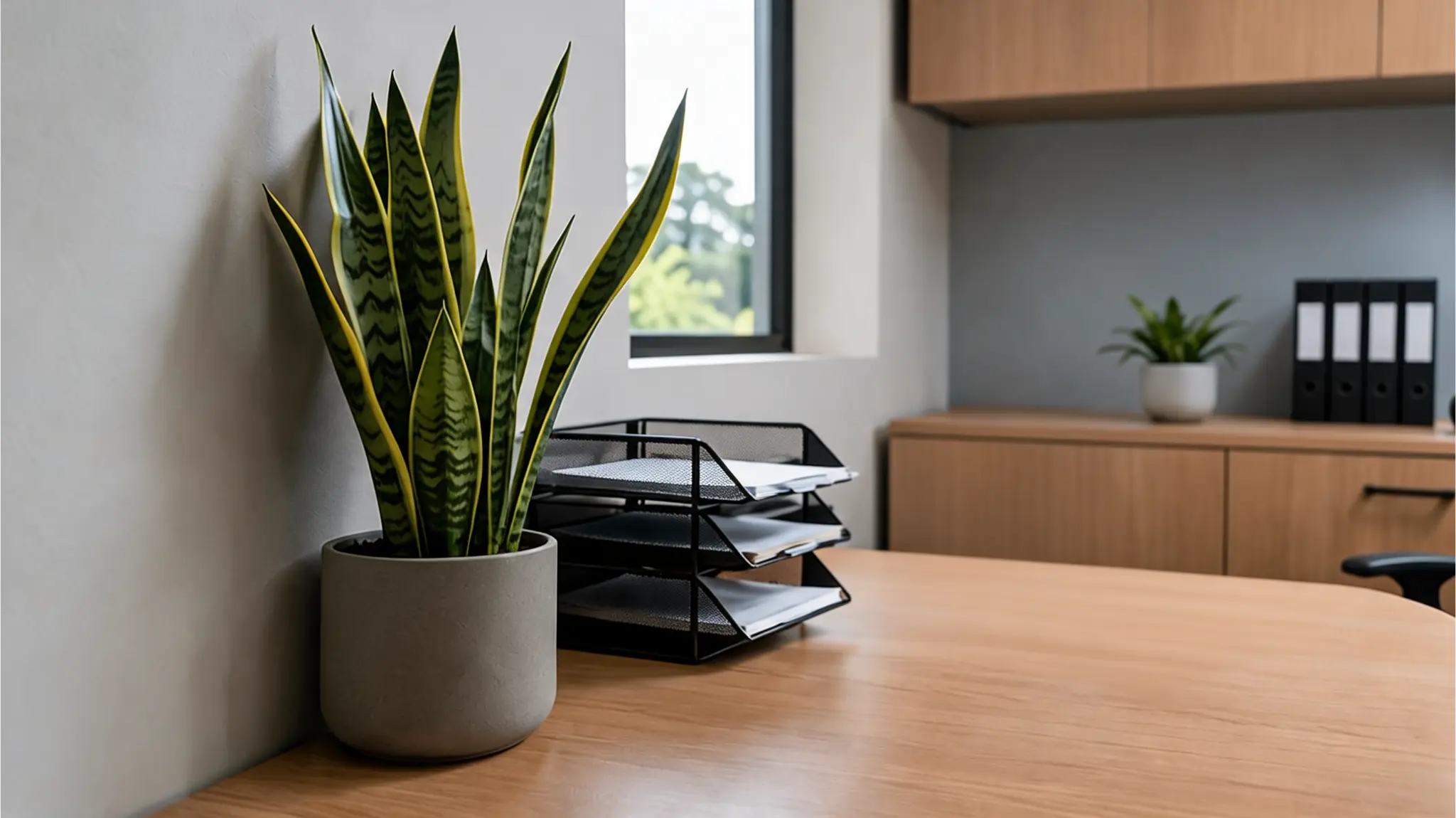
Snake plant is one of the easiest office plants to trust. Its tall, striped leaves grow upward, so it gives a desk or corner a clean shape without spreading into your work area. It looks sharp beside a cabinet, near a chair, or in a plain corner that needs more life.
I like snake plants because they do not ask for much. They can handle low light, dry air, and busy weeks when watering slips your mind. If you want one plant that makes your workspace look better without turning into another task, this is a safe first pick.
Best for: Narrow floor gap, low-light corner, or beside a cabinet
Benefit: Stays upright and tidy even when care is not always steady
2. ZZ Plant
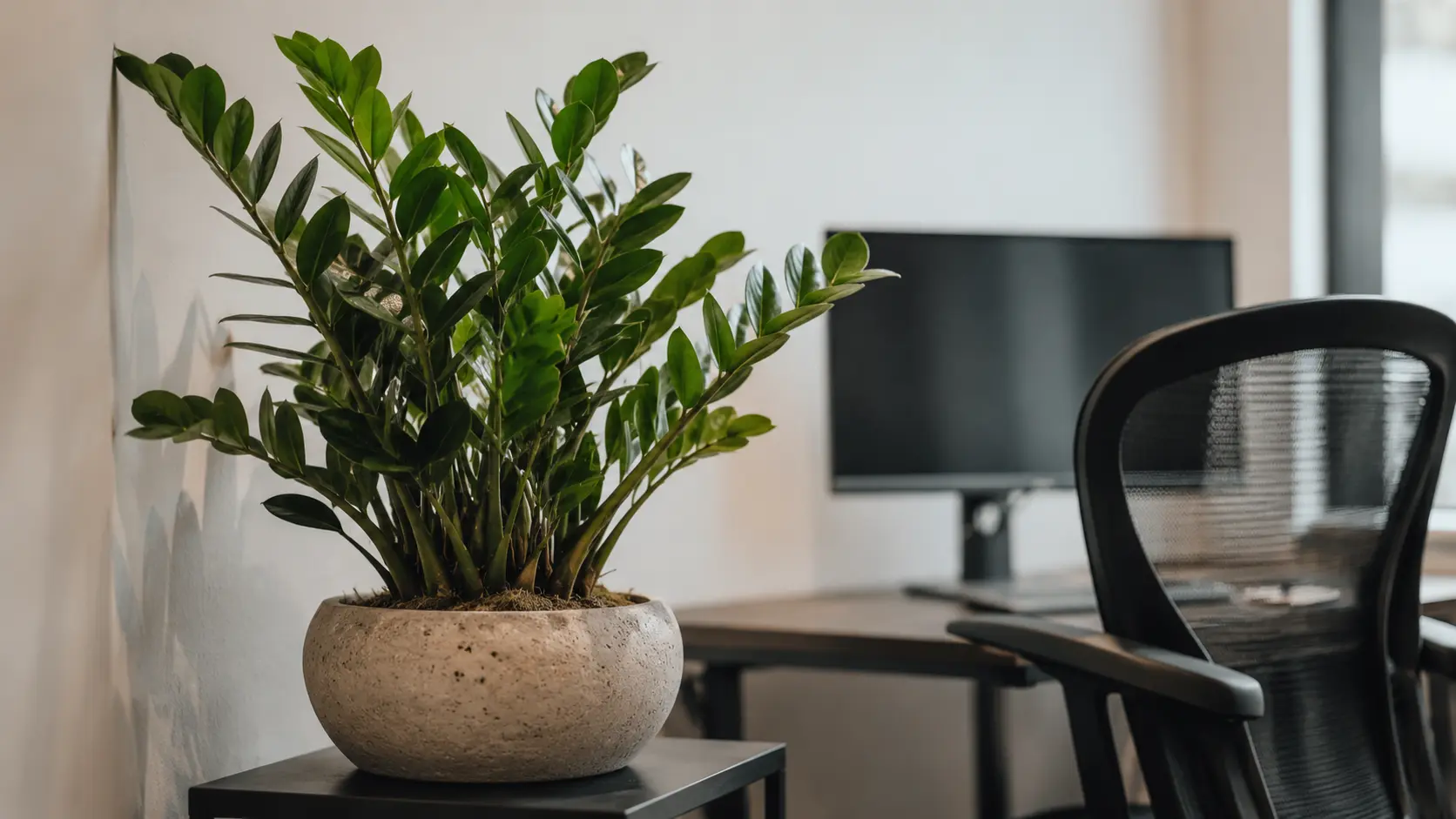
ZZ plant has glossy, deep green leaves that make a workspace feel neat right away. The leaves look smooth and polished, almost like they have been wiped clean, which makes the plant a good match for modern desks and shared office areas.
This plant is a strong choice for anyone who forgets to water or works in a room with weak light. It grows slowly, keeps its shape, and rarely looks messy. I would pick it for a desk, side table, or quiet corner where you want something green but low pressure.
Best for: Dim shared area, side table, or quiet office corner
Benefit: Holds its shape well between watering and cleaning days
3. Pothos
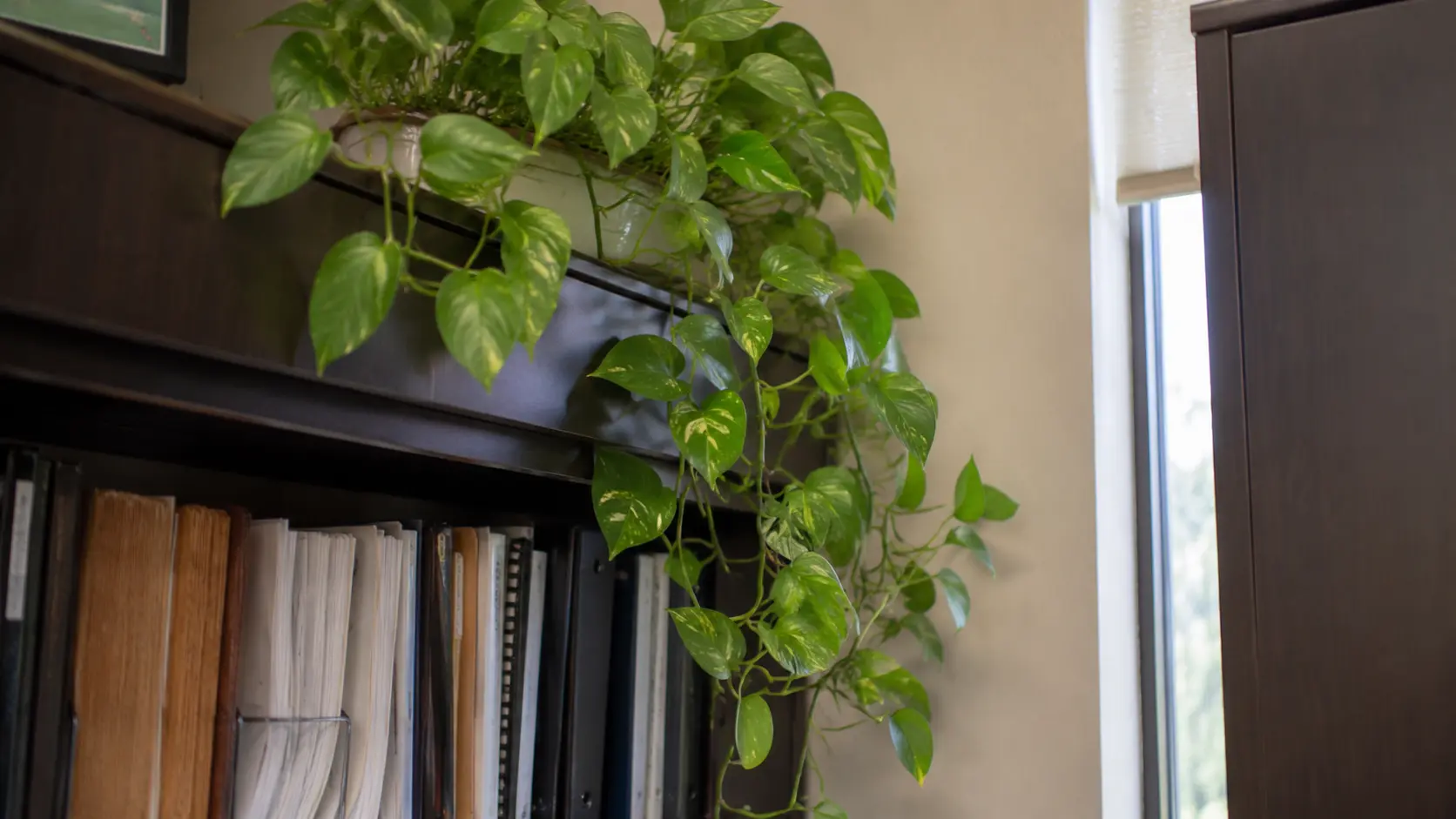
Pothos thrives in moderate indirect light. While it can survive low-light areas, very dim conditions slow growth and may cause leaves to yellow. Trailing vines soften shelves, cabinets, or hanging spaces. Golden pothos brightens the room, while jade pothos offers deeper green foliage.
It’s forgiving and easy to maintain. If vines get too long, trim and propagate cuttings in water to grow new plants or share with coworkers.
Best for: High shelf, cabinet top, or hanging pot
Benefit: Fills vertical space without using floor room
4. Lucky Bamboo
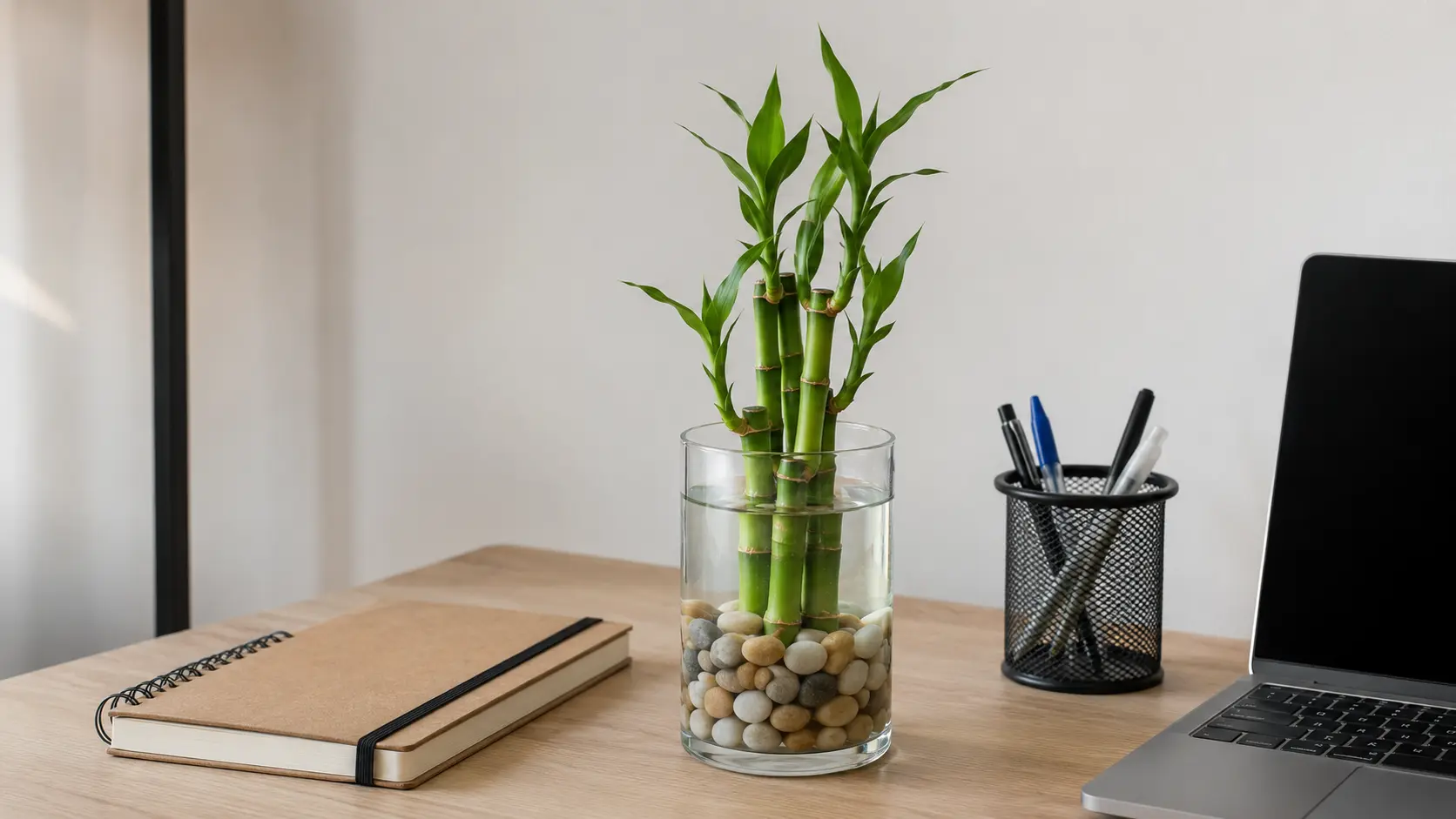
Lucky bamboo is simple, clean, and easy to fit into small spaces. It can grow in water with pebbles, so it works well for desks where soil might feel messy. Its upright stems give a calm look without taking up much space.
Even though it is called bamboo, it is actually a type of Dracaena. I like it for workspaces because it feels neat and personal at the same time, especially when you want something small and low effort beside your laptop.
Best for: Small desk, counter, or soil-free work area
Benefit: Keeps the setup neat when loose soil would feel messy
5. Peace Lily
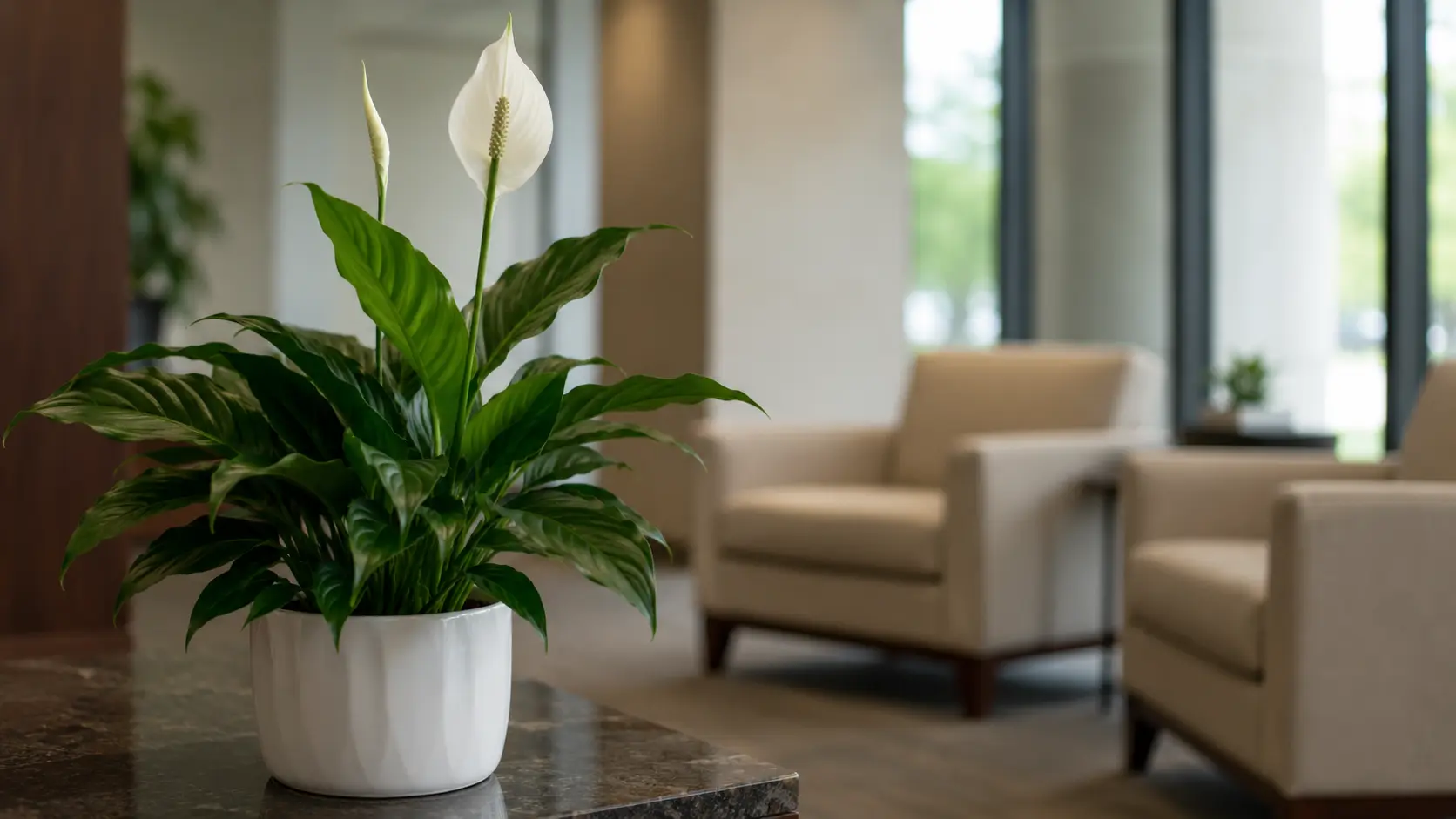
Peace lily is a good choice when you want a plant that feels soft but still looks polished. Its deep green leaves and white blooms make it look clean on a side table, reception desk, or meeting room cabinet.
It does need more attention than a snake plant or ZZ plant, but it helps you learn what it needs. The leaves droop when the soil gets dry, then lift again after watering. That simple signal makes it easier for someone new to plant care.
Best for: Reception desk, meeting room cabinet, or side table
Benefit: Adds soft blooms and shows clear signs when it needs water
6. Chinese Evergreen
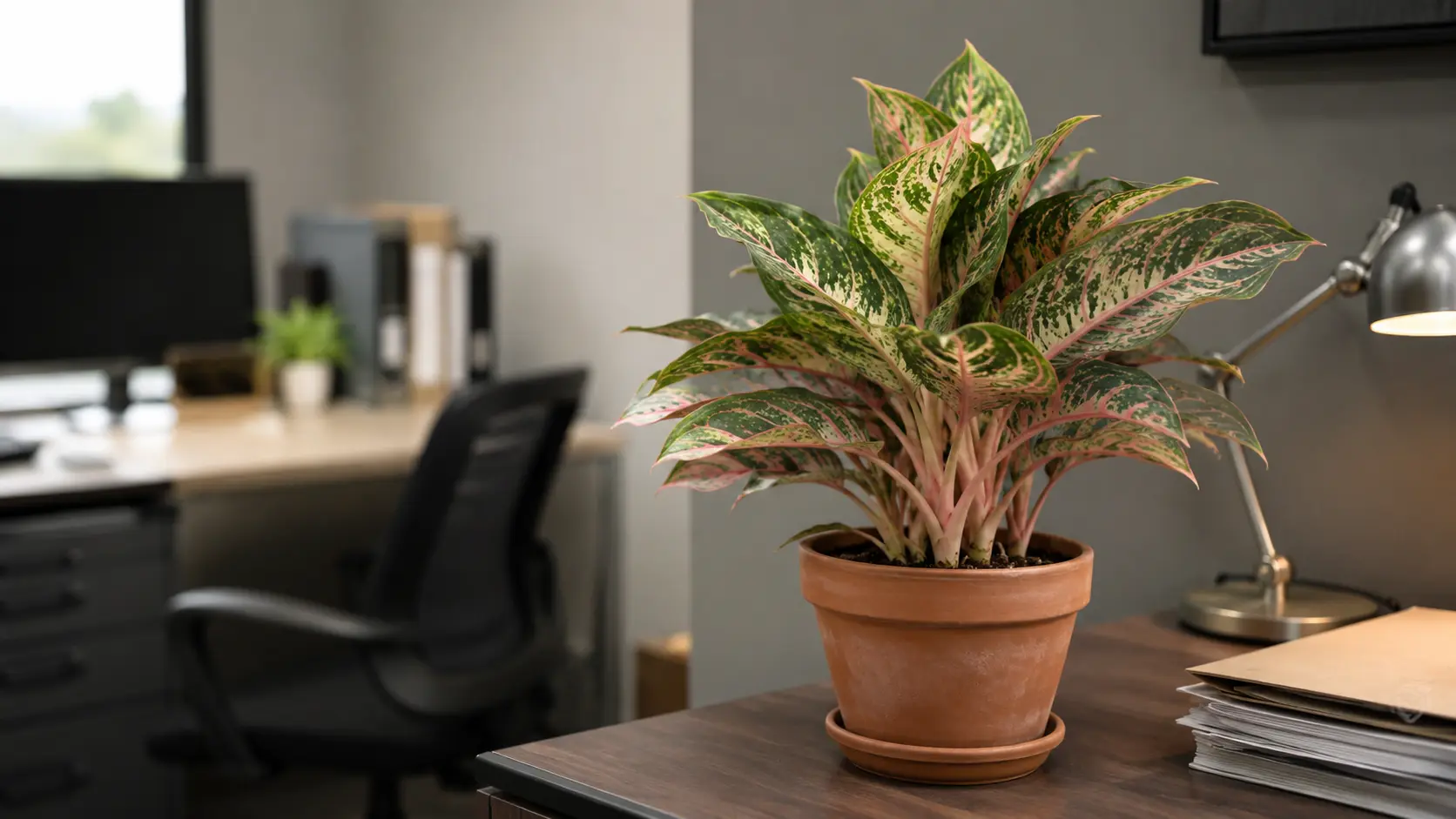
Chinese evergreen is a great office plant when you want color without relying on flowers. Some types have silver-green leaves, while others show soft red, pink, cream, or deep green patterns. It can make a plain office feel warmer without looking too busy.
This plant grows slowly and keeps its full shape, which makes it easy to live with at work. Darker green types handle dimmer areas better, while brighter leaf colors usually need more indirect light. It is a good middle ground between pretty and practical.
Best for: Low shelf, side table, or softly lit office corner
Benefit: Brings leaf color without needing seasonal flowers
7. Spider Plant
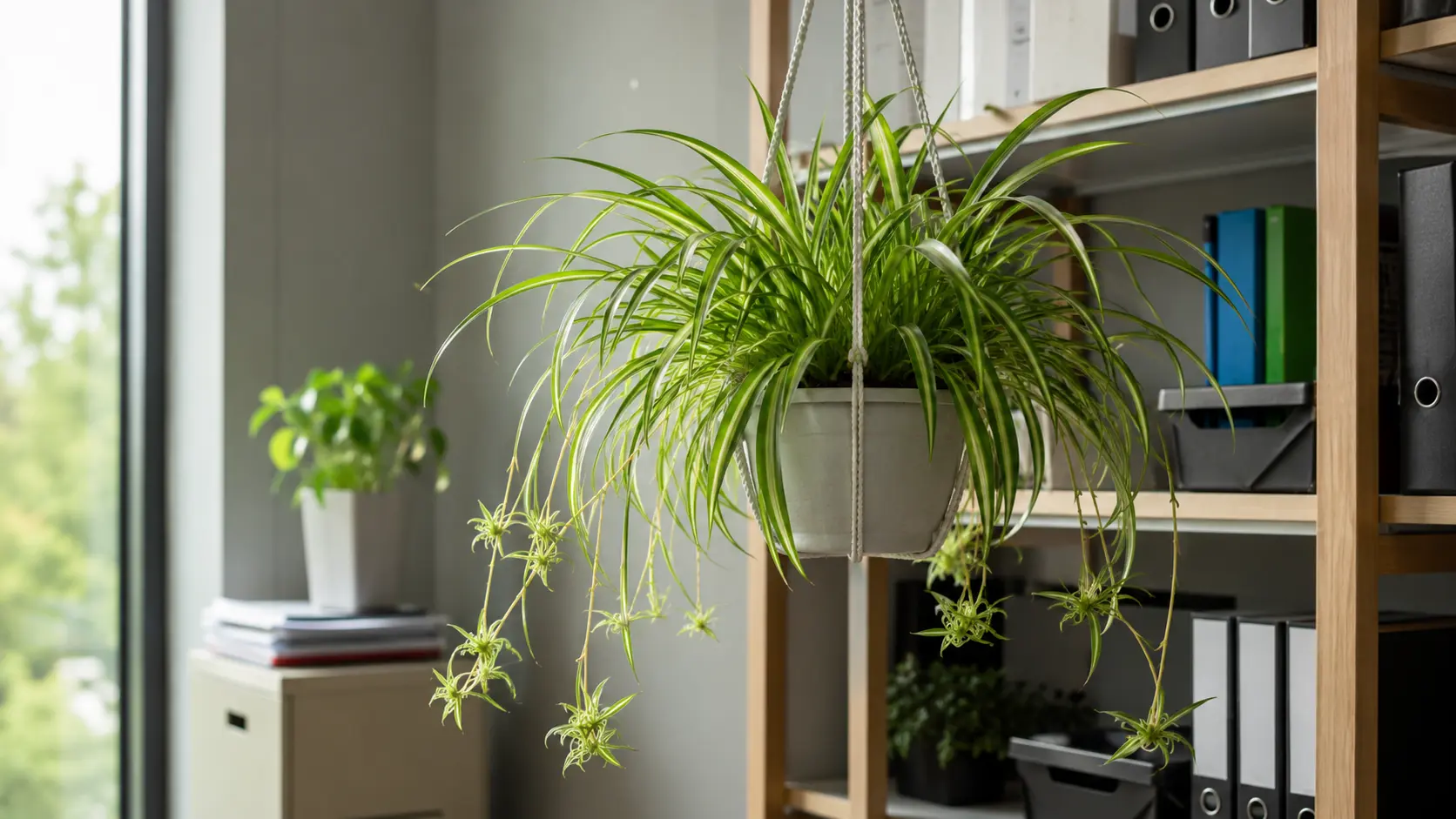
Spider plant has long, arching leaves that make a desk or shelf feel lighter. Its green and white leaves have a casual, friendly look, so it suits shared offices, creative rooms, and relaxed workspaces.
One reason people enjoy spider plants is that they make baby plants on long stems. You can leave them hanging or grow them in new pots. It feels nice to have a plant that gives you something to share with coworkers over time.
Best for: Shelf edge, hanging pot, or shared office area
Benefit: Adds a relaxed look and grows baby plants you can repot
8. Cast Iron Plant
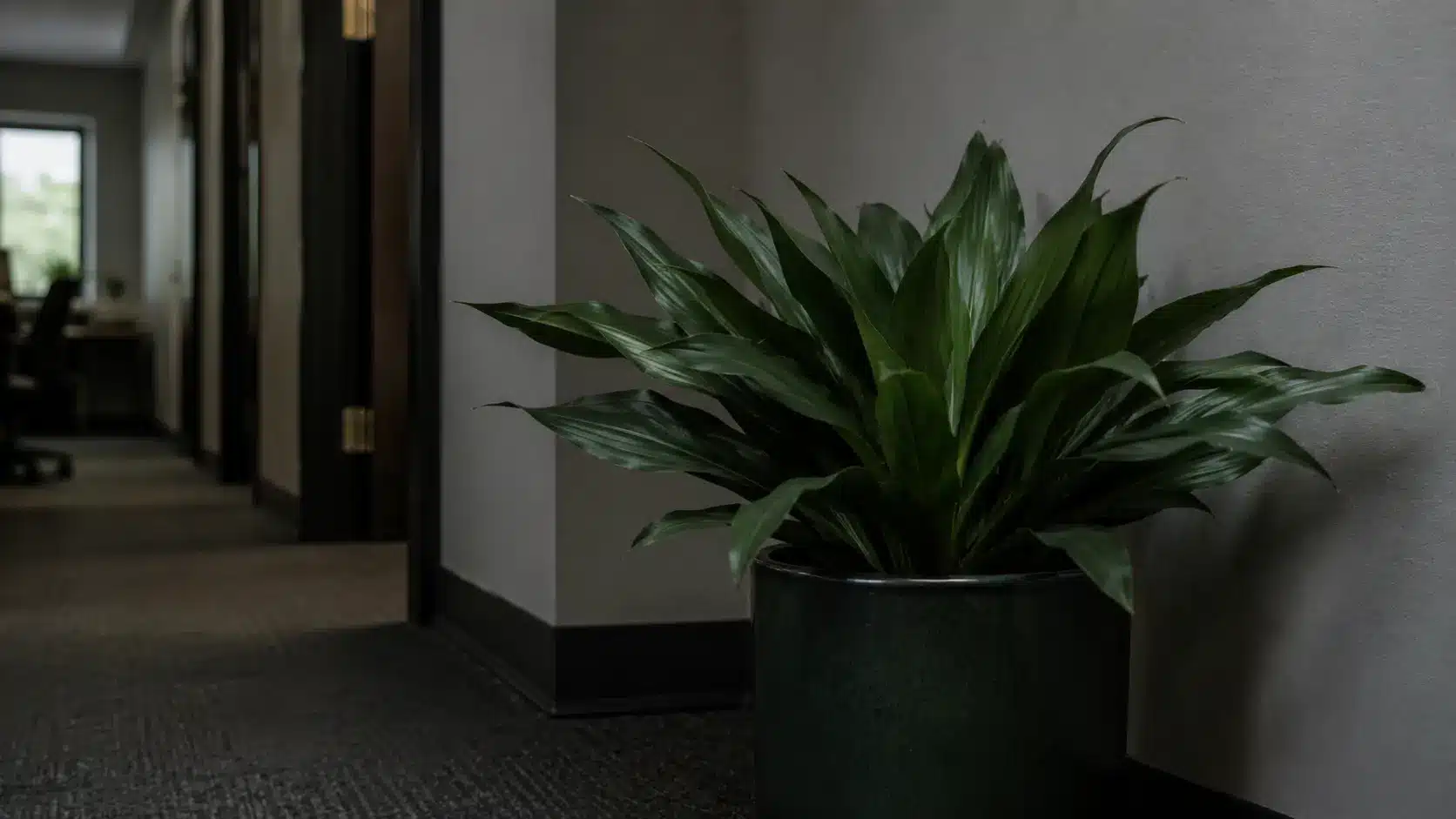
Cast iron plant is a steady choice for offices that are not plant-friendly. Its wide, dark green leaves look simple and strong, and it can handle low light better than many popular indoor plants.
It does not grow fast or draw too much attention, but that is part of why it works. It stays dependable in corners, hallways, and quiet rooms where other plants may struggle. If your office has dim light and you want something that lasts, this one makes sense.
Best for: Hallway, dim corner, or floor planter
Benefit: Handles harder office spots where many plants struggle
9. Rubber Plant
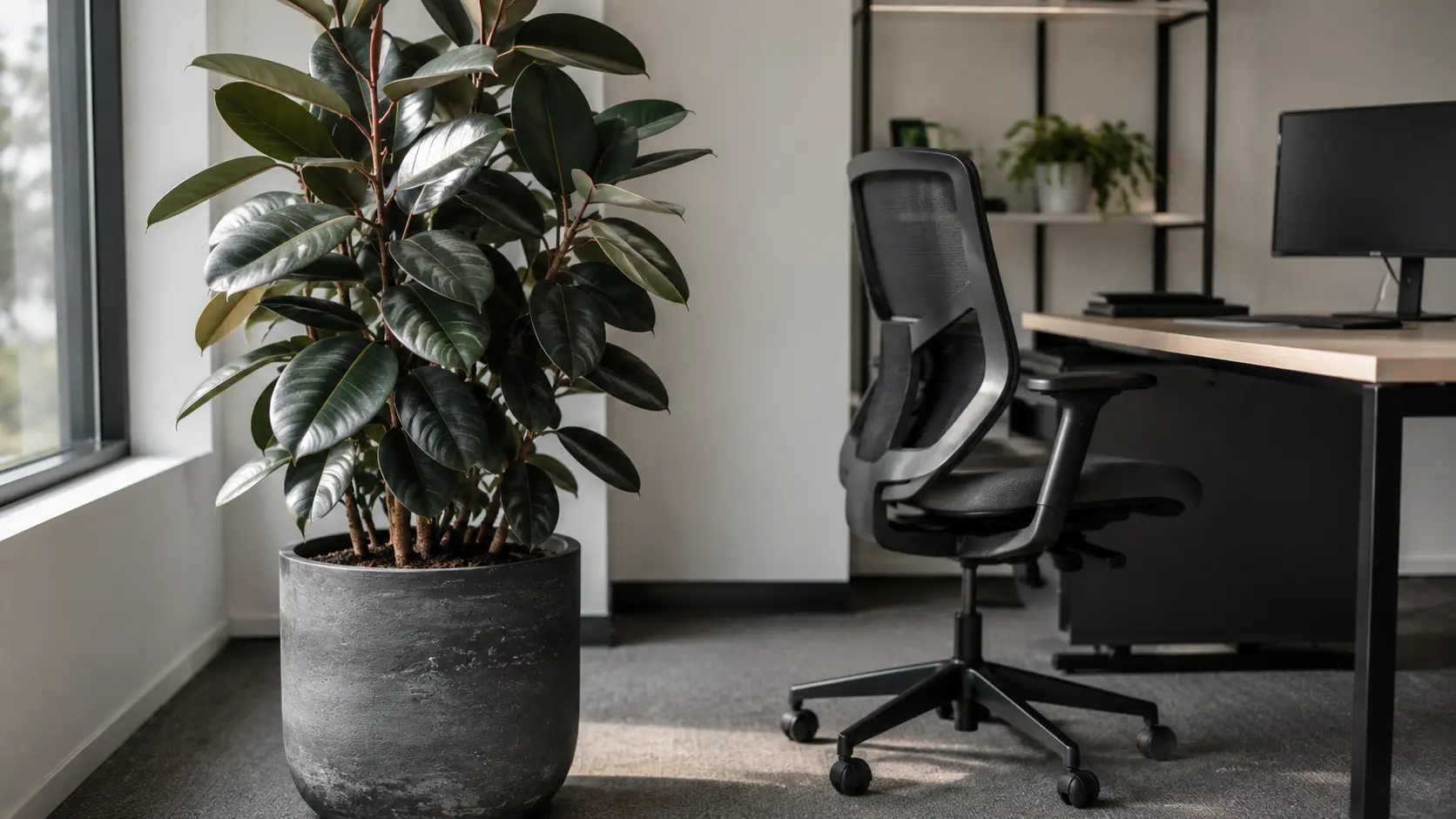
A rubber plant is a good pick when you want one plant to make the room feel more complete. Its large, shiny leaves stand out without needing lots of smaller plants around it. It works especially well in offices with clean furniture and open corners.
This plant looks best when its leaves stay dust-free. A quick wipe now and then keeps the shine visible. It does need better light than a ZZ plant, so it is better for brighter rooms than dark cubicles.
Best for: Bright open corner or clean office entry
Benefit: Makes one larger plant feel enough for the room
10. Dracaena
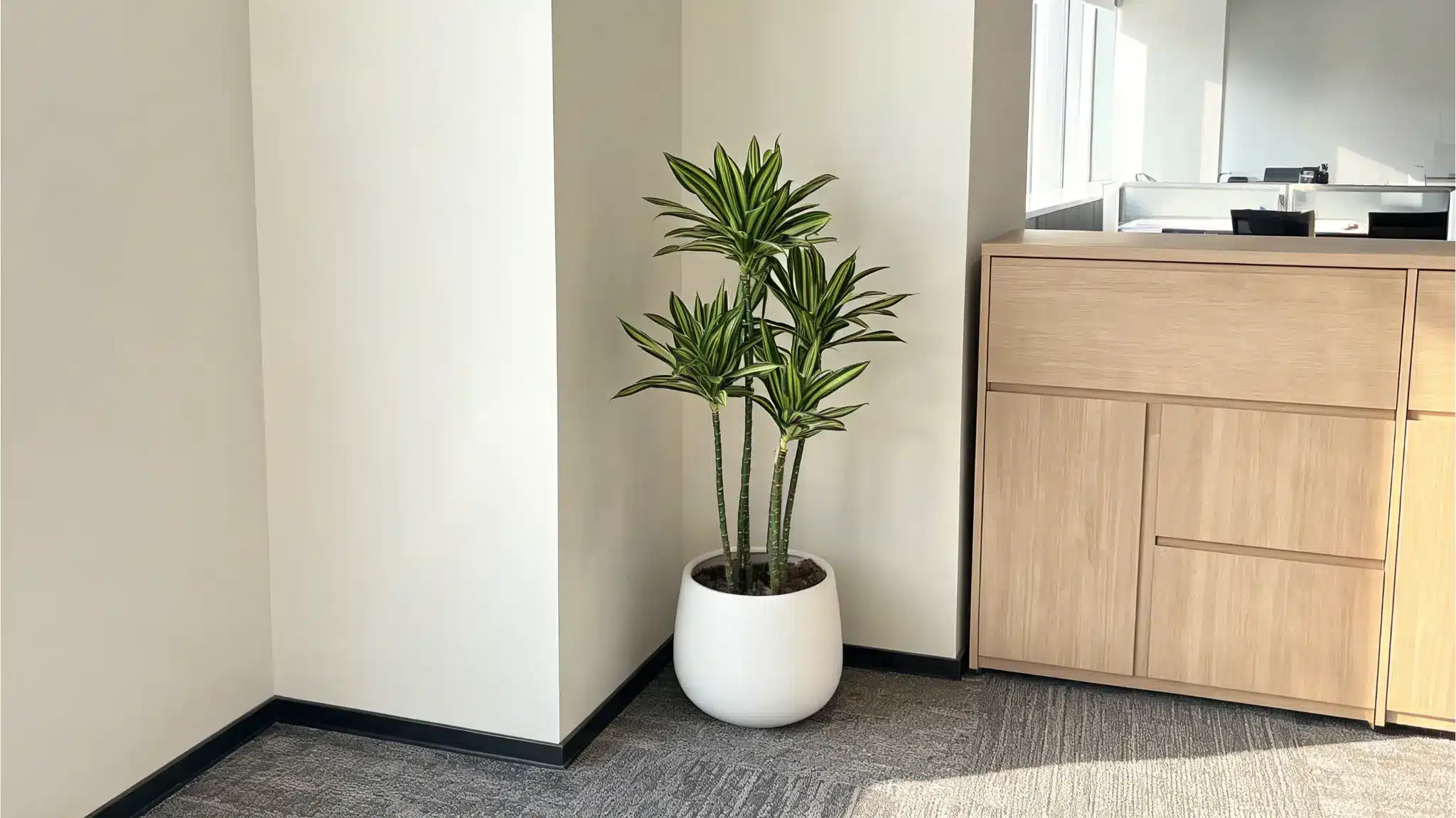
Dracaena adds height without taking over the floor. Some types look like slim indoor trees, while others have striped leaves that fan out. Perfect for corners that feel empty but lack room for wide plants.
It handles normal indoor conditions well, including dry office air, and grows slowly, making it easy to maintain without constant pruning.
Best for: Narrow corner, meeting room, or cabinet side
Benefit: Adds height without spreading wide across the floor
11. Heartleaf Philodendron
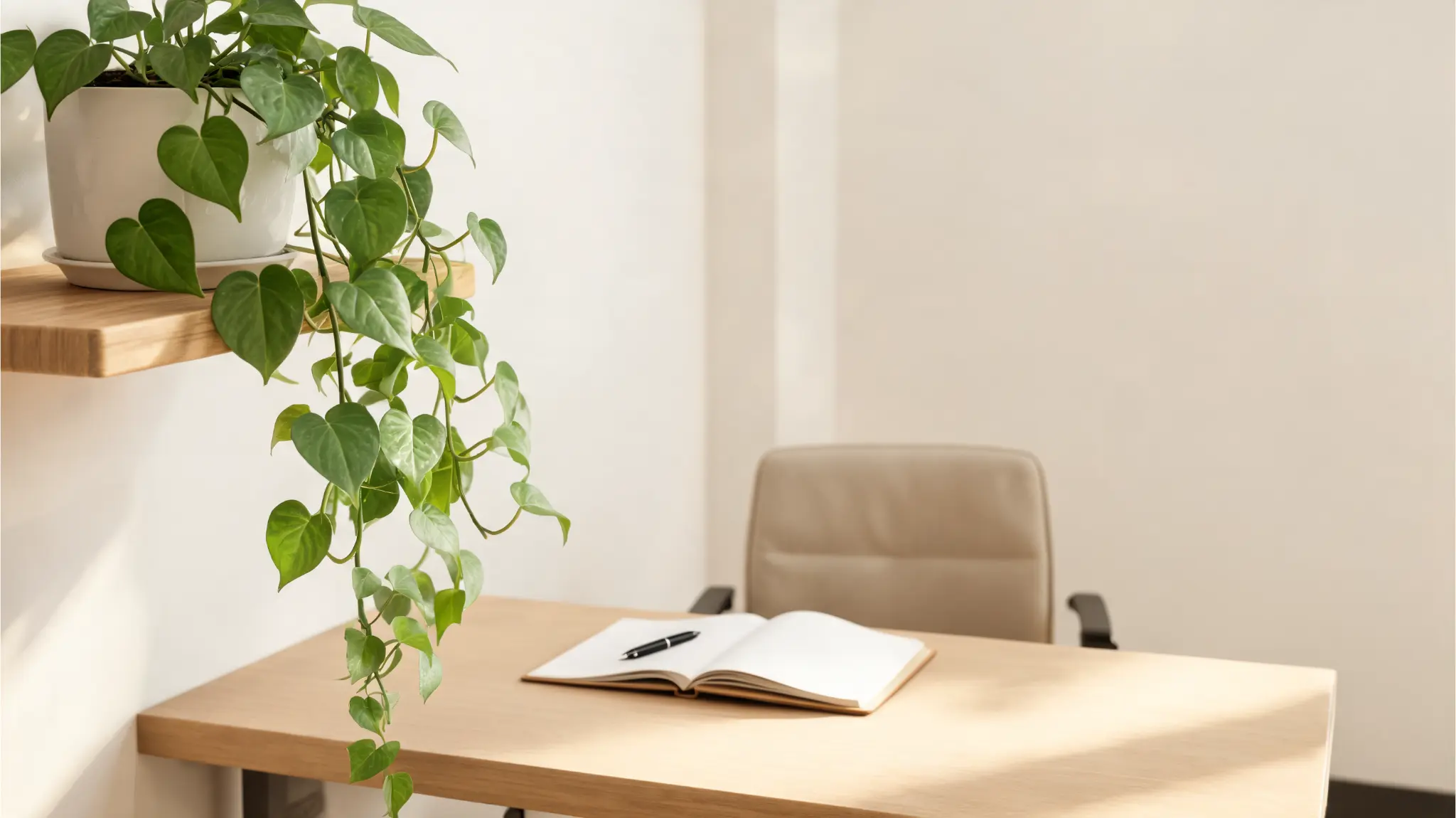
Heartleaf philodendron has soft green leaves that make a workspace feel more relaxed. It can trail from a shelf, sit on a side table, or climb a small support if you want it to grow upward.
This plant has a gentle look without being hard to manage. The leaves stay smaller than those of many tropical plants, so it does not take over too quickly. If your office feels too stiff, this plant can make it feel more lived-in.
Best for: Shelf, plant stand, or small support pole
Benefit: Trails or climbs easily, so you can shape it to the space
12. Peperomia
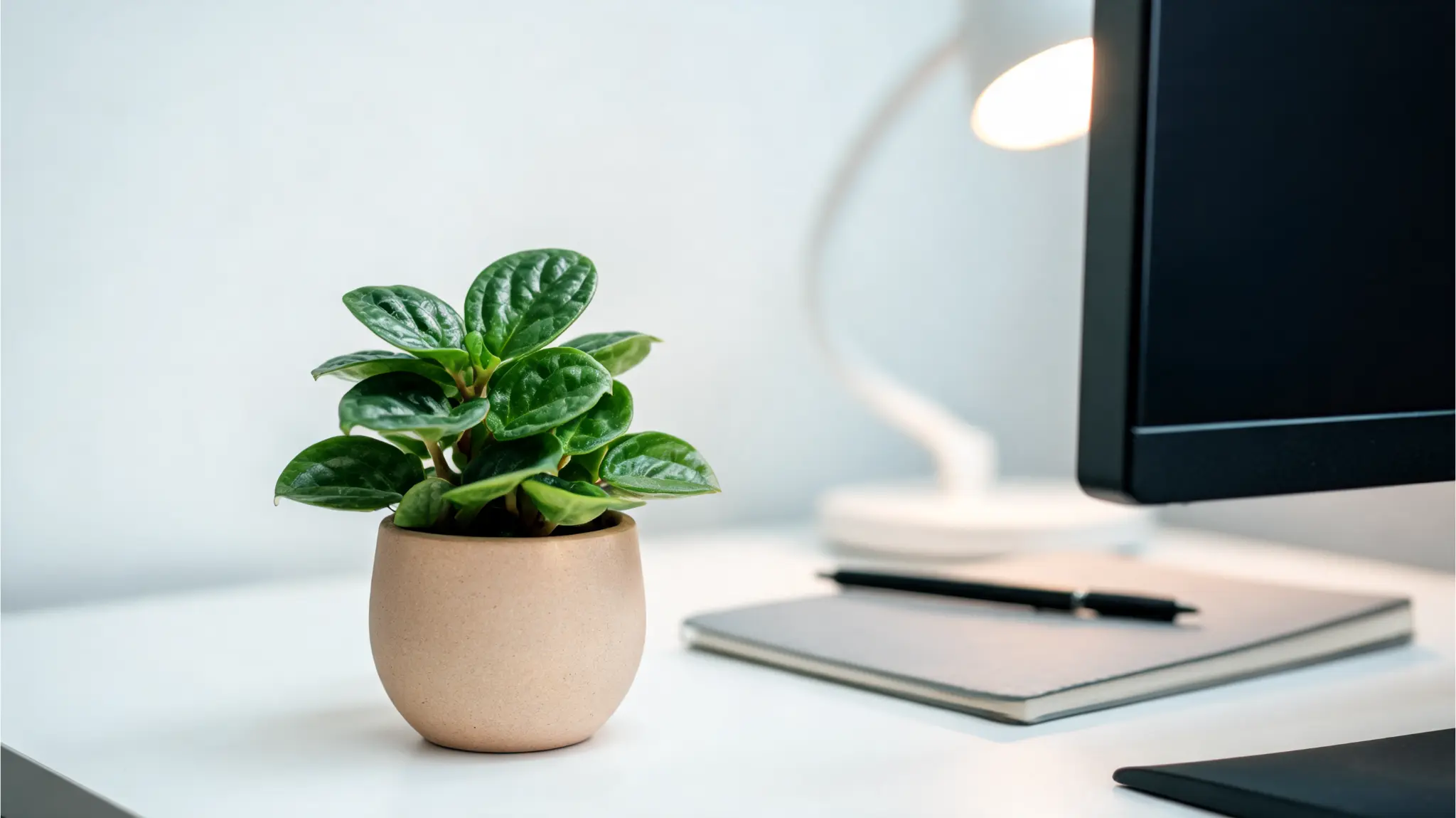
Peperomia is a smart choice for small desks. It stays compact and comes in many leaf styles, from round and glossy to striped or rippled. It gives you something interesting to look at without taking up much space.
This is the kind of plant I would place beside a monitor, notebook, or small lamp. It feels personal but not distracting. Since it stays small for a long time, it is also a good pick for people who do not want to keep moving plants into bigger pots.
Best for: Monitor side, small shelf, or desk near a lamp
Benefit: Adds leaf detail without crowding your work tools
13. Jade Plant
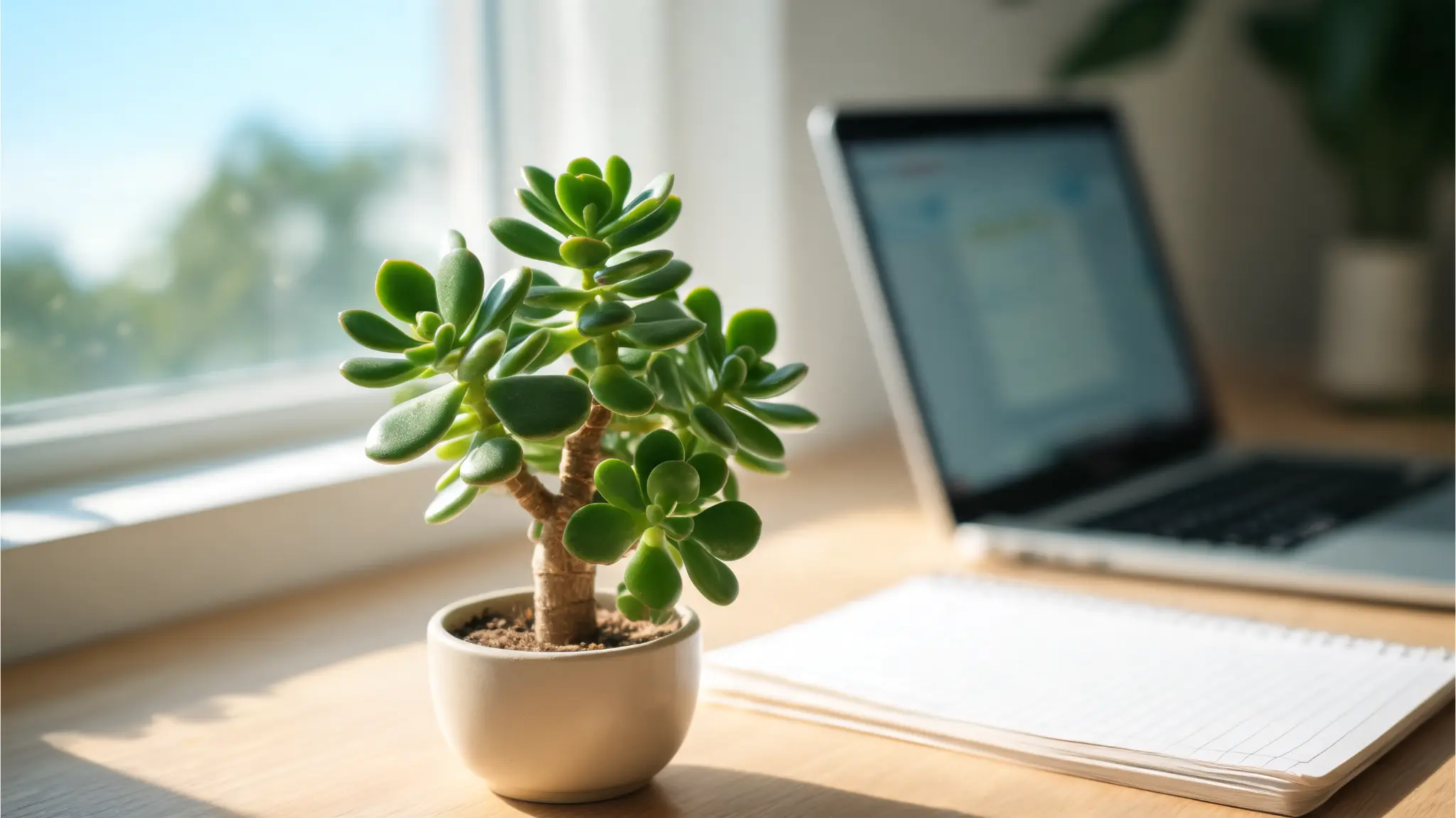
Jade plant works well near bright, indirect light. Its thick, rounded leaves store water, allowing it to handle occasional dry periods. Overwatering is more harmful than underwatering. Too little light may slow growth, but indirect sunlight helps it thrive and grow slowly into a small tree-like shape.
It adds stability and calmness to your desk or window ledge while remaining low-maintenance.
Best for: Sunny windowsill or bright personal desk
Benefit: Grows slowly and can turn into a small tree-like plant
14. Aloe Vera
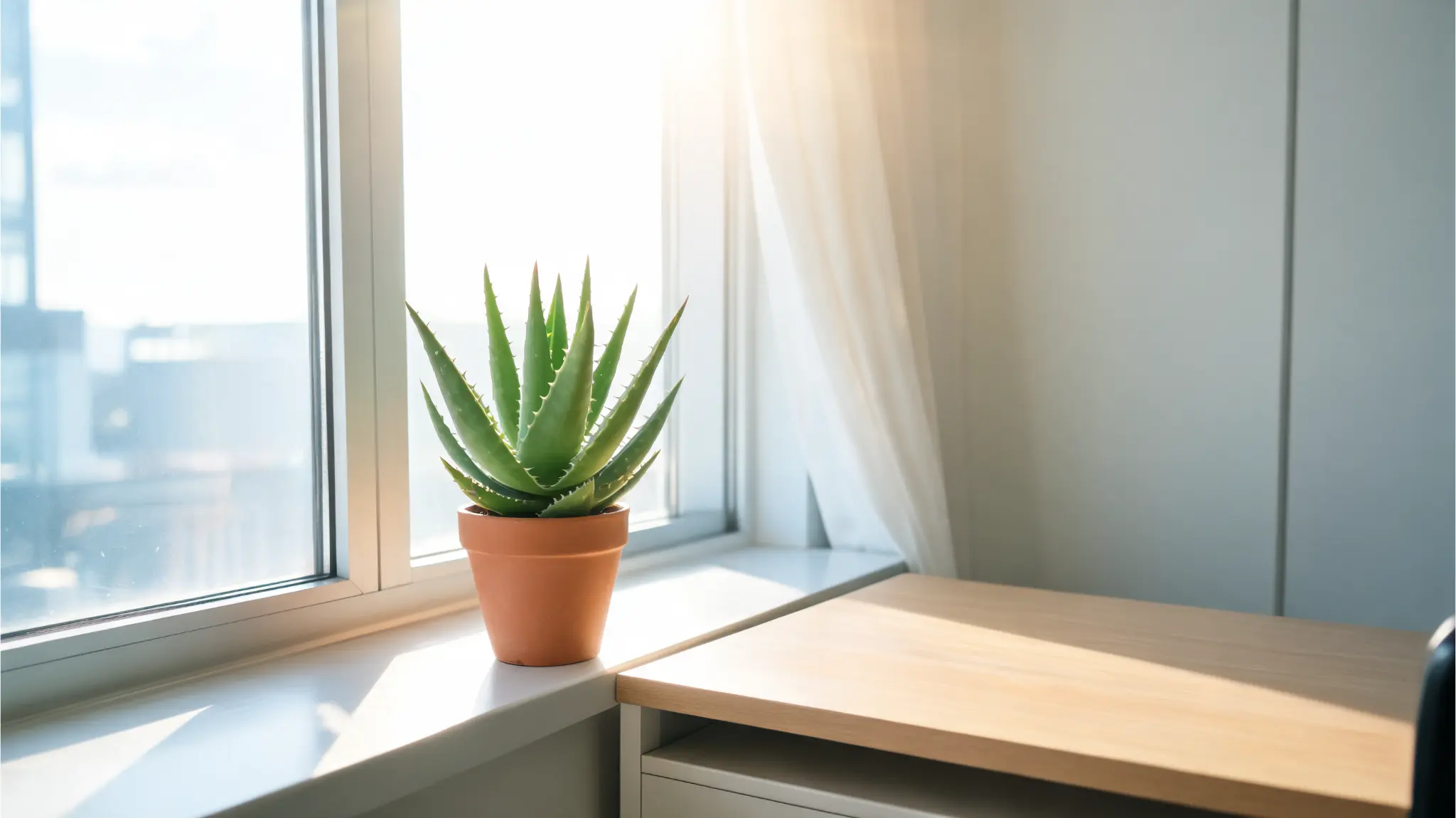
Aloe vera has upright, fleshy leaves that fit cleanly on a desk or window ledge. It survives longer dry periods and prefers bright indirect light.
Overwatering is the main risk, while underwatering rarely harms it. Direct sunlight is optional, but indirect light is sufficient. Its minimal care and tidy appearance make it a simple, reliable office plant.
Best for: Bright window ledge or sunny side table
Benefit: Needs little water and keeps a clean upright shape
15. Air Plant
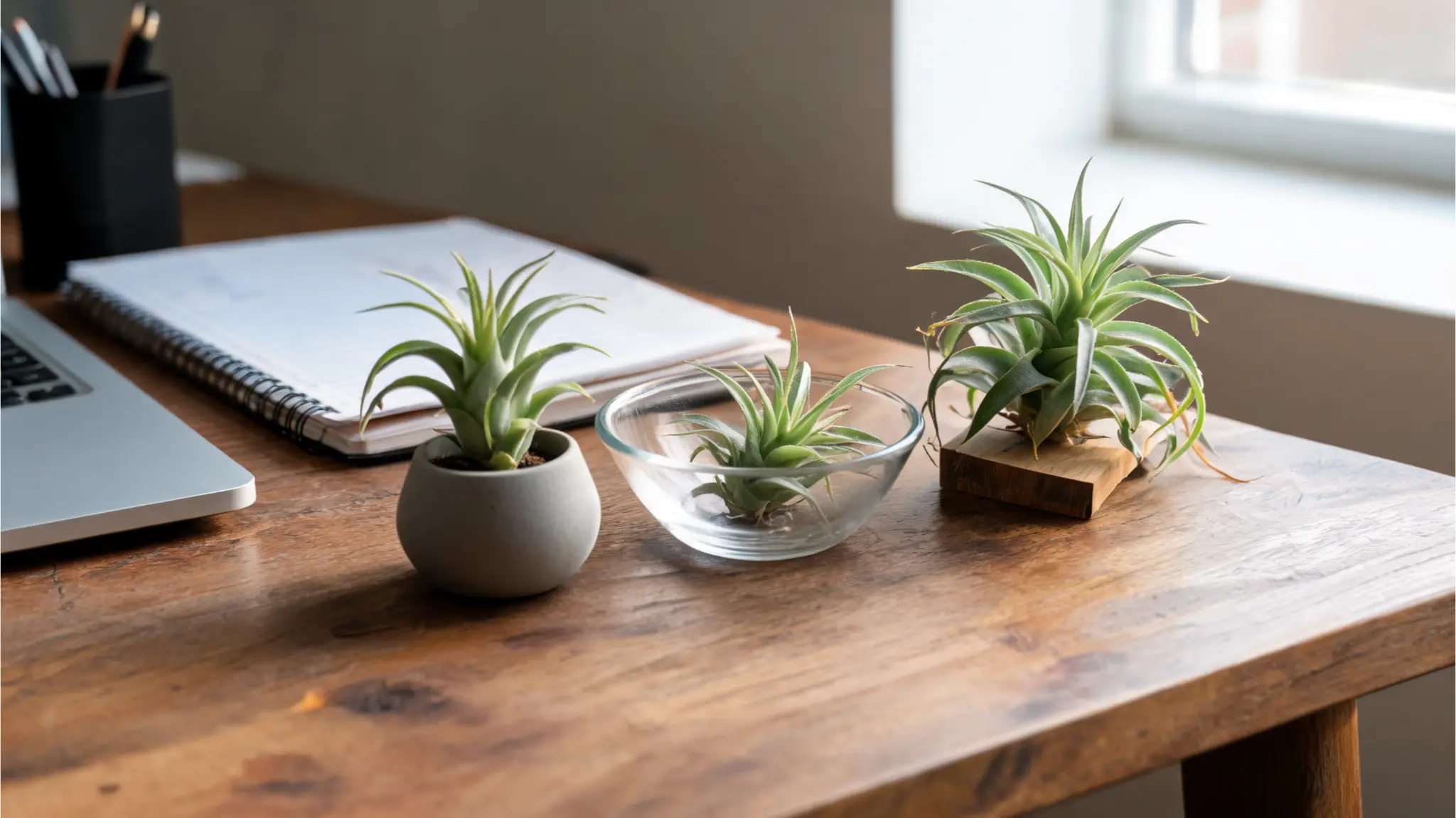
Air plants are good for workspaces where you want something small and different. They do not need soil, so they can sit in tiny holders, glass bowls, wall pieces, or simple desk stands.
They work best for people who like a small plant routine. Their main appeal is the no-soil setup, which makes them useful for tight desks, shelves, and work areas where loose soil would be annoying.
Best for: Tiny holder, wall piece, or glass bowl
Benefit: Works in spots where a normal plant pot feels too bulky
16. Parlor Palm
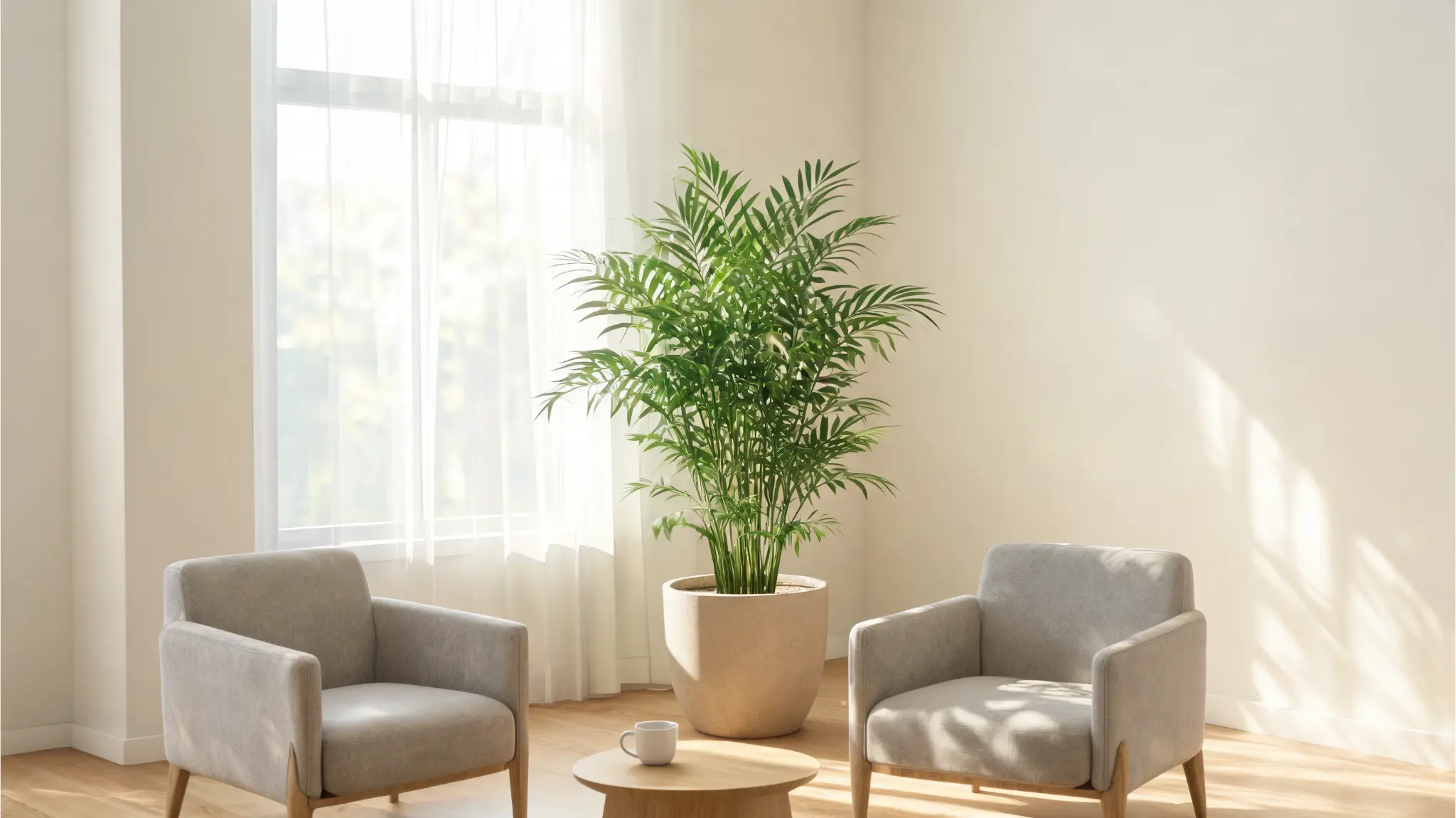
Parlor palm has soft, feathery leaves that make an office feel less stiff. It brings a gentle green look without growing too large too quickly, which makes it easier to manage indoors.
This plant works well in waiting areas, quiet corners, and side spaces where you want something calm. It is not as tough as a snake plant or ZZ plant, but it is still easier than many palms. Its softer shape makes it a nice choice when upright plants feel too formal.
Best for: Waiting area, soft corner, or small floor planter
Benefit: Adds fuller greenery without feeling stiff or heavy
17. Anthurium
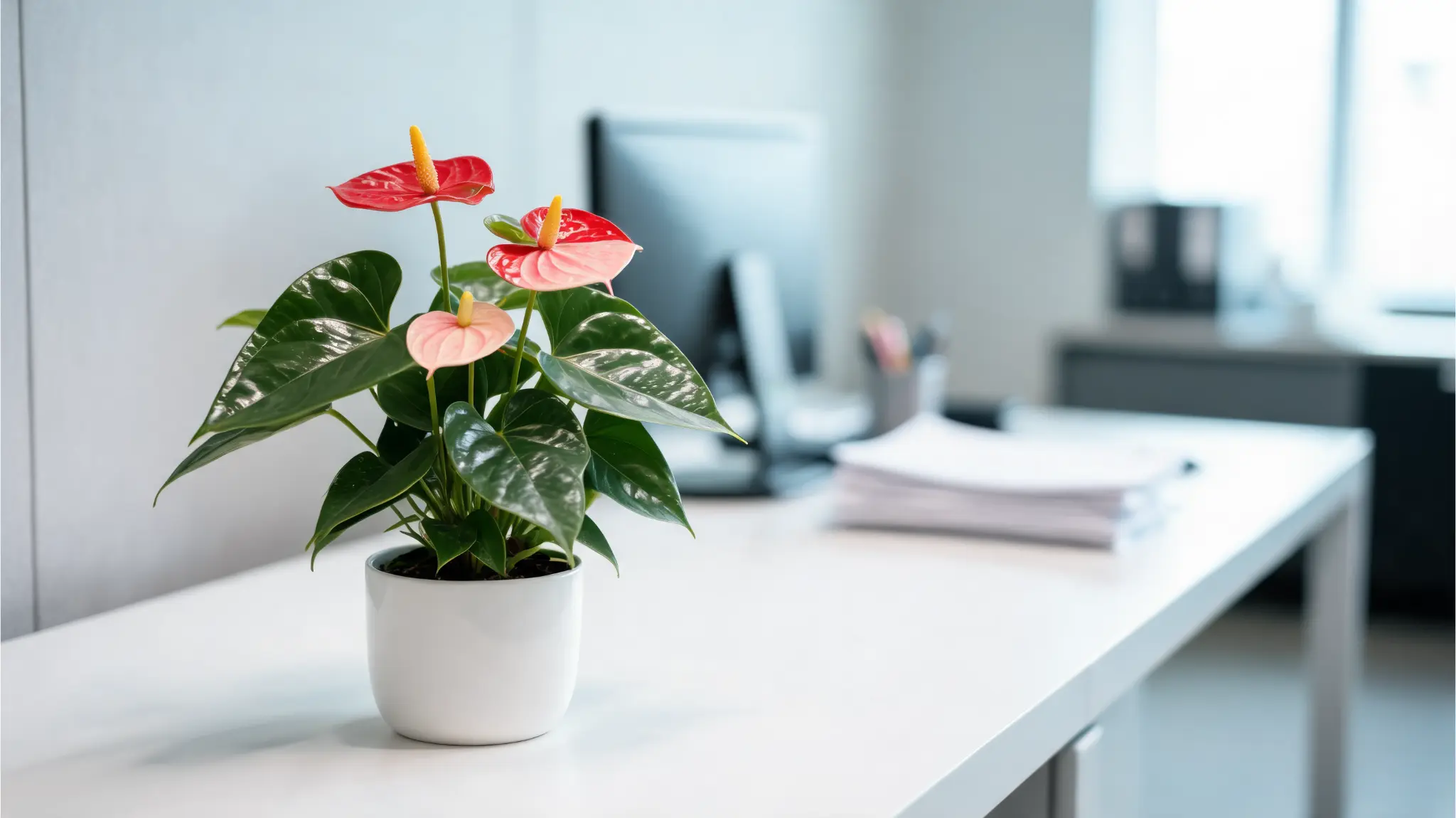
Anthurium is a good office plant if you want long-lasting color. Its glossy heart-shaped blooms can be red, pink, white, or purple, and the leaves have a shine that makes the whole plant look polished.
It suits desks and front areas where people will notice it. It needs steadier care than the toughest plants on this list, but it gives a lot back visually. If your workspace feels plain, anthurium can add color without needing a large plant.
Best for: Front desk, counter, or bright side table
Benefit: Gives lasting color in a small, neat plant shape
18. Succulents
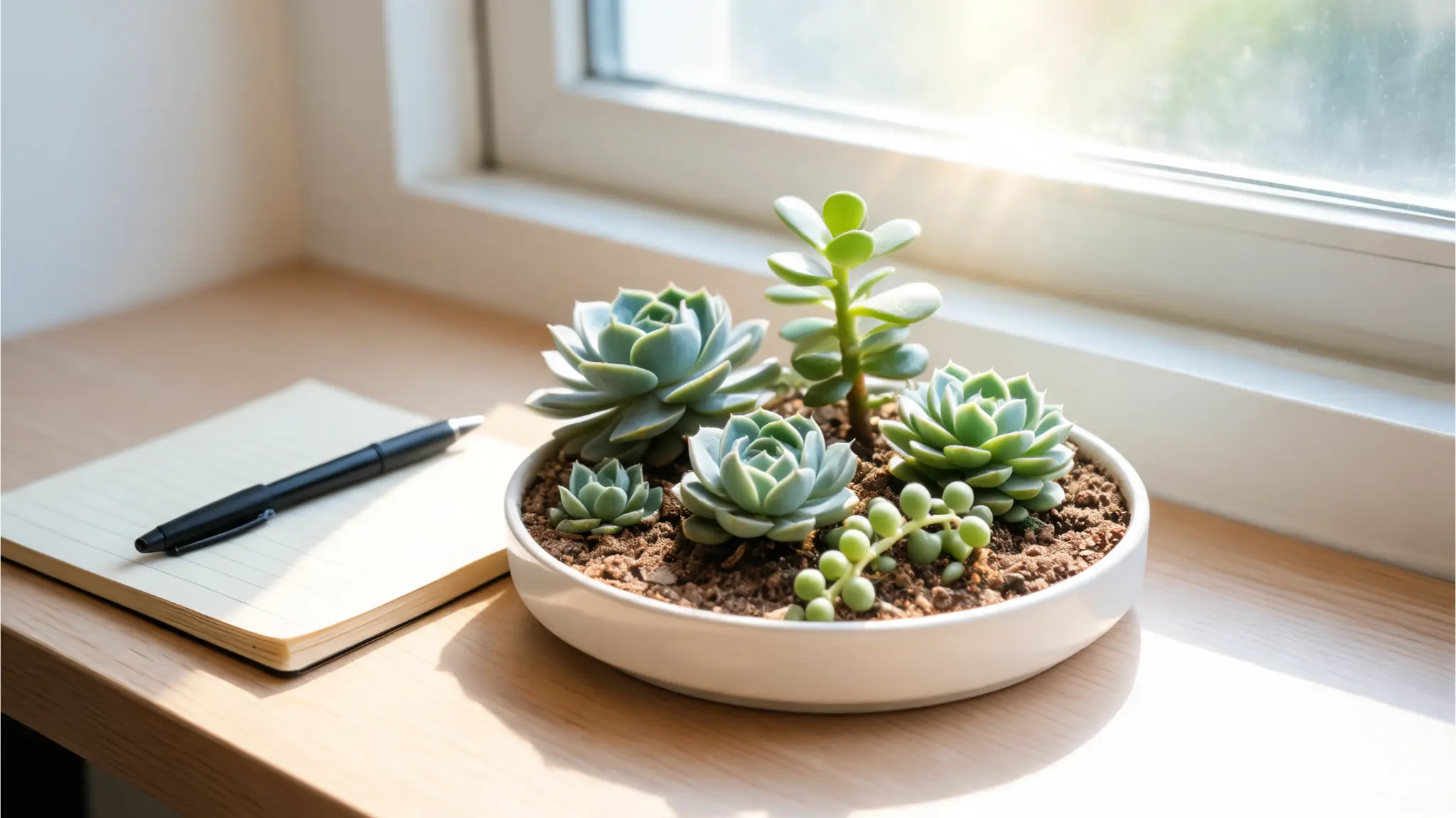
Succulents do best with bright, indirect light. They tolerate occasional neglect but are sensitive to overwatering, which is usually more harmful than short dry periods. Different types vary in light tolerance. Haworthia can handle lower light, while Echeveria prefers brighter spots.
Small pots, mixed trays, or single containers fit sunny desks well. Rotate them occasionally for even light exposure and keep the soil dry between waterings.
Best for: Sunny tray, windowsill, or bright shelf
Benefit: Thrives in strong light with minimal water
19. Ponytail Palm
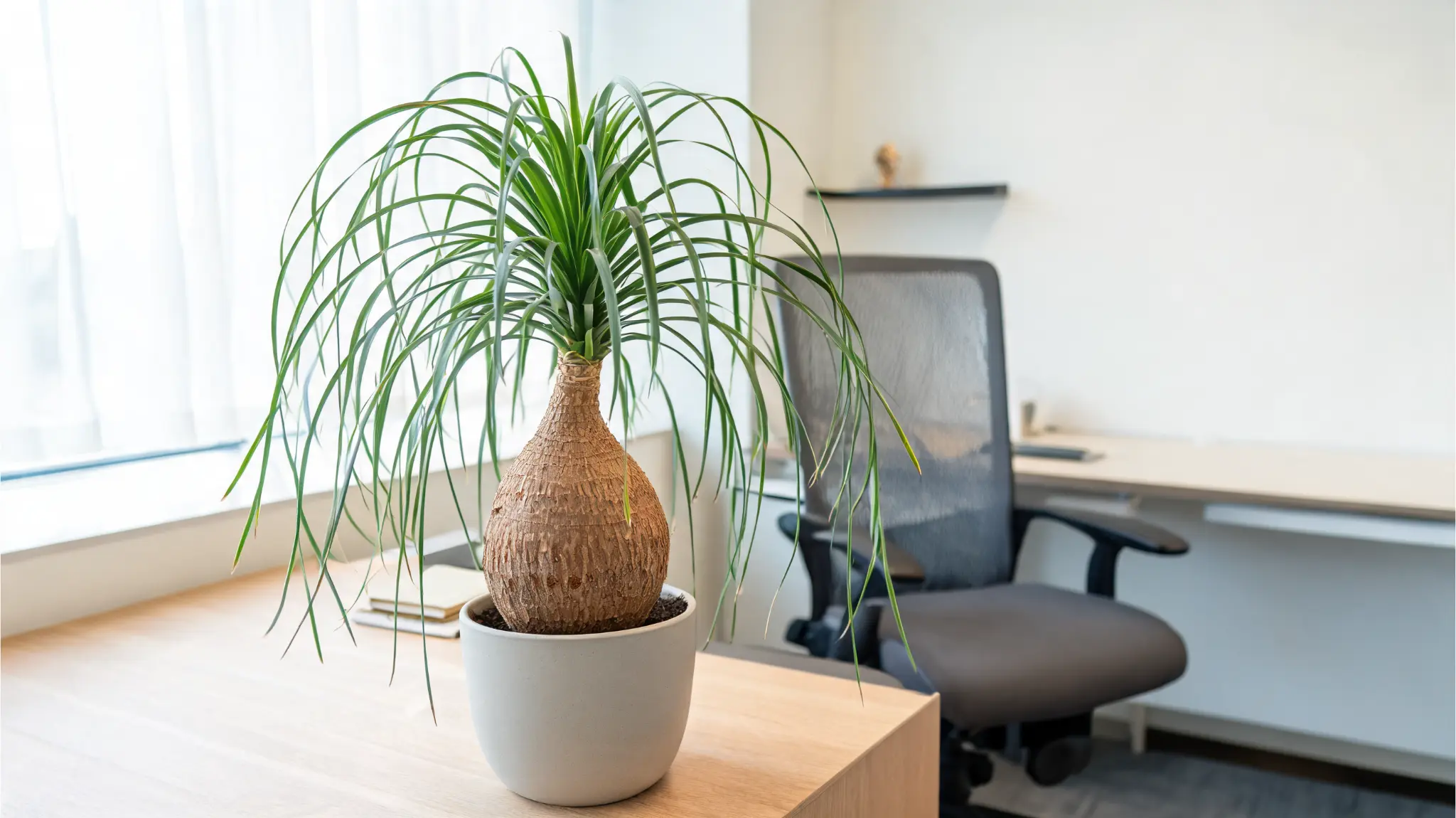
Ponytail palm has a thick base and long leaves that curve outward from the top. It looks playful without being messy. Even though it is called a palm, it stores water in its base, so it handles dry spells well.
This plant grows slowly and keeps a tidy shape, which is helpful in offices. It adds character to a bright desk, shelf, or small floor spot. If you want something that feels a little different but is still easy, ponytail palm is worth considering.
Best for: Bright shelf, desk end, or small floor spot
Benefit: Stores water in its base, so it handles dry spells well
20. Mini Monstera
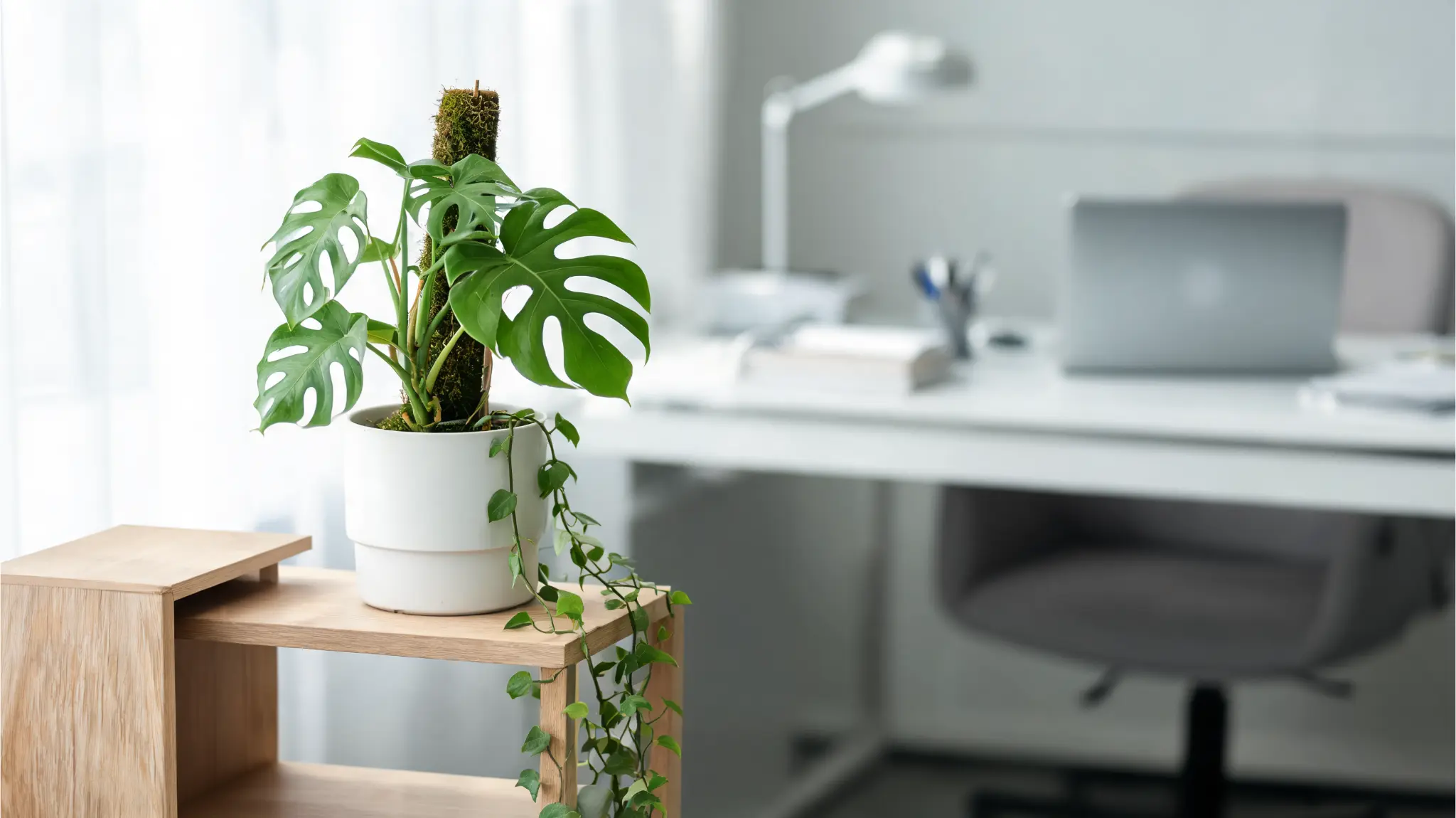
Mini monstera, usually Monstera adansonii, gives split leaves without the size of a full monstera deliciosa. It prefers bright, indirect light and moderate humidity, which makes it easier to manage indoors than full-sized varieties.
Ideal for shelves, plant stands, or side tables with room to trail. Provide a small support for climbing growth, and avoid overly dark spots to keep leaves healthy and vibrant.
Best for: Plant stand, open shelf, or side table with room to trail
Benefit: Offers split leaves in a smaller, manageable size
21. African Violet
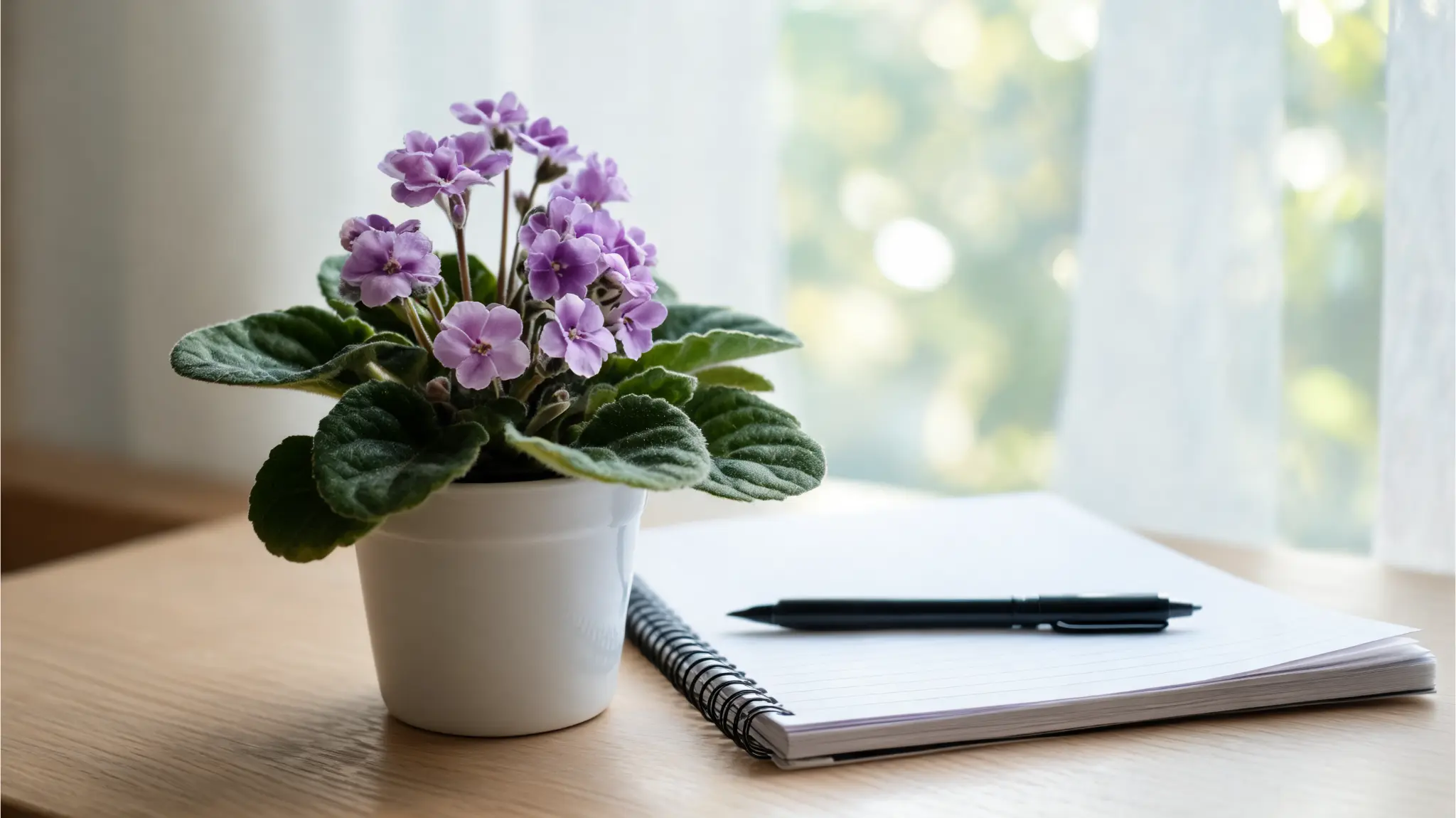
African violets prefer bright, indirect light and consistent soil moisture. They are sensitive to drafts, sudden temperature changes, and overwatering. Leaves and flowers droop quickly if conditions are off, but recover when watered correctly.
They remain small, bloom in purple, pink, blue, or white, and are perfect for small desks or shelves when cared for carefully.
Best for: Bright desk, windowside table, or small shelf
Benefit: Adds delicate flowers while staying compact and visually appealing
What to Check Before Buying an Office Plant?
Before buying, look at the plant closely. Healthy leaves should feel firm and look clear. Avoid plants with sticky marks, brown patches, tiny bugs, or soil that smells sour. If the soil is already soaked in the store, the roots may not be in good shape.
Also, think about the pot. A decorative pot can make the plant look better, but the plant still needs drainage. One easy setup is to keep the plant in its plastic nursery pot and place that inside a nicer outer pot. Then you can lift it out when watering.
Buying tips:
- Match the plant size to the place where it will sit
- Choose low-light plants for rooms far from windows
- Pick slow growers for small desks
- Avoid plants sitting in wet soil at the store
- Check leaves for pests, sticky spots, or brown patches
- Use a pot with drainage or keep the nursery pot inside a cover pot
- Check pet safety if animals visit the workplace
Simple Office Plant Care Tips
Most office plant problems come from too much water. Offices often have low light, cool air, and air conditioning, so soil dries more slowly than you may expect. A plant that looks thirsty may not always need water. Sometimes it needs better light or less draft.
The easiest habit is to check the soil before watering. If the top layer still feels damp, wait. If it feels dry, water it slowly and empty any water that collects under the pot. This one step can save many office plants from root rot.
Care tips:
- Check the soil before watering
- Water less often in low light
- Keep plants away from strong AC vents
- Wipe dusty leaves once a month
- Turn the pot every few weeks
- Remove yellow leaves early
- Pick one person to care for shared plants
Frequently Asked Questions
Which one is easiest to keep alive?
ZZ plant is usually the easiest office plant for busy workspaces. It handles weak light, dry air, and missed watering well. Snake plant is another strong choice if you want something upright, tidy, and easy to manage.
What should I choose for a room with no window?
Start with ZZ plant, cast iron plant, or snake plant because they handle dim rooms better than most indoor plants. If the room stays dark all day, a small grow light can help keep the plant healthy.
What works best on a tiny desk?
Peperomia, lucky bamboo, air plant, African violet, or a small snake plant can work well on a tiny desk. These plants stay compact, look neat, and leave enough room for your laptop, notebook, and papers.
How often should I water it?
Check the soil before watering instead of following a fixed weekly schedule. If the top layer feels dry, water lightly. If it still feels damp, wait a few days so the roots do not sit wet.
Do plants really help with air quality?
Office plants can remove some pollutants in controlled tests, but normal building airflow matters more in real rooms. The bigger value is comfort, color, and making your desk or office feel more cared for.
Final Thoughts
Adding greenery to your work area is a small change, but it can shift how the space feels each day. A plain desk starts to feel more cared for. A quiet corner feels less empty. Even a small pot can give your eyes a break when the screen starts to feel tiring.
The best office plants should make your workspace easier to enjoy, not harder to manage. Pick one that fits your light, space, and routine, then give it a steady spot. You do not need to fill the whole room at once.
Start with one plant today, let it settle in, and build from there when your space feels ready.