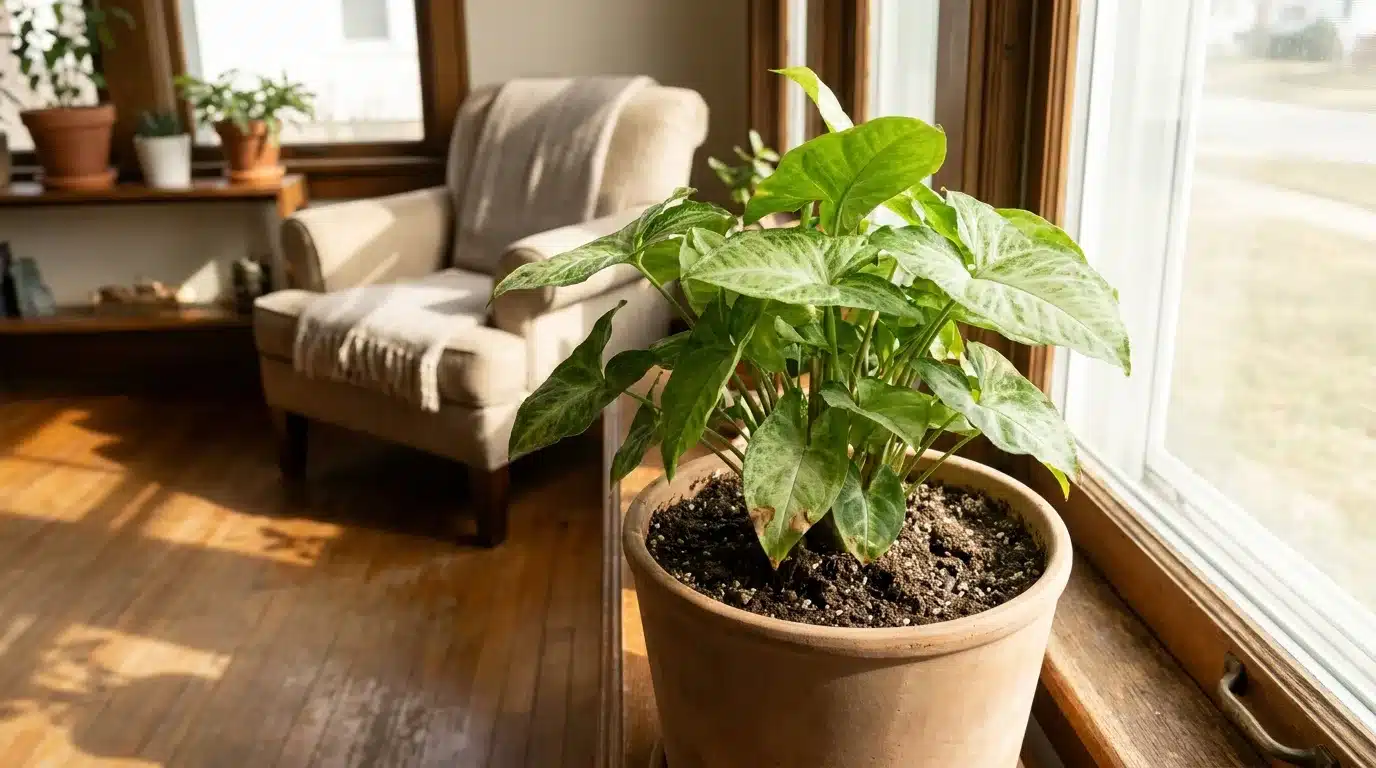
Every gardener eventually adopts an Arrowhead plant, often without meaning to, since a single trimmed piece will root in a glass of water on a windowsill and grow into a full vine within a season.
That easygoing nature is exactly why arrowhead plant care trips people up: healthy stems can mask a soil or light problem for weeks before yellow leaves finally show up.
On our GardenLine call-in show, questions about this plant almost always trace back to the same handful of habits rather than anything mysterious.
This tropical vine responds fast once its light, water, and humidity needs are dialed in, and it forgives the occasional missed watering better than most houseplants do.
Here is where the plant actually comes from, and why that origin explains almost everything it asks of you indoors.
About Arrowhead Plant
The arrowhead plant, or Syngonium podophyllum, is a tropical perennial vine with arrow-shaped young leaves. It is native to Mexico and tropical parts of South America.
Indoors, it often starts compact before producing climbing or trailing stems. Leaf color can help you choose a suitable location.
This table shows the main differences between common types.
|
Variety type |
Common appearance |
Best light level |
|---|---|---|
|
Plain green |
Deep or medium green leaves |
Bright indirect light; handles some shade |
|
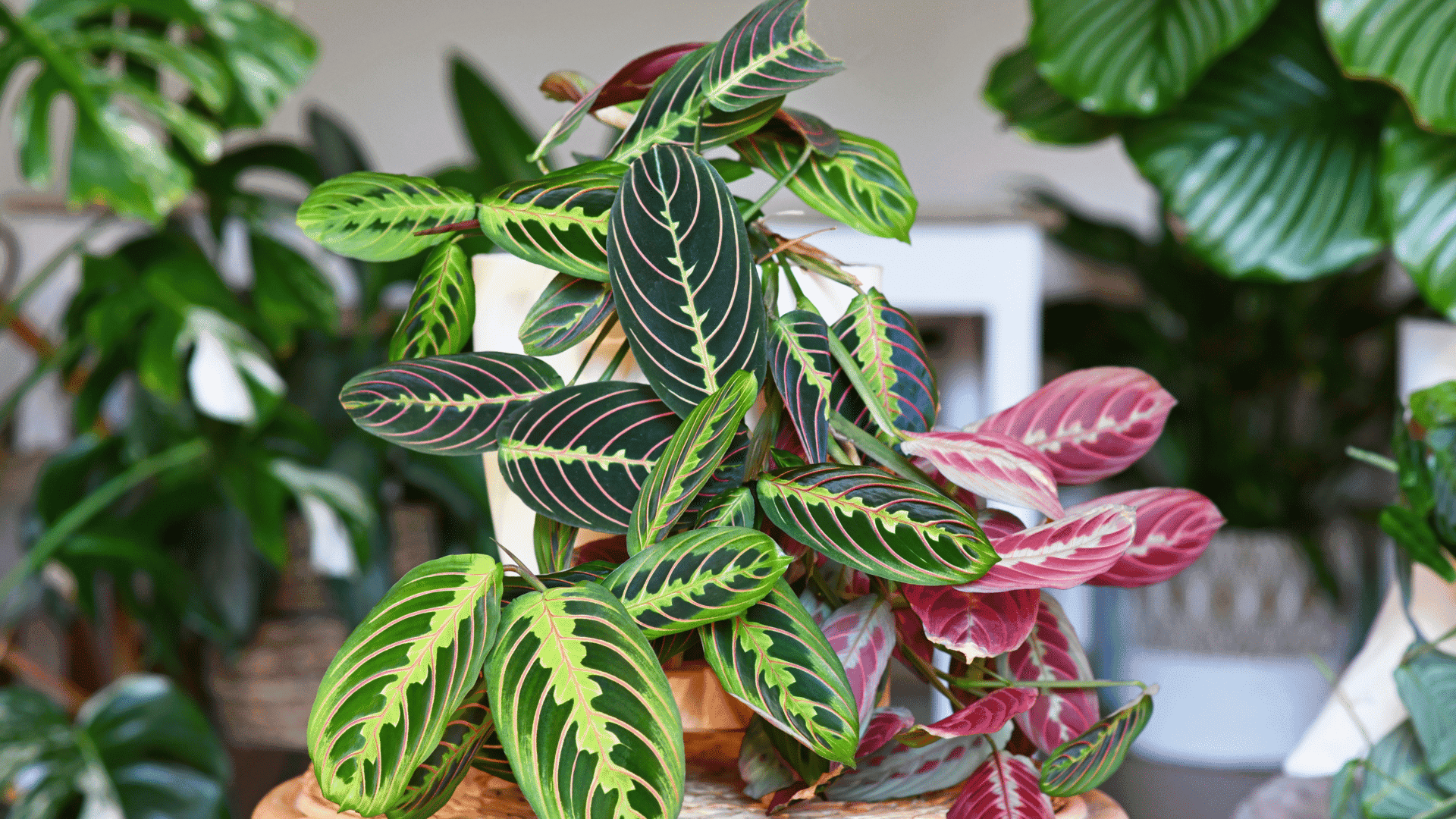
Variegated or pink |
Cream markings, pale patches, or pink leaves |
Brighter filtered light |
Both types have similar basic needs, but colorful varieties require more careful placement. Their pale sections contain less chlorophyll, the green material that helps leaves use light.
How to Care for an Arrowhead Plant
Good arrowhead plant care starts with filtered light, careful watering, loose soil, and steady warmth. Weekly checks help you notice small changes before they become problems.
The plant doesn’t need daily attention. Check the pot regularly, but act only when the soil, leaves, or stems show a need.
1. Light and Placement

Place the pot in bright, indirect light, a few feet from a clear window. Strong midday sun can burn or bleach the leaves.
Plain green types handle some shade, although they may develop more slowly. Variegated and pink types need brighter filtered conditions because their pale sections contain less chlorophyll.
If new foliage loses its markings, move the container closer to a suitable window.
2. Watering

Water when the top inch or two of soil feels dry. Soak the mix fully, then let extra moisture drain through the holes.
Do not follow one fixed schedule all year. Soil may dry within a week during summer but remain damp for two weeks in winter.
Slower winter growth uses less moisture, so water less often and never leave the roots sitting in soggy soil.
3. Soil

Use a loose, airy houseplant mix that holds some moisture without remaining soggy. Coarse perlite, a lightweight material that creates air pockets, improves airflow around roots and helps extra water escape.
Always choose a container with drainage holes, then empty its saucer or outer pot after watering. Even a well-draining mix fails in standing water because healthy roots need air as well as moisture.
4. Temperature and Humidity

Keep the room between 65°F and 80°F to maintain healthy leaf color.
Temperatures between 32°F and 50°F disrupt a tropical plant’s normal enzyme and cell function, which is when chilling injury sets in, so keep this vine away from cold windows and drafts.
I saw plenty of otherwise healthy houseplants get burned during the 2021 Arctic Freeze here in Houston, and a plant sitting too close to a single-pane window is often the culprit even indoors.
Indoor humidity between 40% and 60% suits this tropical vine.
Houston’s outdoor air handles that on its own most of the year, but air conditioning and heating both pull moisture out of a room, so a humidifier still earns its keep indoors.
Keep the container away from radiators, heaters, and air-conditioning vents.
5. Fertilizing

Apply a balanced liquid houseplant fertilizer every 3-4 weeks during spring and summer. Dilute it according to the product label instead of guessing the amount.
I prefer feeding after normal watering because damp soil lowers the chance of root stress. Reduce or stop fertilizer during winter, when shorter days slow development and the roots use fewer added nutrients.
6. Pruning

Pinch or cut growing tips just above a leaf node, the point where a leaf joins the stem. Regular trimming encourages side shoots and controls long vines.
You can leave healthy stems untouched if you prefer a trailing form.
Wear gloves because the sap contains calcium oxalate crystals, irritating particles that may affect skin and eyes. Clean the cutting tool before and after pruning.
7. Propagation

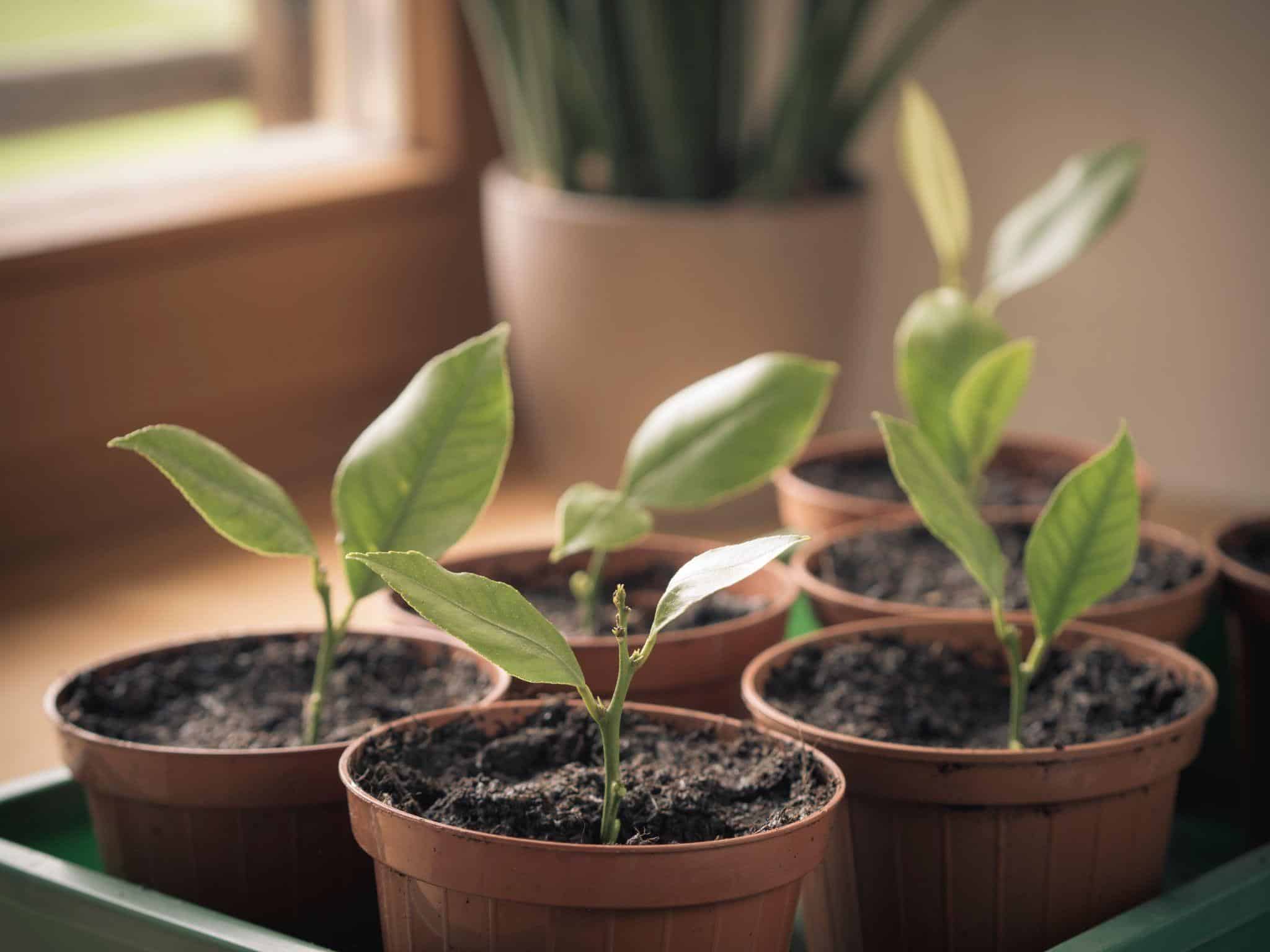
Arrowhead plants root easily from healthy stem cuttings. Follow these steps to turn one healthy cutting into a new plant:
- Cut just below a node, making sure the piece has at least one leaf and a short stem.
- Place the cutting in water or moist potting mix, then keep it under bright, filtered light.
- Move cuttings rooted in water into soil once several roots have formed.
- Keep the mix lightly moist while the new root system adjusts.
8. General Maintenance

Check for crowded roots each spring instead of repotting on a fixed schedule. Move up one container size when roots circle the pot or emerge through drainage holes.
Wipe dusty leaves with a damp cloth so they can receive available light.
Rotate the container every few weeks to help the stems develop evenly, a habit worth keeping up with any of your bedroom-friendly houseplants.
These small tasks also make early pest damage easier to notice.
Common Problems and Troubleshooting
A steady arrowhead plant care routine can reduce watering and placement problems while helping you spot pests early. Most issues connect to moisture, location, or insects.
Check the potting mix first, then review recent watering and window exposure. Finish by inspecting the stems and both leaf surfaces for damage.
1. Yellow or Drooping Leaves

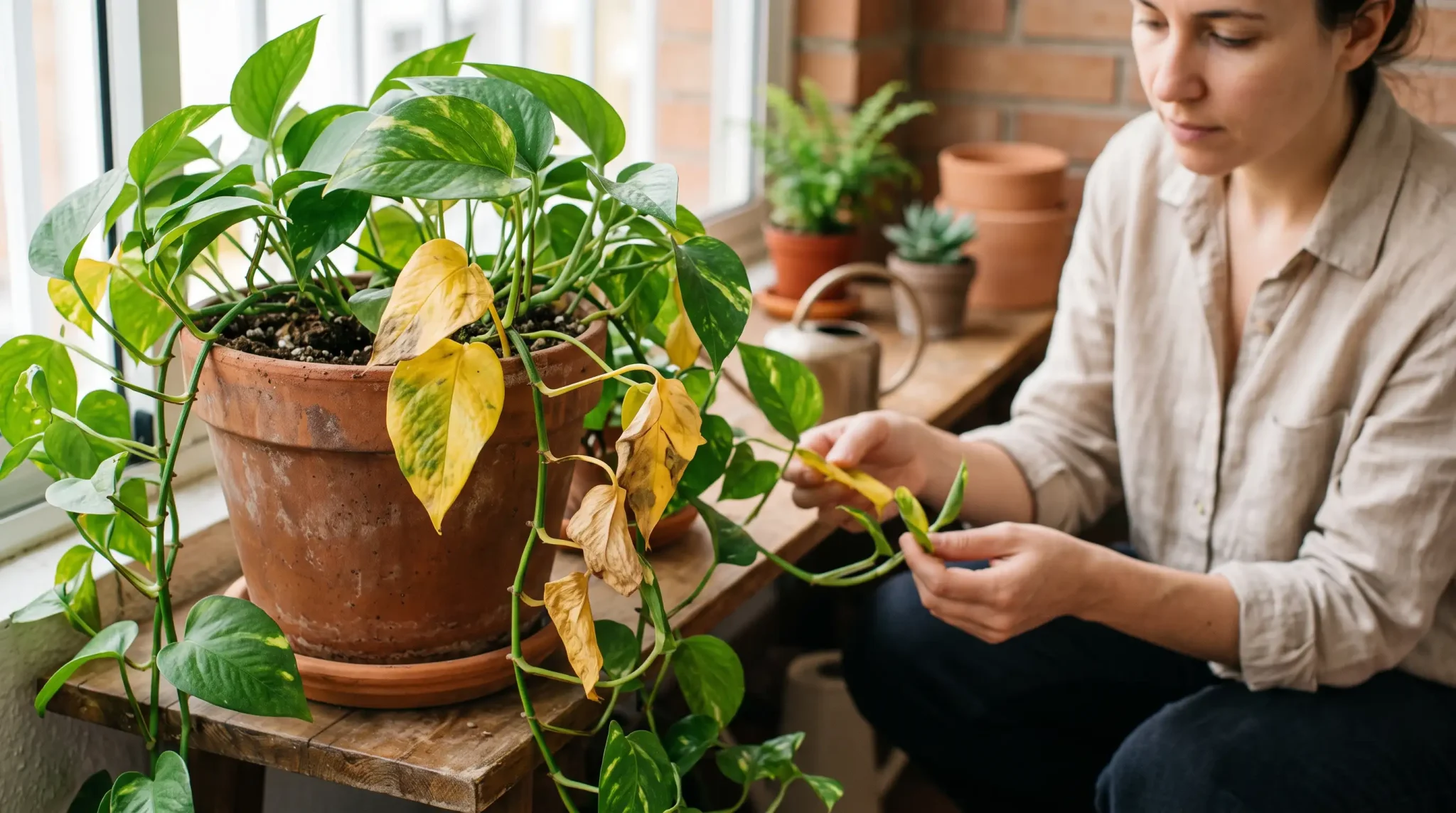
Yellow or drooping leaves have several causes. Check soil moisture first.
- Likely cause: Wet soil suggests overwatering, while dry soil and limp leaves point to thirst.
- Check first: Test below the surface, then consider how much light reaches the pot.
- What to do: Correct the watering pattern or move the container to a brighter spot with indirect light.
One older yellow leaf is normal, but several changing together need attention.
2. Leggy or Scraggly Growth

Low light or missed pruning usually causes long gaps between leaves. This rarely means a serious disease.
- Likely cause: Dim conditions make stems stretch toward the nearest useful source of daylight.
- Check first: Note the gaps between leaves and which direction the vines lean.
- What to do: Provide brighter filtered light, then trim long stems above a leaf node.
Rotate the container regularly to keep new growth even.
3. Pests: Mealybugs and Spider Mites

Mealybugs and spider mites can weaken leaves as their numbers rise. Check both leaf surfaces and stem joints.
- Likely cause: Warm, dry indoor conditions may help these pests spread.
- Check first: Look for white cotton, pale speckles, dull leaves, or fine webbing.
- What to do: Isolate the pot, wipe away pests, and apply insecticidal soap, a contact treatment made for plants. This is the same fix that keeps dumb cane pest-free too.
Inspect nearby houseplants because both pests can move between containers.
Frequently Asked Questions
Do Arrowhead Plants Like Big Pots?
No. Arrowhead plants do better in containers that fit their root ball closely, since an oversized pot holds excess moisture the roots cannot use in time. That extra dampness raises the risk of root rot. Move up only one container size, and only once roots circle the pot or emerge through the drainage holes.
What Is the Lifespan of an Arrowhead Plant?
There is no fixed indoor lifespan. As a perennial vine, an arrowhead plant can live for many years, often a decade or more, when its light, water, and humidity needs stay on track. Pruning back leggy stems and rooting fresh cuttings can also renew an older or overgrown specimen, essentially giving the plant a second life indoors.
Do Arrowhead Plants Climb or Hang?
They can do both. Young plants often look upright and bushy, staying compact for a season or two before the vining habit kicks in. Older stems can climb a moss pole, a covered support that lets the aerial roots grip as they grow, or trail freely from a shelf or hanging basket. Regular pruning controls which direction the plant takes.
Is the Arrowhead Plant Toxic to Pets?
Yes. Arrowhead plants contain insoluble calcium oxalate crystals, sharp, needle-like particles found throughout the sap that irritate soft tissue on contact. They are toxic to cats, dogs, and horses. Chewing or biting into a leaf or stem can cause mouth pain, drooling, swelling, vomiting, or trouble swallowing. Keep the plant well out of reach of curious pets.
A Simple Routine for Lasting Growth
Arrowhead plant care really comes down to a few steady habits: bright indirect light, water only when the topsoil dries, and a quick check for pests or crowded roots every so often.
Colorful varieties need a bit more light, plain green types tolerate more shade, and both slow down and drink less water once winter arrives.
Skip the fixed calendar and let the leaves and soil tell you what the plant needs next. A few minutes with your plant each week catches most problems long before they become serious.
What tends to trip you up most with this one: the light, the watering, or keeping pests off the leaves? Tell me about it in the comments.