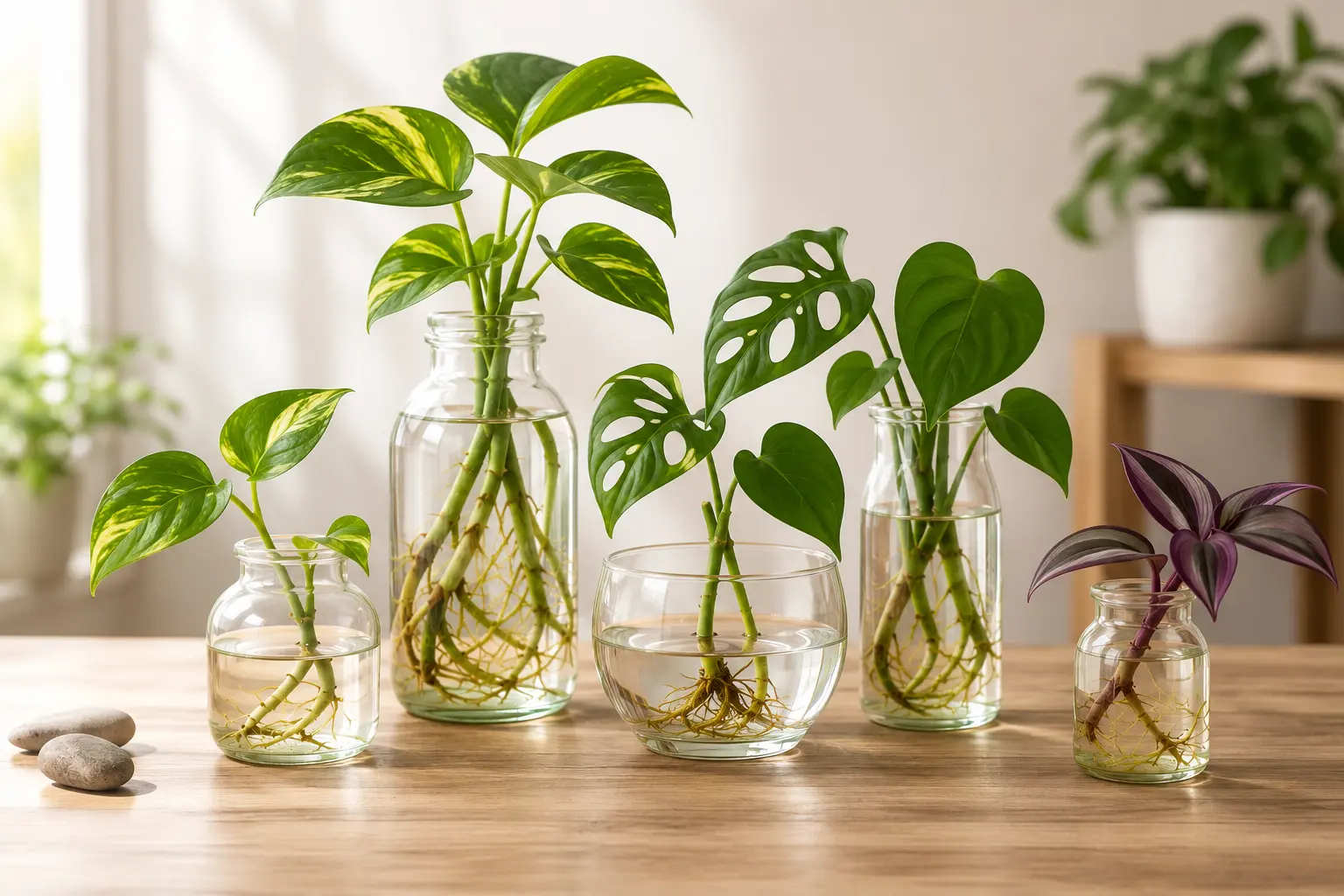
Growing plants indoors doesn’t always mean dealing with pots, soil, and messy repotting.
I’ve found that plants that grow in water are one of the easiest ways to bring greenery into a small space without the usual cleanup.
Some varieties can live in water for years, while others work better for rooting cuttings or need a bit of added nutrients along the way to stay healthy.
All you really need is decent light, clean water, and a jar or vase you like the look of.
Once you get the hang of it, you’ll probably find yourself adding more of these water-grown plants around your home than you expected to.
Can Plants Grow in Water?
Yes, many indoor plants can grow without soil. Their roots absorb water, oxygen, and nutrients directly from the container.
There are three common ways to grow houseplants in water:
- Water propagation: A stem, leaf, plantlet, or cane cutting is placed in water until roots develop. The rooted plant can later be moved to soil or another growing medium.
- Long-term water culture: The plant remains in water after it develops roots. It needs regular water changes, enough light, and occasional nutrients.
- Hydroponic growing: The plant grows in water containing a measured nutrient solution. Pebbles, clay balls, or another soil-free material may be used to support the roots and stems.
Many trailing plants, including pothos, philodendron, arrowhead vine, and Tradescantia, adapt well to long-term water culture. Other plants may produce roots in water but perform better when moved to soil after propagation.
Plants That Grow in Water
Some houseplants adapt to water better than others. The plants below include options for propagation, long-term water culture, and hydroponic growing. Each entry lists the plant’s preferred light and the method that suits it best.
1. Pothos
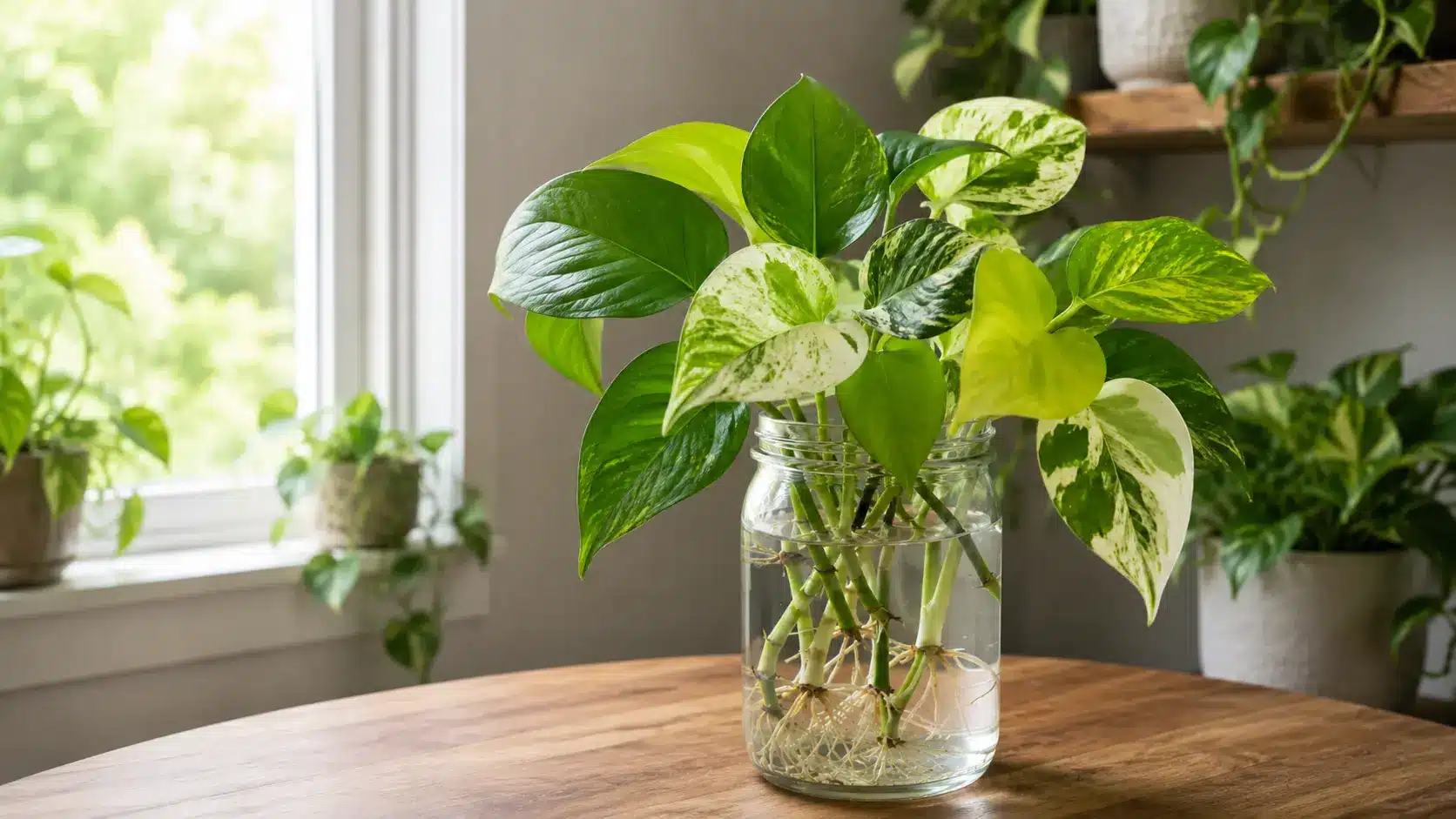
| Botanical name | Epipremnum aureum |
| Best use | Long-term water culture |
| Light | Low to bright indirect light |
Pothos is one of the easiest plants to keep in water. Cut a healthy section of vine just below a node and remove any leaves that would sit underwater.
Place one or two nodes in the water while keeping the leaves dry. New roots usually appear quickly, and the vine can continue growing in the same container with regular care.
New roots usually appear quickly, and the vine can continue growing in the same container with the same watering and light routine described for pothos plant care. Golden Pothos, Neon Pothos, Marble Queen, Jade Pothos, and Manjula Pothos can all be grown this way.
2. Heartleaf Philodendron
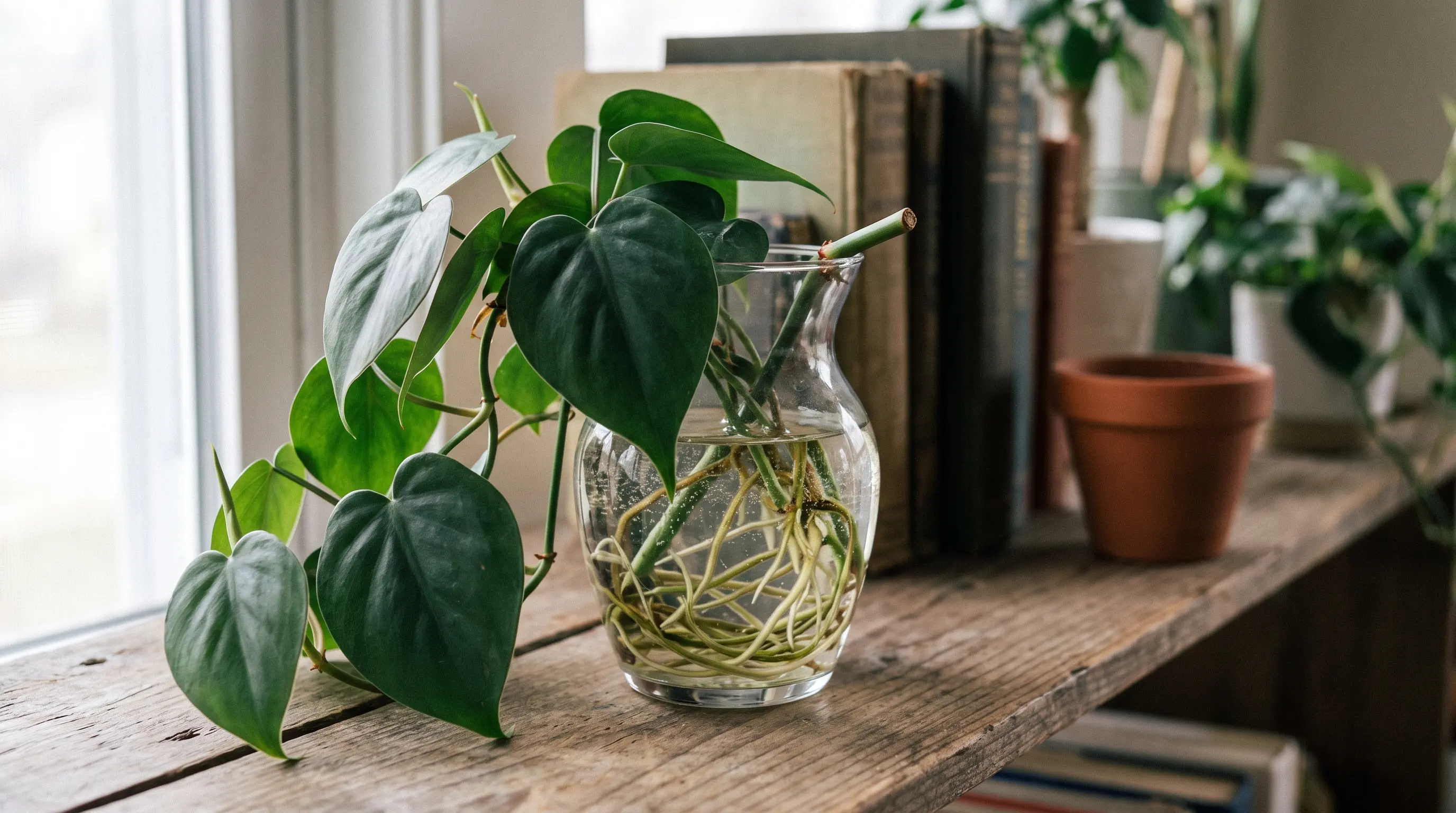
| Botanical name | Philodendron hederaceum |
| Best use | Long-term water culture |
| Light | Low to medium indirect light |
Heartleaf philodendron has soft, heart-shaped leaves and trailing stems. It is forgiving and easy to start from cuttings.
Choose a stem with at least one healthy node. Place the node underwater and keep the leaves above the surface. Trim the vine when it becomes too long or top-heavy.
3. Philodendron Brasil
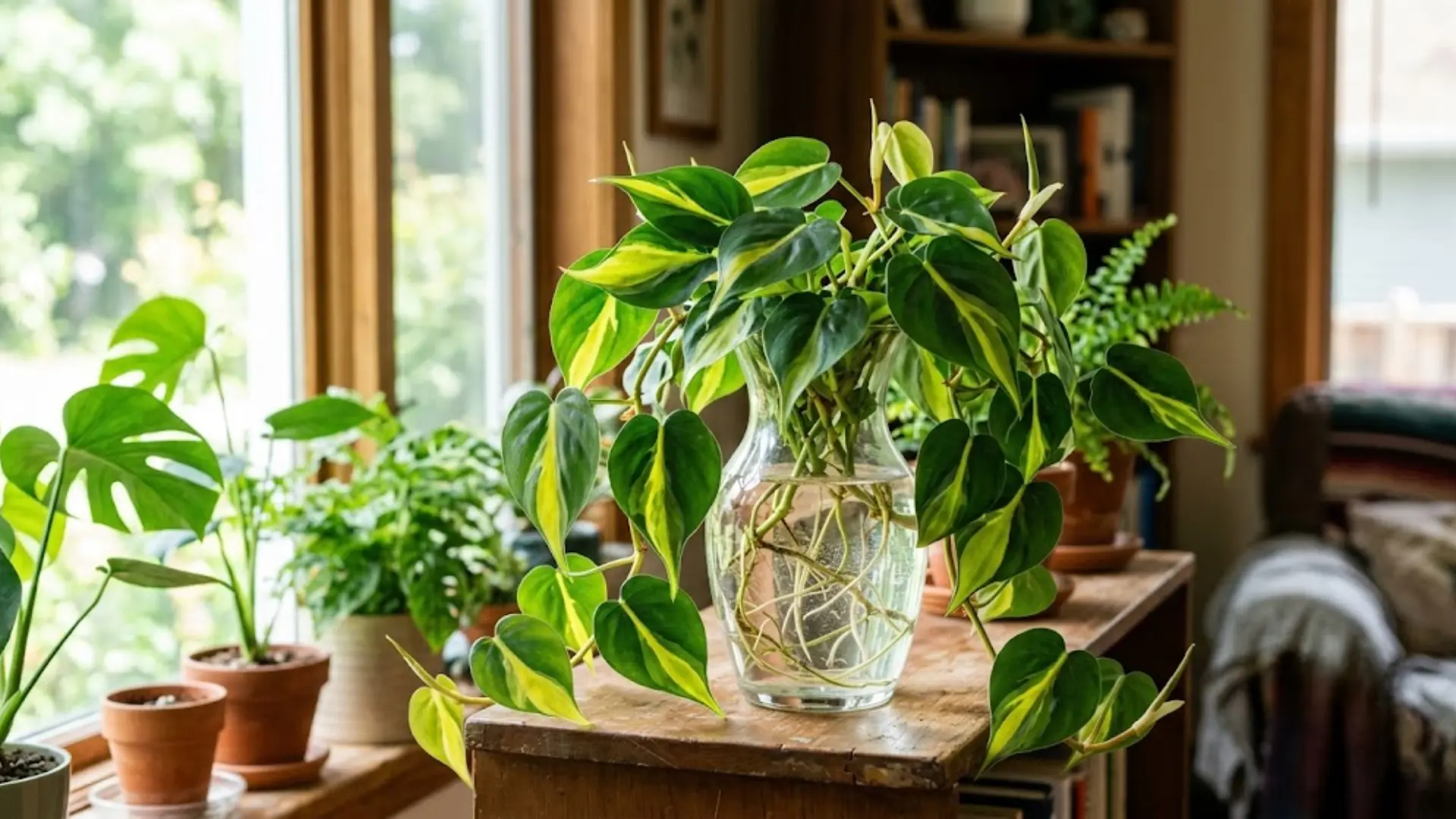
| Botanical name | Philodendron hederaceum ‘Brasil’ |
| Best use | Long-term water culture |
| Light | Bright indirect light |
Philodendron Brasil grows in water in the same way as a regular heartleaf philodendron. Its leaves have yellow or lime-green markings through the center.
Bright indirect light helps the plant keep its leaf pattern. In very low light, the new leaves may become greener.
4. Philodendron Micans
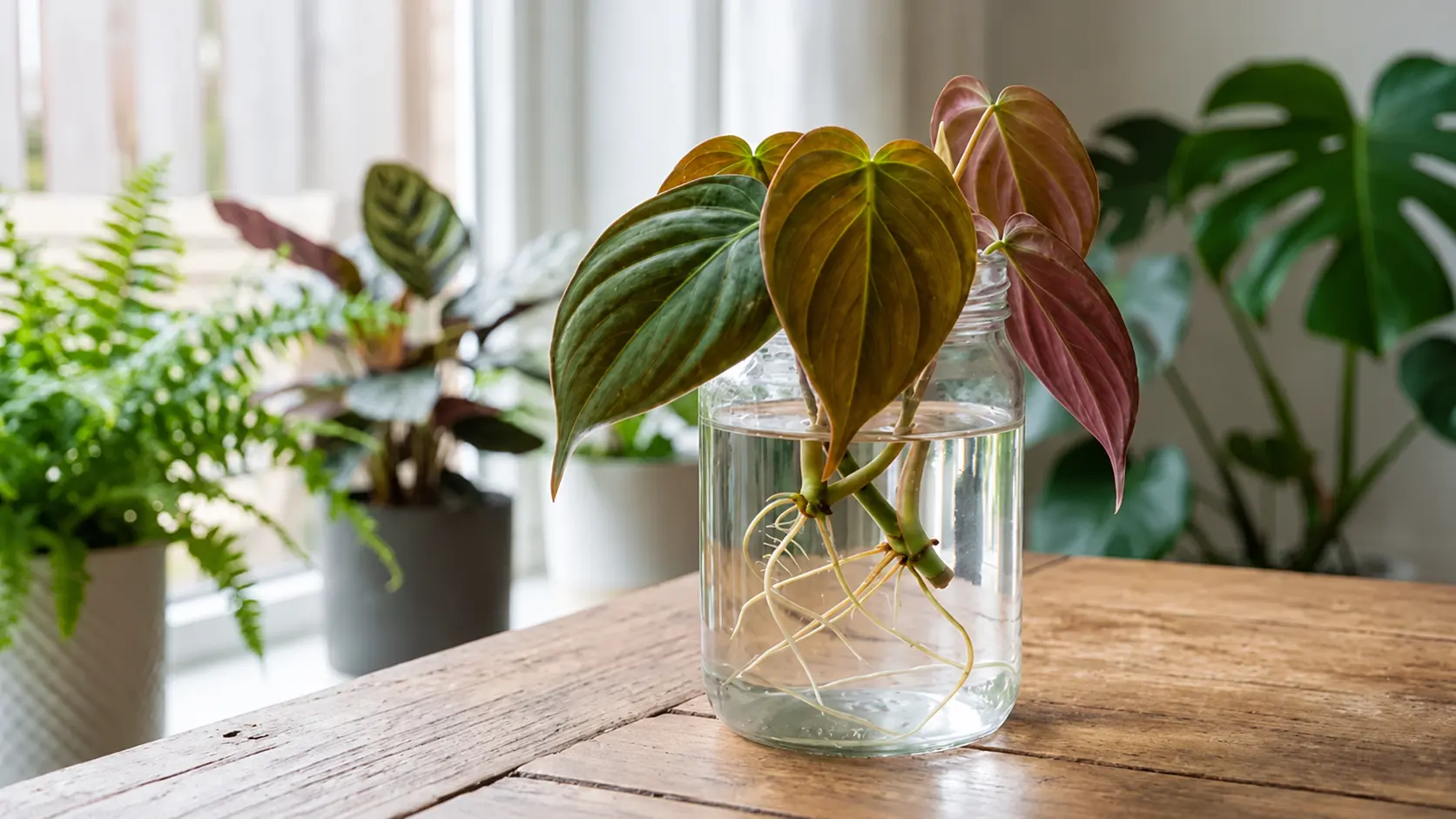
| Botanical name | Philodendron hederaceum ‘Micans’ |
| Best use | Rooting or long-term water culture |
| Light | Medium to bright indirect light |
Philodendron micans is known for its soft, velvety leaves. Its color can appear green, bronze, or deep red depending on the light.
Take a cutting with a visible node and place the node in water. Keep the container away from strong afternoon sun, which may heat the water and damage the leaves.
5. Satin Pothos
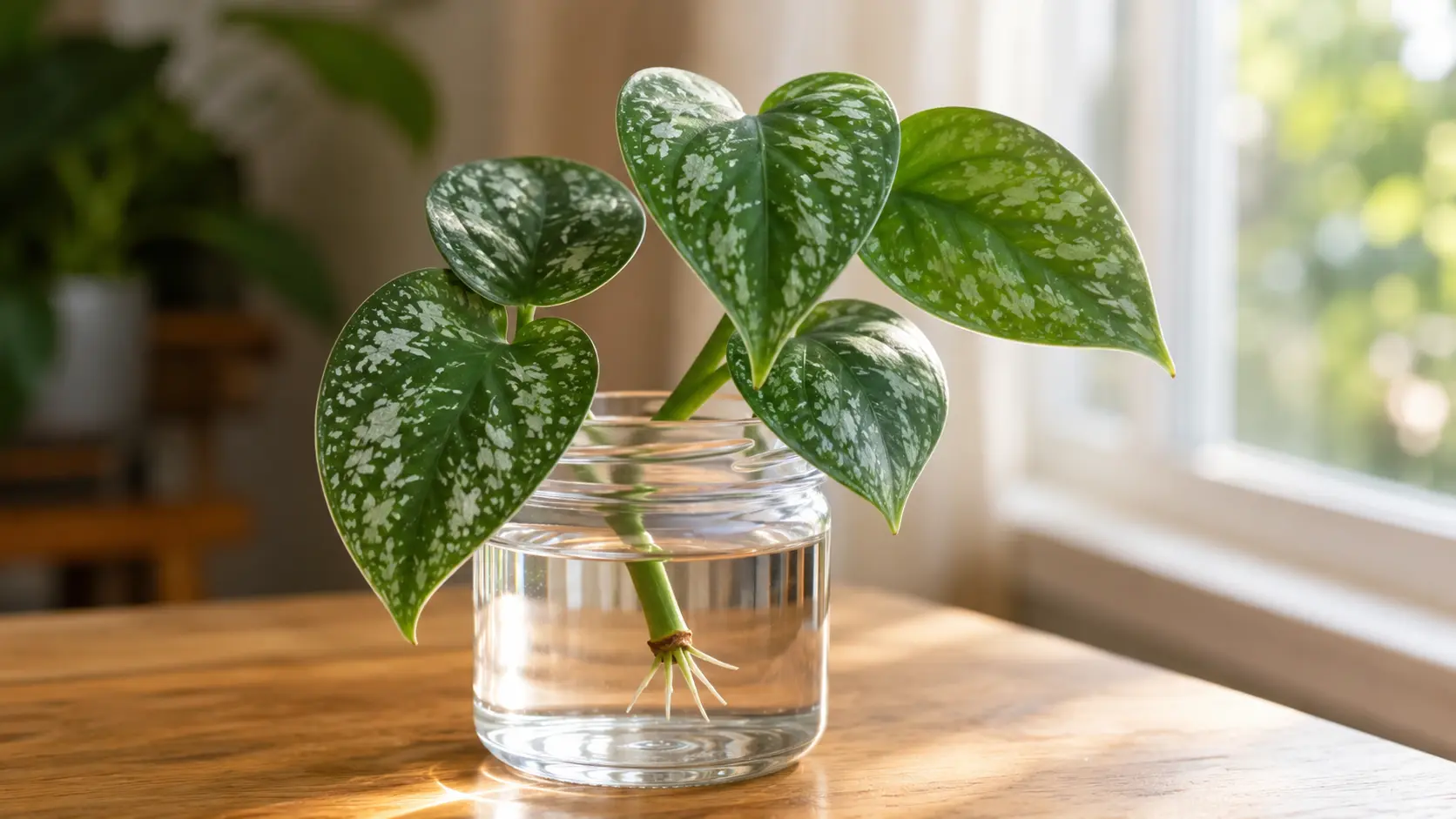
| Botanical name | Scindapsus pictus |
| Best use | Rooting or long-term water culture |
| Light | Bright indirect light |
Satin pothos is not a true pothos, but its water-growing needs are similar. It has deep green leaves marked with silver spots.
Cut below a node and remove the lowest leaf. Root development can be slower than with golden pothos, so keep the water clean and give the cutting steady warmth.
6. Cebu Blue Pothos
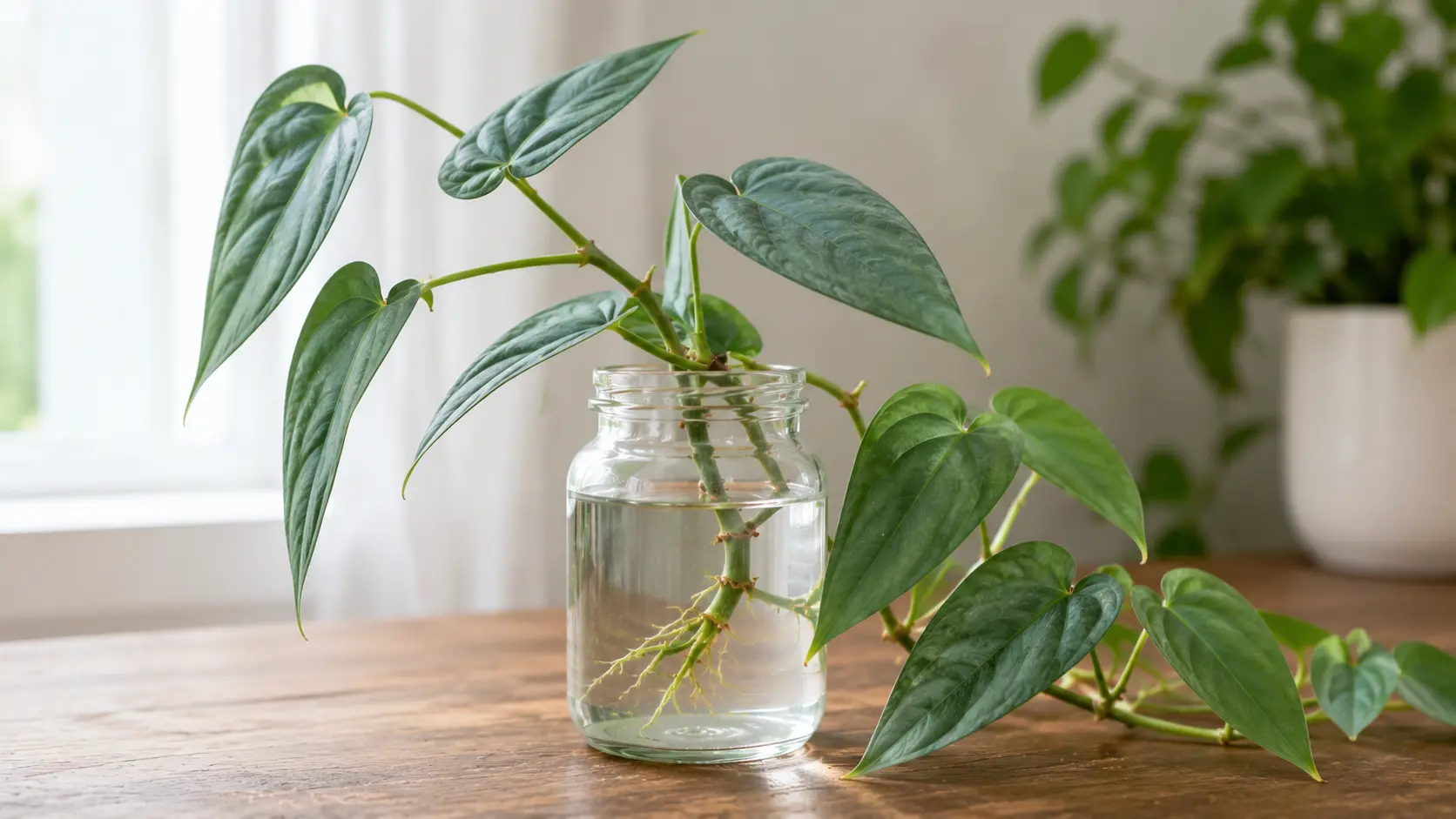
| Botanical name | Epipremnum pinnatum ‘Cebu Blue’ |
| Best use | Long-term water culture |
| Light | Medium to bright indirect light |
Cebu Blue pothos has narrow, blue-green leaves and long climbing or trailing vines. It roots well from stem cuttings. Place at least one node underwater. A support or narrow-necked container may be needed as the vine grows longer.
7. Monstera Deliciosa
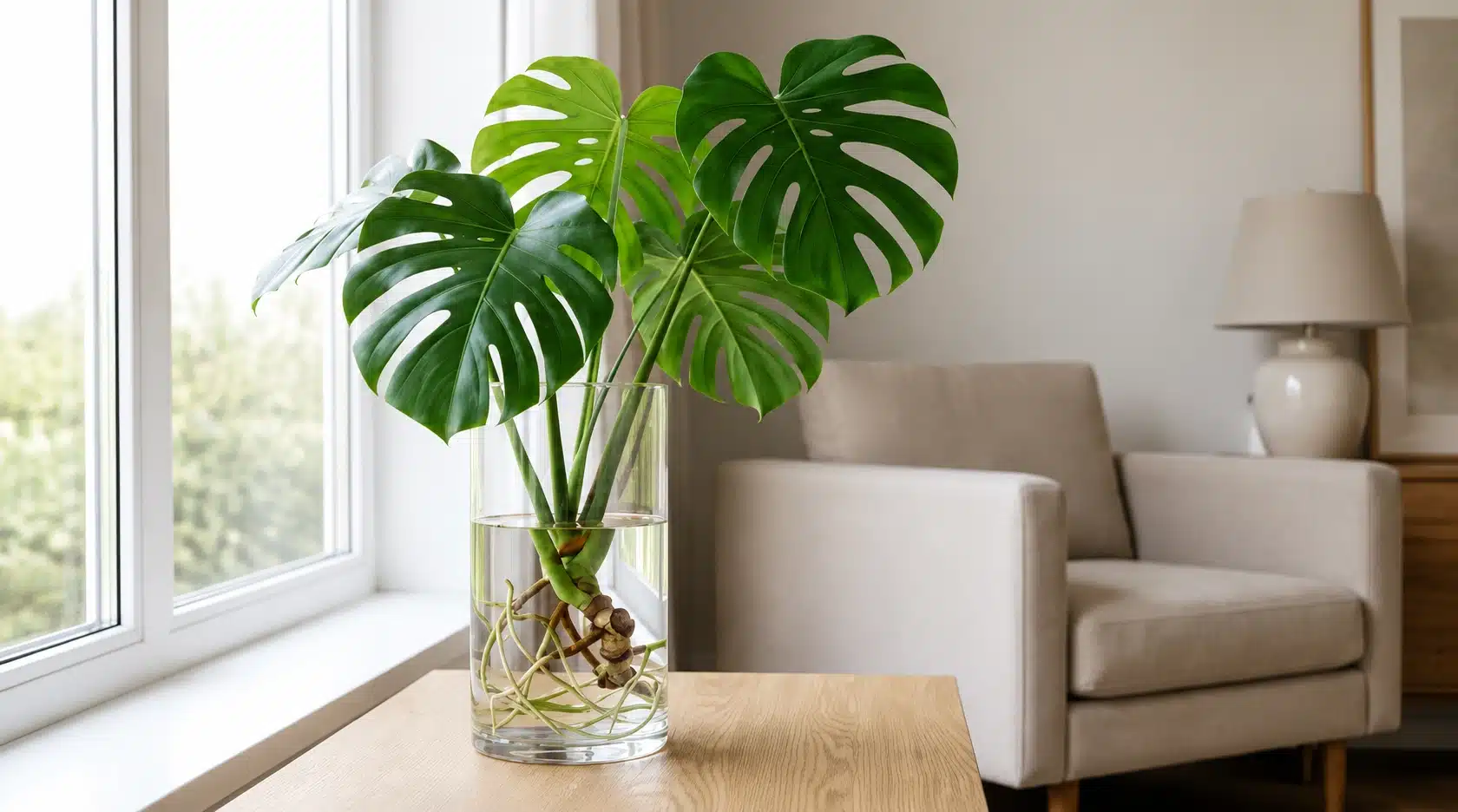
| Botanical name | Monstera deliciosa |
| Best use | Long-term water culture with added nutrients |
| Light | Bright indirect light |
A Monstera cutting must include a node. A leaf without a node may remain green for a while, but it will not produce a complete new plant.
Use a tall, stable container because mature leaves and thick stems can become heavy.
Hydroponic nutrients are important if you plan to keep the plant in water for an extended period, and node placement along with early rot warning signs are the same details covered when propagating Monstera at home.
8. Monstera Adansonii
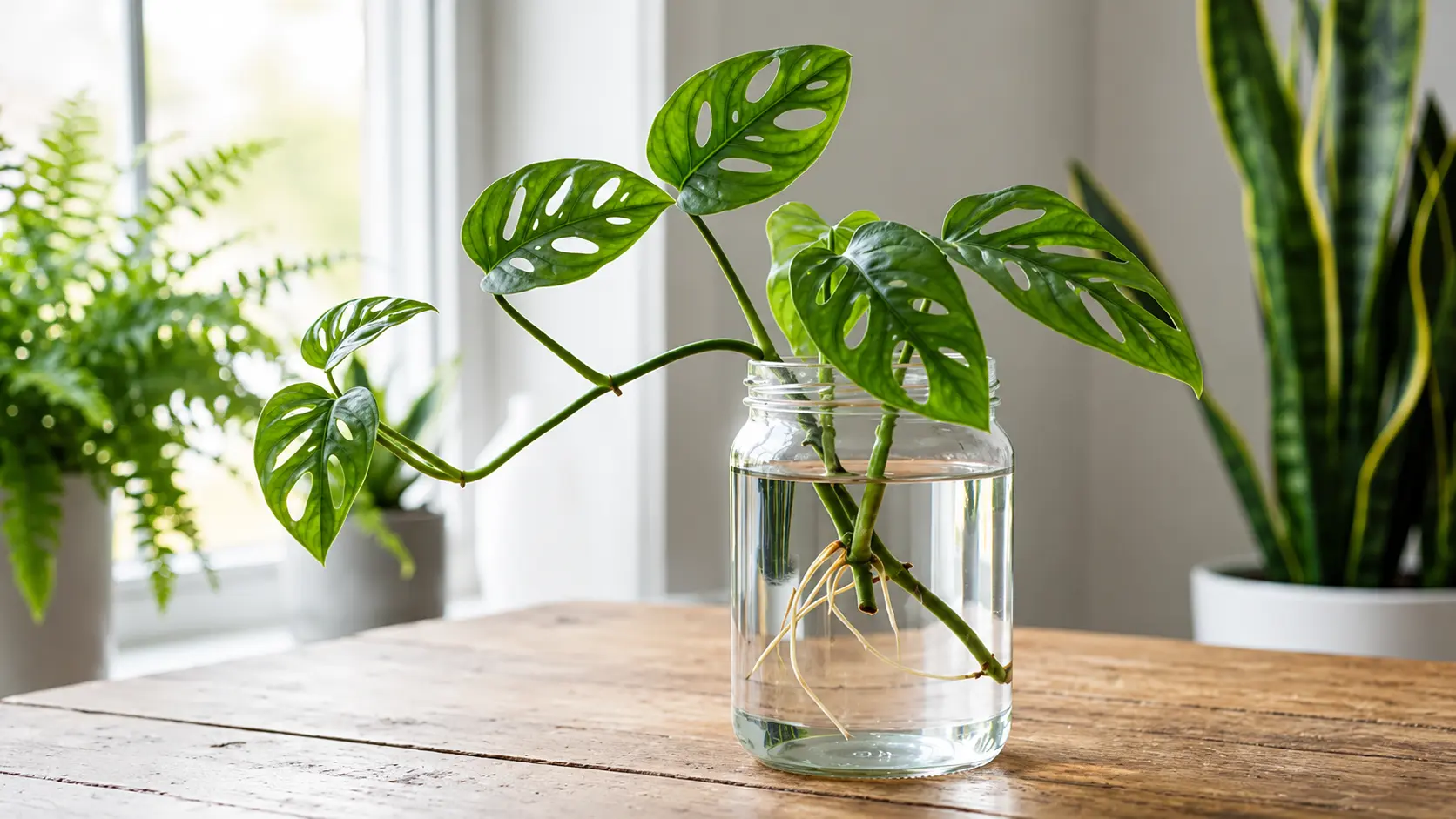
| Botanical name | Monstera adansonii |
| Best use | Rooting or long-term water culture |
| Light | Medium to bright indirect light |
Monstera adansonii has smaller leaves with natural holes. Its size makes it easier to display in jars or bottles than a large Monstera deliciosa.
Take a cutting with a node and one or two leaves. Change the water regularly because the thin stems can rot if damaged plant material remains submerged.
9. Arrowhead Plant
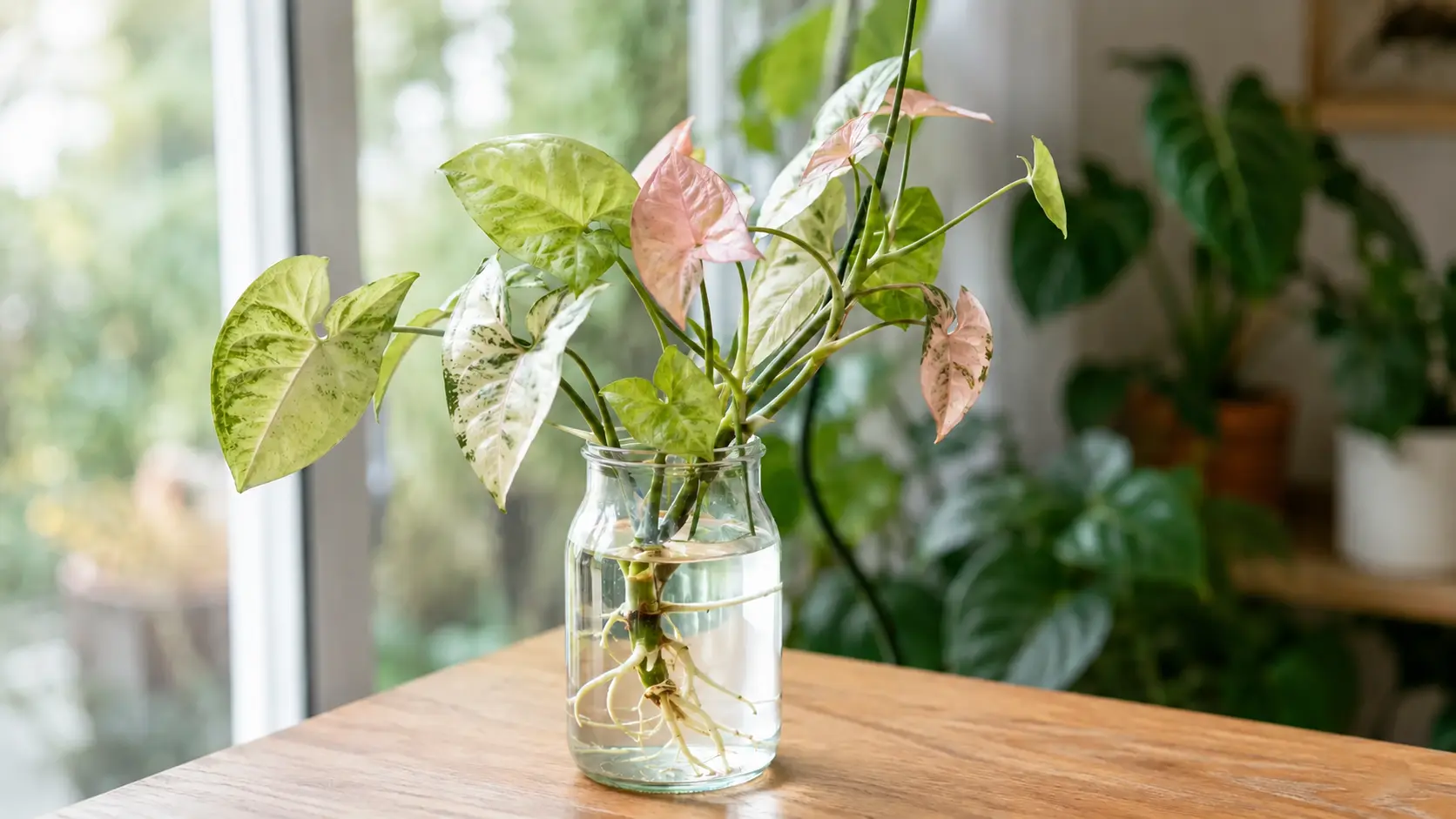
| Botanical name | Syngonium podophyllum |
| Best use | Long-term water culture |
| Light | Low to bright indirect light |
The arrowhead plant has pointed leaves that may be green, white, pink, or cream. Young stems produce roots easily from their nodes.
Cut below a node and place the lower section in water. As the plant matures, it may begin to trail or climb and need support.
10. Inch Plant
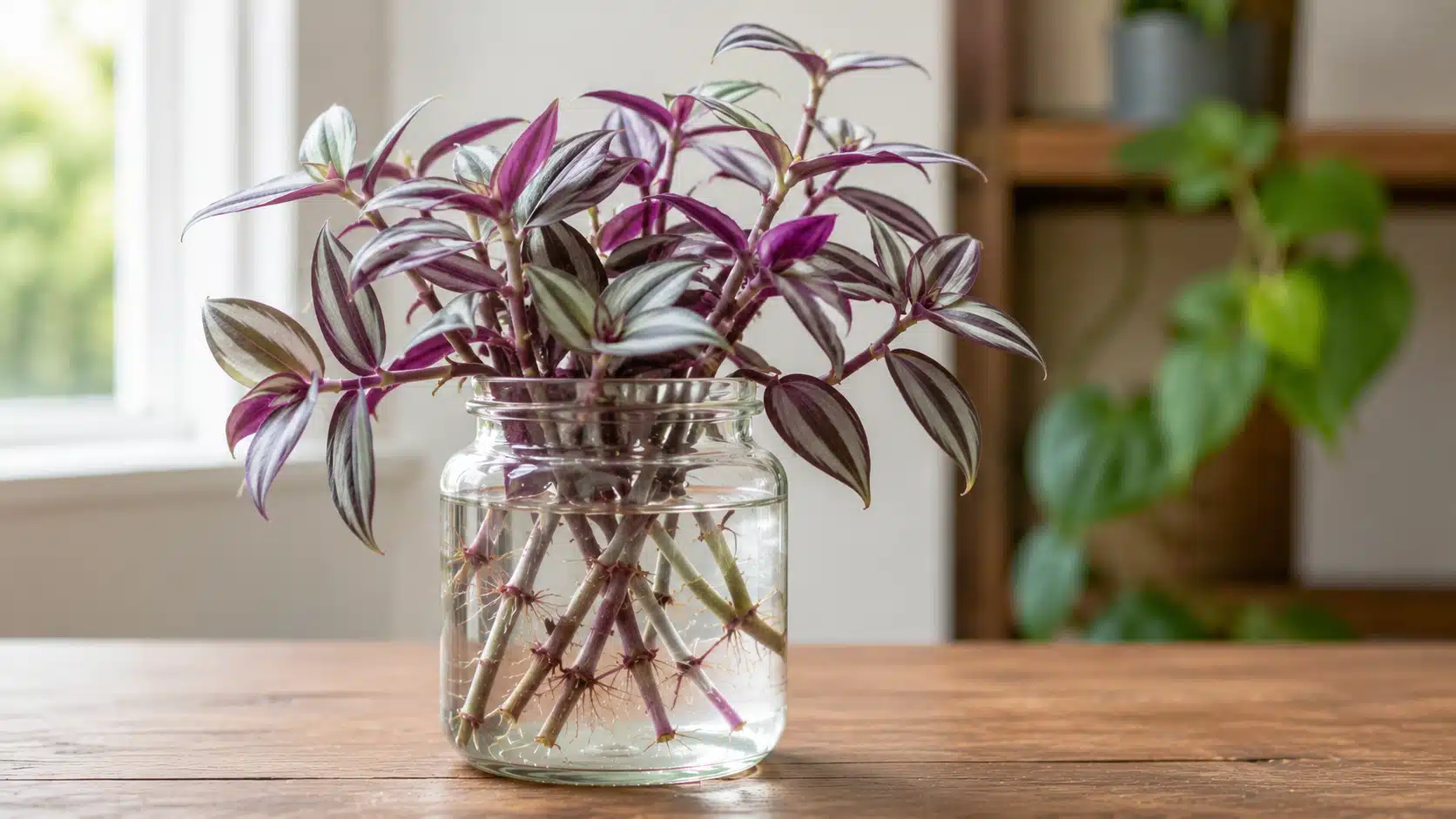
| Botanical name | Tradescantia zebrina |
| Best use | Long-term water culture |
| Light | Medium to bright indirect light |
The inch plant has striped leaves with green, silver, and purple coloring. Small bumps along the stems can quickly form roots in water.
Place several short cuttings together for a fuller display. Trim the stems often so the plant does not become too heavy for its container.
Tradescantia can remain in water for a long time when it receives clean water and regular nutrients.
11. Purple Heart
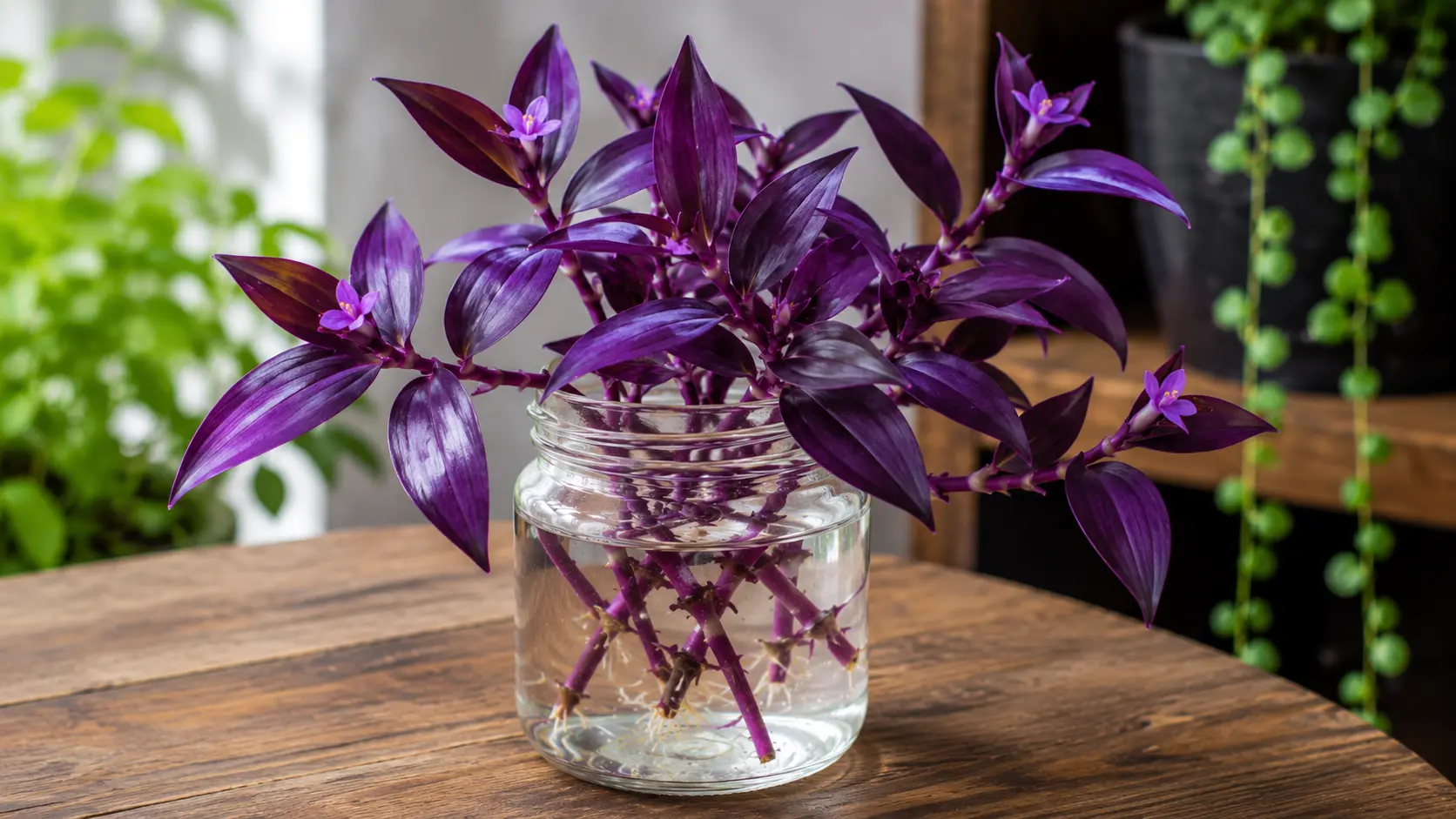
| Botanical name | Tradescantia pallida |
| Best use | Rooting or long-term water culture |
| Light | Bright indirect light |
Purple heart produces long stems and deep purple leaves. It grows from cuttings using the same method as other Tradescantia plants.
Strong filtered light helps it keep its rich color. In low light, the leaves may become greener and the stems may stretch.
12. Lucky Bamboo
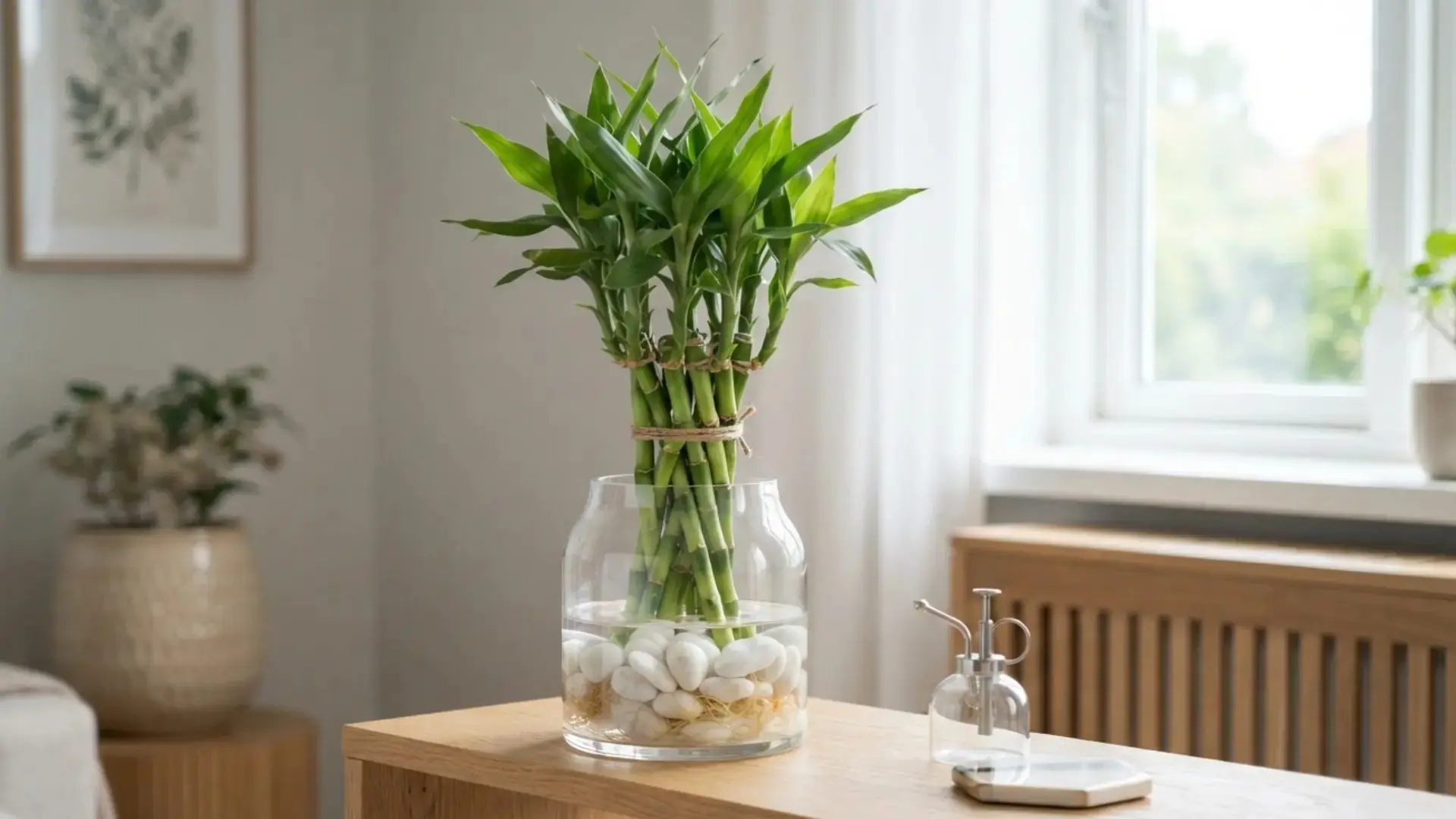
| Botanical name | Dracaena sanderiana |
| Best use | Long-term water culture |
| Light | Medium to bright indirect light |
Lucky bamboo is often sold already growing in water. Its stems can be kept upright with clean pebbles or stones.
Keep the roots submerged, but avoid covering the entire stem. Refresh the water regularly and protect the plant from cold air, heating vents, and harsh sunlight.
13. Spider Plant
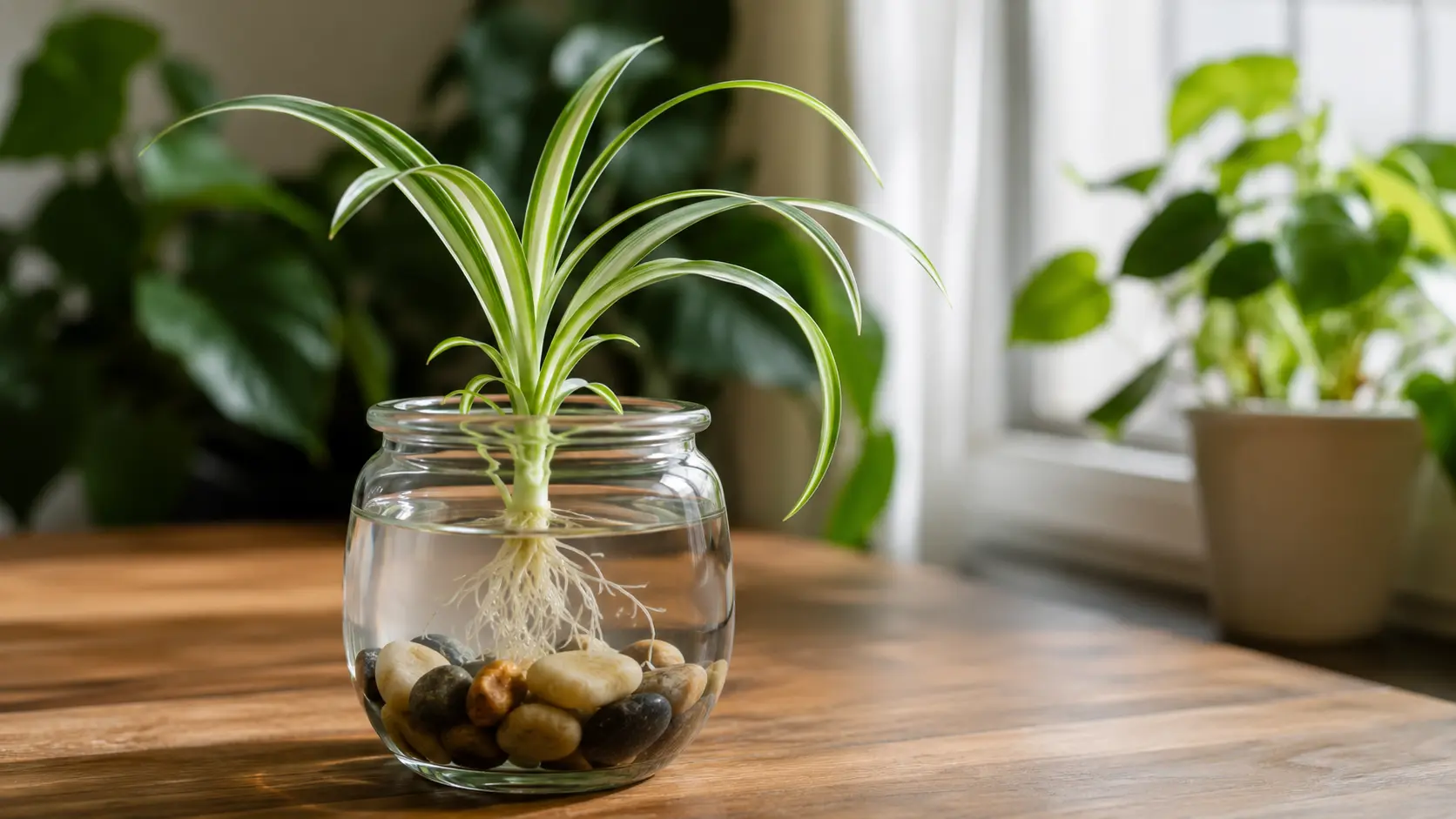
| Botanical name | Chlorophytum comosum |
| Best use | Rooting or long-term water culture |
| Light | Medium to bright indirect light |
A mature spider plant produces small plantlets at the ends of long stems. These plantlets can be cut from the parent and rooted in water.
Only the base and roots should touch the water. Keeping the leaves submerged can lead to decay. Small stones can help hold the plantlet upright.
14. Chinese Evergreen
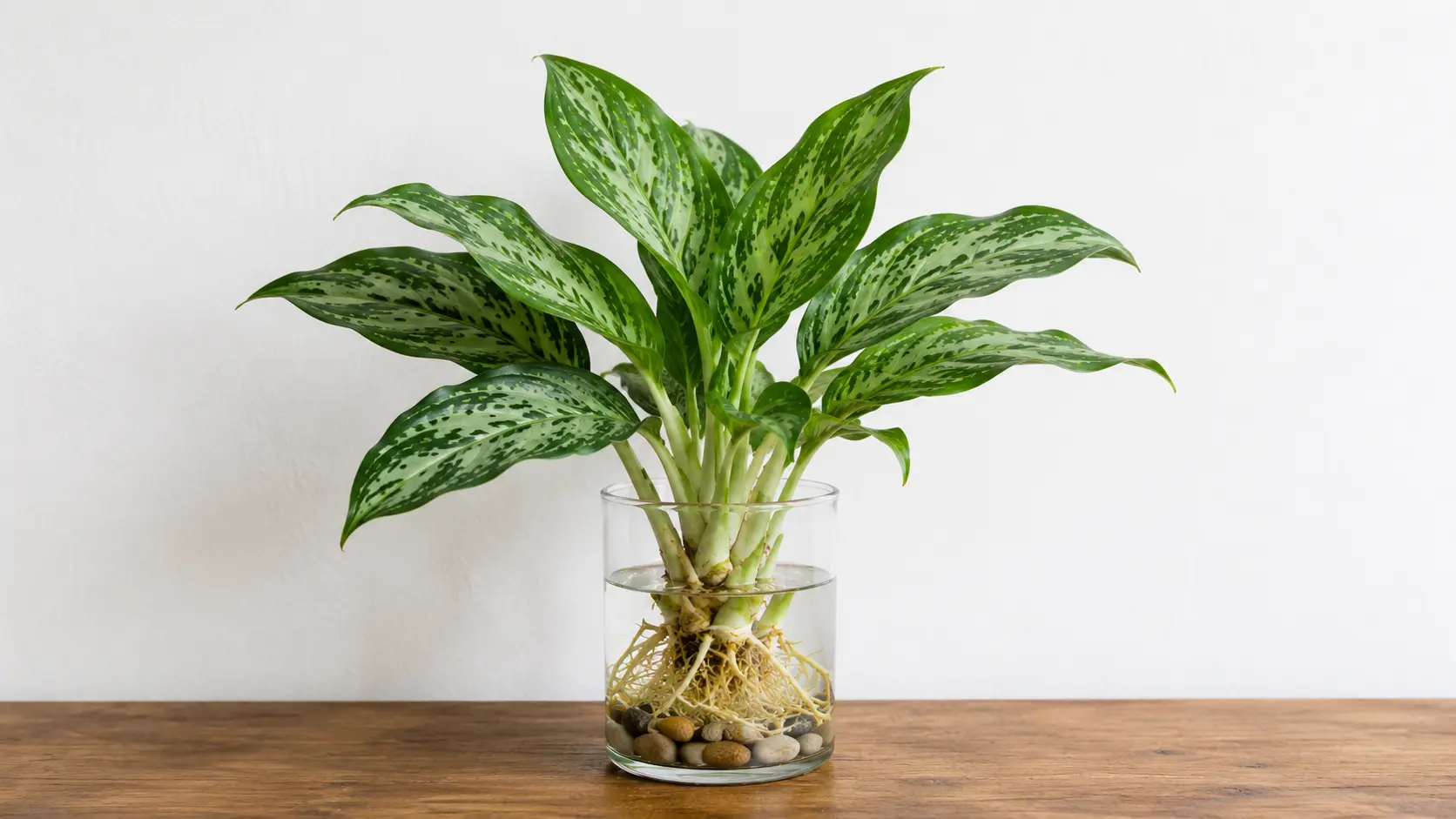
| Botanical name | Aglaonema species |
| Best use | Long-term water culture with nutrients |
| Light | Low to medium indirect light |
Chinese evergreen is valued for its patterned leaves and ability to handle softer indoor light. It can be started from a stem cutting or moved from soil to water.
When transferring a mature plant, rinse all soil from the roots. Any soil left behind may make the water cloudy and encourage root problems.
15. Peace Lily
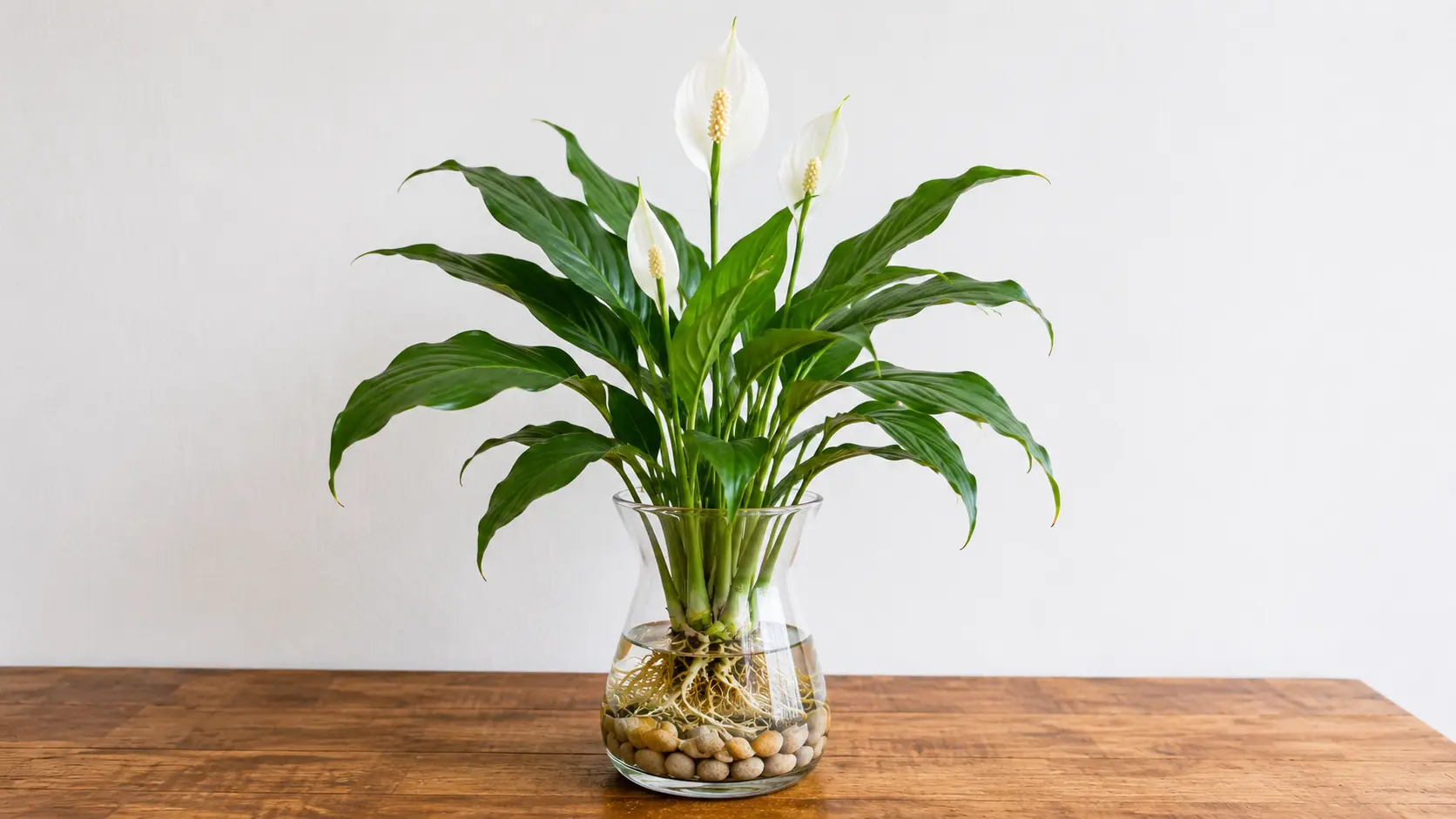
| Botanical name | Spathiphyllum species |
| Best use | Long-term water culture with careful setup |
| Light | Medium to bright indirect light |
Peace lilies can adapt to water when their roots are cleaned carefully. The roots should be underwater, but the plant’s crown must remain above the surface.
A narrow vase or layer of clean pebbles can hold the base in place. Constantly wet leaves and crowns are more likely to rot.
16. Dieffenbachia
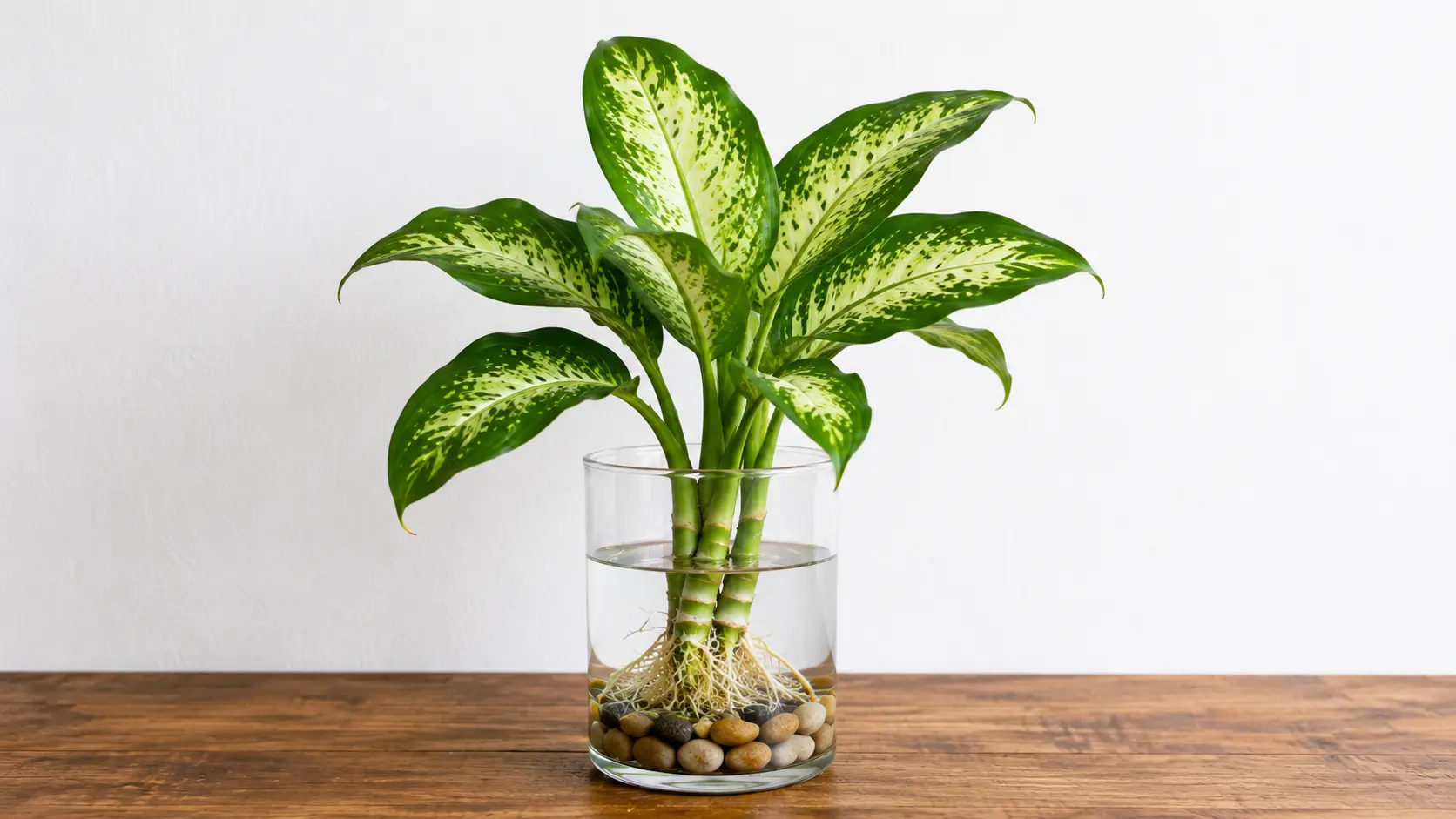
| Botanical name | Dieffenbachia species |
| Best use | Rooting or long-term water culture |
| Light | Medium indirect light |
Dieffenbachia can grow roots from stem or cane sections. Each cutting should contain at least one healthy node.
Remove leaves from the submerged part of the stem. The plant may not reach the same size in water that it would in a good potting mix, but it can still produce healthy foliage.
17. Dracaena Marginata
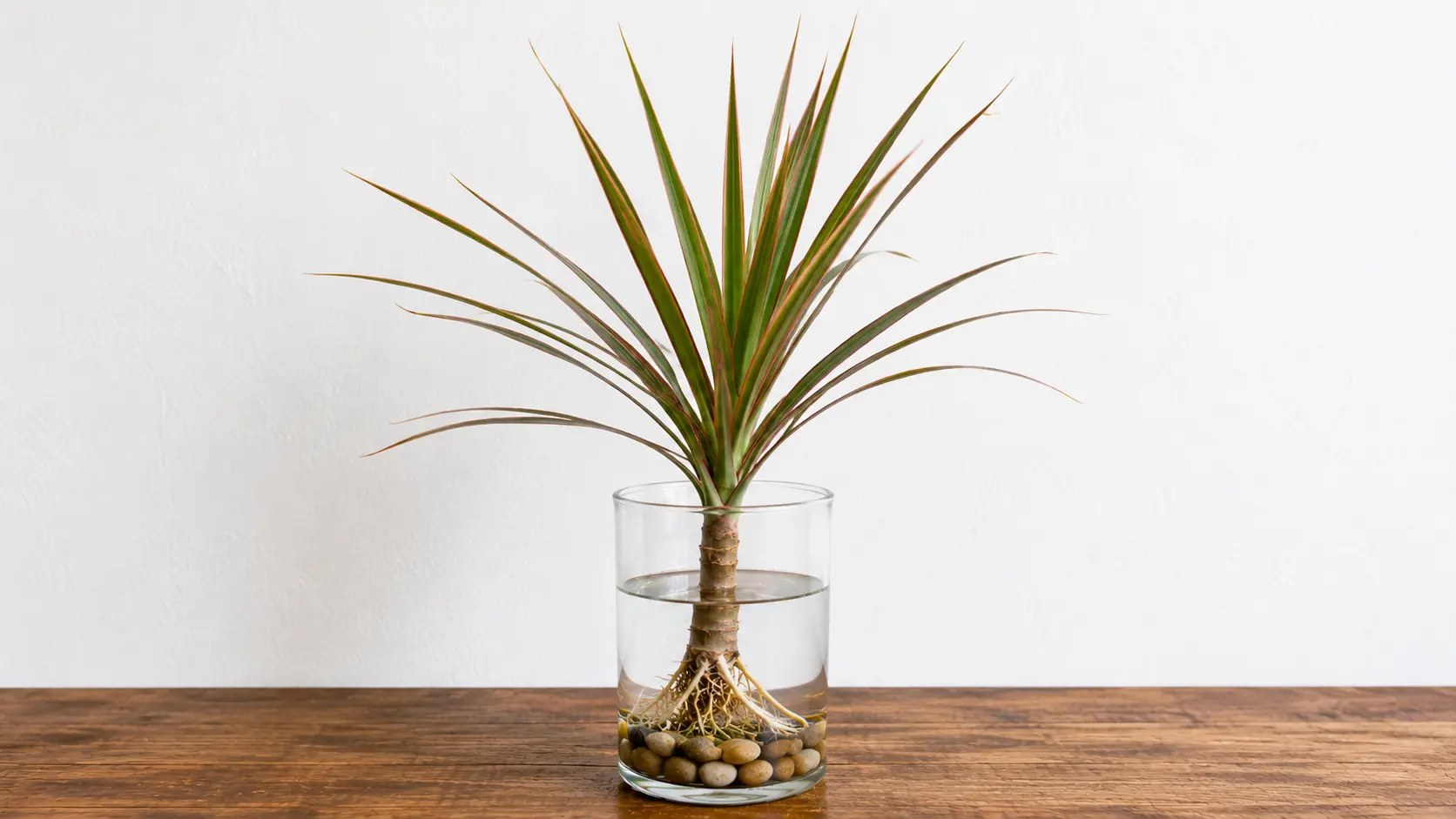
| Botanical name | Dracaena marginata |
| Best use | Rooting or long-term water culture |
| Light | Medium to bright indirect light |
Dracaena marginata, commonly called the dragon tree, has narrow leaves on upright stems. A healthy stem section can develop roots in water.
Keep only a few leaves at the top of the cutting. Rooting may take longer than it does with pothos or Tradescantia, so avoid disturbing the stem while new roots form.
18. Corn Plant
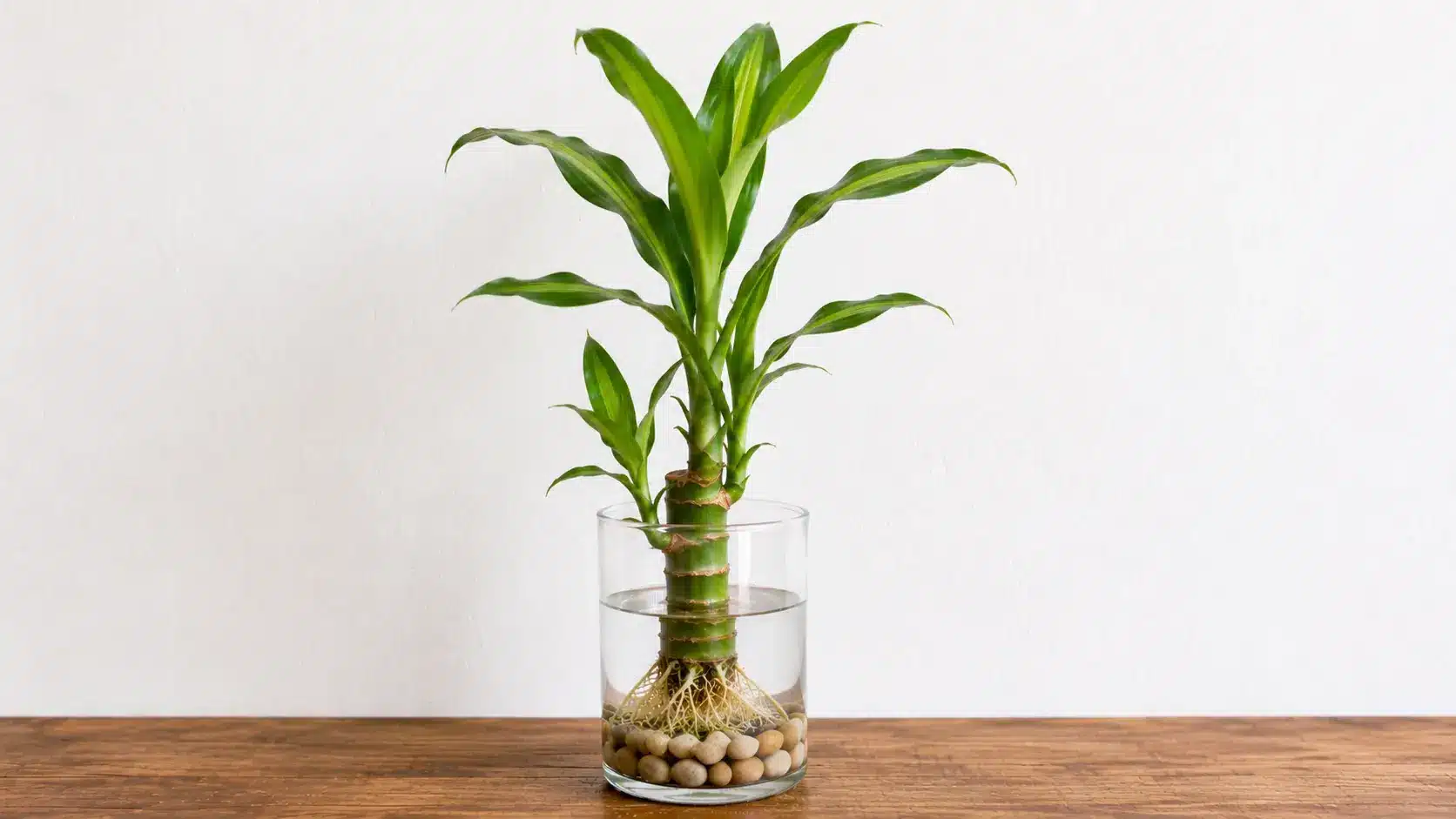
| Botanical name | Dracaena fragrans |
| Best use | Rooting or long-term water culture |
| Light | Medium indirect light |
The corn plant is another Dracaena that can grow from cane cuttings. A section of stem can develop both roots and new shoots.
Place the lower end in water and keep the cane upright. Make sure you do not accidentally turn the stem upside down when preparing the cutting.
19. Ti Plant
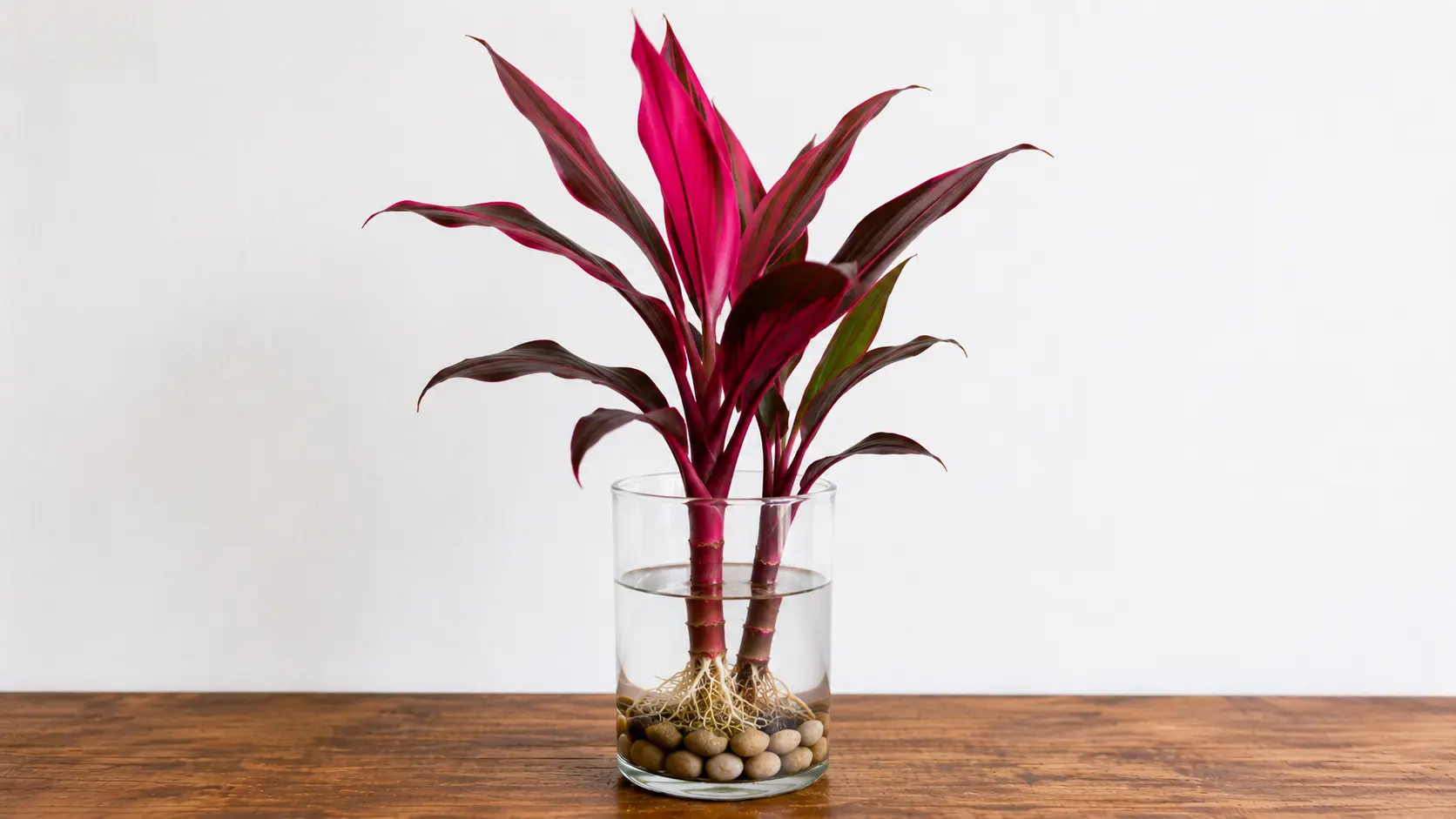
| Botanical name | Cordyline fruticosa |
| Best use | Rooting or long-term water culture |
| Light | Bright indirect light |
Ti plants have upright leaves in shades of green, red, pink, and purple. Healthy stem sections can form roots in water.
Choose a cutting from firm growth and remove the lower leaves. Once roots appear, provide diluted nutrients if you plan to keep the plant in water.
20. English Ivy
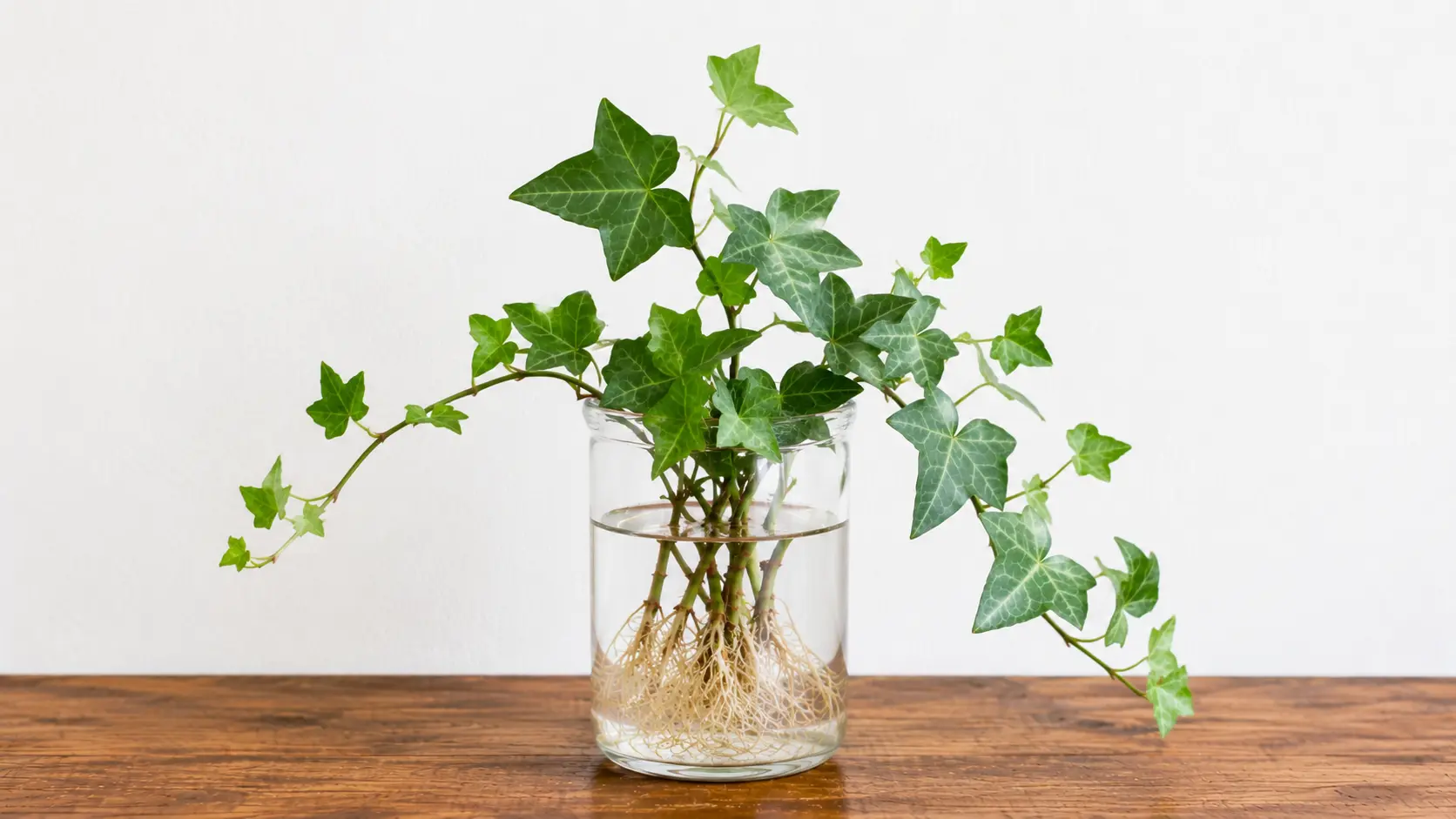
| Botanical name | Hedera helix |
| Best use | Rooting or long-term water culture |
| Light | Bright indirect light |
English ivy roots easily from young stems. Avoid old, woody sections because they are slower to establish.
Place the cutting near a bright window without exposing it to strong midday sun. Prune it regularly to maintain a balanced shape.
21. Swedish Ivy
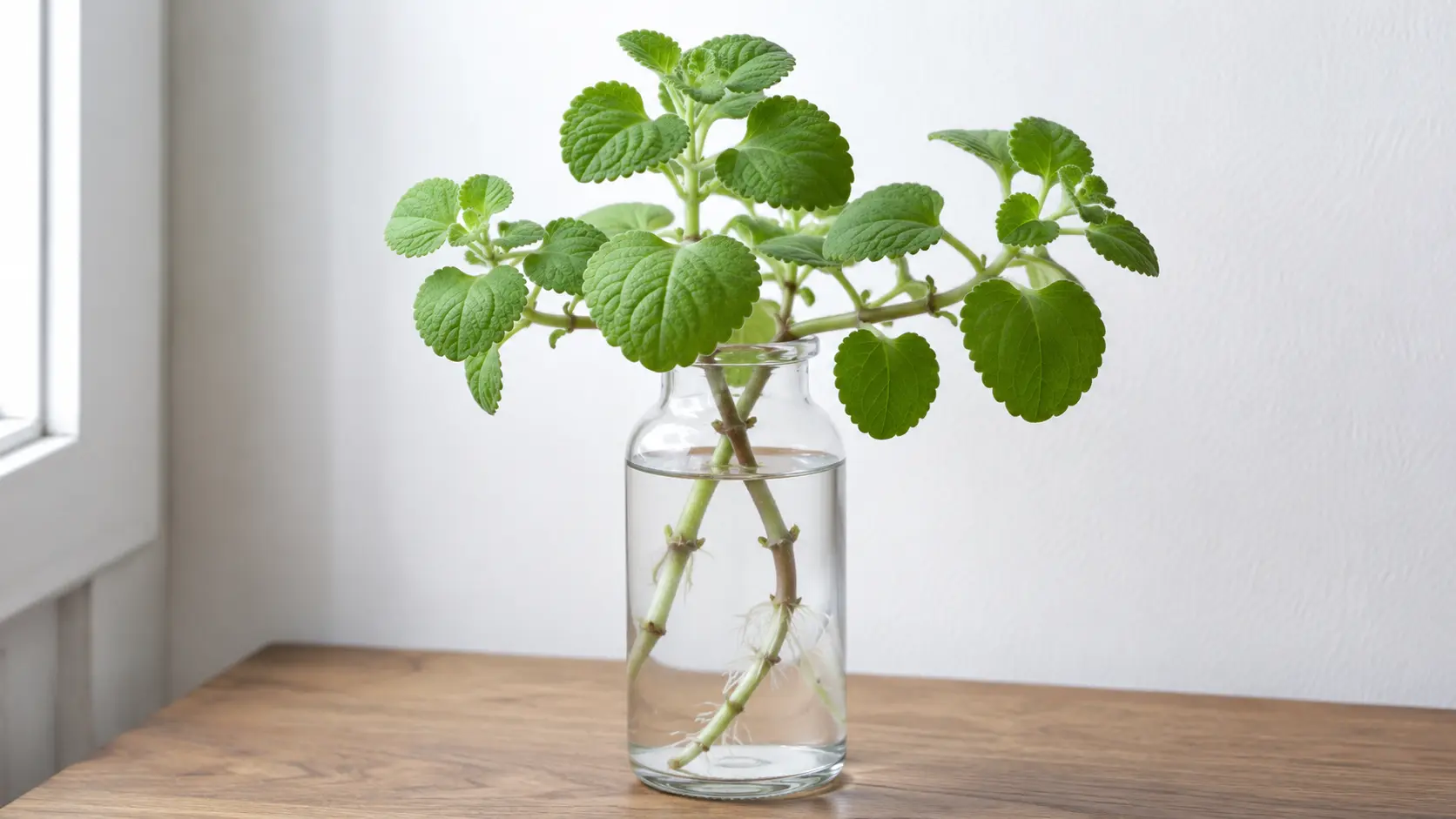
| Botanical name | Plectranthus verticillatus |
| Best use | Rooting or long-term water culture |
| Light | Medium to bright indirect light |
Swedish ivy has rounded leaves and trailing stems. It roots from soft stem cuttings and works well in tall jars or bottles.
Remove the lower leaves and place one or two nodes in water. Pinch the growing tips to encourage side shoots.
22. Coleus
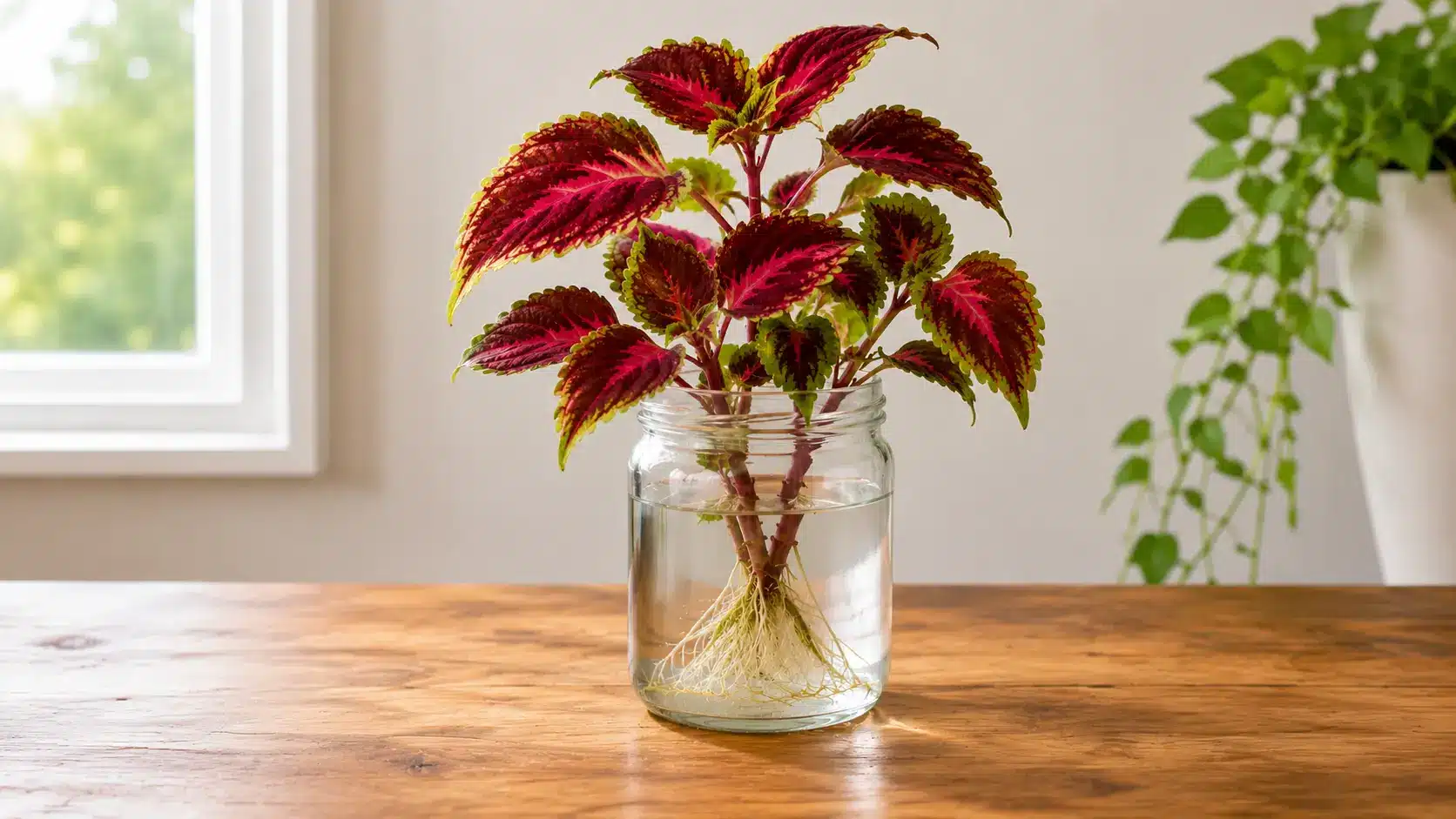
| Botanical name | Plectranthus scutellarioides |
| Best use | Rooting or medium-term water culture |
| Light | Bright indirect light |
Coleus is grown for its colorful leaves. Stem cuttings usually root without much trouble.
Choose a healthy stem, remove the lower leaves, and place the bare section in water. Good light helps the plant maintain its leaf color, but intense sunlight may scorch it.
Coleus can stay in water for some time, though it may need regular trimming and added nutrients to remain full.
23. Begonia
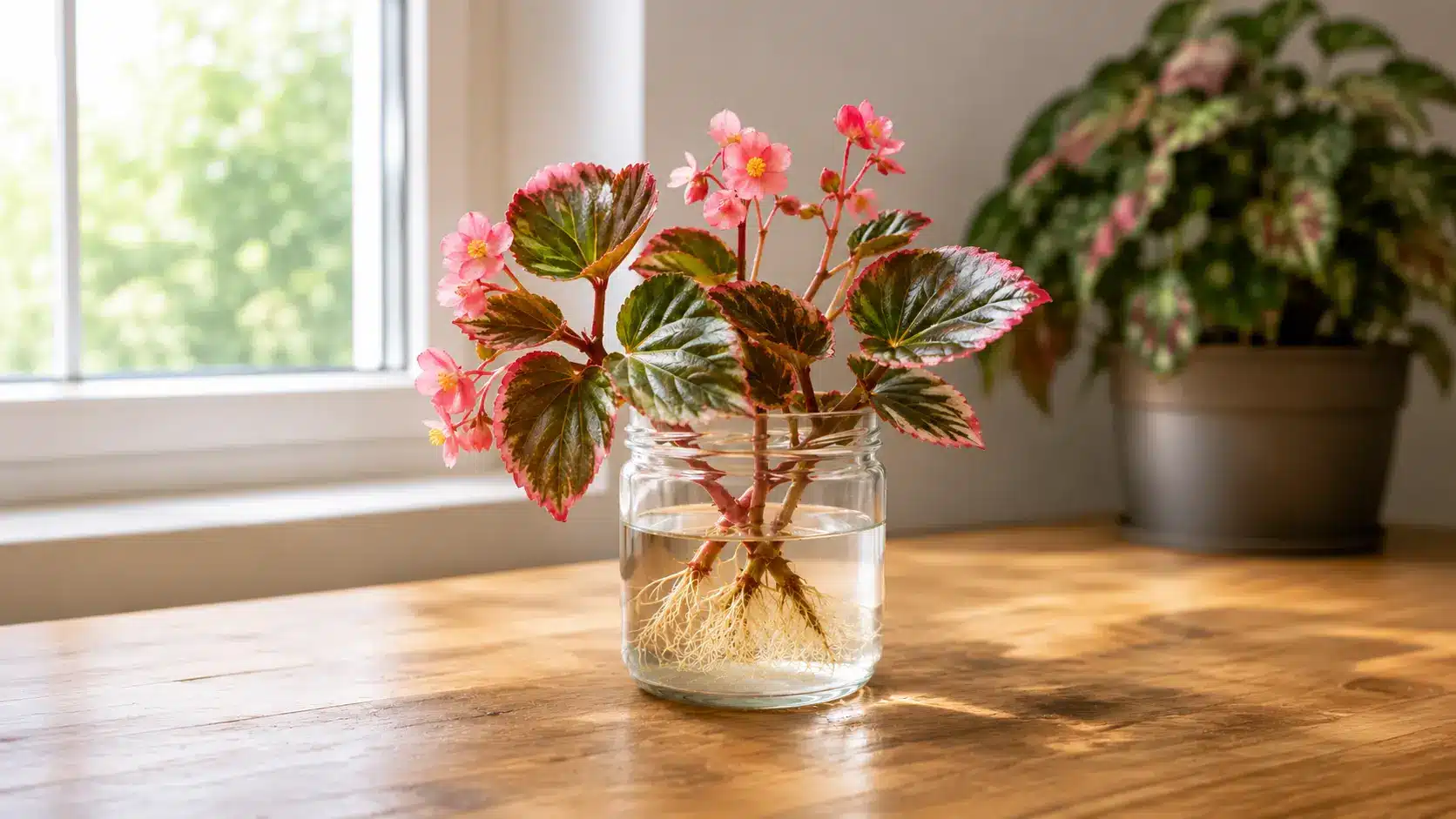
| Botanical name | Begonia species |
| Best use | Water propagation |
| Light | Bright indirect light |
Many begonias can be propagated from stems, leaves, or sections of leaves. Wax begonias are often among the easiest types to start.
Rooting may take longer than it does with pothos. Replace the water regularly and remove any soft or damaged tissue before it spreads.
Begonias are usually better suited to water propagation than permanent plain-water growing.
24. Aluminum Plantxx
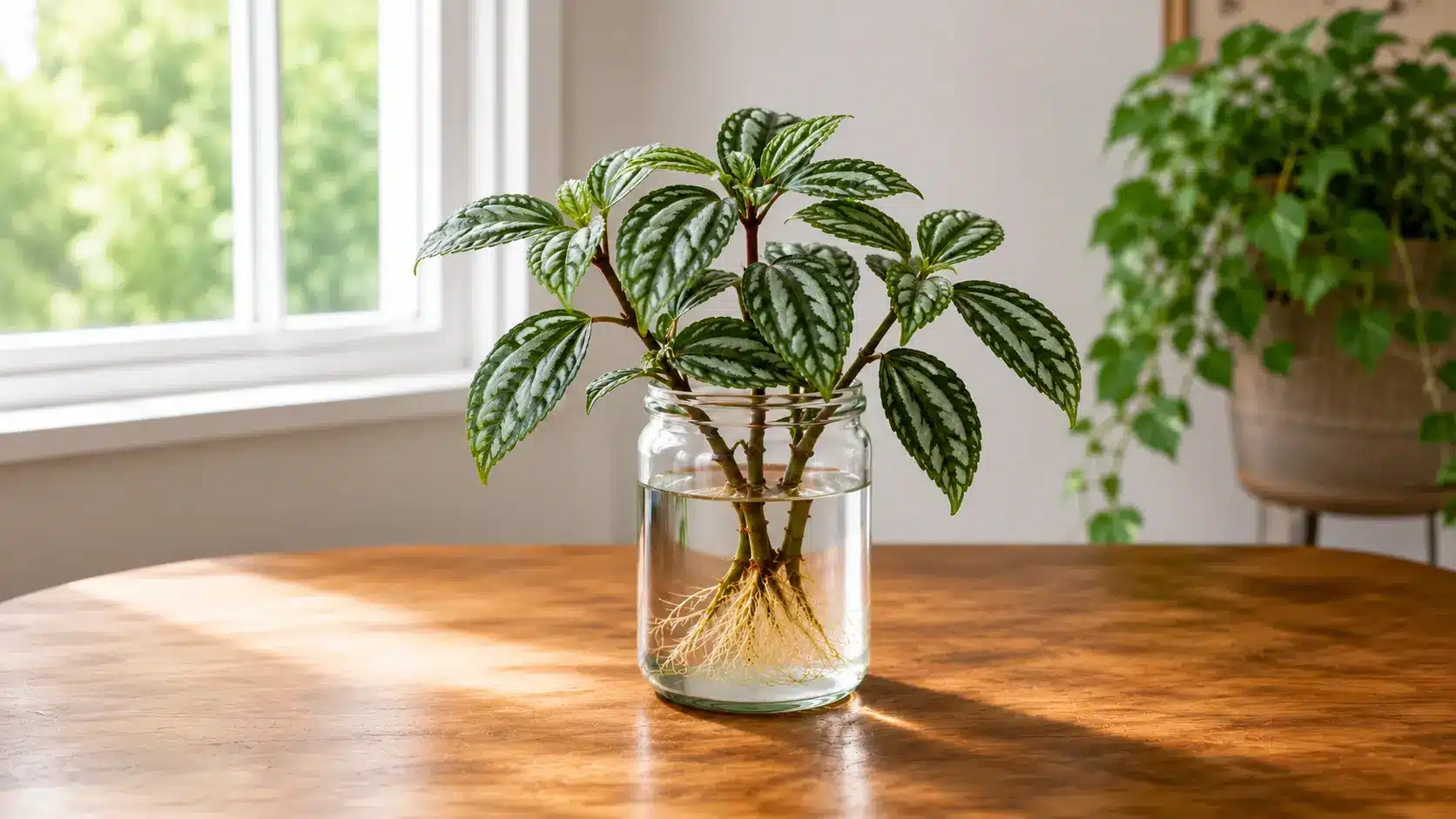
| Botanical name | Pilea cadierei |
| Best use | Rooting or long-term water culture |
| Light | Bright indirect light |
The aluminum plant has green leaves with raised silver markings. Young stem cuttings can form roots in water within several weeks.
Once the plant begins growing, pinch the tips to maintain a compact shape. Monthly nutrients can support longer-term water culture.
25. Chinese Money Plant
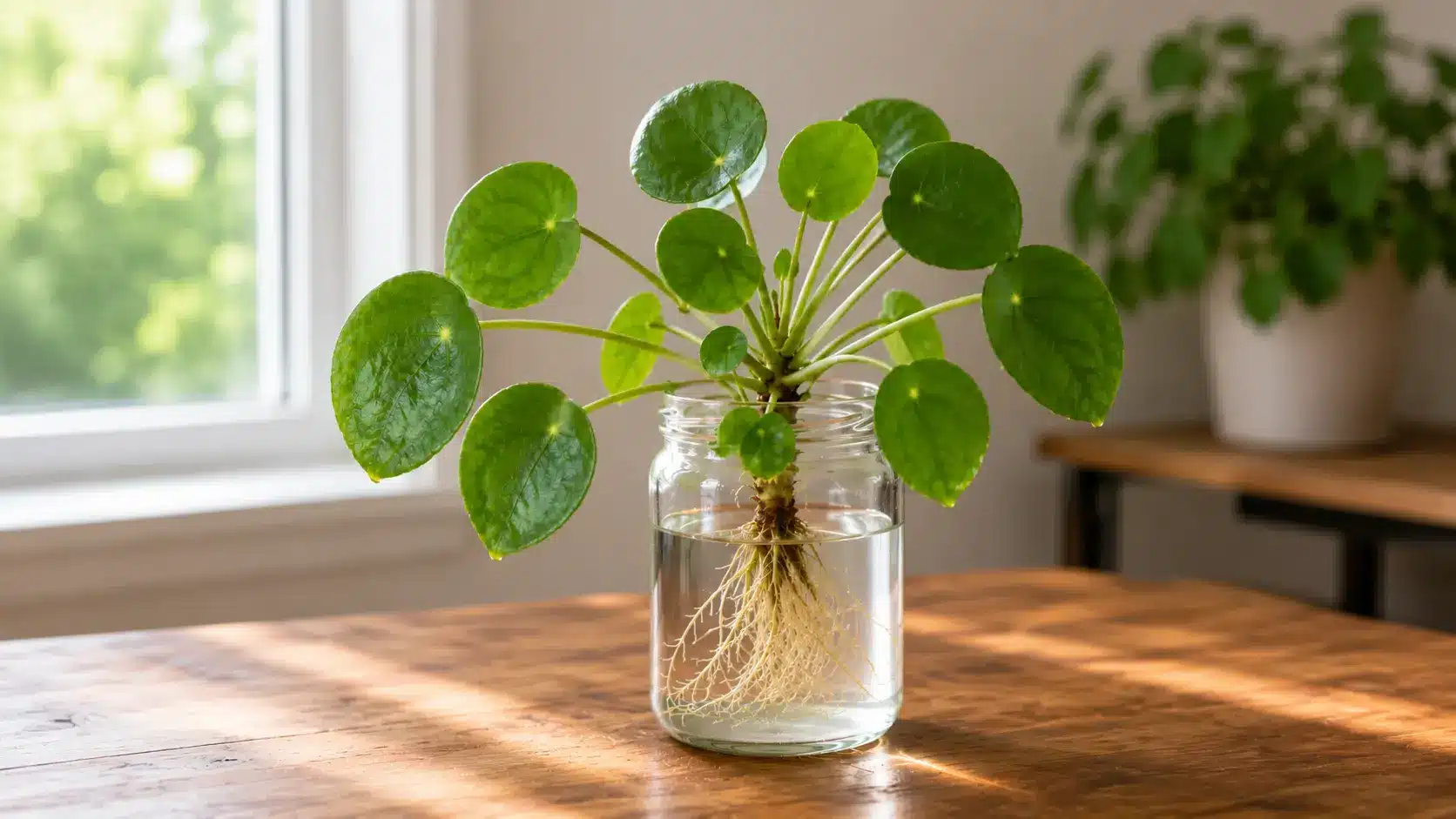
| Botanical name | Pilea peperomioides |
| Best use | Rooting or long-term water culture |
| Light | Bright indirect light |
Chinese money plants produce small offsets near the base of the parent plant. These offsets can be separated and rooted in water.
You can also place a rooted division into water after gently washing away the soil. Keep the crown dry and turn the container from time to time so the plant grows evenly.
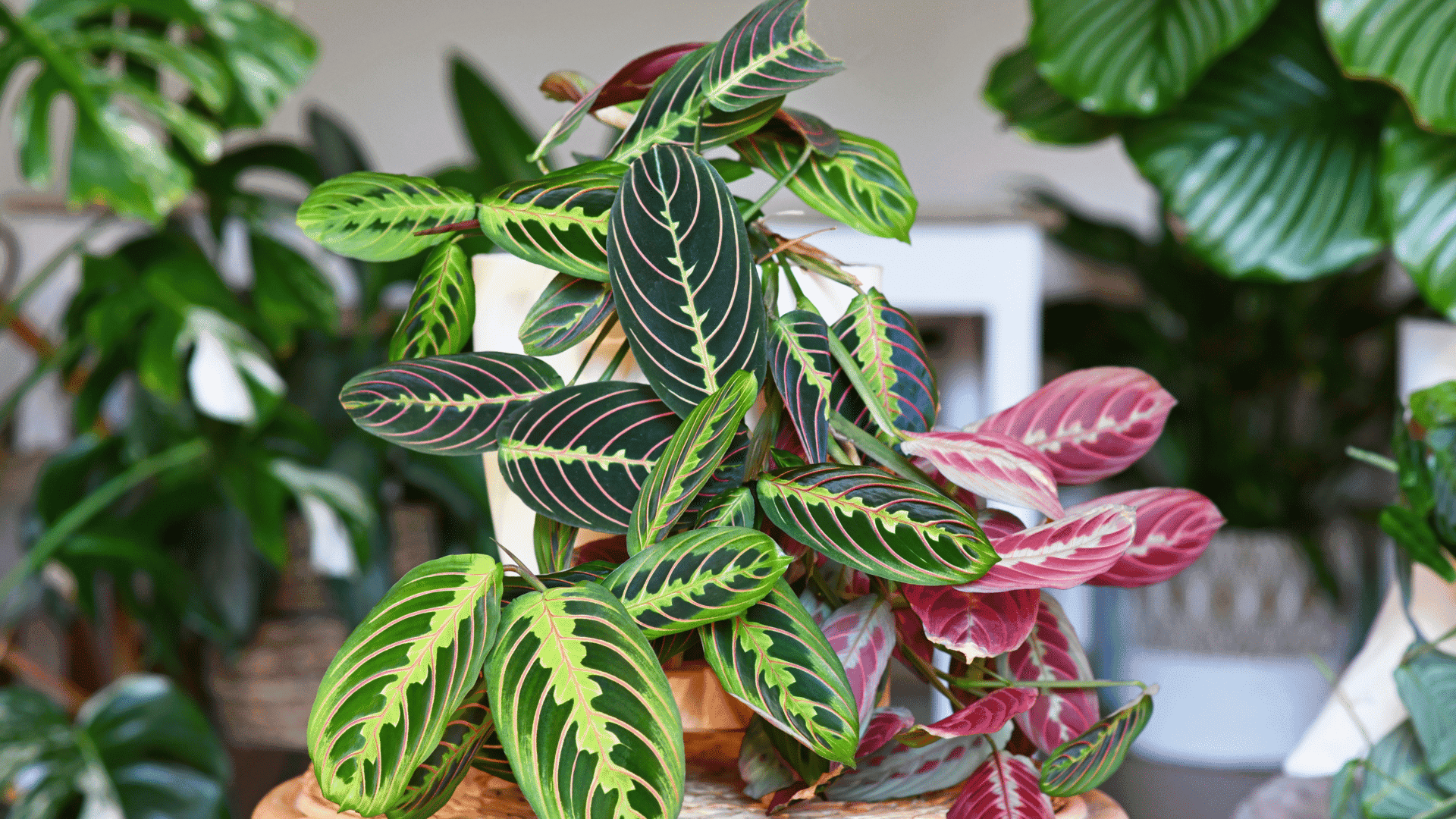
26. Prayer Plant
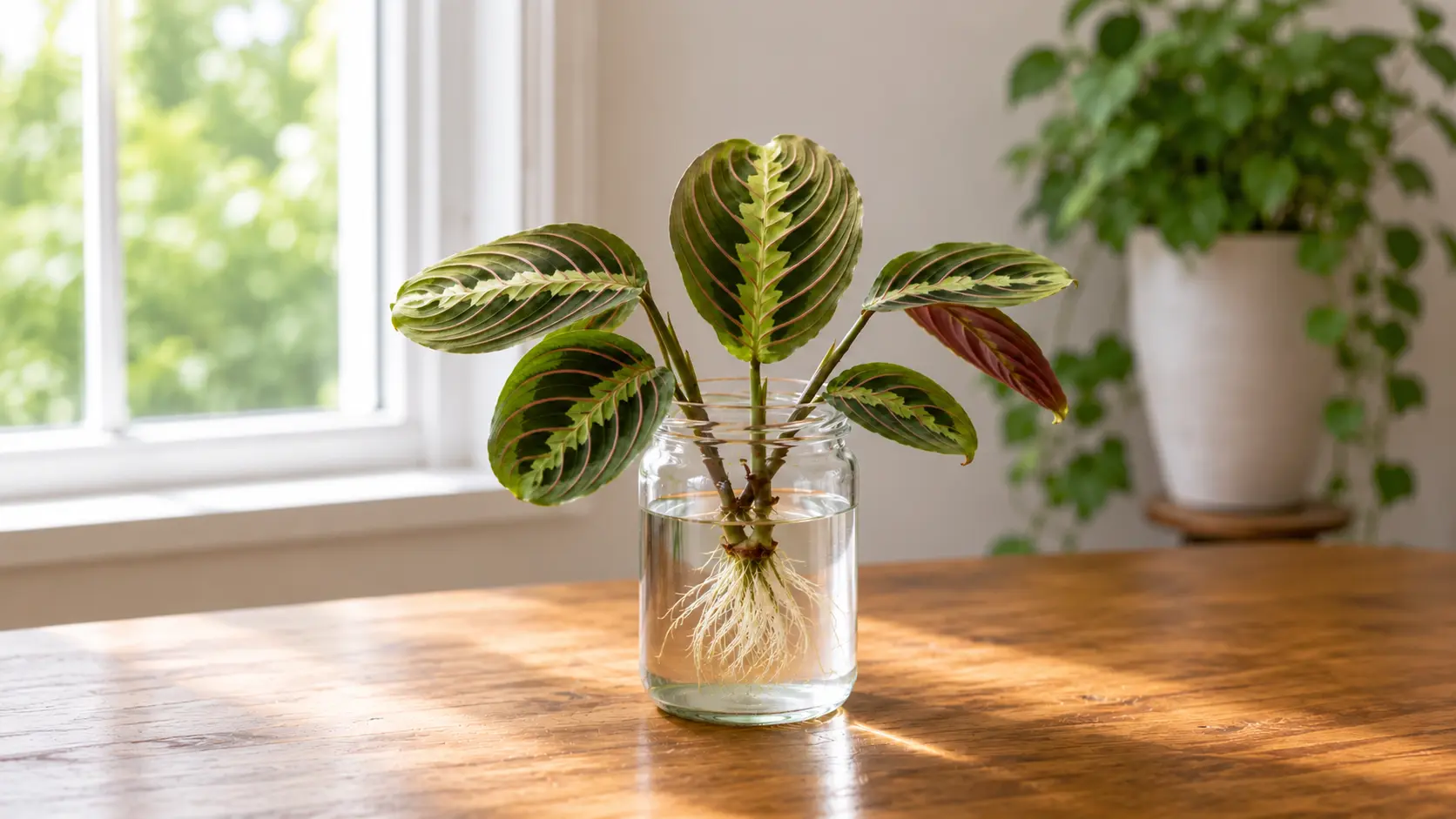
| Botanical name | Maranta leuconeura |
| Best use | Rooting or medium-term water culture |
| Light | Medium indirect light |
Prayer plants have patterned leaves that fold upward at night. A cutting must include a node to produce roots. They prefer warm rooms, soft light, and good humidity.
Filtered or purified water may help if your tap water contains a high level of minerals, since public water systems are only required to stay under the limits set out in the EPA’s drinking water regulations, not to be mineral-free.
Prayer plants can produce roots and foliage in water, though they often perform best in a moist, airy growing mix over the long term.
27. Nerve Plant
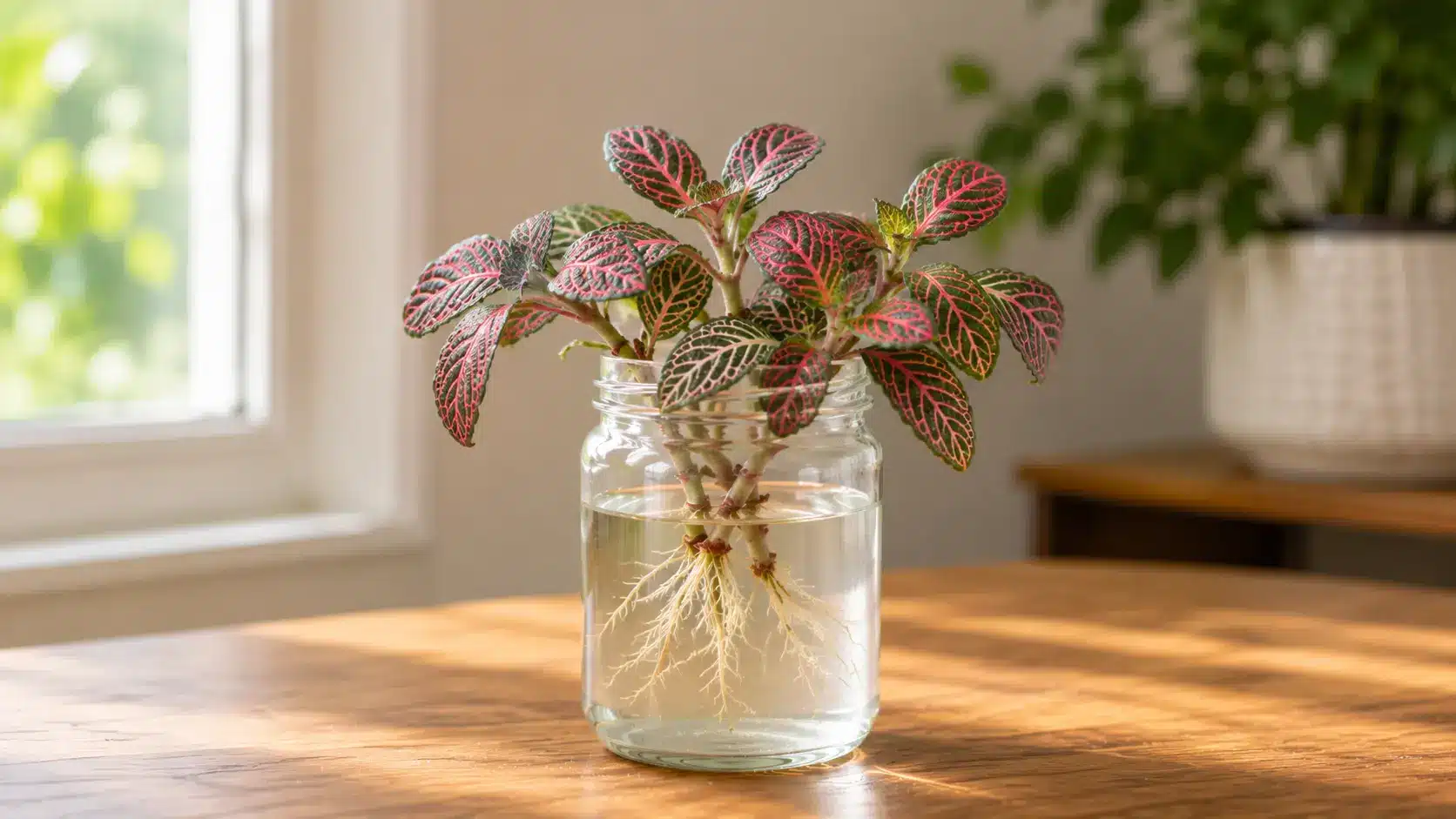
| Botanical name | Fittonia albivenis |
| Best use | Water propagation |
| Light | Medium indirect light |
Nerve plants have small leaves marked with white, pink, or red veins. Short stem cuttings can root in water.
They prefer warm, humid conditions and may wilt when the air is dry. Once the cutting develops a good root system, it can remain in a carefully managed hydroponic setup or be moved to potting mix.
28. Polka Dot Plant
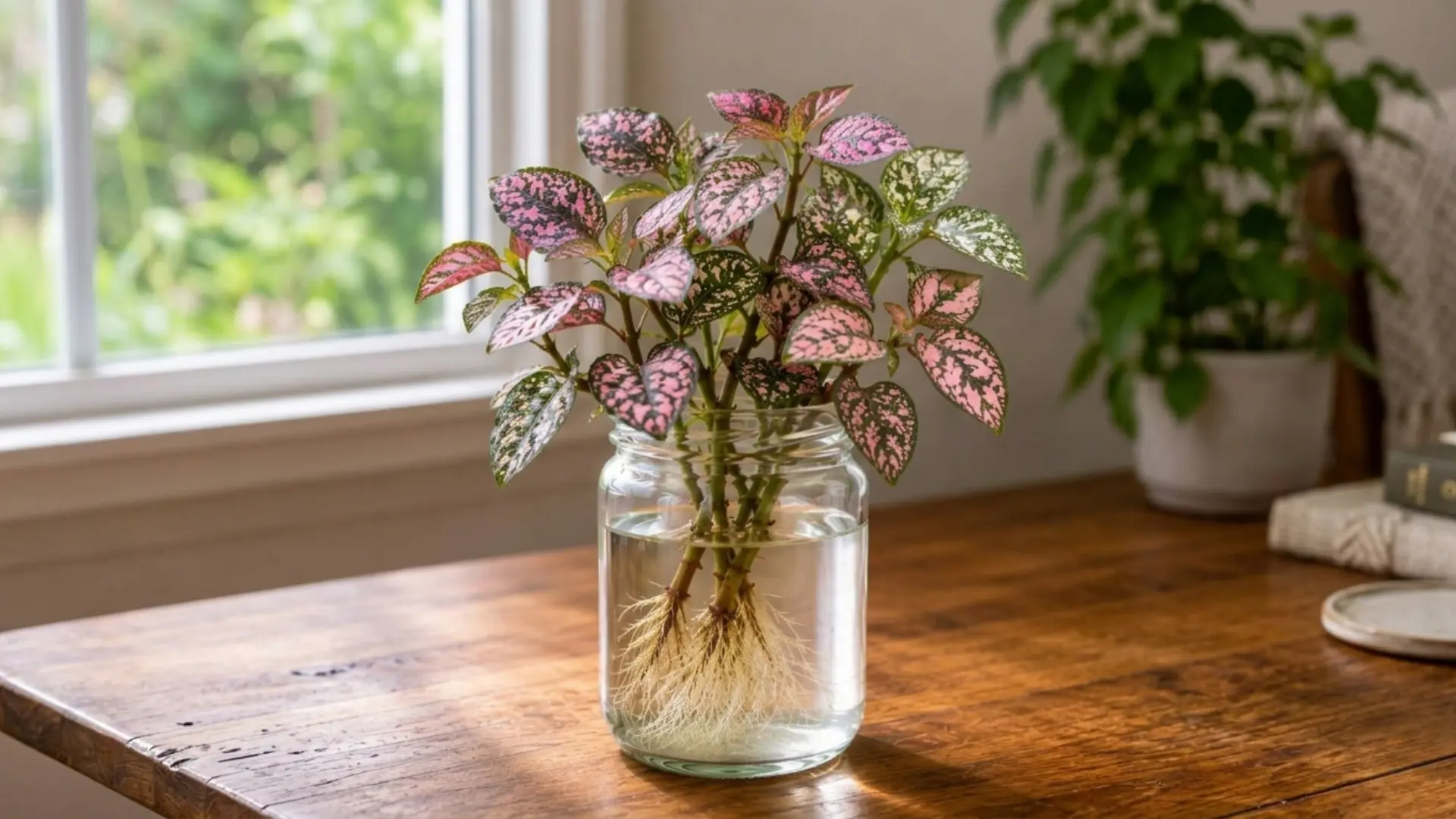
| Botanical name | Hypoestes phyllostachya |
| Best use | Water propagation or medium-term culture |
| Light | Bright indirect light |
Polka dot plants have spotted leaves in pink, red, white, or green. Soft stem cuttings root readily in water.
Pinch the tips often because the plant can become tall and thin indoors. It needs added nutrients if you keep it in water after rooting.
29. Baby’s Tears
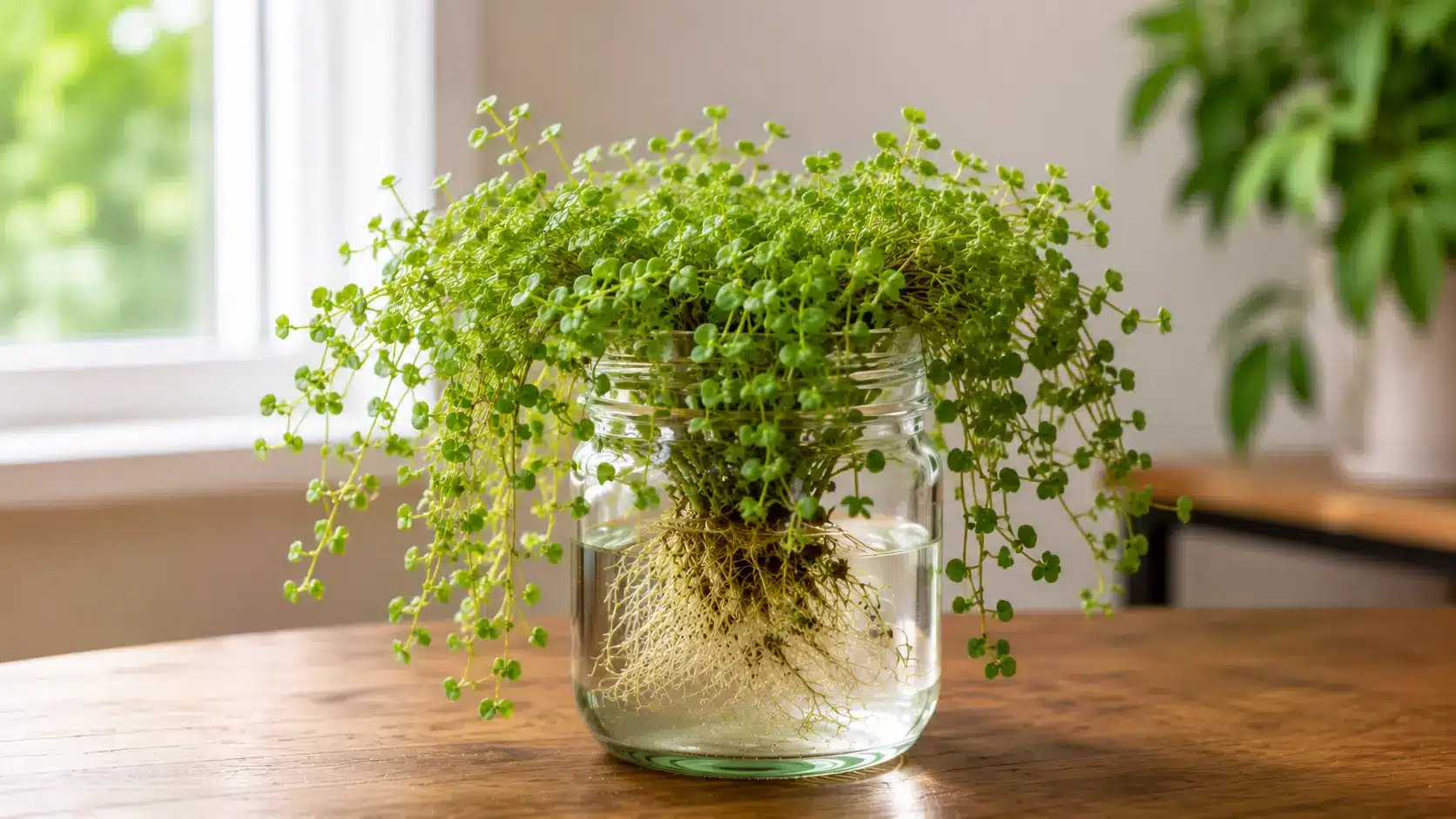
| Botanical name | Soleirolia soleirolii |
| Best use | Rooting or medium-term water culture |
| Light | Medium to bright indirect light |
Baby’s tears has tiny round leaves on delicate creeping stems. A small cluster of stems can adapt to water.
The plant has many leaves close to the roots, so check it often. Remove leaves that fall into the container and lower the water level after the roots become established.
30. Sweet Potato Vine
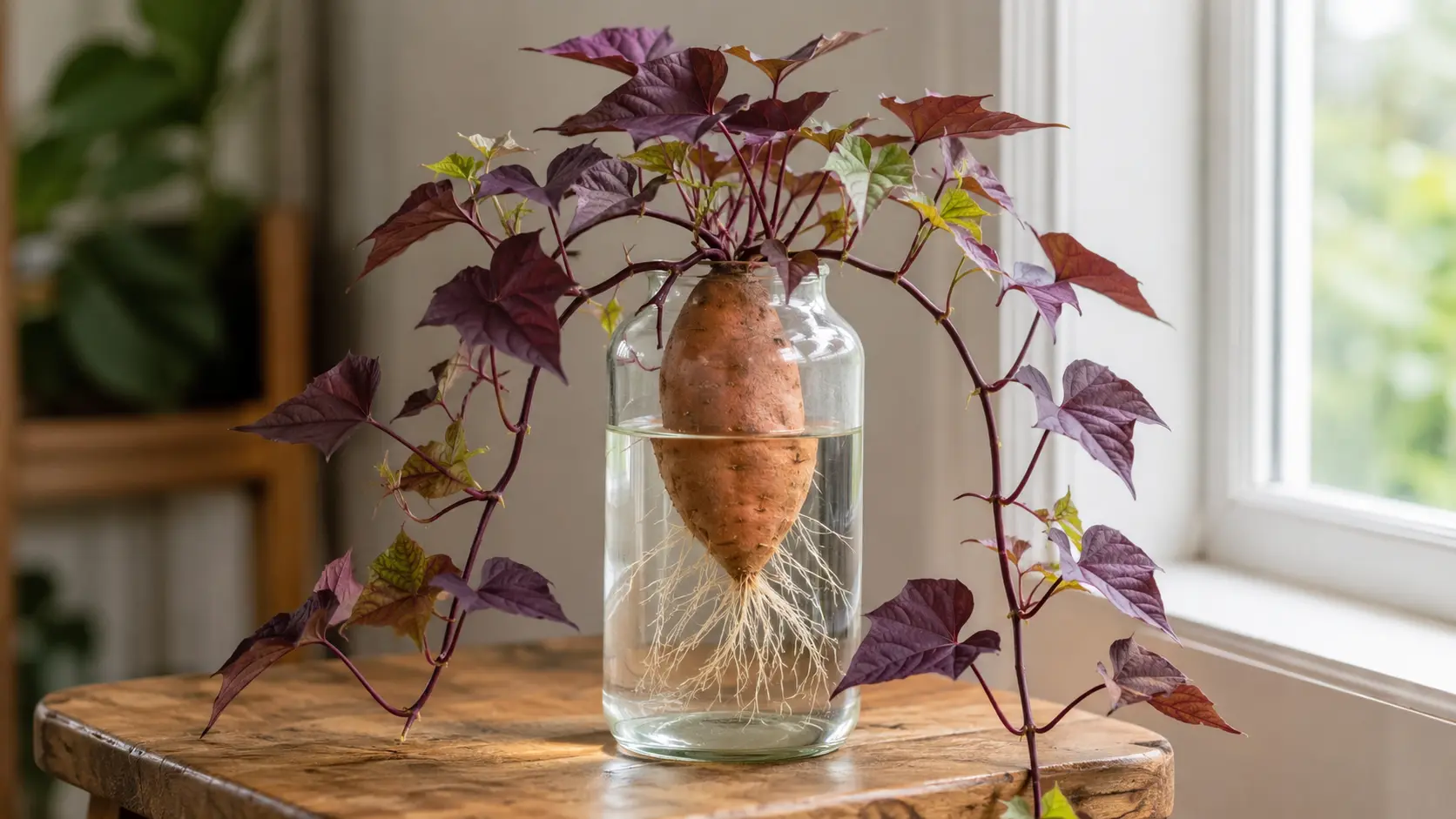
| Botanical name | Ipomoea batatas |
| Best use | Rooting or seasonal water culture |
| Light | Medium to bright indirect light |
Ornamental sweet potato vines have trailing leaves in green, purple, bronze, or lime shades. Both stem cuttings and tubers can produce roots in water.
To grow from a tuber, suspend the upper section above the water while keeping the pointed lower end wet. The plant grows quickly, so it may need pruning and a larger container.
31. Hoya
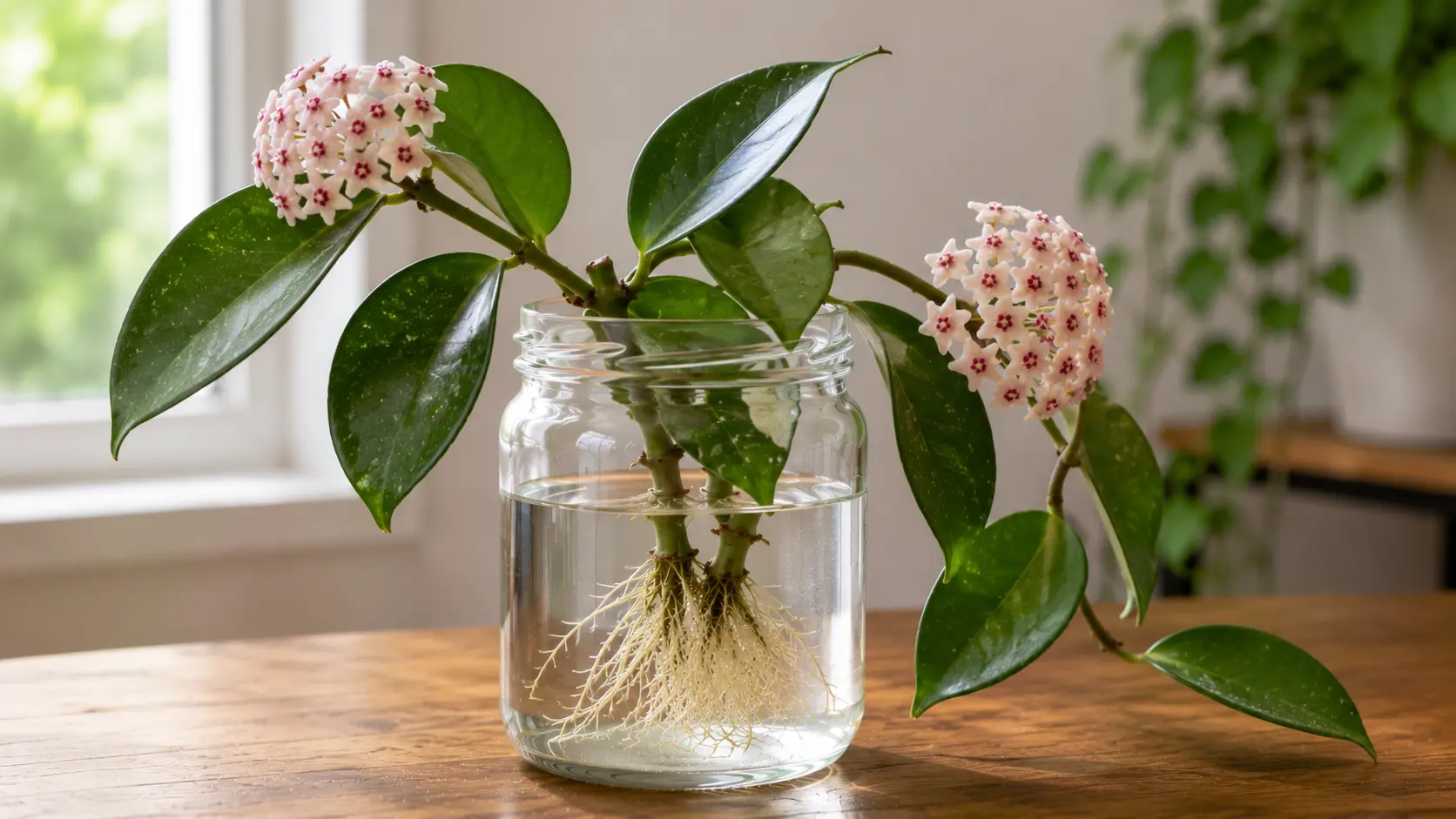
| Botanical name | Hoya species |
| Best use | Water propagation or hydroponic growing |
| Light | Bright indirect light |
Hoyas have thick leaves and trailing or climbing stems. A proper cutting must include at least one node.
A single Hoya leaf may develop roots without producing a full vine. Use a stem section with nodes and several healthy leaves for better results.
Hoyas dislike damaged, airless roots, so clean water and careful nutrient use are important.
32. Croton
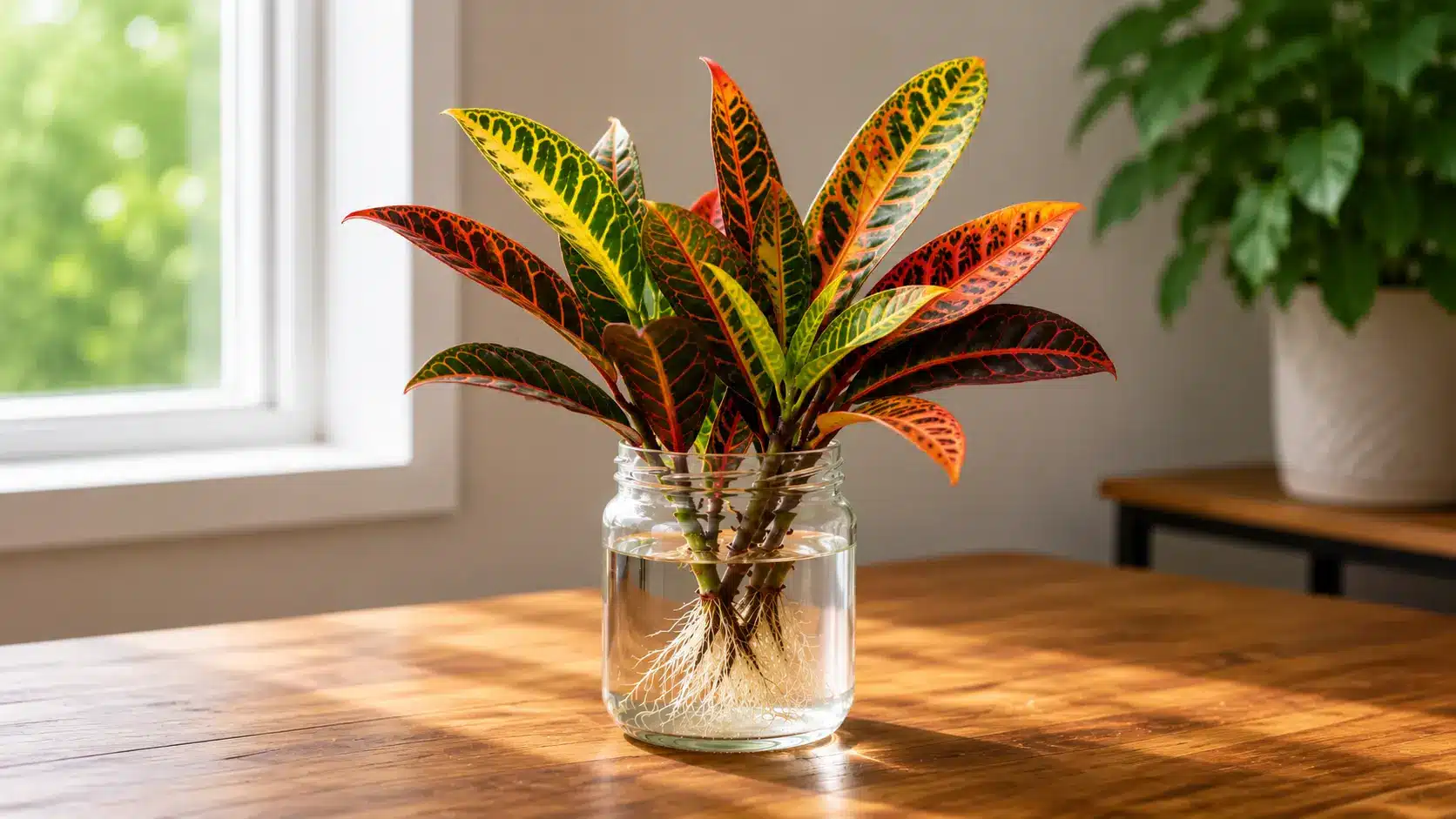
| Botanical name | Codiaeum variegatum |
| Best use | Water propagation or hydroponic growing |
| Light | Bright indirect light |
Croton has colorful leaves marked with red, orange, yellow, green, or pink. Healthy stem cuttings can form roots in warm water.
The plant prefers steady warmth and plenty of filtered light. Its roots may take time to appear, and it is more demanding than pothos or philodendron.
33. Caladium
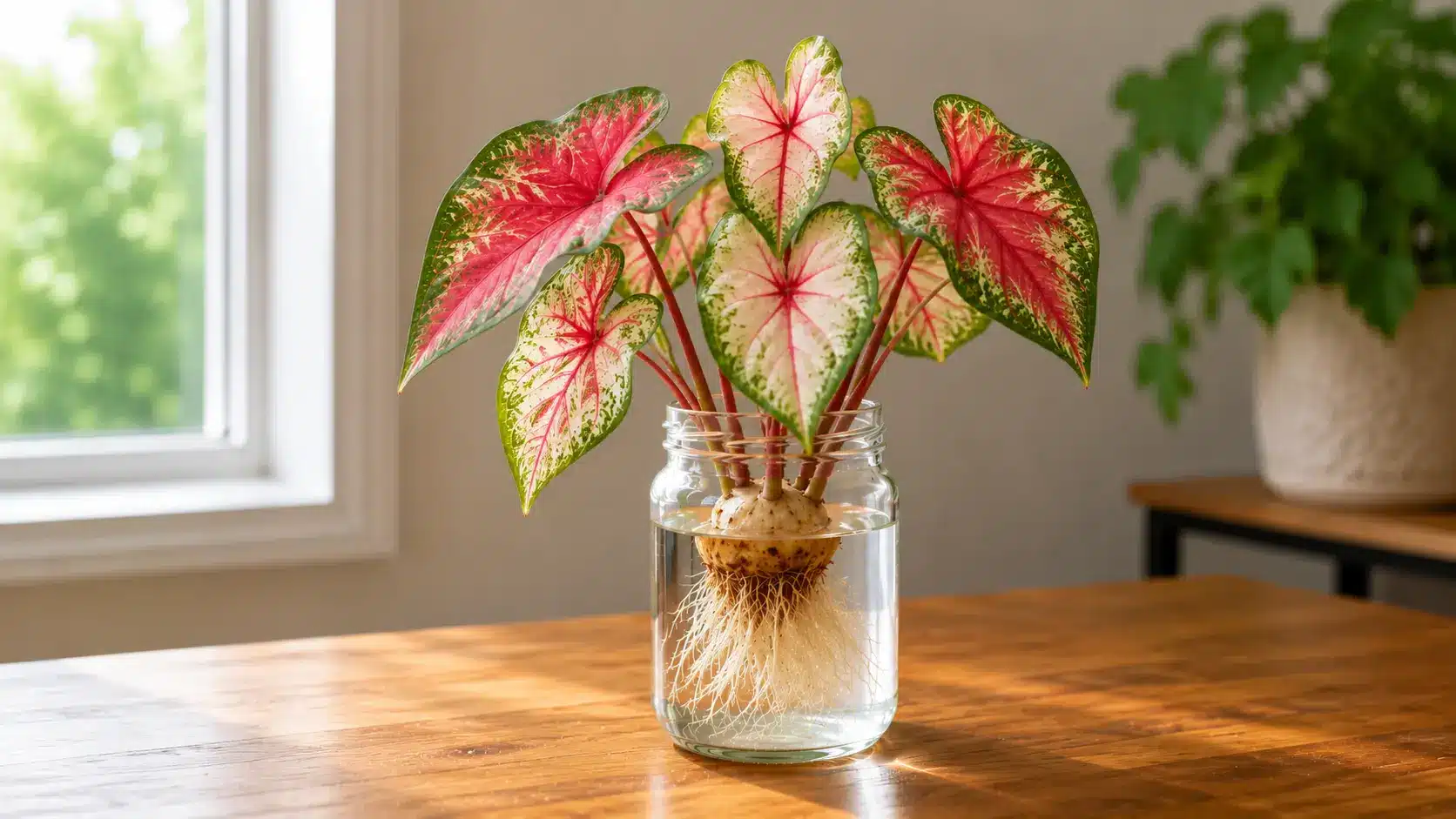
| Botanical name | Caladium species |
| Best use | Seasonal water culture |
| Light | Medium indirect light |
Caladiums grow from tubers and have thin, colorful leaves. A rooted plant can be moved to water after all soil has been washed away.
These plants naturally enter a dormant period. Yellowing leaves near the end of the growing season do not always mean the plant has died.
Keep the tuber from sitting too deeply in water, and stop feeding it when the foliage begins to die back.
34. Alocasia
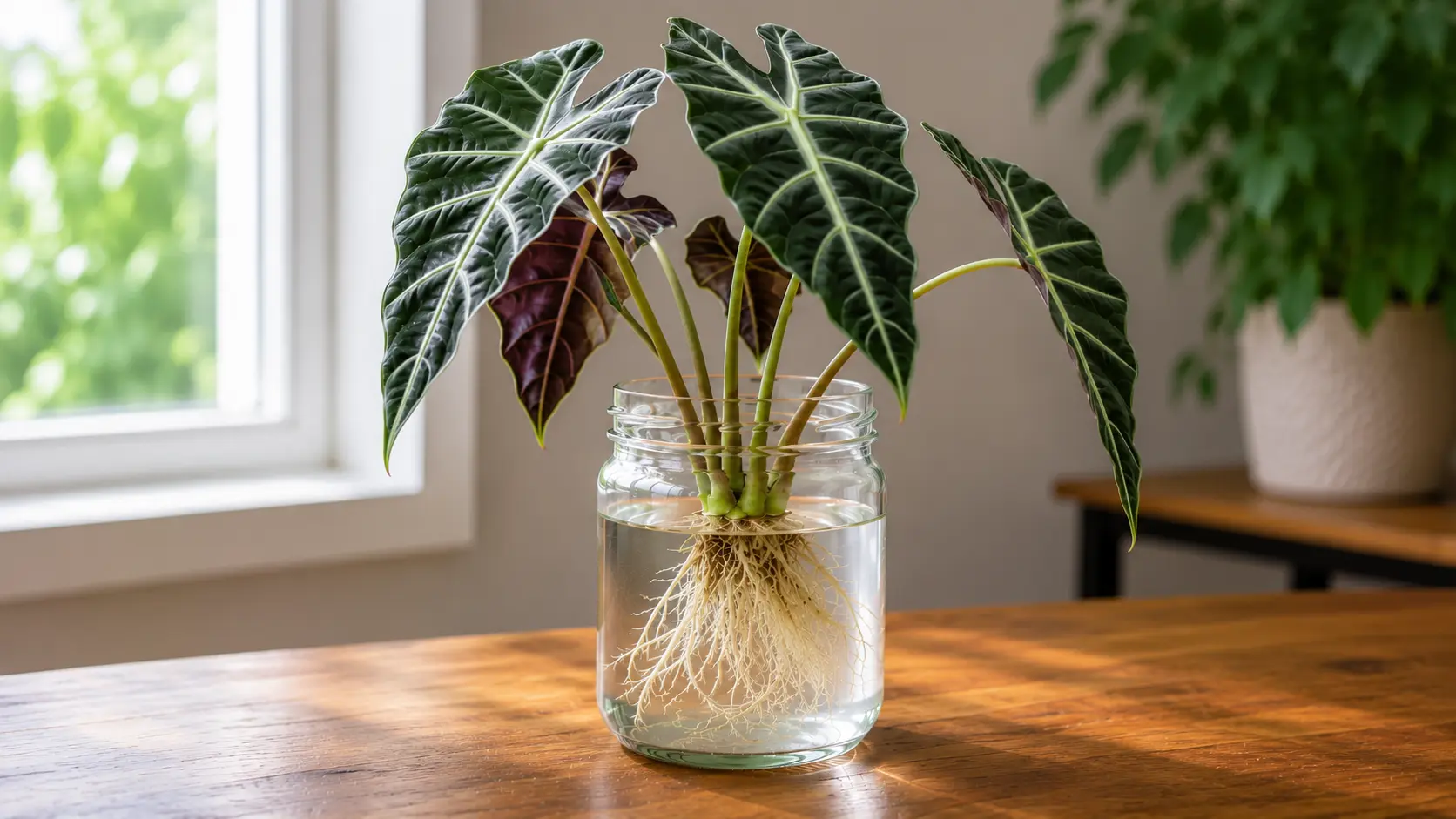
| Botanical name | Alocasia species |
| Best use | Long-term water culture with advanced care |
| Light | Bright indirect light |
Alocasias can adapt to water after their roots have been cleaned. Only the roots should remain submerged.
Inspect the roots often and cut away any brown, soft, or hollow sections. Alocasias need warmth, good light, and regular nutrients to keep producing healthy leaves.
35. Rubber Plant
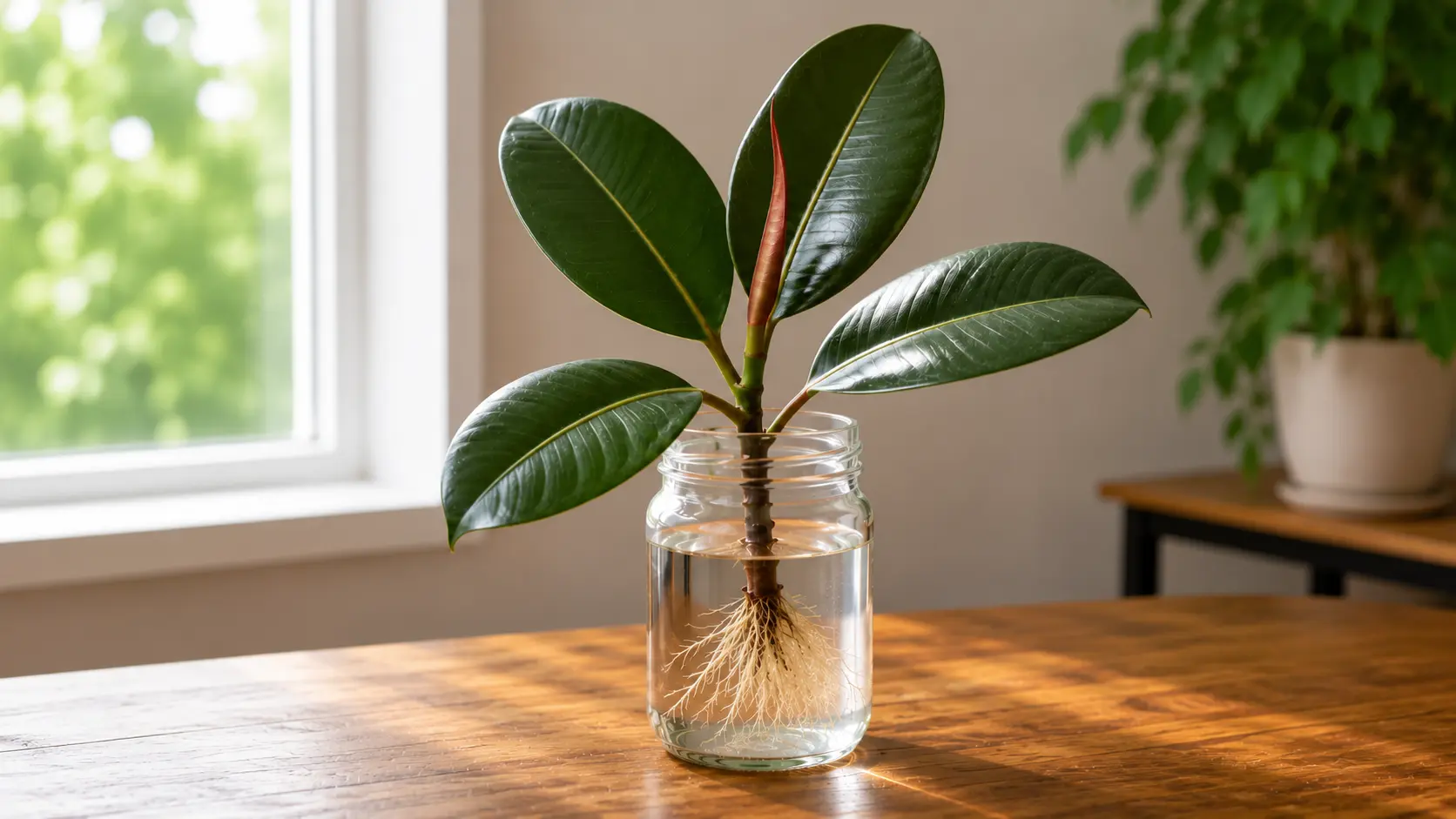
| Botanical name | Ficus elastica |
| Best use | Water propagation |
| Light | Bright indirect light |
Rubber plant stem cuttings can produce roots in water, though the process may be slow. A single leaf without enough stem tissue will not develop into a complete new plant.
Use a cutting with a node and one or two leaves. The plant may be moved to a hydroponic system after rooting, but it is not one of the easiest options for permanent plain-water culture.
How to Grow Plants in Water at Home
Growing houseplants in water starts with choosing a healthy plant and setting it up correctly. Once the roots begin to develop, regular care will help the plant stay healthy for longer. The steps below cover the full process from cutting to ongoing maintenance.
- Choose and prepare the cutting: Select a firm, healthy cutting without pests or damaged growth. Most stem cuttings need at least one node. Cut below the node and remove any leaves that would sit underwater.
- Choose the container and location: Place the cutting in a clean jar or vase with the node or roots underwater. Keep the leaves and crown dry. Use a stable container with enough space for the roots, fill it with room-temperature water, and place it in indirect light.
- Know what to expect while the cutting roots: Roots may appear within one to three weeks, though Hoya, croton, and rubber plant can take longer. Keep the cutting warm and avoid handling new roots.
- Maintain the plant: Change the water every one to two weeks. Once a healthy root system forms, add diluted hydroponic fertilizer as directed to support continued growth.
Follow these steps in order, and most healthy cuttings will root and settle into water culture without much trouble.
Common Problems With Water-Grown Plants
Even with the right setup, water-grown plants may develop a few common issues. Most are easy to correct when noticed early, as long as you can match the symptom to the likely cause.
| Problem | Cause and Fix |
|---|---|
| Cloudy or smelly water | Decaying leaves, damaged roots, or bacteria. Remove debris, trim soft roots, wash the container, and refill with fresh water. |
| Brown, soft, or slimy roots | Root rot. Cut away damaged sections, clean the container, and keep the crown and stem above water. |
| Yellow leaves | Poor light, unhealthy roots, or too much or too little fertilizer. Check roots first, then adjust light and feeding. |
| Green algae in the container | Light reaching nutrient-rich water. Wash the container, move the plant out of direct sun, or use an opaque vase. |
| Slow or missing root growth | Cold temperatures, an unhealthy cutting, or a missing node. Keep it warm, give bright indirect light, and be patient with slower plants like Hoya or croton. |
| Brown leaf tips | Mineral-heavy water, excess fertilizer, or dry air. Switch to filtered water, cut back on feeding, and avoid heating vents and drafts. |
| Weak or stretched growth | Low light. Move the plant closer to a bright window, trim weak growth, and rotate the container regularly. |
Most of these problems trace back to water quality, light, or an early rooting issue, so a quick check of the roots and container is usually the fastest way to find the cause.
Care Tips for Indoor Water Plants
A simple care routine can keep water-grown plants healthy and help prevent root, leaf, and water-quality problems.
- Remove dead leaves as soon as you see them.
- Protect tropical plants from cold drafts.
- Use a clean support for tall or climbing stems.
- Trim long roots if they become crowded or tangled.
- Check each plant’s light needs instead of placing every jar in the same spot.
- Keep plants that may be harmful to pets or children out of reach, since the ASPCA’s list of toxic and non-toxic plants covers which common houseplants pose the biggest risk to cats and dogs.
Frequently Asked Questions
Can houseplants live permanently in water?
Yes, many houseplants can live permanently in water. Pothos, philodendron, and Tradescantia are especially well suited. They need regular water changes, bright indirect light, and occasional nutrients to keep growing and producing healthy new leaves.
Do water-grown plants need fertilizer?
Yes, plants kept in water long-term need fertilizer. Plain water lacks the nutrients found in soil, so without added hydroponic fertilizer, leaves often turn yellow and growth slows. Cuttings just rooting can wait a bit longer.
Can plants grow in plain tap water?
Yes, plants can root and grow in plain tap water, though filtered water is often better. Tap water can contain chlorine, fluoride, or minerals that build up over time and may cause brown leaf edges or cloudy water.
Are plants that grow in water safe for pets and children?
Some are safe, while others may cause irritation or illness if chewed or swallowed. Growing a plant in water does not remove the harmful substances found in its leaves, stems, or roots.
Final Takeaway
Growing plants in water is a simple way to add greenery to your home without using soil. You can root a Pothos cutting, keep lucky bamboo in a vase, or grow a peace lily with its roots in clean water.
Most plants that grow in water need suitable light, regular water changes, and time to develop healthy roots.
Cloudy water, yellow leaves, and slow root growth can happen, but these issues are often easy to correct.
Clean the container, remove damaged roots, adjust the light, and add diluted nutrients when needed. With steady care, many houseplants can remain healthy in water for months or even years. Have you tried growing plants in water? Drop a comment below and let me know.