A 400-square-foot studio with one window, a queen bed, and a desk sharing the same 8-foot wall isn’t a decorating problem; it’s a layout problem, and no amount of styling fixes it until the space works first.
That’s the mistake I see most often: buying decor before checking what the room can actually hold.
Good design follows an order: measure, settle the furniture arrangement first, pick a style suited to the light, then layer in decor. Skip a step, and the room fights back.
This piece covers styles, layout strategies, renter-safe updates, and the mistakes that quietly shrink a small space.
Which Interior Factors Should You Plan Before Decorating
Plan layout, natural light, storage needs, and rental limits before buying furniture. Follow this order: measure first, place key furniture second, add storage third, and add decor last.
This prevents costly mistakes in a first apartment. The room’s limits set the layout, which determines furniture size and affects storage, and storage keeps the room from feeling crowded once decor is added. Skipping a step makes everything harder.
| Factor | What to Check | Why It Matters | Best Design Move |
| Room size and shape | Square footage, corners, alcoves | Sets a ceiling on furniture scale | Sketch the floor plan before shopping |
| Natural light | Window count, direction the room faces | Changes how colors and finishes read | Test swatches at 7 am and 7 pm |
| Rental rules | Paint, drilling, and modification clauses | Limits on which changes are reversible | Read the lease before buying anything permanent-feeling |
| Storage needs | Closet count, cabinet depth | Drives how much furniture needs to double as storage | Pick pieces with built-in storage |
| Traffic flow | Walking paths between rooms and doors | Blocked paths make rooms feel smaller | Keep a 30 to 36-inch clear path |
| Outlet placement | Where outlets sit on each wall | Decides where lamps can realistically go | Plan furniture around outlets |
Once these factors are mapped, the room stops being a guessing game, and choosing a style becomes a lot easier because you already know what the space can support.
| Quick check: If you’re renting, confirm what your lease allows before drilling anything. Renter rights and modification rules vary by state, and HUD outlines where to find that information for your specific location. |
Core Styles for Apartment Living
A style gives your apartment a clear direction. It helps you choose colors, furniture, lighting, and decor without buying random things. The key is to pick one main style, then slowly add personal details.
1. Modern Minimalist
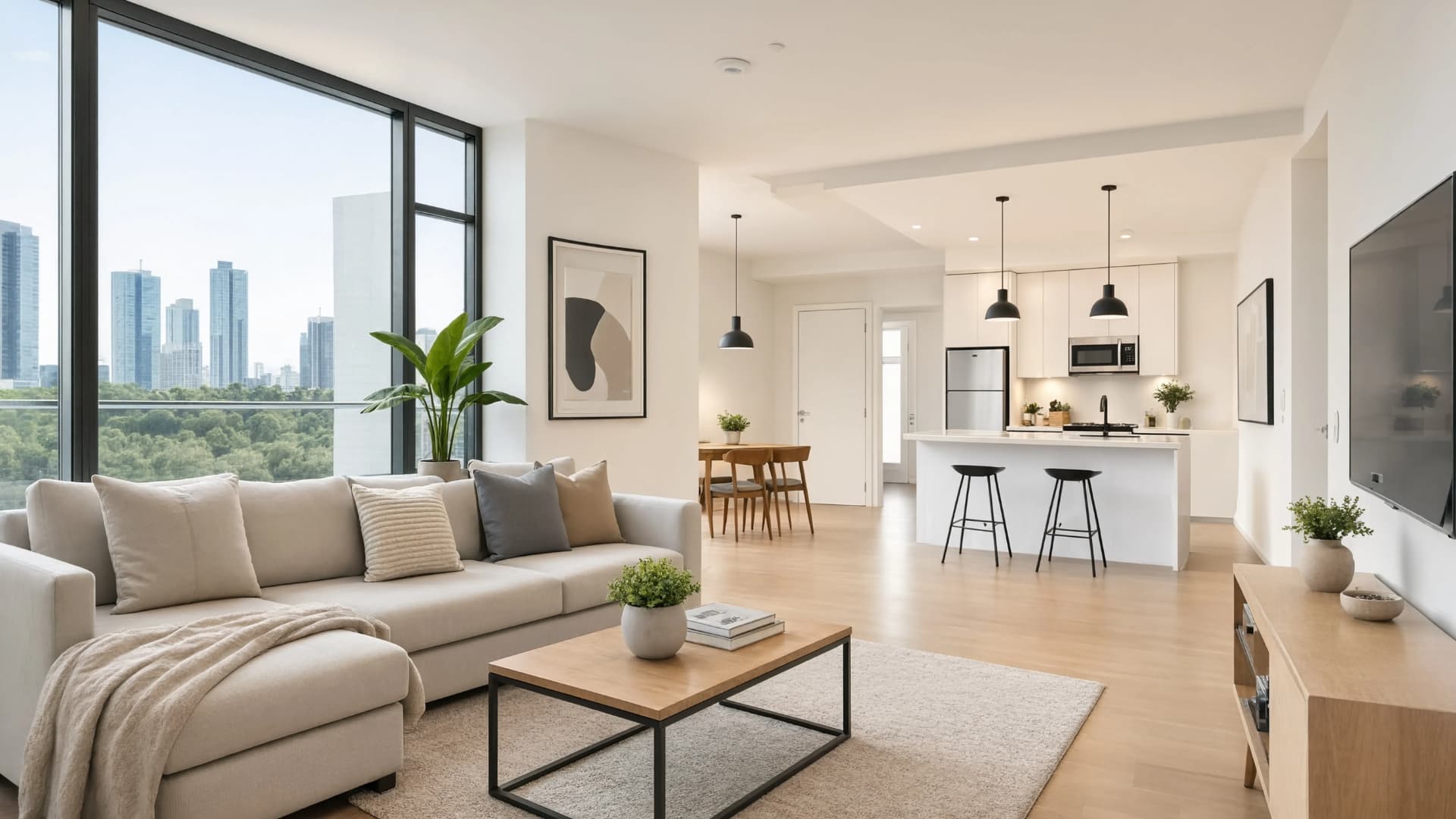
Modern minimalist rooms use clean lines, calm colors, hidden storage, and open surfaces. This style works well if your apartment feels busy, cluttered, or visually heavy. Use a neutral base like white, cream, beige, gray, or soft brown.
- Best room type: Small studios, one-bedroom apartments, and open-plan living rooms
- Best colors: White, warm beige, soft gray, black, and wood tones
- Best furniture move: Choose closed storage and simple furniture with clean shapes
Keep the room from feeling cold by adding texture with a rug, a throw, linen curtains, or a wooden side table.
2. Scandinavian and Organic Modern
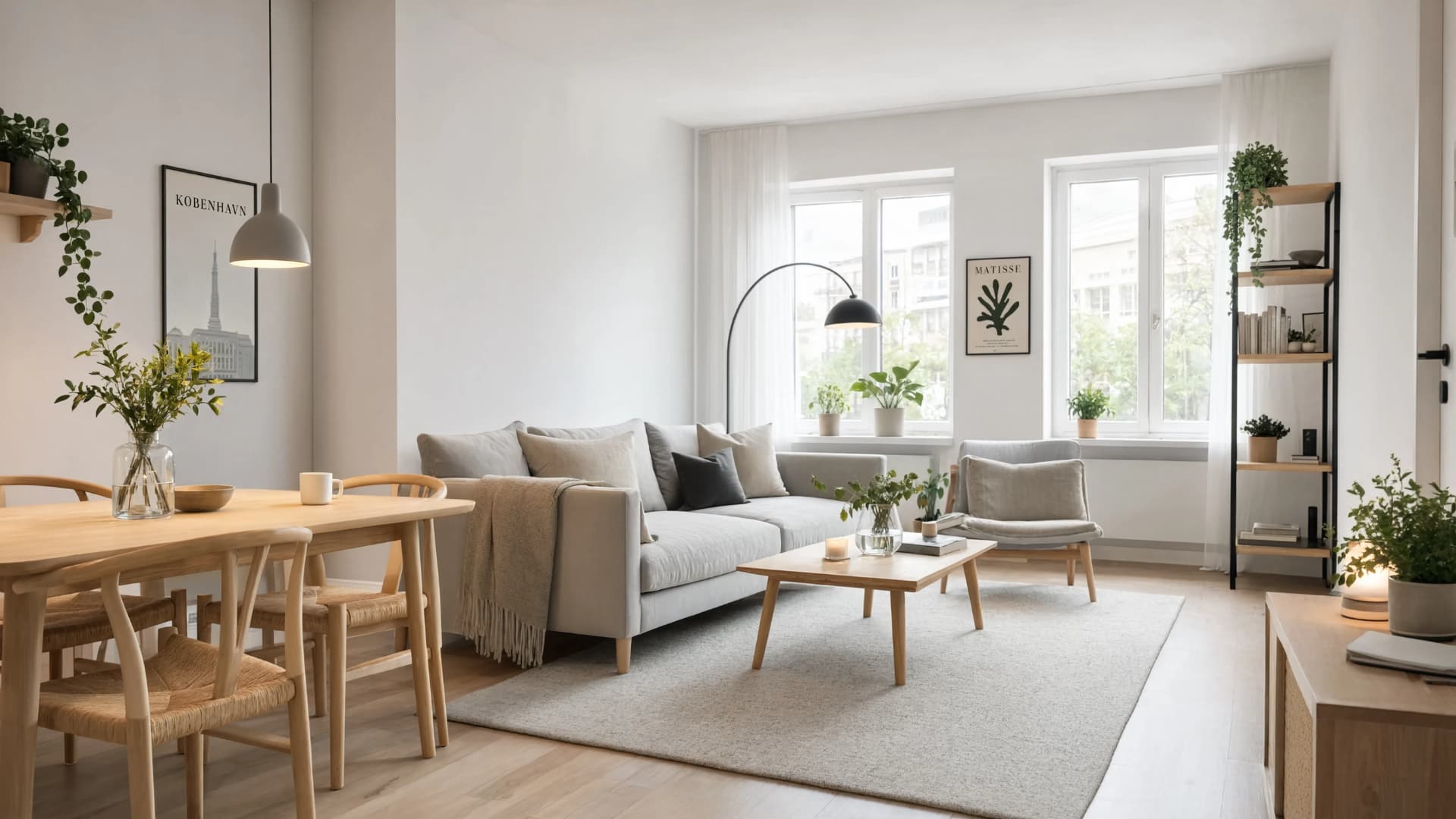
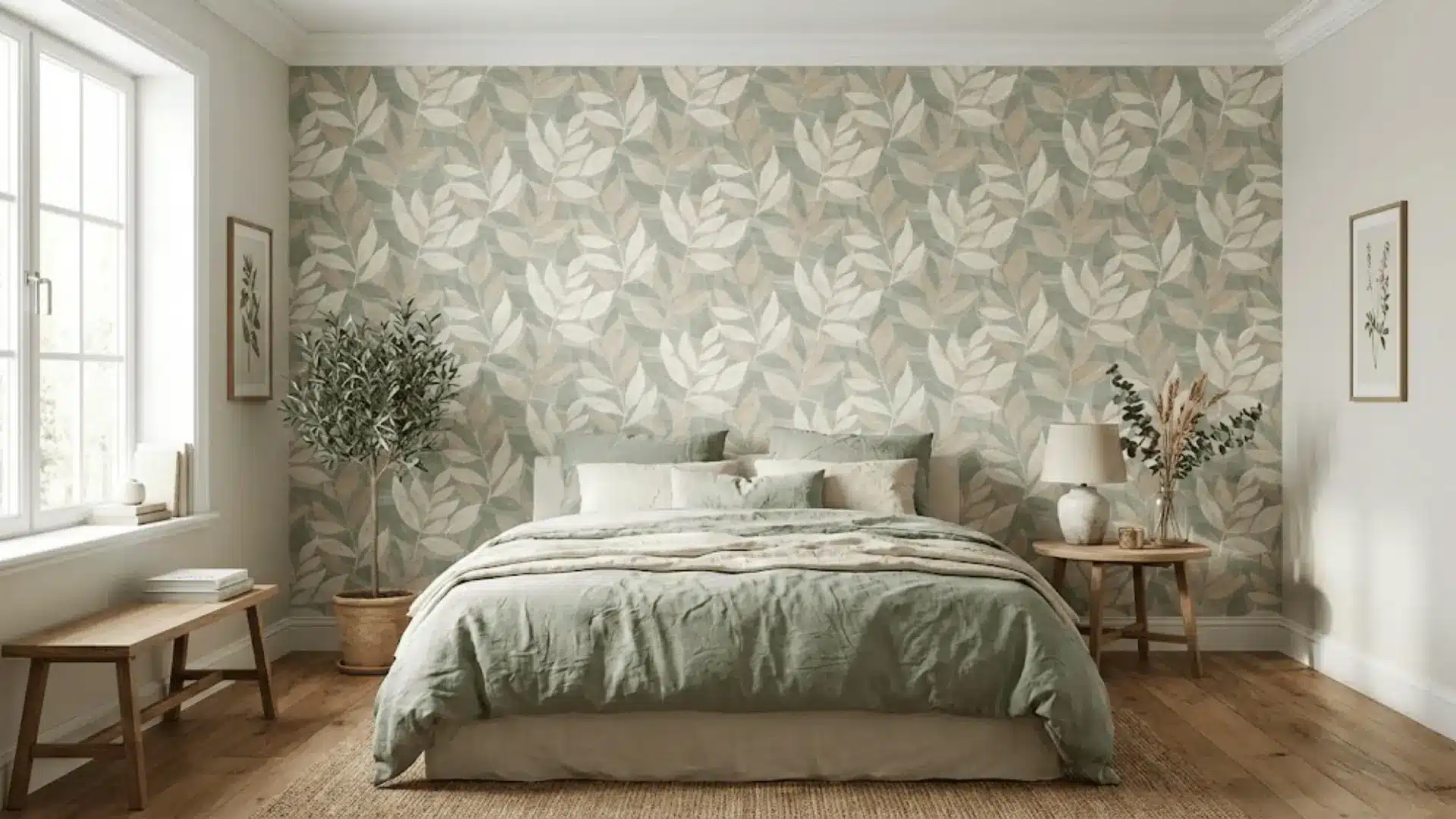
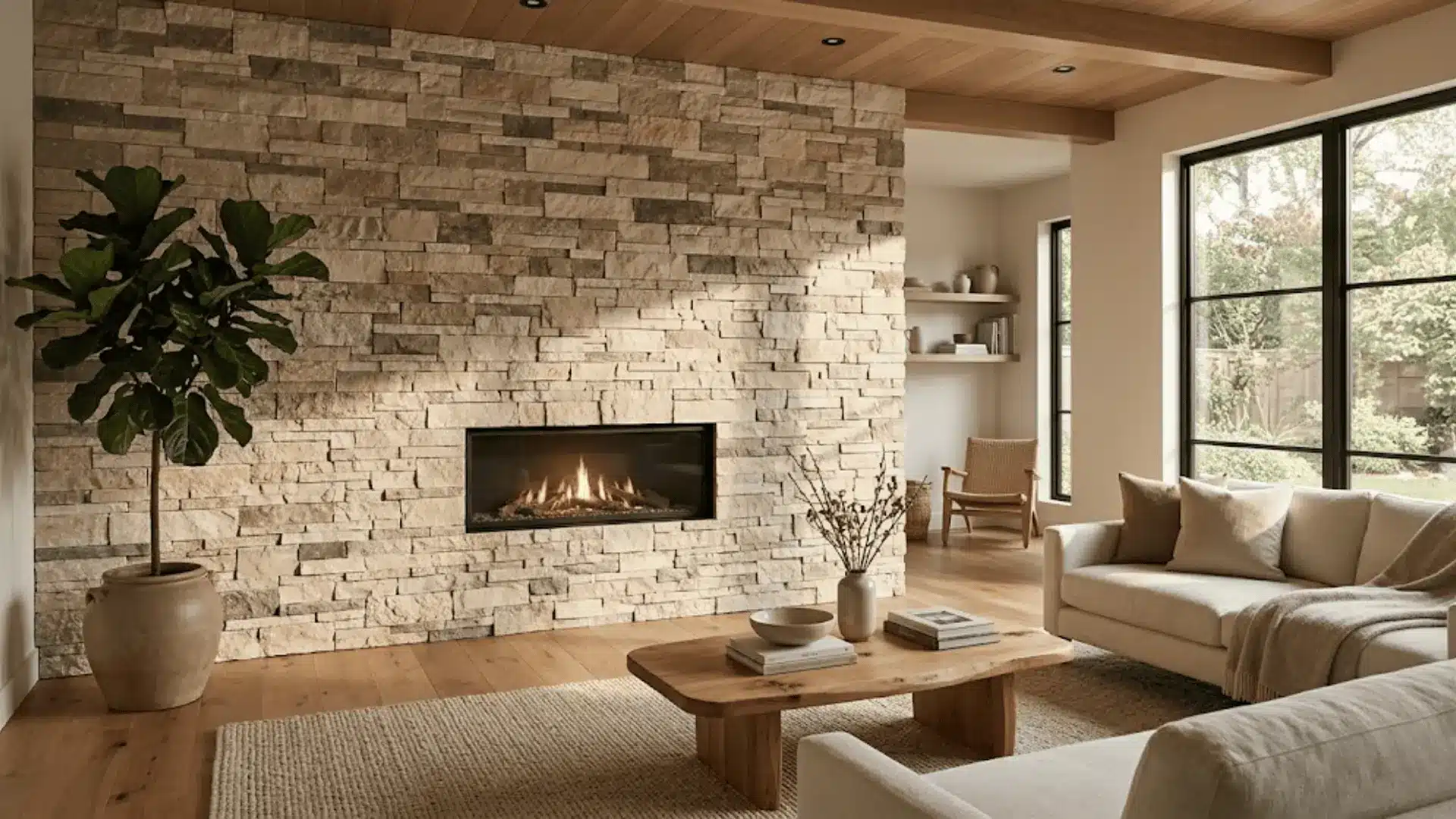
Scandinavian and organic modern styles work well in apartments because they feel light, soft, and practical. Think pale wood, simple furniture, warm whites, natural textures, and soft lighting. This is a good choice if you want the space to feel calm but not empty.
- Best room type: Bright apartments, small living rooms, and bedrooms
- Best colors: Warm white, oatmeal, tan, sage, light wood, and soft gray
- Best furniture move: Choose raised furniture that shows more floor
A plant, woven basket, and warm lamp can do more than five random decor pieces.
3. Industrial
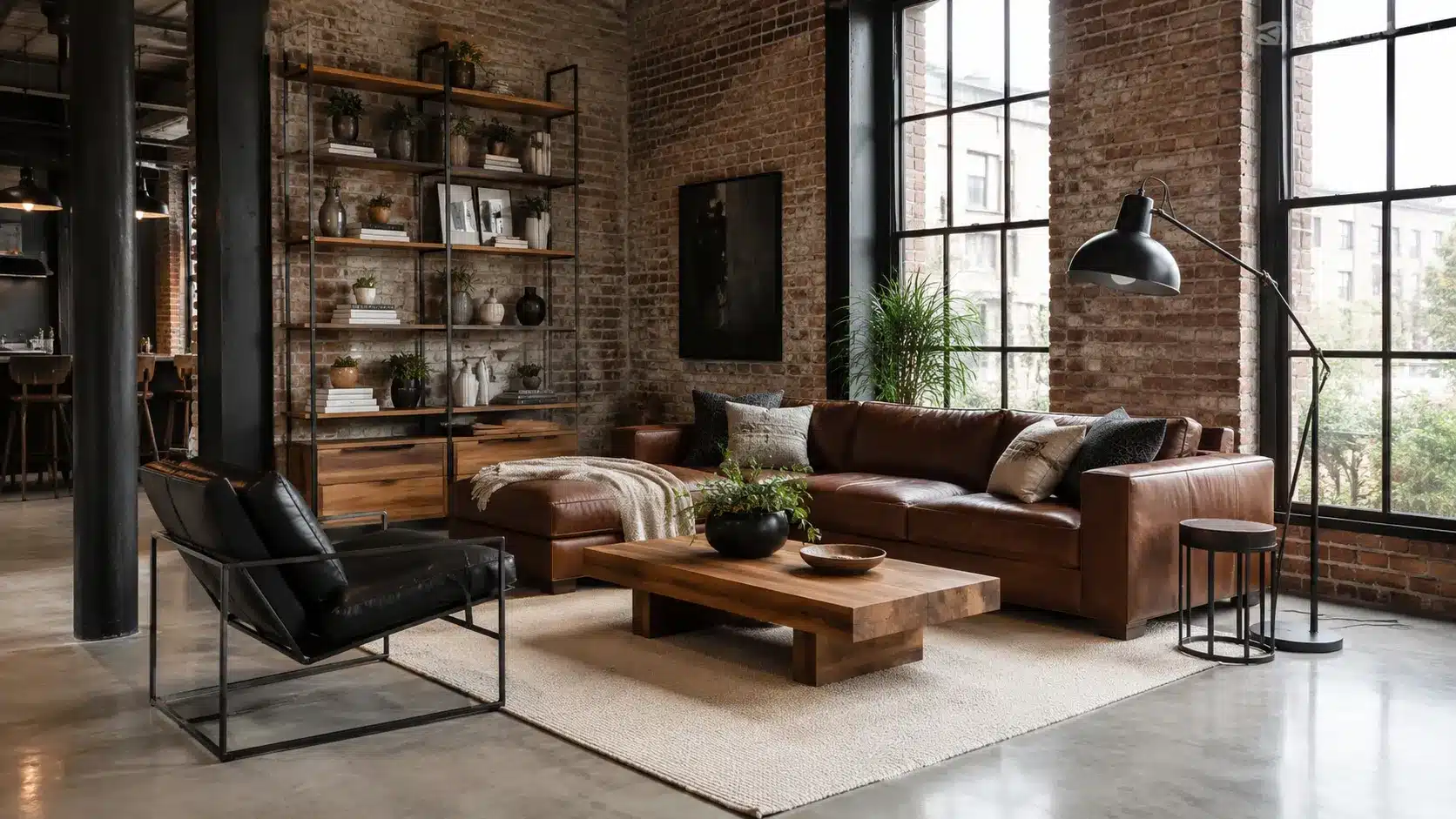
Industrial style works best in apartments with brick, concrete, metal, exposed pipes, tall windows, or loft-style layouts. It can feel strong and grounded. Use black accents, metal lights, leather, wood, and simple open shelving.
- Best room type: Lofts, city apartments, and rooms with raw finishes
- Best colors: Black, charcoal, brown, rust, cream, and dark green
- Best furniture move: Use sturdy pieces with wood, metal, or leather
The trick is balance. Too many dark pieces can make a small apartment feel heavy, so leave some lighter areas.
4. Parisian Chic
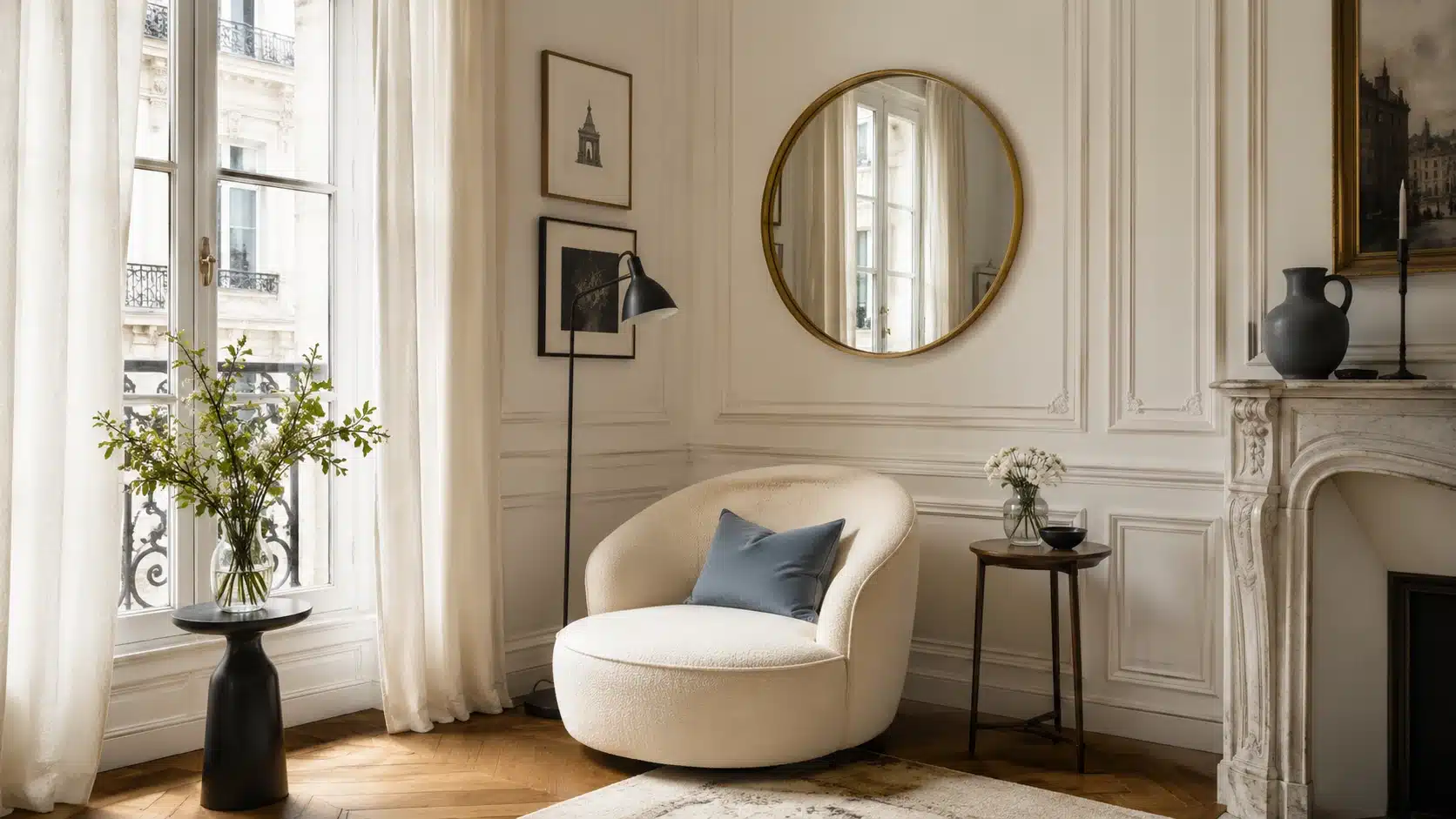
Parisian chic works well when you like soft curves, framed art, mirrors, vintage pieces, and a slightly collected look. You do not need old crown molding to create the feeling. A curved chair, gold mirror, simple drapes, and framed prints can help.
- Best room type: Apartments with good light, tall walls, or simple white walls
- Best colors: Cream, black, soft gray, muted blue, warm wood, and brass
- Best furniture move: Mix one vintage-style piece with cleaner modern pieces
Edit carefully. This style looks best when each item feels chosen rather than crowded.
A style gives the room a mood, but layout decides how livable it feels. Once you know the look you like, the next step is making the space work better.
Space Optimization Layout Strategies
Apartment layout is where the room starts to feel easier. A good layout can make a studio feel divided, a one-bedroom feel calmer, and a small living room feel less cramped. You do not always need more space. You often need better placement.
5. Zone with Rugs
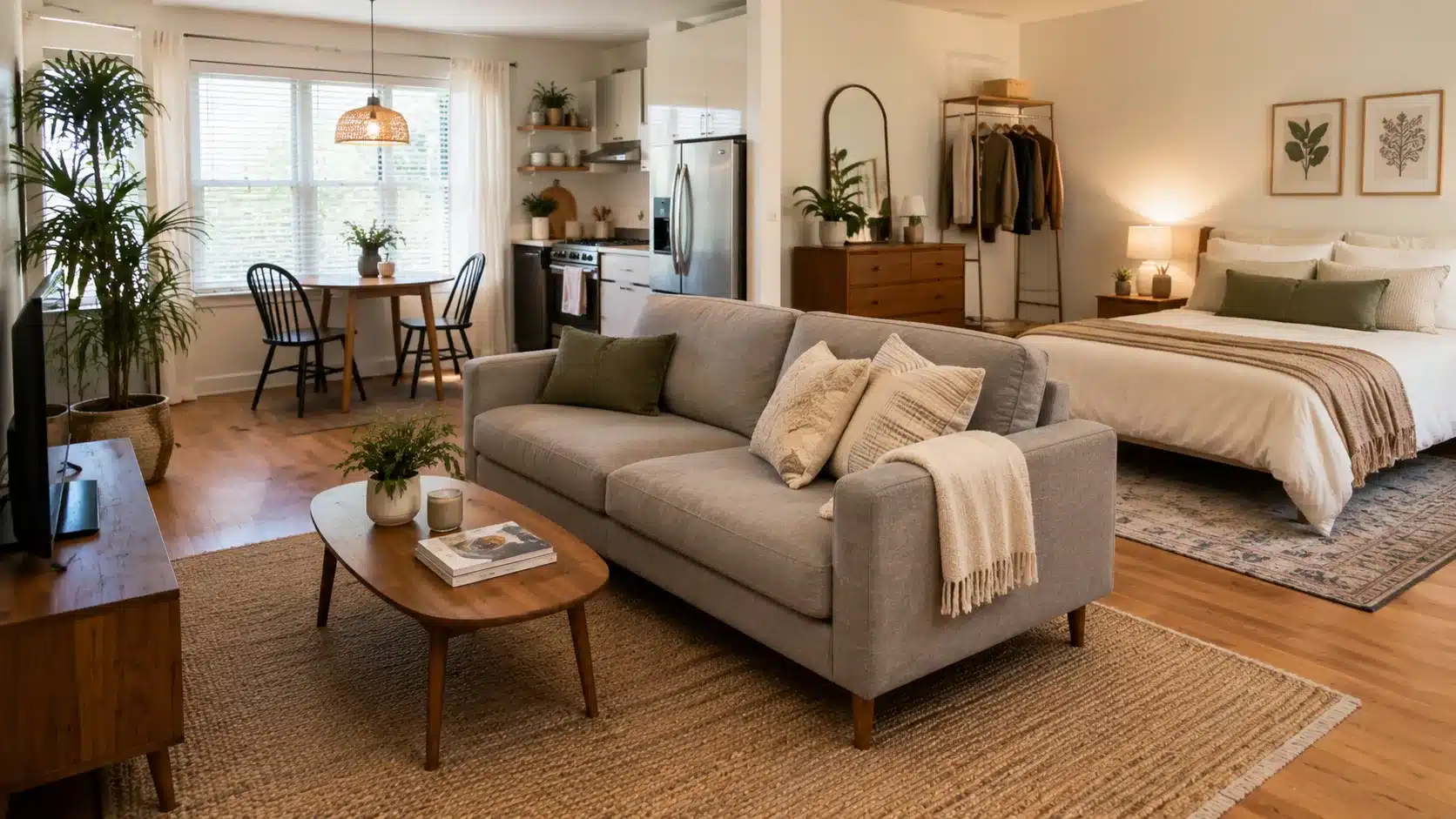
Rugs help divide areas without blocking light. In a studio, one rug can define the living space, while another, smaller one can define the bed area. In a one-bedroom apartment, a rug can separate the sofa from the dining table.
- Best use: Living area, dining nook, bedroom corner, or home office zone
- Avoid this: Rugs that float alone without touching furniture
A rug should connect the furniture group, and sizing it correctly under the seating matters as much in a studio as it does in a bedroom. At least the front legs of the sofa or chairs should sit on it when possible. That makes the zone feel planned.
6. Select Leggy Furniture
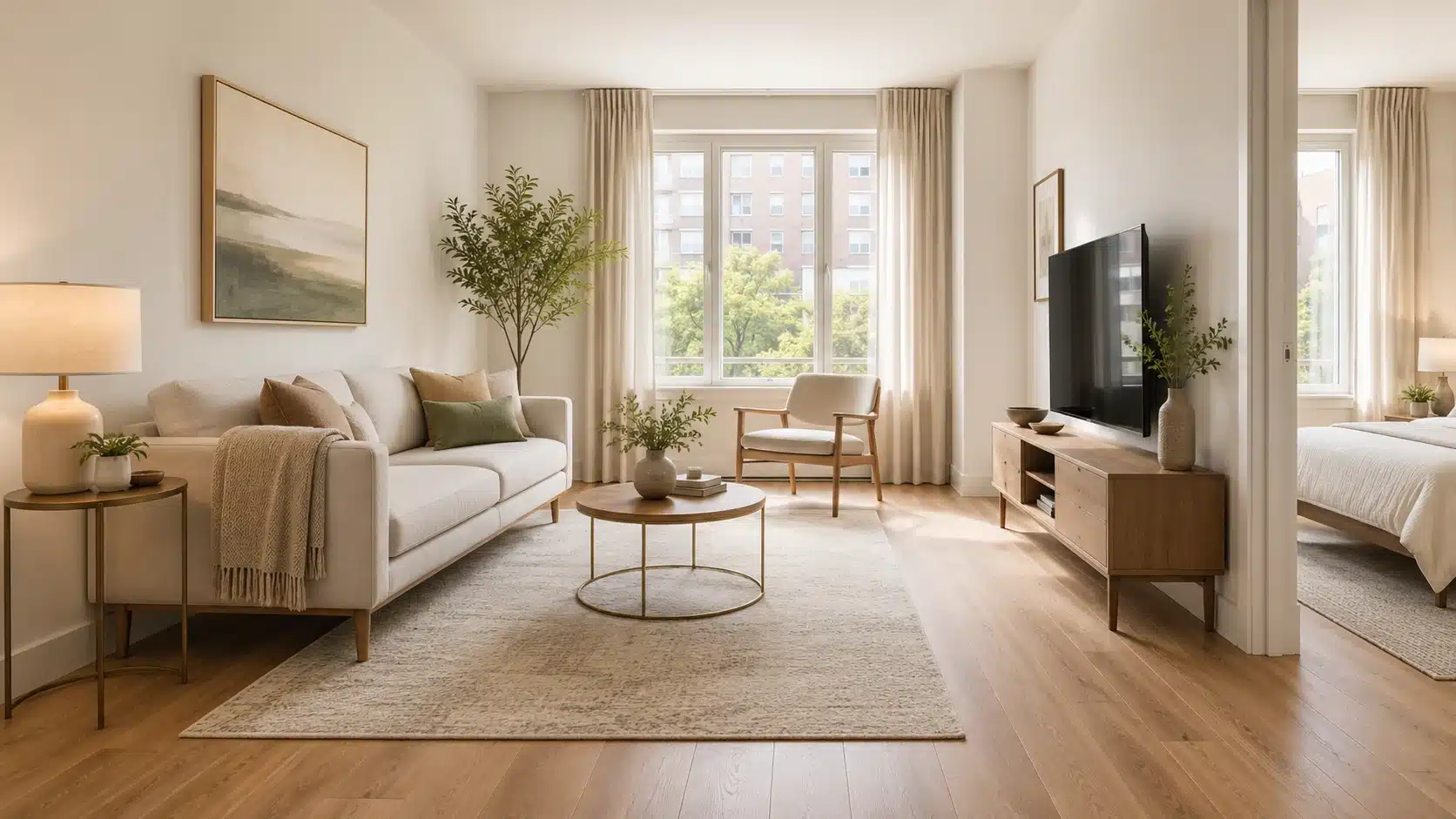
Leggy furniture has visible space underneath. Sofas, beds, chairs, consoles, and sideboards with raised legs let light pass through, revealing more of the floor. This can make a room feel lighter without removing furniture.
- Best use: Small living rooms, bedrooms, and narrow apartments
- Avoid this: Too many heavy pieces that sit flat on the floor
If your room feels tight, switch one bulky piece for a lighter shape. A sofa with legs or a slim media unit can change the whole room.
7. Utilize Vertical Storage
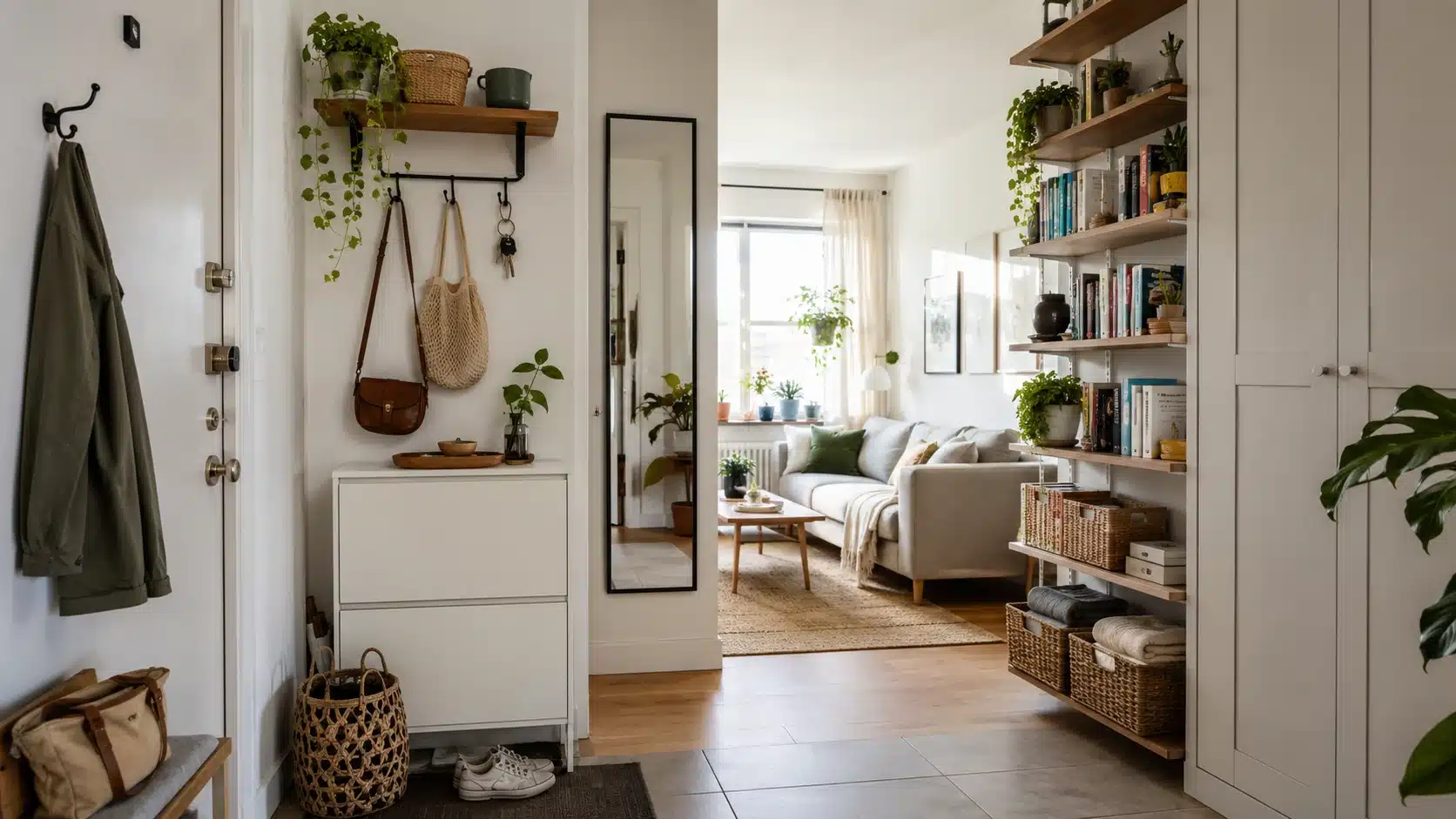
Vertical storage uses wall height instead of floor space. Think tall bookcases, shelves, wall hooks, over-door racks, slim cabinets, and high kitchen storage. This is useful when closets are small or the floor already feels full.
- Best use: Entryways, kitchens, bedrooms, and work corners
- Avoid this: Open shelves packed with too many small items
Tall furniture should also be secured when needed, especially in homes with kids or pets. The CPSC shares furniture and TV anchoring guidance to help reduce tip-over risks.
8. Incorporate Smart Dividers
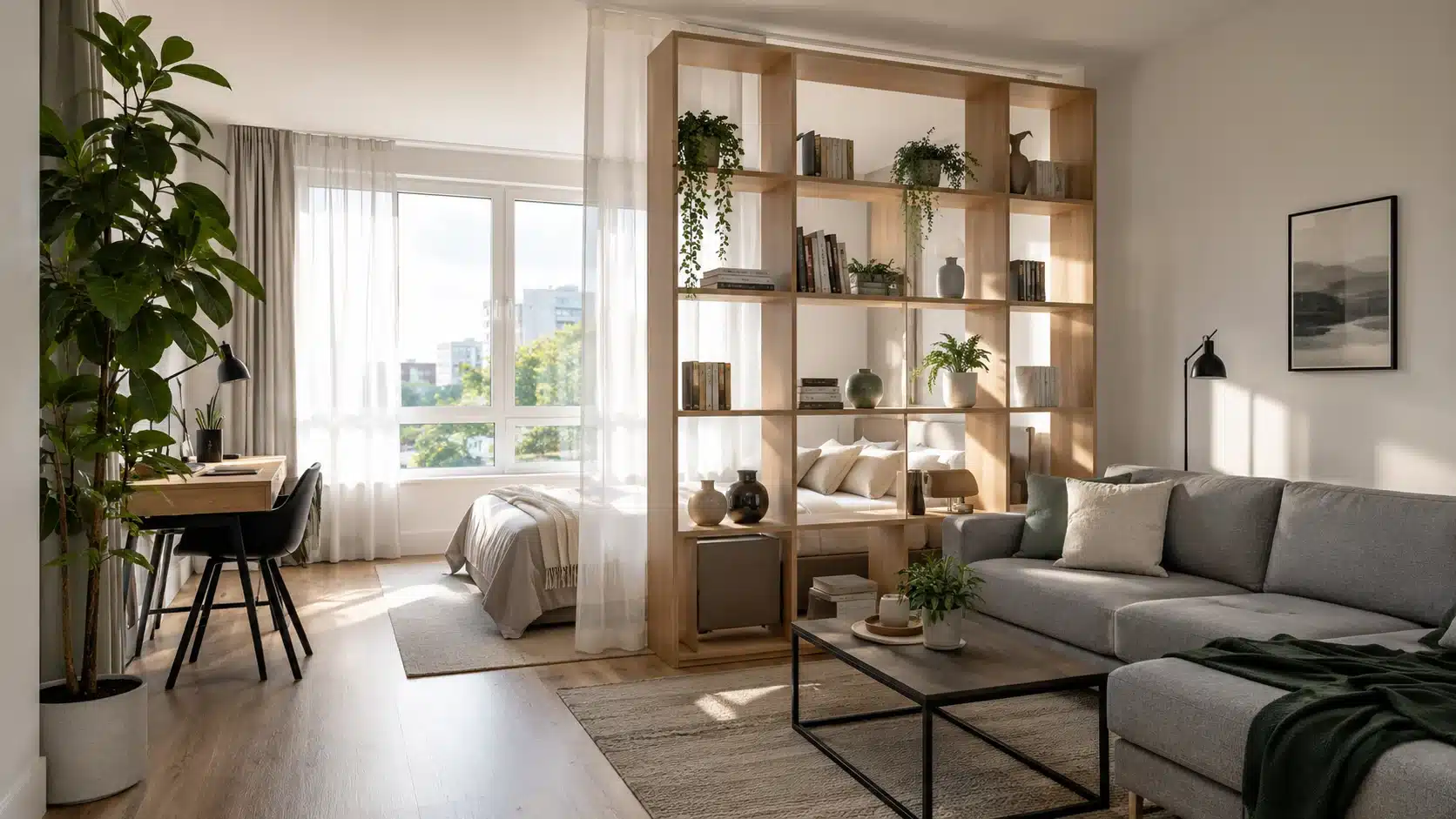
Dividers can create privacy without building walls. Use open bookcases, curtains, folding screens, glass panels, console tables, or tall plants. This works especially well in studios where sleep, work, and living happen in one room.
- Best use: Studio apartments, bed corners, desk zones, and open layouts
- Avoid this: Solid dividers that block all light
A divider should create order, not make the room feel boxed in. If light can still pass through, the space usually feels more open. Layout clears the path. After that, the apartment still needs warmth, light, and personal details to make it feel lived-in.
Easy Decor and Customization Layers
Decor works best after the big pieces are placed. That keeps the apartment from feeling crowded. Small changes like lighting, art, hardware, pillows, and shelf styling can make a rental feel personal without major changes.
9. The 3-5-7 Grouping Formula
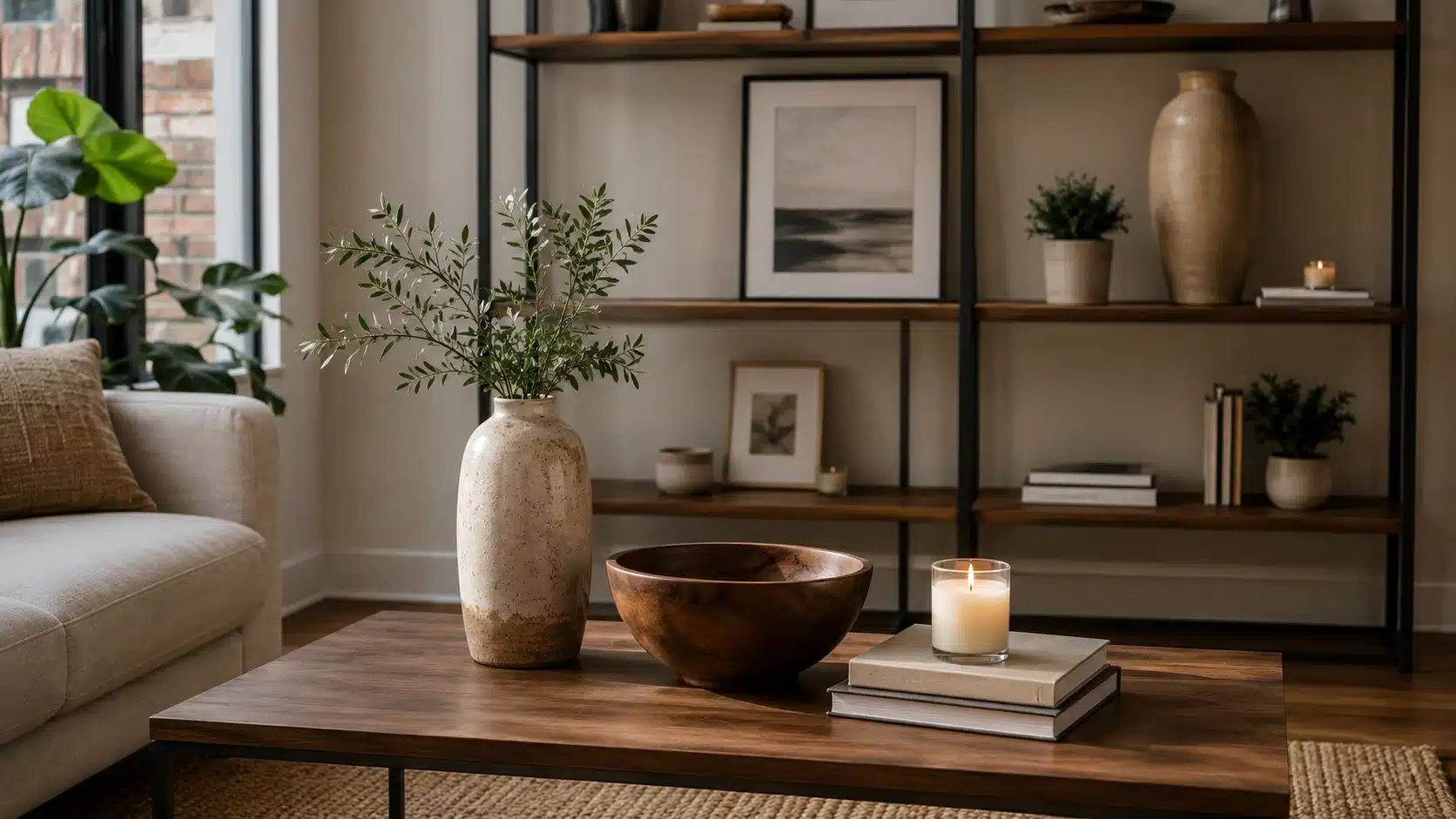
The 3-5-7 rule means styling decor in groups of 3, 5, or 7. It works well on shelves, coffee tables, dressers, and consoles. A simple group might include one tall vase, one medium bowl, and one small candle.
Use items with different heights and shapes. Keep some space around them so the surface does not feel packed. If every shelf, table, and counter is full, the room starts to feel busy.
Recommendation: Start with three items on one surface. If it feels too bare, add two more. Stop before it starts looking like a tiny store display.
10. Layer the Lighting
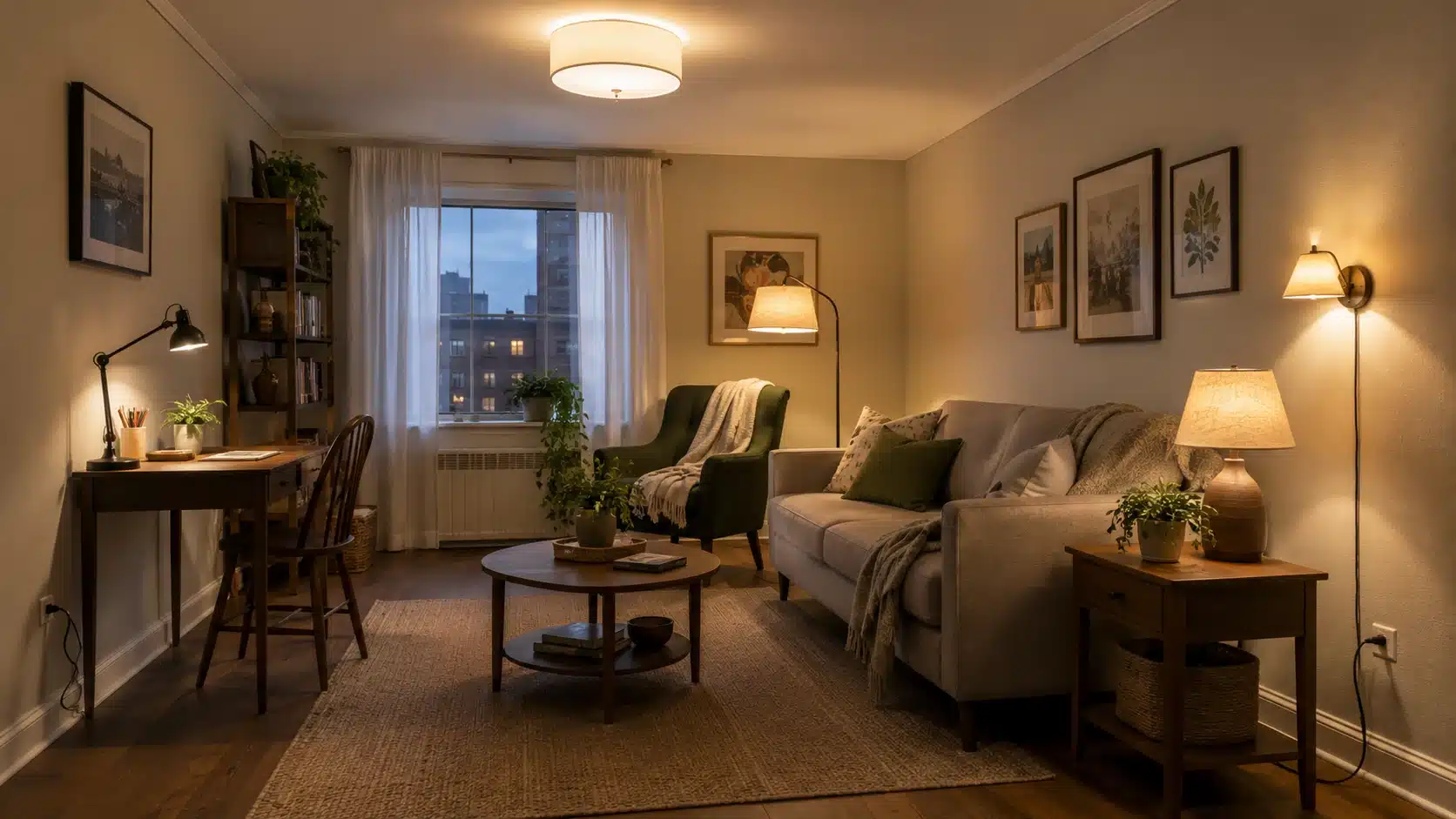
Most apartments come with one overhead light that makes everyone look tired. Layered lighting fixes that. Use a mix of ceiling lights, table lamps, floor lamps, plug-in sconces, and task lights.
Put lamps near reading spots, in dark corners, on desks, and beside beds. Warm bulbs usually feel softer in living rooms and bedrooms. For safety, the U.S. Fire Administration advises not overloading power strips and not placing cords where rugs or furniture can damage them.
Good lighting does not just help you see. It makes the room feel softer at night.
11. Renter-Friendly Changes
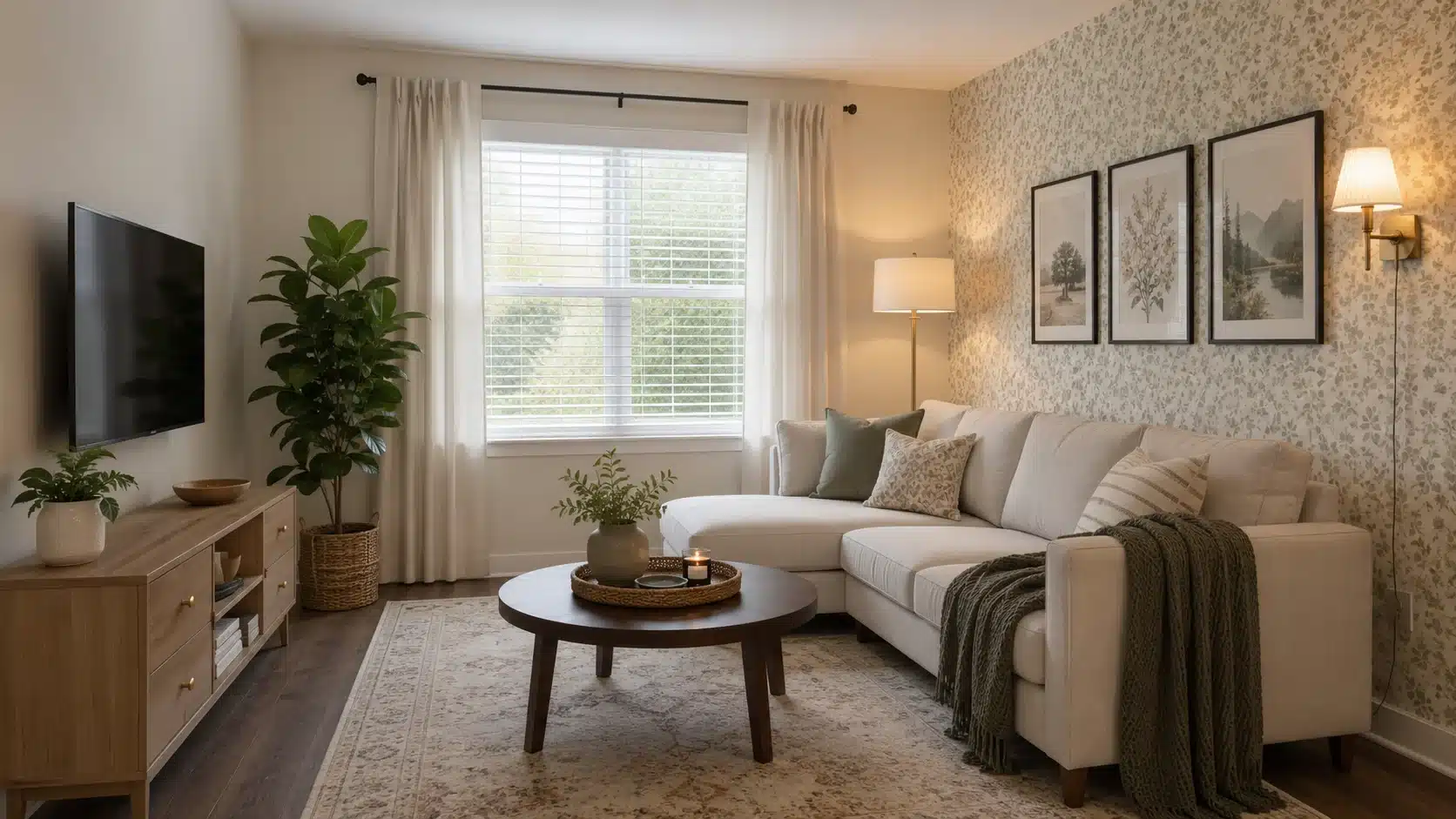
Renter-friendly changes can make a plain apartment feel more personal without risking damage. Try removable hooks, washable rugs, framed art, plug-in sconces, peel-and-stick wallpaper, tension rods, and swapped cabinet pulls.
Keep original hardware in a labeled bag so you can put it back before moving out. Test removable products in a hidden spot first. Some walls and finishes are more sensitive than they look.
This is where tips for decorating an apartment become practical. You get more personality without turning move-out day into a small horror movie.
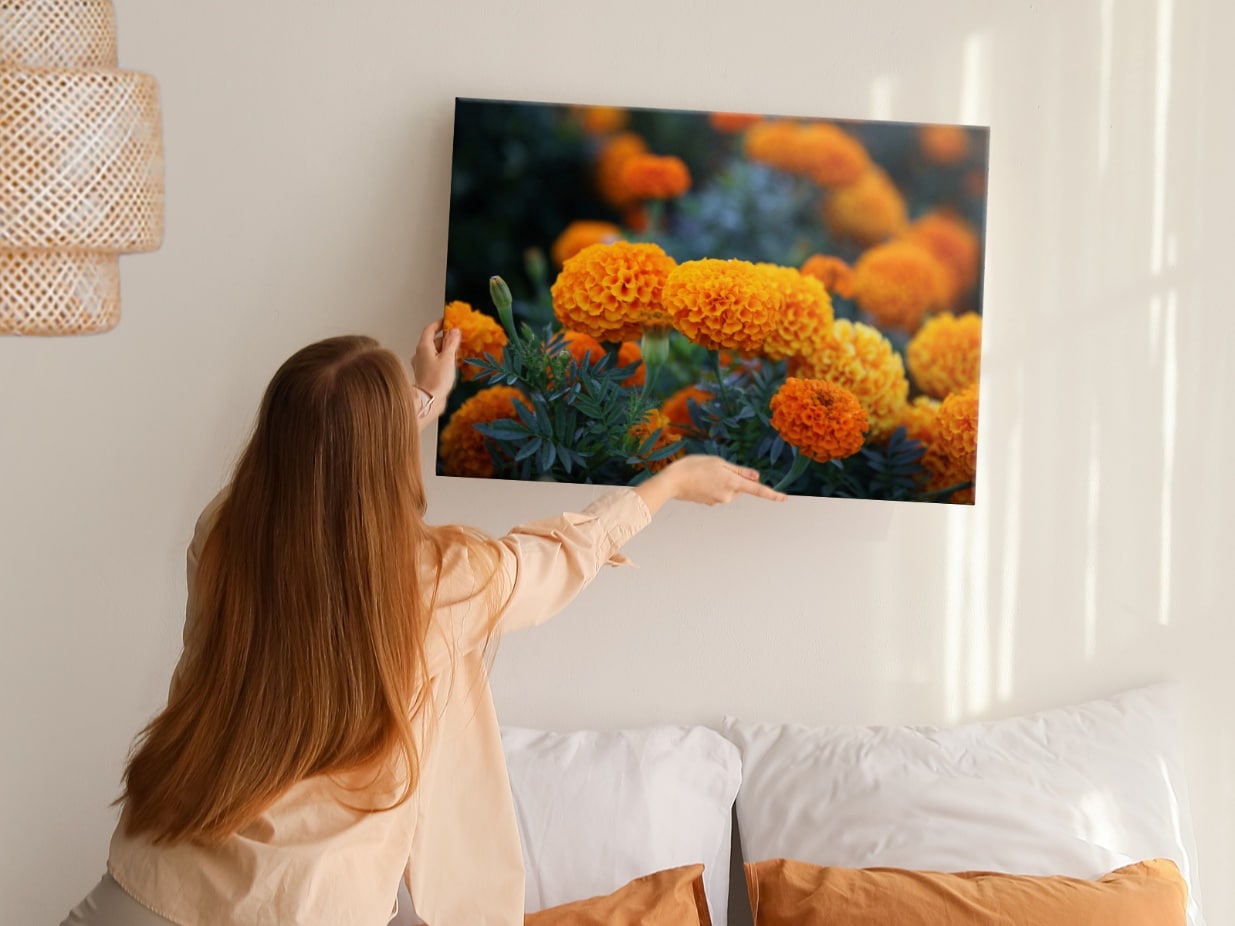
| Try this: Plain rental living room fix: one rug, one floor lamp, two framed prints, a tray on the coffee table, one plant. Five items, one afternoon, no drilling. |
Decor supports a layout that already works. It can’t fix one that doesn’t. With styling covered, here’s a direct answer to the tips for decorating an apartment that actually move the needle.
Tips for Decorating an Apartment Without Overdoing It
The best tips for decorating an apartment are to measure first, pick one calm color base, buy fewer large pieces, layer the lighting, add storage early, and leave some surfaces empty. Each one prevents a specific, common mistake.
- Measure first: Measure walls, windows, and walkways before buying anything large, so a sofa that looked right online doesn’t block the path to the kitchen.
- Choose one main color base: Pick one calm base color, then add two supporting colors through pillows, art, or a rug, so the room doesn’t feel like it was decorated by three people.
- Buy fewer large pieces: Start with the sofa, bed, or table. Once those are placed, everything smaller becomes easier to choose and far less likely to crowd the room.
- Use storage as decor: Baskets, closed cabinets, and storage benches hide daily clutter while still looking intentional, which matters more here than in a house with a garage for overflow.
- Leave some empty space: Not every wall needs art, and not every shelf needs objects. Empty space is part of the design, and it’s what makes the pieces you do choose stand out.
| Quick advice: Before buying decor, take photos of your room from each corner. You will spot empty walls, dark corners, and crowded areas faster than you will while standing in the room. |
These tips help a reader start clean, but a finished-looking apartment still needs a few safety and comfort checks that decor articles rarely mention.
Common Apartment Decorating Mistakes
Most apartment mistakes happen because people decorate too fast. A room can look good in a photo and still feel crowded or hard to move through in person. Slowing down at these points avoids most of the regret.
- Buying furniture before measuring. Measure every wall and doorway first, then shop with those numbers in hand.
- Picking a style before checking light and layout. Assess the room’s fixed factors first.
- Using only overhead lighting. Add at least one lamp per seating area to remove dark corners.
- Choosing rugs that are too small. Size the rug to fit under the front legs of the furniture group.
- Filling every wall and surface. Leave at least one wall and one shelf visually quiet.
- Ignoring hidden storage. Choose an ottoman, bench, or bed frame that opens up for storage.
- Blocking windows with furniture. Keep tall pieces away from the only light source in the room.
- Running cords under rugs or overloading power strips. Route cords along walls instead.
- Forgetting lease rules. Read the modification clause before drilling or painting.
- Skipping furniture anchoring on tall pieces. Secure tall bookcases and dressers, especially if you have kids or pets in the home.
Mistakes get easier to avoid once the room is planned in order. A few more questions keep coming up once someone starts shopping.
Frequently Asked Questions
How much should I budget before decorating a rental apartment?
Begin with essentials like bed, sofa, lighting, and storage. Allocate less for rugs, art, and decor. Rental apartments don’t need to be finished all at once; buying gradually leads to better choices.
Is it worth hiring an interior designer for a small apartment?
It can be worth it if you’re stuck with layout, furniture scale, or storage. Full-service may cost more, but some designers offer single-room plans or hourly advice, which can help you avoid costly furniture mistakes in a tight apartment.
Which room should I decorate first in a new apartment?
Start with your most-used room, like the bedroom or living room. Finishing one main space first makes the apartment feel calmer and allows you to work on the rest at a relaxed pace.
Can apartment decor look good with secondhand furniture?
Secondhand furniture can look great if scale, color, and condition suit the room. Combine it with clean textiles, simple lighting, and one clear color theme. The room will feel curated, not random, if the pieces share a purpose.
Final Takeaway
A good apartment does not need to look expensive or perfect. It needs to support your daily life. Start with the basics: measure, plan the layout, fix the lighting, add storage, and then choose decor that feels like you.
The best apartment interior design choices are usually simple. A better lamp, the right rug size, a clear walkway, or one smart storage piece can make a bigger difference than a cart full of decor.
If you are working on your own space right now, comment with your apartment type, room size, or biggest design problem. I would love to help you think through the first change that makes the most sense.