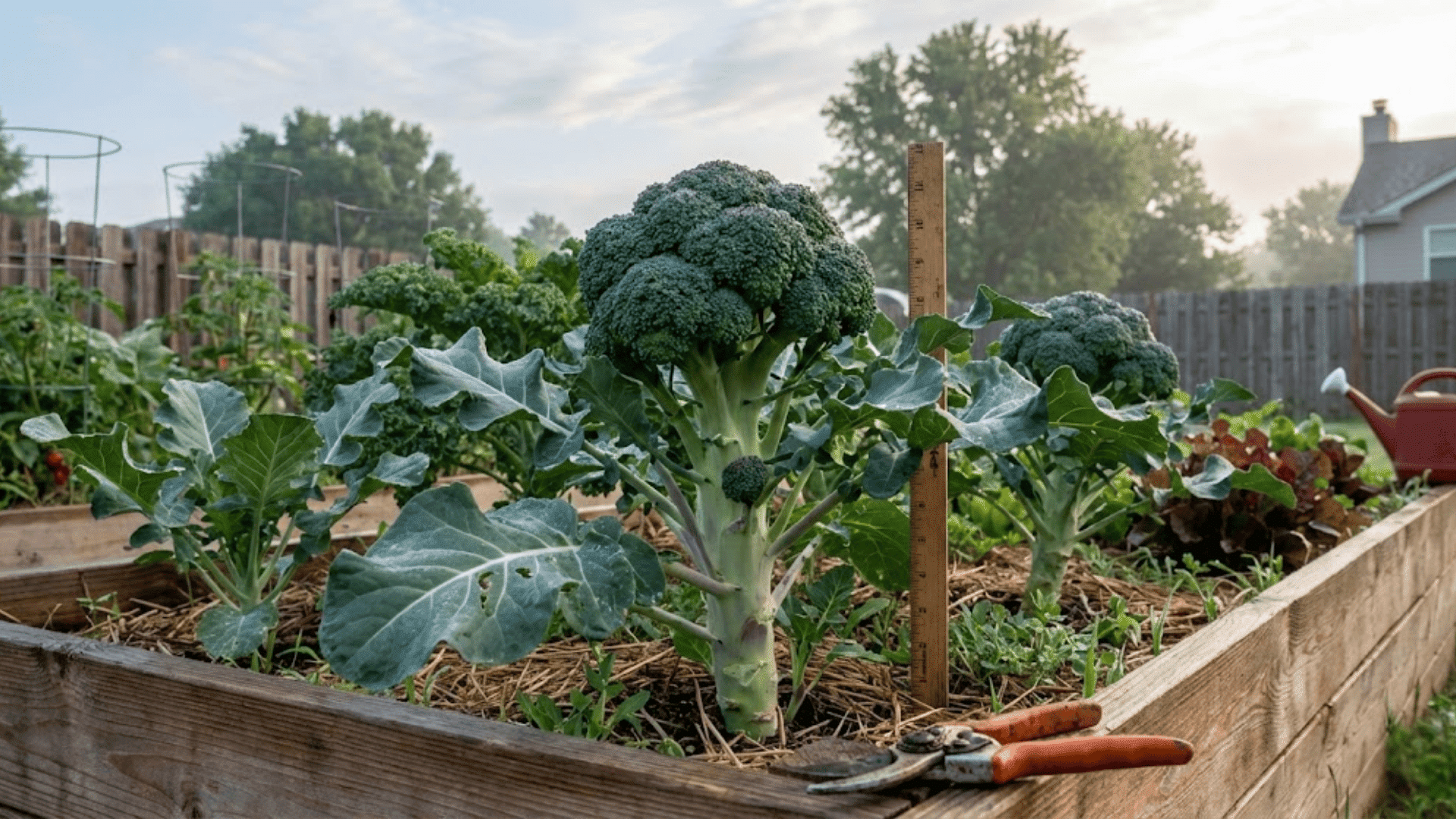
Growing broccoli in your own garden means watching those tight green crowns develop from tiny seedlings into robust plants loaded with delicious florets.
This cool-weather superstar thrives when temperatures dip, making it perfect for spring and fall gardens.
Beyond its impressive vitamin and fiber content, homegrown broccoli offers a sweetness you simply can’t find at the store.
The best part? It’s surprisingly forgiving for beginners. Just remember that broccoli loves the chill, because those warm summer days will send it straight to flower.
Timing is everything when you’re nurturing these beautiful brassicas from seed to harvest.
Understanding the Broccoli Life Cycle
Broccoli follows a straightforward path from seed to harvest in about 60 to 90 days.
It begins as a small seed, sprouts into a seedling, then enters vigorous vegetative growth where leaves develop, and the plant establishes strength.
Next comes the exciting head formation stage, where that central crown of tightly clustered florets appears.
Once you harvest the main head, the plant doesn’t quit. Side shoots continue emerging from the stem, giving you weeks of additional harvests.
This extended productivity makes broccoli incredibly rewarding for home gardeners who want continuous yields from a single planting.
Choosing the Right Broccoli Variety
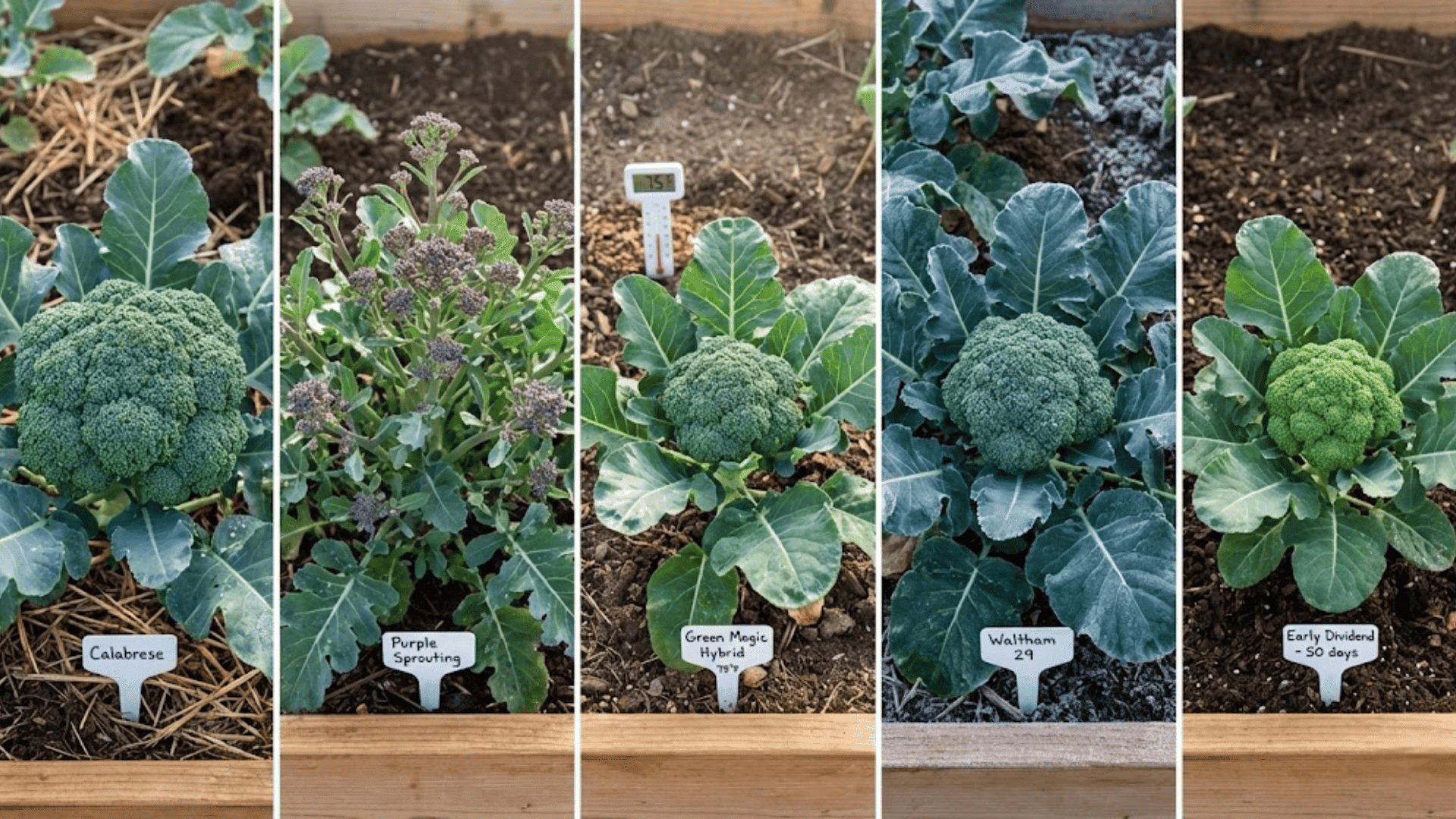
Picking the right broccoli variety sets you up for success, whether you’re chasing large central heads or prefer continuous side shoot harvests.
- Heading broccoli produces one large central crown, perfect for a single big harvest and classic broccoli expectations.
- Sprouting broccoli focuses on smaller side shoots over time, extending your harvest window for weeks.
- Heat-tolerant varieties like certain hybrids help gardeners in warmer climates avoid premature bolting during temperature swings.
- Cold-hardy types thrive in fall and early spring plantings, handling frost better than standard varieties.
- Fast-maturing options reach harvest in under 60 days, ideal for short growing seasons or succession planting.
Match your variety to your climate and harvest goals, and your broccoli will reward you with exactly what you’re hoping to grow.
When & Where to Plant Broccoli?
Timing and location are the foundation of a successful broccoli harvest. Get these essentials right, and you’ll enjoy abundant heads whether you’re planting in spring or fall.
Planting Timing
Broccoli thrives when planted strategically for cool-season growth. Here’s how to time your crops for maximum success.
- Spring Crop: Start seeds indoors 6-8 weeks before your last expected frost, then transplant outdoors when the soil is workable for an early summer harvest.
- Fall Crop: Direct sow seeds or transplant seedlings in mid to late summer, allowing heads to mature during cooler autumn temperatures.
- Indoor vs. Outdoor Starting: Indoor seed starting gives you a head start and stronger seedlings, while direct sowing works well for fall plantings in milder climates.
Ideal Growing Conditions
Broccoli needs specific environmental conditions to develop those perfect green crowns.
Here’s what your plants are looking for.
| Condition | Requirement | Why It Matters |
|---|---|---|
| Sunlight | 6-8 hours full sun daily | Drives strong growth and proper head formation |
| Temperature | 60-70°F (tolerates light frost) | Bolts and flowers prematurely in heat above 80°F |
| Soil Type | Rich, fertile, well-drained | Supports robust root systems and nutrient uptake |
| Soil pH | 6.0-7.0 | Optimal range for maximum nutrient availability |
Step-by-Step Broccoli Growing Guide
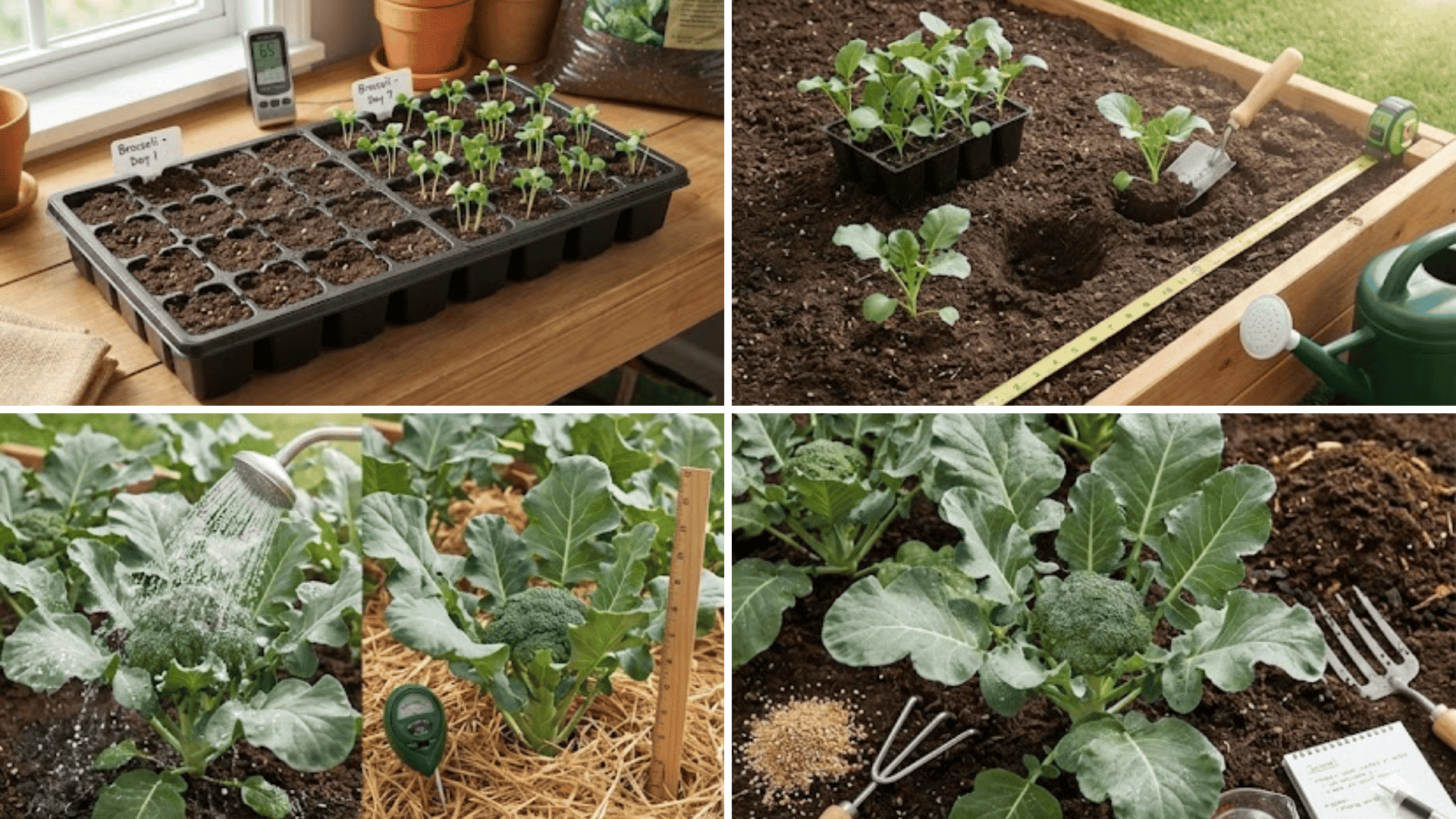
Growing broccoli successfully comes down to consistent care at each stage of development.
Follow these steps to nurture healthy plants from seed to harvest.
1. Starting Seeds
Getting seeds off to a strong start sets the foundation for healthy broccoli plants.
- Plant seeds a quarter to half inch deep in seed trays or directly in the garden bed.
- Space seeds 3 inches apart if direct sowing, then thin seedlings later to 12-18 inches between plants.
- Expect germination within 5-10 days when soil temperatures are between 45-85°F, with optimal sprouting around 60-70°F.
2. Transplanting Seedlings
Moving seedlings outdoors requires a gentle transition to prevent shock and ensure strong establishment.
- Harden off seedlings by gradually exposing them to outdoor conditions over 7-10 days before planting.
- Space transplants 12-18 inches apart in garden beds, or use containers at least 12 inches deep and wide.
- Plant at the same depth they were growing in their pots, firming soil gently around the base.
3. Watering & Mulching
Consistent moisture and proper mulching keep broccoli thriving through its growing cycle.
| Practice | How to Do It | Benefits |
|---|---|---|
| Watering | Provide 1-1.5 inches weekly; water deeply at the soil level | Prevents disease, ensures consistent moisture for head development |
| Mulching | Apply 2-3 inches of organic mulch around plants | Retains moisture, regulates soil temperature, suppresses weeds |
4. Fertilizing Tips
Broccoli is a heavy feeder that rewards regular nutrition with robust growth and well-developed heads.
- Amend soil with compost before planting to create a nutrient-rich foundation.
- Side-dress plants with balanced fertilizer or compost when they reach about 6 inches tall.
- Apply another round of fertilizer when heads begin forming for optimal development.
- Focus on nitrogen-rich options to support vigorous leafy growth throughout the season.
Common Challenges (With Real Community Feedback)
Even experienced gardeners face hurdles when growing broccoli. Here’s what to watch for and how the gardening community tackles these issues.
Pests & Diseases
- Cabbage worms: Green caterpillars that chew holes through leaves and can destroy young plants.
- Flea beetles: Tiny jumping beetles that create small holes in foliage, weakening seedlings.
- Aphids: Small sap-sucking insects that cluster on stems and leaves, stunting growth.
Gardeners swear by lightweight row covers as physical barriers, applying BT (Bacillus thuringiensis) spray for caterpillars, and hand-picking larger pests during morning inspections.
Reddit gardeners share their pest battles, with many recommending daily plant checks and crushing eggs found on leaf undersides.
Community members emphasize that BT is effective when applied weekly once damage appears, and companion planting with catmint or other aromatic herbs can confuse cabbage butterflies and deter egg-laying naturally.
Bolting & Temperature Stress
- Premature flowering: Plants bolt and produce flowers instead of tight heads when temperatures climb above 80°F.
- Heat stress: Extended warm spells cause loose, bitter heads and reduced yields.
- Timing mistakes: Planting too late in spring or too early for fall leads to bolting.
When temperatures spike unexpectedly, broccoli rushes to reproduce rather than form edible heads.
Gardeners discuss their bolting experiences and troubleshoot solutions, learning that hot soil, not just hot air, triggers the problem.
They recommend thick mulching to keep roots cool, using shade cloth during heat waves, and choosing heat-tolerant varieties like Green Magic or Destiny.
How to Know When to Harvest Broccoli?
Timing your broccoli harvest correctly makes all the difference between crisp, flavorful heads and bitter, flowering ones.
Here’s what to look for when your broccoli is ready to pick.
| Harvest Indicator | What to Look For | Why It Matters |
|---|---|---|
| Head Firmness | Tight, compact florets with no separation | Loose heads indicate the plant is about to flower |
| Color | Deep, dark green throughout the head | Yellowing signals overmaturity and flower development |
| Bud Condition | Closed, tightly packed buds | Once buds start opening or showing yellow, harvest immediately |
| Head Size | 4-7 inches in diameter (varies by variety) | Size depends on variety, but firmness matters more than diameter |
| Timing | Morning harvest after the dew dries | Cooler temperatures preserve flavor and texture |
Harvest your main head when it reaches full size but before any yellow flowers appear, and don’t pull up the plant; leave it in the ground to produce smaller side shoots for weeks of continued harvests.
Broccoli Post-Harvest Tips
Your broccoli harvest doesn’t end with the main head. With proper care and storage techniques, you can maximize your yield and keep your harvest fresh for weeks.
- Leave the Plant in Place: After cutting the main head, keep the plant in the ground and continue watering to encourage side shoot production.
- Side Shoots Develop Quickly: Smaller florets will emerge from leaf nodes within 1-2 weeks, providing multiple harvests from a single plant.
- Fertilize for Continued Growth: Apply a light nitrogen fertilizer after the main harvest to support vigorous side shoot development.
- Refrigerate Immediately: Store unwashed broccoli in a plastic bag in the crisper drawer, where it stays fresh for 5-7 days.
- Blanch and Freeze for Long-Term Storage: Cut into florets, blanch for 3 minutes, cool in ice water, and freeze for up to 12 months of garden-fresh flavor.
With these post-harvest strategies, a single broccoli plant can feed you for weeks, making it one of the most productive vegetables in your garden.
Growing Broccoli in Containers & Small Spaces
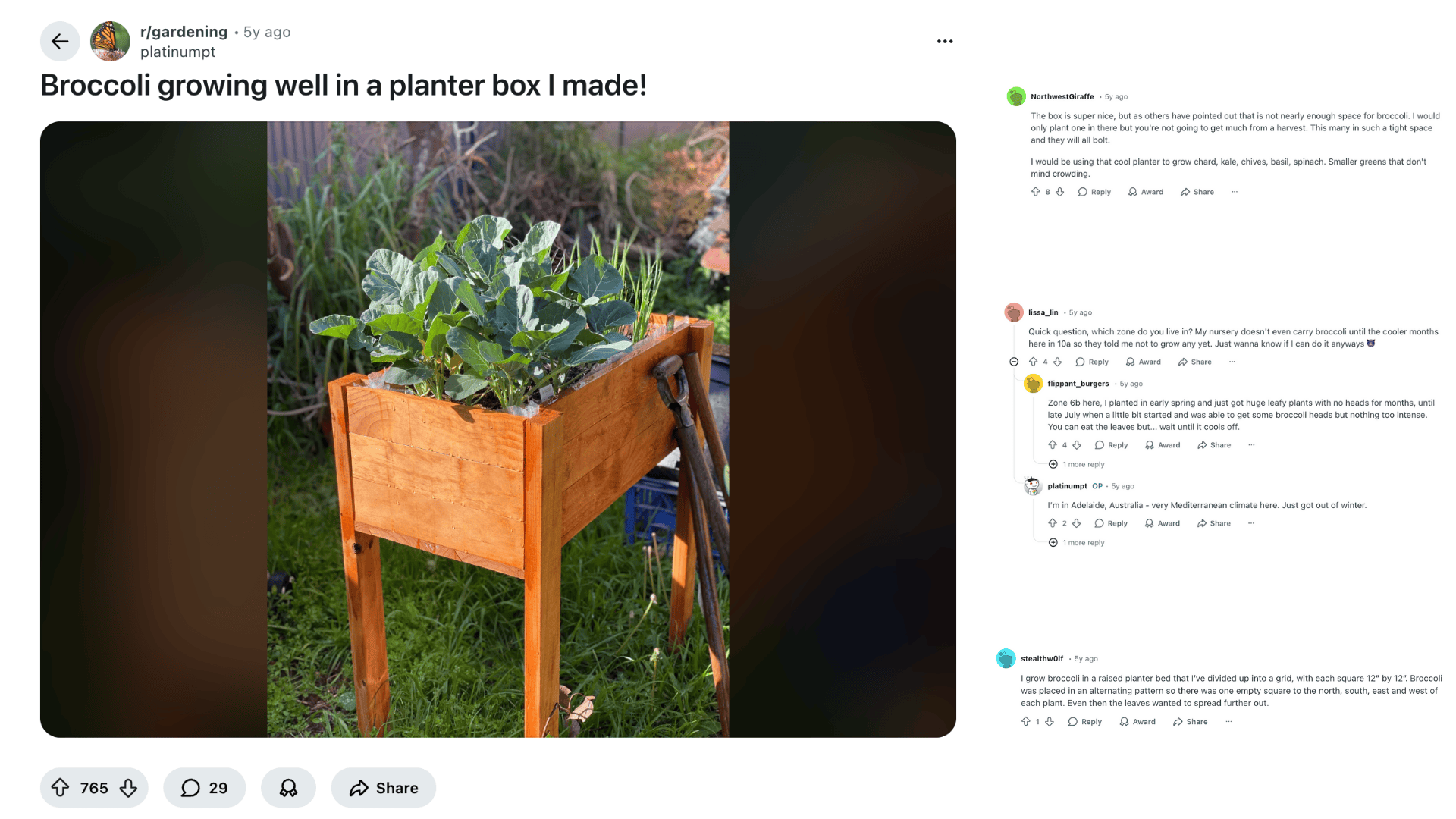
Container gardening opens up broccoli growing to anyone with a sunny balcony or patio.
Choose pots at least 12-18 inches deep and wide to accommodate broccoli’s root system. Ensure containers have adequate drainage holes to prevent waterlogging, which can lead to root rot.
Use a high-quality potting mix enriched with compost, and space one plant per container for best results. Container broccoli needs consistent watering since pots dry out faster than garden beds.
Reddit gardeners share their container success stories, proving that with proper care, you can grow impressive broccoli harvests even in limited spaces.
Feed container plants every two weeks with balanced liquid fertilizer to support healthy head development.
Growing Broccoli: Expert and Community Tips
Learning from experienced growers can save you months of trial and error. Here are the insights that matter most for broccoli success.
- Companion Planting Works: Plant aromatic herbs like thyme, rosemary, and dill near broccoli to confuse cabbage butterflies and attract beneficial insects that prey on pests.
- Timing Trumps Everything: The biggest mistake new growers make is planting too late in spring or not understanding their local climate’s ideal broccoli windows.
- Don’t Skip Hardening off: Seasoned growers emphasize that gradually acclimating seedlings to outdoor conditions prevents transplant shock and dramatically improves survival rates.
Reddit gardeners share hard-learned lessons about common pitfalls like overcrowding plants, which leads to poor air circulation and increases disease risk.
Many wish they’d known earlier that broccoli is a heavy feeder requiring consistent fertilization, and that harvesting the main head promptly encourages productive side shoot development.
Final Thoughts
Growing broccoli at home rewards you with fresh, nutrient-packed harvests that taste incomparably better than store-bought.
Now that you understand how broccoli grows from seed to side shoots, you’re equipped to nurture these cool-season champions through every stage.
Garden beds and containers both offer excellent opportunities for success when you prioritize timing, consistent care, and pest management. Each harvest brings new lessons and deeper satisfaction as you perfect your technique.
Have you tried growing broccoli in your garden? Share your experiences, challenges, or favorite varieties in the comments below. Your insights could help fellow gardeners cultivate their best broccoli crop yet!