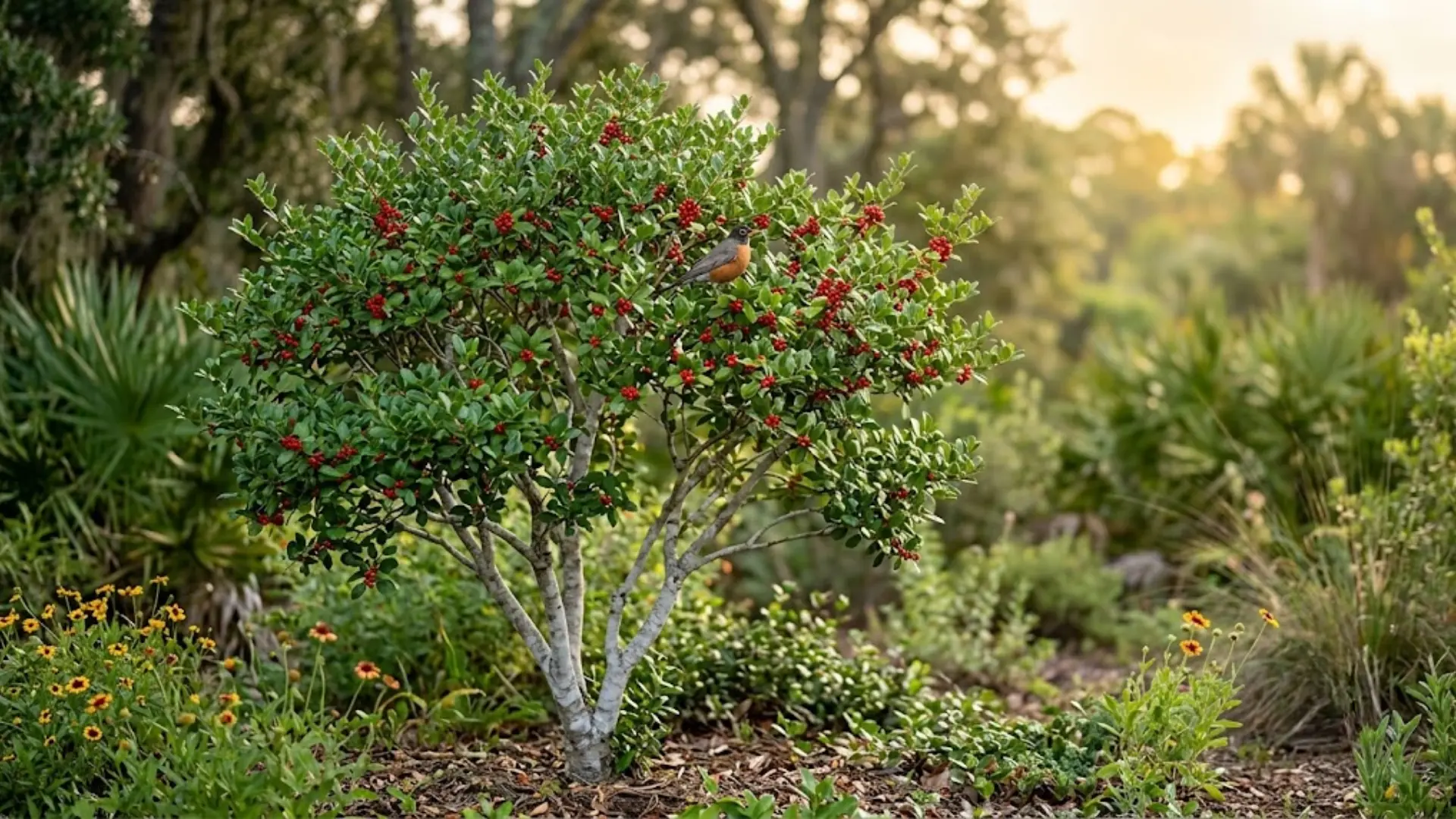
You may have walked past yaupon holly without ever putting a name to it. It shows up along fence lines, coastal roads, and old farmhouses all over the South, quietly holding its color through winters that leave other shrubs looking rough.
Maybe you already have one growing on your property and never gave it a second look. Or maybe you are hunting for a tough, low-fuss shrub that will not wilt the moment summer heat sets in. Either way, it helps to know what you are looking at before you decide if it belongs in your yard.
Yaupon Holly at a Glance
Before planting anything, it helps to see the basics side by side. The table below lays out size, foliage, bloom time, and growing needs so you can quickly decide whether yaupon holly fits your yard.
|
Feature |
Details |
|
Common name |
Yaupon holly or yaupon |
|
Scientific name |
Ilex vomitoria |
|
Family |
Aquifoliaceae |
|
Plant type |
Evergreen shrub or small tree |
|
Typical height |
10 to 25 feet |
|
Typical width |
8 to 20 feet |
|
Growth rate |
Moderate; about 1 to 2 feet per year |
|
Flower color |
Greenish white |
|
Fruit |
Small red, orange, or yellow drupes |
|
Plant sex |
Separate male and female plants |
|
Light |
Full sun to deep shade |
|
Soil |
Clay, loam, or sand; wet to well-drained |
|
Hardiness range |
USDA Zones 7 to 9 |
|
Wildlife value |
Feeds birds and pollinators |
|
Main uses |
Hedge, screen, small tree, coastal planting |
What Is Yaupon Holly?
Yaupon holly is an evergreen shrub or small tree in the holly family, Aquifoliaceae, scientifically named Ilex vomitoria. The common name comes from a Catawban word, and the species name traces back to ceremonial drinks Indigenous communities in the Southeast once brewed.
Properly prepared leaves do not actually cause the reaction the name suggests. Other common names you might come across include cassena, cassine, and Christmas berry.
Home landscapers reach for this shrub because it holds up under salt spray, drought, and heavy pruning better than most broadleaf evergreens. It also grows at a moderate pace, typically adding a foot or two of height each year, as I get into more detail in this piece on how fast holly grows.
Native Range Of Yaupon Holly
Yaupon holly grows naturally from Texas to Virginia, plus parts of Mexico and Cuba. Within the United States, its native range covers Alabama, Arkansas, Florida, Georgia, Louisiana, Mississippi, North Carolina, Oklahoma, South Carolina, Texas, and Virginia.
The shrub favors the Gulf and Atlantic coastal plains, where warm temperatures and mild winters let it settle into coastal dunes, maritime forests, pine flatwoods, woodland edges, sandy ridges, streambanks, and wet woods. It handles dry ground, seasonally wet soil, and salt exposure without much complaint.
In unmanaged spaces, it spreads by root shoots and seed, sometimes forming dense thickets. That spreading habit isn’t the same as being invasive; it simply means an untended planting can spread faster than expected, so early shaping keeps it in bounds.
How To Identify Yaupon Holly
A few features set yaupon holly apart from other hollies. Check the leaves, stems, and fruit together, since red berries alone are not enough to confirm the species.
1. Leaves
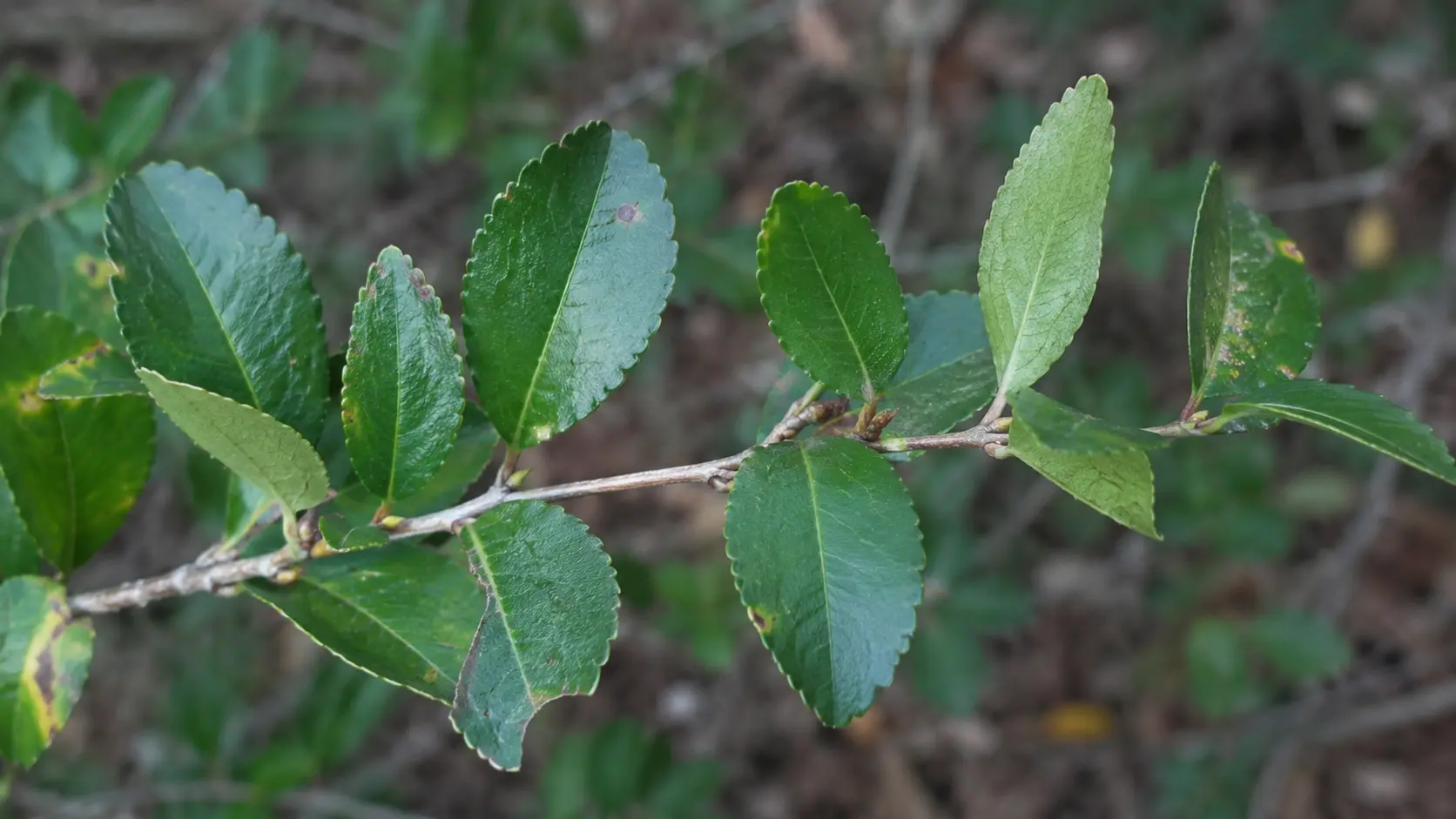
Yaupon holly leaves are small, oval, and evergreen, usually half an inch to an inch and a half long.
They have a glossy green top, a paler underside, and small rounded teeth along the edges, softer than the spines on English holly. Leaves grow alternately along the stem, not in pairs.
2. Bark And Stems
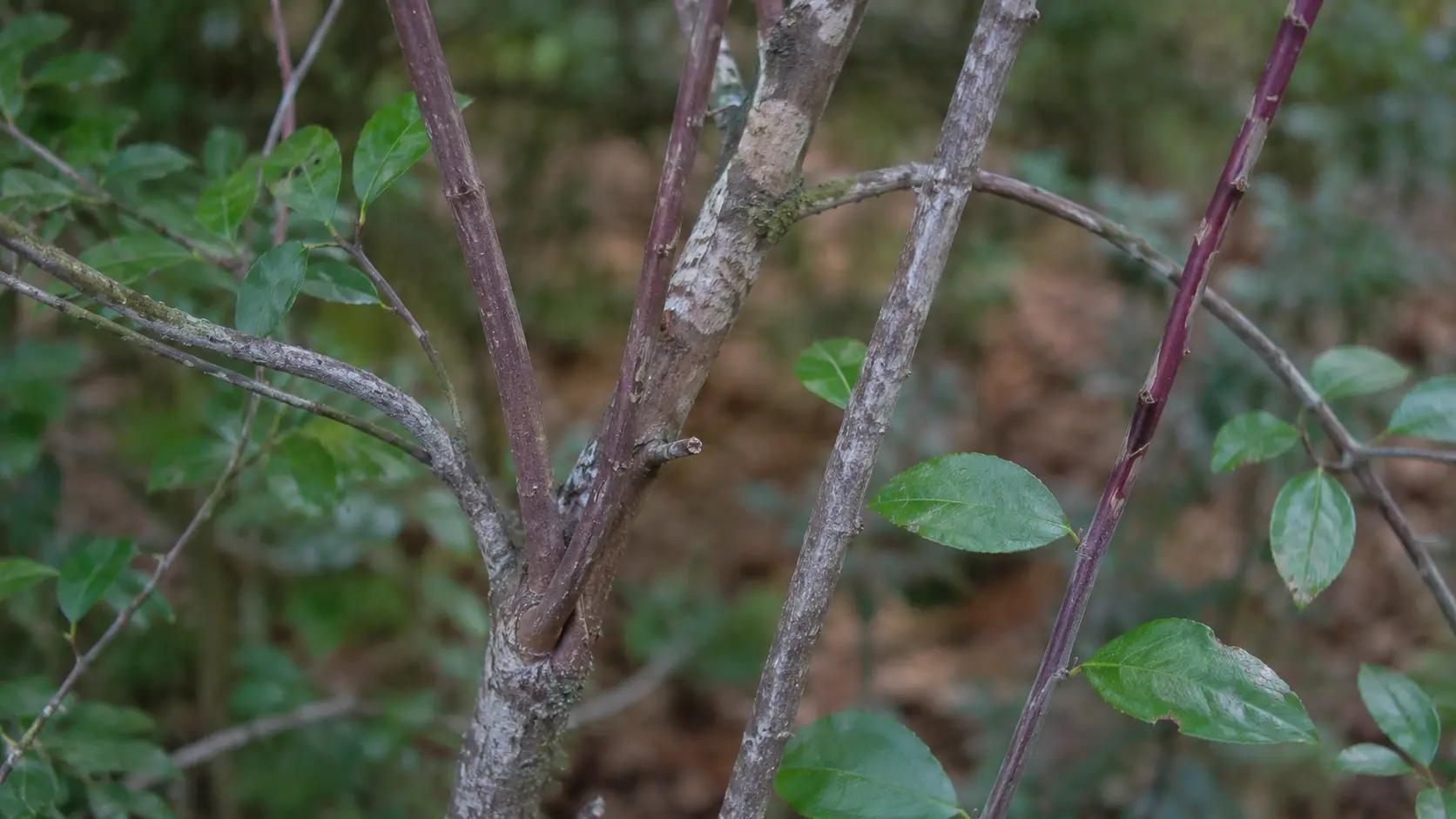
Young stems show purple or reddish tones, while older branches fade to gray or silvery white. Bark stays thin and smooth on young growth, then turns slightly scaly with age.
Yaupon holly has no thorns, and its overall form can be upright, spreading, or weeping depending on the cultivar.
3. Flowers And Fruit
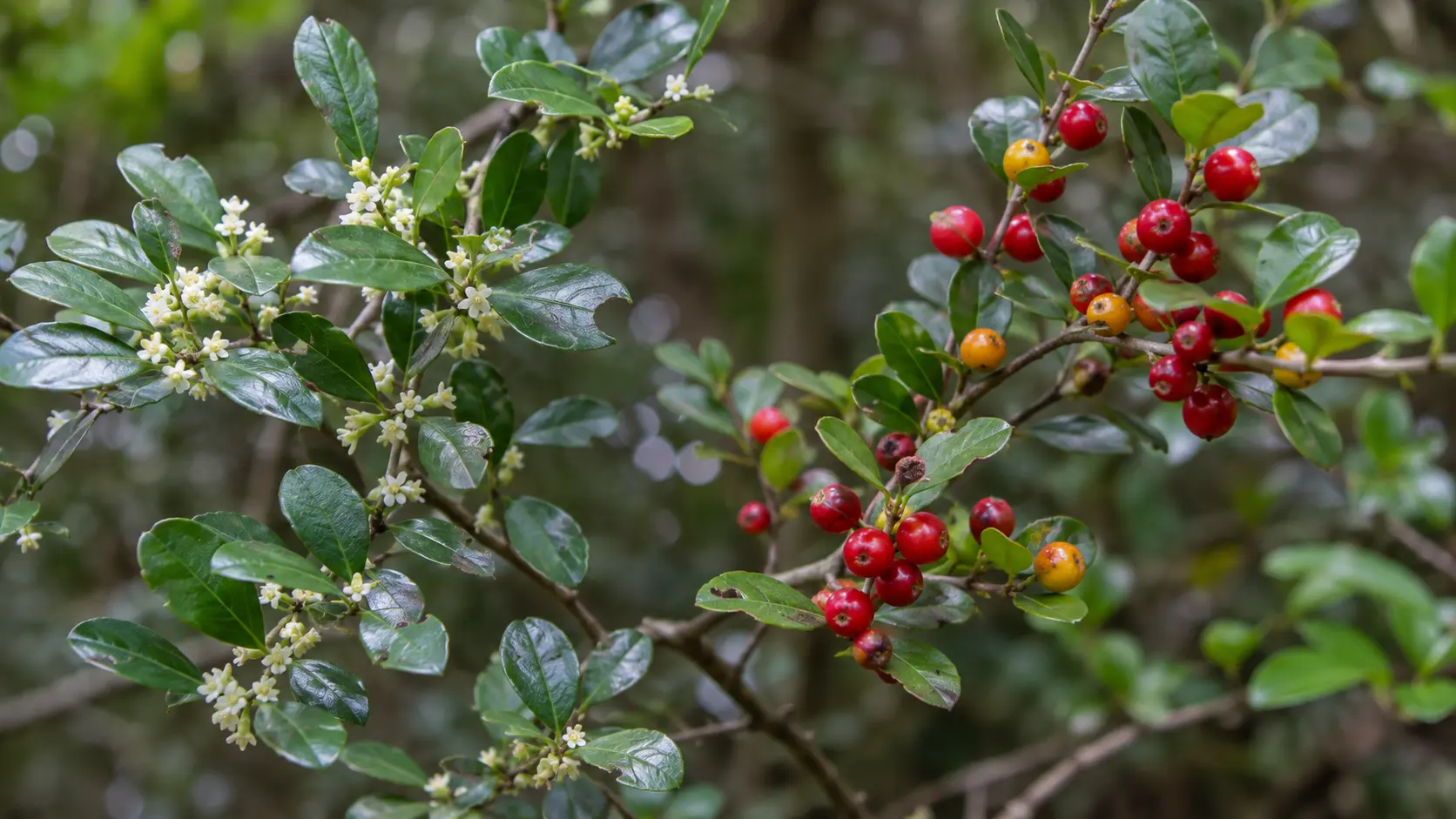
Small greenish-white flowers appear in spring where leaves meet the stems, drawing bees and other pollinators.
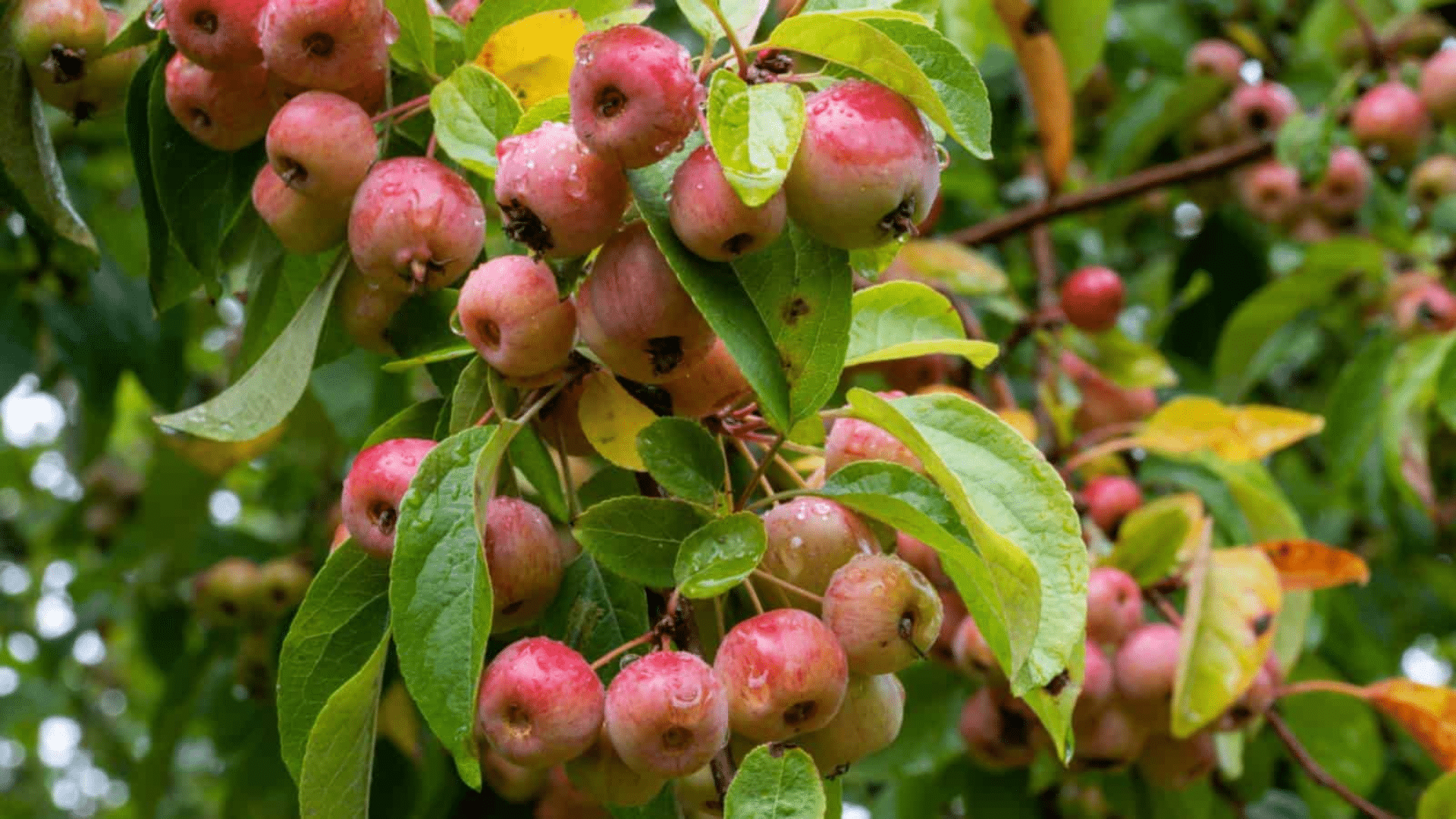
Only female plants set fruit after pollination, producing red, orange, or yellow drupes that often last into winter. A male plant nearby is required for a female to produce berries at all.
Growing Conditions And Care
This is the one section where I will lay out yaupon holly’s tolerance for tough conditions, since it comes up in nearly every landscaping question I get about this shrub. It grows in full sun, partial shade, or deep shade, though more sun means denser foliage and better berry production on female plants.
It adapts to clay, loam, sand, acidic or alkaline soil, and handles both drought and brief flooding once established.
Newly planted yaupon needs steady watering while roots settle in; set the root ball level with the surrounding soil and mulch a few inches back from the trunk.
After that first year, expect very little upkeep beyond occasional pruning and reasonable spacing, which I cover in more depth in this rundown on shrubs suited to shaded yards.
Popular Yaupon Holly Varieties
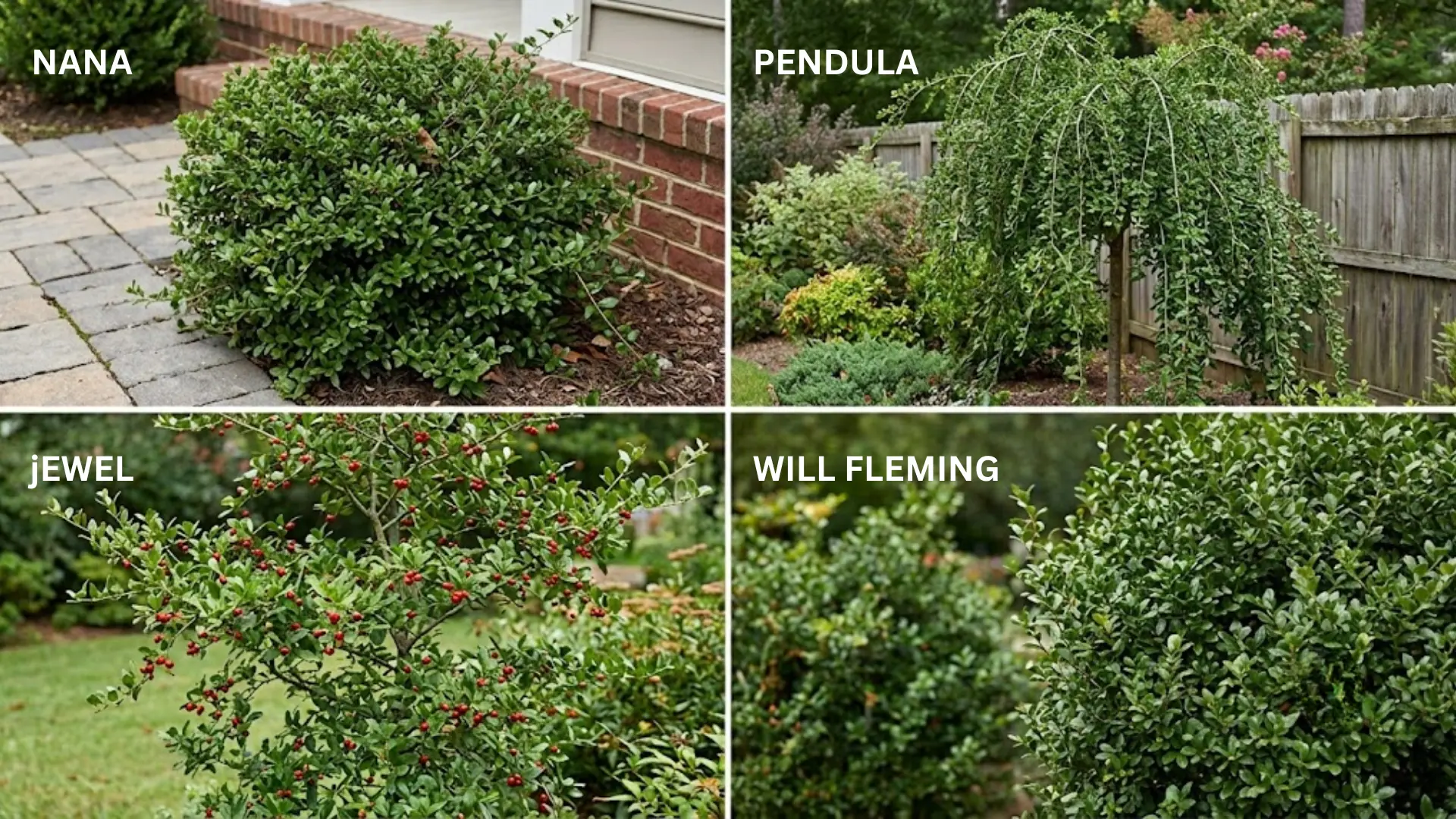
Yaupon holly is not a one-size-fits-all shrub. Cultivars vary in mature size, shape, and berry production, so matching the right one to your space matters.
|
Cultivar |
Growth Form |
Main Features |
|
Nana |
Dwarf |
Compact, rounded shrub good for foundations and low hedges. |
|
Pendula |
Weeping |
Long, hanging branches, often grown as a specimen tree. |
|
Jewel |
Fruiting |
Female cultivar with heavy berry production; needs a male nearby. |
|
Will Fleming |
Columnar |
Narrow male cultivar for tight spaces; supplies pollen, no fruit. |
Yaupon holly is dioecious, meaning individual plants are either male or female. Only female plants produce the red, orange, or yellow berries you see in fall photos, and they need a male plant growing somewhere nearby to set fruit at all. Male cultivars, like Will Fleming, supply pollen but never berries.
If berries matter to your landscape plan, check the plant tag for sex before you buy, since nursery labels do not always make this obvious at a glance. Picking the right cultivar mostly comes down to available space, the shape you want, and if fruit matters to you.
Yaupon Holly Tea And Safety
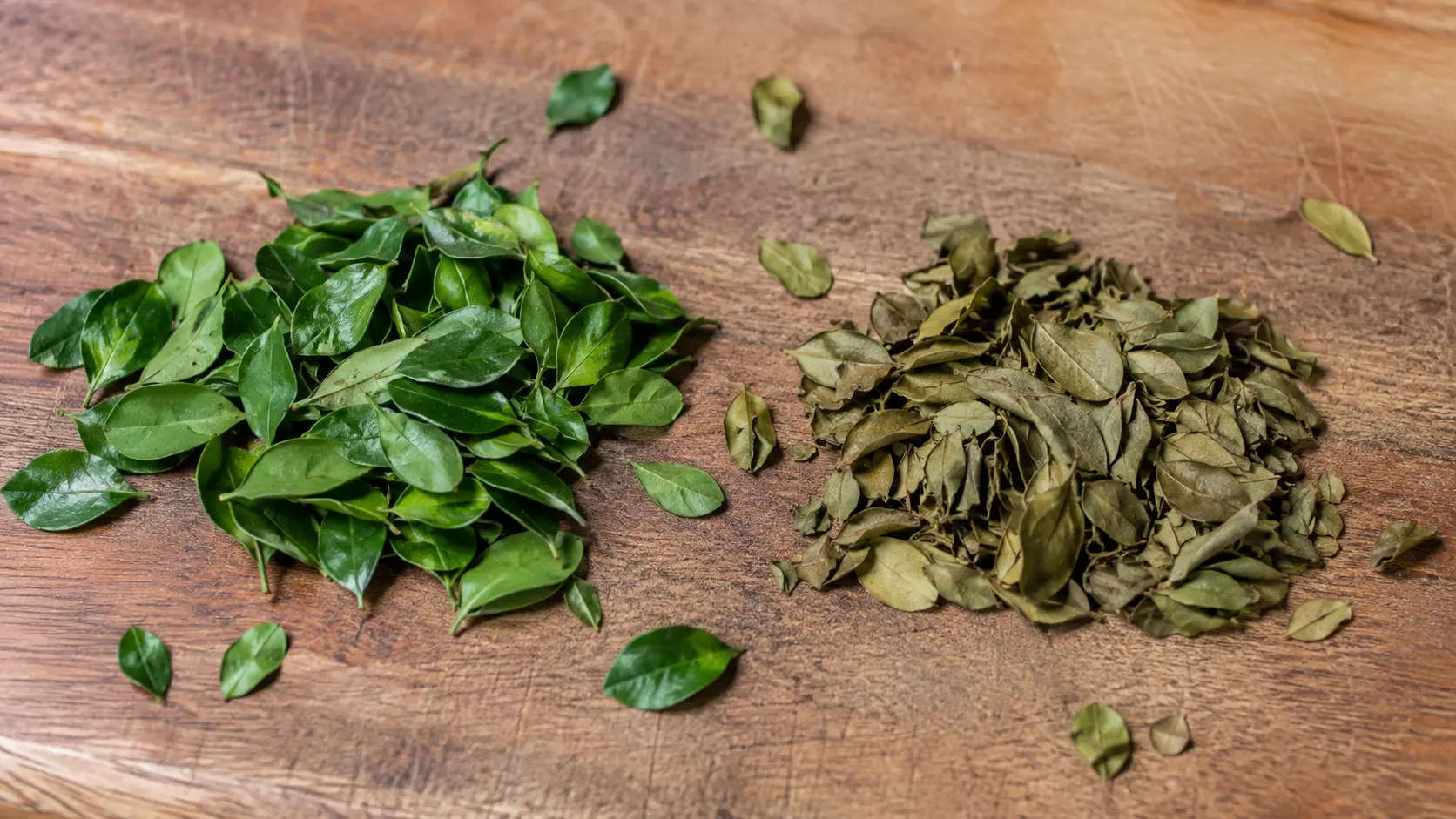
Yes, yaupon holly leaves naturally contain caffeine, and tea made from them can be safe when the leaves are correctly identified, clean, and untreated with pesticides.
According to a USDA NRCS plant fact sheet, yaupon is the only plant native to North America known to contain caffeine, and Indigenous communities in the Southeast brewed it long before coffee or tea reached the region.
Roasted or dried leaves produce a mild, grassy tea, with darker roasts giving deeper toasted notes. Caffeine sensitivity varies, so keep intake moderate if it causes restlessness or a fast heartbeat.
The berries are a different matter. They are not safe to eat and can cause nausea, vomiting, or stomach pain, so keep fallen fruit away from children and pets. Wildlife eats the berries without trouble, but that does not make them safe for people.
Wildlife Benefits And Landscape Uses
Yaupon holly pulls its weight for local wildlife nearly year-round, and it fits into a landscape in more than one way. Here is a quick rundown of what it offers and where it works best.
- Spring flowers feed bees and other pollinators.
- Fall and winter fruit feeds songbirds, wild turkeys, raccoons, and squirrels.
- Serves as a larval host for two native butterflies, per NC State Extension.
- Dense evergreen branches give birds shelter and nesting space in cold weather.
- Works well as a clipped hedge, informal screen, or small specimen tree.
- Suits native wildlife beds, alongside picks in this shrubs and bushes roundup.
- Caution: keep dense, unmanaged stands away from houses or other structures in wildfire-prone areas.
Frequently Asked Questions
Are yaupon holly berries edible?
No. Yaupon holly berries are not meant for people to eat and can cause nausea, vomiting, or stomach pain if swallowed. Birds and other wildlife eat them without harm, but keep fallen berries away from children and pets.
Is yaupon holly tea safe to drink?
Tea made from correctly identified, unsprayed yaupon leaves is generally considered safe to drink. Avoid roadside plants exposed to runoff or chemicals, wash leaves before use, and keep intake moderate if caffeine affects your sleep or heart rate.
Does yaupon holly have thorns?
No. Yaupon holly has smooth-edged leaves with only small, soft, rounded teeth, unlike spinier hollies such as American holly. This makes it a comfortable choice for planting near walkways, patios, doorways, or play areas.
Can yaupon holly grow in a container?
Yes, especially compact cultivars like Nana. Use a pot with drainage holes and a well-draining potting mix, water consistently, choose a pot wide enough for root growth, and repot every few years once roots fill the container.
How long does yaupon holly live?
There is no fixed lifespan, since it depends on cultivar, climate, soil, and care, but yaupon holly is a long-lived woody shrub that can remain a healthy landscape fixture for decades with steady, basic upkeep.
Final Thoughts
Yaupon holly is one of those plants you can put in the ground once and mostly stop thinking about. If you want a hedge that behaves itself, a small tree with some personality, or simply something green that will not sulk through a dry August, it is worth a spot in your yard.
Once it settles in, you will likely start noticing it everywhere else too, from parking lots to neighboring fence lines and old coastal roads. Have a question about your own yard, or about what would actually work best in it? Reach out, and I will help you sort out a plan that fits your space.