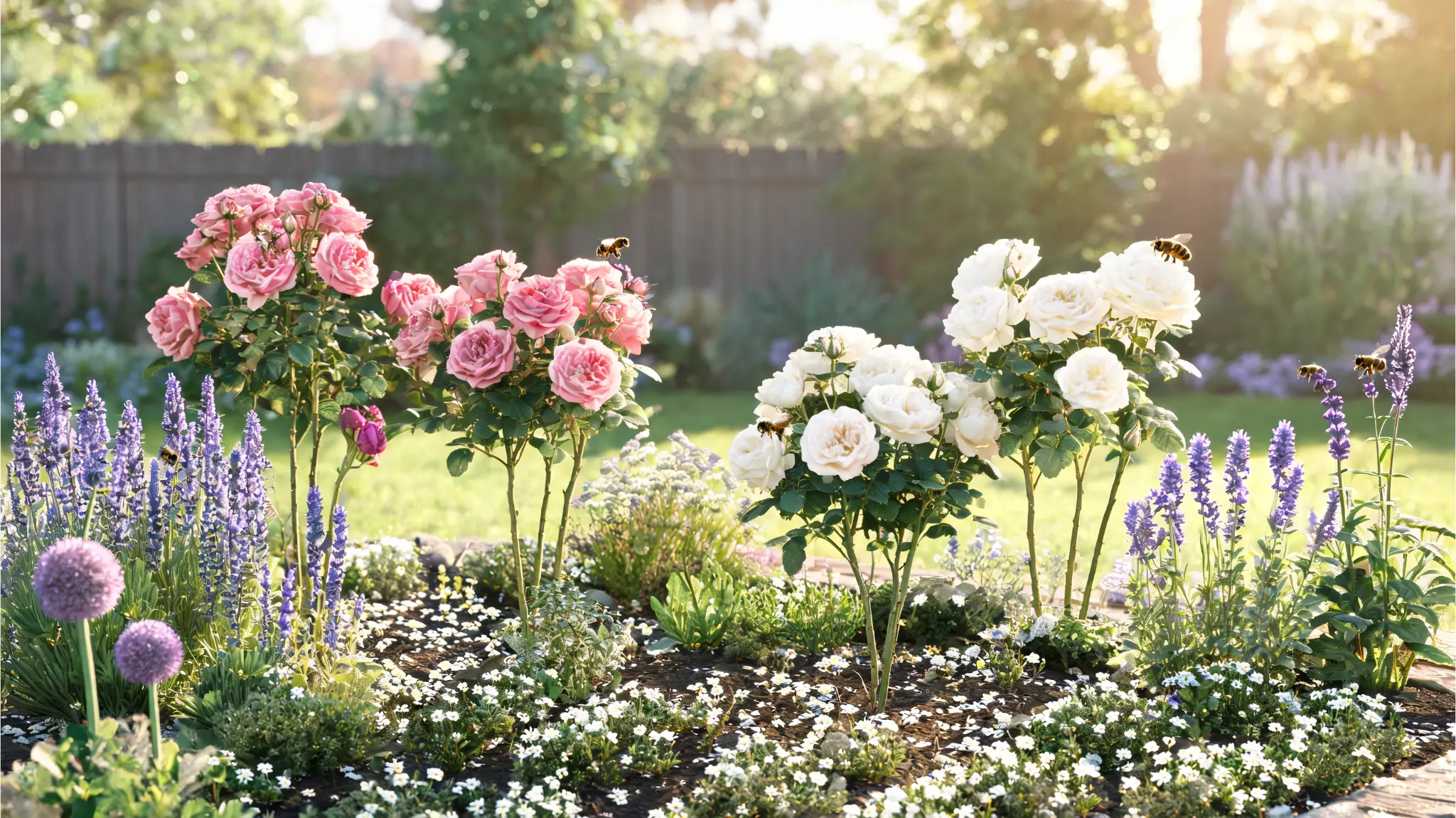
Roses can bloom beautifully and still leave the bed looking unfinished. Bare stems, open soil, and quiet gaps around the base can make even healthy roses feel like they need better company.
That is where rose companion plants make a real difference. The right plants can bring bees, soften empty spaces, add scent, reduce pest pressure, and keep color going after the first rose flush slows down.
Good pairings should enjoy full sun, well-drained soil, and similar watering needs while leaving enough room for air to move around the stems.
Start with the problem your rose bed has, then choose companions that solve it with purpose. Use the list below to pick plants that make your roses look better and grow with less stress.
A Rose Bed Works Better When Each Plant Has a Job
Roses need strong sunlight, good air circulation, and enough root space to grow well. When plants crowd the base, they can trap humidity around the stems and leaves. That can raise the risk of fungal diseases such as black spot, rust, and powdery mildew.
The right companion plants can support rose growth by reducing weed pressure, keeping the bed easier to manage, and leaving enough space for roots, light, and airflow. Many also improve beauty by hiding bare stems and adding color around the main blooms.
Flowering companions also support plant health by attracting bees, hoverflies, ladybugs, and other helpful insects that keep the garden more active. Some of these insects help control pests like aphids and mites naturally.
That is why each plant should have a clear role. It may bring pollinators, cover bare stems, add scent, or extend seasonal color without crowding the rose crown.
Best Rose Companion Plants to Grow
Choosing the right rose companion plants can help your garden look fuller, attract more pollinators, and be easier to manage. These plants are useful because they support roses through better spacing, pest help, soil coverage, or longer seasonal color.
1. Lavender
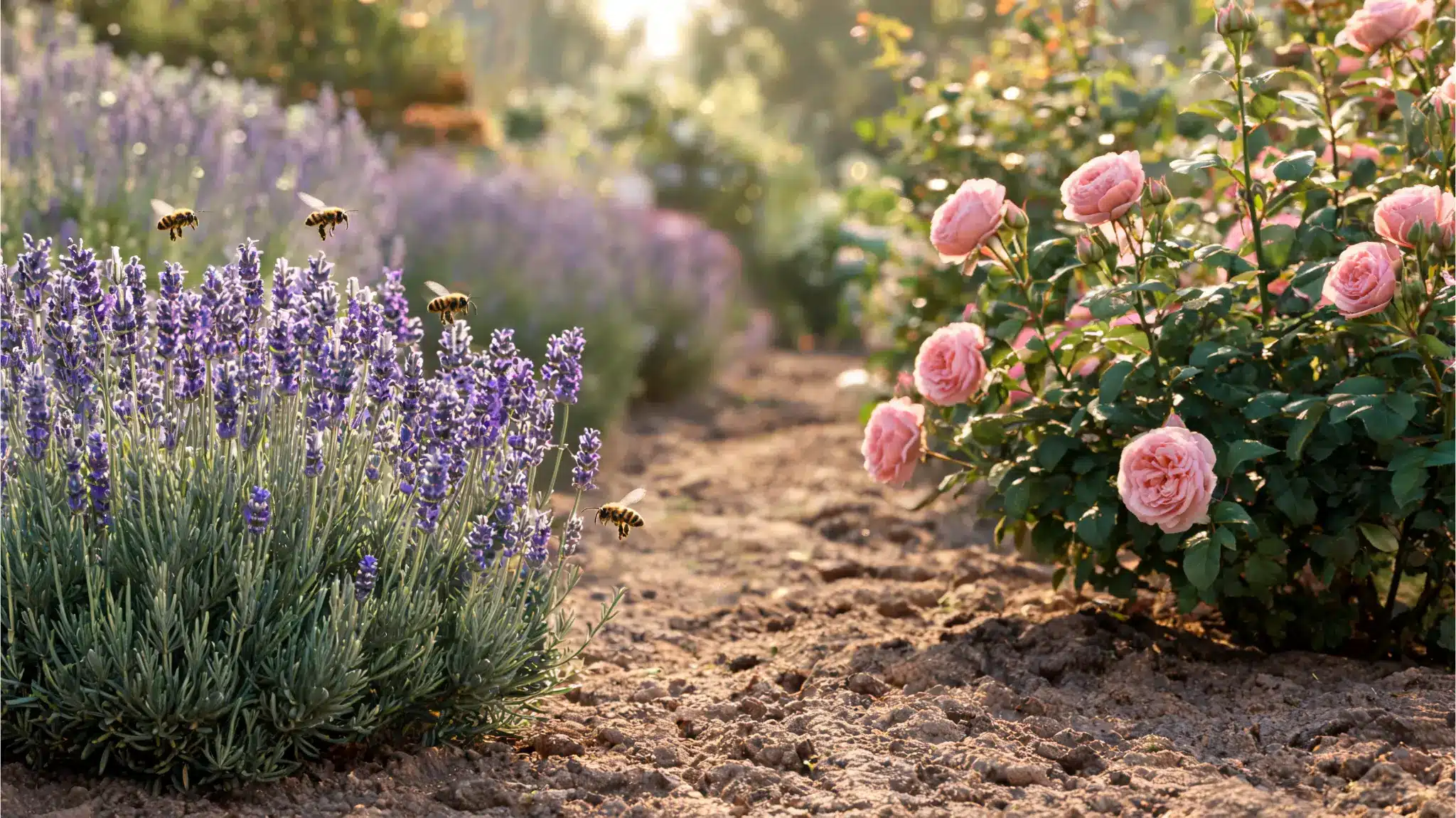
Lavender and roses are one of the most useful garden pairings. Lavender adds fragrant purple flowers while attracting bees and other pollinators around rose beds.
Its strong scent may also help make the area less inviting to some pests. Lavender grows best in the same sunny, well-drained conditions that roses prefer, making it a smart companion for borders and cottage-style beds.
Planting Tips: Space lavender about 12 to 18 inches from rose bushes to maintain good airflow and give both plants enough room to grow. Choose a sunny spot with well-drained soil, and avoid planting close to the rose crown.
2. Catmint
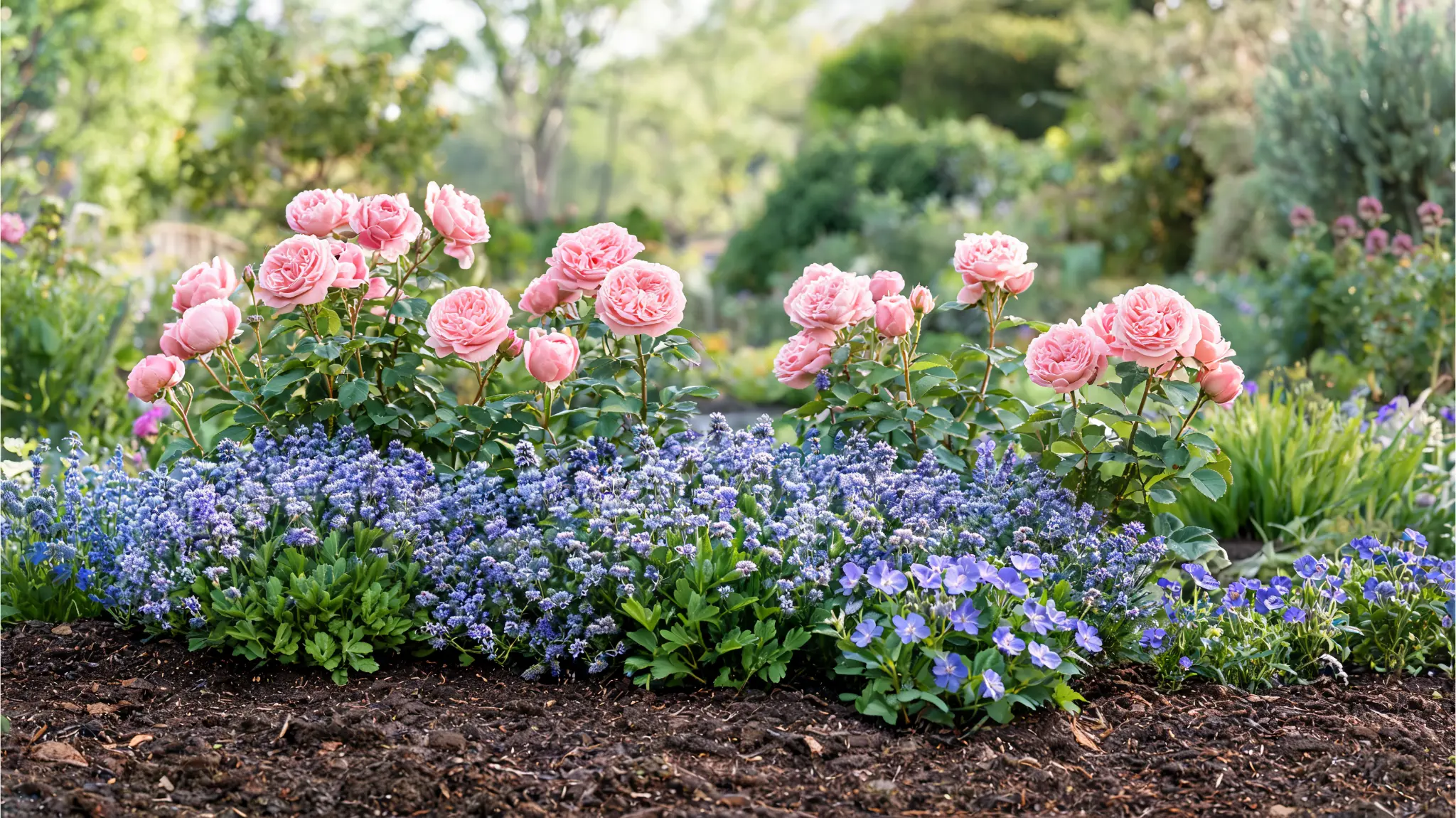
Catmint works well with roses because it fills the lower part of the bed without hiding the main plant. Its soft purple-blue flowers bring bees into the garden and help cover bare rose stems.
This plant is especially useful at the front of rose borders. It creates a soft base around roses while still leaving the crown open when planted with proper spacing.
Planting Tips: Place catmint near the front of the rose bed, leaving open space around the base of each rose. Trim after flowering to keep it compact and prevent it from growing into nearby roses.
3. Allium
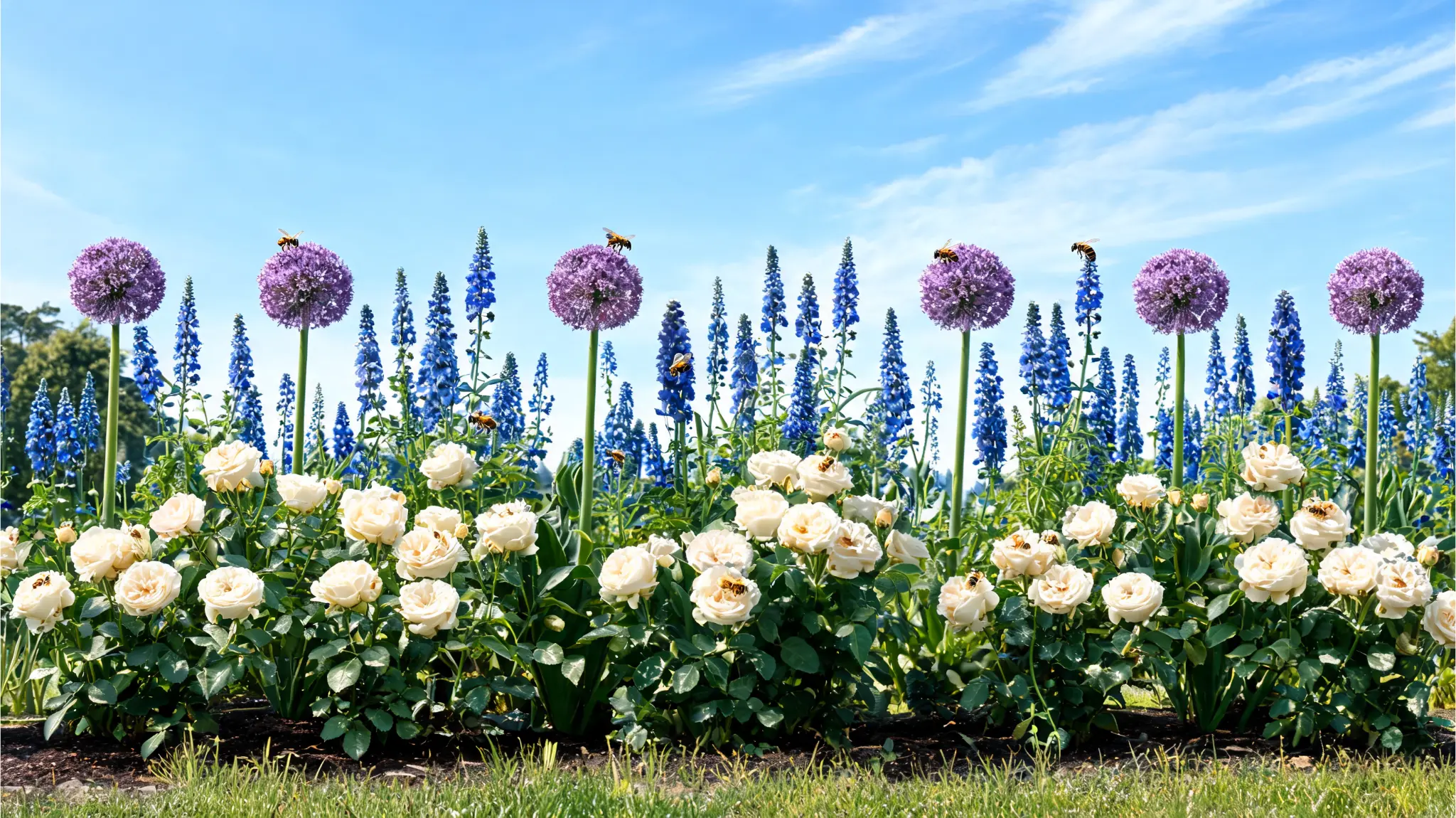
Alliums are helpful beside roses because they grow upright and take up little room. Their round flower heads add shape to the bed while attracting pollinators.
Many gardeners also plant alliums near roses because their onion-like scent may help reduce aphid activity. They are a good choice when you want pest support without crowding the rose roots.
Planting Tips: Plant allium bulbs between roses in the fall, leaving enough room so they do not compete with the rose roots. Allow the foliage to die back naturally after flowering.
4. Salvia
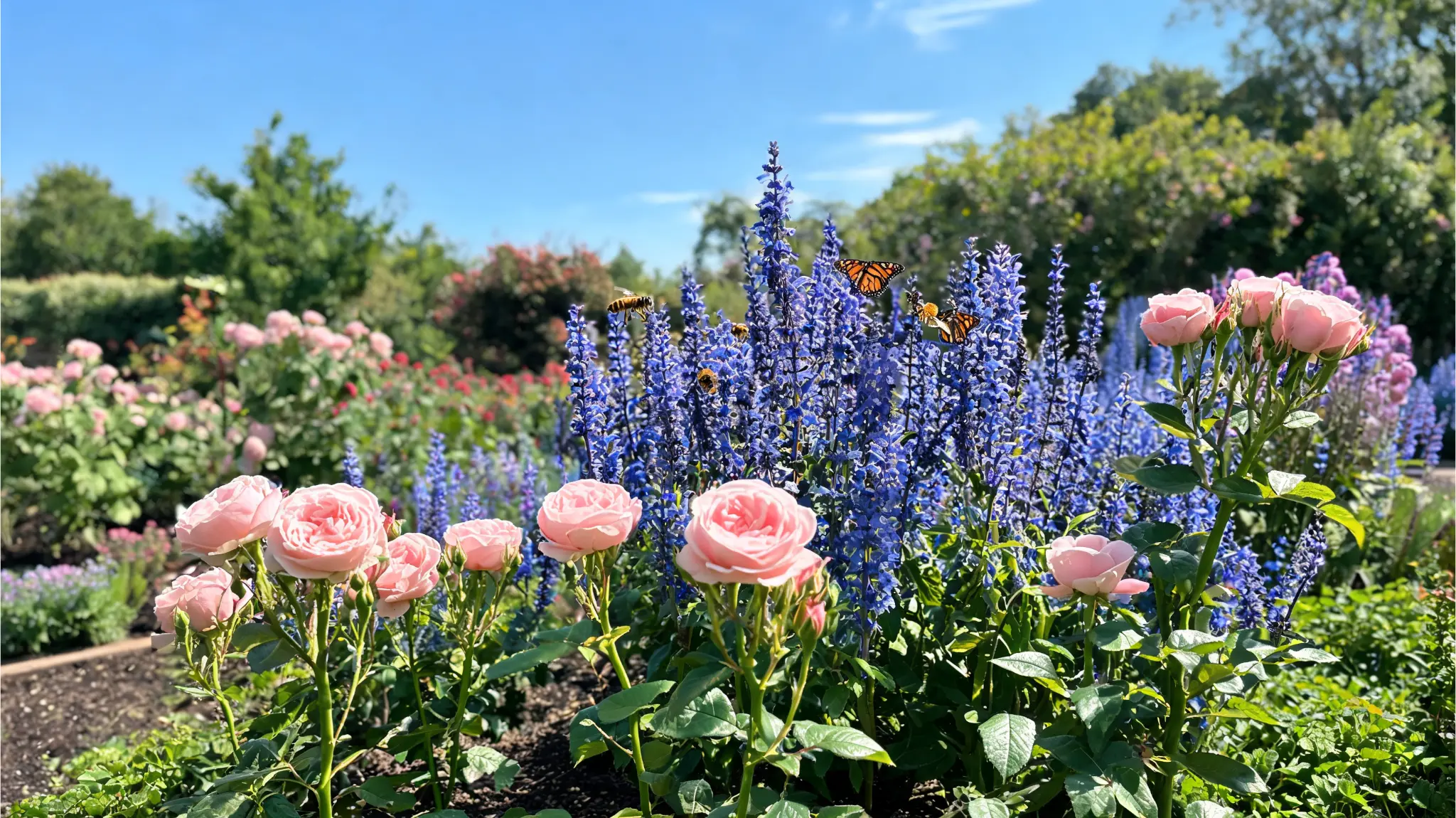
Salvia is a useful rose companion because it brings long-lasting flowers and plenty of pollinator activity. Its upright flower spikes pair well with soft rose blooms and help add height to the bed.
It also grows well in sunny garden spaces once established. Salvia is especially helpful in mixed rose borders where you want color that lasts beyond the first rose bloom.
Planting Tips: Plant allium bulbs between roses in the fall, leaving enough room so they do not compete with the rose roots. Allow the foliage to die back naturally after flowering.
5. Hardy Geranium
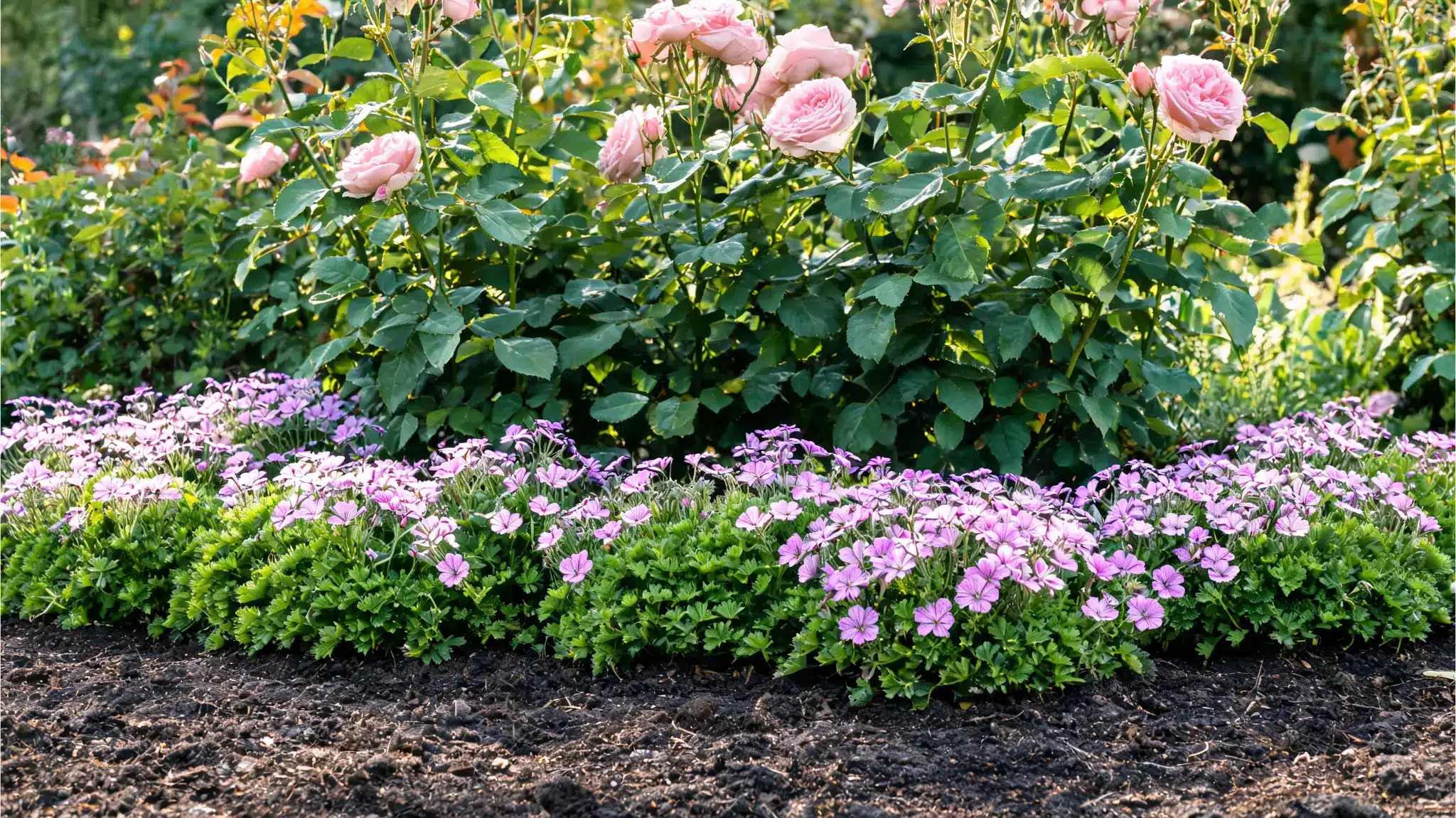
Hardy geraniums are good companions for roses because they cover bare soil and hide lower stems. They grow low and spread gently, which helps the rose bed look full without blocking the rose bush.
They are especially useful around shrub roses. Their flowers add color near the base, while their leaves help soften empty spaces in the bed.
Planting Tips: Plant hardy geranium around the front or sides of rose bushes while keeping the crown open. Cut it back if it starts growing too close to the rose stems.
6. Thyme
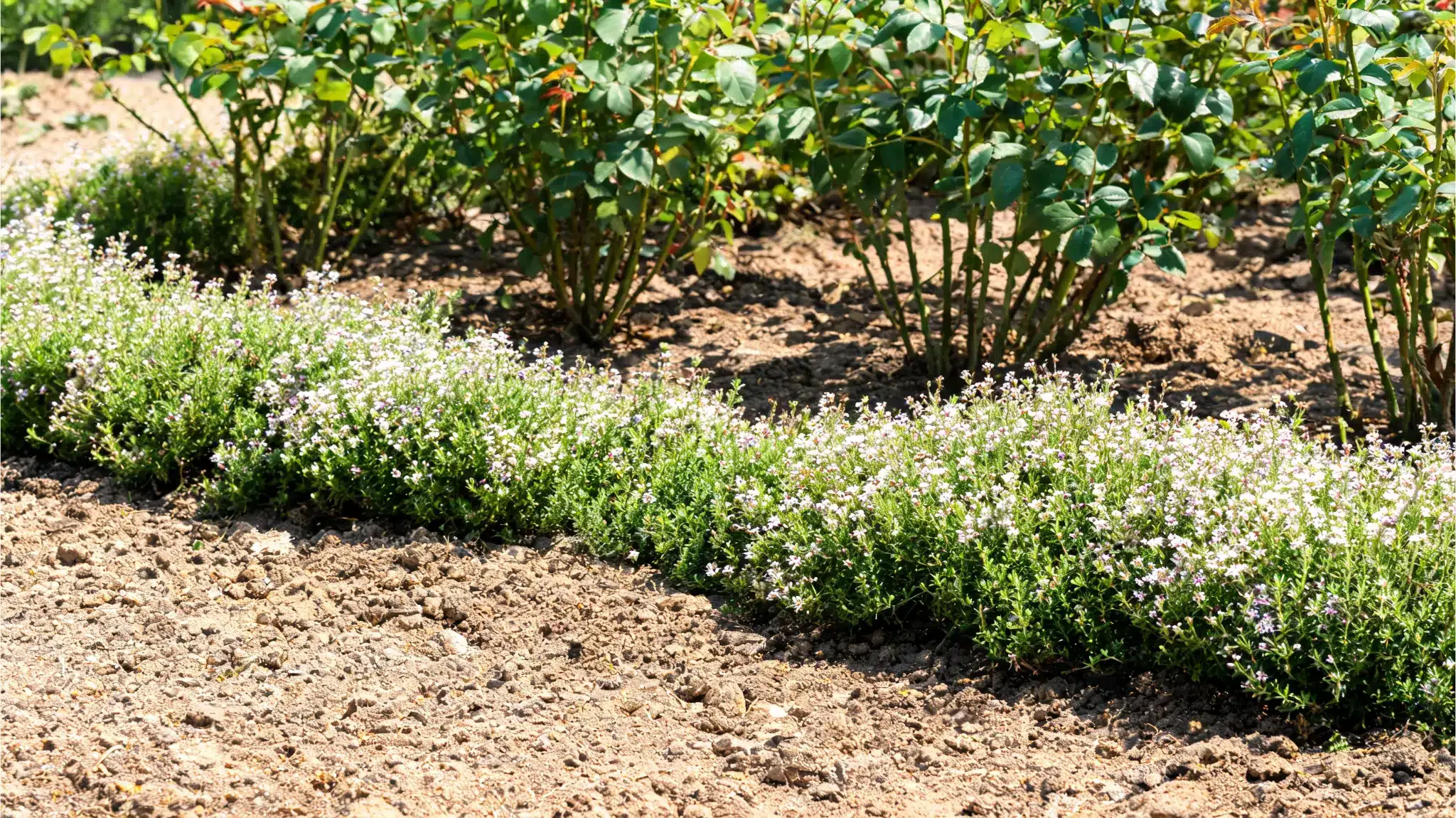
Thyme is a low-growing herb that fits well around roses. It helps cover open soil, limits empty gaps, and brings pollinators when it flowers.
This plant is useful in small rose beds, sunny borders, and containers. Since thyme stays compact, it can fill space without making the rose area feel crowded.
Planting Tips: Use thyme along bed edges or in open spaces near roses. Keep it away from the main stem and trim occasionally so it stays compact.
7. Yarrow
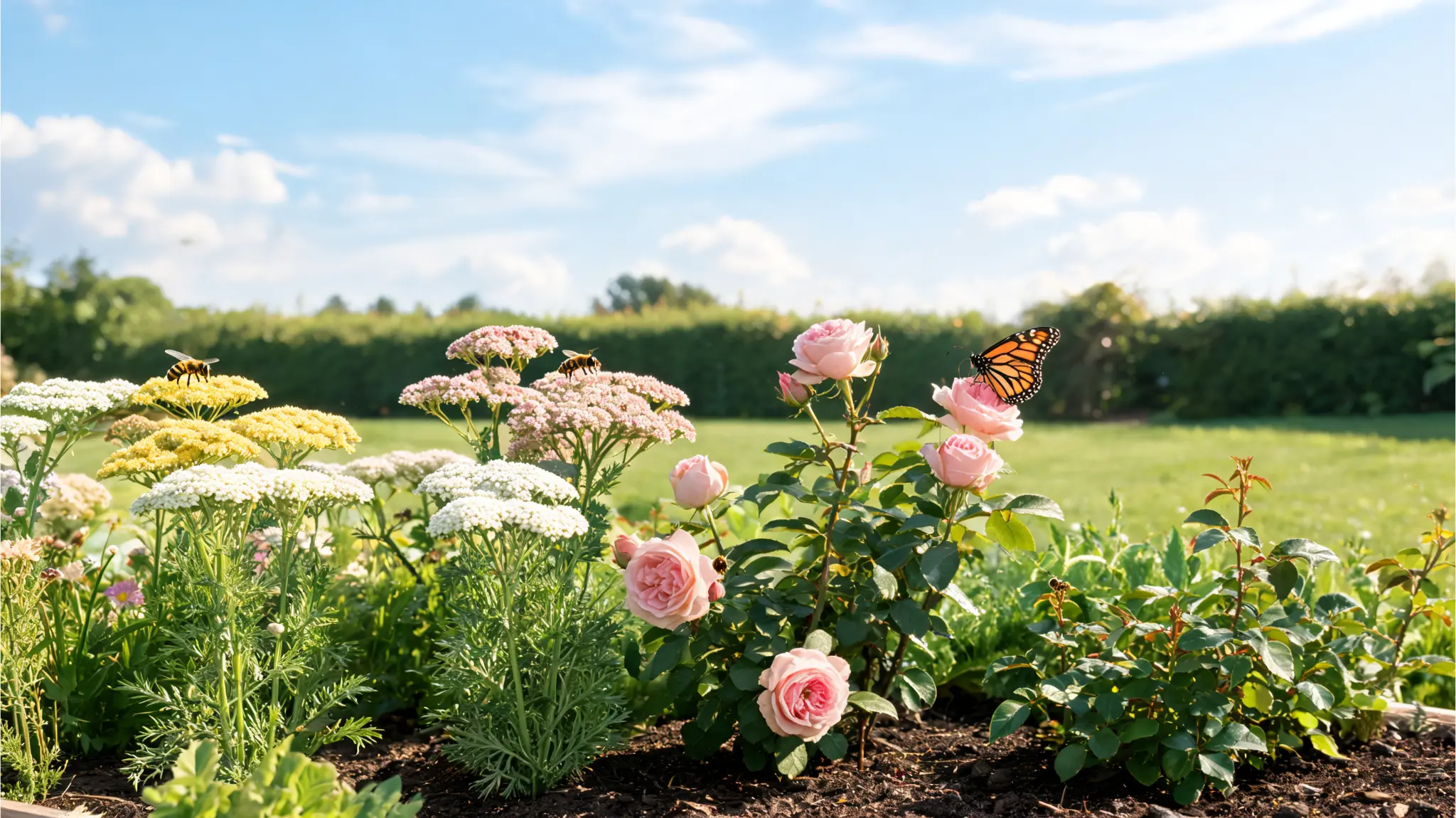
Yarrow helps rose beds by attracting pollinators and helpful insects. These insects can support a more active garden and may help keep pest problems more balanced.
Its flat flower heads also add a different shape besides rose blooms. Yarrow works well in sunny beds where roses need nearby plants that do not require heavy care.
Planting Tips: Give yarrow enough room to spread beside or behind roses. Grow it in full sun with good airflow and remove faded flowers to keep it tidy.
8. Marigolds
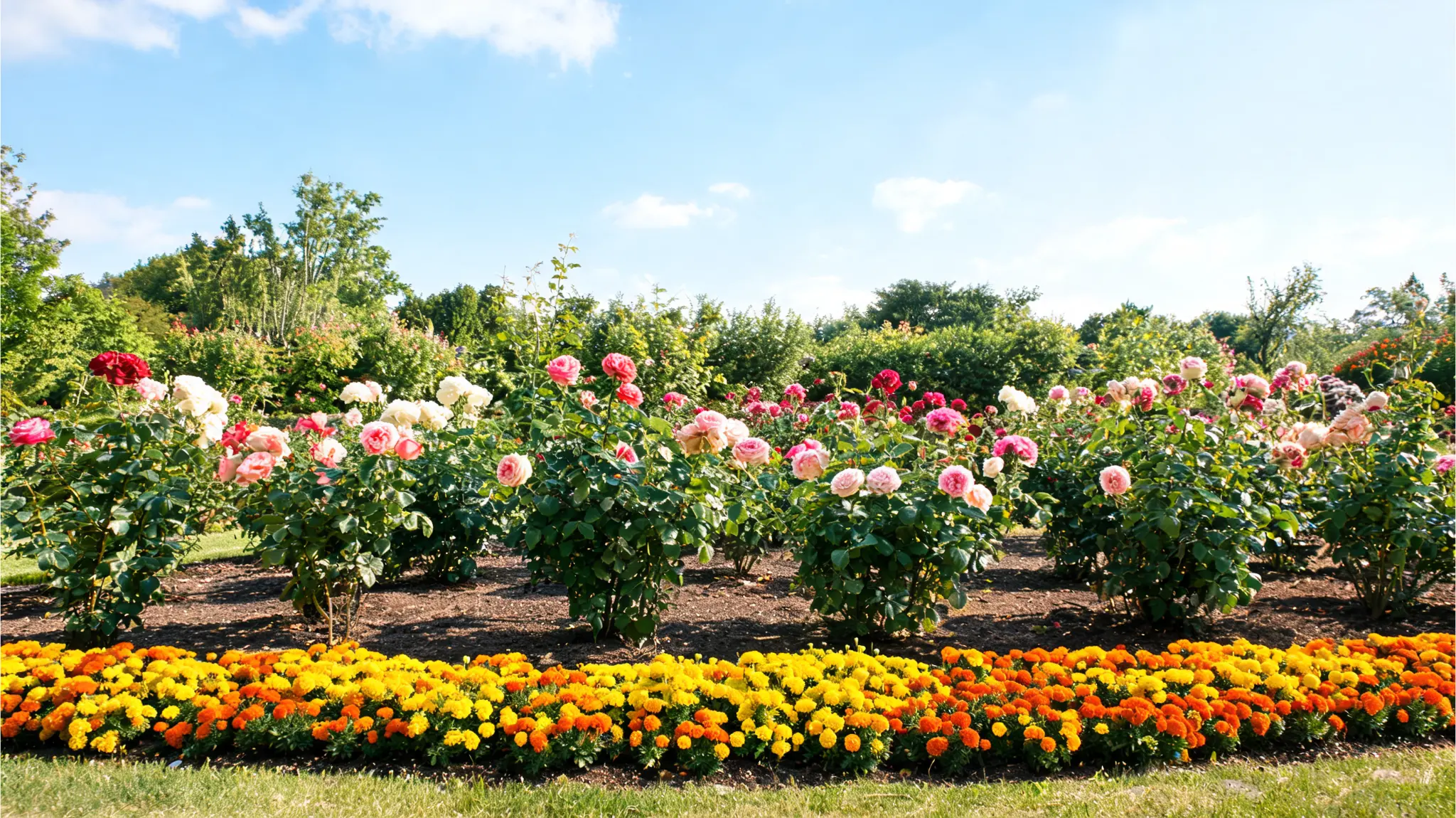
Marigolds are useful annual companions for roses because they add steady color and may help reduce some pest pressure. They are easy to tuck into open spaces while young rose bushes grow.
Their flowers also attract pollinators and help cover bare soil during warm months. This makes them a practical seasonal filler for rose beds.
Planting Tips: Plant marigolds around the front or edges of rose beds without crowding the base of the roses. Remove spent blooms to encourage more flowers through the season.
9. Chives
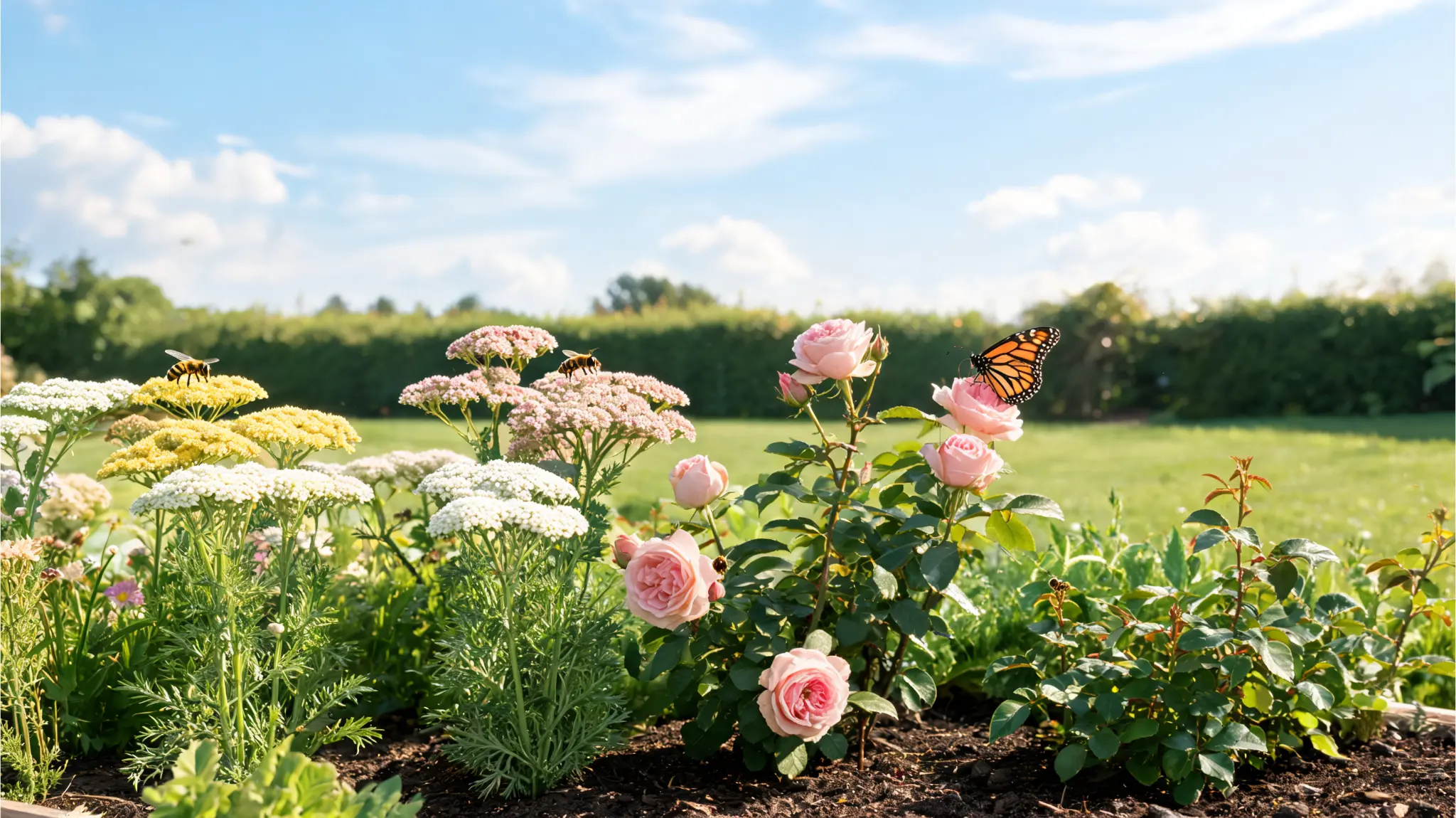
Chives grow in small clumps and fit neatly around roses. Their onion-like scent may help confuse some pests, while their purple flowers attract bees.
They are a good choice for smaller rose beds because they do not take over when kept trimmed. Chives also add useful flowers without crowding the rose roots.
Planting Tips: Place chives around the outer edge of the bed rather than directly beside rose stems. Divide or trim clumps as they grow to maintain spacing.
10. Sweet Alyssum
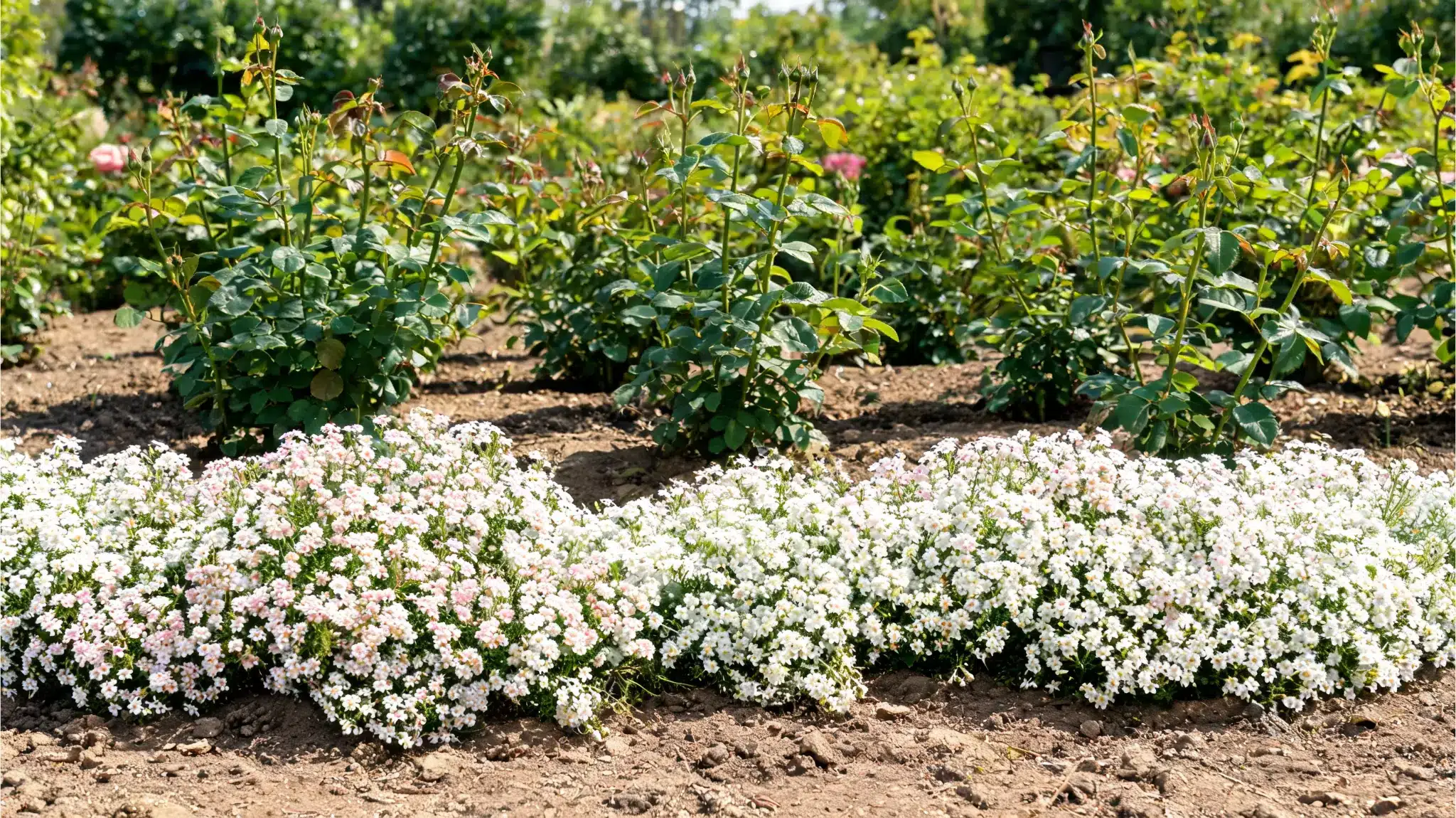
Sweet alyssum is a low annual that works well around roses. It helps cover bare soil, softens bed edges, and attracts small helpful insects.
It is especially useful around young roses, patio roses, and container roses. Its small flowers fill gaps without blocking light or airflow around the main plant.
Planting Tips: Grow sweet alyssum along the front of rose beds or around containers. Keep the soil evenly moist during hot weather and trim lightly if it spreads too far.
11. Dianthus
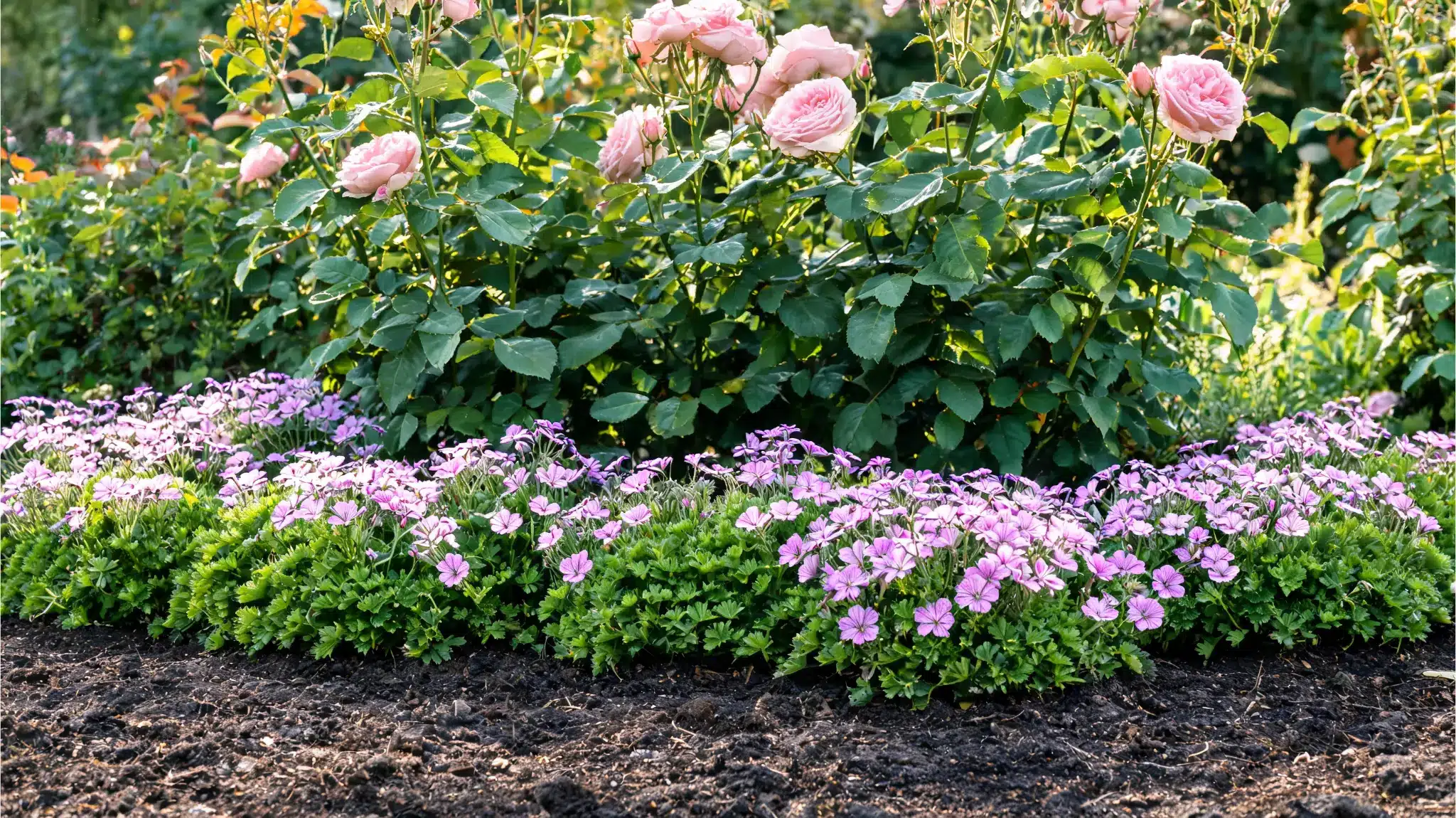
Dianthus grows well beside roses because it stays compact, adds scent, and brings low flowers near the front of the bed. It is useful when you want color without crowding rose roots.
This plant pairs well with pink, red, and white roses. Its neat growth makes it easy to use in borders where roses need space.
Planting Tips: Space dianthus so air can move freely around both plants. Full sun and well-drained soil help it perform well beside roses.
12. Lady’s Mantle
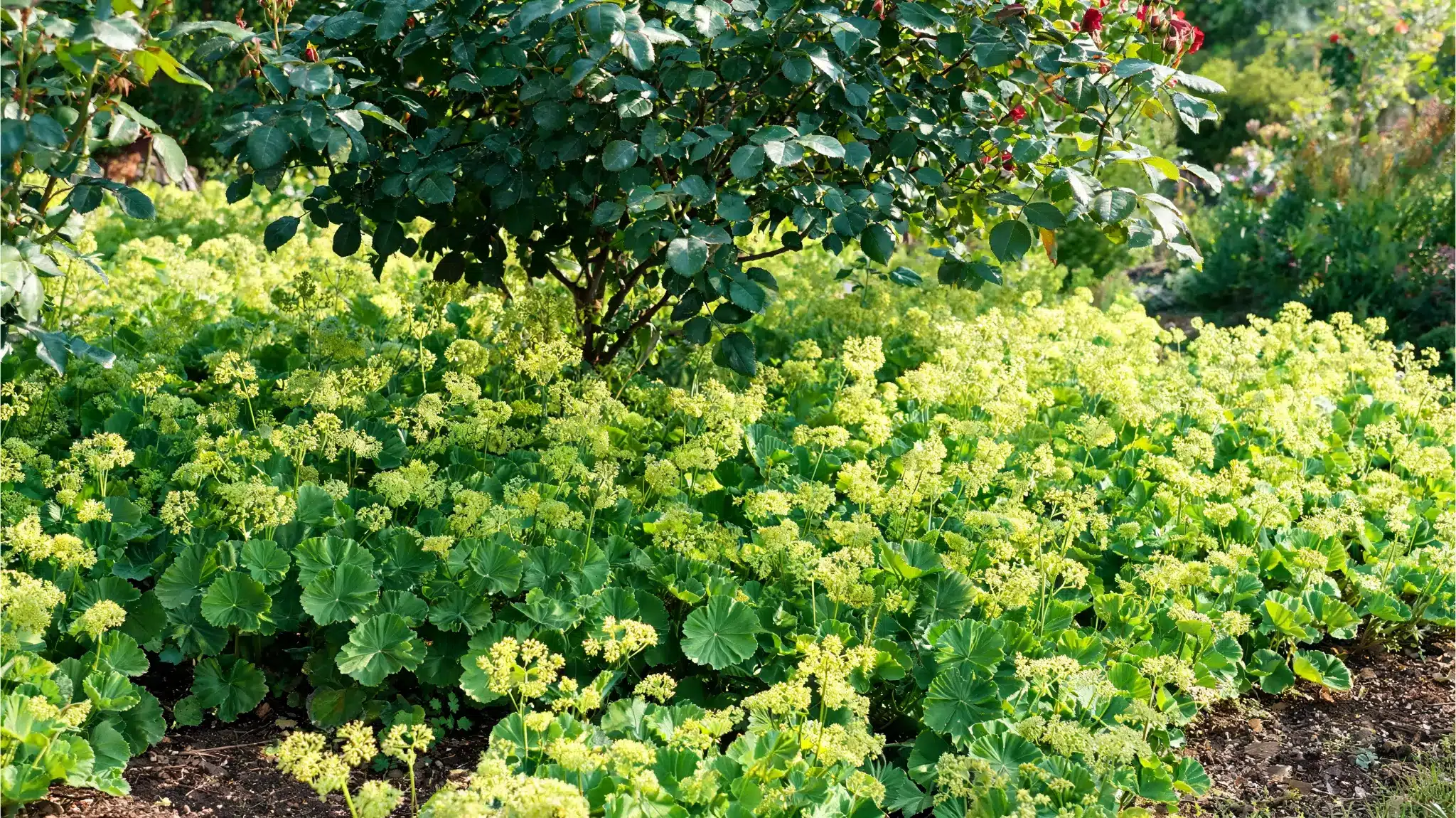
Lady’s mantle helps soften the lower part of a rose bed. Its rounded leaves cover bare soil and make rose blooms stand out without taking attention away from them.
It works best near the front of the border, where it can fill empty space below rose bushes. This plant is useful when roses have bare lower stems.
Planting Tips: Space dianthus so air can move freely around both plants. Full sun and well-drained soil help it perform well beside roses.
13. Clematis
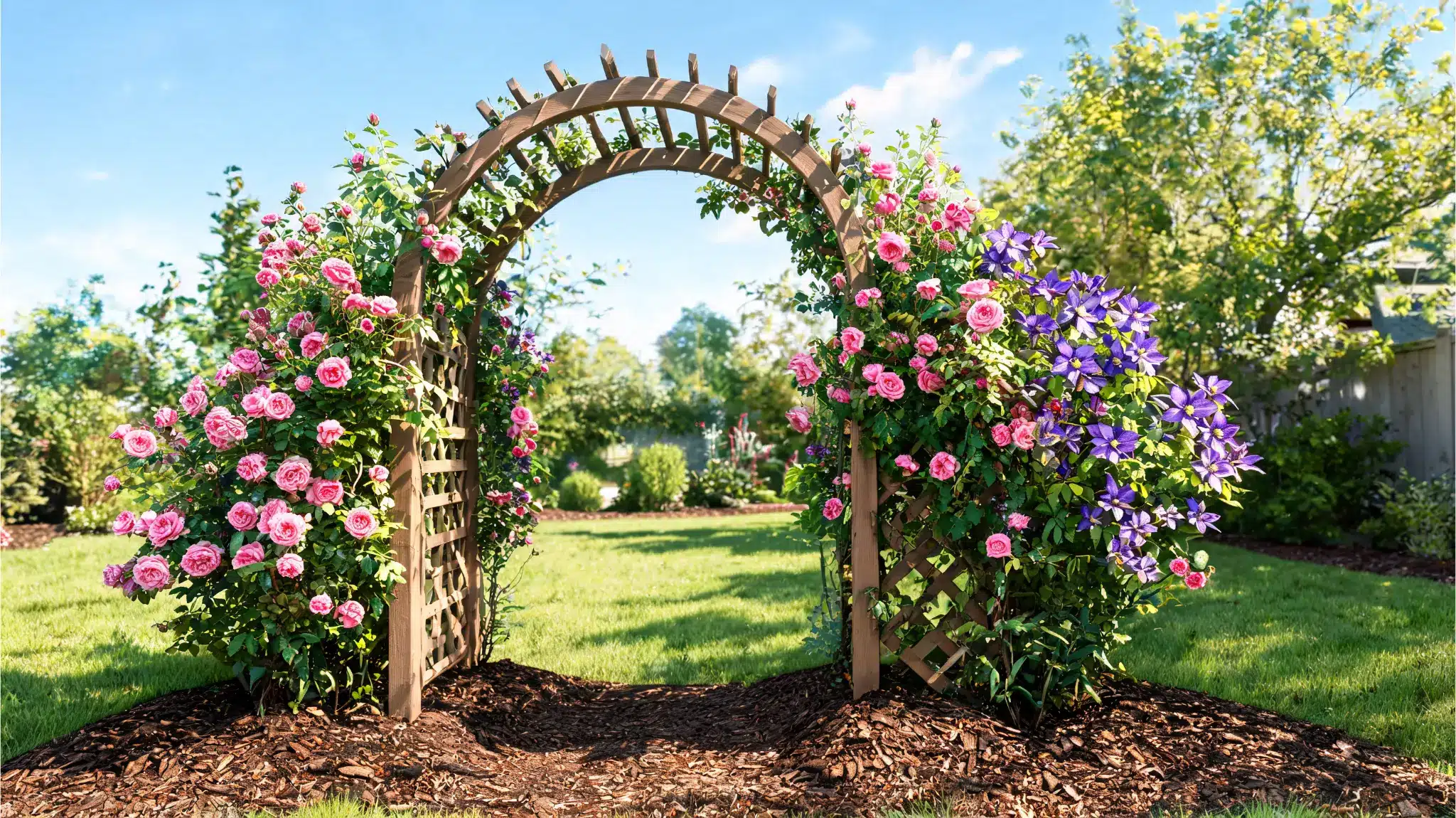
Clematis is one of the best plants to grow with climbing roses. It can share a trellis, arch, fence, or wall and add more flowers through the season.
This pairing works well because roses and clematis can fill vertical space together. The key is giving both plants enough root room and steady care.
Planting Tips: Plant clematis close enough to share a trellis with climbing roses while giving each plant its own root space. Keep the clematis root zone cool with mulch or nearby groundcover.
14. Phlox
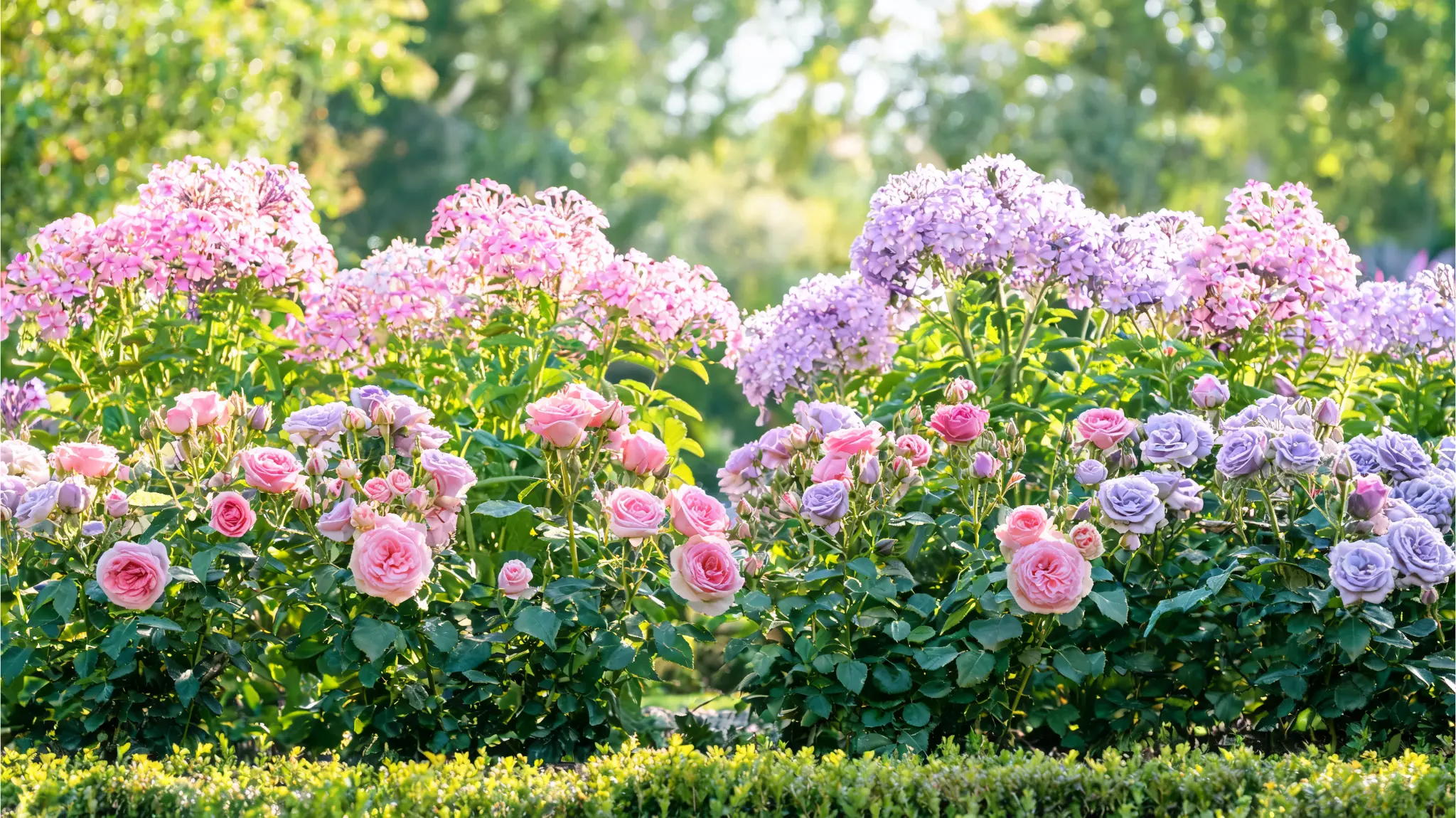
Phlox helps rose beds stay colorful after the main rose bloom slows down. Its flowers attract pollinators and work well in sunny mixed borders.
This plant is best for open beds where air can move easily. When spaced well, phlox adds summer flowers without making the rose area too crowded.
Planting Tips: Place phlox toward the middle or back of the bed where air moves freely. Leave enough spacing so rose stems remain open and easy to maintain.
15. Shasta Daisy
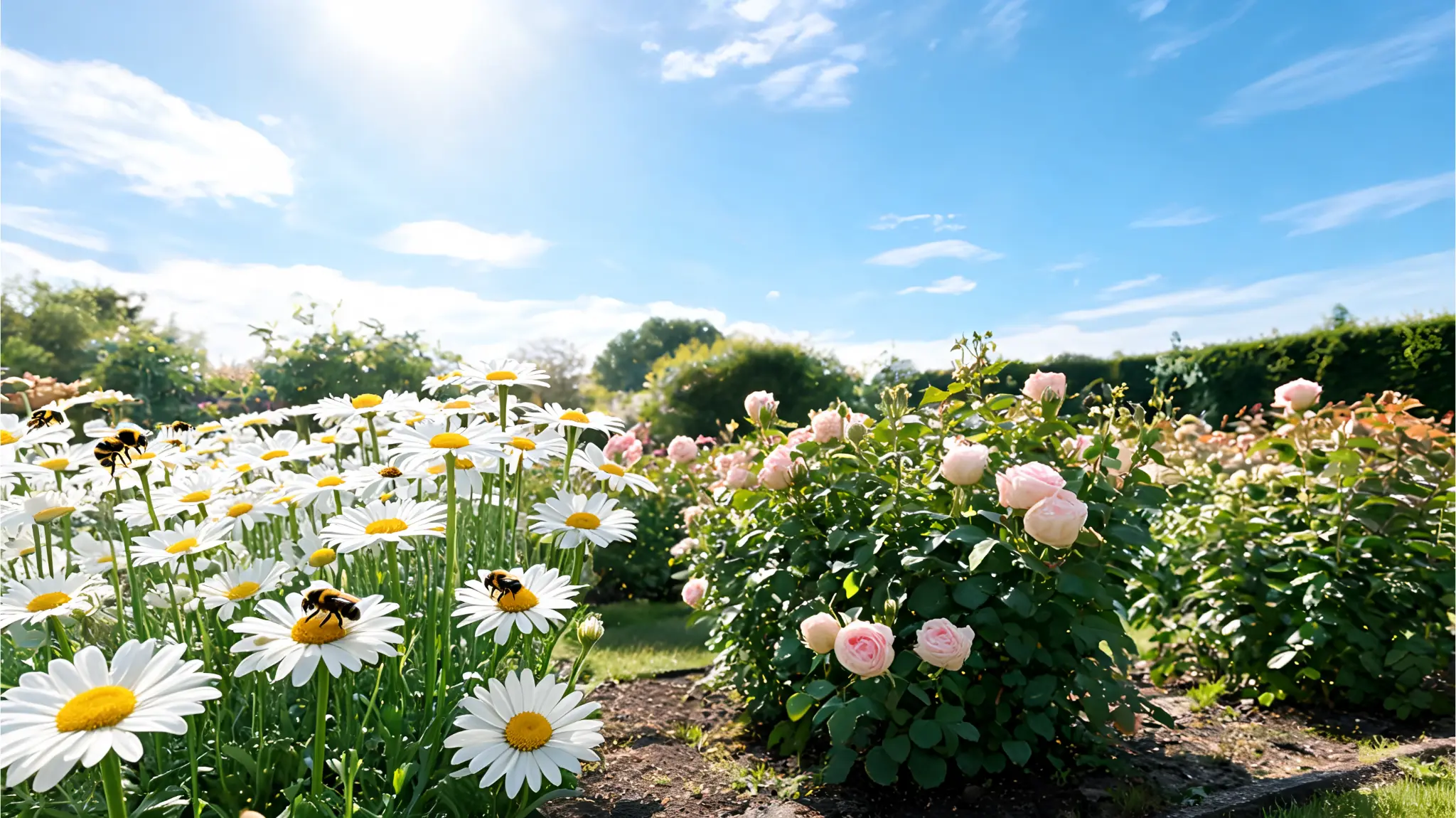
Shasta daisies are helpful rose companions because they bring bright flowers and attract pollinators. Their white blooms also pair well with almost any rose color.
They work best in sunny mixed borders with enough open space. Shasta daisies can make rose beds feel more active during the warm growing season.
Planting Tips: Plant Shasta daisies beside or behind roses with enough distance to prevent crowding. Remove faded blooms to keep flowers coming longer.
16. Foxglove
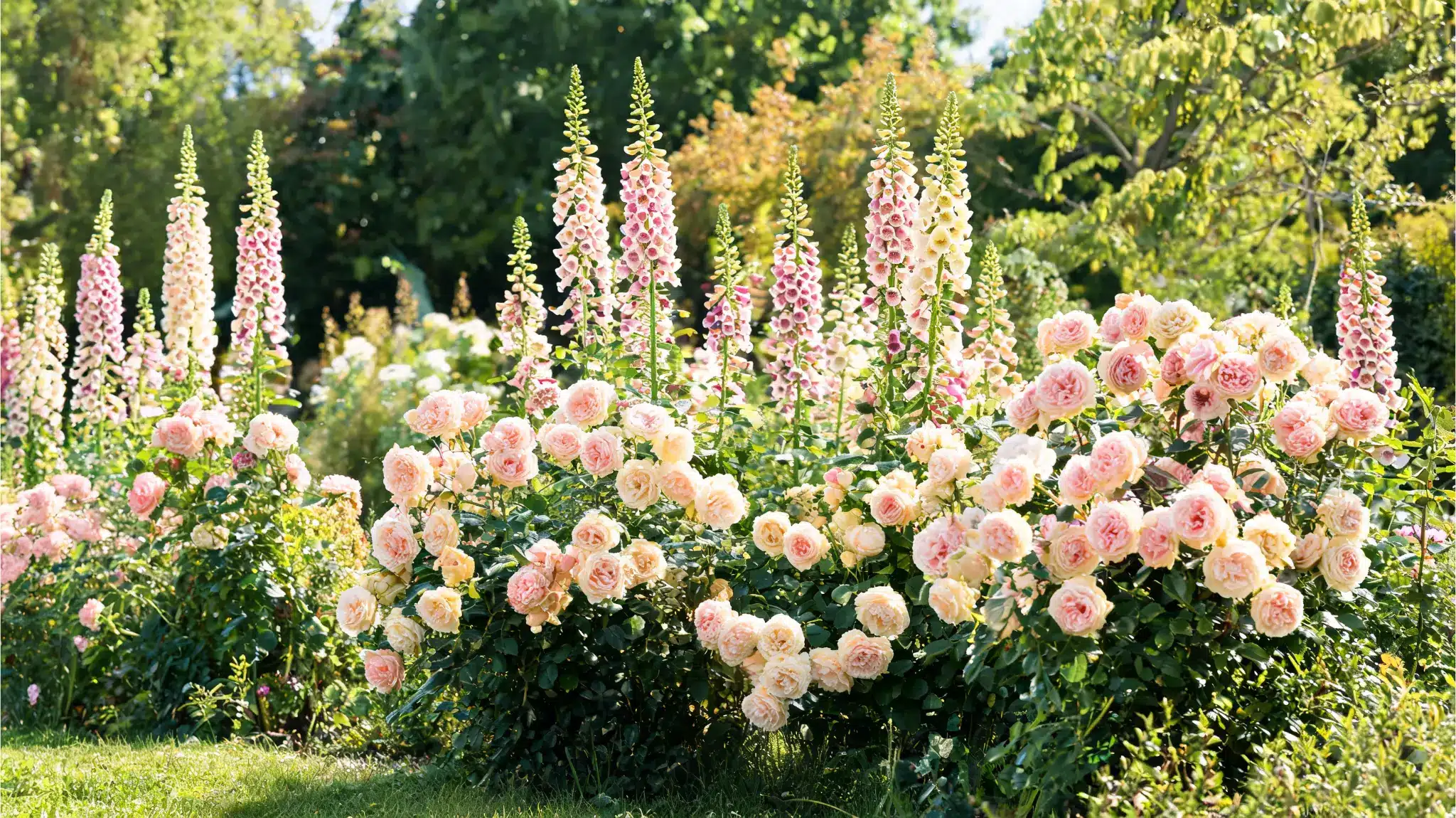
Foxglove adds height and brings pollinators into rose beds. It works well behind shrub roses, where tall flower spikes can rise above lower plants without blocking the rose base.
This plant is best for larger beds with room to layer plants properly. It should not be crowded tightly around rose stems.
Planting Tips: Plant Shasta daisies beside or behind roses with enough distance to prevent crowding. Remove faded blooms to keep flowers coming longer.
17. Rosemary
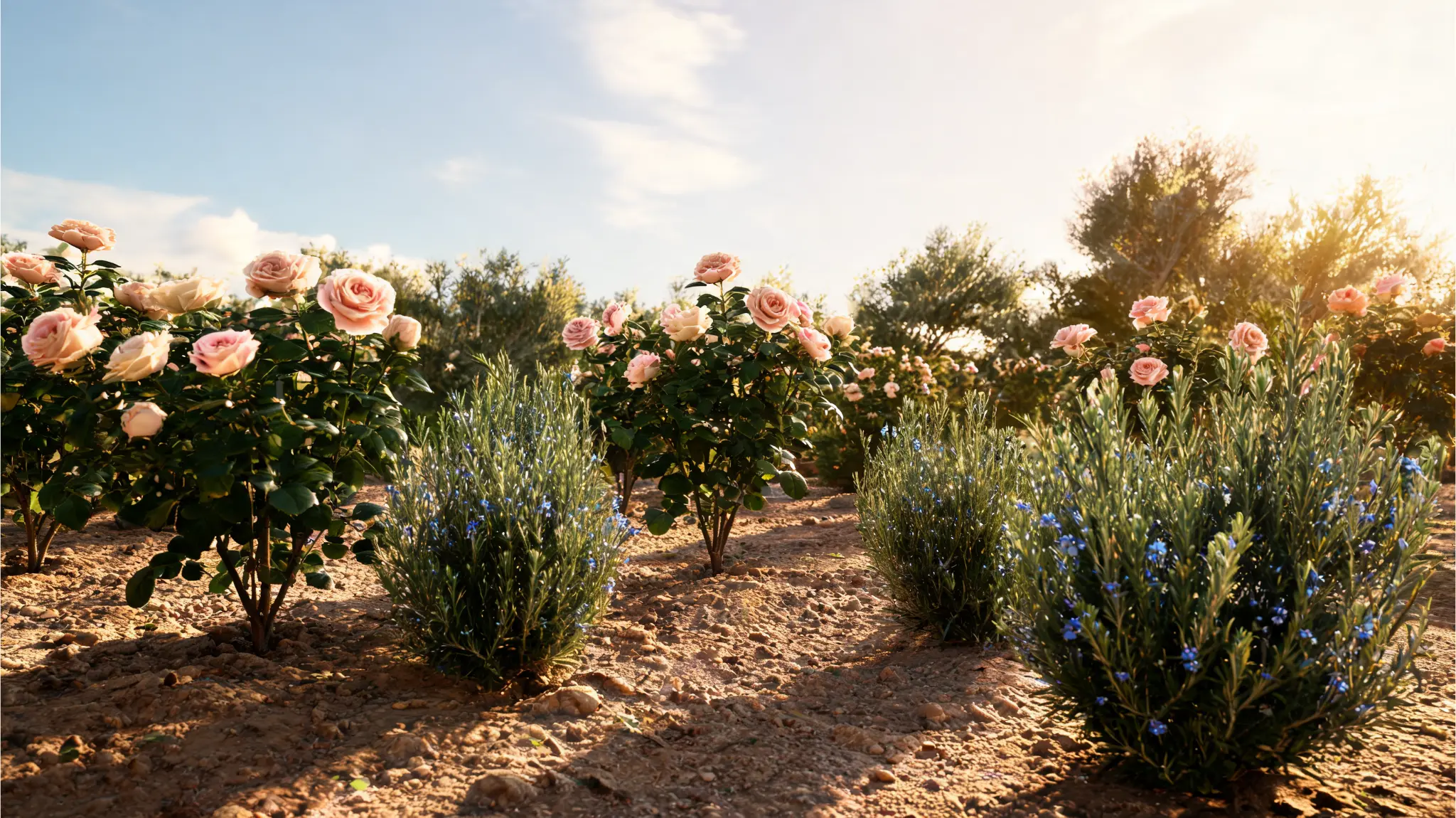
Rosemary can grow well near roses in warm, sunny gardens with well-drained soil. Its strong scent may help make the area less inviting to some pests.
It also gives the bed a green structure in mild climates. Rosemary is best for larger rose beds because it needs space as it matures.
Planting Tips: Give rosemary enough space from the rose base since it becomes woody over time. Plant it in full sun with well-drained soil and avoid frequent watering once established.
18. Oregano
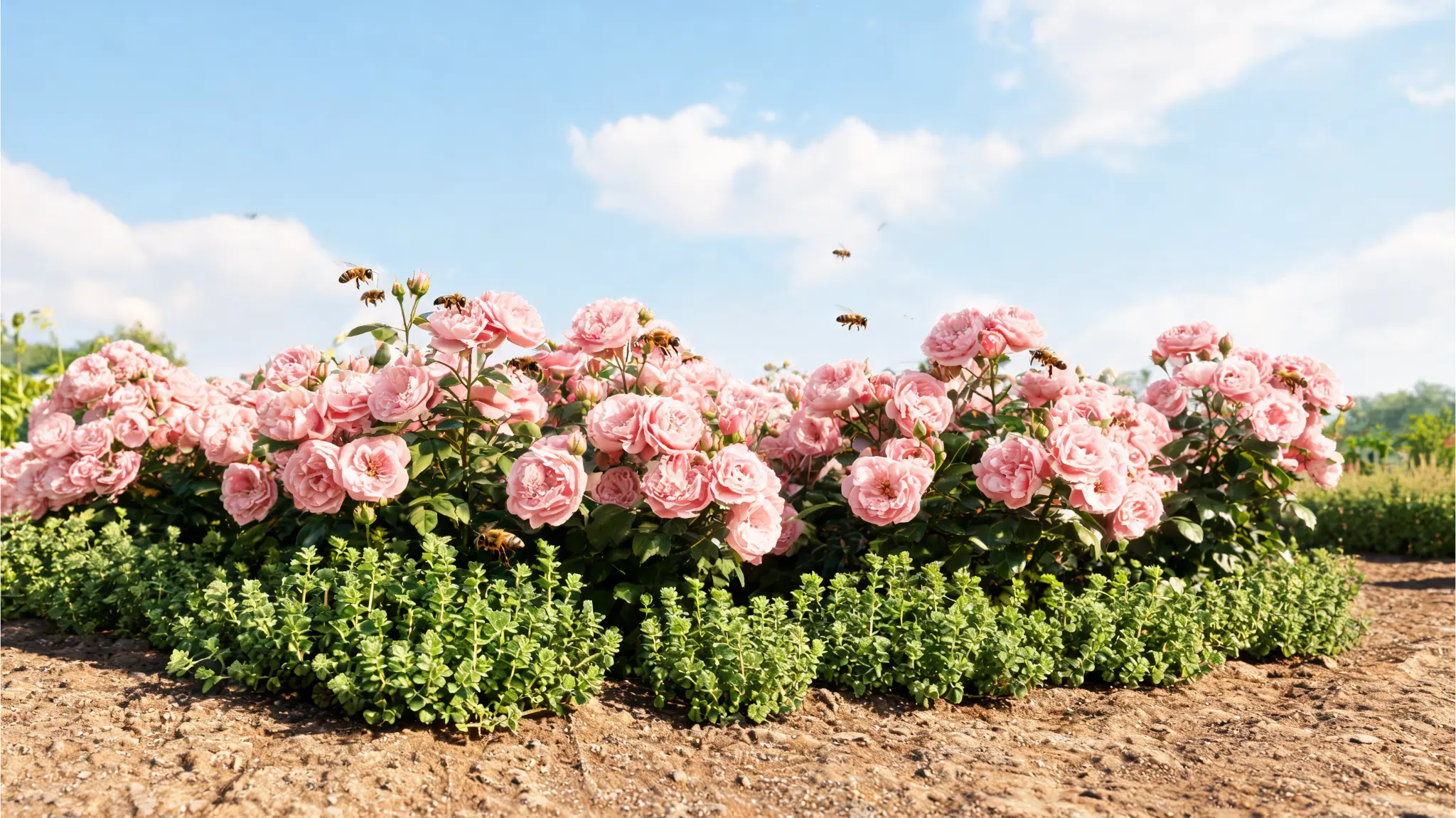
Oregano is a low-growing herb that attracts pollinators when it flowers. It also helps cover bare soil near roses and can make sunny borders more useful.
Since oregano can spread, it works best where you can trim it often. It should support the bed without growing into the rose crown.
Planting Tips: Plant oregano along sunny bed edges instead of beside the rose crown. Trim it regularly to keep it from spreading into nearby plants.
19. Parsley
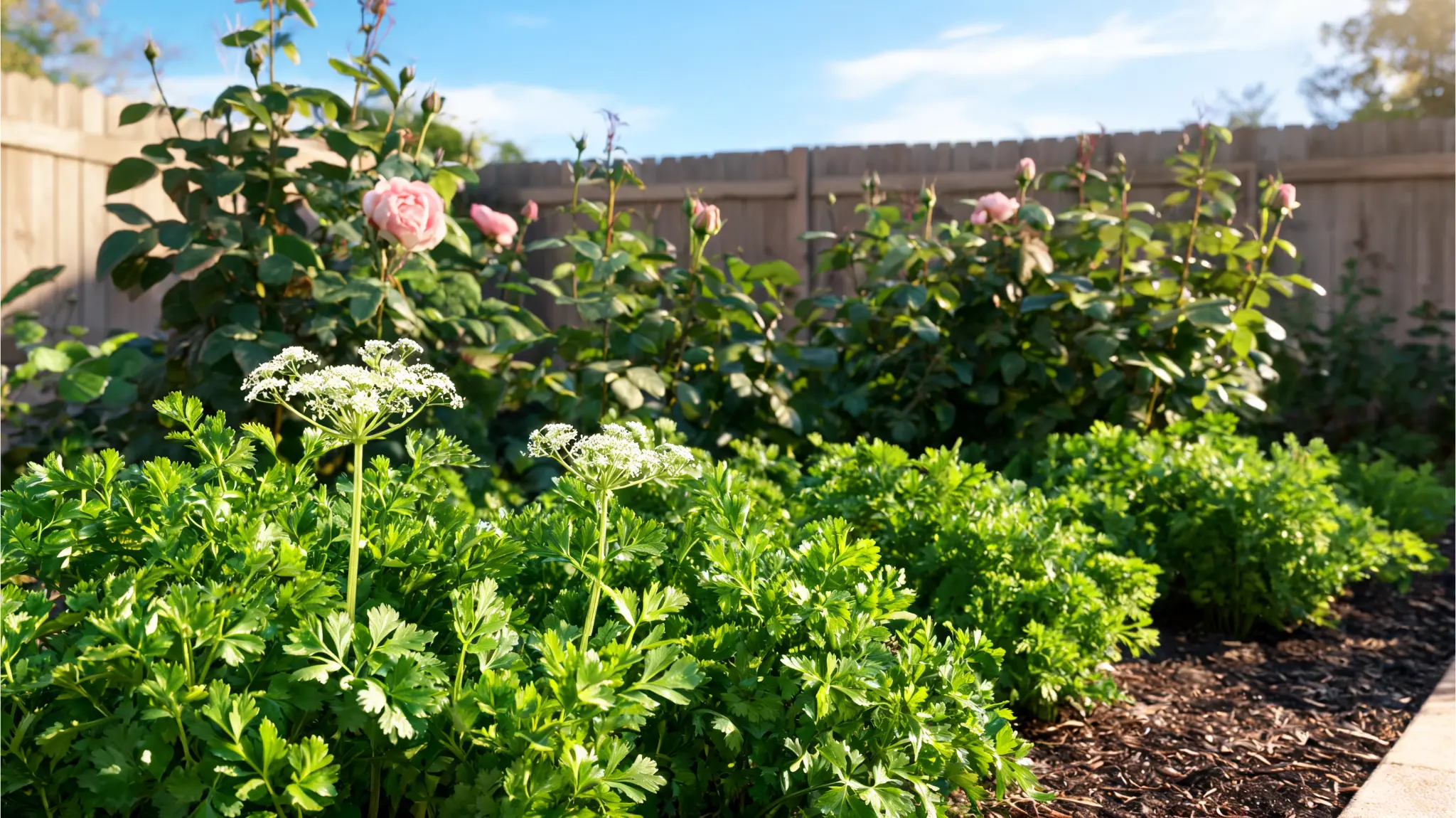
Parsley can support a healthier garden space by attracting helpful insects when it flowers. It grows neatly and can fit near roses without becoming too large.
It works best at the edge of mixed beds. Parsley is useful when you want an edible plant that also brings insect activity into the garden.
Planting Tips: Place parsley near the outside of mixed rose beds where it has room to grow. Keep the soil evenly moist, and allow a few plants to flower if you want to attract beneficial insects.
20. Coreopsis
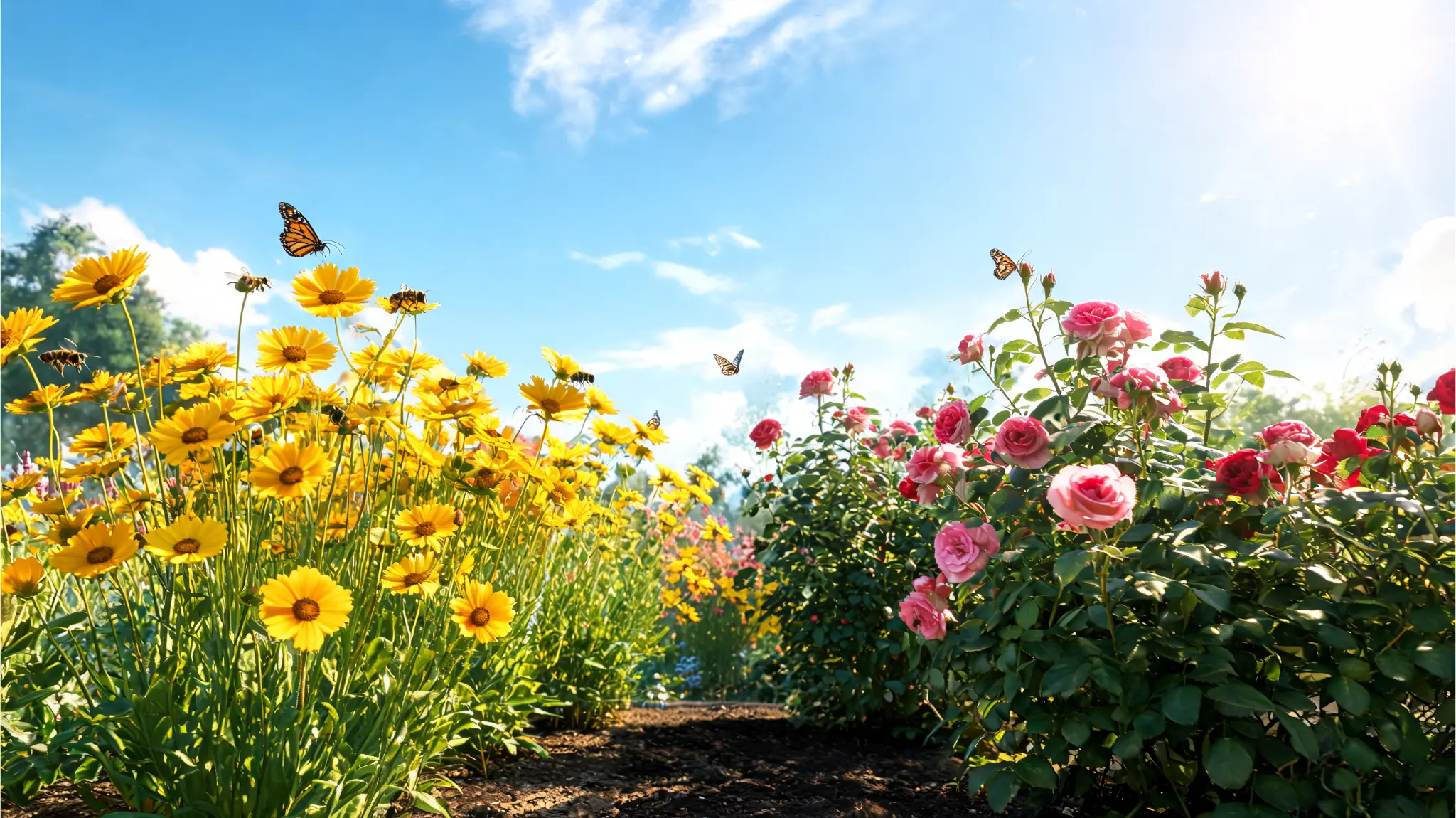
Coreopsis is a useful flowering plant for sunny rose beds. It attracts pollinators and adds long-lasting color through the warm months.
Its lighter growth makes it easier to place near roses than heavier plants. Coreopsis works well when you want flowers that support the bed without crowding rose stems.
Planting Tips: Space coreopsis so air circulates freely around the roses. Remove old blooms during the season and avoid planting directly against the rose base.
21. Verbena
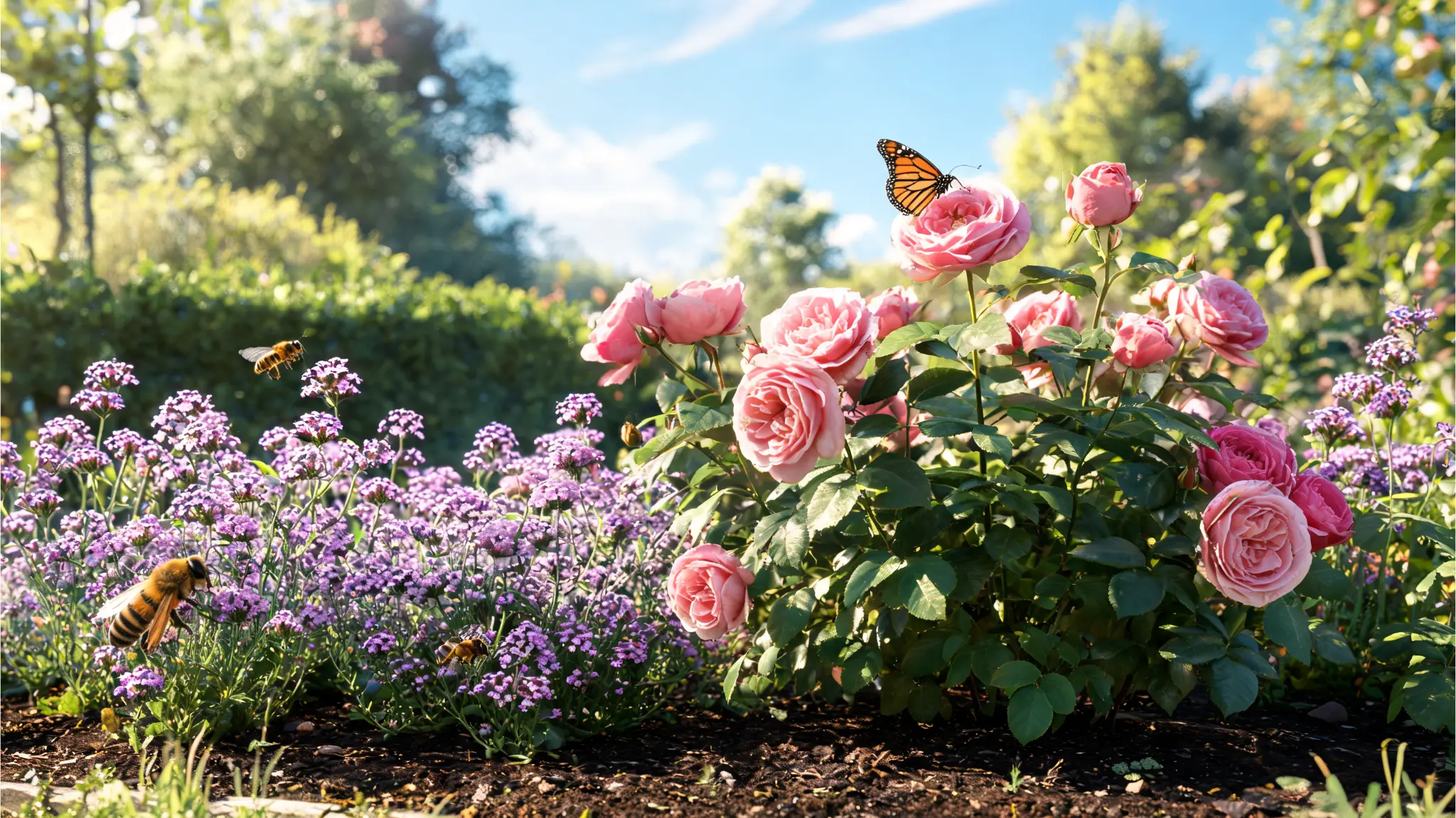
Verbena works well around roses because it flowers for a long time and attracts pollinators. Low-growing types can soften the front of the bed, while taller types fit better in nearby mixed borders.
It is a good choice for warm, sunny rose beds. Verbena adds color while helping the garden stay active and attract insect visitors.
Planting Tips: Use low-growing verbena near bed edges and taller varieties further back. Keep the rose crown open and trim plants lightly if they spread beyond their space.
How Companion Plants Improve Rose Beauty
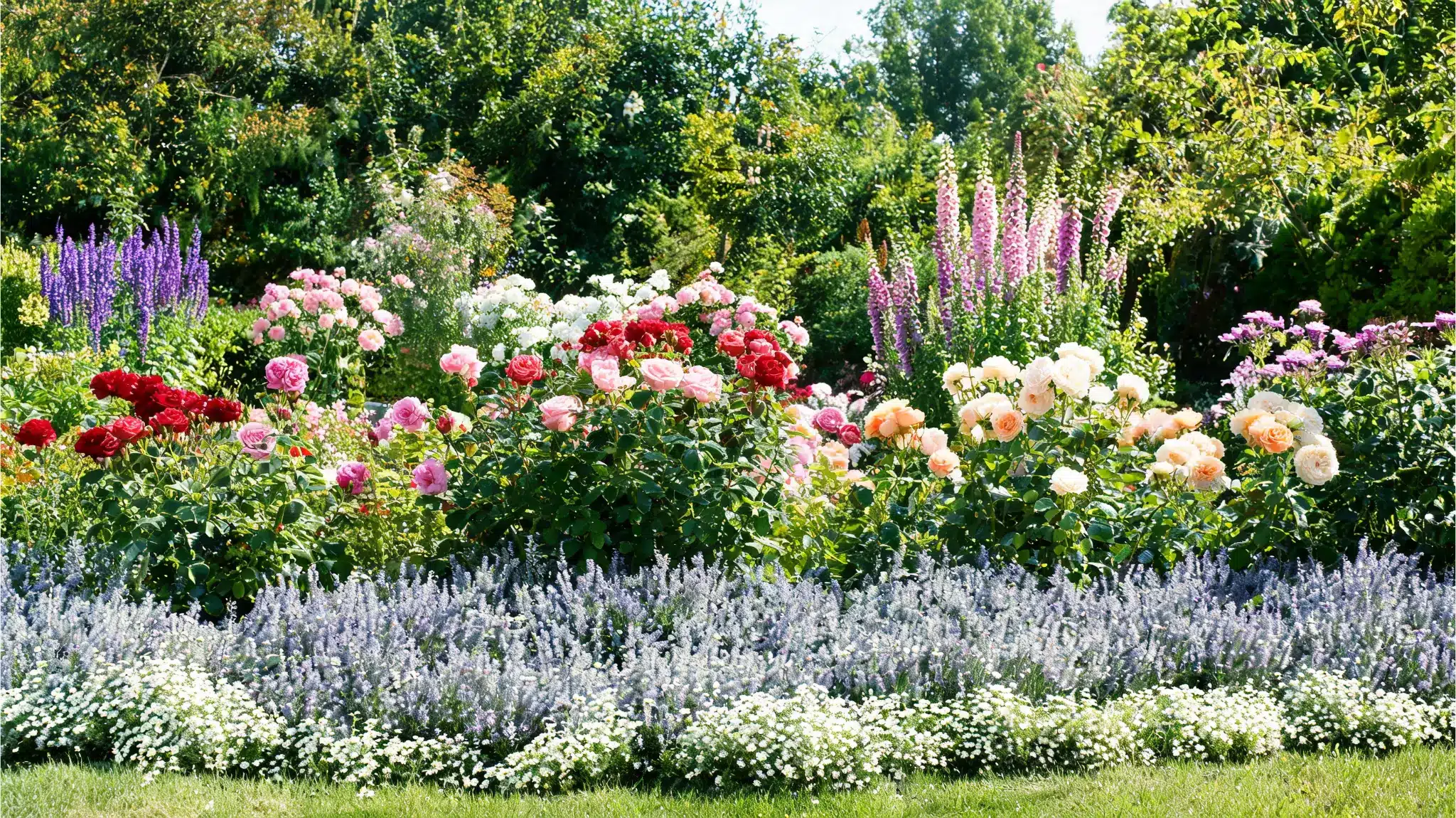
Rose companion plants should do more than sit beside the bush. The best ones help the whole bed look fuller by covering open soil, hiding bare lower stems, and adding flowers around the main rose blooms.
Low-growing plants like catmint, thyme, sweet alyssum, and hardy geranium soften the base of rose bushes without covering the crown. Taller plants like salvia, foxglove, phlox, and allium add height behind or beside roses, which makes the bed look more layered.
Good companions can also keep color going when roses slow down. When you mix low fillers, upright flowers, and long-blooming plants , the rose bed feels more complete through the season without looking crowded.
Plants You Should Never Grow Near Roses
Knowing what not to plant near roses is just as important as choosing good companion plants. Some plants compete for space, block airflow, or create damp conditions around rose stems. These problems can make roses harder to care for and more likely to struggle.
| Plant | Why to Avoid | Impact on Roses |
|---|---|---|
| Mint | Spreads quickly through underground runners | Crowds rose roots and can take over the bed |
| Large Shrubs | Compete for light, water, nutrients, and root space | Weakens rose growth and makes pruning harder |
| Aggressive Ground Covers | Spread into the rose crown and around the lower stems | Blocks airflow and makes the base harder to manage |
| Moisture-Loving Plants | Need wetter soil than roses prefer | Can create soggy soil and raise the risk of root problems |
| Dense Low Plants | Grow too thick around the base | Traps moisture and reduces airflow around rose stems |
| Heavy Feeders | Use a lot of nutrients during active growth | Compete with roses for food and may reduce flowering |
| Shade Plants | Prefer low-light conditions | Struggle in sunny rose beds and may not grow well |
Keep these plants away from the rose base, or grow spreading herbs like mint in pots, so your roses have enough sun, airflow, and root space to grow well.
How to Set Up Companion Planting in Your Rose Bed
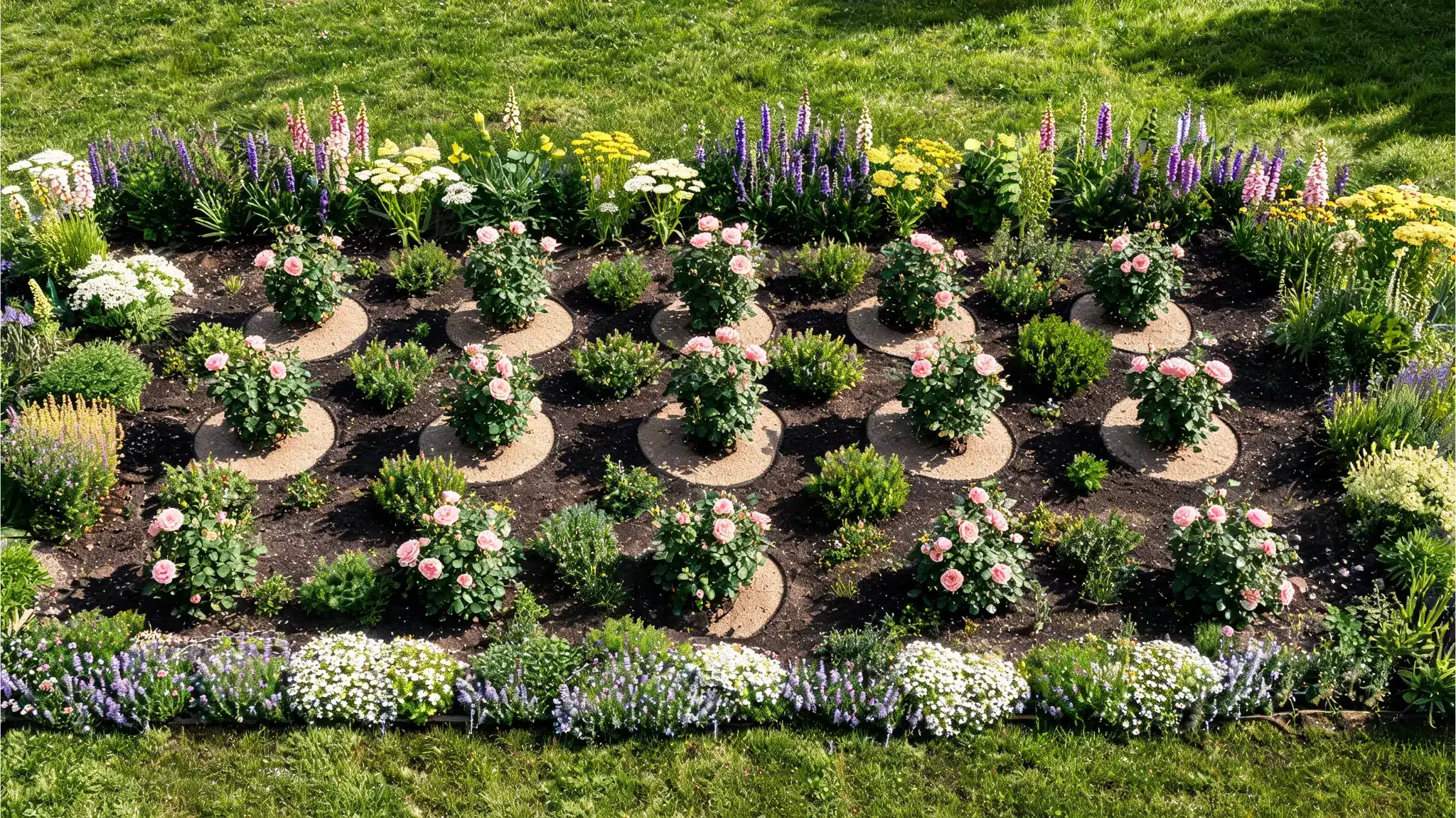
Good companion planting is not just about picking the right plants. Placement matters too.
A strong layout keeps the rose base open, puts each plant at the right height, and makes watering, pruning, and feeding easier throughout the season.
- Keep the Rose Base Open: Leave a clear ring around each rose base so air can move freely and the crown does not stay damp.
- Place Low Plants at the Front: Use thyme, sweet alyssum, catmint, or hardy geranium near the front to cover bare soil without blocking the rose.
- Use Taller Plants Behind Roses: Plant salvia, foxglove, yarrow, or phlox behind roses so they add height without shading the main plant.
- Group Plants by Care Needs: Keep plants with similar sun, soil, and watering needs together so the bed is easier to maintain.
- Water at Soil Level: Water near the roots instead of over the leaves to help keep the rose foliage dry.
- Trim Before Plants Crowd Roses: Cut back companions when they start leaning into rose stems or covering the base too tightly.
A good rose bed should feel full, but not packed. This keeps the garden easier to prune, water, and maintain.
Frequently Asked Questions
What grows well beside roses?
Lavender, catmint, allium, salvia, hardy geranium, thyme, and yarrow grow well beside roses. These plants like sun, support pollinators, cover bare soil, or help the bed stay fuller without crowding the rose base.
Can lavender grow beside roses?
Yes, lavender can grow beside roses when both plants have full sun and well-drained soil. Keep lavender slightly away from the rose crown so air can move and pruning remains easy through the season.
What works best in pots?
Small plants such as thyme, sweet alyssum, chives, compact lavender, dwarf salvia, and low verbena work well in pots. Choose plants with similar watering needs and avoid anything that spreads too fast in limited soil.
How close should plants sit to roses?
Leave open space around the main rose stem. Place low plants near the front, medium plants beside the rose, and taller plants behind it. This helps air move and makes pruning, feeding, and watering easier.
Wrap Up
Choosing the right rose companion plants can make your garden easier to manage and more rewarding throughout the season. The best pairings help with bees, pest pressure, open soil, bare stems, or lasting color without crowding the rose.
Start with the main need in your garden, then choose plants that fit your sun, soil, and space. Keep the rose base open, avoid aggressive spreaders, and trim nearby plants before they lean into the stems.
Use this list before your next planting day so every plant around your roses has a clear purpose.