Have you ever wondered how old a tree can get? Some trees have lived for thousands of years, while others grow only a few centimeters tall.
Trees come in every shape imaginable: some stood before written history, others could fit in a flower pot, and a few wear bright, colorful bark that looks almost painted on.
A handful share food and water underground through a hidden network of roots and fungi, or grow fruit straight from the trunk instead of the branches.
You don’t need to be a tree expert to enjoy these tree facts, just an open mind. Parents, teachers, and curious kids will all find plenty here to share, with the best surprises sitting near the top so you can jump straight to them.
A Quick Look at Why Learning About Trees Is Important
Trees shape the air people and animals breathe. As they grow, they take in carbon dioxide and release oxygen, the same air that living things depend on every day.
They also feed and shelter countless creatures. Birds nest in their branches, insects live in their bark, and many animals rely on their fruit, nuts, and berries to survive.
Underground, tree roots hold soil in place and stop it from washing away. When leaves fall and break down, they return useful nutrients into that same soil.
Learning about trees helps kids make sense of habitats, seasons, plant growth, and weather, all at once. Best of all, trees are easy to spot near homes, parks, and schools so that this learning can start right outside the door.
10 Interesting Facts About Trees
These facts are easy to read aloud or share with a child, whether it’s during a school lesson, a bedtime chat, or a walk outside. Each one shows a different side of tree life, from record-breaking size to hidden survival tricks. Some may surprise you more than others, and a few might change how you look at the next tree you pass.
1. Some Trees Are Nearly 5,000 Years Old
Bristlecone pines are some of the oldest living trees on Earth. One of them, nicknamed Methuselah, is more than 4,850 years old, according to the U.S. Department of Agriculture, making it one of the most ancient living things known to science.
That means it was already growing when ancient Egypt was being built. Its long life helps children understand just how far back in time a single tree can reach.
2. Tree Rings Can Show Age and Past Weather
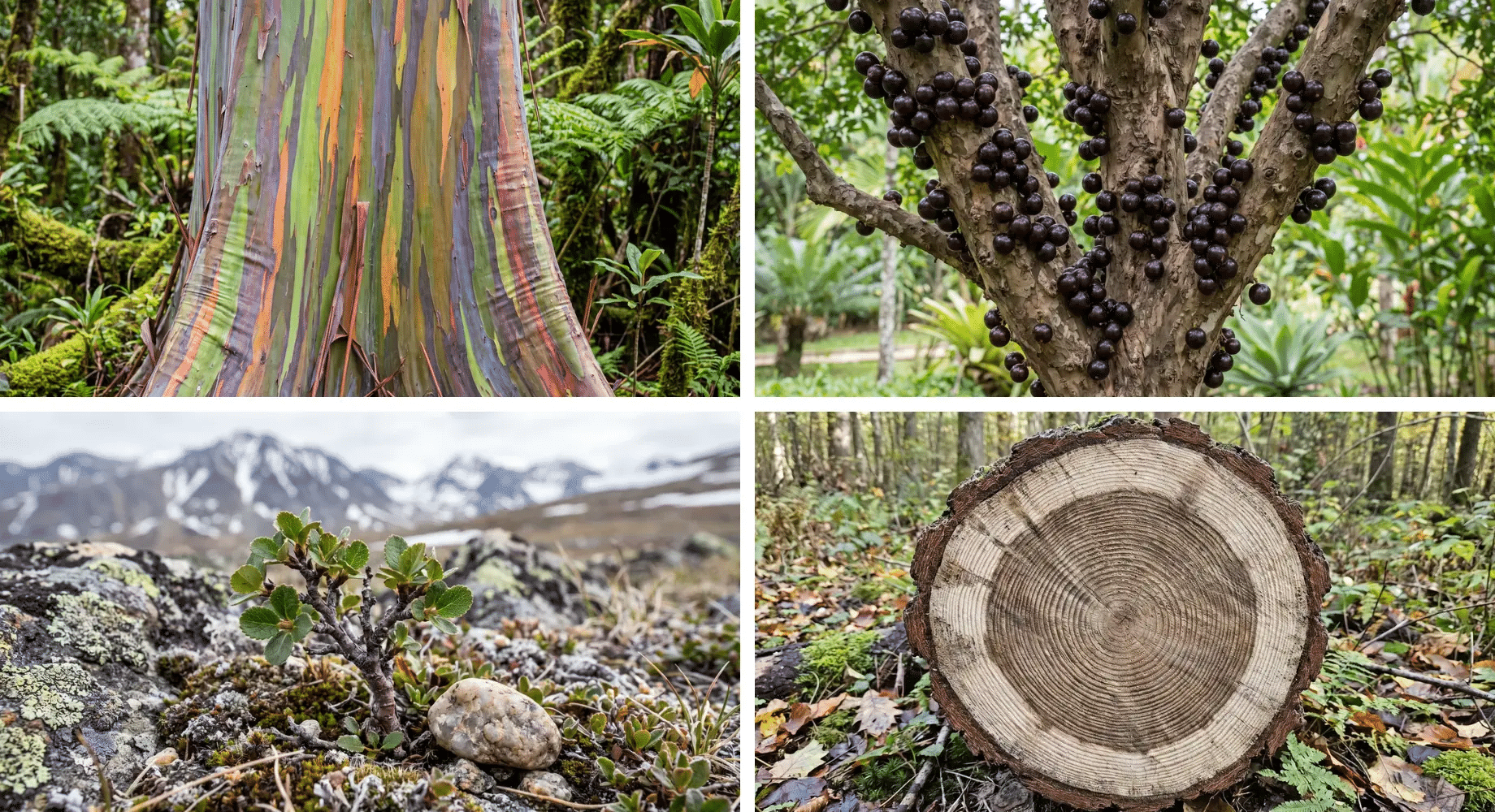
Cut through a tree stump, and you’ll see rings circling the wood. One light ring paired with one dark ring usually marks a single year of the tree’s growth and life.
Thick rings often mean the tree had plenty of water and sunlight that year, while thin rings can point to a dry spell or fewer resources overall.
3. Trees Can Share Resources Underground
Tree roots often connect with fungi living in the soil around them. These hidden links let trees and fungi trade water, nutrients, and sugars back and forth as needed.
People sometimes call this network the “wood wide web.” In plain words, it’s just an underground system trees use to share resources and warn each other of danger.
4. The Tallest Tree Is About 115 Meters High
The world’s tallest tree is Hyperion, a coast redwood growing in California. It stands about 115 meters tall, making it taller than almost anything else that grows from the ground.
That height beats London’s Elizabeth Tower, the clock tower that houses Big Ben. Hyperion shows just how far a single tree can stretch toward the sky.
5. One Tiny Tree Grows Only a Few Centimeters Tall
On the opposite end of the scale sits the dwarf willow, a tree that grows to only about six centimeters tall in its entire lifetime, no taller than a houseplant.
This tiny tree lives in cold, high places where little else can survive. Next to Hyperion, it shows just how much size can vary between trees.
6. Some Trees Have Rainbow-Colored Bark
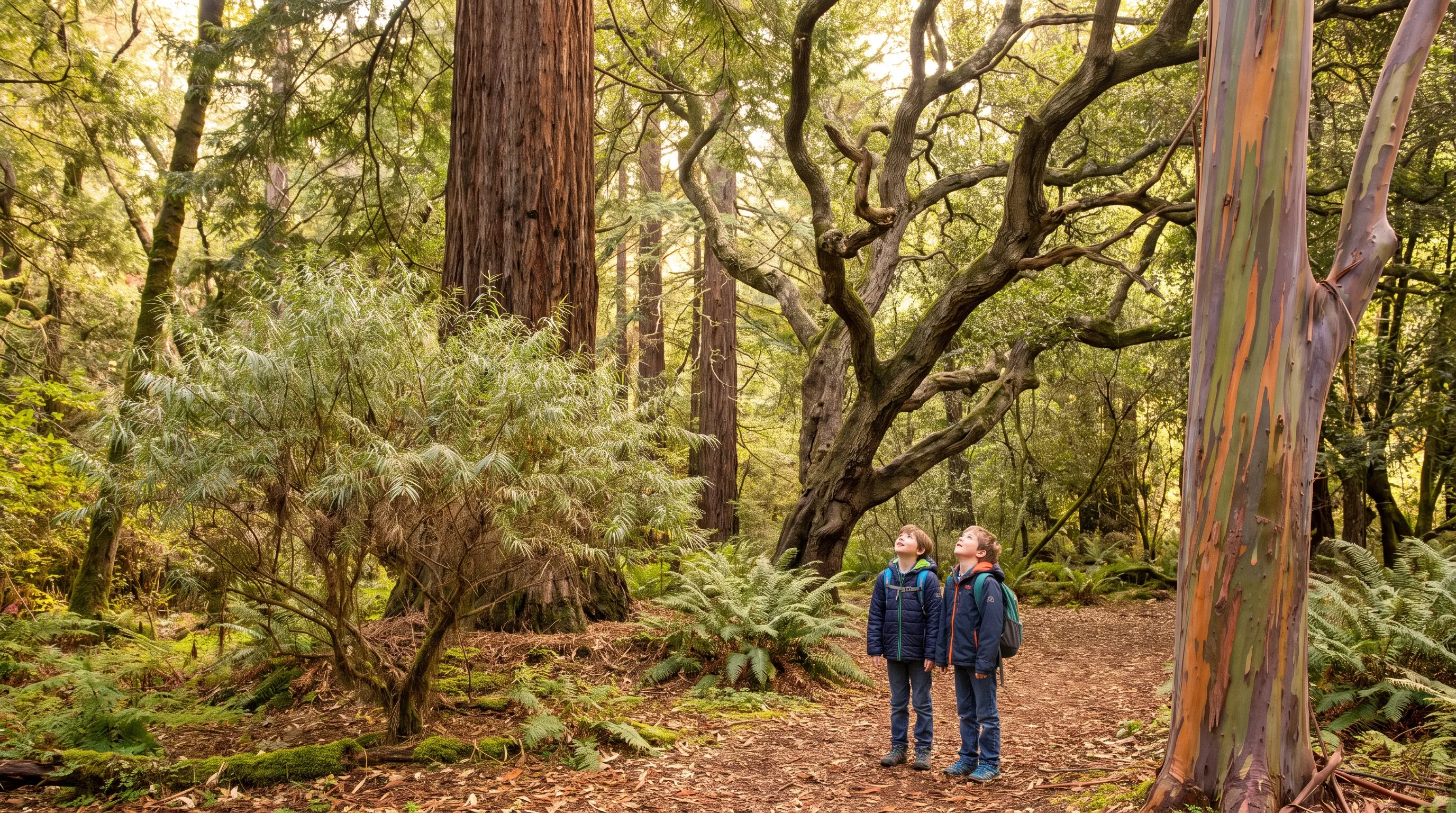
The rainbow eucalyptus sheds its bark in long strips throughout the year. As the old bark peels away, it reveals bright color hidden underneath, layer after layer, season after season.
You can spot shades of green, orange, yellow, purple, blue, and red on a single trunk, almost like it was painted by hand.
7. Tree Seeds Have Traveled Around the Moon
In 1971, tree seeds flew into space aboard the Apollo 14 mission before returning safely to Earth. Once planted, the trees that grew from them became known as “moon trees.”
Scientists checked whether space travel changed how the trees grew compared to normal ones. In the end, moon trees turned out much like any other tree of their kind.
8. Some Tree Roots Reach About 230 Feet Deep
The Shepherd’s Tree, native to the Kalahari Desert, has some of the deepest roots ever recorded below the surface, reaching around 230 feet down in search of water.
That’s about three-fourths the height of the Statue of Liberty. Roots this deep help a tree survive even in dry, harsh places.
9. Some Trees Grow Fruit on Their Trunks
The Jabuticaba tree, native to Brazil, grows dark, grape-like fruit straight from its trunk and thick branches instead of from the tips like most fruit trees typically do.
Most fruit trees grow fruit near the ends of their branches. The Jabuticaba does the opposite, covering its entire trunk in fruit instead.
10. Trees Can Protect Themselves From Insects
When insects attack, some trees release chemicals called phenolics into their own leaves as a form of defense, making those leaves harder for the insects to eat.
Willow trees show this well. When webworms attack one willow, nearby willows can pick up the signal and start building their own defenses too.
From ancient pines to trees that grow fruit on their trunks, these facts show just how different trees can be. Age, size, color, roots, and behavior all vary, proof that no two trees tell quite the same story, no matter how ordinary they might first seem.
Kid-Friendly Tree Facts
These simple facts work well during morning meetings, science lessons, or family talks, and they’re just as handy for short writing and drawing tasks. Kids can pick them up quickly, whether they hear them out loud or turn them into a quick activity of their own.
- Trees help people breathe: They take in carbon dioxide and release oxygen.
- Roots protect soil: They hold soil together and help reduce erosion.
- Trees provide food: People and animals eat fruit, seeds, nuts, and berries.
- Trees provide shelter: Birds, insects, and mammals live in and around them.
- Fallen leaves help soil: They break down and return organic material to the ground.
- Fallen trees still support life: Dead wood provides food and shelter for many organisms.
One tree does a lot of work. From feeding animals to sheltering insects to keeping soil healthy, a single tree can support many different forms of life at once.
General Interesting Facts and Trivia About Trees
Trees hold many records and have several unusual features beyond the main list, from record-breaking water use to fruit that grows in surprising ways. These extra facts add a bit more variety without repeating anything covered earlier.
- Thousands of tree species exist: More than 60,000 species are known to science, according to Botanic Gardens Conservation International.
- Many species grow in one country only: More than half are linked naturally to a single country.
- A large oak uses plenty of water: It may use about 100 gallons in one day.
- A giant sequoia may use more: It can use up to 500 gallons daily.
- Oak trees produce many acorns: A large oak may drop around 10,000 each year.
- Acorns feed many animals: More than 100 vertebrate species use them as food.
- Maple syrup needs plenty of sap: About 40 gallons of sap can make one gallon of syrup.
- Mangrove roots filter salt: They can remove much of the salt from incoming seawater.
- Pine needles help with snow: Their narrow shape allows snow to slide away.
- Apple trees need time: They may take four or five years to produce their first fruit.
These facts show that familiar trees can have very different needs, uses, and features, from how much water they drink to where their fruit grows.
How Tree Facts Help Children Learn About Nature
Tree facts do more than give children something fun to remember. They connect school subjects with things children can see outdoors.
They can make science easier to understand. Tree rings help explain growth, time, and weather in a way children can picture, while roots show how plants find and pull up water.
Leaves offer a simple way to introduce basic plant processes, and tree habitats show how living things depend on each other to survive. They also help children build observation skills, since trees give kids plenty to notice and compare.
Some ways to put this into practice:
- Compare leaf shapes and bark textures between different trees, using a maple leaf identification chart as an easy starting point.
- Watch one tree change through the seasons, from bare branches to full leaves.
- Look for seeds, nests, insects, or holes in the bark, while encouraging looking and recording rather than touching.
Tree facts can support learning across several subjects at once. Tree rings work well for counting and simple maths, and tree heights make a good starting point for measurement activities.
Facts about trees can also prompt reading and writing tasks, and children can draw and label tree parts or use maps to see where unusual trees grow. If a lesson sparks enough interest, learning how to plant a tree the right way turns the facts into a hands-on project.
A short fact about a tree ring or a root can open the door to bigger questions about how nature fits together.
Frequently Asked Questions
Do all trees lose their leaves?
No. Deciduous trees lose their leaves each year, while evergreens keep theirs through winter. Evergreens aren’t leaf-free forever, though; they shed and replace older leaves or needles gradually over time, just a little at a time.
What is the largest tree in the world?
General Sherman, a giant sequoia in California, is the largest tree by wood volume. It’s not the tallest tree, though; that record belongs to a different tree, a coast redwood named Hyperion.
What is the rarest tree in the world?
The Three Kings kaikōmako is considered the world’s rarest tree. According to available records, only one still grows in the wild, though the species has been propagated and grown successfully in cultivation elsewhere.
Why do leaves look green?
Leaves contain chlorophyll, which absorbs red and blue light for energy. Green light isn’t used the same way; it bounces off the leaf instead, and that reflected light is what reaches our eyes.
To Sum Up
From ancient bristlecone pines to a tree that grows fruit on its trunk, these tree facts show just how different trees can be. They can be ancient, tiny, tall, colorful, and even connected underground through hidden root networks.
Kids don’t need a forest to see this; one tree nearby is more than enough. Try picking a single tree close to home or school and watching it over a few weeks. Notice its leaves, bark, shape, seeds, and any birds or insects that stop by.
Small details like these often stick with kids longer than a list of numbers could, turning one ordinary tree into a lesson worth remembering. Drop a comment below and share which tree fact surprised you most.