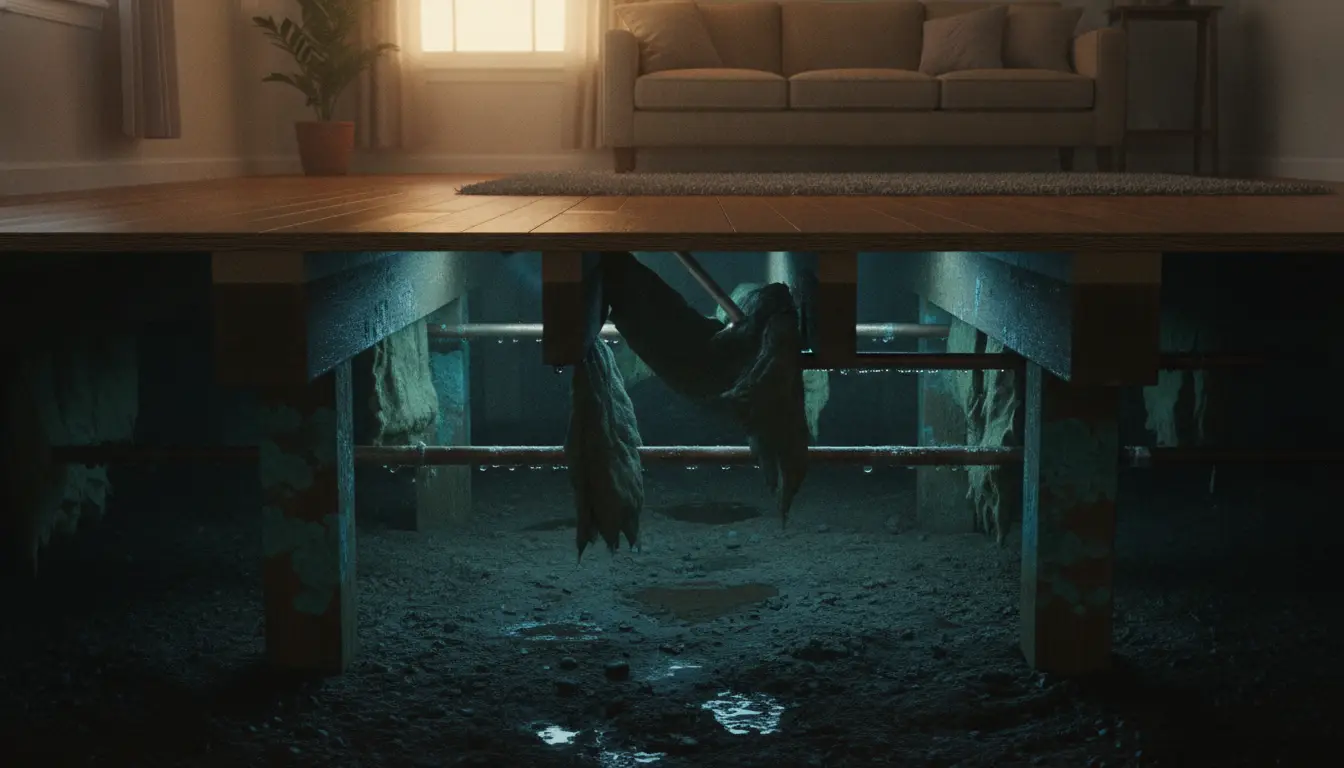
A crawl space is easy to ignore. It sits beneath the floor, is rarely visited, and may seem separate from the rooms where daily life happens. But when moisture collects there, the effects do not always stay below the house.
A damp crawl space can influence building materials, indoor comfort, odors, pest activity, and the condition of floors above it. The real question is not simply whether the space feels wet, but why moisture is getting in and what it is affecting.
1. Moisture Usually Has a Source
Before thinking about encapsulation or dehumidification, homeowners should understand where the moisture is coming from.
Common sources include:
- groundwater or damp soil
- poor grading around the foundation
- overflowing gutters or short downspouts
- plumbing leaks
- foundation cracks
- humid outdoor air
- condensation on cool pipes or ductwork
More than one source can exist at the same time. A vapor barrier may help control moisture rising from exposed soil, but it will not repair a leaking pipe or redirect rainwater pooling beside the foundation.
That is why effective moisture control begins with finding the cause.
2. Dampness Creates the Conditions Mold Needs
Moisture is one of the key ingredients behind indoor mold growth. Crawl spaces can be especially vulnerable because they often contain wood framing, insulation, dust, and other materials that may remain damp.
Homeowners may notice:
- a persistent musty smell
- dark or fuzzy areas on wood
- damp insulation
- condensation
- discoloration on joists or subflooring
A musty odor inside the home should not automatically be blamed on the crawl space, but it is a reason to investigate. Air and moisture can move through openings around plumbing, wiring, ductwork, and flooring.
3. Wood Does Not Need Standing Water to Be at Risk
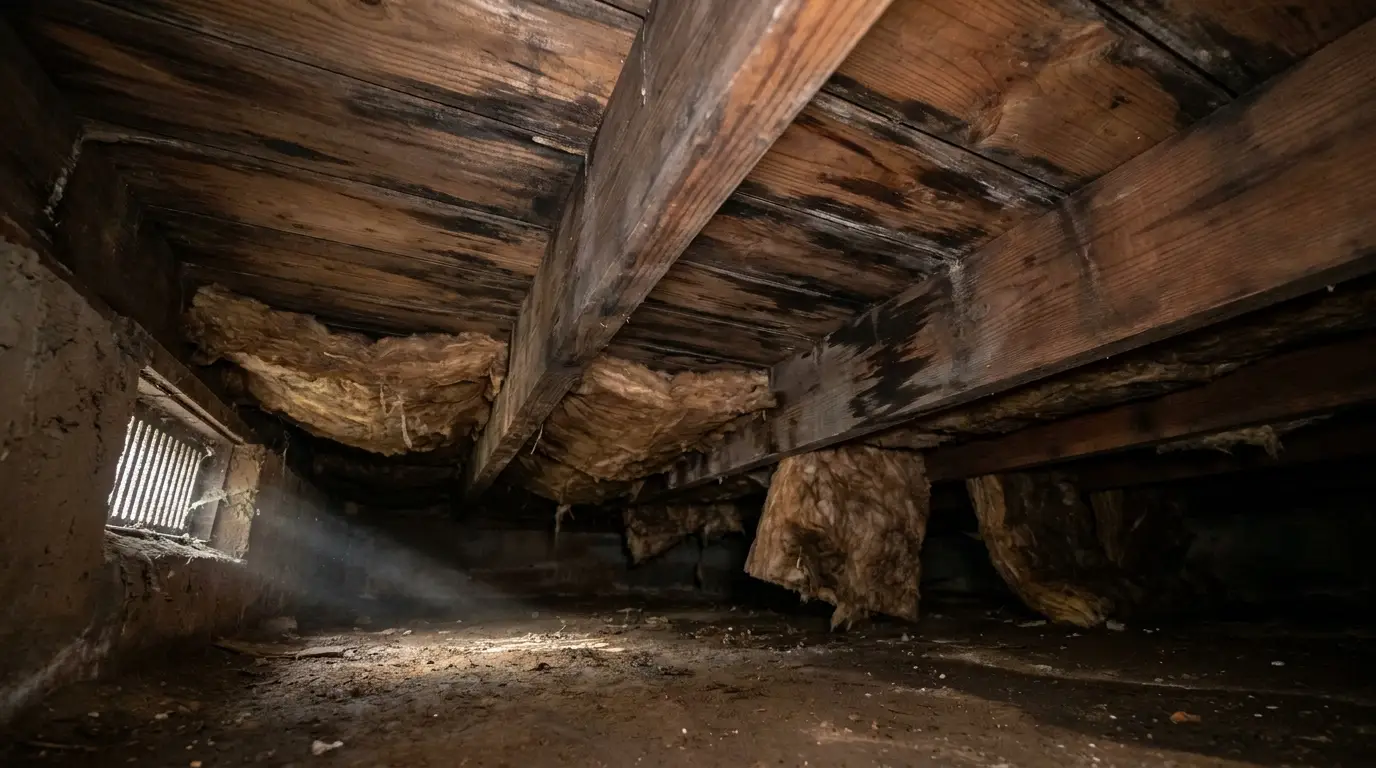
A crawl space does not have to flood before moisture becomes serious.
Repeated exposure to high humidity and damp conditions can affect wood even when there is no visible pool of water. Floor joists, beams, sill plates, and subfloor materials may remain exposed to moisture for long periods before obvious problems appear upstairs.
Possible warning signs include:
- floors that feel soft or uneven
- new sagging or bouncing
- visible staining on structural wood
- deterioration around framing
- persistent dampness beneath insulation
These symptoms can have several causes, so they should be evaluated rather than diagnosed from appearance alone.
4. What Happens Below the Floor Can Affect the Rooms Above
A crawl space is not an isolated box.
Small gaps and penetrations allow air to move between different parts of a building. If the space below remains humid, conditions above it may also become harder to control.
Homeowners sometimes first notice indirect clues such as musty odors, uncomfortable floors, condensation, or rooms that seem unusually humid.
This is why crawl space moisture should be viewed as part of the home’s overall moisture-management system, not simply as a hidden cosmetic problem.
5. Damp Conditions Can Encourage Pest Activity
Moist crawl spaces can also become attractive to certain insects and other pests.
Damp wood, organic debris, foundation openings, and an undisturbed environment may create favorable conditions. Pests can then damage insulation, enter wall cavities, or create additional maintenance problems.
Moisture control is not a substitute for pest treatment when an infestation already exists, but reducing dampness can remove one condition that makes the area appealing.
6. The Right Fix Depends on the Cause
There is no single crawl-space solution that makes sense for every house.
Depending on the problem, homeowners may need a combination of measures:
- improving exterior drainage
- extending downspouts
- repairing plumbing leaks
- addressing foundation water entry
- installing drainage or a sump system where appropriate
- adding a ground vapor barrier
- sealing unwanted air leakage
- controlling humidity with a dehumidifier
For homes with persistent moisture issues, speaking with a Crawl Space Encapsulation Specialist can help determine whether full encapsulation is appropriate or whether another moisture-control measure should come first.
The goal is to solve the moisture problem, not simply make the crawl space look cleaner.
7. Encapsulation Is More Than Plastic on the Ground
Crawl space encapsulation is sometimes confused with laying plastic over exposed soil.
A basic vapor barrier can be useful, but full encapsulation generally takes a broader approach. Depending on the house, it may involve sealing the floor and foundation walls, limiting unwanted air movement, addressing drainage, and controlling humidity.
That distinction matters because water can enter from several directions. If rainwater is moving through a foundation wall, covering the soil alone will not solve the source.
A good system starts with diagnosis.
A Simple Homeowner Moisture Checklist
Watch for changes around the property:
- musty odors after wet weather
- standing water near the foundation
- overflowing gutters
- downspouts emptying beside the house
- unusual indoor humidity
- warped or soft flooring
- condensation on accessible pipes or ducts
- visible staining or mold-like growth below the home
One symptom does not necessarily mean the home needs encapsulation. Several recurring signs, however, are a good reason for a closer inspection.
The Bottom Line
A damp crawl space often begins as an out-of-sight maintenance issue, but moisture can gradually affect more than the area beneath the home.
The most effective response is to identify the source early, control water entry, manage humidity, and repair any damage already present.
Encapsulation can be an important part of that strategy for the right home, but it works best as one component of a complete moisture-control plan.
Ignoring dampness until floors sag, odors spread, or visible damage appears can turn a manageable problem into a much larger repair. Paying attention to what is happening beneath the house can help protect everything above it.