Every lilac owner has heard this warning at some point: trim at the wrong time, and you’ll lose next year’s flowers. It’s the kind of thing that makes you hesitate with the pruners in hand, wondering if this is really the right moment.
The answer to when to trim lilac bushes is simpler than it sounds. Trim them in late spring, right after the flowers fade, and finish within two to four weeks, before the plant starts forming next year’s buds.
Below, you’ll learn the right trimming window, which branches to remove first, and how much growth is safe to cut in one go. You’ll also see what to do with an overgrown lilac, so it keeps blooming strong every spring.
Read the Shrub Before You Cut
A lilac is a collection of stems growing at different stages, not one solid block of foliage. That structure gives the shrub its loose, arching form and explains why quick surface clipping often leaves it looking dense outside and bare within.
Before making any cuts, stand back and notice where the plant feels heavy, open, balanced, or uneven.
Look at how the stems rise from the base and where the outer branches naturally bend. This simple check helps you work with the shrub’s natural outline instead of forcing it into a fixed shape.
It also separates useful growth from growth that only adds bulk. By reading the plant first, you can make fewer cuts, preserve its natural form, and avoid turning a small cleanup into unnecessary structural work later on.
When to Trim Lilac Bushes?
Timing makes or breaks your lilac’s bloom. Cut at the right moment, and you protect next year’s flowers while keeping the shrub tidy. Cut too late, and you lose blooms you were counting on. Your lilac’s own flowers are a better signal than any date on the calendar.
The main trimming window starts once most of the flowers have faded. This usually falls in late spring, though timing can shift a bit, depending on a few factors:
- Your region and local climate
- The weather that season
- The lilac variety you’re growing
- Where the shrub sits in your garden
Instead of circling a date, watch the shrub itself for the fading blooms. Lilacs form next year’s flowers on stems that grew this year. Wait too long, and you risk cutting off buds meant for next spring.
Aim to finish trimming within two to four weeks after the flowers fade. The exact date will shift a little from garden to garden, but normal trimming should wrap up before the plant starts forming buds in summer.
According to the Oregon State University Extension Service, waiting too long into summer allows the shrub to set the very buds an early cut would remove.
Other Trimming Windows You Should Know About
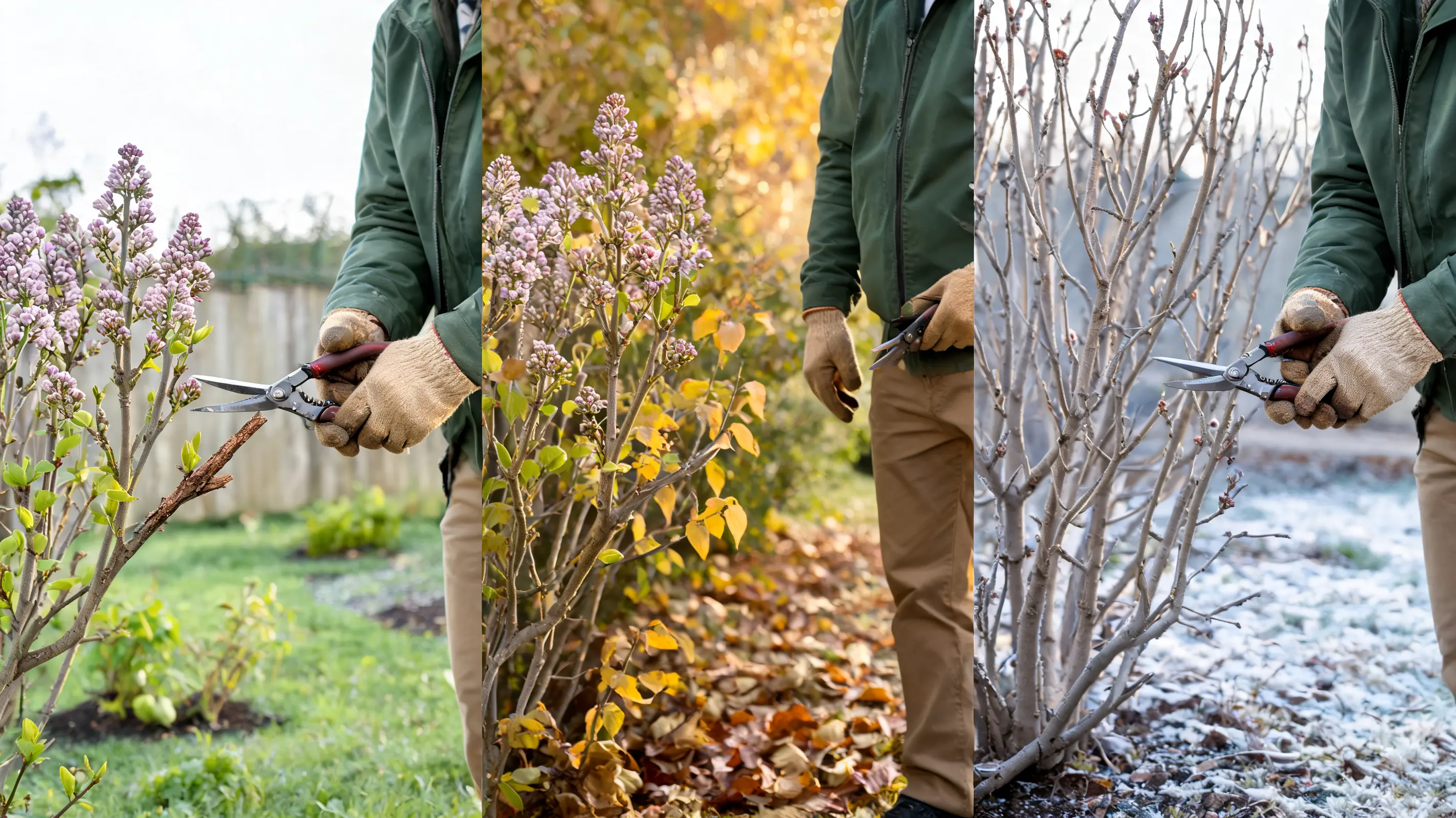
Not every cut follows the same rule, since a few situations call for different timing altogether. Early spring, fall, and winter each carry their own guidelines, and it helps to know the difference before you pick up your pruners.
Can You Trim Lilacs in Early Spring?
Early spring pruning should be limited to dead, broken, diseased, or unsafe branches. These stems can be removed without affecting the coming bloom. Leave healthy wood untouched, even if the shrub needs shaping or thinning.
Lilacs form flowers on older stems, so cutting healthy growth before bloom may remove buds that are close to opening. Wait until flowering ends completely.
Why Fall and Winter Trimming Can Reduce Flowers
Fall and winter pruning should also be limited to dead, broken, diseased, or unsafe branches. By late summer, lilacs may already hold next spring’s flower buds on their stems. The University of Minnesota Extension notes that cutting into healthy wood during these colder months removes those hidden buds outright.
Cutting healthy wood during colder months can remove these hidden buds. The shrub may remain leafy and strong but produce fewer flowers. Wait until the spring bloom has faded before trimming.
How to Trim a Lilac Bush: Step-by-Step
Start small before you go big. Begin with cleanup cuts, faded flowers, and problem wood before you touch the older stems. Working in this order protects the shrub’s overall health and keeps you from removing more than it needs.
Rushing straight to the oldest canes can leave a lilac weak and slow to recover. Each step builds on the one before it, so the shrub stays balanced from start to finish.
Tools and Clean-Cut Basics
The right tool makes a clean cut, and a clean cut heals faster. This table matches each job to the tool that handles it best.
| Tool | Best Use |
|---|---|
| Bypass hand pruners | Faded flowers and small stems |
| Loppers | Medium canes |
| Pruning saw | Thick, old canes near the base |
| Gloves | Hand protection |
| Tool cleaner | Clean blades when disease is present |
A few basics keep your cuts clean and your shrub healthy:
- Match the tool to the stem thickness
- Keep blades clean and sharp
- Do not force small pruners through thick canes
- Cut whole old stems near the base
- Reduce height by cutting to a healthy side branch
- Do not leave many short stubs
Using the right tool for each stem saves effort and protects the shrub from torn bark or crushed tissue. A little care here goes a long way toward faster healing.
Step 1: Wait Until Most Flowers Have Faded
Watch for brown edges on the flowers. The color fades, and the clusters start to dry out, losing the fresh look they had at peak bloom.
Once fresh blooms are scarce and most of what’s left looks tired, your trimming window has opened. Acting around this point keeps you from cutting too early or too late.
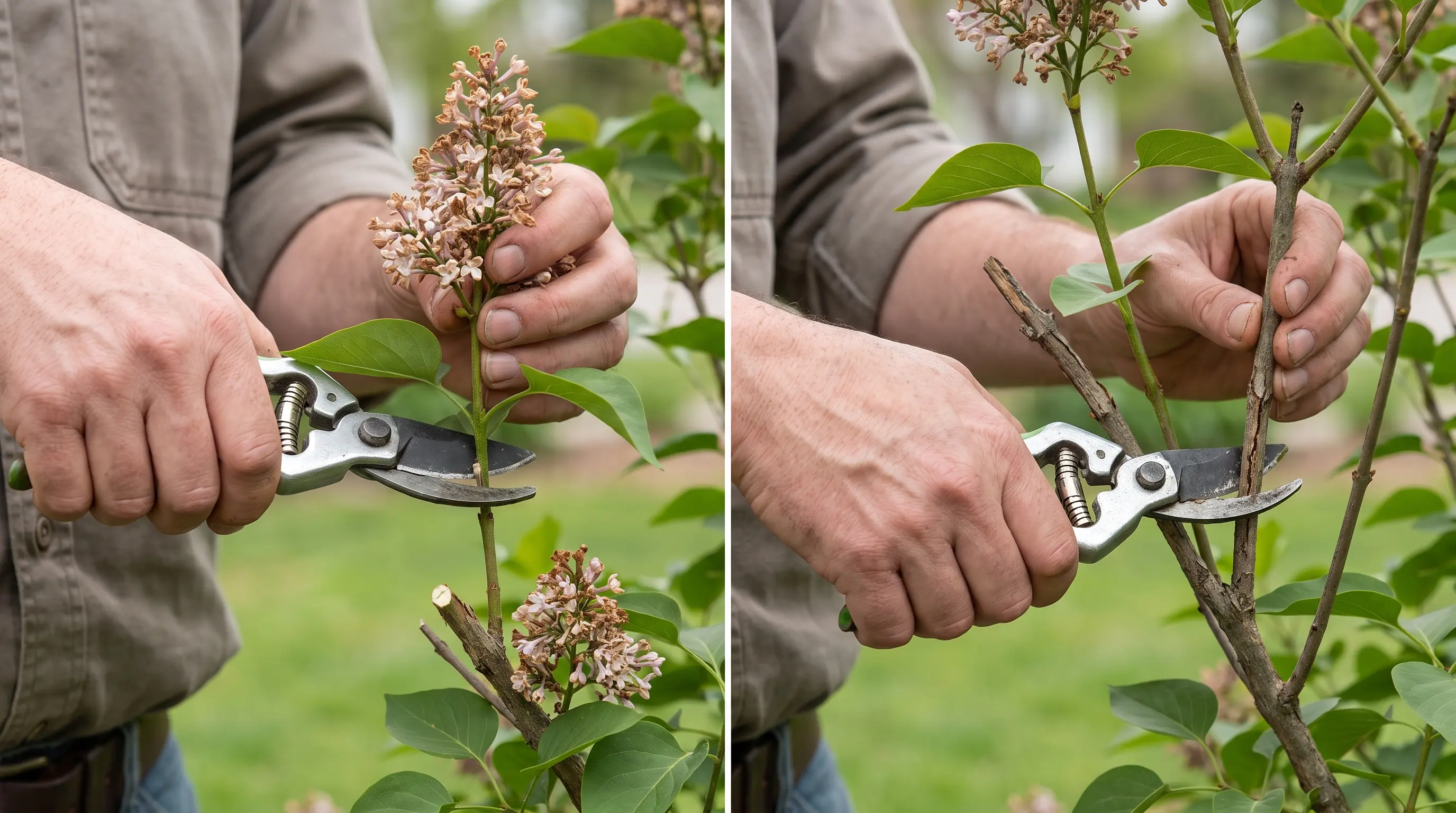
Step 2: Remove Spent Flower Clusters
Find the first pair of leaves or a healthy side shoot below the faded cluster. Cut just above that point to keep the stem tidy.
Use clean bypass pruners for a smooth cut that heals faster. Avoid cutting too far down into healthy young stems, since that wood will carry next year’s blooms.
Step 3: Remove Problem Branches
Look for dead, broken, or diseased growth first, since these branches offer nothing back to the plant. Then check for crossing or rubbing stems, and branches growing toward the center.
Cut these back to a healthy side branch, or remove the full stem at its base. Clearing this wood opens up the shrub so air and light move through more easily.
Step 4: Thin Old Stems and Unwanted Suckers
Pick a few of the oldest, thickest canes and cut them near ground level, making room for younger growth to take over. Keep the strong, well-spaced young shoots in place.
Remove weak or crowded suckers as you go, since too many can drain the plant’s energy. Keep a few suckers if you need them as future replacement stems for the oldest wood.
Step 5: Check the Shape
Step back and look at the shrub from several sides, checking how it reads as a whole rather than stem by stem. The finished lilac should look open and natural.
Avoid a flat top or a tightly clipped hedge shape, since that look works against how lilacs naturally grow. This is the same order the approved draft follows: faded flowers, problem wood, older stems, suckers, and a final shape check.
Follow these five steps in order, and your lilac stays healthy without much guesswork. It’s a routine you can repeat every year with confidence.
What You Can Safely Trim in Each Season
Not every month treats your lilac the same way. This table breaks down what’s safe to trim by season, and where cuts start working against next year’s flowers.
| Season | Safe Work | What to Avoid |
|---|---|---|
| Late spring after flowering | Deadheading, thinning, shaping, old-cane removal | Delaying the work until summer |
| Early summer | Small cleanup cuts if flowering ended recently | Heavy thinning after buds begin forming |
| Fall | Dead, damaged, diseased, or unsafe wood | Normal shaping of healthy stems |
| Winter | Major renewal when flower loss is accepted | Cutting healthy stems when spring flowers are the main goal |
For regular yearly care, trim after flowering. Save winter cuts for serious renewal work, since the source material draws a clear line between normal post-flowering upkeep and heavier winter renovation that may cost you next year’s bloom.
Follow the Right Removal Order
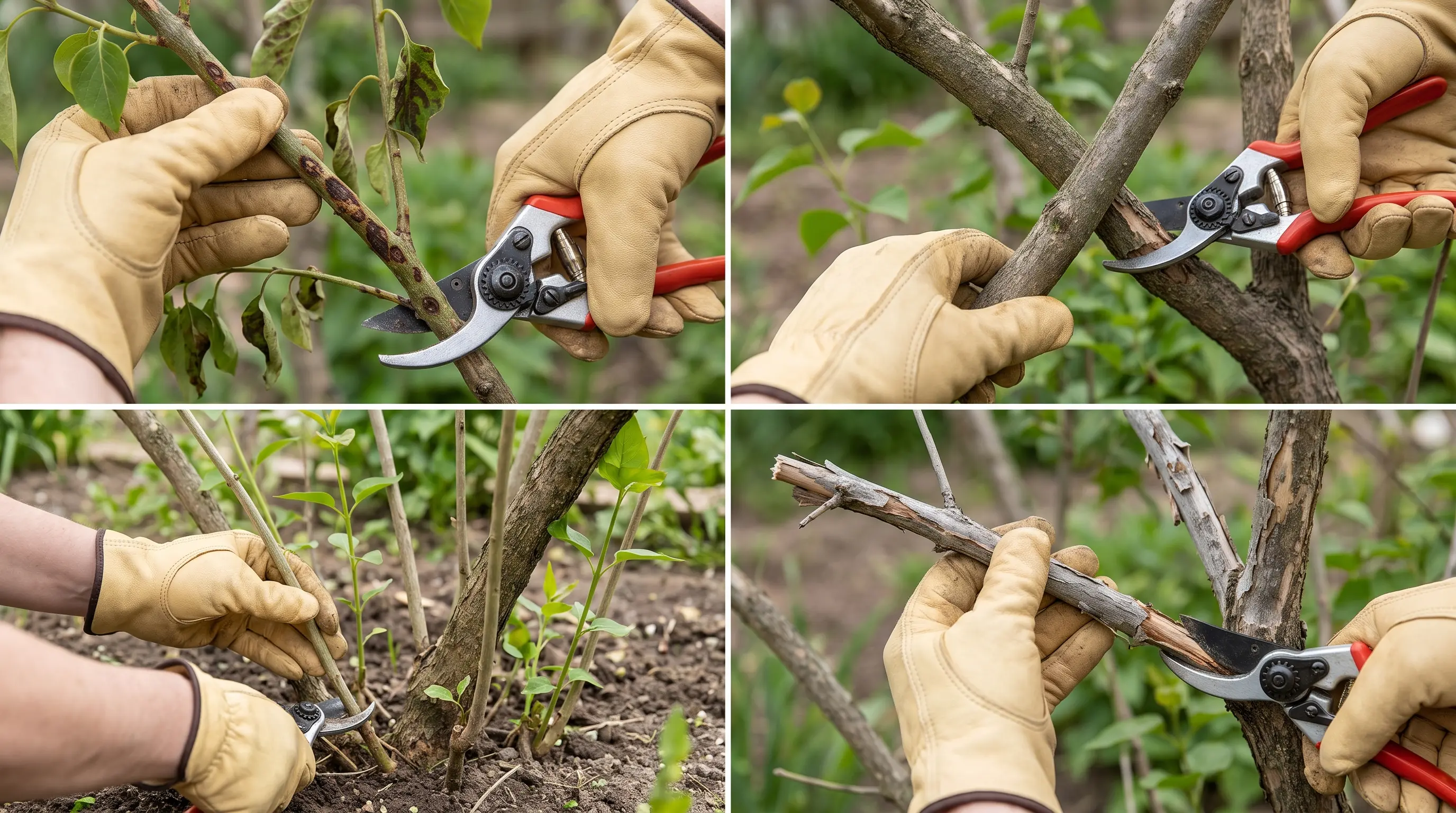
Before pruning your lilac, inspect every stem and remove damaged or unhelpful growth first. Work through problem wood before touching healthy stems, in this order:
- Dead or broken stems: Remove these first
- Diseased stems: Cut back to healthy wood, or remove at the base
- Crossing branches: Remove the weaker or inward-growing stem
- Old thick canes: Cut selected canes near ground level
- Weak suckers: Remove them at their root connection
- Strong young shoots: Keep the best-spaced stems for future flowers
Following this order keeps you from cutting healthy wood before the problem wood is gone, and it also protects the young growth your lilac needs to keep flowering well.
How Much Can You Cut Back a Lilac Bush?
Cutting too much at once can leave a lilac weak, bare, and slow to recover. A clear limit and the right order keep the shrub healthy while you clean it up, since lilacs need a season or two to bounce back from a heavy hand.
A healthy lilac should usually lose no more than one-third of its stems in a single season. A weak or stressed shrub needs lighter cuts than that, since it has less energy stored up to push out new growth. Treat one-third as a limit, not a yearly target you need to hit every time you trim.
If a shrub needs more work than that to look and grow its best, spread the job across several seasons instead of rushing it all at once.
This gives the lilac time to recover between cuts, keeps some blooms coming each year, and lowers the risk of stressing the plant into weak, sparse growth that takes even longer to bounce back from.
The same staged mindset applies to training a young crepe myrtle into a single trunk, where patience protects the plant’s long-term shape.
What Gardeners Say Works in Real Yards
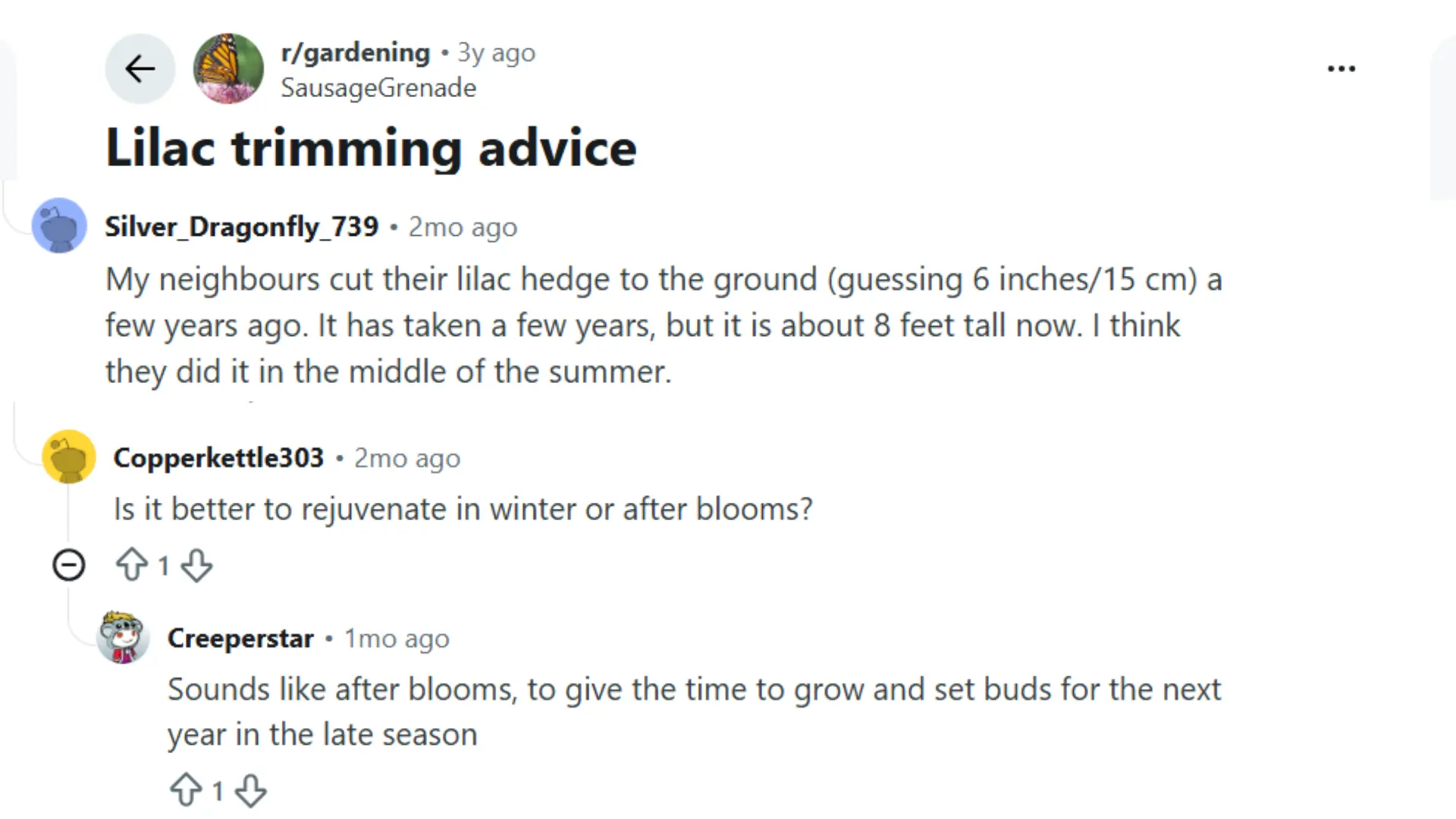
Users on Reddit share real-life results from pruning lilacs, including one hedge that grew back to about eight feet tall after being cut to roughly six inches above the ground. Another commenter asks if major pruning should happen in winter or after flowering, and a reply favors cutting after the blooms fade.
Gardening forums often repeat the same advice found in extension guides while adding results from home gardens. A key point across several threads is to prune soon after flowering, not before. Gardeners in Chicago and warmer areas follow this timing because lilacs form the next season’s flower buds on new growth.
The one-third rule also appears often. Gardeners suggest removing one-third of the oldest canes at ground level each year for three years. Cutting only the top can lead to crowded suckers instead of a smaller, healthier shrub.
Some gardeners support a hard cutback after flowering, while others report waiting one to three years for the plant to fill out again. The lilac’s age, size, and health may affect the result, so each comment should be treated as one person’s experience rather than a firm rule.
How to Trim an Overgrown Lilac Bush
An overgrown lilac usually isn’t a lost cause, and it rarely needs to be cut down to nothing. This section walks through the gentler three-year renewal method, how to tell when a harder reset is the smarter choice, and the last-resort option of cutting the shrub all the way to the ground.
A neglected lilac often looks worse than it actually is. A slow, staged approach usually works better than one big cut, since it lets the shrub keep flowering while it recovers underneath.
- Year 1: Remove one-third of the oldest, thickest stems.
- Year 2: Remove another group of old stems and thin weak shoots.
- Year 3: Remove the remaining old framework and keep the strongest replacements.
- After year 3: Remove a few older stems after flowering each year.
Cut stems near the ground rather than shortening only the tops, since topping alone won’t fix a crowded shrub. This gradual approach protects more flowers than an all-at-once cut, and it gives young stems the time they need to take over from the old wood, season by season, without shocking the plant.
Recognizing When a Heavier Cut Makes Sense
Not every overgrown lilac needs the slow route. Some shrubs are too far gone for selective cuts to fix, and a harder reset saves time without putting the plant’s health at risk.
Consider it when growth is severely tangled, full of dead wood, too crowded for selective cuts, badly shaped, or producing very little healthy new growth. If your shrub matches several of these signs, hard renovation is the more practical choice over stretching gradual cuts out for years.
This kind of cut is usually done in late winter or early spring, before new growth begins, since bare branches make it easier to see what you’re working with.
Keep in mind that the next flower display may be small or absent, since a hard reset removes much of the wood that would have carried next year’s buds. The trade-off is a faster path to a healthier, more manageable shrub overall.
The same recovery patience applies when reviving a shrub in decline after storm damage or years of neglect, since new growth takes time to reestablish.
Trimming vs. Pruning: What Is the Difference?
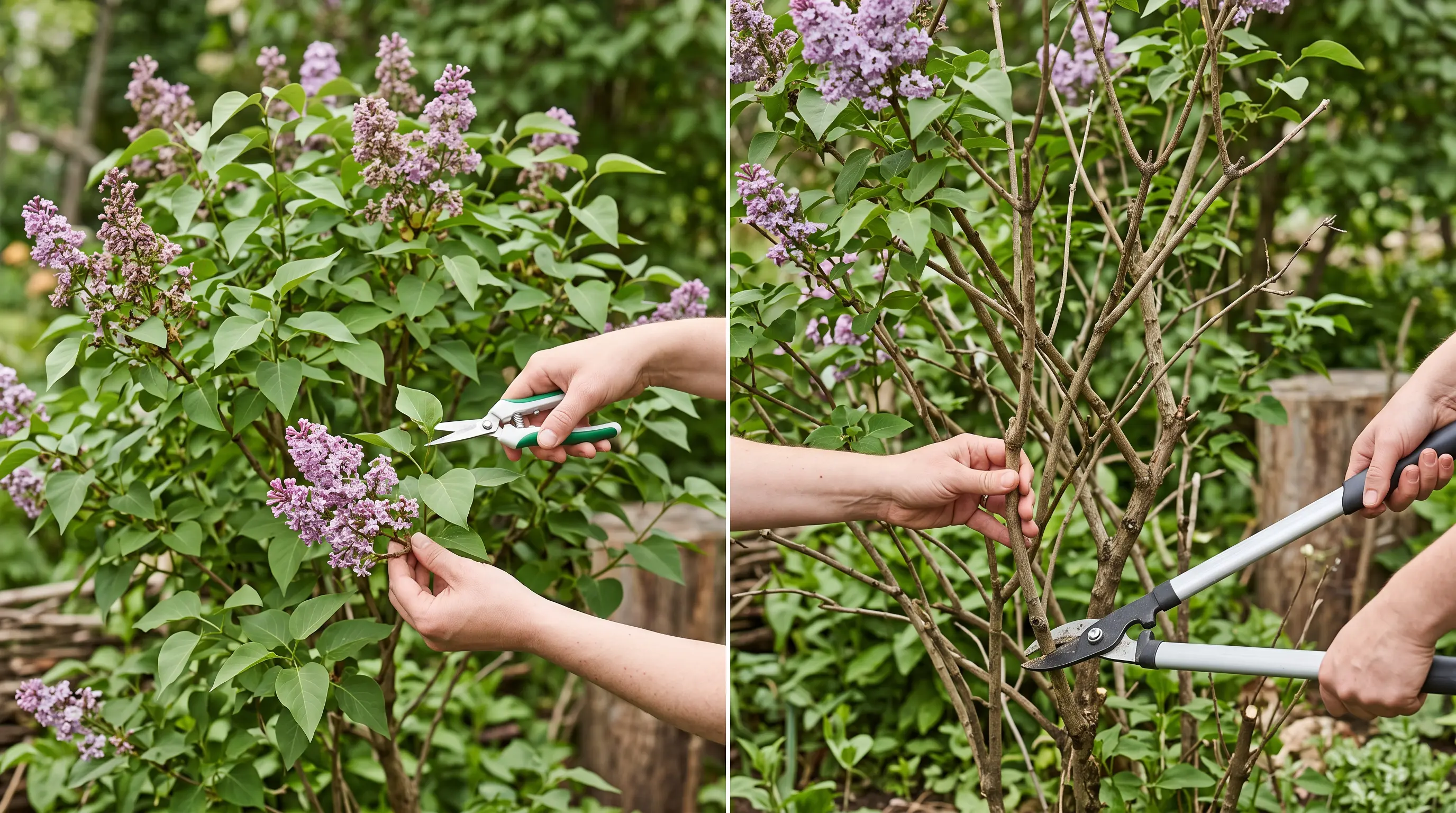
Most people use “trimming” and “pruning” as if they mean the same thing, and that mix-up leads to plenty of confusion. This article focuses on trimming, since that’s what most lilac owners need for regular upkeep.
| Factor | Trimming | Pruning |
|---|---|---|
| Main Purpose | Light cleanup and size control | Plant health, structure, and renewal |
| Typical Work | Removing faded flowers, stray tips, and small unwanted shoots | Removing dead wood, crossing stems, old canes, and crowded growth |
| Best Time | Right after flowering, every year | After flowering for shaping, or late winter for hard renewal |
| Tools Used | Bypass hand pruners | Loppers and a pruning saw, alongside hand pruners |
| Frequency | Annual, light touch | Occasional, or spread across several years for bigger jobs |
| Effect on Flowering | Little to no impact on next year’s blooms | Can reduce blooms short-term, especially with hard renewal cuts |
Trimming keeps your lilac looking neat from one season to the next, without changing much beneath the surface. Pruning goes further, reshaping the plant’s structure to boost flowering and airflow over time. Most of what you’ll do on a lilac each year falls under trimming, with pruning reserved for bigger jobs like renewal work.
Deciding If Cutting to the Ground Is Worth It
Sometimes a lilac is so overgrown or poorly shaped that starting fresh feels like the only real option. Cutting it down to the ground is possible, but it’s worth treating as a last resort rather than a quick fix.
- New shoots may grow from the root area afterward.
- Good flowering may take one to three years to return.
- Gradual renewal is the better choice if you want to keep some blooms every year.
This approach works best on a healthy, vigorous lilac that can handle the stress of losing all its top growth at once. A weak or struggling shrub may not bounce back as reliably.
If keeping some flowers each year matters more to you than speed, the gradual three-year method remains the safer, more rewarding path forward.
Frequently Asked Questions
When should I start trimming a young lilac?
Young shrubs often need time to fill out before any real cutting begins. Remove damaged growth whenever you spot it, but hold off on stronger shaping until the shrub is well established.
Can I grow a new lilac from a sucker?
A sucker with roots still attached can be dug up and moved to a new spot. Keep in mind that suckers from grafted plants may not match the flowers growing above the graft.
Does a lilac beside a fence need different pruning?
Remove stems that touch the fence, crowd the shrub’s center, or block light. Leave enough space around the plant so air can move through it freely.
Do dwarf or grafted lilacs need the same cuts?
Dwarf types generally need less thinning than standard lilacs. On grafted lilacs, base suckers shouldn’t automatically be kept as replacement stems since they may not match the top growth.
Final Takeaway
Knowing when to trim lilac bushes comes down to one simple rule: trim right after the spring flowers fade, and finish before summer’s flower buds start forming. This one timing rule protects most of next year’s blooms, no matter what else you do to the shrub.
Start with dead and crossing wood, since that growth offers nothing back to the plant. Then remove selected old canes at the base while keeping the strong young replacement stems in place. Spread any major renewal work across several years instead of rushing it.
Once the final flowers fade, check the shrub from every side. Follow the plant’s own signals, and you’ll end up with a fuller, healthier lilac every spring. If you have any further questions regarding trimming or pruning, feel free to drop a comment below.