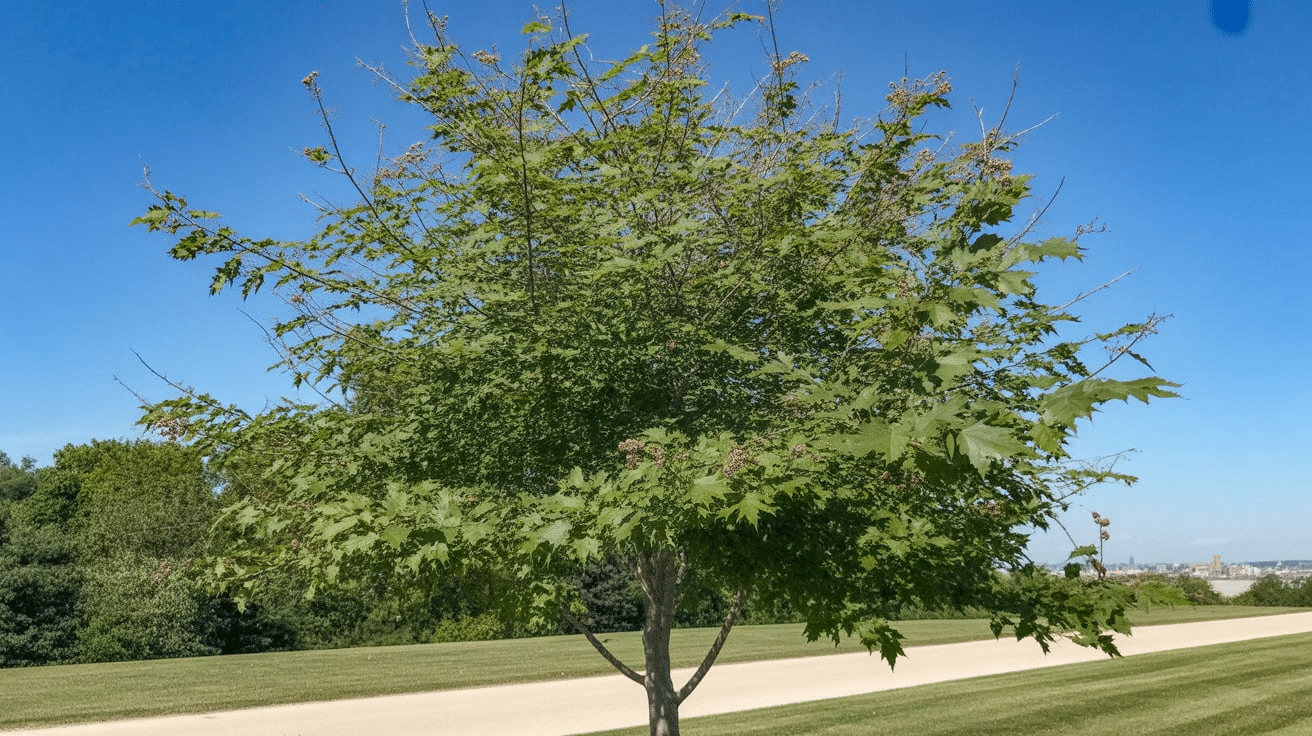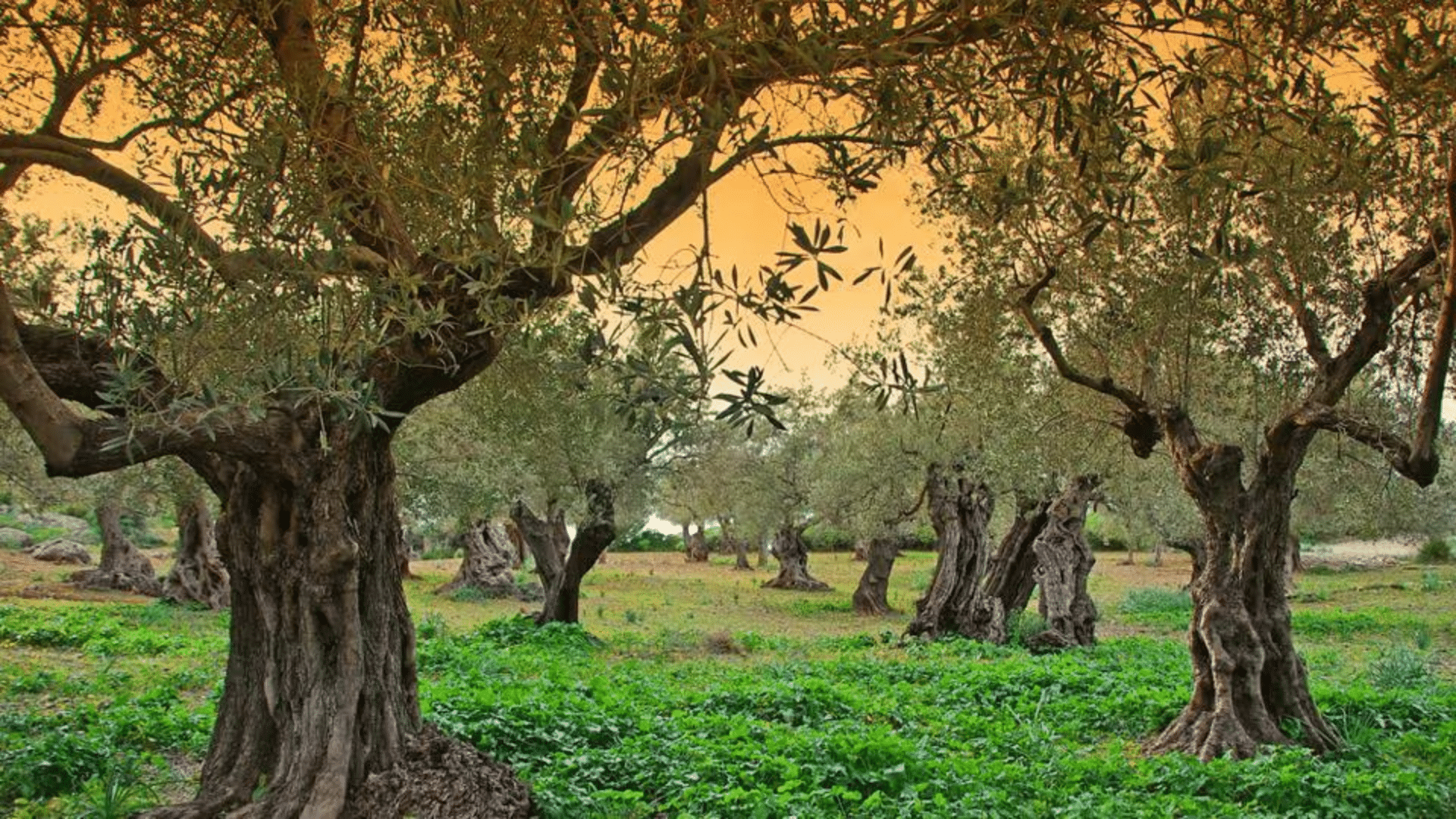
Ever looked at a broad old oak and wondered, “What kind of oak tree is that?” Types of oak trees can feel confusing because many share thick trunks, acorns, and spreading crowns.
I’ve spent years looking at leaves, bark, and acorns in gardens, parks, and woodland paths, and one thing is clear: oaks tell you who they are if you know where to look.
This guide walks you through oak tree leaves, common oak species, bark clues, acorn details, size, shape, and growing regions.
You’ll learn how white oaks, red oaks, and evergreen oaks differ without getting buried in plant terms. By the end, you’ll feel more confident naming the oak standing in front of you on your next walk.
What Makes an Oak Tree Different From Other Trees?
An oak tree is different because it is a long-living hardwood tree from the Quercus family and produces acorns.
That gives you the base, but the real value of an oak goes beyond its name. Oaks are known for their strength, slow maturity, and deep role in forests, gardens, and wildlife habitats.
Many birds, insects, squirrels, and other small animals depend on them for food and shelter. Their wood has long been used for furniture, flooring, barrels, beams, and boats because it is dense and durable.
In many places, an old oak becomes more than a tree. It becomes a landmark that people remember. Some homeowners even look for ornamental oak varieties when they want a tree with a more sculptural, garden-ready shape.
Before comparing oak tree types, it helps to understand this larger role. Oaks are not just shade trees. They are strong, useful, wildlife-friendly trees with lasting presence.
Main Types of Oak Trees by Group
Oak trees become easier to understand when you first sort them into broad groups. This gives you a simple starting point before you look at individual species. Most beginner guides separate oaks into white oaks, red oaks, and evergreen (live) oaks.
| Oak group | Basic identity | Common examples |
|---|---|---|
| White oak group | Usually sturdy, long-living oaks with softer-looking leaves | White oak, bur oak, swamp white oak, English oak |
| Red oak group | Often faster-growing oaks with sharper-looking leaves | Northern red oak, pin oak, black oak, scarlet oak |
| Evergreen and live oak group | Oaks that often keep leaves longer in warmer regions | Southern live oak, cork oak, and holm oak |
This grouping does not need to answer every identification question. Its job is only to give you a simple map.
If you enjoy sorting trees this way, it’s worth browsing other garden tree types too, since the same grouping habit makes almost any species easier to place.
Next, you can look at the common oak species one by one and understand what makes each tree different.
Common Types of Oak Trees and Their Characteristics
This is where you start seeing each oak as its own tree, not just part of a large family. I like to study one species at a time because each one has a different habitat, shape, and field clues. Once you know those small details, identification becomes much easier:
1. White Oak
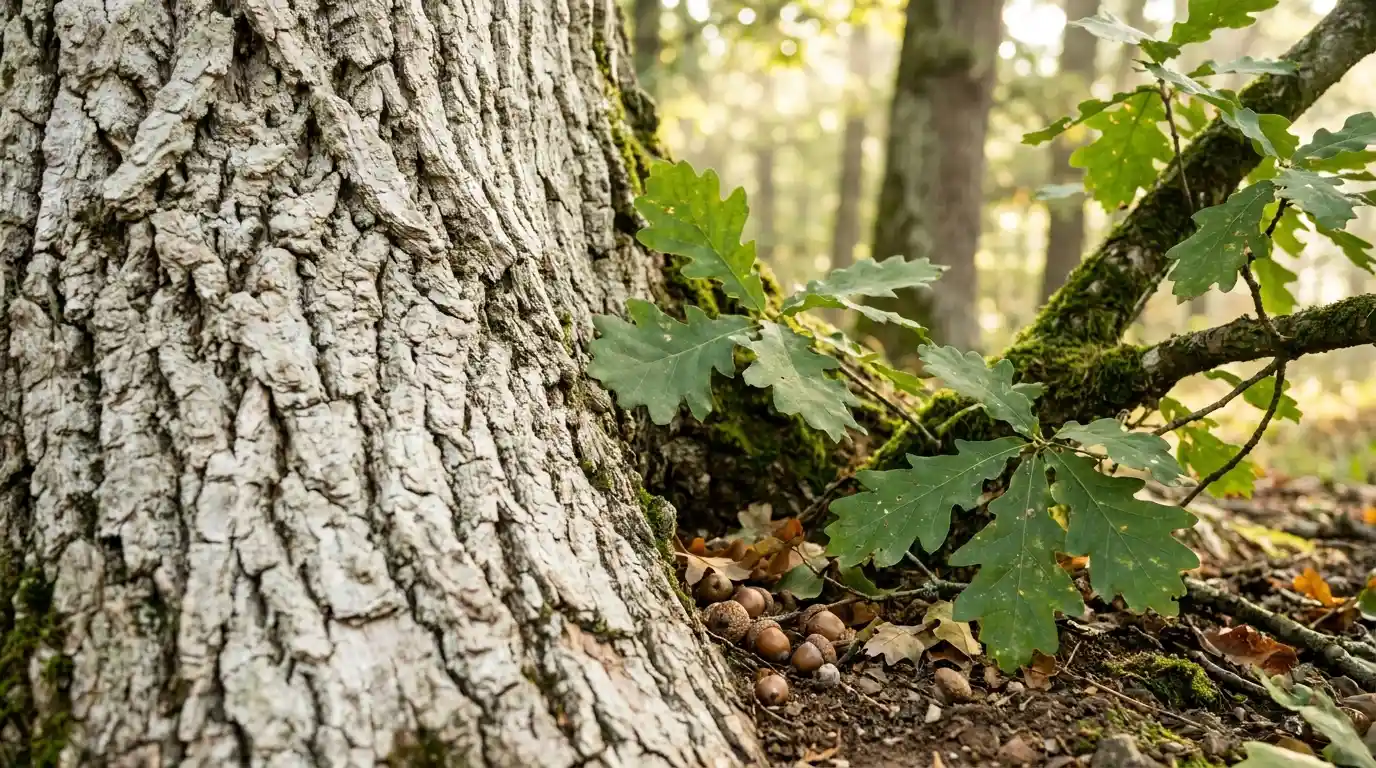
White oak has a steady, classic look that suits older landscapes. It does not grow in a hurry, but it builds a strong frame over time. When mature, it often feels like the kind of tree that has been part of the place for generations.
Reading a leaf carefully is the fastest way to confirm this species, and if you want a refresher on the basics of identifying tree leaves, the same close-looking habit applies here too. Here are the main traits that help white oak stand apart:
- Leaf character: White oak leaves have rounded lobes with smooth, soft-looking edges. They do not end in sharp bristles, so the leaf outline feels gentler than red oak leaves when you compare them side by side.
- Bark texture: The bark is often pale gray and can become scaly or lightly flaky with age. On older trunks, this softer gray tone gives the tree a weathered look that is easy to notice in winter.
- Acorn detail: White oak acorns are usually small to medium and sit in shallow cups. They often mature faster than red oak acorns, which makes them useful seasonal food for deer, squirrels, birds, and other wildlife.
- Growth habit: A mature white oak usually develops a broad crown with strong, spreading limbs. Its slow pace gives it a solid structure, making it one of the most dependable long-term shade trees.
2. Northern Red Oak
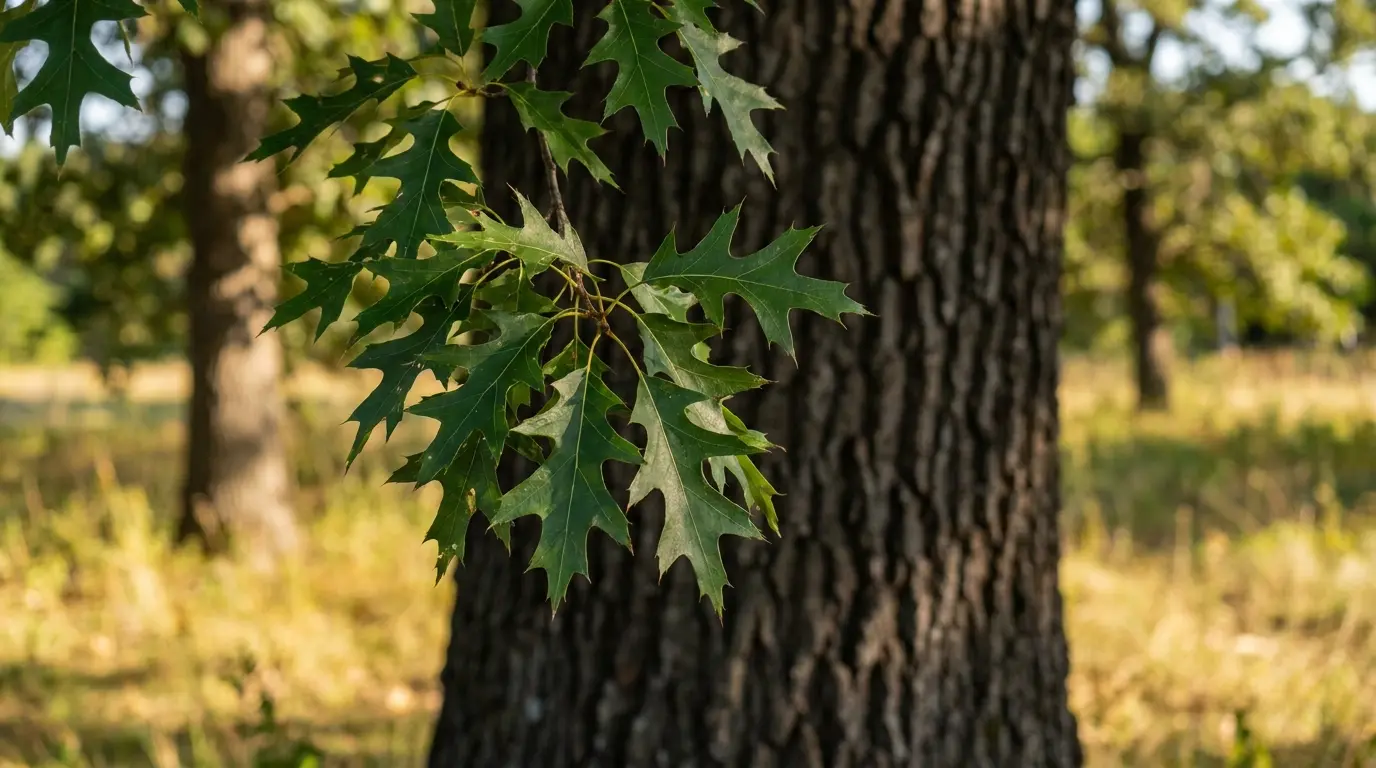
Northern red oak has a taller and more upright presence than many white oaks. It is often planted where people want shade without having to wait too many decades. I usually notice its height, clean trunk, and sharper leaf outline first. These features make northern red oak easier to recognize:
- Leaf character: Northern red oak leaves have pointed lobes with tiny bristle tips. The spaces between the lobes are moderate, so the leaf looks sharp without being as deeply cut as a pin oak leaf.
- Bark texture: The bark turns dark gray to brown as the tree matures, developing long, raised ridges. Older trunks may show pale lines between the ridges, which can help you notice them from close range.
- Acorn detail: Its acorns are medium-sized with shallow, saucer-like caps. They are usually more bitter than white oak acorns, so animals may eat them later after sweeter food sources become limited.
- Growth habit: Northern red oak grows faster than many traditional white oaks and can reach a tall height. Its upright frame works well in large yards, open lawns, campuses, and public spaces.
3. Bur Oak
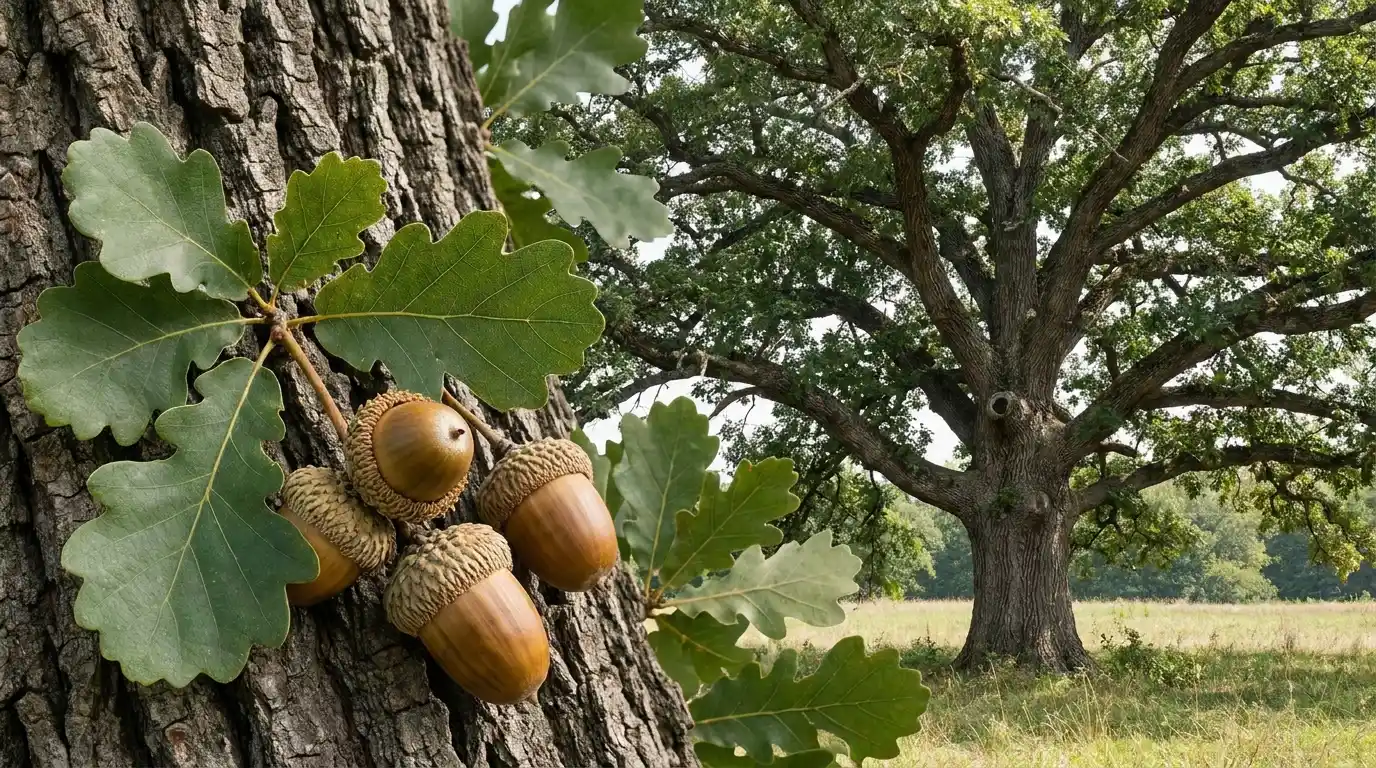
Bur oak has a rugged character that makes it stand out in open spaces. It looks tough, wide, and built for rough weather. Once you learn its large acorns, this tree becomes much easier to spot.
Its slow, steady build has a lot in common with other tough shade species, including the moosewood tree growth pattern worth comparing if you’re weighing hardy options for a large yard. Look for these signs when checking a bur oak:
- Leaf character: Bur oak leaves are large, broad, and unevenly lobed, with rounded edges instead of sharp tips. Some leaves narrow near the middle, giving them a pinched shape that feels different from cleaner oak outlines.
- Bark texture: The bark is thick, rough, and deeply ridged, which gives the trunk a strong outdoor look. This texture fits the tree well because bur oak can handle wind, dry soil, and open growing sites.
- Acorn detail: Bur oak acorns are large and partly covered by a fringed cap that can look hairy. This cap is one of its best clues, especially when acorns are scattered under the canopy.
- Growth habit: Bur oak often develops a wide crown, heavy limbs, and a strong trunk. It may grow slowly, but over time it becomes a bold landscape tree with a powerful open-grown shape.
4. Pin Oak
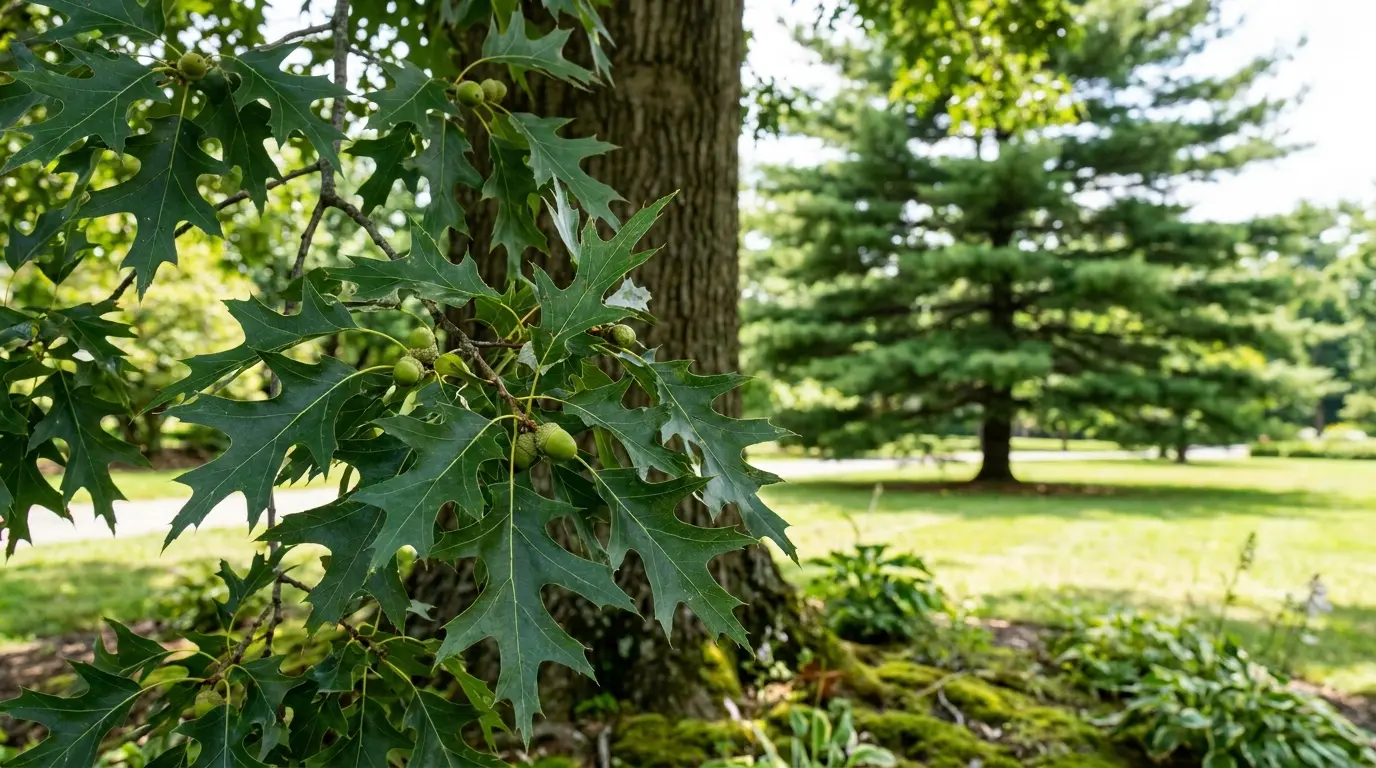
Pin oak often looks tidy when young, almost like it has been shaped by design. It is common on streets, lawns, and in public spaces because it has a clear outline. The branch pattern is usually my first clue. These details help separate pin oak from other red oak types:
- Leaf character: Pin oak leaves have sharp lobes and deep cuts that reach close to the center vein. This gives the leaf a narrow, carved look compared with broader red oak leaves.
- Bark texture: Young pin oak bark can look fairly smooth before turning darker and more rigid with age. Since the bark is not always distinctive, it works best when paired with the tree’s branch pattern.
- Acorn detail: Pin oak acorns are small, round, and held in shallow cups. They are not as bold as bur oak acorns, so you may need to check beneath the canopy to notice them.
- Growth habit: Pin oak often grows in a pyramidal shape when young. The upper branches point upward, the middle branches spread outward, and the lower branches often droop, creating a layered look.
5. Swamp White Oak
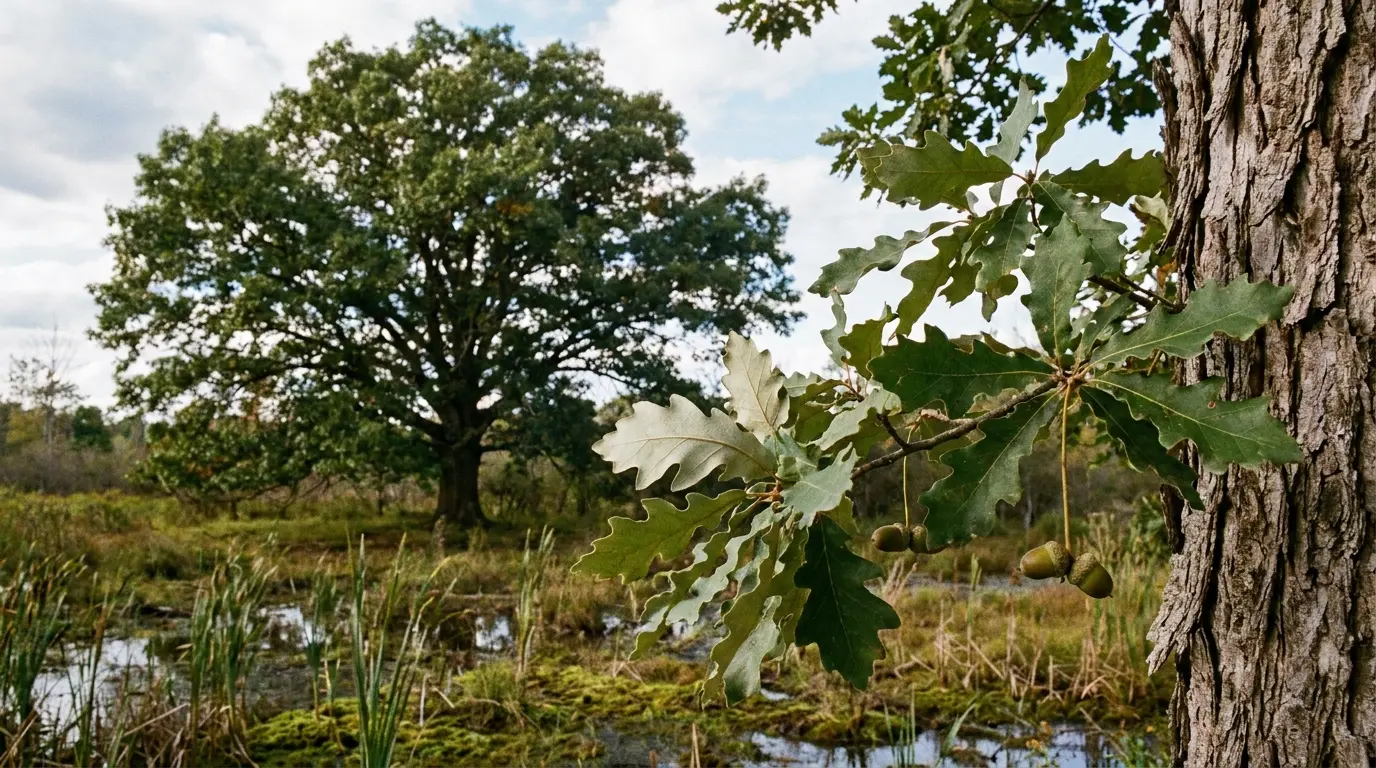
Swamp white oak has a softer presence than many dry-site oaks. It is often linked with moist ground, but it can also grow well in managed landscapes. The pale underside of the leaf is one of its best clues. Use these traits to identify swamp white oak more confidently:
- Leaf character: Swamp white oak leaves have wavy rounded edges and a light underside that may look whitish or silvery. When wind moves the leaves, that pale flash can make the tree easier to identify.
- Bark texture: The bark may look flaky, peeling, or slightly shaggy on older trees. This layered surface gives the trunk more texture than that of smoother young oaks and helps it stand out in wet areas.
- Acorn detail: Its acorns may appear in pairs and are often carried on longer stalks. That stalked-acorn habit is useful when you are trying to distinguish it from similar white oak relatives.
- Growth habit: Swamp white oak handles wet or compact soil better than many oak species. As it matures, it forms a broad crown, which makes it useful for larger spaces with imperfect drainage.
6. Black Oak
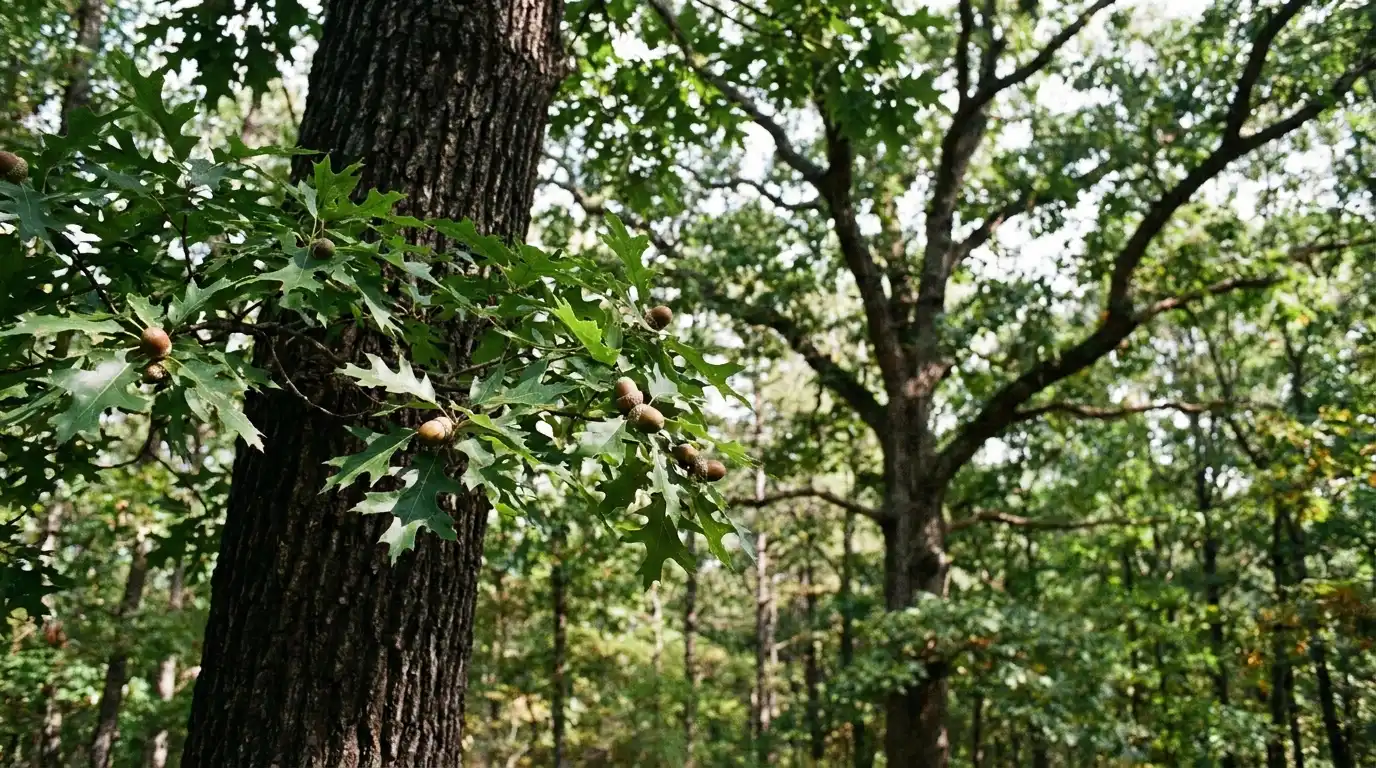
Black oak can be tricky because it shares some features with red oak. It often has a darker, heavier look as it matures. I usually study its rough bark, sharp leaves, and uneven crown together before naming it. These clues help you avoid mixing black oak with similar trees:
- Leaf character: Black oak leaves usually have pointed lobes with bristle tips and fairly deep cuts. The upper leaf surface may look glossy, while the shape can vary enough to make beginners pause.
- Bark texture: The bark is dark, thick, and deeply furrowed on mature trees. This rough surface gives black oak a heavier trunk appearance than many cleaner-shaped shade oaks.
- Acorn detail: Black oak acorns are medium-sized and sit in scaly cups. The cap may cover more of the nut than a northern red oak cap, which can help when the leaves are not clear.
- Growth habit: Black oak often grows with an uneven or less polished crown. In woodland areas, it may stretch upward for light, while open-grown trees can become broader and more irregular.
7. English Oak
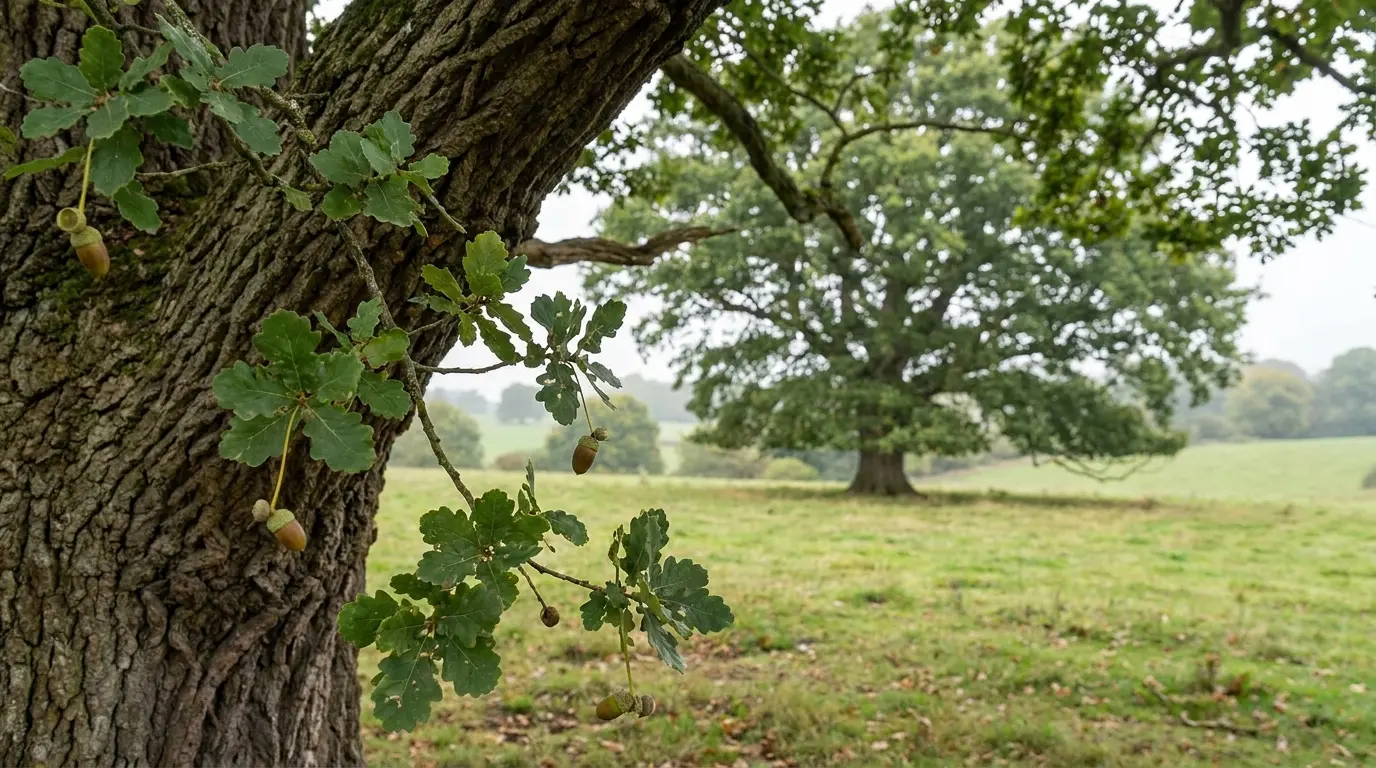
English oak carries a strong old-world character and is closely linked with European landscapes. It is also planted in other regions as a feature tree. The acorn stalks make it easier to separate from many similar oaks. These features give English oak its recognizable look:
- Leaf character: English oak leaves have rounded lobes and very short leaf stalks. The leaves often sit close to the twig, which helps separate this tree from some other rounded-leaf oak species.
- Bark texture: The bark becomes rough and deeply lined as the tree ages. On mature trunks, those ridges add to its classic parkland look and make older trees feel especially strong.
- Acorn detail: English oak acorns grow on noticeable long stalks. If you see rounded leaves paired with stalked acorns, this tree becomes much easier to recognize.
- Growth habit: Older English oaks often develop wide crowns with heavy spreading limbs. In open spaces, they can become grand, long-lived trees with a broad and memorable shape.
8. Southern Live Oak
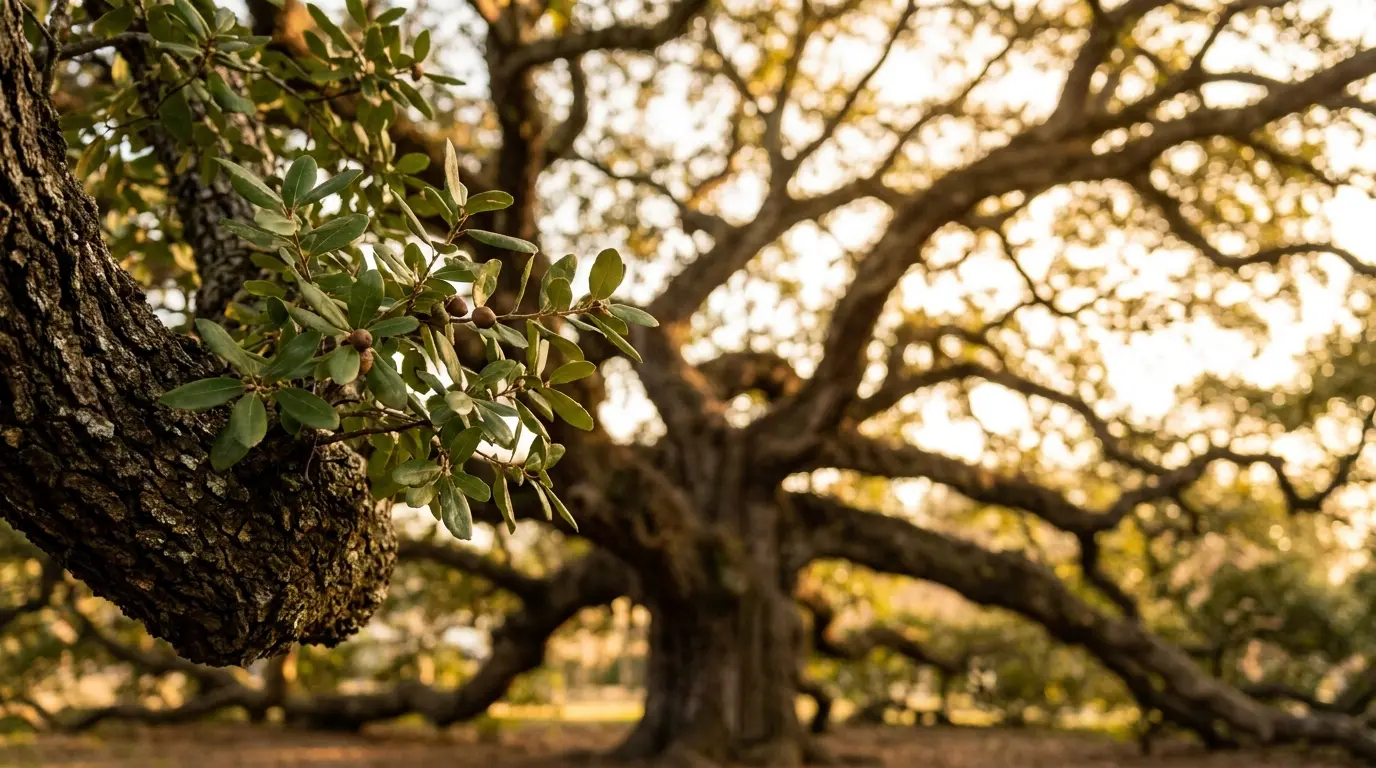
Southern live oak does not follow the classic lobed-leaf image many people expect. It has a warm-region look, with long limbs that can stretch far from the trunk. I often recognize it by its wide form before anything else. These traits help the southern live oak stand out quickly:
- Leaf character: Southern live oak leaves are oval, leathery, and usually smooth or slightly toothed. They often remain on the tree for much of the year, giving the canopy a green look in mild climates.
- Bark texture: The bark is dark, furrowed, and rough on mature trunks. It adds to the tree’s grounded look, especially when paired with its broad canopy and heavy horizontal limbs.
- Acorn detail: Its acorns are small, narrow, and often darker than those of many white oaks. They may not stand out at first, but they still confirm that the tree belongs to the oak family.
- Growth habit: Southern live oak spreads low and wide, often forming massive side branches. In warm regions, that shape makes it one of the easiest oaks to notice in large yards and public spaces.
9. Cork Oak
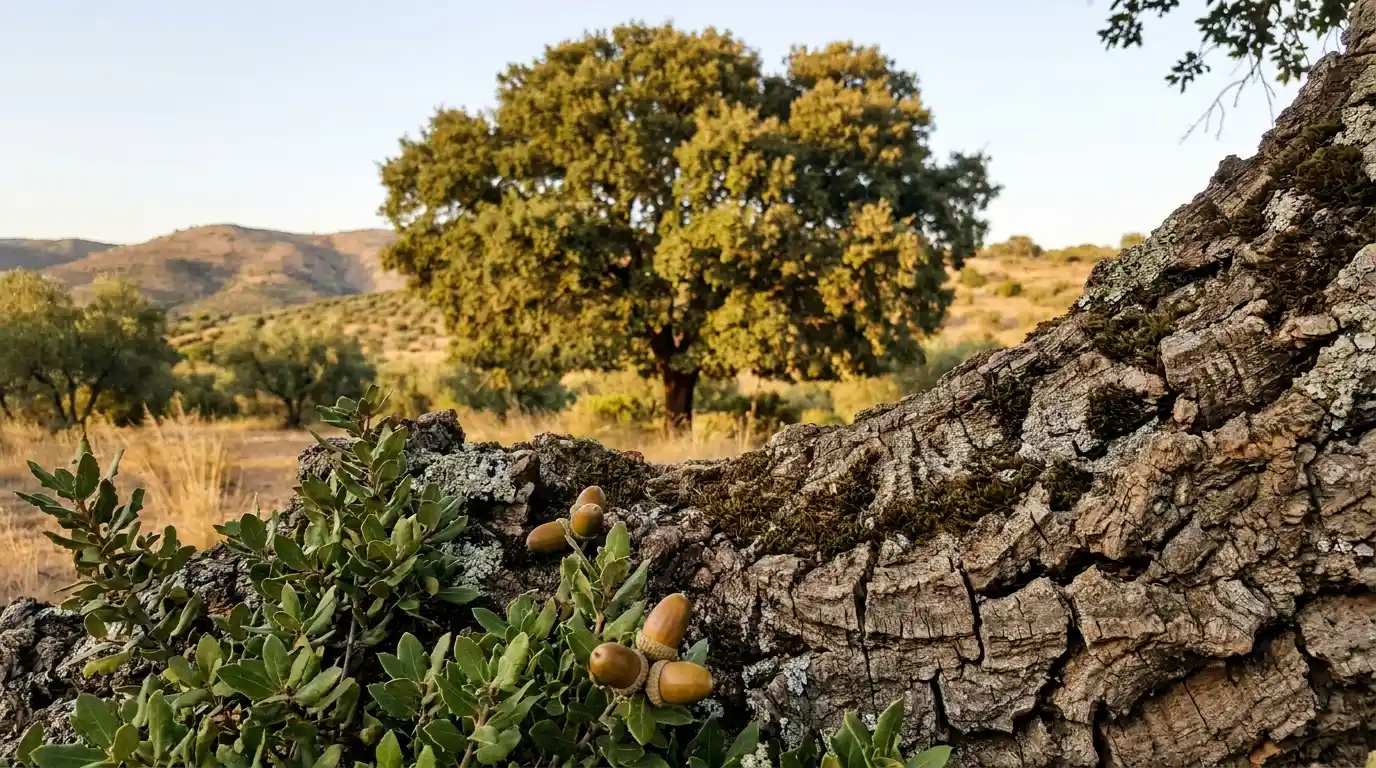
Cork oak is easy to remember once you have seen its trunk. It has an evergreen habit and a dry-climate character. The bark does most of the talking, but the leaves and acorns help confirm the tree. Check these details when you think you have found cork oak:
- Leaf character: Cork oak leaves are small, leathery, and evergreen, with a darker upper surface. They do not show the deep lobes many people expect, so the leaf shape can feel surprising at first.
- Bark texture: The bark is thick, corky, and deeply cracked, making this species stand out quickly. This outer layer is the source of natural cork and gives the trunk a padded, rugged surface.
- Acorn detail: Cork oak acorns are usually small to medium and more oval than round. They sit in textured cups and help confirm the tree when the cork-like trunk and evergreen leaves are present.
- Growth habit: Cork oak forms a rounded evergreen crown and is usually more compact than giant shade oaks. It suits warmer places with dry summers and mild winters.
10. Holm Oak
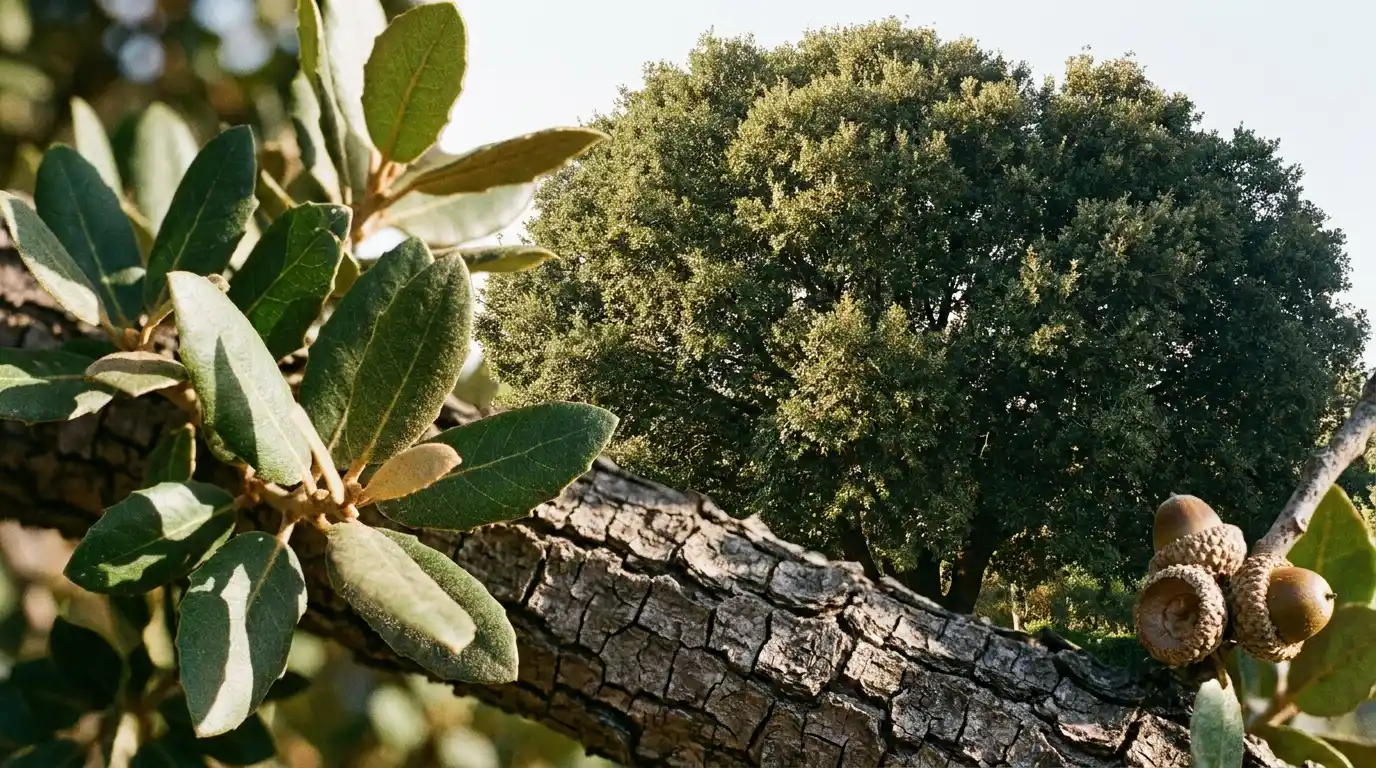
Holm oak can look more like a dense broadleaf evergreen than a typical oak. Its canopy is thick, dark, and tidy from a distance. When I see one, I usually notice the compact crown before studying the smaller details. These signs help you confirm Holm oak:
- Leaf character: Holm oak leaves are oval, leathery, and dark green, with edges that may be smooth or slightly toothed. Leaf shape can vary on the same tree, so close checking is helpful.
- Bark texture: The bark is dark gray to blackish and becomes cracked with age. It is not thick like cork oak bark, but it gives the tree a firm, mature appearance.
- Acorn detail: Holm oak acorns are small to medium and sit in scaly cups. They are useful for confirmation because the leaves may not look like the classic oak shape.
- Growth habit: Holm oak forms a dense, rounded crown that casts strong shade. It grows well in warmer regions and works well where a tough evergreen tree is needed.
Oak Tree Leaves: How to Identify Them
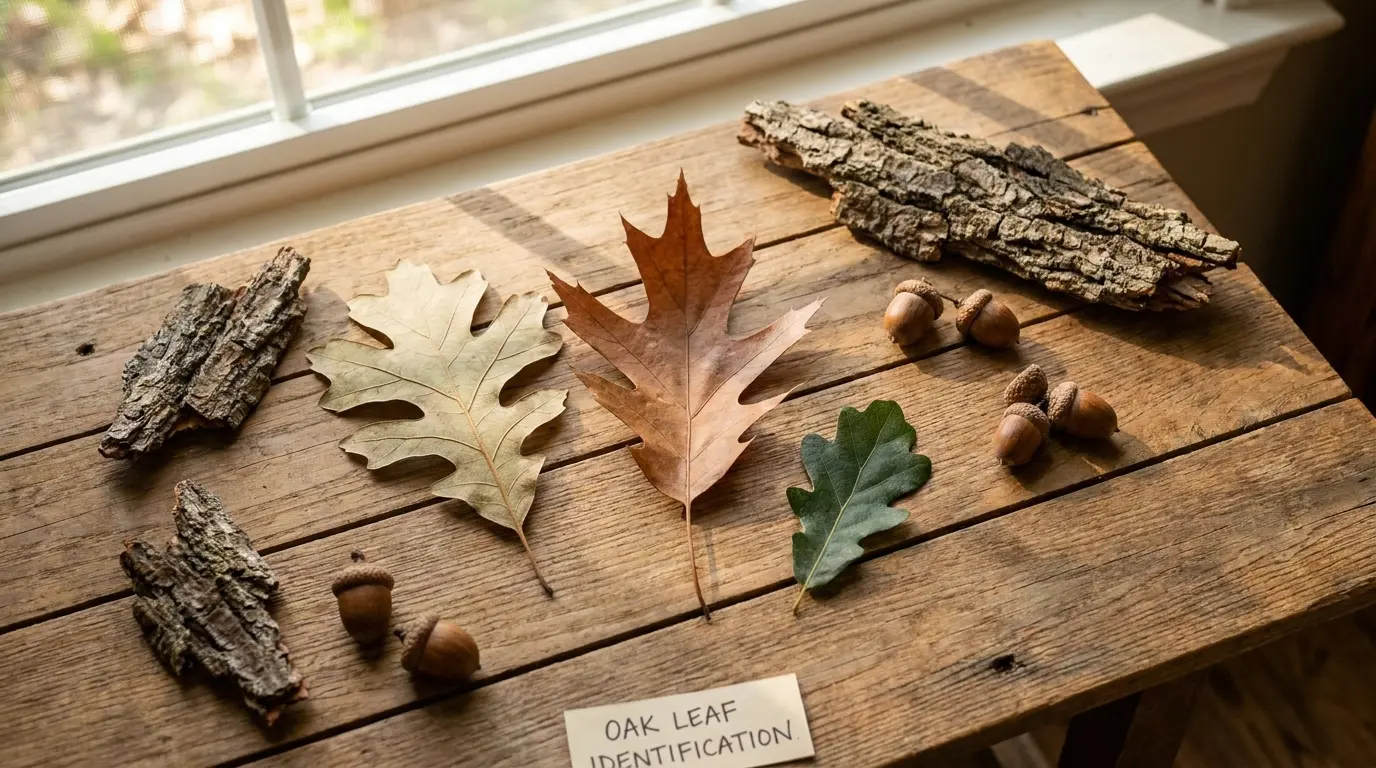
Oak tree leaves are one of the easiest ways to identify different oak species because they vary in shape, size, and texture. Observing leaf structure helps distinguish between white oaks, red oaks, and other varieties in natural environments.
- Oak leaves vary widely in shape, helping distinguish species based on rounded or pointed lobes and overall structure patterns.
- Lobes can be rounded in white oaks or sharply pointed in red oaks, making this a key identification feature.
- Leaf size and texture differ among species, ranging from small, smooth leaves to large, rough, deeply ridged ones.
- Seasonal color changes occur as leaves shift from green to yellow, brown, or reddish tones during autumn months.
- Leaf characteristics provide reliable clues for accurately identifying oak species in forests, parks, and residential landscapes.
Oak Tree Acorns and What They Reveal
Acorns are worth their own section because they can show details that leaves alone may miss. When I find acorns under an oak, I look closely at the nut, the cap, and how it is attached. Those small parts often give better clues than size alone.
| Acorn feature | What to notice | Why it matters |
|---|---|---|
| Size | Check whether the acorn is small, medium, or unusually large. | Size can point toward certain oak types, but it should not be used alone. |
| Cap shape | Look for a shallow, deep, scaly, or fringed cap. | The cap often keeps its shape well and can be easier to compare than the nut. |
| Stalk | Notice whether the acorn is attached closely or carried on a longer stalk. | Stalk length can help distinguish oaks with similar leaves. |
| Surface texture | Check whether the cap feels smooth, rough, hairy, or tightly scaled. | Texture gives another clue when acorns look similar in size. |
Acorns are seasonal, so you may not always find them when you need them. Still, when they are present, they are one of the most practical field clues. I use them to support the leaf reading, not replace it.
Types of Oak Trees by Region
Region helps narrow the search because oak trees do not all grow in the same places. Some prefer cooler woodland settings, some handle wet ground, and others suit warmer climates.
Once you know the region, you can rule out many unlikely species before comparing details.
In North America, several oak types are common across forests, parks, and large landscapes, but the exact species changes by state, soil, and climate.
In the UK, English oak and sessile oak are the key native oaks many readers are most likely to meet.
In India, oaks are mostly associated with the Himalayan and hill regions, where local names and species can vary from one area to another.
In warmer regions, evergreen oaks are more common because they handle mild winters and dry summers better than many deciduous types.
So, location is not just background information. It helps you make a smarter shortlist before you study the tree more closely.
How to Identify an Oak Tree
A good oak identification method should feel simple, not like a long checklist. I prefer to move from the easiest clue to the most specific one. That way, you do not name the tree too early or repeat the same check.
- Start with the broad group: Decide whether the tree seems more like a white oak, red oak, or evergreen oak. This gives you a direction before you begin comparing smaller details.
- Study one clear leaf sample: Choose a healthy leaf if you can. Look at its outline, edges, and texture, but avoid judging based on damaged, young, or half-eaten leaves.
- Check for available acorns: If acorns are present, compare the cap, stalk, size, and texture. These details can support your first guess and help separate similar-looking species.
- Use bark as a support clue: Look at the trunk only after checking easier clues. Bark can help, but it varies with age, weather, and tree health, so it should not decide everything on its own.
- Confirm with place and habit: Match your guess with the growing region and the tree’s overall habit. A species is more likely when its shape, climate, and local range all fit together.
Where Oak Trees Grow Naturally
Oak trees are widely distributed across the Northern Hemisphere, thriving in a variety of climates, soil types, and ecosystems. Their adaptability allows them to grow in forests, grasslands, and even urban environments where conditions support long-term development.
North America has the largest diversity of oak species, especially in the United States, where both white and red oaks dominate forests and landscapes.
Europe and Asia host many native oak species that grow in temperate forests, often forming dense woodlands that support rich biodiversity and wildlife.
Oak trees adapt to different forest types and climate conditions, ranging from moist lowlands to dry upland regions with varying seasonal patterns.
In urban landscaping, oak trees are widely planted for shade, aesthetic appeal, and environmental benefits such as cooling and air purification.
Common Mistakes When Identifying Oak Trees
Oak identification gets easier when you know what can lead you off track. I’ve made a few of these mistakes myself, especially with young trees or oaks growing outside their usual shape. Use this table as a final check before you settle on an answer.
| Common mistake | Why it happens | Better way to handle it |
|---|---|---|
| Naming the tree from one leaf | One leaf can be damaged, young, shaded, or shaped differently from the rest of the tree. | Check a few healthy leaves from different parts of the branch before deciding. |
| Trusting bark too early | Young bark can look plain, while older bark can change because of weather, wounds, or growing stress. | Treat bark as a supporting clue rather than the main answer. |
| Overlooking acorn caps | Many people look only at the nut and miss the cap, even though the cap often gives stronger clues. | Check the cap depth, texture, edge, and how much of the nut it covers. |
| Ignoring the tree’s age | Young oaks may not yet show their mature crown, bark pattern, or full branch structure. | Be more careful with young trees and use several clues together. |
| Forgetting local range | A species may be common in one region but rare or unlikely in another. | Compare your guess with the local climate, soil, and native or planted oak types. |
A mistake does not mean you are bad at identifying trees. Oaks can fool careful observers too. The safest habit is simple: pause, compare more than one clue, and avoid naming the tree from a single detail.
Frequently Asked Questions
What is a “mast year,” and why do oak trees suddenly drop thousands of acorns?
A mast year is a natural phenomenon where oak trees synchronously produce an overwhelming abundance of acorns. This doesn’t happen every year; instead, it occurs every 2 to 5 years. Scientists believe this is an evolutionary survival strategy called “predator satiation.” By dropping far more acorns than local wildlife (like squirrels, deer, and birds) can possibly eat, the oak tree guarantees that a portion of the seeds will survive to sprout into new trees.
Do oak trees lose their leaves in the winter, or do they stay green?
While evergreen oaks (like the Southern Live Oak or Holm Oak) stay green year-round, many deciduous oaks exhibit a unique behavior called marcescence. This means that younger oak trees, or the lower branches of mature oaks, will wither and turn brown in autumn but hold onto their dead leaves all through the winter, only dropping them when new buds push them off in the spring.
Why is it so difficult to transplant a young oak tree?
Oak trees prioritize below-ground growth before expanding their above-ground canopy. From a very young age, an oak seedling develops a massive, vertical taproot that grows deep into the earth to secure water and stability. Because this central root sinks so deep so quickly, digging up an oak tree without severely damaging its primary root system is incredibly difficult, which is why oaks are best planted as very young saplings or grown directly from acorns.
Are oak leaves and acorns toxic to companion plants or pets?
Oak leaves and acorns contain high concentrations of tannins, which are naturally occurring bitter compounds. When oak leaves fall and decompose, they can slightly lower the soil’s pH, though they rarely harm established companion plants. However, the high tannin content makes green acorns and raw oak leaves toxic to dogs, horses, and cattle if ingested in large quantities, causing severe digestive upset.
What are the small, round balls often found attached to oak leaves or twigs?
Those curious, bark-colored or spongy spheres are called oak galls (or “oak apples”). They are not part of the tree’s fruit or a mutation of the acorn. Instead, they are harmless plant tissue growths triggered by tiny, non-stinging gall wasps. The wasp lays an egg on the leaf or twig, and the tree secretes chemicals that form a protective chamber around the developing larva. They do not cause lasting harm to a healthy oak tree.
Final Thoughts
Types of oak trees are easier to understand when you look at the whole tree, not just a single leaf or acorn. I like to start with oak tree leaves because they give the first clue, but the real answer comes from combining shape, bark, acorns, size, and region.
Once you know how white oaks, red oaks, and evergreen oaks differ, every walk through a park or woodland feels more interesting. You begin noticing rounded lobes, sharp tips, broad crowns, and rugged trunks with fresh attention.
Use this guide as your starting point, then keep learning from real trees around you. For more helpful tree guides, read our other blogs and keep building your plant knowledge.