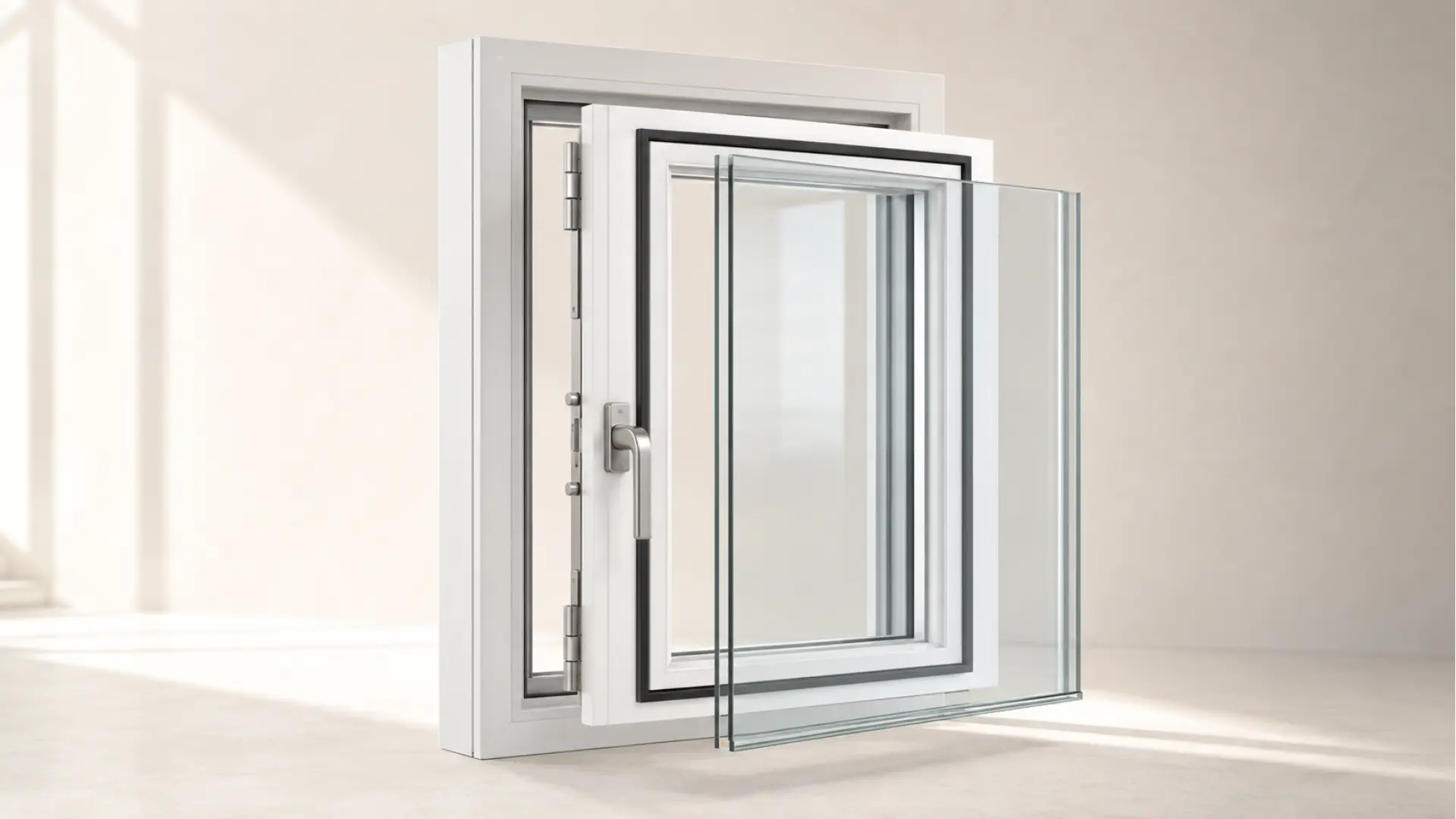
Most residential windows have five main groups of parts: the frame, sash, glazing, seals, and hardware. The frame anchors the unit to the wall. The sash holds the glass. Glazing forms the clear barrier, seals limit air and water, and hardware controls opening and locking.
Learning the parts of a window helps homeowners name a problem before calling an installer. It also makes product comparisons and repair discussions clearer. A stuck sash, loose lock, draft, or fogged glass often points to a specific group of components.
Below I’ll explain each part, including where it sits and what it does. It also separates commonly confused terms, including sill and stool, as well as muntin, mullion, and grille. Some parts appear only on hung, sliding, casement, or awning windows.
Why Understanding Your Windows Matters
Knowing basic window anatomy saves you time, money, and frustration. When a window gets stuck, rattles in the wind, or lets in a cold breeze, you don’t always need a full, expensive replacement to fix the problem.
Pinpointing the exact component at fault, whether it’s a worn balance, a cracked seal, or a misaligned keeper, changes everything about how you approach the repair. That single detail helps you troubleshoot simple DIY fixes yourself, using basic tools and a trip to the hardware store, instead of guessing at what might be wrong.
It also helps you describe the exact issue to a contractor in clear terms, so they arrive with the right parts on the first visit rather than needing a second trip.
Chronic drafts, fogged glass, and sticking sashes are one kind of window trouble, but even a properly working window can look unfinished without the right trim, from extension jambs to the finished header, as covered in this Craftsman style window trim installation guide.
This small bit of knowledge leads to more accurate repair estimates, fewer wasted service calls, and a faster path to a window that opens, closes, and seals the way it should.
What Are the Main Parts of a Window?
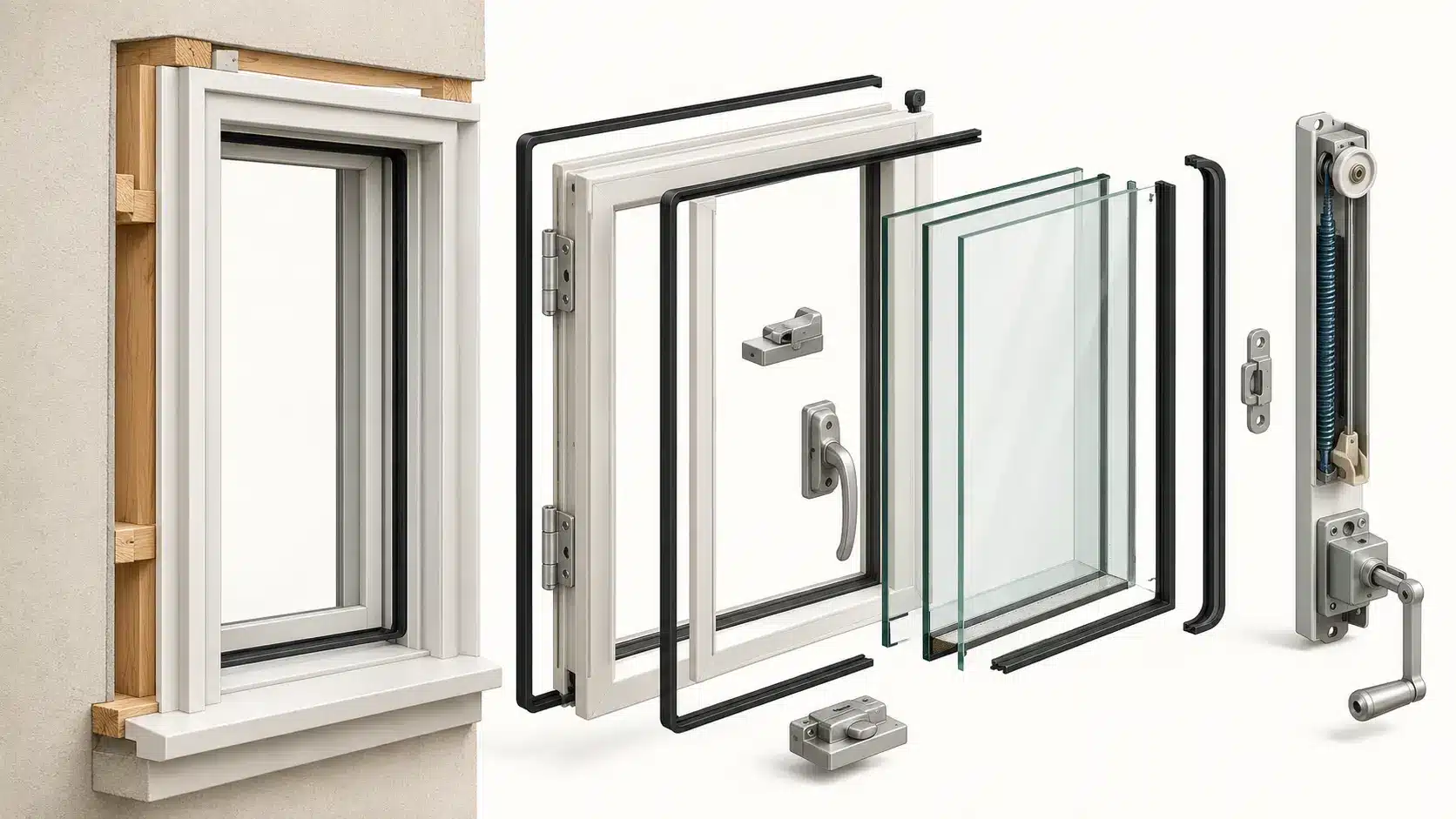
The main parts of a window are the frame, sash, glazing, seals, and hardware. These groups support the unit, hold the glass, control movement, and help protect the opening.
- Window frame: The frame is the fixed outer structure attached to the wall opening. It surrounds and supports the sash or, in some fixed windows, holds the glass directly.
- Window sash: The sash is the inner structure that holds the glass. A sash may slide, swing, tilt, or remain fixed, depending on the window style.
- Glass and glazing: The glass pane provides light and a view. Glazing is a wider term for the glass and the system used to secure it within the sash or frame.
- Seals and weatherstripping: Seals around an insulated glass unit help keep its panes and internal space closed. Weatherstripping fills small gaps around an operating sash to limit air and water entry.
- Window hardware: Hardware includes locks, handles, hinges, balances, cranks, rollers, and related pieces. The exact hardware changes with the way a window opens.
These five groups provide a simple way to understand nearly every term found in a window diagram or product guide.
Parts of a Window Frame
The frame forms the fixed border of the window. Its main pieces support the unit and help transfer its weight to the surrounding wall.
1. Head
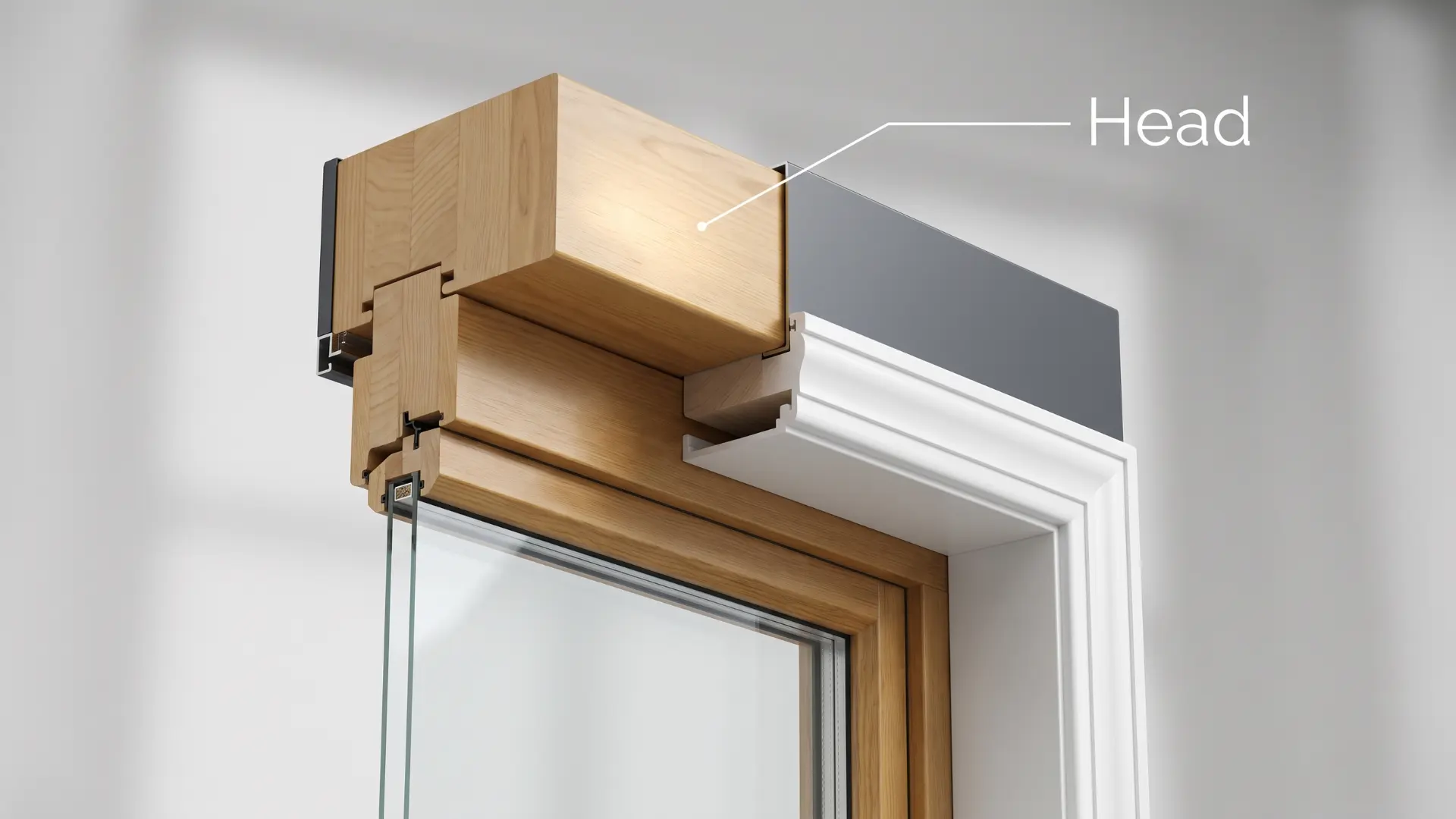
The head is the horizontal part across the top of the frame. It joins the two side jambs and closes the upper edge of the unit, providing structural stability.
Typically made from durable materials such as wood or metal, the head also plays a crucial role in the overall aesthetics of a door or window frame. Proper installation ensures that it aligns well, preventing gaps that can lead to drafts or water infiltration.
2. Side jambs
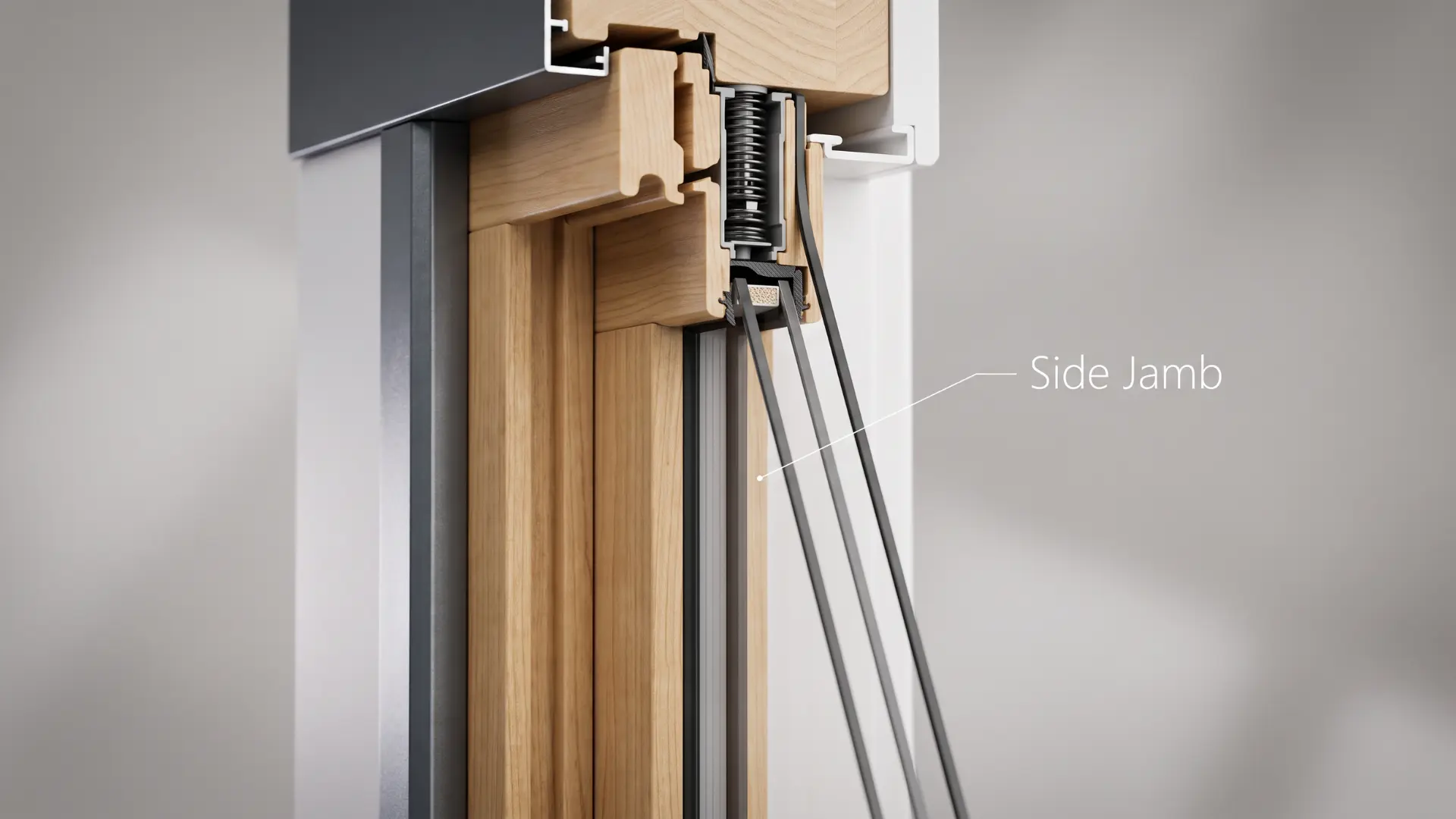
Side jambs are the vertical frame members on the left and right. They play a crucial role in providing stability and support for the door or window they encase.
Tracks, hinges, balances, or other operating pieces may attach to them, ensuring smooth functionality. Additionally, proper installation of the side jambs is essential for energy efficiency, as they create a tight seal that helps prevent drafts and improve insulation in homes.
3. Sill
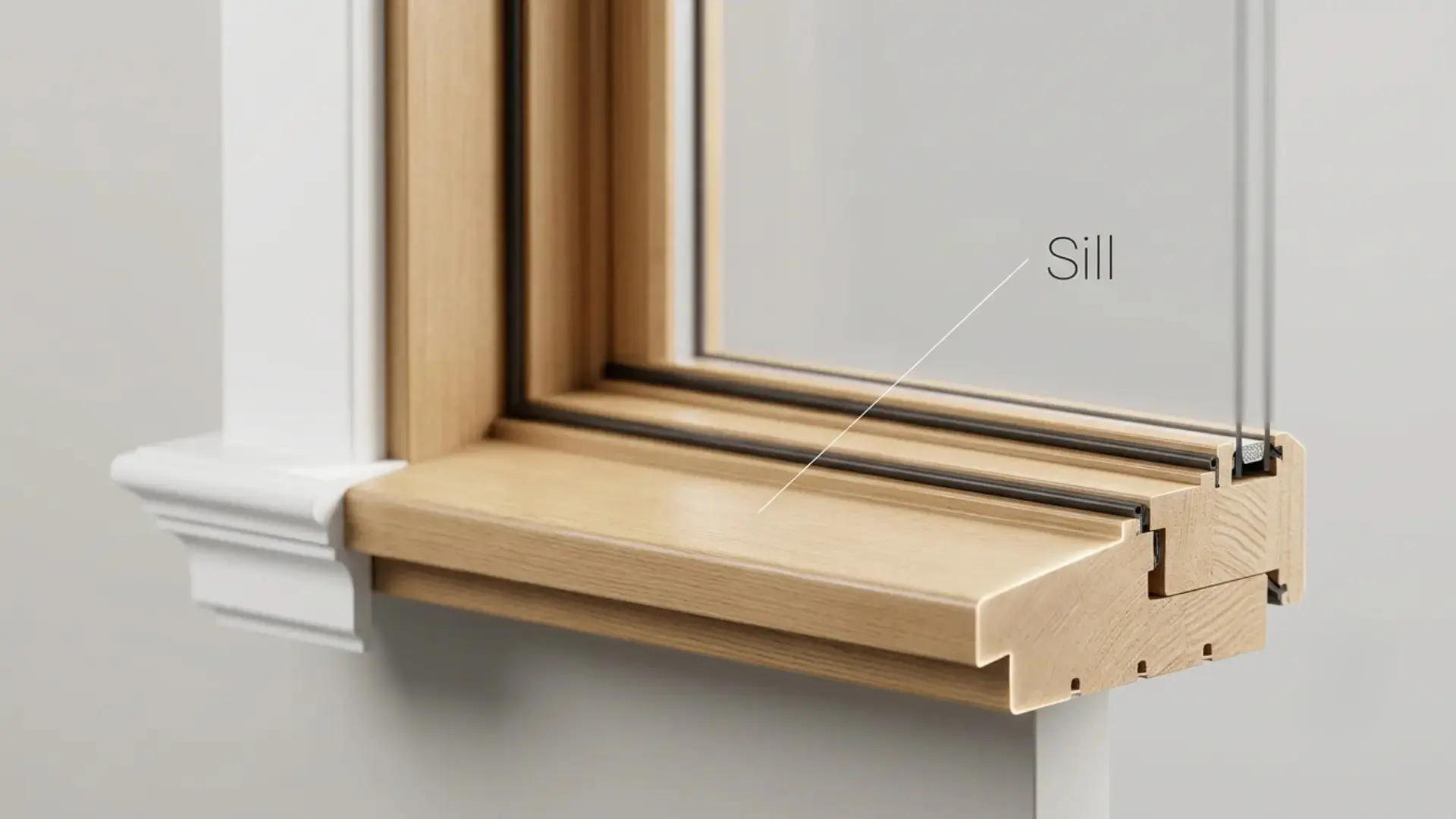
The sill is the bottom horizontal part of the exterior frame. Its outer edge often slopes down so rainwater can move away from the window. This design helps prevent water from pooling near the window, which could lead to leaks or water damage over time.
Additionally, a properly constructed sill can enhance the overall aesthetics of the window, making it an important detail in both functionality and visual appeal. Proper maintenance is essential for longevity.
4. Nailing fin
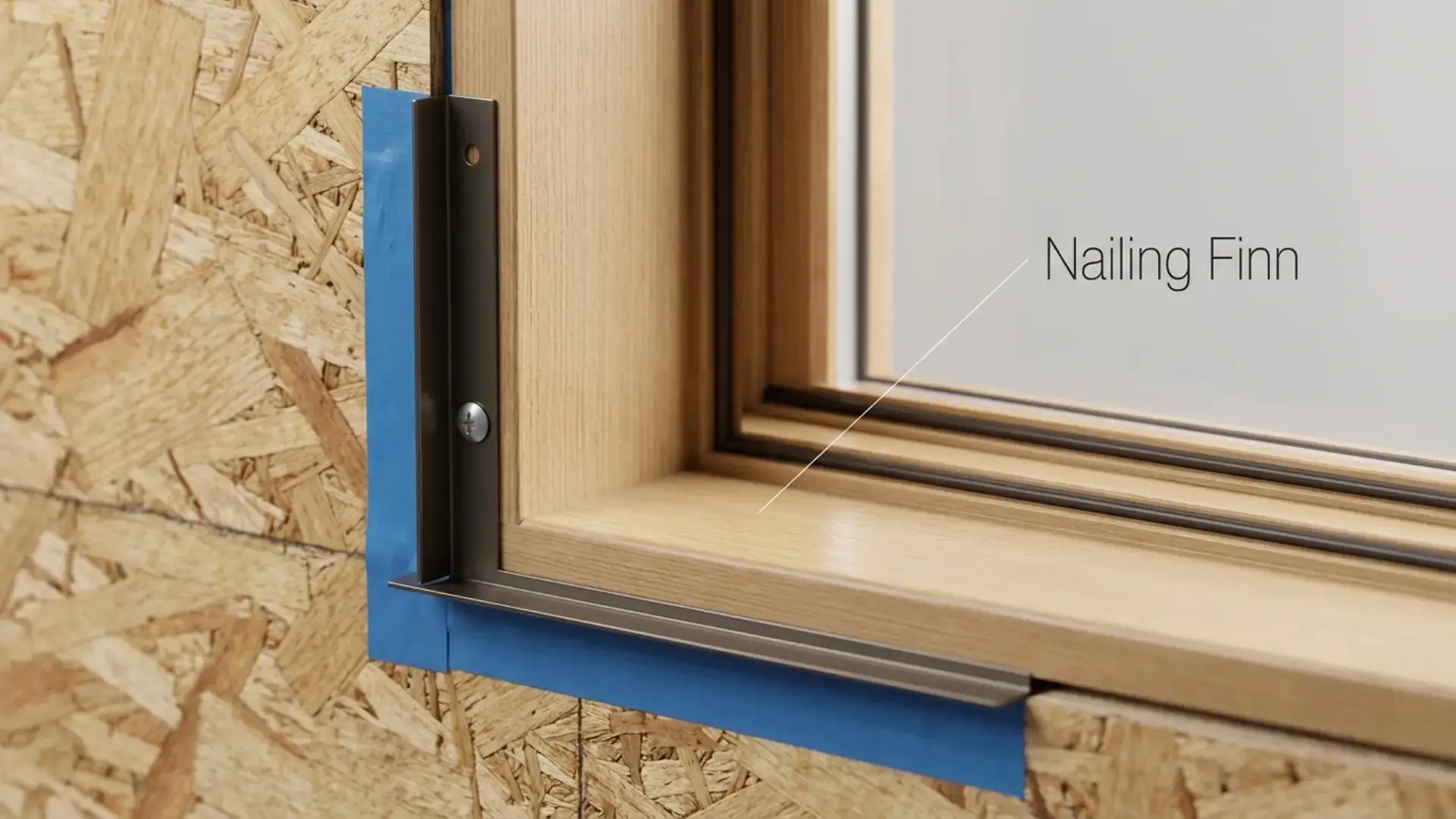
A nailing fin is a thin flange that encircles many new-construction windows and plays a crucial role in installation. Installers securely fasten it to the wall sheathing, ensuring a tight fit. This connection helps prevent moisture infiltration it integrating with the surrounding water-control layers.
Proper installation of the nailing fin is essential for the window’s performance, contributing to the overall energy efficiency and durability of the building structure.
5. Jamb extension
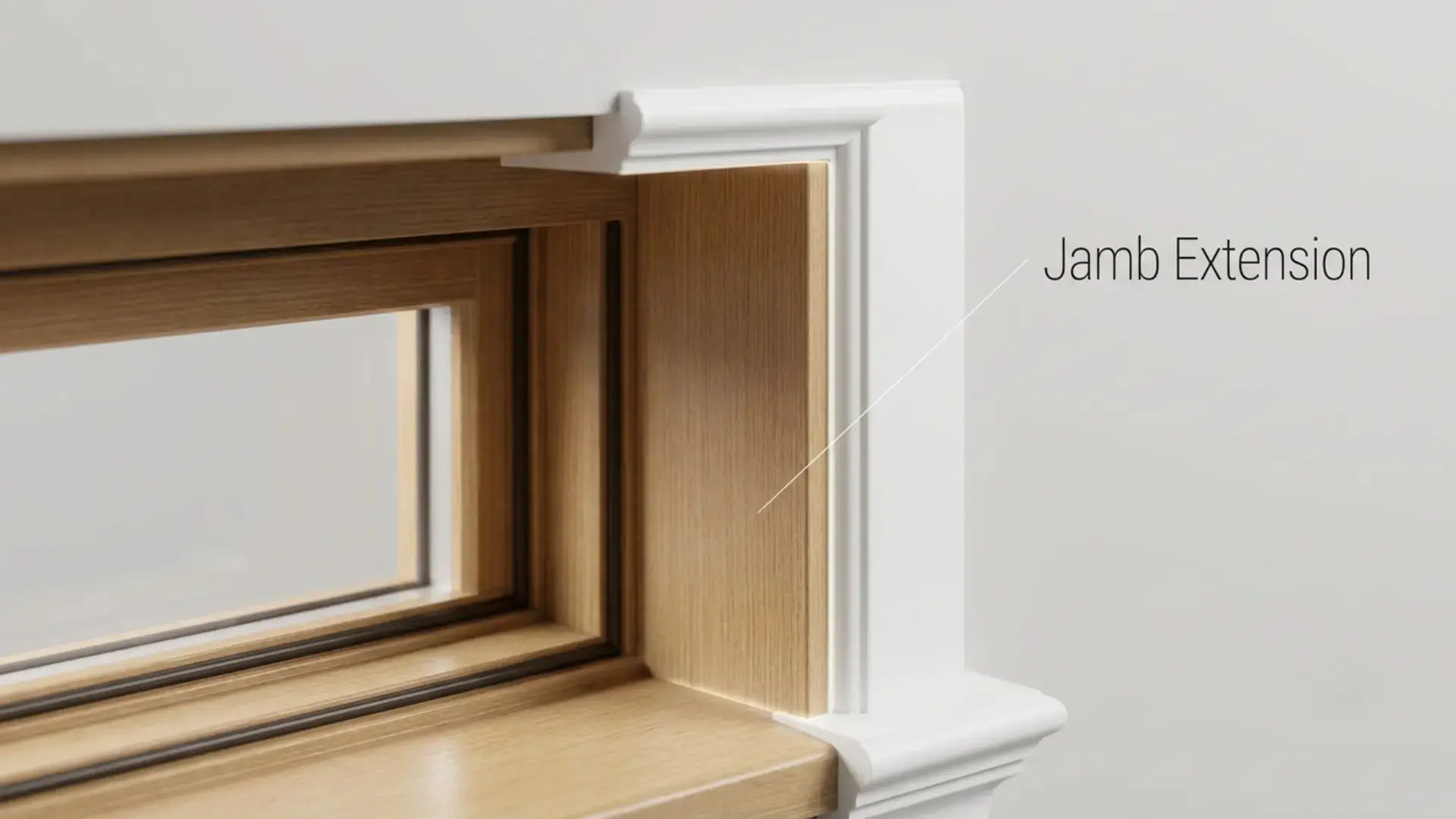
A jamb extension adds depth to the frame on the room side, bridging the space between the window jamb and the finished interior wall. This piece matters most in thicker walls, where a standard frame alone would leave an awkward gap along the edge.
The head, jambs, and sill form the basic frame, while nailing fins and jamb extensions support installation. Both parts often stay hidden once the work is complete.
Parts of a Window Sash
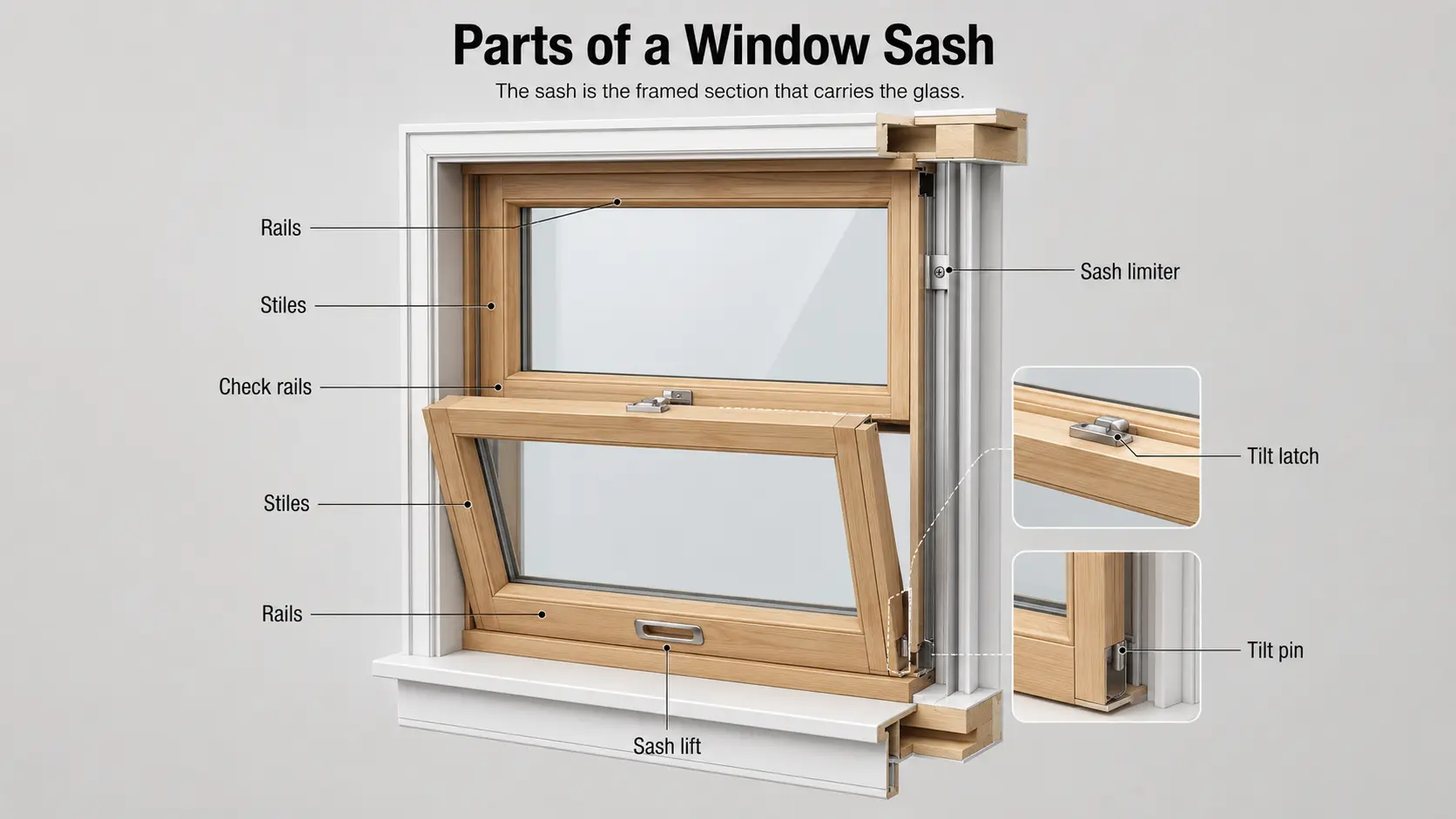
The sash is the framed section that carries the glass. Operating windows have at least one movable sash, while some fixed units have a sash that never opens.
- Rails: Rails are the horizontal pieces at the top and bottom of a sash. They connect the two vertical sides and help hold the glass in place.
- Stiles: Stiles are the vertical pieces on both sides of a sash. Locks, hinges, tilt latches, or other hardware may connect to them.
- Check rails: Check rails are the two rails that meet when a single-hung or double-hung window closes. This meeting area usually includes a lock and weatherstripping.
- Sash lift: A sash lift is a handle or recessed grip on the lower rail. It gives the user a secure place to raise or lower a hung window.
- Tilt latch and tilt pin: Tilt latches release the top of a hung-window sash so it can tilt inward for cleaning. Tilt pins connect the lower sash corners to the balance system.
- Sash limiter: A sash limiter restricts how far a window opens. Its design and use vary, so local safety rules and the product instructions should guide installation. Limiting the opening to no more than four inches is a common recommendation for windows within reach of young children, part of the Consumer Product Safety Commission’s guidance on preventing window falls.
Knowing these sash terms helps separate a glass problem from a fault involving movement, alignment, or locking.
Window Hardware by Opening Style
Window hardware is easier to identify after you know how the sash moves. Hung, hinged, sliding, and fixed windows use different operating pieces.
1. Single-hung and double-hung windows
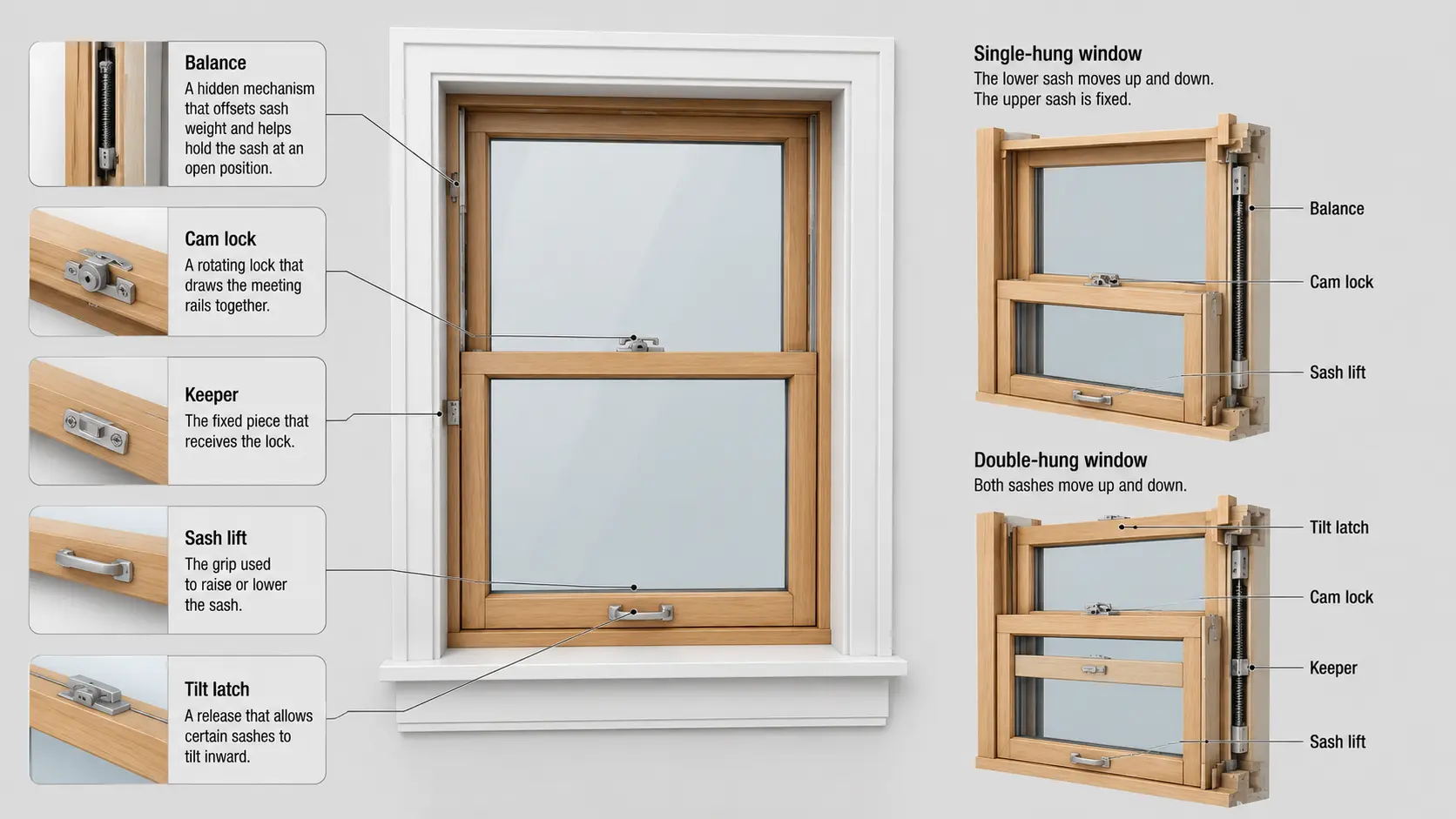
Hung windows feature sashes that move vertically, with single-hung windows having one movable lower sash and double-hung windows incorporating two movable sashes.
Important components of these windows include the balance, a hidden mechanism that offsets the weight of the sash and helps keep it open the cam lock, a rotating device that pulls the meeting rails together; the keeper, which is the fixed piece that receives the lock; the sash lift, a grip used to raise or lower the sash; and the tilt latch, which allows certain sashes to tilt inward for easier cleaning and maintenance.
2. Casement windows
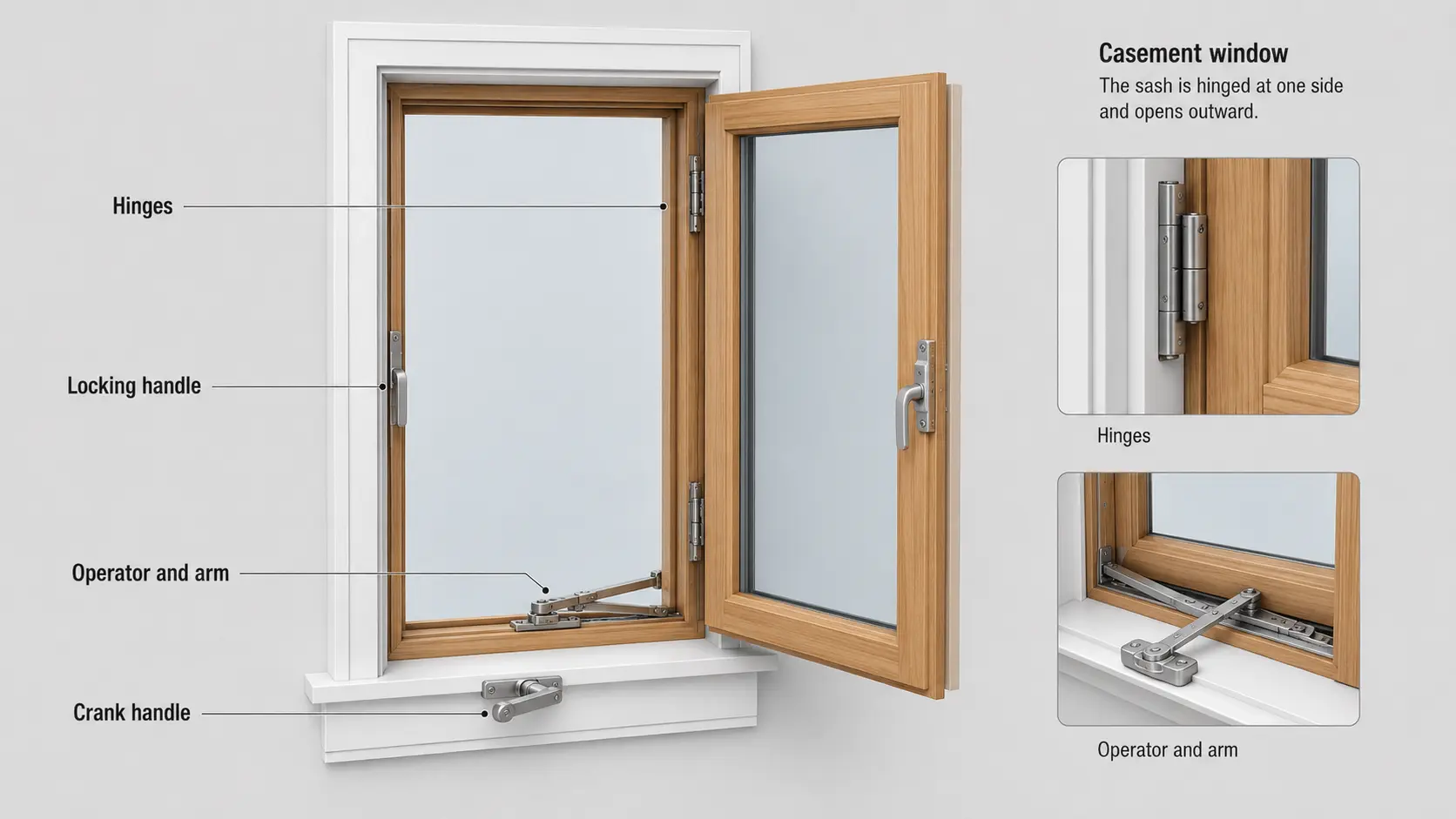
A casement sash is hinged on one side and opens outward. These windows typically utilize several components, including hinges that connect the sash to the frame, a crank handle that the user turns, and an operator with an arm that moves the sash as the crank turns.
Additionally, a locking handle serves as a lever to secure the closed sash against the frame.
3. Awning windows
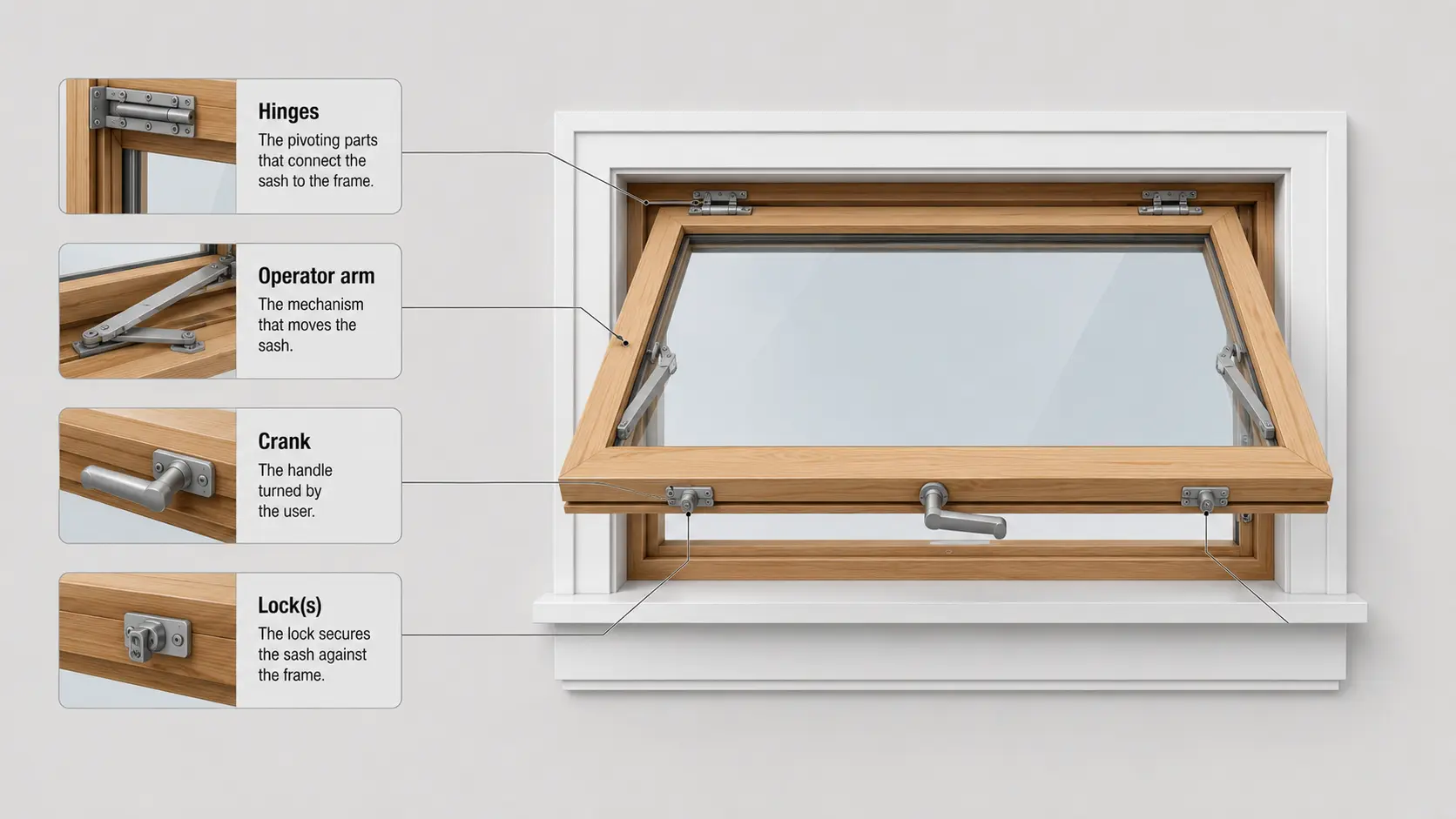
An awning sash is hinged at the top and opens outward from the bottom, making it an ideal choice for ventilation. It often uses components such as hinges, an operator arm, a crank, and one or more locks to ensure secure, smooth operation.
This design allows homeowners to enjoy fresh air while keeping rain or sun at bay, enhancing both comfort and energy efficiency in living spaces.
4. Sliding windows
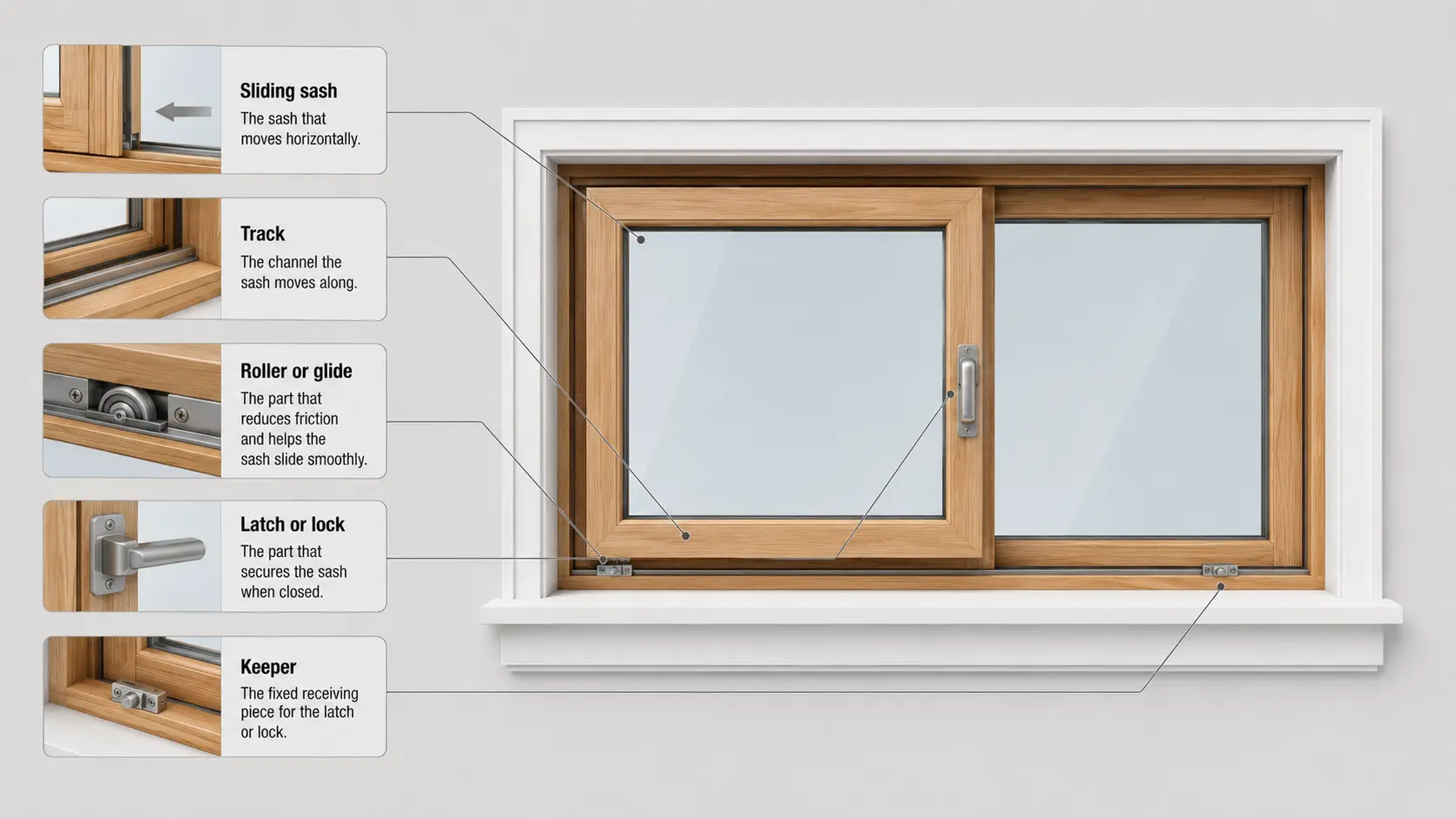
A sliding sash moves horizontally along a track, allowing for effortless operation. Rollers or glides reduce friction, enhancing the smoothness of the movement. Many designs feature a latch or lock that secures the sash against a keeper, providing safety and stability.
These sashes are commonly used in windows and doors, offering ventilation while maintaining energy efficiency. Their sleek design complements modern architecture, making them a popular choice for contemporary homes.
5. Fixed windows
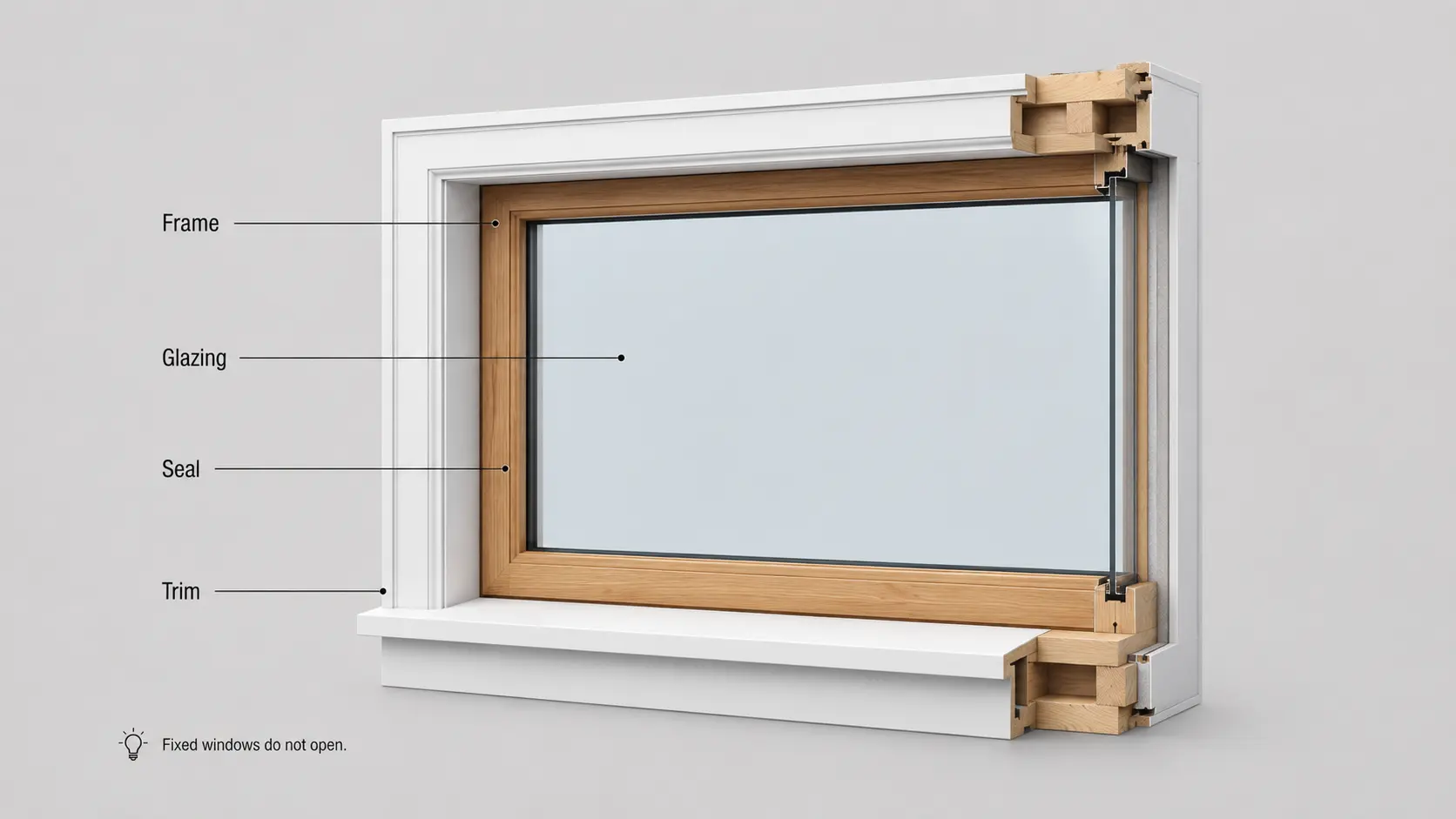
A fixed window does not open, so it has no balance, crank, hinge, or operating handle, though it still includes a frame, glazing, seals, and trim around the glass itself.
The operating style remains the fastest clue when naming an unknown piece of hardware, diagnosing a problem, or ordering a suitable replacement part without guesswork.
Muntins, Mullions, and Grilles
These three terms describe dividers or bars near the glass. They sound similar, yet they refer to different parts and construction methods.
- Muntins: Narrow bars that divide the glass area within a sash. In older windows, they may hold separate panes. Some newer designs copy that divided look.
- Mullions: A mullion joins or separates complete window units within a larger opening. It sits between the frames, not merely between two sections of one glass pane.
- Grilles: Grilles are bars added to create a divided-pane appearance. They may sit between the glass, attach to a glass surface, or be removable for cleaning.
True divided-light windows use separate panes. Simulated divided-light windows use surface bars, and grilles-between-glass place the pattern inside the sealed unit.
The key difference is location: muntins divide glass within a sash, mullions separate window units, and grilles create a visible pattern.
Parts That Seal the Window and Manage Water
Windows use several components to control airflow, manage rainwater, and protect against moisture damage. These parts work together with proper installation to maintain performance, prevent leaks, and support the long-term function of the window system.
| Window Part | What It Is | Main Function |
|---|---|---|
| Weatherstripping | Flexible material placed between the sash and frame | Compresses when closed to reduce air gaps and limit drafts |
| Insulated Glass Edge Seal | Sealant around the edges of insulated glass units | Keeps glass layers sealed and helps prevent moisture buildup between panes |
| Weep Holes | Small drainage openings near the bottom of some window frames | Allows trapped water to exit through the designed drainage path |
| Drip Cap or Head Flashing | Protective piece installed above the window | Directs rainwater away from the top of the window unit |
| Flashing | Water-resistant material around the rough opening | Guides moisture toward the exterior and protects surrounding wall layers |
| Exterior Cladding | Protective covering on some wood frames and sashes | Shields the material from direct weather exposure and helps reduce damage |
These components depend on correct installation to work properly. Avoid blocking drainage openings or changing sealing points without understanding their purpose, as this may prevent water from escaping and lead to moisture-related issues.
Window Glass and Insulating Parts
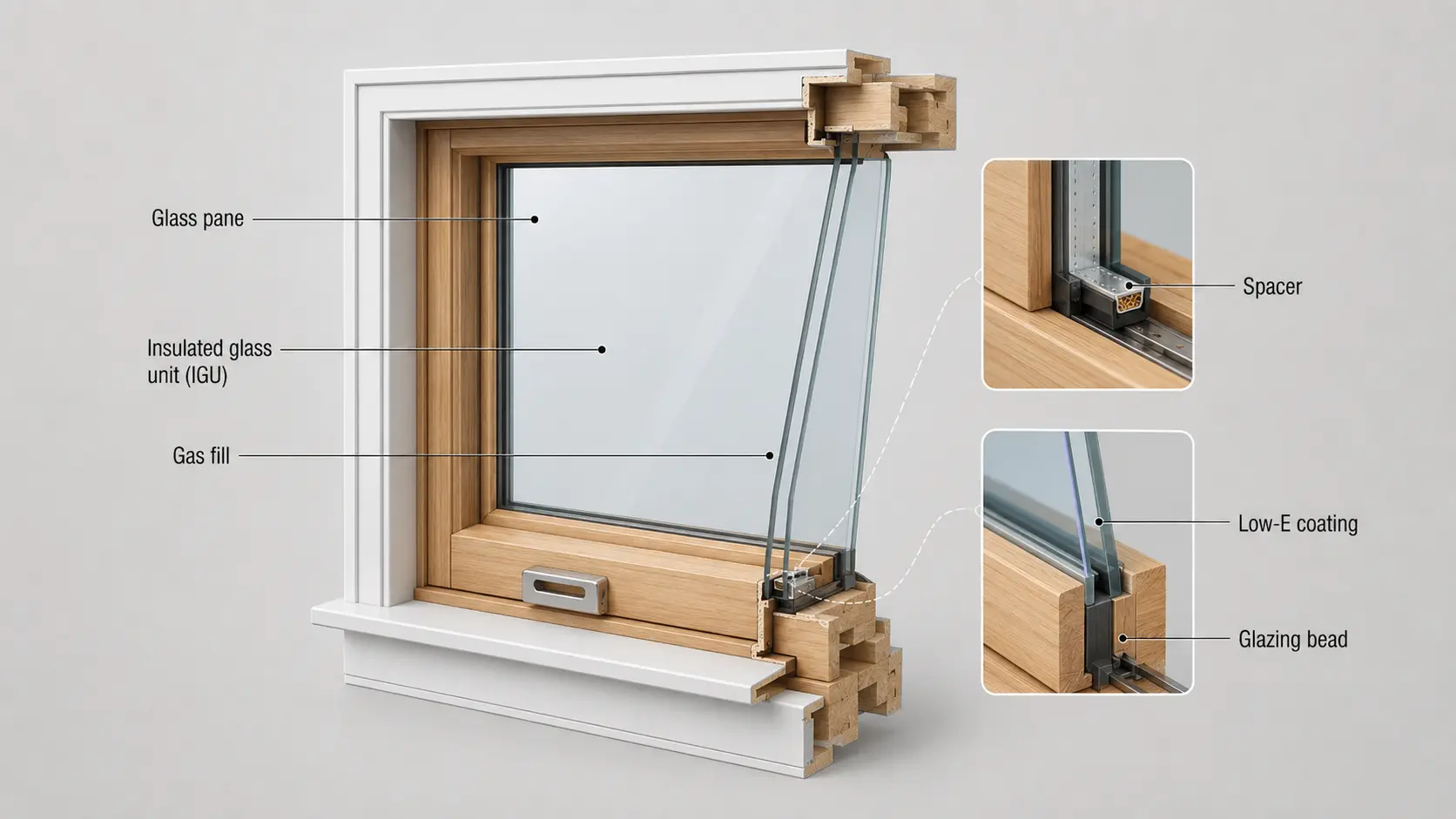
Modern glazing can contain more than one sheet of glass. Its supporting parts keep the panes separated and help manage heat, air, and moisture.
- Glass pane: A pane is one sheet of glass. A single-pane window has one sheet, while double-pane and triple-pane units contain two or three sheets.
- Insulated glass unit: An insulated glass unit, often shortened to IGU, contains two or more panes sealed around their edges. The closed spaces between them improve insulation.
- Spacer: The spacer runs around the edge between glass panes. It holds the panes the correct distance apart and works with sealants around the edge. The U.S. Department of Energy explains that spacers and sealants maintain pane spacing while helping control moisture and gas leakage.
- Gas fill: Some insulated glass units contain argon or krypton between the panes instead of ordinary air. These clear, odorless gases reduce heat transfer through the glazing.
- Low-E coating: A low-emissivity coating is a very thin layer applied to a glass surface. It controls heat transfer while allowing daylight through the window.
- Glazing bead or glazing profile: A glazing bead is a narrow strip that helps hold glass in the sash or frame. The exact shape, material, and removal method depend on the manufacturer.
The glass, spacer, sealants, and optional coatings work as one glazing system. Damage to one area can affect the performance of the full unit.
Window Trim and Interior Finishing Parts
Trim covers the joint between the installed window and the wall. Some trim also gives the interior or exterior edge a finished shape.
- Interior casing: Casing is the trim placed around the window on the room side. It hides the gap between the jamb and the finished wall.
- Exterior casing and brick mould: Exterior casing surrounds the window outside. Brick mould is one common casing profile used where the unit meets siding, brick, or another wall finish.
- Stool: The stool is the flat interior ledge at the bottom of many windows. People often call it a windowsill, but the sill is part of the exterior frame.
- Apron: The apron is the trim board installed on the wall directly below the stool. It covers the lower joint and completes the interior trim.
These pieces surround the window, but they should not be confused with the frame members that support the glass or sash.
Common Signs That a Window Part Needs Attention
Window issues can have several possible causes, so symptoms alone may not confirm the exact failed part. This table shows common signs, likely causes, and the areas that may need inspection.
| Sign | Possible Cause | Check These Parts |
|---|---|---|
| Sash is hard to raise | Dirty track, worn balance, misalignment | Track, balance, sash |
| Sash will not stay open | Broken or worn balance | Balance system |
| Crank moves, but sash does not | Damaged operator or hinge issue | Crank, hinges, operator |
| Drafts around closed sash | Worn seals or gaps | Weatherstripping, lock, frame |
| Moisture between panes | Failed glass seal | Insulated glass unit |
| Water near frame | Drainage or sealing issue | Weep holes, sill, flashing |
| Lock does not align | Shifted sash or worn hardware | Lock, keeper, sash |
These signs can help narrow down the problem area, but proper inspection may be needed to confirm the cause. Avoid forcing parts or blocking drainage openings, as this can create further damage or moisture issues.
Useful Window Terms that Are Not Physical Parts
Some window terms describe measurements, spaces, or construction methods rather than actual pieces of the window. Knowing these terms helps avoid confusion when reading estimates, repair notes, or installation instructions.
A rough opening is the framed space in the wall where the window is installed.
It must have enough room for the window unit and required adjustments. The daylight opening refers to the visible glass area that allows light to enter, excluding the frame, sash, and trim.
Direct glazing describes a method where glass is fixed directly into a stationary frame without a separate sash.
Handing explains the opening direction of a hinged window, usually based on the viewing side used by the manufacturer. These terms often appear alongside window part names during repairs or replacements.
Frequently Asked Questions
What are the basic parts of a window?
The basic parts are the frame, sash, glass or glazing, seals, and hardware. Fixed windows may not include movable sash hardware.
What is the difference between a window frame and a sash?
The frame is fixed to the wall opening. The sash sits inside the frame, holds the glass, and may be fixed or movable.
Is a window screen a safety barrier?
No. A standard screen limits insect entry while allowing air through. It is not designed to prevent a person or pet from falling.
Can one damaged window part be replaced without replacing the whole window?
Sometimes. Locks, handles, balances, screens, weatherstripping, and some glass units may be replaceable. Part availability depends on the brand, model, and condition.
Summing Up
Knowing parts of a window makes the next step clearer when something sticks, leaks, fogs, or fails to lock. Start by identifying the window style, then locate the trouble within the frame, sash, glazing, seals, hardware, or trim.
Record the brand, material, visible labels, and exact position before seeking a replacement piece.
Do not force a sash or crank that has become hard to move. Small hardware trouble can spread when parts are pushed past their normal range. Broken glass, ongoing water entry, and movement in the frame need timely attention.
A clear description and a few close photos can help an installer assess the issue and bring the right parts for the visit without delays or extra return visits. Drop a comment below and tell me what kind of windows you have in your house.