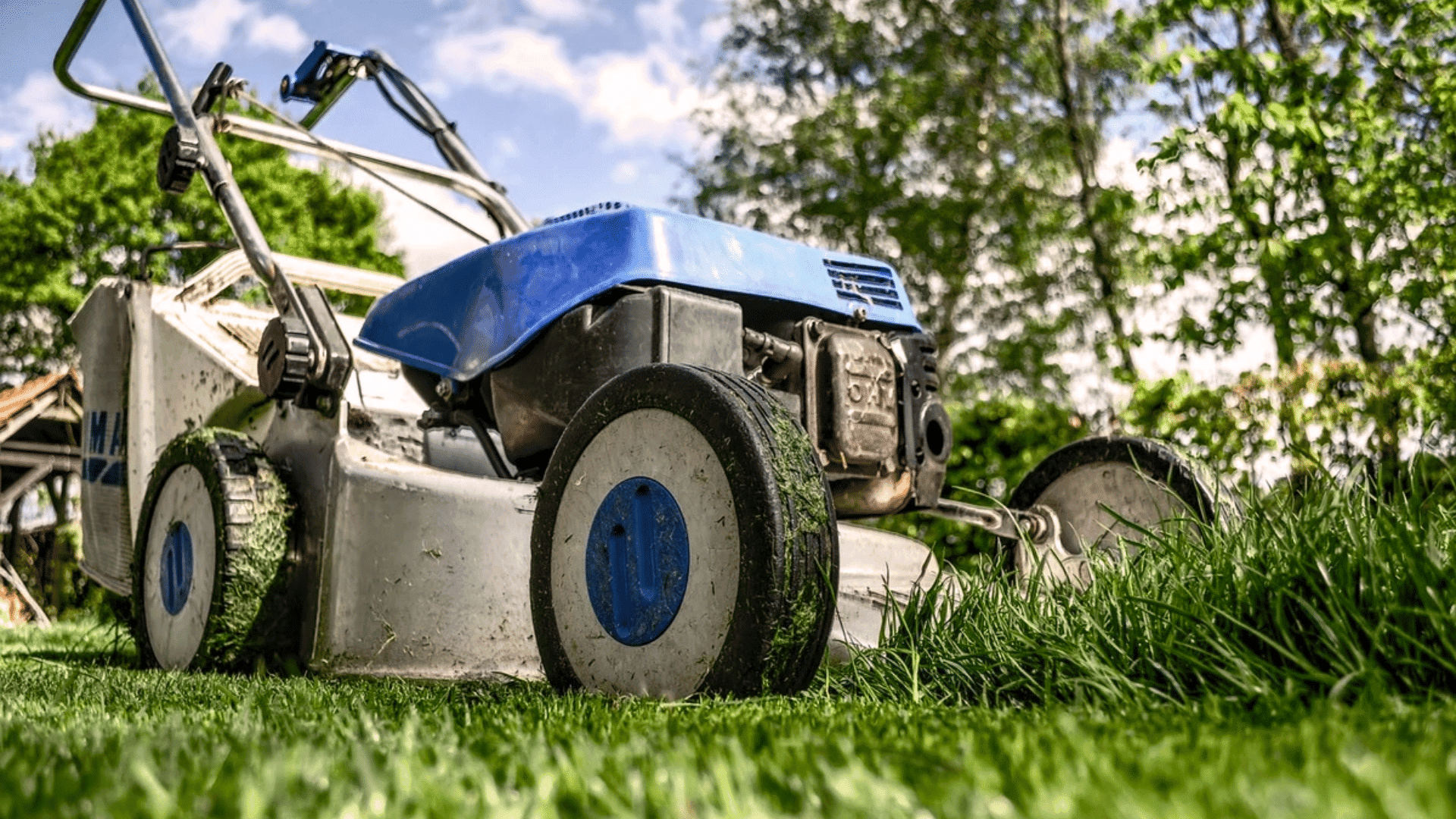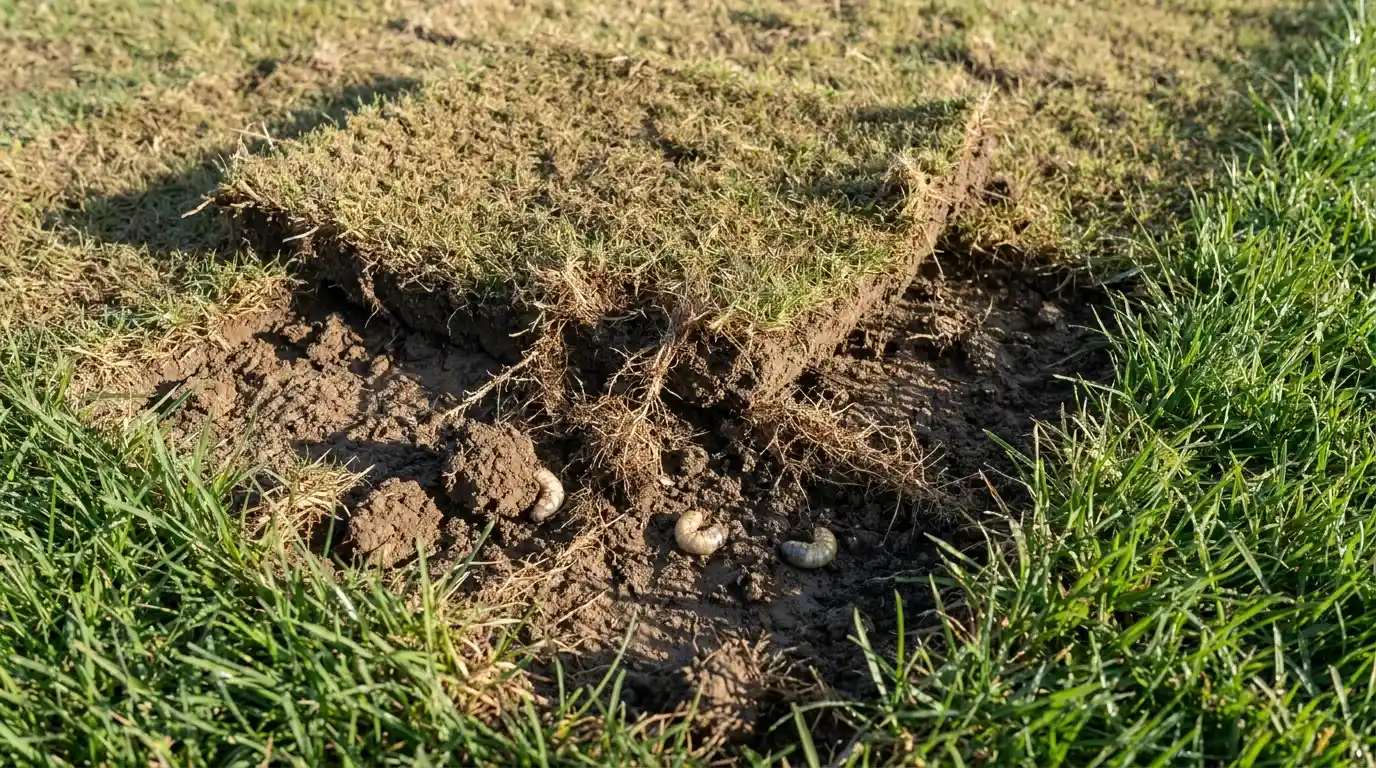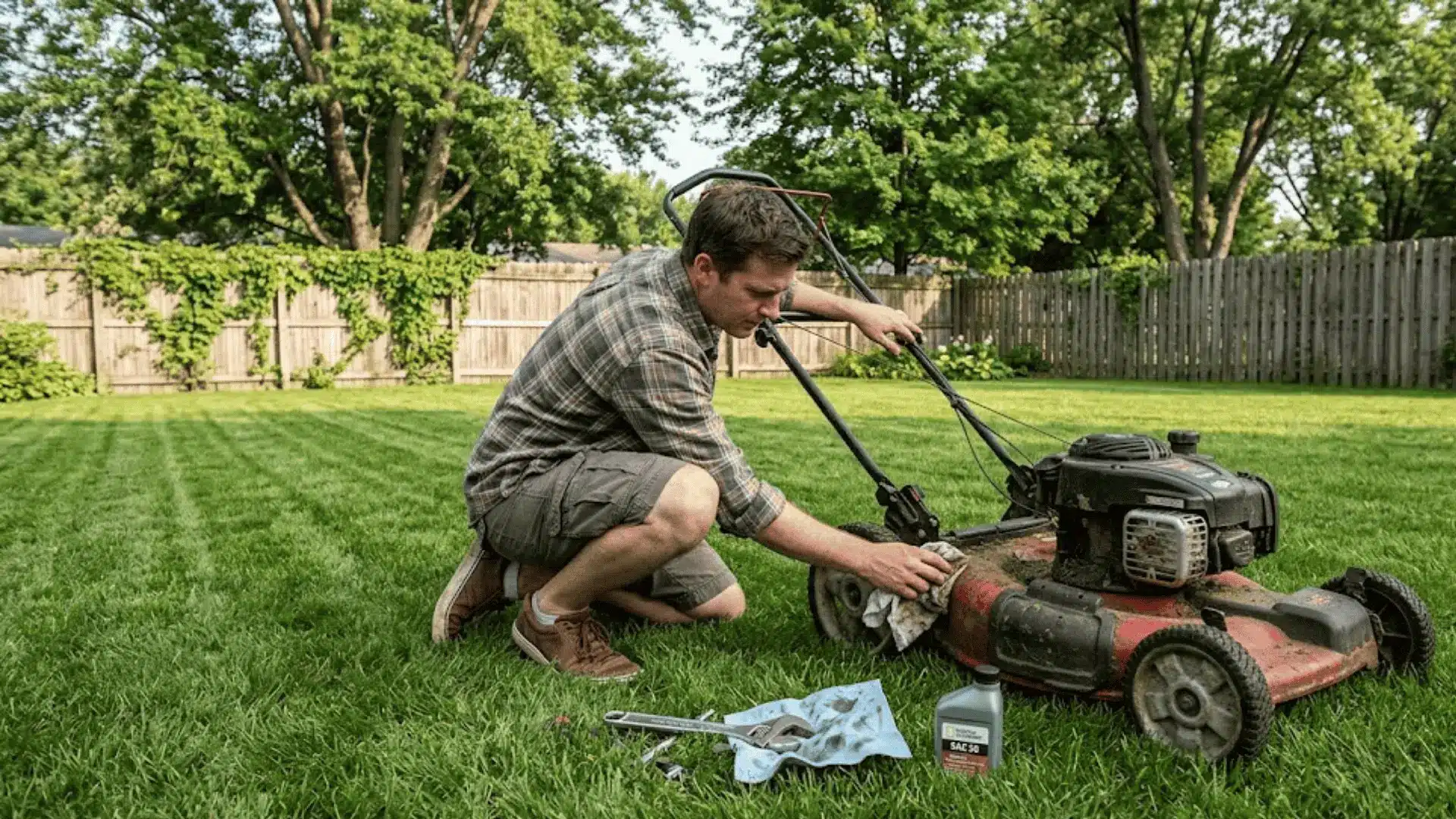
Your lawn mower works hard every season, and honestly, a little love goes a long way.
Keeping up with regular maintenance means cleaner cuts, a machine that actually starts when you need it to, and way fewer trips to the repair shop.
Weekly habits, seasonal care routines, easy troubleshooting fixes, it’s all here, laid out so your mower stays in its best shape and your yard always gets the cut it deserves.
The Payoff of Keeping Your Mower in Shape
A well-maintained lawn mower can serve you faithfully for well over a decade, which is a pretty solid return on a little regular effort.
Skip the upkeep, though, and you’re looking at unexpected breakdowns and repair bills that add up fast.
Beyond saving money, a properly tuned mower cuts grass more cleanly, which actually supports healthier growth across your lawn.
And on the fuel side, a clean, well-running engine doesn’t have to work as hard, meaning better performance and less gas consumed every single time you mow.
Lawn Mower Maintenance Checklist
Staying on top of your mower’s upkeep doesn’t have to feel overwhelming. Breaking it down by frequency makes it easy to follow and even easier to stick to.
| When | Task | Focus Area |
|---|---|---|
| Before Each Use | Check oil, inspect blades, tighten bolts | Safety & Readiness |
| After Each Use | Clear clippings, check worn parts, and store properly | Cleanliness & Storage |
| Monthly | Replace the air filter, lubricate parts, and inspect belts | Performance |
| Annually | Change oil, replace spark plug, sharpen blades | Full Tune-Up |
Essential Lawn Mower Maintenance Tasks
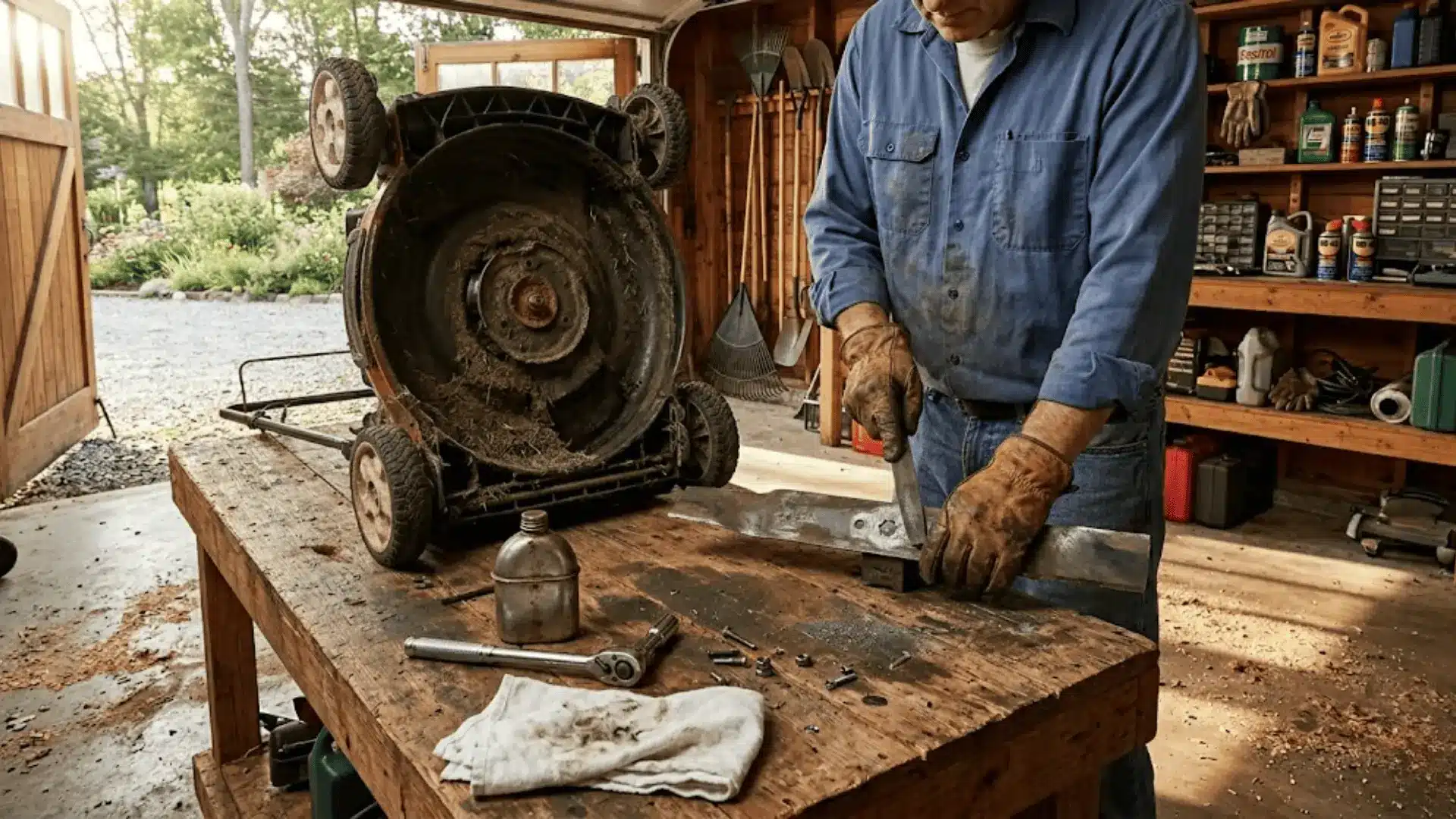
Knowing what to maintain is one thing; knowing how to do it properly is what actually makes a difference. Work through these tasks one by one, and your mower will thank you all season long.
1. Change the Oil Regularly
Fresh oil keeps your engine running smoothly and prevents long-term wear from friction buildup. Aim to change it every season or after several hours of use.
When the oil looks dark, gritty, or smells burnt, that’s your cue. Drain it while the engine is still warm for easier flow, refill with the manufacturer-recommended grade, and your engine is set for the season ahead.
2. Sharpen and Balance the Blades
Dull blades tear through grass rather than cutting it cleanly, leaving ragged edges that make your lawn more susceptible to disease and stress.
Sharpen them roughly every couple of dozen mowing hours. You can do it yourself with a metal file or angle grinder, but if balancing feels uncertain, a professional sharpening service is a worthwhile and affordable option.
3. Clean the Mower Deck
Grass buildup under the deck traps moisture, encourages rust, and restricts airflow, all of which quietly wear your mower down. Always disconnect the spark plug before getting underneath for safety.
Use a putty knife or firm scraper to remove caked-on clippings, follow up with a hose rinse, and finish with a light coat of deck spray to keep future buildup from sticking as easily.
4. Replace or Clean the Air Filter
A clean air filter is what allows your engine to breathe properly and run at full efficiency. Clogged filters are one of the most overlooked reasons mowers lose power or struggle to start.
Foam filters can be washed, dried, and lightly re-oiled before going back in. Paper filters should be replaced once visibly dirty or clogged. Make it a habit to check the filter at least once a month during active mowing season.
5. Check and Replace the Spark Plug
A worn or fouled spark plug leads to hard starts, rough running, and poor fuel efficiency over time. Replacing it once a year is one of the simplest, most impactful maintenance steps you can take.
Use a spark plug wrench to remove it, inspect for carbon buildup, cracking, or corrosion, and swap in a fresh one that matches your mower’s exact specifications for the smoothest start.
6. Inspect Belts, Tires, and Cables
Frayed belts, stiff cables, and uneven tire pressure all quietly chip away at your mower’s performance and cutting quality. Regularly check belts for visible cracking or fraying, and replace them before they snap unexpectedly mid-use.
Keep tires evenly inflated so the deck maintains a consistent cutting height across the lawn, and check that all cables move freely, with no stiffness or resistance when engaged.
7. Fuel System Maintenance
Stale or degraded fuel is behind more mower problems than most people ever suspect. Always use fresh gasoline and, where possible, avoid high-ethanol blends, as ethanol attracts moisture and can slowly damage internal fuel system components.
If you’re storing your mower through the off-season, adding a quality fuel stabilizer prevents the gas from breaking down and gumming up the carburetor during those long idle months.
Seasonal Lawn Mower Maintenance Guide
Your mower’s needs shift with the seasons, and keeping up with each phase means you’re never caught off guard when it’s time to mow.
Here’s what to focus on throughout the year.
- Spring: Inspect the full mower, change the oil, replace the spark plug, sharpen the blades, and clean or replace the air filter.
- Summer: Clean the deck every few mows, monitor oil levels, keep tire pressure even, and lubricate all moving parts.
- Fall: Deep clean the mower, sharpen the blades, and inspect belts, cables, and tires for any wear or damage.
- Winter: Drain the fuel or add a stabilizer, remove the battery if applicable, and store in a dry, covered space.
A little seasonal attention goes a long way toward keeping your mower reliable, efficient, and ready whenever your lawn needs it most.
Gas vs. Electric Lawn Mower Maintenance
Both types get the job done, but how you care for them looks quite different.
Here’s a side-by-side breakdown to help you stay on top of whichever one you own.
| Maintenance Area | Gas Mower | Electric Mower |
|---|---|---|
| Oil Changes | Every season or per manufacturer’s hour limit | Not required |
| Fuel Care | Use fresh gas, avoid high-ethanol blends, and add stabilizer before storage | No fuel system; keep vents and motor housing clear of debris |
| Filter Maintenance | Clean or replace the air filter monthly during peak season | Check intake vents periodically for dust or blockage |
| Battery | Not applicable | Store at partial charge in a cool, dry place; avoid full discharge |
| Blade Maintenance | Sharpen every couple of dozen mowing hours | The same sharpening schedule applies regardless of power type |
| Spark Plug | Replace annually for reliable starts and fuel efficiency | No spark plug; inspect motor brushes if performance drops |
| Storage Prep | Drain fuel or stabilize, clean deck, store covered | Charge battery to around 50%, store indoors away from moisture |
| Overall Upkeep | More components, more frequent attention | Simpler routine, but battery health is the top priority |
Common Lawn Mower Problems and Fixes
Even a well-maintained mower runs into issues occasionally, and knowing what’s wrong is half the battle. These are the most common problems people run into and exactly what to do about them.
Problem 1: My Mower Just Won’t Start, No Matter What I Try.
The Fix: Check the spark plug first since a worn or fouled one is the most common culprit. From there, make sure the fuel is fresh, the air filter isn’t clogged, and the oil level isn’t running low.
Problem 2: My Lawn Looks Uneven After Every Single Mow.
The Fix: Dull blades are usually to blame, as they tear rather than cut, leaving an inconsistent finish across the lawn. Also, check that your tire pressure is even on both sides, since even a small difference throws off the cutting height.
Problem 3: There’s Way More Vibration than Usual When I Mow.
The Fix: Unusual vibration almost always points to a loose component or an unbalanced blade. Shut the mower off, disconnect the spark plug, and inspect the blade for damage or improper installation before running it again.
Problem 4: The Engine Keeps Overheating Mid-Mow.
The Fix: A dirty air filter restricts airflow and forces the engine to work harder than it should. Check the oil level and clear any blocked vents, as restricted airflow and low lubrication are the fastest routes to an overheated engine.
DIY vs. Professional Lawn Mower Service
Most mower maintenance is well within reach for any homeowner, but some jobs genuinely call for a professional.
Here’s a clear breakdown to help you decide when to roll up your sleeves and when to make the call.
| Scenario | DIY | Professional |
|---|---|---|
| Oil Change | Yes, straightforward with basic tools | Not necessary unless you’re uncomfortable |
| Blade Sharpening | Yes, with a file or angle grinder | Recommended if balancing feels uncertain |
| Air Filter Cleaning | Yes, simple and quick | Not needed |
| Spark Plug Replacement | Yes, minimal tools required | Not needed |
| Carburetor Cleaning | Possible, but fiddly for beginners | Recommended for first-timers |
| Belt Replacement | Doable with patience and a manual | Preferred if multiple belts are involved |
| Engine Repairs | Not recommended | Yes, always |
| Electrical/Wiring Issues | Not recommended | Yes, always |
| Annual Full Tune-Up | Optional if you’re confident | Worth it for peace of mind |
| Average Service Cost | Minimal, mostly parts | Ranges from $50 to $150+ depending on the job |
Safety Tips for Lawn Mower Maintenance
No maintenance task is worth skipping the basics on safety. Keep these in mind every single time you work on your mower.
- Always disconnect the spark plug before inspecting or repairing any part of the mower.
- Wear thick gloves whenever you’re handling or anywhere near the blades.
- Never attempt to service or adjust a mower while the engine is still running.
- Work on a flat, stable surface to keep the mower steady and avoid accidents.
A little caution goes a long way, and the few seconds it takes to do things safely are always worth it.
Final Thoughts
Good lawn mower maintenance doesn’t have to feel like a chore. Once it becomes a habit, it’s just a small, satisfying part of taking care of your outdoor space.
A little attention each season keeps your mower running reliably, your grass looking its best, and those unexpected repair bills comfortably out of the picture.
Just getting started or fine-tuning a routine you already have, the effort genuinely pays off every time you mow.
Got a maintenance tip that’s worked wonders for you? Drop it in the comments below!