Evening activity in the yard is typical. Those gatherings are nearly always harmless crane flies, and their swarms last only a short while.
First move: switch off porch lights for a few nights and keep doors closed while lights are on. You’ll notice fewer piling up around entries almost immediately.
You might hear the soft tap tap against windows and see those spidery legs splayed across your siding. It’s unsettling. Let’s make sense of it and calm the chaos.
What You are Seeing: Crane Flies, Not Mosquitoes
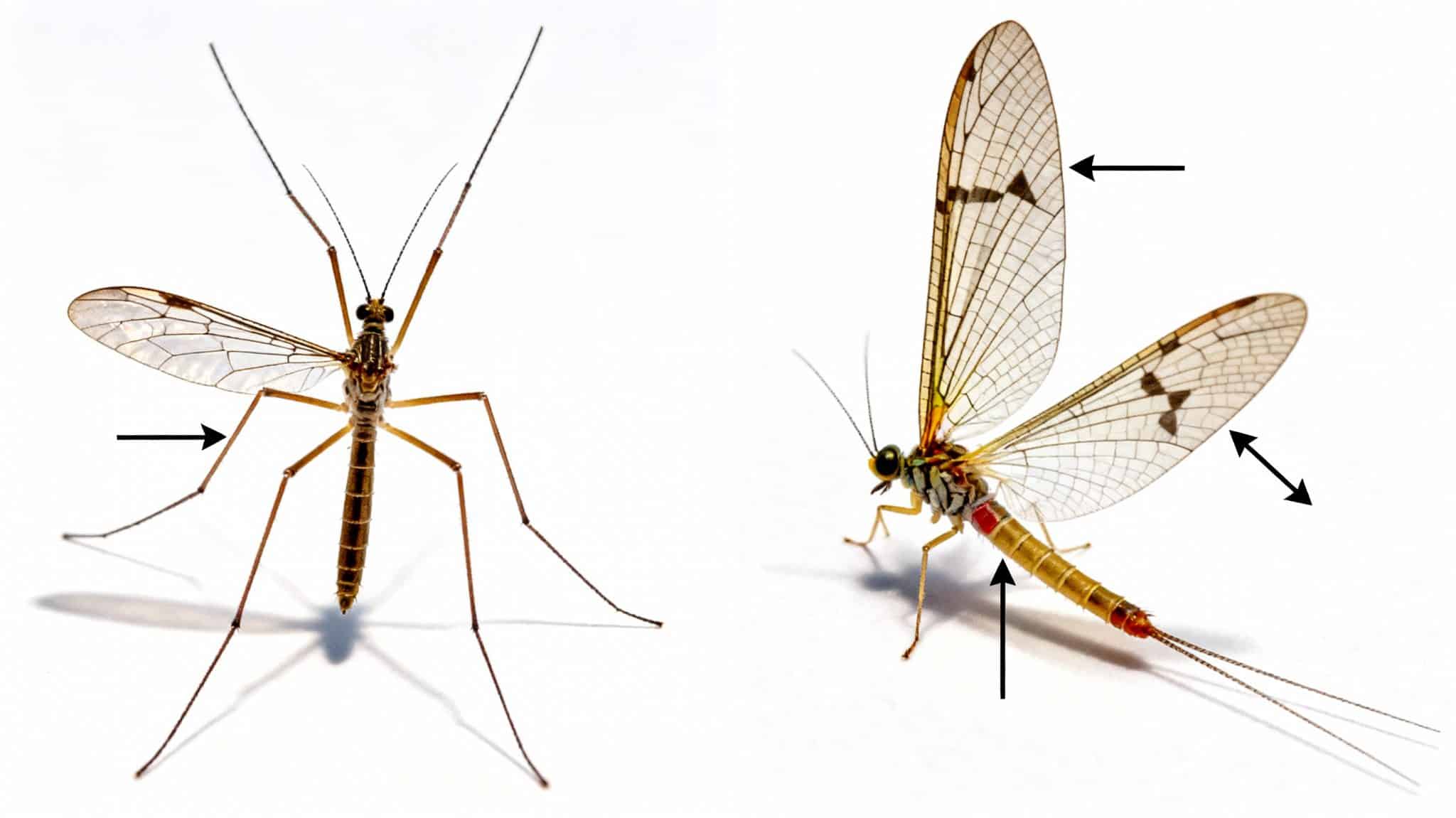
People call them mosquito hawks, but they aren’t mosquitoes, and they don’t eat mosquitoes. They’re crane flies. Gangly, clumsy fliers that show up in a burst and vanish almost as fast.
Quick Tells to Spot Crane Flies, Not Mosquitoes
-
Size and legs: Much larger than mosquitoes, with very long, easy-to-break legs.
-
Flight: Wobbly, bumper car flying. They ping off light fixtures and windows.
-
Behavior: Crowd around porch lights at dusk. They don’t land and bite.
Try this: Gently cup one against the window. If the legs fall off like fragile threads and it can’t hover steadily, it’s a crane fly. Annoying, yes. Dangerous, no.
Why Your Yard Gets Sudden Swarms of Crane Flies
Crane flies spend almost their entire lives as larvae in moist soil and leaf litter. When temperature and moisture line up, often after rain or consistent irrigation, they complete development together and emerge in a tight window. That’s why it feels like “nothing yesterday, cloud today.”
Adults live only a few days (sometimes up to a week or two), just long enough to mate, lay eggs, and be done. It looks like an invasion. It’s really a synchronized finish line.
Tonight: Quick Ways to Calm the Crane Fly Swarm
-
Kill the glow. Turn off porch and landscape lights, or swap to warm “bug” bulbs or amber string lights. Motion sensors help a lot. You should see the crowd thin around the doors within an hour.
-
Add a breeze. Aim a box fan outward from the doorway or patio where you gather. Crane flies are weak fliers. You’ll notice far fewer landings as soon as the fan is on.
-
Tighten up the entry points. Close doors when indoor lights are on, repair window screens, and use door sweeps. If a few get inside, a vacuum wand is the fastest, cleanest “catch and release.”
-
Skip yard-wide insecticides. Adults don’t bite, don’t feed, and will be gone in days. Sprays at this stage mostly kill the beneficial insects you want to keep.
This Week: Ride It Out, Reduce Moisture, and Night Lighting
Most swarms burn out in 3-7 nights. That’s the normal arc. Meanwhile, reduce what’s attracting them and what helps the next generation:
-
Water early, not nightly. Morning irrigation keeps lawns healthy without leaving evening moisture, the signal crane flies cue on for egg-laying.
-
Rake mats of wet leaves and thatch. Larvae (nicknamed “leatherjackets”) thrive in soggy, matted spots.
-
Keep lights minimal for a few evenings. Warmer LEDs (2700K), amber “bug” bulbs, and motion-activated fixtures make a real difference.
Good sign: by night three to five, you’ll see noticeably fewer around doors and windows. By 10-14 days, they’re usually gone.
Why This Happens: Moisture and Light Cues
Crane flies aren’t targeting you or your yard; they’re following moisture, and crane fly or mosquito confusion is common. Larvae develop in areas where the soil remains damp and rich in organic matter. When adults emerge all at once, bright lights concentrate them near your house.
That’s why cutting night lighting and managing moisture beats spraying: you remove the two cues they can’t resist.
If Your Lawn is Chewed, Check the Roots for Crane Fly Larvae
Most crane fly larvae recycle organic matter and don’t bother healthy turf. A few species, especially those in cool, wet regions, can thin lawns by nibbling on the roots.
Signs of Crane Fly Larvae in Turf
-
Yellowing patches that expand despite watering
-
Birds pecking or animals digging for grubs
-
Sod that lifts easily like a thin carpet in small areas
Try this quick test at dusk: Mix a gallon of water with a big squirt of dish soap and pour it over a 2×2 foot patch at the edge of a damaged area. Watch for 10-15 minutes. If you see lots of grayish, cylindrical larvae wriggling up, you’ve found the culprit.
What to Do if Crane Fly Larvae are Abundant in Lawns
-
Fix the moisture first. Improve drainage, water deeply but less often, and avoid nightly sprinkler runs. When the soil surface dries between waterings, larvae struggle.
-
Dethatch and aerate in season. Air and less thatch make the lawn less welcoming to leatherjackets.
-
Use biological control at the right time. Beneficial nematodes (look for Steinernema or Heterorhabditis on the label) can reduce larvae when soil temperatures are mild and the ground stays moist for a few days after application. Fall is a common sweet spot in many regions.
-
Reserve chemical treatments for clear, ongoing damage. They’re seldom needed, and timing is everything. Applying when adults are flying won’t help.
We see the same pattern after a wet spring in most service calls: the swarm peaks for a handful of nights, then fizzles. True larval damage is the exception, not the rule, and almost always linked to constantly damp, thatchy turf.
Tips to Prevent the Next Swarm
You don’t have to fight nature. Just stop rolling out the red carpet.
-
Water with purpose: early morning, fewer days, longer soak. Skip evening misting.
-
Keep leaf litter from matting. A light rake after storms pays off.
-
Mow at a healthy height for your grass type and avoid thick thatch.
-
Tame the night lighting: fewer fixtures on fewer hours, warmer color bulbs, and motion sensors.
You’ll know you’re winning when night lights aren’t a bug magnet, your lawn dries at the surface between waterings, and birds stop “harvesting” the same spots every morning.
Myths and Safety: Crane Flies Do Not Bite or Hunt Mosquitoes
Crane flies don’t bite, don’t sting, and don’t hunt mosquitoes. They’re awkward, temporary, and mostly beneficial to the ecosystem.
Indoors, they’re just lost. Catch with a cup or vacuum and escort them out. Outside, a few nights of smarter lighting and airflow defuse the whole situation.
Summing Up
To sum up, add two box fans, swap to amber bulbs, and keep landscape lights off until guests arrive. That combo and summer-long mosquito control plants significantly reduce the “swarm feel” without chemicals.
You’ve got this. Understanding the timing and what actually attracts them turns a minor backyard horror movie into a week-long blip.
You can diagnose turf issues fast with soil probes, thatch checks, and simple larval flush tests, then set watering and lighting plans that actually work.
We can usually assess the same week and leave you with a clear, step-by-step plan to calm tonight’s swarm and prevent the encore.