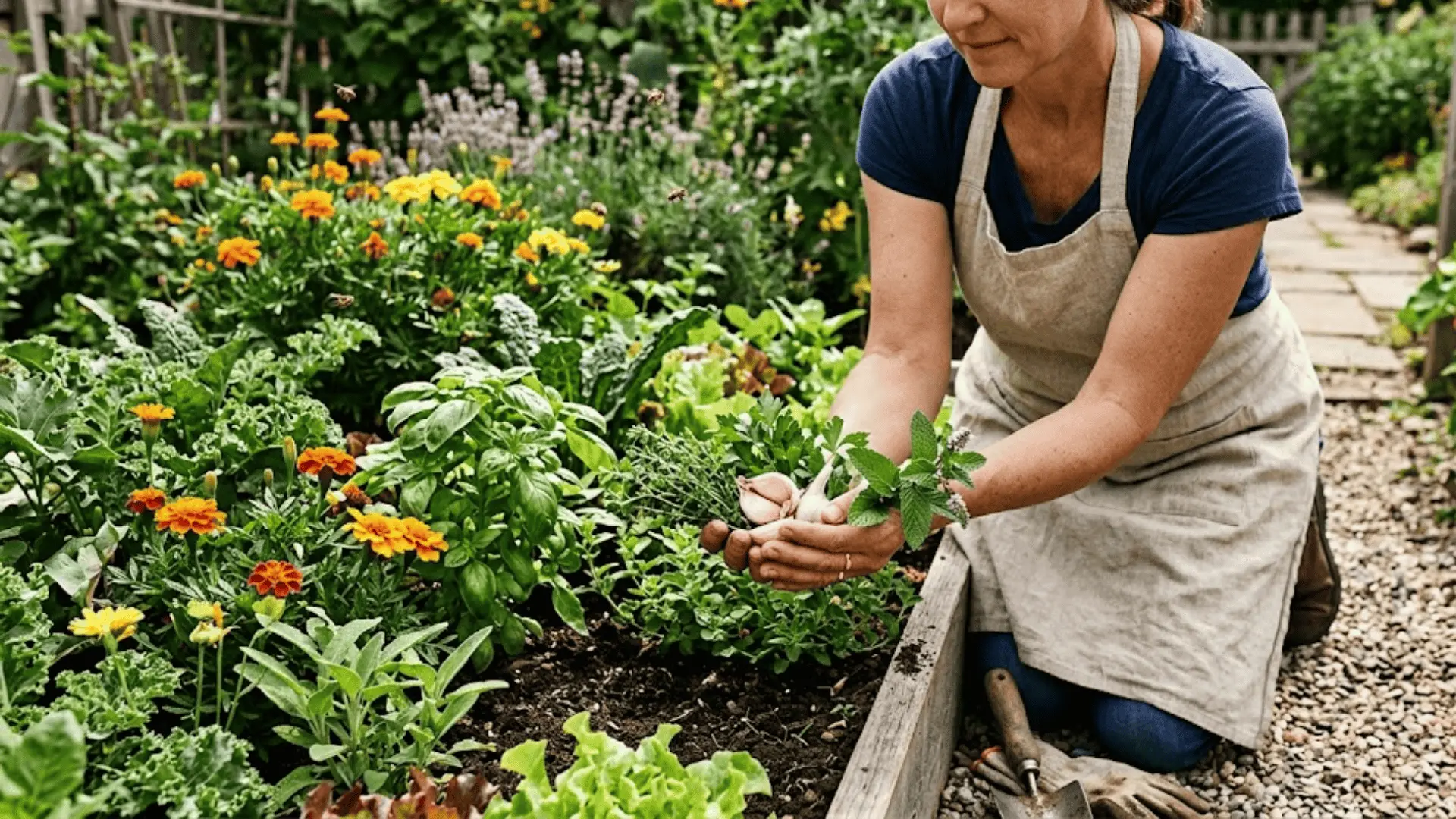
Your garden deserves better than a chemical cocktail. More gardeners are reaching for herbs, oils, and kitchen staples over store-bought sprays, and honestly, it makes a lot of sense.
Natural pest repellents are gentler on the soil, safer around kids and pets, and surprisingly easy on the wallet.
Worth knowing, though: most natural options work by confusing or deterring pests rather than wiping them out completely. And that’s perfectly okay.
Keep reading for the most effective natural insect repellents for plants that actually pull their weight.
Why More Gardeners Are Ditching Chemicals for Good?
Choosing natural pest repellents is less about being trendy and more about being smart.
These options keep your pets, family, and the good bugs like bees and ladybirds safe from unnecessary exposure.
Over time, synthetic sprays build up in your soil and quietly disrupt its health, while natural alternatives actually support a balanced ecosystem.
They also fit into a long-term approach to pest control rather than being a quick, repeated fix.
And since most of them come straight from your kitchen or garden, they cost very little and work surprisingly well.
11 Natural Pest Repellents That Actually Work
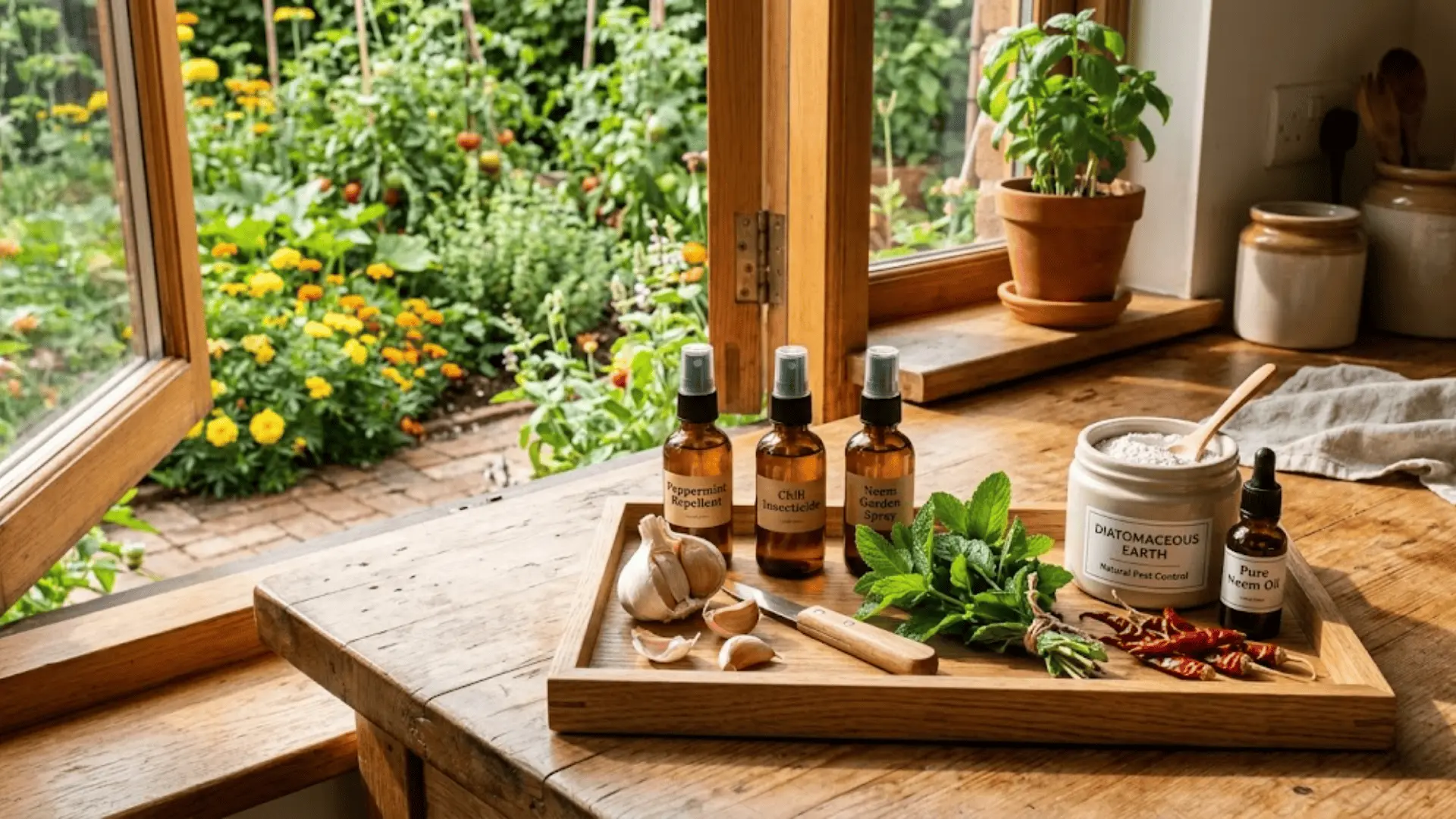
You don’t have to spend a lot or compromise your garden’s health to keep pests away.
These are the most reliable natural insect repellents for plants, from pantry staples to a few well-loved garden picks.
1. Neem Oil Spray (Most Effective All-Rounder)
Neem oil is one of those things every gardener eventually swears by. It works by interfering with how insects feed and reproduce, making it harder for pests to survive and multiply.
Especially reliable against aphids, mites, and whiteflies, it’s a slow but steady solution. Apply every seven to ten days for best results, and always spray in the early morning or evening to avoid leaf burn.
Product Recommendation: Bonide Captain Jack’s Neem Oil RTU
2. Garlic Spray
If pests had one weakness, it might just be garlic. The sharp, sulfur-heavy scent is deeply off-putting to a wide range of insects, beetles, and caterpillars, especially.
It’s also one of the easiest DIY natural pest repellents you can make at home with just a few cloves and water. The smell fades for you after drying, but lingers long enough to do its job.
Product Recommendation: Natria Insect, Disease & Mite Control on Amazon
3. Chili Pepper Spray
Chili pepper spray works on pure irritation, and it’s surprisingly effective. The capsaicin in peppers creates a burning sensation that keeps ants and caterpillars from coming back for more.
It’s easy to make at home and works well as a border spray around vulnerable plants. Reapply after rain since it washes off fairly quickly.
Product Recommendation: Bonide Hot Pepper Wax Animal Repellent
4. Diatomaceous Earth
This one works differently from the rest. Diatomaceous earth is a fine powder made from fossilized algae, and when crawling insects move through it, it physically damages their exoskeletons and dries them out.
It’s particularly effective against ants, slugs, and other crawling pests. Sprinkle it around the base of plants and reapply after watering or rainfall.
Product Recommendation: Harris Diatomaceous Earth Food Grade
5. Peppermint Oil Spray
Peppermint oil is one of the most pleasant-smelling natural insect repellents for plants, at least for humans. Insects, however, want nothing to do with it.
The strong menthol scent disrupts their ability to locate host plants, making it a great deterrent for aphids and spiders. Mix a few drops with water and a tiny bit of dish soap to help it cling to leaves.
Product Recommendation: Mighty Mint Plant Protection Peppermint Spray
6. Vinegar Solution
Vinegar works best as a contact deterrent rather than a broad spray. It disrupts the scent trails ants rely on and can discourage pests from returning to the same feeding spots.
Use a diluted solution carefully, as undiluted vinegar can affect plant leaves. It’s most useful around the edges of garden beds or on hard surfaces near your plants.
Product Recommendation: Lucy’s Family-Owned Natural Distilled White Vinegar
7. Soap Spray
Insecticidal soap is a gentle but effective option for soft-bodied pests. It works by breaking down the protective outer layer of insects like aphids, mites, and mealybugs, causing them to dehydrate.
It’s safe around most plants when diluted correctly and breaks down quickly without leaving residue. Spray directly on affected areas and repeat every few days as needed.
Product Recommendation: Safer Brand Insect Killing Soap Concentrate
8. Tomato Leaf Spray
A lesser-known but genuinely useful option, tomato leaf spray draws on the natural alkaloids found in the leaves of the tomato plant.
These compounds are mildly toxic to certain insects, particularly aphids and mites, while remaining safe for the surrounding garden. Steep a handful of leaves overnight, strain, and spray directly onto affected plants.
Product Recommendation: Since this one is entirely DIY, start with quality organic tomato plants from Burpee
9. Companion Planting
Companion planting is less of a spray and more of a long-term garden strategy. Certain plants like basil, marigold, and mint emit scents and compounds that repel pests, support pollinators, and boost biodiversity.
It’s one of the most sustainable natural pest repellent approaches you can build into your garden layout from the very beginning.
Product Recommendation: Burpee Marigold Seeds Collection
10. Essential Oil Blends (Clove, Eucalyptus, Lavender)
When used together, essential oils like clove, eucalyptus, and lavender create a layered scent barrier that insects find overwhelming. Each oil targets different pests, so blending them gives you broader coverage than using a single oil.
Mix with water and a small amount of castile soap, and spray around plant bases and foliage. It also happens to make your garden smell wonderful.
Product Recommendation: Plant Therapy Top 6 Organic Essential Oil Set
11. Homemade Neem + Garlic Combo Spray
If you want one spray that covers a lot of ground, this combination is hard to beat. Neem oil disrupts reproduction and feeding, while garlic’s pungent compounds repel insects on contact.
Together, they offer broad-spectrum protection across a wide range of pests. Mix both with warm water and a drop of dish soap, shake well, and apply every week during peak pest season.
Product Recommendation: Bonide Captain Jack’s Neem Oil RTU paired with Natria Insect, Disease & Mite Control as your garlic-based companion
How to Use Natural Pest Repellents Effectively?
Even the best natural insect repellent for plants won’t do much if it’s not applied the right way.
A few simple habits make all the difference:
- Spray in the early morning or evening, never under direct midday sun.
- Always target the undersides of leaves, where most pests actually hide.
- Reapply every seven to ten days, or immediately after rainfall.
- Use fresh solutions each time, as most natural sprays lose potency quickly.
- Start at the first sign of pest activity rather than waiting for a full infestation.
Consistency is what makes natural pest control actually work. It’s less about one perfect application and more about showing up for your garden regularly.
Natural Pest Repellents vs. Chemical Pesticides
Choosing between the two really comes down to what you’re prioritizing: speed or sustainability.
Here’s a quick side-by-side to help you decide what fits your garden best.
| Factor | Natural Pest Repellents | Chemical Pesticides |
|---|---|---|
| Safety | Safe for pets, kids, and beneficial insects | Can be harmful to people, pets, and pollinators |
| Environmental Impact | Biodegradable and soil-friendly | Can cause chemical buildup and soil damage |
| Results | Slower, gradual pest control | Faster, more immediate results |
| Cost | Budget-friendly, often DIY | Can be more expensive over time |
| Resistance Risk | Low, pests rarely build resistance | Higher risk of pest resistance with repeated use |
| Best Use | Prevention and long-term management | Severe or sudden infestations |
| Ideal Approach | Combine with companion planting and good garden hygiene | Use sparingly and only when necessary |
Pro Tips for a Pest-Free Garden
Good pest control starts long before you ever reach for a spray bottle.
These habits quietly do a lot of the heavy lifting:
- Rotate your crops each season to prevent pests from settling into familiar feeding grounds.
- Keep your plants well-watered and nourished, because healthy plants naturally resist pest damage better.
- Welcome beneficial insects like ladybugs and lacewings, which are free, natural pest control that works around the clock.
- Layer your approach by combining repellent sprays, companion planting, and diatomaceous earth for broader coverage.
The gardens that stay pest-free longest aren’t the ones that react the fastest. They’re the ones that were set up thoughtfully from the start.
Final Thoughts
Switching to a natural pest repellent is one of those small garden decisions that ends up feeling really good over time.
Your plants stay protected, your soil stays healthy, and the little ecosystem you’ve worked so hard to build stays intact. There’s something genuinely rewarding about watching your garden thrive without reaching for anything harsh.
Take what resonates from this list, start with whatever feels most doable, and let your garden guide you from there.
Every season teaches you something new, and that’s honestly the best part of it all. Which method are you most excited to try? Let us know in the comments below!