Last summer, a friend spent the whole weekend scratching her ankles raw. She had no idea what got her. No mosquito bites. No bee stings. Just tiny, itchy bumps that kept getting worse.
Turns out, chiggers had taken over her backyard.
If that sounds familiar, you already know how frustrating it can be. You step outside for 20 minutes and come back looking like you walked through a fire ant field.
Getting rid of chiggers in your yard is not complicated. But it does take the right steps done in the right order. This blog covers everything, from spotting them early to preventing them from coming back.
What Are Chiggers?
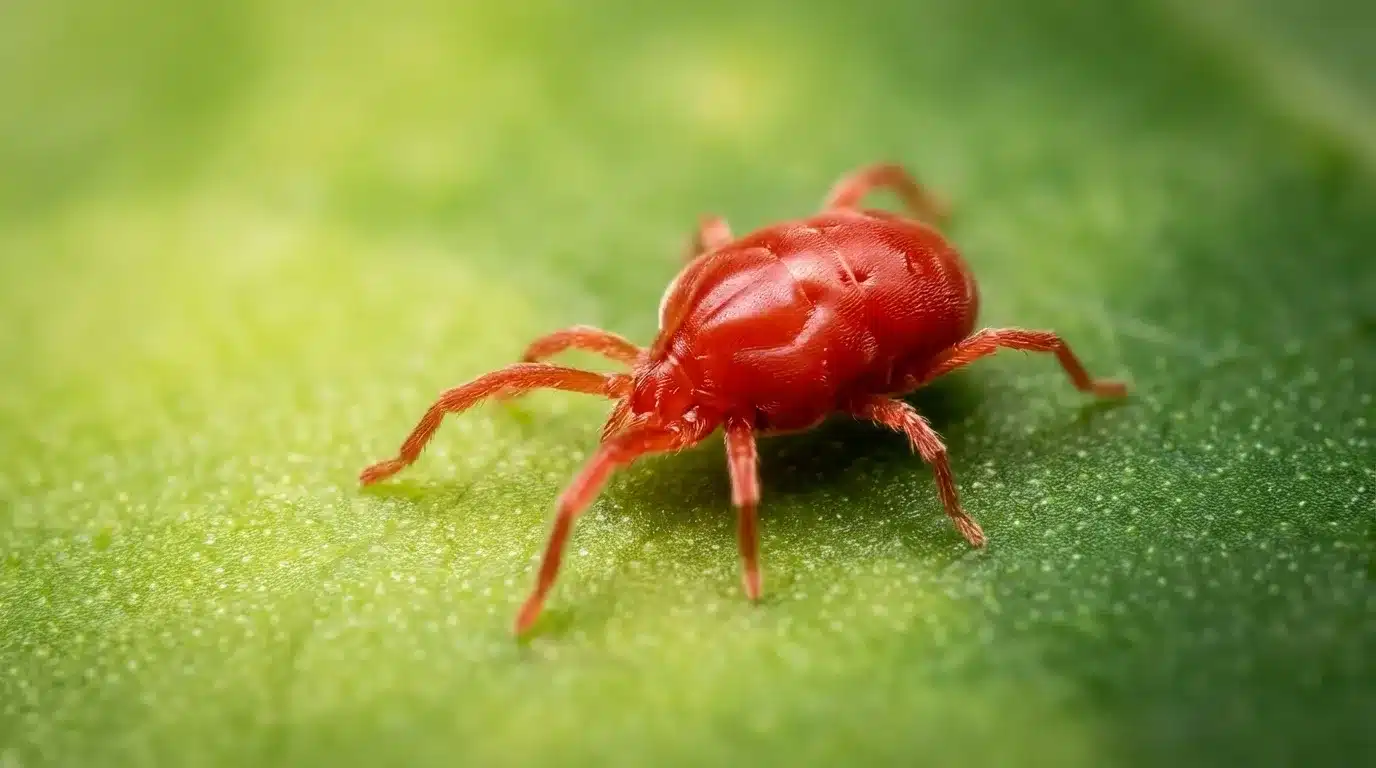
Chiggers are the larval (baby) stage of a tiny mite from the Trombiculidae family, also called harvest mites or red bugs. They are arachnids, closely related to ticks and spiders, and barely visible to the naked eye.
Only this larval stage bites humans and animals. When a chigger attaches to your skin, it injects a fluid that breaks down skin cells and triggers intense itching. They do not burrow under your skin.
In the U.S., chiggers do not spread disease, but scratching bites too hard can lead to a secondary skin infection.
How to Spot Chiggers in Your Yard?
You cannot fix a problem you cannot see. Since chiggers are nearly invisible to the naked eye, you need a simple trick to confirm they are actually in your yard before spending time or money on treatment.
- The Cardboard Test: Place a small piece of dark cardboard upright in a suspect area and check for tiny red or orange specks crawling upward after 10 to 15 minutes.
- The White Sock Test: Pull on long white socks, walk through your grassy and weedy patches, then check the socks for tiny moving red dots.
- Trust Your Bite Pattern: If you keep getting itchy bumps after spending time in a specific area of your yard, that zone is likely your hot spot.
What Chigger Bites Look Like?
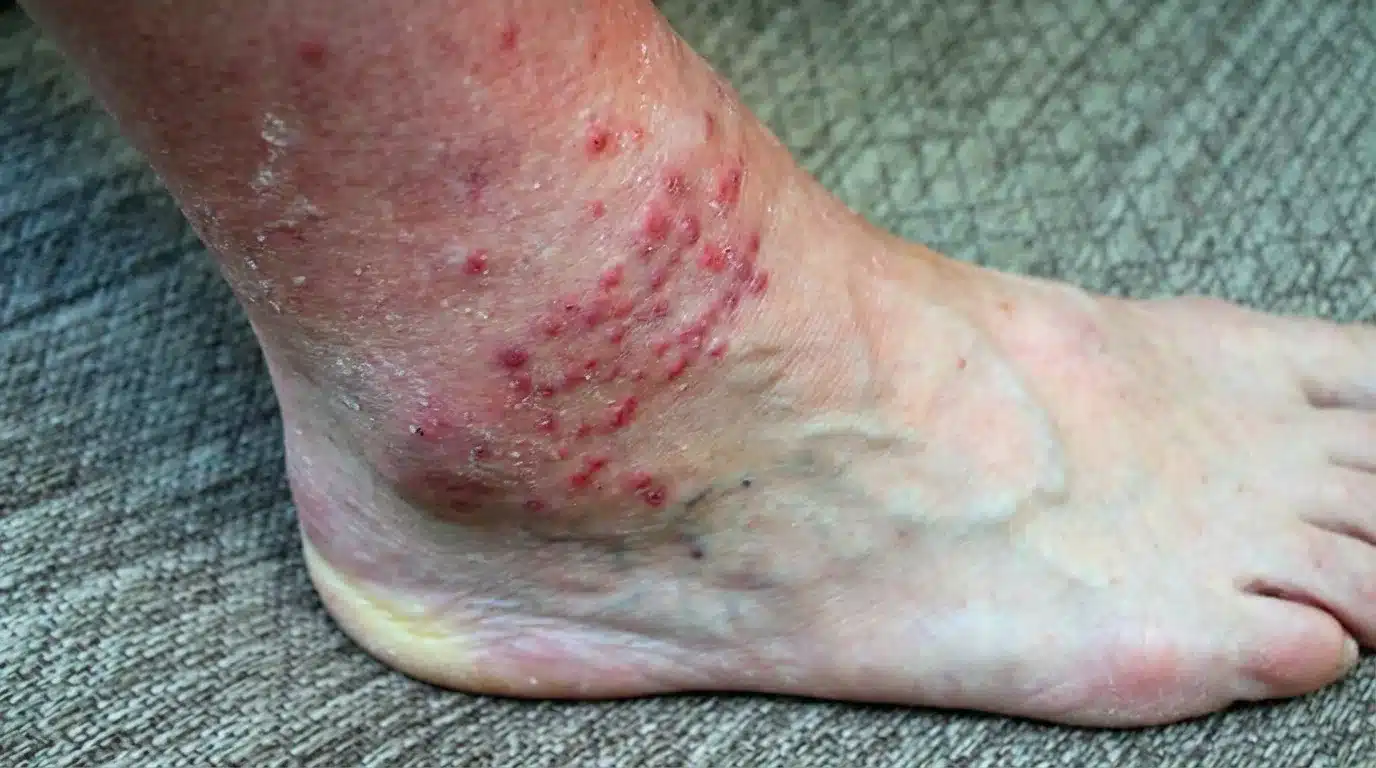
Chigger bites appear as small red bumps, often in clusters, in areas where clothing fits snugly, like your ankles, waistband, behind the knees, and underarms.
The itch usually begins a few hours after being outside and can persist for one to two weeks. Many people confuse them with mosquito bites or hives.
The bump is your skin reacting to the chigger’s saliva, not the chigger itself. By the time you notice the itch, the chigger is usually already gone.
Where Do Chiggers Hide in Your Yard?
Chiggers do not spread evenly across your yard. They cluster in specific spots, which actually makes targeting them much easier once you know where to look.
| Location | Why Chiggers Are Found There |
|---|---|
| Tall, unmowed grass | Provides shade and retains moisture |
| Weed patches | Dense, damp, and close to ground level |
| Leaf piles and yard debris | Moist and shielded from direct sunlight |
| Woodpiles | Cool, shaded, and rarely disturbed |
| Dense shrubs and bushes | Low sunlight and high humidity |
| Overgrown fence lines | Rarely trimmed, near high foot traffic areas |
| Pet resting spots and dog houses | Close to a reliable host at all times |
Step-by-Step: How to Remove Chiggers From Yard
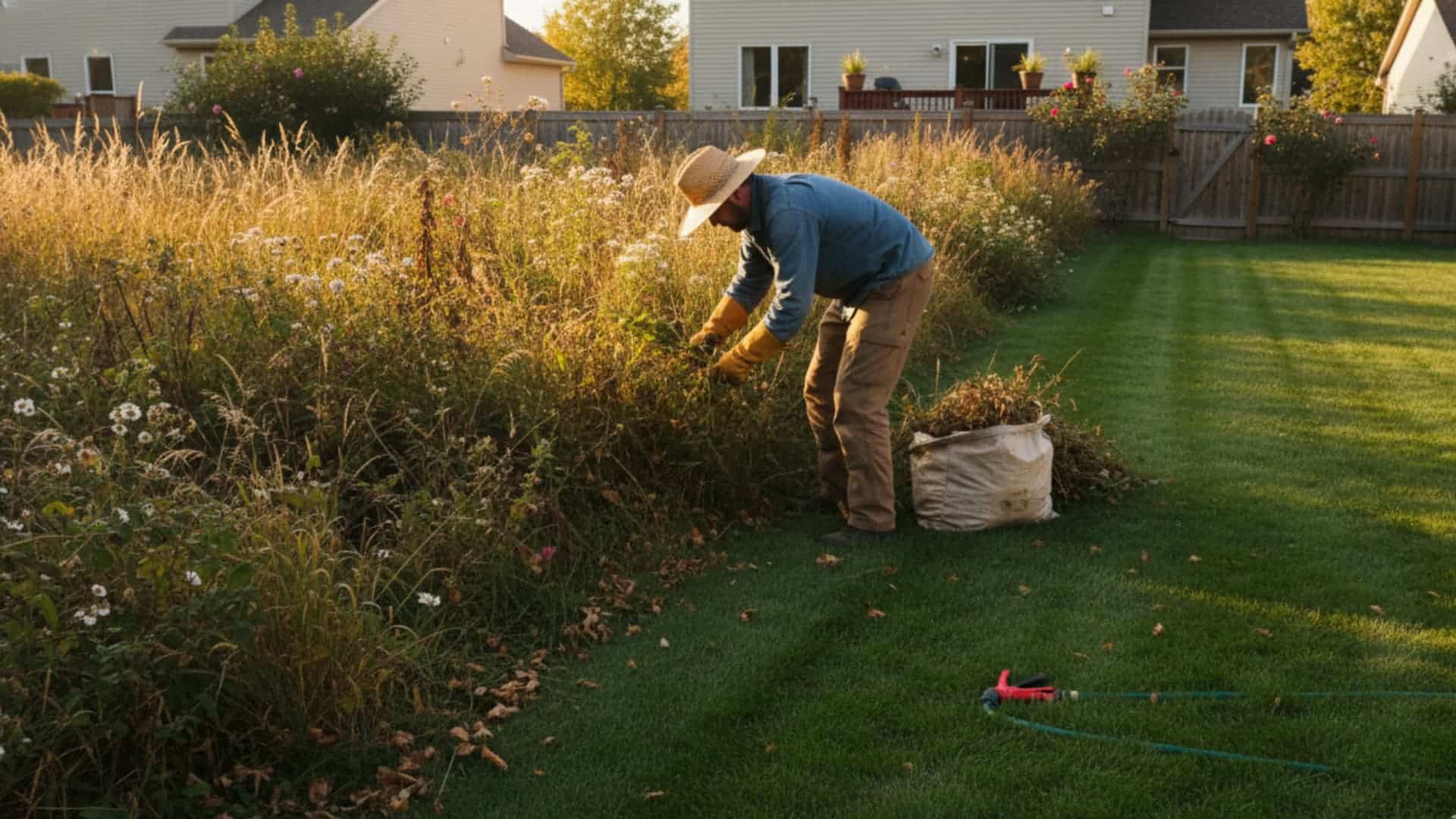
Once you have confirmed where chiggers are hiding, it is time to act. Follow these steps in order, and you will clear them out far more effectively than random spraying ever would.
Step 1: Clean Up Your Yard
Tools and Materials: Lawn mower, hedge trimmers, gloves, yard waste bags
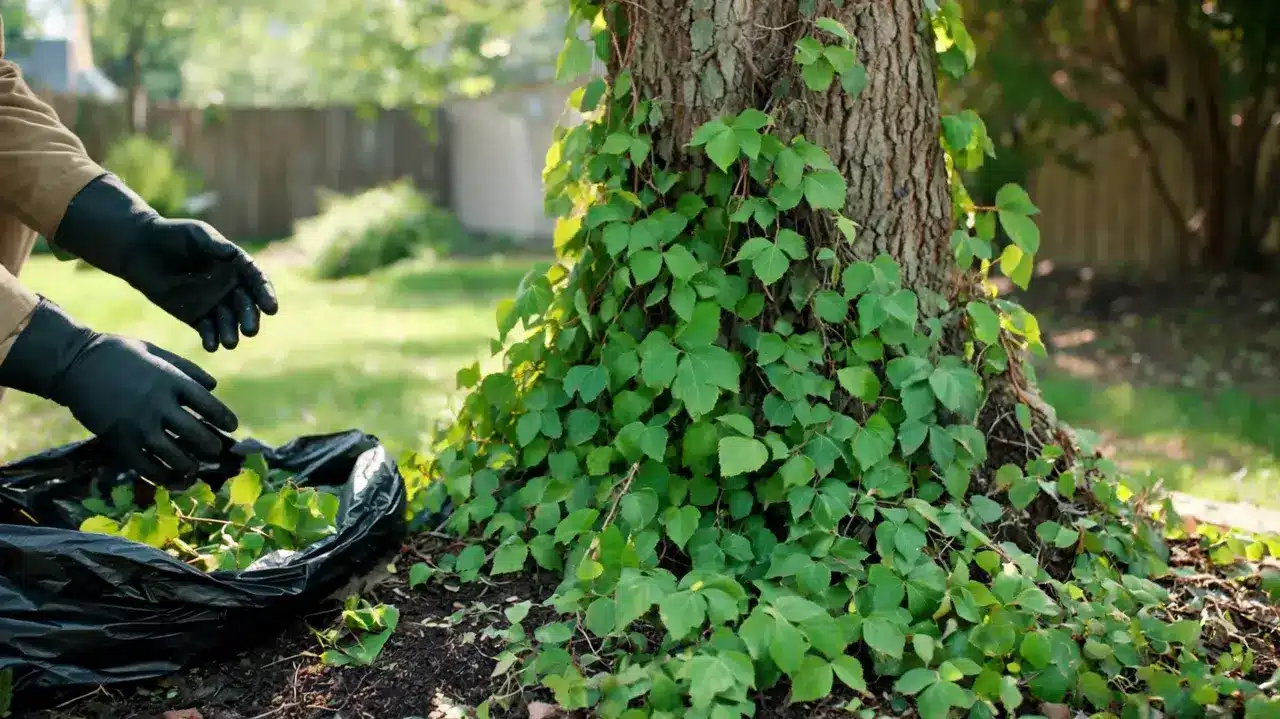
Mow the grass short, especially in overgrown patches. Trim back shrubs and tree branches. Clear out leaf piles, woodpiles, and loose yard debris.
The goal is to remove every damp, shaded spot chiggers rely on. This step alone makes a measurable difference before any product is applied.
Step 2: Locate the Hot Spots
Tools and Materials: Dark cardboard or a pair of long white socks
Use the cardboard or white sock method to confirm which parts of your yard are actively affected. Focus your treatment entirely on those zones. Treating your entire yard wastes time and product, since chiggers gather in clusters rather than across the entire lawn.
Step 3: Apply an Insecticide
Tools and Materials: Hose-end sprayer, EPA-approved insecticide (look for bifenthrin, carbaryl, or malathion on the label)
Apply the insecticide to all hot spots, including the lawn surface, shrubs, and low-growing plants. Start at the back of the yard and work forward.
Keep children and pets off treated areas until they are fully dry, for at least 2 to 4 hours. Plan to reapply every two to three weeks during peak season, as treatments do not last permanently.
Step 4: Use Natural Options (Optional Add-On)
Tools and Materials: Food-grade diatomaceous earth, spray bottle, essential oils such as peppermint, tea tree, or citronella
Sprinkle a thin layer of diatomaceous earth around chigger-prone areas, such as shrub bases and yard borders. For a spray option, mix a few drops of essential oil with water and apply around yard edges.
These work best as a supporting step alongside yard maintenance, not as a replacement for chemical treatment.
How to Protect Yourself When You Go Outside?
Treating your yard handles the source. But you also need to protect yourself every time you step out during chigger season, especially from late spring through early fall.
- Wear the right clothing: Long pants tucked into socks, long sleeves, and closed-toe shoes keep chiggers away from your skin.
- Apply a DEET-based repellent: Spray a repellent with 10 to 30 percent DEET on exposed skin, paying close attention to your ankles, waistband area, and wrists.
- Treat your clothes with permethrin: Apply it only to clothing, never to skin. It kills chiggers on contact as they try to climb onto the fabric.
- Shower right after coming inside: Hot, soapy water washes off any chiggers before they have time to bite.
- Wipe down your lower legs: Rubbing a dry towel firmly over your legs right after outdoor activity can remove chiggers before they settle.
- Wash clothes on high heat: Put outdoor clothes straight into the wash on a hot cycle to kill any remaining chiggers.
How to Keep Chiggers Off Your Pets?
Your dog or cat can pick up chiggers just as easily as you can. Spotting the signs early and acting fast will save your pet a great deal of discomfort.
| What to Watch For | What to Do |
|---|---|
| Excessive scratching after being outside | Check for tiny red specks on skin, especially in low-fur areas |
| Redness or crusty bumps on the belly, ears, feet, or head | Wipe the area gently and contact your vet |
| Bald patches or sore-looking skin | Do not use human repellents on pets; they can be harmful |
| Restlessness or constant licking of paws | Bathe with a pet-safe shampoo and consult your vet |
| Repeat chigger issues every warm season | Ask your vet about flea and tick prevention products that also cover mites |
| When Should You Call a Pest Control Professional?
If you have treated your yard two or three times and chiggers keep coming back, it is time to bring in a professional. A pest control technician will inspect your yard, identify the most affected areas, and apply stronger treatments based on their findings. This is especially worth considering if young children or pets regularly spend significant time outside. |
Common Myths About Chiggers
A lot of people try things that simply do not work when dealing with chiggers. Some of these supposed fixes have been passed around for so long that they now feel like facts.
Myth: Nail polish kills chiggers on your skin.
Reality: By the time you feel the itch, the chigger is already gone. Nail polish does nothing.
Myth: Petroleum jelly smothers chiggers.
Reality: Same result as nail polish. It treats nothing and leaves your skin greasy.
Myth: Chiggers burrow under your skin.
Reality: They feed on the skin surface only. The bump is your body reacting to their saliva.
Myth: Ivermectin treats chigger bites.
Reality: Ivermectin is prescribed for scabies, which is an entirely different type of mite.
Myth: One spray treatment clears your yard for good.
Reality: Most treatments last only 2 to 3 weeks. Consistent maintenance is what keeps chiggers away.
How to Prevent Chiggers From Coming Back?
Keeping chiggers away long-term requires consistency. Mow regularly. Clear out debris at the end of each season. Do a quick inspection each spring before chigger season starts.
Apply a preventive spray in late spring before activity peaks. Discourage small rodents from visiting your yard, as they carry chiggers in. Shower and change clothes after being outdoors during warm months.
Keep up these habits, and chiggers will have very little reason to settle in your yard.
Conclusion
Getting rid of chiggers in your yard comes down to a few consistent habits. Keep your lawn trimmed. Clear out the spots they love to hide in.
Treat the affected areas early in the season. Add personal protection every time you step outside, and you will rarely deal with chigger bites again.
Do not wait until you are covered in itchy bumps to take action. Start with your yard, then work on prevention. Small steps done regularly make a big difference.
Have you dealt with chiggers in your yard before? What actually worked for you? Drop your experience in the comments below. Someone else reading this might find it genuinely helpful.