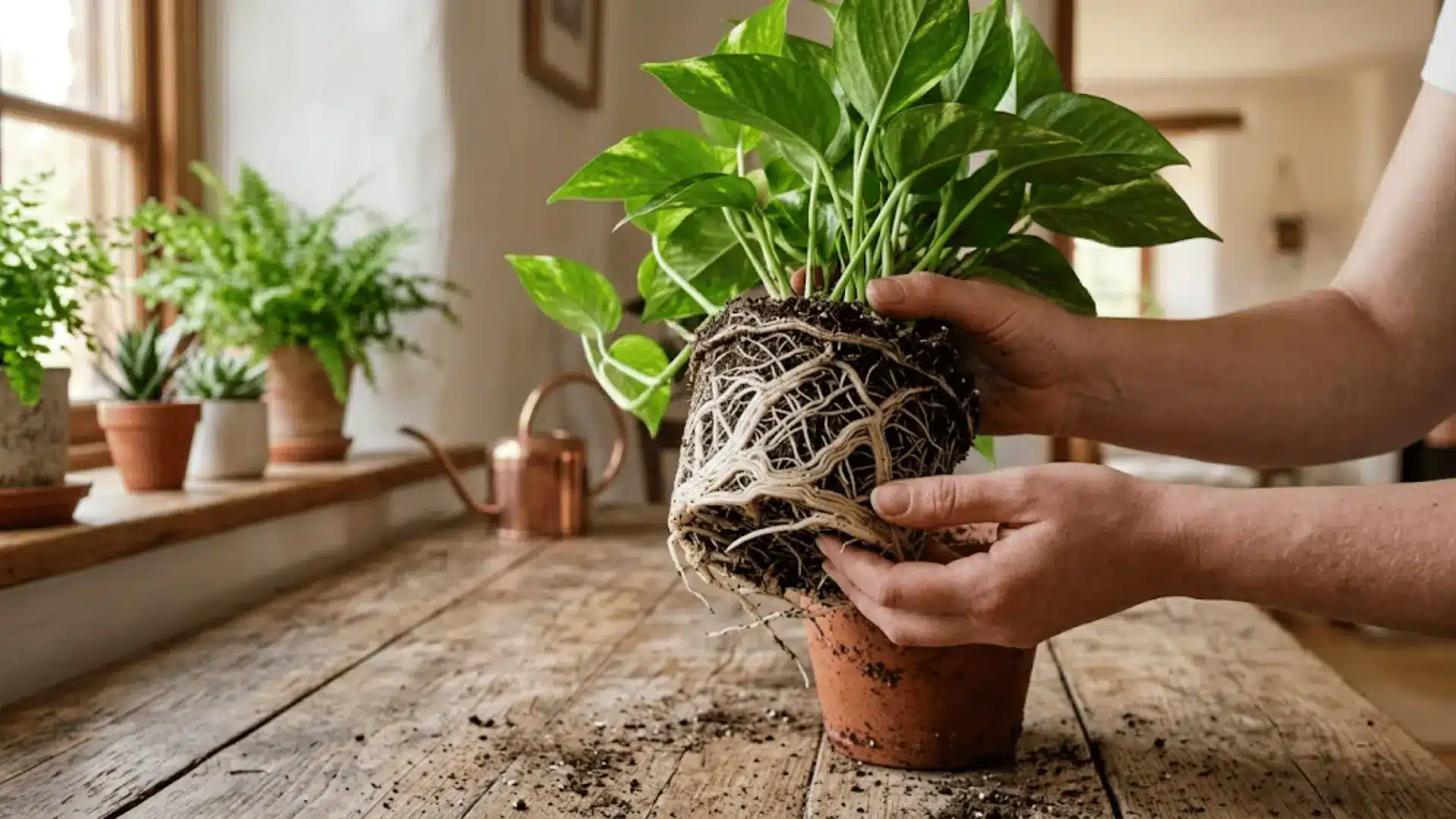
Your plant has been looking a little off lately, and you just can’t figure out why. The leaves are yellowing, the stems feel weak, and even your best care routine doesn’t seem to help.
More often than not, the real problem is hiding right beneath the surface, literally.
Root health is everything when it comes to a thriving plant, and root rot is quietly one of the biggest culprits behind plants that slowly give up.
Learning to tell the difference between healthy roots and rotting ones might just be the thing that saves your favorite green baby.
Why Identifying Root Rot Early Matters?
Root rot doesn’t announce itself, and that’s exactly what makes it so tricky.
By the time your plant starts showing visible distress, the damage underground has usually already been spreading for a while.
Once rot takes hold, it quietly cuts off the plant’s ability to absorb water and nutrients, which explains why even well-watered plants can look completely parched.
Catching it early genuinely changes the outcome for most plants.
A lot of plant parents lose their greens not because they didn’t care enough, but because they misidentified the problem before it was too late.
Root Rot vs. Healthy Roots
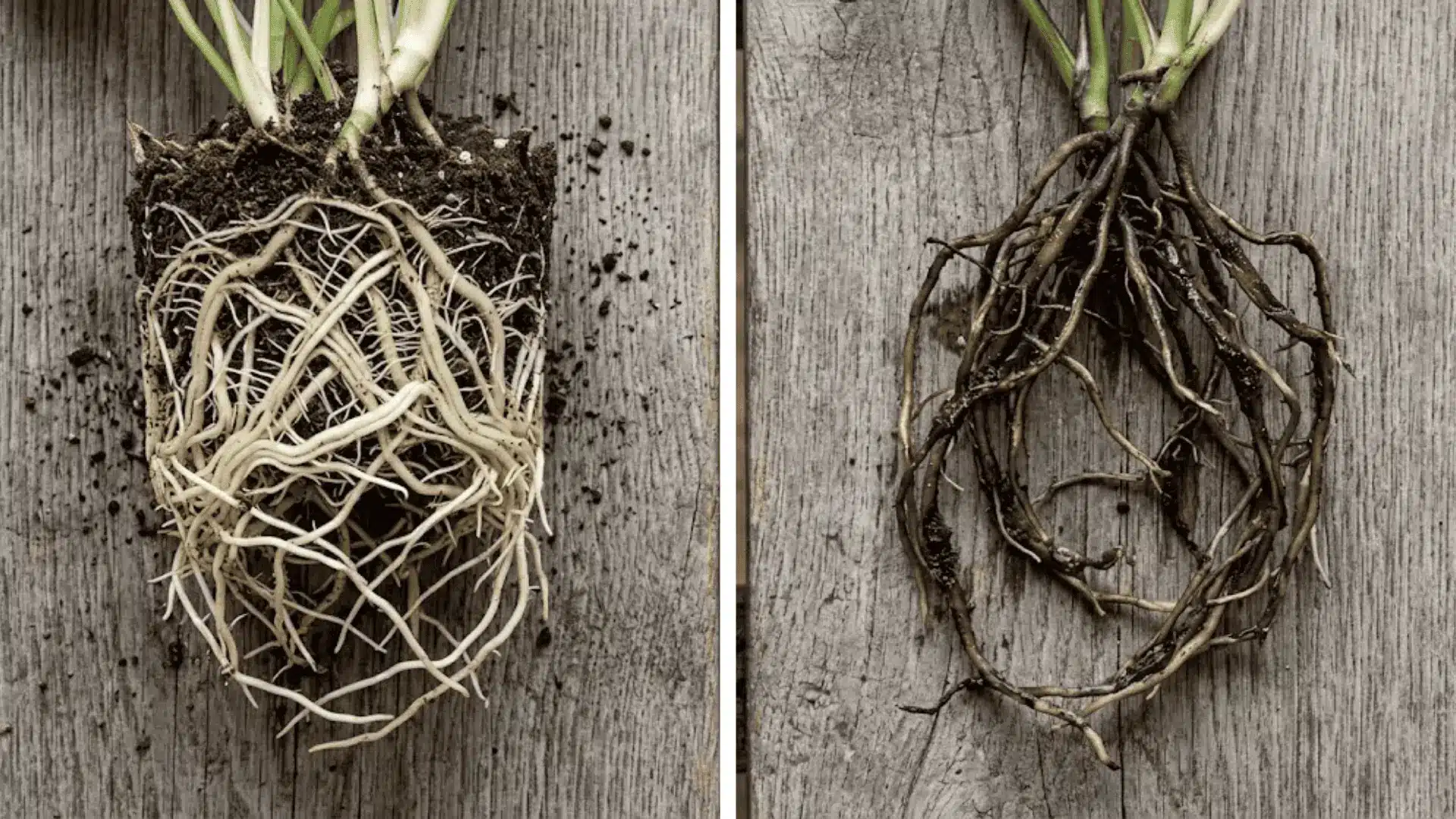
Getting up close with your plant’s roots tells you more than any leaf or stem ever could. Once you know what to look for, spotting the difference between healthy roots and root rot becomes a lot more intuitive.
1. Visual Differences at a Glance
Healthy roots carry a clean, white to light tan color that almost looks fresh and alive. Rotting roots, on the other hand, shift into murky shades of brown, black, or gray.
The discoloration is usually pretty hard to miss once you gently brush away the soil and actually take a look underneath.
2. Texture and Feel
Healthy roots feel firm and hold their shape with a slight flexibility to them. Rotting roots feel the opposite: soft, slimy, and they tend to fall apart the moment you touch them.
If you’re gently handling a root and it’s practically melting between your fingers, that’s a pretty clear sign something has gone wrong below the surface.
3. Smell Test
Fresh, healthy roots carry a subtle, earthy scent, nothing overwhelming, just that clean soil smell most plant lovers actually enjoy.
Rotting roots, though, have a noticeably unpleasant odor, think swamp water or something gone bad in the fridge. If you unpot your plant and immediately notice a foul smell hitting you, your roots are likely in trouble.
4. Root Structure and Growth
Healthy roots are full of fine white root hairs and tips, which are the parts actively pulling in water and nutrients.
With root rot, those delicate hairs disappear completely, and the roots themselves may start sloughing off with barely any pressure. No root hairs essentially means the plant has lost most of its ability to feed itself.
What Does Root Rot Look Like?
Root rot doesn’t go from zero to devastating overnight. It moves in stages, and each one looks a little different from the last.
Knowing where your plant currently stands helps you figure out how urgently it needs attention and whether rescue is still on the table.
| Stage | Color | Texture | Smell | Salvageable? |
|---|---|---|---|---|
| Early-Stage | Brown tips, rest still light | Slightly soft, mostly intact | Mildly off | Yes, act quickly |
| Advanced | Dark brown to black | Mushy, sloughing off | Noticeably foul | Possibly, a limited window |
| Severe | Almost entirely dark | Disintegrates on touch | Strong, unbearable | Unlikely |
Above-Ground Signs of Root Rot
Root rot has a sneaky way of showing up above the soil long before you ever think to check the roots.
The tricky part is that most of these signs look almost identical to underwatering, which is where a lot of plant parents get thrown off.
- Leaves are turning yellow, often starting with the lower ones first.
- Plant wilting even when the soil is clearly still moist.
- Leaves are dropping without much warning, paired with little to no new growth.
- Stems feel soft or weak closer to the base.
- An overall “thirsty” look despite regular watering.
If your plant is ticking more than one of these boxes, the roots are worth checking sooner rather than later.
What Healthy Roots Should Look Like?
Healthy roots are honestly something worth pausing to appreciate. They’re quiet, underground, and completely unbothered, yet they’re doing all the heavy lifting for your plant’s survival.
Here’s exactly what you should be seeing when things are going right.
Color and Appearance
Healthy roots are easy to recognize once you’ve seen them.
Look for:
- A clean white to cream or light tan color.
- A fresh, vibrant look with no dark patches or discoloration.
- An overall appearance that feels almost crisp and alive.
Texture and Strength
Run your fingers gently along the roots, and healthy ones will always feel distinctly different from compromised ones.
Here’s what to expect:
| Quality | Feels Like | What It Means |
|---|---|---|
| Firmness | Solid, holds shape when handled | Root tissue is intact and hydrated |
| Flexibility | Slightly springy, not stiff or brittle | Root is actively alive and functional |
| Resilience | Doesn’t break or collapse under gentle pressure | Strong internal structure, no decay |
Active Growth Signs
This is where it gets exciting. Healthy roots aren’t just surviving, they’re actively working.
Here’s what active, thriving roots look like up close:
- Fine root hairs are visible along the length of the root.
- Bright white tips at the ends, signaling new growth.
- A general sense of fullness and density across the root ball.
Common Causes of Root Rot
Root rot rarely just happens out of nowhere. There’s almost always an underlying condition that created the right environment for it to take hold.
These are the most common reasons it shows up:
- Overwatering, which keeps the soil consistently waterlogged and suffocates the roots.
- Poor drainage soil that holds moisture far longer than roots can tolerate.
- Lack of oxygen around the root zone, making it easy for decay to set in.
- Fungal pathogens like Pythium and Fusarium thriving in wet, airless conditions.
- Pots without drainage holes trapping excess water with nowhere to go.
Most of these causes are connected, and fixing one often means addressing the others too.
Reddit Insights: How Real Plant Owners Identify Root Rot?
Real plant owners on Reddit tend to cut straight to it, and honestly, their collective wisdom on root rot is pretty hard to argue with.
The plant community over at r/plantclinic has seen hundreds of root rot posts, and a few patterns come up again and again. Most experienced members agree that smell and texture together are your most reliable indicators.
A lot of beginners panic over slightly brown or dirty-looking roots that are actually still firm and fine.
The real red flag is when a root feels like it melts when you touch it, paired with that unmistakable foul odor. If both are present, you almost certainly have rot on your hands.
How to Check Roots Without Damaging Your Plant?
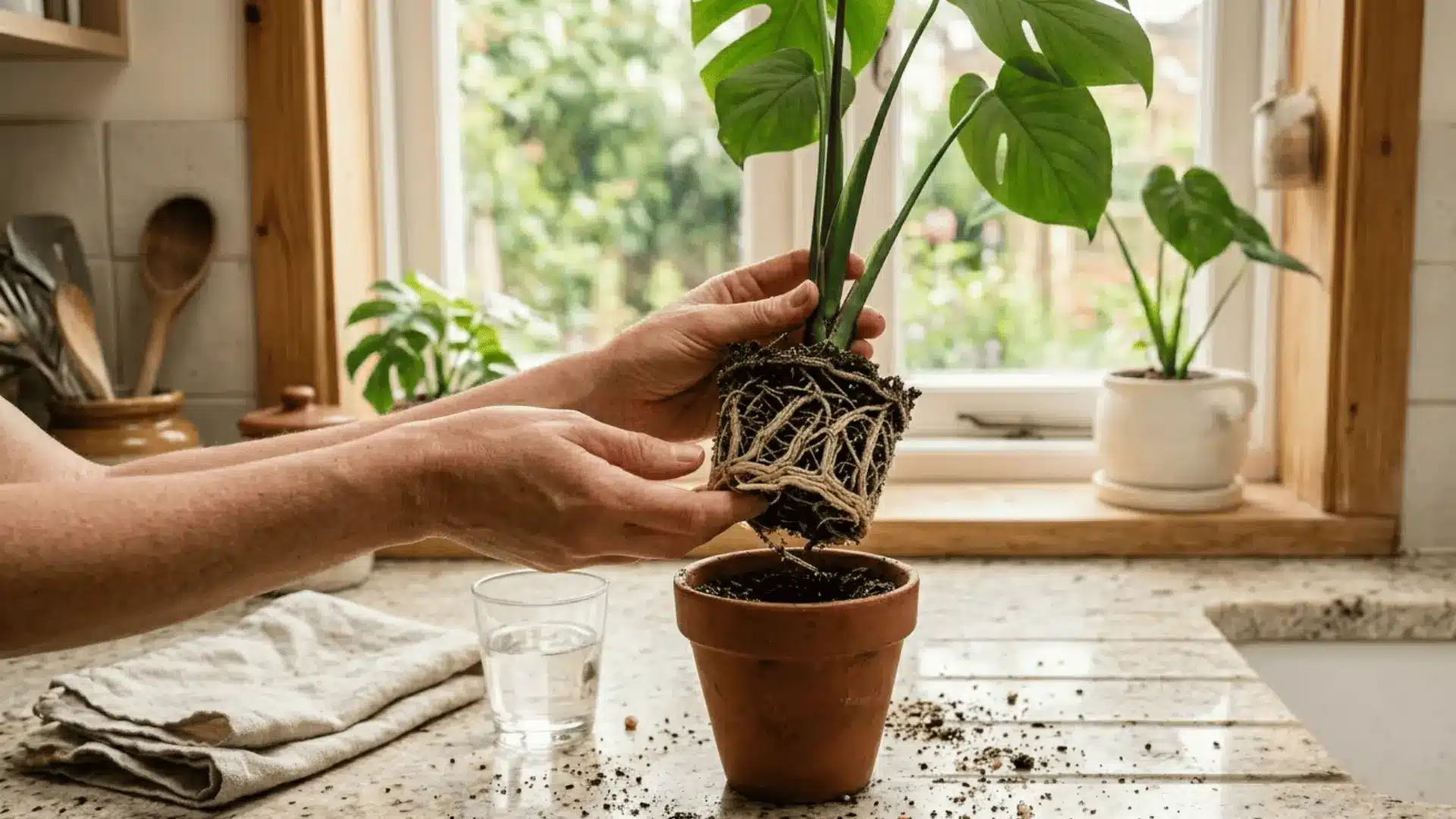
Checking your plant’s roots doesn’t have to be a stressful experience for you or your plant. Done gently and at the right time, a quick root inspection can tell you more than weeks of guessing ever could.
When to Inspect Roots?
Your plant usually gives you a nudge before things get serious.
Consider checking the roots if you notice:
- Leaves yellowing or wilting despite a consistent watering routine.
- Growth that has slowed down or completely stalled.
- Soil that stays wet far longer than it normally should.
- A faint but unpleasant smell coming from the pot.
How to Inspect Without Causing Harm?
The goal here is to get a clear look without putting your plant through unnecessary stress.
Here’s how to do it carefully:
- Step 1: Tip the pot sideways and ease the plant out with gentle pressure; never yank or force it.
- Step 2: Loosely shake off excess soil with your hands so the roots are more visible.
- Step 3: Rinse under a gentle stream of lukewarm water if the roots are still hard to see.
- Step 4: Check the color, give them a light squeeze for firmness, and take a quick sniff.
Can You Save a Plant With Root Rot?
Root rot is salvageable only if you catch it in time. If there are still some firm, white roots visible when you unpot the plant, recovery is possible.
Here’s what to do:
- Trim away all dark, mushy roots with clean scissors
- Let the remaining roots air dry briefly before repotting
- Move into fresh, well-draining soil and resist the urge to overwater while it recovers
If the entire root system has gone soft with absolutely no healthy roots remaining, the plant is past the point of rescue.
How to Prevent Root Rot in the Future?
Prevention is really where the work happens, and none of it is complicated.
A few consistent habits go a long way in keeping root rot from ever becoming a problem:
- Use well-draining soil that doesn’t hold onto moisture longer than necessary.
- Water only when the top layer of soil feels dry, not on a fixed schedule.
- Always choose pots with drainage holes so excess water has somewhere to go.
- Never let your plant sit in standing water in a saucer or tray for extended periods.
- Repot into fresh soil periodically to prevent compaction and pathogen buildup.
Most root rot cases are entirely avoidable, and these habits make sure your plant’s roots stay exactly where they should be, healthy and underground.
The Bottom Line
Learning to tell root rot vs healthy roots apart is one of those skills that quietly makes you a much more confident plant parent.
Once you know what you’re looking for, a quick check every now and then is all it takes to stay ahead of any trouble brewing beneath the surface.
Your plants are always communicating, and now you actually know how to listen.
If this helped you figure out what’s going on with your green baby, drop a comment below and let us know how your plant is doing!