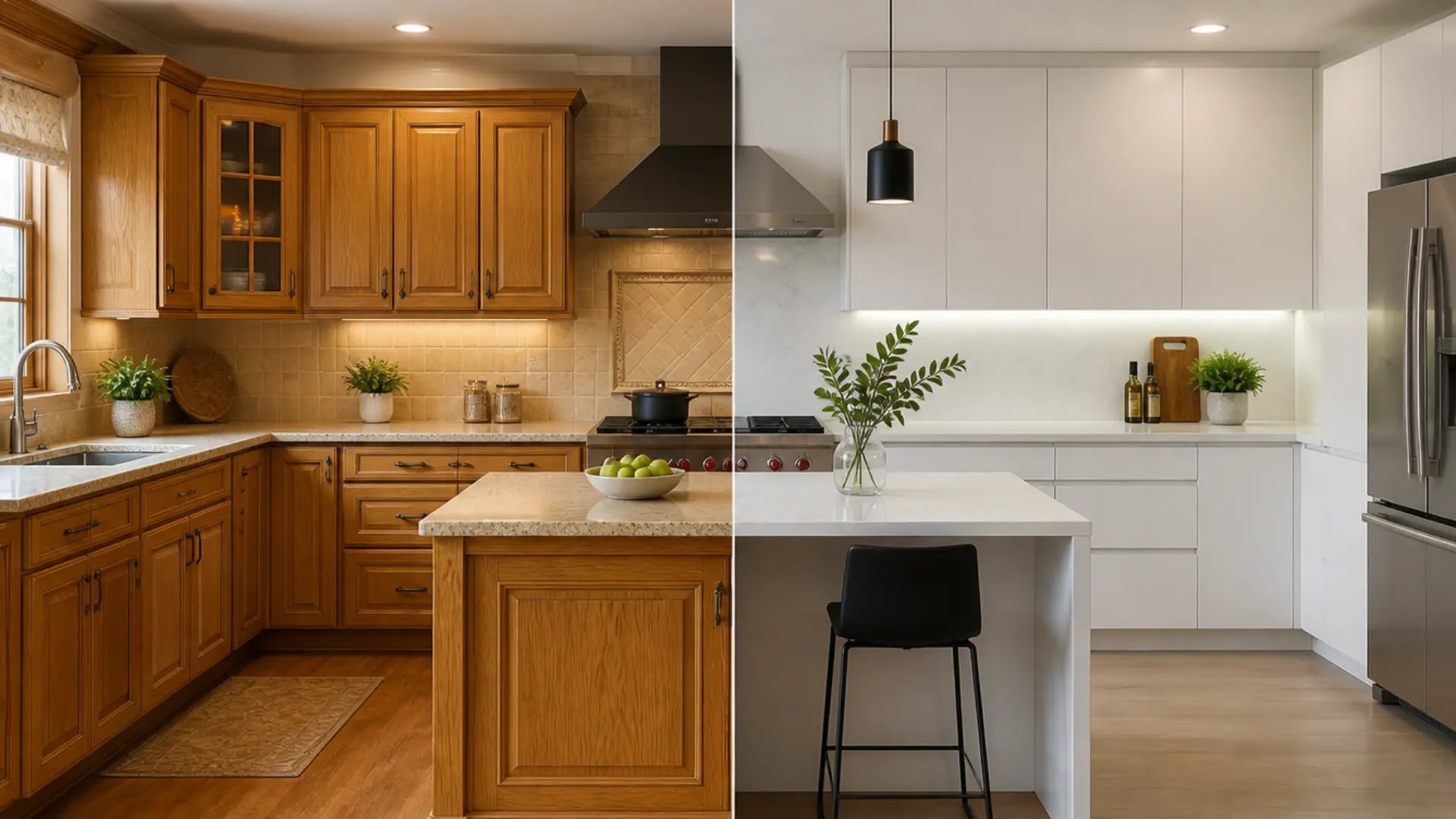
Framed or frameless is one of the first choices you run into once you start picking out kitchen cabinets, and it is not always explained clearly before you have to decide.
Most articles pile on face-frame and box-construction jargon before ever explaining why any of it matters.
What you actually want to know is which style fits your budget, your kitchen layout, and how your family uses the space.
Here are both styles broken down in plain terms, so you know what you are choosing between.
Difference Between Framed and Frameless Cabinets
A framed cabinet has a solid wood frame across the front of the box. A frameless cabinet skips that frame, so the door attaches straight to the box edge.
That one difference changes almost everything else: how much you can store, how the doors sit, and what the cabinets cost.
Framed cabinets give you a classic look with sturdy support built into the structure, though the frame trims down storage space a bit.
Frameless cabinets open up the full box interior, so it is easier to reach into corners and deep drawers, and they lean on thicker box walls for strength instead of a frame.
What is a Framed Cabinet?
A framed cabinet has a solid wood face frame attached to the front edge of the box, usually built from hardwood rails and stiles about 1.5 inches wide. Builders join these pieces and attach them to the front of the box.
This style is often called the American style, since it has been standard in American kitchens for generations.
The face frame supports three overlay types:
- Standard Overlay: Door covers most of the frame, leaving some wood visible.
- Full Overlay: Door covers nearly the entire frame, leaving just a slim strip showing.
- Inset Overlay: Door sits flush inside the frame, level with the wood.
This style has stuck around for its classic look and dependable build. Industry estimates put framed construction at roughly 55 to 60 percent of the North American cabinet market
Note: I’m not fully certain this figure is current; verify with the Kitchen Cabinet Manufacturers Association’s industry resources page before publishing.
What is a Frameless Cabinet?
A frameless cabinet skips the face frame entirely, so the door attaches straight to the edge of the box. This is often called European style, since it grew popular in European kitchen design before spreading elsewhere.
Without a frame for support, the box leans on thicker panel walls and stronger joinery to stay sturdy. This construction only works with full overlay doors, since there is no frame edge left to show:
- No Face Frame: Doors and drawers attach directly to the box for full interior access.
- Thicker Box Walls: Extra panel thickness makes up for the missing frame support.
- Full Overlay Only: Doors cover the entire box front, since there is no frame to allow other styles.
This style caught on for its clean lines and sleek, modern look in today’s kitchens.
Framed and Frameless Cabinets: Key Differences
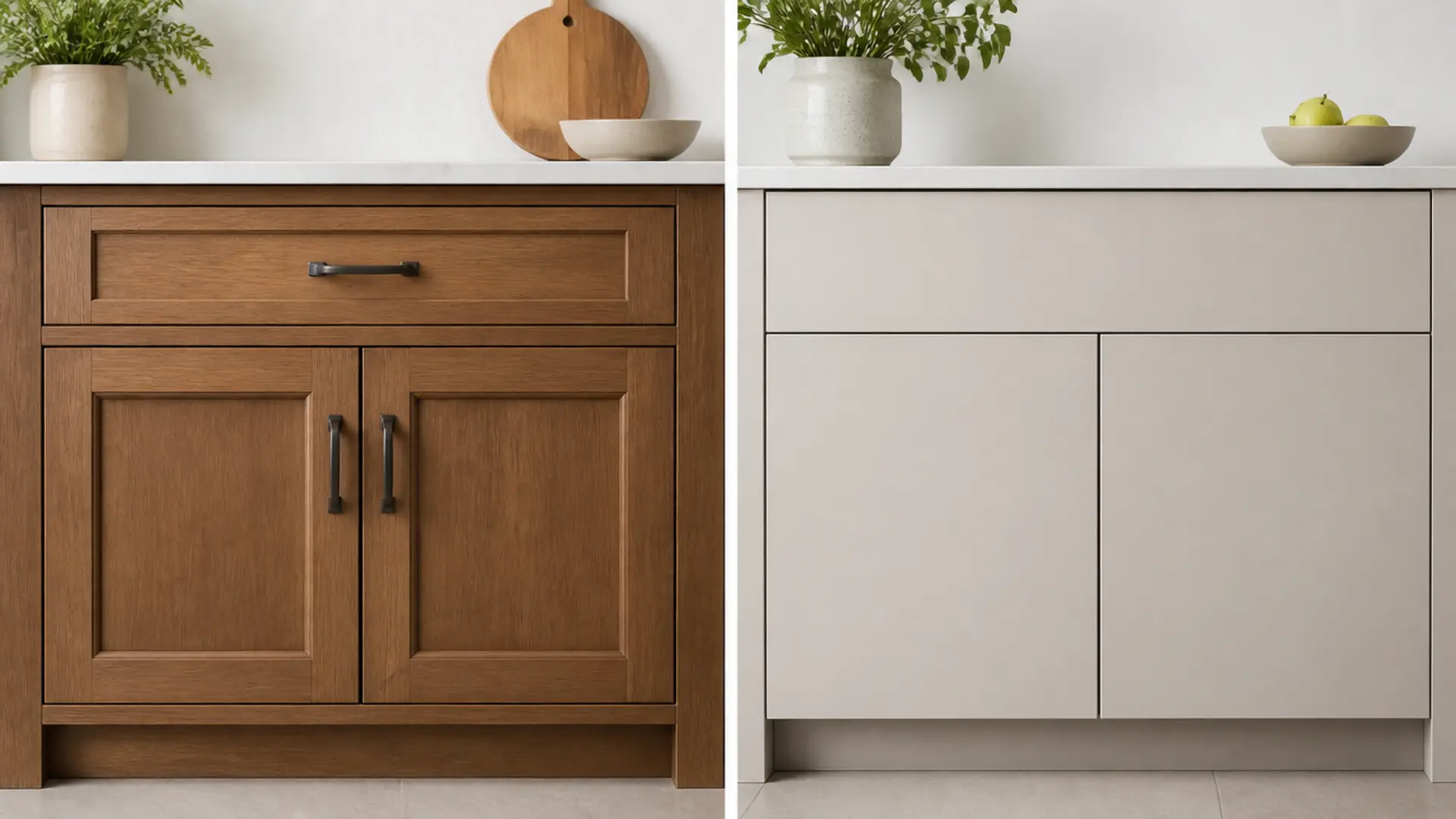
Now that you know the basics of each style, here is where they truly diverge. Below, you get a closer look at the key differences that matter most for your kitchen.
1. Construction
Framed cabinets have a solid wood frame across the front of the box, adding a visible border around each opening.
Frameless cabinets skip that frame, so the door attaches straight to the box edge instead.
This one construction choice shapes everything else, from interior space to how the doors sit against the box front.
2. Storage Space
Framed cabinets lose a bit of interior space since the frame takes up room along the front edge.
Frameless cabinets typically give you close to an extra inch of width or depth per drawer, since nothing blocks the opening.
That makes frameless a strong pick if you want deep drawers or corner cabinets that are easier to reach without fighting extra wood along the edges.
3. Durability
Framed cabinets support three overlay styles: standard, full, and inset, so you get more flexibility in how the doors sit against the frame.
Frameless cabinets only work with full overlay doors, since there’s no frame edge to show or cover.
If you want more say in how your doors look, framed cabinets give you more room to work with.
4. Overlay Options
Framed cabinets support three overlay styles: standard, full, and inset, giving you more flexibility in how doors sit against the frame.
Frameless cabinets only work with full overlay doors, since there is no frame edge to show or cover.
If you want design flexibility in how your doors look, framed cabinets give you more choices.
5. Price
Framed cabinets tend to run more affordable, typically $100 to $300 per linear foot for stock configurations, since the construction method has been standard for generations and materials are easier to source.
Frameless cabinets usually cost more, generally starting around $150 per linear foot and climbing higher for semi-custom builds, since they need thicker panels and tighter manufacturing tolerances to stay sturdy without a frame.
I would weigh cabinet costs against your other renovation priorities before locking in a budget, which is something I get into in my breakdown on stretching a home repair budget further.
The Differences at a Glance
| Feature | Framed Cabinets | Frameless Cabinets |
|---|---|---|
| Frame | Solid wood face frame across the box front | No frame, door attaches straight to box |
| Storage | Slightly less due to frame width | Full access to interior space |
| Overlay Options | Standard, full, and inset | Full overlay only |
| Durability | The frame reinforces the box front | Thicker walls and stronger joinery |
| Price | Often more affordable | Often a bit pricier |
| Style | Classic, traditional look | Clean, modern look |
Framed Cabinets: Pros and Cons
The table above gave you the surface-level differences, but the reasoning behind each row matters just as much.
Here is a closer look at what makes framed cabinets work well and where they fall short.
Pros of Framed Cabinets
Framed cabinets bring a few clear benefits to your kitchen:
- Added strength from the face frame across the box front
- More style options with standard, full, and inset overlay choices
- Easier installation for most builders and contractors
Cons of Framed Cabinets
Along with those benefits come a few drawbacks worth knowing:
- Reduced interior storage space due to the frame along the front edge
- Often needs finishing skins to cover any exposed sides
- Fewer options for full access to corners and deep drawers
Frameless Cabinets: Pros and Cons
Frameless cabinets take a different approach to construction, and that shows up clearly in their strengths and tradeoffs.
Pros of Frameless Cabinets
Frameless cabinets come with their own set of strong benefits:
- More storage space with full access to the interior
- Clean, modern look that suits contemporary kitchens
- Full access to every corner and edge inside the box
Cons of Frameless Cabinets
These benefits come with a few tradeoffs to consider:
- Needs sturdier, thicker materials to stay strong without a frame
- Pickier installation requirements to get a proper, tight fit
- Often costs more due to tighter manufacturing tolerances
Installation and Hinges
Framed cabinets attach to the face frame with longer screws, which gives installers room to work around small gaps or wall imperfections, making installation easier for DIY projects.
Frameless cabinets attach through the side panels with shorter screws, so they need precise measurements and level walls to sit flush.
Hinges follow the same pattern.
Framed hinges mount onto the face frame, drawing strength from the hardwood strip. Frameless hinges mount onto the side panel, so panel quality matters more without a frame for support.
What Actually Affects Long-Term Quality?
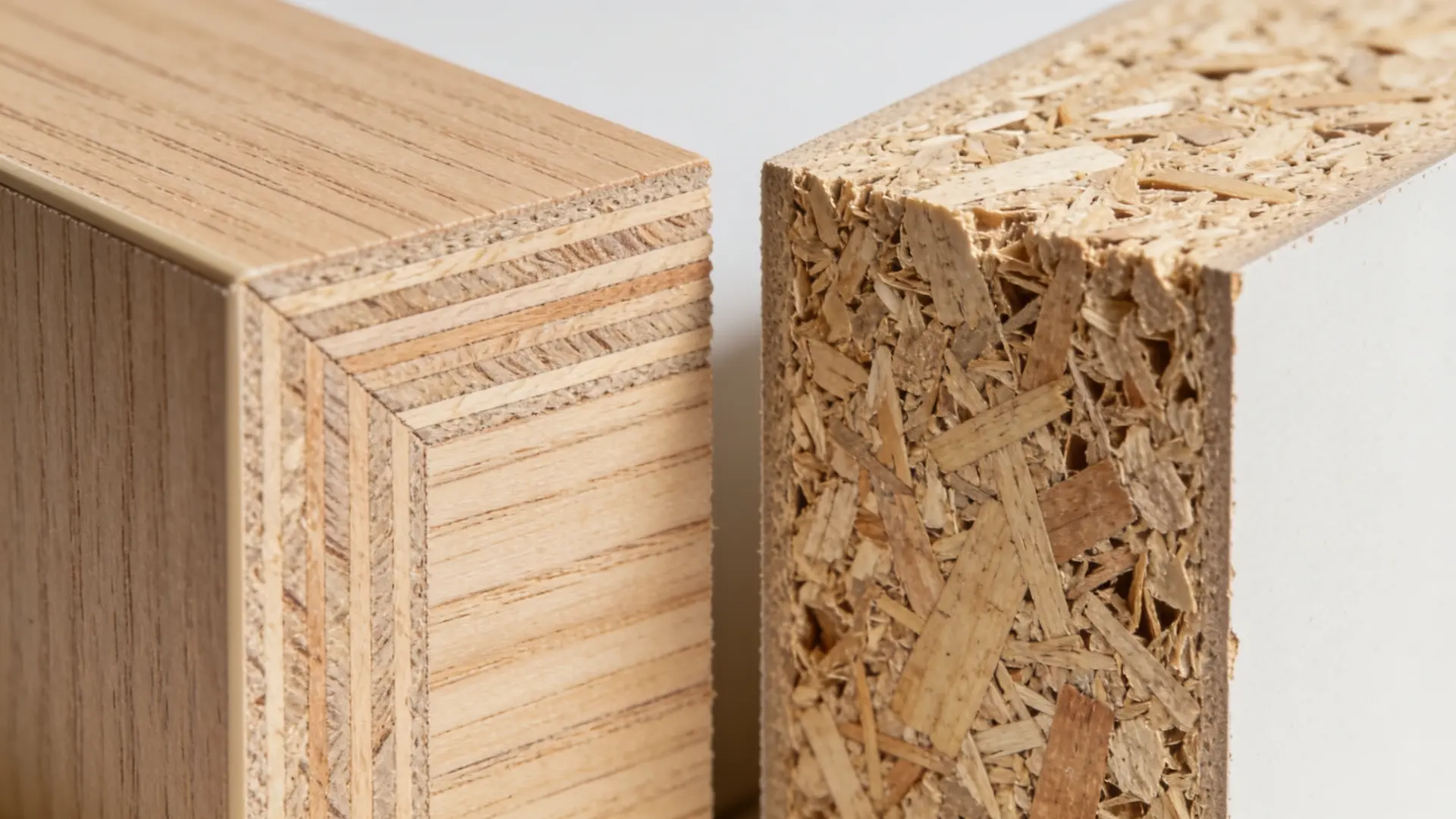
Framed or frameless is not the only choice that shapes how long your cabinets last. A few other factors matter just as much, if not more.
Why Box Material Matters More Than Frame Style?
The box material behind your cabinets often affects lifespan more than whether you pick framed or frameless.
Plywood holds up better against moisture and daily wear, while particleboard tends to swell or sag over time. This holds true regardless of frame style, since both framed and frameless cabinets can be built with either material.
It’s one of several decisions worth locking down early, alongside the layout and lighting choices I cover in what tends to get skipped during kitchen planning.
Maintenance and Everyday Wear
Cabinets need small adjustments over the years, no matter which style you choose.
Doors can start sticking as hinges shift slightly with daily use. Inset doors are especially sensitive to humidity, since they sit flush within the frame and can swell or stick in damp conditions.
Regular hinge adjustments keep doors aligned and closing properly, so plan on checking them every so often to catch small issues early.
Which Style Fits Your Kitchen?
Here is a quick way to match your priorities to the right cabinet style:
| Choose Framed If… | Choose Frameless If… |
|---|---|
| You want a classic, traditional kitchen look | You want a clean, modern kitchen look |
| You want the option of inset doors | You are fine with full overlay doors only |
| You are working with a tighter budget | You have more room in your budget |
| You plan to install cabinets yourself | You plan to hire a professional installer |
If a modern, two-tone finish is part of your plan, frameless boxes tend to show off two-tone cabinet color pairings a bit more cleanly, since there’s no frame breaking up the color block.
Final Thoughts
Neither style is right or wrong here. It comes down to how you cook, how much you want to spend, and how straight your walls are, since a few degrees off level changes what works.
If your budget leans tighter or you’re set on inset doors, framed construction still gives you a dependable, classic look. If you want every inch of storage and a clean, modern face, frameless earns its higher price tag.
Whichever way you lean, ask your installer to walk through the tradeoffs specific to your kitchen before you sign anything.
Which style are you leaning toward? Drop a comment below and let me know what’s swaying your decision.
Frequently Asked Questions (FAQs)
Can You Mix Framed and Frameless Cabinets in the Same Kitchen?
Yes, many homeowners pair framed base cabinets with frameless upper cabinets, or use one style as an accent. Just make sure your installer plans for the different attachment methods.
Which Style Lasts Longer, Framed or Frameless?
Both styles can last for decades with quality materials like plywood or solid wood. Box material and construction quality matter more for lifespan than the framed-versus-frameless choice.
Do Frameless Cabinets Work With Uneven Walls?
Frameless cabinets need level, even walls for a proper fit, since there is no frame to absorb gaps. Framed cabinets are more forgiving on uneven surfaces.
Is There a Semi-Frameless Cabinet Option?
Some manufacturers offer full-access framed cabinets that use a thin frame for support while still allowing wider drawers and shelves. This gives you a middle ground between the two styles.
Do Framed Or Frameless Cabinets Affect Home Resale Value?
Both styles hold resale value well when built with quality materials. Your choice usually comes down to current design trends rather than one style outperforming the other.